<?xml version='1.0' encoding='UTF-8' ?>

<urlset>
    <page>
      <objectID>
        4_4_1054
      </objectID>
      <url>
        https://htt.herefordshire.gov.uk/
      </url>
      <title>
        <![CDATA[Home]]>
      </title>
      <bodytext>
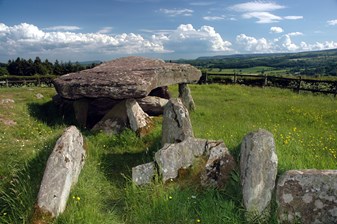
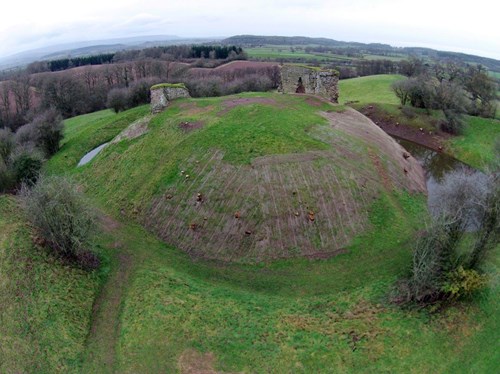
<![CDATA[<p><img style="width: 337px; height: 224px;" src="/media/1169/arthurs_stone.jpg?width=337px&amp;height=224px" alt="Arthur's Stone" rel="1825" /></p>
<p><strong>Herefordshire Archaeology</strong><span>, is the county archaeological service maintained by Herefordshire Council. The service exists to assess, investigate, document, conserve and promote the archaeology and historic landscape of Herefordshire. This website provides information and resources on different aspects of the archaeological landscape and historic environment of Herefordshire; including access to the Herefordshire Historic Environment Record and information on the work of Herefordshire Archaeology.</span></p>
<p>The Historic Environment Record is a publicly accessible data service containing the most comprehensive available information on the historic environment of Herefordshire. The <a href="/her-search/" title="HER Search">HER Search</a> function allows access to the Historic Environment Record's databases; which includes the <a href="/her-search/monuments-search/" title="Monuments Search">monuments</a>, <a href="/her-search/sources/" title="Sources">sources</a> and the <a href="/her-search/field-names-and-landowners/" title="Field Names and Landowners">historic field names</a>. </p>
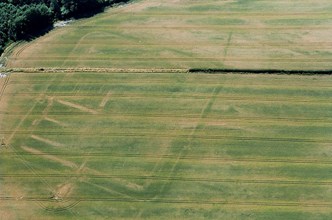
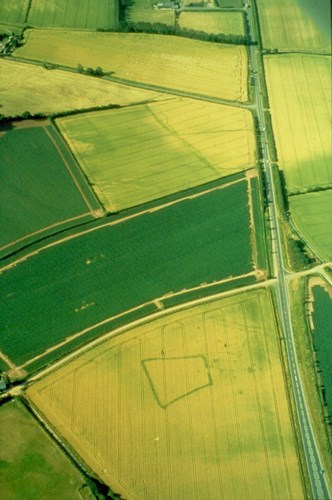
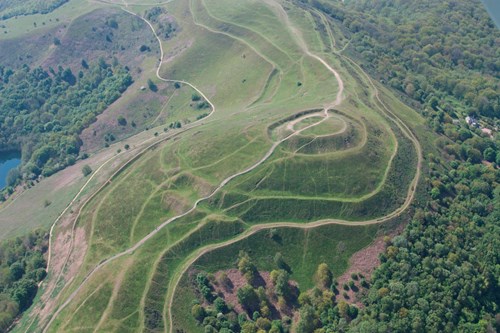
<p><img style="width: 332px; height: 220px;" src="/media/1049/06-cn-1428a.jpg?width=332px&amp;height=220px" alt="Cropmark Fort" rel="1693" /></p>
<p>The <a href="/events-projects-publications/" title="News events and projects">Events, Projects and Publications</a><span> pages include the latest archaeological publications from the county, details of forthcoming events, and background information on projects.</span></p>
<p><a href="/herefordshires-past/" title="Herefordshire's Past">Herefordshire's Past</a> pages contain information on Herefordshire history and can be used as a starting point for research or to assist in educational activities.</p>
<p>The <a href="/information-and-resources/" title="Resources">Information and Resources</a> pages have information for archaeologists and researchers <a href="/information-and-resources/working-in-the-historic-environment/" title="Working in the Historic Environment">working in Herefordshire</a>, information for <a href="/information-and-resources/historic-environment-tourism/" title="Sites to visit">Historic Environment tourists</a>, and information of interest to <a href="/information-and-resources/metal-detecting/" title="Metal Detecting">metal detectorists</a>, and more.</p>]]>      </bodytext>
      <metadescription>
        <![CDATA[Herefordshire Through Time: the Homepage for Herefordshire Archaeology]]>
      </metadescription>
      <metakeywords>
        <![CDATA[Herefordshire Archaeology,Hereford,Herefordshire,Archaeology,HER,History]]>
      </metakeywords>
      <publishdate>1651140791</publishdate>
      <boost>0</boost>
    </page>
    <page>
      <objectID>
        4_4_1055
      </objectID>
      <url>
        https://htt.herefordshire.gov.uk/herefordshire-archaeology/
      </url>
      <title>
        <![CDATA[Herefordshire Archaeology]]>
      </title>
      <bodytext>
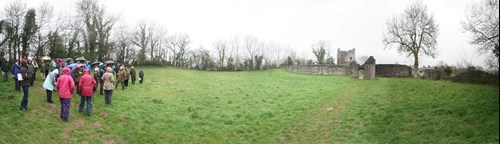
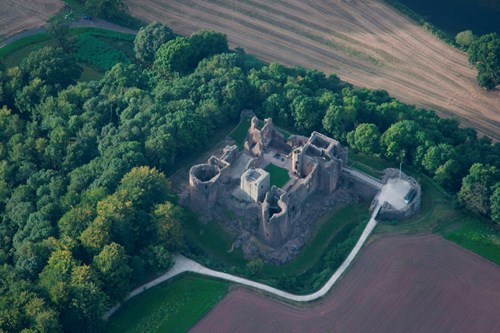
<![CDATA[<p><strong><img style="width: 500px; height: 144.53125px;" src="/media/1038/longtowngroup.jpg?width=500&amp;height=144.53125" alt="Longtown Castle" rel="1681" /></strong></p>
<p>Herefordshire Archaeology is the county archaeological service maintained by Herefordshire Council. It is part of the Built and Natural Environment team in the Council's Economy, Communities and Corporate Directorate. The service exists to assess, investigate, document, conserve and promote the archaeology and historic landscape of the county and cathedral city. The service currently comprises a core staff of three: the Archaeological Advisor (who deals with planning enquiries and development advice), the Archaeological Projects Manager (who deals with research projects, Countryside Stewardship and partnership projects), and the Historic Environment Record Officer.</p>
<p>The service is based at the Herefordshire Archive and Record Centre (HARC), Fir Tree Lane, Rotherwas, Hereford, HR2 6LA.</p>
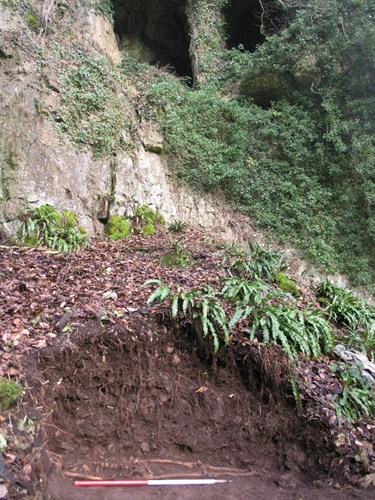
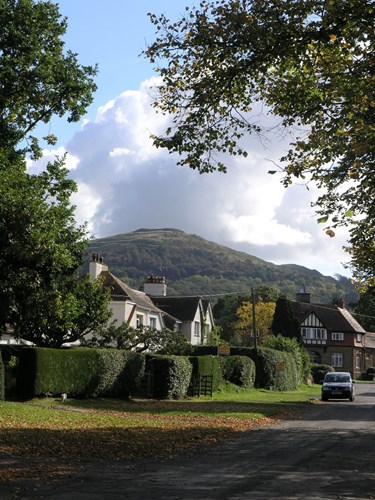
<p><img src="/media/1042/mc2011-141.jpg?width=375&amp;height=500" alt="Merlin's Cave" rel="1686" /></p>
<p>The vision for <strong>Herefordshire Archaeology</strong> is for a service that:</p>
<ul>
<li>provides a regulatory and investigative framework for improved understanding and management of the County's archaeological resource.</li>
<li>actively contributes to such understanding and conservation, and acts widely as an advocate for the local historic environment.</li>
<li>provides public access to information on the resource via the County Historic Environment Record, and events, activities and publications.</li>
</ul>
<p><strong>Herefordshire Archaeology</strong> provides:</p>
<ul>
<li>an advisory service for historic conservation, actively pursuing effective resource management and supporting regeneration initiatives.</li>
<li>a documentation and information service, centered upon the County Historic Environment Record, and its website Herefordshire Through Time.</li>
<li>an investigative and community service, with fieldwork, conservation works, local heritage projects, public events and productions.</li>
</ul>
<h2>Conservation Advisory Activity</h2>
<p>Herefordshire Archaeology provide conservation advice. This includes advice on the archaeological and historic landscape implications of development within and beyond the planning system, including in respect to farming and forestry. The Archaeological Advisor also manages the Hereford Area of Archaeological Importance, and the Archaeological Projects Manager advises on the longer-term management of important historic landscapes and ancient monuments, produces Conservation Management Plans, and deals with Countryside Stewardship matters.</p>
<h2>Data Management; The Historic Environment Record</h2>
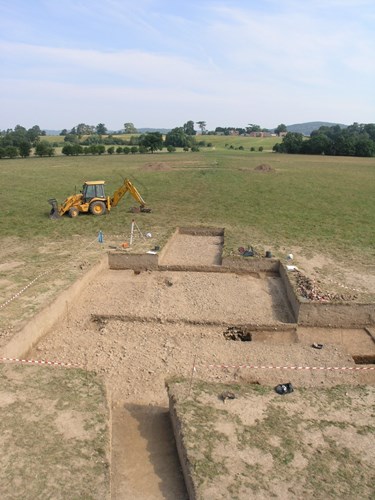
<h2><img src="/media/1032/lugg-exhibition-008.jpg?width=332.3019801980198&amp;height=500" alt="Lugg Excavation" rel="1674" /></h2>
<p>The Historic Environment Record (HER) is an integral part of the county archaeological service, it is the most comprehensive available index to Herefordshire's historic environment. The HER is based around a Geographic Information System (GIS) database and consists of a paper and digitised records of all known archaeological and historic sites in Herefordshire, spanning the full range of human activity in the county. Records have been drawn from a wide variety of sources, including reports of archaeological fieldwork, books, journal articles, maps (including historic maps), aerial photographs, national lists and registers, student dissertations and field observations from antiquarian and modern recorders. It is a constantly evolving database and records are often added and updated.</p>
<p>Herefordshire's HER was originally held by the Museum service but since the 1980s it has been maintained by the archaeology service of the relevant local authority, first by the former Hereford and Worcester County Council and since 1998, by Herefordshire Council. The HER seeks to inform the management and enjoyment of the historic environment by providing a documentation and information service for members of the public, professional archaeologists from external organisations, colleagues within Herefordshire Archaeology, and other staff within the Council who are carrying out historic environment-related work. The HER is used to provide information for a wide range of purposes, including development control, agri-environment and other conservation schemes, academic research, local history, tourism, education and outreach.</p>
<h2>Investigative and Community Activity </h2>
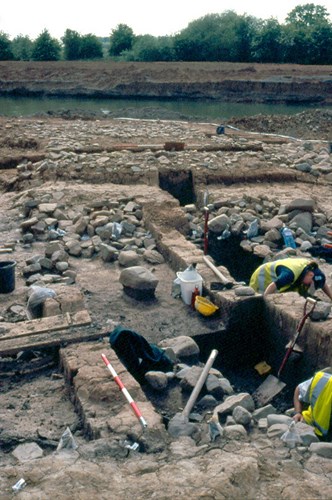
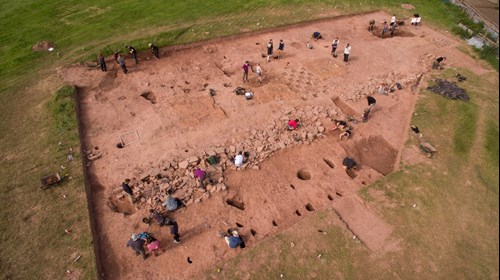
<p>The investigative aspects of the work of the county archaeological service are varied, and are delivered by means of a series of projects and partnerships. The Archaeological Projects Manager delivers much of the service agenda for investigation and recording (including survey and excavation), research, outreach, interpretation and working with local communities.</p>
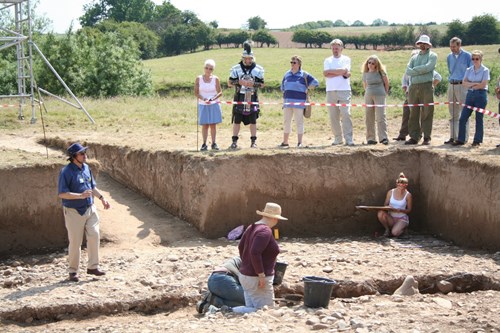
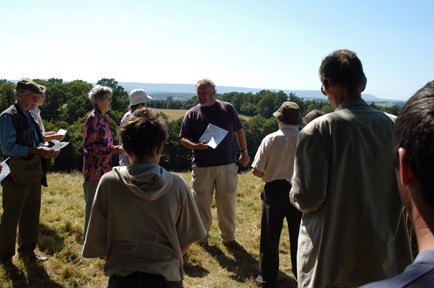
<p><strong>Herefordshire Archaeology</strong> is engaged in work that aims to raise public awareness and appreciation of the county's archaeology and historic landscape. Forthcoming events, including an annual symposium, monthly historic landscape walks, and other engagements can be found on the <a href="/events-projects-publications/old-events/" title="Events">events page</a> of this website. A series of archaeological project summaries and reports is produced each year.</p>]]>      </bodytext>
      <metadescription>
        <![CDATA[About Herefordshire Archaeology]]>
      </metadescription>
      <metakeywords>
        <![CDATA[Herefordshire Archaeology]]>
      </metakeywords>
      <publishdate>1713272740</publishdate>
      <boost>0</boost>
    </page>
    <page>
      <objectID>
        4_4_1057
      </objectID>
      <url>
        https://htt.herefordshire.gov.uk/herefordshire-archaeology/about-us/
      </url>
      <title>
        <![CDATA[About Us]]>
      </title>
      <bodytext>
<![CDATA[<p><strong>Julian Cotton BA ACIfA, Archaeological Advisor:</strong> Julian began his archaeological career in 1981, working on a number of digs in Scotland. He then took a BA in Archaeology and History at Leeds University, graduating with honours in 1984. He worked firstly as a field archaeologist, and later as a contractor/consultant for many years in various parts of Britain, including the north of England, Wales, London and the West Country. During this period Julian was involved in a number of long-term projects, for example at Creswell Crags Palaeolithic site in Derbyshire and the Roman port site at Mountbatten in Plymouth. He was elected an Associate of the Institute of Field Archaeologists in 1987. Julian took up his present post in 1999. This role is multi-faceted, but principally involves advisory work connected with planning and development archaeology, as well as responsibility for administering the statutory Hereford Area of Archaeological Importance.</p>
<p style="padding-left: 30px;">Email: <a href="mailto:Julian.Cotton@herefordshire.gov.uk">julian.cotton@herefordshire.gov.uk</a>.</p>
<p style="padding-left: 30px;">Telephone: 01432 383350.</p>
<p style="padding-left: 30px;"> </p>
<p><strong>Tim Hoverd BA ACIfA, Archaeological Projects Manager:</strong> Tim studied archaeology at both Bournemouth and Sheffield Universities, graduating from Sheffield in 1992. He worked for the City of Hereford Archaeology Unit from 1992 to 1996 and for Archaeological Investigations Ltd. from 1996 to 1999. In 1999 Tim joined Herefordshire Archaeology as the Archaeological Projects Officer, a role which involves him in a wide range of partnership field projects and public/community events.</p>
<p style="padding-left: 30px;"><span>Email: <a href="mailto:thoverd@herefordshire.gov.uk">thoverd@herefordshire.gov.uk</a>.</span></p>
<p style="padding-left: 30px;"><span>Telephone: 01432 383352.</span></p>
<p> </p>
<p><strong>Peter Reavill BA, MA MCIfA, </strong>Peter is a landscape and public archaeologist as well as a small finds specialist. He studied history and archaeology as an undergraduate at the University of Wales: Bangor (1995-8) and undertook a master’s degree in Landscape Archaeology at the University of Sheffield (2002-3). He has worked as a field archaeologist, archaeological advisor, landscape consultant, and post excavation specialist concentrating on both rural and urban sites and assemblages from Wales, Ireland and Southern England. Peter was the Finds Liaison Officer for Herefordshire and Shropshire working for the British Museum’s Portable Antiquities Scheme between 2003 and 2022. In this role, he worked closely with both Herefordshire Museums and Herefordshire Archaeology supporting chance finders of archaeological objects and treasure. He still acts as a national finds specialist concentrating on material from the prehistoric periods.</p>
<p>Peter has belonged to the Chartered Institute for Archaeologists since 2002 and has held their highest grade of professional membership (MCIfA) since 2010. Those who gain this level of professional accreditation have specific extensive knowledge and specialisms, as well as a well-attributed record of substantial responsibility, accountability and experience within historic environment practice. In the past Peter has edited <em>West Midlands Archaeology </em>and his most recent co-edited publication is <em>The Public Archaeology of Treasure</em></p>
<p>Peter's present post with the team concentrates on the management and development of the counties Historic Environment Record. </p>
<p style="padding-left: 30px;">Email: <a href="mailto:peter.reavill@herefordshire.gov.uk">peter.reavill@herefordshire.gov.uk</a></p>
<p style="padding-left: 30px;">Telephone: 01432 380130.</p>]]>      </bodytext>
      <metadescription>
        <![CDATA[]]>
      </metadescription>
      <metakeywords>
        <![CDATA[Herefordshire Archaeology,Staff]]>
      </metakeywords>
      <publishdate>1713272329</publishdate>
      <boost>0</boost>
    </page>
    <page>
      <objectID>
        4_4_1060
      </objectID>
      <url>
        https://htt.herefordshire.gov.uk/events-projects-publications/
      </url>
      <title>
        <![CDATA[Events, Projects & Publications]]>
      </title>
      <bodytext>
<![CDATA[<p><img src="/media/1039/keith-site-tour.jpg?width=500&amp;height=333.3333333333333" alt="Site Tour" rel="1682" /></p>
<p>The News, Events and Projects pages are divided into separate sections for the three topics.</p>
<ul>
<li><strong><a href="/events-projects-publications/events/" title="Events">Events</a></strong> includes information on various Herefordshire Archaeological events.</li>
<li><strong><a href="/events-projects-publications/projects/" title="Projects">Projects</a></strong> provides background and general information on major projects carried out by Herefordshire Archaeology.</li>
<li><strong><a href="/events-projects-publications/publications/" title="News &amp; Publications">Publications</a></strong> contains an easy to access list of accessible Herefordshire Archaeology publications</li>
</ul>]]>      </bodytext>
      <metadescription>
        <![CDATA[Herefordshire Archaeology events, projects and publication information]]>
      </metadescription>
      <metakeywords>
        <![CDATA[Herefordshire Archaeology,Events,Projects,Publications]]>
      </metakeywords>
      <publishdate>1651140805</publishdate>
      <boost>0</boost>
    </page>
    <page>
      <objectID>
        4_4_1837
      </objectID>
      <url>
        https://htt.herefordshire.gov.uk/events-projects-publications/events/
      </url>
      <title>
        <![CDATA[Events]]>
      </title>
      <bodytext>
<![CDATA[<h2>Herefordshire Archaeology's Historic Landscape Walks Programme 2020<br /><a href="#volunteer"></a></h2>
<p><strong>Please note: <span>In response to the COVID-19 (coronavirus) outbreak, </span>in accordance with government guidance and in the interest of public safety. All walks will be cancelled and none further will take place until further notice. Please check back for updates and we hope to see you when they return.</strong></p>
<p><img src="/media/1030/kilpeck-290.jpg?width=434px&amp;height=288px" alt="Historic Landscape Walks" width="434" height="288" rel="1667" /></p>
<p>Since April 1999 Herefordshire Council, Archaeology Section has been organising a series of morning, afternoon and evening walks throughout the county. These walks are designed to introduce members of the public to the constantly changing aspects of life, both past and present, that influence the type of landscape in which we live. People from the local community and from further afield are welcome. A reasonable level of fitness is required as some of the routes are over steep or uneven ground. Dogs are welcome on short leads (unless stated for specific walks).</p>
<p>These walks are free but due to the large numbers who regularly attend these Historic Landscape Walks, we have had to implement a booking procedure.</p>
<p> </p>
<table border="0" width="738" height="249">
<thead>
<tr>
<td><strong>Date</strong></td>
<td><strong>Time</strong></td>
<td><strong>Walk No.</strong></td>
<td><strong>Location</strong></td>
</tr>
</thead>
<tbody>
<tr>
<td>Wednesday January 15th</td>
<td>10.00 – 13.00</td>
<td>250</td>
<td>Breinton</td>
</tr>
<tr>
<td>Tuesday February 11th</td>
<td>10.00 – 13.00</td>
<td>251</td>
<td>Bosbury</td>
</tr>
<tr>
<td>Tuesday March 10th</td>
<td>10.00 – 13.00</td>
<td>252</td>
<td>Preston-on-Wye</td>
</tr>
<tr>
<td><span style="text-decoration: line-through;">Wednesday April 15th</span></td>
<td><span style="text-decoration: line-through;">14.00 – 17.00</span></td>
<td><span style="text-decoration: line-through;">253</span></td>
<td><span style="text-decoration: line-through;">Pembridge</span></td>
</tr>
<tr>
<td><span style="text-decoration: line-through;">Wednesday May 13th</span></td>
<td><span style="text-decoration: line-through;">14.00 – 17.00</span></td>
<td><span style="text-decoration: line-through;">254</span></td>
<td><span style="text-decoration: line-through;">Kingswood</span></td>
</tr>
<tr>
<td><span style="text-decoration: line-through;">Wednesday June 17th</span></td>
<td><span style="text-decoration: line-through;">10.00 – 13.00</span></td>
<td><span style="text-decoration: line-through;">255</span></td>
<td><span style="text-decoration: line-through;">Checkley</span></td>
</tr>
<tr>
<td><span style="text-decoration: line-through;">Tuesday July 14th</span></td>
<td><span style="text-decoration: line-through;">14.00 – 17.00</span></td>
<td><span style="text-decoration: line-through;">256</span></td>
<td><span style="text-decoration: line-through;">Wellington Heath</span></td>
</tr>
<tr>
<td><span style="text-decoration: line-through;">Wednesday August 12th</span></td>
<td><span style="text-decoration: line-through;">10.00 – 13.00</span></td>
<td><span style="text-decoration: line-through;">257</span></td>
<td><span style="text-decoration: line-through;">Hoarwithy</span></td>
</tr>
<tr>
<td><span style="text-decoration: line-through;">Wednesday September 16th</span></td>
<td><span style="text-decoration: line-through;">14.00 – 17.00</span></td>
<td><span style="text-decoration: line-through;">258</span></td>
<td><span style="text-decoration: line-through;"><span>Little Dewchurch</span></span></td>
</tr>
<tr>
<td><span style="text-decoration: line-through;">Wednesday October 14th</span></td>
<td><span style="text-decoration: line-through;">10.00 – 13.00</span></td>
<td><span style="text-decoration: line-through;">259</span></td>
<td><span style="text-decoration: line-through;">Bishops Frome</span></td>
</tr>
<tr>
<td><span style="text-decoration: line-through;">Wednesday November 11th</span></td>
<td><span style="text-decoration: line-through;">10.00 – 13.00</span></td>
<td><span style="text-decoration: line-through;">260</span></td>
<td><span style="text-decoration: line-through;">St. Weonards</span></td>
</tr>
<tr>
<td><span style="text-decoration: line-through;">Wednesday December 16th</span></td>
<td><span style="text-decoration: line-through;">10.00 – 13.00</span></td>
<td><span style="text-decoration: line-through;">261</span></td>
<td><span><span style="text-decoration: line-through;">Haugh Wood</span></span></td>
</tr>
</tbody>
</table>
<p>If you would like to attend one or more of the above walks you will need to reserve a place by calling archaeology on 01432 383 352 or sending an email to <a href="mailto:thoverd@herefordshire.gov.uk">Tim Hoverd</a>. Bookings will be taken only over the 7 days prior to each walk. If you book and then find that you cannot attend a walk please let us know so that we can let someone else attend.</p>
<p> </p>
<hr />
<h2><a href="#volunteer"></a>Opportunities to Volunteer</h2>
<p>A number of our events and projects rely on volunteers to lend a hand and help. Archaeological work can be surveys, excavations or assiting the Historic Environment Record in data entry and historic research.</p>
<p>You can find below a list of current opportunities to volunteer. If you are interesting in contributing to any of these please contact the Archaeological Projects Manager, Tim Hoverd on 01432 383352 or <a href="mailto:thoverd@herefordshire.gov.uk">thoverd@herefordshire.gov.uk</a>.</p>]]>      </bodytext>
      <metadescription>
        <![CDATA[Herefordshire Archaeology Events]]>
      </metadescription>
      <metakeywords>
        <![CDATA[Herefordshire,Archaeology,Events,Historic Landscape Walks,Historic Walks]]>
      </metakeywords>
      <publishdate>1651140805</publishdate>
      <boost>0</boost>
    </page>
    <page>
      <objectID>
        4_4_1063
      </objectID>
      <url>
        https://htt.herefordshire.gov.uk/events-projects-publications/projects/
      </url>
      <title>
        <![CDATA[Projects]]>
      </title>
      <bodytext>
<![CDATA[<h2><strong><img src="/media/1040/dji_0628.jpg?width=500&amp;height=280.7291666666667" alt="Excavation Aerial" rel="1683" /></strong></h2>
<p>This section contains background and general information on selected projects carried out by Herefordshire Archaeology. Some projects are jointly funded by bodies such as Historic England or education bodies, who are working in partnership with Herefordshire Archaeology. There are various community-based projects that provide opportunities for members of the public to get involved in different ways. Contact details are provided where this is the case.</p>
<h4>The Hereford Archaeological Research Framework</h4>
<p>The Hereford Archaeological Research Framework document is a brief review of current understanding of the archaeology of the city of Hereford - its significance, its potential, and, above all, its gaps and its limitations, with a view to the identification of research priorities for the immediate future.</p>
<h4>Eaton Camp Fieldwork 2012</h4>
<p>Excavation work carried out at Eaton Camp, Eaton Bishop in May 2012 was carried out by Herefordshire Archaeology on behalf of the Eaton Camp Historical Society and funded by the Heritage Lottery Fund.</p>
<h4>Hereford City Wall Conservation Management</h4>
<p>During 2009 and 2010 Herefordshire Archaeology, with funding from English Heritage, carried out a study of the city walls and prepared a plan for their future. The plan addresses the issues of the physical condition of the walls and their maintenance, the need for improved public access and the use of the walls as a historic asset for enhancing civic pride and sustaining the economic development of the city as a whole.</p>
<p>The recommendations include urgent repairs to some sections of the walls, providing better public access and the creation of a signage scheme for interpreting the walls as well as a self-guided city walls walk.</p>
<h4>Olchon Valley Excavation, Summer 2010</h4>
<p>During the summer of 2010, Herefordshire Archaeology and Manchester University collaborated on the excavation of a prehistoric site in the Olchon Valley in south-west Herefordshire.</p>
<h4>Credenhill Iron Age Hill Fort Excavations</h4>
<p>The Woodland Trust was been awarded a Heritage Lottery Fund grant to conserve and study Credenhill Park Wood, which it purchased in 2003. Credenhill hill fort - the largest in the Welsh Marches - stands within this wood. A six-week archaeological excavation was carried out at the fort in August and September 2007, under the direction of Peter Dorling of Herefordshire Archaeology. The team consisted of Herefordshire Archaeology staff members, local volunteers and Cardiff University students. These excavations are part of a longer-term project being undertaken in partnership with the Woodland Trust. This wider project will also involve the removal of conifer trees (planted in the 1960s) from much of the fort, and the restoration of the surrounding woodland to mixed deciduous cover.</p>
<p>The 2007 excavations featured in a Time Team Special documentary about hill forts that was made over the summer of that year and included footage of other Herefordshire sites. The programme was broadcast on Channel 4 television in June 2008.</p>
<h4>Excavation at New Weir Iron Works, Symonds Yat West</h4>
<p><span>Between April and May 2009, Herefordshire Archaeology carried out a four week season of excavation at New Weir Iron Works at Symonds Yat West.</span></p>
<p>The aim of the excavation was to try to identify areas where specific processes were taking place, to examine the evidence of those processes and to get some idea of how the site functioned. Little work has been carried out on forges of this date. This information gained therefore fed into the long-term management of the site and into its interpretation.</p>
<p>The site was in use from at least the 1590s up until the 1800s. It was known to be a forge for refining iron from nearby furnaces and to have incorporated a slitting mill, probably for nail and/or wire production, and later a rolling mill. The various forges, mills and hammers were powered by water wheels.</p>
<p>The project is an element of the "Overlooking the Wye" project funded by the Heritage Lottery Fund. This Landscape Partnership Scheme was designed to improve and promote enjoyment, understanding, accessibility, involvement, conservation and management of the historic environment in the landscape of the lower Wye Valley.</p>
<h4>The Lower Lugg Valley Archaeology and Aggregates Project</h4>
<p>The aim of the Lower Lugg Archaeology and Aggregates Project (which ran from 2006 to 2009) was to improve understanding, management, protection and promotion of the visible and buried remains of past human settlement within the Lower Lugg Valley. The project was funded by the Aggregates Levy Sustainability Fund (as administered by English Heritage), and was managed by Herefordshire Archaeology (the archaeology service of Herefordshire Council).</p>
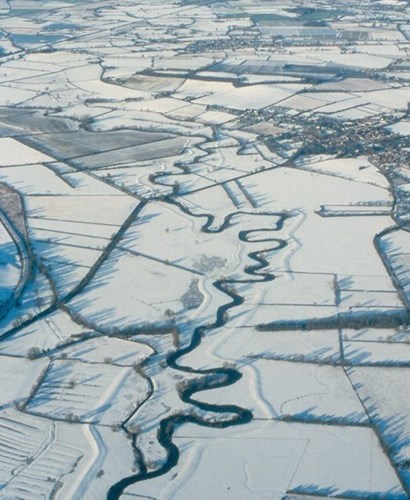
<p>The project stemmed from the development since the 1980s of large scale gravel quarrying in the Lower Lugg flood plain. Spectacular archaeological discoveries at Wellington Quarry have included the 1200-year-old remains of two of Britain's earliest known watermills, a Roman country estate, and the 4000-year-old burial of a local tribal leader.</p>
<p>These finds have confirmed that the Lower Lugg Valley has long been a significant area of intensive human settlement, and that nationally-important archaeological remains of this activity still survive. At the same time, given ongoing use of the Lower Lugg landscape for modern purposes such as gravel quarrying, farming and residential development, it is clear that effective management of the archaeological legacy of the Lower Lugg is a significant future challenge.</p>
<h4>City of Hereford Urban Archaeological Database Project</h4>
<p>This was a data-cleaning and enhancement project, commenced in 2006 and completed in October 2008. It was funded by English Heritage as part of their national Urban Archaeological Strategy programme. New SMR records have where necessary been added and existing records checked, reorganised and re-mapped such that, it is hoped, virtually every archaeological trench excavated in the city and historic suburbs, and every monument, are now accurately located on Herefordshire Council's GIS.</p>
<h4>Herefordshire Aerial Archaeological Survey, 2007 - 2011</h4>
<p>An English Heritage-funded programme of aerial survey allowed the recording of archaeological sites and landscapes. The programme aimed to provide a record of cropmarks, large-scale projects in the landscape, provide support to urban characterisation projects and to maintain a record of sites under threat. </p>
<p>A significant development from previous aerial survey projects is the availability of a pilot at Gloucestershire Airport. This has enabled us to start to get a much more systematic coverage for the south of the county, which until now has been very sparsely covered by reconnaissance flights. Many previously unrecorded earthworks have been now been photographed and will be added to Herefordshire's Historic Environment Record.</p>
<h4>Roman Families Project 2014</h4>
<p>The Roman Families Project was carried out by Herefordshire Archaeology on behalf of Herefordshire Council. It was made possible by funding from the Ministry of Defence Armed Forces Community Covenant Grant.</p>
<p>The Roman Families Project aimed to involve and attract families, youth groups and local inhabitants of the Credenhill Garrison community in the archaeological investigation of Roman Credenhill, in particular the area immediately around the Roman town of Kenchester (Magnis). The project aim was to enable families from both the military and civilian realms (both adults and youth) to work as a team within an entirely different setting and acquire new skills and experiences through the process of archaeological investigation and event days. The project focused on an enclosure site within the Roman Park Playing Fields, Credenhill; a park owned by Herefordshire Council and maintained by the Credenhill Parish Council. Investigations of the site started in April 2014 with a geophysical survey. The results of this survey were used to guide a community excavation carried out between 7th and 27th July 2014. This report discusses the results of that excavation, along with the subsequent post-excavation analysis.</p>
<h4>Archaeology at Croft Castle</h4>
<p>In 2000 the Croft Estate comprised 560 hectares of ground that has recently been expanded with the purchase of further former estate ground near Lucton. Two winter seasons of archaeological survey across the estate in 2001 and 2002 have demonstrated the remarkable preservation of earthwork remains across the five kilometre east-west extent of the estate. The major divisions of the area include now heavily planted land leased to the Forestry Commission, open common and former coppices, the parkland in the environs of the mansion, the surviving wood-pasture in and around Croft Ambrey, and arable fields and pasture on the lower slopes.</p>
<p>By the end of the 2002 season, both an inner and an outer ward of the medieval castle had been located with a moderate degree of confidence. Traces of narrow ditches and pits lines beneath the later demolition deposits and workshop area appear to indicate the presence of timber structures that represent an early (and possibly timber) phase of the castle. The mortuary Inventory for Sir James Croft in 1590 survives in a fragmentary state in the British Library. Research by Valerie Goodbury indicates that the rooms listed include both a hall and a chapel. A glazed heraldic floor tile fragment from the excavation matches those now partially flooring the parish church, and this, as well as the stained glass, may have derived from this chapel.</p>
<p>The excavation clearly indicates that we can trust the dendrochronology to specify the date of construction of the present mansion. This therefore means that the earliest terraced garden of the Elizabethan period belongs to the demolished mansion. Moreover, the Restoration period formal garden clearly used in its basal layers brick and tile (and other) demolition material from the same mansion, while being planned outwards from the present mansion.</p>
<p>Perhaps the most remarkable conclusion from the 2002 season's investigations concerns the present mansion. Herbert Croft, the second son of the Sir William killed in the Civil War, was a renowned cleric. He famously shamed Parliamentary soldiery intent on defiling Hereford Cathedral when Dean there, and was praised for his sober manner, by John Aubrey in his <em>Brief Lives</em>. It is no doubt of some significance that Herbert was appointed Bishop of Hereford in 1661. It was said that he used Croft as his country home when in the county, but not in residence at Hereford. As such, not only is Croft Castle a late addition to the corpus of Spenserian mansions, but it is also an unusual example of a mid-seventeenth century bishop's palace.</p>
<h4>The "Rotherwas Ribbon"</h4>
<p>The Rotherwas Ribbon is an unusual and enigmatic Neolithic or Early Bronze Age linear structure consisting of a 6 to 8 metre wide burnt stone surface located within a hollow/cut. A 67m length of the Ribbon was identified, uncovered and partly excavated in 2007 during a PPG16 supported archaeological recording exercise in advance of the construction of the Rotherwas Access Road, Herefordshire. The structure was associated with a significant bone, pottery and flint artefact assemblage, and also appeared to be spatially and chronologically linked with a group of eight pits (six of which were filled with burnt stone) which were located immediately adjacent to the Ribbon. The Ribbon was also cut by two later (Iron Age/Roman?) ditches on broadly the same alignment, and itself cut an earlier linear feature. A group of six radiocarbon dates (obtained from carbonised hazel samples from two of the pits and a charcoal spread on the Ribbon surface) lie within a late 3<sup>rd</sup>/early 2<sup>nd</sup> millennium BC date range, and suggest that the last use of the feature was during this period. </p>]]>      </bodytext>
      <metadescription>
        <![CDATA[]]>
      </metadescription>
      <metakeywords>
        <![CDATA[]]>
      </metakeywords>
      <publishdate>1651140804</publishdate>
      <boost>0</boost>
    </page>
    <page>
      <objectID>
        4_4_1061
      </objectID>
      <url>
        https://htt.herefordshire.gov.uk/events-projects-publications/publications/
      </url>
      <title>
        <![CDATA[Publications]]>
      </title>
      <bodytext>
<![CDATA[<p>The <strong>Publication</strong> section contains select accessible and downloadable digital reports by Herefordshire Archaeology. These are arranged by year and then, where appropriate, the Herefordshire Archaeological Report (HAR) number.</p>
<p>Many of Herefordshire Archaeology reports can now be found online on the <strong><a href="http://archaeologydataservice.ac.uk/archives/view/greylit/browse.cfm?unit=Herefordshire%20Archaeology" target="_blank" title="ADS">Archaeology Data Service (ADS)</a>.</strong></p>
<h3>1999</h3>
<ul>
<li><a href="/media/1079/ha1_14013_suttonstmichael.pdf" title="HA1_14013_SuttonStMichael.pdf">Ray, K. &amp; Hoverd, T. 1999. <em>Archaeological Works at Sutton St. Michael, Herefordshire 1999: An Interim Statement. </em>HAR: 01</a></li>
</ul>
<h4>2000</h4>
<ul>
<li><a href="/media/1078/ha2_14113_merehillaymestrey.pdf" title="HA2_14113_MereHillAymestrey.pdf">Hoverd, T. 2000. <em>Investigations at Mere Hill, Aymestrey. </em>HAR: 02</a></li>
<li><a href="/media/1077/ha3_16152_ashgrovequarrymarden.pdf" title="HA3_16152_AshGroveQuarryMarden.pdf">Hoverd, T. 2000. <em>Ashgrove Quarry, Marden: Preliminary Archaeological Investigations in 1999. </em>HAR: 03</a></li>
<li><a href="/media/1076/ha4_16153_manselllacy.pdf" title="HA4_16153_MansellLacy.pdf">Hoverd, T. 2000. <em>Mansell Lacy Medieval Settlement: An Earthwork Assessment. </em>HAR: 04</a></li>
<li><a href="/media/1075/ha5_15950_walkmillfarm.pdf" title="HA5_15950_WalkMillFarm.pdf">Hoverd, T. 2000. <em>Earthwork and Structural Survey at Walk Mill Farm, Ewyas Harold. </em>HAR: 05</a></li>
<li><a href="/media/1074/ha6_15949_vennfarm.pdf" title="HA6_15949_VennFarm.pdf">Hoverd, T. &amp; Roseff, R. 2000. <em>The Venn Farm, Bishops Frome. Earthwork Survey and Archaeological Field Reconnaissance. </em>HAR: 06</a></li>
<li><a href="/media/1073/ha7_16154_mounboonwitherstone.pdf" title="HA7_16154_MounboonWitherstone.pdf">Ray, K. &amp; Hoverd, T. 2000. <em>Mounboon &amp; Lower Witherstone Farms, Little Dewchurch: An Historic Landscape Appraisal, </em>HAR: 07</a></li>
<li><a href="/media/1072/ha8_16155_reconaissance1999.pdf" title="HA8_16155_Reconaissance1999.pdf">Ray, K. &amp; Hoverd, T. 2000. <em>Archaeological Reconnaissance Surveys of Sites in Herefordshire, 1999. </em>HAR: 08</a></li>
<li><a href="/media/1071/ha9_16156_burtoncourteardisland.pdf" title="HA9_16156_BurtonCourtEardisland.pdf">Ray, K. &amp; Hoverd, T. 2000. <em>A Project Assessment for Research by Eardisland Oral History Society at Burton Court, Eardisland, Herefordshire</em><em>. </em>HAR: 09</a></li>
<li><a href="/media/1070/ha10_17735_walterstonewalk.pdf" title="HA10_17735_WalterstoneWalk.pdf">Ray, K. &amp; Hoverd, T. 2000. <em>Archaeological Observations in the Walterstone area: An Historic Landscape Walk Report</em><em>. </em>HAR: 10<br /></a></li>
<li><a href="/media/1082/ha16_longtownvillagehallgeophysics.pdf" title="HA16_LongtownVillageHallGeophysics.pdf">Hoverd, T. 2000. <em>A Geophysical Survey at Longtown</em><em>. </em>HAR: 16</a></li>
</ul>
<h4>2002</h4>
<ul>
<li><a href="/media/1084/ha51_lea-bailey.pdf" title="HA51_Lea Bailey.pdf">Hoverd, T. 2002. <em>Herefordshire Woodlands Pilot Scheme: Phase 1</em><em>. Lea Bailey Inclosure. </em>HAR: 51</a></li>
<li><a href="/media/1069/ha52_16275_wigmorerolls.pdf" title="HA52_16275_WigmoreRolls.pdf">Hoverd, T. 2002. <em>Herefordshire Woodlands Pilot Scheme: Phase 1</em><em>. Wigmore Rolls. </em>HAR: 52</a></li>
<li><a href="/media/1085/ha53_netherwood.pdf" title="HA53_NetherWood.pdf">Hoverd, T. 2002. <em>Herefordshire Woodlands Pilot Scheme: Phase 1</em><em>. Nether Wood, Aconbury. </em>HAR: 53</a></li>
<li><a href="/media/1086/ha54_roddwood.pdf" title="HA54_RoddWood.pdf">Hoverd, T. 2002. <em>Herefordshire Woodlands Pilot Scheme: Phase 1</em><em>. Rodd Wood. </em>HAR: 54</a></li>
</ul>
<h4>2003</h4>
<ul>
<li><a href="/media/1109/ha49_she18473_croftvol1.pdf" title="HA49_SHE18473_CroftVol1.pdf">Ray, K. &amp; Hoverd, T. 2003. <em>Croft Castle Estate: An Archaeological Survey 2001-2. Volume 1. </em>HAR: 49</a></li>
<li><a href="/media/1083/ha49_15928_croftvol2.pdf" title="HA49_15928_CroftVol2.pdf">Ray, K. &amp; Hoverd, T. 2003. <em>Croft Castle Estate: An Archaeological Survey 2001-2. Volume 2. </em>HAR: 49</a></li>
<li><a href="/media/1087/ha68_16399_moccasreconaissance.pdf" title="HA68_16399_MoccasReconaissance.pdf">Hoverd, T. 2003. <em>An Archaeological Reconnaissance Survey of Moccas Estate. </em>HAR: 68</a></li>
<li><a href="/media/1068/ha75_15877_snedwoods.pdf" title="HA75_15877_SnedWoods.pdf">Williams, D. N. 2003. <em>Herefordshire Woodlands Pilot Study: Phase 2</em><em>. Sned Wood, Aymestrey. </em>HAR: 75</a></li>
<li><a href="/media/1067/ha83_15876_wapleyhill.pdf" title="HA83_15876_WapleyHill.pdf">Williams, D. N. 2003. <em>Herefordshire Woodlands Pilot Study: Phase 2</em><em>. Wapley Hill Wood, Staunton-on-Arrow. </em>HAR: 83</a></li>
<li><a href="/media/1088/ha90_edsg_archissues.pdf" title="HA90_EDSG_ArchIssues.pdf">Cotton, J. 2003. <em>'Edgar Street Grid' Hereford: An Archaeological Issues Paper</em><em>. </em>HAR: 90</a></li>
<li><a href="/media/1090/ha101_malvernhillsaonb.pdf" title="HA101_MalvernHillsAONB.pdf">Hoverd, T. 2003. <em>An Archaeological Survey of Herefordshire Woodlands in the Malvern Hills AONB, 1999-2002.</em><em> </em>HAR: 101</a></li>
<li><a href="/media/1110/ha103_she18716_theleenfarmsurvey.pdf" title="HA103_SHE18716_TheLeenFarmSurvey.pdf">White, P. 2003. <em>The Leen, Pembridge: A Whole Farm Archaeological Survey.</em><em> </em>HAR: 103</a></li>
</ul>
<h4>2006</h4>
<ul>
<li><a href="/media/1097/har214-garway-excavation-2011.pdf" title="HAR214 Garway Excavation 2011.pdf">Atkinson, C. 2006. <em>Garway Hill Common, Garway, Herefordshire: An Archaeological Evaluation</em><em>. </em>HAR: 214</a></li>
</ul>
<h4>2007</h4>
<ul>
<li><a href="/media/1066/ha227_17196_craftawebb.pdf" title="HA227_17196_CraftaWebb.pdf">Atkinson, C. 2007. <em>Crafta Webb,</em> <em>Bredwardine Herefordshire: An Archaeological Investigation. </em>HAR: 227</a></li>
<li><a href="/media/1092/ha232_she18423_hergestridgereport.pdf" title="HA232_SHE18423_HergestRidgeReport.pdf">Atkinson, C. 2007. <em>Herefordshire Commons Survey. Hergest Ridge Common, Kington Rural CP.</em><em> </em>HAR: 232<br /></a></li>
<li><a href="/media/1106/past__present_27_03_09_sec.pdf" title="Past__Present_27_03_09_sec.pdf">Bapty, I. &amp; Preece, N. 2007 <em>Past and Present: Quarries, Archaeology and the Lower Lugg Valley.</em></a></li>
</ul>
<h4><span>2008</span></h4>
<ul>
<li><a href="/media/1081/little_doward_camp_-229.pdf" title="Little_Doward_Camp_(229).pdf">Rimmington, N. 2008. <em>Little Doward Camp, Ganarew Parish. </em>HAR: 229</a></li>
<li><span><a href="/media/1063/hfc-stage-1-report-final.pdf" title="HFC Stage 1 Report (Final).pdf">Preece, N &amp; Rimmington, N. 2008. <em>Herefordshire Historic Farmsteads Characterisation Project Report. </em>HAR: 261</a></span></li>
</ul>
<h4>2009</h4>
<ul>
<li><a href="/media/1103/olchon_court_cairn_summary.pdf" title="Olchon_Court_cairn_summary.pdf">Hoverd, T. &amp; Thomas, J. 2009. Olchon Court Bronze-Age Cairn Summary<em>.</em></a></li>
</ul>
<h4>2010</h4>
<ul>
<li><a href="/media/1093/ha289_she18461_bredwardinechurchorchard.pdf" title="HA289_SHE18461_BredwardineChurchOrchard.pdf">Atkinson, C. 2010. <em>Bredwardine: Church Orchard. A Community Field Investigation. </em>HAR: 229</a></li>
</ul>
<h4>2011</h4>
<ul>
<li><a href="/media/1089/ha99_she18675_lowerbrockhamptonmoatsurvey.pdf" title="HA99_SHE18675_LowerBrockhamptonMoatSurvey.pdf">Lello, R. &amp; Williams, D. 2011. <em>Further Lower Brockhampton: A Survey of the Moated Site Complex, Bromyard, Herefordshire</em>. HAR: 99</a></li>
<li><a href="/media/1091/ha181_roman-weir-2011-report-final2.pdf" title="HA181_Roman Weir 2011 report final2.pdf">Hoverd, T. &amp; Ray, K. 2011. <em>Archaeological Investigations at New Weird, Herefordshire. </em>HAR: 181</a></li>
<li><a href="/media/1117/ha280-rotherwas-lidar-report-pn-5463.pdf" title="HA280 Rotherwas  Lidar Report PN 5463.pdf">Bapty, I. &amp; Atkinson, C. 2011. Further investigations of the Rotherwas Ribbon. Stage 1a: LiDAR Survey. HAR: 280</a></li>
<li><a href="/media/1118/ha281-rotherwas-assessment-report-pn-5463.pdf" title="HA281 Rotherwas Assessment Report PN 5463.pdf">Bapty, I. &amp; Williams, D. N. 2011. Further Investigation of the Rotherwas Ribbon. Stage 2: 2010 Excavation Assessment/Interim Report. HAR: 281</a></li>
<li><a href="/media/1098/ha290-2011-old-bredenbury-report.pdf" title="HA290. 2011. Old Bredenbury Report.pdf">Atkinson, C. 2011. <em>Old Bredenbury: A Community Investigation. </em>HAR: 290</a></li>
<li><a href="/media/1111/ha296-eaton-camp-stage-1-report.pdf" title="HA296 Eaton Camp Stage 1 Report.pdf">Atkinson, C. 2011. <em>Eaton Camp, Ruckhall, Eaton Bishop CP. Stage 1: Field Survey and LiDAR.</em> HAR: 296</a></li>
<li><a href="/media/1094/ha296_18567_eatoncampgeophysicalreport.pdf" title="HA296_18567_EatonCampGeophysicalReport.pdf">Atkinson, C. 2011. <em>Eaton Camp, Ruckhall, Eaton Bishop CP. Geophysical Survey.</em> HAR: 296</a></li>
<li><a href="/media/1094/ha296_18567_eatoncampgeophysicalreport.pdf" title="HA296_18567_EatonCampGeophysicalReport.pdf"></a><a href="/media/1095/ha298_she18665_lowerbrockhamptonevaluation.pdf" title="HA298_SHE18665_LowerBrockhamptonEvaluation.pdf">Hoverd, T. &amp; Williams, D. 2011. <em>Evaluation Excavations at Lower Brockhampton, Bromyard, Herefordshire</em>. HAR: 298</a></li>
<li><a href="/media/1080/merlins-cave-2011-final-report.pdf" title="Merlin's Cave 2011 final report 299.pdf">Hoverd, T. 2011. <em>Further investigations at Merlin's Cave, Symond's Yat, West Herefordshire</em>. HAR: 299</a></li>
<li><a href="/media/1020/ha306_she19111_new_weir_final_excavation_report.pdf" title="HA306_SHE19111_New_Weir_Final_excavation_report.pdf">Dorling, P, N. 2011. <em>New Weir Forge, Whitchurch, Herefordshire: A Report on Excavations in 2009 and 2010</em>. HAR: 306</a></li>
<li><a href="/media/1104/cmp_january_1-11_consult.pdf" title="CMP_JANUARY_1-11_Consult.pdf">Baker, N. 2011. <em>Hereford's City Defences: A Conservation Management Plan</em>. HAR: 000</a></li>
<li><a href="/media/1105/cw_gaz_part_1_consult.pdf" title="CW_GAZ_PART_1_CONSULT.pdf">Baker, N. 2011. <em>Hereford's City Defences: A Conservation Management Plan: Gazetteer </em>Part One. HAR: 000</a></li>
<li><a href="/media/1108/cw_gaz_part_2_consult.pdf" title="CW_GAZ_PART_2_CONSULT.pdf">Baker, N. 2011. <em>Hereford's City Defences: A Conservation Management Plan: Gazetteer </em>Part Two. HAR: 000</a></li>
</ul>
<h4>2012</h4>
<ul>
<li><a href="/media/1021/ha295_she19060_littledowardfinalexcavationrpt2012.pdf" title="HA295_SHE19060_LittleDowardFinalExcavationRpt2012.pdf">Dorling, P. Cotton, J &amp; Rimmington, N. 2012. <em>Little Doward Hillfort, Ganarew, Herefordshire: A Report on Excavations in 2009 and 2011</em>. HAR: 295</a></li>
<li><a href="/media/1171/har299_merlins_cave_2011.pdf" target="_blank" title="HAR299_Merlins_Cave_2011.pdf">Hoverd, T. 2012. <em>Further investigations at Merlin's Cave, Symond's Yat West, Herefordshire. </em>HAR: 299</a></li>
<li><a href="/media/1099/har300-the-knapp-excavation-report.pdf" title="HAR300 The Knapp Excavation Report.pdf">Atkinson, C. &amp; Bishop, L. 2012. <em>An Exploratory Excavation of The Knapp, Bredwardine</em>. HAR: 300</a></li>
<li><a href="/media/1112/ha307-whitmans-hill-survey-report.pdf" title="HA307 Whitman's Hill Survey Report.pdf">Atkinson, C. 2012. <em>Whitman's Hill Coppice, Cradley CP: A Woodland Survey Report</em>. HAR: 307</a></li>
<li><a href="/media/1101/ha311-whitmans-hill-excavation-report.pdf" title="HA311 Whitman's Hill Excavation Report.pdf">Atkinson, C. 2012. <em>An Exploratory Excavation at Whitman's Hill Coppice, Cradley</em>. HAR: 311</a></li>
<li><a href="/media/1181/she18786-bapty-2012-rotherwas-hacmp-har312-draft.pdf" target="_blank" title="SHE18786 Bapty 2012 Rotherwas HA&amp;CMP HAR312 [DRAFT].pdf">Bapty, I. 2012. <em>Rotherwas Industrial Estate Heritage Assessment and Conservation Management Plan</em>. HAR: 312 [DRAFT]</a></li>
<li><a href="/media/1096/ha313_eaton-camp-summary-excavation-rpt-final.pdf" title="HA313_Eaton Camp Summary Excavation Rpt Final.pdf">Dorling, P. 2012. <em>Eaton Camp, Ruckhall, Eaton Bishop, Herefordshire: A Summary Report on Excavations in May 2012</em>. HAR: 313</a></li>
</ul>
<h4>2013</h4>
<ul>
<li><a href="/media/1107/hereford_arf.pdf" title="HEREFORD_ARF.pdf">Baker, N. 2013. <em>An Archaeological Research Framework for the City of Hereford.</em> HAR: 310</a></li>
<li><a href="/media/1113/ha327-dinedor-village-survey-report.pdf" title="HA327 Dinedor Village Survey Report.pdf">Atkinson, C. 2013. <em>'The Dinedor Origins Project'. Site of Medieval Village, Dinedor: An Archaeological Field Survey.</em> HAR: 327</a></li>
<li><a href="/media/1100/ha328-dinedor-village-geophysics-report.pdf" title="HA328 Dinedor Village Geophysics Report.pdf">Atkinson, C. 2013. <em>'The Dinedor Origins Project'. Site of Medieval Village, Dinedor: A Geophysics Survey.</em> HAR: 328</a></li>
</ul>
<h4>2014</h4>
<ul>
<li><a href="/media/1114/ha330-dinedor-village-excavation-report.pdf" title="HA330 Dinedor Village Excavation Report.pdf">Atkinson, C. 2014. <em>'The Dinedor Origins Project'. Site of Medieval Village, Dinedor: A Community Excavation.</em> HAR: 330</a></li>
</ul>
<ul>
<li><a href="/media/1019/final_eaton_camp_full_excavation_rpt.pdf" title="Final_Eaton_Camp_Full_Excavation_Rpt.pdf">Dorling, P. 2014. <em>Eaton Camp, Ruckhall, Eaton Bishop, Herefordshire: A report on Excavations in May 2012 and June 2013</em>. HAR: 332</a></li>
<li><a href="/media/1018/ha341_she19117_branogeniumleintwardinecmpfinalversion.pdf" title="HA341_SHE19117_BRANOGENIUMLeintwardineCMPFINALVERSION.pdf">Dorling, P. 2014. <em>A Conservation Management Plan for "Leintwardfine Roman Station of Bravinium" (Branogenium), Leintwardine, Herefordshire. HAR: 341</em></a></li>
</ul>
<h4>2015</h4>
<ul>
<li><a href="/media/1102/rfp14_excavation_report.pdf" title="RFP14_Excavation_Report.pdf">Atkinson, C. Williams, D. Lantz, G. &amp; Baker, N. 2015. <em>'The Roman Families Project' Roman Park Playing Fields, Credenhill: A Community Excavation</em>. HAR: 347</a></li>
<li><a href="/media/1170/har351_merlins_cave_2014.pdf" target="_blank" title="HAR351_Merlins_Cave_2014.pdf">Hoverd, T. 2015. <em>A report upon a Post-Roman cemetery at Merlin's Cave, Symond's Yat West, Herefordshire.</em> HAR: 351</a></li>
</ul>
<p>________________________________________________________________________________________________</p>
<h4>2025</h4>
<ul>
<li>
<p><a href="/media/1187/har420_forestry_commission_project_k.pdf" title="HAR420_Forestry_Commission_Project_K.pdf">Reavill P. &amp; Hoverd T. 2025: Forestry Commission Project K – Creating SHINE data for Low Sensitivity Areas in England: Herefordshire. HAR 420</a></p>
</li>
</ul>]]>      </bodytext>
      <metadescription>
        <![CDATA[]]>
      </metadescription>
      <metakeywords>
        <![CDATA[]]>
      </metakeywords>
      <publishdate>1761739449</publishdate>
      <boost>0</boost>
    </page>
    <page>
      <objectID>
        4_4_1822
      </objectID>
      <url>
        https://htt.herefordshire.gov.uk/events-projects-publications/publications/historic-environment-today/
      </url>
      <title>
        <![CDATA[Historic Environment Today]]>
      </title>
      <bodytext>
<![CDATA[<p><strong><img style="width: 741px; height: 332px;" src="/media/1167/largeex.jpg?width=741px&amp;height=332px" alt="Archaeological Excavation" rel="1823" /></strong></p>
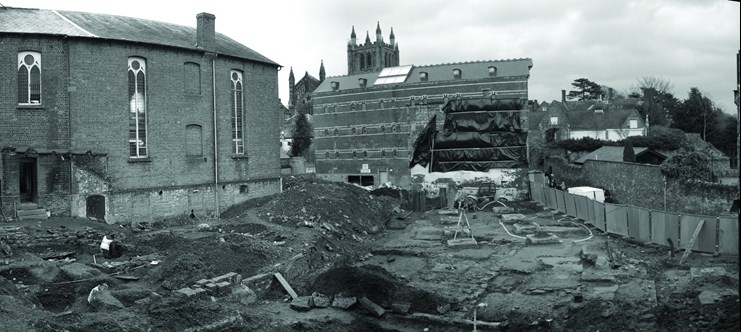
<p><strong>Historic Environment Today (HET)</strong> was Herefordshire Archaeology's newsletter which ran from 1998 to 2012, it contained information on archaeology of Herefordshire and the activities of the unit. The whole archive can now be found here. </p>
<h3>Volume 1</h3>
<ul>
<li><a href="/media/1124/het_vol01_issue1_oct1998.pdf" title="HET_Vol01_Issue1_Oct1998.pdf">HET. Volume 1. Issue 1. October 1998.</a></li>
</ul>
<h4>Volume 2</h4>
<ul>
<li><a href="/media/1125/het_vol02_issue1_feb1999.pdf" title="HET_Vol02_Issue1_Feb1999.pdf">HET. Volume 2. Issue 1. February 1999.</a></li>
<li><a href="/media/1119/het_vol02_issue2_may1999.pdf" title="HET_Vol02_Issue2_May1999.pdf">HET. Volume 2. Issue 2. May 1999.</a></li>
<li><a href="/media/1123/het_vol02_issue3_sep1999.pdf" title="HET_Vol02_Issue3_Sep1999.pdf">HET. Volume 2. Issue 3. September 1999.</a></li>
<li><a href="/media/1121/het_vol02_issue4_dec1999.pdf" title="HET_Vol02_Issue4_Dec1999.pdf">HET. Volume 2. Issue 4. December 1999.</a></li>
</ul>
<h4>Volume 3</h4>
<ul>
<li><a href="/media/1122/het_vol03_issue1_may2000.pdf" title="HET_Vol03_Issue1_May2000.pdf">HET. Volume 3. Issue 1. May 2000.</a></li>
<li><a href="/media/1120/het_vol03_issue2_aug2000.pdf" title="HET_Vol03_Issue2_Aug2000.pdf">HET. Volume 3. Issue 2. August 2000.</a></li>
<li><a href="/media/1126/het_vol03_issue3_oct2000.pdf" title="HET_Vol03_Issue3_Oct2000.pdf">HET. Volume 3. Issue 3. October 2000.</a></li>
<li><a href="/media/1127/het_vol03_issue4_dec2000.pdf" title="HET_Vol03_Issue4_Dec2000.pdf">HET. Volume 3. Issue 4. December 2000</a>.</li>
</ul>
<h4>Volume 4</h4>
<ul>
<li><a href="/media/1128/het_vol04_issue1_mar2001.pdf" title="HET_Vol04_Issue1_Mar2001.pdf">HET. Volume 4. Issue 1. March 2001.</a></li>
<li><a href="/media/1130/het_vol04_issue2_jun2001.pdf" title="HET_Vol04_Issue2_Jun2001.pdf">HET. Volume 4. Issue 2. June 2001.</a></li>
<li><a href="/media/1135/het_vol04_issue3_sep2001.pdf" title="HET_Vol04_Issue3_Sep2001.pdf">HET. Volume 4. Issue 3. September 2001.</a></li>
<li><a href="/media/1133/het_vol04_issue4_nov2001.pdf" title="HET_Vol04_Issue4_Nov2001.pdf">HET. Volume 4. Issue 4. November 2001.</a></li>
</ul>
<h4>Volume 5</h4>
<ul>
<li><a href="/media/1129/het_vol05_issue1_apr2002.pdf" title="HET_Vol05_Issue1_Apr2002.pdf">HET. Volume 5. Issue 1. April 2002.</a></li>
<li><a href="/media/1131/het_vol05_issue2_jul2002.pdf" title="HET_Vol05_Issue2_Jul2002.pdf">HET. Volume 5. Issue 2. July 2002.</a></li>
<li><a href="/media/1136/het_vol05_issue3_oct2002.pdf" title="HET_Vol05_Issue3_Oct2002.pdf">HET. Volume 5. Issue 3. October 2002.</a></li>
<li><a href="/media/1132/het_vol05_issue4_dec2002.pdf" title="HET_Vol05_Issue4_Dec2002.pdf">HET. Volume 5. Issue 4. December 2002.</a></li>
</ul>
<h4>Volume 6</h4>
<ul>
<li><a href="/media/1134/het_vol06_issue1_may2003.pdf" title="HET_Vol06_Issue1_May2003.pdf">HET. Volume 6. Issue 1. May 2003.</a></li>
<li><a href="/media/1137/het_vol06_issue2_jul2003.pdf" title="HET_Vol06_Issue2_Jul2003.pdf">HET. Volume 6. Issue 2. July 2003.</a></li>
<li><a href="/media/1138/het_vol06_issue3_oct2003.pdf" title="HET_Vol06_Issue3_Oct2003.pdf">HET. Volume 6. Issue 3. October 2003.</a></li>
<li><a href="/media/1139/het_vol06_issue4_jan2004.pdf" title="HET_Vol06_Issue4_Jan2004.pdf">HET. Volume 6. Issue 4. January 2004.</a></li>
</ul>
<h4>Volume 7</h4>
<ul>
<li><a href="/media/1144/het_vol07_issue1_apr2004.pdf" title="HET_Vol07_Issue1_Apr2004.pdf">HET. Volume 7. Issue 1. April 2004.</a></li>
<li><a href="/media/1143/het_vol07_issue2_jun2004.pdf" title="HET_Vol07_Issue2_Jun2004.pdf">HET. Volume 7. Issue 2. June 2004.</a></li>
<li><a href="/media/1141/het_vol07_issue3_oct2004.pdf" title="HET_Vol07_Issue3_Oct2004.pdf">HET. Volume 7. Issue 3. October 2004.</a></li>
<li><a href="/media/1142/het_vol07_issue4_dec2004.pdf" title="HET_Vol07_Issue4_Dec2004.pdf">HET. Volume 7. Issue 4. December 2004.</a></li>
</ul>
<h4>Volume 8</h4>
<ul>
<li><a href="/media/1140/het_vol08_issue1_apr2005.pdf" title="HET_Vol08_Issue1_Apr2005.pdf">HET. Volume 8. Issue 1. April 2005.</a></li>
<li><a href="/media/1145/het_vol08_issue2_jul2005.pdf" title="HET_Vol08_Issue2_Jul2005.pdf">HET. Volume 8. Issue 2. July 2005.</a></li>
<li><a href="/media/1146/het_vol08_issue3_oct2005.pdf" title="HET_Vol08_Issue3_Oct2005.pdf">HET. Volume 8. Issue 3. October 2005.</a></li>
<li><a href="/media/1149/het_vol08_issue4_dec2004.pdf" title="HET_Vol08_Issue4_Dec2004.pdf">HET. Volume 8. Issue 4. December 2005.</a></li>
</ul>
<h4>Volume 9</h4>
<ul>
<li><a href="/media/1147/het_vol09_issue1_jun2006.pdf" title="HET_Vol09_Issue1_Jun2006.pdf">HET. Volume 9. Issue 1. June 2009.</a></li>
<li><a href="/media/1152/het_vol09_issue2_sep2006.pdf" title="HET_Vol09_Issue2_Sep2006.pdf">HET. Volume 9. Issue 2. September 2009.</a></li>
</ul>
<h4>Volume 10</h4>
<ul>
<li><a href="/media/1150/het_vol10_issue1_may2007.pdf" title="HET_Vol10_Issue1_May2007.pdf">HET. Volume 10. Issue 1. May 2007.</a></li>
<li><a href="/media/1151/het_vol10_issue2_aug2007.pdf" title="HET_Vol10_Issue2_Aug2007.pdf">HET. Volume 10. Issue 2. August 2007.</a></li>
<li><a href="/media/1148/het_vol10_issue3_oct2007.pdf" title="HET_Vol10_Issue3_Oct2007.pdf">HET. Volume 10. Issue 3. October 2007.</a></li>
<li><a href="/media/1156/het_vol10_issue4_dec2007.pdf" title="HET_Vol10_Issue4_Dec2007.pdf">HET. Volume 10. Issue 4. December 2007.</a></li>
</ul>
<h4>Volume 11</h4>
<ul>
<li><a href="/media/1154/het_vol11_issue1_apr2008.pdf" title="HET_Vol11_Issue1_Apr2008.pdf">HET. Volume 11. Issue 1. April 2008.</a></li>
<li><a href="/media/1157/het_vol11_issue2_jul2008.pdf" title="HET_Vol11_Issue2_Jul2008.pdf">HET. Volume 11. Issue 2. July 2008.</a></li>
<li><a href="/media/1155/het_vol11_issue3_aug2008.pdf" title="HET_Vol11_Issue3_Aug2008.pdf">HET. Volume 11. Issue 3. August 2008.</a></li>
<li><a href="/media/1153/het_vol11_issue4_dec2008.pdf" title="HET_Vol11_Issue4_Dec2008.pdf">HET. Volume 11. Issue 4. December 2008.</a></li>
</ul>
<h4>Volume 12</h4>
<ul>
<li><a href="/media/1158/het_vol12_issue1_may2009.pdf" title="HET_Vol12_Issue1_May2009.pdf">HET. Volume 12. Issue 1. May 2009.</a></li>
<li><a href="/media/1162/het_vol12_issue2_oct2009.pdf" title="HET_Vol12_Issue2_Oct2009.pdf">HET. Volume 12. Issue 2. October 2009.</a></li>
<li><a href="/media/1161/het_vol12_issue3_nov2009.pdf" title="HET_Vol12_Issue3_Nov2009.pdf">HET. Volume 12. Issue 3. November 2009.</a></li>
<li><a href="/media/1163/het_vol12_issue4_apr2010.pdf" title="HET_Vol12_Issue4_Apr2010.pdf">HET. Volume 12. Issue 4. April 2010.</a></li>
</ul>
<h4>Volume 13</h4>
<ul>
<li><a href="/media/1160/het_vol13_issue1_oct2010.pdf" title="HET_Vol13_Issue1_Oct2010.pdf">HET. Volume 13. Issue 1. October 2010.</a></li>
<li><a href="/media/1159/het_vol13_issue2_jan2011.pdf" title="HET_Vol13_Issue2_Jan2011.pdf">HET. Volume 13. Issue 2. January 2011.</a></li>
</ul>
<h4>Volume 14</h4>
<ul>
<li><a href="/media/1164/het_vol14_issue1_summer2011.pdf" title="HET_Vol14_Issue1_Summer2011.pdf">HET. Volume 14. Issue 1. Summer 2011.</a></li>
<li><a href="/media/1165/het_vol14_issue2_spring2012.pdf" title="HET_Vol14_Issue2_Spring2012.pdf">HET. Volume 14. Issue 2. Spring 2012.</a></li>
</ul>
<h4>Volume 15</h4>
<ul>
<li><a href="/media/1166/het_vol15_issue1_autumn2012.pdf" title="HET_Vol15_Issue1_Autumn2012.pdf">HET. Volume 15. Issue 1. Autumn 2012.</a></li>
</ul>]]>      </bodytext>
      <metadescription>
        <![CDATA[Historic Environment Today (HET) Archives]]>
      </metadescription>
      <metakeywords>
        <![CDATA[Historic Environment Today,HET]]>
      </metakeywords>
      <publishdate>1651140804</publishdate>
      <boost>0</boost>
    </page>
    <page>
      <objectID>
        4_4_1059
      </objectID>
      <url>
        https://htt.herefordshire.gov.uk/her-search/
      </url>
      <title>
        <![CDATA[HER Search]]>
      </title>
      <bodytext>
<![CDATA[<p>There are two online databases you can use to search for information on archaeological and historic sites in Herefordshire.</p>
<p><img style="width: 332.1033210332103px; height: 500px;" src="/media/1034/lowerluggproj3.jpg?width=332.1033210332103&amp;height=500" alt="" rel="1676" /></p>
<h2>Herefordshire Historic Environment Record Database</h2>
<p>The Historic Environment Record (HER) is a record of all known archaeological and historic sites in Herefordshire. This online version of the HER's monuments database gives a summary description of each site and a list of the sources of information used to compile it. Where archaeological work has been carried out, this is also recorded.</p>
<p><a href="/her-search/monuments-search/" title="Monuments Search">Search the Monuments Database &gt;&gt;</a></p>
<p><a href="/her-search/sources/search/" title="Search">Search Sources Database &gt;&gt;</a></p>
<h2>Field-Names and Landowners Database</h2>
<p>This database allows you to search for information on historic field-names and landowners for the county. Most of the field-names in the database come from the tithe maps, which date to the years around 1840. The names were collected by the Herefordshire Field-Name Survey from the original maps and surveys held in Herefordshire Record Office. The general editor of the Survey was Ruth E. Richardson.</p>
<p><a href="/her-search/field-names-and-landowners/" title="Field Names and Landowners">Search the Field-Names and Landowners Database &gt;&gt;</a></p>
<h2>Use of the Online Databases</h2>
<p>Please note that the information shown in the Herefordshire Through Time online databases <strong>is not suitable for commercial or Neighbourhood Planning use</strong>. Organisations or individuals requiring information for commercial, professional or planning purposes should contact the HER directly to arrange an enquiry by means of the relevant proforma. You can also arrange a visit to consult the full Historic Environment Record and associated holdings. Please see <a href="/information-and-resources/working-in-the-historic-environment/" title="Information for contractors">information for contractors</a> or read the <a href="/media/1023/herefordshire-her-guidance-document.pdf" title="Herefordshire HER Guidance Document.pdf">HER Guidance Document</a>.</p>
<h2>Public Access</h2>
<p>Please note that inclusion on this website does not imply public access to any of the archaeological sites. Most of the sites are on private property and are not open to the general public.</p>
<h2>Database Conditions of Use</h2>
<p><span>Use of the searchable online Herefordshire Historic Environment database is subject to conditions. To read our Conditions of Use statement, click </span><a href="/her-search/database-conditions-of-use/" title="Database Conditions of Use">here</a><span>. </span></p>]]>      </bodytext>
      <metadescription>
        <![CDATA[Online HER Search]]>
      </metadescription>
      <metakeywords>
        <![CDATA[Herefordshire Archaeology,HER,Historic Environment Record,Archaeology,Database]]>
      </metakeywords>
      <publishdate>1651140804</publishdate>
      <boost>0</boost>
    </page>
    <page>
      <objectID>
        4_4_1082
      </objectID>
      <url>
        https://htt.herefordshire.gov.uk/her-search/monuments-search/
      </url>
      <title>
        <![CDATA[Monuments Search]]>
      </title>
      <bodytext>
<![CDATA[<h2>Herefordshire Historic Environment Record Database</h2>
<p>Before using this search facility, please read our <a href="/her-search/database-conditions-of-use/" title="Database Conditions of Use">Database Conditions of Use</a>. <strong>Contractors must note that the online databases are not suitable for commercial purposes.</strong> In these cases, a formal enquiry must be requested using the HER Data Request proforma and the HER Licence proforma on the <a href="/information-and-resources/working-in-the-historic-environment/" title="Information for contractors">Information for Contractors</a> page.  </p>
<h3>To search the HER</h3>
<p>Use the text boxes and drop-down menus in the search form to select sites matching specific criteria, such as Roman villas or Medieval sites in Hereford. You can search in two ways:</p>
<h3>Search by HER Number</h3>
<p>Use this option to search for a specific monument for which you already know the HER number. Type the number into the box and click on the "Start search" button.</p>
<h3>Advanced Search</h3>
<p>This allows you to search for all monuments in the database that meet your chosen criteria. There are a number of options you can choose from:</p>
<ul>
<li>Site Name: type in a keyword from the site name.</li>
<li>Parish: select one or more parishes from the drop-down menu. To choose more than one, hold down the Ctrl key while clicking on your mouse.</li>
<li>Grid reference: see the instructions on the Search page.</li>
<li>Period: select periods from the drop-down menus to define a date range to be searched. Tick Unknown date and/or Undated to include those records in your search. Choose Narrow to include only sites whose dates are wholly within your chosen period, or Broad to include sites whose dates may extend beyond the chosen period.</li>
<li>Site Type: choose one or more site types from the drop-down menu, or type the site type you are interested in into the box. Please note that the search results will return all records that exactly match your chosen site type and all records that are sub-categories of that site type. For example, searching on "barrow" will return records indexed as "barrow", "long barrow", "round barrow", and so on. Some search results may include related sub-categories with different names, for example searching on "castle" will also return records indexed as "motte and bailey", "keep" and "ringwork". These sub-categories are based on a nationally-agreed system of definitions produced by English Heritage. Note that if you only want to search on a sub-category, you must choose that specific term from the drop-down list, for example if you are only interested in long barrows, you need to choose "long barrow", not "barrow".</li>
</ul>
<p>When you have defined your search criteria, click on the "Start search" button to run the search.</p>
<h3>Sources</h3>
<p>In addition to searching the database of Historic Environment records it is possible to make an independent search of <a href="/her-search/sources/" title="Sources">Sources</a>. These include both bibliographic references in conventional journals and books, and unpublished "grey literature" reports, such as excavation and survey reports housed in the HER offices in Hereford. Some unpublished reports are available to download from this web site. All HER sites are linked to a source, but not all sources are linked to HER sites yet.</p>
<h3>Hints</h3>
<ul>
<li>Once you have run your search, you can click on underlined green text to see more details.</li>
<li>Many combinations of search terms will not exist (e.g. there are no Roman railway stations), so it is usually advisable to start with a broad search, then refine it further.</li>
<li>Use the <a href="/her-search/monuments-search/browse/" title="Browse">Browse Monuments </a>links. These take you through a series of linked pages listing the sites by location, period or type, so you can move through successive pages listing (for instance):</li>
</ul>
<ol type="1">
<li>Summary of sites in All Parishes;</li>
<li>All sites in Ledbury parish;</li>
<li>All sites in Ledbury of Roman date;</li>
<li>All kilns in Ledbury of Roman date.</li>
</ol>
<p><a href="/her-search/monuments-search/search/" title="Search">Search Monuments here &gt;&gt;</a></p>]]>      </bodytext>
      <metadescription>
        <![CDATA[]]>
      </metadescription>
      <metakeywords>
        <![CDATA[]]>
      </metakeywords>
      <publishdate>1651140804</publishdate>
      <boost>0</boost>
    </page>
    <page>
      <objectID>
        4_4_1156
      </objectID>
      <url>
        https://htt.herefordshire.gov.uk/her-search/sources/
      </url>
      <title>
        <![CDATA[Sources]]>
      </title>
      <bodytext>
<![CDATA[<p><span>Before using this search facility, please read our </span><a href="/her-search/database-conditions-of-use/" title="Database Conditions of Use">Database Conditions of Use</a></p>
<p>Sources are the items of information that have been used to compile the monument records (and other related records) in the Historic Environment Record database. These include both bibliographic references in conventional journals and books, and unpublished "grey literature" reports, such as excavation and survey reports housed in the HER offices in Hereford. Records of the individual sources are held in a separate database. You can search this database in two ways:</p>
<h3>Search by Source Number</h3>
<p>This allows you to search for more information on a specific source for which you already have the Source record number. Source numbers relating to each monument are listed at the end of the monument's HER entry. To carry out your search, type the number of your chosen source into the box and click on the "Start search" button.</p>
<h3>Advanced Search</h3>
<p>This allows you to search the Sources database in a more general way, retrieving groups of records that fit search criteria defined by you. A number of options are available:</p>
<ul>
<li>Author: search for a keyword from an author's name (usually the surname)</li>
<li>Title: search for a keyword taken from the source's title</li>
<li>Date: search for a specific year (it is not possible to define the date more closely than this)</li>
<li>Source type: search for a particular source type, such as aerial photographs, by selecting from the drop-down menu</li>
<li>Series: this search is only available when searching for the source type Unpublished Reports. When Unpublished Reports is selected, the Series drop-down menu is activated, allowing you to highlight your selection from the list of organisations.</li>
</ul>
<p>You can choose to search on just one of these options, or on a combination of two or more. When you have finished defining your search, click on the "Start search" button to run the search.</p>
<p><a href="/her-search/sources/search/" title="Search">Search Sources here &gt;&gt;</a></p>
<p> </p>]]>      </bodytext>
      <metadescription>
        <![CDATA[]]>
      </metadescription>
      <metakeywords>
        <![CDATA[]]>
      </metakeywords>
      <publishdate>1651140804</publishdate>
      <boost>0</boost>
    </page>
    <page>
      <objectID>
        4_4_1083
      </objectID>
      <url>
        https://htt.herefordshire.gov.uk/her-search/field-names-and-landowners/
      </url>
      <title>
        <![CDATA[Field Names and Landowners]]>
      </title>
      <bodytext>
<![CDATA[<h2>Where do the field and landowner names come from?</h2>
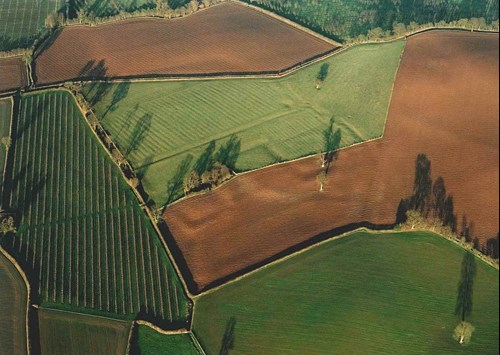
<p><span style="font-size: 11px;"><img style="width: 500px; height: 355.7312252964427px;" src="/media/1035/bosbury-1.jpeg?width=500&amp;height=355.7312252964427" alt="Earthworks AP" rel="1677" /></span></p>
<p>Most of the field-names in the database come from the Tithe maps, which date to about 1840. They were collected by the Herefordshire Field-Name Survey, organised by members of the Archaeological Research Section of the Woolhope Naturalists' Field Club (general editor Ruth E. Richardson), between 1987 and 1993 from the original maps and surveys held in Herefordshire Record Office. We are very grateful to the Research Group for allowing us to use their work. They were then typed up over two years by HER volunteers working from home. The landowner names were collected by Geoff Gwatkin from the original apportionments (surveys) and given to the HER. Geoff has now produced a series of 19th century parish maps with the field-names and list of landowners, and these are available for purchase directly from Geoff Gwatkin (e-mail: <a href="mailto:geoff.gwatkin@btinternet.com">geoff.gwatkin@btinternet.com</a>; website: <a href="http://www.geoffgwatkinmaps.co.uk/">http://www.geoffgwatkinmaps.co.uk/</a>).</p>
<p>The maps are far more informative than a mere list of names. Looking at them you can see the Medieval village, i.e. where the common fields, woods, tracks, meadows, village centre, outlying farms and quarries lay. Seeing the field-names all together in the database can tell us much. It is possible to search for curiosities (were there any gibbets, saffron fields, tobacco plants, lime kilns?), to compare the amount of meadow or pasture between parishes, and to look for industrial sites (e.g. glassworks), crops (e.g. flax, hemp) or particular plants (e.g. juniper, lime). The landowner names are also useful, as in list form it is possible to search quickly for a particular person and to get some idea of who owned what, and where.</p>
<h3>How to locate the field</h3>
<p>Fields were grouped by landowner, so consecutive numbers are often scattered about the parish. There is no grid reference specific to the field name; you will need the hard copy map to find the location of the field. The maps are held at Herefordshire Record Office (tel: 01432 260750) and in Hereford Library, or transcriptions can be bought directly from Geoff Gwatkin (01989 565852). Copies of Geoff Gwatkin's transcriptions are also available for viewing in the HER office, but for copyright reasons we cannot provide copies.</p>
<h3>How to find a person</h3>
<p>Type part of the name, or the entire name, in the appropriate box. Remember that many people had the same name, and often the same person had their name spelt slightly differently in different parishes. Remember also that this is a list of landowners, not of tenants. Most of the fields had tenants as well as landlords, and sometimes they were the same person, but usually not. The only way to find the tenant is to go to the original document.</p>]]>      </bodytext>
      <metadescription>
        <![CDATA[]]>
      </metadescription>
      <metakeywords>
        <![CDATA[]]>
      </metakeywords>
      <publishdate>1651140804</publishdate>
      <boost>0</boost>
    </page>
    <page>
      <objectID>
        4_4_1541
      </objectID>
      <url>
        https://htt.herefordshire.gov.uk/her-search/submitting-an-her-enquiry/
      </url>
      <title>
        <![CDATA[Submitting an HER Enquiry]]>
      </title>
      <bodytext>
<![CDATA[<p><img style="width: 410.37735849056605px; height: 500px;" src="/media/1036/lowerluggproj1.jpg?width=410.37735849056605&amp;height=500" alt="" rel="1678" /></p>
<p>The online version of the HER database is limited - <strong>as such it should not be used for the basis of commercial, planning or academic research</strong>. Instead, please submit a formal HER Enquiry.</p>
<p>Prior to contacting the HER please read the <a href="/media/1183/herefordshireher_guidance_document_v3.pdf" title="HerefordshireHER_Guidance_Document_v3.pdf">HER Guidance Document</a>.</p>
<p><strong>Anyone</strong> wishing to request HER Data, please complete both the<a href="/media/1185/2025_her_enquiry_form.pdf" title="2025_HER_Enquiry_Form.pdf"> <strong>HER Data Enquiry Form</strong></a> and <strong><a href="/media/1176/herefordshire-her-licence-agreement-v2.pdf" title="Herefordshire HER Licence Agreement v2.pdf">HER Licence Request Form</a></strong>, and email them to <a href="mailto:HEREnquiries@herefordshire.gov.uk">herenquiries@herefordshire.gov.uk</a>.</p>
<p><strong>These forms should be used for all enquiries</strong> whether they be; commercial, academic, funded researcher, students, Neighbourhood Planning Groups or private researchers. For EIA, EWCO or other agri-environmental scheme requests please mark the purpose of enquiry in email and the HER response will be tailored to your needs.</p>
<p>For all commercial and agri-environmental enquiries there will be a charge.</p>
<p>Our charges are:</p>
<p>Our current charges are:</p>
<p><strong>HER Commercial Search Rates:</strong></p>
<ul>
<li>Standard (10 day response)         <strong>£150 per hour.</strong></li>
<li>Priority (2 day response)              <strong>£234 per hour.</strong></li>
<li>Admin Charge for null return results. This will be applied where the HER does not hold any records: <strong>£35</strong></li>
</ul>
<p>An additional charge for non-standard data or the provision of printed materials / creation of mapped results will result in an additional service charge. This will be a minimum of 30 minutes at the appropriate service rate.</p>
<p>After the initial first hour all searches will be costed to the nearest 15 minute at the appropriate service rate</p>
<p><strong>Historic Environment Agri-Environmental Advice Rates:</strong></p>
<p>This will be applied to all agri-environmental work including the English Woodland Creation Offer (EWCO) and Environmental Impact Assessments (EIA).</p>
<ul>
<li>less than 2 hectares         <strong>£64</strong></li>
<li>2-5 hectares                     <strong>£99</strong>  </li>
<li>5-25 hectares                   <strong>£150</strong></li>
<li>25 hectares +                   <strong>price on request</strong></li>
<li>Admin Charge for null return results. This will be applied where the HER does not hold any relevant information: <strong>£35</strong></li>
</ul>
<p>We aim to deliver all HER searches within a single chargeable hour. For those that take longer we charge incrementally in 15 minute periods at the above relevant rate.</p>
<p>Search costs are normally waived for private researchers, students and occasionally in other circumstances. Non-commercial rates  can also be applied in some instances and the HER is happy to discuss these matters on a case by case basis via the above email address</p>
<p>If your enquiry is related to planning or development, please contact the Herefordshire Archaeology's Archaeological Advisor, to discuss your project, on 01432 383350.</p>
<p><strong> </strong></p>]]>      </bodytext>
      <metadescription>
        <![CDATA[]]>
      </metadescription>
      <metakeywords>
        <![CDATA[]]>
      </metakeywords>
      <publishdate>1749122391</publishdate>
      <boost>0</boost>
    </page>
    <page>
      <objectID>
        4_4_1480
      </objectID>
      <url>
        https://htt.herefordshire.gov.uk/her-search/database-conditions-of-use/
      </url>
      <title>
        <![CDATA[Database Conditions of Use]]>
      </title>
      <bodytext>
<![CDATA[<p><span>In addition to the general </span><a href="/terms-of-use/" title="Terms of Use">Terms of Use</a> <span>of the Herefordshire Through Time website, the following Conditions of Use apply to the searchable HER database:</span></p>
<h2>Conditions of use</h2>
<p><span>1. Herefordshire Council holds copyright of the Historic Environment Record (HER) compiled data. The information may be used for research but the source must be acknowledged.</span></p>
<p>2. Information obtained from the HER database must not be used for purposes that could, knowingly or unknowingly, damage (or lead to damage to) the historic environment.</p>
<p>3. The material in the database is not suitable for professional or commercial use such as planning and development control, agri-environment scheme applications or the development of strategic policies, management plans or similar. If you require information for these purposes you should contact our Archaeological Advisor (telephone 01432 383350, or e-mail: <a href="mailto:jcotton2@herefordshire.gov.uk">jcotton2@herefordshire.gov.uk</a>) or our Archaeological Projects Manager (telephone 01432 383352 or e-mail: <a href="mailto:thoverd@herefordshire.gov.uk">thoverd@herefordshire.gov.uk</a>).</p>
<p>4. The information in the database has been compiled from a variety of sources, some of which are very old and not all of which have been verified. Therefore, Herefordshire Council and Herefordshire Archaeology cannot accept responsibility for any omissions or errors, or for any consequences arising from use of information contained within the database. </p>
<p> </p>]]>      </bodytext>
      <metadescription>
        <![CDATA[]]>
      </metadescription>
      <metakeywords>
        <![CDATA[]]>
      </metakeywords>
      <publishdate>1651140804</publishdate>
      <boost>0</boost>
    </page>
    <page>
      <objectID>
        4_4_1065
      </objectID>
      <url>
        https://htt.herefordshire.gov.uk/information-and-resources/
      </url>
      <title>
        <![CDATA[Information and Resources]]>
      </title>
      <bodytext>
<![CDATA[<p><span><img style="width: 500px; height: 374.609375px;" src="/media/1046/kilpeck_8-12-2014__002.jpg?width=500&amp;height=374.609375" alt="Kilpeck Castle" rel="1690" /></span></p>
<p><span>This section provides access to a selection of useful information. Topics covered include some specific to Herefordshire Archaeology and this website, and others of wider interest and application.</span></p>
<ul>
<li><a href="/information-and-resources/working-in-the-historic-environment/" title="Working in the Historic Environment">Working in the Historic Environment </a>is for historic environment professionals carrying out work in Herefordshire. It includes a downloadable Scheduled Monument Consent application form, Area of Archaeological Importance (AAI) Certificate application form and an Area of Archaeological Importance (AAI) Operations Notice form. The Area of Archaeological Importance covers the central area of the city of Hereford. It also includes information and proforma relating to requesting HER Data.</li>
<li><a href="/information-and-resources/metal-detecting/" title="Metal Detecting">Metal Detecting</a> includes important information for anyone wishing to metal detect in Herefordshire, including the Portable Antiquities Scheme, the laws relating to metal detecting, and the Treasure Act.</li>
<li><a href="/information-and-resources/historic-environment-tourism/" title="Historic Environment Tourism">Historic Environment Tourism</a> includes information on interesting sites and attractions in Herefordshire that are open to the public, as well as suggestions for self-guided walks and for school visits.</li>
<li><a href="/information-and-resources/referencing-herefordshire-through-time/" title="Referencing Herefordshire Through Time">Referencing the Herefordshire Through Time Website</a> gives helpful guidelines for students and researchers on how to provide references for information from this website used in essays and other work.</li>
<li><a href="/information-and-resources/links-to-other-websites/" title="Links to other websites">Links to Other Websites</a> provides links to websites that may be of interest to users of Herefordshire Through Time.</li>
</ul>]]>      </bodytext>
      <metadescription>
        <![CDATA[Archaeological Resources and Information for Herefordshire's Historic Environment]]>
      </metadescription>
      <metakeywords>
        <![CDATA[Herefordshire Archaeology,Information,Resources,Historic Environment,Metal Detecting,Walks,Tourism,Education]]>
      </metakeywords>
      <publishdate>1651140804</publishdate>
      <boost>0</boost>
    </page>
    <page>
      <objectID>
        4_4_1481
      </objectID>
      <url>
        https://htt.herefordshire.gov.uk/information-and-resources/working-in-the-historic-environment/
      </url>
      <title>
        <![CDATA[Working in the Historic Environment]]>
      </title>
      <bodytext>
<![CDATA[<h2><span><img style="width: 375px; height: 500px;" src="/media/1043/keith-016.jpg?width=375&amp;height=500" alt="Hillfort" rel="1687" /></span></h2>
<h2><span>Event Numbers</span></h2>
<p><span>Prior to any work inside the Historic Environment (e.g. watching brief, building recording, excavation), please contact the Historic Environment Record (01432 260130 or e-mail </span><a href="mailto:HEREnquiries@herefordshire.gov.uk">herenquiries@herefordshire.gov.uk</a><span>) for an HER Event Number. This Event number uniquely identifies the work inside the county and is used to help manage archaeological data. This event number should be quoted on all correspondence (including WSIs), archive and publication work afterwards.</span></p>
<h2><span>Requesting HER Data</span></h2>
<p><strong>The online HER database <em>must</em> <em>not</em> be used for the basis of commercial assessments</strong>, please submit a formal HER Enquiry.</p>
<p>Anyone wishing to request HER Data for any purpose, please complete both the  <a href="/media/1185/2025_her_enquiry_form.pdf" target="_blank" title="2025_HER_Enquiry_Form.pdf">HER Enquiry Form</a><strong><a href="/media/1184/2024_her_enquiry_form_compressed.pdf" target="_blank" title="2024_HER_Enquiry_Form_compressed.pdf"></a></strong><span> </span> and <strong><a href="/media/1176/herefordshire-her-licence-agreement-v2.pdf" target="_blank" title="Herefordshire HER Licence Agreement v2.pdf">HER Licence Request Form</a></strong> and return by email to <a href="mailto:herenquiries@herefordshire.gov.uk">herenquiries@herefordshire.gov.uk</a>   </p>
<p><strong>These forms should be used for all enquiries</strong> whether they be; commercial, academic, funded researcher, students, Neighbourhood Planning Groups or private researchers. For EIA, EWCO or other agri-environmental scheme requests please mark the purpose of enquiry in email and the HER response will be tailored to your needs.</p>
<p>For all commercial and agri-environmental enquiries there will be a charge.</p>
<p>Our current charges are:</p>
<p><strong>HER Commercial Search Rates:</strong></p>
<ul>
<li>Standard (10 day response)         <strong>£150 per hour.</strong></li>
<li>Priority (2 day response)              <strong>£234 per hour.</strong></li>
<li>Admin Charge for null return results. This will be applied where the HER does not hold any records: <strong>£35</strong></li>
</ul>
<p> An additional charge for non-standard data or the provision of printed materials / creation of mapped results will result in an additional service charge. This will be a minimum of 30 minutes at the appropriate service rate.</p>
<p>After the initial first hour all searches will be costed to the nearest 15 minute at the appropriate service rate</p>
<p><strong>Historic Environment Agri-Environmental Advice Rates:</strong></p>
<p>This will be applied to all agri-environmental work including the English Woodland Creation Offer (EWCO) and Environmental Impact Assessments (EIA).</p>
<ul>
<li>less than 2 hectares         <strong>£64</strong></li>
<li>2-5 hectares                     <strong>£99</strong>  </li>
<li>5-25 hectares                   <strong>£150</strong></li>
<li>25 hectares +                   <strong>price on request</strong></li>
<li>Admin Charge for null return results. This will be applied where the HER does not hold any relevant information: <strong>£35</strong></li>
</ul>
<p>We aim to deliver all HER searches within a single chargeable hour. For those that take longer we charge incrementally in 15 minute periods at the above relevant rate.</p>
<p>Search costs are normally waived for private researchers, students and occasionally in other circumstances. Non-commercial rates  can also be applied in some instances and the HER is happy to discuss these matters on a case by case basis via the above email address</p>
<p>If your enquiry is related to planning or development, please contact the Herefordshire Archaeology's Archaeological Advisor, to discuss your project, on 01432 383350.</p>
<p> </p>
<h2><span style="color: #424242; font-size: 13.2px; font-weight: bold; font-family: Verdana, Arial, Helvetica, sans-serif;">Submitting HER Data</span></h2>
<p>Once your work inside Herefordshire's Historic Environment is complete, all reports and data should be submitted to the HER, it does not matter what is the origin of the work, it can be from development, personal research or local history group investigations. Submitting your data and research to the HER helps improve the knowledge of Herefordshire's Historic Environment and allows the data to be incorporated into the overall historical record. This is especially useful to aid further research, highlight work or have your findings included in the planning process.</p>
<p><img style="color: #424242; font-size: 13.2px; font-weight: bold; font-family: Verdana, Arial, Helvetica, sans-serif;" src="/media/1044/kow05-092.jpg?width=375&amp;height=500" alt="Excavation" rel="1688" /></p>
<p><span>To submit reports or data please </span><span>e-mail </span><a href="mailto:HEREnquiries@herefordshire.gov.uk">herenquiries@herefordshire.gov.uk</a><span> or submit hard copies to the HER at </span><a href="https://www.herefordshire.gov.uk/leisure-and-culture/local-history-and-heritage/archives-enquiries" target="_blank">Herefordshire Archives and Records Centre (HARC)</a><span>. Report data is ideally submitted in PDF format, if necessary then photographs in JPG or TIFF. Digital GeoData can be in Shapefile, DWG/DXF or MapInfo Tab format. We also encourage the uploading of your work to the </span><a href="http://archaeologydataservice.ac.uk/" target="_blank">ADS</a><span> through </span><a href="http://oasis.ac.uk/pages/wiki/Main" target="_blank">OASIS</a><span>. Doing this allows a greater visibility to your work.</span></p>
<h2>Working inside the AAI (Area of Archaeological Importance)</h2>
<p>In 1983, the Hereford City Council made a Designation Order to define the historic core of Hereford, as an Area of Archaeological Importance (under the 1979 Ancient Monuments and Archaeological Areas Act). The Hereford Area of Archaeological Importance (AAI) encompasses the whole zone within the medieval walls of the city, together with some of the early suburbs and former monastic precincts.</p>
<p>Herefordshire Council, has the responsibility for ensuring that everyone living, or working, or otherwise carrying out any activities within the designated Area know of its existence, and complies with the regulations affecting it. Herefordshire Archaeology, is responsible for determining what archaeological works might be required in response to receipt of Operations Notices. It is also the service which, if necessary, is authorised to inspect, to record or to excavate sites. It can also authorise other archaeological organisations to carry out investigations in its place.</p>
<p>It is an offence under the Act to undertake any operations within a designated Area of Archaeological Importance which may disturb the ground, or flood any site, or tip upon any site, without giving the administering Authority six weeks notice of the commencement of those operations.</p>
<p>Notice must be given using a pair of prescribed forms; the <a href="/media/1026/aai-operations-notice.pdf" title="AAI Operations Notice.pdf">AAI Operation Notice</a> and an accompanying <a href="/media/1027/aai-certificate.pdf" title="AAI Certificate.pdf">AAI Certificate</a>.</p>
<p>More information is available in the <a href="/media/1029/aai-guidance.pdf" title="AAI GUIDANCE.pdf">Herefordshire AAI Guidance Document</a>, or contacting the Herefordshire Archaeological Advisor, via email <a href="mailto:jcotton2@herefordshire.gov.uk">jcotton2@herefordshire.gov.uk</a> or telephone <span>01432 383350.</span></p>
<h2>Working inside a Scheduled Monument</h2>
<p>Any groundwork within designated Scheduled Monument is prohibited without the express permission from Historic England, this includes metal detecting. Permission can be sort by contacting <a href="https://historicengland.org.uk/advice/planning/consents/smc/">Historic England</a> and obtaining a SMC.</p>]]>      </bodytext>
      <metadescription>
        <![CDATA[]]>
      </metadescription>
      <metakeywords>
        <![CDATA[]]>
      </metakeywords>
      <publishdate>1744049144</publishdate>
      <boost>0</boost>
    </page>
    <page>
      <objectID>
        4_4_1514
      </objectID>
      <url>
        https://htt.herefordshire.gov.uk/information-and-resources/metal-detecting/
      </url>
      <title>
        <![CDATA[Metal Detecting]]>
      </title>
      <bodytext>
<![CDATA[<p><span>Herefordshire Council, like many others, encourages the co-operation of everyone to ensure that we protect archaeological sites and monuments. As such, the valuable information that metal detectorists can provide is of great use if accurately recorded.</span></p>
<p>Objects give us considerably more information about the past if they are recorded in a scientific way and only in the place where they were found, with the context of their position fully recorded. It is often the stratigraphy that gives us the best archaeological information about an area.</p>
<p>While it is often the case that metal detecting only removes objects from the plough soil, where the stratigraphy has already been damaged, recording the position of an object as exactly as possible is still of vital importance to the archaeological record. If finds of pottery and flint are also accurately recorded it is possible to map out settlement sites. This helps to improve our understanding of the county's heritage.</p>
<p>A metal detectorist can become part of a team of trained enthusiasts and join a field walking programme, where the area is walked in plotted transects and any objects retrieved are recorded in their exact findspots. The finds are later identified and a report is written. This type of research can provide valuable information about the history of the local landscape.</p>
<p>If you are interested in researching the past and getting involved in archaeology then please contact the <a href="mailto:thoverd@herefordshire.gov.uk">Tim Hoverd</a>, the Archaeological Projects Manager, who will advise you on research beneficial to the Historic Environment Record.</p>
<h2>If you metal detect</h2>
<p>If you choose to metal detect other than as part of an organised project then:</p>
<ul>
<li>Remember that you must always have the landowner's permission to metal detect. This applies to both private and publicly-owned land. Any finds that you may make on private land without permission belong to the landowner, and you may be prosecuted for trespass. Permission must be sort from Herefordshire Council before operating on any Council or Public Land. </li>
<li>Remember it is illegal to metal detect on a Scheduled Ancient Monument (SAM) without a licence from Historic England.</li>
<li>Remember it is illegal to metal detect within the Area of Archaeological Interest (AAI) without a licence from Herefordshire Council.</li>
<li>Remember that, on land under the Environmental Stewardship Scheme, metal detecting is not permitted on sites of archaeological interest without the written permission of the Department of the Environment, Food and Rural Affairs (Defra). Where legally-protected sites (SAMs) are concerned, written permission from Historic England is also required. You should also note that the stewardship agreement holder is required to protect and maintain archaeological sites and other landscape features on the farm, including those on land not in the stewardship agreement. This also applies to metal detectorists working on such land.</li>
<li>Only metal detect on ploughed fields and do not dig below the ploughsoil.</li>
<li>Record where you discover finds as accurately as possible, giving the date of discovery and providing a six- or eight-figure National Grid Reference. Ordnance Survey maps tell you how to work out the correct grid reference.</li>
<li>If you discover finds, contact Herefordshire Archaeology immediately. This will not affect your legal rights, but may allow more information to be recovered. Removing all the artefacts can damage the very information that we are trying to recover.</li>
<li>You can also take your finds, with the information on when and where you found them, to the Herefordshire Museum for identification. The museum will not keep the objects. The person to contact is Judy Stevenson (telephone 01432 260692). Alternatively, you can take your finds to the <a href="/information-and-resources/metal-detecting/the-portable-antiquities-scheme/" title="The Portable Antiquities Scheme">Portable Antiquities Scheme</a>'s Finds Liaison Officer for Herefordshire and Shropshire, Peter Reavill. He is based at Ludlow Museum in south Shropshire (telephone 01584 813641).</li>
</ul>]]>      </bodytext>
      <metadescription>
        <![CDATA[]]>
      </metadescription>
      <metakeywords>
        <![CDATA[]]>
      </metakeywords>
      <publishdate>1651140804</publishdate>
      <boost>0</boost>
    </page>
    <page>
      <objectID>
        4_4_1515
      </objectID>
      <url>
        https://htt.herefordshire.gov.uk/information-and-resources/metal-detecting/the-portable-antiquities-scheme/
      </url>
      <title>
        <![CDATA[The Portable Antiquities Scheme]]>
      </title>
      <bodytext>
<![CDATA[<p><span>The information on this page is taken from the Portable Antiquities Scheme's leaflet </span><em>Advice for Finders of Archaeological Objects, including Treasure</em><span>.</span></p>
<p>The Portable Antiquities Scheme (PAS) is a voluntary scheme to record archaeological objects found by the public in England and Wales. If recorded, these artefacts have the potential to tell us a great deal about the past, such as how and where people lived and about the types of objects they made and used. The aims of the scheme are as follows:</p>
<ul>
<li>To advance knowledge of the history and archaeology of England and Wales by systematically recording archaeological objects found by the public.</li>
<li>To raise awareness among the public of the educational value of archaeological finds in their context, and to facilitate research on them.</li>
<li>To increase opportunities for active public involvement in archaeology, and to strengthen links between metal detector users and archaeologists.</li>
<li>To encourage all those who find archaeological objects to make them available for recording and to promote best practice by finders.</li>
</ul>
<p>The scheme is entirely voluntary, so you are not legally obliged to report all your finds. However, you must report material which constitutes Treasure, or which you believe may be Treasure (see section below on The Treasure Act). The scheme records every type of artefact, not just metal objects. All objects made before about 1700 are recorded, and more modern finds are recorded selectively. It is often best to let your local Finds Liaison Officer (FLO) see all your finds, especially if you are unsure what they are; a nondescript lump of metal may turn out to be of archaeological interest.</p>
<p>For further information, visit <a href="http://finds.org.uk/">http://finds.org.uk/</a></p>]]>      </bodytext>
      <metadescription>
        <![CDATA[]]>
      </metadescription>
      <metakeywords>
        <![CDATA[]]>
      </metakeywords>
      <publishdate>1651140804</publishdate>
      <boost>0</boost>
    </page>
    <page>
      <objectID>
        4_4_1516
      </objectID>
      <url>
        https://htt.herefordshire.gov.uk/information-and-resources/metal-detecting/metal-detecting-and-the-law/
      </url>
      <title>
        <![CDATA[Metal detecting and the law]]>
      </title>
      <bodytext>
<![CDATA[<p><span>This information is taken from the Portable Antiquities Scheme's leaflet </span><em>Advice for Finders of Archaeological Objects, including Treasure</em><span>.</span></p>
<h2>Where can I metal detect?</h2>
<h3>Scheduled Ancient Monuments (SAMs)</h3>
<p>It is an offence to metal detect without the written permission of the Secretary of State for Culture, Media and Sport on a Scheduled Ancient Monument or on land within zones designated as Areas of Archaeological Importance (i.e. those in Hereford, York, Chester, Exeter and Canterbury). Some local authorities also have byelaws prohibiting the use of metal detectors on their land. It is against the law of trespass to metal detect without the landowner's permission. If you see anyone using a metal detector on such a site, please remind them of the law, as their actions reflect badly on the hobby of metal detecting.</p>
<h3>Land under the Environmental Stewardship Scheme</h3>
<p>The Environmental Stewardship Scheme is operated in England by the Department for Environment, Food and Rural Affairs (Defra). It is a scheme in which farmers and land managers enter into ten-year land management agreements to achieve specific environmental objectives. In Environmental Stewardship agreements, two conditions specifically relate to the use of metal detectors.</p>
<ul>
<li>On agreement land, metal detecting is not permitted on sites of archaeological interest without the written consent of Defra and, where legally-protected sites are concerned, English Heritage. It may be possible to obtain this permission, if you agree to certain recording conditions. Neither your nor the landowner's rights will be affected.</li>
<li>The agreement holder is required to protect and maintain archaeological sites and other landscape features on the farm, including those on land that is not under the land management agreement, and you are expected to agree to these conditions too.</li>
</ul>
<h3>Private land</h3>
<p>Remember: It is against the law of trespass to metal detect on private land without the owner's permission. Any finds that you may make on private land without permission belong to the landowner, and you may be prosecuted for trespass.</p>
<h3>Public land</h3>
<p>You must have the permission of the owner or authority responsible for the land before you begin metal detecting.</p>
<p> </p>]]>      </bodytext>
      <metadescription>
        <![CDATA[]]>
      </metadescription>
      <metakeywords>
        <![CDATA[]]>
      </metakeywords>
      <publishdate>1651140804</publishdate>
      <boost>0</boost>
    </page>
    <page>
      <objectID>
        4_4_1517
      </objectID>
      <url>
        https://htt.herefordshire.gov.uk/information-and-resources/metal-detecting/the-treasure-act/
      </url>
      <title>
        <![CDATA[The Treasure Act]]>
      </title>
      <bodytext>
<![CDATA[<p><span>This information is taken from the Portable Antiquities Scheme's leaflet </span><em>Advice for Finders of Archaeological Objects, including Treasure</em><span>.</span></p>
<p>On 24th September 1997, the Treasure Act 1996 came into force in England and Wales. This Act replaced the common law of Treasure Trove in these countries, and was extended on 1st January 2003. Under the Treasure Act, there is a legal obligation to report all finds of Treasure.</p>
<h2>What is Treasure?</h2>
<p>The following finds are Treasure under the Act, if found after 24th September 1997 (or, in the case of category 2, if found after 1st January 2003):</p>
<p>1. Any metallic object, other than a coin, provided that at least 10% by weight of metal is precious metal (that is, gold or silver) and that it is at least 300 years old when found. If the object is of prehistoric date it will be Treasure provided any part of it is precious metal.</p>
<p>2. Any group of two or more metallic objects of any composition of prehistoric date that come from the same find.</p>
<p>3. All coins from the same find provided they are at least 300 years old when found (but if the coins contain less than 10% of gold or silver there must be at least ten of them). Only the following groups of coins will normally be regarded as coming from the same find:</p>
<ul>
<li>hoards that have been deliberately hidden</li>
<li>smaller groups of coins, such as the contents of purses, that may have been dropped or lost</li>
<li>votive or ritual deposits.</li>
</ul>
<p>4. Any object, whatever it is made of, that is part of the same find as another object that is Treasure. An object or coin is part of the 'same find' as another object or coin if it is found in the same place as, or had previously been together with, the other object. Finds may have become scattered since they were originally deposited in the ground.</p>
<p>5. Any object that would previously have been Treasure Trove, but does not fall within the specific categories given above. Only objects that are less than 300 years old, that are made substantially of gold or silver, that have been deliberately hidden with the intention of recovery and whose owners or heirs are unknown will come into this category.</p>
<h2>What objects do not qualify as Treasure?</h2>
<p>The following types of find are not Treasure:</p>
<ul>
<li>objects whose owners can be traced</li>
<li>unworked or natural objects, including human and animal remains, even if they are found in association with Treasure</li>
<li>objects from the foreshore which are wreck</li>
<li>single coins found on their own</li>
<li>groups of coins lost one by one over a period of time.</li>
</ul>
<p>If in doubt, it is always safest to report your find. Your local Finds Liaison Officer (FLO) will be glad to record all archaeological objects that you find. The FLO for Herefordshire and Shropshire is Peter Reavill, who is based at Ludlow Museum (telephone 01584 813641). Details of FLOs for other areas can be found at <a href="http://finds.org.uk/">http://finds.org.uk/</a>, e-mail <a href="mailto:info@finds.org.uk">info@finds.org.uk</a> or telephone 020 7323 8611.</p>]]>      </bodytext>
      <metadescription>
        <![CDATA[]]>
      </metadescription>
      <metakeywords>
        <![CDATA[]]>
      </metakeywords>
      <publishdate>1651140804</publishdate>
      <boost>0</boost>
    </page>
    <page>
      <objectID>
        4_4_1518
      </objectID>
      <url>
        https://htt.herefordshire.gov.uk/information-and-resources/metal-detecting/reporting-a-find-of-treasure/
      </url>
      <title>
        <![CDATA[Reporting a find of Treasure]]>
      </title>
      <bodytext>
<![CDATA[<p><span>This information is taken from the Portable Antiquities Scheme's leaflet </span><em>Advice for Finders of Archaeological Objects, including Treasure</em><span>.</span></p>
<h2>Reporting a find</h2>
<p>All finds of Treasure must be reported to the local Coroner within 14 days of the find being made, or within 14 days after the day on which you realised the find might be Treasure (for example, as a result of having it identified). The obligation to report Treasure finds applies to everyone, including archaeologists. Finds can be reported in person, by letter, fax, telephone or e-mail: the Finds Liaison Officer for Herefordshire (Peter Reavill, telephone 01584 813641) will be able to help you to do this. You will always receive an acknowledgement and information on where to deposit your find. The Coroner for Herefordshire is D M Halpern, 36/37 Bridge Street, Hereford, HR4 9DJ, telephone 01432 355301.</p>
<h2>Where will I have to take my find?</h2>
<p>In each Coroner's district, there is a local agreement between the Coroner, the Finds Liaison Officer (FLO), local government archaeological officers (in Wales, the Regional Archaeological Trusts) and local or national museums, about where Treasure finds should be deposited. Since 2003, a national network of FLOs has been established across the whole of England and Wales. The FLOs are the main point of contact for Treasure finds. (Details of local FLOs can be found at<a href="http://finds.org.uk/">http://finds.org.uk/</a>, e-mail <a href="mailto:info@finds.org.uk">info@finds.org.uk</a> or telephone 020 7323 8611.)</p>
<p>Upon depositing the find you will be given a receipt. You will need to provide information about exactly where you made the find, wherever possible to the equivalent of a six-figure National Grid Reference. In official dealings, the parish or a four-figure National Grid Reference (1km²) will be used, whilst a more general location description may be used for particularly sensitive finds. It is strongly recommended that you and the landowner should keep the find-site location confidential.</p>
<p>The body or individual receiving the find will notify the Historic Environment Record as soon as possible (if that has not already happened), so that the site where the find was made can be investigated by archaeologists if necessary.</p>
<h2>What if I do not report a find of Treasure?</h2>
<p>The penalty for not reporting a find that you believe (or there is good evidence for believing) to be Treasure, without a reasonable excuse, is imprisonment for up to three months, a fine of up to £5,000 (level 5), or both. You will not be breaking the law if you do not report a find because you did not at first recognise that it might be Treasure, but you should report it once you realise this.</p>
<h2>What if the find is identified as Treasure?</h2>
<p>If the find is Treasure the British Museum or the National Museums Wales will be informed. They will then ascertain whether they or any other museum wishes to acquire it from the Crown.</p>
<p>If no museum wishes to acquire, the Secretary of State will disclaim it. The Coroner will then notify the landowner that the object is to be returned to you after 28 days, unless the landowner objects. If there is an objection, the Coroner will retain the find until the dispute is resolved.</p>
<h2>What if the find is not identified as Treasure?</h2>
<p>If the find is not Treasure, the Coroner will be informed and the find would normally be returned to you without the holding of an inquest.</p>
<h2>What if a museum wishes to acquire the find?</h2>
<p>The Coroner will hold an inquest to decide whether the find is Treasure. If the find is declared to be Treasure then it will be taken to the British Museum so that a valuation can be recommended by the Treasure Valuation Committee: this amount is what a museum will pay to acquire the find. However, the Department of Culture, Media &amp; Sport wishes to encourage finders and landowners to consider donating their finds (therefore waiving their right to this financial reward) and gives certificates to all those who do. This in no way prejudices the rights of finders and landowners to claim a reward if they so choose.</p>
<h2>How is a fair market value for a Treasure find arrived at?</h2>
<p>The Treasure Valuation Committee, which consists of independent experts, values all finds that museums wish to acquire. The Committee will commission a valuation from one or more experts drawn from the antiquities or coin trades. You, the landowner and the acquiring museum will have the option to comment on this valuation, and/or to send in a separate valuation for the Committee to consider. The Committee will inspect the find and arrive at a valuation. If you are then dissatisfied with the Committee's recommendation, there are opportunities to appeal. If you are still dissatisfied, you can then appeal to the Secretary of State.</p>
<h2>What if the Coroner or the National Museum loses or damages my find?</h2>
<p>They are required to take reasonable steps to ensure that this does not happen but, if it does, you should be compensated.</p>
<h2>Who is eligible to receive a share of the reward?</h2>
<p>This is set out in detail in the Treasure Act Code of Practice. To summarise:</p>
<ul>
<li>the finder who has obtained permission to be on the land from its owner, and acted in good faith</li>
<li>the landowner</li>
<li>the person who occupies the particular site as a tenant of the owner (unless this is precluded by the terms of the tenancy agreement).</li>
</ul>
<h2>Who is not eligible to receive a share of the reward?</h2>
<ul>
<li>An archaeologist who makes a Treasure find</li>
<li>A finder or landowner who has acted in bad faith, and not in accordance with the Treasure Act Code of Practice, may expect a reduced share of the valuation, or none at all.</li>
</ul>
<h2>How long will it take before I receive my reward?</h2>
<p>The period between the find being received by the Coroner, or by the organisation to whom he/she has directed that the find be delivered, and the payment of an ex gratia reward should not be longer than twelve months (provided no challenges are made), although it may be necessary to exceed this period in exceptional cases such as large hoards of coins, or finds that present particular difficulties.</p>
<h2>Further advice about Treasure</h2>
<p>Finders are strongly advised to obtain a copy of the Treasure Act Code of Practice, which provides further information about the Act, including guidance on the payment of rewards and advice on the care of finds. It also has lists of useful contact addresses. The Code can be downloaded from the Department for Culture, Media &amp; Sport's website (<a href="http://www.culture.gov.uk/">http://www.culture.gov.uk/</a>) or obtained from the British Museum's Treasure Registrar, your Finds Liaison Officer or through the National Council for Metal Detecting (<a href="http://www.ncmd.co.uk/">http://www.ncmd.co.uk/</a>) or the Federation of Independent Detectorists (<a href="http://www.detectorists.net/">http://www.detectorists.net/</a>, <a href="http://www.fid.newbury.net/">http://www.fid.newbury.net/</a>).</p>
<p> </p>]]>      </bodytext>
      <metadescription>
        <![CDATA[]]>
      </metadescription>
      <metakeywords>
        <![CDATA[]]>
      </metakeywords>
      <publishdate>1651140804</publishdate>
      <boost>0</boost>
    </page>
    <page>
      <objectID>
        4_4_1519
      </objectID>
      <url>
        https://htt.herefordshire.gov.uk/information-and-resources/metal-detecting/code-of-practice-for-responsible-metal-detecting-in-england-and-wales/
      </url>
      <title>
        <![CDATA[Code of Practice for Responsible Metal Detecting in England and Wales]]>
      </title>
      <bodytext>
<![CDATA[<p><span>Being responsible means:</span></p>
<h2>Before you go metal detecting:</h2>
<p>1. Not trespassing; before you start detecting obtain permission to search from the landowner/occupier, regardless of the status, or perceived status, of the land. Remember that all land has an owner. To avoid subsequent disputes it is always advisable to get permission and agreement in writing first regarding the ownership of any finds subsequently discovered (see <a href="http://www.cla.org.uk/">http://www.cla.org.uk/</a> or <a href="http://www.nfuonline.com/">http://www.nfuonline.com/</a>).</p>
<p>2. Adhering to the laws concerning protected sites (e.g. those defined as Scheduled Monuments or Sites of Special Scientific Interest: you can obtain details of these from the owner/occupier, Finds Liaison Officer, Historic Environment Record/Sites and Monuments Record or at <a href="http://www.magic.gov.uk/">http://www.magic.gov.uk/</a>). Take extra care when detecting near protected sites: for example, it is not always clear where the boundaries lie on the ground.</p>
<p>3. You are strongly recommended to join a metal-detecting club or association that encourages co-operation and responsive exchanges with other responsible heritage groups. Details of metal-detecting organisations can be found at <a href="http://www.ncmd.co.uk/">http://www.ncmd.co.uk/</a> or <a href="http://www.fid.newbury.net/">http://www.fid.newbury.net/</a>.</p>
<p>4. Familiarising yourself with and following current conservation advice on the handling, care and storage of archaeological objects (see <a href="http://finds.org.uk/">http://finds.org.uk/</a>).</p>
<h2>While you are metal detecting:</h2>
<p>5. Wherever possible working on ground that has already been disturbed (such as ploughed land or that which has formerly been ploughed), and only within the depth of ploughing. If detecting takes place on undisturbed pasture, be careful to ensure that no damage is done to the archaeological value of the land, including earthworks.</p>
<p>6. Minimising any ground disturbance through the use of suitable tools and by reinstating any excavated material as neatly as possible. Endeavour not to damage stratified archaeological deposits.</p>
<p>7. Recording findspots as accurately as possible for all finds (i.e. to at least 100m², using an Ordnance Survey map or hand-held Global Positioning Systems (GPS) device) whilst in the field. Bag finds individually and then record the National Grid Reference (NGR) on the bag. Findspot information should not be passed on to third parties without the agreement of the landowner/occupier (see also clause 9).</p>
<p>8. Respecting the Country Code (leave gates and property as you find them and do not damage crops, frighten animals or disturb ground-nesting birds, and dispose properly of litter: see <a href="https://www.gov.uk/government/publications/the-countryside-code" target="_blank">The Countryside Code</a>).</p>
<h2>After you have been metal detecting:</h2>
<p>9. Reporting any finds to the relevant landowner/occupier; and (with the agreement of the landowner/occupier) to the Portable Antiquities Scheme, so the information can pass into the local Historic Environment Record/Sites and Monuments Record. Both the Country Land and Business Association (<a href="http://www.cla.org.uk/">http://www.cla.org.uk/</a>) and the National Farmers Union (<a href="http://www.nfuonline.com/">http://www.nfuonline.com/</a>) support the reporting of finds. Details of your local Finds Liaison Officer can be found at <a href="http://finds.org.uk/">http://finds.org.uk/</a>, e-mail <a href="mailto:info@finds.org.uk">info@finds.org.uk</a> or telephone 020 7323 8611.</p>
<p>10. Abiding by the provisions of the Treasure Act and Treasure Act Code of Practice (<a href="http://finds.org.uk/">http://finds.org.uk/</a>), wreck law (<a href="http://www.mcga.gov.uk/">http://www.mcga.gov.uk/</a>) and export licensing (<a href="http://www.mla.gov.uk/">http://www.mla.gov.uk/</a>). If you need advice your local Finds Liaison Officer will be able to help you.</p>
<p>11. Seeking expert help if you discover something large below the ploughsoil, or a concentration of finds or unusual material, or wreck remains, and ensuring that the landowner/occupier's permission is obtained to do so. Your local Finds Liaison Officer may be able to help or will be able to advise of an appropriate person. Reporting the find does not change your rights of discovery, but will result in far more archaeological evidence being discovered.</p>
<p>12. Calling the Police, and notifying the landowner/occupier, if you find any traces of human remains.</p>
<p>13. Calling the Police or HM Coastguard, and notifying the landowner/occupier, if you find anything that may be a live explosive: do not use a metal detector or mobile phone nearby as this might trigger an explosion. Do not attempt to move or interfere with any such explosives.</p>
<p>This code of practice is voluntary, but the following organisations have endorsed it: British Museum; Council for British Archaeology; Country Landowners and Business Association; English Heritage; Federation of Independent Detectorists; Museums, Libraries and Archives Council; National Council for Metal Detecting; National Farmers Union; National Museum Wales; Royal Commission on the Historic and Ancient Monuments of Wales; Portable Antiquities Scheme; Society of Museum Archaeologists.</p>]]>      </bodytext>
      <metadescription>
        <![CDATA[]]>
      </metadescription>
      <metakeywords>
        <![CDATA[]]>
      </metakeywords>
      <publishdate>1651140804</publishdate>
      <boost>0</boost>
    </page>
    <page>
      <objectID>
        4_4_1489
      </objectID>
      <url>
        https://htt.herefordshire.gov.uk/information-and-resources/historic-environment-tourism/
      </url>
      <title>
        <![CDATA[Historic Environment Tourism]]>
      </title>
      <bodytext>
<![CDATA[<p>Herefordshire has many interesting archaeological and historic sites that are open to the public. This section contains useful information on a number of the most interesting and easily accessible. These include properties owned and/or maintained by the National Trust and English Heritage, as well as some that are privately owned. There are also suggestions for self-guided walks around Hereford and the county's historic market towns. Many of the properties are also suitable for school visits.</p>
<p> <img style="width: 500px; height: 333.3333333333333px;" src="/media/1048/haas-07-03-028.jpg?width=500&amp;height=333.3333333333333" alt="Goodrich Castle" rel="1692" /></p>
<h2>English Heritage Properties</h2>
<p><a href="http://www.english-heritage.org.uk/visit/places/arthurs-stone/" target="_blank">Arthur's Stone</a> (<a href="http://htt.herefordshire.gov.uk/her-search/monuments-search/search/monument?smr_no=1528">HER 1528</a>)</p>
<p><a href="http://www.english-heritage.org.uk/visit/places/edvin-loach-old-church/" target="_blank">Edvin Loach Old Church</a> (<a href="http://htt.herefordshire.gov.uk/her-search/monuments-search/search/monument?smr_no=1154">HER 1154</a>)</p>
<p><a href="http://www.english-heritage.org.uk/visit/places/goodrich-castle/" target="_blank">Goodrich Castle</a> (<a href="http://htt.herefordshire.gov.uk/her-search/monuments-search/search/monument?smr_no=349">HER 349</a>)</p>
<p><a href="http://www.english-heritage.org.uk/visit/places/longtown-castle/" target="_blank">Longtown Castle</a> (<a href="http://htt.herefordshire.gov.uk/her-search/monuments-search/search/monument?smr_no=1036">HER 1036</a>)</p>
<p><a href="http://www.english-heritage.org.uk/visit/places/rotherwas-chapel/" target="_blank">Rotherwas Chapel</a> (<a href="http://htt.herefordshire.gov.uk/her-search/monuments-search/search/monument?smr_no=547">HER 547</a>)</p>
<p><a href="http://www.english-heritage.org.uk/visit/places/wigmore-castle/" target="_blank">Wigmore Castle</a> (<a href="http://htt.herefordshire.gov.uk/her-search/monuments-search/search/monument?smr_no=179">HER 179</a>)</p>
<p> </p>
<h2>National Trust Properties</h2>
<p><a href="http://www.nationaltrust.org.uk/berrington-hall" target="_blank">Berrington Hall</a> (<a href="http://htt.herefordshire.gov.uk/her-search/monuments-search/search/monument?smr_no=4016">HER 4016</a> &amp; <a href="http://htt.herefordshire.gov.uk/her-search/monuments-search/search/monument?smr_no=5896">5896</a>)</p>
<p><a href="http://www.nationaltrust.org.uk/brockhampton-estate" target="_blank">Brockhampton Estate</a> (<a href="http://htt.herefordshire.gov.uk/her-search/monuments-search/search/monument?smr_no=939">HER 939</a> &amp; <a href="http://htt.herefordshire.gov.uk/her-search/monuments-search/search/monument?smr_no=938">938</a>)</p>
<p><img src="/media/1045/berrington-hall-front-elevation5-07-12-2008.jpg?width=500&amp;height=375" alt="Berrington Hall" rel="1689" /></p>
<p><a href="http://www.nationaltrust.org.uk/croft-castle-and-parkland" target="_blank">Croft Castle and Parkland</a> (<a href="http://htt.herefordshire.gov.uk/her-search/monuments-search/search/monument?smr_no=6347">HER 6347</a>)</p>
<p><a href="http://www.nationaltrust.org.uk/cwmmau-farmhouse" target="_blank">Cwmmau Farmhouse</a> (<a href="http://htt.herefordshire.gov.uk/her-search/monuments-search/search/monument?smr_no=53769">HER 53769</a>)</p>
<p><a href="http://www.nationaltrust.org.uk/the-weir-garden" target="_blank">The Weir Garden</a> (<a href="http://htt.herefordshire.gov.uk/her-search/monuments-search/search/monument?smr_no=718">HER 718</a>)</p>
<p> </p>
<h2>Other Properties</h2>
<p><a href="http://www.visitherefordshire.co.uk/thingstodo/thedms.aspx?dms=3&amp;venue=1400432&amp;feature=1&amp;groupid=2" target="_blank">Belmont Abbey</a> (<a href="http://htt.herefordshire.gov.uk/her-search/monuments-search/search/monument?smr_no=9430">HER 9430</a>)</p>
<p><a href="http://www.visitherefordshire.co.uk/thingstodo/thedms.aspx?dms=3&amp;venue=1400333&amp;feature=2&amp;groupid=2" target="_blank">Brobury House Gardens</a> (<a href="http://htt.herefordshire.gov.uk/her-search/monuments-search/search/monument?smr_no=4410">HER 4410</a>)</p>
<p><a href="http://www.visitherefordshire.co.uk/thingstodo/thedms.aspx?dms=3&amp;venue=1401235&amp;feature=1&amp;groupid=2" target="_blank">Burton Court</a> (<a href="http://htt.herefordshire.gov.uk/her-search/monuments-search/search/monument?smr_no=1688">HER 1688</a>)</p>
<p><a href="http://www.visitherefordshire.co.uk/thingstodo/thedms.aspx?dms=3&amp;venue=1422070&amp;feature=1000&amp;groupid=2" target="_blank">Eardisland Dovecote</a> (<a href="http://htt.herefordshire.gov.uk/her-search/monuments-search/search/monument?smr_no=7183">HER 7183</a>)</p>
<p><a href="http://www.visitherefordshire.co.uk/thingstodo/thedms.aspx?dms=3&amp;venue=1401500&amp;feature=3&amp;groupid=2" target="_blank">Eastnor Castle</a> (<a href="http://htt.herefordshire.gov.uk/her-search/monuments-search/search/monument?smr_no=6709">HER 6709</a>)</p>
<p><a href="http://www.visitherefordshire.co.uk/thingstodo/thedms.aspx?dms=3&amp;venue=1400696&amp;feature=1&amp;groupid=2" target="_blank">Hampton Court Castle, Gardens and Parkland</a> (<a href="http://htt.herefordshire.gov.uk/her-search/monuments-search/search/monument?smr_no=6556">HER 6556</a>)</p>
<p><a href="http://www.visitherefordshire.co.uk/thingstodo/thedms.aspx?dms=3&amp;venue=1401279&amp;feature=1&amp;groupid=2" target="_blank">Hellens Manor</a> (<a href="http://htt.herefordshire.gov.uk/her-search/monuments-search/search/monument?smr_no=480">HER 480</a>)</p>
<p><a href="http://www.visitherefordshire.co.uk/thingstodo/thedms.aspx?dms=3&amp;venue=1401488&amp;feature=1&amp;groupid=2" target="_blank">Hereford Cathedral</a> (<a href="http://htt.herefordshire.gov.uk/her-search/monuments-search/search/monument?smr_no=386">HER 386</a>)</p>
<p><a href="http://www.visitherefordshire.co.uk/thingstodo/thedms.aspx?dms=3&amp;venue=1420166&amp;feature=1000&amp;groupid=2" target="_blank">Kentchurch Court</a> (<a href="http://htt.herefordshire.gov.uk/her-search/monuments-search/search/monument?smr_no=6785">HER 6785</a>)</p>
<p><a href="http://www.visitherefordshire.co.uk/thingstodo/thedms.aspx?dms=3&amp;venue=1421820&amp;feature=1000&amp;groupid=2" target="_blank">Shobdon Park Garden Temple</a> (<a href="http://htt.herefordshire.gov.uk/her-search/monuments-search/search/monument?smr_no=11176">HER 11176</a>)</p>
<p><a href="http://www.visitherefordshire.co.uk/thingstodo/thedms.aspx?dms=3&amp;venue=1421830&amp;feature=1000&amp;groupid=2" target="_blank">The Summerhouse, Homme House</a> (<a href="http://htt.herefordshire.gov.uk/her-search/monuments-search/search/monument?smr_no=52055">HER 52055</a>)</p>
<p> <img src="/media/1047/old-house-hereford-16-july-2008.jpg?width=500&amp;height=375" alt="The Old House" rel="1691" /></p>
<h2>Herefordshire Museums</h2>
<p><a href="http://www.visitherefordshire.co.uk/thingstodo/thedms.aspx?dms=3&amp;venue=1400927&amp;feature=1&amp;groupid=2" target="_blank">Coningsby Medieval Museum</a></p>
<p><a href="https://www.herefordshire.gov.uk/leisure-and-culture/museums-and-galleries/museums-and-galleries-general-information/#hereford" target="_blank">Hereford Museum &amp; Art Gallery</a></p>
<p><a href="http://www.cidermuseum.co.uk/" target="_blank">Herefordshire Cider Museum</a></p>
<p><a href="http://www.waterworksmuseum.org.uk/" target="_blank">Hereford Waterworks Museum</a></p>
<p><a href="http://www.visitherefordshire.co.uk/thingstodo/thedms.aspx?dms=3&amp;venue=1422120&amp;feature=1000&amp;groupid=2" target="_blank">The Judge's Lodging</a></p>
<p><a href="http://www.leominster.co.uk/leominster-museum.htm" target="_blank">Leominster Folk Museum</a></p>
<p><a href="http://www.visitherefordshire.co.uk/thingstodo/thedms.aspx?dms=3&amp;venue=1400047&amp;feature=2&amp;groupid=2" target="_blank">Mappa Mundi and Chained Library</a></p>
<p><a href="https://www.herefordshire.gov.uk/leisure-and-culture/museums-and-galleries/museums-and-galleries-general-information/#old" target="_blank">The Old House, Hereford</a><span><br /></span></p>
<p><a href="http://www.visitherefordshire.co.uk/thingstodo/thedms.aspx?dms=3&amp;venue=1401466&amp;feature=1&amp;groupid=2" target="_blank">Weobley Museum</a></p>]]>      </bodytext>
      <metadescription>
        <![CDATA[]]>
      </metadescription>
      <metakeywords>
        <![CDATA[]]>
      </metakeywords>
      <publishdate>1651140804</publishdate>
      <boost>0</boost>
    </page>
    <page>
      <objectID>
        4_4_1696
      </objectID>
      <url>
        https://htt.herefordshire.gov.uk/information-and-resources/historic-environment-tourism/historic-walks/
      </url>
      <title>
        <![CDATA[Historic Walks]]>
      </title>
      <bodytext>
<![CDATA[<p><img style="width: 500px; height: 333.3333333333333px;" src="/media/1051/haas-12-01-089.jpg?width=500&amp;height=333.3333333333333" alt="Hillfort" rel="1697" /></p>
<p><span>This section provides directions for self-guided walks around Herefordshire's six market towns and a City walk in Hereford.</span></p>
<p>The walking map points out some historical areas of interest along the route, more information on these historical assets can be found by using the <a href="/her-search/monuments-search/" title="Monuments Search">HER Database</a>.</p>
<ul>
<li><a href="/media/1054/bromyard-walking-map.pdf" title="Bromyard Walking Map.pdf">Bromyard Walking Map</a></li>
<li><a href="/media/1062/hereford-walking-map.pdf" title="Hereford Walking Map.pdf">Hereford Walking Map</a></li>
<li><a href="/media/1057/kington-walking-map.pdf" title="Kington Walking Map.pdf">Kington Walking Map</a></li>
<li><a href="/media/1055/ledbury-walking-map.pdf" title="Ledbury Walking Map.pdf">Ledbury Walking Map</a></li>
<li><a href="/media/1056/leominster-walking-map.pdf" title="Leominster Walking Map.pdf">Leominster Walking Map</a></li>
<li><a href="/media/1053/ross-walking-map.pdf" title="Ross-on-Wye Walking Map.pdf">Ross-on-Wye Walking Map</a></li>
<li><a href="/media/1059/weobley-walking-map.pdf" title="Weobley Walking Map.pdf">Weobley Walking Map</a></li>
</ul>
<p> </p>]]>      </bodytext>
      <metadescription>
        <![CDATA[]]>
      </metadescription>
      <metakeywords>
        <![CDATA[]]>
      </metakeywords>
      <publishdate>1656939703</publishdate>
      <boost>0</boost>
    </page>
    <page>
      <objectID>
        4_4_1513
      </objectID>
      <url>
        https://htt.herefordshire.gov.uk/information-and-resources/referencing-herefordshire-through-time/
      </url>
      <title>
        <![CDATA[Referencing Herefordshire Through Time]]>
      </title>
      <bodytext>
<![CDATA[<h2>Notes for students and other users on how to reference the Historic Environment Record and the Herefordshire Through Time website</h2>
<h3>1. Information from the Historic Environment Record (HER) Database</h3>
<p>If you are writing an essay or dissertation and you make a reference to an HER entry, you must be careful to scroll down to see which particular source was used to draw up the HER entry. Any description of a site or monument is either a composite of the views of several authors, excavation reports or an entry based on a personal observation. Each statement in the HER entry will be referenced to at least one source. You should, therefore, in addition to citing the Herefordshire HER number, also quote the sources(s) the particular information you are using has been taken from. The HER entry in itself is not a primary source!</p>
<p>You will find that each source is footnoted within each HER entry. Sometimes several numbers are put together, indicating that the information is taken from several sources.</p>
<p>For example, if you want to quote the HER entry on Hereford Castle, you must carefully look at which part of the entry you are referring to. The written sources are footnoted within each entry. If you want to cite, "The castle earthworks and house called Castle Cliff occupies the south east angle of the walled town said to have been built by William fitz Osbern soon after the Conquest.", you must find the original source, which is Number 8, Noble, F., "Medieval boroughs of West Herefordshire",<em>Transactions of the Woolhope Naturalists' Field Club</em>. If the information is gained from a watching brief or excavation, this will also be foot-noted. The Events section (you must scroll further down the page to see the Events entries) refers to all excavations, watching briefs and other work associated with a given site.</p>
<p>The correct foot-note for the above-mentioned quote would be:</p>
<p>Herefordshire HER Record 456, information from Noble, F., 1964, "Medieval boroughs of West Herefordshire", <em>Transactions of the Woolhope Naturalists' Field Club</em>XXXVIII Part 1, 62-71.</p>
<p>The reference should also include (if relevant) the year of publication, the page number (if given) and, in the case of a journal or periodical, the volume number.</p>
<p>There are nearly 100 Historic Environment Records (HERs) in Great Britain, so you must be sure to state Herefordshire HER. Some HERs are still referred to by the older title of SMRs (Sites and Monuments Records), and there is also a number of UADs (Urban Archaeological Databases) which cover English cities.</p>
<h3>2. Text from other sections</h3>
<p>At the bottom of each section you will see the name of the original author. You should therefore footnote any quotes with:</p>
<p>The author's name, Herefordshire Through Time and the URL in the address box of any given page.</p>
<p>For example, Toria Forsyth-Moser, Herefordshire Through Time, <a href="/herefordshires-past/the-medieval-period/the-norman-conquest/" title="The Norman Conquest">http://htt.herefordshire.gov.uk/herefordshires-past/the-medieval-period/the-norman-conquest/</a></p>
<h3>3. The guest author section</h3>
<p>Quote the name of the author, the title of the essay, Herefordshire Through Time and the relevant URL.</p>
<p>For example, Roz Lowe, "Sir Samuel Meyrick and Goodrich Court", Herefordshire Through Time, <a href="/herefordshires-past/the-post-medieval-period/herefordshire-life/guest-author-essay-sir-samuel-meyrick-and-goodrich-court/" title="Guest author essay: Sir Samuel Meyrick and Goodrich Court">http://htt.herefordshire.gov.uk/herefordshires-past/the-post-medieval-period/herefordshire-life/guest-author-essay-sir-samuel-meyrick-and-goodrich-court/</a></p>
<p>[Original author: Toria Forsyth-Moser, 2004]</p>
<p> </p>]]>      </bodytext>
      <metadescription>
        <![CDATA[]]>
      </metadescription>
      <metakeywords>
        <![CDATA[]]>
      </metakeywords>
      <publishdate>1651140804</publishdate>
      <boost>0</boost>
    </page>
    <page>
      <objectID>
        4_4_1520
      </objectID>
      <url>
        https://htt.herefordshire.gov.uk/information-and-resources/links-to-other-websites/
      </url>
      <title>
        <![CDATA[Links to other websites]]>
      </title>
      <bodytext>
<![CDATA[<h2>Local websites</h2>
<p><strong><a href="http://www.herefordshire.gov.uk/archives" target="_blank">Hereford Record Office</a>:</strong> Large collection of original documents and maps from AD 1000 to 1950. Search room and library available. <span>Herefordshire Archive and Records Centre, Fir Tree Lane, Rotherwas, Hereford HR2 6LA.</span> telephone 01432 260750, e-mail <a href="mailto:archives@herefordshire.gov.uk">archives@herefordshire.gov.uk</a>. Also limited search available <a href="https://www.herefordshire.gov.uk/leisure-and-culture/local-history-and-heritage/archives-collections" target="_blank">online</a>.<br /><br /><strong><a href="http://www.herefordcathedral.org/education-research/library-and-archives" target="_blank">Hereford Cathedral Library</a>:</strong> Archives of four manors (Canon Pyon, Norton Canon, Woolhope and Preston-on-Wye) and 27 parishes in Herefordshire. Search room and library. Cathedral Close, Hereford, HR1 2NG, telephone 01432 374226, e-mail <a href="mailto:library@herefordcathedral.co.uk">library@herefordcathedral.co.uk</a></p>
<p><strong><a href="http://www.herefordshire.gov.uk/libraries" target="_blank">Herefordshire Libraries</a>: </strong>Large collection of local history books, old maps. Plus county-wide aerial photographs (1947, 1:25,000) and Alfred Watkins photographs, Duncumb Histories and Old Straight Club archives. U<span>npublished Herefordshire histories by Blount, Parry, Williams, Webb, Bird and Hill. Letters, Guild minutes and a large collection of old manuscripts. Unpublished hundreds of Stretford, Wigmore, Wolphy and Greytree. </span>About 200 antiquarian books. </p>
<p>Most of the above are not on the online catalogue, but they are on the library's card index. The library is in Broad Street, Hereford, HR4 9AU, telephone 01432 383600; the library is closed on Mondays.</p>
<p><strong><a href="http://www.herefordshire.gov.uk/museums" target="_blank">Hereford Museum</a>:</strong>  Covers social history, artefacts, learning and resource centre; telephone 01432 342492, e-mail <a href="mailto:herefordmuseums@herefordshire.gov.uk">herefordmuseums@herefordshire.gov.uk</a>. The museum is also located in the library building in Broad Street, Hereford.<br /><br /><strong><a href="http://www.woolhopeclub.org.uk/" target="_blank">Woolhope Club Transactions</a>:</strong>  Local history journal held in all the main libraries, with over 100 volumes beginning in 1851. A huge range of topics is covered, and you may well find that whatever you are researching someone before you has done so too. There are index volumes, which can be searched online on the Club's website.<br /><br /><strong><a href="http://www.worcestershireceramics.org/" target="_blank">Herefordshire Ceramics</a>:</strong> Includes online information on archaeological pottery and forms found in the county.</p>
<p><strong><a href="http://romankilns.net/index.php" target="_blank">Roman Kilns</a></strong>: Includes online information about the location of Roman Kilns found throughout the country.<br /><br /><strong><a href="http://www.victoriacountyhistory.ac.uk/publications-projects/epe/herefordshire" target="_blank">England's Past for Everyone Ledbury Project</a>:</strong> England's Past for Everyone was a Heritage Lottery-funded project involving communities across the country, which ran from 2005 to 2010. Authors and researchers worked alongside volunteers to bring local history to life. In Herefordshire, England's Past for Everyone focused on the historic market town of Ledbury. Herefordshire Archaeology staff members were involved in various aspects of this project.</p>
<p><strong><a href="http://blancheparry.com/" target="_blank" title="Blanche Parry">Blanche Parry</a></strong>: Local Historian Ruth E. Richardson's Homepage. Contains topics on the history of Herefordshire including information on using Field Names for survey and early archaeological work in Herefordshire.</p>
<h2>Local History &amp; Civic Society websites</h2>
<ul>
<li><strong><a href="http://www.bromyardhistorysociety.org.uk" target="_blank">Bromyard &amp; District Local History Society</a></strong></li>
<li><strong><a href="http://dinedorheritagegroup.wordpress.com/" target="_blank">Dinedor Heritage Group</a></strong></li>
<li><strong><a href="http://cusophistory.wixsite.com/cusop" target="_blank">Cusop History Group</a></strong></li>
<li><strong><a href="http://www.eardislandhistory.co.uk/" target="_blank">Eardisland Oral History Group</a> </strong></li>
<li><strong><a href="http://www.ewyaslacy.org.uk/" target="_blank">Ewyas Lacy Study Group</a></strong></li>
<li><strong><a href="http://www.garwayheritagegroup.co.uk/" target="_blank">Garway Heritage Group</a> </strong></li>
<li><strong><a href="http://www.herefordcivicsociety.org.uk/" target="_blank">Hereford Civic Society</a></strong></li>
<li><strong><a href="http://www.herefordshirefhs.org.uk" target="_blank">Herefordshire Family History Society</a>  </strong></li>
<li><strong><a href="http://www.herefordshirelore.org.uk/index.html" target="_blank">Herefordshire Lore</a></strong></li>
<li><strong><a href="http://www.ledburycivicsociety.org/" target="_blank">Ledbury Civic Society</a></strong></li>
<li><strong><a href="http://www.rosscivic.org.uk/" target="_blank">Ross-on-Wye Civic Society</a></strong></li>
<li><strong><a href="http://www.weobley.org/" target="_blank">Weobley Local History Society</a> </strong></li>
</ul>
<h2>National websites</h2>
<p>The following national sources of information will also include Herefordshire information:</p>
<p><strong><a href="/nationalarchives.gov.uk" target="_blank">The National Archives</a>:</strong> The National Archives are located in Kew, London. Many Herefordshire-related documents are held here. View the online catalogue for information on the Archives' holdings.</p>
<p><strong><a href="http://www.bl.uk" target="_blank">The British Library</a>:</strong> Complete catalogue of published books online: it includes over 1100 books with Herefordshire in the title.</p>
<p><strong><a href="/archive.historicengland.org.uk" target="_blank">Historic England Archive</a>:</strong>  Search over 1 million catalogue entries describing photographs, plans and drawings of England's buildings and historic sites, held in the Historic England Archive. Including photographs dating from the 1850s to the present day, ranging from architectural details to archaeological landscapes, from country houses to coal mines, covering counties from Cornwall to Northumberland.</p>
<p><strong><a href="https://historicengland.org.uk/listing/" target="_blank">National Heritage List for England (NHLE)</a></strong>: Historic England's official and up-to-date database of all listed and designated heritage sites in England.</p>
<p><strong><a href="/pastscape.org.uk" target="_blank">PastScape</a>:</strong> PastScape is a quick and easy way to search over 420,000 records held in the National Record of the Historic Environment (NRHE). You'll find information on archaeological, architectural and maritime sites.</p>
<p><strong><a href="http://www.heritagegateway.org.uk/" target="_blank">Heritage Gateway</a>:</strong><span> A portal that allows you to search across national and local records of England's historic sites and buildings, including listed buildings. </span><span>Also provides contact information for England's SMRs and HERs.</span></p>
<p><strong><a href="http://archaeologydataservice.ac.uk/" target="_blank">Archaeology Data Service (ADS)</a>:</strong>  The ADS supports research, learning and teaching with high quality and dependable digital resources. Provides a number of searchable archaeology-related databases, including library catalogues.</p>
<p><strong><a href="http://www.oasis.ac.uk/" target="_blank">OASIS</a>:</strong> Online Access to the Index of Archaeological Investigations. Provides an online index to the mass of unpublished archaeological contractor reports (grey literature) that has been produced as a result of the advent of large-scale developer-funded fieldwork.</p>
<p><a href="https://finds.org.uk/" target="_blank"><strong>Portable Antiquity Scheme (PAS)</strong></a><span>: </span><span>The Portable Antiquities Scheme is project to encourage the voluntary recording of archaeological objects found by members of the public in England and Wales.</span></p>
<p><strong><a href="http://www.visionofbritain.org.uk/" target="_blank"></a><strong><a href="http://www.visionofbritain.org.uk/" target="_blank">Vision of Britain</a></strong>:</strong> Comprehensive data sets including population, poverty, industry, boundary changes and more.<br /><br /><strong><a href="http://www.imagesofengland.org.uk/" target="_blank">Images of England</a>:</strong> English Heritage's <span>digital library of photographs and descriptions of </span><span>England's</span><span> Listed Buildings. All descriptions and many </span><span>images</span><span> can be searched online.</span></p>
<p><strong><a href="http://www.magic.gov.uk/" target="_blank">MAGIC</a>:</strong> Comprehensive data set of Sites of Special Scientific Interest (SSSIs), countryside designations (e.g. Areas of Outstanding Natural Beauty), Scheduled Ancient Monuments and more. Also information on environmental schemes.</p>
<p><a href="http://environment.data.gov.uk/ds/survey/index.jsp#/survey" target="_blank"><strong>Environment Agency Open Data</strong></a>: Environment Agency Data for LiDAR Data.</p>
<p><strong><a href="http://maps.nls.uk/" target="_blank">National Library of Scotland</a></strong>: Includes many georeferenced OS maps of England.</p>
<p><strong><a href="http://www.victoriacountyhistory.ac.uk/" target="_blank">Victoria County History</a>:</strong> Founded in 1899, the VCH is an encyclopedic record of England's places and people from earliest times to the present day. Based at the Institute of Historical Research in the University of London since 1932, the VCH is written by historians working in counties across England.</p>
<h2>Other useful addresses</h2>
<p>The following links are useful websites for those with wider interest in Archaeology:</p>
<p><strong><a href="http://www.archaeologyuk.org/" target="_blank">Council for British Archaeology (CBA)</a>: </strong>An independent charity that brings together members, supporters and partners to give archaeology a voice and safeguard it for future generations.</p>
<p><strong><a href="/thebaa.org" target="_blank">British Association of Archaeologists (BAA)</a>: </strong>Association to promote the study of archaeology, art and architecture and the preservation of our national antiquities. </p>
<p><strong><a href="http://e-a-a.org/" target="_blank">European Association of Archaeologists (EAA)</a>: </strong>Association that represents for all professional archaeologists of Europe.</p>
<p><strong><a href="http://www.bajr.org/" target="_blank">British Archaeological Jobs Resource (BAJR)</a></strong>: Archaeological employment, training and industry news.</p>
<p> </p>
<h2>External Links Statement</h2>
<p>We are not responsible for the content or reliability of the linked websites. References or listings should not be taken as endorsement by Herefordshire Council of any kind. We cannot guarantee that these links will work at all times and we have no control over the availability of linked pages.</p>
<p>We use the term "external links" to mean content not published by <a href="http://www.herefordshire.gov.uk/">http://www.herefordshire.gov.uk/</a>. Please notify <a href="mailto:editor@herefordshire.gov.uk">editor@herefordshire.gov.uk</a> if you have any concerns about external links found on our site.</p>]]>      </bodytext>
      <metadescription>
        <![CDATA[]]>
      </metadescription>
      <metakeywords>
        <![CDATA[]]>
      </metakeywords>
      <publishdate>1651140805</publishdate>
      <boost>0</boost>
    </page>
    <page>
      <objectID>
        4_4_1064
      </objectID>
      <url>
        https://htt.herefordshire.gov.uk/herefordshires-past/
      </url>
      <title>
        <![CDATA[Herefordshire's Past]]>
      </title>
      <bodytext>
<![CDATA[<p>These pages provide an introduction to the prehistory, history and archaeology of Herefordshire. These sections were written by Miranda Greene and Toria Forsyth-Moser (Education Officers for Herefordshire Council 2003-04), with contributions from guest authors with expertise in specific areas (and are identified as such). These pages were written as part of a collaboration with local education programs at the time and unfortunately can no longer be updated as further knowledge emerges. They are simply kept up as an archives, but also to provide a basic introduction to Herefordshire's history and should be used only as such.</p>
<p>The archaeological and historical periods covered are:</p>
<p><span>The </span><a href="/herefordshires-past/the-prehistoric-period/" title="The Prehistoric Period">Prehistoric Period</a><span>: Iron Age Herefordshire overview; Bronze Age Herefordshire overview; Neolithic Herefordshire overview; Mesolithic Herefordshire overview; and Palaeolithic Herefordshire overview.</span></p>
<p><span><span>The </span><a href="/herefordshires-past/the-romano-british-period/" title="The Romano-British Period">Romano-British Period</a><span>: Overview of Roman Herefordshire; the Roman Invasion of Britain; Administration and Towns; Food and Diet; the Roman Army; Timeline; Roman Herefordshire; and Roman Sites.</span></span></p>
<p>The <a href="/herefordshires-past/the-anglo-saxon-period/" title="The Anglo-Saxon Period">Anglo-Saxon Period</a>: General overview; New Beginnings (transition from Roman Britain); Life; Saxon Herefordshire; Hereford's Saxon Origins; Saints; Churches; the <em>Anglo-Saxon Chronicle</em>; Charters; the Vikings; the End of the Anglo-Saxons; Herefordshire Sites; and a Timeline.</p>
<p><span>The </span><a href="/herefordshires-past/the-medieval-period/" title="The Medieval period">Medieval Period</a><span>: Overview of Medieval Herefordshire; The Norman Conquest; Countryside and Landscape; Towns; Villages; The Domesday Survey; Castles (including a gazetteer of the county's many castles); Hereford Cathedral; Churches; Monasteries; the Knights Templar and Knights Hospitaller; the Barons' War; the Wars of the Roses; and the Black Death.</span></p>
<p>The <a href="/herefordshires-past/the-post-medieval-period/" title="The Post-Medieval period">Post-Medieval period</a>: Following a general overview, topics covered include Herefordshire Life (Tudor education and apprenticeship, poverty); the English Civil War (background, Herefordshire's involvement, the effects on the county); Architecture (the range of local building types and their construction); Agriculture and Industry (cider and perry, hops, livestock; iron-making, milling, lime-making, tanning, brewing); Transport (railways, canals, turnpike roads, droving, packhorses); Public Health (19th century medical improvements, hospitals, asylums); Institutions (Hereford library, prisons, workhouses, Non-conformist chapels including a gazetteer of the county's chapels); Crime and Punishment (changing attitudes, methods of punishment); and Slavery (connections with Herefordshire).</p>
<p>There is also an article on <a href="/herefordshires-past/herefordshires-changing-population/" title="Herefordshire's Changing Population">Herefordshire's Changing Population </a>over time.</p>]]>      </bodytext>
      <metadescription>
        <![CDATA[Herefordshire's Past]]>
      </metadescription>
      <metakeywords>
        <![CDATA[Herefordshire Archaeology,Herefordshire through time,Herefordshire's Past,history,education]]>
      </metakeywords>
      <publishdate>1713272845</publishdate>
      <boost>0</boost>
    </page>
    <page>
      <objectID>
        4_4_1660
      </objectID>
      <url>
        https://htt.herefordshire.gov.uk/herefordshires-past/the-prehistoric-period/
      </url>
      <title>
        <![CDATA[The Prehistoric Period]]>
      </title>
      <bodytext>
<![CDATA[<p>The prehistoric period in Britain covers approximately 100,000 BC to AD 43 (the Roman invasion of Britain).</p>
<p>It is divided into five shorter periods:</p>
<ul>
<li>the <a href="/herefordshires-past/the-prehistoric-period/the-palaeolithic/" title="The Palaeolithic">Palaeolithic</a> (c. 100,000 BC to c. 10,000 BC);</li>
<li>the <a href="/herefordshires-past/the-prehistoric-period/the-mesolithic/" title="The Mesolithic">Mesolithic</a> (c. 10,000 BC to c. 4,000 BC);</li>
<li>the <a href="/herefordshires-past/the-prehistoric-period/the-neolithic/" title="The Neolithic">Neolithic</a> (c. 4,000 BC to c. 2,000 BC);</li>
<li>the <a href="/herefordshires-past/the-prehistoric-period/the-bronze-age/" title="The Bronze Age">Bronze Age </a>(c. 2,000 BC to c. 800 BC);</li>
<li>and the <a href="/herefordshires-past/the-prehistoric-period/the-iron-age/" title="The Iron Age">Iron Age </a>(c. 800 BC to AD 43).</li>
</ul>
<p>These pages give brief general overviews of each of these periods, and discuss the situation in Herefordshire during them. To read them, click on the links above or on the titles in the menu on the left-hand side of the page.</p>]]>      </bodytext>
      <metadescription>
        <![CDATA[]]>
      </metadescription>
      <metakeywords>
        <![CDATA[]]>
      </metakeywords>
      <publishdate>1651140803</publishdate>
      <boost>0</boost>
    </page>
    <page>
      <objectID>
        4_4_1661
      </objectID>
      <url>
        https://htt.herefordshire.gov.uk/herefordshires-past/the-prehistoric-period/the-palaeolithic/
      </url>
      <title>
        <![CDATA[The Palaeolithic]]>
      </title>
      <bodytext>
<![CDATA[<p><span style="color: #424242; font-size: 13.2px; font-weight: bold; font-family: Verdana, Arial, Helvetica, sans-serif;">Overview: c. 100,000 BC - c. 10,000 BC</span></p>
<p>During the last phase of the Ice Age (the Devensian: 18,000 - 10,000 years ago), glaciers covered the west of Herefordshire as far east as the area now occupied by the city of Hereford. Added to this, Herefordshire is located on slightly acidic soil, which means that very little organic archaeological evidence much older than 20,000 years old survives. Consequently much of the Palaeolithic evidence that has survived here has been found in cave and rock shelters. In Herefordshire we have two important prehistoric caves in the south of the county, Arthur's Cave (HER no. 902) and Merlin's Cave (HER no. 3358).</p>
<p>The modern human species (<em>homo sapiens</em>) first appeared around 35,000 - 40,000 BC, and was occupying north-west Europe in the later Ice Age. The earliest recorded evidence of human activity in the Marches dates back between 50,000 - 100,000 years ago. These early humans developed ways of utilising flint as tools, such as knifes and spears. This meant that they became more successful in their hunt for food and could begin to move further into the more distant areas of the county.</p>
<p>In Herefordshire the evidence for human activity goes back very early, and is concentrated into five small areas: Colwall; Doward; Kington; Sarnesfield; and Tupsley.</p>
<p>Glacial activity and continuous erosion by the River Wye have formed much of the landscape of southern Herefordshire. There are two caves at Doward which provide archaeological evidence; Arthur's Cave and Merlin's Cave have both been extensively excavated and have displayed an almost complete stratigraphic sequence that covers at least 25,000 years. </p>
<p>In King Arthur's Cave, which was excavated in 1924-7 by the University of Bristol Spelaeological Society, the sequence includes animal bones (woolly rhinoceros, giant deer, wild ox, hyena and mammoth), bone tools, a human burial, and flint and stone artefacts. These are currently in Hereford Museum's stores.</p>
<p>At the height of the Ice Age huge ice sheets covered Wales and most of the west and north Midlands. One such ice sheet is thought to have bisected Herefordshire roughly north to south. At this time most of the county would have been completely covered by a thick layer of ice, up to 180m deep in places.</p>
<p>By 17,000 BC the ice sheets had begun to melt and Herefordshire was slowly being uncovered. Southern Britain was gradually colonised by sub-arctic tundra grasses, mosses and dwarf varieties of trees. The growth of these plants in England caused the migration of animals in search for food, and these were eventually followed by small itinerant hunting groups of humans. These hunting groups changed their settlement patterns depending on environmental and climatic changes, so they would go where the weather and hunting were more conducive to survival.</p>
<p>By 12,000 BC the average winter temperature was around -5° centigrade. The hunting groups needed to find shelter to enable them to survive the harsh winter months. This is one explanation for the utilisation of Arthur's and Merlin's Caves at Doward.      </p>
<p>[Original author: Miranda Greene, 2003]</p>]]>      </bodytext>
      <metadescription>
        <![CDATA[]]>
      </metadescription>
      <metakeywords>
        <![CDATA[]]>
      </metakeywords>
      <publishdate>1651140804</publishdate>
      <boost>0</boost>
    </page>
    <page>
      <objectID>
        4_4_1662
      </objectID>
      <url>
        https://htt.herefordshire.gov.uk/herefordshires-past/the-prehistoric-period/the-mesolithic/
      </url>
      <title>
        <![CDATA[The Mesolithic]]>
      </title>
      <bodytext>
<![CDATA[<p><span style="color: #424242; font-size: 13.2px; font-weight: bold; font-family: Verdana, Arial, Helvetica, sans-serif;">Overview: c. 10,000 BC - c. 4,000 BC</span></p>
<p>The Mesolithic period covers approximately 6,000 years from 10,000 BC. This era was a period when Britain was undergoing climatic and environmental changes that were creating a more hospitable habitat.</p>
<p>Gradually (c. 8500-7500 BC), the climate in Herefordshire began to get warmer and new plants and animals began to colonise the land. These included species of birch, willow and aspen, as well as red deer, wild oxen and wild pig. The human hunting groups became more settled, and regular trading and hunting patterns were developed. </p>
<p>By 7,500 BC these flora and fauna had been joined by the lime, alder, oak, hazel and pine.</p>
<p>7,500 years ago the average summer temperature would most probably have been a few degrees higher than today. These climatic changes are identified in part by studying pollen diagrams: in Herefordshire there are three pollen sequences dating back to the early post-glacial period, up to about 2,000 BC (HER nos. 5522, 32802 and 32803). These show that warm conditions were established by about 9,500 years ago (c. 7,500 BC). By the end of the Mesolithic period communities had developed, many had made the transition from hunting and gathering to farming as a means of food provision, and a small-scale agricultural industry had been formed.</p>
<p>Society had developed into extended family groups based on permanent settlements and territories, each with their own hunting, gathering and farming techniques. These settlement groups were able to take advantage of the seasonal fruits, berries and seeds that had emerged as a result of the increase in temperature. These fruits and berries would have also attracted more animals - such as roe and red deer and wild pig - which would have increased the food supply available. </p>
<p>Around 6,500 BC, as the ice sheets continued melting, the water levels rose and the mainland links between Britain and Europe were severed - Britain was now an island for the first time.</p>
<p>Nearly all Mesolithic activity that we have evidence for in Herefordshire occurred in the south and west of the county, with the majority being from the late Mesolithic period. Much of this evidence is in the form of small pieces of waste flint and flint scatters. The Herefordshire evidence is mainly concentrated into three areas: the Golden Valley, Ledbury (rural) and Great Doward. All three of these areas have something in common; they are all close to a range of hills and have rivers nearby.</p>
<p>Most of the finds from these three sites have been discovered upon the higher ground; this may indicate that the Mesolithic inhabitants of Herefordshire chose to settle in areas that were easily defended and that the valley floors were probably still very densely wooded at this time. However, it has to be borne in mind that no systematic study of flint, comparing finds from upland and lowland areas, has been done. Upland flints may also be easier to find as soils are thinner and vegetation is more sparse, meaning the flints are easier to see. Lowland areas have of course been ploughed for thousands of years and surface flints would long since have been buried, to re-surface only occasionally with the cycle of ploughing.</p>
<p>Herefordshire was an attractive option for people migrating from Gloucestershire and southern Wales. Archaeological evidence shows that there was an abundance of woodland resources, as well as animals, nuts and berries, and fish in the many rivers and streams. This gave the Mesolithic inhabitants of Herefordshire prime hunting and gathering territory; there was now less need to travel great distances for hunting and so a change from temporary settlements to permanent bases occurred.</p>
<p>[Original author: Miranda Greene, 2003]</p>
<p> </p>]]>      </bodytext>
      <metadescription>
        <![CDATA[]]>
      </metadescription>
      <metakeywords>
        <![CDATA[]]>
      </metakeywords>
      <publishdate>1651140803</publishdate>
      <boost>0</boost>
    </page>
    <page>
      <objectID>
        4_4_1663
      </objectID>
      <url>
        https://htt.herefordshire.gov.uk/herefordshires-past/the-prehistoric-period/the-neolithic/
      </url>
      <title>
        <![CDATA[The Neolithic]]>
      </title>
      <bodytext>
<![CDATA[<h2><span style="font-size: 13.2px;">Overview: c. 4,000 BC - c. 2,000 BC</span></h2>
<p>This is the most recent of the three divisions of the Stone Age, and was the period when agriculture was introduced extensively to Britain and began to replace the gatherer-hunter system. Evidence from c. 4,000 BC shows that the Neolithic population had developed a system of small "allotments" throughout Western Europe.</p>
<p>In Britain, although much of the landscape was still very densely wooded, areas for farming had been cleared and domesticated sheep, cattle, pigs and corn were being imported, increasing the range of provisions that farming could supply. Pollen diagrams and alluviation studies suggest that most of Herefordshire would still have been densely wooded at this time, though agriculture and wood pasture clearance had commenced at the beginning of the Neolithic and were well established by its end (see pollen sequences HER 5522, 32802 and 32803).</p>
<p>Elaborate multi-chambered burial tombs built of megaliths (enormous stones) began to dominate the landscape of Neolithic Herefordshire. These tombs would not only have had a symbolic religious purpose but would also have had a social and political function. They would only have been fully accessible to those members of society above a certain social standing, and those buried in them would have probably been the more important members of the community.</p>
<p>Neolithic tombs in Herefordshire are located in two areas - the Golden Valley and the Black Mountains, both in the south-west part of the county. The siting of these tombs suggests that some religious importance was placed on the mountain ranges of the area, as a total of 18 tombs have been discovered within the Black Mountains. These tombs also suggest that Neolithic people were religious to a certain extent and believed in the after-life.</p>
<p>Many of the Neolithic sites in Herefordshire have also yielded Mesolithic finds. In fact it is quite rare to find a Neolithic site in Herefordshire that does not also contain Mesolithic evidence. This suggests continued habitation of sites through successive periods of time, and places additional importance on the location of sites. The fact that habitation sites have stayed largely the same but that social change was occurring suggests that it was the evolution of ideas from within communities, and not a migration of people, that caused these changes.</p>
<p>Neolithic settlements were sophisticated affairs. On Dorstone Hill in Herefordshire there is an extensive encampment (HER 1551), which was excavated from 1965 onwards. This settlement had evidence of a low wall and a stockade, suggesting that this had once been an enclosed camp and that the Neolithic population had felt the need to defend their settlement. The site also yielded over 4,000 pieces of flint, as well as polished stone axe-heads, pottery, storage pits and hut floors. This evidence points to the fact that the Neolithic settlements were on an organised plan, and that they were more sophisticated and technologically advanced than is sometimes thought.</p>
<p>As farming communities began to be established, networks of trade and communication grew up around them. Greenstone, which originates from the Penzance area of Cornwall, has been found at two different sites in Herefordshire (Elton and St Margarets), and axes from Cumbria and Gwynedd have been found at Almeley and Weobley in the north of the county.</p>
<p>Neolithic finds have also been discovered in more lowland areas of Herefordshire, and even in the valley floors of the River Arrow, above Titley and Staunton-on-Arrow, and of the River Teme at Buckton. This suggests that by the Neolithic period the county's valley floors had begun to be cleared of their dense woodland, and that the communities were beginning to move away from the uplands. An excellent example of a flint axe was recently discovered on the surface of a ploughed field next to a spring in Wellington (HER 31009), suggesting that this piece of land has hardly been disturbed in over 4,000 years.</p>
<p>The Neolithic period is also important due to the fact that it was at this time that polished stone axes began to be used. These tools would have been used for hunting, forest clearance and shelter building. Some of the more carefully worked axes would have been "prestige goods" and used for display only. The distribution of these axes throughout Herefordshire suggests that by the Neolithic period man had begun to travel through the different areas of the county.</p>
<p>[Original author: Miranda Greene, 2003] </p>]]>      </bodytext>
      <metadescription>
        <![CDATA[]]>
      </metadescription>
      <metakeywords>
        <![CDATA[]]>
      </metakeywords>
      <publishdate>1651140803</publishdate>
      <boost>0</boost>
    </page>
    <page>
      <objectID>
        4_4_1664
      </objectID>
      <url>
        https://htt.herefordshire.gov.uk/herefordshires-past/the-prehistoric-period/the-bronze-age/
      </url>
      <title>
        <![CDATA[The Bronze Age]]>
      </title>
      <bodytext>
<![CDATA[<p><span style="color: #424242; font-size: 13.2px; font-weight: bold; font-family: Verdana, Arial, Helvetica, sans-serif;">Overview: c. 2,000 BC - c. 800 BC</span></p>
<p>It was in this period that the landscape became comparatively treeless and open as people utilised the land for grazing, arable and ritual purposes.</p>
<p>It is thought that as the first metal began to replace stone as the material of choice for tools and other artefacts, we encounter the beginnings of a class system in Europe. As bronze required more effort than stone to turn it into something useful it became the material of prestige. It was usually only owned by the more powerful individuals, who received preferential treatment in life and death. </p>
<p>Metal was first used as pure copper. It was then realised that alloying tin to the copper, making bronze, improved the quality of the metal by making it easier to work and the finished product less brittle, and bronze became the favoured metal.</p>
<p>Religion appears to have been an important factor in many of the Bronze Age sites in Herefordshire, which include possible henges at Clifford (HER 5970, 5972 and 9904), Whitney-on-Wye (HER 1014), Madley (HER 396) and Adforton, usually only denoted by cropmarks today. There is also a stone circle at Longtown (HER 12020), which most probably had ritual and religious functions for the community around it.</p>
<p>Round barrows were a common form of burial in the Bronze Age, and Herefordshire contains well over 140 of these sites. (Look up "barrow" and "ring ditch" in the HER Database.)</p>
<p>In the Olchon Valley two burials have been unearthed, one of which was a cist made of large slabs of local red sandstone. Inside was the skeleton of a man aged between 25-30. He had been buried in a crouching position with his head facing north, and at his feet was a barbed and tanged arrowhead. Also buried in the tomb was a clay beaker, which denoted that this was the burial of a noble man.</p>
<p>A beaker burial has also been discovered at Aymestrey (HER 7060), where a cist was uncovered containing the body of a young child. A reconstruction of the burial, complete with the original skeleton and beaker pot, can be seen in Leominster Folk Museum on Etnam Street. (This museum is also well worth a visit for its post-medieval artefacts.)</p>
<p>During the Bronze Age there appears to have been a move from single burials in chambered tombs to cremation and burial in level ground. Herefordshire contains two Bronze Age cemeteries - one at Southend Farm, Mathon (HER 3759) and one at Pontshill, south-east of Ross.</p>
<p>In the cemetery at Southend Farm, Mathon, has been found the only urn burial in the county. In 1907 the Reverend Blake visited the site and discovered fragments of two urns, which when reconstructed were found to be bucket shaped. The burial also contained bronze lance heads and a bronze shield boss; this shows that although the style of burial had changed the importance placed on grave goods had not.</p>
<p>At Pontshill a finger-decorated urn has been found not far below the surface, resting on a layer of charcoal which suggests that this was a cremation burial.</p>
<p>Many of the Bronze Age barrows in existence in Herefordshire occur near rivers. It may be that the Bronze Age people placed special religious importance on rivers and streams, or that they lived and worked the lighter soil found beside rivers and chose to bury their dead close to their settlements.</p>
<p>By the start of the Bronze Age the climate was relatively warm and dry, and would have probably been warmer than today's climate. This warm weather caused an increase in the area covered by oak and alder woodland.</p>
<p>Around the middle of the Bronze Age the climate began to become increasingly cool and wet. This would have meant that there was often insufficient sun to ripen many of the crops and the excessive moisture would have caused many to rot. The pollen diagrams (HER 5522, 32802 and 32803) show the "lime decline" of about 3,500 years ago, which was attributed both to increased farming and a cooler climate. It is thought that small-leaved lime has not spread naturally since this time (though it is occasionally planted). </p>
<p>As the population was constantly rising this would have put a great strain on resources and more forest would have been cleared to meet the demand. Agricultural activity was intensified and a greater range of more sophisticated tools began to be developed.</p>
<p>The rich agricultural potential of the Herefordshire basin was not fully recognised in the Bronze Age, with the majority of settlements and barrows occurring on the fringes, though our distribution maps may not reflect the true situation as farming practices will have destroyed many sites.</p>
<p>As more and more tools were needed for everyday purposes, bronze soon became devalued and so it was no longer reserved for prestigious items.</p>
<p>[Original author: Miranda Greene, 2003]</p>
<p> </p>]]>      </bodytext>
      <metadescription>
        <![CDATA[]]>
      </metadescription>
      <metakeywords>
        <![CDATA[]]>
      </metakeywords>
      <publishdate>1651140803</publishdate>
      <boost>0</boost>
    </page>
    <page>
      <objectID>
        4_4_1665
      </objectID>
      <url>
        https://htt.herefordshire.gov.uk/herefordshires-past/the-prehistoric-period/the-iron-age/
      </url>
      <title>
        <![CDATA[The Iron Age]]>
      </title>
      <bodytext>
<![CDATA[<p><span style="color: #424242; font-size: 13.2px; font-weight: bold; font-family: Verdana, Arial, Helvetica, sans-serif;">Overview: c. 800 BC - AD 43</span></p>
<p>Memorials to the dead had dominated the landscape of Neolithic and Bronze Age Herefordshire, and very little effort appears to have been put into permanent house building. During the Iron Age this began to change and huge settlements were constructed to mark out territories and function as a sign of power.</p>
<p>The hillforts of Iron Age Herefordshire are numerous. They are usually an irregular oval enclosure on a hilltop, covering an area of up to 50 acres in extent. They were enclosed camps with an inner rampart above a steep outer ditch designed to trap the enemy, allowing the defenders to deal with them with no easy escape.</p>
<p>The enclosure was often only surrounded by one rampart (<strong>univallate</strong>), which formed a ring around the contour of the hill about 100ft below the summit. Examples of this type of hillfort in Herefordshire include Aconbury (HER 910), Credenhill (HER 906),Wall Hills Camp (HER 913) and Sutton Walls (HER 912).<br /> <br />Later in the Iron Age the defensive structure changed from enclosures with one rampart to ones with a series of concentric ramparts (<strong>multivallate</strong>). This made the enclosures more defensively secure and attack by enemies more difficult. Often the multivallate camps would consist of an interior enclosure surrounded by one rampart with an outer annexe surrounded by another. Ivington Camp (HER 905), Little Doward (HER 901) and Midsummer Hill (HER 931) are all examples of this type of defence in Herefordshire.</p>
<p>The most accessible building materials in Herefordshire in the Iron Age were timber, soil and stone. Stone was used less for hillforts as it was difficult to transport up the hillside; it would only have been used extensively if it could have been cut from the surrounding hillside. Timber would have been used for strengthening the ramparts and for interior buildings.</p>
<p>There are over 2,000 Iron Age hillforts in Britain, with more than 30 in Herefordshire. However, not all of the hillforts in this county were built at great heights: in fact only Croft Ambrey (HER 177) and the Herefordshire Beacon (also known as British Camp; HER 932) were built over 1,000ft above sea level. The majority of hillforts in Herefordshire are on gently sloping land with an average overall rise of 350 feet.</p>
<p>Each of the enclosures in Herefordshire appears to have been built independently for the optimum local command, and not as part of a wider communication system.</p>
<p>Croft Ambrey, Credenhill and Midsummer Hill appear to have been carefully planned inside with closely packed lines of back to back housing in a rectangular plan. Settlements of the size of Croft Ambrey and Credenhill would have had a large population and would have needed a high level of organisation to function properly.</p>
<p>If it is considered that these hillforts were of a domestic rather than defensive nature then archaeologists have estimated figures of 75 to 100 people for every acre covered by an Iron Age hillfort. If this is correct then the population of Iron Age Herefordshire may have been as much as 30,000 people: this is a great deal larger than the 1086 Domesday Survey estimates for the county. (See John and Margaret West, <em>A History of Herefordshire</em>, 1985, p. 20.)</p>
<p>These "domestic" hillforts would have needed to farm large areas outside their defences to feed the inhabitants, perhaps even several thousand acres.</p>
<p>Finds from Iron Age Herefordshire are rare and most theories of Iron Age life are developed based on post-holes and fragments of pottery. Metal objects are rare and most organic finds (wood, bone, fabric, etc.) are dissolved in the acidic soil of the hilltops.</p>
<p>A discovery at Sutton Walls hillfort has provided the best insight into what the Iron Age Herefordian man looked like. Many skeletons, of both men and boys, were found dumped in one of the fort's defensive ditches. They may have been massacred as prisoners of war. From these bones the physical appearance of the victims was recreated. It was discovered that these Iron Age men were an average 5ft 8in tall, with some being over 6ft tall. Their faces had prominent jaws and heavy features. One of the skeletons was of a man in his forties, while another may have been in his fifties. Many of the men appeared to have been strong, and though their teeth had been worn the signs of decay were minimal.</p>
<p>[Original author: Miranda Greene, 2003]</p>]]>      </bodytext>
      <metadescription>
        <![CDATA[]]>
      </metadescription>
      <metakeywords>
        <![CDATA[]]>
      </metakeywords>
      <publishdate>1651140803</publishdate>
      <boost>0</boost>
    </page>
    <page>
      <objectID>
        4_4_1629
      </objectID>
      <url>
        https://htt.herefordshire.gov.uk/herefordshires-past/the-romano-british-period/
      </url>
      <title>
        <![CDATA[The Romano-British Period]]>
      </title>
      <bodytext>
<![CDATA[<h1>Roman Herefordshire: An Overview</h1>
<p>In AD 43 the Roman Emperor Claudius sent a fleet to invade Britain. This was not the first Roman attempt at an invasion of Britain, as in 55 and 54 BC the Emperor Julius Caesar had made two unsuccessful expeditions. The AD 43 invasion landed at Kent with four legions and 50 auxiliary units commanded by Aulus Plautius. They quickly defeated the British tribal co-kings of the Catuvellauni, Caratacus and his brother Togodumnus. Togodumnus was killed and Caratacus fled into Wales. Claudius was also successful at Colchester, and from this point the legions proceeded in a four-year attempt to conquer the rest of southern Britain.</p>
<p>By AD 47 the Roman frontier of Britain was marked by the Fosse Way, which ran from <em>Isca</em> (Exeter) to <em>Lindum</em> (Lincoln), via <em>Corinium</em> (Cirencester) and <em>Ratae</em> (Leicester). This frontier was secured by a series of Roman forts. The Welsh Marches remained unconquered, and the threat from these unconquered peoples unnerved the Romans. This fear - as well as the incentives of the area's gold, silver, lead and copper resources - drew the Romans towards the west and Herefordshire.</p>
<p>For a few decades during the middle of the 1st century AD the Welsh Marches formed the western frontier in Britain. Herefordshire, in the centre of the Marches, does have evidence of settlements created by the Romans in the border area. Leintwardine, in the north-west of the county, shows signs today of its roots as a Roman fort. The high street, which runs straight through the centre of the village, still represents the <em>via principalis </em>or main street of a Roman settlement. The fort was built some time after the 1st century AD, and probably after the nearby fort at Buckton had been demolished. The purpose of the fort appears to have been that of supply depot for the central Marches. It would have aided further forays into unconquered territory by the Romans and may have been held by a single unit of 500 men. Closer to Hereford is the Roman town of <em>Magna</em> at Kenchester, which lies just a few miles to the west of the city. Nothing survives of the town above ground but its perimeter can still be traced in field boundaries, which enclose an area of 22 acres. Clear outlines of buildings and roads can also be seen on aerial photographs. Within the perimeter of the town were many substantial stone buildings; some even had mosaic floors, one example of which can be seen on the stairs of Hereford Library.</p>
<p>Within Herefordshire there are a further four small towns (Blackwardine, Stonechesters, Stretton Sugwas and <em>Ariconium</em>), and a few villas, for example at Wellington Quarry (HER reference no. 5522) and Putley. Very little is known about any of these sites. Contemporary with these "Roman" types of settlements are another type - native houses within large ditched enclosures. We know of at least two of these thanks to recent excavations (HER nos. 3216 and 6007), and there may be many more still awaiting discovery. Finds from these native sites included a wide range of 2nd and 3rd century AD Roman pottery and iron implements that had been imported into Herefordshire from the Manchester, Hampshire and Severn Valley areas, but there was no evidence for stone houses. It may be that the stone had been robbed out or that the houses were made of wood, thatch and mud that left no traces. At the moment we can only guess at how the people there lived, what they grew or where they worked.</p>
<p>Other evidence of Roman activity in Herefordshire takes the form of miscellaneous finds across the county and a legacy of Roman roads. The Romans are famous for their very straight roads, which formalised the quickest route from A to B. Roman roads exist in Herefordshire at Eardisley, from Craven Arms in Shropshire to Leintwardine - which still goes by the name of "Watling Street" - and one running across the north of Hereford city, which today is still called the "Roman Road". These roads were primarily designed to aid military communication rather than communication between native settlements. It is difficult to identify the tribe to which the people of Herefordshire belonged. An inscription on a milestone found at Kenchester contains the letters "RPCD", which usually stands for <em>Res Publica Civitatis Dobunnorum</em>. This suggests that Herefordshire may have belonged to the tribe of the Dobunni. However, many archaeologists do not agree with this suggestion. Before the Roman conquest the Dobunni tribe were known to have their own coinage and wheel-turned pottery: Herefordshire had neither, and so it is difficult to accept that two areas with such a vast cultural gap could have belonged to the same tribe. It has also been suggested that Herefordshire may have formed part of the tribe of the Silures, but this too is problematic. The Silures had numerous hillforts, as well as pottery, which again does not match the situation in Herefordshire.</p>
<p>The solution appears to be to put Herefordshire in the tribe of the Decangi, with whom the Roman Governor of Britain, Ostorius Scapula, waged war. This proposal cannot be agreed as definitely correct, as many of the pre-Roman settlements - such as Credenhill, Croft Ambrey and Midsummer Hill - have been burnt and abandoned. However, this fact in itself adds more weight to the argument that Herefordshire belonged to the Decangi, as when Ostorius Scapula waged war with this tribe and attempted to push them further into Wales, he destroyed and burnt the huts and settlements that stood before him.</p>
<p>The Romanisation of Britain brought about many changes in agriculture. One such change was the introduction of the payment of Tribute Tax, which meant that conquered communities had to provide corn for the Roman soldiers. This would have meant an increase in the working of arable land in the county. As a result, rotary querns were more extensively used and corn-drying ovens, like the one discovered at Sutton Walls in Marden (HER no. 912), were introduced.</p>
<p>[Original author: Miranda Greene, 2004]</p>]]>      </bodytext>
      <metadescription>
        <![CDATA[]]>
      </metadescription>
      <metakeywords>
        <![CDATA[]]>
      </metakeywords>
      <publishdate>1651140804</publishdate>
      <boost>0</boost>
    </page>
    <page>
      <objectID>
        4_4_1630
      </objectID>
      <url>
        https://htt.herefordshire.gov.uk/herefordshires-past/the-romano-british-period/the-roman-invasion-of-britain/
      </url>
      <title>
        <![CDATA[The Roman Invasion of Britain]]>
      </title>
      <bodytext>
<![CDATA[<p>In 58 BC Julius Caesar became governor and military commander of the Roman province of Gaul, which at this time included modern France, Belgium and areas of Switzerland, Holland and Germany west of the Rhine. For the next eight years Caesar led military campaigns in this area.</p>
<p>In the 1st century BC Britain was populated by Iron Age tribes, many of whom had close links with the tribes of northern France. Britain was divided among 24 different tribes of varying area, population sizes and levels of technological advancement. At least seven of these Iron Age tribes had their own coinage. Many of the tribes in the south-east of England benefited from trade routes with France and the rest of Europe, and commerce had begun to flourish. Tribes in the south-west of Britain and Wales controlled considerable mineral wealth in tin deposits and copper mines.</p>
<p>In 55 and 54 BC Julius Caesar led two expeditions into Britain from Boulogne, both of which landed on the Kent coast at Deal, a few miles north-east of Dover. These expeditions were short lived, and there were no further attempts by the Romans to land in Britain until Claudius' invasion in AD 43.</p>
<h2>The First Roman Landing, 55 BC</h2>
<p><span>The seed for a Roman invasion of Britain had probably been sown when the Armorican tribes on the coast of Brittany rebelled against the Romans with the help of tribes from southern Britain. Caesar recognised that he needed to subdue the tribes of Britain before they could create more problems within the unstable western edge of the Roman province.</span></p>
<p>On 26th August 55 BC, two Roman legions (about 10,000 soldiers) under the personal command of Julius Caesar crossed the English Channel in a group of transporter ships from the Portus Itius in Boulogne. By the next morning the Romans were not far from the cliffs of Dover, whose upper banks were lined with British warriors in horse-drawn chariots (an antiquated method of fighting no longer used by the Roman army). After an initial battle the British war leaders sought a truce and handed over hostages.</p>
<p>Four days later, when Roman back-up (including 500 cavalry soldiers and horses) also tried to land in Britain, they were beaten back by bad weather. The storm also damaged many of the ships already beached at Deal. This lack of cavalry seriously restricted Caesar's operations as soldiers were forced to repair their boats and were therefore at risk from the British tribes who began to take advantage with fresh attacks. After repairing most of the ships Caesar ordered the troops to return to Gaul, bringing an abrupt end to the first invasion attempt as it was now the end of the Roman campaigning season.</p>
<h2>The Second Roman Landing, 54 BC</h2>
<p><span>The following year, the Romans organised a much larger expedition to Britain, with a total of 800 ships transporting five legions and 2,000 cavalry troops, plus horses. They set sail from Boulogne on 6th July and landed unopposed the next day on a beach between Deal and Sandwich in Kent.</span></p>
<p>When the native Britons saw the size of the Roman army they quickly retreated inland. Julius Caesar immediately marched 12 miles inland to the Stour River, and at daybreak on 8th July the Romans and the Britons met in battle. The Britons used chariot warfare, with two horses pulling a driver and warrior, the latter hurling javelins and dismounting to fight at close quarters. However, the discipline, organisation and technique of the Roman army soon had the natives beaten and they were forced to retreat once more to a nearby hillfort (probably Bigbury) a mile and half from the river crossing. The Roman Seventh Legion attacked the hillfort but were kept out by trees that had been piled up at the entrance. To gain access, the Romans filled the ditches with earth and branches, making a ramp, and then captured the fort.</p>
<p>However, bad weather was once again to bring misfortune for the Romans. An overnight storm had driven most of the Roman ships onto the shore, and the main body of the troops returned to the beach to find at least 40 ships completely destroyed. Caesar's army then set about building a land fort into which the remaining 760 ships had to be transported, which took ten days.</p>
<p>During this ten-day delay a large British force was briefly united under a single commander, Cassivellaunus, who ruled the Catuvellauni tribe on the north side of the River Thames. It was Cassivellaunus' army that had met Caesar's troops at the Stour river crossing. After being driven back by the Romans towards the Thames, Cassivellaunus then set about destroying local food sources and using his chariots to attack the Roman legions. Unfortunately for Cassivellaunus other British tribes (including the Trinovantes and their allies) resented his control and defected to the Roman side. Through these tribes Caesar acquired much useful information, including the whereabouts of Cassivellaunus' stronghold.</p>
<p>Even as the Romans were preparing to attack his fortress Cassivellaunus was ordering his allies in Kent to attack the Roman camp at Deal. The attack failed and Cassivellaunus surrendered, but he appears to have been fairly treated by the Romans who had learned of problems in Gaul and made plans to return there. The Roman legions left Britain in early September 54 BC, and it was to be another 97 years before they would again attempt the conquest of Britain.</p>
<h2>The Roman Invasion of AD 43</h2>
<p><span>Following the death of Cunobelinus, who had been one of the most powerful tribal leaders in Britain and effectively the British "king", his throne passed to his two sons Togodumnus and Caratacus. By this time Rome and Britain were trading with each other, with Rome taking a special interest in the metals that Britain had to offer. However, most of Britain at this time was still defiantly anti-Roman, and was especially opposed to the taxes that were paid to Rome.</span></p>
<p>By this time Claudius was Emperor of Rome, and he needed to prove to the Senate that he was a competent and worthy successor. The reasons for Claudius' invasion of Britain were:</p>
<ul>
<li>The trade was bringing in a good income, especially for the wine growers, pottery manufacturers and Roman merchandisers in general. If Britain gained her independence these trade routes would suffer.</li>
<li>If Britain broke away from Rome it might persuade other subjected nations to follow suit, and the rebellious Britons might offer support to those on the western edge of the Empire.</li>
<li>The Spanish silver mines on which the Romans depended to produce raw materials for the manufacture of its currency were running low, and they had heard that south-west England and Wales were rich in copper, tin and lead ore.</li>
<li>The invasion would prove to the Senate and the people of Rome that Claudius was not a weak emperor and that he could be a victorious and strong ruler.</li>
</ul>
<h3>The Invasion</h3>
<p>To ensure success Claudius spent a great deal of time planning the invasion. Four years previously the Emperor Gaius had planned to invade Britain, but his mission had been abandoned. The cause of the reluctance was an obstacle that had confronted both of Caesar's invasions and defeated them both times: the sea. The Roman troops were terrified of the sea and what it could do to their ships, and perhaps even more terrified of being stranded on British shores with the barbarian natives all around. With this fear lying heavily on their minds the Roman troops of Claudius' invasion refused to board the ships, and their commander Aulus Plautius was unable to persuade them otherwise. To help him Rome sent Narcissus, the Secretary for State, to talk to the troops. Narcissus was an ex-slave and perhaps because of his lowly origins he was able to persuade the Roman troops to set sail.</p>
<p>This time, the Romans landed at Richborough in Kent and were unopposed by the Britons. When Caratacus heard of the Roman landing he knew that it would take some time to gather a force large enough to tackle the Romans head on, so he gathered as many troops as he could and prepared to meet the Romans at the River Medway.</p>
<p>The battle scene was set. The Romans and Britons faced each other from the opposite sides of the river bank. The Britons watched the Roman troops moving about on the other side, little knowing that while they watched eight cohorts of Batavian troops were slipping into the water unseen. The Batavians came out a little way from the British warriors and made their way to the back of their lines to where their chariots stood. They then began to disable the horses and the chariots, thus taking away the British army's back-up. This put the Britons into total disarray, and while they panicked two Roman legions successfully crossed the Medway and set up base on the British side. The Britons rushed at the legions and the battle carried on throughout the day, the Roman legions knowing that they had to stand firm until reinforcements arrived. By night more Romans crossed the river and the next day the fighting resumed with the Romans employing their tight group fighting tactics.</p>
<p>With superior armour, discipline and sheer force of numbers the Roman army was victorious and now had a large area of south-east Britain subdued, which they could use as a base from which to launch further expeditions into Britain to prevent the possibility of the remaining tribes forming a larger fighting force and launching counter-attacks.</p>
<p>The battle at Medway was one of the most significant battles in British history, for it enabled the Romans finally to get the stronghold in Britain that they so desired. It gave them a base from which to plan and carry out the Romanisation of Britain and the expansion of the Roman Empire. Unfortunately the exact site of the battle at Medway has not been definitively identified. After the battle the troops returned to collect their dead comrades and see that they were appropriately buried.</p>
<p>[Original author: Miranda Greene, 2004]</p>
<p> </p>]]>      </bodytext>
      <metadescription>
        <![CDATA[]]>
      </metadescription>
      <metakeywords>
        <![CDATA[]]>
      </metakeywords>
      <publishdate>1651140802</publishdate>
      <boost>0</boost>
    </page>
    <page>
      <objectID>
        4_4_1631
      </objectID>
      <url>
        https://htt.herefordshire.gov.uk/herefordshires-past/the-romano-british-period/life-in-roman-britain/
      </url>
      <title>
        <![CDATA[Life in Roman Britain]]>
      </title>
      <bodytext>
<![CDATA[<p><span style="color: #424242; font-size: 13.2px; font-weight: bold; font-family: Verdana, Arial, Helvetica, sans-serif;">Life under the Roman occupation: an overview</span></p>
<p>The influence of the Romans brought about many changes in lifestyle. Prior to the Roman occupation the Celtic tribes of Britain had focused their daily life around the hillforts. These hillforts were simple defended camps on higher ground, in which the chieftain or king of the local tribe would live along with many of his animals, plus bodyguards, slaves and some members of his tribe. Within these camps were a number of simple roundhouses in which separate families lived. Other members of the tribe would live outside the hillforts, in small villages or isolated farmhouses. After the Roman invasion, "towns" and villages began to spring up on lower ground, often close to a river. These towns were simple in design with a main street running through the centre, and shops, houses and public buildings built alongside.</p>
<p>The houses of the Roman period were very different to the simple thatched roundhouses of the Iron Age. Roman houses were normally rectangular and built of a timber frame with wattle and daub inserts. They were often of two storeys and the roofs would be tiled. Inside the house there would be a cement floor, and sometimes highly-decorated tessellated mosaic pavements with geometrical designs. Some of the larger houses were equipped with under-floor heating (hypocausts), which consisted of a floor raised on brick pillars and a furnace built under the floor to allow heat to spread throughout the space between the ground and the raised floor. A system of flues would carry the heat from the basement to other parts of the building. In Herefordshire, we have evidence of mosaic floors and hypocaust systems from the Roman town at Kenchester.</p>
<p>Public buildings were also a feature of Roman towns. In Herefordshire we do not have much evidence of public buildings, but Kenchester does appear to have had a bath complex. The baths were an important part of Roman daily life, as men would go there to socialise, exercise and relax. Most baths consisted of three baths at different temperatures: the <em>frigidarium</em> (cold room); the<em>tepidarium</em> (warm room); and the <em>caldarium</em> (hot room). The rooms were heated by the hypocaust system explained above. The men would work their way around these three rooms, taking a dip in each to invigorate the mind and body. Rich men would spend whole days at the baths, being waited on by their servants, playing games and socialising. There would often be people on hand to give massages and to cleanse the client's body by rubbing in olive oil and then scraping it off with an instrument like a blunt knife, known as a <em>strigil</em>. In ancient Rome women were also permitted to use the baths, but had their own bath day separate from the men so that the two would never mix. Evidence from sites such as Caerleon in Monmouthshire suggests that at least some women in Roman Britain also used the public baths.</p>
<p>The richer members of Romano-British society, and those men who worked for the Romans, began to wear the Roman toga style of clothing. This consisted of a loose wrap-around piece of cloth. Many men also shaved and wore their hair short, like Romans. The poorer men of Roman Britain continued to wear the older Celtic style of clothes, consisting of a woollen tunic and trousers.</p>
<p>The greatest influence of the Romans was seen in trade and industry. Up until this time the Iron Age people had produced enough crops to feed themselves, and markets had been small, local affairs with not much cross-country trading. The influx of the Roman army meant that there was now an increased and permanent demand for crops, meat, leather and horses, all of which had to be provided by the local community. The larger the industry became, with new roads, public buildings and houses, the more need there was for engineers, carpenters and masons and the greater the need for raw materials. The Iron Age community began to learn new skills in order to create a romanised Britain. The system by which the local people provided the corn for soldiers was known as Tribute Tax. This would have caused an increase in the clearing of land for arable cultivation and resulted in the use of more rotary querns and corn-drying ovens.</p>
<p>Continental products were also being brought into the country. High-quality pottery and tableware was a feature of ordinary life for the Romans, and soon Britain was creating a demand for similar goods. One typical and easily-recognisable style of Roman pottery is known as Samian ware. This was red glazed pottery that was highly decorated with scenes depicting scenes of hunting and fishing. It was not an everyday kind of pottery and was only used at important banquets, due to the expense and time spent creating it. Samian ware was made in Roman Gaul (modern France), and extensive study of its clays and decoration has led to the identification of individual workshops that produced it. Wine was also being imported from Italy and other parts of the empire as Britain was being opened up to the world beyond her shores.</p>
<p>The Romans are famous for their road building, and they were quick to set up a network across the country enabling troops to travel quickly from A to B - usually in as straight a line as possible. Roman surveyors would plot a route between two points using a <em>groma</em>, four weighted strings hanging from a cross on a pole. The path of the road would then be cleared and a route cut into the ground. Foundations of chalk or gravel would be laid, and on top a layer of paving stones or cobbles would have completed the road surface. To prevent the build-up of surface water the Romans often dug drainage channels on either side of the road to carry the water away. Roman roads also had quite a pronounced camber (the curve of the road surface) to encourage the water to run off into the drains.</p>
<p>The Roman occupation brought about many changes to life in Britain, but these developments mainly affected the upper classes - those who could afford to build heated villas and visit the baths. For the ordinary farmer of Iron Age Herefordshire, the Roman invasion did not affect his day to day living to any great extent, and for some time he continued to wear his Celtic woollen clothes, live in his thatched roundhouse and feed his family on the food that he himself had grown.</p>
<p>[Original author: Miranda Greene, 2004]</p>
<p> </p>]]>      </bodytext>
      <metadescription>
        <![CDATA[]]>
      </metadescription>
      <metakeywords>
        <![CDATA[]]>
      </metakeywords>
      <publishdate>1651140802</publishdate>
      <boost>0</boost>
    </page>
    <page>
      <objectID>
        4_4_1632
      </objectID>
      <url>
        https://htt.herefordshire.gov.uk/herefordshires-past/the-romano-british-period/roman-administration-and-towns/
      </url>
      <title>
        <![CDATA[Roman Administration and Towns]]>
      </title>
      <bodytext>
<![CDATA[<p><span>The Roman invasion of Britain brought about great changes in the way the country was run. Instead of politics dependent on war and peace between the various tribes, the country now formed part of a vast empire ruled from one centre, Rome. The Roman Empire was divided into provinces nominally ruled by the Senate in Rome or by the Emperor on the Senate's behalf. Newly-acquired areas almost always came under the rule of the Emperor. He would then entrust these areas to the power of a Governor, or </span><em>legatus Augusti pro praetore</em><span>, who was both commander-in-chief of the army in the province and head of the civilian administration.</span></p>
<p>The governorship of Britain was one of the most important in the Roman Empire, and as such was usually held by men from the Roman aristocracy - the Senate of Rome - who had worked their way up the political ladder, holding various positions to gain essential experience.</p>
<p>In Britain, as commander-in-chief of the army, much of the Governor's time was spent on the battlefield, attempting to subdue unruly and rebellious tribes. Between campaigns, the Governor would travel around the province; each town would receive him with speeches and ceremonies and he would inspect new buildings, bridges and roads. The Governor was also the Lord Chief Justice of the province, and it was his responsibility to ensure that lawbreakers were captured and that peace and order were maintained.</p>
<p>To help the Governor in his duties he had a personal staff of about 30-40 individuals, including personal assistants, secretaries, police officers, couriers, accountants and clerks. Some of the staff would have been slaves or freedmen. There was also a <em>legatus iuridicus</em>, or law-officer, who could go around the province and deal with some of the legal matters to leave more of the Governor's time free for campaigns and peace-keeping.</p>
<p>The financial responsibility of an imperial province was in the hands of a high-ranking Procurator. These officials were chosen from among the <em>equites</em>, or knights, the class which ranked below the Senate and had its own political ladder of military and civilian posts. The Procurators were directly responsible to the Emperor and not to the provincial Governors, which sometimes caused tension between these two posts. The Procurators were responsible for the taxation of provinces in order to generate imperial revenue. The system of taxation can be divided into two types: direct and indirect. One type of direct tax was <em>tributum soli</em>, a tax on land and fixed property. The idea behind this was that all land in the Province belonged to the Roman state, and therefore those who lived on or made a living out of it could be expected to pay rent. Owners of taxable land were required to register it with the local record office. There was also the <em>tributum capitis</em>, a poll tax on property other than land, including that which was use for trade or commerce.</p>
<p>Taxes were mostly paid with coins, but grain, hides and other payments were sometimes demanded. The people of Roman Britain were also expected to provide the Roman army with grain, leather and lard. Sometimes this came under taxation and sometimes it was paid for at prices fixed by the government, most likely in their favour.</p>
<p>[Original author: Miranda Greene, 2004]</p>
<p> </p>]]>      </bodytext>
      <metadescription>
        <![CDATA[]]>
      </metadescription>
      <metakeywords>
        <![CDATA[]]>
      </metakeywords>
      <publishdate>1651140802</publishdate>
      <boost>0</boost>
    </page>
    <page>
      <objectID>
        4_4_1633
      </objectID>
      <url>
        https://htt.herefordshire.gov.uk/herefordshires-past/the-romano-british-period/roman-administration-and-towns/the-growth-of-roman-towns/
      </url>
      <title>
        <![CDATA[The Growth of Roman Towns]]>
      </title>
      <bodytext>
<![CDATA[<p>Before Claudius' invasion in AD 43, the people of Britain had tended to live chiefly in small settlements or isolated farms with the great hillforts as places of refuge in times of war. The chieftains or kings of the tribes may have lived within the hillforts or other fortified sites with the protection of bodyguards and the luxury of slaves. They would have lived in simple roundhouses with earthen floors and thatched roofs.</p>
<p>The first town built in Roman Britain was near the site of the tribal capital of the Belgae, Camulodunum (modern Colchester in Essex). It was a <em>colonia</em>, a town of the highest rank, populated by Roman citizens, mostly retired soldiers. By populating the new towns with Roman citizens the government could ensure loyalty to Rome within a particular area and encourage the spread of Roman ideas in the province.</p>
<p>The administration of the new towns would have been based on the system used in Rome. This consisted of a Senate or <em>ordo</em> of up to 100 members, usually known as <em>decurions</em>. These would normally be men who had already held some sort of political office, but in a new province they could be trustworthy members of the local tribal aristocracy. You needed to be fairly well off to be a<em>decurion</em> as you were expected to contribute to the construction of the baths and other public buildings in your town. The <em>ordo</em> was also responsible to the Procurator for tax collection. Every year four magistrates were elected for each town. Between them they were responsible for minor matters of justice, public works and public order. The magistrates had to swear by Jupiter, the deified Emperors and by whatever gods were worshipped locally.</p>
<p>Roman towns were very ordered and strictly planned. One of the first stages would be to set out two main roads that bisected each other, and then from these to create a series of rectangular spaces in which houses and public buildings could be constructed. The two main roads in the town were known as the <em>Cardo Maximus</em> and the <em>Decumanus Maximus</em>. In small towns, such as Kenchester in Herefordshire, strict planning did not take place to any great extent and instead one road ran through the centre of the town with smaller roads running off it.</p>
<p>Within the town layout, areas would have been set aside for public buildings, which were an important feature of Roman towns. These buildings were even more important in the provinces as they created a sense of unity, so that no matter where you went in the empire there was always something that was instantly recognisable as Roman. These public buildings included temples, basilicas, baths, and sometimes even amphitheatres where dramatic performances were staged. Unfortunately at Kenchester and Leintwardine we do not have much evidence for public buildings, although both appear to have had small bath complexes for the relaxation of the inhabitants.</p>
<p>Herefordshire appears to have had only one Roman town - <em>Magna</em>, modern Kenchester - which was a small market town at the junction of four Roman roads. Due to this lack of Roman urbanisation it is likely that life in Herefordshire during Roman occupation carried on very much as before. Herefordshire was an agricultural area and the majority of its inhabitants would have centred their life around their farms and smallholdings, with the hillforts of the Iron Age still playing an important role in society.</p>
<p>The Roman settlements of <em>Ariconium</em> (Weston under Penyard) and <em>Bravonium</em> (Leintwardine) are unusual for Roman Britain in that neither appears to have had an overly-planned street system and neither appears to have had the public buildings that were such an important part of Roman administration. Leintwardine does appear to have had a small bath complex at the south end of the town but this was most likely for the benefit of the Roman soldiers than for the romanisation of the natives. The two sites appear to have grown up for different reasons. <em>Ariconium</em> was in an area rich in iron deposits useful for weapons and coinage, but not perhaps the ideal situation for habitation, while Leintwardine appears to have been a military site that grew up along the line of the Roman road between two much more significant forts - Wroxeter in Shropshire and Caerleon in Monmouthshire. It was a small cog in a larger wheel of Roman border control.</p>
<p>[Original author: Miranda Greene, 2004]</p>
<p> </p>]]>      </bodytext>
      <metadescription>
        <![CDATA[]]>
      </metadescription>
      <metakeywords>
        <![CDATA[]]>
      </metakeywords>
      <publishdate>1651140802</publishdate>
      <boost>0</boost>
    </page>
    <page>
      <objectID>
        4_4_1634
      </objectID>
      <url>
        https://htt.herefordshire.gov.uk/herefordshires-past/the-romano-british-period/food-and-diet-in-roman-britain/
      </url>
      <title>
        <![CDATA[Food and Diet in Roman Britain]]>
      </title>
      <bodytext>
<![CDATA[<p>The Romans were responsible for importing many new crops and animals into Britain for their own consumption. They brought over pheasants, peacocks, guinea fowl and, according to some authors, fallow deer. Oliver Rackham (in <em>The History of the Countryside</em>) argues that fallow deer were unlikely to have been introduced by the Romans. He says that although the Romans kept fallow deer in parks in Italy the deer bones found in England from this period cannot be conclusively identified as fallow, and the evidence points to the Normans introducing this species. It is possible that the Roman did introduce fallow deer but that they died out in Britain during the Anglo-Saxon period and were later re-introduced by the Normans. The pheasant is another species which is thought to have died out after the Romans only to be re-introduced by the Normans, as it is not mentioned by any Anglo-Saxon writers.</p>
<p>The Romans did contribute to the increased popularity of many herbs and seasonings used in cooking. These included parsley, borage, chervil, coriander, dill, fennel, mint, thyme, garlic, leek, onion, shallot, rosemary, sage, savory, sweet marjoram and radish, all of which are still very much a feature of modern cooking.</p>
<p>The Romans also imported dates, almonds, olives and olive oil, wine, pine cones and kernels, fermented fish sauce (<em>liquamen</em> or <em>garum</em>), pepper, ginger and cinnamon, none of which was known in Britain at that time.</p>
<p>Roman dining was an elaborate affair with many weird and wonderful courses, ranging from milk-fattened snails to wild boar stuffed with live birds, which would fly out of the stomach when it was cut open. A Roman banquet would consist of several rich and filling courses. Roman ate whilst reclining on couches as they believed this position aided digestion and improved their ability to converse with one another. Much of the food served would have been eaten with the fingers, and so it was important to always have a napkin to hand.</p>
<p>Shellfish and seafood were a highly prized part of the Roman diet, and oysters were especially important. The Romans found that many of the coastal areas of Britain had excellent supplies of oysters - those from Colchester in Essex even became famous in Rome. At one excavation at Silchester in Hampshire over one million oyster shells were found in one deposit. Sea fish was also popular and from this the Romans made the fish stock known as <em>liquamen</em> or <em>garum</em>, which was made by baking the fishes' entrails (guts) in salt and then boiling them down to produce a sauce. This was stored for two months before use.</p>
<p>Snails were considered a delicacy by the Romans; they would be kept in jars and fed on wheat and milk until they were too fat to get back in their shells. At this point they were fried in oil and served with <em>liquamen</em> mixed with wine. The Romans also kept dormice in jars, and they too would be fattened up before being stuffed with minced meat and cooked. The dormice that the Romans ate were not the small breed that are found nesting in British cornfields today. The Roman dormouse was a much larger breed called the fat or edible dormouse (Latin name <em>glis glis</em>). This breed of dormouse can still be found in England, in one very small area of the Home Counties, not because they have survived since Roman times but because a wealthy collector imported some in the late 19th or early 20th century, and they escaped. They like to live in the attics of houses, and sometimes chew through electric cables with predictable results. They are expanding their range extremely slowly and will probably never get much beyond their existing area, unless someone releases more in another part of the country.</p>
<p>Farming practices in Britain also changes after the arrival of the Romans, as they were the first to enclose areas to be used as game parks for red, roe and fallow deer. Some of the larger villas also had hare gardens attached so that there was a plentiful supply of them for the dinner table. The Romans also ate plenty of wildfowl and built <em>columbaria</em> to keep pigeons in. These were tall, narrow towers with openings for the birds to nest in, very much like the medieval and post-medieval dovecotes which are still a part of the landscape today.</p>
<p>British cattle had been exported to the continent before the Romans arrived here. Beef was a popular meat, even being supplied to the Roman garrison as their meat ration. From bone evidence we can determine that there were several different breeds of cattle being reared in Britain in the Roman period. Cattle were extremely useful as they provided milk, butter, cheese, horn, hides and glue (from boiling the bones), as well as being used for traction (pulling ploughs and carts). Pigs were plentiful in Roman Britain, especially in the south and east. Lard made from pig fat was also part of the Roman soldiers' daily ration, and suckling pig was often eaten at Roman banquets. Hams could be kept for longer if they were salted or pickled in brine. The soldiers on Hadrian's Wall and the Antonine Wall ate a lot of lamb and mutton, and goats were also kept, as much for their milk as their meat.</p>
<p>We know that the Romans in Britain produced their own cheeses as moulds and strainers have been found at many Romano-British sites across the country. We also know that various forms of wheat were cultivated in Britain, and cereal grains were used for making porridge and gruel as well as baking. Flour would have been ground mainly at home using a rotary hand quern, but there is also evidence that commercial bakeries existed, especially in the larger towns. The Romans appear to have produced a number of different varieties of bread.</p>
<p>The Romans were responsible for introducing many varieties of vegetable that we still use today, such as cabbage, onion, leek, shallots, carrots, endive, globe artichokes, cucumber, marrow, asparagus, parsnip, turnip, radish and celery. The most important fruit that they brought to Britain was the grape. Britain became the northernmost province of the Roman empire where grapes could be ripened, although they were mainly restricted to the south. The wine made in Britain was supplemented with wine imported from the empire's other provinces, and wine was the usual drink of Roman soldiers. The Romans also introduced orchard crops such as medlar, mulberry, damson, plum and cherry.</p>
<p>All the various ingredients imported or cultivated by the Romans resulted in a very much more elaborate and seasoned style of cooking than the simple meat and vegetable stews of the Iron Age. Many of the recipes that were a common part of Roman dining would have appeared quite unusual to the Celtic people, and even today in our age of gastronomic experimentation some of the traditional Roman dishes seem quite unappetising - anyone for stuffed dormouse?</p>
<p>[Original author: Miranda Greene, 2004]</p>
<p> </p>]]>      </bodytext>
      <metadescription>
        <![CDATA[]]>
      </metadescription>
      <metakeywords>
        <![CDATA[]]>
      </metakeywords>
      <publishdate>1651140802</publishdate>
      <boost>0</boost>
    </page>
    <page>
      <objectID>
        4_4_1635
      </objectID>
      <url>
        https://htt.herefordshire.gov.uk/herefordshires-past/the-romano-british-period/the-roman-army/
      </url>
      <title>
        <![CDATA[The Roman Army]]>
      </title>
      <bodytext>
<![CDATA[<p><span style="color: #424242; font-size: 13.2px; font-weight: bold; font-family: Verdana, Arial, Helvetica, sans-serif;">Roman Troops</span></p>
<p>The Romans were famous for their highly skilled and disciplined army, with which they were able to conquer vast areas of the ancient world and become one of the most powerful nations of the period. The Romans had various types of soldiers with different skills for different purposes.</p>
<p>If you wanted to join the Roman army you would have to be a male citizen, at least 1.7m tall and in good health. You would be interviewed and given a medical examination, and if successful you would be required to swear an oath of loyalty to Rome and the Emperor before being assigned to a legion and sent to your posting. New recruits were put through vigorous training to ensure that they became proficient fighters. This training included not only combat techniques but also skills such as carpentry, road building and swimming.</p>
<p>In the army recruits were well fed, and a soldier could comfortably retire after his 25 years of service. A legionary's basic pay was about 300 <em>denarii</em> (silver pieces) a year, but out of this he had to pay for part of his food, equipment, pension and funeral savings. The balance of what was left was paid to the soldiers every three months or so.</p>
<p>At the top of the military hierarchy was the <strong>Praetorian Guard</strong>. This was the imperial bodyguard for the Emperor and they only took to the battlefield when led by the Emperor in person. They were normally based in Rome.</p>
<p>The <strong>legions</strong> formed the backbone of the Roman army, and there were 27 of these formations. They were tough, well trained, disciplined infantry made up of Roman citizens. A legion was composed of 10 <strong>cohorts</strong>, each containing 480 men, except for the first cohort which was double that number, giving a total of 5,280 men in a legion. Each cohort was then subdivided into six centuries of 80 men.</p>
<p>Attached to the legions was a small body of horsemen whose main duties were those of dispatch riders and guards; they were not part of the fighting cavalry core. At the time of the Roman conquest of Britain the emphasis was very much on the foot soldier who was to lead the troops into battle and bear the brunt of the attack. The soldiers on horseback were used as back-up.</p>
<p>There were also many specialist men who travelled with the troops. These included clerks, armourers, blacksmiths, stone-masons, carpenters and medical staff. Each legion also had its own architect and water engineer, whose job it was to find suitable sites for the temporary and permanent forts of the army. These men were regarded as technicians, not fighters.</p>
<p>All the legionaries were uniformly equipped with body armour. In the early period this consisted of a hardened leather jerkin (vest) reinforced with metal plates; it was later replaced with the more complicated metal strip armour. This armour went to the hip, and from the hip to the knee the soldiers wore either a heavy woollen tunic or an apron made of leather and bronze strips hanging from a belt.</p>
<p>The Roman helmet was a well-designed piece of equipment. The early type was like a jockey's helmet with a bronze dome and a horizontal projection at the back to protect the top of the spine. At the front the only protection came from a brow ridge, and there were hinged cheekpieces to protect the face. This helmet was later replaced by a helmet with an iron skull cap and deeper protection at the back of the neck.</p>
<p>The legionary shield was of a large semi-cylindrical type, which when held close to the body gave protection from the chin to the thigh along the whole of one side. To compensate for its size it was probably designed to be quite light, perhaps made from a light wood bound at the edges with metal with a strong central bronze boss for the internal hand grip. The outer surface was covered in leather, on which were elaborate gilded bronze patterns depicting war and victory.</p>
<p>The attacking weapons of the Roman legionaries included the <em>pilum</em> (javelin) and the <em>gladius</em> (short sword). The wooden <em>pilum</em> was around 7ft long with an iron tip, and each legionary carried two of these. They were designed to thrown at the enemy up to 30m away. They were intended to pierce the enemy's shield, whereupon the iron tip would bend under the weight of the wooden shaft. This made it difficult to pull out, forcing the enemy to abandon the shield. The legionaries would then engage the enemy in close combat with their short swords. The well-designed body armour of the Romans gave them a distinct advantage over the "Barbarian Britons". </p>
<p>The different fighting techniques of the Romans and the Britons also favoured the invaders. The Celts were equipped with large swords and were used to fighting in open combat where they could swing their swords at individual men. The Romans, however, had been taught to fight in close formation and to keep this position, where the short <em>gladius</em> was much more effective than the long sword. The Celts were brave men and could be heroic fighters under the right leadership, but unlike the legionaries they had no effective organisation and once battle had commenced they often found it difficult to direct and manoeuvre different sections of fighters, whereas the Romans could quickly deploy sections of men using pre-arranged hand signals.</p>
<p>The main "frontal" attacks were carried out by the legionaries whilst another branch of the Roman army, the <em>auxilia</em>, fought at the sides. The troops of the <em>auxilia</em> were regarded as back-up to the legionaries. The <em>auxilia</em> were originally recruited from barbarian tribes from every part of the Roman Empire and often retained their local names and methods of fighting. In pre-Claudian times they often appeared as an ill-organised rabble of locals, but they later became an integral part of the Roman army. By the end of the 1st century AD there may have been as many as 200,000 auxiliaries in the Roman army, with each man being expected to serve for 25 years.</p>
<p>[Original author: Miranda Greene, 2004]</p>]]>      </bodytext>
      <metadescription>
        <![CDATA[]]>
      </metadescription>
      <metakeywords>
        <![CDATA[]]>
      </metakeywords>
      <publishdate>1651140802</publishdate>
      <boost>0</boost>
    </page>
    <page>
      <objectID>
        4_4_1636
      </objectID>
      <url>
        https://htt.herefordshire.gov.uk/herefordshires-past/the-romano-british-period/the-roman-army/roman-forts/
      </url>
      <title>
        <![CDATA[Roman Forts]]>
      </title>
      <bodytext>
<![CDATA[<p>The Roman word for a fort was <em>castellum</em>. The purpose of a fort was to house a military unit as a security force for a small district. The size of the unit housed in a fort would be too small to fight a pitched battle, but it was enough to mount a defence against raiders.</p>
<p>The fort in Roman Britain required strong defences against sudden attack and comfortable quarters suited to a semi-permanent occupation. Thus its defences were designed to be permanent and massive and its internal buildings durable and solid. Nearly all Roman forts were "playing-card" shaped, i.e. rectangular with rounded corners. The headquarters building was placed in the centre of the fort, with space for soldiers' accommodation in front and behind.</p>
<p>A <em>castellum</em> was designed to house either a <em>cohors quingenaria </em>of 480 men or a <em>cohors militaria </em>of 800 men, both of which might include mounted attachments. These were symbolised by the additional word <em>equitata</em>, e.g. <em>cohors militaria equitata</em>. The <em>castellum</em> might also house an <em>ala quingenaria </em>of 512 men or the much rarer and more specialised <em>ala militaria </em>of 768 men. A cohort was divided into six or ten <em>centuriae</em> of 80 men commanded by a <em>centurion</em>, whilst the <em>alae</em> were divided into 16 and 24 <em>turmae</em>, each containing 32 men and commanded by a <em>decurion</em>. </p>
<p>It has been estimated that a fort 400ft square could contain a <em>cohors quingenaria </em>(480 men), with an extra 3,750 square feet being needed for a mounted attachment. A fort of 400ft x 600ft could hold a <em>cohors militaria </em>(800 men) or an <em>ala quingenaria </em>(512 men), or even a <em>cohors militaria equitata</em>. An <em>ala militaria </em>required a fort 500ft x 700ft, and forts of this size are peculiar to Britain.</p>
<p>Normally a fort was rectangular and surrounded by a huge rampart bank known as the <em>vallum</em> and one or more ditches (<em>fossae</em>). The fort would have been entered via one of four gates in the rampart bank. In the shorter sides of the rectangle these gates were usually placed in the centre, but on the longer sides to allow for room for the central row of main buildings they were pushed towards the front of the fort.</p>
<p>In the middle of the fort stood the headquarters or <em>principia</em>, whose main entrance faced the front gate of the fort (the <em>porta praetoria</em>), and to which it was connected by a road called the <em>via praetoria</em>. At a right angle to the <em>via praetoria </em>was the <em>via principalis</em>, which ran in front of the headquarters and connected the two side gates, the <em>porta principalis dextra </em>(right main gate) and the<em>porta principalis sinistra </em>(left main gate).</p>
<p>Either side of the headquarters would have been the other official buildings, including the house of the Commandant and one or more granaries. In some forts there would also be a workshop or smithy. This block of official buildings divided the front area (<em>praetentura</em>) from the rear area (<em>retentura</em>). In these areas the long narrow barrack buildings for the soldiers would be found.</p>
<p>Parallel to the <em>via principalis </em>and dividing the central block from the rear  was the <em>via quintata</em>. From the back of the headquarters the <em>via decumana </em>ran from the headquarters to the back gate, or<em>porta decumana</em>. A further road ran all the way round the fort within the rampart, and this was called the <em>via sagularis</em>.</p>
<p>[Original author: Miranda Greene, 2004]</p>]]>      </bodytext>
      <metadescription>
        <![CDATA[]]>
      </metadescription>
      <metakeywords>
        <![CDATA[]]>
      </metakeywords>
      <publishdate>1651140802</publishdate>
      <boost>0</boost>
    </page>
    <page>
      <objectID>
        4_4_1637
      </objectID>
      <url>
        https://htt.herefordshire.gov.uk/herefordshires-past/the-romano-british-period/timeline/
      </url>
      <title>
        <![CDATA[Timeline]]>
      </title>
      <bodytext>
<![CDATA[<p><strong style="color: #000000; font-family: Roboto, sans-serif; font-size: 11px;">55 &amp; 54 BC:</strong><span style="color: #000000; font-family: Roboto, sans-serif; font-size: 11px;"> Julius Caesar invades Britain. Problems elsewhere in the Empire force him to turn back.</span></p>
<p><strong>AD 43:</strong><span> Claudius invades Britain.</span><br /><span> </span><br /><strong>AD 60:</strong><span> Roman invasion of the Druid sanctuary on Anglesey.</span><br /><span> </span><br /><strong>AD 61:</strong><span> Queen Boudicca of the Iceni tribe rebels and burns Colchester. 80,000 Britons killed. Boudicca poisons herself.</span><br /><span> </span><br /><strong>AD 70s:</strong><span> Governors Julius Frontinus and Julius Agricola are successful in gaining control in Wales.</span><br /><span> </span><br /><strong>AD 79:</strong><span> Agricola marches into Caledonia (Scotland).</span><br /><span> </span><br /><strong>AD 84: </strong><span>The battle of Mons Graupius in Scotland. Agricola defeats the Scottish tribes. </span><br /><span> </span><br /><strong>AD 122: </strong><span>Hadrian's Wall is constructed in the North to act as a border between the conquered and unconquered. It runs from coast to coast between Bowness in the west and Wallsend in the east.</span><br /><span> </span><br /><strong>AD 142:</strong><span> The Antonine Wall is constructed to the north of Hadrian's Wall to again act as frontier control. It runs across the Forth-Clyde isthmus from Old Kilpatrick in the west to Carriden in the east.</span><br /><span> </span><br /><strong>AD 280 onwards: </strong><span> Forts are built on the south and east coasts to guard against raids by Saxon pirates.</span><br /><span> </span><br /><strong>AD 286:</strong><span> Carausius, Commander of the British Fleet, seizes Britian and declares himself Emperor.</span><br /><span> </span><br /><strong>AD 296:</strong><span> Roman troops land to reclaim Britain.</span><br /><span> </span><br /><strong>AD 367:</strong><span> Picts, Scots and Allocotti tribes all invade Britain at once. The Roman army loses control and General Theodosius is sent in to try and restore order.</span><br /><span> </span><br /><strong>AD 383:</strong><span> The British Commander, Magnus Maximus, declares himself Emperor and takes most of the army from Britain.</span><br /><span> </span><br /><strong>AD 398:</strong><span> Barbarian tribes invade Britain again.</span><br /><span> </span><br /><strong>AD 406:</strong><span> Roman troops in Britain elect their own Emperor. However, so many German invaders have crossed the River Rhine into neighbouring Gaul that Britain is now cut off from Rome. The last Roman soldiers in Britain are sent to Gaul to deal with the Germans.</span><br /><span> </span><br /><strong>AD 410:</strong><span> The Emperor Honorius issues an edict that gives all the cities in Britain responsibility for their own defence. Roman Britain has come to an end.</span><br /><span> </span><br /><span>[Original compiler: Miranda Greene, 2004]</span></p>]]>      </bodytext>
      <metadescription>
        <![CDATA[]]>
      </metadescription>
      <metakeywords>
        <![CDATA[]]>
      </metakeywords>
      <publishdate>1651140802</publishdate>
      <boost>0</boost>
    </page>
    <page>
      <objectID>
        4_4_1638
      </objectID>
      <url>
        https://htt.herefordshire.gov.uk/herefordshires-past/the-romano-british-period/roman-herefordshire/
      </url>
      <title>
        <![CDATA[Roman Herefordshire]]>
      </title>
      <bodytext>
<![CDATA[<p><span style="color: #424242; font-size: 13.2px; font-weight: bold; font-family: Verdana, Arial, Helvetica, sans-serif;">Introduction</span></p>
<p>The Roman occupation of Britain began in earnest under the Emperor Claudius in AD 43, and advanced with great rapidity over most of Britain. Within three or four years the whole country as far as the Exe, Severn and Humber rivers was under Roman control.</p>
<p>For a time the more remote districts, such as Herefordshire, were left under the protection of the native Celtic princes, but in the course of the next 30 years the Governor Ostorius Scapula and his successors were engaged in reducing the tribes of the highland districts to the north and west, and these areas were gradually absorbed by the Romans.</p>
<p>It was during these campaigns that Ostorius Scapula penetrated through Herefordshire and into the territory of the rebellious Welsh tribe, the Ordovices, whose southern boundary is thought to have lain between the Wye and the Teme. A fierce hill-top battle between the Ordovican "king" Caratacus and Ostorius Scapula ensued and the Ordovicans were defeated. The site of this battle is unknown but it is possible that it was in Herefordshire. Some scholars (Merrivale and Walters) suggest that it may have been on Coxall Knoll near Brampton Bryan, close to the Shropshire border, but no evidence has been found conclusively to confirm this theory.</p>
<p>The region of Herefordshire lies between the Midland Plains and the highlands of South Wales. This topography, and its situation as a borderland between lowland and highland zones has had much influence on its fortunes. Even before the Roman invasion it formed the frontier between British tribes, the Gloucestershire Dobunni and the Silures and Ordovices of Wales. It was later to become the limit of the Norman advance west after the Conquest of AD 1066.</p>
<p>At the time of the Roman occupation Herefordshire was, with the exception of the Wye Valley, an area unsuited to settlement occupation. The greater part of the area was covered in uncultivated forest, and while the highlands in the west formed useful natural defences these were not conducive to extensive settlement.</p>
<p>The Romans first entered Herefordshire during the long campaigns to subdue the rebel tribes of Wales, especially the powerful and warlike Silures (who held much of south-east Wales). After more than 30 years of fighting the Silures were finally subdued, and the Romans could begin to imprint imperialism on the area. The Roman administrators recognised that most of what is now Herefordshire was a westward extension of the English plain, which offered fertile soil ripe for settlement, although at this time much of it was covered by dense forest. An added attraction was that the area in the south towards the Forest of Dean offered iron deposits that had been successfully worked by the Celtic peoples for more than a century.</p>
<p>[Original author: Miranda Greene, 2004]</p>]]>      </bodytext>
      <metadescription>
        <![CDATA[]]>
      </metadescription>
      <metakeywords>
        <![CDATA[]]>
      </metakeywords>
      <publishdate>1651140802</publishdate>
      <boost>0</boost>
    </page>
    <page>
      <objectID>
        4_4_1639
      </objectID>
      <url>
        https://htt.herefordshire.gov.uk/herefordshires-past/the-romano-british-period/roman-herefordshire/the-romanisation-of-herefordshire/
      </url>
      <title>
        <![CDATA[The Romanisation of Herefordshire]]>
      </title>
      <bodytext>
<![CDATA[<p>The successful invasion under the Emperor Claudius took place in AD 43, but it was not until c. AD 75 that the Silures and their neighbouring tribe, the Ordovices, were finally overcome by the Governor Julius Frontinus. He established the military legionary base at Caerleon in Wales, and built the strategic roads and forts essential to the military occupation of south Wales. The first phase of the occupation in this area was the establishment of a temporary frontier along the line of the Fosse Way, c. AD 47. This highly strategic road, strengthened by forts (both temporary and permanent) for the legions, ran through the territories of friendly tribes such as the Dobunni (in the Cotswolds) and the Coritani (in the East Midlands). To the north and west lay great rivers and the hostile tribes of the Brigantes, the Silures and the Ordovices (in central and north-west Wales). The Ordovices in particular, led by Caratacus, were on the offensive against the Roman invasion.</p>
<p>The first move by the Romans against these troublesome tribes took place c. AD 48, when the Governor Ostorius Scapula advanced to the Upper Severn, established a legionary base at Wroxeter and pushed into north-east Wales. Trouble with rebel tribes in East Anglia cut this move short and the Romans did not regain the initiative until c. AD 50, when they advanced to the Lower Severn and established a legionary base at Gloucester.</p>
<p>In AD 51 the Romans staged an attack across the Severn which led to the famous battle between Caratacus and the Romans in Ordovican territory. The exact site of the battle is not known and it has been "sited" upon almost every hill-top in the Central Marches of Wales. Caratacus was defeated and his subsequent plan of carrying on the war from the territory of the Brigantes came to nothing.</p>
<p>In AD 52/53 the Silures stormed the legionary base at Gloucester and killed the commander in charge. Ostorius Scapula died before he could fulfil his vow of destroying the whole tribe in revenge. Under Ostorius Scapula's successor, the Governor Didius Gallus (AD 52-58), the Roman position on the River Severn was restored but no further pushes west were attempted.</p>
<p>The Governor Suetonius Paulinus (AD 59-62) moved the Roman troops forward from Wroxeter into north-west Wales. It was hoped that this campaign would push right up to Anglesey but a revolt by Queen Boudicca in AD 61 recalled Suetonius Paulinus back inland, where he attempted to defend Londinium (London) and the south-east. This revolt caused the Romans such problems that it was another 14 years before the troublesome Silures could be tackled again, and this time it was to be resolved by the Romans for good.</p>
<p>Governor Julius Frontinus moved from the base at Gloucester to Caerleon and from this strategic offensive base was able to overrun and subdue all of south Wales. To his operations belongs the road from Wroxeter to Caerleon (probably routed at first via Hereford and Monmouth and then later running via Kenchester and Abergavenny).</p>
<p>The military work of Julius Frontinus was enduring, and he must also be given the credit for introducing the Roman way of life into this area. Caerwent was founded as a political and cultural centre for the Silures c. AD 75, and there is evidence that the small market town of Kenchester began about the same time. From then onwards the Herefordshire area belonged to the civil zone of Roman Britain for as long as the Roman occupation lasted - a period of more than 300 years.</p>
<p>Within Herefordshire there are scant traces of troops or permanent garrisons, of civil administration or municipal life. The inhabitants of the province were not Romans, but romanised Britons. It was a sparse and moderately civilised population, romanised in language, arts and industries yet with no large Roman centre in the area to leave a lasting influence after the occupation.</p>
<p>We have no exact record as to when and why the Romans were forced to abandon Herefordshire, but there are signs that its towns were destroyed by violence and fire (large quantities of charred earth were found during excavations at Kenchester, Leintwardine and Ariconium), and no Roman remains have been discovered that date from later than the beginning of the 5th century AD.</p>
<p>[Original author: Miranda Greene, 2004]</p>]]>      </bodytext>
      <metadescription>
        <![CDATA[]]>
      </metadescription>
      <metakeywords>
        <![CDATA[]]>
      </metakeywords>
      <publishdate>1651140803</publishdate>
      <boost>0</boost>
    </page>
    <page>
      <objectID>
        4_4_1640
      </objectID>
      <url>
        https://htt.herefordshire.gov.uk/herefordshires-past/the-romano-british-period/roman-herefordshire/the-main-areas-of-roman-occupation/
      </url>
      <title>
        <![CDATA[The Main Areas of Roman Occupation]]>
      </title>
      <bodytext>
<![CDATA[<p>The main areas of Roman remains in Herefordshire occur along the line of the definite Roman road and in the vicinity of Ross-on-Wye. The Roman road here was part of Watling Street, which ran from <em>Viroconium</em> (Wroxeter) in Shropshire to <em>Isca Silurum </em>(Caerleon) in Monmouthshire, crossing the county from north to south. The road passed by two Roman stations in Herefordshire - Leintwardine and Kenchester.</p>
<p>At <strong>Leintwardine</strong> research and excavation have established the existence of a playing-card-shaped camp, 14 acres in extent and surrounded by 3m high embankments. Within the entrenchments Roman tiles, pottery and coins have been found. This area has been identified with the Roman station <em>Bravonium</em>, which is mentioned in the Antonine Itinerary, Iter XII.</p>
<p><strong>Kenchester</strong>, near the River Wye, has shown more extensive evidence of Roman occupation. It appears to have been a small market town around 20 acres in size, with suburbs beyond the town walls. It has been identified as the Roman town <em>Magna</em> or <em>Magnis</em> in the Antonine Itinerary. At this site large, intricate mosaic floors have been found (one of which has recently been dated to c. AD 350), along with hypocausts (under-floor heating systems) and painted wall plaster.</p>
<p>In the south-west of the county, at <strong>Weston under Penyard </strong>near Ross-on-Wye, are the remains of a small town or village which was connected with the iron mines of the nearby Forest of Dean. This area appears to be the site of <em>Ariconium</em> from the Antonine Itinerary. Coins, bronze artefacts and iron-working remains have all been found at this site. The boundaries of the settlement have not been conclusively identified and there has been no large-scale archaeological excavation.</p>
<p>There are also a few isolated Roman sites in the county. At <strong>Blackwardine</strong> near Stoke Prior, skeletons, pottery, coins and possible kiln remains were found when the Bromyard to Leominster Railway was constructed, and some traces of a Roman road have been observed. Another site is <strong>Stretton Grandison</strong>, also apparently on a Roman road, where interesting objects have been found and attempts have been made to match it with the <em>Cicutio</em> mentioned in the Antonine Itinerary, although no successful identification has yet been made.</p>
<p>A villa has been noted at <strong>Putley</strong>, near Ledbury (HER no. 3228) and there is another villa at <strong>Walterstone</strong> (HER no. 1454), where the Roman Watling Street crosses into Monmouthshire. In 1812 another Roman villa was discovered in the rectory grounds at <strong>Bishopstone</strong> (HER no. 7223), 1½ miles from Kenchester, during excavation for the rectory foundations. A tessellated pavement was exposed 40cm below the ground surface, measuring c. 10m² with the colours still clear and bright in a geometrical pattern. Unfortunately, this mosaic no longer exists.</p>
<p>Understanding the extent of the romanisation of Herefordshire is difficult because there is a lack of evidence from which to work. We do not fully know the extent of occupation by the Roman army in the county and it is likely that not all the Roman forts or marching camps that existed here have been identified. It may be that concentrated excavation, fieldwork and aerial photography will bring to light new sites or more fully explain those that we know exist. Hopefully in the future there will be a focus on uncovering what life was like here in the 1st to 4th centuries AD. Currently the picture of Roman Herefordshire is at best patchy and incomplete, but it is clear from the known villas, mosaic pavements, pottery and coins that romanisation of the Iron Age inhabitants did occur here to some extent.</p>
<p>[Original author: Miranda Greene, 2004]</p>]]>      </bodytext>
      <metadescription>
        <![CDATA[]]>
      </metadescription>
      <metakeywords>
        <![CDATA[]]>
      </metakeywords>
      <publishdate>1651140803</publishdate>
      <boost>0</boost>
    </page>
    <page>
      <objectID>
        4_4_1641
      </objectID>
      <url>
        https://htt.herefordshire.gov.uk/herefordshires-past/the-romano-british-period/herefordshires-roman-sites/
      </url>
      <title>
        <![CDATA[Herefordshire's Roman Sites]]>
      </title>
      <bodytext>
<![CDATA[<p>This gazetteer lists the minor Roman sites recorded in Herefordshire, and gives some information on them. The eight major Roman sites in the county have their own entries in a separate section - see <a href="/herefordshires-past/the-romano-british-period/herefordshires-roman-sites/major-roman-sites/" title="Major Roman Sites">Major Roman Sites</a>.</p>
<p>To find source information for the sites listed here, use the Historic Environment Record (HER) number to locate them in the online HER Database. </p>
<p><strong>ABBEY DORE </strong>(HER 4201): A section of the Roman road, known as Stoney Street, was uncovered in the railway station yard at Abbey Dore. Abbey Dore is situated on the direct line north-east of Abergavenny (<em>Gobannium</em>) to Kenchester (<em>Magna</em>).</p>
<p><strong>ASTON INGHAM </strong>(HER 6619): In Combe Wood, in 1855, a hoard of coins was discovered deposited in two chests ready for transportation. They were said to number many thousands. All were bronze, and they dated from AD 235-340.</p>
<p><strong>AYMESTREY</strong> (HER 7089): Within the outer enclosure (annexe) of Croft Ambrey (an Iron Age hillfort) is a circular mound of c. 10m diameter and c. 1m high. During the Roman period, following desertion of the village, a native sanctuary in the annexe (the Mound) was set up, used from c. AD 75 until at least c. AD 160. It lies towards the eastern half of the enclosure and midway between the defences of the main camp and annexe. The mound itself is only the most prominent of number of features. The monument had two phases of development. Just to the south of the sanctuary the annexe defences had been breached in Roman times, presumably to provide access.</p>
<p><strong>BIRLEY WITH UPPER HILL </strong>(HER 31968): A few sherds of Romano-British pottery were found in April 2002, to the east and west of the Roman road.</p>
<p><strong>BISHOPS FROME </strong>(HER 7428): A small bronze statuette of Jupiter found c. 1.3m below the ground surface. It is now held in Worcester Museum.</p>
<p><strong>BISHOPSTONE</strong> (HER 7223): The site of a Roman villa was discovered during excavations for the foundations of the rectory in 1812. A tessellated pavement was exposed 40cm from the surface, c. 10m square with the colours still bright and clear. The design appears to have been a geometrical pattern. Sadly, this mosaic is no longer in existence. All around the rectory were found Roman bricks, coarse and fine pottery, fragments of cinerary urns and coins. Also in 1812, sandstone foundations were found to the west of the house. The foundations were about 1-1.5m wide, and a total length of c. 15m could be traced, but no part of the wall remained standing.</p>
<p><strong>BRAMPTON BRYAN </strong>(HER 8314): In 1854 a number of Roman coins were found in fields on the Brampton Bryan estate, close to Coxall Knoll. Fragments of pottery were also found.</p>
<p><strong>BRAMPTON BRYAN </strong>(HER 192): A possible marching camp of Ostorius Scapula was identified by aerial photography in fields c. 110m east of the church. It was perhaps used during Scapula's campaigns in AD 47-8.</p>
<p><strong>BRAMPTON BRYAN </strong>(HER 6205): Romano-British pottery was found to the south of Coxall Knoll, Brampton Bryan.</p>
<p><strong>BRINSOP</strong> (HER 6284): Traces of a Roman well were discovered in 1887 following the subsidence of soil in a field belonging to Eleven Acres Farm. The ground had sunk for c. 65cm in an irregular circle c. 2.5m in diameter. After excavation it was discovered that the sides were of undressed stones put together without mortar, but strongly built. Pottery and animal bones were found. For c. 5m the lower space was filled with several tons of rough blocks mixed with bones. Below was c. 1m of clay, and finally very wet sand. Excavation stopped at c. 12m due to encroaching water. The diameter of the well varied. At c. 10m there was a triangular recess and here were found bones of animals and fragments of pottery. Parts of two stone querns and three clay amphorae were also found. The well appears to have been used as a rubbish dump.</p>
<p><strong>BRINSOP</strong> (HER 6880): A possible marching camp identified by aerial photography at grid reference SO 4300 4400.</p>
<p><strong>CLEHONGER</strong> (HER 6274): In Hereford Museum there are bronze brooches, buckles, keys and bodkins (large, blunt needles) which were donated by a Mrs. Jenkins in 1895.</p>
<p><strong>CREDENHILL</strong> (HER 6291): Roman remains have frequently been found in the village, which is close to the site of <em>Magna</em> at Kenchester. During the cutting of the Hereford and Brecon Railway, coins, pottery and other articles were found. The Roman road to <em>Magna</em> was cut through here transversely about 60cm below the surface.</p>
<p><strong>DINEDOR</strong> (HER 7169): Coins of Galba and Vitellius (AD 68-9) were found in the Iron Age hill fort here.</p>
<p><strong>DONNINGTON</strong> (HER 3713): Remains of masonry have been found, apparently forming a well with a domed top. Within it were tiles and pottery. One vase was described as being Samian ware.</p>
<p><strong>DORSTONE</strong> (HER 7179): Finds on Dorstone Hill discovered during the examination of a Neolithic site produced dates of the Mesolithic to Roman periods.</p>
<p><strong>EASTNOR</strong> (Various HER numbers): In 1876 some curious pieces of stone piping were discovered near the castle, made of oolite bored through the centre and socketed into one another; they were evidently water pipes. The nearest oolite available is at Bredon Hill, 12 miles away. There is no definite evidence that these pieces were Roman.</p>
<p>Finds in this area also include various fragments of Roman pottery discovered during field-walking.</p>
<p><strong>EATON BISHOP </strong>(HER 5966): Two Roman lamps and an urn, found near the Roman road known as Stoney Street, are now in the possession of Hereford Museum.</p>
<p>There are also two sections of Roman road in this area. One road (HER 6883) runs from <em>Magna</em> and forms a parish boundary in this area. The other (HER 11123) is the Roman road from <em>Magna</em> to Ewyas Harold.</p>
<p><strong>FOWNHOPE</strong> (HER 7343): A coin of the Empress Lucilla (AD 61) was found in Capler Camp. On the obverse is the bust of Lucilla and the reverse shows a priestess offering olive wreaths at an altar with the legend almost obliterated. The coin is now in Hereford Museum.</p>
<p><strong>GANAREW</strong> (HER 7170): A Roman building and hypocaust were found at Sellarsbrooke in the 1970s. The Woolhope Naturalists' Field Club reported that Roman coins and swords had also been found in 1895 at the Camp on Little Doward (<em>Transactions of the Woolhope Naturalists' Field Club</em>, 1895, p. 213).</p>
<p><strong>GOODRICH </strong>(HER 826): At Coppet Wood Hill a large collection of 4th century coins was dug up in 1817 (<em>TWNFC</em>, 1882). Iron <em>scoriae</em> (lumps of metal slag) appear in great quantities around Whitchurch and Goodrich, strewn over the surface of fields.</p>
<p><strong>GOODRICH</strong> (HER 825): A hollow bronze dodecahedron (a geometrical figure with twelve pentagonal faces), in perfect condition, approx. 5cm high and 2.5cm thick, was found on Coppet Wood Hill in 1887-8. Each face was pierced with a circular opening c. 1.25cm across, and each angle was furnished with a small, round knob. Its purpose is unknown, but it has been suggested that it was used as a gauge for measuring metal rods.</p>
<p><strong>HEREFORD</strong> (various HER numbers): There are no indications that this city was ever under Roman occupation. The Roman road from Kenchester to Stretton Grandison passes a mile or two north of it. Most of the artefacts found in and around the city would appear to have come from Kenchester. In 1829 a small bronze statue of Hermes (HER 26969) was found during excavations in the town, but this too probably came from Kenchester.</p>
<p>Roman coins have been found around Whitecross, Hunderton and Elm Road - this area is not far from the Kenchester to Stretton Grandison road.</p>
<p>In 1821 a Roman altar was discovered in St. John Street (HER 458) and is now in Hereford Museum. It is described as a monolith, in good condition, measuring c. 1m high and 40cm in width and with a depth of 25-30cm. The stone is chiselled at the top, in front and at the sides, but is rough at the back. The capital and pedestal are nearly perfect, but a small piece is broken off one angle of the shaft. It seems to have carried an inscription which is almost completely illegible.</p>
<p>Roman altars have also been reported in Victoria Street (HER 7111).</p>
<p><strong>KENCHESTER</strong> (HER 8927): A forger's lead coin impression was found in a field immediately south-west of the Romano-British town of <em>Magna</em>. The field - which is regularly ploughed - is likely to contain Roman extra-mural occupation.</p>
<p><strong>KINGS PYON </strong>(HER 31983): An area of possible cropmarks lies about 400m to the west of Bush Bank. Field-walking produced a large amount of Severn Valley ware, two sherds of black burnished ware and two sherds of Samian ware. A metal detectorist has also found two Roman coins in the same location.</p>
<p><strong>LEDBURY</strong> (HER 7123, 4068, 4069): Bronze Roman coins, found with worked flints and British or Romano-British pottery, within the area of British Camp on Wall Hills, a mile or two west of Ledbury. It is probable that only the coins are Roman.</p>
<p><strong>LEINTWARDINE </strong>(HER 21078): During grave-digging in Leintwardine churchyard in the 1870s, Roman deposits were encountered: two layers of ash and charcoal, with tile, pottery, tin alloy objects and coins. The finds included a quernstone, the upper part of an earthenware pounding mill with a lip or rim (a <em>mortarium</em>), Roman pottery, an alloy ring and a coin of Constantine.</p>
<p><strong>LEINTWARDINE</strong> (HER 31832): An inscribed Roman stone was found in rubble at Millfield House in Leintwardine. The stone reads <em>IOM</em> (new line) <em>DIVOR O AV</em> (new line) <em>SALUT EV </em>(new line)<em>ORVM</em>. It has been interpreted as reading "to Jupiter best and greatest (and) the divine (spirits) of all the emperors. For his well-being (and) theirs (this offering has been made)". It is apparently of local limestone. The stone is c. 30cm high, c. 32.5cm deep and c. 35cm wide.</p>
<p><strong>LEOMINSTER</strong> (HER 9237): Eleven sherds of Romano-British pottery were discovered to the east of Stagbatch near Leominster.</p>
<p><strong>LEOMINSTER</strong> (HER 9248): Four sherds of Romano-British pottery were found to the west of Cornhill Cop near Leominster.</p>
<p><strong>LEOMINSTER</strong> (HER 26852): Flint flakes and Romano-British pottery have apparently been found in the area of Ivington Park, near Leominster.</p>
<p><strong>LYONSHALL</strong> (HER 1087): A coin of Numerian was dug up by Mr. Burgoyne in 1949, where there are field names of: "Chesters", "Roman Hill" and "Roman Wall". Roman ornaments displayed at a Woolhope Naturalists' Field Club meeting at Moorcourt in 1949 were possibly from Lyonshall.</p>
<p><strong>MONKLAND AND STRETFORD </strong>(HER 31870): A large quantity of late 4th and early 5th century coins have been found in this area by the landowner.</p>
<p><strong>PEMBRIDGE</strong> (HER 31869): About 30 Roman coins of early 5th century date were found by a metal detectorist at Marston near Pembridge.</p>
<p><strong>PETERSTOW</strong> (HER 4091, 4092): Remains of smelting works have been found here in a field, about five miles from the site of Ariconium. Large quantities of iron cinders, imperfectly smelted, have been found on Peterstow Common, and Roman coins and pottery have been found in the beds of cinders, which in some places are c. 3-6m thick.</p>
<p><strong>PUTLEY</strong> (HER 7465, 3228): In 1876 a large collection of Roman remains was exhibited, found shortly before during the excavation of the foundations of the north wall of Putley church. The remains consisted of a lump of burnt clay and several roof and flanged tiles. The tiles had prints from cats, thumbs, sandals and cloth. In 1877, a Mr. Riley found a wall, roof tiles and pottery on his estate to the east of the rectory. The pottery was dated as 3rd-4th century AD.</p>
<p><strong>ROSS-ON-WYE </strong>(HER 12103): A copper coin of the Emperor Trajan "in excellent preservation and of considerable beauty" was found in 1804; on the reverse was a horseman striking down his foe. Other coins found here seem to have come from Ariconium.</p>
<p><strong>ROSS-ON-WYE </strong>(HER 4059): A coin of Constantine (AD 330-37) was found on the cricket field.</p>
<p><strong>ROSS-ON-WYE </strong>(HER 11793): Romano-British pottery has been found within the churchyard.</p>
<p><strong>ST WEONARDS </strong>(HER 6765): Roman coins, <em>scoriae</em>, etc. have all been reported here. It is also reported that when the tumulus near the church was opened, a piece of pottery supposed to be Roman was found (T. Wright, <em>Wanderings of an Antiquarian</em>,1853).</p>
<p><strong>ST WEONARDS </strong>(HER 9443): A Roman road from Hereford to Monmouth.</p>
<p><strong>STAUNTON-ON-ARROW </strong>(HER 7202): A series of finds discovered at Lee Wood, north-west of Staunton Court, during stone picking. A bronze figure-of-eight shaped object may be Roman.</p>
<p><strong>STOKE PRIOR </strong>(HER 3898): At Blackwardine in this parish, tradition has asserted the existence of a fortified Roman town of considerable size, but although Roman remains have been found they are not numerous enough to point to the existence of an important Roman fort. No building foundations have been uncovered. The principal discoveries in the area were made during the construction of the Leominster and Bromyard Railway in 1881, when remains were uncovered at c. 1m. Among them are said to have been a gold bracelet and ring, and a large number of skeletons, "all buried doubled up in a sitting position at different distances from the surface" (<em>TWNFC</em>, 1885, p. 341). A kiln was also found, constructed of worked stones, which were afterwards utilised by the railway men. Among other finds were numerous oyster shells, querns, fragments of coarse red, yellow blue and black pottery, and twelve coins, mostly of the Later Empire. Among the pottery was part of an amphora of coarse red ware with the stamp "<em>QICSEG</em>"; being of poor quality it was thought to be local. The names given for the coins are Agrippina II (AD 49-59), Vespasian (a silver <em>denarius</em>), Tetricus (AD 268-73), Constans (AD 291-306), Constantine the Great (AD 306-37), Crispus (AD 317-26), Constantine II (AD 317-40) and Honorius (AD 395-433).</p>
<p><strong>STRETTON GRANDISON </strong>(various HER numbers): The village of Stretton Grandison lay at the point where the Roman road, which runs eastward from Kenchester, comes to an apparent end. Another road (not definitely Roman) runs from here in a south-easterly direction. On a hill above the village there is an extensive camp, and it was therefore supposed that this place represents the station of <em>Cicutio</em> mentioned by the anonymous geographer of the Ravenna Cosmography.</p>
<p>During excavations for an aqueduct to carry the Hereford and Ledbury Canal over the River Frome in 1842, black soil containing animal bones, a Roman steelyard with weight attached, a bronze spearhead, two gold bracelets (one of coiled wire, the other a flat band with light scrollwork), fragments of ornamental Gaulish pottery and many pieces of coarse ware were dug up. A clay lamp was also discovered in a wood near the earthwork to the east of the church: it is of common form, with a volute on each side of the nozzle and no handle. On top is a relief representing Actaeon being attacked by a hound; stag horns are sprouting from his head. (Actaeon is a character in Roman mythology who dared to hunt the animals of the goddess Diana, so she turned him into a stag and he was attacked and killed by his own hounds.)</p>
<p><strong>STRETTON SUGWAS </strong>(HER 785, 6297, 6298, 8466): A possible Roman settlement identified by aerial photography. A coin hoard was discovered in the grounds of The Priory and purchased by Hereford Museum. There were 170 coins, twenty of which date from the 1st-2nd century AD, but the bulk are bronze and date from Constantine the Great (AD 306-37) to Theodosius (AD 379-95). Romano-British bronzes have also been found near the Rectory.</p>
<p><strong>TRETIRE</strong> (HER 6421): About 1830, an inscribed Roman altar was discovered which had subsequently been fashioned into a font; it is now in Tretire parish church. It resembles the rude capital of a pillar with a square hole in the top, and is about 70cm high and 40cm broad. It was found in two pieces and carried the inscription:</p>
<p><em>DEO TRIV(II)   <br />BECCIVS DON <br />AVIT ARAM</em></p>
<p>"Beccius gave the altar to the God of the Three Ways".</p>
<p><strong>WALFORD</strong> (HER 6394): At Bishopswood, a hoard of about 18,000 brass coins, nearly all of the Constantine period (AD 290-360), was discovered in three urns in 1895, some 50m to the north of the church. Some of the coins were given to the Woolhope Naturalists' Field Club, and eighty-four to Hereford Museum.</p>
<p><strong>WALTERSTONE</strong> (HER 1454): A tessellated pavement was found about 1775 at "Cored Gravel" (sic.: possibly Coed-y-Grafel?), half a mile from Walterstone Camp and two miles north of Oldcastle.</p>
<p><strong>WELLINGTON</strong> (HER 6897): Roman pottery and an oven were discovered in this area in the 1890s. They were later in the possession of Mr. J. Arkwright of Hampton Court. There is also a possible Roman road from Wellington to Suckley (HER 33759).</p>
<p><strong>WEOBLEY</strong> (HER 6310, 31982): A Roman coin of Constantine the Great was found here in the 17th century. In 2001, two Roman brooches and six coins were found close to The Ley.</p>
<p><strong>WESTON UNDER PENYARD </strong>(HER 839): 2nd-3rd century Romano-British pottery was found together with a coin of Antoninus Pius in the foundations of a new building 100m west of Cherry Orchard. Scatters of iron slag, charcoal and sherds from surrounding fields.</p>
<p><strong>WESTON UNDER PENYARD </strong>(HER 21725): Seven items from Bromsash, but not specifically located:</p>
<ol type="1">
<li>Bronze triangular-section socketed spearhead or ballista bolt. It is a votive if it is a ballista bolt. Graham Webster thinks it is medieval and linked to the development of plate armour.</li>
<li>A small spearhead with a prominent rib. Its point is missing. Thought to be late Iron Age or Romano-British, although Graham Webster considered it Late Medieval.</li>
<li>A small oval stud, 23 x 13mm, with two small projecting attachment studs at the back. The projection has a thin line cut. Roman, 2nd - mid 3rd century (G. Webster).</li>
<li>A phallic pendant with a projecting phallus. Roman. A harness fitting (G. Webster) or a suspension loop for bucket or small cannister.</li>
<li>A short thin bronze strip, 24mm wide, with two crude circular studs attached to a thin plate 38mm long, with rounded ends connected at a break. The strip is too thin for armour and may have been from a box decoration (G. Webster).</li>
<li>Severn Valley ware face-pot fragment - most of the face survives. 2nd-4th century.</li>
<li>A roughly spherical ball of sandstone, weighing 140g, with an average diameter of 44mm. "It was considered to be too light and too small to be a ballista/catapult ball and is most likely a stone sling-shot." (Probably a grinding stone).</li>
</ol>
<p><strong>WESTON UNDER PENYARD </strong>(HER 21709): A flat-backed animal (bird/seal?) shape (brooch?) decorated with recessed hollows for coloured stones/enamel - "typical of late Roman period". Also a skillet leg with an inscription, "OVR F", cast and then hand-lettered. Its metal is possibly latten (brass or a similar alloy), with a mouldy chocolate look on the break.</p>
<p><strong>WHITCHURCH</strong> (HER 8494): The remains of a possible villa, indicated by a tessellated pavement, were found in a meadow on the right hand side of a road leading to Monmouth. Coins, <em>scoriae</em>(lumps of metal slag) and cinders were also found.</p>
<p>[Original compiler: Miranda Greene, 2004]</p>]]>      </bodytext>
      <metadescription>
        <![CDATA[]]>
      </metadescription>
      <metakeywords>
        <![CDATA[]]>
      </metakeywords>
      <publishdate>1651140803</publishdate>
      <boost>0</boost>
    </page>
    <page>
      <objectID>
        4_4_1644
      </objectID>
      <url>
        https://htt.herefordshire.gov.uk/herefordshires-past/the-romano-british-period/herefordshires-roman-sites/major-roman-sites/
      </url>
      <title>
        <![CDATA[Major Roman Sites]]>
      </title>
      <bodytext>
<![CDATA[<p><span style="color: #000000; font-family: Roboto, sans-serif; font-size: 11px;">These pages contain more detailed information on Herefordshire's main Roman sites, including descriptions of archaeological excavation and other work that has been carried out there. To access this information, simply click on the name of the site you are interested in on the menu on the left side of the page. There are also guest author essays on Ariconium (Weston under Penyard) and Bravonium (Leintwardine).</span></p>]]>      </bodytext>
      <metadescription>
        <![CDATA[]]>
      </metadescription>
      <metakeywords>
        <![CDATA[]]>
      </metakeywords>
      <publishdate>1651140803</publishdate>
      <boost>0</boost>
    </page>
    <page>
      <objectID>
        4_4_1645
      </objectID>
      <url>
        https://htt.herefordshire.gov.uk/herefordshires-past/the-romano-british-period/herefordshires-roman-sites/major-roman-sites/ariconium/
      </url>
      <title>
        <![CDATA[Ariconium]]>
      </title>
      <bodytext>
<![CDATA[<p><span style="color: #424242; font-size: 13.2px; font-weight: bold; font-family: Verdana, Arial, Helvetica, sans-serif;">HER 842</span></p>
<p>About ½ a mile from the village of Weston under Penyard is the site of the Roman station of Ariconium. The site is mentioned in the 13th Iter of the Antonine Itinerary, where it is said to be 15 miles from Glevum (Gloucester) and 11 from Blestium (Monmouth).</p>
<p>Until the beginning of the 18th century the actual size of Ariconium was unknown, and some antiquaries placed it on the site at Kenchester, which has now been correctly identified as the Roman town of Magnis. The accepted site for Ariconium now lies on Bury Hill near Bollitree, about three miles east of Ross and one mile north of the road that leads to Gloucester.</p>
<p>The site is 350-400ft above sea level and has good views over the hills of Penyard, the Forest of Dean and the plains of Gloucestershire. The slope towards Weston under Penyard on the west is called Cinder Hill, and the ground here has turned up numerous <em>scoriae </em>(lumps of metal slag). Ariconium appears to have been an area of intensive iron working and possesses smelting furnaces and forges.</p>
<p>Apart from the frequent discoveries of <em>scoriae</em>, hand-bloomeries and floors, the extent of the site is marked by a blackened appearance of the soil which contrasts to the red soil of the rest of the county. The blackened soil is suggestive of the town having been destroyed by fire, like Kenchester and Leintwardine.</p>
<p>In the late 1700s Mr. Merrick, the estate owner, cleared the ground of undergrowth, and in 1785 a deep cavity was discovered during ploughing. Portions of walls still standing were discovered, and after excavation to a depth of 4-5ft a floor was uncovered, on which was laid a quantity of blackened wheat.</p>
<p>Among the antiquities found were <em>fibulae</em> (brooches/buckles), figures of <em>lares</em> (household gods), lachrymatories (tear-shaped bottles), lamps, rings and fragments of tessellated pavements. There were also many pieces of red and grey pottery, some with decoration.</p>
<p>In 1804, several skeletons were discovered and also the remains of a stone wall - apparently the facade of a building. The coins found at this site were chiefly of the Lower Empire, but they dated from Claudius (AD 41) to Constantinus (AD 340).</p>
<p>A bronze statue of the goddess Diana was exhibited to the Society of Antiquaries in 1788, but it has since been lost. No mosaic pavements had been discovered in this area by 1908, although it has been noted by a Mr. Southall that in the mid 1800s a farmer found a tessellated pavement but destroyed it "lest he should be bothered by antiquarian visitors". The possible site of this pavement is unknown.</p>
<p>In 1870 a Mr. C. Palmer exhibited coins and other objects to the British Archaeological Association. The coins included nine British ones, two being copper coins of Cunobelin. There were also 118 silver, billon (an alloy of silver) and copper Roman coins, dating from Claudius (AD 41) to Magnentius (AD 353), and also a consular coin of the Cordia family. He also exhibited four <em>intagli</em> (carved gem stones, two of which were of cornelian), glass beads, a silver ring, 20 bronze <em>fibulae</em> (brooches), rings, buckles and other bronze items.</p>
<p>By the beginning of the 21st century the sole trace of the town which can now be seen is a fairly steep bank under which the wall is said to be. There is also a stretch of Roman road which runs past this site.</p>
<p>[Original author: Miranda Greene, 2004]</p>]]>      </bodytext>
      <metadescription>
        <![CDATA[]]>
      </metadescription>
      <metakeywords>
        <![CDATA[]]>
      </metakeywords>
      <publishdate>1651140803</publishdate>
      <boost>0</boost>
    </page>
    <page>
      <objectID>
        4_4_1646
      </objectID>
      <url>
        https://htt.herefordshire.gov.uk/herefordshires-past/the-romano-british-period/herefordshires-roman-sites/major-roman-sites/ariconium/guest-author-essay-ariconium-and-romano-british-rural-industry/
      </url>
      <title>
        <![CDATA[Guest Author Essay: Ariconium and Romano-British rural industry]]>
      </title>
      <bodytext>
<![CDATA[<p><span style="color: #424242; font-size: 13.2px; font-weight: bold; font-family: Verdana, Arial, Helvetica, sans-serif;">Author: Dr. Keith Ray, County Archaeologist for Herefordshire (2004)</span></p>
<h3>The Weston under Penyard/Bromsash complex</h3>
<p>The concentration of iron-working activity in the Weston under Penyard/Bromsash area has long attracted comment. This activity has now been shown to extend back into later Iron Age times. However, it was during the Roman period that the scale of this activity increased, with the systematic exploitation of the Dean ore-bearing areas. The resulting complex of settlement and industrial activity has been characterised in interim reporting of the Ariconium study (Jackson, 2000).</p>
<p>It is clear that there was a focus of settlement activity on a ridge near Bromsash, some 6km east of Ross-on-Wye, and that this included several substantial buildings. However, it is also evident that the layout of roads and tracks linking the different settlement complexes in the vicinity was quite haphazard. In this way, the area involved appears to have possessed more the nature of a so-called "territorial oppidum" of the later pre-Roman Iron Age in southern Britain, with dispersed centres of activity within a loosely-defined precinct, than a narrowly-drawn and densely-set Roman town.</p>
<p>The industrial reason for this was well characterised by Stanford (1991, p. 101): "This open settlement, close to iron ore in the Forest of Dean, was devoted to industry requiring ample space for work and waste disposal". Besides building foundations and remains that included evidence for plastered walls and mortared floors, Bridgewater uncovered several areas with furnace remains and working hollows (Bridgewater, 1965). Meanwhile, considerable quantities of slag were found in two otherwise "domestic" enclosures 1km to the north of the main complex at The Great Woulding (Walters, 1999).</p>
<p>Robin Jackson has argued that the core area at Bromsash does constitute a "small town". He notes that "At the peak of the settlement in the 2nd and 3rd centuries several town houses occupied the western side of the hilltop where several roads converged". On slopes to the south and west, several small enclosures can be seen to extend alongside the roads, within and around which "a wide area was probably occupied by timber houses and other buildings with associated yards and pits" (Jackson, 2000, 13.2, p. 159).</p>
<p>At least four principal ironworking areas have been isolated in the Bromsash/Weston area (Jackson, <em>ibid</em>). The largest of these, excavated by Bridgewater, contained six furnaces together with slag pits and working hollows, and traces of timber buildings. One of these was identified as a charcoal store. Indications of iron smithing were also present. The site was in active use for a period of around a century from c. AD 135 before it appears to have been deliberately sealed, and was then covered by a domestic rubbish deposit.</p>
<h3>Other ironworking and industrial locations</h3>
<p>Further evidence of ironworking has come from sites that have otherwise been regarded as villas or farmsteads. An example is the claimed villa at Whitchurch, which produced considerable quantities of slag (Walters, 1908, p. 197). More dramatic still is the site at Cinders Grove, Peterstow, from which it is recorded that many tons of slag and ironworking waste were removed. Nearby, on Peterstow Common, Roman coins and pottery were found within a slag deposit over 4m deep (<em>ibid</em>, p. 193).</p>
<p>In contrast to ironworking, the evidence for pottery production within the confines of the historic county is thin. No certain kiln sites have been found, despite claims for them, for instance at Marley Hall, Ledbury. Here, Alfred Watkins had been shown pottery fragments that he believed must be wasters. However, Jack was of the opinion that instead, the pottery simply represented the site of another farmstead (Anon., <em>Transactions of the Woolhope Naturalists' Field Club</em>, 1931, lxxiii). Other pottery production centres have been suggested at Cradley (near the known West Malvern kiln sites in Worcestershire), and at Grendon Green near Bromyard, but they have yet to be confirmed. The Severn Valley pottery industry is becoming better known, and the Malvernian kilns must have supplied a wide area, but it would be surprising if there were no kilns in Herefordshire.</p>
<p>© Dr. Keith Ray, 2004</p>
<h3>References</h3>
<p>Anon., "Winter Annual Meeting. Thursday, December 10th, 1931", <em>Transactions of the Woolhope Naturalists' Field Club</em>, 1931, pp. lxix-lxxiv.</p>
<p>Bridgewater, N.P. (1965), "Romano-British ironworking near Ariconium", <em>Transactions of the Woolhope Naturalists' Field Club</em>, 38, pp. 179-191.</p>
<p>Jackson, R. (2000), <em>The Roman Settlement at Ariconium, near Weston-under-Penyard, Herefordshire: An Assessment and Synthesis of the Evidence.</em> Archaeological Service, Worcestershire County Council, Report 833.</p>
<p>Stanford, S.C. (1991), <em>The Archaeology of the Welsh Marches.</em> (Second, revised, edition). Ludlow, privately published.</p>
<p>Walters, B. (1999), <em>The Forest of Dean Iron Industry: 1st to 4th Centuries AD</em>. Dean Archaeology Group Occ. Publ. 4.</p>
<p>Walters, H.B. (1908), "Romano-British Herefordshire", in William Page (ed.), <em>The Victoria History of the County of Herefordshire</em>, Volume I, 1908, pp. 167-199.</p>]]>      </bodytext>
      <metadescription>
        <![CDATA[]]>
      </metadescription>
      <metakeywords>
        <![CDATA[]]>
      </metakeywords>
      <publishdate>1651140803</publishdate>
      <boost>0</boost>
    </page>
    <page>
      <objectID>
        4_4_1647
      </objectID>
      <url>
        https://htt.herefordshire.gov.uk/herefordshires-past/the-romano-british-period/herefordshires-roman-sites/major-roman-sites/blackwardine/
      </url>
      <title>
        <![CDATA[Blackwardine]]>
      </title>
      <bodytext>
<![CDATA[<p><span style="color: #424242; font-size: 13.2px; font-weight: bold; font-family: Verdana, Arial, Helvetica, sans-serif;">HER 737</span></p>
<p>(Information taken from D.L. Brown, "The Romano-British Settlement at Blackwardine", <em>Transactions of the Woolhope Naturalists' Field Club</em>, Volume XLVI 1990 Part III, pp. 390-406) </p>
<p>Blackwardine is located two miles south-east of Leominster at SO 5300 5600. It lies on a plateau slightly raised above the level of the Humber Brook, which forms a boundary to the settlement area on the east. There are several Iron Age camps within the vicinity of the Roman settlement, most notably Risbury Camp and Bach Camp.</p>
<p>The cutting of the land for the Leominster and Bromyard Railway in 1882 was the first large-scale disturbance of the site. Unfortunately, any remains that were found were only seen by the workmen, whose descriptions of the items are not particularly detailed.</p>
<p>Structural remains included "about 30 ovens, full of ashes, built of worked stones", whilst graves were also discovered (T. Davies-Burlton, "Some traces of Roman and Saxon occupation of the district of Risbury", <em>TWNFC</em> XI, 1885, 340-2). Some coins were sent to the British Museum to be identified but many finds were reburied or kept by the workmen.</p>
<p>In 1980 a proposal was made to use the now-disused railway cutting for the disposal of refuse. As a result of the approval of this scheme work was begun in November and was monitored by the County Museum Archaeological Section and others.</p>
<p>The landfill scheme involved removing 3m of the base of the railway cutting to produce a more vertical face. This produced a long section about 4m high, cutting right through the archaeological area along the northern edge of the scheduled area. Excavation work in advance of machining was not possible so it was decided that a watching brief would be undertaken with significant features being drawn, photographed or recorded.</p>
<p>Work began in January 1981, by which time several features at the eastern end of the excavation had already been excavated or obscured by backfill. These included a pit containing Samian ware of the 1st century AD, recovered by Dr. Graham Webster on an early visit to the site, and another pit containing a well which had been excavated by A. Haines. The well contained pottery, Samian ware and a coin of Hadrian.</p>
<p>Forty-one features were identified in the cutting face. However, few were recorded with sufficient precision to add much information about the site. The pit containing the Samian ware (highly-decorative red glazed pottery) is likely to have represented the earliest phase of the site, with the appearance of early Flavian material.</p>
<p>The well was the first feature to be recorded by J. Sawle (Excavations Officer for Hereford and Worcester County Museum). It measured c. 36m in diameter, and was reported to have been over 5m deep.</p>
<p>The majority of the features identified were either pits or substantial post-holes, few of which provided any more information than an idea of profile and size. Only one pit was examined closely. It was a steep-sided, flat-bottomed pit 1m across and 1.2m deep, but its plan was not recoverable. Within the pit were found Severn Valley ware, Black-burnished ware and wheel-made Malvernian ware, suggesting a date in the later 3rd or 4th century AD for the use and backfill of this feature.</p>
<p>Twelve ditches were recorded, the alignments for which could be ascertained in only six cases; only the largest three produced any finds. Of the remaining six, their identification as ditches rested on the shape and the lie of the fill. Of the three ditches producing finds, the smallest was U-shaped, 4m wide and 3m deep. The pottery recovered dated from the late 2nd or early 3rd century AD.</p>
<p>The other two ditches formed the western limit of the area in which features were found, and contained material dating from between the 2nd and 4th century AD. The largest ditch was 30m wide and nearly 5m deep, with gently sloping sides. Four main layers were identified within the ditch, the lowest of which was a silty layer containing finds of mostly later 2nd century date. The layer above this was a fill layer yielding pottery and other finds of 2nd to 4th century date. No finds were made in the third layer, and the top layer was made up of topsoil.</p>
<p>Three further linear features were found to contain quantities of sandstone rubble or layers of mortar and stone. These were interpreted as stone foundations, either of drystone or as more substantial set-stone foundations.</p>
<h3>Finds</h3>
<p>The total number of finds from the railway cutting was quite small, but the pottery is nevertheless important. Two coins were found on the site, in the large ditch in the second from bottom layer. One was a coin of Domitian dated to AD 87, the other was a coin of Constantine I which dated from AD 322-3.</p>
<p>A total of 48 sherds of Samian ware were recovered from the main site, and 13 sherds from one of the pits. These included examples from south, east and central Gaul. A total of 714 sherds of coarse pottery were found on the site. Fragments of <em>mortaria</em>, bowls used for grinding cooking ingredients and similar to a pestle and mortar, were also found in the area. Two types of pottery make up the majority of finds within this site: Severn Valley and Dorset black-burnished ware.</p>
<p>Other objects found in 1980-1 include: an iron wallhook, a handle, a hinge, nails, a fragment of a quern stone, a small fragment of a glass vessel, three pig's teeth and two oyster shells. Other excavations at Blackwardine have also produced a <em>fibula</em> (brooch), an inscribed pewter plate, a shale bowl and a Byzantine coin. Leominster Museum also has glass beads and a horse figurine. Various owners of the site hold painted wall plaster, flue tiles and glass fragments.</p>
<h3>Conclusions</h3>
<p>Little is known about the exact nature of the site at Blackwardine. It has been suggested that it was the site of a Roman fort, and its siting close to a number of hillforts, near to a Roman road and on a prominence with a water supply goes some way to backing up this theory. It has been suggested that the site at Blackwardine was a Roman base during Ostorius Scapula's advances into the west of Britain (AD 48-9). However, the available dating evidence suggests a later date of the late 60s or early 70s AD. Another possibility is that it was a small village-type settlement.</p>
<p>Due to the limited amount of recorded excavation at this site, very little can be said with any certainty about its purpose, with even the exact limits of the Roman site unknown. </p>]]>      </bodytext>
      <metadescription>
        <![CDATA[]]>
      </metadescription>
      <metakeywords>
        <![CDATA[]]>
      </metakeywords>
      <publishdate>1651140803</publishdate>
      <boost>0</boost>
    </page>
    <page>
      <objectID>
        4_4_1648
      </objectID>
      <url>
        https://htt.herefordshire.gov.uk/herefordshires-past/the-romano-british-period/herefordshires-roman-sites/major-roman-sites/bravonium/
      </url>
      <title>
        <![CDATA[Bravonium]]>
      </title>
      <bodytext>
<![CDATA[<p><span style="color: #424242; font-size: 13.2px; font-weight: bold; font-family: Verdana, Arial, Helvetica, sans-serif;">HER 549</span></p>
<p>Leintwardine is in the north-west of the county, close to the Shropshire border. The village lies on the line of the Roman road commonly known as Watling Street, which ran north to south from Wroxeter in Shropshire to Caerleon in Monmouthshire. Around the village may be traced the outline of a large, rectangular earthwork bank that encloses an area of 14 acres. Outside the bank was a ditch or <em>fosse</em>, and there were entrances on the east side and at the south-west corner.</p>
<p>In the 12th Iter (journey) of the Antonine Itinerary, <em>Bravinium</em> or <em>Bravonium</em> is recorded as situated 24 miles from <em>Magna</em> (Kenchester) and 27 from <em>Viroconium</em> (Wroxeter), and as it is likely to have been on Watling Street Leintwardine has been identified as the site of this Roman town.</p>
<p>The site is on the northern bank of the river Teme at its junction with the river Clun, and it occupies rising ground. The modern High Street was originally on the line of Watling Street, but this now lies to the east of the village, outside the embankment. The embankments around Leintwardine can still be easily traced; they are c. 20m wide and stand c. 3m above the surrounding ground. They form a rectangle c. 308m long north to south and c. 220m east to west.</p>
<p>At a depth of c. 1.3-1.6m below the surface within the fort is frequently found a layer of ashes and burnt materials, and from c. 0.3-0.4m below this is a further charred layer. Graves dug in the churchyard to a depth of almost 1m have revealed tiles, pottery, coins and bronze articles, mixed with ashes and charcoal. Along with the other areas of charred soil and wheat, this points to the fact that <em>Bravonium</em> was destroyed by fire, like <em>Magna</em> (Kenchester) and <em>Ariconium</em> (Weston under Penyard).</p>
<p>At Walford, not far from Leintwardine, an urn was discovered in 1736, in a tumulus on the right hand side of the road leading to Brampton Bryan. The urn is described as Roman, of yellow ware, with beading round the middle and base. It was 45cm in height. Unfortunately, the urn was broken open in the hope that it contained money, but only human bones and earth were found.</p>
<p>At Letton, three miles east of Leintwardine, a gold coin of the Emperor Tiberius was found about 1789. The obverse side bore the head of Tiberius and <em>TI. CAESAR AUG. F. AUG. DIVI</em>; on the reverse was a seated figure with lance and laurel branch, with the words <em>PONTIF. MAXIM</em>.</p>
<p>[Original author: Miranda Greene, 2004]</p>]]>      </bodytext>
      <metadescription>
        <![CDATA[]]>
      </metadescription>
      <metakeywords>
        <![CDATA[]]>
      </metakeywords>
      <publishdate>1651140803</publishdate>
      <boost>0</boost>
    </page>
    <page>
      <objectID>
        4_4_1649
      </objectID>
      <url>
        https://htt.herefordshire.gov.uk/herefordshires-past/the-romano-british-period/herefordshires-roman-sites/major-roman-sites/leintwardine/
      </url>
      <title>
        <![CDATA[Leintwardine]]>
      </title>
      <bodytext>
<![CDATA[<p><span style="color: #424242; font-size: 13.2px; font-weight: bold; font-family: Verdana, Arial, Helvetica, sans-serif;">Author: Duncan Brown, National Monuments Record, English Heritage (2004)</span></p>
<p>Leintwardine lies at an important river crossing at the confluence of the Rivers Clun and Teme. The strategic importance of this location is indicated by the Iron Age hillfort, Brandon Camp, which overlooks the site, and the succession of Roman military establishments of the 1st and 2nd centuries AD that cluster around. These include:</p>
<ul>
<li>A military supply base on Brandon Camp itself (AD 55-60),</li>
<li>Two temporary "marching" camps at Walford and Brampton Bryan to the south-west (both probably AD 50s or 60s),</li>
<li>The cavalry fort at Jay Lane (AD 60s-70s) to the north-east,</li>
<li>At least two successive cavalry forts at Buckton (AD 90-120 and AD 120-130), upriver to the west,</li>
<li>And last but by no means least, the Roman military road known as Watling Street West, probably built in the AD 50s or 60s, with a bridgehead lying immediately to the west of the present-day bridge at Leintwardine.</li>
</ul>
<p>From the AD 70s, a civilian settlement grew up alongside the road on the auspicious south-facing slope above the river. We can guess from documentary evidence that this included a <em>mansio</em>, or staging post for the Roman Imperial postal service, which will have provided food, beds and fresh horses for the couriers. In addition to this, several workshops, shops and houses sprang up, serving the needs of locals, passers by and the garrisons of the forts. We also know that a bath-house was built by the river, which will have provided the comfort and facilities that soldiers and officials from some of the warmer parts of the Empire will have appreciated!</p>
<p>Later, by the mid-2nd century, most of the military presence in this part of the country had been withdrawn to wars and frontiers elsewhere. The settlement at Leintwardine continued, although its character may have changed to that of a rural settlement rather than a trading centre. Some of the buildings discovered by excavations resemble the romanised houses found in rural settlements elsewhere in the country.</p>
<p>In the late 2nd century (certainly after AD 160 and probably after 170), a massive rampart with a series of outlying ditches was constructed around much of this settlement from the river crossing northwards. This was a massive undertaking, involving the preparation of large numbers of timbers and excavation of a huge amount of clay and earth to create the elaborate timber-laced ramparts. They would also have been topped by a palisade of timber. These ramparts are still visible today to a height of around six feet (2m) in places. There are two conflicting explanations for why they were built.</p>
<p>The first explanation is that the Romans evicted the local populace and built a substantial fort on the site, twice the size of the cavalry forts at Jay Lane or Buckton, but retaining the <em>mansio</em> and bath-house. There is no known historical event to link this to, but it would not be uncommon for a local uprising to have been put down with such force by the Romans.</p>
<p>My personal view is that the defences of Leintwardine were constructed to protect the settlement - and particularly the Imperial postal service - in a period of unrest and uncertainty between AD 193 and AD 208. At this time, the governor of Britain, Clodius Albinus, made an unsuccessful bid for the Imperial throne. His rebellion was finally crushed following the arrival in Britain of the Emperor Septimius Severus and his armies in AD 208. During this time many of the soldiers stationed in Britain were called away to campaigns on the continent. Defences were constructed around many towns and smaller strategic settlements on the road network at some time between AD 180 and 220. Future excavations of the defences might give us further clues to the truth of the matter.</p>
<p>There are indications that the ramparts were repaired and perhaps enlarged at least twice in the 3rd and 4th centuries AD, perhaps associated with other periods of uncertainty in the later Roman period (of which there are lots of examples). There is plenty of evidence of continuing occupation within the ramparts: several post-holes and pits containing finds of this period have been excavated, but so far we have very little evidence of the range of types of buildings present.</p>
<p>Of the archaeological finds, lots of decorated pottery, coins and even an altar inscription testify to the romanised lifestyle. More mundane artefacts perhaps tell us a lot more about the everyday lives of people in Roman Britain. Analysis of the finds has revealed a range of interesting stories, but I will leave this for someone else to tell.</p>
<p>In the historical documents, we think we can identify Leintwardine as a place called <em>Branogenio</em>. This is taken from Roman geographical texts, which used a source known as the Antonine Itinerary. This was a list of the Imperial postal stations across the Roman Empire. These texts were copied repeatedly from the Roman period throughout the Middle Ages (which is why they have survived to the present day). Consequently this name has been variously transcribed (e.g. <em>Bravinium</em>).</p>
<p>Interestingly, one of these geographers (Ptolemy) described <em>Branogenio</em> as a town of the Ordovices (the tribe who inhabited north-west Wales). He may have been just plain wrong, have misunderstood another tribal (or geographical) name, or the people of Leintwardine may indeed have had tribal links with the Ordovices.</p>
<p>Tribal affiliation represents an important part of the historical geography of Roman Britain because it had an impact on the political and economic lives of the inhabitants. For administrative reasons, Roman authority may have fossilised a rather more fluid state of affairs than had existed in the Iron Age. We think that there are three other tribal territories that come very close to Leintwardine. These are the Silures (South Wales, centred on Caerwent), the Dobunni (spreading from Gloucestershire northwards, probably including Kenchester, centred on Cirencester), and the Cornovii (Shropshire, centred on Wroxeter). The tribal affiliation of Leintwardine may have changed over time, but whether it can be assigned is an interesting question that we will probably never answer.</p>
<p>We do not know what happened in Leintwardine at the end of the Roman period. We can make some suppositions from the presence of both the church and the manor within the ramparts that occupation continued to some extent or other, or at least that the site was respected because of the ramparts, the road and the river crossing.</p>
<p>The Roman road itself runs along the line of High Street. However, most of the older buildings in the village are on Watling Street. We know that a previous bridge once lined up with Watling Street and was replaced by today's bridge. It seems likely that after the Roman river crossing failed, a new bridge was built which took most of the traffic around the ramparts to the east. This resulted in the renaming of the foremost street through the village as Watling Street.</p>
<p>The present day village spreads further and is a little larger than its Roman antecedent, but it has roots that go back a very long way.</p>
<p>© Duncan Brown, 2004 </p>]]>      </bodytext>
      <metadescription>
        <![CDATA[]]>
      </metadescription>
      <metakeywords>
        <![CDATA[]]>
      </metakeywords>
      <publishdate>1651140803</publishdate>
      <boost>0</boost>
    </page>
    <page>
      <objectID>
        4_4_1650
      </objectID>
      <url>
        https://htt.herefordshire.gov.uk/herefordshires-past/the-romano-british-period/herefordshires-roman-sites/major-roman-sites/buckton-fort/
      </url>
      <title>
        <![CDATA[Buckton Fort]]>
      </title>
      <bodytext>
<![CDATA[<p><span style="color: #424242; font-size: 13.2px; font-weight: bold; font-family: Verdana, Arial, Helvetica, sans-serif;">Excavations at Buckton Roman Fort, 1959</span></p>
<p>(Information taken from S.C. Stanford, "The Roman Fort at Buckton, Herefordshire - Excavations, 1959", <em>Transactions of the Woolhope Naturalists' Field Club</em>, Volume XXXVI, 1959, pp. 210-218)</p>
<p>In the summer of 1959 (during a drought), Mr. Arnold Baker observed and photographed a new Roman fort and temporary camp at Buckton Park, one mile west of the Roman town of <em>Bravonium</em>(Leintwardine). The sites are on level ground just above the flood plain of the Teme, which lies to the south, and on a hard yellow shale that forms a stiff buff clay subsoil.</p>
<p>The plan of the fort is a rectangle measuring approximately 560ft east to west by 460ft. The defences consist of ditches and rampart fronted by a stone wall. The east and west gates are central, the south gate lies some 2/5 of the distance along the south front, measured from the south-east angle. This identifies the main north-south street as the <em>via principalis</em>, so that the fort faced east. Each of the three visible gates was seen to be equipped with stone-built guard-chambers and central <em>spina</em> for a twin-portalled gateway. Inside the rampart is a wide intervallum road. In the central range of buildings, the outline of the <em>principia</em> (in stone) may be observed. To the south lay a granary, so that the space to the north will thus have been occupied by the commandant's house. Each half of the <em>praetentura</em> is divided by two north-south streets into one narrow and two broad building plots, and there seems to have been a similar arrangement in the retentura.</p>
<h3>The Excavations, 1959</h3>
<p>The Woolhope Club's excavations at Leintwardine in 1959 showed that the permanent fort built here soon after AD 150 remained the local military establishment until well into the 4th century. Until further work has been done it is impossible to the certain of the earlier history of this site, but the pottery finds suggest that it was also occupied in the late first century AD and then relinquished for the first half of the 2nd century. The discovery of the Buckton fort suggested that it may be the missing early 2nd century fort, and possibly too the 1st century precursor.</p>
<h4>Summary of Results:</h4>
<p>A 3ft trench was cut across the eastern defences and extended 3yds into the building area beyond the intervallum road. This limited excavation showed that, at this point at least, the defences are all a single period work associated with occupation between c. AD 120 and c. AD 160. The rampart wall and buildings were deliberately dismantled in Roman times, presumably c. AD 160 when a new fort was built at Leintwardine.</p>
<p>The following features were revealed during excavation:</p>
<ul>
<li>A ditch 15ft wide and 4ft deep.</li>
<li>The foundations of a stone rampart retaining wall 4ft 10in wide and 1ft 6in - 2ft 9in deep.</li>
<li>The base of a clay and turf rampart bank 17ft wide and 6-10 in thick.</li>
<li>A marker slot 1ft wide and 9in deep.</li>
<li>A gravel intervallum road 24ft wide and 9in thick.</li>
<li>A drain 3ft wide and 1ft 6in deep.</li>
<li>The position of the robbed wall of a (?) timber building.</li>
</ul>
<h4>Details of the section:</h4>
<p>The ditch, cut in the hard natural shale, has a steep outer slope and a gentle inner one reaching right up to the wall. This inner slope, if projected, meets the top inner edge of the wall trench, and the difference in depth between outer and inner sides of this trench indicates that the ditch was originally cut from the line later used as the inner side of the wall trench. On the sloping surface the latter trench was dug. Trampled into the natural shale and clay subsoil are the masons' chippings scattered when the wall was built. These extend down to the inner slope of the ditch and into its bottom, proving that the wall and the ditch are contemporary.</p>
<p>The wall trench was dug on the inner slope of the ditch. In this were set the roughly-coursed foundations, bound with dumps of mortar and concrete. Although the stone used on the inner side was not dressed it was closely packed, completely filling the trench. At the front, well-mortared squared blocks were used, but it would seem likely that the single course exposed is the base of the dressed section of the wall. With the exception of some water-worn pieces in its core the wall was built of quarried purplish-red sandstone. The source for this is Coxall Knoll, an outlier of Old Red Sandstone in a district composed mainly of Wenlock Limestone and the massive Aymestrey Limestone. The Old Red provides better building stone than either of the limestones, but since Coxall Knoll is the nearest rock outcrop it cannot be argued that it was deliberately sought out by the Romans because of its quality.</p>
<p>Any estimate as to the height of this wall must be based on the evidence for the bank raised behind it. The wall foundations, with the facing stones removed to Roman ground level, show that the stone was removed deliberately for re-use elsewhere. The ditch section shows a thick spill of rubble and earth sliding down from the wall into the ditch and coming to rest on top of only a foot of primary clay silting. In this rubble there was hardly any large or dressed stone. This would have been taken away when the wall was demolished, and the low position on the ditch of the residual rubble shows the demolition took place soon after the neglect of the ditch.</p>
<p>Behind the wall the turf had been removed from a 17ft wide strip, exposing the firm clay subsoil and forming a 6in foundation slot in which the rampart bank was built. The base of this shows thin dumps of clay between retaining walls of turf and so suggests the method of construction used for the full height of the rampart. A 4ft front wall of turf would have been built to retain the clay and shale dug from the ditch and foundation trench, and afford a vertical face against which the stone wall might have been built. At the rear a sloping turf cover would have served to retain the core of the bank and so maintain a steep slope.</p>
<p>In estimating the original height of this bank and, consequently, its stone revetment the sources of material available need to be considered. There is first the turf and earth upcast from the ditch and wall trench, insufficient to provide the counterscarp bank 6ft wide and 3ft high. This would only provide a relatively small bank; but the absence of an old turf line from most of the section suggests that the turf was stripped from the whole fort site. This would provide sufficient extra material from 6in turves to raise the bank 12ft above the original ground level, allowing for a 6ft rampart walk on the bank itself, plus possibly another 3ft from the wall thickness. This estimate allows the probable height of the wall to be determined as 17ft 6in externally from ground level to the parapet, 3ft 6in above the rampart walk. To the merlon top it would have been a little under 20ft.</p>
<p>The intervallum road began close behind the rampart, leaving only 3ft between. The road was made of 9in of rammed clean gravel laid on the bared subsoil. On each side was a shallow gutter now filled with grey silt and gravel. There was no sign of more than one period of construction.</p>
<p>Below the western, inner, gutter and overlain by the edge of the road was a V-shaped drain 3ft wide and 1ft 6in deep, filled with large gravel and grey silt. The careful grading of the road base shows that this drain was intended to take the run-off from under the road as well as that from the buildings to the west. On such an impermeable subsoil surface drainage would have been a major problem. This drain - cut before the road making and building had begun - indicates the thorough planning of the engineers responsible for building the fort.</p>
<p>The westernmost eight feet of the trench showed the start of the built-up area. Here again no turf line was present and occupation material was embedded in the top 3 inches of clay subsoil. This was covered by a 3in destruction layer containing roofing tiles, stone slabs and iron bolts, which spilled onto an irregular shallow depression running north-south. The depression would appear to mark the former line of a timber wall, but from the section available it is not possible to decide whether a sleeper beam or stone sill was removed when the building was dismantled.</p>
<h4>Finds:</h4>
<p>There were no finds of pottery or other objects from below the rampart or road, or in the primary silt of the ditch. The Samian sherds are from the deliberate fill of the ditch and in a very soft condition. Although they would be in place in a Hadrianic-Antonine context, none is precisely datable.</p>
<p>The coarse ware was found unstratified in the ditch; on top of the rampart base; on the road surface; and in the destruction level in the building area. The limited pottery evidence agrees with the theory that the site was only occupied for a single, relatively brief, period.</p>
<p>The earliest material found here is the rustic ware. Such ware was common on late 1st century sites and appears to last until c. AD 130, so we can assume that the Buckton fort was occupied no later than this.</p>
<h4>Conclusions:</h4>
<p>The Buckton fort was occupied by a garrison of up to 1,000 troops some time between AD 120 and AD 160. The 1959 excavations have produced no evidence of earlier occupation and it must be provisionally concluded that the stone-walled fort was the first on the site.</p>
<p>There is no evidence of any repairs to the defences before the wall was demolished and the site abandoned, and it has been shown that this was a methodical dismantling occurring soon after the neglect of the ditch, and certainly therefore in Roman times. The occasion for this must have been the transfer to the Leintwardine site on the other side of the River Clun in c.AD 160.</p>
<p>This raises two problems with the Buckton fort. Why should the garrison have been moved at all in the middle of the 2nd century AD, and why should this move have been associated with a change from a stone-faced rampart to a timber-laced one? It is not clear whether the move was for strategic or geographical purposes, but it is probable that the move was part of the general reorganisation of the frontier in the Central Marches - suggesting that the repercussions of the northern revolt were felt along the Welsh frontier as well. These sites may then show the military response to a situation that had been allowed to get out of control.</p>
<h4>Differences between Buckton and Leintwardine:</h4>
<p>Buckton, on the Welsh side of the Clun, may be characterised as a forward, aggressive, confident position, in keeping surely with the whole tenor of the Roman army's activities in Britain under Hadrian. Even its thick stone wall reflects the permanence intended by engineers with confidence in the maintenance of the status quo. The "retreat" to Leintwardine, east of the Clun, c. AD 160 anticipated the need to control the Clun ford for the safe keeping of the north-south communications along Watling Street West, and would have allowed immediate troop movement eastwards without a river crossing.</p>
<p>The Leintwardine site is, then, one of greater overall strength, a site for the cautious, defensive army that took on the task of restoring order and maintaining communications after the troubles of the middle 2nd century AD. This concern with communications - great enough to allow the Buckton fort to be abandoned - lends support to the idea that the forces which had given trouble were in the immediate neighbourhood of the fort; that the descendants of the hillfort communities of Brandon, Coxall Knoll, Croft Ambrey, Wapley and others remained hostile to the conquerors into the late 2nd century AD, if not right through the occupation.</p>
<p>The second difference is the change in defences from the stone wall at Buckton to the logs and clay at Leintwardine. One explanation may be that the Roman army were experimenting with more efficient defences and logs and clay overcame the biggest problem of stone walls - vulnerability to sapping.</p>
<p>[Original compiler: Miranda Greene, 2004]</p>
<p> </p>]]>      </bodytext>
      <metadescription>
        <![CDATA[]]>
      </metadescription>
      <metakeywords>
        <![CDATA[]]>
      </metakeywords>
      <publishdate>1651140803</publishdate>
      <boost>0</boost>
    </page>
    <page>
      <objectID>
        4_4_1651
      </objectID>
      <url>
        https://htt.herefordshire.gov.uk/herefordshires-past/the-romano-british-period/herefordshires-roman-sites/major-roman-sites/jay-lane-fort/
      </url>
      <title>
        <![CDATA[Jay Lane Fort]]>
      </title>
      <bodytext>
<![CDATA[<h1><span style="font-size: 13.2px;">HER 578</span></h1>
<h3>Description</h3>
<p>Jay Lane Roman fort was discovered by aerial photography and has been tested by excavation. In 1978 the field was ploughed within hours of being bought. The field is very stony with Aymestrey limestone, which is not present in any quantity in other neighbouring fields. The site was excavated by S.C. Stanford in 1962, and a two hectare auxiliary fort of Ostorius Scapula's mid-1st century campaigns was discovered. Excavations revealed earth ramparts revetted with turf and with external ditches. There were timber gate-towers at the entrances, as well as corner and interval towers also constructed of timber. No internal buildings were excavated.</p>
<p>It is thought that the fort was developed in conjunction with the Leintwardine and Buckton forts.</p>
<p>The fort appears to have been dismantled around AD 70-80, based on Samian ware finds and the historical context.</p>
<p>The fort faces south-west, looking towards Coxall Knoll and the Upper Teme valley, and on this side the slope to the Clun is steep. The approach from the north-west is also fairly steep, but on the other two sides the ground falls away gently.</p>
<h3>Excavation</h3>
<p>Excavation has confirmed the presence of a double system of ditches. The ditches are V-shaped, 7-8ft (2m) wide and 3ft (1m) deep where they were well preserved on the north-east side. A <strong>berm</strong>(level space) 5ft (1.5m) wide separates them, and upon this a small bank may have been raised to increase the counterscarp of the inner ditch. On the steeply sloping north-western and south-western sides the ditches are shallower, and the outer ditch is especially weak.</p>
<p>No trace of a rampart bank was found, nor were there any postholes for a timber-framed rampart or palisade. The rampart must have been provided with a turf revetment, a suggestion that is backed up by the character of the ditch filling.</p>
<p>A further clue to the form of the rampart comes from the unexpectedly small gate-towers, of two ranks of posts rather than the more common three. If these towers are a guide to the width of the rampart, then it will have only have been about 9ft 6ins (2.9m). A rampart of this width would have stood no more than 10ft (3m) high to the rampart walk, although a breastwork and merlons could have raised this height to 15 ½ ft (4.7m).</p>
<h4>Gatehouses</h4>
<p>The gatehouses were identified by large post-pits in the natural clay and shale. The pits were square or oblong with sides 2-3ft long, and were 2.5-3ft deep from the modern ground level. Some of the pits showed as pink or brown clay with occasional flecks of charcoal against the bright yellow packing of clay and shale. This indicates that the post stumps rotted <em>in situ</em>, having perhaps been cut off.</p>
<p>These postholes show that three or four of the gatehouses were built upon two rows of five posts. At each end a tower 9.5ft square overall would have provided a guard-room at ground level. The space between the towers was divided centrally by two posts, leaving a 9.5ft passage either side. At the north-east gate two drains passed through these two middle areas.</p>
<h4>Corner Towers</h4>
<p>Only the south corner tower was excavated in 1962. On the basis of the four posts located this is assumed to have been a six-post structure, measuring 15ft by 8ft. The surviving posts-pits were very shallow on this steeply sloping corner and the post positions ill defined, probably through weathering and root penetration rather than robbing.</p>
<h4>Interval Towers</h4>
<p>Between the gates and corner towers were set interval towers with four posts each. Three were excavated, two on the north-west side and a third on the south-west side. The north-east tower on the former side was best preserved, showing that the posts were of the same scantling (cross-section) and set in pits of similar size and depth as those for the gateway timbers. The excavated towers show a size range of 8ft-10ft square.</p>
<h3>The Fort Plan</h3>
<p>The double ditches were interrupted by causeways for the four gates. The dimensions within the lip of the inner ditch are 537ft by 448ft, creating an enclosed area of 5.6 acres. Within the ramparts the dimensions are 507ft x 413ft, i.e. 4.8 acres. The shape of the fort is very nearly rectangular.</p>
<p>The width of the major roads may be assumed to be no less than about the 20ft of the gateways. In the <em>retentura</em> the areas either side of the <em>via decumana </em>would measure 122ft by 164ft, with dimensions of 200ft by 164ft in the <em>praetentura</em>. Planned thus, Jay Lane could accommodate six buildings of barrack size in the <em>retentura</em> and ten barracks plus two narrower buildings in the<em>praetentura</em>. This is more accommodation than was required by the military infantry regiment at Fendoch in Perthshire, Scotland, and presumably indicates the presence of stables and extra stores. The site is too small for either a cavalry or part-mounted military regiment. Cavalry <em>alae</em> of 500 men are known to have occupied sites at Chesters (5.75 acres) and Benwell (5.64 acres) (both in Northumberland), so Jay Lane is only just below the known limits for such units. It is most probable that Jay Lane held an <em>ala quingenaria</em> of 500 cavalrymen.</p>
<h3>The Date of Jay Lane Fort</h3>
<p>The tactical advantages of this emplacement on the hill are appropriate for a front-line fort established at the time of the conquest; it marks the earliest military use of the Leintwardine position. Such as it is, the Samian ware found is all of the 1st century, with two pre-Flavian pieces and four that could date to the reign of Nero. Since there is no reason to believe that most of these finds were deposited late in the fort's history, we may use the latest items to provide a terminal date of c. AD 70-80 for the site. Since some of the gateway towers were considered not worth digging out, the occupation was probably of 15 or more years duration. As Jay Lane is a key point on the Watling Street West, its foundation is certainly to be related to a major development of the frontier rather than any minor campaign. Historically the bracket may be defined as AD 47-61, i.e. the start of the governorship of Ostorius Scapula and the reorganisation following the revolt of Queen Boudicca.</p>
<p>[Original author: Miranda Greene, 2004]</p>]]>      </bodytext>
      <metadescription>
        <![CDATA[]]>
      </metadescription>
      <metakeywords>
        <![CDATA[]]>
      </metakeywords>
      <publishdate>1651140803</publishdate>
      <boost>0</boost>
    </page>
    <page>
      <objectID>
        4_4_1652
      </objectID>
      <url>
        https://htt.herefordshire.gov.uk/herefordshires-past/the-romano-british-period/herefordshires-roman-sites/major-roman-sites/kenchester/
      </url>
      <title>
        <![CDATA[Kenchester]]>
      </title>
      <bodytext>
<![CDATA[<p><em style="color: #424242; font-size: 13.2px; font-weight: bold; font-family: Verdana, Arial, Helvetica, sans-serif;">Magna</em><span style="color: #424242; font-size: 13.2px; font-weight: bold; font-family: Verdana, Arial, Helvetica, sans-serif;">, HER 121</span></p>
<p>About five miles west of Hereford and half a mile south-west of Kenchester is the site of a small Roman town, which the mileage of the Antonine Itinerary identifies as <em>Magni</em> or <em>Magna</em>. Close to this site is the Iron Age camp at Credenhill (HER 906), and only a mile to the west is a Roman villa at Bishopstone (HER 7223).</p>
<p>The site is well defined by hedgerows, and is an irregular kite shape covering an area between 17 and 20 acres. It was once surrounded by a stone wall with four gates, of which the foundations could once be traced. A part of the stone wall could be seen as late as 1861, when the last remaining section was taken down.</p>
<p>At the west end, in the garden of the Post Office, a high bank marks the line of the walls and some of the stonework was visible at the turn of the 20th century. It is also said that the route of the main street through the town can be traced in the crop growth, with the soil in this area being darker. The main street was about 15ft wide and ran from east to west. It has also been noted that in times of dry weather the outlines of houses can be traced by the growth difference in the crops.<br /> <br />The town, though small, shows evidence of Roman civilisation and technology, demonstrated by the existence of tessellated pavements, hypocausts (under-floor heating), drainage, glass and pottery.</p>
<p>H.B. Walters, in the <em>Victoria County History</em>, has stated that from the fact that the soil in this area is black (while that in the rest of the county is red), and that considerable quantities of charred and molten substances have been found, it is likely that the town was destroyed by fire. Many of the stones from the buildings are said to have been re-used in neighbouring villages and in Credenhill Church.</p>
<p>In 1669, a great vault with a tessellated pavement and a stone floor was found. This mosaic has recently been dated as c. AD 350. Until the early part of the 19th century the ruins appear to have been quite considerable, but the site was later cleared for cultivation. In 1877, a Mr. Thompson Watkin stated that the sites of the four gates were until recently quite visible. In 1840-2 Dean Merewether made a partial exploration of the site. A street was traced out by the remaining foundations of the walls on either side. The lower level of a suite of rooms and passages, forming a house of some size, was laid bare and there were traces of decorated wall plaster, as well as tessellated pavements and a hypocaust.</p>
<p>The tessellated pavements had mosaic patterns in red, blue and white, and some had images of fish and seahorses. Some of these mosaics are now held by Hereford Museum.<br /> <br />Only two inscriptions have been found at Kenchester - one was an oculist's stamp and the other a milestone dating from AD 283, which was discovered in 1795-6 in the foundations of the town's north wall. It is of local sandstone, 2ft high by 1ft 6in wide and 5in thick. The bottom had been broken off and the upper part was damaged.</p>
<p>The inscription on the stone read (interpretation on the right hand side):</p>
<p><strong>IMP. C </strong>                 <em><strong>Imp</strong>(eratore) <strong>C</strong>(aesare)</em> <br /><strong>MAR AVR             <em>Mar</em></strong><em>(co) <strong>Aur</strong>(elio)</em> <br /><strong>NVMORIAN</strong>          <em><strong>Num</strong>(e)<strong>rian</strong> </em><br /><strong>O</strong>                         <strong><em>O</em></strong> <br /><strong>RPCD</strong>                  <em><strong>R</strong>es<strong>p</strong>ublica <strong>C</strong>ivitatis <strong>D</strong>obunorum</em></p>
<p>This inscription is important as it is said to be the only one in Britain bearing the name of the Emperor Numerian, who ruled in AD 283-4.</p>
<p>The oculist's stamp is inscribed on four sides as follows:</p>
<p><strong>T. VINDAC. ARIO               <em>T. VINDAC</em></strong><em>(I) <strong>ARIOVISTI</strong> <strong>ANICET</strong>(UM)</em><br /><strong>VISTI ANICET</strong><br />  <br /><strong>T. VINDACI AR                  <em>T. VINDACI AR</em></strong><em>(I)<strong>OVISTI</strong> <strong>NARD</strong>(INUM)<br /></em><strong>OVIST. NARD</strong><br /> <br /><strong>VINDAC. ARI                     </strong><em>(T.) <strong>VINDACI ARIOVISTI CHLORON</strong><br /></em><strong>OVISTI. CHLORON</strong></p>
<p><strong>T. VINDAC. ARIO              <em>T. VINDAC</em></strong><em>(I) <strong>ARIOVISTI</strong><br /></em><strong>VISTI</strong></p>
<p>On the top of the stamp is the word <strong><em>SENIOR</em></strong> in reverse and on the lower the word <strong><em>SEN</em></strong>. The name of the oculist Ariovistus does not occur elsewhere and is thought to be of German origin.</p>
<p><em>Anicetum</em> may be another word for aniseed, whilst <em>nardinum</em> is an aromatic plant (also known as matweed) and <em>chloron</em> was a type of eye salve. So it is likely that all these names referred to common remedies for eye problems, and the side of the stamp used depended on which remedy needed to be labelled.</p>
<p>When the site at Kenchester was first cultivated numerous items were turned up by the plough. Coins found on the site and later donated to Hereford Museum include a variety of copper ones dating to the reigns of the Emperors Carausius (AD 287-93), Allectus (AD 293-6) and Constantine the Great (AD 306-37), plus silver coins of Domitian (AD 81-96), Nerva (AD 96-8) and Trajan (AD 98-117). The mints represented by these coins are London, Lyons, Treves, Arles, Siscia and Constantinople (modern Istanbul).</p>
<p>Another collection of coins included six silver coins: a <em>denarius</em> of Gaius Vibius Pansa; two of Trajan; and one each of Augustus (27 BC - AD 14), Antoninus Pius (AD 138-61), and Philip (AD 244-9). Other remains include a bronze key and some small bronze figures.</p>
<p>[Original author: Miranda Greene, 2004]</p>]]>      </bodytext>
      <metadescription>
        <![CDATA[]]>
      </metadescription>
      <metakeywords>
        <![CDATA[]]>
      </metakeywords>
      <publishdate>1651140803</publishdate>
      <boost>0</boost>
    </page>
    <page>
      <objectID>
        4_4_1655
      </objectID>
      <url>
        https://htt.herefordshire.gov.uk/herefordshires-past/the-romano-british-period/herefordshires-roman-sites/major-roman-sites/kenchester/historical-descriptions/
      </url>
      <title>
        <![CDATA[Historical Descriptions]]>
      </title>
      <bodytext>
<![CDATA[<p><span style="color: #424242; font-size: 13.2px; font-weight: bold; font-family: Verdana, Arial, Helvetica, sans-serif;">John Leland's description of Herefordshire in the 1550s</span></p>
<p><em>"Kenchester standeth a iii myles or more above Hereford... This towne is far more auncyent then Hereford, and was celebrated yn the Romaynes tyme, as apereth by many thinges, and especyally by antique mony of the Caesare, very often fownd withyn the towne, and yn plowghyng abowt; the which the people ther cawlleth Duarfes Mony. The cumpace of Kenchestre hath bene by estimation as much as Herford, excepting the castel... Peaces of the walles and turrests yet appere, prope fundamenta, and more should have appered if the people of Herford towne and other therabowt had not yn tymes paste pulled downe muche and pyked owt of the best for their buildinges. Of late one Mr. Brainton... dyd fetch much tayled stone there toward his buildings... The place wher the town was ys al overgrown with brambles, hasylles, and lyke shrubbes. Neverthelesse here and there yet appere ruines of buyldinges, of the which the folisch people cawlle on the King of Feyres Chayre. Ther hath been fownd a nostra memoria lateres Britanici; ex et eisdem canales, aquaeductus, tessellata pavimenta, fragmentum catenulae aureae, calcar ex [auro] by side other strawng thinges. To be short, of the decaye of Kenchestre Herford rose and florishyd."</em></p>
<p>Here is a modern English version:</p>
<p>"Kenchester stands three miles or more above Hereford... This town is far more ancient than Hereford and was celebrated in the Romans' time, as appears by many things, and especially by antique money of the Caesars, very often found within the town, and in ploughing about; which the people called Dwarves Money. The extent of Kenchester has been by estimation as much as Hereford, except the castle... Pieces of the walls and turret still appear, <em>prope fundamenta</em>, and more should have appeared if the people of Hereford town and others thereabout had not in times past pulled down much and pyked out (stolen) the best for their buildings. Of late one Mr. Brainton... did fetch much tooled stone there for his buildings... The place where the town was is all overgrown with brambles, hazels and like shrubs. Nevertheless here and there still appear ruins of buildings, of which the foolish people call on the King of Fairies' Chair. There has been found (a) widespread memorials of Britain; out of these drains, aqueducts, tessellated pavements, fragments of a gold chain (and) a spur of gold, beside other strange things. To be short, from the decay of Kenchester, Hereford rose and flourished."</p>
<h2>William Camden, 1610</h2>
<p><em>"The town is an irregular hexagon, higher than the surrounding lands, but without fosse or ditch. Nothing remains of its splendour except near the east end, a piece of what was probably a temple, with a niche which was five feet high and three broad within, built of rough stone, Roman brick and indissoluble mortar and called the chair."</em></p>
<h2>John Aubrey, 1670</h2>
<p><em>"Old Roman buildings of brick were discovered, on which oaks grew. Bricks of two sorts, some equilateral, eight inches square and one inch thick, some two feet square and three inches thick. About the same time a vault was opened with a tessellated pavement, and Sir John Hoskyns found a hypocaust about seven feet square, with leaden pipes entire, and some pipes of brick, a foot long and three inches square, let artificially into each other."</em></p>
<h2>Roger Gale, 1719, visiting what he called "Ariconium"</h2>
<p>Gale described the site as <em>"oval, of 50 or 60 acres with four gates or openings, two on the West, two on the North side"</em>.<em> </em>He mentions traces of walls and a niche described by Camden, <em>"also a vault from which urns were taken with bones and tesserae"</em>,<em> </em>and he obtained coins of Caracalla and Severus Alexander from Colonel Dantsey (of Brinsop Court). The coins were mostly found on the north side, which had two gates opening that way; two roads were visible here. Gale also mentions burnt wheat, as showing the destruction of the town by fire, and describes a room at Hampton Court as being <em>"paved with red Roman tiles six inches square brought from here"</em>.</p>
<h2>William Stukeley, 1722</h2>
<p><em>"The city of Hereford probably sprung up from the ruins of the Roman Ariconium, now Kenchester </em>[we now know the site was Roman Magna, not Ariconium which is near Ross-on-Wye]<em>, three miles off, higher up the Wye but not very near it; which may be a reason for its decay. Ariconium </em>[Magna] <em>stands on a little brook called the Ine, which thence encompassing the walls of Hereford, falls into the Wye, nothing remaining of its splendour, but a piece of temple, probably within a niche, which is five foot high and three broad within... There are many large foundations near it. A very fine mosaic floor a few years ago was found intire, soon torn to pieces by the ignorant and vulgar. I took up some remaining stones of different colours, and several bits of fine potters ware of red earth... In another place is a hollow where burnt wheat has been taken up: some time since Colonel Dantsey sent a little box full of it to the Antiquarian Society. All around the city you may easily trace the walls, some stones being left everywhere, though overgrown by hedges and timber trees. The ground of the city is higher that the level of the circumjacent country. There appears no sign of fosse or ditch around it. The site of the place is a gentle eminence of a squarish form; the earth black and rich, overgrown with brambles, oak-trees, full of stones, foundations and cavities, where they have been digging. Many coins and the like have been found. Mr. J. Hill, JC, has many coins found here, some of which he gave to the society [the Antiquarian Society?]."</em></p>
<p>Stukeley also says: <em>"Colonel Dantsey has paved a cellar with square bricks dug up here; my Lord Coningsby has judiciously adorned the floor of his evidence room with them"</em>.</p>
<h2>Mr. Hardwick, writing to the Archaeological Journal, Vol. XIV</h2>
<p><em>"About 1810-20, the site, which was a complete wilderness of decaying walls and debris was cleared. The principal street runs in a direct line east and west and was 12-15ft in width, with a gutter along the centre to carry off refuse water, as is traceable by the difference in the growth of crops. The streets appear to have been gravelled. No doubt many of the houses were of timber, for along the lines of the streets at regular distances the plinths in which the timbers were inserted have been taken out, the wholes being cut 4 inches square. The plinths measured 2ft in each direction and lay 2ft below the present surface."</em></p>
<h2>Mr. J.J. Reynolds</h2>
<p><em>"The only trace of exposed Roman walls that my 50 years knowledge can recall was removed by my uncle, Mr. John Hardwick, about the year 1861, when the fences were thrown down. It then formed a raised fence with scrub growing about it. It occupied a small portion of the north side, and carried the Kenchester footpath. When the site was first cultivated, and afterwards for some years, numbers of Roman remains were turned up by the plough. Many coins, nearly all small brass. No gold coins and very few silver. Many coins of the Manapian pirate, the British usurper Carausius (AD 287-293), Allectus (AD 293-6), Constantine (AD 306-337). Many small bronzes - figures of animals, finger rings, brooches, bronze knife handle, keys, pins, beads, querns, pottery and glass."</em></p>
<h2>Mr. T. Wright, in <em>Wanderings of an Antiquary </em>(1853)</h2>
<p><em>"Till recently the area of the Roman Town at Kenchester could be distinctly traced by the remains of its walls. They formed a very irregular hexagon, including between 20 and 30 acres. At present very little of the wall remains, and that is found chiefly on the north-west side of the area. It is faced with small stones arranged in what is technically called herringbone work and cemented together with mortar which is inferior to that usually found in the town walls of the Romans. In this respect it resembles Silchester and some other Roman remains in the country. The ancient defences of the town are very strongly marked in the garden of a cottager at the side of the high road at the western extremity of the site.</em></p>
<p><em>"By the kind permission of Mr. Hardwick some gentlemen of Hereford assembled by Dean Merewether proceeded some 5 or 6 years ago to excavate the site of the ancient city of Kenchester, but they seem to have gone to work without any system and to have no particular reason for digging a hole in one place rather than another. They came, however, upon a coarse tessellated pavement, and it was determined to carry it off entire and deposit it in the museum of the Philosophical Institution at Hereford. But the Herefordshire peasantry have their own particular notions about such monuments, and confident that an immense treasure lay concealed beneath it, they determined to be beforehand with the the learned antiquaries in carrying off the prize. Accordingly during the night when it was left unprotected, a party of them came with pickaxes and other implements and broke it all to pieces. A few fragments only reached the museum. The other articles found during the diggings are said to have gone into the private collection of the Dean, with which they were eventually dispersed. The money collected for the purpose was soon expended, and the diggers somewhat unhandsomely left to Mr Hardwick the task of filing up the holes they had made."</em></p>
<p>The above descriptions were taken from G.H. Jack, <em>Excavations on the site of the Romano-British town of Magna, Kenchester, 1912-3</em>, Report of the Research Committee of the Woolhope Club, 1916.</p>]]>      </bodytext>
      <metadescription>
        <![CDATA[]]>
      </metadescription>
      <metakeywords>
        <![CDATA[]]>
      </metakeywords>
      <publishdate>1651140803</publishdate>
      <boost>0</boost>
    </page>
    <page>
      <objectID>
        4_4_1656
      </objectID>
      <url>
        https://htt.herefordshire.gov.uk/herefordshires-past/the-romano-british-period/herefordshires-roman-sites/major-roman-sites/kenchester/the-1912-13-excavations/
      </url>
      <title>
        <![CDATA[The 1912-13 Excavations]]>
      </title>
      <bodytext>
<![CDATA[<p>These excavations were conducted by G.H. Jack. The full report can be found in G.H. Jack, <em>Excavations on the Site of the Romano-British Town of Magna, Kenchester, Herefordshire, during the Years 1912-13</em>, Report of the Research Committee of the Woolhope Club, 1916.</p>
<h2>The Road</h2>
<p>At this time the lines of the walls of the town were said to be still distinct, and at one point on the north-west corner the crumbling masonry was still visible. The outer walls appeared to be about 7-9ft thick and built of roughly squared blocks of local sandstone.</p>
<p>By this time there was no above-ground indication of the position of the town gates, but it was expected that the gates on the east and west sides would fall in line with the direction of the main road through the town. To uncover the main road two openings were made: one near the east gate and another nearer the middle of the site.</p>
<p>When the road surface was uncovered it was found to be 30ft wide with stone drains running along either side. The structure of the road was described as being of coarse gravel at the base, faced with finer gravel, the whole being 3ft thick. The road foundation material, 2ft 6in thick, being kept in place by slabs of rough masonry.</p>
<p>Down the centre of the road ran an open channel, which effectively split the road into two strips. The channel was found to be 2ft wide and 1ft deep, widening out towards the east wall to 4ft wide and 2ft deep. The channel would have been an obstruction to traffic and the exact purpose of it is unclear as the two side drains would have been more than sufficient for carrying away surface and refuse water. The walls of the side drains were constructed of roughly worked sandstone slabs, up to 5½ft. The bottom was paved with flat stones and the top covered (at least in some places) with slabs. The internal size of the drain was 12 inches square and the bottom was 1ft 9in below the road surface.</p>
<h2>The Buildings</h2>
<p>Very little walling above floor level existed by this time, and what remained varied from rough rubble work to squared stones laid in courses. Moulded stones were scarce, but five fragments of worked Bath stone were found during excavation. In Credenhill column heads and bases, which probably came from Kenchester, were seen surmounting the gate pillars of a farmhouse.</p>
<p>In one of the trenches there was some evidence of buildings, including two flagstone floors about 8 inches beneath the surface, along with the remains of a furnace. There was no trace of walls around the stone floor, and it is likely that the walls of these buildings were made of wattle and daub with a thatched roof. On the floor iron fragments, nails, lead (which had been molten) and fragments of plaster were found.</p>
<p>In further trenches other remains of buildings were uncovered, including a T-shaped section with an almost intact black jar alongside a stone altar and square pillar with plinth. In the eastern area of the site the trenches revealed the foundations of a series of buildings containing some fine pavements and several hypocausts (under-floor heating systems). It appears that this house bordered the main street, with a row of morticed stones suggesting an open verandah with wooden supports. The arrangement of houses is very similar to that at Wroxeter in Shropshire. The houses at Kenchester were long and narrow with alleys between, probably gravelled. The roofs of at least some of these buildings were covered with either stone or brick tiles. Many stone tiles of various sizes were found, some with nails still remaining in the holes. They were sandstone, diamond shaped and up to 2ft long and 1ft 4in wide and 1in thick. Each tile had two nail holes by which it was fixed to the wooden rafters of the house.</p>
<p>At a point 40yds from the supposed position of the east gate and bordering the north side of the road, a building 71ft x 24ft with rubble walls 2ft thick was traced. Inside this building a series of curbstones marked out the hearth, and burnt soil was found within. The flooring near the hearth was flagstones, whilst to the north it was concrete, which suggests that it was split into two apartments.</p>
<p>Forty feet to the west of this building and parallel to it was found another wall. Between the walls of this building but 60ft from the roadway was discovered a mosaic pavement 20ft long and 12ft 6in wide, made from quite large red, white, blue and brown <em>tesserae</em> (tiles). About three-quarters of the mosaic was intact; the remainder most probably having been damaged at the time the orchard (shown on Stukeley's 1721 plan) was uprooted. The design consists of two octagons with geometrical centres surrounded by a circle of scrollwork. Inside a plain blue outer edge is an ornamental border of scrollwork, similar to designs found at Silchester. Adjoining the pavement on the south side further mosaic remains were found as if in a corridor. All traces of walls adjoining the floor had disappeared. The remains of  a hypocaust system were also found in this area.</p>
<p>At a spot 60ft from the above mosaic pavement and at a level 5ft below it another larger and finer pavement was uncovered. It measured 25ft square. The design is an elaborate geometrical one, with interlacing curved bands and fret border. The pavement was made of red, blue, white and green <em>tesserae</em> of smaller size than the first pavement. This pavement can now be seen on display on the staircase of Hereford Museum, which is in the City Library building in Broad Street. On removing the pavement the following objects were found underneath it: pottery, including decorated Samian ware and coarse ware; a fragment of <em>mortarium</em> (the bowl from a mortar and pestle); iron nails; a snail shell; and a fragment of oyster shell.</p>
<p>On the extreme west of the excavations undertaken by Jack, two buildings with well-built structures were found. The masonry was squared and laid in neat and regular courses, 5in deep. The larger of the two was roughly 35ft square and was divided into two equal parts by a wall. The east wall contained a tile course - the first example of this noted on the site. The smaller building was 14ft by 10ft but contained nothing of particular interest. Near the south-eastern outer angle of this building a female skeleton was discovered, with bone pins, a bone button, a coin of Carausius and some small fragments of bronze. The position of the bones seemed to suggest that the body had been unceremoniously dumped into the hole dug for it. At a short distance away a lower jawbone was found.</p>
<p>During excavations another building was uncovered that Jack says "which I take to be a bath, and a deep, well constructed drain". The "bath" building measures 15ft by 6ft inside and the floor was paved with flagstones on a concrete foundation. The thick walls were plastered, and the angles both horizontal and vertical were thickened out with cement fillets. The position of this building was very close to the spot where an altar nicknamed "The Chair" (HER 21015) by Stukeley in 1721 was found. Jack suggests that the altar may have formed a niche in one of the walls of the bath house. </p>
<p>From the ruins of one of the hypocaust systems many fragments of pink plaster or fine concrete were recovered, retaining traces of decoration on the face. Fragments of plaster painted indigo, green, red, yellow ochre, pink and blue were also found on the site. Some of the painting was quite elaborate, with one example displaying a leaf and dot design in indigo blue, green and white.  <br /><br />[Original author: Miranda Greene, 2004]</p>
<p> </p>]]>      </bodytext>
      <metadescription>
        <![CDATA[]]>
      </metadescription>
      <metakeywords>
        <![CDATA[]]>
      </metakeywords>
      <publishdate>1651140803</publishdate>
      <boost>0</boost>
    </page>
    <page>
      <objectID>
        4_4_1657
      </objectID>
      <url>
        https://htt.herefordshire.gov.uk/herefordshires-past/the-romano-british-period/herefordshires-roman-sites/major-roman-sites/kenchester/guest-author-essay-name-of-the-roman-town-at-kenchester/
      </url>
      <title>
        <![CDATA[Guest Author Essay: Name of the Roman Town at Kenchester]]>
      </title>
      <bodytext>
<![CDATA[<p><span style="color: #424242; font-size: 13.2px; font-weight: bold; font-family: Verdana, Arial, Helvetica, sans-serif;">Author: David Holton (2002)</span></p>
<p>This site is now generally called "Magnis", with a short -i-, to rhyme with "miss". This cannot be correct.</p>
<p>There are only two extant references to the name: in the Antonine Itinerary and the Ravenna Cosmography. These are merely entries in a list of routes, with mileages. This is the relevant section of the Antonine Itinerary:</p>
<p><strong>ITER XII</strong></p>
<p>Iscae ...                              Magnis          xii</p>
<p>Burrio          viiii                   Bravonio        xxiiii</p>
<p>Gobannio     xii                    Viroconio      xxvii</p>
<p><strong>ITER XIII</strong></p>
<p>Burrio ...                             Ariconio         xi</p>
<p>Blestio        xi                     Glevo            xv</p>
<p>The Ravenna Cosmography entry is similar. Note that all names are in the Dative case, with the sense of "from ... to ...".</p>
<p>In modern languages (as in Latin), it is normal to refer to any Latin name or noun in the Nominative form. It is wrong to say that Caerleon was called <em>Iscae</em>, even though that is the form of the entry quoted above - we use the Nominative form <em>Isca</em>. Similarly we say <em>Londinium</em>, not <em>Londinio</em>.</p>
<p>So what is the Nominative form whose Dative is <em>Magnis</em>? A Dative form in -<em>is</em> can only be a second-declension plural. <em>Magnis</em> must be the Dative plural of the adjective <em>magnus</em>, "large". (Incidentally, the ending is pronounced long, to rhyme with "geese".) Therefore the Nominative was one of the forms <em>Magni</em> (Masculine), <em>Magnae</em> (Feminine) or <em>Magna</em> (Neuter). There is no certain way of knowing which.</p>
<p>Common sense suggests that the name of the town was <em>Magna Castra </em>- "the big fort" - because of its position below the Credenhill hillfort. The Roman town was no doubt placed there for reasons of social engineering, as was so common. The hillfort might very well have had the British version of that name previously; it is and was very common in Welsh (Dinas Fawr, Dynevor, etc.). I expect the name <em>Mægonsæte</em> would be based on it, and thus the names "Marden", "Maund" etc. (Incidentally this makes no sense unless you realise that the Latin word for "fort" - <em>castra</em> - was grammatically plural although referring to a single object, like our words "trousers" or "scissors".)</p>
<p>Until recently most scholars knew their Latin and these facts were a matter of course. Older books use the form <em>Magna</em>, as does for example the notice by the Roman Mosaic in Hereford Museum. The form in -<em>is</em> has crept in this century and is now almost universally used. Perhaps it is not too late to re-introduce the correct form.</p>
<p>Footnote: all this assumes that the Kenchester town is the one to which the entry <em>Magnis</em> refers. Kenchester was previously thought to have been <em>Ariconium</em>. To my mind the mileages do not make perfect sense however you take them but the argument of the place-name is powerful.</p>
<p>© David Holton, 2002</p>]]>      </bodytext>
      <metadescription>
        <![CDATA[]]>
      </metadescription>
      <metakeywords>
        <![CDATA[]]>
      </metakeywords>
      <publishdate>1651140803</publishdate>
      <boost>0</boost>
    </page>
    <page>
      <objectID>
        4_4_1653
      </objectID>
      <url>
        https://htt.herefordshire.gov.uk/herefordshires-past/the-romano-british-period/herefordshires-roman-sites/major-roman-sites/new-weir/
      </url>
      <title>
        <![CDATA[New Weir]]>
      </title>
      <bodytext>
<![CDATA[<p>In the gardens of New Weir, a National Trust property some 6.5km west of Hereford, remains of walls and an octagonal cistern have been uncovered and provisionally identified as Roman.</p>
<h2>The Site</h2>
<p>New Weir is almost 1km south of the Roman town of <em>Magna</em> at Kenchester and is 0.5km west of the line of the Roman road which travels south from the eastern gate of <em>Magna</em> towards a presumed bridge crossing over the River Wye. The site is on a terrace of land, close to the Wye, at the south-eastern corner of the New Weir gardens. The terrace is 120m long and has a gentle slope from the steep river bank for about 30m, after which the ground rises steeply again. Springs occur at the base of the steep slope, above the river level.</p>
<p>Some 20m north-west of a modern pump house are the remains of an octagonal stepped cistern. The cistern, which was repaired early in the 20th century after its initial discovery in 1891, retains its original form and dimensions although some stones have been misplaced. The cistern is of six steps with each level shaped as an octagon, except for the base which is a single block with a 15cm hole in the middle.</p>
<p>Approximately 50m upstream of the cistern, two stone revetments support the river bank. The most distant one from the cistern is the best preserved, with masonry standing 4m high. The river elevation has a base of large blocks of cut stone with a well-coursed wall of smaller stones above. Similar masonry continues at right angles into the bank to the north-east, where the stonework rises higher and has a plastered surface. The large stone masonry foundation continues north-west from the main block of the revetment, and at right angles to it, an upper wall continues into the bank, and the remains of a mortar floor can be seen over 1m below the present ground level with building debris above. Traces of other walls and fragments of Roman tile and mortar are visible in the river bank immediately upstream. South-east of this upper revetment, and about 3m forward from its face, is a second, lower revetment. Only the large stone footings of this remain. Between the two revetments, in the river bank, is a mass of fallen roofing stone.</p>
<h2>Discovery of a cistern, 1891</h2>
<p>The spring supplying the hydraulic ram of New Weir had dried up, and a trench was excavated parallel to the river bank to seek a fresh supply. A spring was found and in following its course workmen found their work obstructed by enormous stones at a depth of between 4 and 9ft (1.2-2.7m). The stones were broken and moved until it was noticed that the stones were carefully carved and dressed and the remainder were excavated with more care.</p>
<p>What was revealed was a mass of masonry forming a series of steps, leading - in diminishing diameter - to a single large stone with a 15cm circular hole in the centre. When the hole was cleared numerous <em>tesserae</em> were discovered. The position of the hole was found to be on the course of a streamlet, the overflow of which was conducted to the river via a stone trough.</p>
<p>At this time a photograph and drawing of the cistern were sent to Professor Middleton at King's College, Cambridge, who replied that in his opinion, judging from the drawing, the cistern was likely to be medieval rather than Roman. </p>
<h2>The 1977 Excavations by Ron Shoesmith and M. G. Boulton</h2>
<p>Ten trial holes of 1m squared were positioned along the terrace.</p>
<p><strong>Trench 1:</strong> Located to the north-west of the main terrace. Below the turf were silt and gravel layers 0.7m deep and these sealed a stony layer, which in turn sealed a layer of clean alluvial silt (hill-wash). A fragment of Roman tile was found in the upper silt layer.</p>
<p><strong>Trench 2:</strong> This trench was 11m south-east of Trench 1 and on the main terrace. Hill-wash material predominated and several fragments of Roman tile were also found.</p>
<p><strong>Trench 3:</strong> 6m north-east of trench 2, close to the steep bank rising from the terrace. Excavated to a depth of 0.9m through hill-wash silt and gravel; no Roman material was found.</p>
<p><strong>Trench 4: </strong>14m south of trench 2 and 10m east of the upper masonry revetment. The upper levels of the trench contained much stone plus many fragments of Roman tile, several grey and white tesserae, a few sherds of Roman pottery and a piece of painted wall plaster. This stony layer was covered and filled with a grey silty material (hill-wash). About 0.8m below the surface, part of a mosaic pavement was found in the northern corner of the trench. It appeared that the mosaic was the corner of a pavement, possibly with robbed-out walls surrounding it on the south-west and the south-east. Both grey and white <em>tesserae</em> were used in the portion of the mosaic visible, apparently arranged in a geometric design. The pavement was laid on mortar which was also only present in the northern corner of the trench. Over 80 <em>tesserae</em> were still in place with 40 more loose in the overlying area, suggesting there had been little disturbance to this feature.</p>
<p><strong>Trench 5:</strong> 5m north-east of trench 4 and with a ground level 1.29m above that of trench 1, this trench contained many stones, in places tumbled on top of one another, all within a grey hill-wash material. A few stones were removed, exposing further masonry. Many fragments of Roman tile were found amongst the stones. This stonework was presumably the spread of debris from a building.</p>
<p><strong>Trench 6:</strong> This trench was 7m north-east of trench 5 and close to the steep bank rising from the terrace. Part of a stone cover of a water tank was found in the eastern part of the trench. The water tank was about 1m deep and 2.7m long, and was full of water. In the surrounding soil pieces of Roman tile were found.</p>
<p><strong>Trench 7:</strong> This trench was 14m south-east of trench 5 at a point where river erosion has caused the terrace to become narrow. The ground surface was 1.85m above that in trench 1. This trench contained a thick layer of grey-brown silt sealing stone and river pebbles. At 0.6m deep white, black and grey <em>tesserae</em> and fragments of tile were discovered. At 0.8m deep many large stones were found to be sitting on a layer of clean gravel (undisturbed ground). The presence of building debris but no floor suggests that this trench lay just outside the limits of any building.</p>
<p><strong>Trench 8:</strong> Situated 14m south-east of trench 7 and 18m north-west of the cistern. Modern disturbances were found to have removed most of the Roman levels. Along the north-eastern side of the trench, at a depth of 0.8m, a disused channel had been constructed from semi-circular field drains. The south-western section was also cut by modern disturbances (fragments of modern drainpipes). A narrow ridge in the centre of the trench contained some stone, Roman tile and pottery.</p>
<p><strong>Trench 9: </strong>16m south-south-east of trench 8 and 8m south-west of the cistern. The area had suffered from some erosion. Footings of a substantial wall running parallel to the river were exposed. The stones were left <em>in situ</em>. Overlying layers included hill-wash and loose stones (debris from stone robbing). Roman pottery, tile and <em>tesserae</em> were found in the upper levels but there was no definite evidence to indicate that the wall was Roman.</p>
<p><strong>Trench 10:</strong> 2m north-west of the cistern. Below the topsoil was a layer of large stones, including one ashlar block, all within grey silty hill-wash. The stones and silt sealed a layer of broken stone roofing tile. Both layers contained Roman tile and some pottery, and the stone tile layer contained several chalk and sandstone <em>tesserae</em>. Under the roofing stone was a mixed calcareous orange layer, 20mm thick, on top of a clean white layer.</p>
<h3>The Finds</h3>
<p><strong>Pottery:</strong> A total of 24 sherds were found, of which five were modern. The Roman sherds included:</p>
<ol type="1">
<li>A rim of a shallow bowl with out-turned rim. Soft sandy oxidised fabric with brown inclusions (Oxfordshire kiln?) of 4th century date.</li>
<li>A base of a bowl, soft sandy oxidised fabric with traces of a dark red colour (Oxfordshire kiln?) of 3rd or 4th century date.</li>
<li>A hooked flange from a bowl in a micaceous, fairly hard sandy buff ware. Probably late 3rd or 4th century in date.</li>
</ol>
<p>The amount of pottery found was too small to form any definite conclusions, but it can be used to suggest occupation on the site in the late 3rd and 4th centuries AD.</p>
<p><strong>Tile and Brick:</strong> Fragments were found in most trenches and include fragments with wavy, combed decoration. Identified pieces include hypocaust tiles, roof tiles and box flue tiles.</p>
<p><strong>Metalwork:</strong> Seven nails and one possible handle were found.</p>
<p><strong>Glass:</strong> Two small fragments - both could be of Roman date.</p>
<p><strong>Plaster and mortar:</strong> Several fragments of <em>opus signinum </em>were found with small pieces of plaster. <em>Opus signinum </em>is a type of Roman hydraulic concrete partly composed of crushed brick. It was used for covering walls and floors.</p>
<p>A sample of plaster, found <em>in situ </em>on the south-eastern elevation of the upper revetment, consisted of a fine gravel mortar up to 47mm thick with a thin (2mm), fine, hard lime skin on the outside. This surface had apparently been whitewashed and may have had some dark red painted decoration.</p>
<p>A sample of the floor exposed in the erosion of the north-western elevation of the upper buttress consisted of a fine lime mortar with some glacial pebbles, occasional angular stone fragments and charcoal flecks.</p>
<p><strong>Stone - Buildings:</strong> A few very small pieces of white Bath stone with traces of a carved decoration were found.</p>
<p>The masonry of the upper revetment is in two parts. The lower four courses are of large, squared blocks each of which contains a lewis hole, generally 0.5-0.6m squared. The upper courses are regularly laid using well-shaped stones in courses 0.13m thick, pointed and in places covered with good quality mortar. The lower revetment is more ruined and consists only of the larger, squared blocks.</p>
<p>The cistern is made of carefully shaped stones, each tier forming an octagonal shape.</p>
<p><strong>Stone - <em>Tesserae</em>:</strong> Loose <em>tesserae</em> were found in several trenches and a small section of mosaic <em>in situ </em>was uncovered. The <em>tesserae</em> were all grey, white or black and most were c.15mm cubes, though a few were oblong.</p>
<h3>Conclusions</h3>
<p>The terrace was occupied during part of the Roman period by buildings of some stature. The nature and method of construction indicates that the complex was built into the river bank. The buttressing suggests that the course of the river in this particular area has changed little.</p>
<p>The physical limits of the terrace would not allow for a large courtyard, but the complex of buildings is at least 70m long.</p>
<h3>The Use of the Buildings</h3>
<p>The excavations and survey show that there is a complex of rooms in the vicinity of the revetments which includes at least one mosaic. Some 50m south-east there is apparently a further building complex close to the cistern, and the <em>tesserae</em> found in the central hole and in the trenches indicates the presence of one or more mosaics.</p>
<p>The cistern or pool is perhaps part of a water shrine or <em>nymphaeum</em> and as such would probably have had a prominent position within the villa complex.</p>
<p>The remains are apparently those of a medium-sized villa. The complex is sufficiently large to have incorporated two separate residential units, presumably with at least one bath building. It is possible that the site had religious significance and that the building complex incorporated a temple or a shrine.</p>
<p>The buildings could also have been the home of a merchant, supplying goods which had been transported up the river Wye.</p>
<h2>Protection work, 1991</h2>
<p>In 1991 the Cotswold Archaeological Trust (CAT) was asked by the National Trust to assist in the development of a scheme of riverside protection for the remains at New Weir. Initial preparatory work comprised standing structure, topographic, river bed and documentary studies of the site. In July 1995, with the river at its summertime low point, CAT returned to the Weir Gardens to assist with the execution of the riverbank protection works. This involved the insertion of a natural blockstone revetment along the riverbed, to the rear of which many tonnes of soil were to be dumped, turfed over, and the damaged bank re-profiled. In the immediate vicinity of the upstanding Roman remains a blockstone apron would replace the turf to ensure complete protection of the structures.</p>
<p>Before any aspect of the work could take place the line of the revetment had to be cleared of collapsed Roman masonry. Some 241 blocks and fragments, some weighing nearly a tonne, were recorded over a 100m stretch of the riverbed. All were examined and recorded.</p>
<p>A small-scale investigatory excavation was conducted on top of the upstream buttress prior to consolidation works. This revealed the presence of a small concrete-floored room or vestibule with a blocked doorway, once opening onto a possible flight of steps leading up from the river, but now only surviving three or four rises high. The adherence of painted plaster to one of the external faces of the buttress revealed an original decoration of white stucco onto which a design of rectangular blocks had been traced to create the effect of ashlar facing, the first time this had been found <em>in situ </em>in Britain. If the entire complex was treated in this way the total effect must have been grandiose when viewed from the south bank or from the river itself.</p>
<p>No further excavation could be carried out on the terrace, but it was possible to examine the eroded river bank in detail, thus revealing further walls between the buttresses and evidence that at least part of the area was once roofed. Understanding of the lower buttress was more problematical, but clearly it originally extended further into the river than previously thought and might have functioned as a landing stage or breakwater, or possibly supported rooms above in the manner of the upper buttress.</p>
<p>Despite many unanswered questions about form and function, we can say that this complex of elaborate and imposing buildings was undoubtedly once very grand.</p>
<p>(Information from Graeme Walker, Cotswold Archaeological Trust)</p>
<p>[Original author: Miranda Greene, 2004]</p>]]>      </bodytext>
      <metadescription>
        <![CDATA[]]>
      </metadescription>
      <metakeywords>
        <![CDATA[]]>
      </metakeywords>
      <publishdate>1651140803</publishdate>
      <boost>0</boost>
    </page>
    <page>
      <objectID>
        4_4_1654
      </objectID>
      <url>
        https://htt.herefordshire.gov.uk/herefordshires-past/the-romano-british-period/herefordshires-roman-sites/major-roman-sites/stonechesters/
      </url>
      <title>
        <![CDATA[Stonechesters]]>
      </title>
      <bodytext>
<![CDATA[<p><span style="color: #424242; font-size: 13.2px; font-weight: bold; font-family: Verdana, Arial, Helvetica, sans-serif;">HER 3858</span></p>
<h3>Roman bath complex, Stretfordbury, near Leominster</h3>
<p>The site lies in a field directly west of a Roman road, which is known as Stonechesters. This in itself is interesting as it is well known that many places of Roman origin have "chester" in their name (e.g Chester, Silchester, Kenchester). "Chester" derives from the Latin word <em>castra</em>, meaning a camp. The area in which the complex is situated is on a level spur on a rectangular tract of land, of c. 4 acres in extent. The bath-house is 126m due west of the modern road .</p>
<p>This area has at times turned up Roman coins and pottery sherds, and in 1981 Mr. Frank Attwell was granted permission for minor excavation on the site. Several trenches were dug, and these revealed wall foundations considered to be Roman. Unfortunately much of the area had been subjected to stone robbing. However, it was found that the area concealed a large and complicated structure.</p>
<p>The complex consisted of three rectangular buildings, all adjoining and running parallel to each other on a north-south axis.</p>
<p><strong>Building A</strong> consisted of two rooms and a corridor entrance connected to Building B. Both rooms and the passageway contained hypocausts served by a furnace positioned at the south-easterly end of the building. The <em>pilae</em> (pillars of the hypocaust) that had supported the floors of the rooms were constructed of square red tiles. Due to the severity of the stone robbing in this area it was not possible to give an accurate height from the base to floor level.</p>
<p><strong>Building B:</strong> Fortunately most of the foundations that had supported this building remained intact. Within the foundations were the remains of a large, channelled hypocaust system fed by a fire-box at the northern end.</p>
<p><strong>Building C:</strong> This building was entirely timber framed, except for the dividing wall separating the two buildings. The floor area in this building was stone slabbed but not heated.</p>
<h4>Building A and its use</h4>
<p>The building was of stone and concrete with very little timber, due to the fire risk from the under-floor furnace. The materials used in a building such as this, where the temperature was subject to fluctuations, also needed to be stable and not subject to expansion and contraction due to hot and cold as timber would have been.</p>
<p>The building was divided into three separate chambers with interconnecting hypocausts, each heated from the same furnace in Building A. This furnace supplied hot water to the bath, as well as heat below the floor level which was then circulated within the floors in Buildings A and B, and finally drawn up through wall flues to heat the rooms.</p>
<p>The furnace was built out from the main wall, with parallel walls of alternate brick and stone courses. The hearth was of red clay tiles supported by stone slabs. The entire construction would have probably been arched over and a hot water tank, of copper or bronze, suspended above it and fed by a cistern placed close by.</p>
<p>The wall remains consisted of mortar-bonded stone, roughly squared and dressed on the face side only. The core of the wall was mortar and rubble infill. The stone, of local origin, is rather porous grey limestone, the mortar being of a lime base and yellowish-brown in colour.</p>
<p>In Roman baths it was common to find four rooms. First was the <em>apodyterium</em> or changing room, which led to the <em>frigidarium</em> (cold room). Beyond this was the <em>tepidarium</em> (warm room), with the last room being the <em>caldarium</em> (hot room). This last room would have been placed directly over the furnace to gain maximum heat, suggesting that at the Stonechesters site Building A was the<em>caldarium</em>, Building B the <em>tepidarium</em>, the room attached to Building B the <em>frigidarium</em> and the timber room on the end the <em>basilica</em> (public hall).</p>
<p>Although no dateable evidence was found on the site, remains were discovered that identified its function as a bath complex. These remains included parts of a concrete bath discarded when the building was demolished. The section recovered was found to be a large section of the base which still had concrete attached to it, suggesting that it had been placed directly on to the floor. The bath was also found close to the furnace, giving further weight to the argument that Building A was the hot room.</p>
<h4>Building B and ancillary rooms</h4>
<p>Although no detailed excavation was carried out on this building, the determination of its dimensions and probable usage were considered to be of some importance. The wall-lines, therefore, were exposed, which revealed that the building had once contained a large channelled hypocaust system. At the northern end a small room, which could have housed a cold bath, projects out beyond the main wall-line of the structure.</p>
<h4>Building C, the bath basilica</h4>
<p>The foundations of this building were traced and the construction method was revealed to consist of a simple trench packed with six neat rows of flat stone laid on edge at an angle of approximately 5°. These were then covered with mortar to produce a flat base.</p>
<p>A timber building, divided into several small rooms (possibly latrines), seems once to have stood at the far end.</p>
<p>The limited investigation at this time failed to uncover any further buildings that the bath-house may have served, but this is not to say that they do not exist.</p>
<p>[Original author: Miranda Greene, 2004]</p>]]>      </bodytext>
      <metadescription>
        <![CDATA[]]>
      </metadescription>
      <metakeywords>
        <![CDATA[]]>
      </metakeywords>
      <publishdate>1651140803</publishdate>
      <boost>0</boost>
    </page>
    <page>
      <objectID>
        4_4_1658
      </objectID>
      <url>
        https://htt.herefordshire.gov.uk/herefordshires-past/the-romano-british-period/herefordshires-roman-sites/roman-roads-in-herefordshire/
      </url>
      <title>
        <![CDATA[Roman Roads in Herefordshire]]>
      </title>
      <bodytext>
<![CDATA[<p>One feature that is immediately identified with the Roman invasion is straight roads with proper stone and gravel foundations and cobbled or metalled surfaces.</p>
<p>Roman surveyors would plot a route between point A and point B using a <em>groma</em>, four weighted strings hanging from a cross on a pole. The path of the road would then be cleared and a route cut into the earth. Foundations of chalk or gravel would have been laid and on top a layer of paving stones or cobbles would have completed the road surface. To prevent the build up of surface water the Romans often dug drainage channels either side of the road to carry the water away. Roman roads also had quite a pronounced <strong>camber</strong> (the curve of the road surface) to encourage the water to run off into the drains.  </p>
<p>Two roads passing through the county appear in the Antonine Itinerary. The route and origin of one are almost certain, but almost all traces of the other have disappeared.</p>
<p>The definite Roman road of Watling Street, which links <em>Viroconium</em> (Wroxeter) to <em>Isca Silurum </em>(Caerleon) ran due north and south from one end of the county to the other. Along different parts of its length it is known as East Street, Watling Street and Stoney Street.</p>
<p>From the north, the road enters the county close to Marstow near Leintwardine, after which it becomes difficult to trace for about a mile until just north of Leintwardine. After forming the main High Street of the village the road, known here as Watling Street, turns to the south-east towards Paytoe, where it becomes an almost obliterated track to about one mile beyond Wigmore, where it unites with the main road from Knighton to Leominster. The road then runs due south through Aymestrey and Mortimers Cross.</p>
<p>From here it splits with the modern main road and continues as a by-road, forming a parish boundary, for about a mile and a half, still keeping to the same southerly direction. At Brook Bridge it crosses the line of the Kington to Leominster Railway and again becomes barely distinguishable as a track. At Stretford it again joins a main road, which it sticks to as far as Canon Pyon. Here the two roads split and the Roman road runs past Tillington Court, sloping westwards round Credenhill Camp, to the Romano-British market town of <em>Magna</em> (Kenchester). <br />  <br />From Kenchester the road diverges into two branches. The eastern branch of the road runs from what would have been the East Gate of Kenchester through Stretton Sugwas. In this area archaeologists have recently discovered the remains of the original Roman road surface while undertaking work for a new road system. The road then continues east from Stretton Sugwas, to the north of Hereford City through Holmer and across to Weston Beggard before turning north-east to the Newtown crossroads. From here it heads south-east to Stretton Grandison and Ashperton before going through Pixley (Trumpet crossroads) and Little Marcle. The road finally heads out of the county at Dymock.</p>
<p>The western branch from Kenchester continues westerly towards the Roman villa at Bishopstone. From this point it runs in a south-west direction until it comes to the River Wye, which it probably crossed at The Old Weir, Swainshill (now a National Trust property) via a ford or causeway.</p>
<p>From the Wye the road can be traced under the name of Stoney Street, past Eaton Bishop and over Worm Hill and Brampton Hill to Abbey Dore, where a section of the Roman road surface was revealed in the railway station yard in 1893, 18 inches below the surface. It is described as being 13ft wide, pitched with pieces of limestone larger than a man's head and with two distinct wheel tracks 4ft apart.    </p>
<p>The further course of this road is uncertain, but it probably ran past Ewyas Harold, Llancillo and Walterstone, where there is a Roman villa, and from here it most probably heads due south to the Roman town of <em>Gobannium</em> (Abergavenny).</p>
<h2>Road from Blackwardine to Weston under Penyard</h2>
<p>There is another possible Roman road from Blackwardine (north-east of Leominster) to <em>Ariconium</em>, Weston under Penyard (south-east of Ross). It is possible to trace the route of this road from Stretford to Blackwardine (marked on Ordnance Survey maps). After Blackwardine the road continues south to Saffrons Cross near Bodenham. The route of the road then disappears from Ordnance Survey maps. At Withington the road is picked up again as a straight line running directly south to Bartestree (we also have Roman remains in the Withington area). At this point the road would have also crossed the known Roman road from Kenchester to Stretton Grandison. From Withington the road appears to head towards Mordiford and then on to Fownhope before becoming the B4224 all the way to Fiddlers Cross near Weston under Penyard, which is believed to be the site of the Roman town of <em>Ariconium</em>.</p>
<h2>Road from Mortimers Cross to Clyro</h2>
<p>Another road has been suggested from Mortimers Cross, on the route of Watling Street, to Clyro where there was a Roman fort. In the <em>Centenary Volume </em>of the Woolhope Naturalists' Field Club (1951) it was proposed that the road split off south-west from Mortimers Cross past Shobdon, Staunton-on-Arrow and Lyonshall and almost all the way to Michaelchurch-on-Arrow. It is reported that in some places along this route the paved surface of the road shows up clearly.</p>
<h2>Possible road from Blackwardine to Tedstone Wafer*</h2>
<p>At its western end the road is presumed to have followed the present road west from Hatfield. East from Hatfield it is shown on the Ordnance Survey map as a footpath through Velvet Stone (grid reference SO 60 59) to Streetfield (SO 62 58). This alignment shows up quite clearly on aerial photographs. The road then passes across fields, where there are said to be remains of stone paving, to Thornbury Mill. It is then presumed to pass south of Wall Hills Camp (an Iron Age hillfort) to Hubbage, then down to the B4214 road which it follows for a short distance.</p>
<p>In June 1966 Mr. and Mrs. Roy Perry and Mathew Hale cut two trenches on the alignment at Hubbage (SO 64 59) on the line of a former road. In the first trench an uneven layer of sandstone was revealed, 3ft 6ins wide at a depth of 12-15ins. Large stones (8-10ins across) appeared to form a kerb on the south side. The second trench was 60yds to the east and showed a similar stone surface at a depth of 12ins. The width was 6ft with a marked depression 4ins deep in the middle and 3ins wide. A further test with an auger made at a point 60yds east of the second trench indicated stone at a depth of 12-15ins. The fact that a metalled surface extended in a direct line for 120yds rules out the possibility of it being the foundations of a building and points to the existence of a road. On the other hand the width of the metalling exposed is much less than that of the normal Roman road. So the evidence at this point cannot be regarded as conclusive.</p>
<p>In a large field at SO 6759, about half a mile south of the Roman fort site at Tedstone Wafer, there is a level terrace on a slope, running in an east-west direction for 300yds or more. Tests with an auger show a hard surface at depths between 9 and 15ins and at one point a trial trench showed a definite paved surface at a depth of 9ins. In the next field to the west auger tests showed a hard surface on the alignment but a small trench showed this almost certainly to be a rocky outcrop.</p>
<h2>Possible road north-south at Tedstone Wafer*</h2>
<p>Mr. Roy Perry and Mathew Hale (<em>TWNFC</em>, 1968) noticed a paved section at the entrance to a field at Green Farm, Tedstone Wafer, which looked somewhat like an ancient road. The present hedge runs north and south towards the Roman fort site on the north and the alignment would pass just to the west of the Roman fort. There is a paved road running close to the hedge in a northerly direction on a falling slope towards a stream bed where there is a paved ford. The paved road is about 11ft wide and 6-9ins below the surface. A small trial trench was dug and quite a definite paved surface exposed. On the rising slope beyond the stream the road reappears for a short distance but then is lost.</p>
<p>The course of this road to the south seems quite uncertain, though a slight clue may be found on the Ordnance Survey map with a section of modern road called "Green Lane" near Evesbatch, which is on a straight alignment running south-south-east for about a quarter of a mile.</p>
<p>* Information taken from Mathew Hale, "Roman Roads in Herefordshire", <em>Transactions of the Woolhope Naturalists' Field Club</em>, Volume XXXIX Part II, 1968, pp. 327-332.</p>
<p>[Original author: Miranda Greene, 2004]</p>]]>      </bodytext>
      <metadescription>
        <![CDATA[]]>
      </metadescription>
      <metakeywords>
        <![CDATA[]]>
      </metakeywords>
      <publishdate>1651140803</publishdate>
      <boost>0</boost>
    </page>
    <page>
      <objectID>
        4_4_1659
      </objectID>
      <url>
        https://htt.herefordshire.gov.uk/herefordshires-past/the-romano-british-period/herefordshires-roman-sites/roman-roads-in-herefordshire/guest-author-essay-roman-roads-in-the-golden-valley/
      </url>
      <title>
        <![CDATA[Guest Author Essay: Roman Roads in the Golden Valley]]>
      </title>
      <bodytext>
<![CDATA[<h1><span style="color: #000000; font-family: Roboto, sans-serif; font-size: 11px;">Author: Mike Brown* (2004)</span></h1>
<p>The Golden Valley area of Herefordshire is particularly interesting for its evident military importance during the Roman advance into Wales around AD 50, when their army moved on two axes, from Wroxeter and Gloucester. The southern thrust from Gloucester moved westwards, more or less along the line of the present A40 road. However, the flanks of the invasion route, serving as their supply line, would be open to attack (<strong>interdiction</strong> is the technical term) by tribal forces coming from the North. The Romans therefore used the Black Mountains as a blocking position, holding their open northern flank by the well-known temporary vexillation fortress at Boatside Farm, opposite Hay-on-Wye. But such blocking positions need surveillance to ensure that attackers cannot slip through; over the Black Mountains in this case. Roman military doctrine was quite clear in such cases; mount frequent cavalry patrols to observe any signs of enemy movement threatening to penetrate the block. The problem with regular cavalry patrols is that they are very vulnerable to being ambushed by enemy forces lying in wait.</p>
<p>The Roman army's answer to this problem was to establish a double patrol route consisting of two parallel tracks, intervisible from each other and separated by at least half a mile or so, and linked at intervals by cross paths; the whole layout rather resembling a ladder. The cavalry patrols would then weave from one track to the other in an irregular pattern, not repeated from one day to the next, to minimise the risk of being surprised by an enemy lying in wait. Since the alternative tracks were intervisible, there would be a good chance that the patrol could spot the frustrated ambushing forces and, being forewarned, avoid or perhaps attack them. The Roman cavalry patrol route through the Golden Valley is quite easily traced between Dorstone and Pontrilas. Its eastern arm uses a line occupied by the present B4348 road from Dorstone to Vowchurch, extended southwards along the B4347 and thence by footpaths to Kenderchurch near Pontrilas sawmills on the A465 road.</p>
<p>Roughly parallel to this line, and intervisible with it, the western arm of the patrol route runs on the opposite bank of the River Dore; through Ewyas Harold and Abbey Dore, the grounds of Bacton Stud, Turnastone, and the back road between Fairfield School and Dorstone. No fewer than 17 crossing points over the River Dore either remain in use or their sites are clearly visible on the map. Some at least of these crossings will represent the cross paths of the Roman cavalry patrol route.</p>
<p>After the invasion period the Golden Valley area seems to have developed economically; the known Roman Road between Kenchester and Madley being clearly visible as far as the B4348 and thence with more difficulty towards Bacton and Longtown. At Longtown the medieval castle sits in a massive earthwork that looks to be of Roman military origin. Indeed, the military logic for building the medieval castle would be identical to the reasons that would have led the Roman army to the same spot.</p>
<p>Tracing the possible routes of Roman roads makes a pleasant indoor pastime for winter evenings and can provide the inspiration for outdoor excursions for summer days. The obvious and well-known clues are the Roman preference for straight routes wherever possible. For those roads that remained in use throughout the Roman period, the accumulation of some 300 years of repairs and re-surfacing resulted in an extremely hard foundation and very durable surface that enabled them to remain in use for light traffic for a very long time after the end of Roman government in AD 410.</p>
<p>In medieval times the feeble agricultural tools then available were inadequately powerful to remove disused Roman roads, which accordingly became the field boundaries, footpaths, woodland edges, etc. whose alignments across the countryside we can still observe today. Bridges would probably be the first victims of lack of maintenance during the Anglo-Saxon period. No doubt medieval fords bypassed the broken Roman bridges, allowing the roads themselves to continue in use.</p>
<p>Mere straightness is not the sole criterion for attributing a Roman origin to a piece of road, since there are many straight sections of ancient trackways, or indeed modern roads across suitably flat terrain. Roman roads have an additional identifying characteristic due to the method used by the Roman army surveyors to lay out the route for the construction gangs to follow; they established straight sightlines from one crestline to the next (occasionally also from crest to the bottom of a river valley where a bridge or ford was to be built). Where a change of direction was required the adjustment in direction would be made at a crestline in an abrupt turn. Thus, if we plot an elevation cross-section of a conjectured Roman road and observe that the turning points lie on crestlines, then the conjecture is strengthened. Native trackways, generally being unsurveyed, do not tend to exhibit such a strong correlation between the terrain cross-section and turning points. Conversely, many Roman roads are not noticeably straight at all; the routeing of the cavalry patrol tracks in the Golden Valley being a case in point. Roman army tactical roads are characterised by their routeing in relation to the so-called "military crestline" which is located at the highest line in "dead ground" that cannot be observed by the supposed enemy from his side of the hill.</p>
<p>Native trackways, on the other hand, tended to follow the highest line, which ancient custom apparently regarded as neutral ground that could be used by passing travellers without their presence implying hostile intent. You can look at the line of the ridgeway running along the top of the hills between the Wye and Golden Valleys as an example.</p>
<p>© Mike Brown, 2004 </p>
<p>* Mike Brown is a retired RAF pilot and engineer who lived in Peterchurch from 1991 to 2001, but now lives in Peterborough. He has had a close interest in the Roman roads of Britain ever since he started his flying training in 1954 and noticed long alignments of features in the countryside that did not correspond with the Roman roads shown on the Ordnance Survey maps.</p>]]>      </bodytext>
      <metadescription>
        <![CDATA[]]>
      </metadescription>
      <metakeywords>
        <![CDATA[]]>
      </metakeywords>
      <publishdate>1651140803</publishdate>
      <boost>0</boost>
    </page>
    <page>
      <objectID>
        4_4_1642
      </objectID>
      <url>
        https://htt.herefordshire.gov.uk/herefordshires-past/the-romano-british-period/guest-author-essay-rural-settlement-and-agriculture/
      </url>
      <title>
        <![CDATA[Guest Author Essay: Rural Settlement and Agriculture]]>
      </title>
      <bodytext>
<![CDATA[<p><span style="color: #424242; font-size: 13.2px; font-weight: bold; font-family: Verdana, Arial, Helvetica, sans-serif;">Author: Dr. Keith Ray, County Archaeologist for Herefordshire (2004) </span></p>
<h3>Hillforts and their annexes</h3>
<p>There is a reasonable amount of evidence for continuity of occupation of some hillforts into at least the later first century AD. Besides Sutton Walls (Kenyon, 1954), such evidence has been forthcoming from within forts at Credenhill nearby (Stanford, 1971), and from Dinedor and Aconbury (Kenyon, <em>op. cit.</em>). Intensive occupation has been noted from excavations within Poston Camp near Peterchurch (Anthony, 1958). Further finds of Romano-British coins or pottery have been recorded from Iron Age hillforts. These latter include Herefordshire Beacon, Backbury Camp near Stoke Edith in the Frome Valley, Risbury Camp and Uphampton Camp west of Leominster. Further sites include Gaer Cop, Hentland, Wall Hills, Ledbury (Walters, 1908, 193), Timberline Camp, Madley and Capler Camp in the Wye Valley near Ross.</p>
<p>Occupation within hillfort annexes is likely at Ivington Camp near Leominster, at Walterstone Camp in the far south-west (Weddell, 2000), and possibly at Wall Hill, Ledbury. This tends to undermine the suggestion that Stanford has made that there was forcible eviction of the native population from such sites in the aftermath of the Roman conquest (1991, 91-4). The argument for forced removal is also to be questioned from recent reconsideration of the dating of occupation of Croft Ambrey. From the evidence of brooch chronology, it has been argued that the sequence there terminates well before the Roman conquest (Haselgrove, 1997, 60).</p>
<h3>Villas and farmsteads</h3>
<p>In contrast, few Roman villas or buildings featuring tiled roofs and carefully laid out floors (with or without tessellated pavements) are yet known from the county. Sites outside of the Kenchester area tend to cluster in the south and south-east. Two villas at Putley and a complex at Donnington, for instance, represent a group on the Leadon valley that continues down towards Dymock and on into central Gloucestershire and the Severn valley.</p>
<p>Another group is located between Ross and Monmouth in the Wye valley. This scatter includes the excavated villa complex at Huntsham near Goodrich that intriguingly was apparently contained within its own precinct wall (Taylor, 1998). Other sites nearby that also featured stone-built structures include Sellarsbrook at Ganarew and nearby Hadnock by Monmouth.</p>
<p>A variety of enclosures, many of which are broadly rectilinear or rectangular in form, have been demonstrated by excavation to contain Romano-British farmsteads. Again in the south of the county these include the oval earthwork enclosure at Lord's Wood, Whitchurch (Taylor, 2000), and the cropmark sites at Foxhall, Weston-under-Penyard (Walters, 1987). In the north of the county, the recently examined enclosures at Moorcourt Farm and Cold Furrow near Lyonshall and sites at Middle Field and Oxpasture, Leen Farm, Pembridge (White 2003) can now be added to this fast growing assemblage.</p>
<p>Further enclosures of this kind are known from aerial photographs and have been established by fieldwalking as featuring pottery of the period. Such sites include those located just to the north of Hereford at St. Donat's Farm, Burghill (Jackson <em>et al</em>., 1999) and near Wellington Court in the same area.</p>
<p>A perhaps higher status but apparently un-enclosed site is located in the valley of the Little Lugg at Liglok Field, Westhide (White, 2001). This site raises the question of site condition, since the remains examined as part of a recent Herefordshire Archaeology plough-damage study were recorded in the 1950s as being relatively well preserved, with intact wall footings. By 2001, the base of a corn-drying oven was the only feature to survive <em>in situ </em>recognisably. This situation mirrors that revealed in 2000 at Coed Lank, Garway, where the only significant trace of a former farmstead found within arable traversed by a Transco pipeline was again the base of a corn-drier.</p>
<p>Nor is the enclosure examined in woodland near Whitchurch the only known sub-circular or rectilinear (and likely Romano-British) farmstead enclosure known in the county. A square earthwork enclosure has long been known to exist high on the south-eastern flank of Garway Hill. A group of three such enclosures was recorded in the 1970s by the Ordnance Survey on Bircher Common, north of Leominster. During a survey here in 2001, a further possible enclosure was added (Ray and Hoverd, 2003). The sites are situated on the south-facing hillside along the 200m contour, and seem to be separated by a regular distance of 500m. Two of these sites feature pendant field enclosures also of squared or rectangular form.</p>
<p>Recent woodland survey by Herefordshire Archaeology has produced further examples of rectangular settlement enclosures surviving as earthworks. One of these is in the north of the county at Wigmore Rolls, near the Leintwardine area Roman camps and forts. The second is at Yarsop, near Hereford. The latter site again features an attached field system (Hoverd, 2003), and again, this appears to be attached to the south-west of the settlement enclosure.</p>
<p>Field systems that are clearly datable to the Romano-British period are of course extremely difficult to locate. However, given the numbers of surviving field systems now being traced in the county, there seems little doubt that some will eventually be proven to be of this antiquity. Some systems approximate closely to the size and scale of the better-documented "Celtic fields" of central southern Britain. An example is the group of lynchets forming a field system recorded as part of the Malvern Hills Area of Outstanding Natural Beauty archaeological survey at Whitman's Hill Coppice, Storridge, Cradley (Hoverd, 2003).</p>
<p>© Dr. Keith Ray, 2004</p>
<h4>References</h4>
<p>Anthony, I.E. (1958), <em>The Iron Age at Poston.</em> Woolhope Naturalists' Field Club.</p>
<p>Haselgrove, C. (1997), "Iron Age brooch deposition and chronology", in Gwilt, A. and Haselgrove, C. (eds.), <em>Reconstructing Iron Age Societies: New approaches to the British Iron Age</em>, 51-72. Oxford: Oxbow Monograph 71.</p>
<p>Hoverd, T. (2003), <em>An Archaeological Survey of Woodlands in the Malvern Hills Area of Outstanding Natural Beauty, 2000-2002</em>. Herefordshire Archaeology Report .</p>
<p>Jackson, R., Buteux, V., Hurst, D. and Pearson, E. (1999), <em>Evaluation at St. Donat's Farm, Burghill, Herefordshire</em>. Archaeological Service, Worcestershire County Council, Report 723.</p>
<p>Kenyon, K.M. (1954), "Excavations at Sutton Walls, Herefordshire, 1948-1951", <em>Archaeological Journal </em>110, 1-87.</p>
<p>Ray, K. and Hoverd, T. (2003), <em>Croft Castle Estate: an Archaeological Survey, 2001-2</em>. Herefordshire Archaeology Report 49.</p>
<p>Stanford, S.C. (1971), "Credenhill Camp, Herefordshire: An Iron Age Hill-Fort Capital", <em>Archaeological Journal </em>127 (1970), 82-129.</p>
<p>Stanford, S.C. (1991), <em>The Archaeology of the Welsh Marches </em>(second, revised, edition). Ludlow, privately published. </p>
<p>Taylor, E. (1998), "Report on the excavation of Huntsham Romano-British Villa and Iron Age Enclosure 1959-1970", <em>Transactions of the Woolhope Naturalists' Field Club</em> 48 (1995), 224-81.</p>
<p>Taylor, E. (2000), "Excavation of a Ring-Ditched Enclosure with Romano-British Pottery", <em>Transactions of the Woolhope Naturalists' Field Club </em>49 (1997), 28-32.</p>
<p>Walters, H.B. (1908), "Romano-British Herefordshire", in Page, W. (ed.), <em>The Victoria History of the County of Hereford</em>, Vol. I, 167-199.</p>
<p>Walters (1987),</p>
<p>Weddell, N. (2000), "St. Ailworth: A Celtic Saint in the Black Mountains?", <em>Archaeologica Cambrensis </em>116 (1997), 79-100.</p>
<p>White, P. (2001), "The impact of potato-growing on archaeological sites in Herefordshire: a preliminary study", <em>West Midlands Archaeology </em>44, 63-7.</p>
<p>White, P. (2003), <em>The Arrow Valley, Herefordshire: Archaeology, Landscape Change and Conservation</em>. Hereford: Herefordshire Studies in Archaeology, Volume 2 (Herefordshire Council).</p>]]>      </bodytext>
      <metadescription>
        <![CDATA[]]>
      </metadescription>
      <metakeywords>
        <![CDATA[]]>
      </metakeywords>
      <publishdate>1651140803</publishdate>
      <boost>0</boost>
    </page>
    <page>
      <objectID>
        4_4_1643
      </objectID>
      <url>
        https://htt.herefordshire.gov.uk/herefordshires-past/the-romano-british-period/guest-author-essay-temples-shrines-and-the-sacrilisation-of-ia-sites/
      </url>
      <title>
        <![CDATA[Guest Author Essay: Temples, Shrines and the "Sacrilisation" of IA Sites]]>
      </title>
      <bodytext>
<![CDATA[<p><span style="color: #424242; font-size: 13.2px; font-weight: bold; font-family: Verdana, Arial, Helvetica, sans-serif;">Guest author: Dr. Keith Ray, County Archaeologist for Herefordshire, 2004</span></p>
<h3>Temples in the landscape</h3>
<p>Religion always seems to be treated as a "residual" or ancillary category in the archaeology of Roman Britain. However, to so marginalise religious practice is to misunderstand the centrality of the unseen in the lives of "romanised" Britons across three and a half centuries of Roman Imperial rule. The evidence is nonetheless often at best vestigial - at least in part because shrines and casual cult location are rarely identified through pot-scatter in ploughed fields.</p>
<p>Besides the new inscription evidence for a temple of Jupiter in association either with the fort or <em>mansio</em> at Leintwardine, there are some further indications of the presence of temples in the county. For instance, there have been finds indicative of a temple on a hilltop at Stretton Grandison (Walters, 1908, 195). Again (and perhaps not surprisingly) this is in close proximity to a roadside settlement. There is also a suggested temple at Ariconium (Jackson, 2000).</p>
<p>The altars at Hereford itself represent a remarkable concentration of shrine or temple furniture, and it has been suggested therefore that there was some kind of ritual focus near the crossing of the river Wye here (Shoesmith, 1980). At Broad Street in 2000, during the renewal of a main by Welsh Water, observations were made of some stone rubble apparently containing also <em>opus signinum</em>, sealed below medieval levels. This rubble might therefore represent the remains of significant collapsed Roman buildings.</p>
<p>A find that has been dismissed as indicative of the existence of a shrine or temple was the figure of Mercury found at Staunton-on-Arrow. This stone carving was found during the clearing of a rockery at the vicarage, and it is possible that it had been imported into the site by the rector, a known local antiquary (Painter, 1967). This may be the case, but other finds of Romano-British pottery have been made nearby, and the current residents say that they have found Roman coins in the garden in recent years.</p>
<p>The evidence for less formal worship is thinner still. An example is the two stone carved heads was found in the 1980s near Stretton Grandison during drainage works (O'Donnell, 1986).</p>
<h3>Roman Christian Herefordshire</h3>
<p>The scant evidence for Christianity in the county has been reviewed recently (Ray, 2001). A strap-end found by chance at Kenchester conforms to a type well established as having Christian connotations (<em>ibid</em>. 106; Mawer, 1995, 124). Meanwhile, at Upton Bishop, the building of a vestry in the nineteenth century resulted in the uncovering of medieval carved stones, and an enigmatic fragment of what appears to be a Roman tombstone. It has been suggested that the two figures in adjacent niches on this stone may be portrayals of early Christians at prayer, given the similarity of the treatment of vestments between the Upton Bishop figures and the well-known Lullingstone frieze figures (Ray, 2001).</p>
<p>Part of the reason that the Upton Bishop stone may be significant to the story of Christianity in Roman Herefordshire is that the best evidence for organised Christian communities comes from just this area. This is in the documented existence of Dubricius, as a bishop of the early church in the Ariconium/Archenfield area just to the south of Upton Bishop.</p>
<h3>A "sacred" hillfort?</h3>
<p>Perhaps the most remarkable indications of religious ritual and practice nonetheless come from an abandoned hillfort. Croft Ambrey, north of Leominster, appears to be Herefordshire's most complex Iron Age hillfort. However, Stanford's excavations in the 1960s added a further dimension to this, relating to activity there after the site was abandoned. Stanford saw this abandonment as having taken place following the Roman conquest, but on the evidence of the dating of a brooch sequence the site was long since abandoned (Haselgrove, 1997)</p>
<p>Stanford also mis-interpreted as an annexe, the southern area of the original hillfort (Ray and Hoverd, 2003, 23-5). In this area, he excavated a large platform and associated mound, that was found to have a complex developmental history, and produced many finds including pins and brooches. This material all dated to the Romano-British period, and the sequence indicates that the site was a shrine in use over a considerable time-span (Stanford, 1974).</p>
<p>The assumption has been that this was an isolated feature, representing occasional visits to the site by a displaced population. The archaeological survey carried out across the Croft estate included a detailed study of the fort (Ray and Hoverd, <em>ibid</em>.). As a result, two further locations with such shrine sites were noted. One of these had a remarkable row of ten or more structures arranged in a line - one feature among which produced calcined bone and another Romano-British tile and mortar.</p>
<p>What this indicates is not just a phenomenon like the alleged "pagan revival" that led to hillforts like Maiden Castle in Dorset having shrines placed inside them. Rather, this may represent a wholesale "sacrilisation" of a major Iron Age centre.</p>
<p>© Dr. Keith Ray, 2004</p>
<h4>References</h4>
<p>Haselgrove, C. (1997), "Iron Age brooch deposition and chronology", in Gwilt, A. and Haselgrove, C. (eds.), <em>Reconstructing Iron Age Societies: New approaches to the British Iron Age</em>, 51-72. Oxford: Oxbow Monograph 71.</p>
<p>Jackson, R. (2000), <em>The Roman Settlement at Ariconium, near Weston-under-Penyard, Herefordshire: an assessment and synthesis of the evidence</em>. Archaeological Service, Worcestershire County Council, Report 833.</p>
<p>Mawer, (1995),</p>
<p>O'Donnell, J. (1986), "Two Celtic Heads", <em>Transactions of the Woolhope Naturalists' Field Club </em>45, 501.</p>
<p>Painter, K.S. (1967), "A Roman Stone Relief from Staunton-on-Arrow", <em>Transactions of the Woolhope Naturalists' Field Club </em>39, 152-3.</p>
<p>Ray, K. (2001), "Archaeology and the Three Early Churches of Herefordshire", in Malpas, A., Butler, J., Davis, A., Davis, S., Malpas, T. and Samson, C. (eds.), <em>The Early Church in Herefordshire</em>, 99-148. Leominster. </p>
<p>Ray, K. and Hoverd, T. (2003), <em>Croft Castle Estate: An Archaeological Survey, 2001-2</em>. Herefordshire Archaeology Report 49.</p>
<p>Shoesmith, R. (1980), "The Roman Buildings at New Weir, Herefordshire", <em>Transactions of the Woolhope Naturalists' Field Club </em>43, 134-54.</p>
<p>Stanford, S.C. (1974), <em>Croft Ambrey</em>. Luston, Leominster: privately published.</p>
<p>Walters, H.B. (1908), "Romano-British Herefordshire", in Page, W. (ed.), <em>The Victoria History of the County of Hereford</em>, Vol. I, 167-199.</p>]]>      </bodytext>
      <metadescription>
        <![CDATA[]]>
      </metadescription>
      <metakeywords>
        <![CDATA[]]>
      </metakeywords>
      <publishdate>1651140803</publishdate>
      <boost>0</boost>
    </page>
    <page>
      <objectID>
        4_4_1587
      </objectID>
      <url>
        https://htt.herefordshire.gov.uk/herefordshires-past/the-anglo-saxon-period/
      </url>
      <title>
        <![CDATA[The Anglo-Saxon Period]]>
      </title>
      <bodytext>
<![CDATA[<h2>AD 410 - 1066</h2>
<p>This period, often referred to as the Dark Ages, ran from the end of the Roman presence in the 5th century to the Norman Conquest in 1066.</p>
<p>Between the retreat of the Roman legions and the arrival of the Normans, very little historical information survives. The romanisation of the Welsh Border lands had been patchy and incomplete; the Latin language had made little progress in the area and native British was still spoken by the majority of the Welsh border people in the 5th century AD.</p>
<p>Under Roman rule, Britain had relied heavily on the Roman soldiers for its defence and had been relatively secure whilst their presence was maintained. When the legions left in the early 390s, there were still some troops remaining but the last of these left in 407 and did not return.</p>
<p>Britain was now under threat from raids by the Angles, Saxons and Picts ("painted men" from north of the Forth and Clyde rivers), but when the natives asked Rome for help the Emperor Honorius told them to look to themselves for their defence (<em>Edict of Honorius</em>, dated to 410). </p>
<p>The Picts and the Saxons were defeated in 429, but the threat that they posed was still strong. Frontier people were brought into the Marches from Scotland to defend the area against the Irish whilst Saxon mercenaries were invited to settle in the area to create a defensive shield against more Pictish raids.</p>
<p>The Angles and Saxons who invaded post-Roman Britain came from the area that is now modern Germany and southern Denmark. The Anglo-Saxons did not find a prevalent Roman culture in Britain - indeed, what Romanisation had occurred had largely been destroyed or forgotten.</p>
<p>Traditionally, the initial Saxon conquest and occupation of the Herefordshire section of the Marches is credited to the Kings of Wessex in the late 6th century. By the middle of the 8th century Anglo-Saxon political control had been constituted throughout the whole of the Marches. On the western border of the Marches, Offa's Dyke delimited this area of control.</p>
<p>This dyke is the longest linear earthwork in Britain and was named after Offa, King of Mercia, who reigned between 757 and 796. The dyke stretches some 100 miles from the mouth of the River Wye to the estuary of the River Dee. There is a popular myth that the dyke was ploughed by the Devil in a single night, but it was most probably dug by Saxon mercenaries. Offa's Dyke is particularly elusive in Herefordshire. Only six miles of it remain, causing some people to say that it was never dug here and others to say that it has been severely ploughed out.</p>
<p>One important legacy that the Romans had left to the people of the Marches was Christianity. This new religion traditionally expressed itself in monasticism and the worship of saints.</p>
<p>Although Christianity had been recognised as a religion in Britain since 313, the old Celtic gods remained popular with the natives. The main upsurge in the popularity of Christianity came about from an influx of new ideas and priests from the open trade routes from western Gaul, the Mediterranean, Wales and Ireland.</p>
<p>Many churches were founded and set up during the 6th and 7th centuries. In Herefordshire, we have evidence of churches being dedicated to Celtic saints. At Woolhope there is a chapel with a piscina dedicated to Saint Dubricius (or Dryfig), who is reported to have been born at Madley, and at Dewchurch and Kilpeck there are dedications to Saint David, or Dewi. Many of the churches in Herefordshire that were once dedicated to Saxon saints were re-dedicated to Norman saints during the medieval period.</p>
<p>The Roman occupation of Britain had also reduced the importance and function of the earlier Iron Age hillforts. They were no longer expected to act as the regional centres of an area. The establishment of a religious and monastic social framework in the county brought new places into focus.</p>
<p>During the middle of the 8th century the stability of the county, brought about by a relative peace, appears to have created a need for centres of urbanisation in Herefordshire and the Marches. It is from this time that the first documented references to the city of Hereford appear.</p>
<p>Although Herefordshire was under the control of the Mercians, it was still under threat from other invaders. Vikings had continued to invade in the north of the country, which spurred on the Saxon settlers to develop fortified settlements or <strong><em>burghs</em></strong>. These were designed to restrict the advancement of the Scandinavian raiders and create safe places for people to retreat to. </p>
<p>Hereford has been the centre of a diocese since the late 7th century and there are also traditions of an earlier Celtic church here, the church of St. Guthlac (HER 429) which was founded on the later castle site in the first half of the 8th century.</p>
<p>In the first half of the 8th century the Herefordshire kingdom of Mercia was involved in battles with the Welsh, including a battle at Hereford during the reign of King Offa. Excavations in Hereford have revealed city defences dating back to the 8th century. Hereford at this time covered an area of approximately 40 acres and lay on either side of a main street running east to west (modern day East Street and West Street).</p>
<p>Cuthbert, Bishop of Hereford from 736-740 (and afterwards Archbishop of Canterbury) set up a cross to commemorate Milfrith, king of the Magonsaete, and three earlier bishops. This dedication suggests that Milfrith, grandson of the last Mercian king, Penda, had founded a cathedral city in Hereford prior to this date, which would make it one of the earliest cathedral cities in Western Europe.</p>
<p>It certainly appears that there was a settlement in Hereford from around 700, when the kingdoms of the Magonsaete and Mercia were amalgamated. It was perhaps at this time that an earthen bank and ditch was constructed to contain the city.</p>
<p>In the 8th and 9th centuries Hereford and its surrounding area were attacked by the Welsh, and the earthen rampart was replaced by a stone and gravel rampart. The main street of this city is thought to have followed the line of modern day King Street, across the cathedral site and along Castle Street.</p>
<p>A considerable time elapsed between the building of a permanent defensive work around the city and the re-building of it as a more substantial city wall. This re-building is most likely to have occurred around 913-915, when Hereford was attacked by the Vikings. This massive timber rampart enclosed an area of the city including modern Victoria Street, West and East Streets and Mill Street - about 50 acres in total.</p>
<p>Under Athelstan, a mint was set up at Hereford, which was the only mint west of the Severn at the time. Settlement had also begun to occur outside of the city defences, suggesting a migration of people to a place of apparent safety, stability and commerce.</p>
<p>Hereford was classed as a <em>burgh</em> in the <em>Anglo-Saxon Chronicle </em>in 914, and in 1030-40 a new stone cathedral was built, followed by a Norman-style castle c. 1050. In 1055 Gruffydd ap Llewellyn attacked the city, and the defences were enlarged and improved with timber revetments added. The population continued to grow and by the 12th century the town covered an area of 120 acres. The Saxon defences at this time ran along East Street to meet St Owen's Street and continued to the river. On the west, the defences ran from West Street through Eign Gate and down to the River Wye.</p>
<p>With the establishment of a castle at Hereford under the new Earl of Hereford, Harold Godwinson (later King Harold), the city defences were altered once more. The river crossing was pushed westwards until it was at the site it occupies now, which was outside the city defences. These new defences now enclosed an area some 90-plus acres in extent.</p>
<p>The need for a larger trade area pushed the city defences further out on the north side, and a market area was created which ran on an east to west axis rather than the traditional north to south one. Traditionally in Saxon towns trade was done in the area surrounding the churches and in the narrow streets, and it was not until the Norman period that large open market areas were created.</p>
<p>The archaeological evidence for Anglo-Saxon Herefordshire is disappointingly sparse. Much of our evidence comes from chance finds, with Hereford itself being the only major area of archaeological importance for this period. This lack of evidence supports the description of this period - in Herefordshire at least - as the "Dark Ages".</p>
<p>[Original author: Miranda Greene, 2005]</p>]]>      </bodytext>
      <metadescription>
        <![CDATA[]]>
      </metadescription>
      <metakeywords>
        <![CDATA[]]>
      </metakeywords>
      <publishdate>1651140801</publishdate>
      <boost>0</boost>
    </page>
    <page>
      <objectID>
        4_4_1588
      </objectID>
      <url>
        https://htt.herefordshire.gov.uk/herefordshires-past/the-anglo-saxon-period/new-beginnings/
      </url>
      <title>
        <![CDATA[New Beginnings]]>
      </title>
      <bodytext>
<![CDATA[<h1><span style="font-size: 13.2px;">The transition from Roman to Anglo-Saxon Britain</span></h1>
<p><em>"In their days Hengest and Horsa, invited by Vortigern, king of the Britons, sought out Britain in the landing place which is named Ebba's Creek, at first to help the Britons but later they fought against them." Anglo-Saxon Chronicle</em>, AD 449</p>
<p>The period of British history between the departure of the Roman legions and the Norman Conquest is often referred to as the "Dark Ages". There are a number of reasons for this; the written and archaeological record for this period is scarce, and the violence and lawlessness that came about from a withdrawal of formal government and administration added to its aura of bleakness.</p>
<p>In the years after the Roman departure the very identity of Britain changed as we became "England". The native Britons were either assimilated into this new identity, forced further west into Wales, Cornwall and Cumbria, or migrated to other parts of Europe.</p>
<p>Roman rule had been gradually accepted in Britain and the end of Roman Britain was not caused by rebellions or uprisings. Problems elsewhere in the empire had necessitated the movement of troops back eastwards, and whilst many in Britain expected them to return this was not to be the case. In 410 Britain received confirmation that she was now on her own, when her leaders wrote to Rome asking for help against the invading Picts and were told in an edict of the Emperor Honorius to defend themselves.</p>
<p>Within 30 years Britain had severed nearly all her ties with Rome and the end of Roman life, particularly in the more rural areas, was quick and complete. Anglo-Saxons began to arrive and the taking of control was made easier for them as there was no administration, Roman or otherwise, to adapt or overthrow.</p>
<p>One important factor in the speedy collapse of Roman Britain would have been the removal of the Roman economy. The economy that came over with the Romans had been responsible for everything that signified Roman Britain. The market for goods had brought with it towns, housing, clothes and laws. Across the country pockets of organised society had begun to appear, in contrast to the self-sufficient nature that had typified Iron Age Britain. After the collapse of Roman Britain many people would have returned to the almost self-sufficient life that had been lived before the Romans.</p>
<p>The <em>Anglo-Saxon Chronicle</em> begins its history with the coming of the first Saxons, Hengist and Horsa, to Britain. They had been invited by King Vortigern to help him in his battles against the fearsome Picts and Scots who had begun to invade Britain at the beginning of the 5th century AD. At first the Saxons helped the Britons to win victories against their enemy, but soon they turned against those who had invited them in the quest to secure riches and land for themselves.</p>
<p>After victories over the Britons they were quick to send messages home telling of the "worthlessness of the Britons and the excellence of their land" (<em>Anglo-Saxon Chronicle</em>, AD 449). Soon many more began to invade Britain in the hope of a profitable return. At first the British paid off the Saxon raiders with money called <strong>Danegeld</strong> (raised by taxes for this purpose) but the Saxons began to want more and the thought of easy money brought further invasions.</p>
<p>The Anglo-Saxons came from various tribes - Angles, Saxons, Jutes and Franks. They lived in the south of what is now Denmark and along the sandy coast of north-west Germany and Holland. Coming from such mountainous and wooded areas, they were particularly interested in the fertile fields of Britain.</p>
<p>The English (as the invaders called themselves) defeated several British Kings, and set up their own independent kingdoms. In 585 they founded Mercia (covering an area from the middle of England to the Welsh Border) and to the north the English kingdom of Northumbria stretched from coast to coast. Eastern Britain was now steadily becoming England. The natives who refused to accept the new rulers were pushed into Wales, Cornwall and Scotland, killed or sold into slavery.</p>
<h2>The Anglo-Saxons and Mercia</h2>
<p>The name Mercia comes from the Old English word <em>Mierce</em> which means "boundary", hence Mercia means "the land of the boundary people". This name may be significant in that part of the western border of Mercia formed the boundary between the Anglo-Saxon English and the unconquered Britons of Wales. Some scholars have suggested that the name may to refer to the boundaries the area shared with other kingdoms such as Northumbria.</p>
<p>It is thought that the first Anglo-Saxons in Mercia migrated across from East Anglia, travelling along river valleys. The date given for this is the early 6th century. With the arrival of the Anglo-Saxons in the area many of the Britons would have moved westwards into more securely British territory. As the Anglo-Saxons moved west from East Anglia many would have settled in places along the route that provided good water, fertile soils and timber for house-building. As a result the kingdom of Mercia would eventually stretch from Oundle and Northampton in the east to Hereford and Shrewsbury in the west. This kingdom soon developed two main divisions; Central Mercia and Outer Mercia.</p>
<p>Central Mercia was made up of one tribal unit, whereas Outer Mercia comprised a series of smaller tribes who would eventually owe allegiance to Central Mercia (see Sarah Zaluckyj, <em>Mercia</em>, p. 17). The tribes of Outer Mercia would often remain under the rule of their original king or leader who would govern on behalf of the King of Mercia - many of these smaller tribes would eventually be absorbed into the inner core of the kingdom. Outer Mercia included Herefordshire, Worcestershire, Gloucestershire, Shropshire, Cheshire, Northamptonshire, Leicestershire, Lincolnshire, Oxfordshire and Berkshire.</p>
<p>The early annals apparently indicate that the Kingdom of Mercia began in 585 with a man called Crida or Creod(d)a as king. (It is thought that Credenhill, which includes the site of an Iron Age hillfort, was named after this king.) He was then succeeded by Wibba/Pipba, who is thought to have reigned between 593 and 597. The first Mercian king mentioned by Bede is Cearl, who reigned for 10 years between 597-607. Cearl was succeeded by Penda, who was to become one of the most famous kings of Mercia.</p>
<p>The kings of Mercia were itinerant people, moving from one royal district to another and expecting the local nobility to feed and take care of them. This in itself was no small feat and it has been estimated that in the 7th century "10 vats of honey, 300 loaves, 12 ambers (casks) of Welsh ale, 30 of clear ale, 2 full grown cows, or 10 wethers (castrated sheep), 10 geese, 20 hens, 10 cheeses, an 'amber' full of butter, 5 salmon, 20 pounds of fodder and 100 eels" were required to feed and water the king and his men for one night (Nicholas Brooks, "Formation of the Mercian kingdom", in<em>The Origins of the Anglo-Saxon Kingdoms</em>, 1989).</p>
<p>By travelling around the different communities of the large kingdom the king could demonstrate his power and influence and hopefully discourage uprisings or rebellions. He could also listen to criminal cases and complaints and so keep a role in the leadership of his kingdom.</p>
<p>Eventually the smaller Anglo-Saxon kingdoms of England became absorbed by the larger kingdoms, until the majority of the country was under the control of seven different main kingdoms. These were Mercia, Northumbria, Wessex, East Anglia, Sussex, Kent and Essex.</p>
<p>By the 8th century Mercia had come into her own and was considered one of the three most powerful kingdoms, along with Northumbria and Wessex. By this time her territory stretched from Kent in the south-east, through London and the Midlands and as far north as the Derbyshire Peak District. This area included rich, fertile soils for arable farming, and in the west there were large areas of woodland such as the Forest of Dean for timber. There were quarries for stone and lead and salt works at Droitwich and in Cheshire. All these would have combined to create a profitable industry for Mercia and with wealth her power would have grown.</p>
<p>[Original author: Miranda Greene, 2005]</p>]]>      </bodytext>
      <metadescription>
        <![CDATA[]]>
      </metadescription>
      <metakeywords>
        <![CDATA[]]>
      </metakeywords>
      <publishdate>1651140801</publishdate>
      <boost>0</boost>
    </page>
    <page>
      <objectID>
        4_4_1589
      </objectID>
      <url>
        https://htt.herefordshire.gov.uk/herefordshires-past/the-anglo-saxon-period/life/
      </url>
      <title>
        <![CDATA[Life]]>
      </title>
      <bodytext>
<![CDATA[<h2>Settlements</h2>
<p>We know very little about the first few hundred years of the Anglo-Saxon period, largely because the Anglo-Saxons did not learn to read and write until the spread of Christianity with the mission of Augustine in 597. The earliest settlements would have been groups of three or four family farms. The houses, farm buildings and workshops would have all been of timber with sloping thatched roofs. Around the settlement there may have been a wooden wall for extra protection.</p>
<p>In time these settlements became villages with meeting places for the villagers. The people in charge of these villages would have been the chiefs who had led the settlers to Britain and given them land. In return the villagers worked and fought for their chief.</p>
<h2>Burhs</h2>
<p>A <em><strong>burh</strong></em> was a fortified settlement designed to protect the inhabitants from foreign raiders. Archaeological remains of these sites suggest that they were enclosures consisting of an earthen rampart topped by a stone or wooden wall and surrounded by a ditch. <em>Burhs</em> are often found located on water transportation routes and in turn the profit from trade would encourage further inhabitants.</p>
<p>The safety offered by a <em>burh</em> and the fact that its inhabitants provided a stable customer base would have encouraged the growth of a market within and without the <em>burh's</em> defences.</p>
<p>It is thought that King Alfred was responsible for the earliest period of <em>burh</em> building in England, and that he undertook this task to protect his people from the fearsome Danish Vikings who were raiding England at this time. Hereford itself has its origins as a Saxon <em>burh</em> and is often thought to be the most westerly <em>burh</em> from the river Severn. This means that it was in effect the last Anglo-Saxon stronghold in England before the Celtic land of Wales was reached.</p>
<p>The Domesday Survey identifies 112 places as <em>burhs</em>, and most of these were equipped with their own mints.</p>
<h2>Homes and housing</h2>
<p><em>"They sat long at supper and drank hard, with a great fire in the middle of the room. It happened that the sparks flew up and caught the top of the house, which being made of wattles (twigs) and thatch, was presently in flame." </em>The Venerable Bede, 8th century monk and chronicler</p>
<p>The poorest homes of the Anglo-Saxons were much like those built by the Britons before the arrival of the Romans. They were round or rectangular huts made of wattle and daub and with thatched roofs. They were heated by a central fire, which was also used for cooking, and there was no chimney except for a smoke hole in the roof. Homes were lit by candles or pottery lamps that burnt animal fat. There were very few windows, and these were covered by shutters or cloth to keep the chill out in winter.</p>
<p>Often a family would share their hut with their animals with only a simple screen separating them. Some homes had compacted earth or clay floors, sometimes with straw mixed in, and some had dug-out floors covered with wooden boards. There was very little furniture and often the family would sleep on the floor. Near to the door of the house would sometimes be a shrine to a pagan deity.</p>
<p>Saxon buildings were made out of timber, which was in plentiful supply in Britain, and they varied from simple one-roomed buildings to elaborate halls for princes and kings. As they were made of wood they were prone to decay and at risk from fire, as the Venerable Bede has described. Due to the inevitable rotting of timber over the years very few remains of Saxon buildings are found today.</p>
<p>People in early Saxon settlements generally made their own household goods. Women spun wool into cloth to make clothes, and used plant dye to colour it. A robe or tunic gathered at the waist was the most common garment worn, with the women's tunics being longer than the men's.</p>
<h2>Food and farming</h2>
<p>The crops most frequently grown by the Saxons were wheat, oats, rye, barley (for cereal and beer), peas, beans and lentils. Honey was the only form of sweetener available and it was also used in the alcoholic drink mead. The Saxons enjoyed meat and pigs, cattle, goats and sheep were all kept.</p>
<p>In order to make meat last longer it was often preserved in salt. The Domesday Book for Herefordshire has several references to salt coming from Droitwich in Worcestershire, and there is even mention of a salt route at Acton Beauchamp that would have travelled through Ullingswick, Marden and Wellington. A reference to Leominster states "woodland 6 leagues long and 3 leagues wide which pays 22s. From these, 5s are given for buying timber in Droitwich, and 30 measures of salt are had from there" (Frank and Caroline Thorn (eds.), <em>Domesday Book 17, Herefordshire</em>, 1,10a, Phillimore, 1983). It is likely that the people of Herefordshire had been getting their salt in this way for generations. Salt would have also been used in making butter and cheese.</p>
<p>In the countryside the vast majority of people lived by farming. The Saxon farmers divided large open fields into long strips which they shared, so that everyone had an equal share of good and bad land. They would plough the fields with big, wheeled ploughs which were pulled by teams of oxen (which they also shared). As the ploughs were so large and so heavy it was difficult to turn them at the end of a row, which is why they divided their fields into long strips as it meant fewer turns.</p>
<p>In Herefordshire, by the time of the Domesday Book (1086) at the end of the Saxon period, approximately 90% of the population was involved in agriculture in some way, with the alternative employment being the occupations of <strong>reeve</strong> (bailiff or steward), <strong>moneyer</strong> (a person who coins money legally) and <strong>smith</strong> (a worker in metals).</p>
<p>Later much of the land was consolidated into large estates and the peasants would work the land for the lord in return for produce.</p>
<h2>Society</h2>
<p>Dark Age society was divided into several social classes, which might vary from place to place. At the top was the <strong>king</strong>, who was essentially a war leader. He was expected to lead his men into glory with rich financial rewards. A king who did not provide land, slaves or riches for his followers was not respected and would need to watch his back.</p>
<p>Below the king were two levels of <strong>freemen,</strong> the upper class <strong><em>thegns </em></strong>(or thanes) and the lower class <strong><em>ceorls</em></strong> (or churls). The difference between these two classes lay solely in the amount of land that they owned. A man could only be a <em>thegn</em> if he owned more than five hides of land (a hide was defined as the amount of land needed to keep one family). As a result of this condition a <em>ceorl</em> could often be richer than a <em>thegn</em> but own less land. <em>Thegns </em>had to be ready to fight for their king, and had other duties such as fortress building or bridge construction. <em>Ceorls</em> also had a duty to their king. They had to work a certain number of days for him on his land and supply him with goods such as honey, malt and yarn.</p>
<p>Below the <em>thegns</em> and the <em>ceorls</em> were the <strong>slaves</strong>. Slavery was one of the biggest commercial enterprises of the Saxon period, and slaves were essential to the running of society. The most likely source of slaves was war. Many of the native Britons who had been conquered by the Saxons had been forced into slavery. However, people could also become slaves if they were unable to pay fines. In some cases, families with very little money would sell their children into slavery to ensure they would be looked after in times of poverty or famine.</p>
<p>Slavery was not necessarily a role for life. A person could be bought out of slavery by their family, or if they had been enslaved due to the inability to pay a fine they could be released once they had worked enough to pay the fine off. A person could also be granted their freedom in their master's will.</p>
<p>In Herefordshire the ordinary <em>ceorl</em> had a heavy burden of contribution towards the church as well as the standard tithe. In the parochia of Leominster we know of two payments other than the tithe. The first was a payment called <strong><em>scriforn</em></strong>, which appears to have been unique to Leominster and seems to have involved the payment of cereal to the Priory Church. The second payment was known as a <strong><em>soul-scot </em></strong>and was made when a dead person was to be buried.</p>
<h2>Administration</h2>
<p>The countryside was divided into <strong>shires</strong>, and each shire was divided into <strong>hundreds</strong>. These made up the basic units of administration and justice. Those in charge of looking after the king's interests, collecting taxes and administering justice were the <strong><em>earldormen</em></strong> and <strong><em>shire-reeves </em></strong>(sheriffs).</p>
<p>The creation of the <strong>parish system </strong>came later in the Anglo-Saxon administration. The Anglo-Saxons also had a system of dividing the county into <strong>hundreds</strong> (areas made up of 100 hides of land). This system is probably as old as, if not older than, the parish system. Each hundred would have its own meeting place within its area, usually at a large and well-known feature in the landscape such as a barrow or a huge tree. The hundred would often be named after its meeting place, such as Hazeltree or Greytree in Herefordshire. A meeting of the hundred would take place every month and it was here that administrative and judicial functions were discussed. Only the more important landowners in the county would be present at these meetings.</p>
<p>In the customs for Hereford in the Domesday Book there is a requirement that all those citizens who owned a horse (i.e. the more wealthy ones) were to attend a meeting of all the hundreds, which took place every three years at Wormelow Tump, destroyed in 1896 during road widening. (See Frank and Caroline Thorn (eds.), <em>Domesday Book 17, Herefordshire</em>, Phillimore, 1983, Phillimore, p. 179a.) Interestingly, the suffix of the name Wormelow is taken from the nearby Worm Brook and in Old English <em>worm</em> meant "dusky". The <em>low</em> suffix probably refers to a burial mound, and indeed Wormelow Tump is thought to have been the burial place of King Arthur's son Amyr.</p>
<h2>Religion</h2>
<p>When the Anglo-Saxons came to Britain they were pagans. They worshipped gods of nature and held rivers, trees and wells in reverence; they also used spells and charms against evil spirits. To the Anglo-Saxons religion was not a source of spiritual enhancement, but a means of ensuring success in the material world. They would pray to the gods for successful harvests or victory in war. The Saxon gods <em>Tiw</em>, <em>Woden</em>, <em>Thor</em> and <em>Frigg</em> give us the names of the days of the week Tuesday, Wednesday, Thursday and Friday.</p>
<p>Both Saxons and Vikings believed in an after-life and people would be buried with the goods that it was thought that they would need in this next life, such as weapons and coins.</p>
<p>In late Roman times most Britons were Christians. When they fled from the Saxon invaders they set up small churches in Wales and the west. Monks from these and other "Celtic" churches later tried to convert the Saxons to Christianity. Missionaries were sent out by the Pope in Rome, arriving in Kent in 597 under the leadership of Augustine. King Ethelred, the Kentish leader, agreed to meet with Augustine, but only in open land where he believed the "magic" of the priest would do less damage. The mission to convert the king was a success and St. Augustine became the first Archbishop of Canterbury.</p>
<p>[Original author: Miranda Greene, 2005]</p>]]>      </bodytext>
      <metadescription>
        <![CDATA[]]>
      </metadescription>
      <metakeywords>
        <![CDATA[]]>
      </metakeywords>
      <publishdate>1651140801</publishdate>
      <boost>0</boost>
    </page>
    <page>
      <objectID>
        4_4_1590
      </objectID>
      <url>
        https://htt.herefordshire.gov.uk/herefordshires-past/the-anglo-saxon-period/life/pagan-to-christian/
      </url>
      <title>
        <![CDATA[Pagan to Christian]]>
      </title>
      <bodytext>
<![CDATA[<h2>The Religion of England</h2>
<p>In AD 597 an event occurred that was to change the social fabric of Anglo-Saxon England - the re-establishment of Christianity in England with the mission of St. Augustine.</p>
<p>England already had a flourishing church but it was mainly restricted to the area that had remained Celtic despite the Anglo-Saxon invasion, namely Cornwall. In this respect, Cornwall more closely resembled Wales, Scotland and Ireland. Britain had first been Christianised in the 3rd century, when the Romans were in occupation.</p>
<p>During the 4th century paganism had undergone a revival in Britain, and it became particularly strong in the years after the departure of the Romans. By the time the Anglo-Saxons reached Britain paganism was highly developed in content and mythology. Its purpose was fairly simple: to provide supernatural explanations and influences for all aspects of society, so that all events and outcomes could be associated with the relevant god, ritual or rite.</p>
<p>Paganism was very different to the structured belief system of Christianity in that it was based around undefined superstitions, customs and rituals - often quite personal to the believer.</p>
<p>Many of the elements of paganism related to the natural world, the earth, the sky and the harvest. For this reason paganism often persisted longer in rural areas, as it met the needs of the country dwellers.</p>
<h3>Pagan Deities</h3>
<p>Probably the most important Anglo-Saxon deity was <strong>Woden</strong> (also worshipped in Germany and Scandinavia under the name of Odin). It appears that the English thought of Woden as the God of wisdom and the dead. In Norse mythology Woden was the leader of the hunt, who flew across the sky with his hounds. Interestingly Woden is also connected with the idea of Santa Claus, as Woden too was thought to deliver gifts across the sky at the winter solstice.</p>
<p>Woden was also associated with the <strong>Valkyries</strong>, who were battle maidens who chose those to be killed in battle by reading bloody entrails. The slain chosen by the Valkyries were taken to <strong>Valhalla</strong>, a hall of the Gods, where they would feast by night and fight with the Gods in battle against their enemies the Giants, who represented evil.</p>
<p>Woden is best known as the God of War and creator of strife. It is also thought that the cult of Woden may have been responsible for the introduction of cremation burial, as in Icelandic literature it is recorded that Din (as Woden was known there) established cremation and that only those who were cremated after death could go on to join him. Sarah Zaluckyj has also suggested that this may be why the early Christian Church was so against cremation, as they saw it as a relic of paganism (see Sarah Zaluckyj, <em>Mercia: The Anglo-Saxon Kingdom of Central England</em>, Logaston Press, 2001, p. 49).</p>
<p>Earthworks are often associated with Woden and named after him. <strong>Grimsditch</strong> (HER no. 30825), a curved feature situated in between Lower Broxwood and Dilwyn in the north-west of the county and shown on Isaac Taylor's 1757 map, Bryant's 1835 map and the 1840s tithe map (but not on modern Ordnance Survey maps), is thought to be named after Woden as Grim was one of his nicknames. This feature no longer exists and the area where it has previously been marked on maps is now a flat field. Try typing "Grim" into our Field Names database and see how many fields have this in their name - perhaps it is a relic of a Saxon past.<br /> <br /><strong>Thunor</strong> or <strong>Thor</strong>, who is sometimes represented as the son of Woden, is another important pagan deity. His name means "Thunder" and it was believed that he drove across the sky in a chariot pulled by two goats, flinging his thunderbolt down on the people below. The rumble of thunder which comes with lightning was supposed to be the sound of his chariot wheels tearing across the clouds. Thor's name is often associated with the Anglo-Saxon place name of <em>ley </em>or <em>leah</em>, which means "a clearing", suggesting that his cult was associated with worship in groves and meadows. Through his association with oak trees he also became the protector of men's homes. He was also a type of fertility god due to his connections with fair weather and crop fertility.</p>
<p>Thor has also been associated with cremation burials and his swastika emblem had been found on many cremation urns, due to its meaning of good health and fertility.</p>
<p>The god <strong>Tiw</strong> was connected with both warfare and law and order. He is thought to be of older origin than both Thor and Woden, and may once have been the supreme god. He later became associated solely with warfare. The runic symbol of an upward-pointing arrow represented his name, and many warriors would carve this symbol on their weapons to bring them victory in battle.</p>
<p>Another pagan deity was <strong>Frigg</strong> or <strong>Friga</strong>. In Old English sources she is often represented as the wife of Woden and the mother of the gods. Through this maternal attachment she has come to be associated with childbirth and marriage.</p>
<p>Unlike Christians, who act out their religion through the belief in one god who controls all that is created, the pagan Anglo-Saxons venerated objects from the natural world, especially trees, rivers, streams and pools. They believed that many of these natural items contained spirits or elves who could do good or harm - this theory of religion is known as <strong>animism</strong>, the attribution of a soul to natural objects and phenomena.</p>
<p>As well as the beneficial gods and spirits, the Anglo-Saxons also believed in malevolent and evil spirits that had influence over daily life. These malevolent spirits included ghosts, elves, sprites and goblins. Often place-names were connected to these devious spirits, and in Herefordshire Shucknall Hill (in Weston Beggard) is thought to mean "Hill of the Demons" or "Goblin/Haunted Hill". The prefix <em>succa</em> (later changed to <em>shuck</em>) meant "demon" or "evil spirit", and presumably frightening or unpleasant things were connected with this area to cause it to be given this name (see Sarah Zaluckyj, <em>Mercia: The Anglo-Saxon Kingdom of Central England</em>).</p>
<p>Elves and dwarves were considered to be wicked, and elves in particular were thought to be responsible for bringing diseases by shooting arrows at their target. They were also thought to bring nightmares.</p>
<p>Dragons and snakes were potent symbols in pagan religion and were associated with guarding, especially burial mounds and treasure. The danger was thought to lie in disturbing the dragon or snake. The Old English term <em>wynm</em>, meaning "reptile" or "snake", may be found in the place-names of Wormhill and Wormsley in Herefordshire, meaning "Hill of the Dragon" and "Dragon's clearing" respectively.</p>
<p>Unlike the Christian church, Anglo-Saxon paganism did not take serious issue with other forms of religion and did not try to suppress them. From an organisational point of view Anglo-Saxon paganism lacked structure, and we know very little about how rituals were performed or how religious sites would have looked. The religion was very personal to the devotee, with prayers being made to certain gods at particular times of the year to guarantee a good harvest or victory in battle. The lack of universality and structure in the religion meant that it was not easy for Christianity to stamp it out completely, as at times of trouble pagans who had converted to Christianity would often find themselves going back to the old religious roots in the hope of achieving the result that they desired.</p>
<h3>Christianity makes a Comeback</h3>
<p>As mentioned above, the re-establishment of England as a Christian country came about in AD 597 with the mission from Rome of St. Augustine to Kent. Augustine came as a missionary to the king of Kent, knowing that it would easier to convert the populace if he had first converted someone with power and influence. However, a king had to have the support of his <em>thegns</em> before he could convert to Christianity.</p>
<p>The missionaries used promises of fame and glory to increase interest in Christianity and encourage the conversion of the Anglo-Saxons. To the Anglo-Saxons living in England the missionaries, with their strange ceremonies and apparently luxurious lifestyle, would have appeared quite enigmatic and enthralling. The missionaries also emphasised the fact that having one god meant that you were always certain to be praying to the right god, whereas with the Anglo-Saxon religion you had more than one god to appease to ensure things went the way you wanted. To persuade the pagans that their gods were not the best gods they also reminded the Anglo-Saxons of the fact that their gods had let them live a difficult existence in the cold north of Europe, while the Christians lived in the warm fertile lands in the south.</p>
<p>Many people were converted to the Christian religion, but it was not possible for it to completely stamp out the old pagan style of religion and worship. In times of particular hardship or trouble many of the pagans who had converted would return to their pagan roots and pray to the old gods for the help that they needed. As Christianity had not forced the pagans to give up their religion, and there had been no particular event or trouble that had caused them to convert, it was easy for them to use paganism when it appeared that Christianity was not working.</p>
<h3>Monasteries</h3>
<p>Most of the early work of spreading the Christian Gospel was done from the monasteries, however the monks of the 7th and 8th centuries would often travel (on foot) to the surrounding villages and preach to the inhabitants in an attempt to convert them. In the mid 7th century there were approximately 12 monasteries in England. A century later there were at least 200, showing how Christianity had spread. As more and more books in Latin were brought in by the missionaries writing became popular, and many of the monasteries began to produce their own religious books.</p>
<p>A book at this time was a very valuable and precious object which was copied by hand, and was often beautifully and intricately decorated with hand-drawn images and designs. There were books about the lives of saints, translations of the Bible, rules for monasteries and books of law.</p>
<p>Monasteries began to grow rich through donations of land and money given by followers, and they also had the right to claim one-third of any treasure a king won in war.</p>
<p>The use of elements of both religions - and the crossover between the two - is evident in burial practices after the mission of St. Augustine. A burial without an east-west alignment but with burial goods is pagan, whereas a burial on an east-west alignment but without burial goods is Christian. The Anglo-Saxons would bury personal items with the dead so that they were equipped for the afterlife. These goods included jewellery, weapons and money. Many 7th century graves have been found that have a Christian orientation but also contain grave goods. This indicates that there was a fear of letting the old religion go completely and an attempt at covering all options - appeasing the Christian god with the alignment of the grave but keeping in mind the pagan gods with the grave goods. Death was the time at which you were going to meet your god, whoever it might be, and so they were keeping all possibilities in mind.</p>
<p>In the 8th century grave goods begin to disappear but the east-west alignment remains. From this we can deduce that pagan burial rites had begun to disappear and be taken over by Christian ones.</p>
<p>As Herefordshire was on the border of Anglo-Saxon England and Celtic Britain (which remained largely Christian), there is place-name evidence that attests to the survival of Christianity after the Romans' departure. The place-name element <em>eccles</em> derives from the British word <em>egles</em>, which means "church" or "Christian centre". In Herefordshire we have Eccles Green in Norton Canon (HER 9006), Eccleswall Court (HER 803) to the south-east of Ross-on-Wye, and Eccleswall (HER 21372) in Linton, where there is also thought to be a Dark Age settlement. However, some place-names are thought to derive from personal names, such as Eccles Alley near Almeley, which is thought to mean "Ecca's Wood or clearing" (see Sarah Zaluckyj, <em>Mercia: The Anglo-Saxon Kingdom in Central England</em>).</p>
<h3>Archenfield: British Christianity on the Border</h3>
<p>The strength of the British Church in western England can be seen in <strong>Archenfield</strong>, a small British enclave on the edge of Mercia. Archenfield was created out of the British kingdom of <em>Ergyng</em> in the south-west of the modern county of Herefordshire. In AD 740 political control of <em>Ergyng</em> passed to the English: some of the territory became English and part of Mercia, while some remained British and came to be known as Archenfield. Welsh (or British) law was allowed to continue in this area, and as Mercia became more powerful the semi-Anglicised area of Archenfield acted as a safety zone between the Celts and the Anglo-Saxons.</p>
<p>The principal Celtic saint in Archenfield was St. Dubricius. Dubricius is the first bishop recorded as holding the see at Llandaff (although it was actually built before his time). The Llandaff Charters also record grants of land given to him by the reigning kings of <em>Ergyng </em>to enable him to found monastic enclosures, or <em>llans</em> as they would have been called.</p>
<p>Dubricius's earliest religious foundation was at Hentland in south-east Herefordshire. The origin of this name also has Celtic religious connotations, with <em>Hen</em> meaning "Welsh" and <em>land</em> coming from the word <em>llan</em>, which means "old church".</p>
<p>Llanfrother Farm, one mile north of Hentland, also has claims as the site of a monastery of Dubricius founded in the 6th century. The foundations of this possible monastery were allegedly still visible as late as 1633. Some writers have reported that the monastery housed 1,000 monks in training for the priesthood.</p>
<p>[Original author: Miranda Greene, 2005]</p>]]>      </bodytext>
      <metadescription>
        <![CDATA[]]>
      </metadescription>
      <metakeywords>
        <![CDATA[]]>
      </metakeywords>
      <publishdate>1651140801</publishdate>
      <boost>0</boost>
    </page>
    <page>
      <objectID>
        4_4_1591
      </objectID>
      <url>
        https://htt.herefordshire.gov.uk/herefordshires-past/the-anglo-saxon-period/saxon-herefordshire/
      </url>
      <title>
        <![CDATA[Saxon Herefordshire]]>
      </title>
      <bodytext>
<![CDATA[<h2>The end of the Romans and the beginning of the Saxons</h2>
<p>During the Roman period Herefordshire had never evolved into an major area of culture, trade or society, but it is clear that here, as elsewhere in the country, the Romans had left their mark with market towns such as Kenchester and a fairly extensive road system. The traditional date for the end of Roman Britain is AD 410  when an edict from the Emperor Honorius instructed the people of the province to defend themselves and their homes against the invading Picts and Scots. Due to trouble elsewhere in the Empire it is highly likely that Roman soldiers and citizens that had made Britain their home had been moving back to mainland Europe for some time.</p>
<p>Large-scale Anglo-Saxon invasion and settlement did not occur in Britain until the middle of the 5th century and Herefordshire, being on the western edge of the Roman world, did not feel the effects until the end of the 6th century, when Anglo-Saxons arrived on the fertile plains of central Herefordshire.</p>
<p>After the departure of the Romans there seems to have been a downturn in trade and industry throughout Herefordshire, and indeed the rest of Britain. After 325 no coins were minted in Britain and money was imported from the Continent. After the Romans left the importation of coins stopped and the supply was not replaced by any British source, even though before the Romans arrived many of the Celtic tribes had regularly produced their own coinage. Raymond Perry has suggested that this may be due to the fact that after the Romans departed there was no longer any central or regional government to issue any coinage (see Raymond Perry, <em>Anglo-Saxon Herefordshire</em>, p. 7).</p>
<p>As a result of the collapse of the monetary system trade and industry would have suffered; without the coins to pay for items trade had to return to its old ways of bartering for goods with other items. This would have led to a decline in trade at all levels, as without coinage the people of Britain could no longer trade with their neighbours on the Continent. As a result many industrial sites would have become disused and many of the urban centres which relied so heavily on trade for their existence would have been abandoned. The people of post-Roman Britain would have most likely returned to their self-sufficient farming techniques of pre-Roman times. This would have caused a migration of people from urban centres back into the rural areas.</p>
<p>It is also thought that climatic change may have had an effect on Britain in the early 6th century, when the global temperature dropped sharply. This theory is supported by evidence from dendro-climatology. Tree-ring growth for the AD 530s and 540s shows a period of extremely cold weather (and hence poor growth) starting in 536. This would have caused crop failure, and even starvation. This circumstance may have meant a drop in population in Herefordshire in the 5th and 6th centuries, and would have increased the practice of subsistence farming as the people would have struggled to feed themselves, let alone have enough left over for trading.(see Raymond Perry, above, p. 12).</p>
<p>It is likely that the first Anglo-Saxons in Herefordshire found a somewhat less densely populated county than the Romans had over 500 years before them. The smaller population, and the results of the warfare, diseases and economic collapse, may have meant that the Anglo-Saxons' task of invasion was made much easier.</p>
<p>The migration of Germanic tribes to Britain began in the 5th century (the date usually given for this is 449), and the Anglo-Saxon settlement of Herefordshire represents the furthest push west of the invasion. It is hard to be certain of exact dates for Anglo-Saxon settlement as it would appear that the written word was not used by the Anglo-Saxons until the return of Christianity to Britain in 597.</p>
<p>It is likely that the new settlers in Herefordshire found some sort of hierarchical structure still in existence from when Britain was under Roman rule. At the top of the social scale would have been the British princes, and to support their leadership there was a warrior class. Underpinning the higher classes was a worker or servant population, who most likely would have had to supply food and other goods as a type of tax.</p>
<p>When the Anglo-Saxons arrived it is likely that the lower orders of society retained their social position as workers and providers, as they posed no threat to the new administration. The warriors and leaders would have retained their status only in areas where the invasion was peaceful. If the Britons had opposed the Anglo-Saxons' arrival then they no doubt would have been stripped of the privileges of their social position in order to avoid any further attempts at undermining Anglo-Saxon society.</p>
<p>In Herefordshire, the arrival of the earliest Anglo-Saxons did not at first lead to the wholesale colonisation of the county and two British districts, Archenfield and Ewias in the south-west, remained primarily British in population, character and law for a further 400 years. Archenfield had been incorporated into Herefordshire by 1086 and is surveyed in the Domesday Survey of that year, although it is listed as still having its own customs. Ewias was incorporated after Archenfield, later in the 11th century.</p>
<p>One of the customs described for Archenfield in the Domesday Survey is particularly gruesome:</p>
<p><em>"... If a Welshman has killed a Welshman, the relatives of the slain man gather and despoil the killer and his relatives and burn their houses until the body of the dead man is buried the next day about midday. The King has the third part of this plunder, but they have all the rest free." </em>(Frank and Caroline Thorn (eds.), <em>Domesday Book 17, Herefordshire</em>, [A] 179b,4, Phillimore, 1983)</p>
<p>Because of the fact that Archenfield and Ewias remained predominantly British after the Anglo-Saxon invasion, it has been suggested that the River Wye formed the boundary in Herefordshire between the British and the Anglo-Saxons as both of the British areas are to the west and south of the river. As a result of the Anglo-Saxons' arrival in Herefordshire the population of Archenfield and Ewias may have risen as the British fled or were pushed out of their homes, so that the Anglo-Saxons in effect began to occupy semi-empty territory. In the areas where British people remained they continued to exist alongside the Anglo-Saxons as a self-contained group initially divided by culture and language, but eventually assimilated into Anglo-Saxon society.</p>
<h2>Later Anglo-Saxon Herefordshire</h2>
<p>The <em>Anglo-Saxon Chronicle </em>for 917 records that <em>"a great raiding ship came over here from the south from Brittany, and with them two jarls, Ohtor and Hroald, and then went around west until they got into the mouth of the Severn and raided in Wales everywhere along the banks where it suited them, and took Cameleac, bishop in Archenfield, and led him to the ship with them ... then after that the whole raiding-army went up and wanted to go on a raid against Archenfield; then they were met by [the men] from Hereford and from Gloucester and from the nearest strongholds, and fought gainst them and put them to flight, and killed the jarl Hroald and the other jarl Ohtor's brother, and a great part of the raiding army, and drove them into an enclosure and besieged them there until they gave them hostages, that they would leave the king's domain."</em> (<em>Anglo-Saxon Chronicle</em>, Worcester Manuscript, AD 917, p. 99)</p>
<p>This shows that although Herefordshire was on the west of Britain and furthest away from most of the raiding parties, it still had its share of conflict. It also shows that by this time Hereford had grown into a fairly substantial settlement that was capable of calling up men to fight for its cause, and demonstrates the importance of taking hostages as a way of negotiating peace.</p>
<p>The name Hereford means "army-ford", and it is likely that the town grew up around an important crossing of the River Wye. By the time of the Domesday Book in 1086 Hereford was the social, commercial, political and religious centre of the region, and it is likely that it had had this status since the foundation of a diocese here in the 7th century.</p>
<p>The presence of two religious institutions, the Cathedral and St Guthlac's Priory, within the same area would have encouraged the growth of a secular community, which in turned would have enticed traders and craftsmen who would have seen the opportunity to market their goods. At Hereford trade was probably most dependent on agriculture, and sheep, honey and salmon are all mentioned in the Domesday Book. There is also mention of brewing in the section on the Customs of Hereford, stating <em>"Any man's wife who brewed ale inside or outside the City gave 10d as a customary due"</em><em> </em>(Frank and Caroline Thorn (eds.), <em>Domesday Book 17, Herefordshire</em>, [C] 179a,7, Phillimore, 1983).</p>
<p>The earliest defensive feature of the <em>burh</em> of Hereford was located on the western side of the city and consisted of a gravel rampart. The rampart may have been fronted by a structure and been topped by a fence or palisade, but the lack of preservation makes it hard to determine. This early structure was later replaced by a clay and turf rampart, thought to have been built in the late 9th and 10th centuries.</p>
<p>These rampart walls encompassing the city would have separated the urban centre from its rural surroundings, and in time the urban centre would have become the desirable place to live with houses within the city defences costing more than those outside. This would have been in part due to the increased security from raiding parties that the walls provided.</p>
<p>From the very beginning Hereford has been a frontier city and even today the Welsh border is less than 20 miles away to the west. It is very likely that this border was a lot closer in Anglo-Saxon times, and may have even been denoted by the River Wye. There has always been a volatile relationship between England and Wales, with the border territory being the location for frequent raids from both sides.</p>
<p>A contemporary document known as the <em>Ordinance Concerning the Dunsaete </em>has survived from Anglo-Saxon times: it records an agreed procedure for dealing with disputes between the English and the Welsh which appears to support the theory that at one time the River Wye was the border. The document seems to be of 10th century date and expressly refers to the border as a river, although it does not specify the Wye. The <em>Ordinance</em> deals with the problem of what should happen if property goes missing. The main item it deals with is stolen cattle (cattle being a valuable item of property). If the owner of the stolen cattle should follow the tracks and find that they lead to the river it is then the responsibility of the owner of the land on the other side to pick up the trail and search for the cattle. If he cannot find them after searching for nine days then he is liable to pay compensation to the cattle's owner.</p>
<p>The <em>Ordinance</em> also mentions the value put on a man as being one pound. Presumably this referred to slaves and the theft of slaves. The Domesday Survey records 18% of the population of Herefordshire as being slaves, but we do not know if the same rules of search applied as for cattle. The <em>Ordinance</em> also deals with the traversing of the border by Welsh and English, and records that the English shall only cross into the Welsh side and <em>vice versa </em>in the presence of an appointed man who then had the responsibility of making sure that the foreigner was safely escorted back to the crossing point.</p>
<p>Wales remained independent throughout the Anglo-Saxon period, and internally it was divided into five competing kingdoms. Each of these kingdoms was ruled by a Prince, and often they would lead raiding parties into England. One such period of resistance against the English and King Athelstan was led by Idwal Foel of Gwynedd. The upshot of this rebellion was that in 927 all five of the Welsh Princes who ruled within Wales met Athelstan at Hereford, acknowledged his overlordship as <em>mechteyrn</em> ("Great King") and agreed to pay him a huge yearly tribute of 20 pounds of gold, 300 pounds of silver, 25,000 oxen and as many hawks and hounds as the king wished. This event is recorded in the <em>Anglo-Saxon Chronicle</em>. (See Michael Wood, <em>In Search of the Dark Ages</em>, p. 135.)</p>
<p>Under King Athelstan the power of the Anglo-Saxons was at its height, and it was during his reign that further improvements were made to the city's defences. The timber defences that had been erected at the end of the 9th century were enhanced by the addition of stonework to the face of the wall (see Shoesmith, p. 80). A small stone wall was also added to the rear of the rampart, with a roadway about 2m wide and surfaced with pebbles behind this.</p>
<p>This level of fortification suggests a stable and profitable government in the area that was able to afford the material and manpower for these improvements. In the Anglo-Saxon period, as today, much of the revenue in Herefordshire came from land ownership and agriculture, with the great majority of the population living and working on the land.</p>
<p>Hereford was now a fortified <em>burh</em> of considerable size with houses inside and outside the city walls. There was a religious community as well as an economy built on trade and industry.</p>
<p>Towards the end of the 10th century Herefordshire was absorbed within the English State, however the unification of England did not immediately herald an era of stability and peace. Danish raids were a frequent occurrence and Æthelred II (The Unready) was repeatedly having to soften the blow of the raids by paying money to the Danes. This money was known as <strong>Danegeld </strong>and much of it was raised through taxes, which would have been unpopular with those that paid it.</p>
<p>[Original author: Miranda Greene, 2005]</p>]]>      </bodytext>
      <metadescription>
        <![CDATA[]]>
      </metadescription>
      <metakeywords>
        <![CDATA[]]>
      </metakeywords>
      <publishdate>1651140801</publishdate>
      <boost>0</boost>
    </page>
    <page>
      <objectID>
        4_4_1592
      </objectID>
      <url>
        https://htt.herefordshire.gov.uk/herefordshires-past/the-anglo-saxon-period/hereford-and-its-saxon-origins/
      </url>
      <title>
        <![CDATA[Hereford and its Saxon Origins]]>
      </title>
      <bodytext>
<![CDATA[<p><em>"combining administrative, ecclesiastical and commercial functions within a defensive circuit by the eighth or ninth century [and] may be considered to have been the most sophisticated purely Anglo-Saxon settlement to have grown up in England by that time." </em>(Description of Hereford, Clarke and Ambrosiani, p. 37)</p>
<p>The history of the city of Hereford begins in the Saxon period. The name Hereford has Saxon origins, and according to the <em>Oxford English Dictionary of Place-Names</em> means "army-ford" (Eilert Ekwall, 4th edition, 1960).</p>
<p>In 1968, during work for a dual carriageway, excavations took place on the western part of the Anglo-Saxon defences in Victoria Street, less than 500m north-west of the cathedral. These revealed at least two (and possibly three) stages of pre-Conquest (1066) defences. The first phase was composed of a rampart formed of loose pink gravel. In excavating the area it was found that this stage overlay two L-shaped grain-drying ovens, which provided a radiocarbon date centring on AD 761. The date agreed is between the mid 7th and the mid 8th centuries. The first phase of the city defences must be later than this date because they lay on top of the ovens. Fragments of a Roman altar and masonry were also found to have been used in the construction of the ovens.</p>
<p>A timber-framed building had been built over the destroyed remains of the ovens and a small bank and ditch on the western side may have been associated with the house (a boundary bank?) or may have been the earliest phases of the defensive system. There was no dating evidence associated with the building or the bank, but this too was sealed by the first phase gravel rampart and this has been tentatively dated as mid 9th century, although an earlier date is possible. This means that the first phase may predate the reign of Alfred and his burh building programme in the late 9th century to guard against the Danish raids. There is even a possibility that the defences of Hereford date to the reign of Offa (757-796) (see Sarah Zaluckyj, <em>Mercia</em>, p. 201). In the <em>Anglo-Saxon Chronicle </em>there is mention of a "fortress west of the Severn" for the year 896. It is thought that this is likely to be Hereford, suggesting that the city was defended by this time. This puts the defences of Hereford as earlier than the main growth of burh building in the Midlands, which took place between 910-916.</p>
<p>The first-phase rampart was built from loose pink gravel mixed in with layers of clay, and originally enclosed an area of around 32 acres (13 hectares). There was probably once a fence on top of the rampart, and the gravel used to make the bank would have come from the defensive ditch on the outside. The cathedral precinct and the possible later 8th century grid pattern of streets were within these fortifications.</p>
<p>At the heart of the enclosure lay a crossroads which was the junction of a north-south route from the ford on the river Wye (which took in part of Broad Street) and an east-west route that survives partly in the modern streets of St. Nicholas Street, King Street and the western end of Castle Street. This put the cathedral right at the very centre of the defended area. The rectilinear, regular nature of the street system within the defences suggests that this was a planned defended town, probably pre-dating the 9th century. The fact that it may pre-date the Alfredian burh building programme is probably connected with its situation on the border of the conquered territory.</p>
<p>In the late 9th/early 10th century the gravel rampart was replaced with a turf and clay timber-faced rampart. This improvement of the defences also increased the defended area of Hereford to 52 acres (21 hectares). These defences later underwent improvements when they were revetted and strengthened with stone. The rear crest of this rampart was found during the Victoria Street excavations, and on the back of it two bone combs and a bronze finger ring were discovered. Unfortunately the front section of this phase of the defences had been removed during the construction of the medieval wall.<br /> <br />The improvements to the defences made in the early 10th century are attributed to Queen Æthelfleda, who was responsible for the building or enlarging of several towns in the West Midlands, including Warwick, Tamworth and Stafford.</p>
<p>Whilst much is known about the Saxon defences and their various stages, little is known about the Saxon town of Hereford. In 1972-74 the outlines of two Saxon timber buildings were found in Berrington Street, but the site had been partly destroyed by medieval pits. A large quantity of a type of Saxon pottery known as Chester ware was found. Underneath the Chester Ware a coin of Alfred (871-899) was found which helped to date the finds.</p>
<p>In Cantilupe Street the whole of the rampart was found because the line of the medieval wall was on a slightly different alignment and therefore the damage sustained by the Saxon remains was less. A 50m length of wall survived and is the only part in which the Saxon defences were well preserved throughout their entire width. Beneath the defences there was no sign of earlier occupation in this area, and the later phase (attributed to Æthelfleda) could be determined as consisting of clay and some turf consolidated with branches laid horizontally.</p>
<p>At first the rampart was fronted by a timber wall consisting of round posts 3ft (1m) apart, holding horizontal timbers. Later, a stone wall was built in front of it, acting as a massive revetment. In total the wall was about 6ft (2m) thick and had traces of a pink lime mortar. About 12ft (4m) from the front of the wall was a smaller wall about 2.5ft thick.</p>
<p>In 927 King Æthelstan called a meeting between himself and the Welsh Princes at Hereford, and it was around this time that the stone wall defences were built. This may have been to demonstrate to the Welsh the strength of Hereford and the difficulties facing any foreign raiders. The walls would also have helped Hereford during the Danish raids of the mid-10th century.</p>
<p>In 1055, Gruffyd ap Llewellyn and the Welsh attacked Hereford and burnt down the cathedral and castle. As a result of this Harold Godwinson, Earl of Hereford, built a new gravel rampart which now enclosed the market area to the north of the city.</p>
<p>[Original author: Miranda Greene, 2005]</p>]]>      </bodytext>
      <metadescription>
        <![CDATA[]]>
      </metadescription>
      <metakeywords>
        <![CDATA[]]>
      </metakeywords>
      <publishdate>1651140804</publishdate>
      <boost>0</boost>
    </page>
    <page>
      <objectID>
        4_4_1593
      </objectID>
      <url>
        https://htt.herefordshire.gov.uk/herefordshires-past/the-anglo-saxon-period/saxon-saints/
      </url>
      <title>
        <![CDATA[Saxon Saints]]>
      </title>
      <bodytext>
<![CDATA[<h2>Celtic Saints</h2>
<p><em>"Saints are persons believed to be connected in a special manner with what is viewed as sacred reality - gods, spiritual powers, mythical realms and other aspects of the sacred and holy." Encyclopædia Britannica</em>, 15th Edition, 1977</p>
<p>The significance of saints is generally based upon real or alleged deeds and qualities that become apparent during their lifetimes, for example the power to perform miracles. Miracles are also often associated with the saints after their death.</p>
<p>The veneration of martyrs as saints came about during the period of severe persecution of Christians through the 1st to 4th centuries AD. Christians believed that martyrs who had suffered for their belief in Christ would be accepted into Heaven and could therefore be useful allies to the living.</p>
<p>After death it was believed that the "holiness" of the saint remained in his bones and other material possessions (known as <strong>relics</strong>), which is why religious institutions were often built on the burial place of a saint and why people would make pilgrimages to saints' tombs to ask for their help and guidance.</p>
<p>Christianity had originally been brought to Britain by the Romans in the 3rd century AD, but after the departure of the Romans paganism enjoyed a revival and Christianity was mainly confined to those areas on the west and north of Britain, namely Cornwall, Wales, Ireland and Scotland. When the Anglo-Saxons arrived they found a country rich in pagan ritual and superstition, much like the lands they had come from. It was not until the end of the 6th century that Christianity really made a comeback, with the mission of St. Augustine. As Herefordshire was on the border of the Celtic and Saxon territories it enjoyed a mix of both Christian and pagan religions. With the south-west of the county remaining Celtic the influence of the Church was visible, with many Celtic Saints being active in this area.</p>
<p>The "age of saints" is so interesting because it is a dim and distant reminder of life in the little-known period after the Romans (after 410) and before the Normans (1066), often called the Dark Ages. From around the 5th century a religious fervour took hold in Europe and holy men travelled across continents spreading the word of God and performing miracles. One of the centres of this spirituality was in Ireland and Wales, spreading just into Herefordshire. It is thought that some of our churches arose from early preaching places or monasteries of these first holy men, but it is very hard to prove. The dedications, shape of the churchyard and location by water are all clues that some churches are very early, possibly of the 5th to the 7th centuries, when the prevailing culture was British (i.e. "Celtic" or Welsh) rather than Anglo-Saxon. There are also clues in the Llandaff Charters (the <em>Book of Llandaff</em>, reproduced by J. Evans, © The National Library of Wales), though this book is difficult to interpret as it purports to be 7th century or earlier but was actually written in the early 13th century. In Herefordshire the following churches have been identified from the Llandaff charters:</p>
<p> </p>
<table border="1" cellspacing="1" cellpadding="1" width="80%" align="left">
<tbody>
<tr>
<td align="left"> <strong>Book of Llandaff</strong></td>
<td align="left"> <strong>Modern</strong></td>
</tr>
<tr>
<td align="left"> lann martin</td>
<td align="left"> Marstow</td>
</tr>
<tr>
<td align="left"> lann custenhin</td>
<td align="left"> Welsh Bicknor</td>
</tr>
<tr>
<td align="left"> lann sanfreit vel bregit</td>
<td align="left"> Bridstow</td>
</tr>
<tr>
<td align="left"> lann tiuoi</td>
<td align="left"> Foy</td>
</tr>
<tr>
<td align="left"> lann budgnal</td>
<td align="left"> Ballingham</td>
</tr>
<tr>
<td align="left"> lann suluc</td>
<td align="left"> Sellack</td>
</tr>
<tr>
<td align="left"> Hennlann dibric</td>
<td align="left"> Hentland</td>
</tr>
<tr>
<td align="left"> lann mihacgel</td>
<td align="left"> St Michael's near Gillow (Hentland parish)</td>
</tr>
<tr>
<td align="left"> lann hunapui</td>
<td align="left"> Llandinabo</td>
</tr>
<tr>
<td align="left"> lann guern</td>
<td align="left"> Llanwarne</td>
</tr>
<tr>
<td align="left"> lann deui</td>
<td align="left"> Much Dewchurch</td>
</tr>
<tr>
<td align="left"> lann degui (cil pedec)</td>
<td align="left"> Kilpeck</td>
</tr>
<tr>
<td align="left"> lann cruc</td>
<td align="left"> Kenderchurch</td>
</tr>
<tr>
<td align="left"> lann cein</td>
<td align="left"> Kentchurch</td>
</tr>
<tr>
<td align="left"> lann santguainerth</td>
<td align="left"> St Weonard's</td>
</tr>
<tr>
<td align="left"> lann cinuac</td>
<td align="left"> Gunnock on the Garran (Llangunnock, Llangarron parish)</td>
</tr>
<tr>
<td align="left"> lann ridol</td>
<td align="left"> Llanrothal</td>
</tr>
<tr>
<td align="left"> lann loudeu</td>
<td align="left"> Llancloudy (Llangarron parish)</td>
</tr>
</tbody>
</table>
<p> </p>
<h2> </h2>
<h2> </h2>
<h2> </h2>
<h2> </h2>
<h2> </h2>
<h2> </h2>
<h2> </h2>
<h2> </h2>
<h2> </h2>
<h2> </h2>
<p> </p>
<p> </p>
<p> </p>
<h2>Celtic saints and their Herefordshire churches</h2>
<table border="1" cellspacing="1" cellpadding="1" width="90%" align="left">
<tbody>
<tr>
<td align="left"><strong>Saint's name</strong></td>
<td align="left"><strong>Date</strong></td>
<td align="left"><strong>Church</strong></td>
</tr>
<tr>
<td align="left">Alkmund</td>
<td align="left">born c. 774</td>
<td align="left">Aymestrey</td>
</tr>
<tr>
<td align="left">Beuno</td>
<td align="left">born c. 560</td>
<td align="left">Llanveynoe</td>
</tr>
<tr>
<td align="left">Bridget</td>
<td align="left">c. 453-523</td>
<td align="left">Bridstow</td>
</tr>
<tr>
<td align="left">Clydog/Clydawg</td>
<td align="left">5th/6th century</td>
<td align="left">Clodock</td>
</tr>
<tr>
<td align="left">Cuthbert</td>
<td align="left">634-687</td>
<td align="left">Holme Lacy</td>
</tr>
<tr>
<td align="left">Cynidir</td>
<td align="left">?</td>
<td align="left">Kenderchurch (now dedicated to St. Mary)</td>
</tr>
<tr>
<td align="left">David/Dewi</td>
<td align="left">died c. 588</td>
<td align="left">Kilpeck, Much Dewchurch, Little Dewchurch and possibly Dewsall</td>
</tr>
<tr>
<td align="left">Deinst</td>
<td align="left">died c. 584</td>
<td align="left">Llangarron (the only church in England with this dedication)</td>
</tr>
<tr>
<td align="left">Dyfrig/Dubricius</td>
<td align="left">6th century</td>
<td align="left">Hentland, Ballingham, Whitchurch, St. Devereux and Hamnish (a 19th century dedication)</td>
</tr>
<tr>
<td align="left">Edith</td>
<td align="left">961-984?</td>
<td align="left">Stoke Edith</td>
</tr>
<tr>
<td align="left">Ethelbert</td>
<td align="left">died c. 794</td>
<td align="left">Hereford Cathedral (joint dedication with St. Mary)</td>
</tr>
<tr>
<td align="left">Giles</td>
<td align="left">died 700</td>
<td align="left">Acton Beauchamp, Downton, Goodrich, Mansell Gamage, Pipe Aston</td>
</tr>
<tr>
<td align="left">Guthlac</td>
<td align="left">c. 673-714</td>
<td align="left">Hereford, Little Cowarne</td>
</tr>
<tr>
<td align="left">Keyne/Cein</td>
<td align="left">5th/6th century</td>
<td align="left">Kentchurch (now St. Mary; village once known as Llancein or St. Keyneschurch)</td>
</tr>
<tr>
<td align="left">Leonard</td>
<td align="left">6th century</td>
<td align="left">Blakemere, Croft and Yarpole, Hatfield and Newhampton, St. Margarets</td>
</tr>
<tr>
<td align="left">Owen</td>
<td align="left">c. 600-684</td>
<td align="left">Hereford (destroyed in 1645)</td>
</tr>
<tr>
<td align="left">Swithin</td>
<td align="left">died 862</td>
<td align="left">Ganarew</td>
</tr>
<tr>
<td align="left">Teilo</td>
<td align="left">6th century</td>
<td align="left">Hentland, Llanwarne (jointly with Dyfrig/Dubricius)</td>
</tr>
<tr>
<td align="left">Tysilio/Tesilog</td>
<td align="left">7th century</td>
<td align="left">Sellack (the only church in England with this dedication)</td>
</tr>
<tr>
<td align="left">Tyvoi/Fwy/Foi/Moi</td>
<td align="left">?</td>
<td align="left">Bacton, Dorstone</td>
</tr>
<tr>
<td align="left">Weonard</td>
<td align="left">?</td>
<td align="left">St. Weonards</td>
</tr>
</tbody>
</table>
<p> </p>
<p> </p>
<p> </p>
<p> </p>
<p> </p>
<p> </p>
<p> </p>
<p> </p>
<p> </p>
<p> </p>
<p> </p>
<p> </p>
<p> </p>
<p> </p>
<p> </p>
<p> </p>
<p> </p>
<p> </p>
<p> </p>
<p> </p>
<p> </p>
<p>[Original author: Miranda Greene, 2005]</p>
<p> </p>]]>      </bodytext>
      <metadescription>
        <![CDATA[]]>
      </metadescription>
      <metakeywords>
        <![CDATA[]]>
      </metakeywords>
      <publishdate>1651140801</publishdate>
      <boost>0</boost>
    </page>
    <page>
      <objectID>
        4_4_1594
      </objectID>
      <url>
        https://htt.herefordshire.gov.uk/herefordshires-past/the-anglo-saxon-period/saxon-saints/dedications-of-churches-in-herefordshire/
      </url>
      <title>
        <![CDATA[Dedications of churches in Herefordshire]]>
      </title>
      <bodytext>
<![CDATA[<p><span>All churches, as places of sacred worship, are dedicated to God but it is also usual for a church to be placed under the patronage of a particular individual, usually a saint. In Herefordshire there are two significant features of dedication. The first is the influence of the Celtic Church in the south and west of the county in the old British kingdoms of </span><em>Ergyng</em><span> (Archenfield) and </span><em>Ewyas</em><span>, with many of the churches retaining their Celtic saint connections.</span></p>
<p>The second feature is that Herefordshire has remained largely unchanged by the industrial growth of the 19th century onwards, which brought about population increases in many other areas of England. These population rises often meant that the parish would grow too big for its church and new ones would need to be built. In Hereford City four new churches were built in the 19th century and two in the 20th to serve the new suburbs that grew up, but all of the market towns of the county have managed not to outgrow their parish churches of the medieval period (see D.M. Annett,<em>Saints in Herefordshire - A Study of Dedications</em>,<em> </em>Logaston Press, 1999).</p>
<p>The first saints were martyrs, and the churches were usually built at the place of their martyrdom and then became places of pilgrimage. For example, Clodock church near Longtown marks the burial spot of Prince Clydawg who was murdered out of jealousy and made a martyr through his pious life. Later, two other classes of saint were added - confessors and virgins. Like martyrs, they were made saints because of their dedication to their faith.</p>
<p>There are many reasons why a church may be dedicated to a particular saint. The saint may have been a personal patron of the bishop or lord who consecrated the church, or the church may have been attached to a monastery or larger religious house and the saint was the patron of that institution (e.g. Little Cowarne church was re-dedicated in 1992 and given the saint's name of St. Guthlac to demonstrate the fact that it was once attached to St Guthlac's Priory in Hereford). The dedication might be to the founder or benefactor of the church or it may mark the death- or burial-place of a particular saint. </p>
<h2>Dedication Changes</h2>
<p>In cases where the church had originally been dedicated to a native saint (mainly Celtic), the dedication may have been changed at a later date to a more scripturally-related saint. Sometimes it was simply a case of adding the new saint's name to the existing dedication (e.g. Aymestrey had St. John the Baptist added to St. Alkmund), but in other cases the Celtic saint was superseded by the scriptural saint (e.g. at Kentchurch, St. Mary took over from St. Keyne).</p>
<p>One period when many dedications were changed was after the Norman Conquest of 1066. The Normans wanted to abolish the practice of using native saints, most probably for political reasons in order to suppress any feelings of solidarity among those they had conquered and to bring in their own way of doing things so that the native would recognise them as being in control.</p>
<p>Sometimes if a church was enlarged or rebuilt then it needed to be re-consecrated, and the bishop or person in charge of the consecration would often take the opportunity to change the saint's name to one that they favoured more.</p>
<p>[Original author: Miranda Greene, 2005]</p>]]>      </bodytext>
      <metadescription>
        <![CDATA[]]>
      </metadescription>
      <metakeywords>
        <![CDATA[]]>
      </metakeywords>
      <publishdate>1651140801</publishdate>
      <boost>0</boost>
    </page>
    <page>
      <objectID>
        4_4_1595
      </objectID>
      <url>
        https://htt.herefordshire.gov.uk/herefordshires-past/the-anglo-saxon-period/saxon-saints/saints-with-connections-to-herefordshire/
      </url>
      <title>
        <![CDATA[Saints with connections to Herefordshire]]>
      </title>
      <bodytext>
<![CDATA[<p><strong>Beuno:</strong><span> According to a 14th century </span><em>"Life"</em><span>, Beuno was born in Powys c. 560 but was brought up in Gwent. The King of Gwent was so impressed by his piety that he gave him some land in Ewyas in Herefordshire. Beuno then built a monastery in the county at what is now known as Llanveynoe. He died and was buried in Caernarvonshire and miracles were reported at his shrine. The church was later re-dedicated to St. Peter but Beuno has been reinstated as a joint patron.</span></p>
<p><strong>Clydog/Clydawg:</strong> Clydawg was a prince of Ewyas in the 5th/6th centuries and was the son or grandson of King Brychan of Brycheiniog (Brecknock), who was the father of many other saints. Whilst out hunting Clydawg was murdered by a rival who was jealous of his relationship with a nobleman's daughter. On the day of his funeral his body was to be carried on a cart pulled by two oxen, but when they reached the river Monnow they refused to cross and the yoke between them broke. The prince's body was laid on the bank and a spring is said to have issued forth at the spot. Clydawg was made a martyr and a church was built over his grave by the river.</p>
<p><strong>Cynidir: </strong>Although Cynidir no longer has a church dedicated to him in Herefordshire, Kenderchurch preserves his name (the church here is now dedicated to St. Mary). Cynidir, like Clydawg, was the son or grandson of the King of Brycheiniog and founded several churches in Breconshire, including Glasbury where he was buried. Cynidir established a hermitage on an island in the river Wye near Winforton (only nine miles downriver from Glasbury). In 1675, Blount wrote that <em>"Walter, a Canon of Wormsley Priory, betook himself to an Eremitical Life in a little island on upon the river Wey ... wherein he built a Chappel dedicated <strong>deo beatae Mariae, beato Kenedro </strong>- a Saxon saint as I suppose and afterwards it usually bore the name of St Kendred's Chapel."</em></p>
<p>In 1264 the hermitage was granted to Wormesley Priory. The buildings had disappeared by 1675 and only a 10ft high artificial mound remained (the course of the river Wye had also changed, now running ¾ of a mile to the south). In 1991, members of the Archaeological Section of the Woolhope Naturalists' Field Club visited the site to carry out an excavation of two trenches. The first trench revealed the possible remains of a round tower but lack of time prevented the second trench from being fully excavated.</p>
<p><strong>Deinst:</strong> It is possible that Deinst or Deiniol founded the monastery at Bangor Iscoed. He was consecrated bishop by Dubricius. Tradition recalls that he founded the church at Llangarron in Herefordshire, and indeed this is the only church in England dedicated to him.</p>
<p><strong>Dyfrig/Dubricius: </strong>Probably the greatest of the Herefordshire saints. In the 6th century he evangelised the kingdom of Ergyng (Archenfield), the name of which is continued in the Deanery of Ross and Archenfield. It is said that Dubricius was born at Madley in this county. The story is that King Peipiau of Ergyng (the Leper) noticed that his daughter Ebrdil was pregnant, and in anger (some say because the baby was his) he ordered her to be thrown into the river Wye. However, each time she was thrown in she was washed back to the shore and so the king ordered her to be burnt alive on a pyre. This time the pyre would not catch light. The next day Ebrdil gave birth to a son who she called Dyfrig  - "water baby". King Peipiau, taken by remorse, picked up the child and when the baby touched him he was miraculously cured of his leprosy.</p>
<p>Dubricius later went on to found many churches, monasteries and schools, chief among them being Hentland - whose name comes from the Old English words of <em>hen</em>, meaning "old", and<em>llan</em>, meaning "church" - and Moccas. He is also said to have founded a religious institution at Llanfrother, whose name means "church of the brothers". Dubricius and his disciples were very active in the spreading of Christianity throughout Archenfield and Gwent. He is also said to have been the first bishop of Llandaff.</p>
<p><strong>Ethelbert:</strong> Ethelbert was King of the East Angles, and he wished to marry Aelfthryth, daughter of Offa, King of Mercia. In 794 Offa arranged for Ethelbert to visit him at his palace at Sutton (possibly the Iron Age fort of Sutton Walls). It is at this point that the story divides into two different versions. Version one states that Offa was at first in favour of the marriage, hoping that it would enable him to extend his kingdom, but when he realised that it was Ethelbert who would gain the most he decided to call the wedding off and execute Ethelbert. The other version of the story is that Offa invited Ethelbert to Sutton to marry his daughter but Offa's wife was jealous and persuaded Offa to kill Ethelbert.</p>
<p>Ethelbert was buried at Marden where a spring burst forth (it can still be seen at the west end of the church). Later, under much pressure from the people, Offa had the body moved to Hereford Cathedral, which was jointly dedicated to Ethelbert and the Virgin Mary. Ethelbert's tomb became a place of pilgrimage and many miracles are said to have happened there.</p>
<p>Today there is a well to the east of the Cathedral in Quay Street, leading up to Castle Green, that is dedicated to St. Ethelbert and features a 14th century carving of his head that was rescued from the West Front of the cathedral when it collapsed in 1786. There is some argument as to the original location of the spring, but the most detailed investigation has been undertaken by David Whitehead (see <em>Herefordshire Archaeological News</em>, No. 35, 1978). It is said that the water from St. Ethelbert's spring was particularly good at healing eye infections.</p>
<p><strong>Keyne/Cein:</strong> Keyne was a daughter of King Brychan of Brycheiniog (see also <strong>Clydawg</strong> and <strong>Cynidir</strong>). She migrated to Cornwall but in Herefordshire she is said to have been the founder or patron of the church at what is now Kentchurch, though the dedication was later changed to St. Mary (possibly in the 13th/14th century when the cult of St. Mary was at its most popular). In the early days the parish was known as Llancein ("Cein's Church") or St. Keyneschurch (recorded as such in a Bishop's Register of 1302). There is a story that in the early 19th century a squire insisted on the insertion of the letter "T" into the parish name as his post was frequently misdirected to Kenchester, but there is no evidence for this. (See D.M. Annett, <em>Saints in Herefordshire - A Study of Dedications</em>, Logaston Press, 1999.)</p>
<p>[Original author: Miranda Greene, 2005]</p>]]>      </bodytext>
      <metadescription>
        <![CDATA[]]>
      </metadescription>
      <metakeywords>
        <![CDATA[]]>
      </metakeywords>
      <publishdate>1651140801</publishdate>
      <boost>0</boost>
    </page>
    <page>
      <objectID>
        4_4_1596
      </objectID>
      <url>
        https://htt.herefordshire.gov.uk/herefordshires-past/the-anglo-saxon-period/saxon-churches/
      </url>
      <title>
        <![CDATA[Saxon Churches]]>
      </title>
      <bodytext>
<![CDATA[<p><span>The distribution of churches in Herefordshire with a known Saxon date (this may be the date of the site/foundation only, not of the present church building) shows that the churches with almost definite Saxon origins are all found within the area of Herefordshire that remained Celtic throughout the Anglo-Saxon invasion and settlement periods.</span></p>
<p>Britain had first been Christianised during the occupation of the Romans in the 3rd century AD and the church had quickly flourished. After the departure of the Romans and during the arrival of the Saxons and their pagan religion the Christian church continued to survive in the Celtic areas such as Scotland, Cornwall and Wales, which Celtic Herefordshire bordered.</p>
<p>Christianity was re-introduced to England in 597 by St. Augustine and it began to take over from paganism, although the Saxons never completely gave up their own religion, often choosing to combine elements from both.</p>
<h2>The Saxon Churches</h2>
<h3>St. Bridget, Bridstow (Historic Environment Record no. 4090) </h3>
<p>The name Bridstow is a derivation from the Saxon <em>Bride</em> and <em>Stow</em>, which signifies a place dedicated to St. Bride or Bridget. In the <em>Liber Llandavensis </em>(the <em>Book of Llandaff</em>) Bridstow is called<em>Llansan-ffread</em>, the Welsh name of St. Bride.</p>
<p>The old church was consecrated in 1066 by Herwald, Bishop of Llandaff. It was a very plain edifice with two small aisles divided by light circular piers with a low square tower at the west end (Seaton, <em>History of the Deanery of Archenfield</em>, 1903).</p>
<p>With the exception of the west tower the whole church was rebuilt in 1862, but the chancel arch is of early 12th century materials reset.</p>
<h3>St. Dubricius, Hentland (HER no. 6826)</h3>
<p>This church is said to be on the site of the earliest religious house founded by St. Dubricius. The parish church was consecrated by the time of Edward the Confessor (1042-1066) and parts of the church are said to date from this time. The north aisle and the west tower, with bell openings, would appear to date from the 14th century. There are some 15th century figures in the east window. This is one of the earliest stone churches in the deanery, and it is thought to date from 1056. The chancel was rebuilt c. 1430. The church was rebuilt in the early 15th century, and restored in 1849 and 1897. It also underwent drastic restoration by Seddon in 1853.</p>
<h3>St. David, Kilpeck (HER no. 715)</h3>
<p>The<em> Book of Llandaff </em>suggests a church existed at Kilpeck (<em>"Lann degui cilpedec"</em>) in the 8th century (<em>Book of Llandaff</em>, reproduced by J. Evans, © The National Library of Wales, p. 275). The present church was built perhaps in 1134 when a priory cell of Benedictines was established. In 1848 it underwent restoration by Cottingham. The nave, chancel and apse are of decreasing height and width. The church has flat buttresses and clasping corner buttresses. In 1134 the church of St David was given to the Abbey at Gloucester. </p>
<h3>Llangunville, Llanrothal (HER no. 31892)</h3>
<p>There was a church at Llangunville in the time of King Meurig ab Arhfael of Gwent (848-74). This is known from a deed in the <em>Book of Llandaff</em>. Another deed records that there was a priest called Clemens.</p>
<h3>St. John the Baptist, Llanwarne (HER no. 847)</h3>
<p>Llanwarne means "the church by the swamp/marsh or alders" (Eilert Ekwall, <em>Oxford Dictionary of English Place-Names</em>)</p>
<p>The<em> Book of Llandaff </em>mentions a 7th century church in Llanwarne being given to Bishops of Llandaff. It records that one Catvuth ap Coffro gave to Trichan, 5th bishop of Llandaff, a piece of land in Llanwarne.</p>
<p>At the time of the Domesday Book (1086) the church belonged to the Bishop of Hereford, and by 1291 it belonged to Llanthony Priory. In 1861 there were plans to restore the church but this was to prove too difficult due to extreme damp, and in 1863 the church was replaced by the present Christ Church. The roof was taken off the old church and it was left as a ruin. In 1981 the tower was still complete and most of the walls still stood to their original height.</p>
<p>A survey was carried out in the late 1970s, before and after the collapse of some parts of the church*. In 1980, excavation was carried out in advance of consolidation. The earliest surviving feature above ground is a 13th century doorway in the south wall of the chancel. The western part of the north wall is of early 14th century date. The eastern part of the west wall was probably rebuilt in the 16th century and the north chapel probably in the late 14th century on the site of one of similar dimensions. The south aisle is early to mid 14th century and appears to have replaced an earlier structure on approximately the same lines. <br />Excavation revealed pre-13th century church traces and floor levelling of many periods to raise the church's height. The church was largely rebuilt in the 14th century, perhaps as a result of earlier flooding.</p>
<p>Nothing visible remains of the church prior to the 13th century, but Ron Shoesmith has suggested that the remains may lie under the 13th century walls and that the church was rebuilt at this time to dimensions similar to those of the previous structure (see Shoesmith, "Llanwarne Old Church", in <em>Transactions of the Woolhope Naturalists' Field Club</em>, 1981).</p>
<p>* The results of the photographic survey are held in the HER.</p>
<h3>Church of St. Clodock, Longtown (HER no. 1458)</h3>
<p>The present church at Clodock is said to lie on the site of an earlier wooden one. Clydawg, from whom Clodock gets its name, was a 6th century martyr. The discovery of a 9th century tombstone in nave of Clodock Church c. 1917 appears to reinforce the idea of a Saxon church on the site. The tombstone was rediscovered in a cupboard at the vicarage prior to its being demolished.</p>
<p>The inscriptions reads <em>"HOC TUMLILIM RETINE T MEMBRA PUDIC E MUL IE RIS GUINNDA CAR AE COIU GIS QUAE FUIT IPSA IB IDEM"</em>,<em> "This tomb holds the remains of that faithful woman the dear wife of Guinndas who was herself </em>[born?] <em>in the same place"</em>.</p>
<p>The stone is of local limestone and is Herefordshire's earliest known inscribed monument since Roman times. So far no record of Guinndas has been found. The stone now stands on a shelf at the eastern edge of the nave of Clodock church. <br /> <br />The guidebook to the church tells the interesting story of how Clydawg became a martyr. "Our crowned Prince Clydawg, now King or Ruler of Ewias, was out hunting one day (according to the <em>Book of Llandaff</em>) and amongst those hunting with him was one who was jealous of his relationship with a lady friend. In his jealousy he killed Clydawg. On the day of his burial the two oxen carrying him refused to cross a ford and the yoke between them broke. He was buried, therefore, near the bank of the river. Such an act of murder made Clydawg, because of his godly life, a martyr". A Celtic<em>Llan</em> or church was set up around his tomb and later a wooden church would have been built on the site, to be replaced with a stone one sometime in the 11th century.</p>
<h3>St. Michael &amp; All Angels Church, Moccas (HER no. 1775)</h3>
<p>Built of coursed and squared local tufa with some sandstone dressings and a roof of stone slates in the second quarter of 12th century, when the land belonged to the diocese of Llandaff. It is still complete, except for the west wall which may have been rebuilt. The south porch is of C14-15 date. Moccas is said to have been the site of a Saxon abbey established by St. Dubricius sometime in the 5th century.</p>
<p>Although it was called a school, St. Dubricius' foundation at Moccas would have been an organised monastic community. The first building would have been small and made of wood. The last known abbot of Moccas was Bishop Comereg c. 590, and it is thought that the church would have closed after his death. At the time of the Domesday Book it was owned jointly by St. Guthlac's Priory in Hereford and Nigel the physician. Silas Taylor, the 17th century antiquarian, wrote <em>"in the churchyard at Moccas are to be seen the foundations of a very large church to which this standing was but a chapple"</em>.</p>
<p>Silas Taylor (Harley MS 6726) records the tomb of King Drabeles, alias Pibianus king of Irchunfield, <em>"whose tomb raised two feet from ground, of purest coloured marble, been perfect green , white, yellow, black in perfect proportion of rounds"</em> within the church (see Rev. Charles J. Robinson, <em>The Castles of Herefordshire and Their Lords</em>, 1867). An evaluation of four trenches north-west of the churchyard enclosure in response to a planning application to extend the graveyard located seven burials. Radiocarbon dating put two of the skeletons at 11th to 13th century in date.</p>
<p>(For more information about Moccas church, see "The Church of St Michael and All Angels, Moccas, Herefordshire. A report on an archaeological trial evaluation" by Dale Rouse and John Eisel, held in the HER.)</p>
<h3>St. David, Much Dewchurch (HER no. 6847)</h3>
<p>The current church of St. David at Much Dewchurch is said to stand on the site of the c. 6th-11th century monastery of St. David.</p>
<p>In the <em>Book of Llandaff </em>it is recorded as <em>"Lann deui ros cerion"</em>, one of the churches of Ergyng (<em>Book of Llandaff</em>, reproduced by J. Evans, © The National Library of Wales, p. 275).</p>
<p>The church has a plain Norman south doorway, with a Norman window above the porch, a Norman chancel window and a plain Norman chancel arch. The west tower is short, broad and unbuttressed with a 13th century date, except for a Victorian roof. The south porch contains timbers dating from the 14th century.</p>
<p>The church was consecrated during the reign of William the Conqueror (1066-1087). In 1292 in a taxatio it is attached to the Priory of Kilpeck.</p>
<h3>St. Peter's Church, Peterstow (HER no. 7501)</h3>
<p>According to the <em>Book of Llandaff </em>there once stood a church on this site that was consecrated by the bishop of Llandaff prior to the rule of King Harold (1066), and large stones in the base of the north wall of the nave are thought to be of pre-Conquest date.</p>
<p>[Original author: Miranda Greene, 2005]</p>]]>      </bodytext>
      <metadescription>
        <![CDATA[]]>
      </metadescription>
      <metakeywords>
        <![CDATA[]]>
      </metakeywords>
      <publishdate>1651140801</publishdate>
      <boost>0</boost>
    </page>
    <page>
      <objectID>
        4_4_1597
      </objectID>
      <url>
        https://htt.herefordshire.gov.uk/herefordshires-past/the-anglo-saxon-period/the-anglo-saxon-chronicle/
      </url>
      <title>
        <![CDATA[The Anglo-Saxon Chronicle]]>
      </title>
      <bodytext>
<![CDATA[<h2>Herefordshire in the <em>Anglo-Saxon Chronicle</em></h2>
<p>The following extracts are taken from the <em>Anglo-Saxon Chronicle</em>,<em> </em>translated and edited by Michael Swanton (J.M. Dent, 1996).</p>
<p>The Worcester Manuscript, AD 915</p>
<p><em>... Here in this year Warwick was built, and a great raiding ship-army came over here from the south from Brittany, and with them 2 jarls, Ohtor and Hroald, and then went around west until they got into the mouth of the Severn, and raided in Wales everywhere along the banks where it suited them, and took Cameleac, bishop in Archenfield, and led him to ship with them; and then King Edward ransomed him back for 40 pounds. Then after that the whole raiding-army went up and wanted to go on a raid against Archenfield; then they were met by [the men] from Hereford and from Gloucester and from the nearest strongholds, and fought against them and put them to flight, and killed the jarl Hroald and the other jarl Ohtor's brother and a great part of the raiding-army, and drove them into an enclosure and besieged them there until they gave them hostages, that they would leave the king's domain. And the king had arranged that there should be positions on the southern side of the Severn mouth from Cornwall in the west, eastwards as far as Avonmouth, so that they dared seek land nowhere on that side ...</em> (p. 99)</p>
<p>The Peterborough Manuscript, AD 1048 [1051]</p>
<p><em>... Then the king sent for all his council, and ordered them to come to Gloucester around the second Festival of St Mary. The foreigners had then built a castle in Herefordshire in Earl Swein's province, and inflicted every injury and insult they could upon the king's men thereabouts ... </em>(pp. 173-74)</p>
<p>The Worcester Manuscript, AD 1052</p>
<p><em>... In the same year Gruffydd, the Welsh king, raided in Herefordshire, so that he came very near to Leominster; and men gathered against him, both local men and French men from the castle. And there were killed very many good men of the English, and also from among the French ... </em>(p. 176)</p>
<p>The Peterborough Manuscript, AD 1055</p>
<p><em>... and in this year Gruffydd and Ælfgar burned down St Æthelbert's minster and all the town of Hereford ... </em>(p. 187)</p>
<p>The Abingdon Manuscript, AD 1055/6</p>
<p><em>... Then within a short while after this there was a council-meeting in London, and then Earl Ælfgar, son of Earl Leofric, was oulawed without any fault; and then he turned to Ireland, and there got himself a fleet, which was 18 ships apart from his own, and then turned to Wales and King Gruffydd with that troop; and he received him under his safe-conduct. And then they gathered a great army with the Irish men and with the Welsh race, and Earl Ralph gathered a great army against them at Hereford market-town, and they sought them out there; but before there was any spear thrown, the English people already fled, because they were on horse; and a great slaughter was made - about four hundred men, or five - and they none in return; and they then turned to the market-town and burned it down; and the famous minster which the reverend bishop Athelstan had built earlier, that they stripped and robbed of holy things, and of robes and of everything, and killed the people, and some led away </em>[into slavery]. <em>Then an army was gathered throughout all neighbouring England; and they came to Gloucester and turned a little way out into Wales, and lay there for some time; and in that time Earl Harold had a dyke built round the town </em>[Hereford] <em>...</em> (pp. 184, 186)</p>
<p>(1056) <em>Here departed the reverend bishop Athelstan on 10 February, and his body lies in Hereford market-town ... </em>(p. 186)</p>
<p>The Worcester Manuscript, AD 1053</p>
<p><em>... And soon after that, Earl Ælfgar, son of Earl Leofric, was outlawed wellnigh without fault; but he turned to Ireland and Wales and there got himself a great band, and travelled thus to Hereford; but there Earl Ralph came against him with a great raiding-army, and with a little struggle they were brought to flight, and many people killed in that flight, and then turned into Hereford market-town and raided it, burned down the famous minster which Bishop Athelstan built, and killed the priests inside the minster, and many others as well, and seized all the treasures in there and led them away with them. And then when they had done most harm, it was decided to reinstate Earl Ælfgar, and give him back his earldom and all that was taken from him. This raid was made on 24 October ... </em>(pp. 185, 187)</p>
<p>The Worcester Manuscript, AD 1067</p>
<p><em>Here the king came back again to England on the Feast of St. Nicholas. And that day Christ Church in Canterbury burned down. And Bishop Wulfwig passed away, and is buried at his bishop's seat in Dorchester. And Prince Eadric and the Welsh became hostile and they attacked the castle-men in Hereford, and did them many injuries. And here the king set a great tax on the wretched people, and yet nevertheless always allowed to be raided all that they went across ... </em>(pp. 200-201)</p>]]>      </bodytext>
      <metadescription>
        <![CDATA[]]>
      </metadescription>
      <metakeywords>
        <![CDATA[]]>
      </metakeywords>
      <publishdate>1651140801</publishdate>
      <boost>0</boost>
    </page>
    <page>
      <objectID>
        4_4_1598
      </objectID>
      <url>
        https://htt.herefordshire.gov.uk/herefordshires-past/the-anglo-saxon-period/charters/
      </url>
      <title>
        <![CDATA[Charters]]>
      </title>
      <bodytext>
<![CDATA[<h2>Translation of the Staunton-on-Arrow Anglo-Saxon Charter of AD 958</h2>
<p>"Almighty [lit: 'the whole power'] father, sitting in the heavenly citadel and observing the declining fragility of the human race, he sent to us his only begotten [son], through him he arranged the ages with ineffable redemption, for the erasing of our sins. For the will of the same pious creator resolved and his compassion conceded that anyone could buy with the lowest things the highest things, with the things of the earth the things of the heavens, and to obtain the things that perish those which last forever.</p>
<p>"Therefore I, Edgar, obtaining by the favour of the divine goodwill the monarchy of the whole of the kingdom of Mercia, allot and freely grant to my faithful thegn Eahlstan for his acceptable money, that is 40 mancuses of pure gold, the lands in the district of the Magonsæte, that is 6 hides, in the place which is called by the inhabitants the place of Stanton [Staunton].</p>
<p>"That he might have it and possess it eternally, with all the benefits and rights relating to that land and thereafter he might have the power to do with it what he wants to do.</p>
<p>"And this land is surrounded by these boundaries:</p>
<p><em>"From the mill ford of the Arrow, then to Washford: from Washford along the top of Holneig, from the top of Holneig to the top of oak edge then along the top of the oak edge, then to the front part of the snaed way, from the snaed way round Hanley to Æcna-bridge, up along the brook, then to the dyke, along the dyke to Tanesbaec, from Tanesbaec along the boundary fence, then to the boundary of the community of Lene, along the boundary of the community of the Lene, then to Æthelwold's hedge, from Æthelwold's hedge to Heanoldan, from Heanoldan to the boundary thorn, then from the boundary thorn along the fence to the swing-gate, from the swing-gate along the paved road to the dyke gate, from the dyke gate to the third gate, then along the paved road back to Milford.</em></p>
<p><em>"And King Edgar grants by charter to his thegn Eahlstan a house in Hereford, in eternal inheritance forever.</em></p>
<p>(The section in italics is written in Old English, and the translation is taken from a piece translated by Margaret Gelling.)</p>
<p>"This land is to be free from all tribute/tax, great and small, and from royal service except bridge construction, fortress building and expeditions against the enemy.</p>
<p>"If, however, anyone shall wish to break or lessen my gift and concession may Almighty God lessen his days in this race and may he incur the wrath of God, unless he has made satisfactory amends with compensation previously. This deed is my gift in the year of our Lord incarnate 958. I declare this true in the ... Second year of my reign.</p>
<p>"These witnesses attended and are in agreement with this and write below and confirm it with the insignia symbol of the holy cross.</p>
<p>"I, Edgar king of the Britons of Mercia and Northumberland agree and order the insignia symbol of the holy cross to be written down."</p>
<p>(There then follows a list of other men who bear witness to this charter)</p>
<p> </p>
<table border="1" cellspacing="1" cellpadding="1" width="50%" align="left">
<tbody>
<tr>
<td align="left"> Cynesige (bishop)</td>
<td align="left"> Athelwold (ealdorman)</td>
</tr>
<tr>
<td align="left"> Oscytel (bishop)</td>
<td align="left"> Byrhtnoth</td>
</tr>
<tr>
<td align="left"> Dunstan (bishop)</td>
<td align="left"> Ælfwine (thegn)</td>
</tr>
<tr>
<td align="left"> Wulfric (bishop)</td>
<td align="left"> Wulfhelm (thegn)</td>
</tr>
<tr>
<td align="left"> Athulf (bishop)</td>
<td align="left"> Æthelsige (thegn)</td>
</tr>
<tr>
<td align="left"> Leofwine (bishop)</td>
<td align="left"> Wærstan (thegn)</td>
</tr>
<tr>
<td align="left"> Ælfhere (ealdorman)</td>
<td align="left"> Wulfgar (thegn)</td>
</tr>
<tr>
<td align="left"> Æthelstan (ealdorman)</td>
<td align="left"> Wulfstan (thegn)</td>
</tr>
<tr>
<td align="left"> Uthred (ealdorman)</td>
<td align="left"> </td>
</tr>
</tbody>
</table>
<p> </p>
<p> </p>
<p>   </p>
<p> </p>]]>      </bodytext>
      <metadescription>
        <![CDATA[]]>
      </metadescription>
      <metakeywords>
        <![CDATA[]]>
      </metakeywords>
      <publishdate>1651140801</publishdate>
      <boost>0</boost>
    </page>
    <page>
      <objectID>
        4_4_1599
      </objectID>
      <url>
        https://htt.herefordshire.gov.uk/herefordshires-past/the-anglo-saxon-period/charters/boundary-place-names/
      </url>
      <title>
        <![CDATA[Boundary Place-Names]]>
      </title>
      <bodytext>
<![CDATA[<h2>Explanation of the boundary place-names referred to in the Anglo-Saxon charter of Staunton-on-Arrow</h2>
<p>(Taken from an article in the <em>Herefordshire Archaeological News</em>, No. 74, 2003 by Rosamund Skelton of the Woolhope Naturalists' Field Club Archaeological Research Section)</p>
<p>There have been a number of suggestions as to the identification of the boundary set out in the Charter of Staunton-on-Arrow. The first was by Lord Rennell of Rodd; the second by Frank Noble; and a third by Beryl Lewis in a lecture to the Woolhope Club in 1998.</p>
<p>"The mill ford" is the first location mentioned and looking at the Arrow there is a possible mill site at OS grid reference SO 369 600, although this is fed by a leat and is not on the river, so it probably is a much later location than the one we are looking for. However, even the earlier mill ford was probably on the river in the vicinity of either this mill or another slightly further downstream at SO 371 596, where the modern parish boundary joins the river.</p>
<p>"Washford" is the next site and the tithe map of 1839 records a field called "Upper Wash Croft" at SO 360 603. It seems feasible that there may have been a ford somewhere near, particularly as a footpath leads down to the river by this field (although its destination now is a footbridge over the river further down). The relocation of the bridge away from the fording place is probably at a narrower crossing place.</p>
<p>"From Washford along the Arrow around the top of Holneig". <em>Holneig</em> could be interpreted as "island lying in a deep hollow" or possibly "a deep hollow island". The southern portion of the parish lies on an area of boulder clay and the ice has created some interesting land forms here, one of which is a deep, broad-bottomed basin west of Denby Hall at SO 345 607, almost entirely surrounded by steep slopes. Because it is not a normal valley created by running water it is still inclined to be marshy with poor drainage. It is a very striking feature but does lie a long way from the river, unless the feature gave its name to the whole area around it.</p>
<p>"From Holneig top onto the top of the oak edge, then along the top of the oak edge to the forward line of the snæd way". The oak edge is probably where the parish boundary follows the 230m contour around the hill leading to Weobley Ash Wood. <em>Snæd</em> can mean a detached piece of ground, so presumably the road led to a detached piece of ground. There is an old track along the north side of Green Lane Wood and Burcher Wood, and vestiges of this track are discernible as it comes down a ploughed field to cross the B4355; this is in an appropriate location for the <em>snæd way </em>and is also along the line of the parish boundary.</p>
<p>"From the snaed way around Heanlege (Hanley) to the oak bridge". <em>Heanlege</em> may mean either the high or the long clearing in a wood. The similarity of the name to that of the modern farm at Highland makes it seem likely that the <em>Heanlege</em> lay to the north and west of the modern Highland. Finding an "oak bridge" near here is not so easy; there are two possible locations which would allow a logical link to the next section of the boundary. One is at the bridge by <em>Broadford</em> or alternatively higher up the same stream at SO 336 615, a point to which a footpath is heading on the north side of the B4355. This stops short before reaching the stream because of the building of the railway beside the watercourse, however there is evidence on the tithe map of a track way continuing up to Highland on the same alignment before the building of the railway.</p>
<p>"Up along the brook then to the dyke". If the dyke is a bank rather than a water-filled ditch then a suitable bank is still partially visible in the landscape, lying on the south side of fields called Near Brink, Far Near Brink and The Brink on the tithe map. To make the boundary as described connect with this dyke requires a small brook flowing off Wapley Hill. Nowadays it is likely that this has been culverted or drained through field drainage as nothing is visible on the map.</p>
<p>"Along the dyke to Tanesbaec". Stansbatch, an existing settlement, seems to offer a good identification for this location and the bank south of The Brink leads to it. However the meaning of<em>Tanesbaec</em> is not clear; <em>tan</em> is either a twig, shoot or sprouting, while <em>baec</em> maybe either a stream or a valley. The later conversion of <em>baec</em> to <em>batch</em> in the surviving name suggests that "valley of the shoots" (coppice growth?) might be an appropriate interpretation.</p>
<p>"From Tanesbaec along the boundary fence then to the boundary of the community of the Lene". Frank Noble identified the land of the community of Lene as Osbern son of Richard's manor of<em>Wapeltone</em>, which "lay in Leominster before 1066" - that is, it was part of the lands of Leominster Abbey before it was dissolved in 1046. Bruce Coplestone-Crow lists later spellings of <em>Wapeltone</em> as<em>Wappelyth</em> (1304) and <em>Wapelethe</em> (1399) and suggests that this name incorporates the Old English <em>hilth</em> used in Shropshire and Herefordshire for a distinctive type of concave hill-slope. He also suggests that the name <em>wapol</em> is variously interpreted as "marsh" or "spring". The south-east slopes of Wapley Hill still have a scattering of ponds which probably represent "kettle holes" surviving from the Ice Age in this glaciated landscape. This two hide manor had a population of one riding man, one villager and 22 smallholders with a total of 6 ploughs in 1086. The site of the settlement of <em>Wapletone</em> has been lost, although in this remote location it may be that these people lived in scattered dwellings but its proximity to the Welsh Border would make it dangerous. In 1086 Osbern son of Richard also owned the neighbouring 4 hide manor of Staunton, identified in the 12th century Balliol manuscript of the Domesday Book as <em>Vure Stanton' et Maldelega </em>(later Over Staunton and Mowley). As a result the boundary between Wapley and Staunton is difficult to identify. In the field there is a curving bank still partially identifiable where the field boundaries have not been ploughed out, which can also been seen on the tithe map running south of field numbers 129 (Godding's Wood), 128 and 129 (Bosley Fields) and 125 (Well Piece). This just might represent an ancient boundary such as the Lene community's boundary.</p>
<p>Frank Noble has suggested that the 4 hide manor of Over Staunton and Mowley combined with the 2 hide manor of Nether Staunton and Stocklow held by Ralph Mortimer in 1086 represents the original "6 <em>manentes</em>" of the Anglo-Saxon Charter. Interestingly, the division between these two manors has survived because each manor lay in a different medieval Hundred and the hundred boundary is shown on the tithe map. Nether Staunton and Stocklow had a listed population of 6 villagers, 4 smallholders with 4 ploughs, 4 slaves and 2 ploughs in lordship. It seems strange that the more marginal 2 hide manor of Wapley had as many ploughs as the 4 hide manor of Over Staunton and a far greater number of smallholders, making a larger number of people on the ground. It would be interesting to know what additional jobs the smallholders did - were they charcoal burners or perhaps woodmen?</p>
<p>"From the Lene community's boundary then the Aethelwold's hedge. Form Aethelwold's hedge to heanoldan". A suggested interpretation for <em>heanoldan</em> is the "high place of the deer", and the field name Henley Bank on the tithe map may give a rough indication of its location.</p>
<p>"From heanoldan to the boundary thorn". Frank Noble considered the boundary thorn was likely to be at the meeting place of the modern parishes of Pembridge, Byton and Staunton. The only other meeting point of boundaries is where Over Staunton and Nether Staunton meet on the Byton parish boundary.</p>
<p>"From the boundary thorn along the fence to the swing gate". This seems to be a somewhat enclosed landscape with fences and it may well be where the parish boundary passes in a series of right-angled bends close to the site of Stocklow Manor, the swing gate no doubt being located where the enclosed cultivated land ended on the "street".</p>
<p>"From the swing gate along the street to the dyke gate". <em>Street</em> is a term usually applied to Roman or paved roads, and the dyke gate is perhaps the most securely identified point in the whole charter boundary, being the point where the Rowe Ditch crosses the Roman road. In order that the swing gate may be on a <em>street</em> the Roman road would have to continue straight up to Stocklow Manor along the present parish boundary.</p>
<p>"From the dyke gate to the third gate. Then along the street then back to mill ford". I would suggest that the boundary follows the Rowe Ditch to the third gate on the second Roman road which comes south-west from Milton Cross, because if it had continued as the modern parish boundary does down the street to Milton Cross it would have said so. A long stretch of Roman road brings the boundary near to the River Arrow and a side road leading to various mill sites on either side of the modern Gig Bridge. The convergence of two paths from the south side of the river on Gig Bridge may indicate that this is an old crossing point and a possible location for "the mill ford" as there is a mill nearby.</p>]]>      </bodytext>
      <metadescription>
        <![CDATA[]]>
      </metadescription>
      <metakeywords>
        <![CDATA[]]>
      </metakeywords>
      <publishdate>1651140802</publishdate>
      <boost>0</boost>
    </page>
    <page>
      <objectID>
        4_4_1600
      </objectID>
      <url>
        https://htt.herefordshire.gov.uk/herefordshires-past/the-anglo-saxon-period/the-vikings/
      </url>
      <title>
        <![CDATA[The Vikings]]>
      </title>
      <bodytext>
<![CDATA[<p><em>"Here terrible portents came about over the land of Northumbria, and miserably frightened the people: these were immense flashes of lightning and fiery dragons were seen flying in the air. A great famine immediately followed these signs, and a little after that in the same year on 8 January the raiding of the heathen men miserably devastated God's church in Lindisfarne island by looting and slaughtering." Anglo-Saxon Chronicle</em><span>, Peterborough Manuscript, AD 793, pp. 55 and 57 </span></p>
<p>The above passage taken from the <em>Anglo-Saxon Chronicle </em>demonstrates the utter fear that these foreign raiders brought out in the people of Anglo-Saxon England. The attack on the island of Lindisfarne was the first of a series recorded around the coasts of the North Sea.</p>
<p>The Anglo-Saxons had first arrived in Britain after being invited over by the ruling classes to help subdue raids by the Picts, Scots and Vikings who were taking advantage of the lack of organisation after the departure of the Romans. The deal had been that if the Anglo-Saxons could push back the enemy then they and their families were welcome to settle on land in Britain. As we have already seen, the settlement of the Anglo-Saxons was to alter British rule altogether. However, once the Anglo-Saxon kingdoms had been established they were still under constant threat of further Viking raids.</p>
<p>The Vikings were sea-faring men who came from Scandinavia, the places we know as Norway, Denmark and Sweden. They were farmers, traders and fishermen who, like the Anglo-Saxons before them, were finding it hard to make a living from their mountainous lands. They recognised the great wealth that England had to offer and were ready to take advantage of a land that was absorbed in squabbles and in-fighting.</p>
<p>The first Vikings to land in Britain were the Danes, and they were later followed by Norwegians. These first approaches of the Vikings to England appear to have been of a relatively peaceful mercantile nature, but soon their desire for wealth and land would spark off fearsome and bloody raids. The Vikings arrived in England on longboats designed to carry large numbers of men ready for the fight.</p>
<p>At first the raids were fairly infrequent but they soon became common occurrences with the numbers of both raids and raiders rising, and it became clear that the Vikings wanted to colonise England. From 835 barely a year goes past without the mention of a Viking raid.</p>
<p>These frequent Viking incursions into England (as it had become by this time) culminated in the landing of a "Great Army" in East Anglia in 865. The army was fierce and made wide territorial advancements into England, and by 875 the kingdoms of Mercia, East Anglia and Northumbria had succumbed to their power, leaving Wessex as the last kingdom under Anglo-Saxon rule. The Vikings then attacked Wessex in 878 and the king at the time, Alfred, was forced to flee, before being able to organise a force to counter-attack. He was successful and was able to push the Vikings northwards to the sea. He had shown that the Vikings could be beaten and, hoping to keep the peace, he allowed the Vikings to settle in East Anglia. The lands under Viking rule were known as Danelaw and here Danish laws, not Saxon, were in force.</p>
<p>While the Vikings had control of areas of England, what was it like? The Vikings, like the English they now dominated, were an agricultural community and they began farming on both new and already-cultivated land. The cheap labour that they were able to organise from those they had conquered enabled them to farm intensively with good rewards.</p>
<p>Other than this we know very little of the Viking invaders' life in the countryside, and we know only a little more about their life in the towns. We know that they recognised the importance of fortifying urban centres and they fortified many towns, including Cambridge and Northampton. These urban centres were initially used a places of refuge but later grew into markets and administrative centres. </p>
<h2>The split of Danish and Saxon law</h2>
<p>The most important Viking centre in England was York, which the Vikings called <em>Jorvik</em>. York is close to the east coast of England and from here it was just a boat ride across the North Sea to the homeland of the Vikings. This meant that York soon developed as a centre of Viking trade; they minted coins here and established a major market.</p>
<p>As the Vikings became part of the urban society in England, so did the farmers and settlers in the more rural regions. They began to become anglicised, adopting English as their language and setting aside paganism for the Christian religion. Even though they had begun to integrate themselves into society the Vikings were still an unwelcome presence to many.</p>
<p>In 886 Alfred led an army into London to rebuild its city walls. The English now saw Alfred as their king; he made laws and restored monasteries, and for his achievements he was granted the nickname "The Great".</p>
<p>The peace between the Saxons and the Vikings did not last long, and in 890 Viking sea raids began again. The farmers that had settled in England joined these raiders in the hope of gaining some more land from the West Saxons, but Alfred and his troops fought them off.</p>
<p>Fighting continued after Alfred's death in 899, but now the English had the upper hand and Alfred's son Edward the Elder was able to take control of Danelaw, although York continued to have Viking kings until 954. In 924 Edward's son Athelstan became king, and in 937 he was victorious at the Battle of Brunanburh against an army of Vikings, Scots and Strathclyde Britons. Athelstan then became the first king to command loyalty from all of Britain. As a ruler he was interested in government, and ordered that coins should be used throughout the land and that <em>burhs</em> would become the centres of local government, where an <em>ealdorman</em> in each would rule in the king's name.</p>
<p>After Athelstan's death in 939 his successors, Edmund and Edgar, had to deal with new Viking raids and the Vikings were able to gain in power. York once again fell to the Danes. In 954 King Edred (English) invaded Northumbria and drove out the Viking leader Eric Bloodaxe, who was later killed. From this date England became permanently and formally unified.</p>
<p>Edred was now able to rule over a unified England with a more centralised government. This was not to be the last of the Viking attacks, as the English king Æthelred the Unready was soon to find his kingdom under attack from all sides. He failed to fight off the Danes because of his inability to unite the English for battle. Æthelred tried to buy the Vikings off, and then he tried to bribe Danish soldiers to fight for him with the promise of land. They demanded more and so Æthelred ordered a massacre of Danes living in England.</p>
<p>In 1013 the Danish king Sweyn ravaged England and Æthelred fled to Normandy. The English nobles asked Sweyn to be their king. He accepted but he died before being crowned. Æthelred returned but died himself in 1016, and the Viking leader Cnut was effectively in control of England, but on his death (in 1035) the country collapsed into a number of competing earldoms. After much battling for the Crown Edward, son of Æthelred the Unready, came to England from Normandy and was crowned king in 1043: he later became known as Edward the Confessor. </p>
<p>After Edward's death in 1066 there was once again a dispute over the throne between Harold Hardrada of Norway, Harold Godwinson (an English noble) and William, Duke of Normandy. Harold Godwinson was initially crowned king but he quickly had to deal with the threat of Harold of Norway. Whilst fighting this battle at Stamford Bridge in the north of England, William of Normandy landed in the south and Harold Godwinson had to turn around and meet William at the Battle of Hastings. The Frenchman William was victorious and on Christmas Day 1066 he was crowned king, bringing to an end the Anglo-Saxon rule of England.</p>
<p>During the 250 years of the "Viking Age" Scandinavia had changed from a barely-known pagan region, poorly organised under a series of petty chieftains, to three great nations who were members of the Christian community. They had grown in power and wealth and travelled far and wide across Europe and to the west, going from England to Iceland to Greenland and even on to North America. They were a fearsome group of men who were ready to fight to the death to get what they wanted, but who were also able to settle in a new land and make homes and lives for themselves.</p>
<p>[Original author: Miranda Greene, 2005]</p>]]>      </bodytext>
      <metadescription>
        <![CDATA[]]>
      </metadescription>
      <metakeywords>
        <![CDATA[]]>
      </metakeywords>
      <publishdate>1651140802</publishdate>
      <boost>0</boost>
    </page>
    <page>
      <objectID>
        4_4_1601
      </objectID>
      <url>
        https://htt.herefordshire.gov.uk/herefordshires-past/the-anglo-saxon-period/the-vikings/the-vikings-in-herefordshire/
      </url>
      <title>
        <![CDATA[The Vikings in Herefordshire]]>
      </title>
      <bodytext>
<![CDATA[<p><span>As Herefordshire was on the very western edge of Anglo-Saxon England, and is a landlocked county, it managed to escape much of the fighting and damage brought about by the Vikings.</span></p>
<p>However, at one point during the 9th century the Vikings were able to make incursions into the south of Herefordshire by sailing up the Severn and Wye rivers. Between AD 866 and 874 King Burgred of Mercia was involved in almost constant battles with the Vikings. By 877 the Vikings were in the position of being able to establish one of their own leaders, Ceolwulf, as king.</p>
<p>In 914 the Vikings made further visits to Herefordshire, and according to the <em>Anglo-Saxon Chronicle </em>they ravaged Archenfield (the area in the south-west of Herefordshire that had remained British after the Saxon invasions) and took Cameleac, Bishop of Archenfield, as a prisoner. King Edward was forced to ransom the bishop back for the sum of forty pounds.</p>
<p><em>" ... Here in this year Warwick was built, and a great raiding ship-army came over here from the south from Brittany, and with them 2 jarls, Ohtor and Hroald, and then went around west until they got into the mouth of the Severn and raided in Wales everywhere along the banks where it suited them, and took Cameleac, bishop in Archenfield, and led him to ship with them; and then King Edward ransomed him back for 40 pounds. Then after that the whole raiding-army went up and wanted to go on a raid against Archenfield; then they were met by [the men] from Hereford and from Gloucester and from the nearest strongholds, and fought against them and put them to flight, and killed the jarl Hroald and the other jarl Ohtor's brother and a great part of the raiding-army, and drove them into an enclosure and besieged them there until they gave them hostages ..." Anglo-Saxon Chronicle</em>, AD 915, Worcester Manuscript, p. 99</p>
<p>This attack by the Vikings prompted the Saxons of Hereford and Gloucester to join together and fight the Vikings back, using the element of surprise. The site of this battle is though to be "Killdane Field" (HER reference no. 12549) in Weston-under-Penyard, close to the site of the Roman town of Ariconium.</p>
<p>Other than this there is very little mention of Viking presence in the county, and we are distinctly lacking in Viking place-names or settlements that were characteristic of places elsewhere in the country where the Norsemen's presence was more noticeably felt.</p>
<p>[Original author: Miranda Greene, 2005]</p>]]>      </bodytext>
      <metadescription>
        <![CDATA[]]>
      </metadescription>
      <metakeywords>
        <![CDATA[]]>
      </metakeywords>
      <publishdate>1651140802</publishdate>
      <boost>0</boost>
    </page>
    <page>
      <objectID>
        4_4_1602
      </objectID>
      <url>
        https://htt.herefordshire.gov.uk/herefordshires-past/the-anglo-saxon-period/the-end-of-the-anglo-saxons/
      </url>
      <title>
        <![CDATA[The End of the Anglo-Saxons]]>
      </title>
      <bodytext>
<![CDATA[<h2>Introduction</h2>
<p>In AD 924 Athelstan, grandson of Alfred the Great, became king. In 937 he fought against an army of Irish Vikings, Scots and Strathclyde Britons at Brunanburh, and won. The north was now firmly under Saxon control. Athelstan was the first Saxon king to command loyalty from the whole of Britain.</p>
<p>Athelstan was concerned with good government and he also declared that one coinage was to be used. The burghs set up around the country were now to become the centres of local government with ealdormen ruling in the king's name. This means that places such as Hereford would have become the administrative centres for the areas surrounding them.</p>
<p>After Athelstan died in 939, his successors Edmund and Eadred had to fight new Viking raiders. England was not at peace again until Edgar became king of Wessex in 959. One of the important effects of Edgar's reign was his setting up of courts to keep law and order. The Church was also subject to changes at this time. By this point the monks running the monasteries had started to disregard the discipline of their orders, and so a new set of strict rules was drawn up by which all the monks had to live.</p>
<p>Edgar died in 975 and England was once again thrown into turmoil. Edgar's son, Edward, became king and a comet was seen (considered to be a symbol of bad luck); then followed a period of famine. In 978 Edgar was murdered, some say by his step-brother Æthelred and his thegns. Æthelred (nicknamed the "Unready") was proclaimed king and Edgar was declared a martyr. Just two years later the Viking raids began again and Æthelred tried to buy them off. First he paid them <strong>Danegeld</strong> (money raised by taxes for this purpose), and then he gave the Danish soldiers land on the condition that they now fight for him and not against him. However, the soldiers wanted more and in retaliation Æthelred ordered a massacre of Danes living in England. This severely angered the Danish King, Sweyn Forkbeard.</p>
<p>In 1013 Sweyn's army ravaged England and Æthelred was forced to flee to Normandy in France. The English nobles asked Sweyn to be their king and he accepted, only to die in 1014 before being crowned. Æthelred returned but died two years later.</p>
<p>Sweyn's son Cnut (or Canute) now led the Danish army in England, and he came up against Æthelred's son Edmund Ironside. Edmund fought the Danes so bravely that Cnut agreed to share the kingdom with him to put an end to all the fighting. Unfortunately, Edmund died within months of being made ruler and Cnut was free to rule England on his own. By this time Cnut had also married Æthelred's widow.</p>
<p>England was now part of a North Sea empire, together with Denmark and Norway, and Cnut's power was recognised by the Welsh, Scots and Irish. Cnut brought peace to England but through his rule also weakened royal power. As he was ruler of such a large area he was often away visiting his other lands, and he left the government of England in the hands of his trusted earls.</p>
<p>[Original author: Miranda Greene, 2005] </p>]]>      </bodytext>
      <metadescription>
        <![CDATA[]]>
      </metadescription>
      <metakeywords>
        <![CDATA[]]>
      </metakeywords>
      <publishdate>1651140802</publishdate>
      <boost>0</boost>
    </page>
    <page>
      <objectID>
        4_4_1603
      </objectID>
      <url>
        https://htt.herefordshire.gov.uk/herefordshires-past/the-anglo-saxon-period/the-end-of-the-anglo-saxons/power-struggles/
      </url>
      <title>
        <![CDATA[Power Struggles]]>
      </title>
      <bodytext>
<![CDATA[<p><span>Cnut's reign ended with his death in 1035, and for the next 30 years numerous rivals schemed for the crown of England. Cnut had left three sons: Harthacnut (by Emma, widow of Æthelred), and Sweyn and Harold (by another wife). Emma also had two other sons by Æthelred, and there was also competition between the great English earls as to who should succeed. Emma campaigned for her sons in Normandy; one of them came to England, where he was attacked, blinded and later died. In the end Harold became king but he died in 1040. Harthacnut took over but died in 1042. There were now no more Danish kings of England. Edward, son of Æthelred the Unready, came from Normandy to take the throne.</span></p>
<p>Edward was more Norman than English in background and habits, and he brought with him a group of Norman advisors. This caused much resentment and jealousy amongst the English nobles, and even the marriage of Edward to Earl Godwin of Wessex's daughter did not bring peace. However, many people respected Edward even though he was not a strong ruler. In 1053 Earl Godwin died and his son Harold became Earl of Wessex. Harold, like his father, disliked Edward and did not respect his rule.</p>
<p>Edward was very religious, and because of his liking for confessing his sins he was nicknamed "The Confessor". Edward's marriage produced no heirs and once again no-one knew who would succeed to the throne. The man holding the power in England was Harold, Earl of Wessex but William, a Norman noble, also laid claim to the throne, among other contenders.</p>
<p>Both William and Harold appeared to have a valid claim to the throne. Harold was the most powerful English earl; he had the support of the <strong>Whitan</strong> (the Anglo-Saxon parliament) and he was said to have been named by Edward as his successor in the year that he died (there is even a scene in the Bayeux Tapestry which appears to depict this event). William was the son of Duke Robert of Normandy; he had the support of the Church in Rome and also claimed that Edward had named him as heir.</p>
<p>[Original author: Miranda Greene, 2005]</p>]]>      </bodytext>
      <metadescription>
        <![CDATA[]]>
      </metadescription>
      <metakeywords>
        <![CDATA[]]>
      </metakeywords>
      <publishdate>1651140802</publishdate>
      <boost>0</boost>
    </page>
    <page>
      <objectID>
        4_4_1604
      </objectID>
      <url>
        https://htt.herefordshire.gov.uk/herefordshires-past/the-anglo-saxon-period/the-end-of-the-anglo-saxons/the-normans-invade/
      </url>
      <title>
        <![CDATA[The Normans Invade]]>
      </title>
      <bodytext>
<![CDATA[<p><span>Edward the Confessor died in January 1066 and the Whitan chose Harold as king. However, William was a ruthless soldier and he was determined to fight for the crown. Before these two men could meet in battle another contender stepped forward to make his claim. Harald Hardrada of Norway landed in the north of England with the support of Harold's brother Tostig. Tostig had previously caused problems with the Northumbrians and so Harold had been forced to send him away, and he left to join Harald Hardrada's army.</span></p>
<p>Harold led his men north to fight the Norwegians at the battle of Stamford Bridge near York. The English were victorious and Harald Hardrada and Tostig were both killed in the fighting. Then came the news that Harold had been dreading - William had landed in Sussex. Harold and his weary army headed south, and on 14th October 1066 the English and the Norman armies met on Senlac Hill near Hastings.</p>
<p>Harold was killed during the battle by an arrow which pierced his eye, and on Christmas Day 1066 William was crowned King of England. The Anglo-Saxon period was over and a new society was ready to take its place.</p>
<p>[Original author: Miranda Greene, 2005]</p>
<p> </p>]]>      </bodytext>
      <metadescription>
        <![CDATA[]]>
      </metadescription>
      <metakeywords>
        <![CDATA[]]>
      </metakeywords>
      <publishdate>1651140802</publishdate>
      <boost>0</boost>
    </page>
    <page>
      <objectID>
        4_4_1605
      </objectID>
      <url>
        https://htt.herefordshire.gov.uk/herefordshires-past/the-anglo-saxon-period/the-end-of-the-anglo-saxons/the-end-of-anglo-saxon-herefordshire/
      </url>
      <title>
        <![CDATA[The End of Anglo-Saxon Herefordshire]]>
      </title>
      <bodytext>
<![CDATA[<p>Prior to the Conquest of England in 1066, Herefordshire had already become home to a handful of Norman lords who were favourites and acquaintances of Edward the Confessor. Some of these Normans even built castles, and Herefordshire is home to three of the four known pre-Conquest castles in England. Ewyas Harold Castle was built c.1050, while Hereford Castle and Richard's Castle were both built in 1052.</p>
<p>Harold Godwinson owned large areas of land in Herefordshire, and on his death at the Battle of Hastings these lands would have passed into the control of William the Conqueror. Harold was most probably joined in battle by his most faithful thegns from Herefordshire. After their defeat those that survived would have most likely found their lands forfeited to William, and so many chose not to return home.</p>
<p>By the time of the Domesday Book in 1086 only two Englishmen are noted as still holding considerable lands, and that is out of a total of 36 landowners recorded for Herefordshire. These men are Eadric of Leysters and Ælmer who, judging by their lands, had once been important Anglo-Saxon men. For one reason or another they had managed to keep hold of their lands even after the Normans had moved in. That is not to say that other Englishmen did not hold land. The Domesday Book mentions other Englishmen (and sometimes women) who are recorded as being tenants of the Norman lords, even of the King himself. These Englishmen are in the minority, however, and the overall effect is of the displacement of the original English landowners in favour of the Normans.</p>
<p>However, Herefordshire was not prepared to lie down and let the Normans take control without a struggle, and there was organised resistance to the "foreigners" in the county. One particular Anglo-Saxon in this area who was especially opposed to the Normans, and who is mentioned in the <em>Anglo-Saxon Chronicle </em>in 1067, is Eadric the Wild. Eadric was a large landowner in Herefordshire and Shropshire, and his lands are recorded in the Domesday Book. He was not in favour of the idea of forfeiting his lands to William, so he joined forces with the Welsh Kings Rhiwallon and Bleddyn and together they made raids in Herefordshire up to the River Lugg.</p>
<p>The <em>Anglo-Saxon Chronicle </em>says:</p>
<p><em>"And Prince Eadric and the Welsh became hostile and they attacked the castle-men in Hereford, and did them many injuries. And here the king set a great tax on the wretched people ..." </em>(<em>The Anglo-Saxon Chronicle</em>, Worcester Manuscript 1066, pp. 200-201)</p>
<p>Whether the ordinary commoner of Herefordshire would have joined these rebellions is unclear. They had no large areas of land that were at threat, the raids risked the little property that they had, and there was even the possibility of enslavement by their supposed Welsh allies if they were unsuccessful.</p>
<p>Those Anglo-Saxons who did choose to fight would have found themselves up against a new and efficient type of military, for the Normans were people with a military mind. The most obvious manifestation of their military prowess was the castle. Castles had never been seen in England before the arrival of the first Normans, and these structures were probably the best way to guard against the English and Welsh raids. A castle could be used defensively to protect the lord and his men at times of attack, and it could also be used offensively as both a base from which to mount a raid into enemy territory and a handy headquarters for troops and weapons. A castle could also be used to house hostages, who were an extremely important bartering tool in times of war. <br /><br />As has already been mentioned, there were only four Norman castles in England prior to the Norman Conquest and three of these were in Herefordshire (Ewyas Harold, Hereford and Richard's Castle). This indicates the importance of Herefordshire at that time as a county on the border between the Anglo-Saxons, who were subjects of King Edward, and the Welsh, who were not. After the Conquest it was an area that was not only used as a buffer zone against the Welsh raids, but was also a base for expeditions by the Normans into Wales with the intention of oppressing that country.</p>
<p>In a short period of time the Normans had become both the major landowners and the men in charge of administration and justice. The Normans were also responsible for the end of slavery in England, as they absorbed this section of society into the class that they called <strong>villeins</strong>. These were men who were free but "owed" service to their local lord, such as work on his lands. The Domesday Survey for Herefordshire lists 1, 730 villeins out of a population of 4,453. There are also 739 <strong>serfs</strong> or servants listed, but these would be freemen attached to a particular lord.</p>
<p>The castles and military nature of the Normans eventually led to the suppression of the Welsh, although the Normans never actually managed to conquer them, but simply existed "peacefully" alongside them. The Welsh had been posing an ever-present threat since before the Roman Conquest.</p>
<p>The Normans had quickly put their stamp on English society but the changes did not extend to all areas of life. Most place-names continued in their Anglo-Saxon forms, although a few had Norman personal names attached, such as Edwyn Ralph and Mansell Lacy. Norman French may have become the administrative and judicial language but in everyday life Anglo-Saxon English continued to be spoken, and even today we are known as England and the English rather than as Normandy and the French.</p>
<p>[Original author: Miranda Greene, 2005]</p>]]>      </bodytext>
      <metadescription>
        <![CDATA[]]>
      </metadescription>
      <metakeywords>
        <![CDATA[]]>
      </metakeywords>
      <publishdate>1651140804</publishdate>
      <boost>0</boost>
    </page>
    <page>
      <objectID>
        4_4_1606
      </objectID>
      <url>
        https://htt.herefordshire.gov.uk/herefordshires-past/the-anglo-saxon-period/timeline/
      </url>
      <title>
        <![CDATA[Timeline]]>
      </title>
      <bodytext>
<![CDATA[<p><strong>AD 390s:</strong> Due to trouble elsewhere in the Empire, Roman troops begin to leave Britain.</p>
<p><strong>410:</strong> Britain has been under attack by the Picts and the Scots; the people ask Rome for help but the Edict of the Emperor Honorius in this year tells them to look to their own defence. Roman administration of Britain has come to an end.</p>
<p><strong>432: </strong>Irish Scots arrive in Pictland.</p>
<p><strong>450:</strong> Ambrosianus Aurelianus, son of the Roman Emperor Constantine, rises to power against British King Vortigern.</p>
<p><strong>499:</strong> King Vortigern invites the Saxon rulers Hengest and Horsa to Britain to help the Britons against attacks. At first these Saxon men do help, but after realising the wealth and fertility of the land they encourage their countrymen to invade.</p>
<p><strong>500:</strong> Death of King Arthur (according to legend).</p>
<p><strong>537:</strong> Columba arrives on Iona and founds the Celtic Christian church.</p>
<p><strong>585:</strong> The kingdom of Mercia is established with Creoda or Crida as its king.</p>
<p><strong>597:</strong> St. Augustine arrives in Kent and converts King Æthelbert to Christianity.</p>
<p><strong>722:</strong> The monk Bede writes his <em>Ecclesiastical History</em>.</p>
<p><strong>740:</strong> The date originally thought to mark the construction of Wat's Dyke, a predecessor of Offa's Dyke. However, radiocarbon dating has recently put the date of its construction between AD 268 and 630.</p>
<p><strong>750:</strong> The epic poem <em>Beowulf</em> is written.</p>
<p><strong>c.790:</strong> King Offa takes control of East Anglia.</p>
<p><strong>793:</strong> Vikings attack the monastic community at Lindisfarne Priory.</p>
<p><strong>794: </strong>King Æthelbert of East Anglia comes to Herefordshire to ask King Offa for his daughter's hand in marriage. Offa's wife Cynefrith takes a dislike to him and persuades Offa to have him executed. Æthelbert is then buried at Marden church, just outside Hereford, but the public furore at his death causes Offa to have him re-buried in Hereford Cathedral, where he becomes one of its saints.</p>
<p><strong>800:</strong> Alfred the Great is crowned as the first king of a unified England.</p>
<p><strong>823: </strong>The Mercians invade Powys.</p>
<p><strong>835:</strong> The Isle of Sheppey comes under Viking attack.</p>
<p><strong>840: </strong>The Vikings turn their attentions away from England when the Frankish lands are weakened by the death of their Emperor.</p>
<p><strong>850: </strong>The Saxons secure a naval victory against the Vikings off the Kent coast at Sandwich.</p>
<p><strong>866:</strong> The Vikings mount a surprise attack against York and capture it.</p>
<p><strong>867:</strong> The rival kings of Northumbria, Ælle II and Osbeorht, join forces against the Vikings but are defeated at the Battle of York. The Viking kings then make forays into Mercia.</p>
<p><strong>871:</strong> King Æthelred pays the Vikings not to attack. The money used is known as "Danegeld" and is raised by taxes.</p>
<p><strong>872:</strong> King Alfred buys peace with the Vikings and they move their army from Reading to London.</p>
<p><strong>1040: </strong>Edward the Confessor is crowned king. He is to be the last of the Saxon kings of England.</p>
<p><strong>c.1050s: </strong>Herefordshire is unique in having three of the four known pre-Conquest castles in England. These are Ewyas Harold, Richard's Castle and Hereford Castle.</p>
<p><strong>1066: </strong>The death of Edward the Confessor leads to a dispute over the English Crown between Harold Earl of Wessex, William Duke of Normandy and Harald Hardrada of Norway. After the Battle of Hastings is fought between Harold of Wessex and William, the latter is victorious and becomes the first Norman King of England. He is renamed William the Conqueror.</p>
<p>[Original compiler: Miranda Greene, 2005] </p>
<p> </p>]]>      </bodytext>
      <metadescription>
        <![CDATA[]]>
      </metadescription>
      <metakeywords>
        <![CDATA[]]>
      </metakeywords>
      <publishdate>1651140802</publishdate>
      <boost>0</boost>
    </page>
    <page>
      <objectID>
        4_4_1607
      </objectID>
      <url>
        https://htt.herefordshire.gov.uk/herefordshires-past/the-anglo-saxon-period/herefordshire-sites/
      </url>
      <title>
        <![CDATA[Herefordshire Sites]]>
      </title>
      <bodytext>
<![CDATA[<p><span>Herefordshire does have some Anglo-Saxon sites, and although they are not numerous they do include a variety of monument types. These range from small-scale sites such as Wellington mill to the major earthwork of Offa's Dyke, and from cemeteries to the early beginnings of Hereford Cathedral. You can find information on the individual sites by clicking on the site names in the menu on the left side of this page.</span></p>]]>      </bodytext>
      <metadescription>
        <![CDATA[]]>
      </metadescription>
      <metakeywords>
        <![CDATA[]]>
      </metakeywords>
      <publishdate>1651140802</publishdate>
      <boost>0</boost>
    </page>
    <page>
      <objectID>
        4_4_1608
      </objectID>
      <url>
        https://htt.herefordshire.gov.uk/herefordshires-past/the-anglo-saxon-period/herefordshire-sites/leominster-priory/
      </url>
      <title>
        <![CDATA[Leominster Priory]]>
      </title>
      <bodytext>
<![CDATA[<h2>The Saxon Minster and Benedictine Priory of Leominster (HER no. 725)</h2>
<p>From its beginning the manor of Leominster and its Minster appear to have been the property of the Crown. By the time of the Norman Conquest it was held by Edith, wife of Edward the Confessor, and after the Conquest it passed into the hands of William the Conqueror. During the reign of Henry I (1110-135) the Royal manor and Priory of Leominster were transferred to the Benedictine Abbey of Reading. The date for this transferral was 1123. This meant that the government and justice of the town and the parishes within the Liberty of Leominster were now in the charge of the Abbot of Reading.</p>
<p>The Priory Church of St. Peter and St. Paul that stands in Leominster today dates from the middle of the 12th century, with later additions.</p>
<h2>The Origins of the Name</h2>
<p>The first element is the Old English <em>leon</em>, which refers to the lowland district watered by the Lugg and Arrow, with their tributaries. This word comes from the old Welsh <em>lion </em>or <em>lian</em>, meaning 'to flow' (as in the Welsh <em>lliant,</em> a torrent or stream). The Welsh name for Leominster was <em>Llanlieni</em>,<em> </em>which can be interpreted as "the minister of the district of floods", <em>Llan</em> being the Welsh place name element originally meaning 'enclosure', but eventually referring to a church, or the land around it. <em>(Reference: Hillaby, J. and Hillaby, C. 2006 Leominster Minster, Priory and Borough c660-1539. p4-5) </em></p>
<p>Leofric, Earl of Herefordshire, became patron of  - and largely rebuilt and endowed - the Minster or Priory sometime in the year 1035. In the Domesday Book the town is still known as <em>Leofminstre</em>.</p>
<p>In a Charter of King Henry I of 1123 the Priory is mentioned as <em>Sancti Petri de Leominstri</em>. In another Charter of 1554, granted by Queen Mary, the town is described as "Leonnpister, alias Lempster".</p>
<p>[Original author: Miranda Greene, 2005]</p>]]>      </bodytext>
      <metadescription>
        <![CDATA[]]>
      </metadescription>
      <metakeywords>
        <![CDATA[]]>
      </metakeywords>
      <publishdate>1651140802</publishdate>
      <boost>0</boost>
    </page>
    <page>
      <objectID>
        4_4_1609
      </objectID>
      <url>
        https://htt.herefordshire.gov.uk/herefordshires-past/the-anglo-saxon-period/herefordshire-sites/leominster-priory/the-benedictine-priory/
      </url>
      <title>
        <![CDATA[The Benedictine Priory]]>
      </title>
      <bodytext>
<![CDATA[<p><span>Although the religious house or Priory of Leominster was not established until the middle of the 7th century, it is very likely that Christianity had first been present in this area during the Roman occupation.</span></p>
<p>The Minster or Priory of Leominster was founded c. AD 660 by Merewalh, the Saxon king of Mercia, who is said to have lived at Compfordte Castle, a mile north-east of the town. He also had a royal enclosure at nearby Kingsland, where he is said to have been buried.</p>
<p>Merewalh was converted to Christianity through the preaching of Edfrith, a monk from Northumbria. The legend of the foundation of the minster at Leominster is recounted in the <em>Life </em>of St. Mildburg - Mildburg was one of Merewalh's daughters by his wife, the Kentish princess Eafe. Edfrith converted Merewalh by interpreting a dream which had been troubling the king. Edfrith had been forewarned of this event by a vision he had shortly after arriving from Northumbria, in which he subdued a huge lion that had appeared suddenly in front of him by offering it bread which it ate at his feet. After Merewalh's conversion, a church was built on the spot where Edfrith had had his vision. A monastery was founded in connection with the church, and its name preserved the memory of the lion of Edfrith's vision.</p>
<p>By the early years of the 17th century, a version of this legend was circulating in Leominster as a poem in English. Part of it was published in 1893 by F. Gainsford Blacklock; he described it as having been written in a "medieval monastic hand". Blacklock noted that a copy of this poem had survived the ruin of the Priory and come into the possession of Alfred Lewis Esq., JP.</p>
<p>Blacklock published the poem as follows:</p>
<p><em>"Six hundred, three score yere of grace; when Cadwallyn reignde Britaine, <br />The faith wch fowre hundred yeres space, had there taughte; then decreased.<br />By saxon's persecutinge handm who chasde the Britaine's from this Land,<br />Yet as the Dragon Sathan sin causde the woman, the Churche to flie<br />Into the wilderness to dwell; and sougthe (but coulde not) her destrie.<br />She still reteinde parte of her seede; wch kept God's lawe, living in dreede.<br />So God reservde a remnant still; in Britaine, zealous of his name,<br />Who helde the faithe, workingse hiw will; and had not God recervde the same;<br />As Sodome, Gomorh had wee byn, most lothsome lake glutted with syn.<br />The worde of God within this land was in those days moste precious;<br />For fewe did it then understand; the people were so barbarous.<br />Then God, his glorie to arrere, to holie Edfride did appere,<br />Devoutlie prayinge Edfride was, wherewith the Lorde was pleased well,<br />In vaine his prayers did not passe, the Lorde apperede as stories tell:<br />Byd Edfride goe into the Southe, and preache his Gospell at Ridgmouth.<br />This message Edfride did unfoulde, to Bothall a most godlie man<br />Who much rejoict to heare it toulde; good Edfride with all gladne than<br />Take leave, an Angell was his guide, conducting him by the way side. <br />Untill he came where children plade at ball; and one cride, Stop the ball<br />From Ridgemouthe; for if not, he saide, we have no more to play with all.<br />When Edfride heard him Ridgemouth name, he gave God glory for the same.<br />With thancksgiving, prayers amonge, unto the blessed Trinitie<br />He saide devoutelie evensonge: moste mekelie kneelinge on his knee.<br />And weery restinge on the grounde, by the brooke side so straingely founde:<br />There with such meate, as God him sent, he supped nature to content.<br />As he sate there, a Lion wilde, upon a sodaine came;<br />At first Edfride with feare was filde, but lyon meekelie like a lambe,<br />Tooke bread at hand, fawning him on, which banished all feare anon-<br />That nighte Edfride lodged abroade, in open fields near Ridgmouth banke<br />Next morne arisinge, unto God: for his safetie he rendre thancke.<br />A curteous knighte came to him tho: and to his place he wilde him goe,<br />Then Edfride went home with the knighte, to who he did God's words declare;<br />Wherein the knighte tooke much delighte, and hearkned there to woth greate care.<br />God's word prevailde, the knighte beleevd in Christe, and baptisme he receavde.<br />The kings had dreamde: two blacke dogs tooke llim by the throate, and a man olde,<br />The dogs from him with a kay stroke: but no man coulde his dreame unfolde.<br />The knighte besoughte the kinge to sho: his dreame to Edfride: he did so<br />When Edfride hearde the dreame, quod he: theis dogs re misbelief and syn,<br />Wherein you to much blinded be: to vex you sorre they will not lyn.<br />Unless Christe's faithe you doo embrace: and be converted unto grace.<br />Christe, God's owne sonne to save mankinde, tooke flesh on him and diede on tree;<br />His bitter Passion have in mynde, and beleve in the Trinitie.<br />Lay houlde on Christe by livelie faithe: soe shall you shun eternall deathe.<br />Into his faith baptised bee, for hos worship a Churche upreare.<br />The kinge receaved baptisme, and all his people Christened were.<br />Thus were theis dogs quite chaste away: which daylie soughte the kinge to slay.<br />The kinge through his Domynioun caused God's worde to be preached,<br />And infidelitie anon: was utterlie thence banished.<br />When greate commanders rule arighte; Inferiors followe with delighte;<br />Subjects followe king's example, ffor kings are gods to the people.<br />The kinge baptisde, to Edfride gave, to builde a Churche thyrtie plowlands<br />Which was begun with Counsell grave, but not in place where now it stands<br />What workmen wroughte by day, convaide was thence by nighte where now it laide,<br />At last wher't standes to worke they fell, a goodlie Church was shortelie pighte.<br />It pleasde the kinge exceedinge well: unto S. Peter it was dighte.<br />Stoctuna for it that place yelded store: wherein, it don, were founde no more,<br />Within short space were many moe Churches upreared greate, and<br />Nere to the place as produce shoe, but she was Mother Church.<br />And longe let last that unity but carles pastors let it shun.<br />The Towne with buildings did increase, inhabitants did multiplie,<br />And Edfride ruled the Church in peace, full fiftene yeres, and thene did die,<br />Upon the hill by did he dwell, calde yet Castle of Compfordte Dell."</em></p>
<p><em>The Suppressed Benedictine Minster &amp; Other Ancient &amp; Modern Institutions of the Borough of Leominster </em>(Leominster Folk Museum, 2nd Edition, 1999)</p>
<p>The full document of the poem was given to the Herefordshire Record Office in 1980, when it was realised that Blacklock had omitted the final third of the poem. It was also noticed that the script, vocabulary and text used show it to be a work of the early 17th century. Joe and Caroline Hillaby have noted that it "incorporates wild anachronisms and local mythology". Details in the text suggest a date for its composition; there is a reference to Sir Philip Hoby, who was instrumental in Leominster's achieving its charter of 1544, and also one to Leominster's apprentices' charity, which was founded in or after 1585. The Hillabys suggest that the poem was written to "foster civic pride by stressing the august origins and great antiquity of Leominster, with its minster church that antedated [Hereford] cathedral. It was both a pæan to the town and a sermon to its people." The author was probably John Hackluyt of Eaton, son or grandson of Thomas Hackluyt, Clerk to the Council in the Marches. (Joe &amp; Caroline Hillaby, <em>Leominster Minster, Priory and Borough c660-1539</em>, The Friends of Leominster Priory and Logaston Press, 2006, p. 261)</p>
<p>[Original author: Miranda Greene, 2005]</p>]]>      </bodytext>
      <metadescription>
        <![CDATA[]]>
      </metadescription>
      <metakeywords>
        <![CDATA[]]>
      </metakeywords>
      <publishdate>1651140802</publishdate>
      <boost>0</boost>
    </page>
    <page>
      <objectID>
        4_4_1610
      </objectID>
      <url>
        https://htt.herefordshire.gov.uk/herefordshires-past/the-anglo-saxon-period/herefordshire-sites/leominster-priory/the-benedictine-priory/explanation-of-the-text/
      </url>
      <title>
        <![CDATA[Explanation of the text]]>
      </title>
      <bodytext>
<![CDATA[<p><span style="color: #000000; font-family: Roboto, sans-serif; font-size: 11px;">Cadwallyn was a prince of the Britain that remained after the Saxon invasion, so he was more a prince of Wales. He reigned from c. AD 630-670. The king that the poet refers to is Merewalh, son of Penda, who came to the throne five years before the founding of the Priory.</span></p>
<p>The man referred to in the text as <em>"Bothall a most godlie man"</em> is more commonly known as St. Botolph. He was a Norwegian native who came to Northumbria and is believed to have been appointed Abbot of St Peter's, Lindisfarne. He suffered death as a martyr at the hands of the Pagan Saxons. In the early days of the church at Leominster there is said to have been a small wayside cross or shrine to the memory of St. Botolph, one mile to the south of the town on the Hereford road. In the 1554 Charter of Queen Mary the area is referred to as <em>"Bottolsgreene Field"</em>.On the 1840s tithe map the area is known as St. Botolph's Green. Until recently a house known as St. Botolph's stood on the side of the Hereford road in this area, but it has now been pulled down to make way for a new housing estate.</p>
<p>The locality referred to as <em>Ridgmouth</em> is situated at the confluence of the river Ridgmoor or Ridgmouth and the river Lugg, and is bounded by those streams and the Ludlow road. Today a Ridgemoor Road survives to the north-east of Leominster Priory.</p>
<p><em>Stoctuna</em> is an old name for Stockton, which lies two miles north-east of Leominster in Kimbolton parish. It is thought that some of the stone for the building of the Priory came from here.</p>
<p>The story of Edfrith and the lion is unlikely to be true, although F. Gainsford Blacklock suggests that lions may have still been in existence in Britain after having escaped from the Romans - who used them in the arena - and bred successfully. The story is more likely to be an allegory where the fierce King Merewalh represents the lion that was "tamed" (Christianised) by Edfrith. The story is also represented in a carving on the Norman north-west door of Leominster Priory, where Edfrith is shown leading the lion into the church; this represents the leading of Merewalh to Christianity by Edfrith.</p>
<p>Merewalh made Edfrith the first head of the new religious house, and on Edfrith's death in AD 675 he was succeeded by Wolpher, the brother of Merewalh.   </p>
<p>The Priory, as the local centre of Christian missionary work, would have rapidly become more and more important. As a result of this status it would have been the recipient of a number of royal and noble benefactions. However, the very fact that it was wealthy would have put it in serious danger of attacks and raids.</p>
<p>In AD 760 the Welsh overran the district and plundered the Priory and the town. In the middle of the 800s the Danes attacked England, and nowhere escaped the plundering and violence. The churches and monasteries with their valuables were the most popular targets, and it is highly likely that Leominster Priory suffered at this time. </p>
<p>In AD 980, under the rule of Æthelred the Unready, the Danes again attacked this area. They camped on a hill called Danefield and used this as a base from which to lead raiding parties into the town and to the priory. The Danes were led by Thurkil and King Swegyn (or Sweyn) of Scandinavia, whose son later became king of England and Scandinavia. Today, a Danesfield Drive exists in Leominster to the south-west of the Priory.</p>
<p>[Original author: Miranda Greene, 2005]</p>]]>      </bodytext>
      <metadescription>
        <![CDATA[]]>
      </metadescription>
      <metakeywords>
        <![CDATA[]]>
      </metakeywords>
      <publishdate>1651140802</publishdate>
      <boost>0</boost>
    </page>
    <page>
      <objectID>
        4_4_1611
      </objectID>
      <url>
        https://htt.herefordshire.gov.uk/herefordshires-past/the-anglo-saxon-period/herefordshire-sites/leominster-priory/important-men-and-the-priory/
      </url>
      <title>
        <![CDATA[Important Men and the Priory]]>
      </title>
      <bodytext>
<![CDATA[<h2>Prince Kenelm</h2>
<p>Kenelm was a Saxon prince or earl of considerable wealth and power, within whose domain Leominster lay. He was a supporter of - and frequent benefactor to - the Priory, and it is thought that it was he who had a stretch of the River Lugg, called Kenwater, diverted to form the northern boundary of the Priory precinct.</p>
<p>Prince Kenelm died c.1060 and is believed to have been buried in the Priory, with a plaque to commemorate the event. This plaque remained in the Priory until the end of the 1500s, when it was damaged. Fortunately John Hackluyt of nearby Eaton made a record of the inscription:</p>
<p><em>"My foremost fathers did build upon this my town, and at Kenelmford and Meadwellhamsteade and Lincoln and Leicester and Kenelmworth and Clint and Kenelmstrone and Winchcomb and Hereford and Sutton and Kenchester and Westminster and Verulam and Nottingham and Warwick and Gloucester and Stanford and Berkeley and Tewkesbury and Runcorn and Tamworth and Edesbury and Sempringham and Lincoln and Cwichelme his Ley and Off: Church. Christ loved me, and was my most righteous defence always. I have loved Christe and for His love my lands I gave; but my Kingsland, and also my Kenelmworth, I do not give. I am Christ's Kenelm; and Kenelmbals is my kinsman at Clinton."</em></p>
<p>Blacklock says, "The ancestors of Kenelm had a residence or Castle to the north-east of Leominster at a place called Kenelbaldston, now known as Kimbolton. The road leading to this place from the town was known as Comish Way" (Gainsford T. Blacklock, <em>The Suppressed Benedictine Minster &amp; Other Ancient &amp; Modern Institutions of the Borough of Leominster</em>, Leominster Folk Museum, 2nd Edition, 1999).</p>
<h2>Earl Leofric</h2>
<p>Leofric was the Earl of Hereford, who gave much money to the Priory and partly rebuilt it; he also rebuilt the Benedictine Abbey of the Holy Trinity at Wenlock in Shropshire. Leofric was also responsible for the founding of the Monastery of Coventry. He was the son of the Earl of Mercia and the husband of the famous Lady Godiva of Coventry. Leofric died in 1055 and was buried at Wenlock. Leofric was also a duke in the army of King Cnut or Canute the Great.</p>
<p>It is said that his improvements to the Priory were expensive and decorative with the roof being decorated with gold and silver. At the time that Blacklock was writing (1897) there was said to have been a carved beam at the end of the South Nave, which survived the fire of 1699, and on this beam could be seen traces of precious metal. In honour of this great and good benefactor of the Priory the town changed its name from <em>Llanlieni</em> to <em>Leofminstre</em>.</p>
<h2>Earl Swein</h2>
<p>Swein or Swegin was the brother of Harold Godwinson (later King Harold) and he was a fierce and powerful Earl. In 1046 he led a raiding party into Wales, and on his return through the county he abducted the Abbess of Leominster, held her hostage and raped her. The <em>Anglo-Saxon Chronicle </em>records the story thus:  <em>"Here Earl Swein went into Wales and Gruffyd, the northern king, together with him, and he was granted hostages. Then, when he was on his way home, he commanded the abbess in Leominster to be fetched to him, and he kept her as long as it suited him and after let her travel home"</em>. (<em>The Anglo-Saxon Chronicle</em>, Abingdon Manuscript, translated and edited by Michael<em> </em>Swanton, J.M. Dent, 1996, p. 164)</p>
<p>This passage is also important as it implies that there were nuns at the Priory at this time. However, this does not mean that there were no longer monks there.</p>
<h2>Prince Gruffyd ap Llewelyn</h2>
<p>In 1046, Prince Gruffyd ap Llewelyn, Prince of Wales, led an army into the district of Leominster, causing great and vast destruction and levying heavy tribute on the monks. He was driven back by Swein, Earl of Hereford (see above). In 1055 Llewelyn again rode over the border into Herefordshire and occupied Leominster alongside a confederation of forces of the Welsh chieftains, and again he levied heavy taxes on the Priory. Ralph, Earl of Hereford at this time, marched to Leominster with his army to aid the people there. Llewelyn was prepared for the attack.</p>
<p>Blacklock says that at this time the south side of Leominster (which would have been the side that Ralph entered from) was protected by an earthwork rampart and ditch as well as a stone castle, which would have been situated in the area behind the present Minster School on South Street. The two forces met at the drawbridge to the castle and unfortunately Ralph was defeated and suffered great losses of men. Prince Llewelyn then marched on to Hereford and seized the city and the cathedral. It was not until Earl Harold (soon to be king) arrived with the troops of the Crown to fight alongside the earls of the area that the Welsh prince was defeated and sent back across the border. During this battle Leofgar, the Bishop of Hereford, was killed.</p>
<p>According to the <em>Anglo-Saxon Chronicle </em>it was about this time that Earl Harold <em>"had a dyke built round the town"</em> [of Hereford] (<em>The Anglo-Saxon Chronicle</em>, Abingdon Manuscript [AD 1055], p. 186).</p>
<p>[Original author: Miranda Greene, 2005]</p>]]>      </bodytext>
      <metadescription>
        <![CDATA[]]>
      </metadescription>
      <metakeywords>
        <![CDATA[]]>
      </metakeywords>
      <publishdate>1651140802</publishdate>
      <boost>0</boost>
    </page>
    <page>
      <objectID>
        4_4_1612
      </objectID>
      <url>
        https://htt.herefordshire.gov.uk/herefordshires-past/the-anglo-saxon-period/herefordshire-sites/hereford-cathedral/
      </url>
      <title>
        <![CDATA[Hereford Cathedral]]>
      </title>
      <bodytext>
<![CDATA[<h2>The history of the Saxon cathedral before 1086</h2>
<p>The cathedral at Hereford is known as the Cathedral Church of St. Mary and St. Ethelbert.</p>
<p>The building is constructed almost entirely of local sandstone of a mainly reddish colour. Some of the carved work in the presbytery is of Ketton stone, while the shafting in the north transept is of Purbeck marble. The roofs are covered in lead.</p>
<h3>The history of the foundation</h3>
<p>The diocese of Hereford is one of the oldest in the country. The compiler of the earliest surviving set of Anglo-Saxon Episcopal lists named the first in the line of the bishops of Hereford as Putta.</p>
<p><strong>AD 676:</strong> According to the Venerable Bede (a monk and historian writing around 730), Bishop Putta of Rochester, after the sack of his own city and cathedral by Æthelred, was given a plot of land - assumed to be at Hereford - for a church.</p>
<p><strong>740:</strong> Cuthbert, the fifth bishop, erected a cross of great magnificence there. In 741, Cuthbert was made Archbishop of Canterbury.</p>
<p><strong>790s:</strong> The border was dominated by the rule of King Offa, famous for building the dyke along the Welsh Border. In 792 Ethelbert, King of East Anglia was eager to marry Offa's daughter but Offa's wife Cynefrith, opposed to the marriage, arranged for Ethelbert to be murdered (the <em>Anglo-Saxon Chronicle</em>, however, states simply that Offa had Ethelbert beheaded, giving no reason). Many people objected to the beheading of Ethelbert, and so Offa was forced to bury him in Hereford. Ethelbert was made a saint and thereafter the cathedral was dedicated to Ethelbert and the Virgin Mary.</p>
<p><strong>1012-1015:</strong> Bishop Athelstane II rebuilt the church at Hereford. He also gave the cathedral a copy of the Four Gospels, which can still be seen in the Chained Library today.</p>
<p>Hereford Cathedral had managed to escape the conversion to monasticism that many other cathedrals had undergone. This was mainly due to the fact that substantial revenue was required to support a community of monks, and Hereford was too poor.</p>
<p><strong>1055:</strong> The building was seriously damaged by Welsh raids in 1055 and three canons, and four of their sons, who bravely fought to protect the cathedral were killed on its threshold. The cathedral was then burnt and only one book, the Cathedral Gospel, survived. The relics of St. Ethelbert were burnt or stolen.</p>
<p><strong>1056: </strong>Bishop Athelstan died in this year and Edward the Confessor chose the warlike Leofgar (a chaplain of Earl Harold) to replace him. In 1056 Leofgar undertook a revenge attack against the Welsh but was killed in battle. Hereford was temporarily under the control of Ealdred, Bishop of Worcester.</p>
<p><strong>1061:</strong> Shortly before the Norman Conquest of England in 1066, Bishop Walter of Lorraine was appointed. He was one of a group of foreign clergymen given control of English dioceses at this time. These foreign clergy brought with them the <strong>Rule of Chrodegang</strong>, a new constitution drawn up by the Bishop of Metz, which meant that Hereford would always be served by canons and never by monks. The pontificate of Walter was short and we have little information about him, but we do know that he does not appear to have improved the finances of the cathedral.</p>
<p><strong>1079:</strong> Bishop Robert de Losinga, who was also from Lorraine, is said to have then built a church at Hereford, based on the two-storey basilica at Aix in France. This may have been the structure which formerly stood on the south side of the Bishop's Cloister, which was destroyed by Bishop Egerton in 1737. Bishop Robert had trained at the cathedral school at Liege (said to be one of the best) and under his leadership the cathedral finances began to improve, perhaps because of the experience that he had. Bishop Robert was also the first bishop to appoint an archdeacon in Hereford, and he began to acquire books for the cathedral.</p>
<p><strong>1086:</strong> Bishop Robert may have been one of the commissioners for the Domesday Survey, published in this year. He also created small tenancies for members of the cathedral community. He died in 1095.</p>
<p>[Original author: Miranda Greene, 2005]</p>]]>      </bodytext>
      <metadescription>
        <![CDATA[]]>
      </metadescription>
      <metakeywords>
        <![CDATA[]]>
      </metakeywords>
      <publishdate>1651140802</publishdate>
      <boost>0</boost>
    </page>
    <page>
      <objectID>
        4_4_1613
      </objectID>
      <url>
        https://htt.herefordshire.gov.uk/herefordshires-past/the-anglo-saxon-period/herefordshire-sites/offas-dyke/
      </url>
      <title>
        <![CDATA[Offa's Dyke]]>
      </title>
      <bodytext>
<![CDATA[<h2>HER no. 717 (general number for the whole monument)</h2>
<p>During the Roman occupation of Britain the Marches area had been a boundary zone with the unconquered Welsh on the western side and the Romanised Britons on the east. After the Romans left, Wales was split into four main kingdoms: Gwynedd, Powys, Dyfed and Gwent. The Welsh were a strong and determined race and were known for their fierce reactions to attempts to rule them, hence the trouble the Romans had in their attempt to conquer them.</p>
<p>In the 8th century, the kingdoms of south-east Wales came under pressure from the Saxons who were looking to extend their lands and subdue any raids into their territory by the Welsh. The <em>Anglo-Saxon Chronicle </em>for AD 743 records that Æthelbald of Mercia and Cuthred of Wessex fought the Welsh, the Llandaff Charter for c. 745 mentions destruction in the Hereford area by the Welsh, and in 760 the Welsh Annals record that Hereford was devastated by Welsh raiding parties. In 777 King Offa retaliated and harassed the Welsh, and in 783 he was involved in further attacks against the Welsh Britons.</p>
<p>King Offa ruled the Anglo-Saxon kingdom of Mercia between 757 and 795, and was a renowned and powerful leader. He was also known as the Emperor of southern Britain and he ruled much of Anglo-Saxon England. On many of his charters (official land documents) he is recorded as <em>"king of all the English"</em>. Offa was married to Cynethryth (later implicated in the murder of Ethelbert, King of East Anglia) and they had one son - Egfrith - and four daughters - Eadburh, Ælfled, Ælfthryth and Ethelburga. Ælfthryth and Ethelburga both became abbesses and the other two daughters married the Kings of Wessex and Northumbria.</p>
<p>In 787 Offa had his son Egfrith crowned during his own reign. This was most probably to secure the succession and to quell any other claimants that might come forward on Offa's death. As it turned out, Egfrith outlived his father by only 141 days. Offa himself had been involved in a struggle for the throne of Mercia. When Æthelbald, the previous king, was murdered by his own bodyguard a civil war ensued, with Offa and Beornred fighting for the throne. Offa was the victor.</p>
<p>During this period of civil war Mercia lost control of some of her client kingdoms, and her western border was also pushed back eastwards by the inhabitants of Powys, who took advantage of the unrest to regain some of the territory they had lost earlier to the Mercians. At this time Powys was under the rule of Eliseg.</p>
<p>Once Offa was firmly in control of Mercia it is likely that he had the dyke built to be a permanent demarcation of the boundary between the Welsh and his kingdom. It is believed that the events that led to Offa building the dyke are recorded on the Pillar of Eliseg near Llangollen. The inscription is now almost worn away, but fortunately it was recorded in 1696 by Edward Llhuyd. It reads:<em>"Concenn being great-grandson of Eliseg erected this stone to his great-grandfather Eliseg. It was Eliseg who annexed [the inheritance of Powys] throughout nine [years?] from the power of the English, which he made into a sword-land by fire [or partly by the sword and fire]"</em> (David Hill, "Offa Versus the Welsh", in <em>British Archaeology</em>, 2000, pp. 20-1).</p>
<p>The first mention of Offa's Dyke occurs in Asser's <em>Life of King Alfred</em>, written in 893, nearly 100 years after the dyke's construction is thought to have been begun: <em>"There was in Mercia in fairly recent times a certain vigorous king called Offa, who terrified all the neighbouring kings and provinces around him, and who had a great dyke built between Wales and Mercia from sea to sea"</em>.</p>
<p>In total, from coast to coast, Offa's Dyke covers a distance of around 80 miles.</p>
<p>The main section of the dyke runs north from Kington (in north-west Herefordshire), and consists of a bank with a ditch on its western side. Originally the ditch was about 2m from ground level, while the bank towered nearly 8m above the ditch bottom in places. The size of the dyke and the quality of its construction can vary along its length, depending on the type of soil and the terrain.</p>
<p>The bank of the dyke is made from the soil removed during the cutting of the ditch. The bank is often strengthened internally with stone and turfs cut from along the line of the ditch and also from behind the bank.</p>
<p>For much of the length of the dyke the ditch has since been filled in, but when excavated it would appear to have been V-shaped with a smooth 45º angle up the side of the ditch that carried on up the side of the bank. This would have made climbing over the dyke extremely difficult.</p>
<p>On the western side of the ditch there is often a small counterscarp bank, also made from the material removed for the ditch. It is thought that the purpose of this feature was to increase the overall impression of the depth of the ditch. The width of the dyke, including the ditch and the bank, can be as wide as 20m in places. On top of the bank there is no evidence of either a wall or guard stations, so it would appear that the dyke was not manned but rather was designed to be an obstacle and deterrent on its own.<br /> <br />At its southern end Offa's Dyke seems to disappear into the sea, ending as it does on Sedbury Cliffs, overlooking the mouth of the River Severn. On cliff tops overlooking Chepstow is an eroded ringwork, about 40m wide, which has been interpreted as a Mercian fort by both Cyril Fox and David Hill of the Offa's Dyke Project.</p>
<p>[Original author: Miranda Greene, 2005]</p>]]>      </bodytext>
      <metadescription>
        <![CDATA[]]>
      </metadescription>
      <metakeywords>
        <![CDATA[]]>
      </metakeywords>
      <publishdate>1651140802</publishdate>
      <boost>0</boost>
    </page>
    <page>
      <objectID>
        4_4_1614
      </objectID>
      <url>
        https://htt.herefordshire.gov.uk/herefordshires-past/the-anglo-saxon-period/herefordshire-sites/offas-dyke/why-build-a-dyke-and-how/
      </url>
      <title>
        <![CDATA[Why build a dyke, and how?]]>
      </title>
      <bodytext>
<![CDATA[<p>As has already been mentioned, there had been numerous incursions into England by the Welsh. Herefordshire had been devastated more than once, and the city itself taken by the invaders. At the start of Offa's reign the Welsh even managed to reclaim some of the border land, which meant that settlement and agriculture in these areas by the English was very difficult and created an unstable frontier. The decision was therefore made to construct a boundary that would enable the English to defend their territory more easily and prevent further raids. The decision to go ahead with the dyke was a huge one with the question of whether it could be achieved being highly debatable. The manpower needed was enormous but obviously it was thought that the need for a defensive structure was greater.</p>
<p>The fact that the dyke was obviously built as a barrier to the Welsh is evident in its construction. The ditch is always on the Welsh side, and the steepest face of the bank is always on the west.</p>
<p>Before building the dyke, King Offa and his men would have had to plan the route carefully so that particular settlements were included on the English side, and also so that the line followed the less tricky topography and always tried to keep a good view to the west. It is thought that the route may have been laid out using beacons from hill to hill along the route, and that these would have then been used as sighters. The more detailed line would have been laid out with stakes between the beacons. Any undergrowth or woodland would have had to be cleared on the line of the dyke and either side of it so that there was no cover for Welsh raiders. In all probability a plough was then taken along the line to mark the site for digging. The turf that was stripped on the line of the dyke was used to build or front the dyke, and the large bank was made from earth taken to create the western ditch.</p>
<p>The dyke was most probably built using some slave labour and by the enlisting of men from the various villages in Mercia. It is likely that each village was expected to send a certain number of men depending on its size; these men would be from the lower orders of society, those who were used to working on the land. These men would have been accustomed to working long hours with hard work, and the chances are that once you had completed digging your section you would have been allowed to go home, so there was more incentive to work harder! Those men who were not called up for manual work, i.e. the nobility, would probably have been expected to provide food and shelter for the labourers, as well as some of their tools.</p>
<p>[Original author: Miranda Greene, 2005]</p>]]>      </bodytext>
      <metadescription>
        <![CDATA[]]>
      </metadescription>
      <metakeywords>
        <![CDATA[]]>
      </metakeywords>
      <publishdate>1651140802</publishdate>
      <boost>0</boost>
    </page>
    <page>
      <objectID>
        4_4_1615
      </objectID>
      <url>
        https://htt.herefordshire.gov.uk/herefordshires-past/the-anglo-saxon-period/herefordshire-sites/offas-dyke/the-herefordshire-sections/
      </url>
      <title>
        <![CDATA[The Herefordshire sections]]>
      </title>
      <bodytext>
<![CDATA[<p><span>There is some debate as to whether or not the earthworks found in the Herefordshire plain are sections of Offa's Dyke. One explanation for the existence of these earthworks is that they formed woodland banks or boundaries in the dense woodland that appears to have been present in Anglo-Saxon Herefordshire. Marge Feryok argues that the Herefordshire earthworks are not part of Offa's Dyke and gives alternative explanations for the presence of the various sections (see Marge Feryok, "Offa's Dyke", in Sarah Zaluckyj (ed.), </span><em>Mercia: The Anglo-Saxon Kingdom of Central England</em><span>, Logaston Press, 2001, pp. 163-193).</span></p>
<p>She says that the section of dyke found at Bridge Sollars and over Garnons Hill may have been built to block a Roman road that runs parallel to the river Wye. Other earthworks have been recorded in Britain that were built to block earlier Roman roads. Roman roads were a quick and effective way for the Romans to unify a once-disconnected landscape, but after the Romans left the use of dykes can be seen as one way in which to re-assert local independence.</p>
<h2>Offa's Dyke in Herefordshire</h2>
<p>The dykes at Holmes Marsh (HER 5577) and Lyonshall (various HER nos.) are built at right angles to a postulated Roman road which runs from Mortimer's Cross to Clyro. The ditches may have been used to block this road in the valley of the Curl Brook, as it is also blocked by the Rowe Ditch at Pembridge.</p>
<p>The last sections of Offa's Dyke in north-west Herefordshire are the small sections that run north from Lyonshall Park Wood, and are connected by hedgerows and low earthworks to a bank which comes out at the northern end of Berry's Hill, Titley. Despite intensive survey by the Offa's Dyke Project no connection can be found between the end of this section and the beginning of the main section on Rushock Hill, 1½ miles to the west. Marge Feryok suggests that this section may form part of a park or woodland boundary.</p>
<p>All these sections of dyke vary greatly in size and scale, and only the section at Lynhales in Lyonshall is anything near the dimensions of the main section of Offa's Dyke. Most of the sections are much smaller in size, and no dating evidence has been found that can place them as contemporary to the main section north from Rushock Hill.</p>
<p>[Original author: Miranda Greene, 2005]</p>]]>      </bodytext>
      <metadescription>
        <![CDATA[]]>
      </metadescription>
      <metakeywords>
        <![CDATA[]]>
      </metakeywords>
      <publishdate>1651140802</publishdate>
      <boost>0</boost>
    </page>
    <page>
      <objectID>
        4_4_1616
      </objectID>
      <url>
        https://htt.herefordshire.gov.uk/herefordshires-past/the-anglo-saxon-period/herefordshire-sites/offas-dyke/the-herefordshire-sections/rushock-hill-section/
      </url>
      <title>
        <![CDATA[Rushock Hill section]]>
      </title>
      <bodytext>
<![CDATA[<p>The section of the earthwork that runs from the north of Kington to the sea at Prestatyn is considered by many scholars to be the true remains of the dyke built by King Offa. The sections of earthwork to the south of this in Herefordshire and to the coast near Brockweir are sometimes referred to as "Greater Offa's Dyke".</p>
<p>Just to the north of Kington in north-west Herefordshire the dyke can be seen quite clearly on Rushock Hill, which has good views of the Herefordshire plain to the River Wye. The dyke begins as quite a large bank with faint evidence of the ditch to the west. From Rushock Hill the dyke heads north before curving round to the west of Herrock Hill in Lower Harpton parish, then crossing the Hindwell Brook just below its confluence with other small brooks. From here the dyke continues out of the county.</p>
<p>[Original author: Miranda Greene, 2005]</p>]]>      </bodytext>
      <metadescription>
        <![CDATA[]]>
      </metadescription>
      <metakeywords>
        <![CDATA[]]>
      </metakeywords>
      <publishdate>1651140802</publishdate>
      <boost>0</boost>
    </page>
    <page>
      <objectID>
        4_4_1617
      </objectID>
      <url>
        https://htt.herefordshire.gov.uk/herefordshires-past/the-anglo-saxon-period/herefordshire-sites/offas-dyke/the-herefordshire-sections/herefordshire-plain-sections/
      </url>
      <title>
        <![CDATA[Herefordshire Plain sections]]>
      </title>
      <bodytext>
<![CDATA[<p>In the area between Rushock Hill in the north-west of the county and the River Wye just above Hereford there are a number of earthworks that do not form a continuous line. This is part of the argument for their not being part of the original Offa's Dyke, as the gaps account for nearly three-quarters of the length.</p>
<p>Cyril Fox of the Offa's Dyke Project has offered the opinion that the reason for the incomplete earthwork in the Herefordshire Plain is that the area was so densely wooded that this in itself formed a sufficient boundary. However, other scholars have argued this point as at the time of the Domesday Survey Herefordshire had the smallest amount of woodland recorded, and as timber was such an important economic and agricultural resource much of it would have been cut down. The forests themselves would have most likely been managed with the undergrowth being kept clear for hunting and pannage. (See David Hill and Margaret Worthington, <em>Offa's Dyke: History &amp; Guide</em>, Tempus Publishing Ltd., 2003.)</p>
<p>Other suggestions for the origin of the sections in Herefordshire are that the earthwork was once a continuous line from Berry Hill to Lyonshall and that the gaps have been created by later agricultural practices.</p>
<p>Frank Noble has suggested that the gaps in Herefordshire were once filled by palisades (wooden walls) or felled trees, and Lord Rennel of Rodd has offered the theory that Offa's Dyke once included the short dyke known as Grimsditch and Rowe Ditch, both near Pembridge. Another suggestion is that the dyke never went further south than Rushock Hill and the earthworks in Herefordshire are separate earthworks of various dates, but this raises the question of why Offa would have built a boundary that dealt with only a part of the Welsh threat, in effect leaving the job half done?</p>
<p>[Original author: Miranda Greene, 2005]</p>]]>      </bodytext>
      <metadescription>
        <![CDATA[]]>
      </metadescription>
      <metakeywords>
        <![CDATA[]]>
      </metakeywords>
      <publishdate>1651140802</publishdate>
      <boost>0</boost>
    </page>
    <page>
      <objectID>
        4_4_1618
      </objectID>
      <url>
        https://htt.herefordshire.gov.uk/herefordshires-past/the-anglo-saxon-period/herefordshire-sites/offas-dyke/the-herefordshire-sections/lower-harpton-parish/
      </url>
      <title>
        <![CDATA[Lower Harpton parish]]>
      </title>
      <bodytext>
<![CDATA[<p><span style="color: #424242; font-size: 13.2px; font-weight: bold; font-family: Verdana, Arial, Helvetica, sans-serif;">HER nos. 8218 (SO 2815 6000) and 348 (SO 2805 6048)</span></p>
<p>A section of Offa's Dyke immediately to the south of the Welsh Border, running in a north-south direction before swinging around to the west. The section appears as earthworks except for section in the centre. Where it crosses the county boundary it is seen as a broad 17ft scarp with a ditch on the western side which is now largely silted up. From here the dyke heads up the flank of Herrock Hill. The dyke is present as a rounded bank ditched on both sides.</p>
<p>On Herrock Hill the dyke heads in a north-east - south-west direction around the scarp of the hill. On the open hillside the dyke, though direct, is irregular. It is a broad (26ft) rounded bank with a well-marked western ditch, and some spoil has also been taken form the east side. The dyke becomes smaller as it rises, with less definite ditching, and when it turns south-west along the face of the hill it presents those changes in profile. In some places it is a mere berm or shelf, while in others there is an upper and lower ditch. Where it comes around the very steep western face of the hill it is hardly visible where the soil has slipped from the rock.</p>
<p>[Original author: Miranda Greene, 2005]</p>]]>      </bodytext>
      <metadescription>
        <![CDATA[]]>
      </metadescription>
      <metakeywords>
        <![CDATA[]]>
      </metakeywords>
      <publishdate>1651140802</publishdate>
      <boost>0</boost>
    </page>
    <page>
      <objectID>
        4_4_1619
      </objectID>
      <url>
        https://htt.herefordshire.gov.uk/herefordshires-past/the-anglo-saxon-period/herefordshire-sites/offas-dyke/the-herefordshire-sections/knill-parish/
      </url>
      <title>
        <![CDATA[Knill parish]]>
      </title>
      <bodytext>
<![CDATA[<p><span style="color: #424242; font-size: 13.2px; font-weight: bold; font-family: Verdana, Arial, Helvetica, sans-serif;">HER no. 8219 (SO 2764 5959)</span></p>
<p>Here the dyke comes around Herrock Hill  and bears towards the east in a roughly west-east direction. By the Old Quarry its scale gradually increases as the slope is less steep. It is a bank with lower berm and upper spoil trench. On the saddle by spot point 1013, where it is gapped, it is a broad bank definitely ditched on the lower slope, now facing south. As it heads up the slope of Rushock Hill the dyke is a considerable bank.</p>
<p>From SO 2900 5900 the dyke heads north-east towards Kennel Wood. On the plateau the dyke is of normal dimensions and character, measuring 13ft on the scarp and 30ft wide overall, with a ditch on the south side. Numerous large boulders are found in the bank. The dyke then suddenly becomes small (1-2ft high) and irregular, and then the dyke becomes clearly defined again with a well-cut ditch, being 26ft wide overall (12ft on the scarp) and the ditch measuring 2ft deep.</p>
<p>[Original author: Miranda Greene, 2005]</p>
<p> </p>]]>      </bodytext>
      <metadescription>
        <![CDATA[]]>
      </metadescription>
      <metakeywords>
        <![CDATA[]]>
      </metakeywords>
      <publishdate>1651140802</publishdate>
      <boost>0</boost>
    </page>
    <page>
      <objectID>
        4_4_1620
      </objectID>
      <url>
        https://htt.herefordshire.gov.uk/herefordshires-past/the-anglo-saxon-period/herefordshire-sites/offas-dyke/the-herefordshire-sections/kennel-wood-kington-parish/
      </url>
      <title>
        <![CDATA[Kennel Wood, Kington parish]]>
      </title>
      <bodytext>
<![CDATA[<p><span style="color: #424242; font-size: 13.2px; font-weight: bold; font-family: Verdana, Arial, Helvetica, sans-serif;">HER no. 31799 (SO 3010 5950)</span></p>
<p>A cropmark continues in a straight route along the line of Offa's Dyke from Rushock Hill to Kennel Wood. It continues into Kennel Wood and Cave Wood. A natural spur has been built up to form a bank about 2m wide. This creates a 15m drop on the west side and a 6m rise on the east. A section through the bank can be seen at Kennel Cottage where an access road used by the Forestry Commission cuts the bank. It is constructed largely of earth. Henry Price's 1817 map of Herefordshire shows Offa's Dyke taking this course.</p>
<p>[Original author: Miranda Greene, 2005]</p>]]>      </bodytext>
      <metadescription>
        <![CDATA[]]>
      </metadescription>
      <metakeywords>
        <![CDATA[]]>
      </metakeywords>
      <publishdate>1651140802</publishdate>
      <boost>0</boost>
    </page>
    <page>
      <objectID>
        4_4_1621
      </objectID>
      <url>
        https://htt.herefordshire.gov.uk/herefordshires-past/the-anglo-saxon-period/herefordshire-sites/offas-dyke/the-herefordshire-sections/berrys-wood-titley-parish/
      </url>
      <title>
        <![CDATA[Berry's Wood, Titley parish]]>
      </title>
      <bodytext>
<![CDATA[<p><span style="color: #424242; font-size: 13.2px; font-weight: bold; font-family: Verdana, Arial, Helvetica, sans-serif;">HER no. 8221 (SO 3232 5866)</span></p>
<p>A small section of earthwork to the north of Berry's Wood. The dyke reappears near to Flintsham Farm and has recovered its normal north-south alignment. It is well marked and appears as a flattened bank 50ft wide overall, with a broad western ditch and a gap in the centre aligned on the western slope of an isolated steep-sided wooded knoll.</p>
<p>At the north end the 1833 Ordnance Survey map shows the dyke heading northward up to the Titley - Kington road, thus adding 130yds to the known length. There is now no trace whatever on the level pasture field which occupies this area, but it may be accepted as the evidence of the early map is usually reliable. There is no evidence of the dyke to the north of the road on disturbed ground which slopes steeply down to the floor of the brook.<br /> <br />The dyke enters Berry's Wood and its bank merges into the slope of the knoll. At the point of its disappearance it is undamaged, 36ft wide overall with a broad western ditch. It was quite never constructed on the knolls beyond this point. From the south side of the knoll an ancient hedge-line leads down to the River Arrow, approximately in line with the continuation of the dyke on the other side of the river. This hedge is mainly on the alluvial flat, but a small portion near the knoll is on a gentle slope and here there are faint traces of a levelled bank which cannot be definitely identified with Offa's Dyke.</p>
<p>[Original author: Miranda Greene, 2005]</p>]]>      </bodytext>
      <metadescription>
        <![CDATA[]]>
      </metadescription>
      <metakeywords>
        <![CDATA[]]>
      </metakeywords>
      <publishdate>1651140802</publishdate>
      <boost>0</boost>
    </page>
    <page>
      <objectID>
        4_4_1622
      </objectID>
      <url>
        https://htt.herefordshire.gov.uk/herefordshires-past/the-anglo-saxon-period/herefordshire-sites/offas-dyke/the-herefordshire-sections/lyonshall-parish/
      </url>
      <title>
        <![CDATA[Lyonshall parish]]>
      </title>
      <bodytext>
<![CDATA[<p><span style="color: #424242; font-size: 13.2px; font-weight: bold; font-family: Verdana, Arial, Helvetica, sans-serif;">HER nos. 351 (SO 3310 5536), 352 (SO 3261 5622), 376 (SO 3242 5811), 5577 (SO 3330 5521), 8223 (SO 3232 5790), 8224 (SO 3293 5572) and 8225 (SO 3314 5528)</span></p>
<p>There is a small stretch of earthwork to the north of the old railway line (SO 3200 5800). Just to the south of the A44 which runs through Lyonshall and to the south-west of Lyonshall Castle is a more defined section. The earthwork is unmistakable as a high, broad, rounded bank flanked on the west side by a flat ditch 12-13ft wide and full of wet silt. The overall width of the work is 50-60ft. The west ditch is very plain but the bank has been ploughed down.</p>
<p>At SO 3300 5500 the dyke is present as a fair-sized bank, and within a few yards it quickly develops into a sizeable earthwork and the western ditch becomes apparent, though it has evidently been ploughed in. The high and narrow ridge of the bank has been denuded by the tramping of cattle, the crest having been lowered by over 1ft in places since the century-old oaks which crown it were young trees. Here a streamlet that rises at Lynhales and originally flowed down a natural hollow was deflected by the dyke builders into their ditch. <br /> <br />At SO 3400 5400 there is a banked feature with visible ditches on both sides running from Holme Farm to Wooton Ash. The ditch varies in width from 2-3m and  is very clear at the Wooton Ash end, with the bank being about 2m high; at the Holme Farm end it is only 0.5m high. This bank may be part of Offa's Dyke, and it can also be seen on RAF aerial photographs.</p>
<p>[Original author: Miranda Greene, 2005]</p>]]>      </bodytext>
      <metadescription>
        <![CDATA[]]>
      </metadescription>
      <metakeywords>
        <![CDATA[]]>
      </metakeywords>
      <publishdate>1651140802</publishdate>
      <boost>0</boost>
    </page>
    <page>
      <objectID>
        4_4_1623
      </objectID>
      <url>
        https://htt.herefordshire.gov.uk/herefordshires-past/the-anglo-saxon-period/herefordshire-sites/offas-dyke/the-herefordshire-sections/yazor-parish/
      </url>
      <title>
        <![CDATA[Yazor parish]]>
      </title>
      <bodytext>
<![CDATA[<h1><span style="font-size: 13.2px;">HER nos. 947 (SO 3933 4723), 948 (SO 3949 4690) and 8226 (SO 3933 4723)</span></h1>
<p>In Yazor parish the earthwork that may have been part of Offa's Dyke has been extensively levelled in the area where it coincides with Claypits trackway, and also in Upperton farmyard to the south of the road. The dyke then becomes visible again in a field to the south, but here the bank has been ploughed down. The western ditch has also been filled in but the scarp still measures 13ft on the slope. To the south of the railway line in a pasture field the dyke is covered by a spoil heap for 25yds but then becomes present again, although somewhat smaller. The feature now becomes a boundary in pasture fields before gently sloping down towards the Yazor Brook. Just to the north of the Yazor Brook is a pond and in this area the dyke is much damaged, but to the south-west of the pond, in a grove of oaks, the bank and ditch are fairly perfect and moderate in size with the scarp measuring 16ft on average. The dyke continues down the slope, getting smaller before ending at the point where a marshy flat begins, 50yds from the present brook. Here no western ditch remains and the bank is perhaps 12ft at its highest.</p>
<p>Beyond the Yazor Brook the Ordnance Survey map is misleading as there is no trace of the dyke as indicated on the map between the stream and Bowmore Wood. Where the dyke does reappear on the 400ft contour to the south of the Wood it is not marked on the OS map.</p>
<p>The next possible stretch of Offa's Dyke begins on the south flank of Burton Hill, below Ladylift Clump. Here the dyke begins abruptly as a very large broad bank with traces of a western ditch. The dyke is a western-facing slope some 12ft high at its highest, with no westerly ditch remaining and within a pasture that has remained unploughed in living memory.</p>
<p>[Original author: Miranda Greene, 2005]</p>]]>      </bodytext>
      <metadescription>
        <![CDATA[]]>
      </metadescription>
      <metakeywords>
        <![CDATA[]]>
      </metakeywords>
      <publishdate>1651140802</publishdate>
      <boost>0</boost>
    </page>
    <page>
      <objectID>
        4_4_1624
      </objectID>
      <url>
        https://htt.herefordshire.gov.uk/herefordshires-past/the-anglo-saxon-period/herefordshire-sites/rowe-ditch/
      </url>
      <title>
        <![CDATA[Rowe Ditch]]>
      </title>
      <bodytext>
<![CDATA[<p><span style="color: #424242; font-size: 13.2px; font-weight: bold; font-family: Verdana, Arial, Helvetica, sans-serif;">HER no. 356 (SO 3795 6029)</span></p>
<p>Rowe Ditch is an artificial earthwork, consisting of a bank with a ditch on the western side, which straddles the river Arrow in the parishes of Pembridge, Staunton-on-Arrow and Shobdon.</p>
<p>It is a straight linear earthwork which traverses the Arrow Valley from north to south on two distinct orientations just to the west of the village of Pembridge. It is clearly a defensive structure whose straightness suggests that it was planned with some knowledge of Roman survey techniques.</p>
<p>The name "Rowe" may come from the Old English word <em>ruh</em>, meaning "rough" or "uncultivated", and in a document of 1219 it is recorded as <em>Rogeditch</em> or "Rough Dyke". In Old English the inflected form <em>h</em> was often exchanged for <em>w</em>. (See Eilert Ekwall, <em>The Concise Oxford Dictionary of English Place-Names</em>, 4th edition, Oxford University Press, 1960, and Paul White, <em>The Arrow Valley, Herefordshire. Archaeology, Landscape Change and Conservation</em>, Herefordshire Studies in Archaeology Series 2, Herefordshire Archaeology, 2003, p. 20.)</p>
<p>It presently runs as an earthwork for nearly two miles, but at some point it extended further.</p>
<p>Rowe Ditch survives as a clear earthwork from Milton Cross (between Pembridge and Shobdon) southwards to Byletts (on the main Pembridge to Kington road). Aerial photographs show the monument continuing up the slope of the Arrow Valley at the north end, and excavations have revealed that it terminated near Vallet Covert in Shobdon parish.</p>
<p>On the First Edition Ordnance Survey Map of 1887, slopes are shown adjoining a house called Grimsditch. In Old Norse <em>Grimr</em> is another name for the pagan god Odin, and in the village of Bearwood there is a crescent-shaped earthwork which is also called Grimsditch, pointing to Anglo-Saxon connections in this area.<br /> <br />Trenches excavated in 2003 on a cropmark (HER 10370) which underlies Rowe Ditch suggest that the site was occupied in the Iron Age and Roman period. As Rowe Ditch overlies this feature it is therefore of a later date than Roman, and may be indicative of the Anglian arrival in this area sometime in the 7th century.</p>
<p>During the 1970s and 1980s excavations were carried out along the line of this monument, directed by David Hill. These excavations showed that the ditch survives in good condition below ground, being up to 2m deep and 5m wide in places.</p>
<p>As a result of these excavations it seems that Rowe Ditch probably dates from the earliest arrival of the English in the Arrow Valley, c. AD 650. The fact that the defensive ditch is on the western, Celtic side suggests that it was built by the English.</p>
<p>[Original author: Miranda Greene, 2005]</p>]]>      </bodytext>
      <metadescription>
        <![CDATA[]]>
      </metadescription>
      <metakeywords>
        <![CDATA[]]>
      </metakeywords>
      <publishdate>1651140802</publishdate>
      <boost>0</boost>
    </page>
    <page>
      <objectID>
        4_4_1625
      </objectID>
      <url>
        https://htt.herefordshire.gov.uk/herefordshires-past/the-anglo-saxon-period/herefordshire-sites/wellington-mill/
      </url>
      <title>
        <![CDATA[Wellington Mill]]>
      </title>
      <bodytext>
<![CDATA[<p>In 2000 a team of archaeologists from Worcestershire County Archaeological Service uncovered the remains of one of the earliest medieval watermills yet to be identified in England. The work, at Wellington Quarry in Herefordshire, was undertaken in close co-operation with the quarry owners (Lafarge Redland Aggregates) and Herefordshire Archaeology.</p>
<p>It enabled the careful investigation of a well-preserved rectangular structure, constructed from substantial oak beams. Fragments of several large millstones were also found and, although the upper elements of the structure had been robbed in ancient times, sufficient evidence survived to indicate that the large beams formed the base of the wheel pit for a vertical waterwheel.</p>
<p>Preliminary dating of some of the timbers, using the technique of <strong>dendrochronology</strong> (tree-ring dating), has indicated that the watermill was probably built sometime during the first half of the 8th century AD. Although the Romans had introduced watermills to England, possibly as early as the 2nd century AD, archaeologists know very little about the use of water power over the following six centuries. Charters and other documents indicate that mills were commonplace in the medieval landscape. By the late 11th century, the Domesday Book records over 6,000 mills throughout England, yet only a handful of early watermills have been excavated.<br /> <br />Apart from the late 7th century vertical-wheeled mills found at Old Windsor in Berkshire, project leaders Robin Jackson and Simon Griffin believe that this exciting new find is the earliest medieval mill yet identified in England. It pre-dates any of the documented examples and makes an important contribution to the study of early medieval watermills.</p>
<p>The site raises some interesting questions about early medieval watermill technology. Although both horizontal- and vertical-wheeled mills have been found, it has often been assumed that initially horizontal wheels were more common because they use a simpler technology, without requiring complex gearing to transfer the power to the millstone. Now the discovery of a vertical-wheeled watermill of such an early date at Wellington, along with the still earlier example from Old Windsor, challenges this assumption and raises important questions about the character of the earliest medieval mills in Herefordshire.</p>
<p>[Original author: Robin Jackson of Worcestershire Historic Environment and Archaeology Service. Originally published in <em>Historic Environment Today</em>, Vol. 3 Issue 3, October 2000] </p>]]>      </bodytext>
      <metadescription>
        <![CDATA[]]>
      </metadescription>
      <metakeywords>
        <![CDATA[]]>
      </metakeywords>
      <publishdate>1651140802</publishdate>
      <boost>0</boost>
    </page>
    <page>
      <objectID>
        4_4_1626
      </objectID>
      <url>
        https://htt.herefordshire.gov.uk/herefordshires-past/the-anglo-saxon-period/herefordshire-sites/marden-cemetery/
      </url>
      <title>
        <![CDATA[Marden Cemetery]]>
      </title>
      <bodytext>
<![CDATA[<p><span style="color: #424242; font-size: 13.2px; font-weight: bold; font-family: Verdana, Arial, Helvetica, sans-serif;">Ash Grove Quarry, HER no. 6544</span></p>
<p>On 23rd September 1943, an anonymous recorder visited the site with a Miss Wight after the latter had received a report of the discovery of some bones at the quarry (which became disused in the same year). They found the centre of the excavation and the surrounding dumps strewn with human bones. In the quarry face they could make out fourteen graves with V-shaped sections at a depth of 3ft and positioned 6ft apart. The graves appeared to be oriented east-west.</p>
<p>The recorder commented that the bones appeared to be large. One of the workmen mentioned that when he had tried a lower jawbone that had been found against his own jaw it went round easily; the recorder commented that this man had a "quite a beefy" face. The teeth of the only skull found were examined and found to be very worn but strong.</p>
<p>One skeleton that was uncovered was found to be extended on its back, arms crossed with the hands at the groin (the finger bones having been found between the legs). Some of the vertebrae appeared to have been dislocated. Another skeleton which could be examined from the quarry face seemed to be extended with arms crossed and hands low (this time the finger bones were found in the pelvis). No weapons or ornaments were found with the skeletons, but workmen said that some weapons had been found and buried under a dump.</p>
<p>From the characteristics of the graves the recorder came to the conclusion that the site was that of a Saxon cemetery, possibly a battle cemetery which would account for the lack of a church nearby and for there being no children's skeletons. The workmen at the quarry said that in one pit "a lot" of skeletons had been found together: if this was a battle cemetery then it may be that the enemy bodies were all thrown in together and the bodies of allies given separate graves.</p>
<p>In 1950-51 the site was excavated as part of a school project. The author of the report was traced and it would appear that at this time seventeen graves on an east-west alignment were found.</p>
<p>The orientation of the graves on this alignment would point to their being of the Christian era. However, radiocarbon dating of two of the skeletons was un-successful, whilst a third produced a date of AD 340-540 (Oxford University Radiocarbon Laboratory, November 2001).</p>
<p>[Original author: Miranda Greene, 2005]  </p>]]>      </bodytext>
      <metadescription>
        <![CDATA[]]>
      </metadescription>
      <metakeywords>
        <![CDATA[]]>
      </metakeywords>
      <publishdate>1651140802</publishdate>
      <boost>0</boost>
    </page>
    <page>
      <objectID>
        4_4_1627
      </objectID>
      <url>
        https://htt.herefordshire.gov.uk/herefordshires-past/the-anglo-saxon-period/herefordshire-sites/dewsall-cemetery/
      </url>
      <title>
        <![CDATA[Dewsall Cemetery]]>
      </title>
      <bodytext>
<![CDATA[<p><span style="color: #424242; font-size: 13.2px; font-weight: bold; font-family: Verdana, Arial, Helvetica, sans-serif;">HER no. 31920</span></p>
<p>Dewsall, a small parish of 250 hectares situated 7.5km south-south-west of Hereford, is on the edge of an area known as Archenfield. Archenfield is the anglicised form of <em>Ergyng</em>, the British Kingdom which occupied southern Herefordshire from the 6th or 7th century.</p>
<p>The site of the cemetery appears to lie within an oval enclosure of some 3.5 hectares, which also includes Dewsall Court and Dewsall parish church. This enclosure was bisected by a stream which runs in a shallow valley. The parish church and graveyard lie on the opposite side of the valley from Dewsall Court.<br /> <br />In 2001 a trench dug for a swimming pool at Dewsall Court disturbed four graves containing articulated human skeletons and three features interpreted as graves with disarticulated bone. One group of the disarticulated bone had been disturbed by 19th century wall footings as well as the swimming pool trench. Other human bones were recovered from the spoil heap and from earth around the edge of the cutting. Six of the graves found were aligned east-west.</p>
<p>Bones from two separate graves were radiocarbon dated to AD 650-890. A thick layer of charcoal from below a third and apparently within the grave gave a date of AD70-450. This grave had been cut by a later one.</p>
<p>The minimum number of individuals present was eleven. All four identifiable skeletons were adults. At least one of the other skeletons was a child (of 2 to 4 years of age) and one was an adolescent of 12 to 20 years old. Both male and female bones were present. Although only eleven burials were uncovered it is likely that the cemetery contained significantly more individuals, as only an area of 104 square metres was excavated.</p>
<p>The original slope of the ground had been terraced at some date after the cemetery went out of use.</p>
<p>The fact that the burials were on an east-west alignment and contained no grave goods does not necessarily indicate that they were Christian burials, as interments with these characteristics but dated to the prehistoric and early post-Roman periods have been recorded elsewhere. Dewsall lies in a triangle between Madley, Moccas and Llanfrother, which are presumed to be sites of early monasteries. The cemetery at Dewsall may have been in use from the 3rd to the 9th centuries.</p>
<p>In the light of these discoveries it was decided that the swimming pool would not be built, the area instead being made into a sunken garden.</p>
<p>Due to the fact that the original slope had been terraced, the sample of human remains discovered (a minimum total of eleven individuals) can only represent burials in about 70% of the 104 square metres excavated. This density would theoretically mean the possibility of upwards of 5,000 burials within the curvilinear enclosure of some 3.5 hectares. If the pre-Conquest population of Dewsall were higher than the historical known one, 5,000 would not be an improbable figure. A population of 250 could be expected to result in this number of burials over an 800 year period.</p>
<p>[Original author: Miranda Greene, 2005, using information taken from Huw Sherlock and P.J. Pikes, "The First Millennium Cemetery at Dewsall Court, Herefordshire: An Interim Report", Archenfield Archaeology Report AA/01/30, 2002]</p>]]>      </bodytext>
      <metadescription>
        <![CDATA[]]>
      </metadescription>
      <metakeywords>
        <![CDATA[]]>
      </metakeywords>
      <publishdate>1651140802</publishdate>
      <boost>0</boost>
    </page>
    <page>
      <objectID>
        4_4_1628
      </objectID>
      <url>
        https://htt.herefordshire.gov.uk/herefordshires-past/the-anglo-saxon-period/herefordshire-sites/spearhead-lugg-bridge/
      </url>
      <title>
        <![CDATA[Spearhead, Lugg Bridge]]>
      </title>
      <bodytext>
<![CDATA[<p><span style="color: #424242; font-size: 13.2px; font-weight: bold; font-family: Verdana, Arial, Helvetica, sans-serif;">HER no. 36610</span></p>
<p>During the summer of 1973, Herefordshire County Council began a bridge widening scheme at Lugg Mills, Lugwardine, near Hereford. After dredging the river, divers were called in to inspect the river bank. In the process of carrying out the dive one of the divers cut his hand on a piece of metal, which on further inspection turned out to be a Saxon spearhead.</p>
<p>The spearhead is 35.7cm in length and is made up of three distinct sections:</p>
<ol type="1">
<li>The blade with a length of 20.4cm;</li>
<li>A plain, undecorated shank, from the base of the blade to the balustered first wire-winding being some 3cm in length;</li>
<li>The socket, a decorated section, having ten wire-windings up to the distill end of the spear, making up the socket, with a length of 12.3cm.</li>
</ol>
<p>The colouration of the blade is grey-green towards the tip, with black patches around the damaged central portion of the blade, becoming black and red-brown on the shaft and socket. The wire-windings showed up black with a golden surface colouration in places.</p>
<p>The blade has a shoulder width of 5.3cm and maximum sectional thickness of 0.9cm, 16.8cm from its tip. Within the socket was a fragment of the wooden handle, with a length of 8.2cm.  <br /> <br />Professor A.G. Smith, Head of the Department of Botany at University College Cardiff, inspected the shaft and his report concluded that the wood was ash (<em>Fraxinus Excelsior</em>). It appeared to have been cut from the 10-20th year of growth of the tree; the tree itself was slow growing and must have been living in marginal conditions.</p>
<p>The metal of the spearhead was examined by the technical department of Henry Wiggins &amp; Co., who found that the carbon content varied from less than 0.05% to 0.6%. The spearhead had been built from four different pieces: the socket; the tang; and the blade, which itself consisted of two pieces. The four pieces were joined by "smith-welding", i.e. pressure welding in the solid state by hammering at high temperature, ideally at least 1,000 degrees centigrade. This temperature could be achieved in a bellows-blown charcoal fire.</p>
<p>The radiographs showed that the inner piece of the blade had been made by the so-called "pattern-welding" technique, a technique that was widely used in western Europe in the Anglo-Saxon and Viking periods for the production of spear- and sword-blades.</p>
<p>The spearhead is now held by Hereford County Museum.</p>
<p>[Original author: Miranda Greene, 2005, using information taken from <em>Herefordshire Archaeological News</em>, No. 30, 1975]</p>]]>      </bodytext>
      <metadescription>
        <![CDATA[]]>
      </metadescription>
      <metakeywords>
        <![CDATA[]]>
      </metakeywords>
      <publishdate>1651140802</publishdate>
      <boost>0</boost>
    </page>
    <page>
      <objectID>
        4_4_1364
      </objectID>
      <url>
        https://htt.herefordshire.gov.uk/herefordshires-past/the-medieval-period/
      </url>
      <title>
        <![CDATA[The Medieval period]]>
      </title>
      <bodytext>
<![CDATA[<h2>An overview</h2>
<p>The beginning of the medieval period is often dated to the Norman Conquest of 1066, an event which opened up England to new forms of culture, government and society. The England that the Normans found themselves faced with was very different to the lands that they had just left. The Normans quickly established themselves as feudal lords of a countryside that had very few towns and a widespread population. As soon as they had settled they began to found towns, villages, churches and castles. These developments organised the country and enabled the Normans to introduce control to a conquered territory.</p>
<p>Herefordshire and the Border lands had been unsettled before the arrival of the Normans, with the region being an attractive proposition for both the Saxons and the Welsh. The Normans had to contend with these Border skirmishes as well as trying to consolidate their existing holdings in the county.</p>
<p>Until the 1060s the Welsh had the advantage. They were led by two fearsome men, Gruffydd ap Rhydderch and Gruffydd ap Llewellyn; the latter raided Herefordshire as far as Leominster, until he was slain by Harold Godwinson and his half-brother Tostig.</p>
<h2>Castles </h2>
<p>In response to the uneasiness of the Border area, the Norman lords - notably William Fitz Osbern - began to build castles on their lands, in order to create a system of control and demonstrate their power to their opponents. The first castles were built at Ewyas Harold, Richards Castle and Hereford, all three being built before 1066. The Norman lords were eventually forced to flee Herefordshire after Earl Godwinson's supporters rallied against them. </p>
<p>This was not to be the last of the Norman presence in the county, for in 1066 they conquered the whole of England up to the Welsh border. Being unable to break into Wales and perform a complete take-over, the Norman lords used the Marches as their base for operations into Wales. One of the problems facing them in their attempt to conquer Wales was the difficulty of maintaining any political control that they had achieved. After a rebellion led by Eadric the Wild, King William created a system by which the counties of the Marches were governed as semi-autonomous earldoms. These new earldoms were based around the three Marcher towns of Chester, Shrewsbury and Hereford. The land within each of these was further divided between appointed Norman lords, so that the whole of the Marcher area became a series of miniature states. In each of these lordships one or more castles were built, and these became the centres of administration for each lordship. </p>
<p>The areas of Wales that had been conquered became known as the "Welsh Marches" to distinguish them from unconquered Wales, <em>pura Wallia </em>or "Wales proper". Wales proper was still ruled under the native "law of Howel", while the Welsh Marches were ruled under the "Customs of the March" and the rest of England was under strict royal control.</p>
<p>With the autonomy that they had been granted the lords of the Welsh Marches were able to rule supreme in their own area. They had jurisdiction over all civil and criminal cases of any sort except for treason. They established their own courts, executed the sentences, and collected the fines themselves.</p>
<p>The Marcher lords had the right to impose forests and forest law (banning others from hunting in their forests). They were also able to establish their own boroughs and grant charters. There were no limitations on their castle building and they were allowed to wage their own private wars.</p>
<p>It was this ability to put up castles without royal approval that was paramount to the success of Norman control in Herefordshire. Castles were something of a new phenomenon to the people of Herefordshire (and indeed England). Despite their courage and determination not to be governed by the Normans, they could only put up the feeblest resistance to this new style of warfare and government.</p>
<p>The writer of the <em>Anglo-Saxon Chronicle </em>describes the power that the Normans held over the natives a few decades after the Conquest:</p>
<p><em>"They greatly oppressed the wretched men of the land with castle work; then when the castles were made they filled them with devils and evil men. Then both by night and by day they seized those men whom they imagined had any wealth and tortured them. They were hung by their thumbs or by their head and coats of mail hung on their feet. They put knotted strings round their heads and twisted them till it went to the brains." Anglo-Saxon Chronicle</em>, The Peterborough Manuscript, 1137, translated and edited by Michael Swanton, J.M. Dent, 1997, p. 264</p>
<p>In England the greatest concentration of earth and timber castles is in the Marches, with several hundred recorded examples; of these, over 120 are found in Herefordshire. The more significant of these castles were later rebuilt in stone, thus improving their defensive capabilities. Many of the castles built in Herefordshire led only a short active life and were abandoned for smaller, more comfortable moated manor houses nearby. They had sufficiently performed their function of administration and oppression, and as the Norman control of England became more settled their purpose as the centres of districts became less necessary.</p>
<p>The Norman conquest of England and the redistribution of land caused William the Conqueror to order a survey of ownership to be undertaken 20 years after the initial conquest. This survey was called the <strong><a href="http://htt.herefordshire.gov.uk/1036.aspx">Domesday Survey</a></strong>.</p>
<h2>The village and borough</h2>
<p>The building of castles in areas which had otherwise been unorganised and scarcely populated had a knock-on effect on the society of medieval England. Small villages and boroughs began to grow up around the castles, taking advantage of the protection they offered and the economy that they created. Examples of these in Herefordshire include Kilpeck and Richards Castle. Before the Norman invasion, English society had mainly consisted of small self-sufficient family groups and trade between different groups was uncommon. </p>
<p>As castles were built people began to relocate and settle within the immediate area of the fortification. Soon small economic units had been formed. The castles themselves provided sellers with a market to trade to, and as more and more people moved into the vicinity of each castle, and merchants went about their daily business, these small trading groups became important economic centres.</p>
<p>The role played by these towns in the formation of a stable environment did not go unnoticed by the Normans. In the unstable Marches the creation of new towns was undertaken on a greater scale than anywhere else.</p>
<p>At the time of the Domesday Survey all of Herefordshire's towns were agricultural manors, with only Wigmore being a borough, but there were many more borough foundations created throughout the medieval period.</p>
<p>The most natural place for these towns to develop was in the shadow of the mighty Norman castles, which were still responsible for the administration and protection of the area. Mainly these new boroughs were populated by people from the surrounding area, however the Domesday Book of 1086 also provides evidence that there were many Norman settlers in the country, with Herefordshire and the Marches having the highest concentration of foreigners.</p>
<p>Not all boroughs were successful. When the threat of Welsh attacks subsided and castles were no longer needed for their military function, many of the towns that had developed around them quickly realised the need to adapt themselves to a more economic function. Those that didn't - such as Richards Castle and Kilpeck - soon found that the market for their goods, i.e. the castle, had disappeared and the towns themselves soon followed.</p>
<h2>Agriculture </h2>
<p>The construction of castles and the creation of villages and boroughs in post-Conquest Herefordshire had an effect on the appearance of the county's landscape. Large tracts of woodland were cleared to make room for these new communities, as well as for the new religious foundations.</p>
<p>The arable open field system had been adopted throughout the Marches and Herefordshire. This involved two or three large fields surrounding a settlement. These fields were divided into long narrow strips which were allotted to the villagers. These strips alternated between arable farming (crops) and fallow (land that is fertilised and left uncultivated for a season to allow it to regain its nutrients). However, this system was adversely affected in the 14th and 15th centuries by a number of factors, mainly a deterioration in the climate, failed harvests and the Black Death. The open field system was abandoned and replaced by enclosed pastoral farming. This system involved regular-shaped fields that were marked by boundaries, either woodland, ditches or hedges.</p>
<p>One trade which prospered in Herefordshire and the Marches during the Middle Ages was wool. Herefordshire and the Border lands had large areas of open moorland with fertile pastures ideal for the rearing of sheep. There was also a plentiful water supply for the treatment of wool. Hereford in particular was able to benefit from its ability to trade in both Marcher and Welsh wool. For example, many of the timber-framed buildings and market halls that can be found at places such as Ledbury and Pembridge were built out of the proceeds of wool. The breed of sheep that flourished at Leominster, the Ryeland, produced wool known as "Leominster Ore" and a street name Ryelands Road still exists in the town today. </p>
<p>The success of the wool trade in Hereford is reflected in the almost continuous work that was carried out on the cathedral in the 14th century, as well as the restoration of the city's churches and the foundation of a grammar school in 1384. This school still exists, and is now known as Hereford Cathedral School.</p>
<p>The historian William Camden, who was writing about Herefordshire at the end of the 16th century, reported that <em>"for the three W's, Wheat, Wool and Water it yieldeth to no shire of England"</em>.</p>
<p>However this trade was not enough to sustain the whole of the county. In many areas the decline in arable farming led to a number of deserted and shrunken settlements, although much of this decline happened in the post-medieval period.</p>
<p>The main reason for the decline in the population of settlements was the Black Death of 1348-9. Over half the clergy in Shropshire and Herefordshire died during the epidemic, probably due to their close proximity with the infected and dying. In Hereford, so many of the clergy died that unusual arrangements had to be made for the canons to take the services.</p>
<h2>Religion and the church</h2>
<p>Another major change in society that came about because of the Norman invasion was the church. Before 1066, the Anglo-Saxons had begun to introduce monasticism into England but the spread of it was somewhat limited. Having been preoccupied with the skirmishes over the Border, the development of parish churches in the county was slow. The Anglo-Saxon religion had first been introduced into Herefordshire in the 7th century.</p>
<p>The earliest foundations belong to the Benedictine monastic order and were in existence by the beginning of the 12th century. The first of the Cistercian houses in Herefordshire was at Abbey Dore in the south-west of the county, founded in 1147. Abbey Dore was very prosperous and had 17 associated granges, nine of which were in the Golden Valley.</p>
<p>Ecclesiastical centres had been established and, as well as the important religious site at Hereford, a monastic site had been set up at Leominster. The religious institution there was very important. It consisted of some 80 hides (a measurement of land) and is recorded in the Domesday Book as one of the largest manors in England. The Benedictine Priory was established here in 1125, when Henry I granted Leominster to the Abbey of Reading.</p>
<p>There are no well-preserved monastic sites remaining in the county, and the historical landscape of today misrepresents the religious structure of the county in the medieval period. During the medieval period there were over 20 religious communities, representing 11 religious orders.</p>
<p>Throughout the Middle Ages there were continual battles between England and France. These caused a patriotic backlash against the religious orders set up by the Normans. Much of the property of these religious orders was seized between 1390 and 1460 and given to schools and colleges. Henry VIII's Dissolution of the major houses between 1536 and 1539 was the death of many of the smaller priories. Flanesford Priory near Ross-on-Wye was one of the first to succumb, having been weakened by the plague. Even the more successful priories such as Wormesley and Aconbury were dissolved by 1539.</p>
<p>[Original author: Miranda Greene, 2002]</p>]]>      </bodytext>
      <metadescription>
        <![CDATA[Information about the history of Herefordshire in the medieval period]]>
      </metadescription>
      <metakeywords>
        <![CDATA[medieval,medieval period,middle ages,Middle Ages]]>
      </metakeywords>
      <publishdate>1651140803</publishdate>
      <boost>0</boost>
    </page>
    <page>
      <objectID>
        4_4_1365
      </objectID>
      <url>
        https://htt.herefordshire.gov.uk/herefordshires-past/the-medieval-period/medieval-herefordshire-overview/
      </url>
      <title>
        <![CDATA[Medieval Herefordshire overview]]>
      </title>
      <bodytext>
<![CDATA[<h2>A very brief history of the county in the medieval period</h2>
<p>At the beginning of the second millennium AD, in the days of King Ethelred (the Unready,<strong> </strong>978-1016), Hereford had become one of the principal centres of<strong>Saxon England</strong>. Evidence suggests that there could well have been a market in Hereford as early as<strong> </strong>958.</p>
<p>The county itself, however, was not referred to as Herefordshire until the reign of Canute (1016-1035). In these early days, the area in the south-west of the county was called Archenfield; it was predominantly Welsh in its customs, laws and place-names. The River Wye was considered the boundary even after King Aethelstan exacted tribute from the Welsh kings at Hereford.</p>
<p>In the <strong>Domesday Book</strong> Hereford was listed as one of just sixteen shire towns ranking as cities. The market has always been an important source of income, another being the pilgrim industry associated with the Cathedral and the shrines of Saint Ethelbert and Saint Thomas Cantilupe.</p>
<p>During the early part of the 11th century the Godwin family were dominant in the county. In fact Harold Godwinsson (the King of England who was defeated and killed at the <strong>Battle of Hastings</strong> in 1066) had been Earl of Hereford and had held several manors and large tracts of land in the county. His land and that of other Saxon landowners was shared among several Norman knights as reward for their support of the new king William.</p>
<p>After the Conquest, in 1069, <strong>William the Conqueror</strong> gave his friend William fitz Osbern the title of Earl of Hereford and put him in charge of much of the border territory between Chepstow and Ludlow. Many motte and bailey castles were built here, in fact there are 122 such sites known in Herefordshire, more than in any other English county. This buffer zone between England and Wales, often called the Marches, was ruled by several powerful families, called the <strong>Marcher Lords</strong>: these were the Mortimers, the Bohuns, the Clares and the Marshalls.</p>
<p>The king had granted these lords all the land they could conquer, so it was in their interest to keep the border warfare going. The Marches continued to be fought over until well into the 15th century, when the ascent of the <strong>Tudor dynasty</strong> put a stop to the ongoing rivalries of the Welsh and English.</p>
<p>During the 12th century civil war between <strong>Stephen and Matilda</strong>, Hereford was besieged and changed hands several times.</p>
<p>In 1349, and again in 1362, the <strong>Black Death </strong>reached Herefordshire and wiped out a large proportion of the population.</p>
<p>In 1461, during the <strong>Wars of the Roses</strong>, Henry VIII's ancestor Owen Tudor was brought to Hereford after his capture at the Battle of Mortimer's Cross (near Leominster) and executed. His head was exhibited on the top step of the High Cross at the west end of High Town and lit by 100 candles. The execution place is marked by a plaque in the pavement in front of Marks and Spencer's store.</p>
<p>Some historians believe that with Hereford's loss of its frontier role, it also lost status and some of its economic significance. When Hereford's religious authorities declined to support Henry VIII's Reformation, he had the fulling and corn mills on the Wye destroyed, which led to further economic problems, as both the wool and corn trades were severely affected.</p>
<p>[Original author: Toria Forsyth-Moser, 2002]</p>]]>      </bodytext>
      <metadescription>
        <![CDATA[]]>
      </metadescription>
      <metakeywords>
        <![CDATA[]]>
      </metakeywords>
      <publishdate>1651140795</publishdate>
      <boost>0</boost>
    </page>
    <page>
      <objectID>
        4_4_1366
      </objectID>
      <url>
        https://htt.herefordshire.gov.uk/herefordshires-past/the-medieval-period/the-norman-conquest/
      </url>
      <title>
        <![CDATA[The Norman Conquest]]>
      </title>
      <bodytext>
<![CDATA[<h2>Norman castles</h2>
<h3>What is a motte-and-bailey castle?</h3>
<p>The earliest castles in Herefordshire are what archaeologists call <strong>motte-and-bailey castles</strong>.</p>
<p>A <strong>motte</strong> is a mound made of earth and rubble, on which was built a square timber tower used as a look-out, a place to fire on attacks from, and for storing weapons. On the top of the mound and surrounding the tower was a palisade made of timber with a platform on the inner side and wooden steps leading up to one side.</p>
<p>Sometimes a <strong>bailey</strong> is attached - that is an enclosed area which was used for horses and food storage. There are records of over 600 motte castles in England, 83 in Herefordshire alone. Nowadays all that often remains is the motte, the mound, perhaps with trees growing on it.</p>
<p>In Herefordshire, a motte is often called a <strong>tump</strong>. This word sometimes turns up in place-names, such as Newton Tump.</p>
<p>Many castles made of timber were eventually replaced by stone towers and walls.  Many of the castles in Herefordshire are now only ruins.</p>
<h2>Who was responsible for introducing castle building into England?</h2>
<p>The Normans were the first castle builders in England. The Saxons had <strong>burghs</strong> (towns) with a timber palisade and palisaded farms, but no castles. When the Normans first arrived in Herefordshire they built timber motte-and-bailey castles because these were relatively easy and quick to build. In time these timber castles were replaced by stone ones. The prototypes for these stone castles already existed in Normandy.</p>
<p>William the Conqueror was born at the castle of Falaise in Normandy. It was built of splendid white Caen stone. There has been some debate as to whether the stone with which Goodrich Castle keep was built was imported from Caen or whether it is a quartz conglomerate brought in from the Forest of Dean.</p>
<p>Falaise Castle was badly damaged during World War II, and was renovated over a period of 50 years using modern materials of concrete, glass and steel. Conservationists differ in their opinions as to the effectiveness of this approach, but the alterations do reflect the military image of power and might of the original castle without trying to return it to its original appearance.</p>
<p>The Norman word for <strong>keep</strong> is <strong><em>donjon</em></strong>, from which we get the word <strong>dungeon</strong>, as the earliest Norman prisons were in the castle keep.</p>
<p>Caen Castle is a good example of a Norman castle built to impress, and to control and defend the local population.</p>
<h2>Why are three of England's earliest castles in Herefordshire?</h2>
<p>Many historians believe that motte-and-bailey castles were built in England only after the Battle of Hastings (1066) by the conquering Normans. Herefordshire is unique in that King Edward the Confessor (1042-1066) encouraged Normans to settle in Herefordshire before 1066. [Note that the street behind All Saints Church in Hereford was called Frenschemanne Lane in the Middle Ages (it is now Bewell Street) and that the customs governing the townspeople in Hereford recorded in the Herefordshire Domesday Book have been compared with those of the town of Breteuil in Normandy.] Edward, who had a Norman mother, had spent 25 years in Normandy. The disputed succession to the throne of England can to a large extent be traced to Edward's part-Norman ancestry. He even made his Norman nephew Ralph (the Timid) Earl of Hereford when the Saxon Earl Godwin and his sons were exiled from England during an argument with the king. In response to the defeat of Bishop Ealdred of Worcester by the Welsh in 1049, Ralph and his Norman friends built at least three motte-and-bailey castles in Herefordshire (Hereford Castle, Ewyas Harold and Richard's Castle). These would have been the earliest in England because Saxon nobles did not build castles.</p>
<p>[Original author: Toria Forsyth-Moser, 2002]</p>]]>      </bodytext>
      <metadescription>
        <![CDATA[Information about Herefordshire during the Norman Conquest]]>
      </metadescription>
      <metakeywords>
        <![CDATA[Norman,Norman Conquest]]>
      </metakeywords>
      <publishdate>1651140795</publishdate>
      <boost>0</boost>
    </page>
    <page>
      <objectID>
        4_4_1367
      </objectID>
      <url>
        https://htt.herefordshire.gov.uk/herefordshires-past/the-medieval-period/the-norman-conquest/were-the-welsh-popular-in-hereford-in-the-11th-century/
      </url>
      <title>
        <![CDATA[Were the Welsh popular in Hereford in the 11th century?]]>
      </title>
      <bodytext>
<![CDATA[<p>Both the Saxons and the Normans fought numerous battles with the Welsh. The following passage from the <em>Anglo-Saxon Chronicle </em>(an account written by English monks at the time) tells us about something that happened in 1052, 14 years before the Battle of Hastings:</p>
<p><em>"In the same year Gruffydd, the Welsh king, raided in Herefordshire, so that he came very near to Leominster; and men gathered against him, both local men and French men from the castle. And there were killed very many good men of the English, and also from among the French."</em></p>
<p>[Note: The castle near Leominster referred to may be called Comfort Castle, but the castle itself has disappeared. If anyone has any information about it, please pass it on to the Historic Environment Record staff.]</p>
<p>Herefordshire was attacked several times in the 11th century, and the <em>Anglo-Saxon Chronicle </em>tells us about another of these attacks, in 1055. Gruffydd ap Llewelyn and his men sacked Hereford itself:</p>
<p><em>"... and then [the Welsh] turned into Hereford market-town and raided it, burned down the famous minster which Bishop Athelstan built, and killed the priests inside the minster, and many others as well, and seized all the treasures in there and led them away with them."</em></p>
<p>During the episcopacy of Bishop Aethelstan (1012-1056) a stone cathedral was built. The extent of the destruction during the Welsh raid is uncertain.</p>
<p>The present building was begun as a two-storey chapel by the Norman bishop Robert de Losinga (1079-1095) and developed into a cathedral during the episcopate of Bishop Reynhelm (1107-1115) (see Richard K. Morriss, <em>Hereford Cathedral: A Report on the Archaeological Implications of the Proposed Chained Library Building to the South-west of the Cathedral</em>, Section 4.3, Hereford Archaeology Series 96, City of Hereford Archaeology Unit, January 1991).</p>
<p>Gruffydd ap Llewelyn, the leader of the Welsh, may not have been a popular man in Hereford, but if we read another primary source - the <em>Liber Landavensis</em>, the Charter of the Cathedral of Llandaff - we get a different picture of him:</p>
<p><em>"And not degenerating from the nobility, piety, and liberality of his predecessors, but imitating and excelling them in energy and bravery, as well against the barbarous English on the one part, who always fled on seeing his face in battle, ..."</em></p>
<p>Most primary sources of this period of the early Middle Ages were written in Latin. This is what this quote is in the original Latin:</p>
<p><em>"Et non degenerans a praedecessorum nobilitate, pietate, et largitate, immo imitans, et praecellens rigore et fortitudine tum contra barbaros Anglos ex una parte, semper fugitivos, visa facie sua in acie belli ..."</em></p>
<p>Here we see that this chronicle, written in Wales, believes the English to be barbarous cowards.</p>
<p>[Original author: Toria Forsyth-Moser, 2002] </p>]]>      </bodytext>
      <metadescription>
        <![CDATA[]]>
      </metadescription>
      <metakeywords>
        <![CDATA[]]>
      </metakeywords>
      <publishdate>1651140801</publishdate>
      <boost>0</boost>
    </page>
    <page>
      <objectID>
        4_4_1368
      </objectID>
      <url>
        https://htt.herefordshire.gov.uk/herefordshires-past/the-medieval-period/the-norman-conquest/what-was-harold-godwinson-king-of-englands-connection-with-hereford/
      </url>
      <title>
        <![CDATA[What was Harold Godwinson, King of England's, connection with Hereford?]]>
      </title>
      <bodytext>
<![CDATA[<p>Harold had been Earl of Hereford and had held large tracts of land in the county. The best way to find out how much land he had held is to look at the<em>Domesday Book</em> for Herefordshire (<em>Domesday Book 17, Herefordshire</em>, edited by Frank and Caroline Thorn, published by Phillimore, 1983). The <em>Domesday Book</em> was a survey taken by King William's officials in 1085-6 to gather information on who owned what property. This document tells us who held land before the conquest and who then held it after 1066, and how much it was worth.</p>
<p>After King Harold was killed at the Battle of Hastings in 1066, King William, the new king, distributed Harold's lands. The <em>Domesday Book </em>tells us who the owner was in 1085-6.</p>
<p>William was the illegitimate son of the Duke of Normandy - to this day some Normans still call him William the Bastard - and although his father made his knights swear to uphold William's right to succeed him as the next ruler of Normandy, when the Duke died some of the barons rebelled and tried to murder the young William. On one such occasion, a knight called Osbern died by having his throat slit whilst trying to defend the boy. It is interesting to note that after the conquest of England, William put his friend William fitz Osbern (<strong>fitz</strong> means "son of") in charge of Hereford and much of the border area. Osbern would have been pleased that his loyalty and bravery were eventually rewarded. In fact it was William fitz Osbern who, as Earl of Hereford, re-built Hereford Castle. [If you want to read more about this Norman knight, see "William fitz Osbern and the Norman settlement in Herefordshire" by David Walker, in<em>Transactions of the Woolhope Naturalists' Field Club</em>, Volume XXXIX, 1969.]</p>
<p>Many landless knights fought for William at the Battle of Hastings and were rewarded by him with land. Many Saxons lost their land and their homes. William was a shrewd man. So that an individual knight did not get too powerful, the parcels of land granted to him were often spread out all over the country. That is one of the reasons important families often had estates in different counties.</p>
<p>After 1066 there was a lot of destruction because many Saxon nobles rebelled against King William. The Normans used great force to keep the land under their control and often destroyed the farms and manors which had belonged to the rebellious Saxon nobles. This is why many farms were not worth as much just after the conquest as they were beforehand. In Herefordshire there is the additional problem of recurrent attacks by the Welsh.</p>
<p>Here is what the <em>Domesday Book </em>tells us about some of the land previously held by King Harold in Herefordshire:</p>
<p><em>"Harold also held Chickward. 1 hide and 3 virgates of land, waste... In Huntington 3 hides... In Rushock 4 hides. Earl Harold held these lands. Now the King has them; they are waste."  </em>(Frank and Caroline Thorn (eds.), <em>Domesday Book 17, Herefordshire,</em> 1,69, Phillimore, 1983)</p>
<p>Here is another <em>Domesday Book </em>example of a manor previously held by Harold:</p>
<p><em>"(Much) Marcle. Earl Harold held it. 17 hides which pay tax. ...</em></p>
<p><em>"In lordship 4 ploughs;</em></p>
<p><em>"36 villagers and 10 smallholders with 40 ploughs. These villagers plough and sow with their own seed 80 acres of wheat and as many of oats, except for 9 acres: 6 of these belong to William son of Baderon, 3 to St. Mary's of Cormeilles.</em></p>
<p><em>"In this manor is a reeve, 1 Frenchman and 1 riding man; they have 3 ploughs. 8 slaves, 1 ploughman and 6 female slaves.</em></p>
<p><em>"A mill which pays nothing, except sustenance for its keeper.</em></p>
<p><em>"Woodland which pays 5s which are given to Droitwich for 60 measures of salt ...</em></p>
<p><em>"... 1 hide of this manor is at Turlestane; before 1066 it paid 50 lumps of iron and 6 salmon ...</em></p>
<p><em>"Value before 1066 £30; value now as much."</em> (<em>Domesday Book 17, Herefordshire, </em>1,7)</p>
<p>This is obviously a much richer manor which managed to retain its value. Taxes during this period were usually paid in money, however there were a number of Welsh communities settled in the southern and western part of the county and these were usually governed by their own traditions. With regard to taxes, for example, they often paid in kind, that means they paid with things they made or grew.</p>
<p>Manors were more or less self-contained, meaning that they managed to feed, house and clothe the villagers with items grown or made locally.</p>
<p>[Original author: Toria Forsyth-Moser, 2002]</p>]]>      </bodytext>
      <metadescription>
        <![CDATA[]]>
      </metadescription>
      <metakeywords>
        <![CDATA[]]>
      </metakeywords>
      <publishdate>1651140795</publishdate>
      <boost>0</boost>
    </page>
    <page>
      <objectID>
        4_4_1369
      </objectID>
      <url>
        https://htt.herefordshire.gov.uk/herefordshires-past/the-medieval-period/the-norman-conquest/crime-and-punishment-during-the-norman-conquest/
      </url>
      <title>
        <![CDATA[Crime and punishment during the Norman Conquest]]>
      </title>
      <bodytext>
<![CDATA[<p>For some time after the Norman Conquest, Saxon law still applied and if you killed someone you had to pay the dead man's lord a fine. We know what the fines were in Herefordshire because they were written down in the <strong>Herefordshire Customs</strong>, which can be found in the <em>Domesday Book </em>for Herefordshire.</p>
<p><em>"If anyone kills one of the King's men or commits house-breaking, he gives the King 20s as payment for the man and 100s in forfeiture. If anyone has killed a thane's man, he gives 10s to the dead man's lord."</em></p>
<p>The law, however, was different for the Welsh who lived in Archenfield, which today is the area around Ross-on-Wye.</p>
<p><em>"But if a Welshman has killed a Welshman, the relatives of the slain man gather and despoil the killer and his relatives and burn their houses until the body of the dead man is buried the next day about midday. The King has the third part of this plunder, but they have all the rest free."</em></p>
<p>Archenfield is in the south-west of the county. For a long time the border with Wales was the river Wye. Many place names in this part of Herefordshire attest to its Welsh origins (e.g. Llanwarne and Llangarron).</p>
<p>To make sure that the Herefordshire men of Welsh descent fought bravely on the side of the English, the men of Ross had to be in the front of the troops when attacking and at the back when retreating:</p>
<p><em>"When the army advances of the enemy, these men by custom form the vanguard and on their return the rearguard. These were the customs of the Welshmen in Archenfield before 1066."</em></p>
<p>[Original author: Toria Forsyth-Moser, 2002]</p>]]>      </bodytext>
      <metadescription>
        <![CDATA[]]>
      </metadescription>
      <metakeywords>
        <![CDATA[]]>
      </metakeywords>
      <publishdate>1651140795</publishdate>
      <boost>0</boost>
    </page>
    <page>
      <objectID>
        4_4_1370
      </objectID>
      <url>
        https://htt.herefordshire.gov.uk/herefordshires-past/the-medieval-period/the-norman-conquest/the-marcher-lords/
      </url>
      <title>
        <![CDATA[The Marcher Lords]]>
      </title>
      <bodytext>
<![CDATA[<p>The area along the border between England and Wales was called the Marches. During the Middle Ages this area was ruled by the Marcher Barons, who held more power than lords anywhere else in England. The four most powerful families were the Mortimers, the Clares, the Marshalls (Goodrich Castle, for example, was held by William Marshall) and the Bohuns. They were allowed to build castles without the king's permission and to wage war against the Welsh. In fact they got to keep any land they managed to conquer from the Welsh for themselves.</p>
<p>The Marcher Lords became very wealthy. The Bohuns, for example, hired an Austin Friar (a type of monk) to copy and work on manuscripts for them (Janet Backhouse, <em>Medieval Rural Life in the Luttrell Psalter</em>, The British Library, 2000, p. 15). Status was very important, which is why families spent great amounts of money on surrounding themselves with the trappings of power: castles, retainers, beautiful clothes, horses and fancy armour for tournaments.</p>
<p>One Herefordshire family, the Mortimers, knew how to play the power game and carved out an important role for themselves during the Middle Ages. To read more about the powerful Mortimer family and their base at Wigmore Castle, click <a href="http://htt.herefordshire.gov.uk/104.aspx">here</a>.</p>
<p>Throughout the Middle Ages, whenever there were troubles in England - as, for example, when Stephen and Matilda were fighting for the throne - the Welsh rulers took advantage of this and attacked Herefordshire and the Marches. This is why many of the castles in Herefordshire are built in the area of the border with Wales.</p>
<p>[Original author: Toria Forsyth-Moser, 2002]</p>]]>      </bodytext>
      <metadescription>
        <![CDATA[]]>
      </metadescription>
      <metakeywords>
        <![CDATA[]]>
      </metakeywords>
      <publishdate>1651140795</publishdate>
      <boost>0</boost>
    </page>
    <page>
      <objectID>
        4_4_1371
      </objectID>
      <url>
        https://htt.herefordshire.gov.uk/herefordshires-past/the-medieval-period/countryside-and-landscape/
      </url>
      <title>
        <![CDATA[Countryside and landscape]]>
      </title>
      <bodytext>
<![CDATA[<p>The influence of the Normans brought about significant changes in the rural landscape of England. This section looks at the development and uses of a number of landscape features that were either introduced by the Normans or adapted by them. These include: parks and deerparks, forests and chases, warrens, woodland and fisheries.</p>]]>      </bodytext>
      <metadescription>
        <![CDATA[Information about countryside and landscape in Herefordshire in the medieval period]]>
      </metadescription>
      <metakeywords>
        <![CDATA[countryside,landscape,parks,deer parks,forests,chases,woodland,fisheries]]>
      </metakeywords>
      <publishdate>1651140794</publishdate>
      <boost>0</boost>
    </page>
    <page>
      <objectID>
        4_4_1372
      </objectID>
      <url>
        https://htt.herefordshire.gov.uk/herefordshires-past/the-medieval-period/countryside-and-landscape/parks-and-deerparks/
      </url>
      <title>
        <![CDATA[Parks and deerparks]]>
      </title>
      <bodytext>
<![CDATA[<h2>Parks</h2>
<p>The Anglo-Saxon word <strong>pearroc</strong> means "a piece of land with a fence around it". The manicured park landscape that we associate with the country estates of the gentry were not developed until the 18th century. In the Middle Ages, the word "park" had a meaning closer to the Anglo-Saxon, in that this was land which was fenced in by the lord for his own use and, as we shall see, one of the main reasons was for keeping deer. The scholar Oliver Rackham estimates that around the year 1300 there were about 3,200 parks in England, covering nearly 2% of the land.</p>
<h2>Deer parks</h2>
<p>In the Middle Ages only lords were allowed to hunt, as was stipulated in the <strong>game laws</strong>. Hunting was the main sporting activity for the nobility, and both the meat and the hide were important assets. To make hunting easier, large tracts of land (100-200 acres) were enclosed into <strong>parks</strong> to keep the deer in. These parks were surrounded by banks and ditches and often topped by hedges or fences.</p>
<p>The park differed from the forest, the chase and the warren in that it was completely and securely enclosed (W.G. Hoskins, <em>Fieldwork in Local History</em>, 1983, p. 51). These boundaries can still be traced and provide evidence for the existence of deer parks in Herefordshire.</p>
<p>The Herefordshire Historic Environment Record records more than 50 deer parks. One of these is Hamnish Clifford in the parish of Kimbolton (HER no. 12023). The Charter of Reading Abbey, which was the mother house of Leominster Priory, mentions the deer park at Hamnish. The abbey granted Walter de Clifford 28 acres of land, including a spring, a stream and a small wood, so that he could enlarge his park. In exchange he was to pay 2s a year and a white doe skin (D. Whitehead, ed. by J. Patton, <em>A Survey of Historic Parks and Gardens in Herefordshire</em>, 2001, p. 187).</p>
<p>To discover the date of origin of a deer park, we need to look at written sources. Moccas Park (HER no. 7599), 17 km west of Hereford, has been described as "a beautiful, fascinating and significant place; the essence of the classic English deer park". It is now being conserved, studied and restored as an official parkland National Nature Reserve. Remains tell us it originated as a deer park, but to find the date of origin we need to consult written sources. David Whitehead has researched the history of Moccas deer park and has been unable to find any documentary evidence earlier than 1617, when Henry Vaughan of Moccas sent deer to stock the park of his cousin in Ireland (D. Whitehead, "The de Fresnes, Vaughans and Cornewalls: 1160-1771", in P.T. Harding and T. Wall (eds.), <em>Moccas: an English deer park</em>, English Nature, 2000).</p>
<p>Nevertheless, lack of evidence does not mean that a deer park did not exist in this area in the Middle Ages; it just means we do not know when it was created. The neighbouring estates had deer parks, such as the park of Ralph de Baskerville at Bredwardine and one in Dorstone belonging to Geoffrey de Bella Fago. It is possible therefore, that Moccas estate had a deer park too.</p>
<p>Many deer parks are associated with castles, at least 14 in the case of Herefordshire. Crenellation licenses were often granted at the same time as permission to enclose a park. Royal permission was needed to fortify a house and that included the crenellation of the house, whether for defensive purposes or just as a status symbol. Castles and deer parks both became status symbols, especially for families which had newly acquired the status of gentry, such as the Harleys or the Vaughns in Herefordshire.</p>
<p>During the fifteenth century, several more parks were created in Herefordshire by newly-established families: Sir Roland Leinthall of Hampton Court (HER no. 6560) was granted permission to empark 1000 acres, Richard de Beauchamp received a licence to crenellate and empark at Bronsil near Eastnor (HER reference no. 934) and the Harleys made a deer park at Brampton Bryan (HER reference no. 6213).</p>
<p>[Original author: Toria Forsyth-Moser, 2002]</p>
<p> </p>]]>      </bodytext>
      <metadescription>
        <![CDATA[]]>
      </metadescription>
      <metakeywords>
        <![CDATA[]]>
      </metakeywords>
      <publishdate>1651140795</publishdate>
      <boost>0</boost>
    </page>
    <page>
      <objectID>
        4_4_1373
      </objectID>
      <url>
        https://htt.herefordshire.gov.uk/herefordshires-past/the-medieval-period/countryside-and-landscape/forests-and-chases/
      </url>
      <title>
        <![CDATA[Forests and chases]]>
      </title>
      <bodytext>
<![CDATA[<p>In the later Middle Ages, monarchs developed <strong>hunting forests</strong>. These forests were not necessarily covered with trees (it is estimated that only about one-fifth of legal forest was actually woodland), but had a variety of landscape features. In fact a forest is a tract of land which is subject to the <strong>Forest Laws</strong>. That means that all proceeds go to the king and that the royal household alone has the right to hunt. Special officials looked after the royal forests and brought poachers to justice.</p>
<p>Many a poacher sat in the dungeon of Goodrich Castle awaiting punishment for as little as snaring a rabbit to feed his family. Medieval law stipulated that a poacher could have a hand chopped off, be blinded or have his testicles severed. In reality, though, according to the evidence of court proceedings, he was usually fined, imprisoned, outlawed or pardoned. "The Pipe Rolls show that already by 1150 the main effect of Forest Law was to provide revenue" (Oliver Rackham, <em>Trees and Woodland in the British Landscape</em>, 1976).</p>
<p>The animals preserved in these forests were fallow deer, red deer, roe deer and wild boar. The king's hunters were regularly sent into the forests to hunt boar for the king's table. Henry III had 200 wild boars from the Forest of Dean for his Christmas dinner in 1251. Not long after this period, however, the wild boar died out. Wild boar love wooded areas, and the landscape archaeologist Oliver Rackham maintains that wild boar survived longest in England in the Forest of Dean, because this was a heavily-wooded area. However even here the death knell of the wild boar was due to the development of the mining industry in the Forest, encouraged by Henry III. The species was kept alive in semi-captivity in swine parks, which continue to this day (Oliver Rackham, see above, pp. 36-37).</p>
<p>Hunting with falcons was also a popular pastime. Falconry, also called hawking, were practised only by the very wealthy. The birds were expensive, as was their upkeep and training. King Edward I was particularly keen on falconry. In the 1270s he had a special room built for his falconers, which backed onto an enclosed garden in which was built a bath for the king's birds. An aqueduct carried fresh water to this bath, which had four brass leopard-head spouts - some birdbath! The falcons were fed with doves raised in a dovecote on site (Compton Reeves, <em>Pleasures and Pastimes in Medieval England</em>, Sutton Publishing, 1995, p. 112).</p>
<p>Edward was so involved with his birds that when one of them was ill, he not only paid to have it specially looked after, but had a waxen image of the sick falcon made so that it could be offered at the shrine of St. Thomas de Cantilupe in Hereford Cathedral. He hoped that the intercession (prayers for someone - in this case the bird) of St. Thomas would make his bird better (<em>Account of the household expenses of Richard, Bishop of Hereford 1289-1290</em>, Camden Society, 1855).</p>
<p>In England wolves were more or less exterminated under Edward I by 1281. A man called Peter Corbet was hired to destroy all the wolves in the counties in the west of England, including Herefordshire. This campaign was supposedly commemorated by an iron wolf's head on a medieval door at Abbey Dore (HER reference no. 892) (Oliver Rackham, see above, p. 35).</p>
<p>Clearing and farming were forbidden. The king sometimes allowed nobles to have private forests called <strong>chases</strong>. These private hunting areas were subject to common law, however the lord of the manor had the exclusive right to hunt. Poachers were severely punished. Hunting lodges were built for the use of visiting lords wishing to hunt. The Historic Environment Record records two <strong>hunting lodges</strong>, one belonging to the bishop, who as a lord also had the right to hunt.</p>
<p>The Forest of Haye (Haywood), just south of Hereford, was a large royal forest during the Middle Ages and provided much of the timber for the building of Hereford Castle. A survey in 1583 estimated it at 760 acres of oak woodland and 155 acres of waste ground. In 1383 Richard II granted Hereford town 30 oaks from the "King's Forest of the Haye" to repair the bridge across the Wye (Letters close 29 January 6 Richard II 1383 - see the royal charters of the city of Hereford).</p>
<p>Several early medieval kings came to stay in Hereford on various occasions to enjoy the hunting. In the <em>Domesday Book</em>, in the section where the customs for Hereford are listed, there is the following record:</p>
<p><em>"When the King was engaged in hunting, by custom one man from each and every house went to stall game in the woodland"</em> (Frank and Caroline Thorn (eds.), <em>Domesday Book 17, Herefordshire</em>, C 3, Phillimore, 1983).</p>
<p>The overlord for the town of Hereford was the king, and helping out with the hunt was part of a number of responsibilities the English townsmen had. (The Norman townsmen were exempt from this duty.)</p>
<p>There were other royal forests in Herefordshire. The Domesday survey mentions forests 13 times with references to several places. The entry for Bullinghope (Bullingham), for example, tells us that <em>"the woodland is in the Kings Forest" </em>(<em>Domesday Book 17, Herefordshire, </em>10,19). </p>
<p>With regard to Cleeve (near Ross-on-Wye), it states: <em>"In King William's Forest there is as much land of this manor as paid 6 sesters of honey and 6 sheep with lambs before 1066"</em> (<em>Domesday Book 17, Herefordshire</em>, 1,8).</p>
<p>A very important forest was Treville, near Kilpeck. William Fitz Norman was the Royal Forester, paying £15.00 to the King. In the early 13th century Hugh Fitz Waryn was custodian of the Royal Forest in Herefordshire.</p>
<p>In the north of the county, forests existed in Bringwood, Mocktree and Darvold. In the west was Treville, and in the centre the Forest of Hay. Toward the south were Aconbury and Harewood and in the west, Malvern Forest/Ledbury Chase. (Information from Penny Farquhar-Oliver.)</p>
<p>[Original author: Toria Forsyth-Moser, 2002]</p>]]>      </bodytext>
      <metadescription>
        <![CDATA[]]>
      </metadescription>
      <metakeywords>
        <![CDATA[]]>
      </metakeywords>
      <publishdate>1651140794</publishdate>
      <boost>0</boost>
    </page>
    <page>
      <objectID>
        4_4_1374
      </objectID>
      <url>
        https://htt.herefordshire.gov.uk/herefordshires-past/the-medieval-period/countryside-and-landscape/warrens/
      </url>
      <title>
        <![CDATA[Warrens]]>
      </title>
      <bodytext>
<![CDATA[<p>The Crown could also grant the right of <strong>free warren </strong>to manorial lords. This means they could hunt small game, such as fox, rabbit, hare, wildcat, badger, squirrel, marten and otter, as well as partridge and pheasant, on their own land. Rabbits were brought to England in the 12th century by the Normans, who thought they were a useful source of meat.</p>
<p>In fact, the rabbit corbel at Kilpeck Church (HER no. 715) is thought to be the earliest depiction of a rabbit in England (Oliver Rackham, <em>The History of the Countryside</em>, 1986). Many of the corbels at that church are pictures of animals related to hunting.</p>
<p><strong>Rabbit warrens </strong>were enclosed areas of up to a square mile which were under the supervision of a <strong>warrener</strong>. In Herefordshire, there is evidence of a medieval warren at Norton (HER reference no. 4718). Archaeologists believe that <strong>pillow mounds -</strong> little bolster-shaped hillocks - could have been built specifically as rabbit warrens.</p>
<p>[Original author: Toria Forsyth-Moser, 2002]</p>]]>      </bodytext>
      <metadescription>
        <![CDATA[]]>
      </metadescription>
      <metakeywords>
        <![CDATA[]]>
      </metakeywords>
      <publishdate>1651140794</publishdate>
      <boost>0</boost>
    </page>
    <page>
      <objectID>
        4_4_1375
      </objectID>
      <url>
        https://htt.herefordshire.gov.uk/herefordshires-past/the-medieval-period/countryside-and-landscape/woodland/
      </url>
      <title>
        <![CDATA[Woodland]]>
      </title>
      <bodytext>
<![CDATA[<p>By 500 BC half of England had been cleared of woodland, and by the 11th century AD only some 15% of the land recorded by the Domesday survey was woodland and wood-pasture. Out of 12,580 settlements, only 6208 contained woodland (Oliver Rackham, <em>Trees and Woodland in the British Landscape</em>, 1976, p. 75; Eric S. Wood, <em>Historical Britain</em>, 1995).</p>
<p>Here is an example of a record of a woodland in Herefordshire:</p>
<p><em>"1,3 KINGSTONE</em></p>
<p><em>"King Edward held it ...</em></p>
<p><em>"A wood named Treville which pays no customary dues except hunting rights. The villagers who lived there before 1066 carried (the produce of) the hunt to Hereford and did no other service, as the Shire states."</em> (Frank and Caroline Thorn (eds.), <em>Domesday Book: 17 Hereford</em>, 1,3, Phillimore, 1983)  </p>
<p>Today only 1% of land is woodland. It is thought that the Forest of Dean was the last natural wildwood in England, and that this was felled in the 13th century.</p>
<p>Place-names have been studied to find out which settlement may have been near a wooded area. Place-names ending in -<strong>ley </strong>or -<strong>hurst </strong>appear to mean an inhabited clearing surrounded by woodland (see Oliver Rackham, above, p. 82). Weobley in Herefordshire is a good example.</p>
<p>In the Middle Ages most woodland was managed. Some of the woodland was used for pasture; pigs especially foraged in the wooded areas. Fallen nuts, acorns or beechmast were good <strong>pannage</strong> (food) for pigs. Large trees were felled for timber for houses and ship building, and underwood (such as hazels, ash and willow) was <strong>coppiced</strong> to produce poles and material for fencing, wattles and basket weaving. Even the bark was used for curing meat and tanning leather. Underwood also provided wood for fuel and to heat kilns for industry, such as glassmaking.</p>
<p>Both trees and underwood renew themselves if given a chance (e.g. by not letting animals eat re-growth and not burning stumps) and produce a sustained yield. Managed woodland provided a considerable source of income and owners were very careful to punish misuse.</p>
<p>This example of a lord bringing a case against someone who cut wood in his woodland in Herefordshire is taken from a <strong>manorial court document </strong>of 1344:</p>
<p><em>"The lord as plaintiff opposes Hugh de Wotton in a plea of trespass that Hugh and his household ... have cut his wood at Heckwood to a damage of 20s and a value of 20s and he brings his suit ... "</em> (Record Office abstract, Manor of Pencombe 1303-1452, Arkwright Manorial Records A63). </p>
<p>Whilst people were punished for taking or damaging trees in medieval England, the law was not as brutal as the Old German laws mentioned by the Roman author Tacitus. He noted that the penalty for someone who dared peel the bark off a living tree (and thus killing the tree) was to have his navel cut out and nailed to the tree and then to be driven round the tree until all his guts were wound about its trunk (Charles Mynors, <em>The Law of Trees, Forests and Hedgerows</em>, Sweet &amp; Maxwell, 2002, p. 3).</p>
<p>The saying <em>"by hook or by crook"</em> comes from the Middle Ages when villagers were only allowed to take dead wood, not cut down trees or bushes. Fallen timber and dead wood could be cleared and pulled out with a shepherd's crook or a weeding hook. </p>
<p>King Henry III tried to pay off some of his debts with the proceeds of the underwood of his forests. In 1255 he appointed agents, such as Peter de Neyreford and Nicholas de Rummesye, to raise money by selling the underwood (Oliver Rackham, <em>Trees and Woodland in the British Landscape</em>, revised edition 1990, p. 171). Medieval kings were not cash-wealthy and being able to reward someone with something money could not buy, such as a large oak tree or a deer, added to their status and helped to augment their authority.</p>
<p>The author Geoffrey Chaucer, for example, not being eligible for a knighthood as he was not a fighting man, was awarded the position of under-Forester of a Somerset forest (Oliver Rackham, see above, p. 172).</p>
<p>[Original author: Toria Forsyth-Moser, 2002]</p>]]>      </bodytext>
      <metadescription>
        <![CDATA[]]>
      </metadescription>
      <metakeywords>
        <![CDATA[]]>
      </metakeywords>
      <publishdate>1651140794</publishdate>
      <boost>0</boost>
    </page>
    <page>
      <objectID>
        4_4_1376
      </objectID>
      <url>
        https://htt.herefordshire.gov.uk/herefordshires-past/the-medieval-period/countryside-and-landscape/fisheries/
      </url>
      <title>
        <![CDATA[Fisheries]]>
      </title>
      <bodytext>
<![CDATA[<p>In addition to fish ponds, parts of a river could be used to create <strong>fisheries</strong>. The Domesday survey mentions 14 fisheries in Herefordshire. Seven fisheries were located on the river Wye, three on the Lugg, three on the Dore, and one on the Teme (H.C. Darley and I.B. Terrett (eds.), <em>The Domesday Geography of Midland England</em>, 1954).</p>
<p>[Original author: Toria Forsyth-Moser, 2002]</p>]]>      </bodytext>
      <metadescription>
        <![CDATA[]]>
      </metadescription>
      <metakeywords>
        <![CDATA[]]>
      </metakeywords>
      <publishdate>1651140794</publishdate>
      <boost>0</boost>
    </page>
    <page>
      <objectID>
        4_4_1377
      </objectID>
      <url>
        https://htt.herefordshire.gov.uk/herefordshires-past/the-medieval-period/towns/
      </url>
      <title>
        <![CDATA[Towns]]>
      </title>
      <bodytext>
<![CDATA[<h2>What makes a place a "town"?</h2>
<p>Some people say that to have a town you need a market, a <strong>charter</strong> (a legal document granting rights or privileges) and a jury of twelve. Others say that you need <strong>burghers </strong>(freemen or citizens of a borough) and a mayor instead of a <strong>reeve</strong> (a reeve looked after the affairs in the medieval village), and defences, such as a town wall.</p>
<p>Here are some elements shared by many medieval towns in England. But not every town had all these elements. For example, only a few towns in Herefordshire had defences. </p>
<ul>
<li>Defences</li>
<li>Street grid</li>
<li>Markets and fairs</li>
<li>Mint (where you make coins)</li>
<li>A Charter from the king, saying you could hold a market or fair</li>
<li>Religious organisation (cathedral, monastery, churches...)</li>
<li>Population (you couldn't have a town with just 20 people)</li>
<li>Judicial Centre (law court)</li>
<li>Housing</li>
<li>Shops and production of goods (craft people organised into <strong>guilds</strong>). Professor C. Dyer defines a town as a place that supported a wide range of professions (25 or more)</li>
</ul>
<p>The Romans had towns in England, but the early Saxons did not build towns - they had trading or manufacturing centres. It was Alfred the Great in the 10th century who started towns (<strong>burhs</strong>) to defend settlements from Viking raids. During the time of the Domesday Survey Hereford was the only town in this county.</p>
<p>Town Charters were sealed with the seal of the lord who granted the charter. The seal was made of wax and was meant to prove the authenticity of the document it sealed.</p>
<p>For more information on medieval towns in Herefordshire, see the sections listed in the menu on the left.</p>
<p>[Original author: Toria Forsyth-Moser, 2002]</p>]]>      </bodytext>
      <metadescription>
        <![CDATA[Information about towns in Herefordshire in the medieval period]]>
      </metadescription>
      <metakeywords>
        <![CDATA[town,towns]]>
      </metakeywords>
      <publishdate>1651140794</publishdate>
      <boost>0</boost>
    </page>
    <page>
      <objectID>
        4_4_1378
      </objectID>
      <url>
        https://htt.herefordshire.gov.uk/herefordshires-past/the-medieval-period/towns/towns-money-and-trade/
      </url>
      <title>
        <![CDATA[Towns, money and trade]]>
      </title>
      <bodytext>
<![CDATA[<p>Hand in hand with the growth of towns came the growth of a money economy. This is one of the reasons medieval lords encouraged the growth of towns on their land. Traders could be charged rent and tolls. Barter was often still used in villages, but with more trade taking place, people started using coins. Hereford, for example, had a mint. In fact according to the <em>Domesday Book</em>, seven men were allowed to coin money, including one working for the Bishop:</p>
<p><em>"There were seven moneyers there. One of these was the Bishop's moneyer. When the coinage was renewed, each of them gave 18s for acquiring the dies, and after the day on which they returned, within one month each of them gave 20s to the King, and the Bishop likewise had 20s from his moneyer."</em>(<em>Domesday Book 17, Herefordshire</em>, C 9, Frank and Caroline Thorn (eds.), Phillimore, 1983)</p>
<p>The growing supply of money, especially of smaller denominations (halfpennies and farthings), aided the growth of towns. Between 1186 and 1330 the amount of money per person trebled.</p>
<p>Towns also gave some people new opportunities in a society that was very regulated and controlled. The saying "Town air makes free" arose from the practice whereby, if any unfree manorial tenant managed to stay in a town for a year and a day, he or she was set free. This freedom meant that the person could leave the town if they wished (in villages the <strong>villeins</strong> were tied to the manor), own or sell property and practise a trade.</p>
<p>The trades were organised into <strong>guilds</strong> (a kind of medieval trade union). Elected members of the guild controlled the quality and pricing of products of their particular trade in the town. Guild members also looked after each other in times of need. Learning and practising a trade could often lead to a better standard of living and a more respected social position in the town. In a period when there was very little social mobility, life in the new towns provided an opportunity to make money and be successful. Dick Whittington, for example, is a character based on the newly-found success of a country lad who as mayor achieves great things in London. Some people believe his name was actually Dick "Witthington" and that although he came from a Gloucestershire family he was born in Sollars Hope in Herefordshire.</p>
<p>[Original author: Toria Forsyth-Moser, 2002]</p>]]>      </bodytext>
      <metadescription>
        <![CDATA[]]>
      </metadescription>
      <metakeywords>
        <![CDATA[]]>
      </metakeywords>
      <publishdate>1651140794</publishdate>
      <boost>0</boost>
    </page>
    <page>
      <objectID>
        4_4_1379
      </objectID>
      <url>
        https://htt.herefordshire.gov.uk/herefordshires-past/the-medieval-period/towns/towns-and-women/
      </url>
      <title>
        <![CDATA[Towns and women]]>
      </title>
      <bodytext>
<![CDATA[<p>Women too had more scope in the towns. They could be apprentices, could run stalls and shops and own property. They could not, however, officially belong to a <strong>guild</strong>, although if their husband died they were often allowed to carry on the business. Women were allowed to join the many religious guilds that organised processions and social events, such as religious plays and festivals.</p>
<p>That not all medieval women were meek and subservient is reflected in a legend told about Ellen "the Terrible", wife of Thomas Vaughan. (They are buried together at Kington in a 15th century altar tomb.) The story tells us that Ellen dressed up as a man and attended an archery contest. Here she shot an arrow through the heart of the man she believed had killed her brother. (West 1985)</p>
<p>[Original author: Toria Forsyth-Moser, 2002]</p>]]>      </bodytext>
      <metadescription>
        <![CDATA[]]>
      </metadescription>
      <metakeywords>
        <![CDATA[]]>
      </metakeywords>
      <publishdate>1651140794</publishdate>
      <boost>0</boost>
    </page>
    <page>
      <objectID>
        4_4_1380
      </objectID>
      <url>
        https://htt.herefordshire.gov.uk/herefordshires-past/the-medieval-period/towns/governance-and-population/
      </url>
      <title>
        <![CDATA[Governance and population]]>
      </title>
      <bodytext>
<![CDATA[<h2>Who governed a town?</h2>
<p>Townspeople, called <strong>burghers</strong>, owed loyalty not to a lord, but to the town council and the mayor. The mayor and the councillors were usually chosen from the wealthier merchants and craftsmen.</p>
<p>In the Town Hall in Hereford there is a charter which was granted to the burghers of Hereford by Richard II in 1383 stating:</p>
<p><em>"Richard II grants to the citizens, at the request of John Burley, Knight, that the bailiff for the time being shall be styled mayor. He is to be elected annually, as in time past." </em>(Jancey, 1973)</p>
<p>During the 12th and 13th centuries there was a rapid growth in both population and agricultural output. People were producing more food and having larger families. Fewer people died of malnutrition and those who were not needed to work the land migrated to the towns.</p>
<h2>How many people lived in towns?</h2>
<p>Poll Tax documentation is a good primary source when looking at population figures. Using the figures provided in the tax records of 1377, it has been estimated that there were around 540 towns in England. London, by far the largest town, had 45,000 - 50,000 inhabitants. There were a further four towns of between 8,000 and 15,000 people, eight towns of between 5,000 and 8,000, and 27 of between 2,000 and 5,000 people. However, most market towns had between 500 and 2000 inhabitants. (Kate Tiller, <em>English Local History, an Introduction</em>, Alan Sutton, 1992)</p>
<h3>Poll tax returns for Herefordshire</h3>
<p>Every person aged 14 years or over had to pay a flat rate of four pence. In theory, the only exemptions were for beggars and priests, monks and nuns. In reality, however, it is thought that many unwaged people such as single women living with their families managed to avoid paying this tax. We have to keep this in mind when looking at specific figures.</p>
<p> </p>
<table border="1" summary="Table showing number of people charged poll tax in Herefordshire in 1377">
<thead>
<tr><th><strong>Place</strong></th><th><strong>No. of people taxed</strong></th></tr>
</thead>
<tbody>
<tr>
<td>Hereford</td>
<td>1,903</td>
</tr>
<tr>
<td>Ross-on-Wye</td>
<td>260</td>
</tr>
<tr>
<td>Bromyard</td>
<td>234</td>
</tr>
<tr>
<td>Ledbury (borough)</td>
<td>303</td>
</tr>
<tr>
<td>Ledbury (town)</td>
<td>216</td>
</tr>
<tr>
<td>Much Marcle</td>
<td>206</td>
</tr>
<tr>
<td>Richard's Castle</td>
<td>134</td>
</tr>
</tbody>
</table>
<p>Not all towns in Herefordshire are listed here, but this list gives us a good idea about the relative sizes of places. For Ledbury we have two figures, one for the population taxed within the town boundaries and one for those in the immediate surrounding area.</p>
<p>[Original author: Toria Forsyth-Moser, 2002]</p>]]>      </bodytext>
      <metadescription>
        <![CDATA[]]>
      </metadescription>
      <metakeywords>
        <![CDATA[]]>
      </metakeywords>
      <publishdate>1651140794</publishdate>
      <boost>0</boost>
    </page>
    <page>
      <objectID>
        4_4_1381
      </objectID>
      <url>
        https://htt.herefordshire.gov.uk/herefordshires-past/the-medieval-period/towns/the-origin-of-towns/
      </url>
      <title>
        <![CDATA[The origin of towns]]>
      </title>
      <bodytext>
<![CDATA[<p>Many towns evolved on strategic sites, such as on a river crossing, near a border or around a monastery, cathedral or castle. Transport links to road or river routes were an important factor in the success of a town, as was location. A thriving town would need to be easily accessible to settlements in the surrounding area.</p>
<p>Towns which grew out of successful settlements and villages are often called <strong>organic towns</strong>. The historian Maurice Beresford (in <em>New Towns of the Middle Ages</em>, Macmillan, 1999) divides medieval towns into two distinct categories, planned and organic towns. More recent scholarship, however, disputes this clear-cut division and asserts that all towns have an element of planning which can be seen in regular <strong>burgage plots </strong>(the citizens owned their houses but paid an annual fee for the plots of land they were built on), or a laid-out market place.</p>
<p>People soon realised that towns could bring profit. Successful markets and fairs, tolls charged at the gates, the fines raised from courts, the rent for burgage plots ... there were many ways in which a town could bring in revenue for its overlord. That is why many new towns were built deliberately, either on a new site or in place of an existing village. These towns are called <strong>planned towns </strong>or sometimes <strong>planted towns</strong>.</p>
<h2>Planned towns</h2>
<p>New towns were planned. The land was often drained and the streets laid out with gravel or cobbles. A market place (often wedge-shaped) was situated at one end with room for people to set up stalls and shops. Rectangular plots of land were laid out with the narrow front to the main street. People rented these plots and built their homes on them. At the back of the houses were yards, outbuildings, wells and rubbish pits. Some people kept chickens and pigs and some had small town gardens.</p>
<p>However well a town was laid out, though, there were no sewers or running water and rubbish was thrown into the streets. Medieval towns were smelly places!</p>
<h2>Town Charters</h2>
<p>A <strong>charter</strong> is a legal document. In the Middle Ages, the king or overlord of a town could grant his townspeople permission to do things, such as hold an annual fair, and the townspeople would receive a charter outlining this particular right. Medieval charters are often very attractive documents, written by trained scribes in Latin on vellum (pigskin) and rolled and sealed with the seal of the lord who had the charter issued.</p>
<p>Sometimes towns received a charter that allowed a wall to be built around the town with gates that could be locked. Defensive walls were not only useful for keeping out attackers. (In Hereford the walls were specifically constructed to defend against attacks by the Welsh.) They also gave the burghers control over who came into the town, and merchants could be charged tolls for bringing goods to a fair or market.</p>
<p>In Hereford, for example, the town was granted the right to charge tolls on goods brought for sale into the town over the Wye Bridge. This was to help pay for the repair of the bridge which at the time was in a poor condition. (Jancey 1973).<br /> <br />An earlier charter helped the citizens of Hereford to raise money for building the wall:</p>
<p><em>"Edward I grants to the bailiff and worthy men of Hereford the right to levy, for a period of five years, specified tolls on goods coming into the town for sale there, this revenue to be used for walling the city." </em>(Murage grant, 1298 - Jancey 1973)</p>
<p>The Historic Environment Record contains 29 records relating to parts of the old town wall of Hereford. To access these you need to look under "site type" for "town wall".</p>
<p>[Original author: Toria Forsyth-Moser, 2002]</p>]]>      </bodytext>
      <metadescription>
        <![CDATA[]]>
      </metadescription>
      <metakeywords>
        <![CDATA[]]>
      </metakeywords>
      <publishdate>1651140794</publishdate>
      <boost>0</boost>
    </page>
    <page>
      <objectID>
        4_4_1382
      </objectID>
      <url>
        https://htt.herefordshire.gov.uk/herefordshires-past/the-medieval-period/towns/hereford/
      </url>
      <title>
        <![CDATA[Hereford]]>
      </title>
      <bodytext>
<![CDATA[<p>Hereford was a town that belonged to the King during the time of the Domesday survey. William the Conqueror put William fitz Osbern, one of his closest companions, in charge of Hereford just after the Conquest. As Earl of Hereford, fitz Osbern also controlled much of the border area between Chepstow in the south and Ludlow in the north.</p>
<p>In the same way that the Earl was powerful in temporal (civil) and military matters, the Bishop of Hereford, an important lord, was in charge of religious matters as well as being the landlord to several manors and many tenants. Whilst some medieval bishops were very spiritual men, others were more actively involved in political matters. A good example of a politically-minded bishop was Giles de Braose, second son of William de Braose, an important Marcher Lord known as "the terror of the Marches". Giles de Braose was Bishop of Hereford from 1200-1215. During King John's dispute with the Barons which led to the Magna Carta in 1215, Bishop Giles actively took the part of the Barons. (John Duncumb, <em>Collections Towards the History and Antiquities of the County of Hereford</em>, Vol. I, p. 1, 1804 (1996 edition, Merton Priory Press))</p>
<p>Hereford Cathedral has a medieval copy of the Magna Carta, which is currently on display at the Cathedral.</p>
<p>Religion played an important part in people's lives during the Middle Ages. It is therefore not surprising that the focal point for both religious and intellectual life in Hereford was the Cathedral. </p>
<p>By 1300 the reputation of Hereford as a town of note had grown to such an extent that it was included on the famous Mappa Mundi. This map (now on display at Hereford Cathedral) was possibly used as a teaching tool at the medieval cathedral school. A map of the known world, created around 1300 by Richard of Haldingham, it is the largest and most perfectly preserved medieval round map in the world. This highly detailed map shows not only the three then-known continents of Europe, Asia and Africa, but also many European towns. It has Jerusalem at its centre, and includes religious images, biblical scenes and the sorts of beings and creatures medieval people imagined lived in far-away places (cannibals, for example). The map was brought to Herefordshire from Lincolnshire by Richard de Bello not long after its creation and is still here today. Hereford and the River Wye were added slightly later and show that the map maker moved to Hereford along with the map and added to it there. (Harvey 1996)</p>
<h2>The Norman enlargement of Hereford</h2>
<p>Commerce and culture can thrive only in a safe environment, and it was the rebuilding of Hereford Castle which made the existence of the town possible. William fitz Osbern not only enlarged the castle in Hereford, he also took a large site north of the original Saxon wall and developed a new part of town. In this way, Hereford is a combination of both organic and planned town. Already Edward the Confessor had encouraged Normans to settle in Hereford. All Saints Church was built for them and a new market area laid out. Settlers from Normandy were encouraged to come to Hereford with the promise of affordable burgage plots and exemption from most of the customary dues the English townspeople owed. The street where most of the Normans lived was called Frenschemanne Lane, which is now Bewell Street.</p>
<p>[Original author: Toria Forsyth-Moser, 2002]</p>]]>      </bodytext>
      <metadescription>
        <![CDATA[]]>
      </metadescription>
      <metakeywords>
        <![CDATA[]]>
      </metakeywords>
      <publishdate>1651140794</publishdate>
      <boost>0</boost>
    </page>
    <page>
      <objectID>
        4_4_1383
      </objectID>
      <url>
        https://htt.herefordshire.gov.uk/herefordshires-past/the-medieval-period/towns/hereford/the-customs-of-hereford/
      </url>
      <title>
        <![CDATA[The customs of Hereford]]>
      </title>
      <bodytext>
<![CDATA[<p>The rights and responsibilities of the citizens of Hereford were recorded in the Domesday Book and called <strong>customs</strong>. The Customs of Hereford were well known in the Middle Ages, and some scholars have compared them to the Customs of the Norman town of Breteuil. In fact when several planned towns in Wales were founded, they applied to have the same customs as those of Hereford and Breteuil. Hugh de Mortimer, for example, granted a charter to the citizens of Burford in Shropshire, stating that they should hold their burgages according to the liberty and customes of the law of Breteuil as that liberty is used in the city of Hereford. (David Walker, "Hereford and the Laws of Breteuil", in <em>Transactions of the Woolhope Naturalists' Field Club</em>, 1970)</p>
<p>This passage from the <em>Domesday Book </em>describes the privileges of the Normans in Hereford:</p>
<p><em>"... the English burgesses who live there have their former customs. But the French burgesses have all their forfeitures discharged for 12d, except the three above" </em>(Frank and Caroline Thorn (eds.). <em>Domesday Book 17, Herefordshire</em>, C 14, Phillimore, 1983).</p>
<p>The <em>"three above"</em> refer to breach of the peace, house-breaking and highway robbery. If anyone was caught doing any of these, he paid a fine of 100s to the King, regardless of whether he was French or English. Every right or concession granted by the king had a price attached to it, however small. Here the Norman settlers have to pay 12d for not having to perform the annual duties of the English inhabitants.</p>
<p>The exact legal position of the burgher, the taxes he had to pay and any other kind of service depended on the town he resided in. Conditions varied from one place to the next. As we have seen, the Normans were granted favourable conditions to attract them to Hereford, an often dangerous border town. William Shakespeare, in his play <em>Henry IV Part I</em>, tells of the time Sir Edmund Mortimer, a prominent Marcher Lord, was made prisoner by the Welsh under the leadership of Owain Glyn Dwr:</p>
<p>"<em>But yesternight: when all athwart there came</em></p>
<p><em>A post from Wales, loaden with heavy news;</em></p>
<p><em>Whose worst was - that the noble Mortimer,</em></p>
<p><em>Leading the men of Herefordshire to fight</em></p>
<p><em>Against the irregular and wild Glendower,</em></p>
<p><em>Was by the rude hands of that Welshman taken,</em></p>
<p><em>A thousand of his people butchered ..."</em> (Act I, Scene I, 36-42)</p>
<p>Providing military service was an important responsibility and affected many men in the county. Not only was there the possibility of death or capture (and if you were not rich enough to provide a generous ransom, you were usually slaughtered if captured), but you also had to leave your fields or business without compensation for your time away. Therefore, living in Hereford was often a dangerous business and conditions would have to be favourable for people to want to settle here. New towns therefore often had more attractive regulations for newcomers than did more established places.  </p>
<p>Medieval people were very traditional in their approach to life. Change was a gradual process and not considered a merit in itself. The rights and responsibilities of the burghers in Hereford were recorded as custom, something given legitimacy through repetition and the passing of time. It was not until after the Black Death had so drastically reduced the population that lower status people started to question their servile position and the wages paid. (In some parts of the country this led to the Peasants' Revolt in 1381.) On the whole, however, inflation hardly existed during the Middle Ages and apart from illness and bad harvests leading to famine, or war, daily life was stable and people knew what was expected of them.</p>
<h2>The customs of Hereford town</h2>
<p>If we read the Customs of Hereford Town, carefully recorded in the <em>Domesday Book </em>(1086), we can see how the burgesses had more rights than villagers in these early days of town development, and yet also had responsibilities to the King. The services and money owed to the lord are listed. Here are some examples:</p>
<p><em>"If anyone of them </em>[103 men dwelling inside and outside the wall] <em>wished to leave the city, he could sell his house with the reeve's consent to another man who was willing to perform the service owed from it, and the reeve had the third penny of his sale. But if anyone could not perform the service because of his poverty, he let his house without payment to the reeve who ensured that the house did not remain empty and that the King was not without service."</em>(<em>Domesday Book</em>, C 2)</p>
<p>Unlike a villager, the townspeople were allowed to leave, but the reeve (this is before Hereford had a mayor) had to make sure that military service would be provided by the person buying the property.</p>
<p>Here are other examples of service owed to the King: each dwelling had to pay taxes, provide four days agricultural labour and when the king was hunting in the area one man from each house had to go and help out (stall game in the woodland).</p>
<h3>Conflict with the tenants of the Bishop</h3>
<p>However, not every person living in Hereford was bound by these customs. The tenants of the Bishop, for example, had their own set of rules and regulations. This often led to friction between the free burghers and the tenants of the Bishop.</p>
<p>In 1227 the citizens attempted to make the tenants of the bishop and of the dean and chapter of the cathedral pay their share of the <em>tallage</em> (a tax to the king). When the tenants did not pay up, the burghers forcibly took goods and chattels from them to be held until they did pay. For this the burghers were excommunicated by the bishop and the king had to intervene to secure peace between bishop and citizens. (David Walker, "Hereford and the Laws of Breteuil", in <em>Transactions of the Woolhope Naturalists' Field Club</em>, 1970)</p>
<h3>St. Ethelbert's Fair and Mayfair</h3>
<p>There were a number of similar disputes during the Middle Ages. In 1121 King Henry I had granted the bishop a fair at Hereford, lasting three days, at the feast of St. Ethelbert on 13th June. This fair was extended, and by the end of the reign of Henry III it lasted nine days. During the fair the Bishop of Hereford had temporary control of the city gates, allowing his officials to collect all the tolls from the produce coming to be sold at the fair. In 1241 the Bishop charged the citizens of Hereford with selling goods in their shops during the nine days of the fair, without paying him dues. The Bishop won his case, and the Hereford merchants had to pay the same toll and dues as the merchants coming from outside of the city for the duration of the fair. (David Walker, "Hereford and the Laws of Breteuil", in <em>Transactions of the Woolhope Naturalists' Field Club</em>, 1970)</p>
<p>Over the years many fights took place between the Bishop's men from the Bishop's side of the city, called the Port, and the citizens from the mayor's side of the City. Eventually all weapons were barred from the City for the duration of the Fair. All citizens had to leave their arms within their inns or lodgings. St. Ethelbert's fair continues to this day, albeit only for three days in May - it is now called Mayfair. To this day the proclamation informing the citizens and visitors to the fair of the ban on weapons is still read at the opening civic ceremony. (Thanks to Councillor John Newman for this information.)</p>
<p>[Original author: Toria Forsyth-Moser, 2002]</p>]]>      </bodytext>
      <metadescription>
        <![CDATA[]]>
      </metadescription>
      <metakeywords>
        <![CDATA[]]>
      </metakeywords>
      <publishdate>1651140794</publishdate>
      <boost>0</boost>
    </page>
    <page>
      <objectID>
        4_4_1384
      </objectID>
      <url>
        https://htt.herefordshire.gov.uk/herefordshires-past/the-medieval-period/towns/towns-and-castles/
      </url>
      <title>
        <![CDATA[Towns and castles]]>
      </title>
      <bodytext>
<![CDATA[<p>In the same way that the Normans built castles to control and intimidate the local Saxon population, Edward I (1272-1307) built a string of castles in Wales in the 1280s to station permanent garrisons there after he had conquered Wales. Among these were the castles of Beaumaris, Conwy, Aberystwyth and Flint. Edward divided Wales into shires, established English courts and encouraged English people to settle. For these new settlers, and to support the English garrisons, he planted towns. Beresford identifies ten towns planted by Edward I in Wales, and in each case Edward took a personal interest. The king either assisted in the planning or lived in the towns while building was going on, and he visited them all. (Maurice Beresford, <em>New Towns of the Middle Ages</em>, Macmillan, 1999, p. 63)</p>
<p>During the Madog uprising in 1295, Edward was actually forced to take refuge in Conwy Castle and his son and successor Edward, Prince of Wales, was born in Caernarfon Castle. Even the town borough at Caernarfon was heavily fortified, with high stone walls, towers and gatehouses. (P.H. Humphries, <em>Castles of Edward the First in Wales</em>, HMSO, 1983)</p>
<p>In fact Edward I was so keen on town planning that he even called a special parliament (in 1297) to discuss this subject and gathered advisors around him.</p>
<p>As in Wales, castles were an important feature in the medieval landscape of the Welsh Marches. A castle needed both men who could be called upon in times of attack to support the regular, often small, garrison, as well as a supply of food, drink and other goods. Several towns were also planted beside castles in the hope of creating a place for a market and fair and of providing the over-lord with income.</p>
<p>There were several towns planned around castles in Herefordshire. Most of these, such as Kilpeck, are now no more than villages. When the castles became obsolete in the 16th century (or even before this period), the towns around them lost their support and failed.</p>
<p>In most Herefordshire castle-boroughs, the main street was laid out in a straight line from the castle and church. This holds true for Ewyas Harold, Eardisley, Kilpeck, Wigmore, Lyonshall, Brampton Bryan and Mansell Lacy. At Weobley and Huntington, the church and castle are situated at opposite ends of the town.</p>
<p>The only town completely surrounded by a defensive wall with fortified gates and interval towers was Hereford. In only two other towns - Richards Castle and Kilpeck - did the castle share defences with the borough. Borough banks and ditches have also been recorded at Leominster. It is uncertain in many cases if the borough bank was meant as a boundary wall or was a defensive feature. Perhaps Brampton Bryan, Huntington, Clifford and Eardisley had defences in the form of at least a bank and ditch. It is hard to imagine that the latter two, which suffered badly from Welsh raids, did not try to fortify in some manner. (Ray 1990)</p>
<p>Richards Castle is an excellent example of a castle-dominated town. Its origins go back to the pre-Conquest period, when Richard le Scrob, a Norman, built a motte and bailey here in the 1050s. A century later a town developed. Robert Mortimer was granted a charter for a market and fair in 1216 and a document of 1304 records over 100 burgesses living here. According to the 1377 poll tax records, 134 people were taxed. However, the exact location for this settlement is unclear. The earthworks surveyed suggest that at most 50 burgage plots were laid out. Was a new town laid out further to the west? (Ray, 1990) This is a case where archaeologists, who study the physical remains, can collaborate with historians, who concentrate on written sources, to provide a better understanding of the history of our towns and villages.</p>
<p>[Original author: Toria Forsyth-Moser, 2002]</p>]]>      </bodytext>
      <metadescription>
        <![CDATA[]]>
      </metadescription>
      <metakeywords>
        <![CDATA[]]>
      </metakeywords>
      <publishdate>1651140794</publishdate>
      <boost>0</boost>
    </page>
    <page>
      <objectID>
        4_4_1385
      </objectID>
      <url>
        https://htt.herefordshire.gov.uk/herefordshires-past/the-medieval-period/towns/towns-founded-by-bishops/
      </url>
      <title>
        <![CDATA[Towns founded by bishops]]>
      </title>
      <bodytext>
<![CDATA[<p>Towns were not only founded by the king and nobles, but sometimes also by bishops on their own manors. In Herefordshire, for example, Leominster, Bromyard, Ross-on-Wye and Ledbury were towns created on church manors, in all four cases probably by Bishop Richard de Capella (1121-1127) (Joe Hillaby, <em>Ledbury, A Medieval Borough</em><strong>, </strong>Logaston Press, 1997).</p>]]>      </bodytext>
      <metadescription>
        <![CDATA[]]>
      </metadescription>
      <metakeywords>
        <![CDATA[]]>
      </metakeywords>
      <publishdate>1651140794</publishdate>
      <boost>0</boost>
    </page>
    <page>
      <objectID>
        4_4_1386
      </objectID>
      <url>
        https://htt.herefordshire.gov.uk/herefordshires-past/the-medieval-period/towns/towns-founded-by-bishops/bromyard/
      </url>
      <title>
        <![CDATA[Bromyard]]>
      </title>
      <bodytext>
<![CDATA[<p>Bromyard had already had an important minster church from before 840. The market place was situated at the main gateway to the bishop's palace. This was the place where tenants came to pay their dues and where court hearings took place. In fact Bromyard was governed by a bailiff appointed by the bishop and a court comprised of a jury of twelve men who were free burgesses (citizens).</p>
<p>The Bishop of Hereford arranged for a survey of all his property to be undertaken around the year 1285. This survey is called the <strong><em>Red Book</em> </strong>(because it was bound in red leather) and is a valuable primary source (written in Latin) because it lists all the tenants and how much rent they paid for their burgage plots. It is also a useful source for studying the kinds of names people had, what trades they practised and how many streets and shops there were.</p>
<p>According to this <em>Red Book</em>, Bromyard had seven streets and between 1000 and 1500 people. There were chaplains, millers, butchers, weavers, a blanket maker, a dyer, general merchants, leather workers, blacksmiths, ironmongers, a painter, a goldsmith, a baker, a <strong>beast leech</strong> (vet), and stud grooms. The weekly market was held on Mondays and there were two annual fairs. (Phyllis Williams, "Borough and Town" and "Markets and Fairs", in Joseph G. Hillaby and Edna D. Pearson (eds.), <em>Bromyard: A Local History</em>, Bromyard and District Local History Society, 1970) <br /> <br />[Original author: Toria Forsyth-Moser, 2002]</p>]]>      </bodytext>
      <metadescription>
        <![CDATA[]]>
      </metadescription>
      <metakeywords>
        <![CDATA[]]>
      </metakeywords>
      <publishdate>1651140794</publishdate>
      <boost>0</boost>
    </page>
    <page>
      <objectID>
        4_4_1387
      </objectID>
      <url>
        https://htt.herefordshire.gov.uk/herefordshires-past/the-medieval-period/towns/towns-founded-by-bishops/ross-on-wye/
      </url>
      <title>
        <![CDATA[Ross-on-Wye]]>
      </title>
      <bodytext>
<![CDATA[<p>According to a legend told by Walter Map in the 12th century, Ross had already existed in Saxon times. Walter Map was a clerk in the household of Henry II and wrote a book of "Courtiers Trifles". The following gruesome story relates the death of the Saxon king Edmund Ironside.</p>
<p>"A slave of Edmund Ironside, King of England, thought that if his master died, then Canute, who thought he should be king, would be able to take over the throne. This slave also thought that he would be greatly rewarded by Canute. Edmund had a big house in Gloucestershire, and this is where this slave put a long, sharp spit in the latrine. [A bit like an enormous kebab stick with the sharp side up sticking out of your toilet!] When Edmund had to use the toilet in the dark, the slave held the candles so that he couldn't see what was there and the king was wounded terribly. Edmund had himself taken to his settlement in Ross and this is where he died in 1016. The slave went to Canute to claim his reward but Canute had him hanged from the highest oak." (Martin H. Morris, <em>The Book of Ross-on-Wye</em>, 1980)</p>
<p>Unfortunately, the truth of this story will never be known.</p>
<p>Unlike this legend, the <em>Domesday Book </em>entry for Ross is a more reliable source:</p>
<p><em>"In Ross (on Wye) 7 hides which pay tax. In lordship 1 plough; another would be possible. 18 villagers, 6 smallholders and a priest with 23 ploughs. 3 slaves; a mill at 6s 8d; meadow, 16 acres. The woodland is in the King's Enclosure. The villagers pay 18s in dues." </em>(Frank and Caroline Thorn (eds.), <em>Domesday Book 17, Herefordshire</em>, 2, 24, Phillimore, 1983)</p>
<p>Ross and district was also a place contested by the king and the bishop. There were several manors in the area around Ross, some of which belonged to the king and some to the bishop. In 1228 a commission was set up to draw official boundaries between the lands of the two lords. The king had the manor in Penyard and the Bishop of Hereford the manor of Ross. In 1286 there was trouble when the bishop's huntsman caught a young stag. The king's foresters argued that the stag had been killed in the forest of the king. However, an inquest (a court hearing) found that it had happened outside the forest, in the bishop's chase.</p>
<p>King Stephen, in 1138, granted to the Bishop of Hereford (probably as a reward for his support in Stephen's power struggle with Queen Matilda) a Thursday market in Ross. On 26 January 1241, Henry III confirmed this market and granted a three-day fair to Ross on St. Margaret's Day (20th July).</p>
<p>During the reign of Edward I Ross, along with other Herefordshire market towns, received a <strong>writ</strong> (a legal document) requiring two representatives to be sent to parliament in London. Adam de la More and Thomas le Mercer went to this particular parliament, but the citizens of Ross decided that they could not afford to pay their members their expenses of two shillings a day and, along with Bromyard and Ledbury, asked parliament to be excused in future.</p>
<p>Throughout the Middle Ages, the Bishop would visit Ross and stay in his <strong>palace</strong> (not really a palace, but a large impressive house, built of timber with a gateway, a porter's lodge and a small building with a dungeon for priests who had done something very wrong!). This palace, which does not exist any more, was situated between the west end of St. Mary's Church and the north end of the Prospect.</p>
<p>The palace was where people paid their dues, and also where the bishop resided with his large <strong>retinue</strong> (his household). It took many people to look after the bishop, who in the Middle Ages was considered an important lord. According to Martin Morris, Bishop Richard Swinfield had a household of 40: squires and pages, serving men, cooks, a butler, a falconer, a farrier (someone who shoes horses), and an armed champion to fight for his rights. It took 36 horses to carry the bishop and his possessions. He often entertained other important people here. Many medieval bishops enjoyed hunting, and the bishop's chase near Ross would have made it a very attractive place to entertain visitors who liked to hunt.   <br /> <br />Having such a large number of people stay periodically would have boosted the economy of Ross and helped it to grow. According to the <strong><em>Red Book </em></strong>(a survey of the Bishop of Hereford's property undertaken in 1285), there were over 100 people who paid rent on their burgage plots or shares of a burgage plot. Adam le Mercer is described as holding <em>unam seldam</em>, a shop or a booth or even a barrow in front of a house - we don't know which. In total there were nine<em>selde</em> (Latin for shops or booths).                          </p>
<p>The medieval market place would have been larger than the present one. It has been suggested that it stretched from High Street as far as St. Mary's Street and along Broad Street as far as New Street. (Hughes 1999)</p>
<p>In the <em>Red Book</em>, the town of Ross is listed separately from the Bishop's manors outside of Ross. The town (<em>Burgus de Rosse</em>) brought the Bishop £10 15s and the area around Ross (<em>Manerium de Rosse Forinsecum</em>) £54 16s 2p in rental income annually.</p>
<p>[Original author: Toria Forsyth-Moser, 2002]</p>]]>      </bodytext>
      <metadescription>
        <![CDATA[]]>
      </metadescription>
      <metakeywords>
        <![CDATA[]]>
      </metakeywords>
      <publishdate>1651140794</publishdate>
      <boost>0</boost>
    </page>
    <page>
      <objectID>
        4_4_1388
      </objectID>
      <url>
        https://htt.herefordshire.gov.uk/herefordshires-past/the-medieval-period/towns/towns-founded-by-bishops/ledbury/
      </url>
      <title>
        <![CDATA[Ledbury]]>
      </title>
      <bodytext>
<![CDATA[<p>Ledbury was a Christian centre, engaged in missionary activity from the 9th century onwards. The impressive minster church of St Michael, built by the Normans, was second in size only to Hereford Cathedral. King Stephen granted a charter for a Sunday market to Ledbury in 1138. Henry III stayed twice at the Bishop's palace on his way from Hereford to Worcester, once in 1231 and once in 1256. (Joe Hillaby, <em>Ledbury, A Medieval Borough</em>, Logaston Press, 1997)</p>
<p>Richard de Capella is the bishop credited with the founding of the planned town, c. 1125. This new town had a wedge-shaped market place, called Middletown (today's High Street), located at right angles to the earlier market area (now Church Lane). Note, however, that the Market House is post-medieval, having been built in the early 17th century. Burgage plots were laid out on either side of the market place, except for the area occupied by St. Katherine's Hospital. At each end of the market place would have been a market cross. <br /> <br />Two women, who lived near these crosses, took their surname from them: Juliana de la Crose and Agatha de Cruce (Latin for "cross") (Hillaby, see above, p. 32). Names can also indicate the sort of jobs people had. According to the <em><strong>Red Book </strong></em>(a survey of the Bishop of Hereford's property, carried out in 1285), the following names could be found in Ledbury: Johannes le Cupere (<strong>cooper</strong> or barrel maker), Aluredus le Mercer (someone who sells textiles), Wilelmus le ffolur (<strong>fuller</strong>, someone who makes woollen fabric), Galfridus Pelliparius (<strong>skinner</strong>, someone who skins dead animals to make leather), Walterus Plumiber (plumber), Nicholas Pistor (baker) and Galfridus Aurifaber (goldsmith).</p>
<p>[Note: Joe Hillaby's book on Ledbury (see above) has an excellent chapter on the origins of local surnames.]</p>
<p>The most popular male first names in Ledbury in the 13th century were William, Richard and John, while the most popular female names were Alice, Matilda and Juliana.</p>
<p>According to the <em>Red Book</em>, there were 282 tenancies in Ledbury, that is more than twice the number in Ross-on-Wye (105). The medieval street names reflect the commercial nature of town life: Middletown, the Stalls, the Butchers Row and the Shop Row. Edward III granted Ledbury citizens the right to collect money from merchants carrying goods for paving Middletown with gravel in the 14th century (Hillaby 1997, see above).</p>
<p>All important business would have been carried out at the Booth Hall, which stood on land on High Street now occupied by the Feathers Hotel. This was the meeting place of the borough court, and the place where the two members were chosen who represented Ledbury at Parliament in 1295 and 1305. Business deals were also made here, especially major ones which involved exporting wool to the continent. For example, the Italian merchant houses of Bardi and Peruzzi bought wool from Herefordshire. (Hillaby 1997, see above). The woollen industry was very successful in the early part of the 14th century, and this for some time masked the agricultural and commercial decline in many other areas of rural life.  </p>
<p>There were many bad harvests between the years 1290 and 1317 which led to hardship and, in 1316 and 1317, to famine. The population of Ledbury was already in decline when the Black Death hit in 1349. It took until the 16th century for many of the plots left vacant then to be reoccupied.</p>
<p>[Original author: Toria Forsyth-Moser, 2002]</p>]]>      </bodytext>
      <metadescription>
        <![CDATA[]]>
      </metadescription>
      <metakeywords>
        <![CDATA[]]>
      </metakeywords>
      <publishdate>1651140794</publishdate>
      <boost>0</boost>
    </page>
    <page>
      <objectID>
        4_4_1389
      </objectID>
      <url>
        https://htt.herefordshire.gov.uk/herefordshires-past/the-medieval-period/towns/towns-founded-by-bishops/leominster/
      </url>
      <title>
        <![CDATA[Leominster]]>
      </title>
      <bodytext>
<![CDATA[<p>Leominster was the site of one of the earliest Christian foundations in the county. Not long after the Saxons settled in the area around Leominster, the ruling family converted to Christianity. It is said that Merewalh, King of Mercia, built a convent here. One of the primary sources for the conversion of Merewalh and of Saxon Leominster is the story of St. Mildburga, abbess of Wenlock and daughter of Merewalh. The life stories of saints are an important historical source for this period when written sources are scarce. (Joe Hillaby, "Early Christian and Pre-Conquest Leominster: An Exploration of the Sources", in <em>Transactions of the Woolhope Naturalists' Field Club</em>, Volume XLV Part III, 1987)</p>
<p>Despite being an important ecclesiastical centre, Leominster did not become a town until the 1120s. Even in the Domesday Book it is recorded as a manor, albeit a wealthy one. It had a royal connection as it had belonged to Edith, wife of King Edward the Confessor and sister to Harold Godwinson. </p>
<p>Bishop Richard de Capella founded a small borough around a triangular market place close to the precinct gates. (Today it can still be seen between Drapers Lane and High Street on the west and Corn Street to the south.) In 1170 Henry II granted a fair.</p>
<p>This borough grew so quickly that the citizens of Hereford became worried by the competition. The king was persuaded to move Leominster's market from Saturday to Friday, and the Leominster Michaelmas fair was stopped altogether in 1281 because it was seen to damage the fair held in Hereford in October (on the feast day of St. Denis).  </p>
<p>But the rivalry between Hereford and Leominster was not just carried out in court. In the 13th century the burghers of Hereford attacked Leominster, stole goods worth an estimated £2,000 and burned down a large part of the town (Joe Hillaby 1987, see above).</p>
<p>During the Middle Ages Leominster flourished. Its success was based primarily on the production of wool, leather and cloth. This industrial growth was aided by a number of water mills. Excavations during the 1990s on the former Poultry Packers site have shown that this area was used for industrial purposes from the mid-12th century to the 15th century. The discovery of a mid-14th century seal at the site suggests that not only were goods being produced but quantified and inspected prior to distribution.</p>
<p>[Original author: Toria Forsyth-Moser, 2002] </p>]]>      </bodytext>
      <metadescription>
        <![CDATA[]]>
      </metadescription>
      <metakeywords>
        <![CDATA[]]>
      </metakeywords>
      <publishdate>1651140794</publishdate>
      <boost>0</boost>
    </page>
    <page>
      <objectID>
        4_4_1390
      </objectID>
      <url>
        https://htt.herefordshire.gov.uk/herefordshires-past/the-medieval-period/towns/medieval-towns-in-herefordshire/
      </url>
      <title>
        <![CDATA[Medieval towns in Herefordshire]]>
      </title>
      <bodytext>
<![CDATA[<p><strong>Note: </strong>It may be argued that some of the places mentioned in this list were never in fact towns, and that some were very short lived. The ones marked with an asterisk may never have achieved more than village status.</p>
<h2>Foundation of town or grant of market/fair</h2>
<table border="1" summary="Table showing medieval towns in Herefordshire">
<thead>
<tr><th colspan="2">Prior to 11th century</th></tr>
</thead>
<tbody>
<tr>
<td>Hereford</td>
<td>castle and monastery</td>
</tr>
<tr>
<td> </td>
<td> </td>
</tr>
</tbody>
<thead>
<tr><th colspan="2">11th century</th></tr>
</thead>
<tbody>
<tr>
<td>Wigmore (by 1304)</td>
<td>castle and monastery</td>
</tr>
<tr>
<td>Clifford</td>
<td>castle and monastery</td>
</tr>
<tr>
<td>Ewyas Harold</td>
<td>castle and monastery</td>
</tr>
<tr>
<td>Richards Castle</td>
<td>castle</td>
</tr>
<tr>
<td> </td>
<td> </td>
</tr>
</tbody>
<thead>
<tr><th colspan="2">12th century</th></tr>
</thead>
<tbody>
<tr>
<td>Leominster</td>
<td>castle (?), monastery</td>
</tr>
<tr>
<td>Weobley (by 1291)</td>
<td>castle</td>
</tr>
<tr>
<td>Kington</td>
<td> </td>
</tr>
<tr>
<td>Ledbury</td>
<td> </td>
</tr>
<tr>
<td>Bromyard</td>
<td> </td>
</tr>
<tr>
<td>Ross-on-Wye (1241)</td>
<td> </td>
</tr>
<tr>
<td>Stapleton (1334)</td>
<td>castle</td>
</tr>
<tr>
<td>Eardisley (1223)</td>
<td>castle</td>
</tr>
<tr>
<td>Ewyas Lacy/Longtown</td>
<td>castle</td>
</tr>
<tr>
<td> </td>
<td> </td>
</tr>
</tbody>
<thead>
<tr><th colspan="2">13th century (1230-1260)</th></tr>
</thead>
<tbody>
<tr>
<td>Huntington</td>
<td>castle</td>
</tr>
<tr>
<td>Pembridge (1239)</td>
<td> </td>
</tr>
<tr>
<td>*Preston-on-Wye (1235)</td>
<td> </td>
</tr>
<tr>
<td>Brampton Bryan (1252)</td>
<td>castle</td>
</tr>
<tr>
<td>*Much Cowarne (1254)</td>
<td> </td>
</tr>
<tr>
<td>*Wilton</td>
<td>castle</td>
</tr>
<tr>
<td> </td>
<td> </td>
</tr>
</tbody>
<thead>
<tr><th colspan="2">13th-14th centuries (1290-1310)</th></tr>
</thead>
<tbody>
<tr>
<td>Lyonshall (1301)</td>
<td>castle</td>
</tr>
<tr>
<td>*Kilpeck (1309)</td>
<td>castle and monastery</td>
</tr>
<tr>
<td>*Kingsland (1306)</td>
<td>short lived, castle</td>
</tr>
<tr>
<td>*Madley (1312)</td>
<td>short lived</td>
</tr>
<tr>
<td>*Staunton-on-Wye (1294)</td>
<td>short lived</td>
</tr>
<tr>
<td>*Thruxton (1294)</td>
<td>short lived</td>
</tr>
<tr>
<td>Winforton (1318)</td>
<td>short lived</td>
</tr>
<tr>
<td> </td>
<td> </td>
</tr>
</tbody>
<thead>
<tr><th colspan="2">14th century</th></tr>
</thead>
<tbody>
<tr>
<td>*Kinnersley (1357)</td>
<td>castle, foundation - not implemented</td>
</tr>
<tr>
<td>Bodenham (1379)</td>
<td> </td>
</tr>
</tbody>
</table>
<h2>Herefordshire's medieval market villages</h2>
<p>The following were market villages during the Middle Ages:</p>
<p>Bosbury, Bridge Sollers, Cradley, Dorstone, Eton Tregoz, Goodrich, Leintwardine, Much Marcle, Orleton.</p>
<p>(Ray 1990; Jean O'Donnell, "Market Centres in Herefordshire 1200-1400", in <em>Transactions of the Woolhope Naturalists' Field Club</em>, Volume XL Part II, 1971)</p>
<p>[Original author: Toria Forsyth-Moser, 2002]</p>]]>      </bodytext>
      <metadescription>
        <![CDATA[]]>
      </metadescription>
      <metakeywords>
        <![CDATA[]]>
      </metakeywords>
      <publishdate>1651140794</publishdate>
      <boost>0</boost>
    </page>
    <page>
      <objectID>
        4_4_1391
      </objectID>
      <url>
        https://htt.herefordshire.gov.uk/herefordshires-past/the-medieval-period/towns/why-did-some-towns-fail/
      </url>
      <title>
        <![CDATA[Why did some towns fail?]]>
      </title>
      <bodytext>
<![CDATA[<p>Many places were given the right to a market - in England between 1200 and 1349 several thousand grants of market rights were given (Kate Tiller, <em>English Local History, an Introduction</em>, Alan Sutton, 1992). Many towns failed to thrive, however, and either never got off the ground or simply failed to grow. Some in fact grew smaller and in some cases were abandoned altogether.</p>
<p>When a town was granted rights it often had a <strong>charter</strong> (an official document) drawn up to attest to these rights. </p>
<p>No new town was guaranteed economic success. War with Scotland put a heavy tax burden on the population, as did the war with France from 1337. Bad weather caused crop failures and cattle disease caused widespread famines in 1315-25. There was a 400% increase in grain prices because of the poor harvests (J. Schofield and A.Vince, <em>Medieval Towns</em>, Leicester University Press, 1994).</p>
<p>Some towns were affected by the ravages of the Black Death, some by war (the frequent incursions of the Welsh) and some were just poorly situated from the outset. Richards Castle, for example, however well sited for a castle (on a high bluff), was poorly situated for a market town. It failed to change from a town supporting a castle to a market town, providing commercial opportunities for the surrounding area. (Trevor Rowley, <em>The Welsh Border: Archaeology, History &amp; Landscape</em>, Tempus, 2001)</p>
<p>During the reign of Edward I, and with his conquest of Wales, more peaceful times in Herefordshire meant that many castles were not needed any more. With the decline of these castles also came the decline of their attached towns. An example of this is Kilpeck, which was abandoned altogether.</p>
<p>[Original author: Toria Forsyth-Moser, 2002]</p>]]>      </bodytext>
      <metadescription>
        <![CDATA[]]>
      </metadescription>
      <metakeywords>
        <![CDATA[]]>
      </metakeywords>
      <publishdate>1651140794</publishdate>
      <boost>0</boost>
    </page>
    <page>
      <objectID>
        4_4_1392
      </objectID>
      <url>
        https://htt.herefordshire.gov.uk/herefordshires-past/the-medieval-period/villages/
      </url>
      <title>
        <![CDATA[Villages]]>
      </title>
      <bodytext>
<![CDATA[<h2>Where did most people live during the Middle Ages?</h2>
<p>Most medieval people lived in the countryside. Many people lived in villages, but the size and shape of these were forever changing. As we shall see, archaeologists speak of shrunken, moved and even deserted villages.</p>
<p>The formation of villages is linked to arable or mixed farming, whereas in areas of pastoral (animal) farming, farmsteads and isolated crofts are more common. Keeping a flock of sheep could be managed by one family alone and it was better that this family lived near to the animals and was able to move about with them. In Herefordshire we have a combination of these two types of settlement patterns. </p>
<p>In medieval Wales <strong>bondmen</strong>, who were tied to their lord, lived in hamlets and worked his land. <strong>Freemen</strong> lived in dispersed homesteads. With the Welsh influence in Hereford we can find dispersed homesteads, especially in the western parts of the county.</p>
<p>We have to keep in mind that the <em>Domesday Book </em>of 1086 (Frank and Caroline Thorn (eds.), <em>Domesday Book 17, Herefordshire</em>, Phillimore, 1983) was a survey of estates and manors, not villages. Some of these may in fact have been villages in nature, but until more research is undertaken we simply do not know how many villages there were in medieval Herefordshire.</p>
<p>The <em>Domesday Book </em>mentions 308 separate places of settlement in Herefordshire, although in some parts of the county the Domesday survey was not complete. 45% of these do not appear on the modern map. Unlike many other counties, the distribution of Domesday names is not similar to those of the present-day villages. Sometimes a Domesday name is represented today by a farm or an individual house. <em>Alcamestune</em>, for example, has survived as Chanstone Court Farm in Vowchurch, and <em>Gadredehope</em> is now Gattertop in Hope under Dinmore. (H.C. Darby and I.B. Terrett (eds.), <em>The Domesday Geography of Midland England</em>, 1954)</p>
<p>[Original author: Toria Forsyth-Moser, 2002]</p>]]>      </bodytext>
      <metadescription>
        <![CDATA[Information about villages in Herefordshire in the medieval period]]>
      </metadescription>
      <metakeywords>
        <![CDATA[village,villages,medieval,medieval period,middle ages,Middle Ages]]>
      </metakeywords>
      <publishdate>1651140794</publishdate>
      <boost>0</boost>
    </page>
    <page>
      <objectID>
        4_4_1393
      </objectID>
      <url>
        https://htt.herefordshire.gov.uk/herefordshires-past/the-medieval-period/villages/lost-settlements/
      </url>
      <title>
        <![CDATA[Lost settlements]]>
      </title>
      <bodytext>
<![CDATA[<p>Twenty-one places are listed in the Domesday Survey of Herefordshire of 1086 which no-one has yet succeeded in locating:</p>
<ul>
<li>Alac</li>
<li>Alcamestune</li>
<li>Almundestune</li>
<li>Burcstanestune</li>
<li>Caerleon</li>
<li>Chetestor</li>
<li>Cuple</li>
<li>Curdesledge</li>
<li>Edwardestune</li>
<li>Elnodestune</li>
<li>Lege</li>
<li>Lincumbe</li>
<li>Mateurdin</li>
<li>Penebecdoc</li>
<li>Querentune</li>
<li>Stane</li>
<li>Wadetune</li>
<li>Westelet</li>
<li>Westwoo</li>
<li>Winetune</li>
<li>Wluetone  </li>
</ul>
<p>(Note: The Old English word <em>tun/e</em> is often attached to a placename and denotes "settlement", "village" or "enclosure", for example Winetune. <em>-tun</em> has also been interpreted as "outlying farm", which might account for the fact that some Herefordshire Domesday places are today only individual dwellings or farms.)</p>
<p>June Sheppard in "The origins and evolution of field and settlement patterns in the Herefordshire manor of Marden" has studied the settlement pattern around the estate on the manor of Marden. She concludes that in the 11th century there was a village near the centre of this estate, whereas the royal manor house, demesne, church and bond hamlet (where the servants who only worked on the lord's land lived) were about a mile to the west of the village. Towards the outlying parts of the estate were some single homesteads, as well as the village of Sutton St Nicholas and several small clusters of tenant dwellings. Her conclusions bear out the theory that during the Middle Ages in Herefordshire there was a mixed pattern of settlement.</p>
<p>[Original author: Toria Forsyth-Moser, 2002]</p>]]>      </bodytext>
      <metadescription>
        <![CDATA[]]>
      </metadescription>
      <metakeywords>
        <![CDATA[]]>
      </metakeywords>
      <publishdate>1651140794</publishdate>
      <boost>0</boost>
    </page>
    <page>
      <objectID>
        4_4_1394
      </objectID>
      <url>
        https://htt.herefordshire.gov.uk/herefordshires-past/the-medieval-period/villages/why-did-some-people-live-in-villages/
      </url>
      <title>
        <![CDATA[Why did some people live in villages?]]>
      </title>
      <bodytext>
<![CDATA[<p>The open field system, where crops were grown, demanded that people co-operated with each other. In the Middle Ages many tasks, such as clearing woodland for fields, ploughing and digging for drainage, were shared. The equipment, such as ploughs, carts or teams of oxen was also shared.</p>
<p>When the Saxons moved into new areas of England during the main wave of migration in the 5th century, they often put wooden palisades around their villages; these were very useful for defensive purposes and protection.</p>
<p>The Domesday Survey can tell us about the kinds of people who lived in rural communities in Herefordshire. Six main categories are mentioned:</p>
<ul>
<li><strong>Villeins</strong> (villagers) - 1,730 (39% of the total population)</li>
<li><strong>Bordars</strong> (smallholders) - 1,271 </li>
<li><strong>Serfs </strong>(slaves, bondwomen) - 739</li>
<li><strong>Oxmen</strong> (ploughmen) - 142</li>
<li><strong>Men</strong> - 134</li>
<li><strong>King's men </strong>(of Archenfield) - 96</li>
</ul>
<p>A <strong>bordar </strong>was someone who owed duties to the lord. <strong>Villeins</strong> were more substantial farmers in the community. They could serve on a jury and decide the custom of the manor. They still owed services and dues to the lord but they were less tied to the lord than bordars.</p>
<p>The minor categories include <strong>radmen</strong> (riding men) (68), Welshmen - all west of the line of Offa's Dyke (39, but this figure does not include the Welsh in Archenfield), priests (43), smiths (25), <strong>reeves</strong> (bailiffs or stewards) (35), and so on (H.C. Darby and I.B. Terrett (eds.), <em>The Domesday Geography of Midland England</em>, 1954).</p>
<p>Here is a passage from the Domesday Survey for Wellington, listing different categories of people:</p>
<p><em>"9 villagers, 8 smallholders, a priest, a reeve, a smith and 4 riding men; between them they have 8 ploughs. 11 male and 9 female slaves".</em> (Frank and Caroline Thorn (eds.), <em>Domesday Book 17, Herefordshire</em>, 29,11, Phillimore, 1983)</p>
<p>In the early Middle Ages the lord's lands were often worked by slaves, but slavery gradually died out in the feudal system and was replaced by <strong>unfree villeins</strong>. Later on in the Middle Ages, peasants could pay a fee to get out of working on the demesne. However, until the 14th century most people were tied to their villages and lords and could not marry or move without the lord's permission.</p>
<p>Manorial courts were held regularly, and the lord appointed a bailiff to be judge and overlook the proceedings. At these courts all kinds of cases were heard, mostly ones to do with the upholding of villagers' responsibilities and with minor infringements. The interests of the lord were paramount. If a villein died, the heir had to pay a <strong>heriot</strong> (a fine) to the lord in order to take over the holding. Early in the Middle Ages this was usually the best animal, later on this was replaced with a fee. When a tenant died leaving children under age, the lord was entitled to wardship and control of the child's inheritance, with a heriot when the child came of age.</p>
<p>The Herefordshire Record Office holds the manorial court records for the manor of Pencombe. Here is an excerpt for 1451: On the death of free tenant Richard Grafton,</p>
<p><em>"there comes to the lord for heriot: 1 red ox price 7s, 1 red steer price 2s 8d, 1 red male calf price 16d and 1 pig price 12d, which heriot remains in the keeping of Joanna his widow." </em>(Arkwright Manorial Records, A63, Herefordshire Record Office)</p>
<p><strong>Feudalism</strong> is the name given to the way in which medieval society was organised. It took the form of a pyramid: at the top was the king, below him the barons and bishops, below them the knights and abbots, and at the bottom the villagers. In the same way that the feudal structure was very rigid, the social hierarchy in the village was well developed. Villagers were very conscious of their status, guarded their position, however menial (lowly), and were knowledgeable about local custom which specified exactly what their responsibilities were and what was owing to them. The responsibilities of course outweighed the benefits by a great margin.</p>
<p>Most village houses were situated around a village green or along a main street, with a strip of land behind the house for the personal garden and perhaps a back lane. There would have been a network of primitive roads serving the local fields.</p>
<p>[Original author: Toria Forsyth-Moser, 2002]</p>]]>      </bodytext>
      <metadescription>
        <![CDATA[]]>
      </metadescription>
      <metakeywords>
        <![CDATA[]]>
      </metakeywords>
      <publishdate>1651140794</publishdate>
      <boost>0</boost>
    </page>
    <page>
      <objectID>
        4_4_1395
      </objectID>
      <url>
        https://htt.herefordshire.gov.uk/herefordshires-past/the-medieval-period/villages/how-were-village-houses-constructed/
      </url>
      <title>
        <![CDATA[How were village houses constructed?]]>
      </title>
      <bodytext>
<![CDATA[<p>Most village houses would have been of a poor quality, not built to last. This is why we do not have many remains of this kind from the medieval period. Before the 13th century, most village cots (the houses of <strong>cottars</strong>, the poorest people in a village) would have consisted of only one room, around 5m x 3.5m in size. By the 13th century a room may have been added on, but no examples from this period survive. These houses were mostly built of timber and in-filled walls such as wattle and daub construction. If the wall-posts were set on flat slabs of stone as opposed to being put directly into the earth, they would last for about 50 years without rotting.</p>
<p>In wattle and daub construction, twigs of hazel, willow or cleft oak were intertwined and daubed on both sides with a muddy mixture of earth, chopped straw and dung, with chalk or lime added if available.</p>
<p>Hedges were an important resource in medieval Herefordshire. Hazel was a particularly useful source of wood, especially for peasants who did not often have (legal) access to managed woodlands. Hedgerow species can help us to interpret the age of the hedge.  </p>
<p>The construction of a cot cannot be called timber frame, as the timbers were not worked into joints and the timber posts were rarely set in straight lines. In fact the lord of the manor kept the best wood for himself, so only inferior, slender posts would have been used. The result was flimsy and not very durable. The untreated wood would soon decay and the building collapse. </p>
<p>Manorial court records are a good primary source for the kinds of trouble that villagers could get into. During a court session on 29th August 1451 (during the reign of Henry VI), Joanna Mascald, a tenant at will, and Henry Noke were accused of wrongly and without permission cutting down two oaks and selling them (Arkwright Manorial Records, A63, Herefordshire Record Office). In this case we have two people who cut down trees belonging to the lord. These trees were then sold, presumably as timbers or ceiling rafters for building. </p>
<p>The roof construction of the cot was equally flimsy. If rafters were unavailable, which probably more often than not was the case, then bundles of branches were lashed together and interlaced with smaller bits of wood to support thatching. Straw, if available, was the preferred material for thatch. After harvest, when the first frosts had made the remaining corn stalks brittle, they were snapped off and used for thatch.</p>
<p>The geology of the western side of Herefordshire differs to that of the rest of the county. More stone, such as sandstone and - in the northern areas - limestone, is available to be used as building material. Even lower status houses (the houses of the poor) would have been built using stone in a drystone wall construction and using stone tiles on the roof instead of thatch. Availability of building materials, and perhaps even weather conditions, would have influenced how houses were built. On the Welsh borders it is windy and very wet, and stone roofs would have been more durable than thatch. Unfortunately no buildings survive, but the building platforms in sites of deserted villages look lumpier and more uneven if the houses were constructed with drystone walls.<br /> <br />Even though cottages did not have chimneys, some houses had stone hearths in the centre of the room, which would have made for a very smoky environment. Sometimes, due to the fire hazard, the cooking facility was outside in a makeshift external kitchen. (Thanks to Mr. J. Tonkin and Mr. P. Gibbons for information about construction of medieval houses.)</p>
<p>The floors of the cottages were made of beaten earth or clay. Rushes or straw were sometimes put on the floor to provide comfort and warmth. Toilets of course were not part of these simple houses - a hole at the back of the yard would have been a possible medieval solution.</p>
<p>There is no evidence remaining for what sorts of doors were used, but we do know that poor people would not have had glass windows. Wooden shutters on a simple hinge would have been the height of luxury. Single room dwellings often did not even have window openings.</p>
<p>Furniture is mentioned in documents, but no peasant furniture from before the 16th century survives. The best way to find out what sort of furniture villagers and smallholders owned, and what kind of lifestyle they had, is to read descriptions in primary sources.</p>
<p>Gerald of Wales, a scholar and churchman, went on a journey around Wales in 1188. The purpose of this trip, which set out from and ended in Hereford, was to accompany Archbishop Baldwin of Canterbury on a preaching mission to convince men to go on crusade to fight the "infidel".  </p>
<p>On his journey Gerald kept a diary, and from it we can find out lots of information on how the Welsh lived. If we consider that many people of Welsh origin also lived in parts of Herefordshire, we can certainly draw parallels. Gerald describes the simple manner in which many people lived:</p>
<p><em>"... there are no tables, no tablecloths and no napkins... Alongside one of the walls is placed a communal bed, stuffed with rushes, and not that many of them. For sole covering there is a stiff harsh sheet, ... They all go to bed together. They keep on the same clothes which they have worn all day, a thin cloak and a tunic, which is all they have to keep the cold out. A fire is kept burning all night at their feet, just as it had done all day, and they get some warmth from the people sleeping next to them. When their underneath side begins to ache through the hardness of the bed and their uppermost side is frozen stiff with cold, they get up and sit by the fire, which soon warms them up and sooths away their aches and pains. Then they go back to bed again, turning over on their other side if they feel like it, so that a different part is frozen and another side bruised by the hard bed." </em>(Gerald of Wales, <em>The Journey Through Wales/The Description of Wales</em>, p. 238, translated by Lewis Thorpe, Penguin Classics, 1978)</p>
<p>Despite the lack of furniture and comfortable bedding, the Welsh took great care of their appearance. This is what Gerald says of how the Welsh look after their teeth:</p>
<p><em>"Both sexes take great care of their teeth, more than I have seen in any country. They are constantly cleaning them with green hazel-shoots and then rubbing them with woollen cloths until they shine like ivory." </em>(Gerald of Wales, as above)</p>
<p>Archaeological evidence points to the use of cooking pots and cauldrons, not spits for roasting. This backs up the theory that villagers ate mostly soups and porridge, and perhaps stew.</p>
<p>The villeins, marginally better-off than the cottars, usually lived in houses of three rooms, often in the shape of longhouses. These longhouses had two living rooms at one end and a room for animals and farm stores at the other. Again, few long houses had chimneys, although some had smoke holes. The hearth would have been in the centre of the house and daily family life would have taken place in this area.</p>
<p>A rare example for a probable longhouse in Herefordshire is Llangunville Farm in Llanrothal (Historic Environment Record reference number 12195).</p>
<p>After the 13th century more prosperous villagers built separate buildings for their livestock, often at a right angle to the longhouse.</p>
<p>A good source of information on more substantial medieval houses is: J.W. Tonkin, "Medieval Houses in Herefordshire", in D. Whitehead and J. Eisel (eds.), <em>A Herefordshire Miscellany</em>, Lapridge Publications, 2000.</p>
<p>[Original author: Toria Forsyth-Moser, 2002]</p>]]>      </bodytext>
      <metadescription>
        <![CDATA[]]>
      </metadescription>
      <metakeywords>
        <![CDATA[]]>
      </metakeywords>
      <publishdate>1651140794</publishdate>
      <boost>0</boost>
    </page>
    <page>
      <objectID>
        4_4_1396
      </objectID>
      <url>
        https://htt.herefordshire.gov.uk/herefordshires-past/the-medieval-period/villages/the-structure-of-a-village/
      </url>
      <title>
        <![CDATA[The structure of a village]]>
      </title>
      <bodytext>
<![CDATA[<p>Villages came in many sizes and shapes, and often had a church, an alehouse, a forge and a brick oven for baking bread. Each village had a lord who owned the mill, the oven and other facilities and charged for the use of these. As well as working on the land they rented, the <strong>villeins</strong> (where the word villager comes from) had to work on the lord's land (the <strong>demesne</strong>) on specified days during the year.</p>
<p>A wealthy lord would own several <strong>manors</strong>, which usually consisted of a village and the surrounding land. A <strong>reeve</strong> would be chosen from among the local peasants as the person who looked after the lord's manor and who made sure that the villagers worked for the lord on the correct number of days.</p>
<p>Much of the lord's land was let out to the villagers for which they paid rent, usually in the form of produce. In many places the land was not separated by fences or hedges, but was joined into two or three large fields. Each field was split into narrow bands and each family was allowed a certain number of strips. These bands were scattered all over the fields, so that all had a share of good and not so good land. This system of farming is called <strong>open field </strong>or <strong>strip </strong>farming.</p>
<p>The rest of the land was divided into meadows for hay making, common pasture for the livestock, and woodland which provided timber for building, firewood, berries and nuts, game and forage for pigs. There might also have been a fish pond.</p>
<p>[Original author: Toria Forsyth-Moser, 2002]</p>]]>      </bodytext>
      <metadescription>
        <![CDATA[]]>
      </metadescription>
      <metakeywords>
        <![CDATA[]]>
      </metakeywords>
      <publishdate>1651140794</publishdate>
      <boost>0</boost>
    </page>
    <page>
      <objectID>
        4_4_1397
      </objectID>
      <url>
        https://htt.herefordshire.gov.uk/herefordshires-past/the-medieval-period/villages/food/
      </url>
      <title>
        <![CDATA[Food]]>
      </title>
      <bodytext>
<![CDATA[<h2>What kinds of food did people grow in the Middle Ages? </h2>
<p>Medieval farmers grew a range of crops: wheat, barley, oats and rye, as well as peas and beans. Poor people ate rye or barley bread and porridge and soups made of barley and oats. Only the wealthier people had wheat bread. The 1996 report on excavations in Hereford Cathedral Close summarises some of the findings:</p>
<p>"The plant and animal remains give some indication of the range of food eaten. Most of the evidence which has so far been examined came from deposits of eleventh and twelfth century date. The principal cereal crop was barley, with a fair amount of oat supplementing it, and smaller amounts of wheat and other cereals. A narrow range of fruits was available, most of which grew locally. Some, such as apples and pears, were cultivated, others were probably wild and included blackberries, elderberries and sloes. Figs, probably imported, were also found." (Richard Stone and Nic Appleton-Fox, <em>A View from Hereford's Past</em>, Logaston Press, 1996, p. 26)</p>
<p>In their gardens villagers also grew onions, leeks, garlic, turnips, lettuce, spinach and cabbages. Most of these would have been used as ingredients in soup, called <strong>pottage</strong>.  </p>
<p>Even though fruit consisted primarily of apples and pears, some people also had access to cherries and quinces. Peaches were a special delicacy. Apples and pears were cooked, used for cider and perry, and to some extent eaten fresh. Many people, however, believed that fresh fruit was bad for the health. This was also the view of current medical theory, the doctrine of the <strong>four humours</strong>. According to one medieval medical guide, the <em>Regimen Sanitatis</em>, fresh fruit could cause fevers.</p>
<p>Medieval recipe and cookery books are a good source of information. Unfortunately vegetables are not often mentioned, but there are references to parsnips, peas and gourds (marrows). There are references to radishes and carrots, which were grown in orange, purple, yellow and white varieties. Spices and herbs were used by the rich to flavour dishes. Sage, mint, fennel, parsley, marjoram, orach, borage, sorrel, basil and many other herbs were used widely.</p>
<p>English ale was made with malted barley or even oats, but not hops. Hops were grown as a herb in the 14th century. The process of brewing beer with hops was introduced into England in the 15th century. Hops serve as a preservative. Before the use of hops, ale had to be brewed frequently. (P.W. Hammond, <em>Food and Feast in Medieval England</em>, Alan Sutton, 1993)</p>
<p>[Original author: Toria Forsyth-Moser, 2002] </p>]]>      </bodytext>
      <metadescription>
        <![CDATA[]]>
      </metadescription>
      <metakeywords>
        <![CDATA[]]>
      </metakeywords>
      <publishdate>1651140794</publishdate>
      <boost>0</boost>
    </page>
    <page>
      <objectID>
        4_4_1398
      </objectID>
      <url>
        https://htt.herefordshire.gov.uk/herefordshires-past/the-medieval-period/villages/planned-villages/
      </url>
      <title>
        <![CDATA[Planned villages]]>
      </title>
      <bodytext>
<![CDATA[<p>Lords had enormous power over the lives of their villeins. As we have seen, they could move villages or even close them down altogether for pasture. In some cases, they even planned the layout of their villages. Some historians believe that in the period between 1070 and the end of the 13th century, many villages in England were planned. It is suspected that a growth in population and perhaps new ownership of land had led to the building of new settlements and the field system being altered to suit the new villages. What had previously been a pattern of hamlets and in-fields was deliberately changed to a system of village and common arable land.</p>
<p>Sometimes villages were built from scratch, sometimes an existing village was redeveloped or expanded. There is not much documentary evidence to trace the origins of planned medieval villages, and the few examples we have do not come from Herefordshire. One example from Northumberland is the old village of West Thirston, which was devastated by Scottish raiding in 1324 and was rebuilt in the 1330s. Part of the original village was moved to create the new village of East Thirston to make the journey to and from the scattered field strips shorter.</p>
<p>Monasteries often kept better records than secular lords. There are several examples of village relocations connected to the Cistercian Order of monks. In the cases of East Witton in Wensleydale and New Byland on the North York Moors, it was more convenient for the Cistercians to relocate the villages. (Richard Muir, <em>The Villages of England</em>, Thames and Hudson, 1992)</p>
<p>Are planned, moved and expanded villages examples of medieval property development? Was the lord of the manor hoping to attract new free tenants who would add to his rental income?</p>
<p>Little research on or excavation of medieval villages has taken place in Herefordshire, however there is evidence of village planning in other parts of England. In Milburn in Cumbria, for example, the medieval village was laid out to a regular pattern. Each house plot has a narrow frontage to the village green and a long yard to the rear.</p>
<p>[Original author: Toria Forsyth-Moser, 2002]</p>]]>      </bodytext>
      <metadescription>
        <![CDATA[]]>
      </metadescription>
      <metakeywords>
        <![CDATA[]]>
      </metakeywords>
      <publishdate>1651140794</publishdate>
      <boost>0</boost>
    </page>
    <page>
      <objectID>
        4_4_1399
      </objectID>
      <url>
        https://htt.herefordshire.gov.uk/herefordshires-past/the-medieval-period/villages/deserted-villages/
      </url>
      <title>
        <![CDATA[Deserted villages]]>
      </title>
      <bodytext>
<![CDATA[<p>When we think of deserted villages, we think of the Black Death and the ravages it caused in the medieval landscape. However, most deserted villages were abandoned for economic reasons, perhaps sometimes related to depopulation caused by the plague but more likely related to slow, economic and climatic deterioration which made the continued existence of the village unsustainable. Between 1300 and 1500 over 3000 settlements disappeared in England. (Nigel Saul, "A Prosperous People", in Nigel Saul (ed.), <em>Historical Atlas of Britain, Prehistoric to Medieval</em>, The National Trust and Sutton Publishing, 1997, p. 137)</p>
<p>Sometimes the lord of that village decided to use the fields to raise sheep or deer and the peasants had to move somewhere else. This was called <strong>enclosure</strong>. Sometimes the weather was terrible for several years in a row and there were many bad harvests. People starved or moved away.</p>
<p>During the period of the plague, around 1348, many villages were either left entirely empty because everyone had died or those few inhabitants who survived couldn't do all the work themselves. The difficulty in finding enough men to work the fields encouraged sheep farming. The wool industry therefore expanded greatly. In fact by 1500 there were approximately three sheep to every human being. Some areas which previously had been used for farming were turned into an ornamental park for the lord of the manor or a hunting ground. </p>
<p>We can see the outline of many abandoned villages in aerial photographs. These photos can tell the archaeologist where to look for a medieval village, but they don't tell us why a village was abandoned.</p>
<h2>Hampton Wafer</h2>
<p>Pottery finds from an excavation at the deserted village of Hampton Wafer suggest that the village was established around the time of Edward the Confessor (first half of the 11th century) and was abandoned in the early 14th century. There is a <em>Domesday Book </em>reference to the manor of Hampton Wafer which confirms that the village was in existence in 1086.</p>
<p>We have no written sources of information as to why this village, like many others in Herefordshire, was abandoned. Perhaps it was so depopulated by the plague that it was no longer viable. If we consult the Historic Environment Record database we can also find a medieval chapel, a field called "Mill Meadow" and evidence of a field with ridge and furrow cultivation connected with Hampton Wafer.</p>
<p>Several churches in Herefordshire were joined together during this period because the land could not support more than one priest and the plague had so depopulated the area. An example of this is the merger of Great and Little Collington in 1352, where there is also evidence of a deserted village.</p>
<p>Some other examples of deserted or moved villages in Herefordshire:</p>
<ul>
<li>Chilstone</li>
<li>Little Cowarne</li>
<li>Devereux</li>
<li>Edvin Ralph</li>
<li>Hampton Wafer</li>
<li>Hewland</li>
<li>Hoarwithy</li>
<li>Holme Lacy</li>
<li>Kilpeck</li>
<li>Wacton</li>
<li>Wolferlow   </li>
</ul>
<p>(Source: M. Beresford and J. Hurst, <em>Deserted Medieval Villages</em>, 1971, p. 190)</p>
<p>There are 166 records of deserted settlements in the Herefordshire Historic Environment Record (HER).</p>
<p>[Original author: Toria Forsyth-Moser, 2002]</p>]]>      </bodytext>
      <metadescription>
        <![CDATA[]]>
      </metadescription>
      <metakeywords>
        <![CDATA[]]>
      </metakeywords>
      <publishdate>1651140794</publishdate>
      <boost>0</boost>
    </page>
    <page>
      <objectID>
        4_4_1400
      </objectID>
      <url>
        https://htt.herefordshire.gov.uk/herefordshires-past/the-medieval-period/villages/shrunken-or-moved-villages/
      </url>
      <title>
        <![CDATA[Shrunken or moved villages]]>
      </title>
      <bodytext>
<![CDATA[<p>More common than deserted villages are villages that have changed in size or moved sites altogether. Churches standing alone in the landscape or earthworks can often signify where previous buildings may have stood. The Herefordshire Historic Environment Record lists Monnington on Wye (HER reference number 6878) as a shrunken medieval village.</p>
<p>Villages were moved for one of several reasons. Sometimes the lord wanted to enclose for sheep farming or create a deer park near to his manor house and the village was in the way or spoiled his view. It is thought that the medieval village beside Croft Castle in north Herefordshire was moved to make way for the deer park.</p>
<p>Sometimes a village had to move because traffic patterns shifted. A village at a crossroads could prosper, one in the middle of nowhere was at a great disadvantage. Knapwell in Cambridgeshire is an example of a village which had to move in the 13th century because the road changed its course. (Nigel Saul, "A Prosperous People", in Nigel Saul (ed.), <em>Historical Atlas of Britain, Prehistoric to Medieval</em>, The National Trust and Sutton Publishing, 1997, p. 137)</p>
<p>[Original author: Toria Forsyth-Moser, 2002]</p>]]>      </bodytext>
      <metadescription>
        <![CDATA[]]>
      </metadescription>
      <metakeywords>
        <![CDATA[]]>
      </metakeywords>
      <publishdate>1651140794</publishdate>
      <boost>0</boost>
    </page>
    <page>
      <objectID>
        4_4_1401
      </objectID>
      <url>
        https://htt.herefordshire.gov.uk/herefordshires-past/the-medieval-period/villages/farm-buildings/
      </url>
      <title>
        <![CDATA[Farm buildings]]>
      </title>
      <bodytext>
<![CDATA[<p>Like today, a range of farm buildings was in use. In the Herefordshire Historic Environment Record there is evidence for at least three stables (in Leominster, Kington, and Weobley), a 15th century cowshed made of stone rubble in Longtown and several medieval barns.</p>
<h2>Tithe barns</h2>
<p>These barns are an integral part of the medieval landscape. People had to give a tenth of their harvest to the church and this produce was collected and kept in tithe barns. There are five tithe barns recorded in the HER, one of them a 13th-century aisled barn belonging to the Nunnery of Cormeilles (in France) who had land in the parish of Kings Pyon.</p>
<p>[Original author: Toria Forsyth-Moser, 2002] </p>]]>      </bodytext>
      <metadescription>
        <![CDATA[]]>
      </metadescription>
      <metakeywords>
        <![CDATA[]]>
      </metakeywords>
      <publishdate>1651140794</publishdate>
      <boost>0</boost>
    </page>
    <page>
      <objectID>
        4_4_1402
      </objectID>
      <url>
        https://htt.herefordshire.gov.uk/herefordshires-past/the-medieval-period/the-domesday-survey/
      </url>
      <title>
        <![CDATA[The Domesday Survey]]>
      </title>
      <bodytext>
<![CDATA[<h2>Why was the Domesday Survey commissioned?</h2>
<p>In 1066 King Harold was defeated at the Battle of Hastings by William, Duke of Normandy. On Christmas Day 1066 William was crowned King William I of England. As king, William granted the lands of the English nobility to his own loyal followers.</p>
<p>As a result of these sudden changes there was now no record of who owned what land throughout the country. For purposes of taxation a record of land ownership needed to be made, and so in 1086 the King commissioned men to be sent to each shire in England to find out what - and how much - each landholder now owned. A record was also made of what livestock was held on the land, how many ploughs were used, what men lived on it and what it was worth.</p>
<p>There is also a second possible reason for the commissioning of the Domesday Survey. Prior to William's defeat of King Harold there had been a number of other contenders for the throne of England - among these were King Canute of Denmark and King Olaf of Norway. These two men posed quite a threat to William's newly-acquired crown, and to ward off possible attacks he created a fund called the <strong>Danegeld</strong> which was used to pay off marauding Danish armies. This fund was raised by taxes, and so the Domesday Survey may have been commissioned so that King William could see how much tax was coming in and so knew what funds were in the Danegeld. </p>
<p>It took twelve months for the Commissioners to gather the information from each shire. This was then copied into two books, later known as the <strong>Domesday Book</strong>. As the information recorded in the survey was deemed to be fact it was called the Domesday Book as Domesday refers to the "day of judgment". It took only two years to compile and publish all the information gathered, a sure testament to the determination and power of William the Conqueror.</p>
<p>[Original author: Miranda Greene, 2002]</p>]]>      </bodytext>
      <metadescription>
        <![CDATA[Information about the Domesday Survey in Herefordshire]]>
      </metadescription>
      <metakeywords>
        <![CDATA[Domesday Survey,Domesday Book,Domesday]]>
      </metakeywords>
      <publishdate>1651140794</publishdate>
      <boost>0</boost>
    </page>
    <page>
      <objectID>
        4_4_1403
      </objectID>
      <url>
        https://htt.herefordshire.gov.uk/herefordshires-past/the-medieval-period/the-domesday-survey/how-was-the-domesday-book-created/
      </url>
      <title>
        <![CDATA[How was the Domesday Book created?]]>
      </title>
      <bodytext>
<![CDATA[<p><em>"... made a survey of all England; of the lands in each of the counties; of the possessions of each of the magnates, their lands, their habitations, their men, both bond and free, living in huts or with their own houses or land; of ploughs, horses and other animals; of the services and payments due from each and every estate."</em><br />Robert, Bishop of Hereford, one of the ecclesiastics brought to England by King William.</p>
<p>The Domesday Book was written with a goose quill on parchment made out of sheepskin (known as <strong>vellum</strong>) that had been vigorously treated. Originally it was written in Latin, the language of medieval scholars.</p>
<p>In each district the Commissioners took evidence on oath and made use of a local "jury" to verify facts. In each shire they had to determine:</p>
<ul>
<li>The name of the place, who owned it before 1066 and who owned it after that date</li>
<li>The size of the land held. Usually measured in <strong>hides</strong>, a hide was an area considered large enough to support one family. The measurement varied from 60 to 120 acres depending on the agricultural worth of the land</li>
<li>The number of villagers, cottagers and slaves; how many freemen?</li>
<li>How much of the land was woodland, meadowland and pasture</li>
<li>The number of mills and fish ponds</li>
<li>The number of plough teams working on the land, eight oxen usually equalled one team.</li>
<li>What the value of the land was before 1066 and what it was after that date  </li>
</ul>
<p>As well as the above information the Commissioners would also record any other information that they thought was useful, such as local customs or taxes. Only the chief landowner was named in the Domesday Survey, all other inhabitants were merely counted. There was also no necessity to name individual buildings or castles. Those that are mentioned are usually included for taxation or land value reasons.</p>
<p>The information was collected and collated at Winchester and copied up as a single volume by one writer. Norfolk, Essex and Suffolk were copied into a second volume and the surveys of several towns, including London, were not transcribed.</p>
<p>[Original author: Miranda Greene, 2002] </p>]]>      </bodytext>
      <metadescription>
        <![CDATA[]]>
      </metadescription>
      <metakeywords>
        <![CDATA[]]>
      </metakeywords>
      <publishdate>1651140794</publishdate>
      <boost>0</boost>
    </page>
    <page>
      <objectID>
        4_4_1404
      </objectID>
      <url>
        https://htt.herefordshire.gov.uk/herefordshires-past/the-medieval-period/the-domesday-survey/herefordshire-in-the-domesday-survey/
      </url>
      <title>
        <![CDATA[Herefordshire in the Domesday Survey]]>
      </title>
      <bodytext>
<![CDATA[<p>Hereford was one of only 16 shire towns ranking as cities. Herefordshire at the time of the Domesday Survey appears to contain some villages that are now considered to be in Radnorshire. The <strong>hundreds</strong> in the Domesday Survey are also not the same as the medieval hundreds that survived into the 19th century. (A hundred was calculated as one hundred households in an area.)</p>
<p>The Domesday Survey of Herefordshire begins with a record of the customs observed in the county. At the time of the Survey 103 men lived inside and around the city wall and every dwelling paid 7½d, and 4d for the hire of horses. In August each man had to spend three days reaping at Marden and on one day had to gather hay wherever the Sheriff wished.</p>
<p>When the king was in the city every man without a whole dwelling had to provide an escort for the court. When the king was engaged in hunting in the county then by custom one man from every house went to <strong>stall </strong>(decoy) game in the woodland.</p>
<p>Inside the city there were six smiths, each of them made 120 horseshoes from the king's iron, and for these they were given 3d for each one. The smiths were exempt from any other kind of service.</p>
<p>There are a total of 15 different customs for Herefordshire mentioned in the Domesday Survey, all of which would most probably have been strictly adhered to. There are also a further ten customs for the dependent territory of Archenfield whose population was largely Welsh, and so lived by Welsh customs.</p>
<p>After the discussion of customs in the shire comes the list of landholders in Herefordshire, Archenfield and Wales. The Domesday Survey has a total of 36 different landowners for this area: these include King William, Robert, Bishop of Hereford, and four churches. Under each landowner the lands that he held are listed by the Hundred.</p>
<p>Three hundred and twelve separate places are mentioned in the Domesday Survey for Herefordshire. Of these 15 have very little or no information, 29 cannot be identified with modern places and 105 do appear on modern parish maps, although some are now represented as hamlets or farms.</p>
<p>Some villages on the modern parish map of Herefordshire, such as Abbey Dore, Kentchurch, Wacton and Brockhampton, are not mentioned in the Domesday Survey. This is because Abbey Dore and Kentchurch were not named as villages until the 12th century, and Wacton and Brockhampton until the 13th century.</p>
<p>The Domesday Survey had consistent ways of measuring the prosperity and population for most villages, and gives us data for each area that are easily comparable. Under most villages four recurring items are found measuring the prosperity of an area. They are:</p>
<ul>
<li>Hides</li>
<li>Plough-teams</li>
<li>Population</li>
<li>Value of the area (pre- and post-1066)</li>
</ul>
<p>The population of individual villages was also measured and the inhabitants "classified" according to their occupation, as far as possible.</p>
<p>The recorded population for Domesday Herefordshire is:</p>
<table border="1" summary="Table showing the recorded population for Domesday Herefordshire">
<tbody>
<tr>
<td>Villeins (villagers)</td>
<td>1,730</td>
</tr>
<tr>
<td>Bordars</td>
<td>1,271</td>
</tr>
<tr>
<td>Serfs (servants)</td>
<td>739</td>
</tr>
<tr>
<td>Oxmen</td>
<td>142</td>
</tr>
<tr>
<td>Men</td>
<td>134</td>
</tr>
<tr>
<td>King's Men</td>
<td>96</td>
</tr>
<tr>
<td>Miscellaneous</td>
<td>341</td>
</tr>
</tbody>
</table>
<p>This gives Herefordshire a population of 4,453 at the time of the Domesday Survey (1086). The Miscellaneous category included Welshmen, Freemen, Reeves, Sergeants and Carpenters.</p>
<p>The population was not distributed evenly throughout Herefordshire. In the east of the county the population averaged eight people per square mile, in the west it averaged three per square mile and the north-west only one person per square mile. These figures can be compared with the distribution of plough teams in the county to build a picture of the distribution and settlement in Herefordshire. In the east of the county there were an average of five plough teams per square mile, in the west one per square mile and in the north-west fewer than one per square mile.</p>
<p>This distribution of settlement was caused by two separate factors. The west and north-west of the county was very unsettled, being on the Welsh border, and the threat of Welsh raids was ever present. The topography of the north and west was not conducive to supporting large numbers of people as the soil was poor and difficult to plough and cultivate.</p>
<p>The Domesday Survey was a very useful product of  the Normans' efficient recording. It shows the changes that had occurred in the country under its "new management". Although the major landowners were now foreign very little else had changed in the makeup of the country. In terms of villages, hundreds and regions Herefordshire was the same as it had been before 1066, but now with better organisation. The Survey was so detailed and precise that it was unmatched in Europe for many centuries, and it can tell us more than most other contemporary sources about the social makeup of England at the beginning of the medieval period.</p>
<p>[Original author: Miranda Greene, 2002]</p>]]>      </bodytext>
      <metadescription>
        <![CDATA[]]>
      </metadescription>
      <metakeywords>
        <![CDATA[]]>
      </metakeywords>
      <publishdate>1651140794</publishdate>
      <boost>0</boost>
    </page>
    <page>
      <objectID>
        4_4_1405
      </objectID>
      <url>
        https://htt.herefordshire.gov.uk/herefordshires-past/the-medieval-period/castles/
      </url>
      <title>
        <![CDATA[Castles]]>
      </title>
      <bodytext>
<![CDATA[<h2>Introduction to castles</h2>
<p>Before the Norman Conquest of 1066 the main threat to life and property in England had come from the fearsome raids of the Danes. To guard against these attacks Alfred the Great and his successors built a series of <strong>burghs</strong> or fortified towns to act as strongholds and places of refuge in times of danger. These were defended camps to protect people, and not fortifications as a form of government or control.</p>
<p>Archaeological remains of these sites suggest that they were enclosures consisting of an earthen rampart topped by a stone or wooden wall and surrounded by a ditch.</p>
<h3>Castles and the Norman Conquest</h3>
<p>The conquest of England represented a new political and military phase for the country. The Normans brought with them a new aristocracy, a new government and a new sophisticated form of art and architecture.</p>
<p>The Normans were a war-like people, being Vikings who had settled in Normandy in north-west France in the early 10th century. They then expanded their territories into England, Italy and Sicily. They became very powerful through the development of a social class system called <strong>feudalism</strong>. This was a system of obligations given by lesser people to more powerful ones. The castle was in part a manifestation of the feudal system and it indicated to subjects the ever-present power and threat of force.</p>
<p>By the time of the Domesday Survey in 1086 (twenty years after the Conquest), only a few of the 180 greater landlords in England were English. The Crown had acquired one-fifth of the land and the remainder was held by the Norman favourites of the king. The earldoms of England before the Conquest were split up and a new landed hierarchy formed.</p>
<p>In principle all land belonged to the king but was held by barons in return for <strong>knight's service</strong>. This could be up to 40 days a year at one of the king's castles. On the Welsh border the estates of the new earls of Chester, Shrewsbury and Hereford were allowed to rule almost independently and enjoyed many royal advantages. This administration was known as the <strong>Laws of the March </strong>because all these three areas were in the Welsh Marches. The government of the counties of these areas was put in the hands of individual <strong>Sheriffs</strong>.</p>
<h3>Herefordshire and the French connection</h3>
<p>Herefordshire was an unusual English county in that it appears to have had three castles prior to the Norman Conquest of 1066. As many of the lords who had settled here were in part French, they had begun to bring Norman ideas over with them.</p>
<p>In the build-up to the Norman Conquest King Edward the Confessor, a Frenchman in his habits, placed his nephew Ralph of Vexin in charge of Hereford. This caused Hereford to become rapidly Normanized.</p>
<p>Richard son of Scrob and Osbern of Pentecost soon followed Ralph. These two men built castles in the extreme north of the county (Richard's Castle) and in outlying Ewyas (Ewyas Harold Castle). These castles are two of only four known pre-Conquest castles, the other two being Hereford Castle and Clavering in Essex. Ewyas Harold Castle is thought to be the first castle built in England.</p>
<p>On the death of Edward the Confessor there arose a problem of succession. Edward had married the daughter of Godwin, Earl of Hereford, but had produced no heir by this marriage. Harold, son of Godwin, felt that he had a right to the throne of England as he was Edward's brother-in-law and was an Englishman of great standing after his defeat of the Welsh King Gruffydd of Gwynedd, who had invaded Mercia and sacked and burnt Hereford. However Edward had never forgiven Harold's father Godwin for the murder of his brother and had looked elsewhere for his successor.</p>
<p>Yet more intrigue was added to the question of Edward's successor when in 1064 Harold was sent as an ambassador of Edward the Confessor to Duke William of Normandy. He went apparently to swear an oath confirming that he would support William in his claim to the throne of England.</p>
<p>On 5 January 1066 King Edward died and the <strong>Whitan</strong> (the Anglo-Saxon Parliament) declared Harold King of England. Harold now had to deal with two other contenders for his throne. The first was Harold Hardrada of Norway, who invaded Northumbria and occupied York. Harold - who had been prepared to meet William's Norman invasion in the south - was forced to rush north and deal with this first threat.</p>
<p>Three days after defeating the army of Harold Hardrada at Stamford Bridge, Harold received news that the Normans had landed in the south. He rushed to meet them but his army was tired and his preparations for battle with the Normans fell apart. The English army was defeated by the Normans on 14 October 1066 at the Battle of Hastings and King Harold died on the battlefield, apparently the victim of an arrow through the eye. William was declared King William I the Conqueror on Christmas Day of the same year.</p>
<p>After the Battle of Hastings and the Norman Conquest there was a need for consolidation of the conquered land by the Normans. Castles were an ideal way to secure territories that had already been won. Not only did they help to control the people of the land, they also served as a visible reminder to those in the surrounding area of the power of the invader. This is why Herefordshire had such a high concentration of castles. It was an area already conquered by the Normans and it was an ideal base for any advancement into the unconquered territory of the Welsh. The Normans also needed to protect their new territory from raids by the Welsh.</p>
<p>One of William's earliest tasks in England after the Conquest was to provide a secure political and military base; castles were a way of achieving this aim. Castles were quickly built within all the shire capitals, such as Hereford Castle, which was situated in the heart of the county and would have had a sphere of influence radiating from it. These castles were to act as administrative and strategic centres for the Normans' further advances. Outside of towns, castles were built to act as local and regional bases for the new Norman aristocracy. Wigmore Castle, Richard's Castle and Ewyas Harold Castle are all substantial castles built before or soon after the Norman Conquest. Wigmore and Richard's Castle were built to control the north of the county to the Shropshire border, whilst Ewyas Harold castle was built to control the south of the county.</p>
<p>It was a fairly quick process to construct a network of castles throughout conquered territory. Timber castles could be put up in a couple of months, whilst stone castles could take years to build and would more often slowly replace already-established timber buildings.</p>
<p>[Original author: Miranda Greene, 2002]</p>]]>      </bodytext>
      <metadescription>
        <![CDATA[Information about castles in Herefordshire in the medieval period]]>
      </metadescription>
      <metakeywords>
        <![CDATA[castle,castles,medieval,medieval period,middle ages,Middle Ages]]>
      </metakeywords>
      <publishdate>1651140794</publishdate>
      <boost>0</boost>
    </page>
    <page>
      <objectID>
        4_4_1406
      </objectID>
      <url>
        https://htt.herefordshire.gov.uk/herefordshires-past/the-medieval-period/castles/castles-in-herefordshire/
      </url>
      <title>
        <![CDATA[Castles in Herefordshire]]>
      </title>
      <bodytext>
<![CDATA[<h2>The early period and timber castles</h2>
<p>Herefordshire is an important county for the study of the development of the Norman Castle. Its position as a county on the Welsh border and the aggression of the Welsh princes quickly established it as a district of importance for frontier control after the Norman Conquest of England.</p>
<p>Once the Norman Conquest was completed each major landowner was allowed to build a castle as his main seat of power, which he held from - and on behalf of  - the King.</p>
<p>The earliest castles in Herefordshire after the Conquest were nearly all built of timber. This typical early Norman stronghold included a moated mound or <strong>motte</strong>, which would often have a wooden <strong>palisade</strong> (wall) and a timber tower, maybe even three storeys high. The motte may have had a court (or <strong>bailey</strong>) attached, which was often defended by ditches and palisades. The palisade could sometimes be further strengthened by the addition of towers or turrets.</p>
<p>The bailey was where the residential and commercial buildings of the castle would stand. These buildings would include workshops for the carpenters and blacksmiths, stables for the lord's horses, and storage buildings for supplies.</p>
<p>There are many castle sites in Herefordshire where the motte is little more than a mound with a surrounding ditch, but with no sign of an outer bailey. Such sites are known as <strong>castle mounds</strong>, <strong>tumps</strong> and <strong>twts</strong>. There is very rarely any sign of stonework on these sites and they may have been constructed as temporary defences at times of war (see for example <strong>Castle Twts</strong>, Kington, Historic Environment Record no. 347).</p>
<p>The extensive castle building by the Normans in Herefordshire before the Conquest caused friction among the natives, and when Godwin, Earl of Hereford returned from exile (he had been exiled for raising troops against King Edward the Confessor and disobeying his orders) he demanded that the Normans be banished and their castles destroyed. Many of the Norman lords fled but Osbern Pentecost remained and surrendered his castle at <strong>Ewyas Harold </strong>(HER no. 1499). The castle was dismantled in 1052.</p>
<p>In the Domesday Survey of 1086, 50 castles and two <strong><em>domus defensabiles </em></strong>(fortified manors) were mentioned in England. Of these, twelve (or one-quarter) are on the Welsh border with seven of the castles and both <em>domus defensabiles </em>being in Herefordshire. This demonstrates the importance of Herefordshire as a frontier zone. The need to conquer and consolidate in this county was stronger than in most other parts of England.</p>
<p>As Herefordshire was on the border with Wales it was important that the Normans install an efficient form of defence. Wales had not been conquered and the Normans were well aware of the power of the Welsh and the trouble that they could cause, so the Herefordshire border and its new castles were to act as a buffer zone between the conquered and the "rabble".</p>
<p>In 1067 the Norman king, William the Conqueror, put his cousin William fitz Osbern in charge of a castle-building regime in Herefordshire. In the four years between 1067 and the death of William fitz Osbern in 1071 he rebuilt the castles at <strong>Ewyas Harold </strong>and <strong>Hereford </strong>(HER no. 456) and built significant new castles at <strong>Clifford</strong> (HER no. 713) and <strong>Wigmore </strong>(HER no. 179). The lords of these new castles then gave sections of land to their knights in return for periods of military service. This regime split the county into <strong>castelries</strong>, creating a semi-military feudal system.</p>
<p>Henry I (1100-1135) had only one true heir, his daughter Matilda, though there were many <strong>pretenders</strong> (claimants), his nephew Stephen being one of them. When Henry died Stephen quickly crossed the border into Scotland and had himself crowned as King. People opposed to him quickly pledged their allegiance to Matilda and between 1139 and 1148 there was civil war in this country.</p>
<p>In 1138-9 King Stephen campaigned in the county, but Herefordshire was held by Matilda. Matilda garrisoned Hereford Castle against Stephen and rebuilt many castles along the Marches. Stephen marched on Hereford, and whilst taking the castle burnt the city and all below the River Wye. Matilda arrived soon after and overpowered Stephen's men. She created a new earldom in Hereford for Miles of Gloucester, one of her most loyal supporters. Miles' son Roger, along with Hugh de Mortimer and Gilbert De Lacy, were the chief barons when Matilda's son Henry came into power in 1154. These barons were responsible for building <strong>Aymestrey</strong> (HER no. 1701) and <strong>Longtown</strong> (HER no. 1036) castles, among others.</p>
<p>Another major period of castle building occurred around 1403, when the Welsh rebel Owain Glyn Dwr exposed Herefordshire to the risk of invasion by the Welsh and Henry IV, worried about the state of the border defences, ordered many castles to be re-fortified. <strong>Ewyas Harold</strong>, <strong>Goodrich </strong>(HER no. 349),<strong>Eardisley </strong>(HER no. 1073), <strong>Snodhill </strong>(HER no. 1557), <strong>Lyonshall </strong>(HER no. 355), <strong>Huntington</strong> (HER no. 944) and <strong>Brampton Bryan </strong>(HER no. 191)<strong> </strong>were all warned of the danger of not being prepared for Welsh attack. They were ordered to equip themselves with men, stores, arms and artillery. Unfortunately, Owain Glyn Dwr and the Welsh still took many castles in this area.</p>
<p>Timber is a very vulnerable material, prone to decay and damage by fire, and because of this all that survives of the many timber fortifications of the county are their earthworks. Even so, the ease of building in timber means that there are over 3,000 of these around the country that were built in the 150 years after the Conquest, compared to the 500-600 stone castles built between 1066 and the end of the medieval period.</p>
<p>A final, late period of castle building occurred during the English Civil War between King Charles II and Parliament (1642-1647). Herefordshire nobles were mainly on the side of the Royalist cause, with the notable exception of the <strong>Harleys of Brampton Bryan</strong>, who were Parliamentarians. Some castles were refortified but some were deliberately damaged to prevent the enemy from occupying them. Examples of this destruction to foil the enemy occur at <strong>Goodrich Castle</strong>, which had been occupied by both Parliamentarians and Royalists, and <strong>Croft Castle </strong>(HER no. 6347), which was slighted by Irish levies employed by Royalists.</p>
<p>Unfortunately the slighting of the castles meant that there was now a good supply of building stone available for other buildings. This has made the identification and study of castles very difficult. The best-preserved castles often survive in places where the surrounding town decayed once the castle lost its purpose and the lord no longer lived there (for example <strong>Clifford</strong> and <strong>Goodrich</strong>). In flourishing towns such as <strong>Hereford</strong> the stone from the castle was re-used for new buildings (such as the College of the Vicars Choral at Hereford Cathedral) and other works, and the castle all but disappeared.</p>
<p>[Original author: Miranda Greene, 2002]</p>]]>      </bodytext>
      <metadescription>
        <![CDATA[]]>
      </metadescription>
      <metakeywords>
        <![CDATA[]]>
      </metakeywords>
      <publishdate>1651140794</publishdate>
      <boost>0</boost>
    </page>
    <page>
      <objectID>
        4_4_1407
      </objectID>
      <url>
        https://htt.herefordshire.gov.uk/herefordshires-past/the-medieval-period/castles/castles-in-herefordshire/the-later-stone-castles/
      </url>
      <title>
        <![CDATA[The later stone castles]]>
      </title>
      <bodytext>
<![CDATA[<p>At the time of the Domesday Survey in 1086 seven castles were mentioned in Herefordshire, but it is not stretching the imagination to think that the actual number may have been far greater than this. The Domesday Survey was concerned with recording income and value, not expenditure, and castles were often classed as expenditure. In the years following 1066 Herefordshire would have had "castles" scattered across the region. These would have ranged from small mounds with simple timber towers to stone motte and bailey castles and fortified manor houses, not identified as castles until they had been given a licence to <strong>crenellate</strong> (build defensive battlements) by the King.</p>
<p>As stone defences became more common the wooden <strong>palisades</strong> (fences) round the tops of mottes were sometimes replaced with stone walls for added strength. These structures are now called <strong>shell keeps</strong>.</p>
<p>In Herefordshire stone castles were most notably built during the 13th century, with castles being constructed at <strong>Snodhill </strong>(HER no. 1557), <strong>Longtown </strong>(HER no. 1036), <strong>Lyonshall </strong>(HER no. 355), <strong>Huntington</strong> (HER no. 944) and <strong>Goodrich </strong>(HER no. 349).</p>
<p>The biggest problem with rectangular stone keep towers was that an enemy could undermine them quite easily. Tunnels could be dug under the corner, filled with wood and set alight, causing the foundation to give way and the tower to partially collapse. Many of the rectangular castle keeps were eventually replaced with circular ones as these were less vulnerable to undermining and damage by the enemy. The best example of a circular keep is the one at <strong>Ewyas Harold </strong>(HER no. 1499), but there are further examples at <strong>Longtown</strong> and <strong>Lyonshall</strong>.</p>
<p>In the earlier timber castles the gateway had been little more than a gap in the timber wall, but in the more sophisticated stone castles it became an important part of the castle's defensive system. The entrance to the castle evolved into a passage running through a tower within the curtain wall. Some castles, such as <strong>Brampton Bryan</strong>, had twin towers with the gatehouse passage running between them. This tower and passage system created an area for surveillance and enabled control of entry into the castle via the <strong>barbican</strong> (projecting watchtower) and <strong>portcullis gates</strong>.</p>
<p>The gatehouse was not the only defensive feature that occurred as a result of building in stone. Improvements were also made to the curtain wall. Corner towers were often added, as well as towers in the sides of the curtain wall as at <strong>Wigmore Castle </strong>(HER no. 179). These towers would give the castle a better defensive advantage over an attacking enemy.</p>
<p>[Original author: Miranda Greene, 2002]</p>]]>      </bodytext>
      <metadescription>
        <![CDATA[]]>
      </metadescription>
      <metakeywords>
        <![CDATA[]]>
      </metakeywords>
      <publishdate>1651140794</publishdate>
      <boost>0</boost>
    </page>
    <page>
      <objectID>
        4_4_1408
      </objectID>
      <url>
        https://htt.herefordshire.gov.uk/herefordshires-past/the-medieval-period/castles/building-a-castle/
      </url>
      <title>
        <![CDATA[Building a castle]]>
      </title>
      <bodytext>
<![CDATA[<h2>Introduction</h2>
<p>Before beginning to build a castle it was important to find a suitable site upon which to build. The ideal site would have a good water supply nearby; this was essential for the castle defences as a ditch filled with water would present more of an obstacle to an enemy than an empty one. Water was also needed for the castle community. They would use it for drinking, cooking, farming and for the animals. The survival of the castle inhabitants would depend on a sufficient water supply.</p>
<p>The water for the castle was normally supplied in one of two ways. The first was by means of digging a well, the underground water flow normally occurring naturally. The second was by means of a tank or cistern within the castle enclosure. This was sometimes in the form of a hole dug in the ground and lined with leather to make it waterproof. It would most probably have a roof and sides to keep animals out and help keep the water fresh. However, with stagnant water there were always health risks from typhoid and dysentery.</p>
<p>A good castle site would provide natural defences, for example on the spur of a hill or the head of a valley. It was also beneficial if it was in open land as this provided fewer places for an enemy to hide and gave less chance for a surprise attack. Good visibility from a castle was also important for communication. Castles would often communicate with each other by means of <strong>beacons</strong> (small fires) and messengers. The further you could see from a castle the sooner you could receive messages and act upon them.</p>
<p><strong>Goodrich Castle </strong>near Ross-on-Wye is a very good example of a castle that has been well placed. It is on a crag of rock above a river, which not only gives it good defensive visibility but also means that supplies could be brought in easily to the close vicinity of the castle.</p>
<p>Another example of a well-sited castle is the one at <strong>Clifford</strong> in the west of the county. The mound for the castle has been cut out into a spur of ground, making it higher than the surrounding ground to the west, south and north, and a person with good eyesight could see clearly for a distance of about 10-15 miles. There is a naturally sharp slope on the north side that leads directly down to the river. The river would have provided protection from attack, transport (by rafting and towing) and a place to cross. On the west is an area that was probably marsh, which would have also protected this side of the castle from attack. On the east is a levelled area of land, which would have held the bailey buildings.</p>
<p>It was important that a supply of materials for the construction of the castle could be found nearby. As there was not the technology for moving materials long distances, supplies could be brought in more easily if the castle was on a river, such as <strong>Goodrich Castle</strong>, where the grey conglomerate for the keep is thought to have been brought up from the nearby Forest of Dean. Castles were often built near woods, with the trees being felled and cleared to provide timber and create the defensive open space.</p>
<p>[Original author: Miranda Greene, 2002]</p>]]>      </bodytext>
      <metadescription>
        <![CDATA[]]>
      </metadescription>
      <metakeywords>
        <![CDATA[]]>
      </metakeywords>
      <publishdate>1651140794</publishdate>
      <boost>0</boost>
    </page>
    <page>
      <objectID>
        4_4_1409
      </objectID>
      <url>
        https://htt.herefordshire.gov.uk/herefordshires-past/the-medieval-period/castles/building-a-castle/who-would-be-employed/
      </url>
      <title>
        <![CDATA[Who would be employed?]]>
      </title>
      <bodytext>
<![CDATA[<p>During the Middle Ages the provision of housing for the ruling classes was commonly an obligation of the least privileged, the peasants and villagers that were to be ruled by these leaders.</p>
<p>The number of people and the skill required varied greatly between stone and timber castles.</p>
<p>A timber castle would employ only the minimum of builders to construct it and required very little skill, as it was a simple design. A "skeleton" of the castle was erected as a <strong>timber frame</strong>. The joints of the frame were slotted together with <strong>mortise and tenon joints </strong>and a cylindrical peg placed through them both to hold it together. The panels of the frame would then be infilled with wooden stakes and covered with <strong>wattle and daub</strong>, which was a mixture of manure, straw, mud and horsehair.</p>
<p>The inhabitants of villages are likely to have had experience in basic carpentry, thatching, wattle and daub, etc. as they could not afford skilled labour to build their own dwellings, but it is unlikely that they possessed the skills required to construct stone castles.</p>
<p>Stone castles required a great deal more planning, labour and skill. An <strong>architect</strong> was employed to design and plan the castle; he would be highly skilled and would have probably worked on several different castles. The architects would most likely be Norman, as the native English had neither the knowledge nor the skill to build a castle of this type.</p>
<p>A <strong>master mason </strong>was employed to oversee the planning and building of the castle; he would also organise the accounts, as the construction of a castle required a great deal of expenditure. Most probably the money for wages would have been paid to the master mason for him to distribute. He would have decided how much each worker was entitled to, depending on his experience.</p>
<p>The master mason's chief responsibility was to establish the number of men and quantity of materials needed and also to decide on the plans and the order of operations. He was the equivalent of a modern day Project Manager. It is likely that the master mason gained his experience from overseeing smaller projects before advancing onto larger undertakings such as castles.</p>
<p>The stone for the castle structure was cut into blocks from the quarry by a group of skilled men called <strong>hewers</strong>.</p>
<p>The stone would then go to <strong>stonemasons</strong> who would carve the blocks into the right shape and size and add any decoration that was needed. They would cut the arrow-slit windows and the blocks to frame the doorways. This was a highly skilled job without much room for error.</p>
<p>The finished blocks would then be passed to the <strong>rough masons </strong>who would lay the courses of the walls. This job was very similar to that of modern day bricklayers; the blocks were cemented in with mortar before another course was laid.</p>
<p>The castle would also employ a number of other craftsmen. <strong>Carpenters</strong> were needed to make the doors, window shutters, palisade fencing, bailey buildings and roofs. The carpenters would have also made the scaffolding necessary for the erection of the castle. Highly skilled <strong>smiths</strong> were needed to make the portcullis gates, hinges and bolts, as well as many of the tools involved in construction. <strong>Labourers</strong> were required to do the fetching and carrying, as well as the more menial jobs such as digging the ditches and clearing rubble.</p>
<p>[Original author: Miranda Greene, 2002]</p>]]>      </bodytext>
      <metadescription>
        <![CDATA[]]>
      </metadescription>
      <metakeywords>
        <![CDATA[]]>
      </metakeywords>
      <publishdate>1651140794</publishdate>
      <boost>0</boost>
    </page>
    <page>
      <objectID>
        4_4_1410
      </objectID>
      <url>
        https://htt.herefordshire.gov.uk/herefordshires-past/the-medieval-period/castles/building-a-castle/preparation-and-construction/
      </url>
      <title>
        <![CDATA[Preparation and construction]]>
      </title>
      <bodytext>
<![CDATA[<p>The site was first levelled and cleared and the size and shape of the building marked out using wooden pegs and string. The foundation trenches would then be dug. The trenches were first filled with a rubble and mortar mixture, then retaining walls were built on top to just below ground level and the space between them filled with more rubble and mortar. Castles usually contained two types of masonry, <strong>rubble</strong> and <strong>ashlar</strong>. Rubble was lumps of irregularly-shaped stone, which was used for walls that were not going to be visible as it was cheap and easy to lay. Ashlar was good quality, regularly-cut stone that was used for exterior walls and was more neatly laid and jointed.</p>
<p>The transportation of stone and other building materials was a logistical problem for medieval master masons. If feasible, a quarry was established as close to the site as possible. If a quarry could not be set up nearby then the master mason may have to obtain the necessary stone from independent quarry masters. With transport by road being slow, cumbersome and expensive the ideal way to convey the stone to the site was to use navigable rivers and waterways. Transport was a major source of expenditure in castle building. At <strong>Caernarvon Castle </strong>in Wales the total amount spent on materials in 1285-6 was £151 5s 6½ d, but the cost of transporting the materials came to £535 8s 8½d, in other words over three and a half times the cost.</p>
<p>Mortar for the walls was prepared by burning limestone or chalk in kilns to produce quicklime. This quicklime was then mixed with water to produce lime putty, to which sand was added. This mixture was then turned into mortar with the aid of a mechanical mixer; this was a circular well with a vertical centre-post to which was attached a horizontal beam with paddles. When the beam was turned the paddles stirred the mixture into mortar.</p>
<p>Lime mortar was time-consuming to build with. It takes a long time to <strong>go off </strong>(set) and because of this only a limited section could be built at a time before needing to wait for the mortar to set - sometimes up to a week. If you carried on building before the mortar was set then the weight of the walls would push the mortar out and there would be very little holding the wall together. Even today if you go right into the centre of a castle wall built 800 years ago you may find that the lime mortar has not completely gone off.</p>
<p>Lime mortar also required certain weather conditions. If it was raining or damp the mortar could wash off or take longer to set, if it was too hot then the stones off the wall would need to be kept damp to stop them absorbing the moisture from the mortar and preventing it from sticking.</p>
<p>The stone cutters in medieval castles were supplied with patterns of the stone carving details from which to work. Using compasses and a square, the master mason drew all the patterns out in full size on specially prepared plaster floors. These designs were then used to create wooden templates, which were given to the stone cutters. The stone cutter would then square his block to size, draw the outline of the template on each end of the block, and then cut it to shape. Today stonemasons still use templates to mark out the design on the stone before carving the decoration, however today templates are made out of hard-wearing plastic rather than wood, which is prone to rotting. </p>
<p>The tools of the modern stonemason have changed very little since the medieval period. Stonemasons from Capps &amp; Capps (who have worked extensively on Hereford Cathedral) still use simple metal chisels, lump-hammers and pairs of compasses to carve the blocks, the only difference today being that often the chisels are tipped with titanium which makes them considerably more robust than those of a medieval mason. Today a stonemason undergoes a seven-year apprenticeship which teaches him all about the working and carving of stone. It is likely that these skills were learnt in much the same way in the Middle Ages, with a lot of the learning taking place on the job. </p>
<p>The finished blocks of stone would have been quite heavy, and the medieval builders developed several ways of lifting them into place on the wall. One way was to set up a system of jibs and pulleys where the turning of a wheel pulled a rope, which raised the stone. In larger castles these pulley systems could take the form of a treadmill attached to a large wheel, which was turned by a man walking round inside of the wheel.</p>
<p>Construction in the medieval period was often seasonal, with building being undertaken during the six months of the year when the weather was more conducive to working out of doors. Lime mortar has an extremely slow setting time, which would have meant that it was vulnerable to being washed away in bad weather. The slow setting time would have also meant that the height of construction in one day would have been limited as upper levels could not be laid until the mortar had dried below, giving a stable base on which to work. Dr. Warwick Rodwell (in <em>The Archaeology of the English Church</em>, Batsford, 1981) has estimated that medieval buildings were erected at a rate of 20-50cm a day.</p>
<p>[Original author: Miranda Greene, 2002]</p>]]>      </bodytext>
      <metadescription>
        <![CDATA[]]>
      </metadescription>
      <metakeywords>
        <![CDATA[]]>
      </metakeywords>
      <publishdate>1651140794</publishdate>
      <boost>0</boost>
    </page>
    <page>
      <objectID>
        4_4_1411
      </objectID>
      <url>
        https://htt.herefordshire.gov.uk/herefordshires-past/the-medieval-period/castles/building-a-castle/how-long-did-it-take/
      </url>
      <title>
        <![CDATA[How long did it take?]]>
      </title>
      <bodytext>
<![CDATA[<p>It is difficult to say with any certainty how long it took to build any castle, as each one is different and the site, conditions and resources of the owner unique.</p>
<p>A timber castle could have been constructed in a matter of months from start to finish. The majority of the labour was required in the construction of the motte. Holden (1967) has estimated that a motte with a base diameter of 40m and a height of 5m would have taken 50 men 42 days to build if they were working a ten hour day.</p>
<p>This is working on the assumption that one man equipped with simple digging tools could shift 0.42m³ (15 cubic feet) of soil in one hour. The speed of digging would greatly depend on the quality of the tools and the dryness of the earth; the wetter the ground the harder it would have been to dig. A man would also dig less in the afternoon as he became tired, so a day's work may have not been much more than 2.4m³ (80-90 cubic foot). This output would have also depended on the type of soil that was being dug, as loamy and sandy soil is much easier to dig than soft rock or stiff clay.</p>
<p>In a timber castle a great deal of time would have been needed for carpenters to create the beams, floor-boarding and rafters. Spence Geddes (in<em>Estimating for Building and Civil Engineering Works</em>, George Newnes Ltd., 1963) has attempted to put estimates on the time taken by a skilled carpenter to carry out these tasks. He estimates that a carpenter could produce 2.5 cubic feet of ceiling beams and joists in one hour, 24 square feet of floor boarding in one hour and 2 cubic feet of rafters in one hour. However, it must be remembered that these approximations are for modern day carpenters using tools that are more sophisticated than those of a medieval carpenter.</p>
<p>Spence Geddes has also estimated the time taken by bricklayers and plasterers to perform their part of the work. To build a wall 14 inches thick and using a modern standard sized brick a bricklayer could lay 0.54 square yards in one hour. A medieval rough mason would have been using stones that were a lot larger than standard bricks. Although this would cut down on some of the time required, these blocks were heavier to lift into place and so any time made up by their size would probably have been lost because of their weight. A plasterer takes one hour to plaster 4 square yards of internal render with a hair and lime mortar, and would take the same time to do a coat ½ inch thick on the external walls.  </p>
<p>These estimates do not take into account the time taken to build the scaffolding so that the builders could reach the higher levels, nor the time taken to resource and provide the materials. These are also only approximate guesses for the simple construction of the castle, as the carving and finishing of the stone blocks would have taken a lot longer. In a discussion with Simon Hudson, a stonemason for Capps &amp; Capps (currently working on Hereford Cathedral), he estimated that it would have taken one stonemason, working with two labourers, at least one month (if not more) to produce the stonework in the picture on the right (from the chapel at Goodrich).</p>
<p>The column and arches on the left, which are situated in the solar at Goodrich, are surprising in that Simon Hudson has estimated that each block of the column would have taken one day, whilst each <strong>voussoir</strong> (the curved blocks of the arches) would have taken up to two days. There may have been more than one mason working on it but Simon Hudson says that to get the blocks fitting together perfectly it would have been better for one man to have done it all.</p>
<p>To carve a simple block with accurate 90 degree angles such as the ones in the picture on the left may have taken a hewer or stonemason one day. Today blocks like these are cut by mechanical saw.</p>
<p>Accounts for expenditure recorded by the Exchequer are of some use on the subject of the length of time it took to build castles, as they list the materials purchased and the salaries paid. However, much of the labour used in the castle construction would have been forced and unpaid, and therefore no accurate record would have been kept of how many men were employed and for how long they worked.</p>
<p>[Original author: Miranda Greene, 2002]</p>]]>      </bodytext>
      <metadescription>
        <![CDATA[]]>
      </metadescription>
      <metakeywords>
        <![CDATA[]]>
      </metakeywords>
      <publishdate>1651140794</publishdate>
      <boost>0</boost>
    </page>
    <page>
      <objectID>
        4_4_1412
      </objectID>
      <url>
        https://htt.herefordshire.gov.uk/herefordshires-past/the-medieval-period/castles/the-impact-of-castles/
      </url>
      <title>
        <![CDATA[The impact of castles]]>
      </title>
      <bodytext>
<![CDATA[<p>The building of castles would significantly alter the landscape around them for hundreds of years to come. Castles required a huge amount of resources from the countryside that could not be easily replaced or re-grown. Timber castles used large amounts of wood in their construction, for floors, doors and scaffolding. Even for the smaller castles large amounts of timber would be required. To supply this timber castle builders would have to cut down large areas of wood and forest. This in turn would provide the castle with a better defensive view of the area around it.</p>
<p>Timber dealers could often be found in towns. They were men who had the right to cut down trees from the surrounding woods and forests. If you did not own the trees that you required for timber you could negotiate for their purchase, but you would need to hire labour to cut and prepare them.</p>
<p>Timber was also required as fuel in the castle. There would be fires in the Great Hall and in the lord's <strong>solar</strong> (private room) as well as in the constable's quarters in the gatehouse. Fuel would also be needed for the fire in the kitchen, which would have probably been lit all day. The blacksmith's forge burnt charcoal, which was produced by burning wood in special outdoor hearths.</p>
<p>The stone required for constructing castles was more difficult to obtain. If possible a quarry or quarries would be opened up and worked as close as possible to the castle site (<strong>Caernarvon Castle </strong>in Wales had four quarries). These quarries were often supplemented by purchasing stone from elsewhere, and the selection was left to the master mason. Purchasing stone sourced some distance from the site caused its own problems. Stone was difficult and expensive to transport and men with carts would have to be hired to collect and deliver the stone. Sometimes they were paid by the day and sometimes they were paid by the trip, with probably only a maximum of two return trips in one day.</p>
<p>If limestone could be found near to the castle then lime for the castle walls would have been prepared on site; if not it would have had to be bought in ready to use.</p>
<p>It has been estimated by Glyn Coppack of English Heritage that <strong>Wigmore Castle </strong>could have housed a garrison of 200 men at times of war, 100 men when the lord was visiting and 30 in times of peace. Each person in the castle would have required roughly three hectares of land on which to produce enough food to live on. This means that Wigmore Castle would have needed to control and farm the equivalent of 90 hectares to feed the 30 people that lived there all year round. At times of war, or when the lord was visiting and the number of inhabitants increased, the food would have needed to stretch further and supplies would have been brought in from elsewhere. In the case of Wigmore Castle these supplies may have been procured from the various tiers of tenants and subjects in the surrounding area that the lord of the castle ruled.</p>
<p>Peasants were required to pay <strong>tithes</strong> to the village priest, which consisted of one-tenth of their produce. As well as having to plough, sow and harvest the lord's crops, peasants also had to get their own corn milled at one of the lord's mills. The lord kept part of their harvest as payment. This gave the lord another element of control over those living on his land and reinforced the idea that they were subservient to him.</p>
<p>[Original author: Miranda Greene, 2002] </p>]]>      </bodytext>
      <metadescription>
        <![CDATA[]]>
      </metadescription>
      <metakeywords>
        <![CDATA[]]>
      </metakeywords>
      <publishdate>1651140793</publishdate>
      <boost>0</boost>
    </page>
    <page>
      <objectID>
        4_4_1413
      </objectID>
      <url>
        https://htt.herefordshire.gov.uk/herefordshires-past/the-medieval-period/castles/the-uses-of-castles/
      </url>
      <title>
        <![CDATA[The uses of castles]]>
      </title>
      <bodytext>
<![CDATA[<p>A castle was not just a fortified structure. It was also a way of running a country that had no form of centralised administrative, judicial or military organisation. These functions were farmed out by the king to loyal followers who could administer the mechanics of government at a local level. In return for their service to the king, these lords received land. The land awarded could be the size of a modern day county or it could be just a few thousand acres, and these parcels of land were called <strong>baronies</strong>. On his land the baron could build one or more castles, depending on his wealth and the need for administration.</p>
<p>Those who held land from the king could then sub-divide their land between their own tenants. The lowest level were the <strong>peasantry</strong> who held small plots of land just large enough to support their own family. In return for the land the peasants would work a few days on their lord's land. This system of dividing and sub-dividing land was known as the <strong>feudal system</strong>.</p>
<p>As well as being an administrative centre for a district, a castle was also a home built within a necessary military framework. As the medieval period progressed and there was less and less need for military action the emphasis came to be on the castle as a place of comfort rather than protection.</p>
<p>In the medieval period castle walls of stone were often plastered and lime-washed both inside and out, with the dressed (shaped) stones above the windows and doors left uncovered. The domestic rooms of the castle would have been decorated to the lord's taste with murals and tapestries. Glass was expensive and mainly used in churches, so the windows in castles were left open, or closed with wooden shutters. There were fireplaces in the living rooms and often a central hearth in the Great Hall. Toilets or latrines with chutes that discharged into the moat were common in many castles. </p>
<p>A lord would often have more than one estate and would travel from one to the other; his possessions and staff would travel with him, leaving the unoccupied estates devoid of most of their furnishings and with only a skeleton staff to run them.</p>
<p>[Original author: Miranda Greene, 2002]</p>]]>      </bodytext>
      <metadescription>
        <![CDATA[]]>
      </metadescription>
      <metakeywords>
        <![CDATA[]]>
      </metakeywords>
      <publishdate>1651140793</publishdate>
      <boost>0</boost>
    </page>
    <page>
      <objectID>
        4_4_1414
      </objectID>
      <url>
        https://htt.herefordshire.gov.uk/herefordshires-past/the-medieval-period/castles/who-lived-in-castles/
      </url>
      <title>
        <![CDATA[Who lived in castles?]]>
      </title>
      <bodytext>
<![CDATA[<p>The inhabitants of the castle would vary greatly depending on the time of year, whether it was a time of peace or war, and whether the lord was in residence. The lord would not live in the castle all year round but visit it as part of a circuit along with the other estates that he owned.</p>
<p>When the lord was in residence the castle would be a hive of activity. It would become the home of the lord and his family and their servants, which would have included cooks and serfs to wait on the lord.</p>
<p>In times of peace and in the absence of the lord the castle would have been looked after by a Constable and a garrison of probably not many more than five or six men. They would ensure the general upkeep of the castle and protect it from marauders.</p>
<p>[Original author: Miranda Greene, 2002]</p>]]>      </bodytext>
      <metadescription>
        <![CDATA[]]>
      </metadescription>
      <metakeywords>
        <![CDATA[]]>
      </metakeywords>
      <publishdate>1651140793</publishdate>
      <boost>0</boost>
    </page>
    <page>
      <objectID>
        4_4_1415
      </objectID>
      <url>
        https://htt.herefordshire.gov.uk/herefordshires-past/the-medieval-period/castles/who-lived-in-castles/the-castle-at-peace/
      </url>
      <title>
        <![CDATA[The castle at peace]]>
      </title>
      <bodytext>
<![CDATA[<p>A castle was exceptional in that it was required to fulfil two roles at the same time, those of fortress and residence.</p>
<p>The castle was the administrative centre of the area governed by a particular baron or lord. Villages would often grow up outside the castle walls, as the castle was where subjects would pay their taxes and fines, as well as where courts of law were held.<br /> <br />The castle <strong>keep</strong> (main fortified building) was where much of the activity would go on. On the first floor, in the <strong>Great Hall</strong>, members of the castle staff would eat and sleep. The ground floor contained the kitchens, with the storerooms and brewery in the basement. Often the castle keep would also contain a private room (the <strong>solar</strong>) for the lord and his family, and an attached chapel for private prayer. The Baron would sit in judgment over criminal cases and land disputes in the Great Hall. The castle prison was found inside the keep, as well as the castle armoury.</p>
<p>Records of the 11th and 12th centuries recount dovecotes and gardens within the castle grounds and fish ponds and parks associated with castles, such as <strong>Bredwardine</strong> (HER no. 1564) and <strong>Kilpeck </strong>(HER no. 714)<strong> Castles</strong>.</p>
<p>When a lord was visiting one his castles the number of inhabitants of the castle would suddenly rise overnight. The lord would bring with him a variety of servants so that his stay in the castle would be in relative comfort and his every whim attended to.</p>
<p>There were <strong>chamberlains</strong>, <strong>ladies-in-waiting</strong>, l<strong>aundresses</strong> and <strong>weavers</strong> to ensure that the lord and his family were suitably dressed for every occasion. They would travel with the lord from castle to castle.</p>
<p>In the kitchen were:</p>
<ul>
<li>The <strong>cook</strong>, who chose and prepared all the meals for the lord</li>
<li><strong>Scullions</strong>, who helped the cook to prepare the meals</li>
<li><strong>Bakers</strong>, who baked every day except for Sunday</li>
<li><strong>Trenchermen</strong>, who served the food to the lord and his guests</li>
<li><strong>Pantlers</strong>, who were in charge of looking after the dry food store</li>
</ul>
<p>At banquet times there would be people employed who ensured that the castle inhabitants enjoyed themselves. These included a <strong>brewer</strong>, a <strong>vintner</strong> (wine-maker), a <strong>butler</strong>, and various <strong>jesters</strong> and <strong>minstrels</strong>, who would perform humorous acts to entertain the lord and his guests.</p>
<p>The main meal of the day was usually eaten around eleven in the morning and would consist of several courses, which could last perhaps several hours. The lord and his family ate a lot of meat, with game and fowl, such as pigeons and peacock. To ensure that there was enough meat to last through winter they would salt their meat in large vats to preserve it. Salt was very expensive and so this process was only really an option for the lords and barons of castles.</p>
<p>To take away the heavy salted taste the food was flavoured with herbs such as sweet violet, parsley, primrose and borage. Onions and garlic were also used in large amounts to disguise the salty, stale taste. The food was often served on large slices of bread, called <strong>trenchers</strong>. This was to soak up all the juices and grease of the meal. After the meal these trenchers might be given to the peasants who waited around the castle hoping for some scraps from the lord's table. </p>
<p>For pleasure the lord would often go hunting on the land surrounding the castle. The lord treasured his right to hunt in his forests. If anyone else was caught hunting in the lord's forests he would be severely punished, possibly having his right hand cut off or even being hanged. The lord employed <strong>huntsmen</strong> to ensure that his forests were well stocked with prey and to organise the day's hunting.</p>
<p>Ladies did not go hunting, although King John once bet the royal laundress that she could not keep up with the royal hunt, so she borrowed a horse and kept up with all the men, so proving the king wrong. Ladies did, however, enjoy falconry and hunting with other birds of prey. This type of hunting was considered more genteel than the fast pace of hunting on horseback. A <strong>falconer</strong> would look after the hawks, which were trained to catch rabbits and game birds.<br /> <br />A <strong>dog-keeper </strong>would care for the lord's hounds and train them to catch wild boar and deer. The lord would often have a favourite dog which would follow him around the castle and eat and sleep with the lord, sometimes appearing to be better treated than the men who worked for the lord. </p>
<p>The castle was also a business for the lord, with income and expenditure. There was a <strong>steward</strong> who was in charge of the day-to-day running of the household. It is likely that the steward was in residence all year round and did not follow the lord from castle to castle. There was also a <strong>reeve</strong> and <strong>bailiffs</strong>, who organised the estate for the lord and collected rents, taxes and fines. A <strong>treasurer</strong> would collect the rents and taxes from the tenants of the lord. They would also mete out punishments to those that did not pay or were caught committing an offence.</p>
<p>The final person employed in the castle was the <strong>chaplain</strong>. He would conduct the religious services in the castle chapel. Sometimes a castle might have two chapels, the main one for the servants of the castle and another for the lord and his family situated in their private chambers. The lord and lady would attend a prayer service every morning to begin the day. The chaplain was one of the few members of the castle who could read and write. He would also say the grace before each meal, thanking God for the food He had given them.</p>
<p>[Original author: Miranda Greene, 2002]</p>]]>      </bodytext>
      <metadescription>
        <![CDATA[]]>
      </metadescription>
      <metakeywords>
        <![CDATA[]]>
      </metakeywords>
      <publishdate>1651140793</publishdate>
      <boost>0</boost>
    </page>
    <page>
      <objectID>
        4_4_1416
      </objectID>
      <url>
        https://htt.herefordshire.gov.uk/herefordshires-past/the-medieval-period/castles/who-lived-in-castles/the-castle-at-war/
      </url>
      <title>
        <![CDATA[The castle at war]]>
      </title>
      <bodytext>
<![CDATA[<p>The military role of the castle can be divided into two categories, the offensive and the defensive. The most obvious military systems were the defensive; the deep ditches surrounding the castles, the mounds on which they sat and the stone palisades and walls that defended them.</p>
<p>The castle needed to be prepared for attack, and men were employed to ensure that it was ready should the time come:</p>
<ul>
<li><strong>Blacksmiths</strong> shod the horses and made weapons and protective items, such as the chain mail for the knights' armour</li>
<li><strong>Armourers</strong> looked after the weapons store and ordered new items to be made.</li>
<li><strong>Grooms</strong> looked after the horses of the lord and his knights</li>
<li>A <strong>constable</strong> (second in command to the lord) took charge of the men employed to defend the castle</li>
</ul>
<p>The <strong>soldiers</strong> of the castle would include <strong>archers</strong> and <strong>foot soldiers </strong>as well as the mounted <strong>knights</strong>.</p>
<p><strong>Knights</strong> were members of the nobility who lived by a code of chivalry and virtue. They were trained to fight and were equipped with the best armour and weapons. The equipment of a knight could cost the equivalent of 100 years' salary for the average labourer. Knights were usually tied to a particular lord, meaning that they fought for his cause and performed knight's service of up to 40 days a year at one of his castles.</p>
<p><strong>Foot soldiers </strong>were the ordinary men who lived and worked on the lord's estate. They would fight on foot and were usually only equipped with long pikes or spears. These men were the most likely to die in battle.</p>
<p><strong>Squires</strong>, who were trainee knights from other noble families, sent to learn the skills required to one day become a knight, served the knights.</p>
<p>As well as these squires, <strong>heralds</strong> were also important in the daily business of the castle. Heralds were employed to carry the lord's messages from one place to another. They also designed the coats of arms for the different families. No two crests were ever the same and the herald would record the different designs in a book called an <strong>Armorial</strong>. After a battle the herald would ride around the battlefield and identify the dead or dying knights by their coats of arms.</p>
<p> [Original author: Miranda Greene, 2002]</p>]]>      </bodytext>
      <metadescription>
        <![CDATA[]]>
      </metadescription>
      <metakeywords>
        <![CDATA[]]>
      </metakeywords>
      <publishdate>1651140793</publishdate>
      <boost>0</boost>
    </page>
    <page>
      <objectID>
        4_4_1417
      </objectID>
      <url>
        https://htt.herefordshire.gov.uk/herefordshires-past/the-medieval-period/castles/the-end-of-castles/
      </url>
      <title>
        <![CDATA[The end of castles]]>
      </title>
      <bodytext>
<![CDATA[<p>When Henry II came to the throne in 1154 most castles in England were still of the earth and timber type. Stone structures had yet to become the norm and very few of the timber castles contained any masonry. Not many more than ten or twelve castles in the country had stone keeps.</p>
<p>The next 100-150 years were to see great changes in the design of castles. Those who had the income to do so began to reinforce their castles by replacing the timber towers with stone and rebuilding many of the defensive features, such as the palisade, in stone. This change in material for the construction of castles meant that the earth and timber castles were gradually abandoned and the stone court with angle towers - such as <strong>Goodrich</strong> and <strong>Brampton Bryan </strong>- became the norm.</p>
<p>Transformations also occurred in the way that these new stone castles were defended. The entrance to the castle evolved by stages from a simple gap in the curtain wall to a gap with flanking towers and finally to a gatehouse with elaborate passage systems flanked by towers and defended by a portcullis and heavy wooden double doors.</p>
<p>This new style of castle was a serious investment that could only be undertaken by a financially secure lord or the king, and was no longer within the reach of any lord with a piece of land to his name, as the timber castles had been.</p>
<p>Medieval buildings were at greater risk of structural damage and decay, and all castles needed a certain amount of income set aside each year for repairs and modifications. As timber was prone to decay the timber-built castles required more damage control than the later stone castles.</p>
<p>A medieval castle was often erected with inadequate, or in some cases no, foundations. In later years this could lead to the subsidence or collapse of some structures.</p>
<p>There was no concrete in the medieval period, only lime mortar. The tools that the builders had access to were simple in form, and stonemasons found it easier to cut softer stone accurately into the shape and size required. However this meant that often the stone used for castles was easily weathered and eroded.</p>
<p>Medieval castles also lacked a damp course, which all modern houses have to have. This meant that castles were very exposed to the elements and subject to damp, which would eat away at the lower levels of the castle walls, often causing them to partially collapse.</p>
<p>The only way to heat a castle was by means of open fires. In timber structures the consequences of an out of control fire are obvious. In stone castles much of the interior was still built out of timber and so they too were vulnerable to damage caused by fire. There was no way of recouping losses in the event of an accident, which often meant that rebuilding was impossible.</p>
<p>All these factors meant that stone and timber castles required a great deal of upkeep and expenditure. The income of a castle depended heavily on farming, taxes and rents. When a castle was in use this capital could be quite high with money to spare for repairs. During times of war or poor harvest the income of a castle would be quite low and repairs would likely have been put off for a better day, which may never have come. </p>
<p>In the medieval period a lord would sometimes own many castles; he could not live in all of these castles, nor is it likely that he could have afforded to pay staff to keep each castle. A large building, such as a castle, would need constant upkeep to remain in a habitable state. Drains would need un-blocking and rotting timber and roof tiles would have needed replacing, to name but a few of the endless maintenance duties. This meant that the tendency towards decay in uninhabited castles was high.</p>
<p>As a consequence of these factors new castles and castles rebuilt in stone were becoming less frequent, and the number of active castles in Herefordshire went into decline.</p>
<p>[Original author: Miranda Greene, 2002]</p>]]>      </bodytext>
      <metadescription>
        <![CDATA[]]>
      </metadescription>
      <metakeywords>
        <![CDATA[]]>
      </metakeywords>
      <publishdate>1651140793</publishdate>
      <boost>0</boost>
    </page>
    <page>
      <objectID>
        4_4_1418
      </objectID>
      <url>
        https://htt.herefordshire.gov.uk/herefordshires-past/the-medieval-period/castles/the-end-of-castles/gunpowder-and-cannons/
      </url>
      <title>
        <![CDATA[Gunpowder and cannons]]>
      </title>
      <bodytext>
<![CDATA[<p>The style of warfare employed in England also had an effect on the importance of castles. Up until the Barons' War in the 1260s warfare had been a matter of the siege and defence of castles, with battles taking place up against the walls as the attacking side fought for control of the castle. It was rare for a pitched battle to take place in open countryside between two opposing foes. The Barons' War caused battles to be moved away from the confines of the castle and they were often fought on the move from one area to another. This resulted in the castle no longer being the centre of disputes, and so it became less important in the battle for supremacy.</p>
<p>The military aspect of the castle had changed. Now the emphasis was on the castle as a domestic home rather than a defensive fortress. Semi-fortified <strong>manor houses</strong> with crenellations and gatehouses were the nobility's new answer to castles and the symbol of aristocracy that they had once been. The "castles" of the later medieval era were designed to say more about the wealth and social status of the owner than the need for defence.</p>
<p>Castles also suffered as they were not developed to withstand the new forms of artillery. The introduction of gunpowder and the development of more sophisticated artillery called for more advanced castle design and many more of the smaller timber-framed castles became useless.</p>
<p>Cannons were developed in the 14th century and by the 15th century were widespread in Europe. These cannons could do serious damage to smaller castles. In the 15th century ammunition for cannons took the form of round stone balls, however methods changed and soon cast iron shot became the ammunition of choice. Cast iron has a density almost three times that of stone and is very hard. When fired against masonry it did not shatter on impact as stone balls often did and it could cause much greater damage. Gunpowder had first been mixed by the alchemists of the 13th century, and by the 14th and 15th centuries the grade of gunpowder and the experience of those using it had greatly improved, making it a much more effective form of attack.</p>
<p>The solution to cannon attack was to rebuild the masonry walls of the castle so that they were thicker. Again this required time and expense, which many castle owners did not have. Also castles that had been modified and adapted were no substitute for castles and other buildings that had been designed and built specifically to carry and withstand artillery.</p>
<p>The final nail in the coffin for castles in the Marches and Herefordshire came about because of their independence as separate Marcher lordships. To the successive monarchs of England the fact that on the borderland lords were ruling their own estates as quasi-kings, with no deference to the sovereign, was one that grated. The dissolution of these castles and estates came about in the 15th and 16th centuries when the Crown acquired many Marcher estates as a result of the Wars of the Roses. In effect this made the king the most powerful and far-reaching Marcher lord. This meant that many of the castles of the Marches now became uninhabited and began to fall into disrepair, and were fit neither for war nor residence.</p>
<p>As the king began to absorb more and more land it became less and less necessary to have so many administrative centres, and so many of the castles of Herefordshire and the borderlands became redundant.</p>
<p>Castles had been expensive to build and maintain, so as the necessity for military defence subsided after the 13th and 14th centuries men of rank began to look for  less burdensome and costly structures. These requirements were met in the form of the manor house. These large houses still displayed the trappings of high rank and status but were somewhat more comfortable and more affordable.</p>
<p>[Original author: Miranda Greene, 2002]</p>]]>      </bodytext>
      <metadescription>
        <![CDATA[]]>
      </metadescription>
      <metakeywords>
        <![CDATA[]]>
      </metakeywords>
      <publishdate>1651140793</publishdate>
      <boost>0</boost>
    </page>
    <page>
      <objectID>
        4_4_1419
      </objectID>
      <url>
        https://htt.herefordshire.gov.uk/herefordshires-past/the-medieval-period/castles/the-end-of-castles/manor-houses/
      </url>
      <title>
        <![CDATA[Manor houses]]>
      </title>
      <bodytext>
<![CDATA[<p>In the 15th and 16th centuries the military significance of the castle was downgraded - most battles were now fought in the open countryside rather than up against the castle walls. The possession of a castle now became a status symbol rather than a necessity for defence. It was thought wise to control and regulate the construction of castles, perhaps in an attempt to stop large landowners from becoming too powerful.</p>
<p>Castle owners were now required to obtain a "licence to crenellate", which meant that structures with towers and battlements were controlled. These licences were granted by the king and were not issued to all and sundry. Castles could no longer be built by anyone that could afford to do so.</p>
<p>Within these licenses to crenellate the design elements of the castle lived on in later monastic and religious houses, as well as colleges in Oxford and Cambridge and in private manor houses. It was the role of the castle as a centre of administration, justice and power that began to decline rapidly.</p>
<p>The local lords and barons who would have previously built castles now looked for less burdensome structures that would at the same time indicate their power and status. These requirements were met by the <strong>manor house</strong>, which was more comfortable and cheaper to build and maintain.</p>
<p>Many of these new manor houses, such as <strong>Lower Brockhampton </strong>(HER no. 7157), had features that had long been associated with castles, such as moats and gatehouses. This gave the impression that the inhabitants were important and wealthy but allowed them to live more simply.</p>
<p>The Civil War in 1642 had a major effect on the life span of castles. Many castles in Herefordshire were damaged because of the fighting. <strong>Brampton Bryan </strong>(HER no. 191), which had been defended by the Parliamentarian Lady Brilliana Harley, had been hit so hard by cannon fire that little of the roof remained and hardly a dry room was left. And it was not just damage caused by fighting that was the downfall of the castles. Many castles were deliberately slighted by the Royalists or the Parliamentarians to prevent the other side from gaining control of them. Most of these castles were not repaired afterwards, as there were neither the funds nor the inclination by their owners to do so.</p>
<p>By the 17th century the castle, which for so long had symbolised the upturn in society and architecture in England during the medieval period, had almost ceased to be. Although many still existed in Herefordshire very few were in a habitable state. They continued to be passed down through the generations but now the family homes existed elsewhere.</p>
<p>There was one last brief return to the majestic architecture of the castle during a revival period in the late 18th and 19th centuries, when castles such as <strong>Eastnor </strong>(HER no. 6709) and <strong>Downton</strong> (HER no. 6365) were built. However, these "castles" were not a return to the necessity of fortification and defence. The purpose of these structures was grandiose decoration and artistic landscapes. They were grand statements of social standing and representations of the romance associated with medieval lords and ladies, knights and barons, which was being promoted by the literature and art of the period.</p>
<p>Never again would there be defensive architecture with the same plurality and profusion throughout Herefordshire, or indeed England. The differences between the social classes which had once been so vast were now beginning to level out and it was beyond the reach of most landowners to undertake such massive constructions. The manor house was now the "castle" of choice. It was, status wise, almost as good as the castle but much more comfortable, affordable and desirable.</p>
<p>[Original author: Miranda Greene, 2002]</p>]]>      </bodytext>
      <metadescription>
        <![CDATA[]]>
      </metadescription>
      <metakeywords>
        <![CDATA[]]>
      </metakeywords>
      <publishdate>1651140793</publishdate>
      <boost>0</boost>
    </page>
    <page>
      <objectID>
        4_4_1420
      </objectID>
      <url>
        https://htt.herefordshire.gov.uk/herefordshires-past/the-medieval-period/castles/warfare-and-siege/
      </url>
      <title>
        <![CDATA[Warfare and siege]]>
      </title>
      <bodytext>
<![CDATA[<p>Castles were a type of building brought about by military necessity. Their most important role was one of consolidation of conquered lands and as a military base for further excursions. A castle is unique in that it was designed for defence and attack. It stood as the largest structure for miles around, the recognised centre of controlled lands. As such the castle was the most obvious place of attack for marauding soldiers angry at the new domination of their lands by the Normans. This fact meant that the castle needed to be as solid and as impregnable as possible. The castle walls needed to be able to withstand medieval siege-engines whilst affording the defenders inside the ability to strike back.</p>
<h2>Fighting Men</h2>
<p>In the medieval period there were two main types of fighting men: <strong>knights</strong> and <strong>foot soldiers</strong>.</p>
<p><strong>Knights </strong>were members of the nobility. To become a knight you had to train hard and be prepared to live by virtue and chivalry. It was generally accepted in the medieval period that only the sons of knights could become knights. In battle knights rode on horseback and were dressed in strong metal armour designed to protect the body from sword blades and arrows. Knights also had helmets, shields and long swords. This equipment was very expensive and could often cost the equivalent of 100 years' salary of an ordinary labourer. </p>
<p><strong>Foot soldiers </strong>fought on the ground; they had very little body protection and were usually only equipped with <strong>pikes</strong> (long spears) or bows and arrows. It was these men who were most likely to die in battle.</p>
<p>Both sets of men were recruited by the lord of a castle to fight for his cause and if necessary to die doing so. Knights that served a particular lord were required to do <strong>knight's service </strong>at one of his castles  - this could be up to forty days per year.</p>
<p>By the 14th century some men had become professional fighters, realising that they could make more money out of the sacking and pillaging (robbing) of a town than by manual labour.</p>
<p>[Original author: Miranda Greene, 2002]</p>]]>      </bodytext>
      <metadescription>
        <![CDATA[]]>
      </metadescription>
      <metakeywords>
        <![CDATA[]]>
      </metakeywords>
      <publishdate>1651140793</publishdate>
      <boost>0</boost>
    </page>
    <page>
      <objectID>
        4_4_1421
      </objectID>
      <url>
        https://htt.herefordshire.gov.uk/herefordshires-past/the-medieval-period/castles/warfare-and-siege/the-castle-under-siege-attack/
      </url>
      <title>
        <![CDATA[The castle under siege: attack]]>
      </title>
      <bodytext>
<![CDATA[<p>In the early part of the medieval period battles were mostly fought in the style of attack and defence. The enemy would attack a castle and its inhabitants would defend it from the inside. Rarely did the two sides meet in open battle. This was because up until the introduction of cannons and gunpowder in the 14th century it was almost impossible to destroy a castle completely, so it was safer for those being attacked to shelter behind its thick, strong walls.</p>
<p>The attackers found many different ways to try and force the defenders of a castle to surrender. The first was to use siege engines to attack the castle. There were several different types of siege engines, designed to get missiles over the tall castle walls or cause as much damage as possible. One method was to build a siege tower or "belfry". This was a quickly-constructed tower of wood that could be wheeled up to the castle walls, which would then allow the attackers to fire arrows and other missiles over the walls and onto the castle defenders. </p>
<p><img style="width: 180px; height: 130px;" src="/media/1014/ballista_caerphillycastle_march2010.jpg?width=180&amp;height=130" alt="Ballista, Caerphilly Castle" rel="1425" />Other ways of attacking involved machines (known collectively as <strong>siege engines</strong>) that hurled missiles at the castle. These siege engines took three forms: the <strong>ballista </strong>(a kind of large crossbow), <strong>counterpoise machines </strong>(the <strong>trebuchet</strong>and the <strong>perrier</strong>), and the <strong>mangonel </strong>(a giant catapult). The ballista used the torsion method of propulsion. It was mounted on a wooden stand, and its arms were fastened to twisted ropes. The bowstring was then cranked back, and the increasing pressure put the ropes under strain. When the pressure had reached the right level, a release mechanism shot the missile towards its target. The ballista had a considerable range.</p>
<p><br /><br /></p>
<p><img style="width: 130px; height: 180px;" src="/media/1015/perriertrebuchet_caerphilly-castle_march2010_180x130.jpg?width=130&amp;height=180" alt="Perrier and trebuchet, Caerphilly Castle" rel="1426" />The <strong>perrier</strong> was the smaller of the counterpoise machines. It had a launching arm which pivoted on a bar, resembling a seesaw. To operate the perrier, a team of men pulled down on ropes fastened to one end. At the other end was a sling containing the missile. The missile's weight was affected by the force exerted by the men pulling on the rope, and when the rope was released the launching arm was levered forwards with great force, hurling the missile at speed. The perrier was relatively quick and easy to re-set and fire again. The <strong>trebuchet</strong>, on the other hand, was larger, heavier and slower to re-set. The downforce on its lever was provided by a ballast-filled box rather than a team of men, and it fired large rocks. The trebuchet's huge size and range made it the most effective of the siege engines.</p>
<p><br /><br /><br /><br /><br /></p>
<p><img style="width: 180px; height: 130px;" src="/media/1016/mangonel3_caerphillycastle_march2010.jpg?width=180&amp;height=130" alt="Mangonel, Caerphilly Castle" rel="1427" />The <strong>mangonel</strong> was used to throw missiles, such as rocks and ceramic-encased incendiaries, high in the air. It consisted of a cradle, which contained the missile to be fired. The cradle was pulled back using twisted ropes and then let go, releasing the missile. The missiles used were relatively small compared to the size of the mangonel itself, but they could be shot with some accuracy.</p>
<p><br /><br /><br /><br /></p>
<p>The attackers also tried to <strong>undermine</strong> the castle walls. This involved digging tunnels underneath the corner of one of the walls, filling it with twigs and wood and setting fire to it. The fire would eventually cause this area of wall to collapse, sometimes allowing the attackers entrance into the castle. Arrows coated in burning tar were also fired at the castle walls; the tar would stick and burn away the mortar between the bricks, causing the wall to partially collapse. A <strong>pointer</strong>, sometimes called a <strong>mouse</strong>, was used to dig away at the mortar around the stones of the castle walls, again in the hope of causing partial collapse.</p>
<p><strong>Battering rams </strong>were made to try and break down the strong doors of the castle. These battering rams consisted of a very long, thick log that was rigged up on a mechanism with wheels. This allowed the attackers to push the battering ram along the ground and to hit the door of the castle, in the hope of smashing it in. Often the end of the battering ram would be covered in tar and set alight in the hope that this would do more damage to the castle's strong wooden doors.</p>
<p>Compassion was not a concept recognised by men at war in the medieval period. Any means that might secure a surrender by the opposition were used. At one castle siege at Crema in Italy, in 1160, the German Emperor Frederick Barbarossa had the captured relatives of the defenders tied to his siege-towers in the belief that the defenders would not set fire to them and risk the lives of their family, however he was wrong and the prisoners tied to the towers burnt to death.</p>
<p>If the attackers could not force their way into the castle then their other aim was to force the defenders out. This was done by cutting off their supplies of food. The besiegers wanted to impose starvation on the defenders in the hope of causing a quick surrender. They would burn down crops in the vicinity of the castle and slaughter livestock. At the siege of <strong>Brampton Bryan </strong>in Herefordshire during the English Civil War the castle water supply was poisoned in an attempt to weaken Lady Brilliana Harley and her men who were defending the castle. However Lady Brilliana's determination was strong and she defended her castle for 45 days until her besiegers withdrew to Gloucester.</p>
<p>Conditions inside the castle would begin to get worse the lower the food supplies got. People would be too weak to fight and illness and disease would begin to spread. Medical supplies, which were primitive at best, would quickly become scarce and many men would become unable to fight or would die from their wounds. With the castle surrounded by the enemy it was impossible to get new supplies in or the wounded out. As hunger and illness set in the morale of the inhabitants of the castle would suffer, to the advantage of the enemy. Men who had neither the spirit nor the energy to fight were a much more desirable opponent than the strong or bloodthirsty.</p>
<p>Sometimes the enemy would try and cause illness to those inside the castle, knowing that this would severely weaken their opponents. One particularly effective way was to poison the castle's water supply, however sometimes a castle would have an internal water tank. It has also been known for attackers to throw diseased animals over the walls of the castle in the hope of spreading disease to the inhabitants and the few animals they might be keeping inside. Without food and water and with disease rife in the castle the defenders would be at a considerable disadvantage.</p>
<p>If the inhabitants of the castle did surrender then their fate was in the hands of the victorious leader of the opposition forces. He could choose to spare their lives or have them executed. <strong>Goodrich Castle </strong>was besieged by Colonel Birch during the Civil War in 1646; on 31st July the inhabitants surrendered and Colonel Birch agreed terms that spared their lives. After an agreement had been reached the besiegers then had the right to sack and pillage the castle and its buildings. This meant that for three days they could seize the property and possessions of the defenders as their reward for defeating them. During these three days the victors could do as they pleased, and so the sacking of a castle was often more destructive than the war that had been waged against it.</p>
<p>[Original author: Miranda Greene, 2002]</p>]]>      </bodytext>
      <metadescription>
        <![CDATA[]]>
      </metadescription>
      <metakeywords>
        <![CDATA[]]>
      </metakeywords>
      <publishdate>1651140793</publishdate>
      <boost>0</boost>
    </page>
    <page>
      <objectID>
        4_4_1428
      </objectID>
      <url>
        https://htt.herefordshire.gov.uk/herefordshires-past/the-medieval-period/castles/warfare-and-siege/the-castle-under-siege-defence/
      </url>
      <title>
        <![CDATA[The castle under siege: defence]]>
      </title>
      <bodytext>
<![CDATA[<p>The besieging of a castle was not a one-sided affair. The defenders had many ways of protecting their castle effectively and causing casualties to the opposing forces. A castle would often have advance warning of the attack and would equip itself ready to do battle.</p>
<p>The ditch surrounding the castle mound was one of the first and most important defensive mechanisms that a castle presented to its enemy. If the ditch was breached then the attackers had to fight their way up the steep sides of the motte. The idea was to prevent your enemy from coming into close quarters with your fortress. Often at this point <strong>sorties</strong> (fighting groups) were sent out from the castle to attack. As they were fighting downhill they had the advantage as the men coming up were tired from the climb and the defenders could rain blows down upon them.</p>
<p>The most effective ditches were those filled with water as they were harder and more tiring to cross and the attacker would then be forced to fight in wet and heavy clothes. Often the wet ditches were dug too deep to be crossed by men or horses.<br /> <br />The defenders would also position <strong>archers</strong> along the castle walls to pick off the men of the opposing side. These archers would fire from the battlements or through narrow openings in the castle wall, called <strong>arrow loops</strong>. Both of these allowed the defending archer a view of the enemy but also gave him protection from any return fire. They would fire flaming arrows onto the siege towers and siege engines of the enemy, burning them down and rendering them unusable.</p>
<p>The defenders also used the battlements to pour things onto the attackers. These included boiling water and tar which would burn and scald the skin. They also had <strong>meutriers</strong> or <strong>murder holes </strong>through which they could fire arrows or pour hot liquids down upon the enemy. At <strong>Goodrich Castle</strong>, near Ross-on-Wye, these murder holes are found in the vaulting between the portcullises in the gatehouse passage. This meant that if the enemy managed to gain access to the castle then the defenders could attack and hopefully prevent the enemy from getting any further. The meutriers also had another purpose; they could be used to pour water onto fires that the enemy might light in the gate passage, as fire was one of the most commonly used and most destructive forms of attack.</p>
<p>The defenders also used siege engines such as the <strong>ballista</strong>, <strong>mangonel</strong> and <strong>trebuchet</strong>, their targets being the siege towers and temporary bases of the enemy. Their aim was to do as much damage as possible before the tables were turned.</p>
<p>The inhabitants of a castle had one advantage: as the enemy had no walls to hide behind, the defenders had a better view of what they were up to. Often this advantage could be used to play tricks on the enemy. At one castle siege the inhabitants caused a scene on one side of the castle, drawing the enemy to this area to see what the commotion was about. While the enemy was occupied a band of men on horseback rode out from another side of the castle and attacked them from behind. So the defenders could also use cunning to get an advantage over their opponents.</p>
<p>During another siege the defenders, seeing that their supplies were quickly running out and that the enemy were beginning to believe that their surrender would now be imminent, filled a pig carcass with the last of their grain and threw it out over the wall. The carcass burst and the enemy seeing all the grain believed that the castle had so much that they were even feeding their pigs on it. Thinking that the siege would continue for a long time before it was over they gave in and rode away. </p>
<p>However, if the enemy was successful in preventing food and supplies from reaching the castle then victory was likely to be theirs. A castle may have had advance warning of the impending siege and been able to stockpile supplies, bring in their livestock and fill up their water tanks, but these supplies would not have lasted forever and as the stockpile went down so too would the living conditions. The defenders needed both meat and fresh vegetables to provide a healthy diet and to keep them fit and strong. Once these were in short supply then the health of the inhabitants was the first thing to suffer, and they became more susceptible to disease. Without food to sustain them, the men soon became tired and could not fight with any strength.</p>
<p>Castles were heated by fires, so once the fuel to keep these alight had been used then the castle became a cold and damp place to live. This made the inhabitants more at risk from fever, pneumonia and hypothermia, especially at night when the temperature dropped. Water was usually stored within the castle in tanks, but stagnant water is a breeding ground for diseases such as typhoid and dysentery; coupled with the poor diet this could quickly cripple the defenders.</p>
<p>At this point morale inside the castle was low. The strong needed to continue fighting to save the castle but the weak and ill needed treatment. When food got extremely low and there was hardly enough to go round, the weak and ill would be sent outside the castle and into the mercy of the opposition. Sometimes they would be free to go but sometimes the enemy would refuse to allow the sick to pass through their lines. They could not return to the castle as supplies were too low so they were stuck outside the walls of the castle and often left to die a slow death.</p>
<p>It was usually the starvation and poor health of the besieged that ended the battle. When the defenders could fight no longer they would surrender themselves to the enemy and hope for lenient treatment. Often they would offer the enemy the more precious items from within the castle in the hope that this would spare their homes from the destructive sacking which was the right of the victors.</p>
<p>[Original author: Miranda Greene, 2002]</p>]]>      </bodytext>
      <metadescription>
        <![CDATA[]]>
      </metadescription>
      <metakeywords>
        <![CDATA[]]>
      </metakeywords>
      <publishdate>1651140793</publishdate>
      <boost>0</boost>
    </page>
    <page>
      <objectID>
        4_4_1429
      </objectID>
      <url>
        https://htt.herefordshire.gov.uk/herefordshires-past/the-medieval-period/castles/warfare-and-siege/the-pembridge-helm/
      </url>
      <title>
        <![CDATA[The Pembridge helm]]>
      </title>
      <bodytext>
<![CDATA[<p>This <strong>helm</strong> (an archaic term for an armoured helmet) is now in the National Museum of Scotland in Edinburgh. It is one of only a few of its type in existence today. In fact it is probably the oldest and most important surviving piece of medieval armour associated with Herefordshire. (Another important helm, the Chandos helm in the Royal Armouries Collection, may also be associated with Herefordshire as it is thought to have been made for Sir Richard Pembridge's contemporary, Sir John Chandos of Snodhill Castle.)</p>
<p>The Pembridge helm is said to have belonged to Sir Richard Pembridge, an illustrious member of the Pembridge family associated with Clehonger and Pembridge Castle in Welsh Newton. Sir Richard fought alongside the Black Prince at Poitiers in France in 1356 and received many royal appointments and favours. He was also created Knight of the Garter. In 1371 he was made chamberlain of the royal household, but fell out of favour with Edward III when he refused to accept the office of Lieutenant/Deputy in Ireland. Many of his offices and lands were confiscated.</p>
<p>The 19th century antiquarian, the Rev Charles J. Robinson, stated that Sir Richard Pembridge had been buried in Blackfriars Monastery in Hereford, but when this building was demolished during the Dissolution, Richard's tomb was moved to Hereford Cathedral. The former cathedral librarian, Ms Joan Williams, however, has refuted this version, pointing out that Sir Richard Pembridge was buried in the Cathedral from the outset. There is documentary evidence that someone applied to the cathedral authorities to be buried in the cathedral next to the tomb of Sir Richard Pembridge, not long after Sir Richard's death.</p>
<p>Ms. Williams also informed me that the nickname of the effigy of Sir Richard is "the man with four legs". This came about because one of his legs was damaged during the Civil War. The damaged leg was replaced by a wooden one, which in turn was replaced by a marble one in the 19th century, hence four legs! I am told the wooden one still exists.</p>
<p>The helm, a <strong>tabard</strong> (a knight's sleeveless or short-sleeved coat) and shield were displayed with the tomb, but the helm was sold to Sir Samuel Meyrick, a great collector of armour and owner of Goodrich Court. The tabard and shield have long since disappeared, and are said to have been stolen. Other sources suggest that the shield was broken when the West Tower of the Cathedral collapsed in 1786. <br /> <br />(I am grateful to Mr. Andrew Brown and Ms. Joan Williams for providing information for this article.)</p>
<p>[Original author: Toria Forsyth-Moser, 2003]</p>]]>      </bodytext>
      <metadescription>
        <![CDATA[]]>
      </metadescription>
      <metakeywords>
        <![CDATA[]]>
      </metakeywords>
      <publishdate>1651140793</publishdate>
      <boost>0</boost>
    </page>
    <page>
      <objectID>
        4_4_1430
      </objectID>
      <url>
        https://htt.herefordshire.gov.uk/herefordshires-past/the-medieval-period/castles/gazetteer-of-herefordshire-castles/
      </url>
      <title>
        <![CDATA[Gazetteer of Herefordshire castles]]>
      </title>
      <bodytext>
<![CDATA[<p>This section contains descriptions of 131 castles in Herefordshire, together with information on their history and any archaeological work that has been carried out at them. The castles are arranged by parish in alphabetical order, with a separate page for each letter of the alphabet (listed on the left hand side of this page). Where there is no page for a particular letter, there is no parish beginning with that letter that contains a castle. Where there is a large amount of information for a particular castle - for example, Goodrich Castle - that castle has a separate sub-page attached to the relevant alphabetical parish page.</p>
<p>The entries in this section were originally written by Miranda Greene in 2002.</p>]]>      </bodytext>
      <metadescription>
        <![CDATA[]]>
      </metadescription>
      <metakeywords>
        <![CDATA[]]>
      </metakeywords>
      <publishdate>1651140793</publishdate>
      <boost>0</boost>
    </page>
    <page>
      <objectID>
        4_4_1431
      </objectID>
      <url>
        https://htt.herefordshire.gov.uk/herefordshires-past/the-medieval-period/castles/gazetteer-of-herefordshire-castles/parishes-a/
      </url>
      <title>
        <![CDATA[Parishes A]]>
      </title>
      <bodytext>
<![CDATA[<h2>Adforton: possible motte</h2>
<p>Historic Environment Record reference no. 10099, Ordnance Survey grid reference: SO 4041 7114</p>
<p>On the basis of aerial photographs and cropmarks a site has been identified that may have once been the location of a medieval motte.</p>
<p>On a ridge just to the east of the village lies a circular cropmark with an irregular ditch. This feature is too large to be consistent with a barrow, and unfortunately has been ploughed out making further assessment difficult.</p>
<p>Adforton was a demesne manor of the Mortimers in 1086. This fact makes its interpretation as a medieval castle site less likely as it is only 2km north of the main Mortimer seat, Wigmore Castle.</p>
<p>It is in a good position to regulate the passage of the road running north from Wigmore.</p>
<h2>Allensmore: possible motte</h2>
<p>HER no. 16507, OS grid ref: SO 4511 3588</p>
<p>The second half of the name comes from the Old English word <em>mor</em>,which means "wet, low lying ground". The presence of another settlement with the name More on the north-west side of Hereford probably encouraged the use of the affix Allen-, to distinguish the two places. The Domesday Book records that the bishop of Hereford had a manor called <em>More</em> in Straddle Hundred, south of Hereford. Records dating from later than the Domesday Book show that Allensmore was always in the hands of the bishop, and it probably acquired the affix Allen from Alan fitzMain (c.1141) who held the manor under the bishop. (Bruce Coplestone-Crow, <em>Herefordshire Place-Names</em>, British Archaeological Reports British Series 214, 1989, p. 24).</p>
<p>Located at this grid reference is a large circular feature, the very northern portion of which is still under pasture while the rest has been ploughed. This may represent a motte visible now only as a cropmark.</p>
<h2>Almeley: Oldcastle twt</h2>
<p>HER no. 1704, OS grid ref: SO 3281 5201</p>
<p>(Also known as Batch Twt)</p>
<p>750 yards to the north-west of the church of St Mary, on the end of a spur, can be found earthworks that suggest this area may have once been the site of a small medieval motte and bailey.</p>
<h3>Description of the Oldcastle twt site today</h3>
<p>The spur on which this motte and bailey stands has steep slopes to the east, west and south at the confluence of two streams.</p>
<p>The circular motte can be found on the southernmost point of the spur and has a base diameter of 40m. It rises 6m above the bottom of the ditch that lies between it and the bailey to the north. The base diameter of the motte is 40m. It is separated from the bailey by a ditch 10m wide and 2m deep that opens out at both ends upon natural slopes, which encircle the motte and are separated from it by a 7m wide berm.</p>
<p>The bailey is rectangular in shape with a ditch cut across the base of the spur and with an internal rampart. The bailey measures 40m x 30m and is bounded on the east and west by natural slopes. It is separated from a ridge to the north by a ditch 12m wide and 2m deep.</p>
<p>The inner rampart is 12m wide and 4.4m high, although this has been cut away in the centre for a length of 16m for an 18th or 19th century cottage.</p>
<p>Modern pathways have left the motte much mutilated and in a bad condition. A cottage has been built in what was probably once the entranceway on the east side. The bailey is currently under pasture.</p>
<h3>History of Oldcastle twt</h3>
<p><strong>1360:</strong> Tradition has it that Sir John Oldcastle once lived here. Sir John Oldcastle (Lord Cobham in right of his wife) was born about 1360 and served as Sheriff in his native county in the seventh year of the reign of Henry IV. Lord Cobham was known as the Lollard martyr and rebel (<strong>Lollards</strong> were followers of John Wycliffe, the 14th century English religious reformer). He was condemned as a heretic and "hanged and burnt hanging" on Christmas Day 1417. Almeley has a better claim to be the birthplace of Sir John than the remote village of Oldcastle, which is beyond the borders of Herefordshire on the banks of the River Monnow.</p>
<p><strong>1428:</strong> Sir John's son Henry obtained a restoration of part of the castle estates after they had been confiscated by the Crown. Almeley Castle came into the possession of his heirs, the Milbournes.</p>
<h2>Almeley: Woonton Castle</h2>
<p>HER no. 31114, OS grid ref: SO 3570 5242</p>
<p>Almeley Wooton means a "settlement near a wood", from the Old English <em>wudu-tun </em>(Bruce Coplestone-Crow, <em>Herefordshire Place-Names</em>, British Archaeological Reports British Series 214, 1989, p. 25).</p>
<p>Earthworks remains of a small castle have been noted approximately 400m east-north-east of Woonton. The site has been heavily ploughed in recent years and is currently under pasture. Enough of the earthworks survive to identify the castle mound, a possible motte and outworks.</p>
<h2>Ashperton: Ashperton Castle</h2>
<p>HER no. 460, OS grid ref: SO 6418 4151</p>
<p>Ashperton parish and village are some 5 miles north-west of Ledbury. There are several suggestions as to the origin of the name Ashperton - one theory is that is derived from the Old English words for "pear orchard", <em>peretun</em>, with <em>aesc</em> (meaning "ash tree") as a prefix. Another suggestion is that the name is derived from the Old English <em>aescbeorh</em> which means "ash hill".  The first suggestion is more likely as it fits more easily with the modern form. (Bruce Coplestone-Crow, <em>Herefordshire Place-Names</em>, British Archaeological Reports British Series 214, 1989, p. 26)</p>
<h3>Description of the Ashperton site today</h3>
<p>The remains of the site consist of earthworks forming an oval island within a moat and a roughly oval enclosure to the east, within which stands the church.</p>
<p>The island rises about one foot above the surrounding ground, which covers about 0.6 acres. This island is approached by a causeway on the east. The moat is approximately 20 foot wide on the east but it widens to an angle on the north, west and south.</p>
<p>Around the north and east sides of the outer enclosure runs a dry ditch. Traces of this ditch can also be seen on the east and south sides of the churchyard.</p>
<h3>History of Ashperton Castle</h3>
<p><strong>1270:</strong> Ashperton was the property of John de Monmouth until this year, when John died and the land passed to William de Grandison, who was the son of a Burgundian noble. He was summoned to Parliament in the reigns of both Edward I and Edward II.</p>
<p><strong>1292:</strong> William de Grandison had built a manor at Ashperton and in this year he received a licence from the king to crenellate, which meant that he could convert it into a castle. Three of the children of William themselves gained great distinction.</p>
<p>The eldest son, Sir Peter, was summoned to the parliament of Edward III and died in 1357. He is buried in Hereford Cathedral and his tomb, once supposed to commemorate one of the Bohuns, is on the north side of the Lady Chapel.</p>
<p><strong>1327:</strong> The middle son, John de Grandison, was the great-nephew of Bishop Cantilupe (St. Thomas of Hereford) and was himself made Bishop of Exeter.</p>
<p>The youngest son, Sir Otho Grandison, was a statesman and warrior and was sent as an ambassador to the Pope by Edward II. Otho died in 1359 and left strict instructions for his burial. He wished that no horse or armed man should go before him, and his body should not be wrapped in a cloth decorated with gilt and arms, but in a plain white cloth marked with a cross.</p>
<p><strong>18th century:</strong> Any stonework of the castle that remained was removed.</p>
<p>The castle has now completely disappeared but the moat around the island still remains and is full of water.</p>
<h2>Avenbury: possible castle</h2>
<p>HER no. 18107, OS grid ref: SO 6490 5070</p>
<p>Avenbury is a village in the north-east of Herefordshire, 2 miles south of Bromyard. It is nestled in a loop of the River Frome amongst the hills.</p>
<p>The second part of the name of the village, "bury", comes from the word "burh" which is the name for an Anglo-Saxon settlement that was surrounded by a bank of earth. This may suggest that a settlement existed here some time before the Norman Conquest of England in 1066.</p>
<p>There is a possible castle site here which is indicated in the 1840 Tithe Award for the village, where there are two fields recorded as Big Castle Field and Little Castle Field.  These fields were both owned by Benjamin Saunders in 1840.</p>
<h2>Aylton: Castlefield</h2>
<p>HER no. 18137, OS grid ref: SO 6580 3800</p>
<p>Aylton is a small parish in the east of Herefordshire, 3 miles west of Ledbury.</p>
<p>The name of the village means "Aethelgifu's estate". The personal name is feminine, which is rare. The Domesday Survey shows that in 1086 the estate was in the king's manor of Much Marcle and was therefore part of the area called <em>Merchelai</em>.  In the Herefordshire section of the Domesday Book the place name is identified as Aylton (Bruce Coplestone-Crow, <em>Herefordshire Place-Names</em>, British Archaeological Reports British Series 214, 1989, p. 29).</p>
<p>There is a possible castle site north-west of the church, of which very little is evident.</p>
<h2>Aymestrey: Castle Mound, Camp Wood</h2>
<p>HER no. 1701, OS grid ref: SO 3960 6540</p>
<p>Aymestrey is a parish in the north-west of the county, some 5 miles from Leominster and just to the south of Wigmore. The mound is situated in Camp Wood, north of the River Lugg. It is about 2 miles west of the church and lies on a small spur.</p>
<h3>Description of the Aymestry site today</h3>
<p>There is a circular mound approx. 37m in diameter and with a height of 5m.</p>
<p>There is no ditch to the west and south sides of the motte but there is evidence of scarping having been added to the already steep slope down to the River Lugg. The ditch surrounding the rest of the motte is deep and clear.<br /> <br />The interior of the motte is flat with a high bank surround and a continuous rampart, except on the west side.</p>
<h3>Foundation and history of the Aymestry site</h3>
<p>The castle is thought to have been founded by Hugh Mortimer c.1144-54.</p>]]>      </bodytext>
      <metadescription>
        <![CDATA[]]>
      </metadescription>
      <metakeywords>
        <![CDATA[]]>
      </metakeywords>
      <publishdate>1651140793</publishdate>
      <boost>0</boost>
    </page>
    <page>
      <objectID>
        4_4_1432
      </objectID>
      <url>
        https://htt.herefordshire.gov.uk/herefordshires-past/the-medieval-period/castles/gazetteer-of-herefordshire-castles/parishes-a/almeley-castle/
      </url>
      <title>
        <![CDATA[Almeley Castle]]>
      </title>
      <bodytext>
<![CDATA[<p>HER no. 1703, OS grid ref: SO 3323 5142</p>
<p>Almeley is a small village in the north-west of Herefordshire, approximately 5 miles from Kington. The motte and bailey earthworks can be found south-west of the village church. The name of the village is derived from the word for "Elm Wood" with the medieval form of <em>Alme</em>-. At the time of the Domesday Survey (1086) it was known as <em>Elmelie</em>, but by the middle of the 11th century it was known as <em>Almeleia</em>. (Bruce Coplestone-Crow, <em>Herefordshire Place-Names</em>, British Archaeological Record British Series 214, 1989, p. 25)</p>
<h2>Description of the site today</h2>
<p>Beside the church of Almeley is a grass-grown mound, upon which the keep of a medieval castle once stood.</p>
<p>The circular motte is 35m in diameter and 8m in height from the base of the encircling ditch. The ditch is 1.3m deep on the south side and 2.5m deep on the north side below the bailey. The ditch is 8m in width.</p>
<p>The bailey is 50m square and bounded by a ditch on the east side, 12m in width and 2m in depth. The ditch formerly continued around the north side but has since been filled in to form a graveyard extension of the nearby church.<br /> <br />The west side of the bailey is bounded artificial steepening of the natural slopes, presenting a bank 4.5m in height.</p>
<p>Traces of an inner bank can be seen on the north-west side of the bailey, and the original causewayed entrance appears to have been in the east side. To the south-west of the castle motte are two rectangular depressions, which are thought to have been fishponds supplying the castle.</p>
<p>Roughly 50m south-west of the motte, traces of two medieval fishponds can be seen. These fishponds - now dry - are at the foot of a ridge by a stream. One fishpond measures 42m x 20m and the other 50m x 18m. The whole site of the ancient castle is now under pasture.</p>
<p>The motte would have once had commanding views across to the south and east, giving it a defensive advantage.</p>
<h2>Foundation and history of the castle</h2>
<p>Neither the Domesday Survey nor the earliest lists of border fortifications make any mention of an ancient castle on this site and no evidence exists as to when Almeley Castle was built. It is presumed that the castle was built during the unsettled state of the country during the reign of Stephen, and it appears as a <em>castellum</em> in the Patent Rolls of John and Henry II.</p>
<p><strong>1086:</strong> According to the Domesday Book, Almeley had passed into the possession of Roger de Lacy. It included four hides which paid tax, and land for eight ploughs.  The men from another village worked in Almeley and paid 37s 8d to do so. It became one of the estates of the de Lacy Honour of Weobley and as such was occupied by Roger Pychard in 1242. </p>
<p><strong>1216:</strong> William Cantilupe was constable of the castle in this year.</p>
<p><strong>1231:</strong> Henry III received homage from Simon de Montfort when he stopped in Almeley on 22nd September 1231.</p>
<p>In the reign of Henry VII the castle was brought as dowry to Thomas Monnington of Sarnesfield by one of the twelve co-heiresses of Sir Simon Milbourne. Descendants of Thomas Monnington were the owners of Almeley Castle up to 1670.</p>
<p>From the Monningtons the castle passed to the Pembers of Newport and then through purchase to the Foleys of Newport.</p>]]>      </bodytext>
      <metadescription>
        <![CDATA[]]>
      </metadescription>
      <metakeywords>
        <![CDATA[]]>
      </metakeywords>
      <publishdate>1651140793</publishdate>
      <boost>0</boost>
    </page>
    <page>
      <objectID>
        4_4_1433
      </objectID>
      <url>
        https://htt.herefordshire.gov.uk/herefordshires-past/the-medieval-period/castles/gazetteer-of-herefordshire-castles/parishes-b/
      </url>
      <title>
        <![CDATA[Parishes B]]>
      </title>
      <bodytext>
<![CDATA[<h2>Bacton: motte and bailey</h2>
<p>Historic Environment Record reference no. 369, Ordnance Survey grid reference: SO 3713 3356</p>
<p>Situated in the Golden Valley, 0.1km south-west of Newcourt Farm, lies a fortified enclosure triangular in shape.</p>
<p>In the eastern corner of the enclosure there is a small motte, 18ft x 11ft and 8ft high, which has a sinking top. This motte is 5ft above the bailey with a "rampart" around the top, roughly 2-3ft above the ground level of the motte. The outer face of this rampart shows some signs of having been revetted with stone.</p>
<p>At the western apex of the enclosure is found a small, circular mound with a rectangular depression, no more than 6-8ft, showing traces of buried masonry.</p>
<p>The mound is protected on two sides (the north-east and south-east) by a mainly natural double scarp, which runs for 10ft below the enclosure. In between these scarps there is a berm. A ditch and inner rampart protect the third side of the enclosure. The exterior ditch may have once been a wet defence system.</p>
<p>In 1086 Gilbert held Bacton from Roger de Lacy. One of his descendants, perhaps William de Bacton or Richard de Hampton, is thought to have built this small castle.</p>
<h2>Brampton Bryan: Lower Pedwardine, motte and bailey</h2>
<p>HER no. 189, OS grid ref: SO 3680 7047</p>
<p>Two kilometres south of the church at Brampton Bryan lies a roughly circular mound, 28.3m in diameter. It rises 3.6m above ground with a slight ditch to the south.</p>
<p>From the earthworks that remain at this site it is possible to make out an outer rampart which forms a small ditch on the south side. The area of the site exhibits platforms, enclosures and holloways.</p>
<p>Due west are two fields which show old field banks and enclosures, and are probably the remains of an ancient field system. To the north, silted up fishponds can be seen in a valley.</p>
<p>The settlement is mentioned in the Domesday Survey of 1086 as being held by Ralph de Mortimer; at this time it was called <em>Pedewrde</em>.</p>
<h2>Brampton Bryan: Upper Pedwardine, motte and possible bailey</h2>
<p>HER no. 188, OS grid ref: SO 3649 7078</p>
<p>0.4km to the north-west of the site at Lower Pedwardine is found what may be the traces of a medieval motte and bailey.</p>
<p>The southern part of the mound appears to have once been 33m across but it is hard to be definite about this, as the mound has since been half cut by more modern farm buildings.</p>
<p>The mound indicates traces of a tower, a small bailey and maybe even a dovecote, indicated by circular foundations to the south. The site however has become very confused by later farm buildings, which interrupt the immediate landscape.</p>
<h2>Bredwardine: Bredwardine Castle</h2>
<p>HER no. 1564, OS grid ref: SO 3350 4430</p>
<p>Immediately south of the churchyard and adjoining the River Wye are the earthworks and foundations described as a motte and bailey.</p>
<h3>Description of the Bredwardine site today</h3>
<p>There is an irregular oblong-shaped bailey with a narrow projection at the south end, on which once stood the keep. The keep appears to have been divided from the bailey by a ditch. The slight mound of the keep indicates foundations of a rectangular building 78ft x 45ft with a projecting bay on the west side and with two banks extending from either end of the south side, indicating the position of the curtain wall.</p>
<p>The enclosure is protected on the east by a scarp to the river and on the north and west sides runs a ditch. A double scarp with berm encloses the south side.</p>
<h3>Foundation and history of the Bredwardine site</h3>
<p>The Manor was granted to John de Bredwardine at the time of the Norman Conquest in 1066.</p>
<p><strong>1227:</strong> The Castle had become the property of the Baskerville family, with the Bohuns as their overlords. In the following century it was held by Hugh de Lacy.</p>
<p>The building on the site was termed "Oldcastle" as early as the reign of Henry III; it is thought to have been built soon after the Conquest. It was rebuilt as a fortress during the wars of Stephen and Matilda, but this fortress was dismantled in the reign of Henry II or III.</p>
<p><strong>1374:</strong> In September of this year it was described as being called "Castel Place" without mention of any fortifications. Seventy years after this date it is described as being a waste site with no annual value.</p>
<p>The ruined castle and manor passed from the family of Baskerville to the Vaughan family. Roger Vaughan converted the castle and manor into a multi-gabled house, thus losing the fortified nature of the building that would have classed it as a castle. This house was named the "Castle of Gronw", but it became a castle in name only.</p>
<h2>Bredwardine: Castle Coppice</h2>
<p>HER no. 12018, OS grid ref: SO 3360 4400</p>
<p>Just south of the site of Bredwardine Castle are two small valleys, across which banks have been built to form fishponds. This is the first clue to what may have once stood here.</p>
<p>Excavation has revealed two phases of timber buildings followed by a possible three stages of stone buildings. The whole site is thought to have been built and altered from the 12th century to the 16th century.</p>
<p>The earlier periods of building could represent the remains of a castle or defended site, whilst remains from the 14th century appear to suggest that by this time it had become little more than a farm complex.</p>
<p>(Ron Shoesmith, <em>Castles &amp; Moated Sites of Herefordshire</em>, Logaston Press, 1996, p. 64)</p>
<h2>Brilley: Cwmma Farm</h2>
<p>HER no. 5582, OS grid ref: SO 2760 5140</p>
<p>Brilley is a parish in the north-west of the county, close to the Welsh border. Its location near the border is evident in its name which contains elements of both Welsh and English.</p>
<p>2.8km north-east of the church, and just north of Cwmma Farm, is situated a circular mound 27m at its base and 5m in height. The mound is oval in shape and unusually even, with no flat top. Though damaged, the motte probably held a tower, as there is no room for anything else. Upon the wall on the counterscarp bank buried foundations of a chemise wall can be found. There is much loose stone on the site, some of which shows diagonal tooling.</p>
<p>The upper bailey contains buried foundations but is densely covered by trees and undergrowth. Other evidence has been destroyed by roads and ploughing</p>
<p>There still exist signs of substantial wet defences, and a stream that runs through the ditch on the west could have made this a wet moat.</p>
<h2>Buckton and Coxall: mound at Buckton</h2>
<p>HER no. 195, OS grid ref: SO 3831 7322</p>
<p>The parish of Buckton and Coxall is situated on low-lying land to the west of the village of Leintwardine. The first part of the name Buckton may come from the Old English <em>Bucca</em> which means "he-goat", but it may also be derived from the name of a person, Bucca. (Bruce Coplestone-Crow, <em>Herefordshire Place-Names</em>,  British Archaeological Reports British Series 214, 1989, p. 49)</p>
<p>Just to the south-west of Buckton Farm, and close to a mill leat from the River Teme, is an oval mound 39m across at the base and rising to 4m above the dry ditch, now partially destroyed. It is possible that this ditch was once fed from the mill leat, making it a wet defence.</p>
<p>Some stone exists in the mound, but not enough to be sure of the size, shape or scale of buildings that may have once existed there. The bailey may be underneath the present farm buildings and there is evidence of a second bailey on ground to the west of the motte.</p>
<h2>Byton: motte and bailey</h2>
<p>HER no. 11169, OS grid reference: SO 3705 6412</p>
<p>6.5km from Wigmore, just to the south of Byton church, can be found what is described as a motte with traces of a former shell keep and possible gatehouse to the south. The bailey, to the north, includes the church. At the south end there is evidence of a gatehouse with small twin towers like those at Brampton Bryan.</p>
<p>Documentary sources date this site to c.1190.</p>]]>      </bodytext>
      <metadescription>
        <![CDATA[]]>
      </metadescription>
      <metakeywords>
        <![CDATA[]]>
      </metakeywords>
      <publishdate>1651140793</publishdate>
      <boost>0</boost>
    </page>
    <page>
      <objectID>
        4_4_1434
      </objectID>
      <url>
        https://htt.herefordshire.gov.uk/herefordshires-past/the-medieval-period/castles/gazetteer-of-herefordshire-castles/parishes-b/brampton-bryan-castle/
      </url>
      <title>
        <![CDATA[Brampton Bryan Castle]]>
      </title>
      <bodytext>
<![CDATA[<p>HER no. 191, OS grid ref: SO 3700 7260</p>
<p>The village of Brampton Bryan is situated in the north-west corner of Herefordshire. The castle ruins are on a floodplain south of the River Teme, 50m north of the church. From this site the castle guarded an important route from Ludlow along the Teme Valley to Knighton and on into central Wales.</p>
<p>The castle was built at the point where the valley narrowed between the heights of Brampton Bryan Park on the south and Coxall Knoll (an Iron Age fort) to the north. This area has been important since Roman times, and three Roman forts are situated within 2.5km to the east.</p>
<h2>Description of the site today</h2>
<p>The monument includes the ruined earthwork and buried remains of the quadrangular castle. The medieval layout appears to have been of four ranges built around a courtyard, with a gatehouse contained within the southern curtain wall, to which a large outer gatehouse was added. The whole monument was constructed on a motte and surrounded by a moat, with the approach to the castle being from the south across a bridge to the gatehouse.</p>
<p>The north range contained the hall and service bay, both at first floor level, with the kitchen to the east. Private accommodation was found in the other ranges, with further chambers above the gate passage of the inner gatehouse and on the first floor of the outer gatehouse.</p>
<p>Unfortunately landscaping for the later house and gardens has obscured the full extent of the castle buildings. The steep slope to the north of the hall range wall, which now continues eastwards along the edge of the garden, probably represents the original northern extent of the motte.</p>
<p>The standing remains are built out of local sandstone rubble and ashlar, and are listed as Grade I. These ruins represent several phases of construction, and include the outer gatehouse, part of the inner gatehouse and part of the south wall of the hall and kitchen range. The earliest documentary evidence tells us that Bryan de Brampton had a "tower with curtilage" on this site in 1295.</p>
<h3>The barbican</h3>
<p>The barbican consists of two semi-circular towers and their stretches of curtain wall which connect them to the gatehouse. The towers are of two storeys with a height of approximately 25ft to their battlements and a circumference of c.5m.</p>
<p>The entrance to the castle is through these towers via a 13th century pointed archway. The towers on either side of the barbican entrance contain window-loops. These are very small and would be almost useless for defensive purposes or for letting light through. Therefore it has been suggested that their purpose was simply for decoration. </p>
<p>The east and west towers provide access to the guard chambers. The door of the east tower appears to be of standard 13th century design. The west tower is entered via an archway underneath the entrance to the first floor. Its ground floor is almost circular and contains a well, which has now been almost completely filled in.</p>
<p>The eastern tower of the barbican has a passage which leads to a garderobe chamber to the north, housed in a square projection from the curtain wall. The room has one small light, a garderobe chute and a medieval fireplace. This suggests that this tower once provided living accommodation for a member of the castle staff.</p>
<p>The first floor of the barbican towers can only be reached by the mural staircase in the western curtain wall. The steps of this staircase are high and difficult to climb, while at the top is a coffin-shaped doorway. The first floor incorporates both the east and west towers as one; the west side has two windows with miniature seats.</p>
<p>The parapet gives the illusion of military function but in reality the 18 inch walkway and battlements would have been next to useless in times of attack.</p>
<h3>The gatehouse</h3>
<p>The great hall and inner gatehouse of the current structure are thought to be the earliest stages of construction, which were either Bryan de Brampton's work or were built shortly after 1309, when the castle passed to Robert Harley by his marriage to de Brampton's daughter Margaret.</p>
<p>The inner gatehouse projected inwards from the southern curtain wall, which still stands to its east and west, and its north and south wall stand almost to their full original height. Two arches through the wall form the entrance, with an opening for a portcullis between them. An early example of ballflower work can still be seen over the inner arch. </p>
<p>There is a single arch at the northern exit of the gateway passage, to the east of which is a contemporary doorway and to the west the shell of a 16th century stair turret. The first floor would have housed the portcullis, and contains a single chamber, with a garderobe or latrine closet. Single windows, both with seats in their embrasures, flank a fireplace in the north wall. With the construction of the outer gatehouse two doorways were inserted into the south wall of the inner gatehouse, giving access to the upper staircases and walkway along the top of the outer gatehouse walls. At second floor level the single chamber in the inner gatehouse also has a fireplace and garderobe.</p>
<p>The outer gatehouse was added sometime later in the 14th century. The gateway in its south wall consists of two arches enclosing a portcullis groove. Two round towers flank this entrance, each of c.5m external diameter and with two storeys remaining. On the ground floor the east tower contains a polygonal chamber, with a fireplace in the south-west quarter with a single window to the west, and a garderobe to the north of the passage doorway.</p>
<p>The first floor chamber is open to a portcullis room over the gate arch, and has two windows and a gardrobe above the one on the ground floor. The portcullis room itself has a fireplace in the north wall. The west tower houses a circular chamber at ground level, with a well at its centre now infilled. The chamber above has two windows, one with ballflower ornament.</p>
<p>The remains of the hall and kitchen are c.12m north of the inner gatehouse. The courtyard, which separated them, was cut through within the last century to provide access between the later house to the west and the tennis courts to the east. All that remains of the hall block is part of the original 14th century south wall, and the three-storied 16th century staircase bay enclosing the original doorway. Both the hall and the service bay were at ground level and lit by windows facing onto the courtyard. The kitchen was at basement level and rose through two floors.</p>
<p>The staircase bay and the stair-turret were part of the considerable alterations begun in the 16th century by Thomas Harley. His intention was to increase the comfort and convenience of the castle to be that of a home rather than a military stronghold. </p>
<h2>Foundation and history of the site</h2>
<p><strong>1086:</strong> Brampton Bryan Castle is mentioned in the Domesday Survey of 1086 as part of the estate of Ralph de Mortimer. The date of the foundation of the castle is uncertain and may well have been some years after the Conquest of 1066.</p>
<p><strong>1179:</strong> The de Bramptons were involved with Hugh de Mortimer in the foundation of the Abbey at Wigmore. The second stone was laid by Bryan de Brampton and the third by his son John.</p>
<p><strong>1294:</strong> Bryan de Brampton (not the same as mentioned above) died and his daughter Margaret married Robert Harley. For almost 700 years since this date the castle has remained in the Harley family.</p>
<p>In the Wars of the Roses the Harleys took the field under the banner of the House of York due to their friendship with the Mortimers, and fought at the battle of Tewkesbury in 1461. The Harleys also fought in the battle against the Scots at Flodden in 1514.</p>
<p><strong>1295:</strong> The earliest reference to a building at Brampton Bryan is in 1295 when the castle was described as having a tower with curtilage, a garden and a vivary. It was described as being worth £8 7s 8d per annum. The castle was held under the Mortimers, there being a yearly rent of 13s 4d and guard duty, which was due at Wigmore Castle for 40 days in wartime.</p>
<p><strong>1603-</strong>: Sir Robert Harley was noted for his wit, learning, piety and his austere and decided character. He was very much a Puritan, was made Knight of the Bath and represented the counties of Radnorshire and Herefordshire in various Parliaments of James I and Charles I. As a member of these Parliaments Robert Harley was required to move away from Brampton Bryan and reside in London. It was left to his wife Brilliana to deal with the estate and the problems of being a Puritan in a Royalist area. The moat was filled and the services of a veteran sergeant called Hackluyt enlisted.</p>
<p><strong>1642:</strong> The castle was almost entirely destroyed during the Civil War. It is apparent that the castle was still a defensive structure at the start of the Civil War: it was surrounded by a moat which could be filled with water, and approached by a drawbridge to the south. The Civil War tested the Harley family to their limits. During the war Herefordshire was very much a Royalist county. There were a few exceptions among some of the principal families, notably the Harleys. At this time Sir Robert Harley was married to his third wife, Brilliana, who was the second daughter of Viscount Conway.</p>
<p><strong>1643:</strong> Sir William Vavasour, Royalist governor for the area, tried to persuade Brilliana to surrender her position but she refused. On 26 July Sir William Vavasour, Henry Lingen, Sir Walter Pye and William Smallman, supported by men on horseback and on foot, surrounded Brampton Bryan. </p>
<p>On 30 July the church in front of the gatehouse was lost to the attackers and a great gun installed in the steeple. This gun was used to fire at the castle but, fortunately for Brilliana, to little avail. The Royalists then turned their attention to the village and burnt down the castle mills, 40 houses, the parsonage and the church. Despite the frenzied attacks of the Royalists the defenders suffered few casualties compared to the 60 deaths suffered by the opposition. (Ron Shoesmith, <em>Castles &amp; Moated Sites of Herefordshire</em>, Logaston Press, p. 60)</p>
<p>On 9 September Colonel Lingen withdrew to Gloucester, leaving a castle of which <em>"the roof ... was battered so that there was not one dry room in it"</em>.</p>
<p>Brilliana's piety and trust in God helped her to withstand the attacks by the Royalists. In her letters she wrote, <em>"the Lord would show the men of the world that it is hard fighting against Heaven"</em>, and described her besiegement as <em>"God's cause in which it would be an honour to suffer"</em>. Brilliana died in 1643, the victim of ill health brought on by the siege. </p>
<p><strong>1644:</strong> The castle was attacked by Sir Michael Woodhouse. Brampton Bryan's defence was strong but the attackers made clever use of mines and better artillery. The defenders finally surrendered and the buildings were sacked and burnt. The prisoners were transferred to Shrewsbury.</p>
<p>A couple of years later the Royalist cause was lost. Sir Robert Harley returned to Brampton Bryan and was able to claim recompense for damage done to the castle. His claim was granted at a sum of £13,000 pounds (£1,000 of which was for a study of books). This was a substantial amount, especially when compared to the sum of £1,000 pounds that was granted to Goodrich.</p>
<p>The castle remained in its ruined and burned state until the death of Sir Robert Harley in 1657. It has been the family seat of the Harleys from 1309 up to the present day.</p>]]>      </bodytext>
      <metadescription>
        <![CDATA[]]>
      </metadescription>
      <metakeywords>
        <![CDATA[]]>
      </metakeywords>
      <publishdate>1651140793</publishdate>
      <boost>0</boost>
    </page>
    <page>
      <objectID>
        4_4_1435
      </objectID>
      <url>
        https://htt.herefordshire.gov.uk/herefordshires-past/the-medieval-period/castles/gazetteer-of-herefordshire-castles/parishes-b/bridstow-wilton-castle/
      </url>
      <title>
        <![CDATA[Bridstow: Wilton Castle]]>
      </title>
      <bodytext>
<![CDATA[<p>HER no. 918, OS grid ref: SO 5900 2430</p>
<p>Wilton means "the estate amongst the willows" (Bruce Coplestone-Crow, <em>Herefordshire Place-Names</em>,  British Archaeological Reports British Series 214, 1989, p. 44) or "the estate of Willa". Bridstow castle appears to have been more of a castellated mansion than a military castle. It stands less than 100 yards from the River Wye, guarding an important river crossing.</p>
<h2>Description of the site today</h2>
<p>Here stands a castle in ruins; the remaining walls are of local red sandstone with a few portions of tufa, which have probably been re-used. It has been suggested that this was once the site of a motte and bailey castle but all traces have now been removed. The castle was an irregular quadrilateral court with a curtain wall. It held a tower at each angle and one in the middle of the east wall. Within the courtyard, buildings would have stood against the curtain wall.</p>
<p>In the 16th century a house was built in the southern part of the castle, incorporating the south-west tower. This house was destroyed during the Civil War by Sir Henry Lingen and Lord Scudamore, and was rebuilt in the 19th century. </p>
<p>The remains still visible consist of the west, north and part of the east walls, the south-west and north-west towers and the middle tower on the east wall. The site was formerly surrounded by a moat, which created a rectangular island. On the south side this moat has since been filled in, and on the east side the defences consisted of a scarp only.  </p>
<h2>History and foundation of the site</h2>
<p><strong>1150: </strong>Henry I granted the manor of Wilton to Hugo de Longchamp to hold by service of two men at arms in the Wars of Wales. It is most probable that it was Hugo who erected the castle at Wilton.</p>
<p><strong>1200:</strong> Hugo's descendant Henry de Longchamp paid <strong>scutage</strong> (a tax in lieu of service) for one knight's fee in Wilton. Henry's daughter Hawisia took the castle in her marriage settlement to William, Lord Fithurgh, whose heiress then took it as dowry to Reginald de Grey, Lord of the Honour of Monmouth and a Baron of Parliament.</p>
<p><strong>1377-1394:</strong> Henry de Grey, a descendant of Reginald, was summoned to Parliament as Henry Grey of Wilton and was the ancestor of the noble family who enjoyed that title until the 17th century. One member of this family was Sir William Grey, 13th Baron and distinguished soldier. After defending the Castle of Guisnes against the French he was forced to surrender and was taken prisoner with a ransom of 20,000 crowns. To raise the money his family was forced to sell much of their property, and in 1576 Gilbert Talbot of Goodrich offered them £6000 for Wilton. The sale was never completed and the castle stayed in the de Grey family until the reign of Elizabeth I, when it passed to the Honourable Charles Brydges, cup bearer to King Philip.</p>
<p>The Hon. Charles Brydges was Deputy Lieutenant of the Tower of London when the warrant for the execution of the then Princess Elizabeth was issued. His delay in obeying this order was the act which saved the life of the young princess.</p>
<p><strong>17th century:</strong> During the Civil War Wilton Castle was home to Sir John Brydges, who undertook military service in Ireland to escape the conflict at home. Sir John was married to Mary, eldest daughter of Lord Scudamore of Holme Lacy and sister of Sir Barnabas Scudamore, Royalist Governor of Hereford. When Brydges returned to England to gather more troops for Ireland he refused to let his house be used as a garrison for the Royalists. Scudamore and Henry Lingen, annoyed by his arrogance, took action and arranged for soldiers to burn the house to the ground whilst the family was at church.</p>
<p>This castle is one where building and reconstruction make dating more complex. The gateway was originally in the south wall where a 16th century house was built. In the 14th century reconstruction changed the earlier castle into a fortified dwelling, and by the 16th century all pretensions of defence had been lost.</p>]]>      </bodytext>
      <metadescription>
        <![CDATA[]]>
      </metadescription>
      <metakeywords>
        <![CDATA[]]>
      </metakeywords>
      <publishdate>1651140793</publishdate>
      <boost>0</boost>
    </page>
    <page>
      <objectID>
        4_4_1436
      </objectID>
      <url>
        https://htt.herefordshire.gov.uk/herefordshires-past/the-medieval-period/castles/gazetteer-of-herefordshire-castles/parishes-c/
      </url>
      <title>
        <![CDATA[Parishes C]]>
      </title>
      <bodytext>
<![CDATA[<h2>Castle Frome: Castle Frome Castle</h2>
<p>Historic Environment Record reference no. 930, Ordnance Survey grid reference: SO 6709 4584</p>
<p>Occupying a strong, wooded position south-west of Fromes Hill and 0.3km east of the church can be found a motte hidden by post-war forestry.</p>
<h3>Description of the Castle Frome site today</h3>
<p>This motte is 45m in diameter, rising 4m above the bailey. The motte has slight sinking to the top. Stone can be found in the structure and may indicate the presence of stone walls.</p>
<p>The bailey has a deep ditch that surrounds the ringwork to the north, east and south. Entrance to the bailey was via a causeway across the ditch to the south. The general outline is visible on aerial photographs. These photographs show traces of two poorly-preserved baileys to the north and south.</p>
<h3>Foundation and history of the Castle Frome site</h3>
<p>It is very likely that Castle Frome was a stronghold from which the estates of Walter de Lacy in the Frome Valley were controlled. This suggests that the castle was most probably built just after the Norman Conquest of 1066.</p>
<p>It was in the King's control from 1155 to some time after 1216, when it was restored to the de Lacys. In 1244 Gilbert de Lacy borrowed £600 from Walter de Lacy, perhaps to begin a period of rebuilding at the castle.</p>
<h2>Castle Frome: Millend Farm, possible castle</h2>
<p>HER no. 9999, OS grid ref: SO 6565 4540</p>
<p>Close to the River Frome and 1.3km south-west of the church. Aerial photography has revealed a series of cropmarks that form a large, square enclosure with a smaller wide, square feature in the centre.</p>
<p>This site has been interpreted as a possible temporary castle built outside of winter months, or even a Roman signal station.</p>
<h2>Clifford: Bach, motte and possible bailey</h2>
<p>HER no. 581, OS grid ref: SO 2982 4337</p>
<p>A small motte on a platform, surrounded on three sides by a steep valley. The motte is situated 2.3km north-west of Dorstone and 1km south-east of Newton Tump. It lies almost directly on the border between the parishes of Clifford and Dorstone.</p>
<p>Roughly 3-4m high, it is circular in plan and created by scarping the naturally steep slopes of a spur to the west, south and east.</p>
<p>The mound is slightly domed in plan with a diameter of 24m north-south at its base and 10m at the top. It overlooks Newton Tump (HER no. 1401), 1km away to the north-west.</p>
<p>A railway embankment has sliced into the mound on the north-west, and any evidence of a bailey was destroyed when the railway was constructed. In 1977 the land was bulldozed to create fishponds, the mound being used as a dam. A possible vestige of a ditch may exist on the west side. The railway is now disused.</p>
<h2>Clifford: Betw Hawkswood</h2>
<p>HER no. 1231, OS grid ref: SO 2485 4274</p>
<p>The site consists of an earthwork on a slight natural spur from the north scarp of the hillside. There is a ringwork with an internal diameter of 12m which has been formed by a continuous bank 6m-8 m wide with a small gap on the south side, which was probably once the original entrance. The bank of the ringwork is 0.5m-1.5m high externally and 1m-1.5m internally.</p>
<p>There is no longer any evidence to say whether or not the site was once surrounded by a ditch. The most likely explanation for this site is that it is a medieval ringwork, or possibly the site of a siege castle.</p>
<h2>Clifford: Old Castleton, motte and bailey</h2>
<p>HER no.1015, OS grid ref: SO 2830 4560</p>
<p>The name Castleton means "farm by a castle" or perhaps "estate with a castle" (Bruce Coplestone-Crow, <em>Herefordshire Place-Names</em>, British Archaeological Reports British Series 214, 1989, p. 54).</p>
<p>Clifford is in the west of the county, right on the Welsh Border.</p>
<p>Four kilometres to the east of the main castle in Clifford is a well-preserved motte and bailey castle, standing on a rise on a bend of the River Wye well above the flood plain.<br /> <br />The motte rises 10m above ground on the south side but only 3m above the kidney-shaped bailey on the south, from which it is separated by a dry ditch. The diameter of the motte is 40m, while the bailey is 60m east to west and 40m north to south. A large rampart 11m-20m in width and 2m-4m in height internally bounds the bailey. The rampart rises to 3m-4m above the base of an outer ditch, which is 10m wide and 1.8m to 3.0m deep. The original entrance was through the south side.</p>
<p>Traces of masonry have been recorded on the motte, and there may have been a hall on a slight platform to the south-east. On the east and west sides were two lightly defended outer courts, but the bailey ramparts were not walled in stone.<br />  <br />Tradition has it that the castle was built by William fitz Osbern, however it differs from other known fitz Osbern earthworks and was very likely built by a follower of fitz Osbern, perhaps even his brother-in-law Ralph de Toeni or Tosny.  </p>
<h2>Clifford: The Tump, Merbach</h2>
<p>HER no. 24184, OS grid ref: SO 3040 4530</p>
<p>The name Merbach means a "stream-valley on a boundary". The parish boundary between Clifford and Bredwardine runs along the eastern side of the Merbach Hill. (Bruce Coplestone-Crow, <em>Herefordshire Place-Names</em>, British Archaeological Reports British Series 214, 1989, p. 55)</p>
<p>A <strong>tump</strong> (mound) overlooks the stream crossing at Merbach Bridge and the River Wye.</p>
<h2>Combe: motte castle</h2>
<p>HER no. 207, OS grid ref: SO 3478 6345</p>
<p>Combe comes from the Old English word <em>cumb</em> which means "short, wide valley". There is such a feature at SO 358 630, between Combe and Combe Moor. (Bruce Coplestone-Crow, <em>Herefordshire Place-Names</em>, British Archaeological Reports British Series 214, 1989, p. 60)</p>
<p>On the western border of the county lies a mound 20m in diameter and 1.6m above the surrounding dry ditch. It sits on marshy ground to the south of the Hindwell Brook, close to where it joins the River Lugg. The mound is much mutilated and rises 1.6m above the ditch, which is 1.1m deep. It has a flat top with a diameter of 20m. The ditches are now much silted up due to regular flooding.</p>
<p>From the entrance to the site the mound appears to be very unimpressive, but on moving closer it is clear that there is a ditch around the site but that the top of the motte is almost level with the ground on the other side of this ditch.</p>
<p>A channel appears to have once run from the brook on the north of the site to the ditches. This would have ensured that the ditches were wet but now means that when the river floods the water runs down this channel and into the ditches, causing them to become silted up.</p>
<p>The area belonged to the Marcher Lordships of Stapleton, which the Lord of Richards Castle, Osbern fitz Richard, set up on several waste manors in 1086. This site was possibly a ditched house platform of medieval date, similar to nearby Monks Court at Eardisland (HER 1685).</p>
<p>All the Marcher Lordships of Stapleton mentioned in the Domesday Book can be identified with modern places except one, Querentune.  As Combe is known to belong to this Marcher Lordship but has not been identified as any other place mentioned in the Domesday Book, it is likely that this motte at Combe represents Querentune.</p>
<h2>Craswall: motte and bailey earthwork</h2>
<p>HER no. 13050, OS grid ref: SO 2893 3275</p>
<p>Craswall means "cress stream", from the Old English words <em>cerse</em> (cress) and <em>wella</em> (well) (Bruce Coplestone-Crow, <em>Herefordshire Place-Names</em>, British Archaeological Reports British Series 214, 1989, p. 62).</p>
<p>Aerial photographs show a motte and bailey earthwork, with a mound and slight double enclosure, as cropmarks. It is associated with a possible deserted medieval village site (HER no. 13051).</p>
<h2>Cusop: Cusop Castle</h2>
<p>HER no. 1229, OS grid ref: SO 2390 4140</p>
<p>About ½ mile south-east of Hay-on-Wye and just south-west of St. Mary's church. This site occupies a strategic position along the Wye Valley.</p>
<h3>Description of the Cusop site today</h3>
<p>An oval-shaped court with remains of a ditch on the north-east, the road has largely destroyed the counterscarp and only part of the scarp remains to the south. Traces of an entrance survive near the middle of the north-east side.</p>
<p>The building of Castle Cottage has destroyed the scarp on the south-west. The court consists of two levels separated by an irregular low bank and slope. The southern part of the bailey is slightly higher than the remainder, from which it is partly separated by a low scarp increasing in eminence to the eastern end. The higher area was defended by a broad rampart on the east, behind which are slight sinkings which may be indicative of turf-covered foundations.</p>
<p>The site probably held no more than a <strong>pele tower </strong>(a fortified tower-house). The area was encircled by a moat and the earthwork is estimated to have covered an acre. The entrance was via an earthen causeway across the moat in the middle of the eastern side.</p>
<h3>Foundation and history of Cusop the site</h3>
<p>At the time of the Domesday Survey (1086) the King held the land. The first known builders and occupiers were the Cianowes, who were representatives of the county under Edward II, Edward III and Richard III.</p>
<p>The building was probably a fortified residence of the 12th-14th centuries. In the centre are loose stones, most likely from the original mansion. There is no vestige of masonry above ground, but in the early 19th century a portion of the gateway is said to have been still standing.</p>
<h2>Cusop: motte and bailey</h2>
<p>HER no. 1234, OS grid ref: SO 2360 4260</p>
<p>The second part of the name Cusop is thought to derive from the word <em>hop</em>, a "secluded valley" (Bruce Coplestone-Crow, <em>Herefordshire Place-Names</em>, British Archaeological Reports British Series 214, 1989, p. 63).</p>
<p>In Norman times a small fortification, probably no more than a watchtower, stood in what is now an orchard behind a farm.</p>
<p>Nothing is visible from aerial photographs taken by the RAF in 1946, and there are no visible traces of earthworks in the orchard. Extensive linear quarrying may have destroyed any remains.</p>
<h2>Cusop: Mouse Castle</h2>
<p>HER no. 1227, OS grid ref: SO 2483 4247</p>
<p>On top of a hill, ¾ of a mile north-east of St. Mary's Parish Church and just over a mile east of Hay-on-Wye.</p>
<p>The mound is oval shaped and 43m in diameter. Unfortunately earth has been excavated from the sides, which for a height of 2.3m are precipitous and held in place by roots.</p>
<p>Surrounding the motte is a broad ditch, which may have served as a small bailey, and surrounding it is a fragmentary rampart. There is a further outer rampart on the north-east and east. The surrounding ground slopes downward rapidly, except to the north-east where the slope is gentler.</p>
<p>The summit of the motte is an average of 20m in diameter with 4m high sides, steepened by quarrying for underlying stones. The bailey encircled the motte and was enclosed, except on the south. A fragmentary rampart still exists. On the south side there are steep natural slopes crowned with a scarp up to 2m high. Facing a ridge on the north-east and east sides is a large outer rampart 15m wide and 3m high, now largely mutilated.</p>
<p>The castle was built by Roger de Lacy. The name is said to come from a confusion of the Welsh <em>Llygad yr ael </em>("eye of the sun") with <em>Llygod</em>, which means "mouse". The construction of the castle is thought to be that of a prehistoric hill fort altered to form a motte and bailey.</p>
<p>A shell keep appears to have once crowned the motte and buried foundations are present. The wide counterscarp bank between the motte and bailey looks as though it may have had a narrow forebuilding or hall.</p>]]>      </bodytext>
      <metadescription>
        <![CDATA[]]>
      </metadescription>
      <metakeywords>
        <![CDATA[]]>
      </metakeywords>
      <publishdate>1651140792</publishdate>
      <boost>0</boost>
    </page>
    <page>
      <objectID>
        4_4_1437
      </objectID>
      <url>
        https://htt.herefordshire.gov.uk/herefordshires-past/the-medieval-period/castles/gazetteer-of-herefordshire-castles/parishes-c/clifford-castle/
      </url>
      <title>
        <![CDATA[Clifford Castle]]>
      </title>
      <bodytext>
<![CDATA[<p><span>HER no. 713, OS grid ref: SO 2430 4560</span></p>
<p>At the western end of the village, the site on which Clifford Castle stands is large and - including the outermost defences - covers an area in excess of 4 acres.</p>
<p>Clifford Castle was a castle of the Norman invasion, of which there were many on the Welsh border. It is strategically built at the point where the River Wye enters Herefordshire from Wales; in fact the name Clifford means "ford by a cliff" (Bruce Coplestone-Crow, <em>Herefordshire Place-Names</em>, British Archaeological Reports British Series 214, 1989, p. 54).</p>
<h2>Description of the site today</h2>
<p>The castle is situated on a very steep natural spur above the south bank of the River Wye, cut across with two deep ditches with soil thrown up between them to form a motte 55m in diameter. This motte has a height of 5m above natural ground level and 8m above the base of the ditches.</p>
<p>Clifford Castle was most likely built in two separate stages. The first castle appears to have been built on a spur running east to west above the River Wye. Ditches were cut through the spur at various points and the earth was used to create ramparts. This created a triangular site with a hornwork at the point, then the motte and finally the bailey in the larger end section. The bailey is connected to the motte by a causeway to the east. Surrounding the mound and the hornwork on the south are the remains of a 75m long ditch, approximately 9m wide with a flat bottom which is 1m deep. </p>
<p>Further out from the ditch is a curious pair of earthworks with a ditch or track in between them. These banks curve round to the western end of the site where one bank joins the apex of the hornwork and the other curves out, disappearing under the modern railway cutting. It is possible that these banks denote the outer defences of the town associated with the castle.</p>
<p>The motte area covers about half an acre, and upon the motte stand the surviving ruins of the west side of the castle. These ruins form an irregular polygonal court with a gatehouse to the north-east. The gatehouse has two D-shaped flanking towers, of which the walls now only exist to less than half their original height. These two towers would only have been large enough to consist of one room, but they were probably two storeys high. There is a hall on the north-west front and round towers at the other three angles.</p>
<p>Surmounted by a shell keep with walls up to 2m thick and 8m high, earth causeways link the summit to the bailey situated to the east. Only half of the bailey was included in the stone defences, and remains of the barbican gate (c. 2m) survive in the centre with projecting portions of the curtain wall to the north and south. The other half of the bailey was protected by an earthen rampart, of which parts remain.</p>
<p>The keep on the motte is thought to be of two phases. The earliest section on the north was revealed by the disturbance to the site caused by the construction of the railway track. The foundations of this wall rest on three levels of stepped plinth. This section of early walling ends abruptly on the east where the later second stage takes the corner and leads to the gatehouse. The earlier section of the keep is most likely the work of fitz Osbern and his engineers.</p>
<p>The second stage of the keep would have included the reduction of the motte and the digging of a ditch across it. A studded shell keep was then built upon the remains of the earlier keep. This second building phase is thought to date from the 13th century, however Paul Remfry (in his M.Phil thesis) has suggested a date of between 1075 and 1162, by comparing it to Tosny castle in Normandy which was owned by the same family as Clifford at this time.</p>
<p>Paul Remfry has backed up his theory with the evidence that the towers of the keep are not of a later date to the curtain wall and that the whole structure appears to be of one build. These towers are also not positioned on the corners, as would be expected if they were of 13th century design.</p>
<p>The gatehouse on the motte faces east. It is flanked by two D-shaped towers and leads onto the courtyard. The gatehouse and passage in the bailey were designed to split it into two parts, an inner and outer ward. The gatehouse in itself is unusual, with an inner and outer archway with a portcullis groove between them. The two towers of the gatehouse are joined to the archway by a joint, which indicates that they are of later date. Indeed, looking at the mortar of these towers it is more like concrete in its make up, which suggests that the towers may be of Victorian date.</p>
<p>The towers of the curtain wall would appear to have been the residential area of the castle, however there is no sign of a kitchen and the only fireplaces are in the hall on the north side. The north-west tower, or Rosamund's tower, contains two garderobe chutes.</p>
<p>It is impossible to tell now from which angle the bailey was entered. The entrance used today on the east of the site is obviously of modern origin. In the centre of the bailey area is what appears to be a gatehouse structure, which would have split the bailey into two parts. The gatehouse has two circular towers, each with a first floor chamber with a diameter of 9ft. The purpose of the structure may have been to act as a barbican for the motte.</p>
<h2>Foundation and history of the castle</h2>
<p><strong>1069-1071:</strong> Clifford Castle is one of five castles mentioned in the Domesday Survey of 1086 and was built by William fitz Osbern, on wasteland formerly held by Browning, between 1069-1071.</p>
<p>The castle lay in England but was not subject to any <strong>Hundred</strong> (county division) or customary dues. It appears to have been the beginning of a Marcher Lordship, as the land and its owner owed allegiance to the king but were separate from the rest of the kingdom.</p>
<p>After settling problems caused by Welsh attacks, William fitz Osbern left England and returned to Normandy, only to be slain in a battle in Flanders. His lands, including Clifford, then passed to his son Roger de Breteuil. Roger granted the monks of nearby St Mary's the freedom to buy and sell within any of his lands without restraint. In 1078 Roger forfeited all his lands after being involved in a conspiracy against the king. Clifford Castle was held as a castellany and then as an Honour held direct from the Crown.</p>
<p>In the Domesday Survey Clifford is recorded as containing 16 burgesses, 13 smallholders, 5 Welshmen, 6 male and 4 female slaves. There was also a mill, which paid 3 measures of corn and 4 ploughmen with only 3 ploughs. The total value was £8 and 5s, which was a significant amount for a holding on the Welsh border.</p>
<p><strong>1075:</strong> By this year the castle had been granted to Ralph Tosny of Normandy, as a base for operations into Wales. Ralph Tosny was still very active in Normandy and in his absence Clifford was rented to Gilbert, Sheriff of Hereford for 60 shillings.</p>
<p><strong>Late 1130s: </strong>After marrying Margaret de Tosny, Walter fitz Richard assumed control of the de Tosny manors and with them control of the castle. Walter changed his name after succeeding to the property of Clifford and was later known as Walter de Clifford. Walter de Clifford's eldest daughter was the "fair Rosamund" who was apparently the lover of Henry II (1154-1189). They met when Henry stayed at Clifford Castle during his campaigns in Wales. When Henry had to go away he placed Rosamund in a safe house at the centre of a maze at Woodstock in Oxfordshire. The centre could only be found by following an almost invisible silver thread around the maze. However, Henry's wife Queen Eleanor heard about Henry's lover and found the thread leading to Rosamund's safe house. When she found the fair maiden, Eleanor forced her to drink fatal poison.</p>
<p><strong>1170s</strong> and <strong>1180s:</strong> During this period the Marches suffered setbacks, with the result that Clifford Castle and the northern bank of the Wye were said to now mark the boundary between England and Wales.</p>
<p><strong>1221:</strong> Walter de Clifford II, Rosamund's brother, succeeded to Clifford in this year.Walter had been a staunch supporter of King John throughout his reign but later joined with Sir Richard Marshal, Earl of Pembroke in his dispute at the favouritism of Henry III. The king, as fickle as ever, first confiscated Walter's estates but later restored them to him in 1234.</p>
<p><strong>1250: </strong>Walter received licence to marry his only daughter Matilda to her cousin William Longspee, who died in a tournament in 1256. This left Walter without any male heir and his daughter then became the sole heiress.</p>
<p><strong>1260s:</strong> The castle was kept in reasonable condition and remained in the Clifford family until this period, when Matilda Clifford, widow of the Earl of Salisbury, became Baroness of Clifford.</p>
<p>During the Barons' War of the 1260s, John Giffard of Brimpsfield apparently used Clifford as a base. He abducted, raped and forcibly married Matilda. He was fined but Matilda accepted her situation and stayed with John in her Marches estate. John Giffard is said to have been a prominent figure in the opposition to Simon de Montfort, and he was one of the men who helped Prince Edward escape from Hereford Castle in 1265.</p>
<p><strong>1280: </strong>John Giffard was granted licence by the king to hunt wolves with dogs and nets in all the forests of England (Rymer's <em>Faedera</em> ii, 58).</p>
<p><strong>1299:</strong> John Giffard died. Clifford was granted by the Crown to the Mortimers of Wigmore.</p>
<p><strong>1381:</strong> It is rumoured that Richard II and his uncle John of Gaunt stayed at Clifford Castle, but once the Welsh were conquered the castle was of no further importance and began to deteriorate.</p>
<p><strong>Early 15th century:</strong> The castle was garrisoned against Owain Glyn Dwr, who stirred up an uprising of the Welsh and ravaged the lands right up to the fortress.</p>
<h2>Excavations and finds</h2>
<p>Excavations carried out between 1925 and 1928 by the owner of Clifford Castle (O. Trumper) revealed the base of towers flanking the entrance, with possible evidence for a portcullis, guardroom, southern tower and part of the curtain wall.</p>
<p>Further excavations in 1928 revealed a building with an inner bailey and annexe building on the east side on top of the mound.</p>
<p>Finds from 1925 include a Roman brooch, boar tusk and wolf vertebra.</p>
<p>Excavations in 1950 revealed the foundations of a tower on the motte, together with part of the curtain wall. Pottery, a bullet mould and iron nails were also found.</p>
<p>As a result of excavations of the barbican in 1951, a full plan was recorded together with the curtain walls. In 1952-3, a completed excavation of the barbican block and roadway uncovered pottery and iron, including arrowheads, a knife, a key and a bridle bit.</p>]]>      </bodytext>
      <metadescription>
        <![CDATA[]]>
      </metadescription>
      <metakeywords>
        <![CDATA[]]>
      </metakeywords>
      <publishdate>1651140792</publishdate>
      <boost>0</boost>
    </page>
    <page>
      <objectID>
        4_4_1438
      </objectID>
      <url>
        https://htt.herefordshire.gov.uk/herefordshires-past/the-medieval-period/castles/gazetteer-of-herefordshire-castles/parishes-c/clifford-newton-tump/
      </url>
      <title>
        <![CDATA[Clifford Newton Tump]]>
      </title>
      <bodytext>
<![CDATA[<p>HER no. 1401, OS grid ref: SO 2930 4410&gt;</p>
<p>Three miles south-east of Clifford, on low-lying ground between the Merbach Hill and Little Mountain, this site guards the western entrance to the Golden Valley. Newton means "new farm". The settlement here may have replaced the one at Castleton which from then on became known as "Old Castleton". (Bruce Coplestone-Crow, <em>Herefordshire Place-Names</em>, British Archaeological Reports British Series 214, 1989, p. 56)</p>
<h2>Description of the site today</h2>
<p>The bailey forms a quarter-circle with the north and east sides straight and the west and south ones curved. A slight rampart and ditch surround it. The north-western side of the motte is completely enclosed and surrounded by a ditch.</p>
<p>The motte rises c. 5m above the level of the bailey, which has an entrance in the south. The motte is 28-32m in diameter and stands 5m above its encircling ditch. </p>
<p>The ditch is up to 10m wide and increases in depth with ground slope from 1-2m north to south. A complex of ditches south of the bailey probably fed water to the bailey moat. The Bach Brook runs past the site to the north and may have been used to fill the ditches.</p>
<p>The ditch could also have been water-filled by means of diverting a spring 40m uphill to the south of the site. This was led by a contour-flowing channel into three side channels, one each leading into the west and east sides of the bailey ditch to flow downhill to the north arm and so to the brook. A third cut off the site on the west. There are also traces of a bank which subdivides the bailey into two wards.</p>
<p>The motte stands within the eastern corner of a D-shaped bailey, 80m across. A ditch up to 9m in width and 1.3m deep encloses the bailey. There are the remains of an inner rampart on the south and east sides, with a causeway entrance crossing the south side. </p>
<p>South of the bailey are a series of lightly-defended platforms. The main earthwork covers an area of approximately 1.75 acres.</p>
<p>There is evidence of some buried foundations around the top of the small motte, which suggests that the keep was a polygonal tower similar to nearby Snodhill. Stone remains have also been found on the south-east corner and the eastern side, perhaps indicating a tower and gatehouse.</p>
<p>The stone on the motte is mentioned in the <em>Victoria County History</em>, and there are also signs of stone foundations in the bailey bank in a modern drainage cutting, which suggests that the bailey once had a wall around 1.5m thick. </p>
<h2>Foundation and history of the site</h2>
<p><strong>1086:</strong> At the time of the Domesday Book Clifford was in the hands of Ralph de Tosny, but the revenues and and ploughlands of the borough were collected by the Sheriff of Hereford. There were 16 burgesses, 13 smallholders, 5 Welshmen, 6 male and 4 female slaves, and the whole area had a value of £8 5s.</p>
<p>Clifford was later held by the de Cliffords.<br />  <br />It  has been suggested that the motte may have been built within a Roman fortlet because the shape of the bailey is so square, however there is little evidence to support this theory.</p>
<p>Considerable quantities of stone formerly on the site, including some diagonally-tooled stones in the moat, have now gone. This is another site that has been "tidied up". The several outer enclosures and formerly wet defences suggest an early castle, probably founded in the 11th century and with 12th century stonework. </p>]]>      </bodytext>
      <metadescription>
        <![CDATA[]]>
      </metadescription>
      <metakeywords>
        <![CDATA[]]>
      </metakeywords>
      <publishdate>1651140792</publishdate>
      <boost>0</boost>
    </page>
    <page>
      <objectID>
        4_4_1439
      </objectID>
      <url>
        https://htt.herefordshire.gov.uk/herefordshires-past/the-medieval-period/castles/gazetteer-of-herefordshire-castles/parishes-c/croft-and-yarpole-croft-castle/
      </url>
      <title>
        <![CDATA[Croft and Yarpole Croft Castle]]>
      </title>
      <bodytext>
<![CDATA[<p>HER no. 6347, OS grid ref: 4490 6540</p>
<p>Seven kilometres north-west of Leominster, along an avenue of oaks and beeches from the main road between Mortimer's Cross and Orleton, stands Croft Castle, a mainly 15th and 16th century castle with later additions.</p>
<h2>Description of the site today</h2>
<p>The avenue from the main road comes to a halt in front of a Gothic-styled curtain wall most probably built in the 1790s. Through the arch in the curtain wall a driveway leads to the east of the castle.</p>
<p>The main buildings form a rectangular plan with a central courtyard. Each angle is finished with a cylindrical tower. The walls and towers possibly date from the 16th century - each of the towers contains 16th century windows. The walls on the west and south-west are slightly thicker than in the rest of the structure and may be earlier in date, possibly 15th century. The east range was reconstructed in the latter part of the 18th century.<br /> <br />In August 2002 Herefordshire Archaeology carried out a series of excavations in the grounds surrounding the present castle in an attempt to ascertain whether there are any earlier structures present. Approximately 25m to the west of the building stone walls were uncovered that appear to be medieval in date and could denote the presence of an earlier castle. Excavation also revealed the foundations of an <strong>undercroft</strong> (cellar), which would have most likely have been under a medieval hall, and in an outer ward of the medieval castle site an oven was found.</p>
<p>Between the walls of the medieval castle and the present castle was another building of brick and stone that seems to be Tudor in date and was probably part of the building that was destroyed during the Civil War.</p>
<p>The later castle measured 30m east to west within walls up to 1.2m thick. The south corner was at a right angle, but the east wall extends further to the north than the west wall. At each corner stands a tower, 3.3m in diameter and containing tiny rooms.</p>
<p>It is likely that the courtyard was originally reached through the gatehouse on the east side and that the medieval hall was on the west side, with two-storey ranges on the north and south sides of the court. No medieval features remain, and the four ranges are now three-storeyed; the corbelling on the tower marks the base of the original parapet. Dendrochronology of the timbers within Croft Castle date the earliest timber in the castle to 1662-3, which was the period when Herbert Croft was bishop of Hereford.</p>
<p>The 16th century north range is now the kitchen and library block. The east range was reconstructed c.1750-60 and the current porch and gable date from 1913.</p>
<h3>The interior</h3>
<p>To the right of the staircase is the Dining Room, which was once entered through the courtyard. The Georgian decoration of the room was carried out in 1913.</p>
<p>To the left of the staircase is the Oak Room. The panelling and chimney-piece date from the late 17th century and the ceiling with its vine pattern is from the mid 18th century.</p>
<p>The Blue Room has a ceiling dating from the 1750s. Thomas Johnes brought the Jacobean panelling to Croft from Stanage Park in Radnor. The chimney-piece dates from 1913.</p>
<p>The Drawing room has painted early Georgian panelling and a ceiling from the 18th century.</p>
<p>The Library contains copies of Johnson's <em>Dictionary</em> annotated by Sir Herbert Croft, as well as Bishop Croft's prayer book and manuscripts and early editions of the music of Dr. William Croft (1678-1727).</p>
<h3>The grounds</h3>
<p>The Spanish Chestnut avenue in the grounds of the castle is over 350 years old, stretches for over half a mile and was planted by Herbert Croft.</p>
<p>The grounds have escaped being "formalised" by 18th century gardeners and have been kept in a natural state. However, the Fishpool Valley with its steep banks and numerous pools was landscaped in the 18th century, but the emphasis was placed on its "rambling" state.</p>
<h2>History of the Croft family</h2>
<p><strong>1086:</strong> At the time of the Domesday Survey Croft was held by Bernard under William of Écouis. The family were called de Croft for 400 years, and it is now thought that they were Normans introduced to Herefordshire before the Conquest.</p>
<p><strong>1243:</strong> The earliest recognised Croft is Hugh de Croft, who helped rescue Prince Edward from Simon de Montfort and deliver him to Wigmore Castle.</p>
<p><strong>1296-1727: </strong>The Crofts were also represented in Parliament, mainly for the Shire of Hereford or the Borough of Leominster.</p>
<p><strong>1462:</strong> The Battle of Mortimer's Cross took place nearby on land belonging to the Croft family. This battle was decisive in putting the Yorkist King Edward IV (a Mortimer) on the throne. Sir Richard Croft, who fought at the battle, was a Knight for the Shire and Sheriff of the County of Hereford.</p>
<p><strong>1471:</strong> Richard Croft captured Prince Edward at the Battle of Tewkesbury.</p>
<p>Under Henry VII Richard was made Receiver-General of the Earldom of March and Knight Banneret at the Battle of Stoke (1487). He was also Steward to the young Prince Arthur and Treasurer to the King's Household.</p>
<p>Edward IV and Richard III appointed Thomas Croft as ranger of Woodstock Park; he was deprived of this honour in 1491 because he had committed a  "detestable murder" in the Marches of Wales.</p>
<p><strong>1535:</strong> In Leland's <em>Itinerary</em> Volume V, he describes the castle as <em>"... the manor of the Crofts, sett on the browe of a hill, somewhat rokky, dychid and waullyd castle like"</em>.</p>
<p><strong>1542:</strong> James Croft was Member of Parliament for Herefordshire.</p>
<p><strong>1551:</strong> James was made Lord Deputy of Ireland by Edward VI; he retained this position for one year.</p>
<p><strong>1552:</strong> James was made Deputy Constable of the Tower of London, most probably at the favour of Lady Jane Grey. Edward VI removed him from this position in 1553 because he had been foremost in demonstrations in favour of Queen Jane. In 1554 he was a prisoner at the Tower but he escaped with his life and was released on 1st January 1555. </p>
<p>Queen Elizabeth appointed James Croft Governor of Berwick. At the siege of Liege he repelled the foe but in a second advance the English were worsted and James was blamed and ousted. Queen Elizabeth kept him as Privy Counsellor and Comptroller of her Household.</p>
<p><strong>1558:</strong> Sir James Croft is buried in Westminster Abbey under a plain gravestone.</p>
<p><strong>1643:</strong> William Croft sacrificed his life and fortune for the royal cause; he was taken prisoner at the siege of Hereford in 1643 and died two years later fighting for the King at Stokesay in Shropshire.</p>
<p>William's brother Herbert was dean and bishop of Hereford, and his son was granted a baronetcy as recognition of the sacrifices made by the Crofts.</p>
<p><strong>1644: </strong>Croft Castle was plundered by Irish levies who had been employed by Royalists; this action was to prevent the castle being taken by the Parliamentarian enemy.</p>
<p><strong>1645:</strong> King Charles I came to Leominster on 3rd September 1645, when he stayed at the Unicorn Inn in Broad Street. Williams' <em>Guide to Leominster </em>of 1808 states that he also visited Croft on this occasion.</p>
<p><strong>1660s:</strong> Herbert Croft is Bishop of Hereford; he had earlier been chosen by Charles I to be one of his chaplains.</p>
<p><strong>1746:</strong> The Civil War had a negative effect on the finances of the Croft family, and they never fully recovered from the problems it had caused. Eventually they were forced to mortgage Croft Castle to the Knight family. From them it passed by marriage to the Johnes family.</p>
<p>It was later sold by Thomas Johnes to Somerset Davies of Wigmore, who later became a Privy Councillor and Sheriff of Herefordshire.</p>
<p><strong>1797:</strong> John Croft died and his title passed to his cousin, the Rev. Herbert Croft an 18th century author. He was succeeded by his brother Sir Richard Croft, a leading doctor. In November 1817 he attended Princess Charlotte, daughter of George IV, who sadly died after giving birth to a stillborn son.</p>
<p><strong>1868-74:</strong> Sir Richard Croft's grandson, Herbert George Denman Croft, 9th Baronet, returned to Herefordshire and was elected as an MP. He lived at Lugwardine Court.</p>
<p><strong>1923: </strong>The Trustees of Sir James Croft, 11th Baronet (then a minor) bought back Croft from the Kevill-Davies family. Sir James died on active service with the No.1 Commando in 1941. His grave lies in the parkland surrounding the castle.</p>
<p>Sir James bequeathed Croft to his cousin, the 1st Lord Croft (formerly Brigadier-General Sir Henry Page Croft), who was then the Under Secretary of State for War.</p>
<p><strong>1947:</strong> Lord Croft's son Michael bought back the remaining 1,329 acres of the estate, but because of the large death duties, he later sold the castle and estate to Major Owen Croft, managing to keep it in the family.</p>
<p><strong>1956: </strong>Major Owen Croft died and the future of the estate was in trouble. It was saved in partnership by the Ministry of Works, the National Trust and the Croft family. The Ministry of Works purchased the property and gave a grant for repairs, the National Trust took over the freehold, and Lord Croft and other members of the family provided an endowment needed to maintain the property.</p>
<p>The castle is still under the care of the National Trust and members of the Croft family still live there.</p>
<h2>Suggested reading</h2>
<p>O.G.S. Croft, <em>The House of Croft</em>, 1949<br />Diana Uhlman, <em>Croft Castle, Herefordshire</em>, National Trust guidebook, 2000</p>]]>      </bodytext>
      <metadescription>
        <![CDATA[]]>
      </metadescription>
      <metakeywords>
        <![CDATA[]]>
      </metakeywords>
      <publishdate>1651140801</publishdate>
      <boost>0</boost>
    </page>
    <page>
      <objectID>
        4_4_1440
      </objectID>
      <url>
        https://htt.herefordshire.gov.uk/herefordshires-past/the-medieval-period/castles/gazetteer-of-herefordshire-castles/parishes-d/
      </url>
      <title>
        <![CDATA[Parishes D]]>
      </title>
      <bodytext>
<![CDATA[<h2>Dilwyn: moated mound</h2>
<p>Historic Environment Record reference no. 2238, Ordnance Survey grid reference: SO 4155 5440</p>
<p>Two hundred and sixty yards south of Dilwyn church, in the garden of a private house, lies this moated possible castle site.</p>
<h3>Description of the Dilwyn site today</h3>
<p>A partially wet moat encloses a nearly circular area, c.165 ft in diameter, rising slightly above the surrounding ground with the remains of a rampart.</p>
<p>The site appears to be a ringwork with reduced remains of an encircling bank on the north side.The ditch is water filled on the east and south, but the north is infilled and only visible as a slight depression.</p>
<p>Buried foundations on the moat indicate a large shell keep with walls 5-6ft thick. Inside the shell, and slightly off-centre, is a large, roughly rectangular block of masonry, possibly an indication that there may once have been a stone keep on the site.<br />  <br />There is a large bailey to the east with two fishponds and an embankment giving it a boundary on the south-east with the road to the east and the north.</p>
<p>The upper bailey is hard to identify as most of the area is now covered by modern housing.</p>
<h3>Foundation and history of the Dilwyn site</h3>
<p><strong>1086:</strong> At the time of the Domesday Survey William de Écouis held Dilwyn. It was given to Godfrey Gamages, and for a long time was the centre of his estate.</p>
<p><strong>13th century:</strong> In the early part of this century it was held by William de Braose. In the middle of the century the manor was split into two and shared between the fitz Warins and the Mallorys.</p>
<h2>Dorstone: Castle Mound, Nant-y-Bar</h2>
<p>HER no. 1266, OS grid ref: SO 2784 4102</p>
<p>The earthwork and buried remains of a motte castle, located on the eastern point of a ridge running east-west near the head of the Golden Valley. The ridge slopes steeply down to the north and south.</p>
<p>The monument comprises a circular earthen motte mound, c.23m in diameter at the base. Its steep sides rise c.3m, and the mound's top is c.22m in diameter. On the top, the only feature is an earthen bank running around the rim. This bank is barely visible in the eastern quarter but survives to a height of nearly 0.6m and c.2m wide on the west. It probably supported a wooden palisade to strengthen the motte's defences.</p>
<p>The motte is surrounded by a ditch up to 4m wide; this is mostly infilled, but is clearly visible as an almost complete circle in the grass. It can be seen as a depression, c.0.3m deep, around the north and west, while it is narrower on the south and east where the ground slopes steeply away. The site's natural defences are weaker on the north, north-east and west, where the ground slopes less steeply, and on these sides an earthen bank has been constructed outside the ditch. This bank is visible as a slight rise c.3m on the north-west and east, while on the north it is c.0.5m high, probably because it was incorporated into a later field boundary bank.</p>
<p>On the east-north-east side the ditch is broken by a causeway; this continues as a hollow to the side of the mound. This hollow contains a small amount of masonry at the foot of the mound and also in the counterscarp bank close to the point where it joins the causeway. The causeway is most likely the original access to the motte, and the masonry may be the remnants of a stairway or the foundations of a bridge.</p>
<h2>Downton: Castle Mound</h2>
<p>HER no. 1645, OS grid ref: SO 4272 7347</p>
<p>Downton means "hill settlement", and was known as <em>Duntune</em> in the Domesday Survey of 1086 (Bruce Coplestone-Crow, <em>Herefordshire Place-Names</em>, British Archaeological Reports British Series 214, 1989, p. 75).</p>
<p>Two kilometres east-south-east of Leintwardine and 100m west of the old church is a mound, 21m across at the base and 3m high.</p>
<p>There is a possible ditch on the north-west and the north-east, and on one side a stream has been dammed to form part of the defences.</p>
<p>There is a slight sinking in the top, and it appears that the mound once possessed an octagonal-shaped tower thought to have been built by the lords of Richard's Castle as a smaller version of the one at Richard's Castle itself.<br /> <br />Traces of a bailey and other outer enclosures are apparent, but modern disturbance makes them difficult to interpret. The corner of the outer tower contains large pieces of masonry buried in tree roots.</p>
<h2>Downton: Downton Castle</h2>
<p>HER no. 6365, OS grid ref: SO 4450 7475</p>
<p>Downton Castle sits high above the River Teme in a wooded gorge.</p>
<p>The castle was bought by Richard Knight, a Shropshire ironmaster, in 1727. The present castle was built by his grandson, Richard Payne Knight, in 1772-8.</p>
<p>Richard Payne Knight was an archaeologist, anthropologist, writer and poet - an antiquarian through and through, the castle and its carefully landscaped grounds reflect his interests in art and nature. Richard Payne Knight wrote a book called <em>The Landscape</em>, in which he extols the merits of the Picturesque and attacks Capability Brown's gentle and natural layouts. The mansion is asymmetric in form and is decorated in a picturesque Gothic style with towers and battlements.  </p>]]>      </bodytext>
      <metadescription>
        <![CDATA[]]>
      </metadescription>
      <metakeywords>
        <![CDATA[]]>
      </metakeywords>
      <publishdate>1651140792</publishdate>
      <boost>0</boost>
    </page>
    <page>
      <objectID>
        4_4_1441
      </objectID>
      <url>
        https://htt.herefordshire.gov.uk/herefordshires-past/the-medieval-period/castles/gazetteer-of-herefordshire-castles/parishes-d/dorstone-castle/
      </url>
      <title>
        <![CDATA[Dorstone Castle]]>
      </title>
      <bodytext>
<![CDATA[<p>HER no. 1559, OS grid ref: SO 3122 4165</p>
<p>Dorstone Castle is situated in a valley about 300 yards south-west of the parish church and east of the centre of the village. At the time of the Domesday Survey (1086) Dorstone was know as <em>Dodintune</em>, which means "the estate of Doda". The village name later changed to <em>Dorsitone</em>, which is probably a reference to the River Dore which runs nearby to the north of the village. (Bruce Coplestone-Crow, <em>Herefordshire Place-Names</em>, British Archaeological Reports British Series 214, 1989, p. 73)</p>
<h2>Description of the site today</h2>
<p>An oval-shaped motte 67 yards x 61 yards across the base. The ditch surrounding the mound is crossed by an earthen causeway on the north-east side. The mound has very steep slopes which lead up to a very flat top rising 28ft above the bottom of the surrounding deep, dry ditch, which has its outer bank facing west towards the Pont-y-Weston Brook.</p>
<p>A kidney-shaped bailey adjoins the motte ditch on the north-east and there are remains of a ditch on the south side. Buildings and a garden have largely destroyed a former scarp on the east side. The area covered is c. 2.5 acres; a scarp slope and outer ditch suggests a bailey was included this area. <br /> <br />The flat top of the motte is crowned by mature trees. There is a partially-buried shell on the motte with indications of a D-shaped gate tower with portcullis slot. Pieces of dressed tufa can also be found in the ditch, which was formerly a wet defence. The ditch of the former large outer enclosure has recently been filled in. </p>
<h2>Foundation and history of the site</h2>
<p>In the Domesday Survey for Herefordshire, Drogo son of Poyntz held it.  The land had been held by Earl Harold as 7 hides. No value for the land is given, nor is there any information on how many villagers, smallholders or ploughs existed there.                          </p>
<p>The de Sollers family held Dorstone in the late 12th century - 14th century, although the castle probably dates from earlier.</p>
<p>Silas Taylor (Harley. MS 6726) relates a curious tale taken from the Register of Bishop Trillec:</p>
<p><em>"In 1326 William Solers, Lord of Dorstone, and John Eggesworth chaplain to the Cantary, which ancestors of said Will. Solers founded, fell out about some of the profitts belonging to the foundation and it grew so high that by force William seized the lands and kept the proffitts soe that there was high doings, which comeing to ye Bishop's eares at that time, he gives an order and in it enjoynes the Deacon of Webbley to seize on the profitts and sequester them to his own use and soe they two snarling at another the Bishop went away with the Bone!"<br /></em> <br /><strong>1399: </strong>Johannes de Sollers holds Dorstone under the Mortimers of Wigmore.</p>
<p><strong>1403: </strong>Henry IV entrusted the castle to Sir Walter Fitzwalter, asking him to strengthen it against possible raids by Owain Glyn Dwr. Unfortunately, many castles on the Welsh border fell to Glyn Dwr and it is possible that Dorstone was one of them, as no mention is made later of the castle as a fortress.</p>
<p>After this time Dorstone Castle changed hands several times. Lady Fitzwalter died about 1422, and afterwards the castle belonged to Richard de la Mare, a hero of Agincourt, whose death in 1435 is commemorated by a brass in Hereford Cathedral. The castle was then owned by the Lysters, who sold it to Morgan Aubrey. It was then purchased by the Cornewall family in 1780.</p>
<p><strong>1645:</strong> It is possible that Dorstone Castle sheltered King Charles I for one night, for Symonds in his <em>Diary</em> tells us that on <em>"Wednesday 17th September the whole army mett at a rendevous upon Arthurstone Heath neare Durston Castle, com. Hereford; and from thence his majestie marched to Hom. Lacy the seat of the Lord Viscount Scudamore"</em>.<em> </em>Lord Scudamore was a supporter of the Royalist cause.</p>]]>      </bodytext>
      <metadescription>
        <![CDATA[]]>
      </metadescription>
      <metakeywords>
        <![CDATA[]]>
      </metakeywords>
      <publishdate>1651140792</publishdate>
      <boost>0</boost>
    </page>
    <page>
      <objectID>
        4_4_1442
      </objectID>
      <url>
        https://htt.herefordshire.gov.uk/herefordshires-past/the-medieval-period/castles/gazetteer-of-herefordshire-castles/parishes-d/dorstone-castle-west-of-mynydd-brith/
      </url>
      <title>
        <![CDATA[Dorstone Castle, west of Mynydd-Brith]]>
      </title>
      <bodytext>
<![CDATA[<p>HER no. 1241, OS grid ref: SO 2805 4147</p>
<p>3.2km west of Dorstone village, and immediately south-west of Mynydd-Brith Farm, is an oval mound with surrounding ditch and scarped, flat enclosure, which includes farm buildings and a possible deserted medieval village (DMV). The DMV (HER 11183) includes the earthwork remains of hollow ways, building platforms and an area of medieval cultivation remains.</p>
<h2>Description of the site today</h2>
<p>Mynydd-Brith is located halfway between the castles of Dorstone and Mouse Castle, Cusop, on a steep north-east facing slope above the Pont-y-Weston Brook.</p>
<p>The castle remains comprise an oval earthen motte mound, which measures c. 31m east-west and c. 28m north-south at the base. Its steep sides rise 5m on the east side and 2.5m on the west, reaching a flat summit up to 18m in diameter. A low stone wall runs part of the way around the mound's rim; this wall is mostly modern, but it is thought to directly overlie the remnants of earlier structures.</p>
<p>On the north side of the motte a path has been cut into the mound material; this is probably an original access to the top. The outer edge of this path has a stone wall revetment.</p>
<p>Evidence of a surrounding ditch can be seen as a shallow depression c. 8m wide on the south of the motte; it is less well defined on the east and west. On the north-west, the ditch has been replaced by a gently sloping area, while to the east it has been damaged by the construction of Mynydd Brith House and its gardens. The ditch extends to the south-west as a hollow which widens at the southern boundary of the site. This probably represents the remains of a hollow way, which gave access to the motte from the nearby lane.</p>
<h2>Foundation and history of the site</h2>
<p>At the time of the Domesday Survey (1086), Mynydd-Brith was known as <em>Ruuenore</em>, which in the Herefordshire Domesday Survey is annotated<em>Fagemeneda</em>.  <em>Ruuenore</em> means "at the rough ridge" and <em>Fagemeneda </em>is an English/Welsh hybrid of this name meaning "variegated mountain". Mynydd-Brith is a Welsh version of this meaning and means literally "speckled mountain". (Bruce Coplestone-Crow, <em>Herefordshire Place-Names</em>, British Archaeological Reports British Series 214, 1989, p. 74)</p>
<p>In the Domesday Survey Mynydd-Brith is recorded as <em>"1 hide. Drogo has 4 ploughs in lordship; 7 villagers and 2 smallholders with 3 ploughs. 4 slaves and a mill at 2s. A priest and a smith."</em> No mention is made of a castle in the parish, but it is suggested that it is of early origin and can perhaps be attributed to William fitz Osbern or one of his followers in the 11th century. It probably remained in use until the 12th century and was most likely superseded by the castles at nearby Dorstone.</p>
<h2>Survey</h2>
<p>In the winter of 1994 a survey was undertaken by the County Archaeological Service of Hereford and Worcester on behalf of English Heritage and the landowners. A previous survey had been undertaken in 1952, and the aim of the 1994 investigation was to determine the extent of the changes that had occurred in the interim years. The results of the survey were to enable the monitoring of the monument to facilitate the implementation of a management agreement.</p>
<p>The survey found a number of changes that had occurred since the 1952 survey. Most notably there were a number of exposed walls visible on top of the motte, the most substantial of which enclose the top area of the motte and may well represent the remains of a shell keep.Within this wall a number of less substantial walls remain, defining interior rooms. The lower courses of these walls are mortared but the upper ones are not.</p>
<p>A number of changes had also occurred in the bailey. Several piles of loose stone, outcropping lengths of wall and wall faces, as well as eroded hollows and depressions, were observed, none of which was noted in the 1952 survey. The eastern boundary of the site had also shifted several metres to the west due to the extension of the adjacent garden. There was also generally more scrub and small tree growth.</p>
<p>It was concluded that generally the site was in a stable condition, but that control of the scrub and small trees should be monitored to avoid further erosion of the surviving features.</p>]]>      </bodytext>
      <metadescription>
        <![CDATA[]]>
      </metadescription>
      <metakeywords>
        <![CDATA[]]>
      </metakeywords>
      <publishdate>1651140792</publishdate>
      <boost>0</boost>
    </page>
    <page>
      <objectID>
        4_4_1443
      </objectID>
      <url>
        https://htt.herefordshire.gov.uk/herefordshires-past/the-medieval-period/castles/gazetteer-of-herefordshire-castles/parishes-e/
      </url>
      <title>
        <![CDATA[Parishes E]]>
      </title>
      <bodytext>
<![CDATA[<h2>Eardisland: moated mound, Monks Court</h2>
<p>Historic Environment Record reference no. 1685, Ordnance Survey grid reference: SO 4193 5880</p>
<p>On the north side of the River Arrow and 300m to the north-west of the castle mound is another mound, smaller than the first. It is roughly circular, measuring 28m across the base and rising 1.5m above the surrounding ground. It appears to be the reduced remains of a motte with faint traces of a ditch on the north side; there is, however, no evidence for a bailey.</p>
<p>The mound is flat topped with an off-centre depression. The site is near the river and the old centre of the village.</p>
<p>The name Monks Court suggests former possession by a monastic house, perhaps Wigmore Abbey. It is also situated close to Nun House, which was formerly in the possession of Limebrook Priory.</p>
<p>The raised mound may be an unusual form of moated manor, designed to raise buildings above the flood plain of the river. It seems unlikely that this is the site of a motte, considering that there is another one so close by.</p>
<h2>Eardisland: mound, north of church</h2>
<p>HER no. 1683, OS grid ref: SO 4207 5858</p>
<p>Eardisland comes from the Old English <em>Earl's Leen </em>which means "the Earl's land", the earl in this case being Morcar, son of earl Algar of East Anglia, who had the estate before 1066 (Bruce Coplestone-Crow, <em>Herefordshire Place-Names</em>, British Archaeological Reports British Series 214, 1989, p. 76).</p>
<p>The larger of the two mounds at Eardisland is 40m to the north of the church and south of the River Arrow.</p>
<h3>Description of the Eardisland site today</h3>
<p>This moated mound, probably a castle mound, is about 49m in diameter, rising 3m above the moat level. The proportions of the mound cannot firmly place it as a motte but the top (22m across) is large enough to have taken a shell keep.</p>
<p>The moat is fed by a cutting from the River Arrow less than 100m away to the north. A causeway crossed the moat on the north-west, however this no longer exists and access to the mound is difficult.</p>
<p>There is no trace of a bailey, but one could have existed and may have extended as far as the church road to the west and south-west.</p>
<p>Fish can be seen swimming in the stagnant moat today.</p>
<h3>Foundation and history of the Eardisland site</h3>
<p><strong>1086:</strong> According to the Domesday Survey Eardisland was worth £12 (£6 before 1066) and was held by earl Morcar from the King.</p>
<p><strong>1236:</strong> Eardisland was held by the de Braose family, who were responsible for building the castle. It later became one of the possessions of the Mortimers.</p>
<p><strong>1650:</strong> Silas Taylor writes <em>"there is on the north side of ye churchyard an old moated hall, was the seat of the Pembridges to have been"</em>.</p>
<h2>Eastnor: Eastnor Castle</h2>
<p>HER No. 6709, OS grid ref: SO 7350 3687</p>
<p>Eastnor is a parish near Ledbury, on the eastern boundary of the county.</p>
<h3>Description of the Eastnor site today</h3>
<p>Eastnor Castle forms the centrepiece of a 5,000 acre estate in the Malvern Hills. It is now home to the Hervey-Bathursts, who are direct descendants of the 1st Earl Somers. The castle was built between 1810 and 1824 by Sir Robert Smirke for the 1st Earl Somers. It was his intent to provide a suitably elaborate home to establish his family within the upper echelons of society. The castle is a classic example of the Norman Revivalist architecture that was popular at this period.</p>
<p>The castle is accessed via a low gatehouse with round towers on the road between Ledbury and Tewkesbury. The castle itself is rectangular in plan, with four circular embattled towers at the angles and a central keep.</p>
<p>Four thousand tons of stone were used in the construction of the castle. This stone was quarried in the Forest of Dean and brought to Ledbury by canal. The castle cost £85,923 to build, which today would be the equivalent of £8.5 million. Two hundred and fifty men worked on the castle every day for the first six years of its construction.</p>
<p>The building measures 320 ft x 180 ft with a 60 ft high entrance hall, which until 1989 displayed the family's armour collection. It has a Gothic Dining Room designed by A.W. Pugin for the 2nd Earl in 1849, which contains a huge chimneypiece with the family tree drawn on it.</p>
<h2>Edvin Loach: ringwork</h2>
<p>HER no. 11180, OS grid ref: SO 6630 5835</p>
<p>This site consists of a ringwork and bailey. Buried in the ringwork is stone, which may be indicative of a shell keep. There is a partially collapsed stone wall on the counterscarp bank bordering a farmyard. This wall is much thicker (approx. 5ft) than the usual field walls.</p>
<p>The 11th century church (HER 1154) and the later church of St Mary (HER 1364) both sit within the bailey of this site. The bailey ditch has recently been filled in. Other evidence may exist under the present farm buildings to the west and south.</p>
<h2>Edvin Ralph: motte and bailey</h2>
<p>HER no. 1006, OS grid ref: SO 6441 5745</p>
<p>One hundred metres to the west of the part-12th century parish church of St Michael lies a circular moat enclosing an island.</p>
<p>The motte is 37m in diameter and 2.1m high with evidence of buildings on its summit. The foundations are of a large shell keep. There are also indications of a substantial stone barbican.</p>
<p>The surrounding ditch is 1.9m deep, partially wet and approximately 50m in diameter. On the north side the ditch has been enlarged to form either a quarry or fishponds. To the north of the ditch are more foundations, which may represent a gatehouse or bridge.</p>
<p>There is a bailey and outer enclosure on the north and north-west, with evidence of buildings inside the bailey.</p>
<p>There are earthworks between the motte and the parish church, which may be the remains of a deserted medieval village.</p>
<h2>Eye, Moreton and Ashton: Castle Tump</h2>
<p>HER no. 5, OS grid ref: SO 5139 6499</p>
<p>0.2km west of the A49 and 350m north-west of Upper Ashton Farm is a motte raised on the end of a natural spur. Surrounding the motte is a now-dry watercourse.</p>
<p>The parish name of Eye, Moreton and Ashton is interesting in that each word has a separate landscape meaning. <em>Eye</em> means "raised ground on a marsh",<em>Moreton</em> means "marsh settlement" and <em>Ashton</em> means "ash-tree settlement". The three names together suggest that this parish is raised above surrounding marshy ground and is associated with  the growth of ash trees. (Bruce Coplestone-Crow, <em>Herefordshire Place-Names</em>, British Archaeological Reports British Series 214, 1989, pp. 83-84)</p>
<p>The mound is roughly circular, 30m in diameter and rising 2.1m above the ground at the back of the spur, from which it is separated by a slight ditch. It is 5.7m above the ground surrounding the spur.</p>
<p>There are faint indications of a bailey, and the site is naturally defensible.</p>]]>      </bodytext>
      <metadescription>
        <![CDATA[]]>
      </metadescription>
      <metakeywords>
        <![CDATA[]]>
      </metakeywords>
      <publishdate>1651140792</publishdate>
      <boost>0</boost>
    </page>
    <page>
      <objectID>
        4_4_1444
      </objectID>
      <url>
        https://htt.herefordshire.gov.uk/herefordshires-past/the-medieval-period/castles/gazetteer-of-herefordshire-castles/parishes-e/eardisley-castle/
      </url>
      <title>
        <![CDATA[Eardisley Castle]]>
      </title>
      <bodytext>
<![CDATA[<p>HER no. 1073, OS grid ref: SO 3110 4910</p>
<p>Fifty yards west of the church there is a motte and bailey earthwork, recorded in the Domesday Survey as a <em>domus defensibilis</em>, a fortified house. The castle is on one of the roads into Herefordshire from Wales, and must have been very vulnerable to attack by Welsh marauders. It is also in the centre of the district in which the Barons' Wars of the 1260s were waged.</p>
<h2>Description of the site today</h2>
<p>The earthwork is a roughly oval moated enclosure with a motte on the south-west side. The motte is c. 35½ ft in diameter at its base and rises 14ft above the bailey, from which it is not separated by a ditch. The moat is wet and encloses an area of c. 1.25 acres. Along the west and south-west sides is an outer bank, and further west a stream appears to have been used to form an irregular outer enclosure. A second stream and bank, again on the west side, form a second enclosure.</p>
<p>The moat is partly infilled, and only the south-west and part of the south arm, water filled, remain. These two streams appear to be connected to the watermill. </p>
<p>The mound and wet ditches are the only traces of the ancient fortress - not even fragments remain.</p>
<h2>Foundation and history of the site</h2>
<p><strong>1086:</strong> Eardisley is mentioned in the Domesday Survey as being held by Robert, from Roger de Lacy. The land did not pay tax, or any customary dues, and did not lie in any Hundred. A fortified house was there. In lordship there was one plough, two slaves and one Welshman who paid three shillings.</p>
<p><strong>1183:</strong> Eardisley is known as a castle as early as this year, and in 1216, at the beginning of the reign of Henry III, it is found in a list of Herefordshire Castles.</p>
<p><strong>1262:</strong> The Welsh were in open rebellion and, moving towards Hereford, plundered the castles of Weobley and Eardisley.</p>
<p><strong>1263:</strong> Roger de Clifford was in possession and it was here that he imprisoned the foreign Bishop of Hereford, Peter de Aquablanca.</p>
<p><strong>1272:</strong> William Baskerville was licensed to hold services in the chapel. The castle was probably the chief residence of the Baskervilles in 1272. The Baskerville family had two members of great note: Sir John who, as a boy, fought for Henry V at Agincourt; and James, who was one of three Herefordshire heroes made Knights Banneret by Henry VII after the Battle of Stoke in 1487.</p>
<p><strong>1403:</strong> Henry IV ordered the castle to be fortified against attacks by Owain Glyn Dwr, even though by 1374 the castle had already been ruined.</p>
<p><strong>1642-6:</strong> The castle was in the possession of Sir Humphrey Baskerville, a Royalist, and in the Civil War it was burnt down to the ground with only one of the gatehouses escaping ruin. A member of the Baskerville family was living in this ruin in 1670 in comparative poverty.</p>
<p>The Parish Register of Eardisley contains details of the burial of Benhail Baskerville in 1684, and attached to his name is the phrase <em>"Dominus Manerii de Erdisley"</em> ("Master of the Manor of Eardisley"). Benhail was the last of the male line of the Baskervilles, and the remainder of the property was sold to William Barnesley, bencher of the Inner Temple. He disinherited his son for marrying below his station and the estate became the subject of litigation (details of which can be found in <em>The Gentleman's Magazine</em>, Vol. 61). The son and his wife were successful, and inscribed on their gravestone is <em>"- at length they overcame and died conquerors"</em>.</p>
<p>The heir of Barnesley was a lunatic and the castle and park were sold to Dr. Pettit, by whom they were later sold to Mr Perry who in turn bequeathed them to W. Perry Herrick, Esq. of Beaumanoir, Leicestershire.</p>
<h2>Excavation</h2>
<p>In 1990 a salvage recording was carried out at Eardisley Castle, following a planning application to convert a barn into four dwellings. The aim of the project was to observe and record archaeological deposits revealed during groundwork.</p>
<p>Six sections were recorded, and artefacts were recovered from most of the layers. In total, 46 sherds of pottery were recovered, of which 39 were medieval. Other finds included tiles, fired clay, ironwork, a Roman pottery sherd and a flint flake. The Roman pottery and flint flake were determined to be residual (probably stray) finds. As well as the pottery, fired clay daub fragments were also recorded. </p>
<p>The ceramic remains that were uncovered dated mainly from the medieval period, within a date range of the 12th to the 14th centuries. The dating of this pottery is interesting since none of it appears to be later than 14th century, which suggests that the castle was disused until the 17th or 18th century, and yet historical evidence indicates that the castle continued to be inhabited until this period. The layers from which the fired clay daubs were recovered may date from the 12th century, when the village of Eardisley was burnt by the Welsh.</p>]]>      </bodytext>
      <metadescription>
        <![CDATA[]]>
      </metadescription>
      <metakeywords>
        <![CDATA[]]>
      </metakeywords>
      <publishdate>1651140792</publishdate>
      <boost>0</boost>
    </page>
    <page>
      <objectID>
        4_4_1445
      </objectID>
      <url>
        https://htt.herefordshire.gov.uk/herefordshires-past/the-medieval-period/castles/gazetteer-of-herefordshire-castles/parishes-e/eastnor-bronsil-castle/
      </url>
      <title>
        <![CDATA[Eastnor: Bronsil Castle]]>
      </title>
      <bodytext>
<![CDATA[<p>HER no. 934, OS grid ref: SO 7495 3720</p>
<p>Bronsil Castle lies two miles east of Ledbury and one mile to the east of the parish church at Eastnor. It was built around the mid-15th century and is Grade II listed. It was built to incorporate the ruins of an earlier building, possibly a manor house of the Beauchamp family.</p>
<h2>Description of the site today</h2>
<p>Today only the foundations and fragments remain. The site is surrounded by a moat 20m wide and still wet. A modern bridge crosses the moat on the west side, opposite the gatehouse. Another bank and the remains of what was probably an outer ditch surround the moat itself.</p>
<p>The gatehouse ruin is c. 17m high and perhaps 3m in width. A rectangular window and a stringcourse are still visible. Ruins remain of the curtain wall and angle towers, which stand 0.3m-0.6m high in places.</p>
<p>The castle lay on an almost square island with sides of around 36m in length. It was originally enclosed on all four sides by a curtain wall, with angle towers at each corner. On the north, south and east sides there were intermediate towers, whilst on the west side there was an entrance passage with octagonal gatehouse towers on both sides and a possible drawbridge. A large part of the gatehouse tower ruin survived until 1991, when a major collapse occurred prior to consolidation work being undertaken. </p>
<p>Until this point the ruin had survived to a height of 10m, and three moulded stringcourses could be distinguished. The lowest stage was featureless apart from a circular hole at the bottom, which may have been for drainage. This stage contained two almost complete chamfered arrowslit-shaped openings at different levels - one to the right and the other high in the left-hand face. Not a great deal of the third stage survived, but in drawings from 1731 by the Buck brothers another arrow slit can be seen.</p>
<p>Undergrowth and a lack of surviving buildings makes it hard to interpret the arrangement of internal buildings, but it is most likely that there was a series of buildings arranged against the curtain wall.</p>
<h2>History of the castle</h2>
<p><strong>c.1240:</strong> The first record of Bronsil Castle is at this time, when it was linked to St Katherine's Hospital in Ledbury; no description of the structure is given.</p>
<p><strong>1449:</strong> Richard Beauchamp, Treasurer to Henry VI, was given a licence to crenellate a mansion and enclose 300 acres of land in Eastnor as a park.</p>
<p><strong>1460:</strong> The license to crenellate and enclose was repeated.</p>
<p><strong>1496:</strong> Possession passed through a Beauchamp heiress to the Reed family.</p>
<p><strong>1600s: </strong>The inhabitants of Bronsil Castle were "driven out" by a restless spirit, some of Lord Beauchamp's bones were brought back to the house from his grave in Italy and the spirit became calm. Mr. Reed moved to another of his seats, New Court at Lugwardine.</p>
<p><strong>1644:</strong> Roundheads took the castle under the younger son of Richard Hopton, after some firing and a brief show of resistance by Thomas Cocks. Days later, Royalists from Hereford besieged the castle for 24 hours before Hopton surrendered and the castle was burnt.</p>
<p><strong>1731: </strong>From illustrations by Samuel and Nathaniel Buck, it is clear that some of the outside walls and towers were still standing at this date. The castle was by now unoccupied and partly ruined.</p>
<p><strong>1774:</strong> The Reed family sold Bronsil to Thomas Somers-Cocks, also of Eastnor parish.</p>
<p><strong>1779: </strong>Kennion visited, to find only one tower remaining.</p>
<p><strong>1840:</strong> The moat was partly cleaned out; it yielded weapons, buckles, irregularly-shaped spoons, and cannonballs.</p>
<p><strong>1931:</strong> Most of the north tower was still standing, but the double ditches had become degraded.</p>
<p><strong>1932:</strong> Consolidation work was carried out by the Royal Commission on the Historical Monuments of England, and two distinct build periods of the wall were identified. The inner side of the wall is bonded with yellowy-white mortar of 13th century date, while the outer octagonal face of the wall is bonded with pink mortar, probably from the 15th century when the existing castle was founded.</p>
<p><strong>1967:</strong> The Ordnance Survey provided a plan of the earthworks and measurements; less than half of the tower survived at this time.</p>
<p><strong>1990:</strong> The tower was now in a precarious condition.</p>
<p><strong>1991:</strong> A large crack in the south-western tower caused concern and consolidation work began, however, before the scaffolding was completely erected a large part of the tower ruin collapsed into the moat.</p>
<p>It is not clear whether Bronsil Castle was designed to be a substantial fortress or little more than a fortified manor. The double moat and the size and scale suggest extravagance and pride, whilst history tells us of no great part played by the castle or its various owners. Richard Beauchamp was a member of the privileged coterie associated with the Yorkist ascendancy of Edward IV, which was fond of the romanticism of chivalric culture. Richard's status would have warranted - and indeed demanded - a flamboyant structure and this is certainly what appears to have existed at this site.</p>]]>      </bodytext>
      <metadescription>
        <![CDATA[]]>
      </metadescription>
      <metakeywords>
        <![CDATA[]]>
      </metakeywords>
      <publishdate>1651140792</publishdate>
      <boost>0</boost>
    </page>
    <page>
      <objectID>
        4_4_1446
      </objectID>
      <url>
        https://htt.herefordshire.gov.uk/herefordshires-past/the-medieval-period/castles/gazetteer-of-herefordshire-castles/parishes-e/ewyas-harold-castle/
      </url>
      <title>
        <![CDATA[Ewyas Harold Castle]]>
      </title>
      <bodytext>
<![CDATA[<p>HER no. 1499, OS grid ref: SO 3850 2870</p>
<p>Ewyas Harold lies at the southern end of the Golden Valley. The castle, c. 300m west of the church, occupies the end of a spur running out from the west side of the valley.</p>
<h2>Description of the site today</h2>
<p>This castle is a remarkable example of a motte and bailey earthwork. The almost circular motte measures an average of 74m north-west to south-east and 64m transversely. It rises 13m above the ditch, which separates it from the spur. The motte is 10m above the kidney-shaped bailey. <br />  <br />There is no indication of a ditch separating the motte and bailey, but it may have been infilled. The bailey is defended by scarp slopes, ramparts and ditches, with an original entrance most likely on the north.</p>
<p>To the south is a lower, outer bailey and excavations within it have provided indications that the original village was located here. Also to the south is an area which once may have contained fishponds.</p>
<p>The motte is built of stones and clay, while stone scattered around the crest may indicate a shell keep. </p>
<h2>Foundation and history of the site</h2>
<p>This castle is very important historically, as it is one of only four pre-Conquest castles in the country. Along with Hereford Castle and Richard's Castle, it helps demonstrate the importance of Herefordshire as a border county at the time of the Norman Conquest.</p>
<p>It is unclear why the castle is called Ewyas Harold, but it has been suggested that it was after the first resident lord of the castle, Harold, who founded a religious house against the castle walls. Harold's son Robertus de Ewyas founded the Abbey of Dore at the beginning of Stephen's reign (1135) and built the parish church of Ewyas Harold. (Rev. Charles J. Robinson, <em>Castles of Herefordshire and their Lords</em>)</p>
<p><strong>c.1050:</strong> The castle is believed to have been built by Osbern Pentecost. The castle of Osbern is thought to have been built on the existing foundations of an English burgh, laid down a century previously. He built his keep upon the mound and put a wall on the earthworks defending the platform of the lower bailey.</p>
<p>To the Anglo-Saxon natives the idea of building a private fortress so that you might lord it over your tenants was an alien idea, and not one that was welcome. They felt that these castles were a threat to their freedom and gladly supported Earl Godwin in his order that the castles of the Normans be destroyed.</p>
<p><strong>1052:</strong> Earl Godwin is returned from exile. Godwin was returned to his power and it was decided that the French lords should be exiled or even executed. Some of the Normans of King Edward the Confessor's court retreated to the castle. They were outlawed and all fled except for Osbern, who surrendered his castle to Earl Leofric. The castle was dismantled and the lands of Ewyas given to Osbern's nephew.</p>
<p><strong>1067-71:</strong> The castle is re-fortified by William fitz Osbern, Earl of Hereford, having been damaged by Earl Godwin or the Welsh. The plan of the new castle appears to have followed the structure of the original, with improvements that the advancement of technology allowed.</p>
<p><strong>pre-1086:</strong> Alfred of Marlborough held the land and castle. It had 281 hides of land and was worth £302 4s 0d per annum. At the death of Alfred his daughter was denied claim to his land and the main parts went to Harold of Ewyas and Bernard de Neufmarche. It was probably Robert, the son of Harold, who gave the castle its present name. He was also responsible for its reconstruction.</p>
<p><strong>1100:</strong> Harold founded a priory located within the outer bailey of the castle - the foundation charter refers to a chapel dedicated to St. Nicholas and served by monks.</p>
<p>Sybilia de Ewyas, the eventual heiress of the castle, married Robert de Tregoz in the early 13th century and Ewyas Harold remained with his descendants until the property became divided at the death of John de Tregoz in 1300. The castle was passed in dowry to Roger de la Warre. When Roger died the castle was seized by the king and Henry IV later granted it to Sir Philip de la Vache, who was made Knight of the Garter in 1309 for his service during the French Wars. </p>
<p><strong>1403:</strong> In this year custody was given to Sir William Beauchamp, Lord of Abergavenny, with the intention that it was to be fortified against Owain Glyn Dwr. From Sir William's heirs it passed to the Nevilles.</p>
<p><strong>1538: </strong>It is noted that the castle is <em>"ruinous and gone"</em> (John Leland, <em>Itinerary</em>).</p>
<p><strong>1645:</strong> In this year Charles I passed through Ewyas Harold, and Symonds (his antiquarian officer) noted the church and the castle. The castle could have given them no shelter, being in a ruinous state.</p>
<p>Despite being one of the most important castles in the country due to its foundation prior to the Norman Conquest, Ewyas Harold played little part in any events of historical importance. It is possible that King John stayed here during his visits to the Welsh Border, and it may have been Owain Glyn Dwr who reduced it to ruins during his raids into Herefordshire.</p>
<p>Ewyas Harold Castle is featured on the <a href="http://www.bbc.co.uk/history/handsonhistory/">BBC's Hands on History website</a>, which is aimed at families. The Hands on History site also includes free activity packs that families can download.</p>]]>      </bodytext>
      <metadescription>
        <![CDATA[]]>
      </metadescription>
      <metakeywords>
        <![CDATA[]]>
      </metakeywords>
      <publishdate>1651140792</publishdate>
      <boost>0</boost>
    </page>
    <page>
      <objectID>
        4_4_1447
      </objectID>
      <url>
        https://htt.herefordshire.gov.uk/herefordshires-past/the-medieval-period/castles/gazetteer-of-herefordshire-castles/parishes-f/
      </url>
      <title>
        <![CDATA[Parishes F]]>
      </title>
      <bodytext>
<![CDATA[<h2>Foy: possible site of Eaton Tregoz Castle, Campfield</h2>
<p>Historic Environment Record reference no. 850, Ordnance Survey grid reference: SO 6054 2820</p>
<p>Foy is a parish 5km to the north of Ross-on-Wye. Half a mile to the east of the parish church of St. Mary at Foy is a site named Campfield. The area is locally known as Hill of Eaton or Eaton Tregoz.</p>
<h3>Description of the site today</h3>
<p>An L-shaped length of scarped hillside with arms projecting north-east and south-west, which appears to be largely natural. Below the northeast arm is a smaller scarp, probably of a later date and constructed in connection with cart track. The area is known locally as Camp Field,  and it has been suggested that this may be the site of a possible Iron Age fort, but there is little definite evidence for the existence of such a site.</p>
<p>The site offers a good situation for a castle earthwork, but again there are no apparent remains of one. There is a possibility that this is the site of Eaton Tregoz Castle, which was built by John de Tregoz. His family were lords of Ewyas Harold and were of considerable importance during the 13th century. Robinson records that in 1280 John de Tregoz was permitted to endow a chapel within his castle to St. John the Baptist. The castle later passed through the family line to the de Grandisons, who in 1309 were granted a licence to crenellate by King Edward II. By 1375 the castle was in the hands of Hugh Waterton. An Inquisition on Hugh de Waterton dated 1420 details the castle buildings as: a hall with buttery and pantry; a great chamber above; a parlour; a chapel; several other chambers; a kitchen, bakehouse and brewery; stables and barns; a lower and outer gate, both with chambers over; two mills and a deer park of 144 acres. Another Inquisition, of 1433, lists the deer park as 1,000 acres enclosed.</p>
<p>The castle continued to be used by the Abrahall family, who gained possession of the castle in the 15th century. The last male heir of the Eaton branch of the Abrahall family was the Revd. George Abrahall, who died in 1673; his co-heirs divided the property.</p>
<h2>Second possible site of Eaton Tregoz Castle</h2>
<p>OS grid ref: SO 6120 2870</p>
<p>This site is close to the hamlet of Hole-in-the-Wall on the opposite bank of the River Wye from Foy, and not far from the other suggested castle site.</p>
<p>A description of 1805 notes that <em>"At a place called Hole-in-the-Wall are the remains of some ancient building, consisting of the foundation of some well built walls with huge stones lying about. The site is now occupied by many cottages" </em>(Brayly &amp; Britain, <em>Description of Herefordshire</em>). <em>Kelly's Directory</em> for 1891 is more definite: <em>"There once existed here a strongly fortified castle, dismantled and left ruinous during the feudal wars; only a portion of its walls now remains"</em>. It has been suggested that Court Farm and the adjoining cottages are all parts of the "castle" complex. The Archaeological Research Section of the Woolhope Naturalists' Field Club made visits in 1971 and 1995, and noticed many re-used dressed stones. Court Farm contains a stone-vaulted cellar and an ogee-arched doorway. In 1971, dressed stones found in the area included transoms and others with moulding and chamfers, some of which were being used as kerb stones.</p>
<h2>References</h2>
<p>Woolhope Naturalists' Field Club, <em>Herefordshire Archaeological News</em>, Volumes 25 (1971) and 64 (1995)<br />Revd. Charles J. Robinson, <em>The Castles of Herefordshire and their Lords</em>, re-published edition, undated</p>]]>      </bodytext>
      <metadescription>
        <![CDATA[]]>
      </metadescription>
      <metakeywords>
        <![CDATA[]]>
      </metakeywords>
      <publishdate>1651140792</publishdate>
      <boost>0</boost>
    </page>
    <page>
      <objectID>
        4_4_1448
      </objectID>
      <url>
        https://htt.herefordshire.gov.uk/herefordshires-past/the-medieval-period/castles/gazetteer-of-herefordshire-castles/parishes-g/
      </url>
      <title>
        <![CDATA[Parishes G]]>
      </title>
      <bodytext>
<![CDATA[<h2>Goodrich: motte, Elliots Wood</h2>
<p>Historic Environment Record reference no. 12638, Ordnance Survey grid reference: SO 5640 1680</p>
<p>Ordnance Survey aerial photographs taken in 1972 show what appears to be a ditched mound under the cover of trees in Elliots Wood. However, it does not appear on the First Edition Ordnance Survey map.</p>]]>      </bodytext>
      <metadescription>
        <![CDATA[]]>
      </metadescription>
      <metakeywords>
        <![CDATA[]]>
      </metakeywords>
      <publishdate>1651140792</publishdate>
      <boost>0</boost>
    </page>
    <page>
      <objectID>
        4_4_1449
      </objectID>
      <url>
        https://htt.herefordshire.gov.uk/herefordshires-past/the-medieval-period/castles/gazetteer-of-herefordshire-castles/parishes-g/goodrich-castle/
      </url>
      <title>
        <![CDATA[Goodrich Castle]]>
      </title>
      <bodytext>
<![CDATA[<p>HER no. 349, OS grid ref: SO 5770 1990</p>
<p>One kilometre north-north-east of Goodrich village, midway between Ross and Monmouth, Goodrich Castle stands on a ridge above the river, with a commanding view of the countryside below.</p>
<p>The name Goodrich has been attributed to two very different sources; some say that is taken from the Welsh name for the River Wye, <em>Gwy</em>, and <em>reich</em>, which means "territory". Other scholars say that it is a derivation from the name of the man credited with its origin, Godric of Mappestone (Godric Mapson) (Bruce Coplestone-Crow, <em>Herefordshire Place-Names</em>, British Archaeological Reports British Series 214, 1989, p. 91). </p>
<h2>Description and tour of the castle today</h2>
<p>The steep scarp, which rises more than 30m above the water meadows, provides a strong natural defence along the west side via a deep lateral valley. The castle would have been a good defensive structure against possible attacks by the Welsh and would have provided a suitable base for forays into Wales.</p>
<p>On the south and east there is a wide rock-cut moat, whilst a smaller ditch surrounds the barbican, defending the gateway to the castle.<br /> <br />The castle rises from red sandstone, from which much of it is built. The castle consisted of a parallelogram-shaped inner ward with circular towers flanking each corner. Three of the towers are on square bases with spurs. Each tower was of three storeys, with the uppermost storey rising above the curtain wall. The fourth corner had a gatehouse and chapel tower. On the other side of the gate is a small circular turret similar to the other towers.</p>
<p>The walls linking the towers are straight, except on the south, where the wall is brought out to a point. </p>
<p>The castle was - and still is - approached via a trackway which runs roughly alongside the east wall and leads into:</p>
<h3>The barbican</h3>
<p>The barbican of Goodrich Castle is well preserved and illustrates the use of this style of defence. It forced attackers to capture and pass over two bridges at right angles to each other. A stone wall encloses the barbican, against which the remains of a stone bench suggest the existence of previous lean-to buildings.</p>
<p>Behind the barbican is found: </p>
<h3>The gatehouse and chapel tower</h3>
<p>On the right as you enter the gate passage is a small doorway, which leads to a porter's lodge on the right and a garderobe on the left.</p>
<p>In addition to the drawbridge there was a long, vaulted gate passage, 50ft long, that was protected by two portcullises. The grooves for these portcullises can still be seen in the roof arches.</p>
<p>In the vaulting between the portcullises, <strong>meurtriers</strong> or murder holes were used for pouring boiling water or molten lead upon the enemy. These holes run through the gatehouse roof and into the room above. </p>
<p>The gate passage leads into the north-east corner of the inner ward, which has buildings on all sides. To the left is:</p>
<h3>The chapel</h3>
<p>The windows in the east and west walls are 15th century additions. The base of the altar and the original basin for washing communion vessels can still be traced in the recess of the eastern window.</p>
<p>The stone seat in the south wall dates to the 13th century. The later staircase in the north wall led onto the western gallery of the 15th century. Corbels carved as angels carrying shields support this gallery. The staircase also leads to rooms above the chapel and gate passage, and to the wall walk. The rooms above the gate passage had fireplaces, and traces of the portcullis workings can be seen.</p>
<h3>The eastern range</h3>
<p>The lower part of the eastern range is early 13th century. A long rectangular building once stood against the inner face of this wall. It was originally of one storey but in the 15th century a second storey was added and the parapet raised.</p>
<h3>The south-east tower</h3>
<p>Inside this tower is a spiral staircase leading to the roof. In the two upper rooms there are fireplaces and embrasures. This, of all the towers, appears to have been occupied by the guard. As such it has access to every other part of the walls. Steps lead down from the south-east tower to the:</p>
<h3>Norman keep</h3>
<p>This building is the earliest surviving work of the castle and dates from c.1160-70. The keep had three floors and was faced with ashlar (squared stone) masonry laid in level courses. It has shallow clasping<strong> buttresses</strong> (a mass of masonry projecting from the wall to increase its strength, encasing the angle) at each angle and pilaster buttresses from the middle of each side.</p>
<p>The keep is interestingly built of grey conglomerate, which was probably brought by river from the Forest of Dean a few miles to the south.</p>
<p>The doorway at ground level is a later creation, the original entrance being via the opening above the present door, which is now a window.</p>
<p>The uppermost storey is marked by a stringcourse decorated with chevron ornament, and two of the original windows are preserved. </p>
<h3>The kitchen</h3>
<p>The kitchen is between the keep and the south-west tower. Inside is a fireplace between two ovens, which filled the centre of the outer wall. A third oven between the curtain wall and the keep is partly destroyed.</p>
<p>The entrance to the kitchen is in the corner of the inner ward, immediately beside the entrance to the Great Hall, presumably so that food could be transported quickly to the eager diners.</p>
<p>A low, covered walkway leads from the kitchen to the well on the north side of the courtyard. </p>
<h3>The south-west tower</h3>
<p>Like the south-east tower, this consists of three floors; the lowest floor forms the basement, which is entered via steps down to the left.</p>
<p>The ground floor was entered by a double doorway from a passage behind timber screens from the Great Hall. The ground floor room was the buttery, which was used for the storing and distribution of liquor. On the floor the earlier foundations of a round tower of small diameter can be traced.</p>
<p>In the north wall the garderobe can be seen; it is reached by a stair leading from the Great Hall.</p>
<h3>The great hall</h3>
<p>This building occupies most of the western side of the courtyard, and measures 65 ft by 27 ft 6 inches. On the west there are three windows, each one with a trefoil head and a horizontal bar across the opening. Above the window nearest the south-west tower is a doorway that led onto the wall walk.</p>
<p>The remains of a large fireplace with corbelled hood still exist.</p>
<p>Inserted into the north wall is a late 14th century doorway; beyond this lies a small vestibule leading to the solar and other private rooms. Above this vestibule was a small chapel that would have been used by the family and friends of the lord.</p>
<h3>The solar and north-west tower</h3>
<p>Occupying the western half of the northern range of the courtyard is a two-storey building. Immediately in front and at the same level was the solar building. This building was separated into two by a screen of two arches, which rose through two floors.</p>
<p>In the south corner of this room there is a basin and arrangements for a pipe leading from the well. In the opposite wall a doorway, protected by double doors and a portcullis, leads into the outer ward. This back door would have been used as a way for the inhabitants to escape the castle unnoticed at times of attack.</p>
<h3>The outer ward</h3>
<p>The restricted area of the outer ward meant that it was kept free of buildings due to reasons of defence. When this area was no longer required for defence it housed the stables, but these buildings were burnt down during the Civil War by Colonel Birch and Colonel Kyrle, and now only the stone floors remain.</p>
<p>The inner courtyard can be reached from here by climbing steps beside the barbican.</p>
<h2>History of the castle</h2>
<p>From its position high above the banks of the River Wye, Goodrich Castle commands an ancient ford crossing of the river. This route is thought to be the original Roman road from Gloucester to Caerleon via Monmouth.</p>
<p>Goodrich Castle does not appear in the Domesday Survey, but seems to have been in existence by 1101/1102 as it is mentioned in a document under the name of Godric's Castle. This Godric is thought to be Godric of Mappestone. One possible explanation for its absence from the Domesday Book is that as the area had been laid to waste by the Welsh it had not been minutely surveyed.</p>
<p><strong>1144:</strong> William fitz Osbern seized the castle during the anarchy of the reign of Stephen.</p>
<p>In the following reign the Crown holds the castle and manor.</p>
<p><strong>1203:</strong> King John granted the castle and manor to William Marshall, Earl of Pembroke. The castle was held by the service of two knights' fees. Marshall's son William died at Goodrich in 1245. He was the last male of the line to hold these lands, but as he had fought for the Barons at Lincoln, possession reverted to the Crown.</p>
<p><strong>1247:</strong> Goodrich passed to William de Valence, half brother to Henry III, by his marriage to the heiress of William Marshall. William de Valence and his son Aymer made many alterations to the castle. They knocked down the towers and outer walls and rebuilt them, leaving the original keep surrounded by new structures. This is why the keep is so distinctive in its light grey colour compared to the red sandstone of the surrounding buildings. Aymer de Valence died in 1323, and Goodrich Castle passed to Aymer's niece Elizabeth Comyn.</p>
<p>Elizabeth was forced to grant her rights to Hugh Despencer. Her husband Richard, 2nd Baron Talbot, who in the autumn of 1326 seized the castle, later disputed this.</p>
<p><strong>1331-1355:</strong> Lord Talbot was summoned to Parliament by the title of "Richard Talbot of Goodrich Castle" (Rev. Charles J. Robinson, <em>Herefordshire Castles and their Lords</em>).</p>
<p>Richard Talbot apparently used the ransoms of prisoners of the French Wars to fund improvements to the fortress.</p>
<p><strong>1356:</strong> Richard Talbot was succeeded by his son Gilbert, who fought with the Black Prince in the French Wars. Sir John Talbot, the 1st Earl of Shrewsbury, was the hero of 40 battles and was slain at the battle of Chatillon in 1453.</p>
<p>For many years Goodrich was home to the Talbots, who were made Earls of Shrewsbury in the 15th century.</p>
<p><strong>1460:</strong> On the defeat of the Lancastrians and the forfeiture of the castle, Goodrich was granted to the Yorkist William Herbert. However, John, 3rd Earl of Shrewsbury made his peace with the king and regained control of his lands before his death in 1473.</p>
<p><strong>1616:</strong> The death of the 7th Earl of Shrewsbury with no male heir brought Goodrich into the hands of Henry Grey, Earl of Kent. At this point the castle was no longer occupied.</p>
<p><strong>1643:</strong> The Earl of Stamford, who had seized Hereford in the interests of Parliament, garrisoned the castle.</p>
<p><strong>1646:</strong> The castle was the scene of one of the most desperate sieges in Herefordshire during the Civil War. The fortress was at first in the hands of Parliament, but was later occupied by a garrison led by the Royalist Sir Henry Lingen. Colonels Birch and Kyrle, along with 500 men on horse and foot, made an attempt to capture the castle but only managed to burn the stables and outbuildings.</p>
<p>Colonel Birch took possession of a great <strong>culverin</strong> (a type of cannon) from Gloucester, as well as other guns from Ludlow Castle in south Shropshire. He even built a cannon that could carry a shell of two hundredweight - this was called "Roaring Meg". This cannon stood until recently in the Churchill Gardens Museum in Hereford, but English Heritage has since had it moved back to Goodrich.</p>
<p>The castle remained strong and its defenders in good spirits. However, Colonel Birch gained fresh supplies and made successive attempts on the castle, which later surrendered. On 31st July terms were proposed and agreed that saved the lives of the defenders.</p>
<p>Colonel Birch was allowed to capture the fortress and its main contents of 30 barrels of beer. Besides Sir Henry Lingen were gentleman from some of the most distinguished families in the county, including the Bodenhams, Vaughans, Berringtons and Wigmores.</p>
<p>On 25th August 1646 a request was made that the castle should be completely destroyed; the following spring it was resolved that it should be de-garrisoned and slighted, making it virtually uninhabitable.</p>
<p><strong>1740:</strong> Goodrich remained with the Earls of Kent until this year, when it was sold to Admiral Thomas Griffin.</p>
<p>The castle later passed through various hands until 1920, when it was placed with the Commissioner of Works. It has been under the care of English Heritage since 1984.</p>
<h2>Construction and restoration</h2>
<p>No remains of the Godric's Castle mentioned at the beginning of the 12th century have been discovered, however it is highly likely that the rock-cut moat follows the line of the original defences.</p>
<p>The earliest surviving piece of the castle is the Norman keep, dating from the middle to late 12th century.</p>
<p>The square enclosure with the angle towers was built around the keep in the early 13th century. Of this wall, only the east wall and the foundations of the south-west tower survive, the rest of the surviving curtain wall being of the 13th century when a period of extensive reconstruction occurred.</p>
<p>The barbican and the outer ward were added some time after 1296. The upper storey of the eastern range, as well as the added room on the gatehouse, were built later in the history of the castle. In this year we have evidence of royal clerks and workmen nearby, thus adding weight to the theory that the rebuilding of the barbican and keep happened in this period.</p>
<p>In 1280 and 1282 we have evidence of grants of oak trees from royal forests being made to Goodrich, suggesting a period of rebuilding at the castle.</p>
<h2>Excavations</h2>
<p>In 1988 a watching brief was carried out during the excavation of a trench for an electricity cable to light the ticket office. This long cable trench ran along the vehicular access road, around the outer edge of the ditch, past the barbican and into the outer ward.</p>
<p>During the work a Christian burial ground was discovered near the edge of the ditch to the south of the castle. The close proximity of the burial ground to the ditch suggests that it pre-dates the ditch.</p>
<p>Other finds include pieces of medieval encaustic floor tiles and pottery sherds dating from the 13th-20th centuries.</p>]]>      </bodytext>
      <metadescription>
        <![CDATA[]]>
      </metadescription>
      <metakeywords>
        <![CDATA[]]>
      </metakeywords>
      <publishdate>1651140792</publishdate>
      <boost>0</boost>
    </page>
    <page>
      <objectID>
        4_4_1450
      </objectID>
      <url>
        https://htt.herefordshire.gov.uk/herefordshires-past/the-medieval-period/castles/gazetteer-of-herefordshire-castles/parishes-h/
      </url>
      <title>
        <![CDATA[Parishes H]]>
      </title>
      <bodytext>
<![CDATA[<h2>Harewood: Elvastone motte</h2>
<p>Historic Environment Record reference no. 5776, Ordnance Survey grid reference: SO 5240 2830</p>
<p>Elvastone may be a modern form of <em>Elvareston</em>, which may have meant "Aelfhere's estate". Harewood most probably comes from the Old English<em>Harewuda</em>, "hare wood". (Bruce Coplestone-Crow, <em>Herefordshire Place-Names</em>, British Archaeological Reports British Series 214, 1989, p. 96)</p>
<p>Harewood is 2km to the south of Hereford, on the A49. It is suggested that there is a low-level moated site at Elvastone, 0.7km south of the disused church of St. Denis. This area has since been ploughed out and there are no visible signs of such a site on the surface.</p>
<h2>Hentland: motte and bailey</h2>
<p>HER no. 6415, OS grid ref: SO 5380 2420</p>
<p>In <em>The Text of the Book of Llan Dâv </em>(Old Welsh Texts) Hentland is known as <em>Hennlann</em>, which means "old church" (Bruce Coplestone-Crow, <em>Herefordshire Place-Names</em>, British Archaeological Reports British Series 214, 1989, p. 98).</p>
<p>This motte and bailey site has been much altered and defaced by modern cottages and gardens, however some basic outlines can still be seen.</p>
<p>The enclosure covers c. 0.75 acres with traces of a bank to the north-west and south-west sides. The surrounding ditch survives best on the south-west side, where the outer scarp is rock cut, up to 16m wide and 1.5m deep.</p>
<p>The bailey is c. 50m square, and the motte is located on its north corner.</p>
<p>The motte has a diameter of approximately 26m; it is difficult to be certain of its dimensions as it has been cut away on the south side. The motte still stands to 2.5m on the north side.</p>
<h2>Humber: In Castle Croft, Stoke Prior</h2>
<p>HER no. 30482, OS grid ref: SO 5190 5610</p>
<p>According to the Woolhope Naturalists' Field Club's Field Survey there is a field name of "In Castle Croft" marked on the tithe map for Humber parish. This field is adjacent to one called "Calders Grave".</p>
<p>There are no indications of earthworks now present at this site.</p>
<h2>Huntington: mound, south of church</h2>
<p>HER no. 942, OS grid ref: SO 2478 5159</p>
<p>The name Huntington means "huntsmen's estate". Part of Huntington was in the Welshry of the Marcher lordship of Kington and the other part was in the Englishry. (Bruce Coplestone-Crow, <em>Herefordshire Place-Names</em>, British Archaeological Reports British Series 214, 1989, p. 108)</p>
<p>On the south side of the parish, a mound occupies a slight knoll. This mound is oval in form, 40m across and rising 2.7m above the surrounding ground.</p>
<p>The feature is very indistinct but traces of a sunken, almost rectangular, area can be determined on the south-east side adjacent to the mound.</p>
<p>At the time of the Domesday Survey in 1086 Earl Harold held Huntington.</p>
<h2>Huntington: Turret Castle</h2>
<p>HER no. 945, OS grid ref: SO 2590 5340</p>
<p>Occupying the base of a spur of Hell Wood running to the east, just over ½ mile east of the church, are the remains of a motte and bailey associated with the nearby Huntington Castle.</p>
<p>The motte is circular, c. 50m in diameter and rising c. 9m above the bottom of the ditch between it and the bailey. There is an irregular-shaped bailey to the east.</p>
<p>The bailey has remains of a rampart and ditch between it and the spur to the east. The entrance to the bailey is also on this side.</p>
<p>A badger sett has revealed part of the foundations of a wall, 5ft-6ft thick, which points to the existence of a shell keep. Around the site there are also buried and partly-exposed lengths of the curtain wall.</p>
<p>There is an outer bailey on the point of the ridge with possible foundations of a gatehouse. There do not appear to be any flanking towers; these were not necessary as it is a strongly defended ridge site.</p>
<p>The castle is thought to be 11th-12th century, and may even be a forerunner of nearby Huntington Castle.</p>
<h2>Huntington: Turret Tump</h2>
<p>HER no. 943, OS grid ref: SO 2465 5208</p>
<p>The name Huntington means "huntsmen's estate". Part of Huntington was in the Welshry of the Marcher lordship of Kington and the other part was in the Englishry. (Bruce Coplestone-Crow, <em>Herefordshire Place-Names</em>, British Archaeological Reports British Series 214, 1989, p. 108)</p>
<p>This site is on top of a 900ft knoll, nearly one mile south of Huntington parish church. Turret Tump is around 1¼ miles south of Huntington Castle and around 1¼ miles south-west of Turret Castle.</p>
<p>The site consists of a roughly circular mound with a diameter of 86ft at the base and rising 16ft. There is evidence of a ditch and outer bank on the south side of the site.</p>
<p>The motte is large enough to have supported a round or polygonal tower, although no evidence has been found for one.</p>]]>      </bodytext>
      <metadescription>
        <![CDATA[]]>
      </metadescription>
      <metakeywords>
        <![CDATA[]]>
      </metakeywords>
      <publishdate>1651140792</publishdate>
      <boost>0</boost>
    </page>
    <page>
      <objectID>
        4_4_1451
      </objectID>
      <url>
        https://htt.herefordshire.gov.uk/herefordshires-past/the-medieval-period/castles/gazetteer-of-herefordshire-castles/parishes-h/hereford-castle/
      </url>
      <title>
        <![CDATA[Hereford Castle]]>
      </title>
      <bodytext>
<![CDATA[<p>HER no. 456, OS grid ref: SO 5114 3465</p>
<h2>Description of the site today</h2>
<p>The modern visitor today will unfortunately no longer find a magnificent building on the site, which is now known as Castle Green. This area is now a recreation area with little of its history still visible. However, the surrounding earthworks and part of the surviving moat give testament to the capacity of the once-defended area.</p>
<p>The castle once occupied a site to the south and east of the city, with the River Wye running along the south and defended on its other three sides by wet moats and high ramparts. These ramparts - and the enormous scale of them - can still be seen clearly today. The post-Conquest castle consisted of a motte with a kite-shaped bailey to the east. The rampart on the north side rises 21½ ft above the water level of the existing moat. To the east, the ground outside is 29 ft below the top of the rampart, the old moat having been replaced by a modern road. On the west side a slight scarp indicates what once would have been the position of the ditch between the bailey and the former motte.</p>
<h2>Foundation and history of the site</h2>
<p>Hereford Castle is of great importance because it is one of only four known castles in England that date from before the Norman Conquest. The other three are at Clavering in Essex and at Ewyas Harold and Richards Castle, both of which are also in Herefordshire.</p>
<p><strong>1052: </strong>The first castle built in Hereford was established by Ralph, son of the Count of Vexin, who was made Earl of Hereford in 1046. He is credited with constructing a castle and Norman garrison sometime before 1052, which enveloped the already established ministry of St. Guthlac. This castle was most probably built of timber.</p>
<p><strong>1055: </strong>The castle was overrun by the Welsh, the town and cathedral were burnt and Gruffyd ap Llewellyn took vast spoil and booty. The castle was destroyed.</p>
<p><strong>1066:</strong> William fitz Osbern, Lord of Breteuil in Normandy, was created Earl of Hereford. William was ordered to build castles along the Welsh border, and it seems that he certainly restored Hereford Castle, even if he did not entirely rebuild it. The castle (and not the city wall) became the focus of the city's post-Conquest defences.</p>
<p><strong>1067:</strong> Edric the Wild, who took everything up to the bridge over the River Lugg, harassed the garrison of the castle.</p>
<p><strong>1071:</strong> William fitz Osbern died and his son Roger took over possession of the castle. Roger was involved in an unsuccessful attempt to depose King William; consequently he forfeited the castle, which with a few exceptions remained a royal stronghold for the remainder of its active life.</p>
<p><strong>1100:</strong> Henry I ascended to the throne, and before his death nominated his daughter Matilda as his successor. However the Council of Barons did not consider a woman fit to rule the country and offered the throne to the king's nephew and grandson of the conqueror, Stephen de Blois. This action caused many castles to be built along the Marches, and involved Hereford Castle once more in the politics of the nation.</p>
<p><strong>1138: </strong>Geoffrey Talbot garrisoned the castle on behalf of Matilda. Stephen de Blois and his men marched on the city and whilst taking the castle <em>"the insurgents set fire to the city and all below the bridge over the Wye was burned down"</em>.</p>
<p><strong>1139:</strong> Matilda landed in Hereford, and after routing Stephen's men seized the city. During this trouble the burial grounds of St Guthlac's were dug up and used to consolidate the existing defences, and soon afterwards the ministry of St Guthlac's was moved outside of the defences of the castle. Matilda did not regain control of the castle until later in 1139, when both Geoffrey Talbot and Miles of Gloucester besieged the castle.</p>
<p><strong>1154:</strong> Matilda's son Henry II granted the motte of Hereford to Roger of Gloucester. However, a rebellion followed and Henry retook possession. For the rest of its history the castle remained royal.</p>
<p><strong>1216:</strong> King John made Walter de Lacy Sheriff of the county and granted him the custody of the royal castle at Hereford.</p>
<p><strong>1217:</strong> Work was undertaken at Hereford Castle to strengthen it against the Welsh attacks, but by 1218 the threat had passed.</p>
<p><strong>1260s:</strong> During the Barons' Wars Hereford Castle became, for a time, the headquarters of the Baronial Party, which had the influential Simon de Montfort as its governor. When the eldest son of the King, Prince Edward, was taken prisoner at the battle of Lewes it was to Hereford that he was brought. Edward was apparently allowed to take exercise on horseback on Widemarsh Common. It was during one of these excursions that Edward, having tired all the guards' steeds, jumped upon a fresh horse and made his escape to Wigmore Castle, the family seat of the Mortimers and a Royalist stronghold.</p>
<p>For the rest of the medieval period the bailey remained an integral part of the royal castle and was built up with service buildings and yards. Records of the castle in 1265 list a number of buildings within the bailey. These included:</p>
<ul>
<li>King's great and small hall</li>
<li>Chambers for the King, Queen and their knights</li>
<li>A counting house and exchequer</li>
<li>Two gaols and a building for siege engines</li>
<li>A stable, kitchen and bakery</li>
</ul>
<p><strong>1642:</strong> During the Civil War Herefordshire was very much a Royalist stronghold, though several principal families supported Parliament. In 1642 the Earl of Stamford's men took the city by surprise before retreating to Gloucester. The castle does not appear to have played an independent part during the sieges of the city in the Civil War. Its role at this time seems to be as part of the defensive circuit.</p>
<p><strong>1643:</strong> It appears that the defences of the castle required some work, with the water in the ditches being only knee deep.</p>
<p><strong>1645:</strong> After the Battle of Naseby, Prince Rupert retreated first to Herefordshire and then on into South Wales. He was followed closely by the Scottish army who were marching under the Earl of Leven. The city was put into a proper state of defence and a garrison installed - 1,000 citizens are said to have taken up arms in a defence that lasted five weeks. King Charles arrived in Hereford in September and the Scots, afraid of a revival of forces, began to disperse.</p>
<h3>The decline of the castle</h3>
<p>This appears to have been the last action that the castle was to see. It was eventually sold to Sir Richard Harley and several of his friends for <em>"public use and benefit"</em>.<em> </em>Harley then granted the castle to the Justices of the Peace of the county and the demolition men moved in.</p>
<p><strong>1752:</strong> The magistrates leased the Castle Green to a local organisation called the <strong>Society of Tempers</strong>, whose aim was to promote amiability and good temper among citizens. This organisation was eventually dissolved in 1831.</p>
<p><strong>1833:</strong> The magistrates leased the Green to the city council for a period of 200 years at £1 per annum. The council is still responsible today for the maintenance and upkeep of the area in its present incarnation as a recreation area.</p>
<h2>Restoration, repair and decay</h2>
<p>From the middle of the 12th century it is evident from accounts that work was carried out on the castle. In 1181 a limekiln was built to provide the materials needed to rebuild a decaying section of the castle wall.</p>
<p>It is thought that the great keep on the western mound was built around the beginning of the 13th century. At about the same time a small tower was built at quite considerable cost. The walls and bridges were beginning to require regular attention during the first half of the 13th century, and in 1239 a new tower was built to replace the old one, which had by now collapsed.<br /> <br />Between the years 1250 and 1252 over £100 was spent on various areas of the castle, however a survey in 1254 revealed that this was not enough to correct the many major structural problems the castle now had. The roof of the great tower, as well as the steps leading up to the motte, were now in serious need of repair, as were both of the gates leading into the castle bailey. A more serious problem was the south wall of the bailey, which was in danger of being undermined by the river Wye. The sheriff was allowed to spend £60 on emergency repairs to the wall, which he did by making a quay to protect the castle wall from slipping into the river. </p>
<p>King John and his successor King Henry III were regular visitors to Hereford, and thus it is certain that the royal apartments in the bailey were kept to a high standard. Improvements in 1245 cost a total of £176 7s 10d - the king's chamber was whitewashed and the queen's lengthened by 20 feet and painted. The queen was also provided with a wardrobe, a fireplace and a privy chamber. In 1256 a new kitchen was built, followed by a new chamber for the king's clerks in the 1260s.</p>
<p>The Edwardian conquest of Wales between 1277 and 1282 meant that Hereford Castle lost much of its importance as a stronghold on the Welsh border, and an inquisition in 1281 recorded that Hugh de Turbeville, while sheriff of Herefordshire, had burnt and destroyed the king's houses, engines of war and military stores within the castle. The reason for this action was not explained.</p>
<p>Surveys in 1291 and 1300 reveal that the roof timbers of the great hall had lost much of their lead and shingle and were beginning to decay as a result. The roof of the county hall was also in need of repair and some 65ft of curtain wall is said to have fallen. The almonry had also been demolished. In 1307 some repairs were made but these do not appear to have been sufficient, for when Queen Isabella came to Hereford in 1326 she was lodged at the Bishop's Palace, presumably because the castle was again in a state of disrepair.</p>
<p>The last major attempt at repair of the castle was made after renewed fighting in Wales following the uprising of Owain Glyn Dwr. Just under £100 was spent but gradually the castle fell into decay and disrepair.</p>
<p>In his <em>Itinerary</em> of 1538, John Leland, the king's antiquary, gives a description of the state of the castle: <em>"The drawbridge is now cleane downe and the whole castel tending towards ruine. It hath bene decayed since the Bohun's time (Edward III), it hath bene one over the fayrest, largest and strongest castels in England."</em> Leland also gives a good description of the decaying defences as they stood in his time: <em>"The walls of it be high and strong, and full of great towres"</em>. These towers presumably sat upon the great earthworks that currently run along the north and east sides of the Castle Green and upon the walkway beside the river.</p>
<p>Most of what remained of the castle seems to have been destroyed in the 1650s, and the stone used to build a new dining hall for the Vicars Choral and other buildings within the city.</p>
<p>Although no visible traces of the many buildings of the castle remain on the Green it is still possible after long hot summers to see parch marks in the grass where, not far below the surface, lie some of the ruins of this once-great monument.</p>]]>      </bodytext>
      <metadescription>
        <![CDATA[]]>
      </metadescription>
      <metakeywords>
        <![CDATA[]]>
      </metakeywords>
      <publishdate>1651140792</publishdate>
      <boost>0</boost>
    </page>
    <page>
      <objectID>
        4_4_1452
      </objectID>
      <url>
        https://htt.herefordshire.gov.uk/herefordshires-past/the-medieval-period/castles/gazetteer-of-herefordshire-castles/parishes-h/huntington-castle/
      </url>
      <title>
        <![CDATA[Huntington Castle]]>
      </title>
      <bodytext>
<![CDATA[<p>HER no. 944, OS grid ref: SO 2483 5385</p>
<p>On the western border of Herefordshire, 2½ miles south-west of Kington, lies Huntington village. Approximately ¼ of a mile to the north of the church of St. Thomas Canterbury is the site of Huntington Castle.</p>
<p>The site can be accessed via two footpaths which run from opposite the Village Hall. </p>
<h2>Description of the site today</h2>
<p>The motte is 40m across at the base and is situated to the south-west of the oval-shaped inner bailey. Apart from the west, where there is a steep scarp, there is a ditch with traces of an inner bank to the south and south-east. The motte rises 10m above the bailey.</p>
<p>The outer bailey is a crescent-shaped enclosure with double scarping on the south side and a ditch to the north and east. The inner bailey is approached by a causeway on the east side, and is enclosed by a curtain wall.</p>
<p>Foundations survive on most of the circuit; one fragment on the west side of the motte stands 20ft high. Towards the north are the remains of a tower with a rounded outer face, with part of the chamber adjoining the curtain wall on the east still surviving. There are traces of a window and two small recesses in the west wall. This tower appears to be of the 13th century.</p>
<p>Another piece of stonework can be found on the south-east side of the motte, halfway up and under trees and undergrowth. This stonework appears to have a low stone wall leading from it towards the east, which eventually runs down the motte through the ditch and out the other side.</p>
<p>It is difficult to see the earthworks today as the site is covered by thick undergrowth. </p>
<h2>Foundation and history of the castle</h2>
<p>The castle was in the possession of the de Braose, de Bohun and de Stafford families during the Middle Ages.</p>
<p>Huntington Castle was most likely built as the successor of nearby Kington Castle.</p>
<p><strong>1216-1228: </strong>At some point during this period the nearby castle of Kington was destroyed. Although Kington still remained the head of the barony, Huntington was now the fortress at its centre.</p>
<p>During the reign of Henry III the castle is mentioned as being of the honour of Brecknock, which was at this time in the possession of William de Braose. William de Braose was a supporter of the king against Llywelyn, but Llywelyn caught him in bed with his wife. It appears that William de Braose had been plotting with Princess Jean to assassinate Prince Llywelyn and seize control of the principality of Wales for himself. Llywelyn was warned of the plot by Earl Hubert Burgh, leader of the English government who also had a personal grudge against the de Braose family. Llywelyn had William tried for adultery and hanged from a tree.</p>
<p><strong>1228:</strong> The stone keep on the site is believed to have been built around this date by William de Braose. In July of this year King Henry III ordered the castle to be seized by the Crown on the death of Reginald de Braose, who had previously been lord of Kington.</p>
<p><strong>1231-34: </strong>Prince Llywelyn continued to invade the barony and did much damage, although he never managed to reach Huntington Castle. After his death in 1240 his son, Prince Daffyd, invaded the lordship and in 1244 defeated the armies of Ralph de Mortimer and Humphrey de Bohun in his attempt to seize the castle and its lands. Although he was victorious in battle he failed to take Huntington Castle before his death in 1246. Daffyd had no sons, but Ralph de Mortimer was succeeded by his son Roger.</p>
<p><strong>1248: </strong>The widow of William de Braose died and Huntington Castle passed, through her daughter, to Humphrey de Bohun.</p>
<p><strong>1256: </strong>The de Bohuns were given permission to hold a fair within the borough. In November of this year war once again came to this area when Llywelyn ap Gruffyd invaded the Welsh Marches and annexed them to the principality of Gwynedd.</p>
<p><strong>1263-4:</strong> The Earl of Leicester's two sons depleted the territory of Roger de Mortimer. Prince Edward marched from London to Mortimer's aid, and committed the castles of Hay, Huntington and Brecon to Roger de Mortimer. Humphrey de Bohun regained his property in July of the same year.</p>
<p><strong>1263-5:</strong> During the Barons' Wars the garrison at Huntington castle remained true to the de Mortimers, despite seeing the army of de Mortimer defeated many times. They managed to prevent the Baronial army from taking the castle until Simon de Montfort was defeated and killed at the Battle of Evesham on 4th August  1265.</p>
<p><strong>1265:</strong> Royalists take prisoner Humphrey de Bohun at the Battle of Evesham. He died a prisoner at Beeston Castle in Cheshire. Huntington Castle stays with the de Bohuns for four successive generations.</p>
<p><strong>1372:</strong> This was the year of the death of the last of the de Bohuns, who left two daughters as co-heirs. The elder daughter married Henry, Earl of Derby (later Henry IV), who was created Duke of Hereford by Richard II. Huntington was his property until his accession to the throne in 1399.</p>
<p><strong>1399:</strong> The earldom and Huntington passed to Edward de Stafford, Earl of Buckingham. On 21st July 1403 he was slain at the Battle of Shrewsbury and possession passed to his widow.</p>
<p><strong>1403:</strong> Under the orders of Henry IV, Edward de Stafford's widow undertook the re-fortifying of the castle against Owain Glyn Dwr, who was once again marauding up and down the Marches. John Smert, captain and constable of the castle, supplied a number of arrows and bows and a smith was employed to clean the arms. The keep was re-roofed, the gates re-hung, and palisading was created around the ponds and barn.</p>
<p>The first record of the fair at Huntington is in this year. This fair was held annually until 1956.</p>
<p><strong>1460:</strong> The castle was recorded as being worth nothing.</p>
<p><strong>1521:</strong> The castle appears to be still habitable as the office of constable continues. One of the towers was being used as a prison.</p>
<p><strong>1564:</strong> The castle had been passed to the possession of the Crown. It was in this year sold to Sir Ambrose Cave for £6,328 5s 0d.</p>
<p><strong>1568:</strong> The lands were sold to Francis Vaughan of Hergest. From him they passed through the hands of Garnons, Townsend, Holman and others.</p>
<p><strong>1670:</strong> According to Blount, the keep and most of the walls were still standing.</p>
<p><strong>1818: </strong>The castle became the property of Edmund Watkins Cheese, Esq.</p>]]>      </bodytext>
      <metadescription>
        <![CDATA[]]>
      </metadescription>
      <metakeywords>
        <![CDATA[]]>
      </metakeywords>
      <publishdate>1651140792</publishdate>
      <boost>0</boost>
    </page>
    <page>
      <objectID>
        4_4_1453
      </objectID>
      <url>
        https://htt.herefordshire.gov.uk/herefordshires-past/the-medieval-period/castles/gazetteer-of-herefordshire-castles/parishes-k/
      </url>
      <title>
        <![CDATA[Parishes K]]>
      </title>
      <bodytext>
<![CDATA[<h2>Kenderchurch: motte, north-east of Howton Farm</h2>
<p>Historic Environment Record reference no. 923, Ordnance Survey grid reference: SO 4149 2940</p>
<p>North-east of Howton Farm, between the A465 and the railway and one mile north-east of the parish church, is a mound. It is 45m in diameter with a flat top about 2m above the surrounding ground. There are faint traces of a ditch around the base.</p>
<p>Halfway up the side of the mound there is a visible step on all but the north side, where erosion caused by an oak tree has modified the profile. This step probably marks the position of a palisade or walkway around the motte.</p>
<p>The material for the construction of the mound appears to have come from the ditch, which is now infilled, as it is only visible as a line of thicker, darker grass. The ditch averages 10m wide and survives to a depth of 0.3m on the south-east.<br /> <br />Tradition says that this site was a burial place after a battle at Kilpeck Castle. It was partially opened in 1906 with no definite results.</p>
<p>This motte guards the southern approaches to the Golden Valley.</p>
<h2>Kentchurch: Bowlstone Court Wood, defended site</h2>
<p>HER no. 3980, OS grid ref: SO 4216 2700</p>
<p>East of Bowlstone Court Wood and about 1 mile to the north-east of St. Mary's parish church, Kentchurch.</p>
<p>A roughly oval mound 50 ft by 43 ft and 12 ft high, with three platforms on top surrounded by a dry ditch, except on the south-west where there is a natural slope towards a brook. There are traces of a causeway on the north-east side, with further earthworks to the south.</p>
<p>It was probably an early motte and bailey castle without stonework.</p>
<h2>Kentchurch: Grosmont Castle, possible site</h2>
<p>HER no. 6249, OS grid ref: SO 4162 2473</p>
<p>The name Kentchurch is thought to derive from the name of a female saint, <em>Ceina</em> (Bruce Coplestone-Crow, <em>Herefordshire Place-Names</em>, British Archaeological Reports British Series 214, 1989, p. 110).</p>
<p>According to local tradition this is the site of Grosmont Castle, however there is little evidence to support this.</p>
<p>At the site are earthworks of a rough square with what appears to be a ditch on the east side. This feature peters out to the north-east.</p>
<p>The enclosed area is very much disturbed and huge blocks of sandstone are exposed in places. There is evidence of quarrying but trees hide the disturbed ground.</p>
<p>There is nothing to suggest any feature that may pre-date the quarrying.</p>
<h2>Kentchurch: Twyn y Corras, motte</h2>
<p>HER no. 6248, OS grid ref: SO 4187 2493</p>
<p>Corras is situated 1km south of Kentchurch church. The mound is in the garden of Twyn y Corras.</p>
<p>The mound rises sharply to a height of c.12ft and has a flat top measuring 12ft across. It is probably a motte, to the south of which is a bailey containing a chapel excavated in 1988. The chapel displayed features typical of an early Norman manor chapel. The chapel had been enlarged sometime after 1200, and destroyed by 1400.</p>
<p>Other features are difficult to make out as gardening has disturbed the ground, and it was also once the site of a World War II Home Guard dug-out.</p>
<h2>Kings Caple: Caple Tump</h2>
<p>HER no. 921, OS grid ref: SO 5593 2880</p>
<p>Four miles north-west of Ross-on-Wye, on the bank of the River Wye on a low ridge south of the main road, is Caple Tump, just to the south-east of the parish church.</p>
<p>The motte has a diameter of 40m and is 2.5m high on the south and 3.5m high on the north. There are the remains of a bank around the flat summit, 4m-6m wide and 0.5m-1.2m high.</p>
<p>There is no trace of a bailey, although a depression to the south-east may be part of a ditch. The bailey may be underneath the church buildings to the north-west.</p>
<p>Finds from the adjacent Colley's Forge suggest that this site may once have contained an early Norman castle.</p>
<h2>Kings Caple: castle?</h2>
<p>HER no. 6441, OS grid ref: SO 5620 2860</p>
<p>Kings Caple is a parish 6.5km north-west of Ross-on-Wye. It sits on the west bank of the River Wye.</p>
<p>There is evidence of a possible ruined medieval castle on the southern edge of a plateau.</p>
<h2>Kings Pyon: motte castle</h2>
<p>HER no. 3204, OS grid ref: SO 4425 4895</p>
<p>1.6km south of Kings Pyon church, and 2km west of Canon Pyon, are the earthwork and buried remains of a small motte castle. It stands on a south-east facing slope above a tributary of Wellington Brook, which flows eastwards into the River Lugg.</p>
<p>The remains include a roughly circular earthen motte mound, c. 28m in diameter at the base and c. 17m in diameter at the top. The motte is steep sided and has a flat top, which is c. 2.4m high in the west and c. 1.7m high in the east. Ploughing around the mound has produced an angular boundary at the base, most noticeably on the south-east where the sides are less steep. A ditch is no longer visible, but material for the construction of the mound will have been quarried from a surrounding ditch now completely infilled.</p>
<p>The motte is planted with mature and sapling oak trees, all of which have died.</p>
<p>The motte is legally protected as a Scheduled Monument.</p>
<h2>Kington: mound</h2>
<p>HER no. 350, OS grid ref: SO 2915 5681</p>
<p>Irregular-shaped mound on the south side of Back Brook, in a field locally known as "Castle Hill". The sides of the mound have been artificially steepened in places.</p>
<p>The top is comparatively flat and has slight traces of a mound. A small portion of what may have been a rampart with scarping exists on the south side.</p>
<p>There is no spring or watercourse nearby that could have fed a moat and the identification of this site is uncertain, as its condition is quite bad.</p>
<p>The foundation of the castle appears to date from the time of Henry I (1100-135), who created an <strong>honour</strong> (a group of manors held by one lord) centred on Kington for Adam de Port. The castle was soon abandoned as Roger de Port joined an uprising against the king which Henry II quickly put down, with help from the Welsh. The lordship of Kington was then granted to William de Braose and its centre moved to nearby Huntington. (This information was taken from R.W.D. Fenn and J.B. Sinclair, <em>The Parish Church of St. Mary the Virgin, Kington - a Brief History for Visitors</em>, a booklet which is available in the church.)</p>
<h2>Kington Rural: Castle Twts</h2>
<p>HER no. 347, OS grid ref: SO 2770 5553</p>
<p>Two kilometres to the south-west of Kington, at Lower Hergest, is an earthwork. Castle Twts is situated very close to the Welsh border and very near to Offa's Dyke. Huntington and Turret Castle are also to be found nearby, to the south-west.</p>
<h3>Description of the castle twts site today</h3>
<p>The earthworks are to be found on top of a small knoll which, judging by its size and shape, was artificially steepened to form the mound.</p>
<p>There is a small motte towards the west, 17m across the base and 1.7m above the small bailey enclosure. The bailey is little more than a flattened area protected by scarp slopes. There are possible traces of an approach causeway, but no evidence of stonework.</p>
<p>The entrenchment on this site is very slight. The south side may have been scarped and the fall is sharp and defensive. To the north and east sides the slope falls away gently and offers no true protection.</p>
<p>The area is on the lower slope of a steep hill that rises up to Hergest Ridge, which is 423m above sea level. The steepness of the slope makes this a very good site defensively. Park Wood is situated nearby to the north-east, and the River Arrow runs north-east to Kington just below the site.</p>
<p>One theory is that this site was abandoned before completion.</p>
<h2>Kington Rural: Chickward, possible motte and bailey</h2>
<p>HER no. 33732, OS grid ref: SO 287 535</p>
<p>Three kilometres to the south-south-west of Kington, and just to the west of the road leading from Kington into the hamlet of Chickward, is a possible motte and bailey site.</p>
<p>There is an irregular mound, the top of which adjoins the road. The mound has a wet ditch on the south-west and west, and there is the possibility of an associated bailey in a field to the west.</p>
<p>In 1992 the Woolhope Naturalists' Field Club described it as a motte formed by cutting a great ditch across the end of the ridge with the bottom of the cutting now carrying the modern road.</p>
<p>The mound has a wet ditch fed by springs, with slight traces of a former dam. In the small paddock adjoining the site there appears to be the partially robbed out foundation trench of a substantial wall. The buried stonework in the trench is up to 2m thick. There is more buried stonework in the paddock.</p>
<p>The slight earth bank crowned by a hedge on the west side of the site was once fronted by a deep ditch which recently has been partially filled in. The larger field to the west of the site is level with or slightly higher than the mound.</p>
<p>The field to the south-west has yielded some early medieval potsherds which were difficult to date.</p>
<p>The top of the mound has humps and bumps, with the main one being a roughly rectangular platform forming the highest point on the south-west side of the mound. One hundred metres to the north-east are one or more ponds behind earth dams; these are possibly fishponds associated with the site.</p>
<p>This may be the site of a fortified dwelling or just a former farmhouse site. It has many of the features associated with other fortified sites in the area, such as fishponds, wet ditches and stonework. If it was a fortified site it is possible to imagine that the mound may once have held a rectangular hall or tower within a simple shell keep.</p>
<p>Also noted in the surrounding area were one or two houses with good worked stone in their walls. Most houses in this area tend to be of rubble or timber, so the worked stone may have come from the castle's defences.</p>
<p>The mound is not marked on modern Ordnance Survey maps.</p>
<h2>Kinnersley: Kinnersley Castle</h2>
<p>HER no. 1074, OS grid ref: SO 3460 4950</p>
<p>On the A4112, 3km east of Eardisley, the present Kinnersley Castle was erected towards the end of the 16th century on the site of an earlier building. From time to time foundations have been discovered that give an indication of the size and shape of the previous construction.</p>
<p>The name Kinnersley comes from <em>Chinardeslege</em>, which was in use around 1120. This word means "Cyneheard's clearing". (Bruce Coplestone-Crow,<em>Herefordshire Place-Names</em>, British Archaeological Reports British Series 214, 1989, p. 116)</p>
<p>The foundations suggest that it was a rectangular building encircled by a moat, which was crossed on the east side by a drawbridge. It is impossible to say when these original foundations were laid.</p>
<h2>History of the site</h2>
<p><strong>1250:</strong> Hugh de Kynardesley was sheriff of Herefordshire. At this time Kinnersley was a member of the great honour of Wigmore.</p>
<p><strong>1316:</strong> John de Kynardesley, lord of Newchurch, received a pardon for having joined in the rebellion of the Earl of Lancaster against the king.</p>
<p><strong>1340:</strong> Richard de la Bere was lord of Kinnersley by marriage. In this year he obtained a licence to hold a weekly market and annual fair there. Richard de la Bere served as Knight of the Shire in 1355 and was buried in Black Friars in Hereford in 1382.</p>
<p>The Duke of Buckingham hid his family at the castle after Richard III threatened his life.</p>
<p>The de la Beres retained possession until the reign of Elizabeth I when it passed as dower to Michael Lyster of Kent. It was later sold to Francis Smallman, who served as MP for Leominster in 1620. He died at Kinnersley in 1633.</p>
<p>For more information visit the <a href="http://www.kinnersleycastle.co.uk/">Kinnersley Castle website</a>.</p>]]>      </bodytext>
      <metadescription>
        <![CDATA[]]>
      </metadescription>
      <metakeywords>
        <![CDATA[]]>
      </metakeywords>
      <publishdate>1651140792</publishdate>
      <boost>0</boost>
    </page>
    <page>
      <objectID>
        4_4_1454
      </objectID>
      <url>
        https://htt.herefordshire.gov.uk/herefordshires-past/the-medieval-period/castles/gazetteer-of-herefordshire-castles/parishes-k/kilpeck-castle/
      </url>
      <title>
        <![CDATA[Kilpeck Castle]]>
      </title>
      <bodytext>
<![CDATA[<p>HER no. 714, OS grid ref: SO 4442 3046</p>
<p>Kilpeck is 7 to 8 miles south-west of Hereford. The earthworks of the castle lie between the small ornate church of c. 1140 to the east and a hollow to the west. The graveyard of the nearby church is now beginning to encroach on the castle site.</p>
<h2>Description of the site today</h2>
<p>The earthworks consist of a motte with a base diameter of c. 50m, rising 8m to a summit 28m in diameter with a large kidney-shaped inner bailey to the east, between the castle and the settlement. The motte is completely surrounded by a ditch. </p>
<p>The inner bailey has the remains of a rampart along its north and south sides. It was entered from the south-east where a gap in the rampart is flanked on one side by a small mound, perhaps once a small gatehouse.</p>
<p>There are two outer baileys which survive on the south and west, surrounded by either ditches or scarps. The Royal Commission for the Historical Monuments of England (<em>Inventory of the Historic Monuments of Herefordshire, Volume I: South-West</em>, 1931, p. 158) noted a third outer bailey to the north when it surveyed the site, but this has since been destroyed.</p>
<p>The outer bailey is roughly square and lies to the south. It has an outer ditch and the remains of a rampart on its north and south sides. The bailey is entered from the south-west, where there is a gap in the rampart surrounded by a small mound, which could cover the remains of a gatehouse.</p>
<p>On the motte summit are two fragments of a shell keep wall about 2m thick and 5m high. The shell keep is thought to be polygonal in shape and perhaps large enough to have had a wall walk. This wall would have enclosed an area c.70m-80m in diameter. A deep well has also been discovered within. The remains of two round-backed fireplace flues, of the former internal lean-to buildings, are also visible within the wall fragments.<br /> <br />On the west of the site a stream has been dammed by a continuation of the north bank of the western outer bailey. This was presumably intended to form a fishpond.</p>
<h2>History of the castle</h2>
<p>The Book of Llandaff, a 12th century compilation of Anglo-Saxon charters, indicates that south-west Herefordshire was part of the British kingdom of <em>Erging</em>or Archenfield, and suggests that a church existed here as early as the 8th century. Archenfield had many connections with Celtic religion and was the centre of the work of Dubricius, a Celtic saint born at Madley in the 5th century.</p>
<p><strong>1086:</strong> In the Domesday Survey Kilpeck (registered as <em>Chipeete</em>) was given by William the Conqueror to William fitz Norman. The castle is thought to have been built around 1090 as the administrative centre of Archenfield. According to the Domesday Survey, Kilpeck had <em>"3 ploughs, 2 serfs and 4 oxmen and there are 57 men with 19 ploughs" </em>(Frank and Caroline Thorn (eds.), <em>Domesday Book 17, Herefordshire</em>, Phillimore, 1983, 1,53). </p>
<p><strong>1134:</strong> The castle is mentioned when Hugh de Kilpeck gave its revenues to the newly-founded priory some 350m south-east of the church. Hugh also gave the nearby church of St. David and the chapel of St. Mary within the castle grounds to the Abbey of Gloucester. Hugh was probably responsible for the building of the church at Kilpeck and for the re-building of the castle some time before he died in 1169.</p>
<p><strong>1200:</strong> John de Kilpeck and his heirs were granted the <strong>bailiwick</strong> (jurisdiction) of all the forests of Herefordshire in perpetuity by King John.</p>
<p><strong>1204:</strong> Hugh's grandson John died young, leaving his son Hugh as heir. Due to the very young age of Hugh, William de Cantilupe, sheriff of Herefordshire, was appointed by the king to take control of the Kilpeck estate.</p>
<p><strong>1209:</strong> Hugh came of age, but William de Cantilupe continued to administer the estate. Hugh did eventually take over his estate.</p>
<p><strong>1211, 1212 and 1214:</strong> King John was entertained in the castle. His host was William de Cantilupe. These regular royal visits suggest that Kilpeck Castle had sufficiently luxurious accommodation by this time.</p>
<p><strong>1244:</strong> Hugh died, leaving two heiresses. His eldest daughter Isobel married William Walerand and took Kilpeck as her dowry.</p>
<p><strong>1259:</strong> The king granted a weekly Friday market and annual fair to Kilpeck.</p>
<p><strong>1273: </strong>William Walerand had no direct heirs, and on his death Kilpeck passed to his nephew Alan de Plugenet, who owned vast estates around Hereford and who was one of the principal benefactors of the Abbey of Dore, 6km west of Kilpeck. He was also present at the Battle of Evesham in 1265.</p>
<p><strong>1295-1297:</strong> Alan de Plugenet was summoned to Parliament as a Baron.</p>
<p><strong>1299:</strong> Alan de Plugenet died; he was succeeded by his son Alan.</p>
<p><strong>1309:</strong> Alan was granted the right to hold a weekly market at Kilpeck as well as a two-day fair twice a year.</p>
<p><strong>1311: </strong>Alan Plukenet II was made a Baron at Parliament.</p>
<p><strong>1325: </strong>Alan Plukenet II died without heir; his sister Joan was married to Edward de Bohun, and they inherited Kilpeck. At this time Kilpeck had a total value of £62 0s 6d - a considerable sum. Edward de Bohun granted Kilpeck to his brother-in-law, James Butler, Earl of Ormond. As the Earls of Ormond lived outside of the county the castle began to decay. The value had dropped by two-thirds when the Earl of Ormond died in 1338.</p>
<p><strong>1349:</strong> The famines and Black Death of this time appear to have greatly affected the settlement that had been built up around the castle. The priory was often unable to pay its debts and was dissolved in 1428.</p>
<p><strong>1467:</strong> Kilpeck remained with the Butlers until the 5th Earl was beheaded in March of this year. Kilpeck manor reverted to the Crown. King Edward IV granted it to Sir William Herbert, 1st Earl of Pembroke, in reward for his services to the House of York.</p>
<p><strong>1469:</strong> William Herbert was captured in battle at Edgecote, Banbury and beheaded for deserting King Edward. Edward restored Kilpeck to John, the 6th Earl of Ormond. John died in the Holy Land on his way to Jerusalem. He was described as the <em>"goodliest knight and finest gentleman in Christendom"</em>.</p>
<p>John's brother Thomas, who was called as a Baron to the English Parliament, succeeded John. His elder daughter took Kilpeck as dower to James St. Leger.</p>
<p><strong>1530s:</strong> When John Leland visited the castle he recorded that <em>"sum ruins of the walls still stand"</em>.</p>
<p><strong>1545:</strong> James St. Ledger and his wife's son, George, was lord of Kilpeck but the family terminated in heiresses.</p>
<p><strong>1635-1645:</strong> Although the castle was by this time pretty much in ruins, it was still garrisoned in the Civil War, but was never attacked. The Parliamentarians, to ensure that it would never stand as the castle it had once been, slighted it at the end of the war.</p>
<p><strong>17th century:</strong> Kilpeck passed to the Pyes of Saddlebow and the Mynde.</p>
<p>Kilpeck Castle had been built with an appreciation of the surrounding landscape. King John enjoyed the area when he hunted in Haywood Forest and it contained private gardens and ponds. Although the castle was abandoned in the 14th century, the park was still valued and mentioned as late as the middle of the 17th century. It is an excellent example of a planned medieval settlement where the village has grown up around the castle.</p>
<h2>Excavation</h2>
<p>In 1912 the graveyard of the church of St. David was extended into part of the inner bailey of the castle. By 1982 this area was almost full and the Parochial Church Council wished to extend into an area to the north. To determine whether this extension was a threat to the remaining archaeological record a 5m wide area along the western boundary of the proposed extension was stripped to the first archaeological layer and a 1m wide trench was excavated. At least seven different periods were identified.</p>
<p>The first period excavated was the pre-rampart deposits; they were constant at a horizontal level and lay over the natural red-brown clay and sandstone. This layer was interpreted as pre-castle ground surface.</p>
<p>The 2nd period was the rampart construction, which was composed of re-deposited clay and sandstone, which appeared to have come from the digging of the ditch. No associated features - such as palisade postholes or any stone walling - were found on the rampart.</p>
<p>The 3rd period consisted of a layer of stones covering an area c.15m north to south, lying over the tail end of the rampart to the north. It was made up of small fragments of sandstone onto which larger sandstone blocks had been placed. It was interpreted as a stone trackway or yard. </p>
<p>Period 4 was cut by eight pits and four postholes. Nearly all of these continued beyond the boundary of the excavation, and so their exact shape and function is unclear.</p>
<p>Period 5 included three circular postholes, all on the same alignment and of approximately the same dimensions. They contained large packing stones and had probably contained the large vertical posts of a timber building.</p>
<p>Period 6 contained the remnants of two stone walls, and two stone surfaces were recorded within the area of the 5m wide excavation. One wall and stone area lay against the rampart at the north end and the other wall and stone area lay against the southern end. Both walls were composed of irregular flat sandstone pieces, with occasional pieces of limestone bonded together with clay. Due to the small area excavated it is unclear whether these walls were connected. Behind the wall at the north end, the gap between it and the rampart had been filled in with roofing tiles, some of which had been glazed. The stone layer at the south end was compacted and worn, and was interpreted as the remains of a yard surface.</p>
<p>Period 7 was composed of a thick orange-brown silty clay that covered the walls of period 6. This layer was probably derived from the weathering of, and downwash from, the rampart since the abandonment of the castle in the 15th century.</p>
<h3>The finds</h3>
<p>There were only a few finds recovered. Medieval cooking pots and glazed jug fragments were recovered from periods 1-6 and suggested a date range from the 12th to the 14th/15th centuries. A number of stone roof-tiles were recovered. Part of a spur, a knife blade and an iron buckle were recovered from the stone surface of period 6, and half a large sandstone grinding stone was found on the face of the eroded rampart.</p>]]>      </bodytext>
      <metadescription>
        <![CDATA[]]>
      </metadescription>
      <metakeywords>
        <![CDATA[]]>
      </metakeywords>
      <publishdate>1651140792</publishdate>
      <boost>0</boost>
    </page>
    <page>
      <objectID>
        4_4_1455
      </objectID>
      <url>
        https://htt.herefordshire.gov.uk/herefordshires-past/the-medieval-period/castles/gazetteer-of-herefordshire-castles/parishes-k/kingsland-castle/
      </url>
      <title>
        <![CDATA[Kingsland Castle]]>
      </title>
      <bodytext>
<![CDATA[<p>HER no. 340, OS grid ref: SO 4450 6125</p>
<p>The parish of Kingsland is situated some 5.5km north-west of Leominster. The castle mound can be found just to the west of the parish church of St. Michael. The name Kingsland means "the royal estate in Leen", and <em>leen</em> is Welsh for "district of the streams". (Bruce Coplestone-Crow, <em>Herefordshire Place-Names</em>, British Archaeological Reports British Series 214, 1989, p. 113)</p>
<h2>Description of the site today</h2>
<p>The site contains an oval motte with bailey to the east, about 56m across at its greatest extent. It rises to a height of 5m to the west. There is a ditch between the motte and the bailey to the north and east. A transverse ditch sub-divides the bailey. There are traces of ditches to the north-west and north-east of the bailey.</p>
<p>The motte contains a large hollow on the top edge of the north-west side. Stones are showing where the grass is worn; these display the partially-buried foundations of an octagonal shell keep, with seven or eight angle towers. Traces of a bridge abutment and barbican to the keep can also be made out. There is an outlet to the moat in the south-west corner and a stream on the south side.</p>
<p>In the bailey, mole tumps frequently expose white plasters and mortar. Some pottery of the early 12th century to the late 14th century has also been discovered.</p>
<h2>History of the castle and site</h2>
<p>Kingsland is said to have been the site of a palace of the Dark Age King Merewald, and up to the 19th century the adjoining meadow was known as Merwold Croft.</p>
<p>After the Norman Conquest of 1066 the area belonged to the king, hence the name of the parish.</p>
<p><strong>1135:</strong> The parish had been given by Henry I to Philip de Braose of Radnor; the castle was probably founded about this time. </p>
<p><strong>1216:</strong> King John apparently stayed at Kingsland when he was wasting the lands of the de Braose.</p>
<p><strong>1538:</strong> John Leland, the King's antiquary, noted that <em>"there was a castle at Kyngsland ... the ditches wherof and parte of the keep be yet seen by the west parte of Kyngsland church"</em>. There is now no visible sign of the keep or any other castle construction.</p>
<p>It is thought that de Braose built the castle in the 1130s. It cannot have been a seat of importance by the mid 1400s as it is not mentioned in accounts of the nearby battle of Mortimers Cross, which was fought  in 1461 between the houses of York and Lancaster during the Wars of the Roses.</p>
<p>There is no mention of the castle in public records, but there is also the possibility that the Mortimers may have erected a fortified residence upon Saxon foundations.</p>]]>      </bodytext>
      <metadescription>
        <![CDATA[]]>
      </metadescription>
      <metakeywords>
        <![CDATA[]]>
      </metakeywords>
      <publishdate>1651140792</publishdate>
      <boost>0</boost>
    </page>
    <page>
      <objectID>
        4_4_1456
      </objectID>
      <url>
        https://htt.herefordshire.gov.uk/herefordshires-past/the-medieval-period/castles/gazetteer-of-herefordshire-castles/parishes-l/
      </url>
      <title>
        <![CDATA[Parishes L]]>
      </title>
      <bodytext>
<![CDATA[<h2>Lea: Castle End, possible castle site</h2>
<p>Historic Environment Record reference no. 26893, Ordnance Survey grid reference: SO 6550 2200</p>
<p>Castle End is the place name of an area to the north-east of the parish church, but the exact site of the castle is not known. The Castle End place-names lie either side of a Roman road leading south from Ariconium.</p>
<p>The name Lea comes from the Old English word <em>leah</em>, which means "clearing" (Bruce Coplestone-Crow, <em>Herefordshire Place-Names</em>, British Archaeological Reports British Series 214, 1989, p. 119).</p>
<p>At the time of the Domesday Survey of Herefordshire (1086) Lea was held by the Church as a gift from Walter de Lacy. Before the Norman Conquest it had been held by Ansgot. Lea contained one hide which paid tax, in lordship there was one plough, two slaves and one smallholder. The value was 10s and there was enough land for one more plough. (Frank and Caroline Thorn (eds.), <em>Domesday Book 17: Herefordshire</em>, Phillimore, 1983, 5,2)</p>
<h2>Leintwardine: motte and bailey, Kinton</h2>
<p>HER no. 15146, OS grid ref: SO 4090 7450</p>
<p>0.4km north-east of the church is a mound 18m in diameter and 2.5m high, the sides of which have a very gentle slope. There are vestiges of a ditch to the north-east, and to the south there is a stream which could have fed a moat. A slight bank may represent the edge of the bailey.</p>
<p>On the south-west side the mound has been cut away to create space for a house.</p>
<p><em>Leintwardine</em> means "enclosure on the river Lent" and <em>Kinton</em> means "royal estate". <em>Lent </em>may formerly have been the name of the lower Clun. At the time of the Domesday Survey Leintwardine was in the county of Shropshire but was classed as the land of Earl Roger and Ralph of Mortimer. (Bruce Coplestone-Crow, <em>Herefordshire Place-Names</em>, British Archaeological Reports British Series 214, 1989, p. 122)</p>
<h2>Leominster: Comfort Castle</h2>
<p>HER no. 5248, OS grid ref: SO 5065 5958</p>
<p>On a map from 1754 a demolished castle, thought to have been erected in Saxon times, is marked. The position of this castle is traditionally said to have been on a hill ½ mile east of the town. Traces of earthworks remained c. 1538, according to John Leland, but now there are no remains.</p>
<p>Aerial photographs show an extensive area of disturbed ground at SO 5065 5938.</p>
<p>There is a mound with a ditch on top of Eaton Hill. On its west side the ditch is 1.5m deep, while the mound is 5-6m high. On top is a ruined building of stone with carved lintels. Oaks around 100 years old grow on the edge of the mound.</p>
<p>On the east side, a 20th century cement-lined reservoir has dug away at the mound.</p>
<p>John Leland (the King's antiquary) wrote in 1538 that tradition had it that the Saxon King Merwald or some of his successors had a palace or castle on a hill some ½ mile from Leominster called Comfort Castle, where <em>"there be some tokens of ditches where buildings have been"</em>.</p>
<p>This site can no longer be identified.</p>
<h3>History of Comfort Castle</h3>
<p>At the time of the Domesday Survey Leominster was held by Queen Edith, along with 16 other manors. These 17 manors made up some 80 hides with 30 ploughs. There were also eight reeves, eight beadles, eight riding men and 238 villagers. There were eight mills at 73s, and the woodland paid 24s and pasture dues. The king had 60 hides in lordship, which held six priests, six riders, seven reeves, seven beadles, 81 smallholders, 25 slaves and 224 villagers. Each villager who had ten pigs gave one in pasture dues. (Frank and Caroline Thorn, <em>Domesday Book 17: Herefordshire</em>, 1,10a, Phillimore, 1983)</p>
<h2>Leysters: castle mound</h2>
<p>HER no. 2522, OS grid ref: SO 5683 6321</p>
<p>Note: Leysters is sometimes spelled "Laysters".</p>
<p>Nine kilometres north-east of Leominster is a circular mound just south of the 12th century church of St. Andrew at Leysters. The mound is 27m in diameter at the top and rises 2.4m above the ditch. The area is encompassed by a ditch 9m wide and up to 1.1m deep. There is no trace of a bailey.</p>
<p>Excavation in the 19th century produced ash, charcoal and rough stone. There is a possible deserted medieval village to the east.</p>
<h3>History of the Leysters site</h3>
<p>There are three references to Laysters in the Domesday Book. The first records Laysters in the Wolphy Hundred, Roger of Mussegros holds it. It had been held as two manors by Arketel and Arngrim. There was 1 hide which paid tax, and the value was 4s.  By the time of the Domesday Survey it was waste. (Frank and Caroline Thorn (eds.), <em>Domesday Book 17: Herefordshire</em>, 11,2, Phillimore, 1983)</p>
<p>The second reference records that Laysters was held by Durand of Gloucester and his nephew Walter. There were 2 hides which paid tax, but again it is recorded as waste. (<em>Domesday Book 17: Herefordshire</em>, 22,6)</p>
<p>The third reference says that Edric holds Laysters from the King [William], who held it himself from King Edward. There were 1½ hides which paid tax. The value had been 15s but it was then waste. (<em>Domesday Book 17: Herefordshire</em>, 36,2)</p>
<p>These three references suggest that Laysters was split into more than one manor at the time of the Domesday Survey.</p>
<h2>Lingen: mound</h2>
<p>HER no. 1666, OS grid ref: SO 3724 6810</p>
<p>North-north-east of the church in Lingen is a mound known locally as "The Churchyard".</p>
<p>It is roughly circular with traces of a bank surrounded by a dry ditch, except on the north where there is a deep gully and stream.</p>
<p>It is approached by a slanting causeway on the south, and on the east there are what may be traces of a small enclosure.</p>
<p>The diameter is c. 40m at the top of the mound, and it rises at most 3.8m above the ditch.</p>
<p>This site is approximately 1.1km north-east of Lingen Castle. It was possibly an early castle site or, more likely, the site of a fortified house.</p>
<h2>Little Hereford: manor house and enclosures</h2>
<p>HER no. 7009, OS grid ref: SO 5540 6800</p>
<p>Earthworks surrounding, and to the east of, Little Hereford church are said to be those of the house of the Delamere family.</p>
<h3>Description of the Little Hereford site today</h3>
<p>The site consists of a complex of earthworks, laid against the River Teme. There are two main enclosures represented, formed by ditches up to 2.1m deep with inner banks on the north and east sides.</p>
<p>A motte-like mound on the north bank of the river rises 3.4m from the ditch on the west side. A causeway, 0.4m high, crosses the site from the east side to the east corner of the churchyard.</p>
<p>The complex is defensive, almost certainly early Medieval and probably of manorial origin. It is thought that King Stephen may have camped here in 1140.</p>
<h2>Llancillo: motte and bailey</h2>
<p>HER no. 1477, OS grid ref: SO 3671 2554</p>
<p>To the east of St. Peter's Church is a circular motte 43m in diameter, surrounded by a dry ditch with outer rampart extending for 20m along the west side and widening at the south end into a slight mound.</p>
<p>Around the top of the mound are traces of rubble walling of a dormer keep or structure, but it is now mostly covered with soil. On either side are traces of scarps and banks, most probably of a later date.</p>
<p>On the north side are scarps enclosing a small stream, which would have possibly formed additional defences.</p>
<p>Forty metres north-west of the motte is a small rectangular mound, about 0.65m high, while in the field on the east side of the stream, 190m east of the motte, is a small portion of deep ditch and traces of banking.</p>
<p>The motte has a soil-covered wall, 1m to 1.3m high, around its summit. The ditch and outer bank are very clear, except where the bank has been removed to drain the ditch.</p>
<p>Surviving masonry reveals a shell keep and the foundations of a building on the extreme west side of the bailey.</p>
<p>The farmer believes that the land has never been ploughed.</p>
<p>The castle is thought to have been built by Richard Esketot, a tenant of the de Lacys of Longtown, around the 1090s.</p>
<h2>Llangarron: Trippenkennett Bridge, motte</h2>
<p>HER no. 6416, OS grid ref: SO 5030 2218</p>
<p>The site of a moated homestead south-east of Langstone Court and ¾ of a mile north-east of Llangarron parish church.</p>
<p>The site consists of a circular mound, 38m across, which is surrounded by ditches.</p>
<p>The excavation of the medieval homestead at Wallingstones in 1959-63 revealed four possible stages of building:</p>
<ol>
<li>A ditch system and possible timber buildings, including a first floor hall with undercroft and garderobe tower. Site occupied pre-1250</li>
<li>Mound erected and house built, occupied c. 1250-1300/1325</li>
<li>House abandoned c. 1300-1325</li>
<li>House in use c. 1400-1500, curtain wall probably built and possibly a moat dug</li>
<li>Final destruction after 1500, no features discovered from this period</li>
</ol>
<p>The finds from the site included pottery and ironwork of the 13th century and a round shield boss, all of which are now in the collections of Hereford Museum.</p>
<h2>Llanrothal: Tregate Castle, motte</h2>
<p>HER no. 933, OS grid ref: SO 4795 1715</p>
<p>Llanrothal is a parish in the south-west of the county, right on the Welsh border. The motte and bailey of Tregate Castle are on the banks of the River Monnow, close to Tregate Farm.</p>
<h3>Description of the Tregate Castle site today</h3>
<p>Situated on the south-west end of a spur is a motte with a base of 53m wide. It has a height of 3m on the south-east and 6m on the north-west. It is a roughly circular mound with a slight rampart enclosing the remains of masonry. This masonry probably represents a shell keep. In the walls of the nearby farm are worked stones which may have come from the castle site.</p>
<p>To the south-west is a series of terraces, which formed two or three outer courts of rectangular form. There are traces of a ditch on the north-east side. There are also traces of an outer ditch on the north-west; this ditch probably continued around to the north-east to cut the site off from a ridge top rising to this side.</p>
<p>Adjoining the site on the south is a small bailey, extending 6-12m from the base of the motte.</p>
<p>A box c. 3.3m square was cut on top of the motte and much black medieval pottery was found above the natural clay subsoil. In the north corner of the pit large blocks of tufa were discovered, which may also come from the shell keep. A 10m trench was also dug to cut the foot of the western rampart, but no defensive works were found.</p>
<h3>Foundation and history of the Tregate Castle site</h3>
<p>It is suggested that this is the site of a 12th century earth and timber castle, probably occupied for no more than 100 years. The present house stands on a corner of the castle motte. This house has architectural features dating from the 14th to 18th centuries, but was probably not much more than a fortified farmhouse.</p>
<h2>Longtown: Castlefield, south of Belpha Wood</h2>
<p>HER no. 1471, OS grid ref: 3589 2989</p>
<p>Longtown is a parish situated on a spur of ground between the River Monnow and the Olchon Brook, on the Welsh border in the south-west of Herefordshire.</p>
<p>In the Longtown tithe award of 1840, a field called "Castlefield" is mentioned and shown on the map on the parish boundary. In 1845, a "Castlefield" is mentioned in the tithe award for the neighbouring parish of Dulas.</p>
<h2>Longtown: Great Hunthouse, mound and ditch</h2>
<p>HER no. 1464, OS grid ref: SO 3430 2610</p>
<p>Longtown is a parish situated on a ridge of ground between the River Monnow and the Olchon Brook, on the Welsh border in the south-west of the county.</p>
<p>On the south-east border of Longtown parish, and 250 yards south-south-west of Great Hunthouse Farm, is a roughly oval mound which is partly natural and partly artificial. The site covers ¼ of an acre in extent, including the defences.</p>
<p>The mound has a flat top and is surrounded by a dry ditch, except on the east and north-east where the scarp abuts a small stream. On the south-west of the site the ditches have been infilled. There are traces of an inner rampart on the west side of the mound.</p>
<p>The feature has been severely ploughed and is only vaguely distinguishable from the uneven ground surrounding it.</p>
<h2>Longtown: Pont-hendre, castle mound</h2>
<p>HER no. 1038, OS grid ref: SO 3256 2812</p>
<p>A small castle work on the banks above the River Olchon, on a spur of foothills of the Black Mountains. A river naturally protects the entrenchment on the north-east. The site consists of a mound 33ft wide, surrounded by a moat with a court protected by a hillside scarped on the north-east and guarded by a rampart on the other sides.</p>
<p>The motte is almost circular, 51 yards diameter at its base and rising 30-40ft above a dry ditch.<br /> <br />There is one irregular crescent-shaped bailey protected by a scarp only, except at junctions with the motte ditch where there are two lengths of rampart, 11ft above the bottom of the ditch.</p>
<p>This is thought to be the site of an earlier castle than that at nearby Longtown, perhaps even the <em>Castelli de Ewias </em>mentioned in the Pipe Rolls of 1187.</p>
<h2>Lyonshall: Lewis Wych</h2>
<p>HER no. 1162, OS grid ref: SO 3410 5747</p>
<p>A site lying east of The Whittern, partially excavated by the son of a previous owner. Pottery fragments and some possible stone building foundations suggest this as the possible site of a 12th century castle.</p>
<p>The name Lyonshall means "Nook in the district called Leen" (Bruce Coplestone-Crow, <em>Herefordshire Place-Names</em>, British Archaeological Reports British Series 214, 1989, p. 138).</p>
<p>On Bryant's 1835 map of Herefordshire this earthwork is marked as a tump. On the First Edition Ordnance Survey map of 1888 it is marked as an earthwork and quarry. No other historical documentation exists to shed any further light on this site's purpose.</p>]]>      </bodytext>
      <metadescription>
        <![CDATA[]]>
      </metadescription>
      <metakeywords>
        <![CDATA[]]>
      </metakeywords>
      <publishdate>1651140792</publishdate>
      <boost>0</boost>
    </page>
    <page>
      <objectID>
        4_4_1457
      </objectID>
      <url>
        https://htt.herefordshire.gov.uk/herefordshires-past/the-medieval-period/castles/gazetteer-of-herefordshire-castles/parishes-l/lingen-castle/
      </url>
      <title>
        <![CDATA[Lingen Castle]]>
      </title>
      <bodytext>
<![CDATA[<p>HER no. 1669, OS grid ref: SO 3658 6727</p>
<p>Lingen parish is in the north-west of the county, 5km west of Wigmore. The site is in a field on the north side of Lingen churchyard.</p>
<h2>Description of the site today</h2>
<p>The castle consists of a motte and bailey earthwork immediately north of the church. It is a roughly circular motte with a large bailey on the west side.</p>
<p>The motte is c. 21m in diameter at the top and it rises c. 7m above the bottom of a dry ditch. It is roughly level on the summit, though the north-east portion is slightly higher.</p>
<p>The bailey on the west is roughly square and has the remains of an inner rampart with traces of a deep ditch on the south and west. On the south side a second rampart forms a bank to the moat. There are traces of a curtain wall around the bailey. </p>
<p>The western defences can now hardly be traced. There is evidence to suggest that a shell keep with a gatehouse on the west side may once have existed on this site. The site is now under pasture but the features remain clearly visible and in good condition.</p>
<p>Adjacent to the castle on the north side are earthworks that represent the remains of a village (HER 8267). Lingen castle and its associated village is an excellent example of a planned Welsh Borders Norman settlement with its castle, church and fossilised village still present today.</p>
<h2>Foundation and history of the castle and site</h2>
<p>Turstin held the manor under the Mortimers at the time of the Domesday Survey, and this site is less important as a fortress than as a seat of the Mortimers. Turstin's descendant Ralph de Wigmore founded the priory at Limebrook under Richard I.</p>
<p><strong>1256:</strong> John de Lingen gained a grant of free warren for himself and his heirs at Lingen. Under Edward I (1272-1307), another Sir John de Lingen was knighted.</p>
<p>A century later the king entrusted Richard de Lingen with certain powers. He was given permission to buy and sell cattle in Herefordshire.</p>
<p>Under Edward IV (1461-1483) the name Lingen appears in a list of sheriffs of Herefordshire.</p>
<p><strong>1470-1476:</strong> Sir John Lingen married one of the co-heirs of Sir John Burgh. His son John acquired Stoke Edith by marriage.</p>]]>      </bodytext>
      <metadescription>
        <![CDATA[]]>
      </metadescription>
      <metakeywords>
        <![CDATA[]]>
      </metakeywords>
      <publishdate>1651140792</publishdate>
      <boost>0</boost>
    </page>
    <page>
      <objectID>
        4_4_1458
      </objectID>
      <url>
        https://htt.herefordshire.gov.uk/herefordshires-past/the-medieval-period/castles/gazetteer-of-herefordshire-castles/parishes-l/linton-eccleswall-castle/
      </url>
      <title>
        <![CDATA[Linton Eccleswall Castle]]>
      </title>
      <bodytext>
<![CDATA[<p>HER no. 802, OS grid ref: SO 6527 2330</p>
<p>Eccleswall is in the extreme south-east of the county. Eccleswall Castle is south-east of the Roman town of Ariconium and four miles east of Ross-on-Wye.</p>
<h2>Description of the site</h2>
<p>The earthworks of the castle have been much damaged by cart tracks. The mound is flat topped with no scarp to the west. There are the remains of a ditch on the south side and on the east is a slight terrace.</p>
<p>Nothing now exists of the castle except for a grass-grown moat and low earthen mound. Some fragments of masonry built into the farmhouse now occupying the site are thought to have come from the castle, as are some stones present in the garden wall.</p>
<h2>History</h2>
<p>In the Domesday Survey Linton is recorded as being held by King William. It consisted of five hides and paid the fourth part of one night's revenue. There were ten villagers and five smallholders with twelve ploughs (Frank and Caroline Thorn (eds.), <em>Domesday Book 17: Herefordshire</em>, 1,1, Phillimore, 1983).</p>
<p>In the reign of Henry II Richard de Talbot obtained a grant of lordship of Eccleswall and Linton; this would have given him licence to erect a castle although there is no record of his having done so.</p>
<p><strong>1216:</strong> King John is thought to have visited the castle in this year.</p>
<p>During the insurrection of the Welsh leader Llywelyn, Gilbert Talbot the Second was one of the king's most loyal supporters. He died in 1274 leaving a son, Richard, as his heir. This Richard signed himself <em>Dominus de Eccleswall </em>in a famous letter sent to the Pope, in which the Barons supported the right of King Edward to the superior power in Scotland.</p>
<p>Richard's son Gilbert was one of the Herefordshire Barons who supported Thomas, Earl of Lancaster in the execution of Piers Gaveston and in the impeachment of the Despensers. Under the rule of Edward III he was made Lord Chamberlain to the King and Justice of South Wales. He also obtained the privilege of free warren in the manors of Eccleswall and Credenhill in the county.</p>
<p><strong>1342:</strong> The Talbots obtained ownership of Goodrich Castle and Sir Richard Talbot (son of the previous Sir Gilbert) moved the family seat to this larger and grander castle.</p>
<p><strong>1616:</strong> Eccleswall Castle remained in the ownership of the Talbots until this year, when Gilbert Talbot, 7th Earl of Shrewsbury died without male heir and the castle passed to his second daughter Lady Elizabeth, wife of Henry Grey, 8th Earl of Kent.</p>
<p><strong>1718:</strong> The estates of the Earl of Kent were sold to George Bonnar. Eccleswall was soon after purchased by Lord Ashburton.</p>
<p>A substantial farmhouse now stands on the site where Eccleswall castle once would have stood. Traces of the original building are too slight to form a basis on which to estimate its size and extent.</p>]]>      </bodytext>
      <metadescription>
        <![CDATA[]]>
      </metadescription>
      <metakeywords>
        <![CDATA[]]>
      </metakeywords>
      <publishdate>1651140792</publishdate>
      <boost>0</boost>
    </page>
    <page>
      <objectID>
        4_4_1459
      </objectID>
      <url>
        https://htt.herefordshire.gov.uk/herefordshires-past/the-medieval-period/castles/gazetteer-of-herefordshire-castles/parishes-l/longtown-castle/
      </url>
      <title>
        <![CDATA[Longtown Castle]]>
      </title>
      <bodytext>
<![CDATA[<p>HER no. 1036, OS grid ref: SO 3210 2920</p>
<p>The village of Longtown - as its name suggests - is a long, straggling village on a ridge of high ground between the valleys of the River Monnow and the Olchon Brook, in the far south-west of the county.</p>
<p>In the medieval period Longtown was known as Ewias Lacy, a new town built in the shadow of its castle.</p>
<p>In the north of Longtown village lies a rectangular enclosure of c. 3 acres with a motte at the north-west angle, on which the remains of a circular keep still stand.</p>
<h2>Description of the site today</h2>
<p>The castle consists of a round tower keep on top of the motte, a pentagonal inner bailey with an outer bailey 46m beyond it, and a large eastern bailey beyond the modern road, enclosed by a high rampart that is perhaps of Roman origin.</p>
<p>The ground slopes away from the motte on all sides except the north. The western half of the enclosure is divided roughly into two parts, of which the north one formed the inner bailey and the south one the outer bailey.</p>
<h3>The inner or north bailey</h3>
<p>A curtain wall bounds the inner bailey on the north-east, east and south sides, with an entrance gateway in the south wall; there was no wall to the west.</p>
<p>The general fortifications appear to be post-Conquest, but the area is also the site of an earlier Roman camp.</p>
<p>In the inner bailey are the remains of the keep and well. These remains, together with those of the south gateway, are all late 12th century to early 13th century. The keep, now in ruins, was once two storeys high.</p>
<p>It is possible that the inner bailey was an additional defensive outwork to the main castle. It is also possible that it was an area to shelter sheep and cattle in times of war. It is unlikely that the inner bailey contained any concentrated urban settlement, as the castle separated the borough of Longtown from this area.</p>
<p>The defences of the bailey are not known, but it is probable that they consisted of a timber palisade on top of an earthen bank. There may have been angle towers on the corners of the bailey as well as gatehouses at the entrance, but there has been no archaeological evidence as yet to support these theories. </p>
<p>The position of the site on the edge of a ridge is very commanding, and would have been superb in terms of lookout and defence.</p>
<p>The motte and bailey are set in the south-west half of the square earthwork and comprise a rampart up to 20m wide and 3.5m high, with an outer ditch up to 10m wide and 1m deep. The ditch is extant on the north-east side but elsewhere it is fragmentary or missing.</p>
<p>The adaptation of the south-west half of the earthwork to a motte and bailey required the heightening of the outer slopes and the levelling of the inner slopes to saucer-like depressions within the two baileys, with the motte built up at the west corner to a height of 11m.</p>
<h3>The outer or south bailey</h3>
<p>Dividing the western bailey into two is a wall 1.8m thick and now about 4m high. A gateway passage 1.8m wide, with portcullis grooves, lies near the east end. The 3m thick walls flanking this passage have rounded outer ends, and therefore formed solid turrets.</p>
<p>Only fragments remain of the east and north-east walls of the inner bailey, and nothing at all of the west and north-west sides. Of the south bailey wall there are foundations on the south and a fragment on the east. The fragment on the east has been re-used in post-medieval buildings which now stand there.</p>
<p>There are no traces of buildings in the outer bailey, but there would have most probably have been a series of timber-framed structures designed for a variety of functions. The outer bailey may have contained the predecessor to the village that grew up around Longtown Castle. It may have also been used as a defensive enclosure for the villagers at times of crisis.</p>
<h3>The keep</h3>
<p>Circular keeps, like the one at Longtown, were unusual in Britain and the largest concentrations of such structures are in south-west Wales and the Southern Marches.</p>
<p>It has been suggested that the keep at Longtown was built as part of the <em>novum castrum </em>of the 1187 Pipe Rolls. Another suggestion is that it was built by Walter de Lacy when he was back in favour with the Crown between 1213 and 1223.</p>
<p>The keep measures 13.3m in diameter, above a high and deeply battered plinth. Spaced evenly around the interior of the keep were three semi-circular buttresses. One, now destroyed, strengthened the wall behind a spiral staircase and had the entrance next to it. Another contains a latrine opening off the topmost room (a private chamber), whilst the third backs onto a fireplace in the hall. </p>
<p>The keep was two storeys high above an unlit undercroft, which was only reached by a trapdoor in the ground floor. The keep was built of local shaley rubble, roughly coursed, with ashlared dressings. The windows of the lower floor have been widened but appear to be in their original position.</p>
<p>The door to the keep would have been reached by an external timber stairway; the design of the doorway is not known.</p>
<p>A beam supported the ground and first floors across the diameter of the keep. Additional support was created by an upbrace rising from a lower corbel to each end of the beam. Wooden joists ran to the cross beam to the opposite side of the keep. Wooden boards were then fixed to these joists to create a floor.</p>
<p>The first floor was probably only a single chamber, presumably the Lord's solar, heated by a fireplace in the east wall. Leading off the room to the west is a small passage to a garderobe partly inside one of the three semi-circular buttresses.</p>
<p>On top of the keep there would have been a high conical roof. The battlements are now lost but the wall walk, which would have been approached by the spiral staircase, survives.<br /> <br />Below the wall walk are three carefully made square-sectioned holes through the masonry. These holes would have been for beams for a platform with sides and a roof, which ran around the outside of the keep. This platform would have been for protection in times of attack.</p>
<p>The castle enjoyed prosperity in the late 13th century and early 14th century when it was in the hands of the De Verdon family, but the lack of male heirs in the family and several outbreaks of the Black Death compounded its gradual decline.</p>
<p>In the 15th century it became the property of the Nevilles, Lords of Abergavenny, but by this time it was probably in ruins.</p>
<p>The castle earthworks nearest the keep were once the site of the gallows - the last victim of them was William Jones, a wife poisoner who was executed in 1790 at Hereford and his body brought back to Longtown to hang.</p>
<h2>History of the castle</h2>
<p>It is believed that the castle is built on a Roman fort associated with a Roman road from Abergavenny to another fort at Clyro. It is also believed that the Romans may have left enough materials for William fitz Osbern to construct a basic fortress (Rev. C.J. Robinson, <em>The Castles of Herefordshire and their Lords</em>, undated, p. 97)). However, excavation has not been undertaken to prove or disprove this theory.</p>
<p><strong>1140s or 1150s:</strong> The castle was probably built by Hugh de Lacy, and is likely to be the <em>novelli castri </em>("new castle") mentioned in the Pipe Rolls of 1187, when £37 was spent on it and the older Pont Hendre, which is less than 1 mile south of Longtown.</p>
<p><strong>1189:</strong> Hugh's son Walter inherits Longtown Castle. He is thought to have erected a stone keep and bailey curtain.</p>
<p><strong>1233:</strong> The castle, along with those at Hay, Monmouth, St. Briavels and Abergavenny, became an important part of the wars between the royal house and Richard Marshal and Llewelyn. Henry III visited Longtown and ordered supplies of food and materials, and an increase in the garrisons. </p>
<p><strong>1234: </strong>John Fitz-Geoffrey acquired the castle when he married Walter's son's widow.</p>
<p><strong>1241:</strong> The castle passed to John de Verdon by his marriage to Walter's daughter Margaret.</p>
<p><strong>1242/3: </strong>The castle is valued at £20.</p>
<p><strong>1271:</strong> Tolls for the borough of Longtown are first recorded in this year. They amounted to £21. 2s. Dependent forests are also mentioned for this year.</p>
<p><strong>1299: </strong>The castle is occasionally referred to as a trouble area; a complaint by the Priory of Llanthony refers to cattle rustling. In 1324 a record of complaints includes the plundering of goods, breaking into houses and fish poaching, as well as cattle rustling.</p>
<p><strong>1310: </strong>In this year 100 burgages are recorded as belonging to the estates of Longtown Castle.</p>
<p><strong>1317:</strong> The sheriff of Hereford was ordered to garrison the castle with 30 men.</p>
<p><strong>1316:</strong> John and Margaret de Verdon's grandson Theobald de Verdon died, and Longtown passed by the marriage of his second daughter Elizabeth to Bartholomew de Berghersh.</p>
<p><strong>1327:</strong> A castle close and three mills were recorded as being associated with the castle.</p>
<p><strong>1328:</strong> The castle was valued at £44 12s.</p>
<p><strong>1360:</strong> There is mention of a constable and porter at the castle in this year. Later the positions of stewards and foresters are recorded, but these jobs show more interest with matters of the estate than with the castle itself.</p>
<p><strong>1369:</strong> Bartholomew's son died and the castle passed by marriage through the families of the Despencers, Beauchamps and Nevilles.</p>
<p><strong>1403:</strong> Henry IV ordered the re-fortification of the castle against Owain Glyn Dwr.</p>
<p><strong>1415:</strong> The castle was valued at £40.</p>
<p><strong>1452:</strong> The last known mention of the castle occurs in this year.</p>
<p><strong>1460:</strong> Although the castle was no longer mentioned in records there was still an interest in the estates of Longtown Castle. In this year Henry Griffith was named as the steward and Richard Cecile as the master forester.</p>
<p><strong>1540: </strong>The borough is first named as Longtown.</p>
<p>The castle does not appear to have played a major part in the Civil War, although cannon balls found near the keep in 1865 may be evidence of unrecorded action.</p>
<p><strong>1984:</strong> The castle was taken into the care of English Heritage.</p>
<h2>Excavation and finds</h2>
<p>In 1978 an excavation was undertaken within the tower at Longtown Castle. The excavations primarily revealed an additional room underneath the main chamber of the tower.</p>
<p>A deep layer of segmented slate and clay formed the floor of this newly-discovered room. Slate fragments had been laid directly into clay, with another layer of red and brown clay with fewer slate fragments on top.</p>
<p>A wall face marked an entrance to the basement, which would once have been at the foot of the spiral stairs of the tower. The wall was of rough stonework with some external plastering; there was also a corbel attached to the wall that would have helped to support the floor above.</p>
<p>The floor of the basement had sunk slightly into the motte, giving the floor a curved appearance. Fortunately this subsidence has not been sufficient to adversely affect the tower.</p>
<p>No material that could aid the dating of the tower and its structures was found.</p>]]>      </bodytext>
      <metadescription>
        <![CDATA[]]>
      </metadescription>
      <metakeywords>
        <![CDATA[]]>
      </metakeywords>
      <publishdate>1651140792</publishdate>
      <boost>0</boost>
    </page>
    <page>
      <objectID>
        4_4_1460
      </objectID>
      <url>
        https://htt.herefordshire.gov.uk/herefordshires-past/the-medieval-period/castles/gazetteer-of-herefordshire-castles/parishes-l/lyonshall-castle/
      </url>
      <title>
        <![CDATA[Lyonshall Castle]]>
      </title>
      <bodytext>
<![CDATA[<p>HER no. 355, OS grid ref: SO 3315 5630</p>
<p>Within a fragmentary, partially-buried curtain wall just north-east of the church lies a circular inner bailey about 45m in diameter.</p>
<p>The inner bailey and motte are surrounded by a wet moat crossed by a modern wooden bridge on the south-east and lying within the south-west end of a rectangular outer bailey.<br />  <br />A third, almost square, enclosure lies to the north-east. The moats of the outer enclosures are incomplete and partly water filled. No stone walls or buildings remain.</p>
<p>On the north side of the inner bailey the wall projects out as thinner but better preserved</p>
<p>On the motte, remains of a circular tower keep with polygonal curtain wall survive. The walls of the keep are 12.6m in diameter and 2.8m thick. The keep stands on a sloping platform with roll moulding around the top.</p>
<p>The area surrounding the motte is fairly well wooded, and the ground begins to slope down almost immediately from the motte. </p>
<h2>History of the castle</h2>
<p>At the time of the Domesday Survey in 1086, Lyonshall Castle was in the possession of Roger de Lacy. It had belonged to Earl Harold in the reign of Edward I the Confessor. It consisted of five hides with two ploughs in lordship. There were three villagers, eleven smallholders and three riding men, as well as five slaves, male and female. 100d was given by some men who had settled there for as long as they wished to stay. (Frank and Caroline Thorn (eds.),<em>Domesday Book 17: Herefordshire</em>, Phillimore, 1983, 10,44)</p>
<p><strong>Late 11th century:</strong> The de Lacys or one of their knights probably founded this castle.</p>
<p><strong>1188:</strong> Lyonshall was probably one of two castles belonging to John Devereux, which are mentioned in the Pipe Rolls for this year.</p>
<p><strong>1220-27:</strong> Stephen Devereux is thought to have erected a circular keep on the site, in imitation of his overlord Walter de Lacy's at Longtown.</p>
<p>During Edward I's reign (1272-1307) Lyonshall was the chief seat of William Touchet, who gained a licence for a weekly market and annual fair at Michaelmas there.</p>
<p>The castle later passed by marriage to John de Vere, Earl of Oxford.</p>
<p><strong>1386-1388: </strong>Sir Simon Burley held the castle until his execution. Lyonshall then reverted to Sir John Devereux.</p>
<p><strong>1391:</strong> John Devereux made a contract with John Brown, mason of Hereford, for the erection of a hall 13m long and 8m wide, with walls 1m thick. The contract also included orders for the re-building of the gatehouse with portcullis and guard lodgings.</p>
<p>John Devereux died in 1393, leaving an heiress who married Walter, 5th Baron fitz Walter.</p>
<p><strong>1404:</strong> Henry IV ordered the re-fortification of the castle against Owain Glyn Dwr.</p>
<p><strong>Middle 15th century to 1641:</strong> The castle was back in the hands of the Devereux family, but there is no evidence that they lived in it. The Thynne family inherited it as a ruin and later sold it to the Cheese family.</p>]]>      </bodytext>
      <metadescription>
        <![CDATA[]]>
      </metadescription>
      <metakeywords>
        <![CDATA[]]>
      </metakeywords>
      <publishdate>1651140792</publishdate>
      <boost>0</boost>
    </page>
    <page>
      <objectID>
        4_4_1461
      </objectID>
      <url>
        https://htt.herefordshire.gov.uk/herefordshires-past/the-medieval-period/castles/gazetteer-of-herefordshire-castles/parishes-m/
      </url>
      <title>
        <![CDATA[Parishes M]]>
      </title>
      <bodytext>
<![CDATA[<h2>Madley: Castle Farm, motte</h2>
<p>Historic Environment Record reference no. 6270, Ordnance Survey grid reference: SO 4064 3840</p>
<p>The place-name Madley may be formed from the personal name <em>Madda</em> and the Old English word <em>ley</em>, meaning "wood" or "clearing". Hence Madley may mean "Madda's clearing". (Bruce Coplestone-Crow, <em>Herefordshire Place-Names</em>, British Archaeological Reports British Series 214, 1989, pp. 139-140)</p>
<p>A slight artificial earthwork on top of a natural mound much damaged by the erection of house and farm buildings. The motte is c. 2.5m high, and 45m in diameter at the base. There are traces of a ditch 0.4m deep on the north-west.</p>
<p>There is a possible bailey to the east; it has scarped edges (except on the east) and a ditch on the south.</p>
<p>Blount describes the site as a moated manor house, and it is the possible site of Cublinton Castle, home of the Delafields.</p>
<p>In the Domesday Survey of 1086 Madley is recorded as land held by the Canons of Hereford. Madley held three hides, which belonged to the Bishop's barton.  There were six villagers with four ploughs. Madley also included woodland ½ a league long and one furlong wide, which was in the King's Enclosure. (Frank and Caroline Thorn (eds.), <em>Domesday Book 17: Herefordshire</em>, 2,9, Phillimore, 1983)</p>
<h2>Madley: motte and bailey</h2>
<p>HER no. 2241, OS grid ref: SO 4177 3879</p>
<p>This motte and bailey site lies 250m north-west of Madley parish church.</p>
<p>The place-name Madley may be formed from the personal name <em>Madda</em> and the Old English word <em>ley</em>, meaning "wood" or "clearing". Hence Madley may mean "Madda's clearing". (Bruce Coplestone-Crow, <em>Herefordshire Place-Names</em>, British Archaeological Reports British Series 214, 1989, pp. 139-140)</p>
<p>The site comprises an oval mound c. 43m long by c. 33.5m across at the base, rising 3m above the bottom of a dry surrounding ditch.</p>
<p>The motte and bailey both have wet moats, but the motte was removed in 1963 for its supply of soil. In the bailey to the south a platform could mark the place where the former hall once stood. The motte could have supported a shell keep.</p>
<p>In the Domesday Survey of 1086 Madley is recorded as land held by the Canons of Hereford. Madley held three hides which belonged to the Bishop's barton.  There were six villagers with four ploughs. Madley also included woodland ½ a league long and one furlong wide, which was in the King's Enclosure. (Frank and Caroline Thorn (eds.), <em>Domesday Book 17: Herefordshire</em>, 2,9, Phillimore, 1983)</p>
<h2>Michaelchurch Escley: Whitehouse Camp</h2>
<p>HER no. 166, OS grid ref: SO 2959 3567</p>
<p>Michaelchurch Escley is a small village in the south-west of the county. The earthwork stands at the western border of the parish, approximately 1½ miles from the parish church.</p>
<p>The site consists of an earthwork and buried remains of a ringwork and bailey on a crest of the Cefn ridge. The ringwork has an earthen bank, enclosing a roughly oval area lying north-north-west - south-south-east. To the south, south-east and south-west of this earthwork is a crescent-shaped bailey. This bailey joins onto the ringwork to the north.</p>
<p>The rampart surrounding the ringwork measures 4m wide and 1.5m high. However, at the south-east end it widens to form a rectangular mound 8m x 16m and 2m high. This makes the dimensions for the entire site 36m x 29m.</p>
<p>The bailey has been formed by manually terracing the natural bank and enclosing within an artificial scarp an area measuring 58m north-south and 55m east-west. The ground within the bailey is flat and the surrounding land slopes gently away. The earth for this rampart no doubt came from the digging of a surrounding ditch, since infilled.</p>
<p>The oval ringwork has a flat top that is covered by trees; where these trees have fallen stonework has been revealed. In one area a horizontal masonry revetment that would have originally supported the mound has been discovered. The construction of the ringwork and associated features is slight and suggests that this was a temporary fortification or defended homestead, rather than a permanently occupied fortification.</p>
<p>The site would have been an attractive location for a fortification of this sort because of its commanding views across neighbouring valleys.</p>
<p>Whitehouse Camp is legally protected as a Scheduled Ancient Monument.</p>
<h2>Much Marcle: Mortimer's Castle</h2>
<p>HER no. 478, OS grid ref: SO 6577 3281</p>
<p>Fifty metres to the north and east of St. Bartholomew's church lie a motte, bailey and earthworks.</p>
<p>The motte is round, c. 57m in diameter with a maximum height of c. 7m above the bottom of the encircling ditch.</p>
<p>The inner bailey lies to the east and has been considerably altered to form modern gardens. The outer ditch is of semi-circular form, and beyond this on the north and east is an outer enclosure bounded by a rampart with an additional ditch on the north.</p>
<p>To the north-east of this enclosure is a further rectangular enclosure, perhaps of a later date and bounded by a scarp.</p>
<p>Traditionally it is said that the tower of the church, built in the 15th century, is constructed from the castle ruins.</p>
<p>Edward I gave part of Much Marcle to Edmund de Mortimer. The Mortimers had a castellated mansion 50m to the north of the church; the artificial eminence surrounded by a moat can still be seen.</p>
<h2>Munsley: Lower Court, motte</h2>
<p>HER no. 1607, OS grid ref: SO 6617 4083</p>
<p>Munsley is close to the Roman road, 6.5km north-west of Ledbury. The mound is 100m south-west of the parish church, which dates to c. 1100.</p>
<p>At the time of the Domesday Survey in 1086, Munsley was known as <em>Muleslage</em>, which may mean "Mul's clearing". By the 1420s the parish was known as<em>Mounsley</em>. (Bruce Coplestone-Crow, <em>Herefordshire Place-Names</em>, British Archaeological Reports British Series 214, 1989, p. 150)</p>
<p>A mound rising c. 2m above the approach on the north-east. On the west side of the mound is a ditch and on the east a large marshy area, which was perhaps once flooded by the small stream nearby. The dry ditch has since been infilled.</p>
<p>To the south-west of the mound is an L-shaped length of wet moat, formerly enclosing an outer court. In the moat are the foundations of a possible barbican.</p>
<p>The mound appears to be a motte.</p>]]>      </bodytext>
      <metadescription>
        <![CDATA[]]>
      </metadescription>
      <metakeywords>
        <![CDATA[]]>
      </metakeywords>
      <publishdate>1651140792</publishdate>
      <boost>0</boost>
    </page>
    <page>
      <objectID>
        4_4_1462
      </objectID>
      <url>
        https://htt.herefordshire.gov.uk/herefordshires-past/the-medieval-period/castles/gazetteer-of-herefordshire-castles/parishes-m/moccas-castle/
      </url>
      <title>
        <![CDATA[Moccas Castle]]>
      </title>
      <bodytext>
<![CDATA[<p>HER no. 1558, OS grid ref: SO 3480 4250</p>
<p>Moccas is a parish in the north-west of Herefordshire, not far from Bredwardine. The castle site itself is only 2.5km south-east of the castle at Bredwardine, and just to the east of Moccas Deer Park.</p>
<p>Moccas Castle consists of a roughly oval court enclosed by the remains of a ditch and subsidiary scarp. At the eastern end of the site is a very small motte (4m x 3m x 4m) with a ditch between it and the bailey. The area has been considerably ploughed out, leaving very few remains. The small size of the motte means that it appears unlikely to have supported a masonry structure.</p>
<p>The motte was formed by the scarping of a natural mound which was then surrounded by a ditch, which may have once been wet but is now just swampy. According to the Reverend C.J. Robinson (<em>Herefordshire Castles and Their Lords</em>, undated, p.108) the "foundations have long formed a quarry for road metal".</p>
<p>The later residences of the lords of Moccas stood nearer to the river.</p>
<h2>History of the site</h2>
<p><strong>1291: </strong>Hugh de Frene was granted a charter of freewarren and, in 1294, a licence to crenellate. However, one condition of the licence was that the wall should not have towers or turrets and should be no more than 10 foot in height below the battlements. It seems that Hugh de Frene did not obey these stipulations - or that he had already begun the fortifications before being granted permission - for on 4th April 1294 he was summoned to appear and show cause why he had erected a castle or fortified house without the king's licence. The Sheriff of Hereford was ordered to seize it on behalf of the king, but the dispute was most probably settled with a fine as the de Frenes continued in possession for many years.</p>
<p><strong>1337:</strong> Another Hugh de Frene had summons to Parliament as a baron of the realm, but only for one year. It is thought that this is the Hugh de Frene who married the daughter of Henry de Lacy, Earl of Lincoln. Through this marriage Hugh became Earl of Lincoln.</p>
<p><strong>1375:</strong> The de Frenes held Moccas until this date. On the death of Richard Frene in this year the site passed to his aunt, Alice, sister of Richard's father. She was married to Roger Cricketot, who took possession of the castle.</p>
<p>Moccas Castle later passed into the hands of the Vaughan family. It left this family through the marriage of Henry Vaughan of Moccas to one of the daughters of Sir Walter Pye in 1635. After Henry Vaughan died his wife found a second husband, a man who had been imprisoned for poaching in Moccas Deer Park. It is said that she was so taken with the man's appearance that she not only forgave his offences but also agreed to marry him. He turned out to be Edward Cornewall, a cadet (younger son) of the Cornewall family of Berrington. On his mother's death the Vaughan estates, including Moccas, passed to him. (Rev. C.J. Robinson, p. 107)</p>]]>      </bodytext>
      <metadescription>
        <![CDATA[]]>
      </metadescription>
      <metakeywords>
        <![CDATA[]]>
      </metakeywords>
      <publishdate>1651140792</publishdate>
      <boost>0</boost>
    </page>
    <page>
      <objectID>
        4_4_1463
      </objectID>
      <url>
        https://htt.herefordshire.gov.uk/herefordshires-past/the-medieval-period/castles/gazetteer-of-herefordshire-castles/parishes-o/
      </url>
      <title>
        <![CDATA[Parishes O]]>
      </title>
      <bodytext>
<![CDATA[<h2>Orcop: Orcop Castle</h2>
<p>Historic Environment Record reference no. 922, Ordnance Survey grid reference: SO 4730 2655</p>
<p>The parish of Orcop lies 14km to the south of Hereford. At Moat Farm, 330m north-west of St. John's Church, lies this early Norman castle. The Garron Brook runs along the south side of the site.</p>
<p>The site comprises a circular motte, averaging 74m in diameter at the base and rising approximately 7m above the surrounding moat, which is now almost dry.</p>
<p>The moat has a counterscarp and parapet, except on the north where it divides the motte from a kidney-shaped bailey. A shallow ditch surrounds the bailey, except on the east, where it is bounded by the Garron Brook. Here the scarp is 1.8m above the stream. The entrance to the bailey appears to have been in the middle of the north side. Modern buildings have disturbed the bailey, but otherwise there has been no change.</p>
<p>There are partially-exposed foundations of a polygonal shell keep crowning the motte, and there is also evidence of foundations in the bailey.</p>
<p>The castle at this site is thought to date from the 12th century or earlier.</p>]]>      </bodytext>
      <metadescription>
        <![CDATA[]]>
      </metadescription>
      <metakeywords>
        <![CDATA[]]>
      </metakeywords>
      <publishdate>1651140792</publishdate>
      <boost>0</boost>
    </page>
    <page>
      <objectID>
        4_4_1464
      </objectID>
      <url>
        https://htt.herefordshire.gov.uk/herefordshires-past/the-medieval-period/castles/gazetteer-of-herefordshire-castles/parishes-p/
      </url>
      <title>
        <![CDATA[Parishes P]]>
      </title>
      <bodytext>
<![CDATA[<h2>Pembridge: motte and bailey</h2>
<p>Historic Environment Record reference no. 1163, Ordnance Survey grid reference: SO 3452 5850</p>
<p>Pembridge, with its many timber-framed houses, is a wonderful medieval village some six miles north-west of Leominster. In the Domesday Survey of 1086 Pembridge was recorded as <em>Penebrug(g)e</em>, which probably meant "Pena's bridge" (Bruce Coplestone-Crow, <em>Herefordshire Place-Names</em>, British Archaeological Reports British Series 214, 1989, p. 156).</p>
<p>This mound is located between Pembridge and Kington, south-east of Strangeworth Farm, on low-lying ground near the junction of a disused railway line.</p>
<p>The moated mound is steep and roughly square with a flat top. It measures c. 12m across the base and rises c.4.6m above a dry ditch. The ditch was originally fed by a stream on the east side. The original approach was by a causeway entrance to the north.</p>
<p>A drainage channel has been cut to the south, and this revealed very rough red, black and grey pottery. Partially-glazed roof tiles and early bricks suggest that this site had a later use as a pottery kiln.</p>
<h3>History of the Pembridge site</h3>
<p>In the Domesday Book of 1086 Pembridge was held by Earl Harold. It had eleven hides which paid tax and two ploughs in lordship. There were twenty villagers, seven smallholders and one riding man with twelve ploughs. There were also three slaves and a mill worth 10s, as well as enough woodland for 160 pigs.  The ownership of Pembridge appears to have been in controversy as the Canons of St Guthlac's Priory in Hereford also claimed the manor of Pembridge. They stated that Earl Godwin and his son Harold had wrongfully seized it from St Guthlac's. The value before 1066 had been £16, later it became waste and by 1086 it was worth £10 10s. (Frank and Caroline Thorn (eds.), <em>Domesday Book 17: Herefordshire</em>, 19,8, Phillimore, 1983)</p>
<p>It had been thought that this was the site of an early castle site with moat but no stonework. However, more recent examination and the lack of surrounding outworks suggests that this is actually the site of a 12th century motte and a homestead of later date.</p>
<h2>Pipe and Lyde: castle</h2>
<p>HER no. 11184, OS grid ref: SO 4970 4390</p>
<p>Four kilometres north-north-west of Hereford and 0.5km west-south-west of Pipe and Lyde church is the site of a possible castle, discovered by David Whitehead in 1976.</p>
<p>The site includes castle enclosures and a bailey. It looks like a low-level wet defended castle site and there are lots of loose stone and buried foundations. The motte is low and poorly preserved.</p>
<p>The most prominent feature is an irregularly-shaped platform surrounded on three sides by a ditch. On the north, the ditch separates this platform from a large rectangular enclosure which looks onto a dry fishpond. There is a further small enclosure 3m above the "bailey".</p>
<p>This site is a borderline castle. The number of enclosures point to it being a castle with baileys, but the weakness of the earthworks and the fact that it was church property are more suggestive of a castle-like manor which was lightly defended.</p>
<h3>Foundation and history of the Pipe and Lyde site</h3>
<p><strong>1225-50:</strong> There is a mention of a castle in a charter of this period. Later, a Knight for the Bishop of Hereford probably held it from the early days of the Norman kings until the 14th century.</p>
<p>The earthworks are likely to be remains of three Lydes mentioned in the Domesday Survey, Lay Subsidy and the Poll Tax in 1377.</p>
<p><strong>1838:</strong> In the tithe award the field above the site is called "Castle Head".</p>
<h2>Pipe Aston: Aston Tump</h2>
<p>HER no. 313, OS grid ref: SO 4618 7190</p>
<p>Pipe Aston is a small village in the far north of the county, not far from the Shropshire border. Situated 0.1km to the north of the Norman church is a roughly circular earth and stone motte, rising 7m above a wet ditch. It has a base diameter of c. 47m. The top is 22m across and is said to contain stone foundations.</p>
<p>The motte is now heavily covered in trees but it is still a distinct feature. The moat is now marshy and about 11m wide. A stream flowing from the north-east to the south-west fed the moat.</p>
<p>The partially-buried foundations of a polygonal shell keep with at least one small D-shaped tower have been discovered.<br /> <br />The castle probably dates from the 11th century.</p>
<p>At the time of the Domesday Survey in 1086 Aston was held as three manors by five men. It consisted of three hides which paid tax and had two ploughs in lordship. Five villagers and two smallholders had three ploughs but the land was waste. The value was 30s. (Frank and Caroline Thorn (eds.), <em>Domesday Book 17: Herefordshire</em>, 9,4, Phillimore, 1983)</p>
<p>The tump is legally protected as a Scheduled Ancient Monument.</p>
<h2>Pipe Aston: motte and bailey</h2>
<p>HER no. 6366, OS grid ref: SO 4622 7211</p>
<p>Pipe Aston is a very small village in the north of the county, close to the Shropshire border.</p>
<p>Approximately 350m north-east of the Norman church, and just to the south of the road, a small, weak motte and bailey is situated on a low spur with a stream on the north side. The motte is a circular mound 50m in diameter at the base, with a flat top rising at most 1.5m above the surrounding ground. It is separated from the bailey by a ditch 6m wide and 0.5m deep; the bank is 4m wide and 0.5m high.</p>
<p>The bailey measures 60m east to west by 40m north to south. It is bounded on the north by a scarp 2m high, and on the south by a ditch, 10m and up to 2m deep. The ditch runs round to the south side, fading to 7m wide and 0.7m deep.</p>
<p>The area has been under plough and the monument's features have been spread, making accurate interpretation difficult.</p>
<h2>Putley: Putley Castle</h2>
<p>HER no. 7464, OS grid ref: SO 6485 3732</p>
<p>Putley is a village in the east of the county, some 4 miles west of Ledbury. The name Putley most probably means "hawk clearing"; <em>Putta</em> may be a personal name (Bruce Coplestone-Crow, <em>Herefordshire Place-Names</em>, British Archaeological Reports British Series 214, 1989, p. 171).</p>
<p>There is not much to see on this site except for a small mound with a stunted tree on top. There is evidence of stones overgrown with grass on the top of the mound.</p>
<p>An elderly resident recalls that the site has always been called "Putley Castle", and he remembers walls standing when he was a little boy.</p>
<p>In the Domesday Survey of 1086 Putley was held by Roger de Lacy. There was one hide which paid tax, two villagers and one smallholder as well as two slaves. The value was 20s. (Frank and Caroline Thorn (eds.), <em>Domesday Book 17: Herefordshire</em>, Phillimore, 10,4, 1983)</p>]]>      </bodytext>
      <metadescription>
        <![CDATA[]]>
      </metadescription>
      <metakeywords>
        <![CDATA[]]>
      </metakeywords>
      <publishdate>1651140792</publishdate>
      <boost>0</boost>
    </page>
    <page>
      <objectID>
        4_4_1465
      </objectID>
      <url>
        https://htt.herefordshire.gov.uk/herefordshires-past/the-medieval-period/castles/gazetteer-of-herefordshire-castles/parishes-p/pembridge-castle/
      </url>
      <title>
        <![CDATA[Pembridge Castle]]>
      </title>
      <bodytext>
<![CDATA[<p>HER no. 358, OS grid ref: SO 3908 5800</p>
<p>Pembridge is a good-sized village in the north-west of the county; it is part of the Black and White Village Trail. The name Pembridge is derived from the Old English <em>Penebrug(g)e</em>, which probably meant "Pena's bridge" (Bruce Coplestone-Crow, <em>Herefordshire Place-Names</em>, British Archaeological Reports British Series 214, 1989, p. 156).</p>
<p>The castle earthworks can be found adjacent to the south side of the village churchyard.</p>
<p>The mound is large and oval shaped with a deep, dry ditch. The average height of the castle mound above the bottom of the ditch is 5m. The main hall of the castle probably stood on the north-east corner, and geophysical survey has confirmed a stone-founded building in this area, but there is no visible stonework.</p>
<p>An area to the east, possibly an outer bailey (HER 32798), showed strong resistance, indicating a stone building or cobbled floor. A holloway led from the moat to the church, but this has since been filled in. The original entrance to the castle would have been on the west, but this is now occupied by farm buildings.</p>
<p>The Rev. C.J. Robinson (in <em>Castles of Herefordshire and their Lords</em>, undated, p. 129) has a footnote referring to a visit to Pembridge by Silas Taylor, a 17th century antiquarian, where he records saw to the south of the church <em>"... the mansion house where there are yet remaines of a fortified keep or small castle"</em>.</p>
<h2>History of the site</h2>
<p>The Domesday Book's entry for Pembridge records that it was held by Earl Harold and there were twenty villagers, seven smallholders, one riding man and three slaves. The Canons of St. Guthlac's Priory in Hereford claimed the manor of Pembridge; stating that Earl Godwin and his son Harold had wrongly taken it from them. (Frank and Caroline Thorn (eds.), <em>Domesday Book 17: Herefordshire</em>, 19,8, Phillimore, 1983)</p>
<p>Pembridge later came under the control of William de Braose, Lord of Radnor.</p>
<p>The Pembridge family who came to occupy the castle would appear to have been tenant knights of the de Braoses and Mortimers until 1265. The most famous member of the Pembridge family was Richard Pembridge, who was a Knight of the Garter and fought at Poitiers and Sluys. He later became Warden of the Cinque Ports and his tomb survives in Hereford Cathedral. The helm (helmet) from his funeral achievements, one of only three surviving from the Hundred Years War, can be seen in the National Museum of Scotland in Edinburgh, and you can read more about it on the <a href="/herefordshires-past/the-medieval-period/castles/warfare-and-siege/the-pembridge-helm/" title="The Pembridge helm">Pembridge Helm page</a>. The Pembridge family also had an impressive castle at Welsh Newton in south Herefordshire.</p>
<p>The first mention of a member of the Pembridge family that we have in this area is of Ralf de Pembridge, who witnessed several grants and charters around the turn of the 12th century for his overlord, Philip de Braose.</p>
<p>After the death of the third Ralf de Pembridge (c. 1216), a custody battle ensued between William de Cantilupe (steward of the King), Reginald de Braose and Henry de Pembridge (Ralf's half-brother) over Ralf's heir (another Ralf) and his land. The child and land appeared to change hands frequently over the next few years, but in 1222 Thomas Hereford, Sheriff of Hereford, was ordered to hand the <em>Castrum de Peneburg </em>(Pembridge Castle) to William Cantilupe (CPR 1216-25, 358). This is the earliest mention we have of a castle at Pembridge.</p>
<p>During the 1260s, Ralf de Pembridge's son Henry was a supporter of Simon de Montfort in the Barons' Wars. After Simon's defeat at the Battle of Evesham in 1265, Ralf had all his lands confiscated and handed over to Roger de Mortimer of Wigmore Castle. The lands were later restored to Henry, with the exception of Pembridge, which Roger de Mortimer forced Henry to sign over to him permanently.</p>
<p>During the 14th century, Pembridge became part of the landholdings of several "dowager" Mortimers. When Edward of York (the grandson of Anne Mortimer, daughter of Roger Mortimer, 4th Earl of March) came to the throne as King Edward IV after success at the Battle of Mortimer's Cross during the Wars of the Roses in 1461, Pembridge Castle was brought into Crown ownership.</p>
<p>Robinson states that in the 16th century Henry VIII leased the manor to a John Hawkins. He also references Blount, who tells us that the manor was granted by Elizabeth I <em>"... with the Rents of Assize, two mills called Kingsmill and Moseley Mill, Pembridge Park and a wood called Northwood with all house lands and appurtenances to Thomas Chapman and his heirs ..."</em> and that Chapman sold it later to a Thomas Gardiner.</p>
<p>Andrew Stirling-Brown has alerted us to the existence of a paper in Herefordshire Record Office that refers to the Castle, Manor and Borough that came from two separate grants of the Arkwright family of Hampton Court, near Leominster. The earliest grant was dated 1588 and was a grant of Pembridge Castle to the Earl of Leicester and John Morely. The grant must refer to this Pembridge Castle, rather than the one at Welsh Newton, as neither the Earl of Leicester nor the Arkwright family owned property near Welsh Newton.</p>
<p>There is another grant, dating to 1610, where James I gives over the manor and Borough entitlement to the Earl of Essex and his tenant. The Lordship of the Borough was held by the Conningsbys of Hampton Court for a long period.</p>]]>      </bodytext>
      <metadescription>
        <![CDATA[]]>
      </metadescription>
      <metakeywords>
        <![CDATA[]]>
      </metakeywords>
      <publishdate>1651140792</publishdate>
      <boost>0</boost>
    </page>
    <page>
      <objectID>
        4_4_1466
      </objectID>
      <url>
        https://htt.herefordshire.gov.uk/herefordshires-past/the-medieval-period/castles/gazetteer-of-herefordshire-castles/parishes-p/peterchurch-snodhill-castle/
      </url>
      <title>
        <![CDATA[Peterchurch: Snodhill Castle]]>
      </title>
      <bodytext>
<![CDATA[<p>HER no. 1557, OS grid ref: SO 3220 4030</p>
<p>In the Golden Valley between Dorstone and Peterchurch, just east of the hamlet of Snodhill and about 1¾ miles north-west of the Norman church, lie the earthwork and buried remains of a shell keep castle occupying a spur of high ground. The earthworks cover an area of c. 4 hectares.</p>
<h2>Description of the site today</h2>
<p>The site includes the remains of a motte and bailey with an earthen mound, roughly oval and with a maximum diameter of 35m. The motte is steep sided and c. 3.5m high; it is defended to the east by a c. 20m stretch of dry ditch, 5m wide and 2m deep.</p>
<p>A path on the west side leads to the shell keep, and was probably the original access to the motte tower.<br /> <br />The bailey is oblong in shape and lies just to the western side of the motte. It measures roughly 25m east to west by 18m north to south. The bailey is surrounded to the south, west and north by a level terrace roughly 10m wide.</p>
<p>A stone curtain wall surrounded the bailey, and the whole circuit of this can be traced. On the south the remains are most obvious. The eastern section includes a semi-circular tower which was re-built in the 14th-15th centuries. A round tower on the north side contained octagonal rooms and could have been associated with a hall block. There were probably at least two other towers around the circuit, as well as an entrance gateway to the south-west. </p>
<p>Approximately one-third of the way down the north side of the slope is a series of rectilinear fishponds lying east to west and terraced into the hillside. There are three ponds contained by an earthen bank up to 1.5m high. They measure roughly 25m x 8m, 30m x 10m and 35m x 10m respectively.</p>
<p>The stone keep on top of the motte is an irregular elongated polygon with internal measurements of 7m x 11.5m. It contained a basement with walls 2m thick. The surviving walls of the keep narrow to become 1m thick, and the building appears to have had ten sides.</p>
<p>There is no ditch between the motte and the bailey. </p>
<h2>History of the castle and site</h2>
<p><strong>1127:</strong> Robert de Chandos built this castle after acquiring land by an exchange with Great Malvern Priory. Snodhill Castle was also known as Castle of Straddle, perhaps in reference to its position on a spur of ground.</p>
<p><strong>1196:</strong> The castle was mentioned in the Pipe Rolls; most probably it was re-fortified in stone around this time.</p>
<p><strong>c. 1355:</strong> Roger de Chandos died, and the castle was surveyed and found to be ruinous.</p>
<p><strong>1403:</strong> King Henry IV ordered Sir John de Chandos to re-fortify the castle against possible raids by Owain Glyn Dwr.</p>
<p><strong>1428:</strong> Snodhill passed to Gile de Bruges.</p>
<p><strong>1436:</strong> Roger de la Mere, Sheriff of Herefordshire, held the castle. It later passed to the Nevilles.</p>
<p>Elizabeth I granted Snodhill to Robert Dudley, Earl of Leicester, and the estate later passed to the Vaughans.</p>
<p><strong>1665:</strong> The Vaughans sold the castle to William Prosser of London who built or rebuilt Snodhill Court. He used material from the castle after it had been wrecked during the Civil War by a bombardment by an army under the Earl of Leven.</p>
<p>There is good reason to believe that the castle was built before the close of the 12th century as, judging by the remains, the keep tower is of Norman construction.</p>]]>      </bodytext>
      <metadescription>
        <![CDATA[]]>
      </metadescription>
      <metakeywords>
        <![CDATA[]]>
      </metakeywords>
      <publishdate>1651140792</publishdate>
      <boost>0</boost>
    </page>
    <page>
      <objectID>
        4_4_1467
      </objectID>
      <url>
        https://htt.herefordshire.gov.uk/herefordshires-past/the-medieval-period/castles/gazetteer-of-herefordshire-castles/parishes-p/peterchurch-urishay-castle/
      </url>
      <title>
        <![CDATA[Peterchurch: Urishay Castle]]>
      </title>
      <bodytext>
<![CDATA[<p>HER no. 598, OS grid ref: SO 3230 3756</p>
<p>Peterchurch is a parish some 12 miles to the west of Hereford. Urishay is almost two miles west again from Peterchurch and sits close to the top of the ridge that separates the Dore and Escley valleys.</p>
<p>The remains at this site consist of a distinct motte and bailey castle set in private grounds.</p>
<h2>Description of the site today</h2>
<p>There is a broad ditched motte, which has been much altered and on which a 17th and 18th century house is situated. The house is now ruinous.</p>
<p>The motte is large, approximately 50m in diameter at the base and rising 6.5m above the surrounding ditch. A small stream, which runs from west to south directly behind the farmhouse, may have once been redirected to feed the ditches.</p>
<p>The ditch surrounding the motte is wide and very clear. There are two causeways crossing the ditch to the west and south-east. The south-east crossing has a culvert. There are also the remains of a bridge on the north-east side of the motte. On the outer bank of the ditch is what appears to be a rampart.</p>
<p>The bailey, which lies to the east of the motte, has been almost totally destroyed. The land to the east of the bailey has been landscaped, and steps have been built into the side of the motte. </p>
<p>Terracing and the remains of a rampart represent the outer enclosure. Within this outer enclosure stands the 12th century chapel.</p>
<p>Whatever fragments once remained of the castle were almost certainly incorporated into the house which now caps the mound.</p>
<h2>History and foundation of the site</h2>
<p>The first part of the name Urishay comes from <em>Ulric</em> or <em>Urrio</em>, who was a tenant of the estate in the 12th century under the Mortimers. The second part of the name comes from Hay (the Old English <em>(ge)hæg</em>)<em> </em>which meant a hedged enclosure in open woodland in which deer or other wild game could be trapped. (Bruce Coplestone-Crow, <em>Herefordshire Place-Names</em>, British Archaeological Reports British Series 214, 1989, p. 165)</p>
<p>The estate was held partly under the Mortimers and partly under the de la Hays of Snodhill.</p>
<p>The site appears to have been more of a dwelling house that had been made defensible against its turbulent neighbours rather than a castle for administration or control.</p>]]>      </bodytext>
      <metadescription>
        <![CDATA[]]>
      </metadescription>
      <metakeywords>
        <![CDATA[]]>
      </metakeywords>
      <publishdate>1651140792</publishdate>
      <boost>0</boost>
    </page>
    <page>
      <objectID>
        4_4_1468
      </objectID>
      <url>
        https://htt.herefordshire.gov.uk/herefordshires-past/the-medieval-period/castles/gazetteer-of-herefordshire-castles/parishes-r/
      </url>
      <title>
        <![CDATA[Parishes R]]>
      </title>
      <bodytext>
<![CDATA[<h2>Ross Rural: Penyard Castle</h2>
<p>Historic Environment Record reference no. 919, Ordnance Survey grid reference: SO 6181 2258</p>
<p>Lying near the top of Penyard Hill, and 2.5km south-east of Ross parish church, are the remains of a block of buildings stretching north to south.</p>
<h3>Description of the Penyard Castle site today</h3>
<p>The surviving remains on the site are complex. Dating from at least the later half of the 14th century, it was obviously ruined when the existing 17th century house was built, incorporating part of the earlier buildings.</p>
<p>The remains are stone and form the south and west part of the existing house. Immediately adjacent on the south and extending to the west are the remains of a 14th century undercroft of at least four rooms. About 6m wide, it contains the bases of some chamfered responds and a fireplace still remains.</p>
<p>About 8m west of the house and parallel to it are the foundations of a thick wall. Further to the west are fragments of walling, including the remains of a small flight of stairs and a doorway with a chamfered jamb and two-centred head.</p>
<p>The remains on the site stand on a natural terrace with a scarped enclosure on the south and east sides, with part of the ditch still evident on the south-west.</p>
<p>There are no intelligible remains of a castle or earthworks, although this site was well fitted for the defence of a narrow passage through the woods from Gloucester towards Monmouth and Pembroke.</p>
<h3>Foundation and history of the Penyard Castle site</h3>
<p><strong>13th century:</strong> Penyard belonged to the Talbots. Penyard may have been in the possession of the Talbots prior to this date, as we have evidence of a grant made by Henry II in 1156 to Richard Talbot, who held the neighbouring parish of Eccleswall.</p>
<p>The location, surrounded by woodland yet holding a good defensive position, gave it increased value to a feudal lord who liked to divide his time between hunting and war.</p>
<p><strong>15th century:</strong> Sir Lewis Talbot was seated at Penyard.</p>
<p><strong>16th century:</strong> The discovery of a silver penny at Penyard has confirmed that there was a mint at the site during the 16th century.</p>
<p><strong>1740:</strong> Penyard castle was sold.</p>
<h2>Rowlstone: motte</h2>
<p>HER no. 1481, OS grid ref: SO 3750 2718</p>
<p>Rowlstone is in the south-west of the county, 2km from Ewyas Harold Castle. The mound is located 100m north-east of St. Peter's Church. The name Rowlstone comes from <em>Rolueston</em>, which means "Rolf's estate", probably a late manorial name (Bruce Coplestone-Crow, <em>Herefordshire Place-Names</em>, British Archaeological Reports British Series 214, 1989, p. 175).</p>
<h3>Description of the Rowlestone site today</h3>
<p>The mound is 36m in diameter at its base and rises 4m above the bottom of a ditch to a flat top. The ditch is dry on the north and the north-east, and surrounds the mound with a width of 6m and depth of 2m. The south side of the ditch opens out onto low-lying ground.</p>
<p>There are no stone remains or evidence of a bailey embankment. Most likely this is the site of an early Border castle.</p>]]>      </bodytext>
      <metadescription>
        <![CDATA[]]>
      </metadescription>
      <metakeywords>
        <![CDATA[]]>
      </metakeywords>
      <publishdate>1651140792</publishdate>
      <boost>0</boost>
    </page>
    <page>
      <objectID>
        4_4_1469
      </objectID>
      <url>
        https://htt.herefordshire.gov.uk/herefordshires-past/the-medieval-period/castles/gazetteer-of-herefordshire-castles/parishes-r/richards-castle/
      </url>
      <title>
        <![CDATA[Richard's Castle]]>
      </title>
      <bodytext>
<![CDATA[<p>HER no. 1661, OS grid ref: SO 4830 7020</p>
<p><em>"Richard's Castle standeth on the top of a very rocky hill, well wooded. The keep, the walls and the tower yet stand but are going to ruin." </em>(John Leland,<em>Itinerary</em>, c. 1538)</p>
<p>The castle can be found on top of a high hill to the north-east of the modern village of Richards Castle. It is situated next to the 12th century church of St. Bartholomew. From this height the castle had commanding views over the valley to the south.</p>
<h2>Description of the site today</h2>
<p>Richards Castle parish straddles the Shropshire/Herefordshire border. </p>
<p>The castle's earthworks consist of a very strong motte and bailey, both surrounded by a continuous deep ditch.</p>
<p>The motte, on the west side of the site, is 55m in diameter at its base and has a top measuring 14m across. The top of the motte is 27m above a ditch on the west; elsewhere the ditch between the motte and bailey has been filled in.<br /> <br />The kidney-shaped bailey measures 85m north-east - south-west by 60m north-west - south-east, and would once have had a perimeter wall. Fragments of this wall survive up to 5m above the ground; some of these fragments have been covered in debris to form a rampart.</p>
<p>There are traces of several D-shaped towers around the perimeter and one rectangular tower, which was probably residential and attached to the hall. The entry to the bailey was in the south-east side, represented by a fragment of the gatehouse which survives on the south side. The ditch was crossed by means of a causeway. <br /><br />On the north-east corner of the bailey are traces of an outer embankment, curtain wall and ditch, which lead away from the bailey. It is thought that these may have once surrounded the church and the village, which grew up around the castle. Defences can be recognised to the north of Church House as a steep scarp slope. This falls 5m level with Farm Lane, which runs 120m around the northern edge of the site.</p>
<h2>Foundation and history of the site</h2>
<p><strong>1052:</strong> Richard's Castle is thought to take its name from Richard, son of Scrob or Scrope, a Norman favourite of Edward the Confessor. Richard, son of Scrob, had settled in Herefordshire by 1052. It is thought that he laid the first foundations for his castle around this time, which would make Richard's Castle one of only four pre-Conquest castles in England.</p>
<p><strong>1086:</strong> Richard's Castle was first mentioned in the Domesday Survey under the name of <em>Aureton</em> (modern day Orleton). Even though it was in another Hundred, the church of Orleton is only two miles south of Richard's Castle. </p>
<p>Richard, son of Scrob left his castle and lands to his son Osbern fitz Richard, who held them at the time of the Domesday Survey.</p>
<p><strong>c. 1200:</strong> The importance of the castle increased as it came into the hands of a branch of the de Mortimer family. Unfortunately, its importance as an independent Marcher Lordship began to decline as the seat of the Wigmores was only seven miles away and Richard's Castle began to become redundant.</p>
<p><strong>1216:</strong> King John granted Richard's Castle a charter allowing the lord to hold a weekly market and yearly fair there. However, the proximity of Richard's Castle to Ludlow and Wigmore and its remoteness for commerce combined to make Richard's Castle less and less important as a centre of power.</p>
<p><strong>1301:</strong> Hugh de Mortimer was granted the rights of common at Richard's Castle.</p>
<p><strong>1364: </strong>At the death of Hugh de Mortimer Richard's Castle held 103 burgage plots, which was a good number for those days, but how many were occupied is unclear.</p>
<p><strong>1380:</strong> The Talbot family holds the castle until 1380, and from this point the ownership becomes unclear.</p>
<p>At some point the castle was held by John Vaux, and then it formed part of the Papal Estates in England.</p>
<p><strong>1537:</strong> At the Dissolution, Richard's Castle reverted to the Crown.</p>
<p><strong>1545-6:</strong> Richard's Castle is granted to the Earl of Warwick, grandfather of Lady Jane Grey.</p>
<p><strong>1548:</strong> On 12th October 1548 the Earl of Warwick granted a 200 year lease to William Heath, a relative of Nicholas Heath, Bishop of Worcester. William Heath did not hold it for long, as it was transferred to Richard Cornewall and then to John Bradshaw, who held it for 100 years.</p>
<p><strong>1558:</strong> The lease was under Roland Bradshaw who married Mary, the daughter of Arthur Salwey, into whose family it passed. The Salwey family are the present owners of the site.</p>
<p><strong>1610:</strong> Speed's map shows Richard's Castle as being in an area of parkland.</p>
<p><strong>1841:</strong> The Tithe Map of this date does not show the castle but it does show the shape of the outer earthworks. There is also a large number of fishponds recorded on this map, which may have formed a possible source of revenue for the lords of the castle.</p>
<h2>Excavations and finds</h2>
<p>In 1962-4 excavations were carried out by Dr. Thompson from the University of London. From these excavations he was able to distinguish five periods of construction:</p>
<ol>
<li>A motte and bailey 35ft high and 70ft across which dated from c. 1050-1</li>
<li>A 12th century octagonal tower, 50ft in diameter with walls 2ft thick. This survives to the height of the first floor.</li>
<li>An early 13th century curtain wall and a large square residential tower on the eastern curtain wall.</li>
<li>A late 13th century curtain wall thickened in places. The north-western side was completely rebuilt and furnished with semi-circular wall towers.</li>
<li>In the later Middle Ages the castle became a sort of farmyard with a dovecote being inserted in one of the towers. </li>
</ol>
<p>Although these excavations have provided us with useful information on the foundation and subsequent periods of rebuilding of the castle, they unfortunately left many of the foundations of the walls uncovered, which resulted in the subsequent collapse of remaining structures.</p>]]>      </bodytext>
      <metadescription>
        <![CDATA[]]>
      </metadescription>
      <metakeywords>
        <![CDATA[]]>
      </metakeywords>
      <publishdate>1651140792</publishdate>
      <boost>0</boost>
    </page>
    <page>
      <objectID>
        4_4_1470
      </objectID>
      <url>
        https://htt.herefordshire.gov.uk/herefordshires-past/the-medieval-period/castles/gazetteer-of-herefordshire-castles/parishes-s/
      </url>
      <title>
        <![CDATA[Parishes S]]>
      </title>
      <bodytext>
<![CDATA[<h2>St Devereux: motte and bailey</h2>
<p>Historic Environment Record reference no. 6813, Ordnance Survey grid ref: SO 4507 3199</p>
<p>St. Devereux is 6½ miles to the south-west of Hereford. Around two miles north-east of the parish church and in the grounds of the early 16th century Didley Court Farm are the remains of a motte and bailey castle, much cut into by the existing farm buildings. The name St. Devereux comes from the "Church of Saint Dyfrig", a well-known Anglo-Saxon saint who is thought to have been born at Madley. There is also a chapel and piscina dedicated to him at Woolhope.</p>
<p>The motte is roughly round in shape, 24m in diameter and 5m high. The ditch only survives on the south-west, and it dies out to a berm on the south-east and east.</p>
<p>Traces of a crescent-shaped bailey can be seen on the north and north-west, with a ditch on the west and scarping on the rest of the circuit. To the south-west of the bailey a scarp encloses a platform or court of an irregular shape and perhaps later date.</p>
<p>Only the motte now remains.</p>
<h2>Shobdon: castle mound, Shobdon Court</h2>
<p>HER no. 559, OS grid ref: SO 3995 6284</p>
<p>Shobdon is a parish in the north-west of the county, close to the town of Leominster. The site is approximately 1 mile north of Shobdon village, near the church and Shobdon Court.</p>
<p>At the time of the Domesday Survey (1086) Shobdon was known as <em>Scepedune</em>, the second part of which comes from the Old English word for hill,<em>dun</em>. The first part of the word is probably a personal name and may be <em>Sceobba</em>. So Shobdon means "Sceobba's hill". (Bruce Coplestone-Crow,<em>Herefordshire Place-Names</em>, British Archaeological Reports British Series 214, 1989, p. 180)</p>
<h3>Description of the Shobdon site today</h3>
<p>In the parish of Shobdon, 1km north of the village, lies a round, flat-topped mound 50m in diameter and 3.3m-4m high. The surrounding ditch has been recently filled in on the north and east sides.</p>
<p>The mound is surrounded on two sides by an egg-packing plant and by a tarmac road on the north and east.&lt; /p&gt;</p>
<p>Oak trees have been planted round the upper perimeter, which may be part of an 18th century landscaping project. Where they are still standing they have grown to enormous proportions.</p>
<p>There are slight traces of an outer bank and causeway towards the north-east. The mound is recorded in the Victoria County History of 1908 as being 16ft high. By the time of the Royal Commission for the Historical Monuments of England's visit in 1934 the mound had diminished to a height of only "10-12ft". At the time of both visits a substantial ditch is recorded; this ditch has since been infillled, perhaps when the manor house was demolished in 1933.</p>
<h3>Foundation and history of Shobdon</h3>
<p>In the past Shobdon was part of the borderland between England and Wales. It is likely that this mound is the remains of one of the many timber motte-and-bailey castles built along the border after the Norman Conquest as a means of consolidating Norman control and dividing the conquered from the unconquered.</p>
<p>Shobdon is mentioned in the Domesday Survey for Herefordshire of 1086, and is recorded as being part of the lands of Ralph de Mortimer, a powerful Norman lord who had his base at nearby Wigmore. Shobdon was an important estate which had previously belonged to Queen Edith.</p>
<h2>Excavation at Shobdon</h2>
<p>In 1988 an excavation was carried out at the mound by the Archaeology Section of Hereford and Worcester Museum. The purpose was to determine the depth at which significant archaeological deposits occurred. The results of the excavation were to establish whether the proposed extension of the neighbouring Sun Valley hatchery could take place.</p>
<p>Three trenches were excavated, and all produced a similar stratigraphic sequence:</p>
<ol>
<li>Natural deposits - shale and silt.</li>
<li>Ditch.</li>
<li>Ditch fill - grey-brown silt and gravel. This layer is most probably consistent with the disuse of the mound.</li>
<li>Recent deposits - rubble, modern pottery, fragments of asbestos roofing.</li>
</ol>
<p>No trace of the internal edge of the ditch could be determined, and it was decided that it was unlikely that any traces of the timber structure that once crowned he mound would remain, since the height of the mound had diminished considerably. Advice was given on the extent of the works that could be carried out during the proposed extension, and in some areas restrictions on the depth of ground disturbance were laid down.</p>
<h2>Sollers Hope: motte</h2>
<p>HER no. 6635, OS grid ref: SO 6124 3315</p>
<p>Sollers Hope is a parish to the south-east of Hereford, not far from Fownhope. "Hope" means a small enclosed blind valley and perfectly describes the location of this castle.</p>
<p>This site is in the classic location of a castle, with church and later Elizabethan manor house all in one complex, indicating the centre of the manor with the lord supporting the church and then building a better, more comfortable house. It is largely in a non-defensive position, which indicates that this was more a residence than a castle, although there is a deep stream on the west side and a series of lynchets in the valley on the north, to the east of the stream, that may in some way be connected to water management and the castle site.</p>
<p>In the 13th century the manor belonged to the Sollers family.</p>
<p>The mound is 36m in diameter and rises 1.6m-2.3m above the wide ditch that surrounds it. The ditch has an outer bank. The eastern corner of the outer bank, along with the south-eastern corner of the mound, has been destroyed by the construction of a garden.</p>
<h2>Staunton-on-Arrow: mound</h2>
<p>HER no. 341, OS grid ref: SO 3696 6003</p>
<p>Staunton-on-Arrow lies 3km north-west of Pembridge, on the north side of the River Arrow. The site lies to the south-west of the parish Church, through the churchyard.</p>
<h3>Description of the Staunton-on-Arrow site today</h3>
<p>Immediately to the south-west of the church is a circular motte with a flat top, 19m across and surrounded by a just-visible dry ditch. The mound rises 8m above the bottom of the ditch.</p>
<p>On the motte there are traces of the foundations of what is almost certainly a polygonal shell keep. On the north side of the mound, opposite the church, are partially-exposed stone ledges, which may once have been stairs up to the keep.</p>
<p>Ill-defined scarpings to the south and west may indicate one or more baileys. The ditch is no longer visible except where it runs up against the churchyard wall. The bailey is poorly defined, but there is an area with a spring-fed pool and buried foundations.</p>
<p>The entire site of the castle is above the ground level of the surrounding village, which would have helped defensively. The ground of the baileys slopes gently away from the motte before dropping more steeply to the south.</p>
<p>The motte is now covered by mature trees but remains in good condition, as does the bailey area. A house to the south of the site appears to have been built within one of the baileys and possibly on the site of the ditch. The church to the north-east of the site has been built in the bailey area.</p>
<h2>Stoke Lacy: motte</h2>
<p>HER no. 6664, OS grid ref: SO 6253 5054</p>
<p>Stoke Lacy is roughly 6km south-west of Bromyard. The site lies 1.5km north-north-east of Stoke Lacy Church.</p>
<p>It is a moated mound recently cleared of trees and undergrowth. There are no indications of buildings and no evidence of a bailey associated with the mound.</p>
<p>The mound is oval in shape, 27m by 16m and 4.5m high. The ditch - supplied by a stream to the north - is largely obliterated on the west by a modern road. This ditch exists to a depth of 1.4m on the south-east.<br /> <br />Stoke Lacy means "dependent settlement". The de Lacy family held this area from soon after the Norman Conquest.</p>
<p>At the time of the Domesday Survey in 1086 Stoke Lacy was part of the Plegelgate Hundred and was held by Aelmer Young. There were ten hides which paid tax and three ploughs in lordship. It also had 22 villagers with six ploughs and there was land enough for six other ploughs. It also had eleven slaves and a mill worth 5s. The value before and after 1066 was £10. (Frank and Caroline Thorn (eds.), <em>Domesday Book 17: Herefordshire</em>, 10,63, Phillimore, 1983)</p>]]>      </bodytext>
      <metadescription>
        <![CDATA[]]>
      </metadescription>
      <metakeywords>
        <![CDATA[]]>
      </metakeywords>
      <publishdate>1651140792</publishdate>
      <boost>0</boost>
    </page>
    <page>
      <objectID>
        4_4_1471
      </objectID>
      <url>
        https://htt.herefordshire.gov.uk/herefordshires-past/the-medieval-period/castles/gazetteer-of-herefordshire-castles/parishes-s/stapleton-castle/
      </url>
      <title>
        <![CDATA[Stapleton Castle]]>
      </title>
      <bodytext>
<![CDATA[<p>HER no. 917, OS grid ref: SO 3232 6555</p>
<p>Stapleton is a small parish without a church, 1.5km north-east of Presteigne on the Herefordshire/Radnorshire border.</p>
<h2>Description of the site today</h2>
<p>The earthworks consist of a motte on the southern, higher end of a hill with a ditch cut into the hillside on the west and east sides.</p>
<p>On the north side is the main bailey with traces of an entrance and a slight ditch to the north. Further to the north there may have been a further outer enclosure, and a sunken trackway approaches the site on the east side of the bailey.</p>
<p>Medieval latrine chutes survive on the west side and in the right-angled south-east corner. </p>
<p>The motte contains the remains of a farmhouse which includes much of the 17th century manor house that was defaced during the Civil War and had been abandoned by the 19th century. The house consisted of a long rectangular central wing, probably with two crosswings at the north and south ends. The whole of the north end and the western projection of the north cross-wing are now gone. The motte was probably much flattened and altered during the construction of the house. </p>
<p>This site is inaccessible to the public due to the danger of falling masonry.</p>
<h2>Foundation and history of the site</h2>
<p><strong>1086:</strong> At the time of the Domesday Survey Stapleton was held by Osbern fitz Richard.</p>
<p><strong>1140s:</strong> Osbern fitz Hugh lost his castle at nearby Presteigne to Roger Port and built a castle at Stapleton to replace it.</p>
<p>The castle later passed to the Say family and then to the Mortimers of Richard's Castle.</p>
<p><strong>1223:</strong> Henry III granted a licence to William de Stuteville (then Baron of Richard's Castle) to hold a weekly market in the manor of Stapleton.</p>
<p><strong>1304:</strong> On the death of Hugh de Mortimer, Stapleton passed by marriage to Sir Geoffrey de Cornewall, whose father was a natural son of Richard Plantagenet. Later, on the orders of Henry IV, Stapleton was garrisoned against the Welsh rebels by Sir John Cornewall. He was the husband of Henry IV's sister, the Princess Elizabeth.</p>
<p><strong>1415:</strong> Sir John Cornewall led a force of archers and men-at-arms at Agincourt, and was later made Baron of Fownhope by the King.</p>
<p>The Cornewall family went on to produce many more eminent descendants, including Charles Cornewall who was Vice-Admiral of the Fleet which defeated the Spanish forces who had tried to seize the island of Sicily. His grandson, Charles Wolfran Cornewall, was Lord of the Treasury and twice Speaker of the House of Commons, and another member, Foliot Cornewall, was successively Bishop of Bristol, Hereford and Worcester.</p>
<p><strong>Early 17th century:</strong> An H-plan house was built within the former shell keep.</p>
<p><strong>1645:</strong> The house was defaced by Sir Michael Woodhouse to prevent Parliamentary troops occupying it during the English Civil War.</p>
<p><strong>1706:</strong> The Cornewalls sold the house to the Harleys, who repaired and occupied it.<br /> </p>]]>      </bodytext>
      <metadescription>
        <![CDATA[]]>
      </metadescription>
      <metakeywords>
        <![CDATA[]]>
      </metakeywords>
      <publishdate>1651140792</publishdate>
      <boost>0</boost>
    </page>
    <page>
      <objectID>
        4_4_1472
      </objectID>
      <url>
        https://htt.herefordshire.gov.uk/herefordshires-past/the-medieval-period/castles/gazetteer-of-herefordshire-castles/parishes-t/
      </url>
      <title>
        <![CDATA[Parishes T]]>
      </title>
      <bodytext>
<![CDATA[<h2>Thruxton: Thruxton Tump</h2>
<p>Historic Environment Record reference no. 6808, Ordnance Survey grid reference: SO 4360 3460</p>
<p>Thruxton is a village in the south-west of the county, some 9km from Hereford. The motte lies 100m west of the village church, above a tributary of the River Dore on land that slopes gently to the north.</p>
<p>The site consists of a circular mound with traces of a surrounding ditch and a slight outer bank to the north-west. The mound is approximately 38m in diameter at the base and rises 5.5m above the bottom of the ditch to a top some 20m in diameter. There is a slight bank on top, probably due to excavation for a reservoir built on top of the mound.<br />  <br />This site is thought to be that of a motte and bailey. Remnants of buried foundations on the motte probably indicate a shell keep. There is a lot of loose stone in and around the site. There is also some diagonally-tooled stone present in the farmyard wall next to the motte.</p>
<p>A stone-lined cavity in the motte was thought to have been a burial chamber, with the motte having been raised on a barrow as at St. Weonards. However, the present cavity in the motte appears more likely to be a stone-lined basement or blocked well shaft, now plastered and forming some sort of water storage cistern, which is now disused.  </p>
<p>There are indications of several baileys or outer enclosures, now under the modern farm and houses.</p>
<p>The base of the slope has been cut away on the east side and on top is a slight bank, most probably modern, which forms a ring-shaped enclosure.</p>
<p>The mound has been excavated by the Rev. C. Archer. He reported that it appeared to contain a small rude chamber of stone, some fragments of pottery and iron, some glass bottle fragments and animal bones, but no human burial.</p>
<h2>Titley: castle site</h2>
<p>HER no. 21800, OS grid ref: SO 3300 5965</p>
<p>Titley is in the north-west of the county, close to the town of Kington. The site is situated in a 15 acre ploughed field on the lower eastern edge of the Knoll Garaway, about 1000ft from the River Arrow.</p>
<h3>Description of the Titley site today</h3>
<p>The landscape is lumpy with moraine hills, one of which has been turned into a motte approximately 63m long, 32m wide and c. 7m-10m high at the most.</p>
<p>There is a small curved earthwork at the northern end, which gives the site away as being man-made.</p>
<p>Early and late medieval pottery sherds, as well as gunflint, have been found on this site.</p>
<p>In the Domesday Survey (1086), Titley is recorded as having been held by Earl Harold but now held by Osbern son of Richard. There were three hides which paid tax and land for six ploughs. Before and after 1086 it was waste, although it is recorded that there was a hedged enclosure. (Frank and Caroline Thorn (ed.), <em>Domesday Book 17: Herefordshire</em>, 24,3; 24,6, Phillimore, 1983)</p>
<h2>Turnastone: Cothill Tump</h2>
<p>HER no. 1106, OS grid ref: SO 3386 3630</p>
<p>Six hundred metres to the west of Cothill Farm and 2.2km south-south-west of Peterchurch. Turnastone is thought to mean the "estate of Tornai". In the 1130s a Ralph de Tornai was associated with the area of Turnastone. (Bruce Coplestone-Crow, <em>Herefordshire Place-Names</em>, British Archaeological Reports British Series 214, 1989, p. 192)</p>
<h3>Description of the Turnastone site today</h3>
<p>The mound is 34m in diameter, rising approximately 4m above the bottom of the surrounding dry ditch.</p>
<p>On the top of the mound there is a sinking 1m deep. There has been some damage done to the south and west of the mound by tree removal in 1967-8.</p>
<p>A field map seems to indicate a large circular bailey on the north-east.</p>
<p>Opinion on the nature of this site varies from suggestions of a minor fortification to a Bronze Age burial mound.</p>
<h2>Turnastone: motte</h2>
<p>HER no. 1467, OS grid ref: SO 3568 3653</p>
<p>Turnastone is in the south-west of the county, approximately 1.5km south-east of Peterchurch. Turnastone is probably named after Robert Turuei, who held the Domesday estate of <em>Wuluetone</em> in 1160-70 (Bruce Coplestone-Crow, <em>Herefordshire Place-Names</em>, British Archaeological Reports British Series 214, 1989, p. 192).</p>
<p>Around 40m north-west of the parish church lies a possible ringwork that is now ploughed over.</p>
<p>It has been described as a mound and moat, however the only visible remains of the mound are a light mark surrounded by a dark rectangular cropmark.</p>]]>      </bodytext>
      <metadescription>
        <![CDATA[]]>
      </metadescription>
      <metakeywords>
        <![CDATA[]]>
      </metakeywords>
      <publishdate>1651140792</publishdate>
      <boost>0</boost>
    </page>
    <page>
      <objectID>
        4_4_1473
      </objectID>
      <url>
        https://htt.herefordshire.gov.uk/herefordshires-past/the-medieval-period/castles/gazetteer-of-herefordshire-castles/parishes-v/
      </url>
      <title>
        <![CDATA[Parishes V]]>
      </title>
      <bodytext>
<![CDATA[<h2>Vowchurch: Chanstone Tumps</h2>
<p>Historic Environment Record reference no. 1535, Ordnance Survey grid reference: SO 3656 3593</p>
<p>0.6km south-east of the church, on the north bank of the River Dore by the bridge leading to Chanstone Court Farm.</p>
<p>The larger of the two tumps is 64m in external diameter and 4.6m above the bottom of a ditch surrounding it. The outer scarp of the ditch folds back on itself towards the north on the west side, where it would seem that the river once flowed. Around the rest of the motte the ditch is to a depth of 1.7m.</p>
<p>On the mound, stone embedded in the surface and lying around suggests the existence of a motte. There are some buried foundations and traces of other enclosures.</p>
<p>The smaller of the two mounds is to the south, on the opposite side of the river. It is oval shaped, 40m in diameter and rising 1.2m above a slight ditch.</p>
<p>The name Chanstone is probably derived from the personal name <em>Chanu</em> or <em>Chani</em>. A Laurence Chanu is recorded in 1207 in association with the area, and a Philip Chani was a monk of nearby Dore Abbey in the 13th century. Chanstone therefore means "the estate of Chanu/Chani". (Bruce Coplestone-Crow,<em>Herefordshire Place-Names</em>, British Archaeological Reports British Series 214, 1989, p. 194)</p>
<h2>Vowchurch: Lower Park Wood, motte</h2>
<p>HER no. 1516, OS grid ref: SO 3580 3720</p>
<p>Vowchurch is in the Golden Valley, 2.5km south-east of Peterchurch. The site is situated on the northern side of the valley, 0.8km north-north-west of the church at the foot of a hill on which an Iron Age hillfort stood. There are still vestiges of a fortified area, most probably of 13th century date.</p>
<h3>Description of the Lower Park Wood site today</h3>
<p>The site crowns a low spur above the Hereford to Peterchurch road, and earthworks are still prominent when the site is viewed from the south.</p>
<p>The remains consist of a scarped raised platform with a summit of dimensions 40m x 38m and roughly rectangular in shape. On the south-west side this raised platform bows slightly towards the adjacent field. The summit has irregular sinkings and low indeterminate mounds. No traces of stonework can be found on the mound.</p>
<p>On the north and east sides there is a very wide berm or terrace in a slope of largely natural contours to the hill.</p>
<p>To the south-west the berm was much narrower, with further scarping below and what appears to be an unfinished ditch. Defences across the saddle of a promontory towards the north-west are extremely vague; the thickening of a hedge bank here may represent the line of the rampart. There are also slight traces of a ramp leading towards the south-west corner of the site.</p>
<p>The area has been ploughed and the field boundaries and features have been erased.</p>
<h2>Vowchurch: Monnington Straddle, motte</h2>
<p>HER no. 890, OS grid ref: SO 3825 3682</p>
<p>Two kilometres east of St Bartholomew's Church, on a broad natural terrace, lies an oval motte 3.4m high and 55m by 48m, with an axis of 40m north-south.</p>
<p>On the north and west sides the mound is surrounded by a partly wet moat, but elsewhere this has been filled in. To the west is a crescent-shaped bailey surrounded by a shallow ditch, which has a stream running through it. There are no traces of buildings within the bailey.</p>
<p>On the eastern side of the motte the defences have been cut away by the present farm buildings. On the south, various earthworks may suggest additional occupation.</p>
<p>A geophysical survey in 2000 found traces of a large rectangular stone foundation on top of the motte, and it is probable that this was once a stone tower.</p>]]>      </bodytext>
      <metadescription>
        <![CDATA[]]>
      </metadescription>
      <metakeywords>
        <![CDATA[]]>
      </metakeywords>
      <publishdate>1651140792</publishdate>
      <boost>0</boost>
    </page>
    <page>
      <objectID>
        4_4_1474
      </objectID>
      <url>
        https://htt.herefordshire.gov.uk/herefordshires-past/the-medieval-period/castles/gazetteer-of-herefordshire-castles/parishes-w/
      </url>
      <title>
        <![CDATA[Parishes W]]>
      </title>
      <bodytext>
<![CDATA[<h2>Wacton: castle mound</h2>
<p>Historic Environment Record reference no. 940, Ordnance Survey grid reference: SO 6148 5753</p>
<p>Wacton is a small parish approximately 3 miles north-west of Bromyard. The site is 80 yards to the north of Wacton Court. In the late 1100s Wacton was known as <em>Waketon</em>. This is probably derived from the words <em>tune</em>, "an estate" and the personal name <em>Wacca</em>, so Wacton means "the estate of Wacca" (Bruce Coplestone-Crow, <em>Herefordshire Place-Names</em>, British Archaeological Reports British Series 214, 1989, p. 197).</p>
<h3>Description of the Wacton site today</h3>
<p>There is an oval mound, probably a motte, about 18m across its longer axis and 4m above the bottom of the surviving ditch.</p>
<p>The mound is oriented east to west, with the remains of the ditch lying on the west. The outer scarp of the mound rises about 1.2m above the bottom of the ditch.</p>
<p>The remains of buried foundations point to a possible round tower with an apsidal projection on the motte.</p>
<p>A line of loose stones connecting the motte with the remaining arm of the moat at the side of the present-day house shows up after ploughing. This line of stones also shows up in crops as a band of yellowing growth about 2.6m wide.</p>
<p>The defences on the east of the site were obscured by modern farm buildings, which have now been demolished. In the rubble of these buildings were pieces of stone with diagonal tooling and fragments of late 13th century or early 14th century windows. These may have come from a nearby castle or church.</p>
<h2>Walford and Letton: mound, Letton</h2>
<p>HER no. 10045, OS grid ref: SO 3809 7012</p>
<p>Letton is 3.5km west-north-west of Wigmore. At this grid reference there are several features which could represent a castle: disturbed areas, plus a square hollow with 3m sides and ditches. However, the remains are more likely to be those of a deserted medieval village than a castle.</p>
<p>Letton comes from the Old English <em>Leactun</em>, which means "leek enclosure" or "herb garden" (Bruce Coplestone-Crow, <em>Herefordshire Place-Names</em>, British Archaeological Reports British Series 214, 1989, p. 126).</p>
<h2>Walford and Letton: motte and bailey, Walford</h2>
<p>HER no. 1711, OS grid ref: SO 3914 7240</p>
<p>Walford and Letton is a parish in the north of the county. The village of Walford is some 2km south-west of Leintwardine. The site lies roughly 2km east of Brampton Bryan and 0.2km south of a crossroads. At the time of the Domesday Survey in 1086 the land is said to have belonged to Roger de Mortimer of the famous family who held nearby Wigmore Castle.</p>
<p>In the Domesday Survey, Walford was recorded as <em>Waliforde</em>, which means "Welshman ford". The ford was across the River Wye at SO 576 202. (Bruce Coplestone-Crow, <em>Herefordshire Place-Names</em>, British Archaeological Reports British Series 214, 1989, p. 197)</p>
<h3>Description of the Walford and Letton site today</h3>
<p>The earthwork and buried remains of a motte castle on level ground south of the River Teme and 178m west-south-west of Walford Bridge. There are two drains on the north and south edges of the monument.</p>
<p>The monument consists of a steep-sided circular earthen mound, 30m in diameter at its base, 3m high and with a flat top 13m in diameter. Viewed from the top, it is evident that it has six roughly equal sides. On the mound's south-west side, an early investigation has caused a substantial hollow which has exposed masonry, probably the remains of a wall or stairway. This investigation probably took place at the end of the 19th century, and it is believed that it uncovered evidence for a prehistoric burial.</p>
<p>Another result of this investigation may be the shallow depression, 0.75m wide and extending c. 2m in from the northern edge of the mound's top. A causeway crosses the surrounding ditch at the same point; this may be the original access route in to the motte. The dimensions of this causeway are unclear, due to the spread of spoil from the adjacent hollow.</p>
<p>The ditch measures up to 7.5m wide and is mostly infilled, partly due to drainage works in 1930, when a pipe was laid south of the motte. It can still be seen as a boggy area defined by an external bank most easily visible on the north and north-east sides. On the east side of the motte, this bank runs north-east for c. 20m, parallel to a ditch which runs towards Walford Bridge. A second, less well-defined, extension runs for several metres from the north section of the bank. The bank can also be seen on the south-west side as a slight rise, extending for c. 26m. This is separated from the rest of the bank by an 8m wide inlet channel.</p>
<p>This castle is associated with a similar motte castle at Buckton (HER no. 195), c. 1km to the north-west on the other side of the Teme.</p>
<h2>Walterstone: motte and bailey</h2>
<p>HER no. 5590, OS grid ref: SO 3390 2500</p>
<p>Walterstone is 14 miles south-west of Hereford, above the River Monnow and about 4 miles south-west of Ewyas Harold Castle. One hundred metres west of the church of St. Mary's lies a motte and bailey. The site has views across the valley to the Black Mountains beyond.</p>
<h3>Description of the Walterstone site today</h3>
<p>The motte is 48m in diameter at its base and 10m above the bottom of the partly-wet ditch. The diameter of  the top of the mound is roughly similar to that of the base.</p>
<p>On the east and south-east sides of the motte is a kidney-shaped bailey. A scarp with the remains of a rampart bounds most of the bailey on the south. To the north-east of the motte and the north of the lower bailey is another higher enclosure, thought to be an upper bailey. This has scarping down to the lower bailey on the south and the remains of scarping to the north and north-east where it runs towards the motte.</p>
<p>On the flat top of the mound there are a few stones, but no discernible structures. The mound is covered in bushes and scrub.</p>
<p>The area around this motte and bailey is used as winter pasture for cattle but they appear to have done little damage to the site.</p>
<h3>History of the Walterstone site</h3>
<p>It is thought that this motte and bailey was once the castle of Walter de Lacy, a member of a powerful family at the time of the Norman Conquest. It is thought that the castle had probably been abandoned by 1137.</p>
<p>Walterstone means "the estate of Walter", but there is no mention of Walterstone in the Domesday Book of 1086.</p>
<h2>Weobley: Garnstone Castle, motte?</h2>
<p>HER no. 10098, OS grid ref: SO 4044 5008</p>
<p>To the east of Garnstone House and south of Weobley Castle lies a large, circular, flat-topped mound with the visible remains of a ditch structure.</p>
<p>There are no signs of an obvious bailey, but there are indications of ridge and furrow earthworks nearby, although the precise relation between the features has never been investigated.</p>
<p>The mound stands within the area that was once Garnstone Park, and may be a landscape feature. The mound is not marked on either the 1st Edition OS maps of the 1890s nor the modern OS maps, and is only slightly visible on aerial photographs. However, it can be seen clearly from the ground.<br /> <br />At the time of the Domesday Survey in 1086, Weobley was part of Stretford Hundred and was held by Edwy Young. There were three hides which paid tax and three ploughs in lordship. Ten villagers, a priest, a reeve, a smith, five smallholders with 9½ ploughs and eleven slaves lived there. It also included woodland ½ a league long and four furlongs wide, as well as a park with land for one plough, which paid 11s 9d. St. Peter's has one of these villagers by gift of Walter Lacy. The value of Weobley before 1066 had been 100s and at the time of the Domesday Survey it was still worth 100s. (Frank and Caroline Thorn (eds.), <em>Domesday Book 17: Herefordshire</em>, 10,48, Phillimore, 1983)</p>
<h2>Whitney-on-Wye: Whitney Castle</h2>
<p>HER no. 1192, OS grid ref: SO 2725 4654</p>
<p>Whitney-on-Wye is situated on the north bank of the River Wye, close to the Radnorshire border. The site is just to the south of Old Whitney Court and on the west side of the River Wye.</p>
<h3>Description of the Whitney-on-Wye site today</h3>
<p>There is no trace of a castle at this site now, but tradition says that beneath the river - which dramatically changed its course in 1730 - are still to be seen masses of masonry which may have belonged to the castle.</p>
<p>In 1675, although there was no trace of a castle tower, some residents are said to have recollections of a building at this site, according to the Blount MS.</p>
<p>It was apparently a motte and bailey castle, formerly on a spit of gravel on a bend in the River Wye.</p>
<p>In 1976, during the major drought, several lumps of mortared masonry and lots of stone with mortar attached were seen in the river, up to ¾ of a mile from the site.</p>
<h3>History of the Whitney family</h3>
<p>Although it is not possible to trace the history of the castle, we can trace some of the history of the family who took their name from this place. The Whitney family can trace their descent from Turstin the Fleming, who held both Pencomb and Whitney.</p>
<p><strong>1283:</strong> Eustachius de Whitney had a grant of free warren in Whitney, and in 1306 was knighted under King Edward I. The family is also said to have taken part in the Crusades (the Holy Wars fought over Jerusalem, which began in 1096 and continued well into the 13th century).</p>
<p><strong>1377:</strong> Robert Whitney was Sheriff of Herefordshire and was also Knight of the Shire, as were several of his relatives.</p>
<p><strong>1640s:</strong> At the time of the English Civil War Sir Robert Whitney was head of the family, and a devoted Royalist who gave much of his estate to support the King. By the time of his death in 1653 the lands in Pencombe had been sold and his only son had produced no male heir, so the name became extinct and the property was divided between his daughters.</p>
<p>It later passed to the Rodds of Foxley and then to William Wardour M.P. and Colonel Tomkyns Wardour, who were related to the families of Monnington and Garnstone.</p>
<p>On Taylor's map of 1754 the site is marked as <em>"castle demolished"</em>.</p>
<h2>Wigmore: Green Hill, motte and bailey</h2>
<p>HER no. 21982, OS grid ref: SO 4108 6910</p>
<p>Thought to be the site of an early motte and bailey castle, first identified by Jim Tonkin and described by P. Halliwell in 1994.</p>
<p>The site is located on Green Hill, south-east of the rampart enclosing the outer bailey of Wigmore Castle.</p>
<p>It is on a narrow ridge, and consists of a possible motte and two baileys; however, the shape of the earthworks is inconclusive. Modern housing obscures the eastern bailey.</p>
<p>The motte is the eastern of two mounds, a circular earthwork about 5m high and 10m in diameter at the top. The bailey is the western of the two mounds and is a narrow oblong earthwork separated from the motte by a broad ditch.</p>
<p>The area has been defined as a medieval component of the nearby castle, and may have been a temporary castle to protect the workers building Wigmore Castle.</p>
<h2>Woolhope: Overbury Farm, mound</h2>
<p>HER no. 30353, OS grid ref: SO 6102 3639</p>
<p>Woolhope is a village in the south-east of the county, approximately 6 miles from Hereford. In the Domesday Survey Woolhope is recorded under the name<em>Hope</em>, which comes from the Old English word <em>hop</em> meaning "a secluded valley". The "Wool" part of the name is thought probably to be derived from the personal name <em>Wulfgifu</em>. (Bruce Coplestone-Crow, <em>Herefordshire Place-Names</em>, British Archaeological Reports British Series 214, 1989, p. 213)</p>
<p>The mound is situated at Overbury Farm in the north of the village. The mound is sub-rectangular, about 20m x 15m and surrounded by a ditch 1.5m deep and around 2m wide.</p>
<p>The ditch and mound are very clear on the south and lie close to a present day farmhouse.</p>
<h3>History of the Woolhope site</h3>
<p>At the time of the Domesday Survey (1086) Woolhope was in the Hundred of Greytree. It held sixteen hides which paid tax and had one plough in lordship, though there was enough land for another. There were 35 villagers and seven smallholders with 35 ploughs.</p>
<p>The land included a meadow of eight acres and woodland three furlongs long and one furlong wide. Of this land two clerks held one hide and one virgate, and one man-at-arms 1½ hides. In lordship there was one plough; five villagers and four smallholders with four ploughs. The man-at-arms paid 5s to the canons of St. Albert's.</p>
<p>The value before and after 1066 was £16. (Frank and Caroline Thorn (eds.), <em>Domesday Book 17: Herefordshire</em>, Phillimore, 1983, 2,13)</p>]]>      </bodytext>
      <metadescription>
        <![CDATA[]]>
      </metadescription>
      <metakeywords>
        <![CDATA[]]>
      </metakeywords>
      <publishdate>1651140791</publishdate>
      <boost>0</boost>
    </page>
    <page>
      <objectID>
        4_4_1475
      </objectID>
      <url>
        https://htt.herefordshire.gov.uk/herefordshires-past/the-medieval-period/castles/gazetteer-of-herefordshire-castles/parishes-w/welsh-newton-pembridge-castle/
      </url>
      <title>
        <![CDATA[Welsh Newton Pembridge Castle]]>
      </title>
      <bodytext>
<![CDATA[<p>HER no. 2246, OS grid ref: SO 4881 1927</p>
<p>Welsh Newton village is in the south-west of the county, less than one mile from the Welsh border. The castle lies approximately one mile to the north-west of the village.</p>
<h2>Description of the site today</h2>
<p>The castle occupies a roughly rectangular site, 36m by 27m, and is surrounded by a moat and a curtain wall with a thickness of 1.4m. The castle lies on a slope, and the ditch is kept wet by a substantial outer bank. The structure consists of ashlar, local sandstone and rubble walls.</p>
<p>The earliest part of the castle is the four-storey round tower or keep at the west angle, which is thought to date from the late 12th century or early 13th century. The tower has an internal diameter of only 7.5m but is still thought to have been the keep of the castle. The internal rooms of the tower are only 5m wide and there was no stair within the walls. A semi-circular projection on the south-east may be the remains of an external stairway. The upper two floors would have been accessed via internal wooden stairs.</p>
<p>Externally, the keep tower is divided into two stages distinguished by a moulded string-course. This tower contains several original arrow-loops, and on the third storey there is a corbelled latrine projecting out onto the south-east side. The top floor of this tower contains what may be the original fireplace.</p>
<p>The hall block and other domestic buildings adjoining the tower may be of the same 12th/13th century date. In the 17th century the hall block was replaced by the still inhabited house. The hall is of two storeys with rubble walls and a modern crenellated parapet.</p>
<p>In the north corner of the court is a 16th century chapel with 17th century windows. Underneath the chapel is a 13th century vaulted undercroft. The chapel contains an altar and gallery, as well as a piscina and screen.</p>
<p>The gatehouse and the curtain walls were built in the second half of the 13th century, and the crypt of the chapel is probably of the same date. The gatehouse passage was once defended by a portcullis and wooden doors and was flanked by round towers 6.5m in diameter. The fireplace in the upper area of the gatehouse is of c. 1500 and coincides with alterations of this date.</p>
<h2>Foundation and history of the castle</h2>
<p>This castle was originally called Newland Castle and was most probably built by Matilda de Valery (later de Braose) sometime before 1208.</p>
<p><strong>1208:</strong> The castle passed to the Pembridge family. This is probably the date of its renaming as Pembridge Castle.</p>
<p><strong>1265:</strong> In this year the Pembridge family lost their land at Pembridge to Roger Mortimer of Wigmore, Pembridge Castle now became their principal seat. Richard de Pembridge, who was a Knight of the Garter and Warden of the Cinque Ports, once occupied Pembridge Castle.</p>
<p><strong>1387:</strong> The castle subsequently passed to Sir Richard Burley, who died in possession of it in this year; the castle then passed to Edmund Tudor, half-brother of Henry VI.</p>
<p><strong>1445:</strong> The castle passed into the Hopton family who later sold it to Sir Walter Pye.</p>
<p><strong>1640s:</strong> During the Civil War the castle served as an outpost to royalist Monmouth.</p>
<p><strong>1644:</strong> The castle was captured in this year by Colonel Scudamore and garrisoned by the Parliamentarians until 1646, when it was ordered to be slighted.</p>
<p><strong>Post-1646:</strong> The castle was sold to George Kemble, who endeavoured to make it habitable again. St. John Kemble, who was executed in Hereford for his faith in 1679, had his oratory there.</p>
<p><strong>1715: </strong>Pembridge Castle was occupied by Henry Scudamore. It later passed to the Townleys of Lancashire, and was later sold to the Baileys, but the occupants at this period were tenant farmers.</p>
<p><strong>20th century: </strong>The castle was heavily restored during this period, the gatehouse was repaired and the south gatehouse tower rebuilt. The curtain walls were rebuilt and new crenellations added.</p>]]>      </bodytext>
      <metadescription>
        <![CDATA[]]>
      </metadescription>
      <metakeywords>
        <![CDATA[]]>
      </metakeywords>
      <publishdate>1651140791</publishdate>
      <boost>0</boost>
    </page>
    <page>
      <objectID>
        4_4_1476
      </objectID>
      <url>
        https://htt.herefordshire.gov.uk/herefordshires-past/the-medieval-period/castles/gazetteer-of-herefordshire-castles/parishes-w/weobley-castle/
      </url>
      <title>
        <![CDATA[Weobley Castle]]>
      </title>
      <bodytext>
<![CDATA[<p>ER no. 1068, OS grid ref: SO 4033 5140</p>
<p><em>"From Hereford to Weobley 7 miles by west northwest. It is a market town in Herefordshire where there is a goodly castell but somewhat in decay. It was the chief lordship of the Devereux." </em>John Leland, <em>Itinerary</em>, 1538</p>
<p>Weobley is a black and white village in the north of Herefordshire, approximately 10 miles from Leominster. To the south of the village, via a lane containing a red telephone box, lie the remains of the castle earthworks.</p>
<h2>Description of the site today</h2>
<p>The earthworks are quite extensive but much damaged, with the most complete section lying on the east of the site.</p>
<p>From the south end of the village you enter the site of the castle and walk into the roughly oval inner bailey via an earthen causeway over the wide ditch. The ditch that surrounds the earthworks is now dry but would have once been wet, perhaps filled by the nearby Newbridge Brook. </p>
<p>The main work consists of a high semi-circular bank towards the east, defended towards the south by a deep double ditch with high intermediate bank. The two ditches unite towards the east side.</p>
<p>The bailey is roughly oval and retains a rampart approximately 2m high on the interior and approximately 4-5m above the bottom of the outer ditch. There is also a ditch on the eastern side of the bailey below the rampart, but only the ditch on the west remains. On the west side the earthwork has been reduced to little more than a series of scarps. </p>
<p>To the south of the site are a series of small mounds which would have probably once held the castle keep. There are no masonry remains and the alleged motte is now nothing more than a grass-covered crescent with its centre quarried away.</p>
<p>The profiles of the bailey defences look too sharp for simple earthworks. The earthworks of the site are complex and confusing. They are much damaged, which may in part be due to the fact that a World War II bomb shelter (now gone) was built on the site. </p>
<p>A plan by Silas Taylor in 1655 shows a rectangular keep with round corner towers and a gateway to the north.</p>
<p>A field investigation in the outer bailey in 1994 showed that the property boundary on the east is at the top of a steep bank c. 0.5m high. The outer bailey is a raised area, not very flat but generally above the gardens on all sides. The eastern part of the area is a public open space and the west is a private paddock. The same banking can be observed on the west side and both sides conjoin the main castle area in a regular fashion. The boundary is less obvious on the north side but there is a clear bank on the northwest corner.</p>
<p>The castle site covers quite a large area surrounded by relatively flat ground. Further to the south of the site are Garnstone, Ostey, Bache, Pole, Yazor, Darkhill and Nash Woods, which may have provided supplies for the castle. These woods are in an area which covers Burton Hill and Wormsley Hill, which would have also given the castle some defence from the south.</p>
<h2>Foundation and history of the site</h2>
<p><strong>11th century:</strong> The castle was probably built by one of the de Lacys towards the end of this century.</p>
<p><strong>c. 1135:</strong> The castle saw action during the civil wars between Stephen and Matilda, when it was garrisoned on behalf of Empress Matilda.</p>
<p><strong>1138:</strong> Geoffrey Talbot occupied the castle after he escaped from Hereford following the siege of the city by King Stephen. It is from here that Talbot set out to burn Hereford south of the River Wye in retaliation for the help the townspeople gave to the king.</p>
<p><strong>1140:</strong> Stephen successfully besieged and captured the castle from Geoffrey Talbot. Following the death of Hugh de Lacy the castle passed into the king's hands temporarily, and £47 was spent on the castles of Weobley, Ewyas Harold and Longtown.</p>
<p><strong>1208:</strong> The castle is connected with the rebellion of William de Braose, whose daughter had married Walter de Lacy. De Braose, showing resistance to the king, retired to his son-in-law's castle and marched from here to "ravage and burn" the town of Leominster, seizing the lands of the royal priory. As a result of his association with the de Braoses Walter de Lacy's lands were confiscated by the Crown and only returned in 1213. It is likely that he then built an impressive stone castle on the site. In 1216 Walter de Lacy was granted the custody of Hereford Castle, and from 1216-1223 he was Sheriff of the county.</p>
<p><strong>1241:</strong> On the death of Walter de Lacy the castle passed to the Verdon family through marriage by Margery de Braose. Upon the death of her son Theobald the castle passed to his son, also named Theobald. Upon his death the castle passed to his daughter Margery and her first husband William le Blount.</p>
<p><strong>1338:</strong> Following William's death Margery granted the castle to John le Blount, but in 1356 Margery's third husband, Sir John Crophull, took back the castle. He died in 1383, leaving the castle to his daughter Agnes who later married Sir Walter Devereux.</p>
<p><strong>1535:</strong> The antiquarian John Leland visited Weobley and described it as <em>"A market towne in Herefordeshire, where is a goodly castell, but somewhat in decay"</em>.</p>
<p><strong>1572: </strong>Another Walter Devereux was created Earl of Essex. This title became extinct in 1646.</p>
<p><strong>1614:</strong> A lease of this date refers to "the site of Weobley castle", but no buildings apart from a mill are mentioned.</p>
<p><strong>1674:</strong> Walter Devereux's daughter Frances, Duchess of Somerset, died without heir and bequeathed the castle to Thomas Thynne. Thomas Thynne was married to Frances' granddaughter by her daughter Mary and the second Earl of Winchelsea. Members of the Thynne family represented Weobley in Parliament.</p>
<p>For further information on Weobley Castle and its history, see <em>An Anatomy of a Castle: The Weobley Castle Project</em>, by George Nash and George Children, Logaston Press, 2003.</p>]]>      </bodytext>
      <metadescription>
        <![CDATA[]]>
      </metadescription>
      <metakeywords>
        <![CDATA[]]>
      </metakeywords>
      <publishdate>1651140791</publishdate>
      <boost>0</boost>
    </page>
    <page>
      <objectID>
        4_4_1477
      </objectID>
      <url>
        https://htt.herefordshire.gov.uk/herefordshires-past/the-medieval-period/castles/gazetteer-of-herefordshire-castles/parishes-w/wigmore-castle/
      </url>
      <title>
        <![CDATA[Wigmore Castle]]>
      </title>
      <bodytext>
<![CDATA[<p>HER no. 179, OS grid ref: SO 4078 6929</p>
<p>Wigmore is in the north-west corner of Herefordshire, 8 miles from Offa's Dyke on the English side.</p>
<p>To the north-west of the church, on a ridge of high ground coming down from Radnorshire between the rivers Lugg and Teme, sit the ruined remains of Wigmore Castle. From its site the castle overlooked Adforton, Letton, Brampton Bryan and Leintwardine, as well as dominating the road in the valley below.</p>
<p>The remains command a strong position bounded on the south by a steep, narrow valley, to the north by a moor, and to the west by a deep and apparently man-made ravine which crosses the ridge and cuts off the eastern section of the castle from higher ground to the west.</p>
<p>Wigmore Castle once formed the central focus of a chain of strongholds - Clun, Hopton and Brampton Bryan to the north with Lingen and Lyonshall to the south. Also nearby were the castles of Croft and Richard's Castle. This chain assured the garrison of a speedy communication with the great fortresses of Ludlow and Shrewsbury in neighbouring Shropshire.</p>
<h2>Description of the site today</h2>
<p>The remains of the castle form a motte and bailey in outline, quite modest in size considering the area that it commanded and the number of manors under its control. The motte lies to the north-west end of a higher ringwork.</p>
<p>The main bailey, to the south-east, is a little larger than the motte, and is approached by a level enclosure.</p>
<p>The motte and bailey are defended by a series of banks with a ditch across the low remains of the spur. The motte is large and oval shaped with a top running 50m along the ridge and 20m across. The motte stands 20m above the lower part of the bailey. There is no ditch between the motte and bailey.</p>
<p>The inner bailey measures 100m east-west and contains the foundations of a building over 17m long, which may have been the Great Hall. At one end of the bailey is a multi-angular tower, which may have acted as a chamber block.</p>
<p>From this tower the curtain wall climbs c. 25m to the dungeon, a strong walled oval shell 36.5m x 18m with walls 0.6m thick. </p>
<p>Walking towards the keep from the north-east section of the curtain wall you come across the angled vertical stones of an arch, once the top of a doorway. This leads to a small semi-circular tower which would have provided flanking fire for a blind spot on the corner and dominated the approach to the castle up a ramp.</p>
<p>In the remains of the shell keep a window embrasure or stair access can be seen, and below this the curve of a spiral stair. This suggests that the entrance to the keep was via a spiral staircase from a possible barbican at the rear of the hall or from the courtyard.</p>
<p>Midway in the south-east curtain wall is a gatehouse defended by double ditches. This gatehouse still stands two storeys high, but it is submerged in its own rubble up to a height of 1.8m. It is possible to make out a gateway flanked by buttresses with sloping offsets. The walls of the external gate passage are largely buried. Access to the guardrooms was in the right tower by a newel staircase.</p>
<p>The curtain wall adjoining the gatehouse to the south stands some 3m above the raised internal ground level and about 6m above the ground outside.</p>
<p>Of the castle towers, the eastern one is the only rounded example and is thought to date from the 13th century.</p>
<p>In the outer bailey are two rectangular towers:</p>
<p>The south tower contained a series of chambers arranged on three floors over a vaulted cellar. It had two heated rooms at ground level and one larger heated room on the first floor.</p>
<p>The south-west tower, hidden by debris, was of the same type but contains a single deep and narrow chamber on two floors over a cellar-like basement. From here the curtain wall rises up the motte to the keep. At the foot of the motte is the top of a doorway in the curtain wall. This was probably the postern gate.</p>
<p>The defensive counterscarp bank between the two ditches encircling the bailey is interesting. The feature is strongest to the north-east of the castle, and entry was via an area of wide flat ground with three almost semi-circular projections into the outer ditch. It would seem very likely that these projections were open-backed towers.</p>
<p>In the bailey there are traces of buried foundations.</p>
<h2>Foundation and history of the castle</h2>
<p><strong>1067-71:</strong> The first castle was built on wasteland by William fitz Osbern, Earl of Hereford. Wigmore Castle was one of a number of castles (including Hereford, Clifford, Richard's Castle and Ewyas Harold) built around the time of the Norman Conquest in order to strengthen the Welsh border.</p>
<p><strong>1075:</strong> The castle and estate were granted to Ralph de Mortimer after William fitz Osbern's son, Roger de Breteuil, rebelled against William I and his lands were forfeited. Wigmore Castle became Ralph's seat in England and his lands eventually formed the Honour of Wigmore.</p>
<p><strong>1086: </strong>Wigmore was listed in the Domesday Book as being held by Ralph de Mortimer. The castle was recorded as having been built on wasteland called<em>Merestun</em> by Earl William.</p>
<p><strong>1115:</strong> Ralph was succeeded by his son Hugh, who was initially a staunch supporter of Henry I. In this year Hugh rebelled against the king in favour of his son-in-law Stephen de Blois. The Mortimers were dispossessed of their lands as a result.</p>
<p><strong>1135: </strong>On the accession of Stephen to the throne the Mortimers' estates were restored to them.</p>
<p><strong>1155:</strong> Henry II sent out a royal army to deal with the Mortimer problem, together with others on the Welsh border. He laid waste to several castles, Wigmore being spared because of its important position on the Welsh border. An agreement was reached between the king and the Mortimers, although the king never fully trusted Hugh afterwards.</p>
<p><strong>1181:</strong> Hugh de Mortimer died. Before his death he began the rebuilding of some parts of the castle in stone. Part of the gatehouse and the lower walling of the shell keep date to his lifetime.</p>
<p><strong>c. 1191:</strong> Hugh's son, Roger de Mortimer, was forced into exile for a short while and his lands were left in the hands of Richard I's chancellor. He regained his lands before he died in 1215 and his lands then passed to his two sons, Hugh and Ralph, in turn. It was these two men who were responsible for completing the rebuilding of Wigmore in stone.</p>
<p><strong>1215:</strong> Roger died in this year and was succeeded by his son Hugh.</p>
<p><strong>1223:</strong> Hugh was granted 20 marks (£12.66) by the King towards the strengthening the castle when Llywelyn ap Iorwerth was threatening the border.</p>
<p><strong>1227:</strong> Hugh died and was succeeded by his brother Roger. Roger was a loyal supporter of the king in the Baronial and Welsh wars. It was to this Roger that Prince Edward came after he escaped from imprisonment at Hereford Castle under Simon de Montfort. Roger also took part in the Battle of Evesham. It was in thanks for his service to the king in this battle that he received the earldom of Oxford and various lands. Roger de Mortimer is credited with reinforcing the castle in stone. </p>
<p><strong>1272:</strong> Upon his accession to the throne Edward granted additional powers to the Wigmore Lordship, including the power of life and death.</p>
<p><strong>1282:</strong> Roger was succeeded by Edmund, who died in 1304. Edmund was followed by another Roger, who was just 17 years old when he succeeded to the estates. In 1301 Roger had married Joan de Grenville, who was heiress of the Laceys. This brought extensive estates in Ireland and Shropshire into the Mortimer family.</p>
<p><strong>1316:</strong> Roger Mortimer was forced to return to Wigmore to secure the March and his Welsh possessions against Llewellyn Bren. Roger was also appointed Lieutenant of Ireland in this year. In 1318-1321 Roger was also made the royal justiciar.</p>
<p><strong>1321: </strong>Roger became very influential with Edward II's wife Isabella, and in this year led an armed rebellion against the king. In the summer of this year he joined all the other Marcher Lords in the ravaging of the lands of Hugh Despencer, a favourite of King Edward II. This infighting soon turned into open war and resulted in a defeat of the rebels at the Battle of Boroughbridge. Roger de Mortimer submitted to the king rather than run the risk of facing him in battle. He spent two years as a prisoner in the Tower of London.</p>
<p><strong>1322:</strong> Following Roger's rebellion a record was made of all the weapons at Wigmore Castle. They included: three <strong>spryngholds</strong> (catapults for firing large stones); crossbows of horn and wood; helmets for jousting and real war; suits of armour and chain mail; as well as six tents and pavilions. Also listed were a large chessboard and a table for playing draughts.</p>
<p><strong>1327:</strong> Edward II was deposed by Roger and Isabella, and subsequently murdered at Berkeley Castle in Gloucestershire. Roger and Isabella ruled through the young Edward III. Within a year Roger had been made Earl of March and openly continued his relationship with the queen.</p>
<p><strong>1330:</strong> Once Edward III had come of age he arranged for Roger to be arrested at Nottingham, and in the same year Roger was hanged at Tyburn in London. Wigmore Castle was granted to the Earl of Salisbury. Edward III was lenient in his treatment of his mother Isabella and had her pensioned off to live in comfortable retirement. Nor did Edward lay blame on Roger's son for the sins of his father. Edmund died soon after the hanging of his father, leaving his son Roger - a young boy - as heir, to whom Edward III later reinstated the earldom of the March when he came of age.</p>
<p>As second Earl of March, Roger distinguished himself as a loyal follower of the king and performed service to the Crown in the French Wars. He was created a Knight of the Garter, Warden of the Cinque Ports and Constable of Dover Castle, and married an heiress of the Earl of Salisbury.</p>
<p><strong>1360:</strong> Roger de Mortimer V died at Roveray in Burgundy, where he was in command of the king's forces. His body was returned to England and buried at Wigmore. Roger's only son Edmund, then just nine years old, became third Earl of March. Edmund later married Philippa, the daughter and sole heir of the Duke of Clarence, the second son of King Edward III. As a result of his marriage, Edmund became the Earl of Ulster, and he was Richard II's Lieutenant in Ireland in 1380.</p>
<p><strong>1381: </strong>Edmund died, leaving the Mortimer fortune to his seven-year-old son Roger. This Roger de Mortimer VI, the fourth Earl of March and second Earl of Ulster, was under the guardianship of Richard II during his minority. When Roger came of age he found his castles and mansions to be in good condition, and lived a life of luxury and wealth.</p>
<p>Roger was an important figure in English history at this period as, due to his mother's position as the only child of Edward II's second son, he was declared by Parliament to be heir presumptive to the crown, should Richard II fail to produce any direct heirs. Richard himself also recognised Roger as his heir.</p>
<p><strong>1398:</strong> Roger never succeed to the throne, as he was killed at the age of 24 while acting as Deputy in Ireland. This was the year before Richard II was deposed in 1399 by Henry of Bolingbroke, who later proclaimed himself  King Henry IV. Henry was the son of John of Gaunt, Duke of Lancaster and third son of King Edward III, so his claim to the throne was not quite so strong as Roger Mortimer's had been. Roger's son Edmund was only seven at the time of Roger's death, and after he had seized the throne King Henry IV arranged for Edmund to be taken to Windsor to live in the care of the loyal supporters to himself.</p>
<p>Roger Mortimer VI's brother Sir Edmund Mortimer still lived, and now held the Mortimer lands and was acting head of the family. However, he appeared to show no signs of challenging Henry IV for the throne. He probably would have remained in that position if he had not been captured by Owain Glyn Dwr (self-proclaimed Prince of Wales) after attempting to fight off a raid by the Welsh in the Lugg Valley. Henry IV refused to allow Edmund's relatives to pay his ransom, and this resulted in the Mortimer family rising up in rebellion.</p>
<p>Three main players took part in this rebellion: Owain Glyn Dwr, who wished to regain Wales; Sir Edmund Mortimer, who had married Glyn Dwr's daughter; and the Percys, the family of the Earl of Northumberland, who were related to the Mortimers by marriage. The rebellion was put down at the Battle of Shrewsbury in 1403, when Henry IV forced the Percys of Northumberland into battle before Owain Glyn Dwr or Sir Edmund Mortimer could arrive to assist them.</p>
<p><strong>1413:</strong> On the death of Henry IV his son, Henry V, released Edmund, Earl of March from captivity so that he could fight in Henry's battles in France. Later, on the death of Henry V in 1422, Edmund was sent as Lieutenant to Ireland.</p>
<p><strong>1424:</strong> Edmund died at Trim Castle in Ireland. He left no heir and so the Mortimer estates fell to his nephew Richard Plantagenet, Duke of York, the son of Edmund's sister Anne Mortimer and her husband Richard, Earl of Cambridge (son of Edmund, Duke of York, who was another son of King Edward III).</p>
<p><strong>1455 - 1459 :</strong> Richard Plantagenet, Duke of York was involved in a struggle for the throne during the Wars of the Roses. In 1454, he had acted as regent for Henry VI when the king was suffering from mental illness. On the king's recovery in 1455, Richard found himself displaced in Henry's favour by his enemy Edmund, Duke of Somerset. Richard gathered an army and, in a battle at St. Albans, killed Somerset and captured Henry VI. Richard now became regent again, and filled the offices of State with his friends. For the next few years, the Yorkists had to deal with the plots of their Lancastrian enemies, whose leading figure was Henry VI's queen, Margaret of Anjou. In 1459, the Yorkists defeated the Lancastrians at Bloreheath, but the tables were turned at Ludford a month later and the Yorkist leaders were forced to flee the country. Richard, Duke of York went to Ireland.</p>
<p><strong>1460:</strong> The Yorkists returned to England and regrouped. They defeated the Lancastrians at Northampton, capturing the king. Richard travelled to London to claim the throne, but the Lancastrians raised an army in the north and Richard had to march north to meet them. He was defeated and killed at the battle of Wakefield, and was succeeded to his title by his son Edward, Earl of March. The Yorkists were now scattered and the Lancastrians appeared to have the upper hand.</p>
<p><strong>1461:</strong> Edward, Earl of March gathered a small army around Wigmore and defeated Owen Tudor at the Battle of Mortimers Cross, less than two miles from Wigmore Castle. Shortly afterwards, the Lancastrians defeated the Yorkists under Richard, Earl of Warwick at the second battle of St. Albans. However, the Lancastrians delayed in pressing home the advantage they had gained, allowing Warwick to join Edward and proceed to London, where Edward claimed the throne as Edward IV. After this, Wigmore Castle became a royal demesne. Wigmore continued as a royal estate until Queen Elizabeth I, at the request of Robert, Earl of Essex, granted it to Captain Gelly Meyrick and Henry Lindley Esq., his stewards. Captain Meyrick was executed at Tyburn for his part in Essex's rebellion and his property confiscated. The other share in Wigmore then passed to Lindley.</p>
<p><strong>1601:</strong> The castle, with its demesne and lands, was sold by Lindley to Thomas Harley of nearby Brampton Bryan. It was this change of ownership that sealed the fate of Wigmore Castle. Sir Thomas Harley's son Robert was a staunch supporter of the Parliamentarian cause in a county that was predominantly Royalist. In 1643 Robert Harley's wife Lady Brilliana ordered Parliamentarian troops to dismantle the walls of the castle to prevent it from being used by opposition forces.</p>
<p>For further information on the history of Wigmore Castle and its links with the Mortimer family, click <a href="http://htt.herefordshire.gov.uk/104.aspx">here</a>.</p>
<h2>Excavation and finds</h2>
<h3>Excavation trench in the inner bailey</h3>
<p>In 1996 Marches Archaeology excavated a trench within the inner bailey at Wigmore Castle, on behalf of English Heritage. The excavation was in the south-west part of the inner bailey, against the inner face of the curtain wall. It consisted of a single trench measuring 10m x 3m. The object of the excavation was to provide English Heritage with more information about the form and dimensions of the walls, which had partially collapsed.</p>
<p>The earliest evidence of human activity on the site was a pit, so far undated but thought to be prehistoric.</p>
<p>At some time during the Norman period a timber building was erected on the site. Its large hearth showed signs of substantial re-use and alteration, most probably over a long period.</p>
<p>In the 13th century the timber building was removed and a stone curtain wall erected to enclose the bailey. At the north end of the curtain wall was a building with fine internal plaster. In the space between this building and the bailey was an open area at one stage used for leadworking. There were two pits filled with lead and many trimmings from the finishing of new lead.</p>
<p>In the 14th century this building was removed and the entire trench covered with stone-working debris, perhaps from the re-building or re-facing of the curtain wall. Within the curtain wall was a recess, most probably a fireplace, which shows that the curtain wall was not just a defensive structure but also part of the living space.</p>
<p>There was little evidence of the 15th and 16th centuries, suggesting that the castle had begun to fall out of use. Amongst the debris of this period were numerous sherds of medieval window glass, perhaps indicating that this area was a dumping ground.</p>
<p>The latest deposits in the trench were from the decay of the curtain wall in the 17th century, confirming the gradual disuse of the castle.</p>]]>      </bodytext>
      <metadescription>
        <![CDATA[]]>
      </metadescription>
      <metakeywords>
        <![CDATA[]]>
      </metakeywords>
      <publishdate>1651140791</publishdate>
      <boost>0</boost>
    </page>
    <page>
      <objectID>
        4_4_1478
      </objectID>
      <url>
        https://htt.herefordshire.gov.uk/herefordshires-past/the-medieval-period/castles/sources-for-castles/
      </url>
      <title>
        <![CDATA[Sources for castles]]>
      </title>
      <bodytext>
<![CDATA[<p>The following is a list of written sources that provide useful information on castles. They are divided into three sections: general sources, sources solely concerned with Herefordshire and historical sources.</p>
<h2>General sources</h2>
<p>R. Allen Brown, <em>English Castles</em>, Book Club Associates, 1977</p>
<p>J. Burke, <em>Life in a Castle of Medieval England</em>, Batsford, 1978</p>
<p>Eilert Ekwall, <em>The Concise Oxford Dictionary of English Place-Names</em>, Oxford University Press, 1970</p>
<p>Malcolm Hislop, <em>Medieval Masons</em>, Shire Publications, 2000</p>
<p>Hyam and Baker, <em>Timber Castles</em>, (especially pages 43-45 for Ewyas Harold Castle)</p>
<p>Colin Platt, <em>The Castle in Medieval England and Wales</em>, Secker &amp; Warburg, 1982</p>
<p>N.J.G. Pounds, <em>The Medieval Castle in England and Wales</em>, Cambridge University Press, 1990</p>
<p>Trevor Rowley, <em>English Heritage: Norman England</em>, B.T. Batsford, 1997</p>
<p>M.W. Thompson, <em>The Decline of the Castle</em>, Cambridge University Press, 1987</p>
<p>M.W. Thompson, <em>The Rise of the Castle</em>, Cambridge University Press, 1991.</p>
<h2>Sources concerned with Herefordshire</h2>
<p>Bruce Coplestone-Crow, <em>Herefordshire Place-Names</em>, BAR British Series 214, 1989</p>
<p>George Nash &amp; George Children, <em>An Anatomy of a Castle: The Weobley Castle Project</em>, Logaston Press, 2003</p>
<p>Nikolaus Pevsner, <em>The Buildings of England - Herefordshire</em>, Penguin Books Ltd., 1963</p>
<p>P.M. Remfry, <em>Brampton Bryan Castle 1066-1309</em>, SCS, 1995</p>
<p>P.M. Remfry, <em>Clifford Castle 1066-1299</em>, SCS, 1994</p>
<p>P.M. Remfry, <em>Kington and Huntington Castles 1066-1416</em>, SCS, 1997</p>
<p>P.M. Remfry, <em>Longtown Castle 1048-1241</em>, SCS, 1997</p>
<p>P.M. Remfry, <em>The Mortimers of Wigmore</em>, SCS, 1995</p>
<p>P.M. Remfry, <em>Richards Castle 1048-1219</em>, SCS, 1997</p>
<p>P.M.Remfry, <em>Wilton Castle 1066-1644</em>, SCS, 1998</p>
<p>Rev. Charles J. Robinson, <em>A History of the Castles of Herefordshire and Their Lords</em>, Books &amp; Book Services Ltd. (reprint), undated</p>
<p>Mike Salter, <em>Castles of Herefordshire and Worcestershire</em>, Folly Publications, 1989</p>
<p>Ron Shoesmith, <em>Castles and Moated Sites of Herefordshire</em>, Logaston Press, 1996</p>
<p>J. H. Turner, <em>Herefordshire Countryside Treasures</em>, Hereford and Worcester County Council, 1981</p>
<h2>Historical sources</h2>
<p>John Leland, <em>Leland's Itinerary</em>, 1538</p>
<p>Michael Swanton (translator and editor), <em>The Anglo-Saxon Chronicle</em>, J.M. Dent Publishers, 1996</p>
<p>Frank and Caroline Thorn (eds.), <em>Domesday Book 17: Herefordshire</em>, Phillimore, 1983</p>]]>      </bodytext>
      <metadescription>
        <![CDATA[]]>
      </metadescription>
      <metakeywords>
        <![CDATA[]]>
      </metakeywords>
      <publishdate>1651140791</publishdate>
      <boost>0</boost>
    </page>
    <page>
      <objectID>
        4_4_1479
      </objectID>
      <url>
        https://htt.herefordshire.gov.uk/herefordshires-past/the-medieval-period/castles/glossary-for-castles/
      </url>
      <title>
        <![CDATA[Glossary for castles]]>
      </title>
      <bodytext>
<![CDATA[<p>This glossary of terms relating to medieval castles is arranged alphabetically, with a separate page for each letter. As some letters of the alphabet do not have any words defined in this glossary they have been omitted, so there are only 18 pages, not 26.</p>
<p>The glossary was originally compiled by Miranda Greene in 2002.</p>
<h2>A</h2>
<p><strong>Arrow Slit:</strong> Narrow opening in a wall for firing arrows through and for letting light in. Not wide enough for a person to climb through.</p>
<p><strong>Ashlar:</strong> Squared blocks of smooth stone neatly trimmed to shape.</p>
<h2>B</h2>
<p><strong>Bailey:</strong> Defended open court of a castle, often separated from the castle mound by a ditch. Service buildings such as prisons and arms stores were often found in this area.</p>
<p><strong>Ballista:</strong> A siege engine which consisted of a single central lever which when pulled back released a giant spear over the walls of a castle and onto the defenders.</p>
<p><strong>Battering Ram:</strong> A large tree trunk which was placed on wheels. This would be driven at speed against the doors of the castle with the intention of breaking them down. Sometimes the end would be covered in tar and set on fire in order to do more damage to the castle's wooden doors.</p>
<p><strong>Barbican:</strong> Outer fortification protecting the entrance to a castle.</p>
<p><strong>Belfry:</strong> A siege engine used by castle attackers. It consisted of a wooden tower that could be wheeled up to the castle walls, allowing the attackers to throw objects over the high walls and down onto the castle defenders.</p>
<p><strong>Berm:</strong> A level area separating a ditch from a bank.</p>
<p><strong>Bordar:</strong> This was the lowest order of peasant at the time of the Domesday Survey (1086); he would have worked directly for the lord.</p>
<p><strong>Burgh</strong>: A Saxon stronghold; the word literally means "neighbourhood". Comes from the Old English word "burg". In German the word "bergen" means "to protect".</p>
<p><strong>Buttress:</strong> Mass of brickwork or masonry projecting from or built against a wall to give additional strength.</p>
<h2>C</h2>
<p><strong>Champfer:</strong> A surface made by cutting across the square angle of a stone block or piece of wood at an angle of 45º to the other two surfaces.</p>
<p><strong>Corbel:</strong> Timber or stone projection from a wall to support a horizontal structure, e.g. a beam.</p>
<p><strong>Counterscarp:</strong> The outer slope of a ditch or bank.</p>
<p><strong>Crenellation:</strong> Battlement or indented parapet consisting of alternating raised parts and indentations. A licence to crenellate was the equivalent of a licence to fortify.</p>
<p><strong>Curtain Wall:</strong> Defensive enclosure wall, often connecting one tower with another.</p>
<h2>D</h2>
<p><strong>Demesne:</strong> A manor house with lands adjacent to it not let out to tenants. At the time of the Domesday Survey it meant land whose produce was to devoted to the lord rather than kept by his tenants.</p>
<p><strong>Domesday Survey:</strong> An extensive survey of England carried out by King William's officials in 1086 to create a detailed record of land ownership and value before and after the Norman Conquest (see also <a href="/herefordshires-past/the-medieval-period/the-domesday-survey/herefordshire-in-the-domesday-survey/" title="Herefordshire in the Domesday Survey">Herefordshire in the Domesday Survey</a>).</p>
<p><strong>Drawbridge</strong>: Wooden bridge over a moat, which can be raised towards a gateway by means of chains and ropes. When upright it forms a solid door to the castle and prevents access across the moat..</p>
<h2>E</h2>
<p><strong>Embrasure:</strong> Small opening in wall or parapet of a fortified building, used for shooting through and for letting light in.</p>
<p><strong>Encaustic:</strong> This means having had the colours burnt in; it was an ancient method of painting with melted wax. An encaustic tile is a decorative glazed and fired tile,  which has patterns of different coloured clays inlaid in it and burnt onto it during the firing process.</p>
<h2>F</h2>
<p><strong>Feudalism:</strong> A system whereby land is held by lower status men from lords and barons of higher social standing. The land was held in return for service to your overlord. It was a class-conscious social and political system.</p>
<p><strong>Forebuilding:</strong> An extension to the keep, guarding the entrance to the more heavily fortified interior of the castle.</p>
<h2>G</h2>
<p><strong>Garderobe:</strong> Latrine (toilet), normally discharging into a cesspit or through a channel in the outer wall and out into the moat.</p>
<h2>H</h2>
<p><strong>Hide:</strong> An area of land large enough to support one household. The actual measurement varied, depending on how productive the land in question was.</p>
<h2>K</h2>
<p><strong>Keep: </strong>Main tower of a castle, often isolated and capable of independent defence. This tower could be built of timber or stone, and varied from simple places of storage to impressive buildings where the lord and his family resided.</p>
<h2>L</h2>
<p><strong>League:</strong> A measure of distance equal to one and a half Roman miles, or twelve furlongs.</p>
<h2>M</h2>
<p><strong>Mangonel:</strong> A siege engine which consisted of a cradle on a frame in which rocks or other items could be placed. The cradle would then be pulled back and released, flinging the rocks at the castle walls.</p>
<p><strong>Meutriers:</strong> Defensive feature within a castle. In the ceiling of the gatehouse passage would be holes (the <strong>meutriers</strong>) which allowed the castle's defenders to pour liquids upon any enemy that had managed to breach the castle gates. They might use boiling water, hot tar or toilet waste. These holes could also be used to pour water onto fires that may have been started by the enemy. Examples of this defensive system can be seen in the gatehouse passage at Goodrich Castle near Ross-on-Wye.</p>
<p><strong>Motte and Bailey:</strong> A post-Conquest defence system consisting of an earthen mound (the <strong>motte</strong>) topped with a wooden or stone tower placed within a court, the <strong>bailey</strong>, which housed the buildings associated with a castle, such as stables and blacksmiths' forges. The mound often had an enclosure ditch and palisade, and sometimes an internal bank. </p>
<h2>P</h2>
<p><strong>Palisade:</strong> Wooden wall constructed around the edge of an enclosure. After the Conquest most of these wooden walls were replaced with stone.</p>
<p><strong>Parapet:</strong> Low wall placed to protect any spot where there is a sudden drop, e.g. at the top of a wall.</p>
<p><strong>Pipe Rolls:</strong> These were the oldest and longest series of public records, providing information about the medieval finances of the king such as the cost of castle building and revenue from feudal fees. They were introduced by Henry I in 1130 and continued up until 1832.</p>
<p><strong>Piscina: </strong>In the chapel of the castle, a stone basin used for washing the Communion or Mass vessels. Provided with a drain, and generally set in or against the wall to the south of the altar.</p>
<p><strong>Portcullis:</strong> Iron gate constructed to rise and fall in vertical grooves; used in gateways of castles to prevent access by the enemy.</p>
<h2>R</h2>
<p><strong>Rampart:</strong> Stone wall or bank of earth surrounding a castle, fortress or fortified city.</p>
<p><strong>Reeve:</strong> A high-ranking official, or chief magistrate of a district; a bailiff or steward.</p>
<p><strong>Ringwork:</strong> Ringworks are medieval fortifications built and occupied from the late Anglo-Saxon period to the later 12th century. They comprised a small defended area which was surrounded by a substantial ditch and earthen bank, sometimes topped by a wooden palisade. Sometimes a larger, more lightly defended area - a  bailey - adjoined these enclosures. Ringworks acted as strongholds for military operations, and sometimes at times of danger whole villages would move inside the defences. Ringworks are rare, with only 200 recorded examples nationally and only 60 with baileys. An example in Herefordshire is <strong>Whitehouse Camp </strong>at Michaelchurch Escley (Historic Environment Record reference no. 166).</p>
<h2>S</h2>
<p><strong>Spur: </strong>A defensive outwork.</p>
<p><strong>Scarp:</strong> The artificial cutting away of the ground to form a steep slope.</p>
<p><strong>Shell Keep:</strong> Unlike the keep, which was a solid building, the shell keep was a stone wall that ran around the top of the motte, making the area inside the wall the more secure part of the castle's structure. It is most likely to be found surrounding timber castles.</p>
<p><strong>Solar:</strong> The private chamber at the upper end of the Great Hall and above the floor level of the Hall. Only used by the lord of the castle and his family and friends.</p>
<p><strong>Stringcourse:</strong> Projecting horizontal band or moulding set in the surface of a wall. </p>
<h2>T</h2>
<p><strong>Tithe:</strong> This was originally a tenth of land or produce that was allotted for church purposes. It can also refer to the rent paid in lieu of land or produce.</p>
<p><strong>Trebuchet:</strong> A siege engine which consisted of a central pole between two A-frames. On one end of the pole was a large weight and on the other a bucket full of rocks, animal carcasses, etc. The weighted end would be winched up and then allowed to drop which would cause the bucket end to fly up, flinging its contents at the castle wall.</p>
<p><strong>Trefoiled:</strong> Three-leaved, like clover.</p>
<p><strong>Tufa:</strong> A porous limestone that could be easily cut and dried to make a lightweight building material.</p>
<h2>U</h2>
<p><strong>Undercroft:</strong> This is the name for a basement found under the keep of a castle. It would have been used for the storage of food and drink for the inhabitants of the castle.</p>
<h2>V</h2>
<p><strong>Villein: </strong>This is the word used for the highest level of peasant recorded in the Domesday Survey, which was commissioned by King William I (The Conqueror) in 1086, twenty years after he had been crowned king of England. A villein was bound to the lord and had to pay dues and services to him.</p>
<h2>W</h2>
<p><strong>Ward: </strong>Courtyard of a castle or a bailey.</p>
<p><strong>Whitan: </strong>The Anglo-Saxon Parliament.</p>]]>      </bodytext>
      <metadescription>
        <![CDATA[]]>
      </metadescription>
      <metakeywords>
        <![CDATA[]]>
      </metakeywords>
      <publishdate>1651140791</publishdate>
      <boost>0</boost>
    </page>
    <page>
      <objectID>
        4_4_1553
      </objectID>
      <url>
        https://htt.herefordshire.gov.uk/herefordshires-past/the-medieval-period/hereford-cathedral/
      </url>
      <title>
        <![CDATA[Hereford Cathedral]]>
      </title>
      <bodytext>
<![CDATA[<h2>History</h2>
<p>The cathedral at Hereford is known as the Cathedral Church of St Mary and St Ethelbert. The building is constructed almost entirely of local sandstone of a mainly reddish colour. Some of the carved work in the presbytery is of Ketton stone, while the shafting in the north transept is of Purbeck marble. The roofs are covered in lead.</p>
<h2>History of the foundation</h2>
<p>The diocese of Hereford is one of the oldest in the country. The compiler of the earliest surviving set of Anglo-Saxon Episcopal Lists named the first in the line of the bishops of Hereford as Putta.</p>
<p><strong>AD 676:</strong> According to Bede (a historian writing around 730), Bishop Putta of Rochester, after the sack of his own city and cathedral by Ethelred, was given a plot of land - assumed to be at Hereford - for a church.</p>
<p><strong>740:</strong> Cuthbert, the fifth bishop, erected there a cross of great magnificence. In 741 Cuthbert was made Archbishop of Canterbury.</p>
<p><strong>790s:</strong> The border was dominated by the rule of King Offa, famous for building the dyke along the Welsh Border. Ethelbert, King of East Anglia was eager to marry Offa's daughter but in 792 Offa's wife Cynefrith, opposed to the marriage, arranged for Ethelbert to be murdered. Many people objected to the beheading of Ethelbert, and so Offa was forced to bury Ethelbert in Hereford to appease them. Ethelbert was made a saint and from that time the cathedral was dedicated to Ethelbert and the Virgin Mary. (<em>Anglo-Saxon Chronicle</em>)</p>
<p><strong>1012-1015:</strong> Bishop Athelstane II rebuilt the church at Hereford. He also gave the cathedral a copy of the Four Gospels, which can still be seen in the Chained Library today. Hereford Cathedral had managed to escape the conversion to monasticism that many other cathedrals had undergone. This was mainly due to the fact that substantial revenue was required to support a community of monks, and Hereford was too poor.</p>
<p><strong>1055:</strong> The building was seriously damaged by Welsh raids in 1055 and three canons, and four of their sons, who bravely fought to protect the cathedral were killed on its threshold. The cathedral was then burnt and only one book, the Cathedral Gospel, survived. The relics of St Ethelbert were burnt or stolen.</p>
<p><strong>1056:</strong> Bishop Athelstane died in this year and Edward the Confessor chose the warlike Leofgar (a chaplain of Earl Harold) to replace him. In 1056 Leofgar undertook a revenge attack against the Welsh but was killed in battle. Hereford was temporarily put under the control of Ealdred, bishop of Worcester.</p>
<p><strong>1061:</strong> Shortly before the Norman Conquest of England in 1066, Bishop Walter of Lorraine was appointed. He was one of a group of foreign clergymen given control of English dioceses at this time. These foreign clergy brought with them the Rule of Chrodegang, a new constitution drawn up by the Bishop of Metz, which meant that Hereford would always be served by canons and never by monks. The pontificate of Walter was short and we have little information about him, but we do know that he does not appear to have improved the finances of the cathedral.</p>
<p><strong>1079:</strong> Bishop Robert de Losinga, who was also from Lorraine, is said to have then built a church at Hereford, based on the two-storey basilica at Aix. This may have been the structure which formerly stood on the south side of the Bishop's Cloister, and was subsequently destroyed by Bishop Egerton in 1737. Robert had trained at the cathedral school at Liege (said to be one of the best), and the cathedral finances began to improve, perhaps because of the experience that he had. Robert was also the first bishop to appoint an archdeacon in Hereford and he began to acquire books for the cathedral.</p>
<p><strong>1086:</strong> Robert may have been one of the commissioners for the Domesday Survey published in this year. He also created small tenancies for members of the cathedral community. He died in 1095.</p>
<p><strong>1095-1131:</strong> Between these years the bishops of Hereford are poorly documented. In 1096 Bishop Gerald was responsible for introducing the "Use of Hereford" (see glossary).</p>
<p><strong>1107-15:</strong> The only documentary evidence relating to the beginning of the existing cathedral building is in the "Calendar of Obits", which describes Bishop Reinhelm as "fundatoris ecclesiae" or the founder. The architecture coincides with this statement and indicates that the east end, presbytery, eastern towers and south transept and sacristy were all built in the early 12th century.</p>
<p><strong>1130s:</strong> The Cathedral Chapter start to emerge as a governing force in their own right, but the bishops still exercise strong influence over them.</p>
<p><strong>1140s:</strong> During the civil wars between Stephen and Matilda, Hereford featured prominently. In 1138 Stephen came to the city and besieged the castle. The cathedral acted as a fortress to Miles of Gloucester who was fighting for Queen Matilda. Bishop Robert de Bethune, who was a loyal supporter of Stephen, was forced to withdraw to Shropshire. On the feast of Pentecost, Stephen is said to have worn his crown in the cathedral while seated in a massive wooden chair, said to be the one that is now in the sanctuary of the cathedral and which still bears his name.</p>
<p><strong>1143:</strong> A truce between Miles and Stephen allowed the foundation of St Guthlac's Priory on episcopal land just outside the city's Bye Gate. The following year Matilda's troops arrived in the city and laid siege to Stephen's garrison at the castle. The cathedral and its grounds appear to have been the headquarters of the troops, and they dug ramparts and even stabled their horses in the cathedral grounds.</p>
<p><strong>1131-48:</strong> After the troops left it was up to Bishop Robert de Bethune to repair the cathedral, remove the ramparts and restart the religious services. The building of the church at Hereford was carried on throughout the 12th century and finished (Anglia Sacra) by Bishop Robert de Bethune. This work included the nave and aisles, and most probably a central tower. At this time the earlier presbytery was enhanced with elaborate carving. Bishop Bethune had studied at the famous school of Laon, where fragments of evidence point to the fact that Hereford was considered an important centre of religious study in the 12th century. Indeed the Chained Library holds over 90 manuscripts from this period, many of them cathedral books.</p>
<p><strong>1148:</strong> Gilbert Foliot, a Cluniac monk who had been abbot of Gloucester, succeeded Robert de Bethune. Gilbert began to encourage local landowners to make grants to the cathedral. In 1163 he was moved to the diocese of London.</p>
<p><strong>1163:</strong> Robert de Melun - who was only in office for a short time - succeeded Gilbert. He had taught Thomas Becket and died at the height of the Becket dispute. After his death the see remained vacant until 1174.</p>
<p><strong>1174:</strong> The new Bishop Robert Foliot had been archdeacon of Oxford and a canon lawyer as well as a supporter of Becket. He was generous to the cathedral and in 1179 commissioned the timber hall in the episcopal palace.</p>
<p><strong>1186:</strong> William de Vere, who had been an Augustinian canon, succeeded Robert. He had also been clerk of works at Henry II's re-foundation at Waltham Abbey. He tried hard to increase the chapter's communal revenue and he recruited many canons with scholarly interests. After the death of William de Vere the canons attempted to secure the position for Walter Map, but before they could obtain King Richard I's permission, he died. King John had other ideas for the new bishop. He wished to curry favour with William de Braose, lord of Brecon (and possibly the most powerful man in the Welsh Marches), so he installed Braose's son Giles as Bishop of Hereford.</p>
<p><strong>1200s:</strong> Giles had little experience in ecclesiastical matters but was sensible enough to employ a large, highly-educated clergy to guide him. In 1208 relations between the de Braose family and the king broke down and Giles was forced to flee to France, where he remained until 1213. He died in 1215.</p>
<p>The diocese was without a bishop for a year as the chapter wished to appoint Hugh de Mapenore, who had been clerk to Giles. To do this the chapter had to wait for King John to die, as he would not have approved.</p>
<p><strong>1219:</strong> Hugh de Mapenore was followed by Hugh Foliot (1219) and Ralph de Maidstone (1234), who were members of the chapter. Both of these men were responsible for improvements in the organisation of the cathedral affairs. Hugh extended to cathedral dignitaries the right to a year's grace and payment of a year's income to executors on their death. Ralph established the office of the penitentiary before becoming a Franciscan in 1239.</p>
<p><strong>1239:</strong> Peter de Aquablanca, who was the youngest son of the Briancon family from Savoy, succeeded Ralph. He had begun his religious career as a clerk to William of Savoy, bishop elect of Valence and uncle of Eleanor of Provence (who was married to Henry III). Peter first came to England in 1236 and in 1249 he entered the king's service. He was known for his linguistic and diplomatic skills, and was frequently away from the diocese collecting taxes on behalf of the papacy and Henry.</p>
<p>The alterations to the north transept were probably begun by Bishop Peter de Aquablanca (1240-68) who lies buried beneath the arch constructed between the transept and the north aisle of the presbytery. Bishop John le Breton (1269-75) probably completed the transept. Bishop Peter was a man who felt the need for order and structure in the religious affairs of the cathedral and he was responsible for the creation of a full set of statutes. Some of the customs he introduced, such as the lighting of two candles before the bishop's throne whenever he is seated in it, are still observed today.</p>
<p>Throughout his career Peter and the chapter (who worked well together, which is not surprising as out of the 30 canons 20 were from Savoy and four of those were Peter's nephews) strove to prevent the Dominicans from building a convent on land they had been given in the city.</p>
<p>Peter also faced opposition from residents who were living under the King's Fee rather than the Episcopal one. They objected to the benefits afforded the episcopal tenants, such as exemption from the jurisdiction of royal officials. People also disliked the control the bishop had over the annual fair of St. Ethelbert, from which the dean and chapter greatly benefited.</p>
<p>Because of the nationality of Peter and the majority of the canons, Simon de Montfort's men at Eardisley imprisoned them in 1263, during the Barons' Wars.</p>
<p><strong>1276:</strong> Thomas Cantilupe became Bishop of Hereford. Cantilupe had had a very distinguished career, becoming not only Chancellor of the University of Oxford but also Chancellor of England. He was a supporter of Simon de Montfort and the Barons in the baronial wars of the 1260s. He spent much of his time at Hereford attempting to reclaim the infringed property of the diocese. He won the hearts of many with his kindness and humility. He was excommunicated by the Archbishop of Canterbury and died in 1282 whilst in Italy making an appeal to the Pope.</p>
<p>The bones of Thomas Cantilupe were brought back to Hereford and buried in the Lady Chapel. Later they were moved to the north transept, where part of his shrine still exists. Pilgrims began to flock to his tomb and many claimed miracles. Thomas Cantilupe was eventually canonised in 1320. A new shrine was erected in the Lady Chapel in 1349 but it was destroyed during the Reformation. The pilgrims who came to the shrine of Thomas Cantilupe raised such a great revenue that it was possible for the central tower of the cathedral to be built.</p>
<p>The Franciscans and Dominicans established priories at Hereford; these new spiritual trends changed the demands placed on the cathedral.</p>
<p><strong>1360s:</strong> The reconstruction of the south-east transept was probably undertaken sometime around this date under Bishop Lewis Charlton, whose tomb it contains. Towards the end of the 14th century the Lollards and their heretical views became prevalent in the country. A later version of the Lollard Bible, also known as Wycliffe's version, is held in the Chained Library where it is known as the Cider Bible. At this time Nicholas of Hereford was one of the cathedral canons. Nicholas is famous for his part in the production of one of the earliest English translations of the Bible.</p>
<p>The vault of the south-east transept was reconstructed later in the 15th century, probably under the supervision of Dean Harvey, whose tomb stands on the south side. Also in the 15th century Bishop John Stanbury built the quadrangle of cloisters to the south-east of the cathedral for the twenty-seven vicars choral. The vicars choral were priests who were not only employed in the worship in the cathedral but who also served as the singing deputies of the absent canons. The vicars choral had been in existence since the early 13th century, and in 1395 King Richard II had granted them a charter which established them as a college and allowed them to hold property and determine their own affairs. For almost the first 100 years of their existence they lived in a building called Old College; this is now part of the Cathedral School. The Vicars Choral College was dissolved in 1937 and now there are only two practising vicars choral.</p>
<p><strong>1516-35:</strong> The outer north porch, which is usually attributed to Bishop Charles Booth, was most probably begun under his predecessor Richard Mayhew. It was completed by 1519 as the date is on a small adjoining doorway connected with the Chapel of St Mary, the architectural details of which are carved on the outer porch. Bishop Booth died in 1535.</p>
<p><strong>1535:</strong> Edward Fox was made bishop but his episcopate lasted only three years. Fox was sympathetic to the idea of reform but was not in position long enough to instigate any major changes at Hereford.</p>
<p><strong>1535:</strong> The Reformation of Henry VIII was not well received in Hereford, and in particular Bishop John Skip was an active objector to Henry's new Church of England, despite having been Anne Boleyn's chaplain. The first Reformation change that had any effect at Hereford was the campaign against shrines. The King's Chief Minister, Thomas Cromwell, condemned shrines and images in a series of injunctions issued in 1536 and 1538. At Hereford these injunctions had particular effect on the shrine of St Thomas Cantilupe, who had been venerated since 1320. Offerings at the shrine had begun to decline earlier but this decline increased because of the condemnation, however observance of his feast day lasted well into the 16th century.</p>
<p><strong>1547:</strong> Two Acts of Parliament (one passed just before the death of Henry VIII and one just after the accession of Edward VI) ordered the dissolution of chantries on the grounds that prayers to the dead were ineffectual and the endowments might be put to better use by the state. Hereford argued that as the chantry prayers were sung by the vicars choral the revenues should remain in the possession of the college. Extraordinarily the vicars choral won.</p>
<p><strong>1549:</strong> The introduction of the Book of Common Prayer must have brought about considerable change in Hereford Cathedral. For example, it was now illegal to sing anthems with Latin text. The more radically Protestant Second Prayer Book was brought out in November 1552.</p>
<p><strong>1550:</strong> Edward VI's privy council issued a demand that all stone altars be removed from the centre of churches and be replaced with more simple wooden tables aligned east to west. However, it is not clear how strictly this order was followed at Hereford.</p>
<p><strong>1553:</strong> The see was granted to Bishop John Harley, the chaplain to the Duke of Northumberland. In the same year Edward VI died and Mary I succeeded to the throne. John Harley was deprived of his position. His successor was Robert Parfew, a former Cluniac monk.</p>
<p><strong>1554:</strong> All dioceses were ordered to remove married clergy from the cathedral staff. At Hereford this involved the removal of four members of staff, plus another married priest was banned from performing the sacraments. In the same year it was recorded that England had been reconciled to the Church of Rome.</p>
<p><strong>1558:</strong> Elizabeth I was crowned Queen. With the start of her reign the Reformation of the Church began again.</p>
<p><strong>1559:</strong> The more Protestant John Scory was Elizabeth I's choice of bishop. He described the attitude of Hereford Cathedral towards the Reformation thus:</p>
<p>"The canons will neither preach, read homilies, nor minister the Holy Communion, nor do anything to commend, beautify, or set forward this religion, but mutter against it, receive and maintain its enemies". (Rev. P L S Barrett, <em>Hereford Cathedral - A Visitor's Guide</em>)</p>
<p>Also in 1559, a set of royal injunctions was sent to Hereford by three university professors who had been appointed the Queen's Visitors. These injunctions were specific to Hereford and included such details as: sermons were to be preached regularly; the clergy were to avoid adultery and fornication; they were to pray for the queen; and also they were to keep hospitality and help the poor.</p>
<p>During the reign of Elizabeth I Hereford Cathedral was privileged to have one of the greatest and most famous musicians in the country as its organist. John Bull was renowned in England and on the Continent for his keyboard skills.</p>
<p><strong>17th century:</strong> The Chapter at Hereford Cathedral included some very distinguished men. These included Miles Smith, one of the translators of the Authorised Version of the Bible, Robert Montagu, a noted theologian, and Thomas Thornton, who was in charge of the great cathedral library.</p>
<p><strong>1640s:</strong> During the Civil War Hereford was occupied twice by parliamentary forces. In 1645 the city was garrisoned by Royalists who succeeded in resisting the attack of a Scottish Army. Unfortunately the lead roof of the chapter house was stripped and melted for ammunition. (It has been said that the chapter house roof was one of the greatest examples of fan-tailed roofing in England.)</p>
<p>During the period when Colonel Birch and his Parliamentarian troops occupied Hereford, Herbert Croft was Dean and he spoke out against the desecration of the cathedral by Roundhead soldiers. (In 1644 Croft Castle, the family home of Herbert Croft, had been plundered by Royalist levies, perhaps giving him a justified dislike of the Royalist troops.) The Roundheads prepared their arms and asked if they should shoot him but Colonel Birch spared him. The pulpit from which Herbert Croft gave his address is now preserved in the nave. The Cathedral clergy were not spared. They were thrown out of their houses and the cloister were used as homes for the poor, whilst both the library and the impressive brass collection were plundered. In <strong>1646</strong>, three Presbyterian preachers and ministers were appointed to preach in the cathedral in place of the clergy of the foundation.</p>
<p><strong>1660s: </strong>During the Restoration of <strong>1660</strong>, in the reign of Charles II, the Dean and Chapter were re-established. In <strong>1661</strong>, Herbert Croft was made Bishop and George Benson became Dean. This partnership was one which suited both men and they worked together extremely amicably. They died within a few months of each other and were buried side by side. On their tombstones were carved clasping hands, above the Latin phrase <em>"In vita conjuncti, in morte non divisi"</em> ("In life joined together, in death not divided"), a lasting symbol of their friendship. (These tombs are situated in the south-east transept.)</p>
<p><strong>Early in the 18th century:</strong> Bishop Philip Bisse carried out some alterations to the choir and sanctuary. The Norman pillars and arches were covered with lath and plaster and concealed by oak panelling. He installed a new altarpiece, which was a "Grecian" screen with an oil painting framed with boards painted to look like curtains. His successor Bishop Egerton went further and demolished the early Norman chapel of the palace.</p>
<p>The 18th century also saw the start of the Three Choirs Festival, which involved the joining of Hereford's choir with those of Worcester and Gloucester for an annual gathering. Thomas Bisse, Bishop Bisse's brother, was responsible for the foundation of a Festival Charity in 1724, which was responsible for raising funds for the widows and orphans of the clergy of the three dioceses.</p>
<p><strong>Easter Monday, 1786:</strong> The west tower of the cathedral collapsed, demolishing much of the west front and the nave. (Not a good omen, given the date!) James Wyatt was put in charge of the rebuilding operations. He shortened the nave by one bay and replaced the Norman triforium and clerestory with a design of his own. The new west end was given a very plain front and the spire was removed from the central tower.</p>
<p><strong>Early 19th century:</strong> The cathedral and close appeared to have fallen into a terrible state. Dean Gretton's son recalled what it looked like:</p>
<p>"In the Cathedral were to be seen broken pavements, monuments uncared for, the grand Norman pillars buried in coats of whitewash ... the Minster Yard was an untidy and uncared for place, with pathways made ad libitum in all directions." (Rev. P.L.S. Barrett, <em>Hereford Cathedral - A Visitor's Guide</em>)</p>
<p><strong>1826:</strong> One of the canons complained about the "riot and disorder existing nightly in the cathedral churchyard", and four years later the City Beadle was asked to be on duty during services to prevent rowdy behaviour and trespassing.</p>
<p>The cathedral underwent further renovation in the 19th century under the supervision of architects L. N. Cottingham and Sir George Gilbert Scott.</p>
<p>During the 19th century the services in the cathedral also suffered. Canons Morgan and Napleton were locked in a feud and the vicars choral were irregular at attending services, whilst the organist Charles James Dare was also said to be past his best.</p>
<p><strong>1832:</strong> Dean John Merewether came to the cathedral and was appalled at what he found. He described the Sunday service in the cathedral as a "disgrace" and strove to reorganise the cathedral and uplift the services. In the same year that he arrived he appointed the young organist Samuel Sebastian Wesley. Wesley later became recognised as the leading organist of his day.</p>
<p><strong>1847:</strong> Bishop Hampden was appointed. Dean Merewether is very open in his objection to this appointment. The Chained Library, which had been situated up until now in the Lady Chapel, was moved to a room above the north transept.</p>
<p><strong>1860s:</strong> During this period the cathedral was extremely popular, especially for Sunday evening service, and people would queue up outside the north porch.</p>
<p>20th century:<span> At the beginning of this century the Three Choirs Festival had reached the height of its fame and popularity. The composer Sir Edward Elgar, who lived in Hereford for a short time, was a frequent conductor and composer. Others such as Ralph Vaughan Williams and George Bernard Shaw were also visitors to the festival.</span></p>
<p>Another distinguished name associated with the festival is the organist George Robertson Sinclair, who was cathedral organist from 1889-1916. He was great friends with Sir Edward Elgar, and Sinclair's dog Dan is said to have been the inspiration for one of Elgar's <em>Enigma Variations</em>. This piece is said to portray how the dog fell into the River Wye and paddled back to the bank. A wooden sculpture depicting Dan can now be seen sitting on the south bank of the River Wye. Sinclair was responsible for the rebuilding of the cathedral organ in 1892. The result was one of the finest organs in the country, designed by "Father" Willis.</p>
<p><strong>1930:</strong> The Chained Library was restored by Canon Streeter in the upper transept room.</p>
<p><strong>1937:</strong> The Vicars Choral College was dissolved and the cloisters became the property of the Dean and Chapter.</p>
<p><strong>1939:</strong> During the Second World War the Deanery on the cathedral Close was requisitioned and afterwards became the boarding house for the Cathedral School, who still own the Deanery. The school now stretches down both sides of Castle Street. The Cathedral School still have morning chapel in the cathedral every weekday.</p>
<p><strong>1976:</strong> The Diocese of Hereford celebrated its 1300th anniversary, which included a visit from HM The Queen and HRH The Duke of Edinburgh who distributed Royal Maundy Money.</p>
<p>The Three Choirs Festival is still an annual event, and every third year Hereford and the cathedral play host. The event will next be held in Hereford in 2015.</p>
<p>Hereford Cathedral is currently undergoing an extensive programme of external renovation. The masons can be seen at work in their on-site workshop in the cathedral close.</p>
<p>[Original author: Miranda Greene, 2003]</p>]]>      </bodytext>
      <metadescription>
        <![CDATA[]]>
      </metadescription>
      <metakeywords>
        <![CDATA[]]>
      </metakeywords>
      <publishdate>1651140801</publishdate>
      <boost>0</boost>
    </page>
    <page>
      <objectID>
        4_4_1554
      </objectID>
      <url>
        https://htt.herefordshire.gov.uk/herefordshires-past/the-medieval-period/hereford-cathedral/the-architecture-of-hereford-cathedral/
      </url>
      <title>
        <![CDATA[The architecture of Hereford Cathedral]]>
      </title>
      <bodytext>
<![CDATA[<p>The cathedral that is seen today is in essence a 12th-century Romanesque church to which later features have been added. The majority of the cathedral structure belongs to the period between 1110 and 1150, with nothing surviving prior to this time although it is assumed that the first cathedral structure of Athelstan, of the early 11th century, lay between the present cathedral and the Bishop's chapel to the south.</p>
<p>The plan of the cathedral is of standard Norman form in the shape of a cruciform (cross-shaped) church with a crossing tower and a nave of eight bays with a shorter eastern end that terminates in three separate chapels. Hereford Cathedral does differ from the Norman standard in a couple of respects. In the south transept there is no eastern extension for a chapel or altar. Instead there is the vestry, which is not directly connected to the south transept. In the 15th century the vestry is documented as being a treasury. This does not mean that the south transept has never had a chapel off to the east, but that if there once was one it is no longer in existence.</p>
<p>Before the collapse of the west end of the cathedral in 1786 a single axial tower stood towards the western end of the nave. This tower has been identified (<em>Hereford Cathedral - A History</em>, p. 206) as an original Romanesque feature, and not a 14th century addition. Axial towers are an unusual feature for the west fronts of Norman cathedrals. Examples are known to have appeared in the late Saxon period, however they are more usually a feature of churches of the western Continent, namely France and the lower Rhineland, areas which had strong religious ties with Anglo-Saxon England at the time of the monastic reforms of the 10th century.</p>
<p>The first notable alterations to the completed early church were probably those carried out by Bishop William de Vere (1186-98). He was most likely responsible for the creation of an eastern transept, which took the place of three supposed apses terminating the Norman church.</p>
<p>The next alteration was the addition of the existing Lady Chapel and Crypt, which appear to have been begun around 1220.</p>
<p>Towards the middle of the 13th century the clerestory of the presbytery was rebuilt and the upper part of the two eastern towers destroyed. At the same time the existing vault of the presbytery was built.</p>
<p>The first remodelling to the Romanesque cathedral was the extension and alteration of the eastern arm. This occurred between 1186 and the 1230s. The first phase of work involved the production of new eastern transepts, including what is now called the <strong>retrochoir</strong> and the Lady Chapel vestibule. The second phase included the building of the Lady Chapel and the crypt below. Finally the upper chancel was remodelled creating a new Gothic vault and clerestory. Hereford Cathedral has the most recently-built crypt of any existing cathedral in the country. Its purpose may have been to provide an area of worship for the parish church of St John the Baptist, which was established in the cathedral by the late 14th century.</p>
<p>The next significant work was the rebuilding of the north transept during the episcopate of Peter de Aquablanca (1240-68). Bishop Peter was a wealthy man and the north transept was the product of this wealth. Although it was most likely of Romanesque origin there is a distinct lack of Romanesque features in the north transept. With the constant remodelling and alteration that occurred in most cathedrals it is unusual to find a transept such as the one at Hereford that is predominantly of one period rather than an amalgamation of styles and craftsmen.</p>
<p>The style of the new north transept is said to be the closest copy in England of Henry III's French-inspired rebuilding of Westminster Abbey, which was begun in 1245. The greatest comparison occurs in the eastern parts of Westminster. It has also been suggested, due to stylistic comparisons, that the masons who worked on Hereford Cathedral then moved on to nearby Tintern Abbey, started in 1269. It is not known why Peter de Aquablanca turned his attention to the north transept, but with the eastern arm having been recently remodelled it is natural that his focus would have lain elsewhere. It is quite probable that Bishop Peter was preparing a suitable place for his burial (he is buried underneath the north transept) and making provisions for an architectural monument that would live on long after his death.</p>
<p>The central tower was built over the arches of the Norman crossing around 1300-1310. The west tower is of approximately the same date. Other works that coincide with this date are the reconstruction of the arches of the presbytery and the nave, as well as the addition of the north porch and the reconstruction of the north-east transept. The reconstruction of the north-east transept may have been carried out under the orders of Bishop Richard Swinfield, who died in 1316 and is buried under the transept. Much of the funding for these works may have been supplied by the offerings left at the tomb of Bishop Thomas Cantilupe, who was canonised in 1320 and whose tomb became a pilgrimage site.</p>
<p>The south end of the south transept was re-erected after the death of Bishop John Trevenant in 1404. The vault underneath the transept and the vault under the central tower were added sometime in the same century.</p>
<p>The former west window was added by Precentor William Lochard, who died in 1438 and is buried beneath it. The former east window and the small room, which is now used as the Choir Vestry, were also added sometime in the 15th century, as were the two chantry chapels of Bishop John Stanbury (1453-74) on the north side and of Bishop Edmund Audley (1492-1502) on the south side of the Lady Chapel</p>
<p>Thereafter little was done to the cathedral until 1717 when the presbytery was re-fitted and a Renaissance style reredos erected by Bishop Philip Bisse (1713-21).</p>
<p>The west tower, the west front and the whole of the adjoining nave and aisles fell down on April 17th 1786 during repair work. (By a strange coincidence, this was Easter Sunday.) James Wyatt rebuilt the west front, along with one bay east of the old front. He also replastered the vault of the nave, remodelled thetriforium, and rebuilt the clerestory. The interior timber structure of the tower was also removed to make it lighter.</p>
<p>In 1842-49 a general restoration was undertaken due to the unstable nature of the east wall of the Lady Chapel, the central tower and other areas. This was carried out under the supervision of Cottingham. During these restorations Bishop Bisse's reredos was removed, as was the stone pulpitum under the western arch of the crossing.</p>
<p>Further work was carried out under the supervision of Sir George Gilbert Scott (1856-63). This included restoration of the Lady Chapel, a new pinnacle on the west side of the north transept and the insertion of the circular window in the windows of the old muniment room. The quire stalls were moved to the east of the crossing - which meant losing quite a few stalls - and the iron screen was erected.</p>
<p>In 1904-8 the west front of the cathedral built by James Wyatt was replaced by the existing west front designed by Mr Oldrid Scott. In 1926 the pinnacles and parapet of the west front were restored and repairs carried out to the stonework of the tower.</p>
<p>The cathedral contains excellent examples of 12th, 13th, 14th and early 16th century work. The plan of the Norman church has two unusual features: the two towers over the eastern bays of the quire aisles (a feature not seen elsewhere in the country) and the large arch in the east wall of the <strong>presbytery</strong>.</p>
<p>The cylindrical piers of the <strong>nave</strong> follow examples at Gloucester and Tewkesbury in Gloucestershire and Pershore in Worcestershire.</p>
<p>The Lady Chapel is a fine example of early 13th century work and is all the more unusual for having a <strong>crypt</strong>.</p>
<p>The 16th century outer north porch has some of the finest features. Among these are the brasses of Bishop Trilleck, Richard Delamere and his wife, and Dean Frowsetoure.</p>
<p>[Original author: Miranda Greene, 2003]</p>]]>      </bodytext>
      <metadescription>
        <![CDATA[]]>
      </metadescription>
      <metakeywords>
        <![CDATA[]]>
      </metakeywords>
      <publishdate>1651140801</publishdate>
      <boost>0</boost>
    </page>
    <page>
      <objectID>
        4_4_1555
      </objectID>
      <url>
        https://htt.herefordshire.gov.uk/herefordshires-past/the-medieval-period/hereford-cathedral/glossary-of-cathedral-terms/
      </url>
      <title>
        <![CDATA[Glossary of cathedral terms]]>
      </title>
      <bodytext>
<![CDATA[<p><strong>Aisle</strong><span> A side division of the nave, generally separated off by pillars.</span></p>
<p><strong>Apse</strong> Semi-circular recess, especially at the east end of a church choir.</p>
<p><strong>Canon</strong> An ecclesiastical title applied to the main clergy of Hereford. They were also known as prebendaries.</p>
<p><strong>Clearstory or Clerestory</strong> An upper storey or part with its own row of windows, especially above the <strong><em>triforium</em></strong> in a church. (Clear = lighted and storey = upper level)</p>
<p><strong>Crypt</strong> An underground cell or chapel.</p>
<p><strong>Diocese</strong> The circuit or extent of a bishop's jurisdiction.</p>
<p><strong>Nave</strong> The middle or main body of a church, generally west of the crossing, including or excluding the aisles.</p>
<p><strong>Presbytery</strong> A church court. Part of the church reserved for the officiating priests, or the eastern extreme of a priest's house.</p>
<p><strong>Pulpitum</strong> A rood-loft, a gallery over the rood-screen.</p>
<p><strong>Reredos</strong> A screen, or panelling behind an altar or seat, a choir screen (also <strong>rood-screen</strong>).</p>
<p><strong>Transept</strong> Part of the church at right angles to the nave.</p>
<p><strong>Triforium</strong> A gallery, storey or arcade over an aisle.</p>
<p><strong>Use of Hereford</strong> The adaptation of the rites of the Latin Church as used at Hereford Cathedral and in the diocese of Hereford. It included provisions for local saints.</p>
<p><strong>Vestry</strong> A room in which the vestments (robes of the priest and choir) are kept. A robing room.</p>
<p>[Original author: Miranda Greene, 2003]</p>]]>      </bodytext>
      <metadescription>
        <![CDATA[]]>
      </metadescription>
      <metakeywords>
        <![CDATA[]]>
      </metakeywords>
      <publishdate>1651140801</publishdate>
      <boost>0</boost>
    </page>
    <page>
      <objectID>
        4_4_1556
      </objectID>
      <url>
        https://htt.herefordshire.gov.uk/herefordshires-past/the-medieval-period/churches/
      </url>
      <title>
        <![CDATA[Churches]]>
      </title>
      <bodytext>
<![CDATA[<p>There are 245 parishes in Herefordshire, and nearly every parish has a church. The Historic Environment Record lists 235 medieval churches. Over 200 churches in Herefordshire were established by the year 1200, however many of the churches you see today do not exist in their original form. In fact, there is not a church that has not been altered in some way. Some medieval churches are now only ruins. <strong>St. John's Church in Llanwarne</strong> (HER no. 847), for example, once the impressive parish church of an ancient parish, is now falling down, having been replaced by a church which is situated on higher ground and not so susceptible to rising damp and flooding (P.R. Davis and S. Lloyd-Fern,) <em>Lost Churches of Wales and the Marches</em>, Alan Sutton, 1990, pp. 5-9).</p>
<h2>Shobdon Arches</h2>
<p>(Herefordshire Historic Environment Record reference no. 592)</p>
<p>This folly was erected in 1753 when the 12th century church of St. John the Evangelist was demolished. The Shobdon Arches incorporate the Norman chancel arch and two Norman doorways of this church. The tympana were added separately.<br />  <br />A tympanum in the Shobdon Arches depicts Christ Pantocrator. Unfortunately the relief sculpture (thought to be of the medieval Kilpeck School) is being ruined by erosion caused by exposure to weather. </p>
<p>The most important ecclesiastical site in the county is Hereford Cathedral (HER 386). </p>
<p>Several monastic orders were represented in Herefordshire during the Middle Ages. However, the county's proximity to the Welsh border and the resulting frequent eruptions of violence did not make a monastic existence easy.  </p>
<p>To research sites relating to religion in Herefordshire, you could access the HER database, enter one of the following words under Site Type and specify Medieval from AD 1066 to AD 1539 as the period.</p>
<ul>
<li>Abbey</li>
<li>Cathedral</li>
<li>Cell</li>
<li>Cemetery</li>
<li>Chapel</li>
<li>Chapter House</li>
<li>Church</li>
<li>Churchyard</li>
<li>Cloister</li>
<li>Cross</li>
<li>Hermitage</li>
<li>Hospital</li>
<li>Monastery</li>
<li>Priory</li>
<li>Religious House  </li>
</ul>
<p>[Original author: Toria Forsyth-Moser, 2002]</p>]]>      </bodytext>
      <metadescription>
        <![CDATA[]]>
      </metadescription>
      <metakeywords>
        <![CDATA[]]>
      </metakeywords>
      <publishdate>1651140803</publishdate>
      <boost>0</boost>
    </page>
    <page>
      <objectID>
        4_4_1557
      </objectID>
      <url>
        https://htt.herefordshire.gov.uk/herefordshires-past/the-medieval-period/churches/early-medieval-churches/
      </url>
      <title>
        <![CDATA[Early Medieval Churches]]>
      </title>
      <bodytext>
<![CDATA[<p>These pages explore the range of evidence available for the study of early medieval churches in Herefordshire. This includes sculptural and structural evidence, dedications of churches to various saints, place names and written sources</p>]]>      </bodytext>
      <metadescription>
        <![CDATA[]]>
      </metadescription>
      <metakeywords>
        <![CDATA[]]>
      </metakeywords>
      <publishdate>1651140803</publishdate>
      <boost>0</boost>
    </page>
    <page>
      <objectID>
        4_4_1558
      </objectID>
      <url>
        https://htt.herefordshire.gov.uk/herefordshires-past/the-medieval-period/churches/early-medieval-churches/sculptural-evidence/
      </url>
      <title>
        <![CDATA[Sculptural Evidence]]>
      </title>
      <bodytext>
<![CDATA[<p>Herefordshire was converted to Christianity in the 7th century. There are no surviving remains of Saxon or Celtic churches, as many of these were built in timber. Interesting clues, however, are provided by stone crosses and burial slabs. In <strong>Upton Bishop</strong>, for example, part of what is believed to be a carved Roman Christian tombstone was discovered. It was inserted into the south wall of Upton Bishop Church (Herefordshire Historic Environment Record reference no. 6630).</p>
<p>The carving shows the head and upper body of a man, with his right hand raised up to shoulder level. The treatment of the raised right hand and the hand in the adjoining niche suggests the figure was part of a pane or frieze. Similar figures are depicted in the wall paintings at Lullingstone Roman Villa in Kent.</p>
<p>However, it is not possible to be absolutely certain when a particular sculpture was carved. This type of relief sculpture was also popular with the <strong>Herefordshire School of Romanesque Sculpture</strong>in the Middle Ages (11th -12th century). The Upton Bishop face has certain similarities with the face of the Angel of St. Matthew from the font in <strong>Castle Frome </strong>church (HER no. 6874). This in itself is not enough evidence for a definite dating; as the word "Romanesque" implies, certain features were copied from Roman architectural and artistic styles. For more information on this style of sculpture, see <em>The Herefordshire School of Romanesque Sculpture </em>by Malcolm Thurlby, published by Logaston Press in 1999. </p>
<p>The churchyard cross at <strong>Llanveyoe</strong> is of particular significance. It is the only known short-armed cross (typical of Celtic crosses) in the county. A groove runs down the middle of the cross - this may have been used for pouring libations. It is believed that a monastery was founded here by the British Saint Beuno in the 6th century (HER 7178).</p>
<p>A further example which demonstrates how archaeological remains can lead us to believe that a site had an earlier religious connection is a sarcophagus lid from <strong>Llangarron</strong>. Now attached to the south wall of Llangarron church, it was used as the lid of a medieval coffin, probably for a child. The design of the figure carved on it suggests that this was originally a memorial stone to a priest of the British church, dating to the period before AD 1000 (HER 6418). </p>
<p>It has been suggested that the churches in <strong>Bromyard</strong>, <strong>Ledbury</strong> and <strong>Martley </strong>(in neighbouring Worcestershire), though built in the 12th century, have earlier origins (David Parsons, "Early Churches in Herefordshire: Documentary and Structural Evidence", in David Whitehead (ed.), <em>Medieval Art, Architecture and Archaeology at Hereford</em>, British Archaeological Association Conference Transactions XV, 1995, pp. 60-74). At Bromyard the evidence is sculptural, and consists of two reset carvings above the doorway. At Martley some walling points to an earlier date.</p>
<p>[Original author: Toria Forsyth-Moser, 2002]</p>]]>      </bodytext>
      <metadescription>
        <![CDATA[]]>
      </metadescription>
      <metakeywords>
        <![CDATA[]]>
      </metakeywords>
      <publishdate>1651140803</publishdate>
      <boost>0</boost>
    </page>
    <page>
      <objectID>
        4_4_1559
      </objectID>
      <url>
        https://htt.herefordshire.gov.uk/herefordshires-past/the-medieval-period/churches/early-medieval-churches/structural-evidence/
      </url>
      <title>
        <![CDATA[Structural Evidence]]>
      </title>
      <bodytext>
<![CDATA[<h2>Four architectural styles are used to describe and date medieval churches:</h2>
<ul>
<li>Norman or Romanesque (1066-1200)</li>
<li>Early English (1200-1300)</li>
<li>Decorated (1300-1350)</li>
<li>Perpendicular (1350-1550) </li>
</ul>
<p>The majority of medieval churches in Herefordshire date from the Norman and Early English periods. However, a few examples are available for all four periods. John Leonard, in <em>Churches of Herefordshire and their Treasures </em>(Logaston Press, 2000) provides a detailed explanation of these styles and lists a number of Herefordshire churches which represent each of these periods.</p>
<p>The earliest Norman churches were constructed with a nave and a separate chancel, for example <strong>Aston</strong>, <strong>Munsley</strong> and <strong>Yatton</strong>. Some churches, however, were built as single-cell structures, adopting the Saxon form. Some archaeologists would argue that these single-cell churches are among the earliest in the county.</p>
<p>The patterns and designs on stonework are another potential source of dating. <strong>Tedstone Delamere </strong>and <strong>Acton Beauchamp</strong>, for example, feature very early stonework. The lintel of the door into the tower at Acton Beauchamp has a design which includes vine scroll. This has been dated to the 9th century. David Parsons maintains that "unless this piece has been brought in with a load of demolition material, it is evidence for an ecclesiastical centre of some status in the pre-Conquest period" ("Early Churches in Herefordshire: Documentary and Structural Evidence", in David Whitehead (ed.), <em>Medieval Art, Architecture and Archaeology at Hereford</em>, British Archaeological Association Conference Transactions XV, 1995, p. 65).</p>
<p>Several other churches, such as <strong>Kilpeck</strong>, <strong>Eaton Bishop </strong>and <strong>Bredwardine</strong> have stonework which may date from the Saxon period. It is not only very difficult to date stonework, sometimes we do not know if the stone was salvaged from another building and re-used.</p>
<h2>Tufa Masonry</h2>
<p>Calcareous tufa is a very interesting and rare rock formation. Nikolaus Pevsner, the well-known architectural historian, comments on this geological curiosity:</p>
<p><em>"This is perhaps one of the very youngest true rocks in Britain - the post-glacial calcareous tufa, or travertine, of Southstone Rock, just beyond the Herefordshire boundary, in the Teme valley, near Shelsley Walsh. Tufa of this kind is formed round the outlet of a spring whose waters are charged with lime in solution. This particular one derives its calcareous matter from one to the limestones in the Old Red Sandstone. It is a spongy, cavernous deposit, but relatively hard and resistant. The Normans used large blocks of it in their building work in Herefordshire." </em>(Nikolaus Pevsner, <em>The Buildings of England: Herefordshire</em>, Penguin Books, 1963, pp. 16-17)</p>
<p>Some scholars believe that the use of tufa rock is a sign of early Norman work (11th or 12th century). <strong>Bredwardine</strong> and <strong>Letton</strong> churches include tufa in the fabric of the building (John Leonard,<em>Churches of Herefordshire and their Treasures</em>, Logaston Press, 2000, p. 8). The use of tufa declined toward the end of the 12th century, probably because supplies of it ran out. Hereford does not have much tufa in its geological formation. <br /> <br />David Parsons (see above) lists 25 churches containing tufa in Herefordshire. What is not clear is whether newly quarried material was used in these churches or whether the tufa was recycled from Roman remains.</p>
<h2>"Herringbone" Masonry</h2>
<p>This type of counter-pitched masonry work has been used in Roman, Anglo-Saxon and Norman times, and cannot be used to date building work. However, it is an interesting architectural feature. Parsons lists seven churches which show some evidence of "herringbone" masonry; among these are <strong>Brockhampton</strong>, <strong>Edvin</strong> <strong>Loach</strong> and <strong>Munsley</strong>. Most of these churches are in the north-eastern part of the county. Can it be assumed that they were built by a group of masons working mainly in this area at a particular time?</p>
<p>[Original author: Toria Forsyth-Moser, 2002]</p>]]>      </bodytext>
      <metadescription>
        <![CDATA[]]>
      </metadescription>
      <metakeywords>
        <![CDATA[]]>
      </metakeywords>
      <publishdate>1651140803</publishdate>
      <boost>0</boost>
    </page>
    <page>
      <objectID>
        4_4_1560
      </objectID>
      <url>
        https://htt.herefordshire.gov.uk/herefordshires-past/the-medieval-period/churches/early-medieval-churches/dedications/
      </url>
      <title>
        <![CDATA[Dedications]]>
      </title>
      <bodytext>
<![CDATA[<p>One way of researching the origins of a church is to study its history of dedications. If a church, for example, had been dedicated to a Celtic or Saxon saint, then the chances are that there would have been a church there in the pre-Norman period, even if all that remains now is a Norman church.</p>
<h2>What is a dedication?</h2>
<p>All medieval churches had a patron saint, which means that the church would have been dedicated to a particular saint when it was consecrated as a place of worship. Saints and the veneration of saints played an important part in bringing Christianity closer to the people. In a time when most people were illiterate, missionaries would tell stories from the Bible, but to introduce more relevant role models, stories about local saints would be recounted. If you are converting a family of Saxons, then stories about the trials and tribulations of a Saxon saint would probably be of more interest than the life of a Roman or Egyptian saint. Likewise, the Celtic Church in Wales and parts of Herefordshire revered British saints, such as <strong>Dubricius</strong>, one of the greatest of the Herefordshire saints.</p>
<p>[Original author: Toria Forsyth-Moser, 2002] </p>]]>      </bodytext>
      <metadescription>
        <![CDATA[]]>
      </metadescription>
      <metakeywords>
        <![CDATA[]]>
      </metakeywords>
      <publishdate>1651140804</publishdate>
      <boost>0</boost>
    </page>
    <page>
      <objectID>
        4_4_1561
      </objectID>
      <url>
        https://htt.herefordshire.gov.uk/herefordshires-past/the-medieval-period/churches/early-medieval-churches/dedications/st-dubricius/
      </url>
      <title>
        <![CDATA[St. Dubricius]]>
      </title>
      <bodytext>
<![CDATA[<h2><strong></strong>Who was St. Dubricius?</h2>
<p>Even though we know that Dubricius was a real person who lived in the south-west of Herefordshire in the 6th century, many stories have grown up around him and turned his life into legend. D.M. Annett in his book, <em>Saints in Herefordshire: A Study of Dedications </em>(Logaston Press, 1999, p. 16), tells the story of Dubricius' birth at Madley:</p>
<p><em>"One day Peipiau, King of Ergyng (Archenfield), noticed that his daughter Ebrdil was pregnant. In anger he ordered her to be tied in a sack and thrown into the Wye. Each time she was thrown into the river she was miraculously swept back to the bank, so in frustration the king ordered her to be burnt alive on a pyre. This attempt also failed, for the girl would not catch alight - possibly because of her recent immersion. The king then appears to have given up his murderous intentions, for next day Ebrdil was found nursing a new-born son who, because of his ante-natal ordeal, she named Dyfrig - 'water baby'. Peipiau, struck by remorse, took the infant in his arms. The child stretched up and touched his grandfather's face, thereby miraculously curing him of a distressing affliction from which he suffered - a perpetual foaming at the mouth."</em></p>
<p>Dyfrig - Dubricius in Latin - went on to become a founder of churches, monasteries and schools. He is said to have been the first bishop of Llandaff, as well as archbishop of Caerleon, and to have spent his last years as a hermit on Bardsey Island in North Wales.</p>
<p>Several churches in Herefordshire were dedicated to this saint, for example those at <strong>Hentland</strong>, <strong>Ballingham</strong>, <strong>Whitchuch</strong> and <strong>St. Devereux </strong>(Norman for Dubricius). The dedication of a church to a Celtic saint points to a very early pre-Norman foundation.</p>
<p>[Original author: Toria Forsyth-Moser, 2002] </p>]]>      </bodytext>
      <metadescription>
        <![CDATA[]]>
      </metadescription>
      <metakeywords>
        <![CDATA[]]>
      </metakeywords>
      <publishdate>1651140801</publishdate>
      <boost>0</boost>
    </page>
    <page>
      <objectID>
        4_4_1562
      </objectID>
      <url>
        https://htt.herefordshire.gov.uk/herefordshires-past/the-medieval-period/churches/early-medieval-churches/dedications/celtic-and-saxon-saints/
      </url>
      <title>
        <![CDATA[Celtic and Saxon Saints]]>
      </title>
      <bodytext>
<![CDATA[<h2>What did the Normans think of Saxon and Celtic Saints?</h2>
<p>Sometimes dedications were changed when a church was rebuilt or enlarged. At <strong>Llanwarne</strong>, for instance, John the Baptist became the patron saint after Dyfrig and Teilo (another British saint).</p>
<p>The changes introduced by the Norman Conquest reached into all aspects of life. As the Church was such an influential part of people's lives, the Normans were particularly keen to impose their form of Christianity onto the local population, and this included the veneration of saints. One Norman abbot went so far as to burn the bones of the Saxon saints Credan and Wistan to test their sanctity (the bones withstood the test) and Archbishop Lanfranc wrote:</p>
<p><em>"These Englishmen among whom we are living have set up for themselves certain saints whom they revere. But sometimes when I turn over in my mind their own accounts of whom they were, I cannot help having doubts about the validity of their sanctity." </em>(Trevor Rowley, <em>The Welsh Border: Archaeology, History and Landscape</em>, Tempus, 1986, p. 119)</p>
<p>The Normans favoured dedications to continental saints such as St. Denys (dedications at <strong>Harewood</strong> and <strong>Pencoyd</strong>) or biblical ones such as Mary Magdalene (with eight dedications in Herefordshire).</p>
<p>[Original author: Toria Forsyth-Moser, 2002]</p>]]>      </bodytext>
      <metadescription>
        <![CDATA[]]>
      </metadescription>
      <metakeywords>
        <![CDATA[]]>
      </metakeywords>
      <publishdate>1651140801</publishdate>
      <boost>0</boost>
    </page>
    <page>
      <objectID>
        4_4_1563
      </objectID>
      <url>
        https://htt.herefordshire.gov.uk/herefordshires-past/the-medieval-period/churches/early-medieval-churches/dedications/saints-and-fashionability/
      </url>
      <title>
        <![CDATA[Saints and Fashionability]]>
      </title>
      <bodytext>
<![CDATA[<p><span>In the 13th and 14th century the cult of the Virgin Mary was at its peak and many churches were dedicated or re-dedicated to her. In Herefordshire alone there are 50 dedications to St. Mary (e.g.</span><strong>Ross-on-Wye</strong><span>, </span><strong>Fownhope</strong><span>, </span><strong>Credenhill</strong><span>, </span><strong>Burghill</strong><span>, </span><strong>Much Cowarne </strong><span>and </span><strong>Craswall</strong><span>) (D.M. Annett, </span><em>Saints in Herefordshire: A Study of Dedications</em><span>, Logaston Press, 1999, p. 41). </span></p>
<p>In the 14th and 15th centuries obscure local saints fell out of favour and were replaced by more fashionable saints, for example <strong>Lawrence</strong>, <strong>Giles</strong> and <strong>Bartholomew</strong>. Not only did individuals have favourite saints, groups of people with a common interest did too. <strong>Giles</strong> was the patron saint of <strong>lepers</strong> and is often associated with leper hospitals. In Herefordshire there are six dedications to St. Giles (eg. <strong>Aston</strong>, <strong>Goodrich</strong> and <strong>Mansel Gamage</strong>).</p>
<p>At a time when life was short and often full of hardship, it may have been comforting to call on a favoured saint to intercede with God to bring about things beyond one's control, such as healing or a better harvest. If possible, a visit to the shrine of a saint might be considered even more effective than a simple prayer (and could be a bit of a holiday or even an adventure!). <strong>Hereford Cathedral</strong>, with the <strong>shrine of St. Thomas Cantilupe</strong>, was an important centre of pilgrimage during the Middle Ages.</p>
<p>[Original author: Toria Forsyth-Moser, 2002]</p>]]>      </bodytext>
      <metadescription>
        <![CDATA[]]>
      </metadescription>
      <metakeywords>
        <![CDATA[]]>
      </metakeywords>
      <publishdate>1651140801</publishdate>
      <boost>0</boost>
    </page>
    <page>
      <objectID>
        4_4_1564
      </objectID>
      <url>
        https://htt.herefordshire.gov.uk/herefordshires-past/the-medieval-period/churches/early-medieval-churches/place-names/
      </url>
      <title>
        <![CDATA[Place-Names]]>
      </title>
      <bodytext>
<![CDATA[<p>The Welsh prefix "Llan" means a circular enclosure which would have been an area of religious significance. Later on the church would have been constructed in this enclosure. At least four Herefordshire parishes - <strong>Llangarron</strong>, <strong>Llandinabo</strong>, <strong>Llanwarne</strong> and <strong>Llancillo</strong> - show place-name evidence of the existence of a pre-Norman church.</p>
<p>[Original author: Toria Forsyth-Moser, 2002]</p>]]>      </bodytext>
      <metadescription>
        <![CDATA[]]>
      </metadescription>
      <metakeywords>
        <![CDATA[]]>
      </metakeywords>
      <publishdate>1651140804</publishdate>
      <boost>0</boost>
    </page>
    <page>
      <objectID>
        4_4_1565
      </objectID>
      <url>
        https://htt.herefordshire.gov.uk/herefordshires-past/the-medieval-period/churches/early-medieval-churches/written-sources/
      </url>
      <title>
        <![CDATA[Written Sources]]>
      </title>
      <bodytext>
<![CDATA[<p>Sometimes documents can tell us about churches when we have no archaeological evidence.</p>
<p>Christianity was introduced into Herefordshire during the Roman occupation. After the Romans left, the south-western part of the county came under the influence of the Welsh church. There is a 12th century church document which speaks of the church at <strong>Llangunville</strong> in the parish of <strong>Llanrothal</strong>. According to this record in the <strong>Book of Llandaff</strong>, there was a church at Llangunville in the time of King Meurig ab Arhfael of Gwent (848-874) (Historic Environment Record reference no. 31892). Historians now consider much of the information provided by this source to be biased, because the motive for many of the events recorded was to show how far the influence of the diocese of Llandaff had reached, during a period when the diocese of Hereford was competing with Llandaff for territory.</p>
<p>The Hereford Cathedral Library and the Herefordshire Record Office, both of which are open to the public, hold an impressive array of original sources relating to all aspects of the history of the Church in Herefordshire. Unfortunately, during Gruffydd's attack on Hereford and the Cathedral in 1055 many early documents were destroyed.</p>
<p>[Original author: Toria Forsyth-Moser, 2002] </p>]]>      </bodytext>
      <metadescription>
        <![CDATA[]]>
      </metadescription>
      <metakeywords>
        <![CDATA[]]>
      </metakeywords>
      <publishdate>1651140804</publishdate>
      <boost>0</boost>
    </page>
    <page>
      <objectID>
        4_4_1566
      </objectID>
      <url>
        https://htt.herefordshire.gov.uk/herefordshires-past/the-medieval-period/churches/saxon-origins/
      </url>
      <title>
        <![CDATA[Saxon Origins]]>
      </title>
      <bodytext>
<![CDATA[<p>Anglo-Saxon Christianity arrived in Herefordshire in the 7th century AD, when the local ruling family was converted to the new faith. Leominster became an early ecclesiastical centre with a convent. Saxon convents and monasteries served two purposes: they were centres of contemplation and prayer for the monks and nuns, and they were the administrative centres for missionary activity for the surrounding area. For further information on Early Christian Leominster, see Joe Hillaby, "Early Christian and Pre-Conquest Leominster: An Exploration of the Sources", in <em>Transactions of the Woolhope Naturalists' Field Club</em><span>, Volume XLV Part III, 1987, pp. 557-685. </span></p>
<h2>The Diocese</h2>
<p>In the century that followed the triumph of the Roman Church over the Celtic one at the Synod of Whitby in AD 664, Archbishop Theodore reorganised the diocesan system, emphasising that the boundaries of a diocese should cover the territory of a tribe. In Herefordshire, for example, the Bishop was based at Hereford Cathedral, but he also had Minster churches in Bromyard, Ledbury, Leominster and Stoke Edith, which became mission centres for the surrounding area. [The word "cathedral" comes from the Latin word <em>"cathedra"</em>, which is the throne of the Bishop.] The area of the entire diocese encompassed what is today Herefordshire and the southern part of Shropshire. This area overlaps with the territory of the Magonsaetan, the Saxon tribe who had moved into this area.</p>
<p>In the early Middle Ages parishes did not have official boundaries. Villagers knew which church they should attend for special services, such as baptisms. Minsters could be staffed either by monks or by clergy such as canons and priests. These men would conduct a sort of outreach programme, converting peasants and providing pastoral care in outlying areas.</p>
<p>Throughout the Middle Ages bishops were powerful lords who not only supervised many parishes and clergy but managed many manors and large tracts of farmland. Bishops were involved in the founding of towns and often got involved in politics. They were also very wealthy. Account books can give us an insight into the daily life of bishops. For example, we have a detailed record of what the household of Richard de Swinfield, Bishop of Hereford, purchased in 1289 for the Christmas festivities: </p>
<p><em>"About 70 people, which included at least 15 guests, ate more than one boar, two complete carcasses and three quarters of beef, two calves, four doves, four pigs, about 60 hens, eight partridges, two geese and much bread and cheese during the three day festivities. Three hundred dishes, 150 large plates and 200 small plates were bought specially for these Christmas dinners. The day before Christmas was considered a fast day when meat was banned. The records show that therefore, a considerable amount of fish, such as herring, conger eel, codling and salmon was eaten. To replace cow's milk on fast days, 'almond milk' was prepared which was very expensive as large amounts of almonds were needed." </em>(P.W. Hammond, Food and Feast in Medieval England, Alan Sutton, 1993, p. 65)</p>
<p>[Original author: Toria Forsyth-Moser, 2002]</p>]]>      </bodytext>
      <metadescription>
        <![CDATA[]]>
      </metadescription>
      <metakeywords>
        <![CDATA[]]>
      </metakeywords>
      <publishdate>1651140804</publishdate>
      <boost>0</boost>
    </page>
    <page>
      <objectID>
        4_4_1567
      </objectID>
      <url>
        https://htt.herefordshire.gov.uk/herefordshires-past/the-medieval-period/churches/crosses-and-sacred-wells/
      </url>
      <title>
        <![CDATA[Crosses and Sacred Wells]]>
      </title>
      <bodytext>
<![CDATA[<p>Early Christian missionaries often set up "holy places" on top of sites which may have been important to pagan worship or perhaps were the graves of martyrs and holy people or the site of a holy well. Jonathan Sant has written a useful booklet on <em>The Healing Wells of Herefordshire </em>(published by Moondial in 1994). The Historic Environment Record lists at least 18 sacred wells in Herefordshire, for example <strong>St. Ethelbert's Well </strong>in Hereford (HER reference no. 20158). To see these records, search the HER database using the site type "well" or "well - sacred".</p>
<p>The priests would mark this holy place by putting up a wooden, and later a stone, cross. This was a place where people could gather in the open air to hear monks or priests preach and where outdoor services were held. Sometimes the priest would ring a hand-bell to let people know he was there to preach and take services. <br /> <br />Unusually, many crosses in Herefordshire have a niche in them. Some historians believe that these openings were used for holding sacred vessels or relics during processions. An example can be seen in the cross at the <strong>church of St. John at Orcop </strong>(HER no. 8257). <br />  <br />For more information regarding churchyard crosses in Herefordshire, see B.J. Marples, "The Niche in Medieval Churchyard Crosses", in <em>Transactions of the Woolhope Naturalists' Field Club</em>, Volume XL Part III, 1972, pp. 321-332, and Alfred Watkins, <em>The Old Standing Crosses of Herefordshire</em>, published in 1930. Watkins' book has an impressive selection of photographs.</p>
<p>If the site of the cross became a popular place for worship, a church would eventually be built, first of wood and later of stone. Unfortunately, many crosses were destroyed during the Reformation.</p>
<p>[Original author: Toria Forsyth-Moser, 2002]  </p>]]>      </bodytext>
      <metadescription>
        <![CDATA[]]>
      </metadescription>
      <metakeywords>
        <![CDATA[]]>
      </metakeywords>
      <publishdate>1651140804</publishdate>
      <boost>0</boost>
    </page>
    <page>
      <objectID>
        4_4_1568
      </objectID>
      <url>
        https://htt.herefordshire.gov.uk/herefordshires-past/the-medieval-period/churches/norman-churches/
      </url>
      <title>
        <![CDATA[Norman Churches]]>
      </title>
      <bodytext>
<![CDATA[<p><span>The Normans did not only demonstrate their power and control through the building of castles. They took a firm hand on the religious organisation of the country as well. William the Conqueror had sailed for England with the Pope's blessing. In exchange for this papal support he had committed himself to reorganising the Saxon church. New monasteries were founded, such as </span><strong>Wigmore</strong><span> and </span><strong>Abbey Dore </strong><span>in Herefordshire. These new foundations were granted large landholdings.</span></p>
<p>The Normans introduced not only new churches with a new style - the Norman style - but also new parishes. The parish system as we know it finds its origin in the early Norman period. Most Saxon bishops and abbots were replaced by Norman ones. In Hereford Edward the Confessor had already installed a French bishop prior to the Conquest, namely Walter of Lorraine. He rebuilt the cathedral in the Norman style, later called <strong>Romanesque</strong>, because the Normans felt (perhaps justly) that their architecture was superior (Trevor Rowley, <em>The Welsh Border: Archaeology, History and Landscape</em>, Tempus, 1986, p. 119).<br /> </p>
<h2>The Herefordshire School of Sculpture</h2>
<p>Scholars from around the world come to Herefordshire to admire the work of a group of 12th century sculptors. The churches in <strong>Kilpeck</strong> and <strong>Shobdon</strong> bear examples of these sculptors' beautiful carvings, which are based on ideas not only from the Celtic tradition in Britain, but also reflect sources from as far away as Scandinavia, Ireland, Spain, France and Italy. Many of the local ruling families, such as the Lacy and Mortimer families, and individuals such as Ralph de Baskerville and William Fitz Baderon, paid to have the buildings they commissioned embellished with carvings by this group of artists.<br /> <br />Malcolm Thurlby's book, <em>The Herefordshire School of Romanesque Sculpture </em>(Logaston Press, 1999), gives further examples of this particular type of stonework, such as <strong>St. Giles in Aston </strong>and<strong>St. George in Brinsop</strong>.<br /> <br />The corbels around the outside of Kilpeck Church are particularly interesting. The carving of a rabbit there is said to be the earliest depiction of this animal in England, as the Normans re-introduced the rabbit as a cheap source of food. However, some scholars believe that the Kilpeck example is a hare. Some of the more grotesque figures on Kilpeck church were perhaps intended to frighten away evil spirits.<br /> <br />[Original author: Toria Forsyth-Moser, 2002]</p>]]>      </bodytext>
      <metadescription>
        <![CDATA[]]>
      </metadescription>
      <metakeywords>
        <![CDATA[]]>
      </metakeywords>
      <publishdate>1651140801</publishdate>
      <boost>0</boost>
    </page>
    <page>
      <objectID>
        4_4_1569
      </objectID>
      <url>
        https://htt.herefordshire.gov.uk/herefordshires-past/the-medieval-period/churches/the-growth-of-parish-churches/
      </url>
      <title>
        <![CDATA[The Growth of Parish Churches]]>
      </title>
      <bodytext>
<![CDATA[<p><span>During the very early Middle Ages, the parish system which we understand today, i.e. a smaller area served by an individual church, was gaining strength in continental Europe. When the Normans conquered England this system was also introduced here. Many landholders set up churches on their land.</span></p>
<p>Building a church and endowing it with land gave the lord (the patron) the right to choose the <strong>priest</strong> and to share with him the <strong>tithes</strong> (a one-tenth share of the agricultural produce) of the community. The patron of course got the lion's share. In most rural areas the priest was a simple man with little education who often farmed the church (glebe) land himself and lived like the villagers, from whose ranks he often came.  </p>
<p>Sometimes a lord wanted to have a private chapel solely for the use of himself, his family and retainers (household). This was not cheap. Walter de Clifford, for example, had to grant to Leominster Priory all the tithes of Hamnish, both those of the demesne (the lord's land) and of the villeins, in order to get a license for his chapel (Kemp, p. 87). <br /> <br />It was often in the lord's interest to create a village church. Medieval people believed that if they did good deeds, such as building a church, they would go to heaven sooner after their death. Sometimes people who had committed a serious crime built churches or gave land or money to monasteries to atone for their sins. On a more practical level, building a church would give the lord more control over the lives of his villagers. </p>
<p>The punishment meted out by manorial courts sometimes involved whipping the culprit several times around the church. Medieval punishment could be gruesome. Hereford Museum has a piece of pre-14th century human skin from someone who had been flayed to death, meaning that he had been whipped until his skin came off. This disturbing object had been nailed to the door of Pembridge Church as a warning to others.</p>
<p>By the time of the Domesday Survey in 1086, many villages already had small churches which served the local population. <strong>Ross-on-Wye </strong>is a good example of a small place that had its own priest.</p>
<p>Minster churches were often reluctant to give up rights to smaller parish churches. One example is the right of sepulture, i.e. the right to bury someone. Every burial was accompanied by a payment, and this payment was a good source of income for the churches. </p>
<p>There is an interesting 13th century case involving the priory at Leominster and the church at Stretford. When Hugh, the priest at Stretford, buried a man in his churchyard, the prior of Leominster complained to the Archbishop of Canterbury. Hugh had to give up the body and - more importantly - the 11½ pence which was received by him at the funeral. The money was duly handed over, but a request was made to allow the body to remain buried as it had already been there for more than three months and "would by now be stinking and horrible to look at" (Trevor Rowley, <em>The Welsh Border: Archaeology, History and Landscape</em>, Tempus, 1986, p. 118). <br /> <br />Nevertheless, the most valuable source of income for churches was the tithe. One tenth of the harvest proceeds was meant for the church, but in some cases this amount was split between two or even three churches or monasteries. <br /> <br />[Original author: Toria Forsyth-Moser, 2002]</p>]]>      </bodytext>
      <metadescription>
        <![CDATA[]]>
      </metadescription>
      <metakeywords>
        <![CDATA[]]>
      </metakeywords>
      <publishdate>1651140801</publishdate>
      <boost>0</boost>
    </page>
    <page>
      <objectID>
        4_4_1570
      </objectID>
      <url>
        https://htt.herefordshire.gov.uk/herefordshires-past/the-medieval-period/churches/the-later-middle-ages/
      </url>
      <title>
        <![CDATA[The Later Middle Ages]]>
      </title>
      <bodytext>
<![CDATA[<p><span>Many churches built before 1200 had to be enlarged in the 13th century. Many churches were remodelled, not necessarily to accommodate a growing population, but to adapt to architectural fashion and to changes in the way services were held. Many chancels were enlarged when worship became more elaborate, with bigger processions and longer masses. </span><strong>Sedilia</strong><span> (seats for priests) were often added, as were </span><strong>piscinas</strong><span> (little water basins) for washing the sacred vessels and </span><strong>aumbreys </strong><span>(little cupboards built into the wall) to store liturgical books and the reserved sacrament. </span><strong>Goodrich Castle's chapel</strong><span> has excellent examples of these three features.</span><br /><span> </span><br /><span>Stonework became more decorative and beautiful stained glass windows were inserted. The churches in </span><strong>Eaton Bishop </strong><span>and </span><strong>Madley</strong><span> have remarkable examples of medieval glass windows.</span></p>
<p>During this period of enlargement, often a tower was added too. A fifth of the medieval churches in Herefordshire have a 13th century tower. It is thought that the massive towers of the churches of<strong>Ewyas Harold </strong>and <strong>Richard's Castle </strong>may have also had a defensive purpose (Salter, p. 6). The tower of St.Michael at Garway was originally detached from the church and was only later joined to it by a low passage. It is thought that this tower, which looks like a castle, was built as a refuge from the marauding Welsh. <br /> <br />Eight churches in Herefordshire have detached bell towers (in all of England and Wales there are only 40).</p>
<p>A particularly beautiful example of a detached bell house is the pagoda-like timber tower of Pembridge Church, which was built in the 14th century. This one was obviously not built for defensive purposes. <br /> <br />[Original author: Toria Forsyth-Moser, 2002]</p>]]>      </bodytext>
      <metadescription>
        <![CDATA[]]>
      </metadescription>
      <metakeywords>
        <![CDATA[]]>
      </metakeywords>
      <publishdate>1651140801</publishdate>
      <boost>0</boost>
    </page>
    <page>
      <objectID>
        4_4_1571
      </objectID>
      <url>
        https://htt.herefordshire.gov.uk/herefordshires-past/the-medieval-period/monasteries/
      </url>
      <title>
        <![CDATA[Monasteries]]>
      </title>
      <bodytext>
<![CDATA[<p><span>This section examines monasteries and the religious life in Herefordshire. Although Herefordshire did not have as many monasteries as some other parts of England, they did represent a wide range of different monastic orders, including the Benedictines, Cistercians, Grandmontines and Augustinians. Pages in this section discuss the lives of monks and lay brothers under both the Saxon and the later Norman rules, the purpose of granges, and the foundation of the various religious houses in Herefordshire. There is also a guest author essay about Dore Abbey.</span></p>]]>      </bodytext>
      <metadescription>
        <![CDATA[]]>
      </metadescription>
      <metakeywords>
        <![CDATA[]]>
      </metakeywords>
      <publishdate>1651140801</publishdate>
      <boost>0</boost>
    </page>
    <page>
      <objectID>
        4_4_1572
      </objectID>
      <url>
        https://htt.herefordshire.gov.uk/herefordshires-past/the-medieval-period/monasteries/religious-life/
      </url>
      <title>
        <![CDATA[Religious Life]]>
      </title>
      <bodytext>
<![CDATA[<h2>What was the lifestyle of a monk? </h2>
<p>A monk is a man who lives a life dedicated to God under the guidance of an abbot in a building with other monks. He observes three or more vows, usually those of <strong>poverty</strong>, <strong>chastity</strong> and <strong>obedience</strong>. Poverty means that he agrees to live simply, without any personal belongings; chastity means not to marry and have a family (or even a girlfriend); and obedience means to do as his superiors tell him. In the case of the <strong>Benedictine Order</strong>, the monk also makes the vow of <strong>stability</strong>, which means he will never leave his monastery unless there is an extremely good reason for doing so. </p>
<p>The vow about not having personal possessions and living simply was interpreted differently by different religious orders. Some monks were extremely <strong>ascetic</strong> (that means they lived with as few physical comforts as possible), perhaps were vegetarian and only ate one small meal a day. Some orders did not allow the monks or nuns to speak unless it was the recreation period, which may have lasted half an hour. A number of <strong>signs</strong> were invented so that monks could communicate with each other during the silent periods, which included meals.</p>
<h2>How could a monk make his wishes known if he was not allowed to talk?</h2>
<ul>
<li>If you want to indicate anything about the church, then make with your two hands as if you were ringing a bell, then put your index finger to your mouth and raise it up.</li>
<li>If you need a thin candle, then blow on your index finger.</li>
<li>If you need a knife, then cut with your finger over the other, as if you were eating.</li>
<li>The sign for honey is that you place your finger on your tongue.</li>
<li>If you want fish, then move your hand in the way that the fish moves its tail when it swims.</li>
<li>If you need water, then make as if you were going to wash your hands.</li>
<li>The sign for a quill is that you join your three fingers together as if you were holding a quill, and dip them, and move your fingers as if you were going to write.</li>
</ul>
<p>(from D. Banham (ed.), <em>Monasteriales Indicia</em>, Anglo-Saxon Books, 1991. With thanks to Elizabeth Semper-O'Keefe of the Herefordshire Record Office for recommending this source.)</p>
<p>One thing all monks had in common is that they spent long hours in prayer. To help the older monks who might not be able to stand for so long, the <strong>misericord</strong> was invented. This is a lip on the bottom of the seat that you could prop yourself up on when the seat was folded back. Often misericords were decorated with interesting carvings, including imaginary creatures and bizarre monsters. Others illustrated scenes from well-known tales and Bible stories.<br /> <br />With no heating in most rooms of the monastery, monks and nuns would have been extremely cold during the winter. They spent long hours praying or working in the fields and very few hours sleeping. Other monasteries were more relaxed in their approach and critics have filled many a page complaining about the wealthy and often sinful life style of some religious houses.</p>
<p>Nuns also had to follow strict rules. Some religious houses were <strong>double houses</strong>, with a monastery on one side and a convent on the other. These double houses were usually ruled by an abbess. (What does that tell us about the status of women? But on the other hand, the Bishop would come along periodically and tell the abbess what to do, and he was always a man! So even though some women had important roles or were famous saints, the true power of the Church always lay with men.)</p>
<p>During the Middle Ages becoming a monk or a nun was a popular career choice. Either you chose to live the religious life or - and this is just as likely - your parents or guardians would choose this vocation for you. In fact in some cases people put their (often tiny) children into monasteries to be raised and educated by the monks. These children were called <strong>oblates</strong>. Some left the monasteries when they became adults, but most stayed on and became fully fledged monks. At the other end of the scale, some women only chose to become nuns after their husbands had died.</p>
<p>Within the Christian church there are many different groupings of monks and nuns, called <strong>orders</strong>. Each order has different rules and regulations and a different ethos and way of life. Some orders concentrated on praying and working the land, others built hospitals and ran schools. Some monasteries had <strong>scriptoria</strong>, where monks would copy and decorate manuscripts. As books had to be hand-written in the Middle Ages, they were very valuable and only a few individuals could afford to own them. In Hereford Cathedral (and formerly also at All Saints Church in Hereford), the books in the library were chained to the desks. You can still visit the famous <strong>Chained Library </strong>at Hereford Cathedral today. </p>
<p>Two large orders, the <strong>Franciscans</strong> and the <strong>Dominicans</strong>, were preaching orders. Initially the friars, as these monks were called, travelled about and preached. Eventually they settled and built schools. Many small orders were also created or split off from the larger ones.</p>
<p>[Original author: Toria Forsyth-Moser, 2002-3]</p>]]>      </bodytext>
      <metadescription>
        <![CDATA[]]>
      </metadescription>
      <metakeywords>
        <![CDATA[]]>
      </metakeywords>
      <publishdate>1651140801</publishdate>
      <boost>0</boost>
    </page>
    <page>
      <objectID>
        4_4_1573
      </objectID>
      <url>
        https://htt.herefordshire.gov.uk/herefordshires-past/the-medieval-period/monasteries/saxon-rule/
      </url>
      <title>
        <![CDATA[Saxon Rule]]>
      </title>
      <bodytext>
<![CDATA[<p><span>At the time of the Norman Conquest, the Saxons had only two monastic establishments of note in Herefordshire, a monastery in Leominster and St. Guthlac's in Hereford itself. The Priory at Leominster has very early beginnings as a nunnery in the 9th century, founded probably by one of the female members of the ruling Saxon family. These convents were run by very influential abbesses, who were in many cases royal princesses and often very scholarly. According to one source, the nuns at Barking were "well versed not only in Latin, writing and grammar but also in law, history and poetry" (Joe Hillaby, "Early Christian and Pre-Conquest Leominster: An Exploration of the Sources" in </span><em>Transactions of the Woolhope Naturalists' Field Club</em><span>, Volume XLV Part III, 1987, p. 586). It is important to remember that this is a period in history when few people could read and write, and it was even more unusual for a woman to be able to do so.</span></p>
<p>Historians have traditionally underestimated the sphere of influence of women, and the lack of contemporary sources makes the study of the role of women in this early period of English history difficult. However, more recent scholarship is reassessing the position of women in both the Saxon period and the later Middle Ages.</p>
<p>It is well known that many Saxon monasteries and convents were attacked and pillaged by Vikings. The convent at Leominster, however, suffered at the hands of a powerful Saxon nobleman. In 1046, on his way home from a military expedition to Wales, Swein, brother of Harold Godwinson (later to be King Harold), had the abbess dragged out of the convent by force and then raped her. In fact, according to the <em>Anglo-Saxon Chronicle</em>, he "kept her as long as it suited him, and afterwards let her travel home" (p.164). After this appalling incident, the convent was closed and Swein exiled from England. This was one of several reasons why the Godwinson family fell out of favour with King Edward the Confessor and why he appointed his Norman nephew Ralph as Earl of Hereford. Leominster Priory was not re-founded until 1123, when it was set up as a priory under the rule of Reading Abbey. </p>
<h2>St. Guthlac's Priory, Hereford</h2>
<p>St.Guthlac's Priory was situated in the castle precinct in Hereford, until it was moved in 1143 to a site near the present Commercial Road and Country Bus Station, when it became affiliated with St. Peter's in Hereford and with the Abbey in Gloucester. During excavations on Castle Green numerous bones were uncovered which are believed to have come from St.Guthlac's cemetery.</p>
<p>Both Leominster Priory and St.Guthlac's Priory followed the rule of the Benedictine Order.</p>
<p>For more information on St. Guthlac's, see Ron Shoesmith, "St. Guthlac's Priory, Hereford", in <em>Transactions of the Woolhope Naturalists' Field Club</em>, Volume XLIV Part III, 1984, pp. 321-357.<br /> <br />[Original author: Toria Forsyth-Moser, 2002-3]</p>]]>      </bodytext>
      <metadescription>
        <![CDATA[]]>
      </metadescription>
      <metakeywords>
        <![CDATA[]]>
      </metakeywords>
      <publishdate>1651140801</publishdate>
      <boost>0</boost>
    </page>
    <page>
      <objectID>
        4_4_1574
      </objectID>
      <url>
        https://htt.herefordshire.gov.uk/herefordshires-past/the-medieval-period/monasteries/norman-rule/
      </url>
      <title>
        <![CDATA[Norman Rule]]>
      </title>
      <bodytext>
<![CDATA[<p><span>Monasteries were an important part of the Norman building programme in England. Sixteen monastic foundations in Herefordshire date from the period 1066-1200. The three largest monasteries in the county were </span><strong>Wigmore Abbey</strong><span>, </span><strong>Dore Abbey </strong><span>and </span><strong>Leominster Priory</strong><span>. </span></p>
<p>The Augustinian Canons believed in living a life of service and good works, and often took over the responsibility for the parish churches. Their largest house in Herefordshire was <strong>Wigmore Abbey</strong>, which was founded in 1131 by Oliver de Merlimond, steward of Hugh Mortimer, following a pilgrimage he had undertaken to Santiago di Compostela in Spain (John Leonard, <em>Churches of Herefordshire and their Treasures</em>, Logaston Press, 2000, p. 83). </p>
<p>Sometimes religious houses had problems. These could be of a financial nature, or perhaps discipline had been undermined. The monks may have lost interest in following the strict rules that governed their way of life. To prevent things from getting out of hand, the bishop would conduct an inspection, known as a <strong>visitation</strong>.  This is what happened at Wigmore Abbey when Bishop Orleton heard that things were not as they should be. From his report we can see that there were certainly problems. The Bishop made the <strong>abbot</strong> (the leader of the community) resign and appointed a new one. He also sent some of the worst troublemakers to live in other houses of the order (although it turns out that the other houses did not want them either). Then he gave the remaining <strong>canons</strong> (as Augustinian monks were known) a new set of rules to follow. They were not allowed to have pages (personal servants) or to own private horses, greyhounds, pigs or sheep. The fact that he spells this out means that the canons must certainly have been hunting, a form of entertainment not usually allowed. The canons must also have been overindulging because he forbade breakfast and limited the meals to two a day, to be taken together in the <strong>refectory</strong> (dining hall). Perhaps some of the canons were discovered to have been feasting on their pigs and sheep! (David Knowles, <em>The Religious Orders in England</em>, Cambridge, 1956, p. 100)</p>
<p>As you can see, visitation records are excellent sources for the historian, and in Herefordshire we are lucky to have a set of bishop's registers in print at the Herefordshire Record Office.</p>
<p>By the beginning of the 12th century many religious orders had become very rich and powerful, and a movement for reform had sprung up. Several new orders were established, three of which had properties in Herefordshire. The <strong>Tironensians</strong> established a cell at <strong>Titley</strong>, the <strong>Grandmontine</strong> order had a priory at <strong>Craswall</strong> and the <strong>Cistercians</strong> founded <strong>Dore Abbey</strong>.</p>
<p>The largest monasteries were usually known as abbeys because their leaders were known as abbots or abbesses. These large abbeys often established priories or small cells in areas far removed from the mother-house. Sometimes monastic orders were given gifts of land or estates which needed some form of supervision. It was not unusual for knights from England to give land to French monasteries. The Benedictine Abbey of Conches in Normandy, for example, set up a cell for only two or three monks at <strong>Monkland</strong>.</p>
<p><strong>Dore Abbey</strong>, a Cistercian foundation, was a daughter house of Morimond on the French border with Lorraine (Germany). This Cistercian Abbey was founded by Robert, the grandson of Lord Ralph of Ewyas, in 1147. (A good source of further information about this interesting abbey and its religious order is Ron Shoesmith and Ruth Richardson (eds.), <em>A Definitive History of Dore Abbey</em>, Logaston Press, 1997.) Dore Abbey itself founded three daughter houses, with varying degrees of success. One of these, Grace Dieu, a few miles west of Monmouth, was founded in 1226 but completely destroyed by Welsh forces in 1233 - a reflection of the perils facing people living in the Marches. Another daughter house, Vale Royal in Cheshire, has a royal connection. When Prince Edward, later Edward I, was imprisoned in Hereford during the Barons' Revolt of 1265, he was cared for by monks from Dore Abbey. Grateful for their kindness, he later provided the means whereby this daughter house could be founded. (D.H. Williams, "The Abbey of Dore", in Shoesmith and Richardson (eds.), <em>A Definitive History of Dore Abbey</em>, p. 22)</p>
<p>[Original author: Toria Forsyth-Moser, 2002-3]</p>]]>      </bodytext>
      <metadescription>
        <![CDATA[]]>
      </metadescription>
      <metakeywords>
        <![CDATA[]]>
      </metakeywords>
      <publishdate>1651140801</publishdate>
      <boost>0</boost>
    </page>
    <page>
      <objectID>
        4_4_1575
      </objectID>
      <url>
        https://htt.herefordshire.gov.uk/herefordshires-past/the-medieval-period/monasteries/lay-brothers/
      </url>
      <title>
        <![CDATA[Lay Brothers]]>
      </title>
      <bodytext>
<![CDATA[<p><span>A </span><strong>lay brother </strong><span>or </span><strong><em>conversus</em></strong><span> was a man, often from a lower status background, who had joined the Cistercian order in a desire to lead the life of a monk, albeit  with special adjustments to the rule. He wore a modified, shorter form of the monks' habit, which made manual work easier, and he had a shortened form of prayer so that he could say his prayers in the fields while he was working. </span></p>
<p>The lay brothers could not read Latin and had separate living quarters, yet had to obey the same rules of poverty, obedience and chastity as the monks. The monks themselves were expected to spend such long hours in prayer and in study that they would have had only about 30 hours a week for manual labour, which would not have been enough to run their often vast estates (Esther de Waal, "The Cistercians", in Ron Shoesmith and Ruth Richardson (eds.), <em>A Definitive History of Dore Abbey</em>, Logaston Press, 1997, p. 9). The lay brothers therefore became an important part of the Cistercian monastic life.</p>
<p>[Original author: Toria Forsyth-Moser, 2002-3]</p>]]>      </bodytext>
      <metadescription>
        <![CDATA[]]>
      </metadescription>
      <metakeywords>
        <![CDATA[]]>
      </metakeywords>
      <publishdate>1651140801</publishdate>
      <boost>0</boost>
    </page>
    <page>
      <objectID>
        4_4_1576
      </objectID>
      <url>
        https://htt.herefordshire.gov.uk/herefordshires-past/the-medieval-period/monasteries/the-grange/
      </url>
      <title>
        <![CDATA[The Grange]]>
      </title>
      <bodytext>
<![CDATA[<p><span>Cistercian monasteries managed their agricultural land with the help of </span><strong>granges</strong><span>, which were small farms worked by lay brothers under the supervision of the </span><strong>granger</strong><span>, who was responsible to the mother-house. These granges usually had a barn (with some accommodation for the lay brothers), animal sheds, and an </span><strong>oratory</strong><span> or place to pray. These buildings were often surrounded by a ditch, hedge or wall, and there might even have been a protective gatehouse. Eighteen granges are recorded in the Herefordshire Historic Environment Record, several belonging to Dore Abbey. Some granges also had mills, fishponds or dovecots.</span></p>
<p><strong>Cluniac House </strong>at <strong>Clifford</strong> was a small Cistercian priory founded by Simon Fitzwalter during the time of Henry I (1100-1135). Today Priory Farm stands on the site of the medieval priory.</p>
<p>The Dominicans and Franciscans came to Hereford in the 13th century. <strong>Blackfriars</strong>, near Widemarsh Street, became the Dominican establishment after a move from the Eign Gate suburb. The picturesque remains of Blackfriars are to be found next to St. John's Museum on Widemarsh Street. There is a pretty little garden and a restored preaching cross. The Franciscans were located just outside Friar's Gate, to the west of the town. </p>
<p>Apart from the Knights Templar and Knights Hospitaller foundations which are mentioned in the section on the crusades, there were several other minor religious houses in Herefordshire, such as the Benedictine Priory at <strong>Kilpeck</strong> and the Augustinian Priory at <strong>Flanesford</strong>, near Goodrich.</p>
<p>[Original author: Toria Forsyth-Moser, 2002-3]</p>]]>      </bodytext>
      <metadescription>
        <![CDATA[]]>
      </metadescription>
      <metakeywords>
        <![CDATA[]]>
      </metakeywords>
      <publishdate>1651140801</publishdate>
      <boost>0</boost>
    </page>
    <page>
      <objectID>
        4_4_1577
      </objectID>
      <url>
        https://htt.herefordshire.gov.uk/herefordshires-past/the-medieval-period/monasteries/monasteries-in-herefordshire/
      </url>
      <title>
        <![CDATA[Monasteries in Herefordshire]]>
      </title>
      <bodytext>
<![CDATA[<h2>Why weren't there more monasteries in Herefordshire? </h2>
<p>In other parts of England there was a higher concentration of religious houses than in Herefordshire.</p>
<p>One of the reasons for the predominance of castles over monasteries is the geographic location of the county. Being frontier land, it was important that the major land holders were knights, able to lead men into battle and to defend their territory. </p>
<p>In fact, it was official policy for these Marcher Lords, as the lords who held the land on the border with Wales were called, to try to conquer more land for the King of England. Monasteries were not able to field any knights unless they hired mercenaries. During the Middle Ages monasteries were often very successful landlords, however in an area torn by constant strife a monastery or convent was vulnerable. In discussing the problems facing <strong>Leominster Priory</strong>, one 19th century historian put it like this:</p>
<p>"... the Priory continued to experience the general fate of the ecclesiastical establishments in these border lands. It was a frequent prey to the lawless bands which ravaged the country during the disputed succession of king Stephen and queen Matilda. The monks were at times, and that only too frequently, reduced to absolute beggary and want. The only pioneers of religion, peace, civilization, and education in the district, they appear to have enjoyed anything but the quiet, roseate life sometimes attributed to them." (F. Gainsford Blacklock, <em>The suppressed Benedictine Minster and other Ancient &amp; Modern Institutions of the Borough of Leominster</em>, The Mortimer Press, 2nd edition, 1999, p. 20)</p>
<p>The <strong>Grandmontine priory at Craswall </strong>faced problems of a different kind during the Hundred Years War. This order was French in origin and the mother-house was in France. During the ongoing dispute with France many of these properties were confiscated by the crown. In 1341 Edward III appointed a crown custodian to watch over the monks and to make sure they were not spying for the enemy. These custodians were also to confiscate all the income of the priory for the exchequer (the government department in charge of finance) and to leave the monks only enough to live on. The priory at Craswall was so poor though that nothing was left for the exchequer. In 1342, therefore, Bartholomew de Burghersh was appointed as its guardian, free of rent, on condition that he provide for the needs of the monks. Craswall priory managed to survive until Henry VI gave it to Christ's College, Cambridge (Carole A. Hutchinson, <em>The Hermit Monks of Grandmont</em>, Cistercian Publications, Kalamazoo, 1989, p. 157).</p>
<p>[Original author: Toria Forsyth-Moser, 2002-3]</p>]]>      </bodytext>
      <metadescription>
        <![CDATA[]]>
      </metadescription>
      <metakeywords>
        <![CDATA[]]>
      </metakeywords>
      <publishdate>1651140801</publishdate>
      <boost>0</boost>
    </page>
    <page>
      <objectID>
        4_4_1578
      </objectID>
      <url>
        https://htt.herefordshire.gov.uk/herefordshires-past/the-medieval-period/monasteries/guest-author-essay-dore-abbey/
      </url>
      <title>
        <![CDATA[Guest Author Essay: Dore Abbey]]>
      </title>
      <bodytext>
<![CDATA[<h1><span style="font-size: 13.2px;">Author: Ruth E. Richardson (2002) </span></h1>
<h3>Cistercian Monastery 1147-1537: restored as an Anglican Parish Church</h3>
<p>Dore Abbey, in Herefordshire, was the only British abbey founded from Morimond, one of the five French mother-houses of the Cistercian Order. Morimond had daughter-houses in France, Germany, Italy, Switzerland and Poland, while most British Cistercian abbeys were connected to Citeaux or Clairvaux, whose most famous Abbot was Saint Bernard (1090/91-1153). It is suggested that Robert, Lord of Ewyas met the Abbot of Morimond through the Second Crusade and offered him the land. Certainly Robert as patron would have erected timber buildings to house the new abbot and 12 monks, copying Christ and His Disciples. Their first task was to build a stone Church on the same plan as at Morimond. The fertile site was near the river - perhaps a local person told them it was the "dwr", Welsh for water, which these Frenchmen heard as "d'or", gold, and so "Dore" in the "Golden" Valley.</p>
<p>Cistercian choir-monks, who wore white habits, both prayed, following the daily Offices according to The Rule of Saint Benedict, and worked, with manual labour in the mornings and afternoons. They were stricter than the black habited Benedictines, whose abbeys, such as at Leominster, tended to be in towns. Living in more remote areas, Cistercians often had to drain land, becoming efficient water engineers and gardeners. Leeks were among the food crops, while saffron could be a cash-crop. Morimond was noted for cattle. Dore became famous for sheep, whose clip of exceptionally high quality wool was sold as far away as Italy, fetching the highest price in Europe in the 13th-14th centuries. All this was administered through the daily meeting in the chapter house, so-called because it started with a reading, or chapter, from The Rule. Discussions covered all church affairs, the monks and the monastic estates.</p>
<p>By this time the abbey also had lay-brothers, conversi, who worked partly on sheepfarms called granges, still traceable through farm names. Lay-brothers wore brown and had their own part of the church nave, and their own living quarters, now under the farm at Dore. They had vocations but as they were often illiterate peasants their prayers were just the essential Pater, Ave, and Gloria.</p>
<p>The monks' and lay-brothers' hard work meant the abbey prospered and could afford to extend the Church, giving extra chapels and an ambulatory for processions around the High Altar. A Lady Chapel was unnecessary as Cistercian abbeys were dedicated to the Virgin Mary. Like all monasteries and churches, Dore had many altars with coloured statues of the saints. Originally the walls were painted to replicate stones but, later, capitals on the columns were carved, painted and gilded to resemble foliage. Other decoration was provided by stained glass and tiles. The magnificent roof bosses included Christ in Majesty, the Coronation of the Virgin and the Virgin and Child with an abbot, who may be Richard Stradell (1305-1346), Dore's most famous abbot. There was also Saint Katherine and a "Greenman". Among the recorded relics was a piece "of the Holy Cross, very beautifully adorned with gold and precious stones" donated by Lord William de Grandison in 1321. Dore's two skilfully carved effigies show how important it was for local barons who were not only buried here but also used the sacristy as a safe-deposit for valuables.</p>
<p>It must have been traumatic when the abbey was dissolved by Henry VIII's commissioners in 1537. Everything was sold, including the roof lead. Much was bought by John Scudamore, whose descendant was Viscount Scudamore. When his baby sons died he became convinced that he needed to make amends for his income deriving from former monastic land and so, at enormous cost, he restored Dore as an Anglican Church following the precepts of William Laud, Archbishop of Canterbury (1633-1645). The nave was blocked, a tower built, a screen, and later a musicians' gallery, were added. The walls were lime-washed and texts painted showing the uses of different areas. One of the original abbey chapels survived as the Hoskyns Chapel. The original High Altar stone, identified by the consecration crosses, was found being used to salt meat, and reinstated at the eastern end.</p>
<p>The abbey had been consecrated by Saint Thomas Cantilupe, Bishop of Hereford (1275-1282), guarded by soldiers because the Bishop of Saint David's contested his right to do so. When the Church was re-consecrated on Palm Sunday, 22nd March 1634, Viscount Scudamore's birthday, the Bishop of Saint David's deputised for the Bishop of Hereford.</p>
<p>If you would like to know more then do visit - there is a guidebook (£2) - or use the website at <a href="http://www.doreabbey.org.uk/">http://www.doreabbey.org.uk/</a>. </p>
<p><em>A Definitive History of Dore Abbey</em>,<em> </em>edited by Ron Shoesmith and Ruth Richardson, is available from The Friends of Dore Abbey (£14.95 + £3 p&amp;p).</p>
<p>© Ruth E. Richardson, 2002</p>]]>      </bodytext>
      <metadescription>
        <![CDATA[]]>
      </metadescription>
      <metakeywords>
        <![CDATA[]]>
      </metakeywords>
      <publishdate>1651140801</publishdate>
      <boost>0</boost>
    </page>
    <page>
      <objectID>
        4_4_1579
      </objectID>
      <url>
        https://htt.herefordshire.gov.uk/herefordshires-past/the-medieval-period/the-knights-templar-and-hospitaller/
      </url>
      <title>
        <![CDATA[The Knights Templar and Hospitaller]]>
      </title>
      <bodytext>
<![CDATA[<h2>The Crusades</h2>
<p><em>"By the beginning of the Middle Ages much of Europe was Christian. However, the land where Jesus lived and was crucified (the Holy Land) was controlled by Muslims - people who followed the teaching of the prophet Muhammed.</em><em>"</em></p>
<p><em>"Until 1095, the Muslims allowed Christians to visit the Holy Land and thousands of pilgrims travelled to Jerusalem to see where Jesus died and was buried. But in 1095, the Holy Land was captured by Muslims from Turkey. They would not allow Christian pilgrims to visit and killed many of those who ignored their instructions." </em>(Nigel Kelly, <em>The Medieval Realms</em>)</p>
<p>Between the 11th and the 13th centuries Christian knights from Europe travelled to Palestine to wage a "holy war" against these Muslim forces. These military campaigns were called the <strong>Crusades </strong>and the goal was to put the whole area under the control of Christian rulers.</p>
<p>Jerusalem, a town in Palestine, was considered to be at the centre of the world, because that is where Jesus was crucified. The medieval <strong>Mappa Mundi</strong>, which is on display at Hereford Cathedral, has Jerusalem at its centre for this reason.  </p>
<h2>Who fought in the Crusades? </h2>
<p>People joined the crusades for a variety of reasons. Some wanted adventure and riches, some sought glory, and others went for religious reasons. The Pope, the head of the church, had promised anyone who went to fight "the infidel" (non-Christians) forgiveness for their sins. As a result of this many knights from England left their homes, often for many years, to join a crusade. Many crusaders were recruited at religious mass rallies where, in the heat of the moment and carried away by their emotions, they signed up. Even after the luckless crusader sobered up, he was forced to carry out his pledge because a broken vow was punished with excommunication, a severe punishment involving expulsion from the Christian religion.</p>
<p>The emergence of cities aided this crusading effort further as the rise of trade and a money economy freed many peasants from the land and drove them to the new centres seeking a new life. Many of these men - and even women - became the hangers-on in various crusades. </p>
<p>Kings, too, sometimes fought in the crusades. King Richard (the Lionheart, who ruled from 1189 to 1199), for example, spent the first three years of his reign away from England on crusade. Bartholomew Mortimer and Roger de Lacy from Herefordshire were among the knights who accompanied him (John Duncumb, <em>Collections Towards the History and Antiquities of the County of Hereford</em>, Vol. I, Part 1, 1812 (1996 edition), Merton Priory Press, p. 74). They had gone to the Holy Land to defeat Saladin, the Sultan of Egypt and leader of the Muslim forces. Other knights from Herefordshire who went to fight in the crusades included William de Valance, who held Goodrich Castle.</p>
<p>Priests were not allowed to fight, but some men wanted to be both men of God and knights. Hence the Crusades provided new opportunities for men who wanted to combine a religious vocation with the life of the warrior.</p>
<h2>Saladin: The Enemy</h2>
<p>Here is what two contemporary sources say about Saladin:</p>
<p><em>"... he earned a disgraceful income from running brothels. He also devoted much of his time to taverns and gaming. When he became ruler he took over surrounding countries either by force or trickery ..." </em>(Written by an English monk in the early 13th century)</p>
<p><em>"He also made sure that his men were fed and cared for properly when they were ill. So pure was his character that he would not allow a bad word to be said about anyone, preferring to hear only about their good points." </em>(Written by a Muslim historian who lived at Saladin's court)</p>
<p>Are these descriptions of the same man? Which description is true? Are they exaggerated or biased? It is difficult to decide which one is closer to the truth. It would also be helpful to know why each of these descriptions was written in the first place. </p>
<p>Whatever the truth about the character of Saladin, in the end he could not be defeated and the crusaders returned home without having achieved the conquest of the Holy Land.</p>
<p>[Original author: Toria Forsyth-Moser, 2002-3]</p>]]>      </bodytext>
      <metadescription>
        <![CDATA[]]>
      </metadescription>
      <metakeywords>
        <![CDATA[]]>
      </metakeywords>
      <publishdate>1651140805</publishdate>
      <boost>0</boost>
    </page>
    <page>
      <objectID>
        4_4_1580
      </objectID>
      <url>
        https://htt.herefordshire.gov.uk/herefordshires-past/the-medieval-period/the-knights-templar-and-hospitaller/a-legend-of-the-crusades/
      </url>
      <title>
        <![CDATA[A Legend of the Crusades]]>
      </title>
      <bodytext>
<![CDATA[<p>Sometimes stories and legends grow out of historical events and we find it difficult to separate fact from fiction. One such story concerns Eleanor, the wife of Grimbald Pauncefort of Herefordshire who was captured during the crusades. The story relates that she received a ransom letter which requested she send a "digit" of her body. She duly ordered a doctor to chop off one of her hands and sent it to Tunis, whereupon her husband was returned. Duncumb, an early 19th century historian, uses this story to illustrate the popular appeal of the crusading movement:</p>
<p><em>"Impelled by the extraordinary but general enthusiasm of the times, this Grimbaldus distinguished himself in the expedition against Tunis, but being taken prisoner, a joint of his wife is supposed to have been demanded by the captor, as the only price of his liberty. The fame of her beauty might possibly have suggested this cruel ransom, and the lady, urged by affection for her husband, and by zeal in what was deemed a sacred cause, made no hesitation in complying with the terms proposed, by cutting off her left hand above the wrist, and forwarding it to her husband. This is supposed to have effected his release ..." </em>(John Duncumb, <em>Collections Towards the History and Antiquities of the County of Hereford</em>, Vol. I Part 1, 1812 (1996 edition), Merton Priory Press, p. 98)</p>
<p>This couple's monument was in the east end of the south aisle of Cowarne church, and was described by Silas Taylor in the 16th century:</p>
<p><em>"... the stump of the woman's arm is somewhat elevated, as if to attract notice; and the hand and wrist, cut off, are carved close to his left side, with the right hand on his armour, as if for note."</em>(Duncumb, p. 99)</p>
<p>Unfortunately little remains of this medieval monument, which seemingly provided some evidence for the truth of this remarkable story.</p>
<p>[Original author: Toria Forsyth-Moser, 2002-3]</p>]]>      </bodytext>
      <metadescription>
        <![CDATA[]]>
      </metadescription>
      <metakeywords>
        <![CDATA[]]>
      </metakeywords>
      <publishdate>1651140804</publishdate>
      <boost>0</boost>
    </page>
    <page>
      <objectID>
        4_4_1581
      </objectID>
      <url>
        https://htt.herefordshire.gov.uk/herefordshires-past/the-medieval-period/the-knights-templar-and-hospitaller/two-military-orders/
      </url>
      <title>
        <![CDATA[Two Military Orders]]>
      </title>
      <bodytext>
<![CDATA[<p>The Knights Templar were founded before 1125 to defend Jerusalem, and the Knights Hospitaller (also called the Knights of St. John) were founded in 1144 to aid and protect Christian pilgrims who had travelled to Jerusalem.</p>
<p>These knights wore special garments to identify them and were not allowed to marry. They did not own any personal property, but lived together in houses owned by their order. The knights of both orders were supposed to lead a life of prayer, combined with military training and fighting for their religion.</p>
<p>[Original author: Toria Forsyth-Moser, 2002-3]</p>]]>      </bodytext>
      <metadescription>
        <![CDATA[]]>
      </metadescription>
      <metakeywords>
        <![CDATA[]]>
      </metakeywords>
      <publishdate>1651140801</publishdate>
      <boost>0</boost>
    </page>
    <page>
      <objectID>
        4_4_1582
      </objectID>
      <url>
        https://htt.herefordshire.gov.uk/herefordshires-past/the-medieval-period/the-knights-templar-and-hospitaller/the-knights-templar-in-herefordshire/
      </url>
      <title>
        <![CDATA[The Knights Templar in Herefordshire]]>
      </title>
      <bodytext>
<![CDATA[<p>In 1187 Henry II granted 2000 acres of land in Archenfield to the Knights Templar. They built a church and farms in and around Garway.</p>
<p>An administrative centre, called a <strong>Preceptory</strong>, was set up to look after the farming and business interests of the order on their estates in Herefordshire. There would have been a knight, a priest and several serving brothers. Sometimes knights who were injured in the Crusades, or were old or ill, retired to one of the country estates.</p>
<p>The Templars held several other properties in Herefordshire, including a Preceptory at <strong>Upleadon</strong>, land in <strong>Bosbury</strong>, a chapel at <strong>Harewood</strong> and some smaller possessions.</p>
<p>It is not only historians who have to interpret sources - archaeologists too have to interpret findings and sites. In Garway, for example, the nave or main part of the church is in the usual rectangular shape. However, during excavations in 1927, the foundations for a previous round nave were uncovered. What did this mean? </p>
<p>The churches of the Templars were round, such as the Holy Sepulchre Church in Jerusalem. It is said that the plan for the Garway Templar church is almost identical to that of the Temple Church in London. Archaeologists concluded that this site had once been the site of a Templar church, and the investigation of written sources backed up this interpretation.</p>
<p>There is also an impressive dovecote at Garway and other agricultural remains, such as fish ponds.</p>
<h2>The End of the Templars</h2>
<p>When Palestine fell to the Muslim forces, there was no longer any active military role for the Knights. The Order of the Knights Templar had become very rich and powerful, and both the King of France and the Pope felt threatened. In 1307 the Templars were accused of terrible crimes against the Church and arrested.</p>
<p>In England, for example, influential Templars were imprisoned in the Tower of London and tortured. Two Knights were arrested in Garway, Philip de Mewes and William de Pokelington. Philip de Mewes, the last Templar preceptor in Herefordshire, was tortured and charged with heresy. Both he and William de Pokelington admitted to false beliefs and publicly confessed. They were absolved and accepted back into the Church. However, the English Grand Master James de Molay was not so fortunate. He was taken to Paris and slowly burned to death over a charcoal fire.</p>
<p>All the Templar possessions and estates were confiscated and eventually the Pope decided that their rivals, the Knights Hospitaller, should take over these estates and churches. So in 1324 the Preceptory of Garway was taken over by the Hospitallers.</p>
<p>[Original author: Toria Forsyth-Moser, 2002-3]</p>]]>      </bodytext>
      <metadescription>
        <![CDATA[]]>
      </metadescription>
      <metakeywords>
        <![CDATA[]]>
      </metakeywords>
      <publishdate>1651140804</publishdate>
      <boost>0</boost>
    </page>
    <page>
      <objectID>
        4_4_1583
      </objectID>
      <url>
        https://htt.herefordshire.gov.uk/herefordshires-past/the-medieval-period/the-knights-templar-and-hospitaller/the-knights-hospitaller-in-herefordshire/
      </url>
      <title>
        <![CDATA[The Knights Hospitaller in Herefordshire]]>
      </title>
      <bodytext>
<![CDATA[<p>King Richard I gave a grant to the Knights of St. John to establish the <strong>Preceptory</strong> at <strong>Dinmore</strong> and, as we have read, the Knights were granted Garway after the Knights Templar were dissolved.</p>
<p>From original account books of Dinmore (which you can find at the Herefordshire Record Office), we know that it was a busy administrative centre for many properties and farms.</p>
<p>It was also a place of retirement for knights, and for other men who paid a large sum of money to the order so that they could retire there in their old age to be looked after and given an annual pension. This is a very early form of pension planning. <br /> <br />Offering hospitality - that means food and drink and a place to stay for a traveller - was another role of the Preceptory. As part of its charitable calling, Dinmore also supported a small hospital for men in Hereford. This former hospital, on Widemarsh Street, is now a museum.</p>
<p>When the Pope would not allow King Henry VIII to divorce his wife, Henry decided to take over the Church in England himself. In 1536 Parliament passed an act to dissolve (close down) many religious communities. During this period of the <strong>Dissolution of the Monasteries</strong>, many monasteries and convents were plundered and their lands and wealth given to the King.</p>
<h2>The End of the Hospitallers</h2>
<p>In 1540 King Henry VIII ordered that the Order of St. John should be dissolved in England. The prior of each Preceptory had to make a list of the possessions and estates of the order in his area. This list, called an <strong>inventory</strong>, is a good source of reliable contemporary information.</p>
<p>From this inventory, for example, we know that Dinmore had had at least two water mills, one on the River Lugg and one at Shottesbrook. </p>
<p>The members of the order were forbidden to continue to wear the dress of the order or to use their titles. After 1540 all the properties went to new owners and the King benefited from the sale or the leases. For example, a John Scudamore bought 110 acres of pasture called "Kentchurch Park", land which had previously belonged to the Knights of St. John. This land was part of a medieval deerpark.</p>
<p>The Herefordshire Record Office holds some sources relating to the Order of St. John in this county. These are: Richard Hollins Murray, <em>Dinmore Manor and the Commandery of the Knights Hospitaller of St. John of Jerusalem at Dinmore</em> (1936)- BG30/5; and references to the order in <em>Monasticon Anglicanum </em>Vol. VII, pp. 762, 784-812.</p>
<p>[Original author: Toria Forsyth-Moser, 2002-3]</p>]]>      </bodytext>
      <metadescription>
        <![CDATA[]]>
      </metadescription>
      <metakeywords>
        <![CDATA[]]>
      </metakeywords>
      <publishdate>1651140804</publishdate>
      <boost>0</boost>
    </page>
    <page>
      <objectID>
        4_4_1584
      </objectID>
      <url>
        https://htt.herefordshire.gov.uk/herefordshires-past/the-medieval-period/the-barons-war/
      </url>
      <title>
        <![CDATA[The Barons' War]]>
      </title>
      <bodytext>
<![CDATA[<p><span>The Barons' War (1260-1266) came about due to the misgovernment of Henry III, who continually failed to keep his promises or pay his debts. In 1258 the principal barons of England, led by Simon de Montfort (Earl of Leicester), forced Henry to agree to a plan of government reform (known as the </span><strong>Provisions of Oxford</strong><span>), which restricted royal power by placing the administration of England in the hands of twenty-four barons.</span></p>
<p>A few years later Henry went back on the agreement and sought to regain his authority, and so the barons took up arms against him.</p>
<p>In the civil war that followed, the northern counties and those along the Welsh border declared for the King, whilst the Midlands and London supported de Montfort.</p>
<p>On 14th May 1264, the armies of both sides met at Lewes in Sussex. The King's supporters formed three bands with Henry in the centre, Richard, Earl of Cornwall, to the left and Prince Edward (only 25 years old) to the right. The barons formed five divisions, with the fourth division made up entirely of Londoners. The King's side was more experienced and stronger but Simon de Montfort had reserves at the ready.</p>
<p>Edward charged at the fourth division and recklessly chased them as they fled, taking himself away from the back-up of the King's other two bands.</p>
<p>Simon de Montfort called in his reserves and attacked the remainder of the King's forces, who were weakened by the Prince's absence. They were crushed and Henry and his chief nobles were captured.</p>
<p>Simon de Montfort now sat as the head of state. He freed Henry but kept Prince Edward hostage at Hereford Castle to maintain control over the King.</p>
<p>De Montfort brought in changes to the make-up of Parliament, which had until now consisted of nobility and clergy. He summoned barons and bishops, two knights from each shire and two townsmen from every city or borough that had supported him.</p>
<p>However, dissent split the barons, and the Earl of Gloucester went over to join the King's side. Prince Edward, whilst exercising on his horse one day on Widemarsh Common in Hereford, escaped to Wigmore Castle and the Mortimer family, who supported the King.</p>
<p>Earl Simon and his son, also named Simon, joined together and marched on Prince Edward, who decided to attack the younger Simon de Montfort. The sudden attack surprised the younger Simon, who managed to escape to Kenilworth Castle in Warwickshire. Edward's men then marched to meet Earl Simon's men to prevent him rejoining his son.</p>
<p>Edward had Earl Simon and his men trapped and outnumbered: Edward's men numbered 20,000 to Simon's 7,000 untrained soldiers. Earl Simon, realising the inevitable outcome, declared "May God have mercy on our souls for our bodies are Edward's."</p>
<p>Simon and his men fought bravely to the end but eventually the Earl was cut down fighting on foot; his body was mutilated and his head mounted on a lance.</p>
<p>In 1266 the <strong>Dictum of Kenilworth </strong>restored King Henry III to full power, although Prince Edward became the real ruler.</p>
<p>Simon de Montfort the younger survived, and by agreement the rebel barons were granted amnesties and regained their estates by the payment of fines.</p>
<p>[Original author: Miranda Greene, 2003]</p>]]>      </bodytext>
      <metadescription>
        <![CDATA[]]>
      </metadescription>
      <metakeywords>
        <![CDATA[]]>
      </metakeywords>
      <publishdate>1651140801</publishdate>
      <boost>0</boost>
    </page>
    <page>
      <objectID>
        4_4_1585
      </objectID>
      <url>
        https://htt.herefordshire.gov.uk/herefordshires-past/the-medieval-period/the-war-of-the-roses/
      </url>
      <title>
        <![CDATA[The War of the Roses]]>
      </title>
      <bodytext>
<![CDATA[<p><span>The Wars of the Roses (1455-1485) resulted from a bitter struggle between the Royal houses of York and Lancaster for the throne of England. Essentially it was a conflict of nobles that eventually shattered the feudal system of England.</span></p>
<p>The battles and damage were limited to those who took a direct part; trading and the industrial classes were little involved and commerce and business went on as before.</p>
<p>The battles were fought by the nobles for their own interests, and men of rank were rarely spared death as their opponents could then confiscate their estates.</p>
<p>At this time the King of England had no reserved (permanent) army and his forces were raised by the feudal system (a system of obligations given by those lower down the social scale to those above them) and by paying foreign mercenary soldiers.</p>
<p>In 1422 Henry VI became King of England, and he continued to reign until 1461. Henry was the great-grandson of John of Gaunt, Duke of Lancaster, who was the third son of King Edward III. However, many supported Henry's cousin Richard Plantagenet, Duke of York, as the claimant to the throne.</p>
<p>Richard Plantagenet was the son of Richard of Cambridge (son of Edmund, Duke of York, who was himself the fourth son of Edward III) and Anne Mortimer, who was a member of the powerful Herefordshire family that owned many estates in the county. The main family seat in Herefordshire was at <strong>Wigmore Castle </strong>(Historic Environment Record no. 179) in the north of the county.</p>
<p>In 1454 Henry VI suffered a fit of madness and Richard Plantagenet was named Protector of England by Parliament. During this time Richard imprisoned Edmund, Duke of Somerset, a relative and staunch supporter of Henry VI. When Henry recovered, his wife Margaret of Anjou persuaded him to dismiss Richard from his office.</p>
<p>Richard rose in revolt. He returned to Wigmore Castle to gather 4,000 men and marched on London. In a clash at St Albans in 1455 the Duke of Somerset was killed and Henry taken prisoner. Henry later suffered another fit of madness. Richard was made Constable of England, which gave him an almost dictatorial power.</p>
<p>The fighting carried on intermittently for the next five years and in 1459, after the wholesale defeat of the Yorkists by the Lancastrians at Ludford, Richard fled to Ireland.</p>
<p>The Yorkists returned in 1460. At the battle of Northampton in July of that year, Lord Grey de Ruthyn (the commander of the Lancastrian vanguard) had, prior to battle, done a deal with the Yorkists, and he and his men helped them over the ramparts. King Henry was taken prisoner in the ensuing battle. The capture of Henry VI resulted in a compromise, Henry would rule until his death but be succeeded by Richard rather than his own son.</p>
<p>Margaret, Henry's wife, was not happy with this arrangement and lured Richard into battle once more at Wakefield. Richard was defeated, his head cut off and his cause left to be taken up by his son Edward, Earl of March. </p>
<p>In 1461 Edward defeated Owen Tudor (grandfather of the future Henry VII) at the Battle of Mortimer's Cross, near Leominster. Owen Tudor was beheaded and his head transported to Hereford, where it was placed on the steps of the High Cross at the west end of High Town. One hundred candles are said to have been placed around the cross to illuminate this gruesome scene. A plaque marking the site can still be seen outside the Marks and Spencer store.</p>
<p>After several more battles Edward marched on London and was proclaimed King Edward IV on 3rd March 1461. Wigmore Castle now became a royal demesne.</p>
<p>Margaret of Anjou was still determined that the throne should stay with the House of Lancaster, and four weeks after being proclaimed king, Edward IV was facing the Lancastrian army near Towton in Yorkshire. Edward commanded 15,000 men and Henry, Duke of Somerset (eldest son of the previous duke), who commanded the Lancastrian force, had 20,000. The two forces combined created the largest number of men to meet on an English battlefield.</p>
<p>The Yorkist archers heavily dented the Lancastrian army, and they then fought in close combat. The Lancastrians turned and fled but the Yorkists followed and cut them down.</p>
<p>Edward IV was crowned in June 1461, and in 1464 he secretly married the commoner Elizabeth Woodville, widow of a Lancastrian knight, Sir John Grey. In June of the same year Edward signed a treaty with Scotland, depriving the Lancastrians of refuge and thus making Henry VI a fugitive.<br /> <br />[Original author: Miranda Greene, 2003]</p>]]>      </bodytext>
      <metadescription>
        <![CDATA[]]>
      </metadescription>
      <metakeywords>
        <![CDATA[]]>
      </metakeywords>
      <publishdate>1651140801</publishdate>
      <boost>0</boost>
    </page>
    <page>
      <objectID>
        4_4_1586
      </objectID>
      <url>
        https://htt.herefordshire.gov.uk/herefordshires-past/the-medieval-period/the-black-death/
      </url>
      <title>
        <![CDATA[The Black Death]]>
      </title>
      <bodytext>
<![CDATA[<p><span>A lack of both archaeological and written sources for Herefordshire makes it difficult to discuss this topic in great detail. It is assumed that the Black Death affected this county in much the same way as it did many other parts of England (and indeed Europe), and that between one-third and one-half of the population died. </span></p>
<p>A report from the archaeological excavation carried out in Hereford Cathedral Close in 1993 describes a probable plague pit which would have contained the bodies of around 300 or 400 people:</p>
<p><em>"The Black Death is seen as the most probable cause and it appears from the way that the bodies were deposited in the pit that several were brought on carts and put in the pit at one time. This was borne out by thin layers of clay covering several bodies at a time. This would have given some protection against the stench of decaying bodies and was probably an attempt to ward off infection."</em> (Richard Stone and Nic Appleton-Fox, <em>A View from Hereford's Past</em>, Logaston Press, 1996, pp. 24-25)<br /> <br />Without dating and examining the bones it is difficult to determine the date and cause of death.<br />  <br />The other archaeological pieces of evidence which are used to study the effects of the plague are the deserted medieval villages which dot our landscape. However, as mentioned in the <a href="/herefordshires-past/the-medieval-period/villages/deserted-villages/" title="Deserted villages">Deserted Villages</a> section, it is difficult to know why a settlement was abandoned unless there is corresponding documentary evidence.</p>
<p>Our best records here in Herefordshire are ecclesiastical ones (relating to churches and the cathedral). They do not give us a complete picture, nevertheless we can establish patterns of depopulation. The Bishop's Register, for example, lists all new priests in a parish. It indicates that 56 priests died in 1349, compared to few than 10 in each of the other years between 1346 and 1352. (<em>The Register of John de Trillek 1344-1361</em>, edited by Joseph Henry Parry, 1910; there is a copy in the Herefordshire Record Office.)</p>
<p>Often the scribe fails to note the reason why there was a new priest in a parish, but even if we look only at the figures where the reason is given as death, the mortality rate for 1349 is staggering. There were so many new entries for 1349 that the scribe probably gave up on putting in the reason for the vacancy. </p>
<p>It would not be surprising if priests tried to charge more for their services, seeing that they were in such great demand. We know from sources outside the county that labourers too tried to increase their wages in the aftermath of the Black Death. The Bishop's Register for 18th June 1349 noted that clergy were warned not to charge excessive fees on pain of excommunication (<em>The Register of John de Trillek </em>1344-1361, p. 321).</p>
<p>Several churches in Herefordshire were joined together during this period, because the land could not support more than one priest and the plague had so depopulated the area. An example of this is the merger of Great and Little Collington in 1352, where there is also evidence of a deserted village. </p>
<p>In Aston, one of the Bishop of Worcester's estates (which now is in Herefordshire) the reduction of tenants in the Black Death was 80%.</p>
<p>The Register of John Trillek, Bishop of Hereford records that in the four episcopal manors of Bosbury, Colwall, Coddington and Cradley as many as 158 tenants died of the plague. The terrible upheaval caused by these deaths was felt by the surviving population for years to come. The bishop received complaints in 1352 from his labourers that they feared for their lives and were kept from working by marauders and criminals (William J. Dohar, <em>The Black Death and Pastoral Leadership: The Diocese of Hereford in the Fourteenth Century</em>, University of Pennsylvania Press, 1995, p. 38).</p>
<p>How was the city of Hereford affected? We have no population statistics available to us, but we do know that the market was moved to a point about a mile to the west of the city walls to prevent contamination. Mass burials were reported, and one parishioner remembered seeing up to 20 bodies buried from St. Peter's Church in a single day (William J. Dohar, p. 39).  </p>
<p>As we know, medieval doctors did not have a cure for the plague. What Hereford did have was a saint, namely St. Thomas Cantilupe, a former Bishop of Hereford who had been canonised (made a saint) in 1320. Many Christians believe that praying to a saint in times of need might bring them help. It is therefore not surprising that a magnificent shrine was placed in the Lady Chapel of the Cathedral and that the remains of St. Thomas were transferred there in a lavish ceremony in 1349, the year that the Black Death was stalking the county (G. Aylmer and J. Tiller (eds.), <em>Hereford Cathedral: A History</em>, 2000).</p>
<p>During this terrible time, the relics of St. Thomas (parts of his body or skeleton) were also carried through the streets in a religious procession in an attempt to ward off the Black Death. But the plague was very even-handed, and members of the clergy were as badly affected as the rest of the population.</p>
<p>One religious institution in the county suffered particularly badly. Flanesford Priory was founded only three years before the Black Death, and even though the house was probably meant to maintain thirteen canons, it never recovered and only ever supported two or three canons.</p>
<p>[Original author: Toria Forsyth-Moser, 2002-3]</p>]]>      </bodytext>
      <metadescription>
        <![CDATA[]]>
      </metadescription>
      <metakeywords>
        <![CDATA[]]>
      </metakeywords>
      <publishdate>1651140801</publishdate>
      <boost>0</boost>
    </page>
    <page>
      <objectID>
        4_4_1094
      </objectID>
      <url>
        https://htt.herefordshire.gov.uk/herefordshires-past/the-post-medieval-period/
      </url>
      <title>
        <![CDATA[The Post-Medieval period]]>
      </title>
      <bodytext>
<![CDATA[<p>The Post-Medieval period roughly covers the 16th to the 19th centuries. This period witnessed many considerable changes in the way the country was ruled and governed and how people lived their lives, and these changes were felt in Herefordshire as much as they were elsewhere. This section explains what some of these changes were, and how they affected the county and its inhabitants.</p>
<p><a href="/herefordshires-past/the-post-medieval-period/post-medieval-herefordshire-overview/" title="Post-Medieval Herefordshire overview">Post-Medieval Herefordshire overview</a> provides an introduction to the period, focussing on country houses, agriculture and industry, transport, population and housing.</p>
<p><a href="/herefordshires-past/the-post-medieval-period/herefordshire-life/" title="Herefordshire life">Herefordshire life</a> looks at education and apprenticeship in Tudor times, examines what life was like for the poor of the county, and provides guest author essays on landscapes of the gentry and interesting people who were connected with Herefordshire.</p>
<p><a href="/herefordshires-past/the-post-medieval-period/the-english-civil-war/" title="The English Civil War">The English Civil War</a> explains the background to the war, and looks in detail at Herefordshire's involvement and the effects of the war on the county, such as the sieges at Brampton Bryan, Goodrich and Hereford.</p>
<p>The <a href="/herefordshires-past/the-post-medieval-period/architecture/" title="Architecture">Architecture</a> section investigates the range of building types common between 1500 and 1750 and their construction. It includes articles on the history and architecture of Hereford Cathedral.</p>
<p><a href="/herefordshires-past/the-post-medieval-period/agriculture-and-industry/" title="Agriculture and industry">Agriculture and industry</a> explains Herefordshire's main agricultural activities, including cider-making, hop-growing and the rearing of local breeds of cattle and sheep, and examines its non-agricultural industries, such as the production of iron, milling, lime-making, tanning and brewing. There is also a history of child labour in the county.</p>
<p><a href="/herefordshires-past/the-post-medieval-period/transport/" title="Transport">Transport</a><strong><em> </em></strong>looks at the arrival of the railways and canals, as well as turnpike roads, droving and the use of packhorses.</p>
<p><a href="/herefordshires-past/the-post-medieval-period/public-health-in-the-19th-century/" title="Public health in the 19th century">Public health</a> explains the improvements in medical knowledge made during the 19th century, and the developments in public health that this new knowledge produced. There is a history of Herefordshire's hospitals, including its asylums.</p>
<p><a href="/herefordshires-past/the-post-medieval-period/institutions/" title="Institutions">Institutions</a> examines the history and development of the county's various public institutions, including Hereford Library, the prisons, the workhouses, and Non-conformist chapels.</p>
<p><a href="/herefordshires-past/the-post-medieval-period/crime-and-punishment/" title="Crime and punishment">Crime and punishment</a> investigates how attitudes towards crime changed during the period 1500 to 1750, and the effect this had on methods of punishment. For a detailed look at the 18th and 19th century prisons of Herefordshire and the life of their inmates, see the <a href="/herefordshires-past/the-post-medieval-period/institutions/prisons/" title="Prisons">Prisons</a> pages in the Institutions section.</p>
<p><a href="/herefordshires-past/the-post-medieval-period/slavery/" title="Slavery">Slavery</a> examines the role of slave-owning in the lives of some wealthy Herefordshire residents.</p>]]>      </bodytext>
      <metadescription>
        <![CDATA[]]>
      </metadescription>
      <metakeywords>
        <![CDATA[]]>
      </metakeywords>
      <publishdate>1651140803</publishdate>
      <boost>0</boost>
    </page>
    <page>
      <objectID>
        4_4_1095
      </objectID>
      <url>
        https://htt.herefordshire.gov.uk/herefordshires-past/the-post-medieval-period/post-medieval-herefordshire-overview/
      </url>
      <title>
        <![CDATA[Post-Medieval Herefordshire overview]]>
      </title>
      <bodytext>
<![CDATA[<h3>Country houses</h3>
<p>During the later Middle Ages the castles, which had been built so prolifically in the county during the Norman period, began to fall into decline and many were abandoned for good. The country house now became the dominant feature of an ever-changing society within the Herefordshire landscape.</p>
<p>The major stimulus for the construction of these country houses and estates was the Dissolution of the monasteries. Large areas of land that had once belonged to religious orders passed into different hands, and these new owners often wished to create a country seat for themselves as many of them came from London.</p>
<p>The emphasis was now on the aesthetic use of land rather than on practical and economic considerations. This led to many of these new estates having attached landscaped parks. At Berrington Hall, in the north of the county, there are earthworks of a deserted medieval village and ridge and furrow field system within the landscaped park. The famous Lancelot "Capability" Brown was one of the first landscapers to work in the Welsh Border area, and he undertook the ambitious project to landscape the estate of Berrington Hall. This involved mellow grassy slopes broken up with belts of trees with openings to provide magnificent views of the surrounding countryside.</p>
<p>Herefordshire has produced two of the finest landscape designers in Richard Payne Knight, who built the present Downton Castle, and Uvedale Price of Foxley. Both men were members of the influential Picturesque school of landscape design, which sought to enhance the landscape in a natural manner. Often villages were remodelled (or even relocated) to fit around the new county estates, for example Eastnor (near Ledbury) and Stoke Edith (between Ledbury and Hereford).</p>
<p>[Original author: Miranda Greene, 2003]</p>]]>      </bodytext>
      <metadescription>
        <![CDATA[]]>
      </metadescription>
      <metakeywords>
        <![CDATA[]]>
      </metakeywords>
      <publishdate>1651140797</publishdate>
      <boost>0</boost>
    </page>
    <page>
      <objectID>
        4_4_1096
      </objectID>
      <url>
        https://htt.herefordshire.gov.uk/herefordshires-past/the-post-medieval-period/post-medieval-herefordshire-overview/agriculture-and-industry-overview/
      </url>
      <title>
        <![CDATA[Agriculture and industry overview]]>
      </title>
      <bodytext>
<![CDATA[<p>The open field system of agriculture was widely evident throughout England from the Norman Conquest to the end of the 18th century. However in the Welsh borderland and Herefordshire it had a relatively short life.</p>
<p>Earthworks of ridge and furrow and documentary evidence shows that this system was prevalent in the Marches by about 1300 but it formed only part of the agricultural system, alongside pastoral farming.</p>
<p>Records for fruit production in Herefordshire date from the 14th century, and Beale in his book <em>Herefordshire Orchard: A Pattern for All England </em>describes the county as the "Orchard of England". Indeed, by the late 18th century fifteen varieties of cider apple and six of pear were being grown in the county. Later, more than 27,000 acres of the county would be taken up by fruit production. Today the county is the fourth largest fruit producer in England, and Bulmers produces 65% of the cider in the UK each year.</p>
<p>Unfortunately, Herefordshire failed to establish itself as a major industrial centre because of its poor communication and transport systems. The River Wye proved to be unreliable for navigation and transportation in and out of Hereford and the county. Most transportation of goods was done by packhorse or cart along the bumpy and often boggy tracks of the county.</p>
<p>Due to the poor transportation network Hereford failed to make a name for itself on the national market, and as other county towns were progressing and expanding Hereford remained a mainly local market town. As a county town Hereford lacked any major industry of its own. In 1700 the main manufacturing industry of the town was glove-making, but even this was in decline by the end of the 18th century.</p>
<p>With the completion of the Leominster &amp; Stourport and the Hereford &amp; Gloucestershire canals, and the coming of the railway in the first half of the 19th century, the fortunes of the city improved slightly. In 1757 the population of the city was 5,595 (3,878 within the city walls and 1,714 outside) but less than 10 years later it was over double this number. The 1851 census puts the population of Hereford at 12,000. The introduction of gas and local public transport towards the end of the 19th century caused Hereford to expand rapidly outside of its medieval walls, and it began to swallow up the smaller settlements that had grown up around it.</p>
<p>The first railways had arrived in England in the 1830s. However, they did not reach Herefordshire until January 1853, making Hereford the last of the cathedral cities in the country to gain a railway service.</p>
<p>Elsewhere in the county, the fortunes of the other market towns were following a similar line to that of the county town. Leominster, once famous for its wool (once compared in fineness to the silk of a silkworm by the poet Michael Drayton), was now finding that this industry had tailed off. Leominster and its high quality wool had had the potential to become one of the major woollen centres in the country, but unfortunately the River Lugg and the Pinsley Brook which run through the area did not flow fast enough to drive the large waterwheels needed in a textile mill. Like Hereford, Leominster had a glove industry but this was not highly prosperous. In the 1830 <em>Pigot's Directory </em>Leominster is described as being "more in a state of decay than improvement".</p>
<p>Ross-on-Wye, a market town in the south of the county, also failed to make an impact on national industry. The Market Hall of the town was built in 1660-1674, and continued to be the focus of the town's trade well into the 19th century. As well as the Market Hall, in the 19th century Ross could also boast 17 inns and shops, all purveying a range of crafts from baskets and ropes to weaving and braziers. Later, the manufacture focused on agricultural implements but this still remained on a local level.</p>
<p>[Original author: Miranda Greene, 2003]</p>]]>      </bodytext>
      <metadescription>
        <![CDATA[]]>
      </metadescription>
      <metakeywords>
        <![CDATA[]]>
      </metakeywords>
      <publishdate>1651140795</publishdate>
      <boost>0</boost>
    </page>
    <page>
      <objectID>
        4_4_1097
      </objectID>
      <url>
        https://htt.herefordshire.gov.uk/herefordshires-past/the-post-medieval-period/post-medieval-herefordshire-overview/transport-overview/
      </url>
      <title>
        <![CDATA[Transport overview]]>
      </title>
      <bodytext>
<![CDATA[<h2>Roads</h2>
<p>The road system of the county of Herefordshire - like many other places in England - was largely developed by the Romans during their expansions into Britain in the first half of the first century AD.</p>
<p>This road system survived well after the Romans left, and by the Middle Ages it had been expanded into quite an extensive communication system, although it was still best travelled by horse or on foot. Medieval man had not been the greatest of road builders, nor had the Elizabethans or the Stuarts, and the roads remained under-developed and poorly maintained.</p>
<p>In 1645, during the Civil War, the Earl of Leven (who was campaigning in Herefordshire) complained to Parliament about the state of the roads in the county. His greatest complaint was that their poor condition meant that his troops could only manage to march eight miles in one day.</p>
<p>Right up to the middle of the 18th century the majority of goods transported in and out of the county were carried by packhorse. However, the roads had such poor, muddy surfaces that between the autumn and the middle of April families wanting to visit friends in neighbouring villages were banned from using them. In the spring the roads were levelled by teams of men with ploughs, but this still left a surface unsuitable for stagecoaches.</p>
<p>In 1730 an Act of Parliament was passed allowing groups of local men to take over the maintenance and improvement of sections of road in the county. In return for the work they did on the road system these men were entitled to install tollgates and turnpikes, and to charge people for passage along their roads. These groups of men were called Turnpike Trusts.</p>
<p>The improvements to the roads as a direct result of these tolls made it possible for packhorses to be replaced by wagons and carriages. This in turn meant that larger and heavier packages could be transported as a carriage could carry five times as much as a packhorse. The improved roads also resulted in speedier and more comfortable personal travel.</p>
<p>Hereford had had a twice-weekly London stagecoach since 1774, known as "Pruen's Flying Machine". The journey took 36 hours and cost the grand sum of £1 5s. However, by 1815 the journey could be done in a day - albeit a very long one.</p>
<p>This improved ability to travel within and out of the county resulted in a number of new hotels and coaching houses being built, and the Hereford Guide of 1808 lists six hotels in the centre of Hereford alone.</p>
<p>Goods could now travel long distances and businessmen began to cash in on this fact. One such company was Morris's Wagons, which set out every Sunday evening at 10pm from the Warehouse in Broad Street, stopping at Ross-on-Wye, Gloucester, The Black Bear in Piccadilly and terminating at the Saracen's Head in Friday Street, on the following Friday. A rival service was offered by Messrs Moles and Dodd, and they also made many local trips that could be done in a day.</p>
<p>Communication was also enhanced. There was now a postal system that left the city every Monday, Wednesday and Friday morning from the City Arms Hotel in Broad Street. From here the post travelled through Worcester and arrived at the Bull and Mouth in London the following morning. A rival service left the Green Dragon on the same mornings, travelling through Ross and Gloucester.</p>
<h2>River</h2>
<p>By 1800 roads had improved but transportation by wagon was still extremely expensive. It was acknowledged that the river was one way to improve transportation, as boats and barges could hold heavier and larger goods, just as the wagons had been able to carry more than the packhorses.</p>
<p>The River Wye, running into the county from the west and heading out of the county in the south, would have made an ideal form of transport, but due to its strong currents and winding course Herefordians were unable to make the most of this opportunity. At certain times of the year, however, the River Wye could be used to import coal, building materials and slate into the county and export Herefordshire hops, cider, oak, wool and wheat.</p>
<p>In 1662 an Act of Parliament was granted to Sir William Sandys to allow him to make the Rivers Wye and Lugg and the streams of the county more navigable. He attempted to construct locks and channels, weirs and turnpikes but unfortunately the volume and speed of the water in the Wye meant that this plan was not as successful as hoped.</p>
<p>Isaac Taylor put forward a plan in 1763 to install a system of locks along the River Wye. It was estimated that the project would have cost £20,000; unfortunately, it was never to happen.</p>
<p>In 1805 a Mr. Jessop submitted a proposal on improvements that could be made to the navigation of the River Wye. This resulted in the laying of a ten-foot wide toll path along the bank of the river to enable barges to be towed by men and horses. Unfortunately this system came too late for a town heading into the Victorian era of more efficient transport.</p>
<h2>Tramroads</h2>
<p>At the beginning of the 1800s the suggestion was made of installing a horse-powered tramway in the county. A route was considered which would have run from the River Wye at Lydbrook to a wharf near the Wye Bridge in Hereford, a total of 24 miles. The aim was to link Hereford to the Newport &amp; Brecon Canal. However, the financial backing for such a venture could not be found and eventually the canal was built in three parts, each owned by a separate company; Hereford was the last section to be built. It was not until 1829 that a tram road appeared in Hereford. The route was installed by the Grosmont Railway Company, and the line linked the terminus of the Llanvihangel Railway with Hereford. In 1845 the route was sold to the Newport, Abergavenny &amp; Hereford Railway, and the railway by-passed the tram terminus at Wye Bridge in favour of the new railway station at Barrs Court.</p>
<p>Another tramway in the county was the Brecon, Hay &amp; Eardisley tramway, which was built after receiving an Act of Parliament in 1811. The idea was to construct a tramroad from the canal at Brecon to Hay and onto Eardisley with a view to continuing it to Leominster, though this latter section was not completed. Its purpose was to carry coal, iron, lime, corn and other commodities. In 1859 the tramroad was purchased by the Hereford, Hay &amp; Brecon railway company. The tramroad was completed in 1818 from the canal at Brecon to Eardisley. It was then continued through to Kington, where it opened in 1820, and on out to Burlingjobb in Radnorshire, a distance of 34 miles. Parts of the tramway were later absorbed into the Kington &amp; Eardisley Railway in 1861.</p>
<h2>Canals</h2>
<p>Canals had been in existence in England since the second half of the 1700s. The main product that was transported by canal was coal. The coal that supplied Hereford came mostly from the Forest of Dean to the south of the county, and was usually carried by packhorse or barge. In 1791 an Act of Parliament was passed allowing a canal to be cut between Hereford and the River Severn at Gloucester. This project was to cost around £80,000. By the beginning of the 19th century the canal had reached Ledbury but almost 50 years were to pass before the canal reached Hereford.</p>
<p>The canal was completed too late to be of great commercial benefit to the city, and soon industry in the area was looking to the railways for more cost effective and speedy transportation of goods. In 1862 the canal was leased to the Great Western and West Midland Railways, and in 1881 the canal ceased to operate. Part of the route was turned into a railway, with a lease still being paid by the railway companies.</p>
<p>There was also a proposal to build a canal that would link Leominster to Stourport in Worcestershire, which would allow goods and coal from the industrial Midlands to imported and agricultural produce from Herefordshire to be exported. The original plan was that the canal would run from Kington on the west border of the county through to Leominster and then north to Woofferton, before heading east to Stourport. The canal proposal was set in motion in 1790 but by 1845 only the section between Leominster and the Mamble Collieries had been completed. In 1845 the Canal Company decided to cut their losses and sell to one of the railway companies which were quickly advancing on the county. The canal was sold to the Woofferton &amp; Tenbury Railway Company, who later reused some of the canal as track bed.</p>
<p>The canals in Hereford had been started too late to be of any great commercial value and the more efficient railway system soon arrived in the county, forcing them into redundancy.</p>
<h2>Railways</h2>
<p>In 1825, George Stephenson (builder of the famous "Rocket" steam engine) was chief engineer on the laying down of a railway line between Stockton and Darlington in north-east England. This was the beginning of the creation of a public railway system. Herefordshire was once again behind the times, with the first freight railway reaching the city in 1852, making Hereford the last cathedral city to acquire a railway system. The first passenger train arrived in Hereford from Shrewsbury in October 1853, but the occasion was distinctly under-celebrated; some said this was because it happened on a market day and traders were loath to come and celebrate for fear of losing business.</p>
<p>The first train run by the Newport, Abergavenny &amp; Hereford Railway rolled into the city on 6th December 1853. The first train on the Shrewsbury to London line arrived the same day and a local holiday was declared - the day was known as "The Great Railway Fete". Business was suspended and the town decorated with banners and flags. Over 60,000 people flooded in to the city to join in the celebrations (the 1851 census put the population of Hereford at only 12,000). In the evening there was a celebration banquet at the Shire Hall.</p>
<p>In 1833, a plan had been laid to create a line that ran from the south-west to the north-west through Hereford. Isambard Kingdom Brunel (famous for designing the Clifton Suspension Bridge in Bristol, among other great engineering feats) was at this time chief engineer of the company building the Great Western Railway. Brunel was in favour of a broader railway line that would allow faster trains, but the company opted for Stephenson's narrower gauge. In 1850 Brunel received support for his broad gauge system but it was not until the beginning of the 1860s that a broad gauge route from Gloucester through Hereford and Ross came into existence.</p>
<p>The Worcester &amp; Hereford Railway arrived in the city in 1861, and then at the end of the 1860s and in the early 1870s the Hereford, Hay &amp; Brecon Railway operated from the city's third station at Moorfields. Later this route provided connections to the rest of South Wales.</p>
<p>In the space of just over 20 years Hereford had gone from being a backwater to having three railway stations with a rail network stretching out in five directions. As expected, much of the transport in and out of the county now switched from stage coaches and canals to railways. Many wagon services ceased to operate almost overnight, but some remained which served areas not yet connected by the railway.</p>
<p>Hereford now had the opportunity to participate in the growing national economy. Cattle and agricultural produce could be transported in and out of the county speedily by train. A more efficient postal system also resulted from this new form of communication.</p>
<p>[Original author: Miranda Greene, 2003]</p>]]>      </bodytext>
      <metadescription>
        <![CDATA[]]>
      </metadescription>
      <metakeywords>
        <![CDATA[]]>
      </metakeywords>
      <publishdate>1651140795</publishdate>
      <boost>0</boost>
    </page>
    <page>
      <objectID>
        4_4_1098
      </objectID>
      <url>
        https://htt.herefordshire.gov.uk/herefordshires-past/the-post-medieval-period/post-medieval-herefordshire-overview/population-overview/
      </url>
      <title>
        <![CDATA[Population overview]]>
      </title>
      <bodytext>
<![CDATA[<p>The current population of Herefordshire is about 170,000 people. The city of Hereford has about 65,000 inhabitants, with none of the other market towns being larger than 10,000.</p>
<p>The population graphs are fairly typical of a rural county, with a rise in population until the 1870s and then a decline. These figures do not show the influx of people during hop- and apple-picking time, when the resident population increased by almost one third. They also hide the massive rise in population and emigration to other parts of the country (and indeed the world) that occurred in the 19th century. In 1851 migration from the county was as much as 19,000 per year, of which 6,000 people went to London and 2,000 to Lancashire (J. Phillip Dodd, "Herefordshire Agriculture in the Mid-Nineteenth Century", <em>Transactions of the Woolhope Naturalists' Field Club</em>, Volume XLIII Part II, 1980, p. 220). Large families, low wages, poverty and discontent lie behind these statistics, but this fascinating and important subject has been little studied in Herefordshire (but see E. Taylor, <em>Kings Caple in Archenfield</em>, 1997).</p>
<p>The city of Hereford, on the other hand, is not so typical. It grew steadily until the late 20th century, with no quick expansion in the 19th century or following the arrival of the railway in 1853. The railways came because of the population, not the other way round. In the late 20th century there was a very rapid and large rise, and this is continuing in the early 21st century.</p>
<p>[Original author: Miranda Greene, 2003]</p>]]>      </bodytext>
      <metadescription>
        <![CDATA[]]>
      </metadescription>
      <metakeywords>
        <![CDATA[]]>
      </metakeywords>
      <publishdate>1651140795</publishdate>
      <boost>0</boost>
    </page>
    <page>
      <objectID>
        4_4_1099
      </objectID>
      <url>
        https://htt.herefordshire.gov.uk/herefordshires-past/the-post-medieval-period/post-medieval-herefordshire-overview/housing-overview/
      </url>
      <title>
        <![CDATA[Housing overview]]>
      </title>
      <bodytext>
<![CDATA[<p>In the early part of the 18th century Hereford was visited by Daniel Defoe, who was researching his book <em>A Tour through the Whole Island of Great Britain</em>. The Hereford that greeted Defoe was <em>"large and populous"</em> but also <em>"truly an old, mean built, and very dirty city"</em>. The reason for the apparent run-down state of the city was the economic depression that Hereford found itself in after the Civil War, following on from the decline in trade caused by Henry VIII when Herefordians rebelled against his Dissolution of the monasteries.</p>
<p>Up until the beginning of the 19th century the predominant building materials used in Herefordshire were local sandstone and timber. Oak was found in abundant supply in the county at this time, which is why Herefordshire is now a county famed for its timber-framed buildings. Heavy use of oak in industry and house building meant that it became less and less plentiful, and soon local sandstone became the cheaper and more accessible building material.</p>
<p>Bricks had been used in the county since the 15th century for features such as chimneys. There was clay readily available in the area for the making of bricks but there was no suitable fuel for firing, so until coal could be brought in by barge from outside the county in the second half of the 17th century, bricks were only produced in small numbers. These early bricks were shallow in depth and can still be seen in buildings in Hereford today.</p>
<p>In 1774 Hereford's Lamp Act was passed. This meant that much alteration was made to the face of the city. The gates and parts of the wall encircling the city were demolished and run-down houses were cleared and trimmed back. However, only the visible "ruins" were dealt with. Very little was done to improve the living conditions in the crowded working-class housing that had grown up behind Hereford's façade.</p>
<p>At the start of the 19th century the agricultural industry was in a depression and people began to move out of the countryside and into the city, crowding into the already teeming back-street slums. As a result of this influx of people many of the more well-to-do families began to move away from the city and into the surrounding suburbs of Aylestone Hill and beyond.</p>
<p>The numbers of people seeking help due to impoverished circumstances was steadily rising in England, and Herefordshire in particular had a problem with vagrants, beggars and poorly-paid agricultural labourers. In 1834 the Government's answer to this problem was to create Union Workhouses in various areas of the county. These workhouses were institutions where local people who were unable to provide for themselves could live and be supplied with meals (albeit basic and unappetising) and clothing. Life in the workhouse was very hard and inmates were expected to help pay for their keep by performing hard labour, such as stone breaking. The workhouse was not designed to be an easy solution to poverty but rather as a deterrent to living the life of a pauper. It was hoped that the harsh conditions would encourage people to work harder and save for their future.</p>
<p>By the mid-19th century the population within the city had increased greatly. This was accompanied by a steady boom in market trade, which also brought about improved water supplies and sanitary living arrangements. Soon the demand for better and more ornate housing caused the foundation of a series of brick and tile works in and around the city.</p>
<p>Life in the slum areas of Hereford, such as Bewell Street (behind All Saints Church), did not improve so dramatically. In 1875 Parliament, under Prime Minister Benjamin Disraeli, passed the Public Health Act which was to govern future building practices with a view to improving living conditions and sanitation.</p>
<p>In 1885, a Housing of the Working Classes Act was passed to provide more housing that was of a suitable standard. This Act recognised that good-quality housing was not within the reach of most working-class people, so the burden was put on to the local authority to deal with the existing substandard housing and to purchase land for the construction of new houses. The first purpose-built Council-owned estates were erected in Hereford at the beginning of the 20th century.</p>
<p>[Original author: Miranda Greene, 2003]</p>]]>      </bodytext>
      <metadescription>
        <![CDATA[]]>
      </metadescription>
      <metakeywords>
        <![CDATA[]]>
      </metakeywords>
      <publishdate>1651140795</publishdate>
      <boost>0</boost>
    </page>
    <page>
      <objectID>
        4_4_1100
      </objectID>
      <url>
        https://htt.herefordshire.gov.uk/herefordshires-past/the-post-medieval-period/herefordshire-life/
      </url>
      <title>
        <![CDATA[Herefordshire life]]>
      </title>
      <bodytext>
<![CDATA[<p>These pages provide a brief introduction to various aspects of life in Herefordshire during the period from the 16th century onwards. Education and apprenticeship during the Tudor period are examined, as is the daily life of the poor at the same period and the role played in this by the large number of almshouses in the county. There is also a list of eminent Tudor personalities who had links to Herefordshire, with brief biographies. A selection of essays by guest authors examine the impact on the county's appearance of the changing fashions in landscape design as practised by wealthy landowners, and introduce three notable men who lived in Herefordshire during the 19th and early 20th centuries.</p>]]>      </bodytext>
      <metadescription>
        <![CDATA[]]>
      </metadescription>
      <metakeywords>
        <![CDATA[]]>
      </metakeywords>
      <publishdate>1651140797</publishdate>
      <boost>0</boost>
    </page>
    <page>
      <objectID>
        4_4_1101
      </objectID>
      <url>
        https://htt.herefordshire.gov.uk/herefordshires-past/the-post-medieval-period/herefordshire-life/tudor-education-and-apprenticeship/
      </url>
      <title>
        <![CDATA[Tudor education and apprenticeship]]>
      </title>
      <bodytext>
<![CDATA[<p>Most families educated the boys for work and the girls for marriage and running a household. The wealthiest families hired a tutor to teach the boys at home or sent the children to live with families of similar or preferably greater wealth and status. This was important for helping the children make connections and contacts in a period when it was vital to know important people in order to make a career or find a suitable marriage partner.</p>
<p>Parents who were perhaps not wealthy enough to hire a private tutor, but could afford to pay for education, sent their boys to a grammar school or a school attached to a cathedral. These schools taught mathematics, Greek and Latin.</p>
<p>An important employer for men seeking a career with an intellectual dimension was the Church. The Church not only employed priests and bishops, but also canon lawyers, estate managers, scholars and lecturers. Until the Tudor period, and with the exception of medicine, the universities primarily trained men for a career in the Church. This career, however, came with a price. Until 1532 men in holy orders - and that included most clerics and scholars - were not allowed to marry. During the Reformation this rule was changed, and priests could marry. (The Roman Catholic Church, however, still does not allow its priests to marry.) This relaxation of the rules also applied to scholars, however some Oxford and Cambridge colleges did not allow senior fellows to be married. (Some people think that the distractions of family life impinge on the thought processes of the philosopher!)</p>
<p>During the Middle Ages, a career in the Church had allowed for a certain amount of social mobility in an otherwise static social system. Through patronage of a clergyman the son of a tradesman could eventually aspire to a place at university and forge a career for himself.</p>
<p>A good example of a "local boy made good" is Miles Smith, born in Hereford in 1550, who was the son of a fletcher (a bow and arrow maker). After studying at Hereford Cathedral School, he went up to Corpus Christi College, Oxford. A talented linguist, he was employed by King James I to work on a translation of the Bible. After several appointments within the Church, he became Bishop of Gloucester in 1612.</p>
<p>[Original author: Toria Forsyth-Moser, 2003]</p>]]>      </bodytext>
      <metadescription>
        <![CDATA[]]>
      </metadescription>
      <metakeywords>
        <![CDATA[]]>
      </metakeywords>
      <publishdate>1651140797</publishdate>
      <boost>0</boost>
    </page>
    <page>
      <objectID>
        4_4_1102
      </objectID>
      <url>
        https://htt.herefordshire.gov.uk/herefordshires-past/the-post-medieval-period/herefordshire-life/tudor-education-and-apprenticeship/hereford-cathedral-school/
      </url>
      <title>
        <![CDATA[Hereford Cathedral School]]>
      </title>
      <bodytext>
<![CDATA[<p><span>An edict of the Lateran Council of 1179 (a meeting of the Western Churches held in Rome) directed that a school should be set up in every cathedral town, and 13th century deeds in the Hereford Cathedral Archives mention a property in the "Olde Schole Strete".</span></p>
<p>Several scholars, such as the astronomer Roger of Hereford (c.1178) and sometime poet Simon de Freine (c.1200), can be named in connection with Hereford Cathedral, and the earliest cathedral statutes (1246-1264) imply the existence of a school. However, the first direct reference to the school itself is from 1384, when Bishop Gilbert appointed Richard Cornwaille as schoolmaster.</p>
<p>Originally, cathedrals did not educate the sons of laymen for professions outside the church. The earliest types of pupil would have been choristers and priests in training.</p>
<p>Choristers, aged between seven and fifteen, lived within the cathedral precinct (boarding with individual canons) and attended lessons, such as learning to sing plainsong (simple unadorned and unharmonised chant) which was part of the daily services. By the Tudor period, polyphonic music (music in several interweaving parts) had been developed and the role of choristers in cathedral services became more pronounced.</p>
<p>Later in the Middle Ages, the grammar school would have been separate from the song school. Young men from the town who were not choristers would have studied subjects such as Latin, Greek and mathematics at the school associated with the Cathedral.</p>
<p>During the reign of Henry VIII many schools attached to monasteries suffered, often being shut and refounded by the government with uniform primers and other textbooks. Hereford Cathedral School was left relatively unchanged. However, during the reign of Edward VI the school was obliged to become a free grammar school and take in non-fee paying students. Choristers whose voices had broken, and who therefore had to leave the song school, were also allowed to take up places at the grammar school.</p>
<p>To what extent and for how long pupils were educated free of charge at the Cathedral School is unclear. In the early 17th century there are records of endowments which allowed pupils to study at the school and for a limited number to continue their studies at Oxford University. For instance, Charles Langford, dean of Hereford, left 298 acres of farmland to the school in 1607. Four Hereford-born boys, chosen by the trustees, were funded by the income from this bequest. These pupils were expected to attend services in the Cathedral dressed in gowns and surplices. In 1615 Roger Philpotts, mayor of Hereford, left a house in what is now Church Street to the school to pay for two of its scholars at Brasenose College, Oxford.</p>
<p>For a detailed history of the Hereford Cathedral School, see Nicholas Orme, "The Cathedral School before the Reformation" and "The Cathedral School since the Reformation" in Gerald Aylmer and J. Tiller (eds.), <em>Hereford Cathedral : A History</em>, published in 2000.</p>
<p>[Original author: Toria Forsyth-Moser, 2003]</p>]]>      </bodytext>
      <metadescription>
        <![CDATA[]]>
      </metadescription>
      <metakeywords>
        <![CDATA[]]>
      </metakeywords>
      <publishdate>1651140797</publishdate>
      <boost>0</boost>
    </page>
    <page>
      <objectID>
        4_4_1103
      </objectID>
      <url>
        https://htt.herefordshire.gov.uk/herefordshires-past/the-post-medieval-period/herefordshire-life/tudor-education-and-apprenticeship/grammar-schools/
      </url>
      <title>
        <![CDATA[Grammar schools]]>
      </title>
      <bodytext>
<![CDATA[<p>With the increase of trade and the breakdown of feudal society, the demand for literacy and education grew, even in rural areas. According to one scholar, there were 17 grammar schools in Herefordshire during the period of the Dissolution of the monasteries and the chantries. Some of these schools took in boarders, but most of them provided an education for pupils from the surrounding area.</p>
<p>There were also smaller schools for people of modest means that taught reading and writing. In the <em>Survey of Chantries</em> made under King Edward VI in 1547, there is mention of a Richard Cooley (or Cowley) of Staunton "which doth teach poor men's children". Children would not usually board at these schools and farmers' children would probably miss chunks of time during the harvest or lambing periods. Sometimes wealthy people would give money for a school to be founded for poor children.</p>
<p>Teachers were very strict and beatings were frequent. At the old grammar school house in Eardisland, for example, you can still see the whipping post, which badly-behaved children were tied to in order to receive a beating. Funds for the building of this school were bequeathed in a will in 1603, but the vicar kept the money for himself and the school was not built until 1652.</p>
<p>During the later Middle Ages schools had not only been attached to monasteries, but also to chantry foundations, and these too suffered from the closures during the Dissolution. The priest at the Trinity Chantry in Ledbury, for example, had taught local children. The townspeople had to petition the King's Council for the school to continue:</p>
<p><em>"...to graunte that the saide scole maye ther styll be kepte, and the said Stipendary</em> [priest] <em>to Remayn for the maynteynying therof to the erudicion of yough, a charytable dede, for the Inhabitaunces of the same Have nott only Hade profytt and advauntage by the kepyng of a gramer scole there..."</em></p>
<p>The school was allowed to continue, as were the former chantry schools in Bosbury and Bromyard. Under the reigns of both Mary Tudor and Elizabeth I there was a programme of re-foundation, and in fact a charter of re-foundation was given to Bromyard school by Queen Elizabeth (after whom the school was then named) in 1566.</p>
<p>The chantry school in Ross-on-Wye was also allowed to re-open after the suppression, changing its name from Churchyard School to Latin Grammar School.</p>
<p>Many monks and chantry priests who became "unemployed" during the Dissolution of the monasteries turned to teaching. Sir Thomas Nicolles of Dilwyn, for example, became a school-master, as did at least seven other men in the diocese of Herefordshire. The evidence for monks turned teachers comes from pension certificates issued by the Tudor administration, which today are held in Hereford Cathedral library. The following men are also listed as having a connection with a school:</p>
<ul>
<li>John Bastynhale, Bromyard</li>
<li>Laurence Johnson, Buckenehill</li>
<li>John Perkes, Richard's Castle</li>
<li>William Pyke, Kinnersley</li>
<li>John Rode, Pembridge</li>
<li>William Storre, Eardisley</li>
</ul>
<p><strong>Note for teachers: The Eardisland Oral History and Archaeological Projects Group has published a video on local history for Key Stage 2. Every primary school in the county has been sent one, but further copies are available. The video very clearly explains archaeological techniques and the use of sources and evidence, and would be a useful and lively teaching aid for any primary school teacher, not just those in the Eardisland area.</strong></p>
<p>[Original author: Toria Forsyth-Moser, 2003]</p>]]>      </bodytext>
      <metadescription>
        <![CDATA[]]>
      </metadescription>
      <metakeywords>
        <![CDATA[]]>
      </metakeywords>
      <publishdate>1651140797</publishdate>
      <boost>0</boost>
    </page>
    <page>
      <objectID>
        4_4_1104
      </objectID>
      <url>
        https://htt.herefordshire.gov.uk/herefordshires-past/the-post-medieval-period/herefordshire-life/tudor-education-and-apprenticeship/apprenticeships/
      </url>
      <title>
        <![CDATA[Apprenticeships]]>
      </title>
      <bodytext>
<![CDATA[<p>Many parents could not afford to send their children to school at all. Without an education, youngsters usually had three options: domestic service, farm work, or learning a trade. A completed apprenticeship generally provided the best means of making a living, often a very good living. Some of the wealthiest people in Hereford followed a trade and ran a business. A Richard Davies, fishmonger, for example, was a councillor until 1582, when he was disqualified for being a Catholic. In fact the trade guilds (of which there were fourteen by the 15th century) more or less controlled local government.</p>
<p>One way to find out which trades prospered in Hereford is to study the list of trades which participated in the annual Corpus Christi procession. In 1503, for example the following guilds took part:</p>
<p>Glovers; Carpenters; Chandlers (candle makers); Skinners; Fletchers (arrow makers); Vintners (wine merchants); Tailors; Drapers; Saddlers; Cordmakers; Tanners; Walkers (foresters); Butchers; Cappers; Dyers; Smiths; Barbers; Porters; Mercers (textile merchants); and Bakers.</p>
<p>The 1562 list shows some changes:</p>
<p>Carpenters; Corvisers; Goldsmiths; Saddlers; Fullers; Tailors; Butchers; Bowyers (bow makers) and Fletchers; Blacksmiths; Bakers; Drapers; Glovers; Barbers; Dyers; Tanners; Chandlers; and Motley Weavers.</p>
<p>Unfortunately, few guild documents survive for Hereford. Apart from one account book and minute book from the Haberdashers' and Barbers' Company 1612-1757, which is held at Hereford Library, nothing remains.</p>
<p>The children of craftsmen often followed their parents into the same line of work. To become a skilled journeyman, and perhaps even a master, you had to have been an apprentice with a master for between five and seven years, and sometimes even longer. Apprentices lived in the household of the master, where they were given food and drink as well as instruction in the chosen trade. Often the parents had to pay the master to take on their son, but sometimes the apprentice was given a small wage.</p>
<p>The contract between the master and the apprentice was called an indenture. Indentures were legally binding on both the master and the apprentice, and usually followed an accepted standard format. The following extracts of the indenture of Richard Jay to William Jay of Putley, Glover, spell out some of the rules governing the apprentice and some which govern the behaviour of the master:</p>
<p>Richard is to <em>"serve his master well ... fornication within the house of his said Master hee shall not commit, matrimony with any woman dureinge the said tearme hee shall not contract ... he will not waste his master's goods, not lend them to anouther without license, he will not haunt taverns of custom unless about his master's business, nor play at cards or dice or absent himself by day or night."</em></p>
<p>William Jay was to teach him in the <em>"arte, mistery and occupation of a glover, and find him meat, drink, lodging and boarding"</em>. The boy's father, however, was to buy his clothes.</p>
<p>Girls too could be apprenticed to a master to learn a trade. The Hereford Record Office also has the 1665 indenture of Elisabeth Badham of the City of Hereford to Thomas Amies, garter weaver. The wording of this document is very similar to that of William Jay above.</p>
<p><em>"Thomas Amies as her Master well and faithfully [she] shall serve, his seecretts shall keepe, his comandments lawfull and honest eviewhere shall doe, Fornicacon in the house of her said Master nor without shee shall not comitt hurt unto her said Master shee shall not doe nor cause to be done to the value of twelve pence by the yeare ... but as a true and faithfull Servant ought to behave herselfe as well in works as in deedes."</em></p>
<p>He in turn is to teach her, give her <em>"sufficient meate, drinke, lodgeinge, washinge and wringinge, and all other things necessary or belonging to an Apprentice of such a Trade to be found after the maner and Custome of the Citty of Hereford. In Wittness whereof the p[ar]ties to these p[re]sent Indentures have interchaingeably putt theire hands and Seales the six and twentieth day of Aprill in the yeare of the rainge of our Sov[er]aigne Lord Charles the second by the grace of God of England Scotland France and Ireland Kinge defender of the Faith &amp;c the seaventeenth Anno Dm 1665."</em></p>
<p>For a young person to be indentured, a bond had to be paid, which was refunded at the end of the apprenticeship. Poor people often could not afford to pay this money and had to apply to the city, which had a fund set up for such purposes. People often left sums of money in their wills for this fund. Two such benefactors in Hereford were a Mr. Harper and a Mr. Woods. The following excerpts from the Mayor's Court Book for 1659 (held in Hereford Record Office) demonstrate that girls too benefited from this fund:</p>
<p><em>"Ordered Johan Harris daughter of David Harris and Joane his wife being an orphane to be allowed £3.00 of Harpers mony to be bound to Richard Lawford."</em></p>
<p><em>"Ordered Eliz. Thomas to be bound with £3.00 of Mr. Harpers mony bound to Anne Davies semster."</em></p>
<p>One interesting case of 1619 shows that ruthless masters sometimes tried to get apprentices to run away near the end of their term, so that they would not have to return the bond. Thomas Lucas petitioned the mayor of Hereford, John Clark, "against his master for cruel ill-treatment". He alleged that his master, the dyer Thomas Church, had called him a thief, born of a whore and begotten of a devil. Thomas Church, with the aid of his son, had also beaten him with a great staff and a set of keys, and broken his head in eight places as well as his arm.</p>
<p>Apprentices too were sometimes charged with violent and unseemly behaviour. In 1627 John Addams of Hereford was accused by his master of disorderly and rebellious behaviour. This involved breaking his master's windows, overindulging in alcohol, fighting, gambling, beating the maid, hitting the master and staying out all night. Not surprisingly, the report concludes, "all are in dread of him".</p>
<p>[Original author: Toria Forsyth-Moser, 2003]</p>]]>      </bodytext>
      <metadescription>
        <![CDATA[]]>
      </metadescription>
      <metakeywords>
        <![CDATA[]]>
      </metakeywords>
      <publishdate>1651140797</publishdate>
      <boost>0</boost>
    </page>
    <page>
      <objectID>
        4_4_1105
      </objectID>
      <url>
        https://htt.herefordshire.gov.uk/herefordshires-past/the-post-medieval-period/herefordshire-life/the-poor/
      </url>
      <title>
        <![CDATA[The poor]]>
      </title>
      <bodytext>
<![CDATA[<p>During the 15th and 16th centuries the number of jobs available to people had not kept pace with the growth of the population. Bad weather had led to harvest failures which in turn had led to food shortages and high prices. The growth in sheep farming brought about an increase in unemployment for rural labourers. Whilst agricultural enclosures did not have a great effect in Herefordshire until the 17th century (and parliamentary enclosures until the 19th century), Herefordshire did not have a thriving handicraft industry, nor were there mineral or mining industries. Bad roads and transportation made it difficult for people to sell goods outside the county at competitive prices. As a result there were many very poor people.</p>
<p>Tudor people believed there were three types of poor people:</p>
<ul>
<li>Those with just enough to live on.</li>
<li>The "deserving poor" - those who could not work, for example the very young, the very old, and disabled people. These should be looked after as an act of charity.</li>
<li>"Sturdy rogues" - vagrants and people who moved about looking for work. People felt this type should be punished. However, there was not enough work. In 1485 unemployment was not a problem, but by 1530 there were many more people than jobs.</li>
</ul>
<p>Sometimes attitudes change more slowly than economic reality. Some people did not recognise that there were not enough jobs for everyone or accept that an increasing number of people would need help.</p>
<p>Parishes were legally bound to look after their own poor people. However, many poor people left their parishes to look for work. Some of these unemployed people, called vagrants, joined others and moved around in groups. Town and village authorities were frightened of them, afraid they would intimidate citizens, cause trouble or start riots. Even though some were looking for work, others were more interested in stealing or begging for a living. Sometimes people were so desperate that crime was their only means of surviving.</p>
<p>Tudor society was very structured, much the same as medieval society had been. It was believed that every person ought to be under the control of someone else, such as parents, landlords, employers, a guild, the civic authorities, and the church. Vagrants did not fit into this pattern. They were not controlled by anyone and were therefore considered dangerous. To force vagrants back under control they were whipped and sent back to their parish of birth or last residence. Even these harsh measures, however, did not stop people from moving about or heading for the nearest town.</p>
<p>The number of poor people had become so large that special laws were introduced to deal with this problem. These were:</p>
<h2>I: The deserving poor</h2>
<p><strong>1495:</strong> Deserving poor may beg in their own parish.</p>
<p><strong>1531:</strong> Deserving poor need a license from their Justice of the Peace to beg in their own parish.</p>
<p><strong>1536:</strong> People are told to give money to church officials who will give to the most deserving.</p>
<p><strong>1547:</strong> The parish must find homeless deserving poor a place to live; a collection for the poor is taken after church on Sunday, no-one has to give.</p>
<p><strong>1552:</strong> Licensed beggars may go from door to door in their own parish but they must not sit outdoors and beg.</p>
<p><strong>1563:</strong> If people do not give money to the Sunday collection for the poor, they have to explain their reason to their Justice of the Peace. If they don't have a good reason, they can be locked up. Only disabled people with a license are allowed to go from door to door begging. Others have to rely on alms from the parish.</p>
<p><strong>1597:</strong> Overseers of the poor are appointed to look after the poor. The parish officials set a poor rate. If someone does not pay, the overseers can take their possessions to the value of the poor rate and sell them to get the money.</p>
<h2>II: Vagrants</h2>
<p><strong>1495:</strong> Vagrants to be punished in the stocks for three days.</p>
<p><strong>1531:</strong> Vagrants to be whipped.</p>
<p><strong>1536:</strong> Vagrants to be made to work on jobs like road repairs.</p>
<p><strong>1547:</strong> Vagrants could be forced to work as slaves (this law was cancelled in 1549 because it was considered too harsh).</p>
<p><strong>1572:</strong> Vagrants over the age of 14 were to be whipped and have a hole made in their right ear the first time they were caught. Caught again, they could be put in prison or even hanged.</p>
<p><strong>1576:</strong> Houses of Correction (also called Bridewells) were set up where vagrants were forced to live and work.</p>
<p><strong>1597:</strong> Vagrants whipped and sent back to county where they had last lived. Vagrants who kept getting caught were sent overseas to work in the colonies.</p>
<p>[Original author: Toria Forsyth-Moser, 2003]</p>]]>      </bodytext>
      <metadescription>
        <![CDATA[]]>
      </metadescription>
      <metakeywords>
        <![CDATA[]]>
      </metakeywords>
      <publishdate>1651140797</publishdate>
      <boost>0</boost>
    </page>
    <page>
      <objectID>
        4_4_1106
      </objectID>
      <url>
        https://htt.herefordshire.gov.uk/herefordshires-past/the-post-medieval-period/herefordshire-life/the-poor/the-poor-in-herefordshire/
      </url>
      <title>
        <![CDATA[The poor in Herefordshire]]>
      </title>
      <bodytext>
<![CDATA[<p><span>In Herefordshire the lack of employment opportunities was as bad as in other parts of England. In 1556, for example, the Justices of the Peace for the county received an application from the mayor and citizens of Hereford for licences to be granted to 27 poor men and women (and children) to go abroad to beg. That means that these families would be given a passport to allow them to beg in other parishes, because Hereford itself could not support them any more.</span></p>
<p>Unless you had a passport for a specific journey or a licence to beg in certain areas, you would find it difficult finding a place to stay. People were fined for letting vagrants stay in their homes. In Leominster, for example, people were fined 11 shillings in 1633 <em>"for suffering strangers late come to towne to dwell in their houses ..."</em>.</p>
<p>A case documented in the Leominster Court Leet shows that some people showed considerable ingenuity in trying to make ends meet. In 1628 the court charged a Margaret Bridges, <em>"a late comer to inhabite in the Lower Marsh within this Borough, for usinge of Charmes and taking upon her to tell fortunes, to the dishonnor of god, and contrary to the Lawes of this Land"</em>.</p>
<p>Poverty and unemployment remained a problem in Herefordshire. In October 1658 an inquest urged the council to find work for the unemployed:</p>
<p><em>"[I] humbly desire that there might be some care taken for putting of the poore at worke &amp; not suffering them to walke the streets as they doe wch would tend to the glory of God &amp; Credit of this Cittie &amp; all such as will not worke and are able it is needfull that there should be a bridewell provided for them."</em> (A bridewell was a combined prison/workhouse.)</p>
<p>People sometimes had to give up their children because they could not afford to keep them. Many desperate people travelled abroad as indentured servants in search of a new and perhaps better life in the new colonies of America and the West Indies. This meant that a person could agree to be an unpaid servant for a specified period, such as five or seven years, in return for the fare to the colonies and their freedom once they had served their time. Some families were split up among different masters with little hope of reunion. Sometimes parents sold their children into this type of service or the children were talked into transportation by the false promises of unscrupulous men.</p>
<p>A fascinating Herefordshire case involves slavery and the West Indies. A John Seaborne of Canon Pyon was accused of abducting children for slavery in 1670. The accuser, a Thomas Blythe of the parish of Weobley, asserted that the said John Seaborne had inveigled and carried away poor children, including his own child, to be sold for slaves into Barbados.</p>
<p>(Note: The sugar cane (and to a lesser extent tobacco and cotton) plantations in the West Indies required a large number of workers and, especially in the years before the introduction of slaves from Africa, white people from Britain were transported to the colony of Barbados, either as prisoners or indentured servants. For example, nearly 7000 Irish were transported during the Cromwellian period - see<a href="http://www.bbc.co.uk/history/british/empire_seapower/barbados_02.shtml">http://www.bbc.co.uk/history/british/empire_seapower/barbados_02.shtml</a>.)</p>
<p>As our court case proves, kidnapping was also a source of forced labour. Descendants of the white slaves and indentured labour (referred to as Red Legs) still live in the east coast regions of Barbados. Perhaps descendants of those original kidnapped Herefordian children are among these "Red Legs"?</p>
<p>Several appeals to the civic authorities for support are recorded:</p>
<p>In 1655 a Francis Rawlings, almsman of Price's Hospital, <em>"being lame and unable to work, and with a wife and four children to support,"</em> complained that his monthly pay had been discontinued.<a></a></p>
<p>An interesting case involved a woman hurt during the siege by the Scottish army during the Civil War. Jane Merrick was injured whilst helping to build defences and was subsequently presented to the King during his visit in Hereford. He promised her she would be cared for. However, the city authorities had seemingly not kept this promise and hence she was appealing for support, having already petitioned them several times before.</p>
<p>[Original author: Toria Forsyth-Moser, 2003]</p>]]>      </bodytext>
      <metadescription>
        <![CDATA[]]>
      </metadescription>
      <metakeywords>
        <![CDATA[]]>
      </metakeywords>
      <publishdate>1651140797</publishdate>
      <boost>0</boost>
    </page>
    <page>
      <objectID>
        4_4_1107
      </objectID>
      <url>
        https://htt.herefordshire.gov.uk/herefordshires-past/the-post-medieval-period/herefordshire-life/the-poor/almshouses/
      </url>
      <title>
        <![CDATA[Almshouses]]>
      </title>
      <bodytext>
<![CDATA[<p><span>As we have seen, poor relief was the responsibility of the parishes and the appointed overseer of the poor. However, some people needed more care than this system could provide for. In the past, monks, nuns and friars often cared for those most in need. After the dissolution of the monasteries, however, it was necessary to find an alternative way of looking after the most needy members of the population.</span></p>
<p>Almshouses and "hospitals" were founded in an attempt to contain the problem of poverty. During this period a hospital was the name for an institution which cared for the poor and elderly, rather than ill people.</p>
<p>Rich people often left money in their wills for the construction and maintenance of almshouses. One town in particular, Ross-on-Wye, seems to have been generously supplied with almshouses. Does this mean that there were more destitute people here than in the other market towns of the county, or perhaps that people were more generous here than elsewhere? Was it merely considered fashionable to leave money for these purposes?</p>
<p>In the 17th century, for example, Philip Markye gave an almshouse in Edde Cross Street for the <em>"use of the poor of Ross."</em> <a></a>This particular almshouse had become so dilapidated that it was taken down in 1961. However, the Tudor-fronted Rudhall almshouses in Church Street were renovated and are still inhabited. Sometimes even people who were not wealthy left money for the upkeep of almshouses. An Alice Spencer, servant at Rudhall, for example, left money to the Rudhall almshouses in 1677.<a></a> Thomas Webb, a successful carpenter, endowed Ross with an almshouse in Copse Cross Street in 1612.</p>
<p>Twenty-three almshouses are listed on the Herefordshire Sites and Monuments Record database. Many of these attractive buildings can still be seen today and are often still used as accommodation. The Coningsby Hospital in Widemarsh Street, Hereford, was founded in 1614 by Sir Thomas Coningsby and is still in use today. Part of the site houses the St John Medieval Museum which has an interesting display explaining the history of these almshouses. The servitors (the men who lived here) wore special red coats and followed special rules. In fact, it is said that Nell Gwynne influenced the design of the Chelsea Pensioners' Hospital in London (built in 1682) after seeing the red-coated servitors<a></a> in Hereford.</p>
<p>It must be kept in mind that almshouses, however useful, provided help for only a tiny number of those in need. The Coningsby Hospital, for example, housed only eleven men and a chaplain, and Webb's almshouses in Ross-on-Wye provided for only seven people.</p>
<p>Widespread poverty remained a problem in Herefordshire. What had started with the closing of the woollen mills by Henry VIII and had been compounded by the end of the pilgrimage trade due to the Reformation, was completed with the devastation brought about to the county by the Civil War. The poor condition of the roads as well as the lack of mineral resources held back the development in trade and manufacturing. As a result, Herefordshire became an economic back water and was unable to provide employment for the growing number of inhabitants.</p>
<p>[Original author: Toria Forsyth-Moser, 2003]</p>]]>      </bodytext>
      <metadescription>
        <![CDATA[]]>
      </metadescription>
      <metakeywords>
        <![CDATA[]]>
      </metakeywords>
      <publishdate>1651140797</publishdate>
      <boost>0</boost>
    </page>
    <page>
      <objectID>
        4_4_1108
      </objectID>
      <url>
        https://htt.herefordshire.gov.uk/herefordshires-past/the-post-medieval-period/herefordshire-life/tudor-people-with-herefordshire-connections/
      </url>
      <title>
        <![CDATA[Tudor people with Herefordshire connections]]>
      </title>
      <bodytext>
<![CDATA[<p><span>Herefordshire has connections to a number of eminent 16th century people. Most were born here, but some formed links with the county later in life. Several held important and influential positions at court, while others had distinguished careers in the church or as seafarers and explorers. This section provides brief biographies of them.</span></p>]]>      </bodytext>
      <metadescription>
        <![CDATA[]]>
      </metadescription>
      <metakeywords>
        <![CDATA[]]>
      </metakeywords>
      <publishdate>1651140797</publishdate>
      <boost>0</boost>
    </page>
    <page>
      <objectID>
        4_4_1109
      </objectID>
      <url>
        https://htt.herefordshire.gov.uk/herefordshires-past/the-post-medieval-period/herefordshire-life/tudor-people-with-herefordshire-connections/sir-william-cecil/
      </url>
      <title>
        <![CDATA[Sir William Cecil]]>
      </title>
      <bodytext>
<![CDATA[<p>Sir William Cecil, Lord Burghley (1520/1-1598), was the chief advisor and Lord Treasurer to Queen Elizabeth I. He served at Court for 40 years through three reigns. He worked closely with his cousin, Blanche Parry, the Queen's confidante. Cecil established an efficient secret service and groomed his second son, Sir Robert Cecil, to succeed him. Lord Burghley's grandfather, David Sitsylt, moved from Alt-yr-Ynys, Walterstone (HER 6191) in the south-west of Herefordshire, to Lincolnshire in the 1480s. However, Sitsylt/Cecil cousins continued to live in the original family home. Alt-yr-Ynys was a small manor house with a fine Tudor ceiling in the parlour and some stained glass windows, one of which is the Cecil coat-of-arms now in Walterstone Church. An account of the 1597 funeral of William Cecil of Alt-yr-Ynys at Walterstone Church survives in a letter from Paul Delahay to Lord Burghley in the Salisbury Manuscripts. (Source: Ruth Richardson)</p>
<p>[Original author: Toria Forsyth-Moser, 2003]</p>]]>      </bodytext>
      <metadescription>
        <![CDATA[]]>
      </metadescription>
      <metakeywords>
        <![CDATA[]]>
      </metakeywords>
      <publishdate>1651140797</publishdate>
      <boost>0</boost>
    </page>
    <page>
      <objectID>
        4_4_1110
      </objectID>
      <url>
        https://htt.herefordshire.gov.uk/herefordshires-past/the-post-medieval-period/herefordshire-life/tudor-people-with-herefordshire-connections/robert-devereux/
      </url>
      <title>
        <![CDATA[Robert Devereux]]>
      </title>
      <bodytext>
<![CDATA[<p><span>Robert Devereux, Earl of Essex (1567-1601), was a courtier and one-time favourite of Queen Elizabeth I. He commanded several military expeditions, and finally led a rebellion against the queen and was executed. Robert Devereux was born at Netherwood, Thornbury, in north-east Herefordshire (HER 6689). The manor house, which stood on a medieval site with Mortimer connections and was situated in a large park, has unfortunately been pulled down.</span></p>
<p>[Original author: Toria Forsyth-Moser, 2003]</p>]]>      </bodytext>
      <metadescription>
        <![CDATA[]]>
      </metadescription>
      <metakeywords>
        <![CDATA[]]>
      </metakeywords>
      <publishdate>1651140797</publishdate>
      <boost>0</boost>
    </page>
    <page>
      <objectID>
        4_4_1111
      </objectID>
      <url>
        https://htt.herefordshire.gov.uk/herefordshires-past/the-post-medieval-period/herefordshire-life/tudor-people-with-herefordshire-connections/blanche-parry/
      </url>
      <title>
        <![CDATA[Blanche Parry]]>
      </title>
      <bodytext>
<![CDATA[<p>Blanche Parry (Blanche ap Harry) (1507/8-1590), was the daughter of Henry Myles and Alice (Milborne) of Newcourt, Bacton. She was introduced at Court by her aunt Blanche Herbert, Lady Troy, who was Princess Elizabeth's Lady Mistress. Lady Troy provided a stable, happy environment for the childhoods of Elizabeth and her brother (later King Edward VI). She, and her niece Blanche, may have influenced Elizabeth's religious views for there was a Lollard connection in their family. When Lady Troy retired (when Elizabeth was about 12 or 13 years old) she intended Blanche Parry to succeed her, but Elizabeth's governess, Kate Ashley, was appointed. Blanche remained as second in the household until Kate Ashley died in 1565, and then she became the Chief Gentlewoman of Queen Elizabeth's Privy Chamber and Keeper of Her Majesty's Jewels (she had been in charge of the jewels since the reign of Queen Mary).</p>
<p>Blanche had supervised the rockers of Elizabeth's cradle and regularly slept in the little girl's room. As she rode with the Princess she was allocated food for her horses and stabling. She remained single throughout her life and was so devoted to Elizabeth that she accompanied her to the Tower during Elizabeth's imprisonment there. For Elizabeth's coronation Blanche was given 7 yards of scarlet, 15 yards of crimson velvet, 1¼ yards of cloth of gold yellow with work and ¾ yard cloth of gold black with work, which must have been made into truly beautiful dresses. Her salary of £33 6s 8d remained unchanged throughout Elizabeth's reign.</p>
<p>Blanche's family were closely connected with the Herberts of Raglan Castle and her father was Steward of Dore Abbey. Her family tree was recorded in a poem by the bard Guto'r Glyn. Blanche herself acquired lands in Herefordshire - in Fawley, Bowley, Marden and Wellington - and in Yorkshire - in Rise, Wheldrake and Thorganby Church. In Wales she held Usk (long held by her family), Glasbury and land around Llangorse Lake.</p>
<p>Blanche was in charge of Queen Elizabeth's Privy Chamber (her "Head" Chamber), the Queen's jewels, the Great Seal of England, and the Queen's furs, books and personal linen. She received money on the Queen's behalf, was a conduit for passing information to the Queen, channelled Parliamentary bills and acted as the Queen's confidante. She worked closely with Lord Burghley, her cousin. She may have helped with the publication finances of the Welsh Bible. Her unused monument in Bacton Church, dated before November 1578, is the first known instance of Queen Elizabeth being depicted as Gloriana, as an icon.</p>
<p>Blanche became blind in the 1580s but continued to live at Court. When she died she was buried at Saint Margaret's Church, adjacent to Westminster Abbey. The Queen paid for her funeral which had the status of a baroness. The Tudor stained glass window commemorating Blanche Parry which was originally installed at Bacton Church is now located in St. Eata's Church at Atcham, near Shrewsbury in Shropshire. It was moved there in 1811 at the expense of Mary, wife of Henry Burton who was vicar at Atcham from 1780 to 1831. Mary Burton was a descendant of Blanche Parry's family. The stained glass depicts Queen Elizabeth with Blanche at her side. An inscription records that Blanche died in 1589 at the age of 82, her body being buried at Westminster Abbey and "her bowells" at Bacton.</p>
<p>(Sources: Ruth E. Richardson, <em>Mistress Blanche, Queen Elizabeth I's Confidante</em>, Logaston Press, 2007, and information leaflet for St. Eata's Church, Atcham (undated))</p>
<h2>Newcourt, Bacton</h2>
<p>Newcourt (HER 31186) was built by Harri Ddu ap Gruffudd (Blanche Parry's great-grandfather) in 1452, using local oak trees; it was the family manor house. It was surrounded by formal gardens and a deer park. It lost its status in the 17th century and became a farmhouse. A drawing of 1814 preserves its general appearance. Only the site remains. See Ruth E. Richardson, <em>Mistress Blanche, Queen Elizabeth I's Confidante</em> for a picture and details of Newcourt.</p>
<p>[Original author: Toria Forsyth-Moser, 2003]</p>]]>      </bodytext>
      <metadescription>
        <![CDATA[]]>
      </metadescription>
      <metakeywords>
        <![CDATA[]]>
      </metakeywords>
      <publishdate>1651140797</publishdate>
      <boost>0</boost>
    </page>
    <page>
      <objectID>
        4_4_1112
      </objectID>
      <url>
        https://htt.herefordshire.gov.uk/herefordshires-past/the-post-medieval-period/herefordshire-life/tudor-people-with-herefordshire-connections/sir-james-croft/
      </url>
      <title>
        <![CDATA[Sir James Croft]]>
      </title>
      <bodytext>
<![CDATA[<p>Sir James Croft supported Lady Jane Grey's claim to the English throne and was imprisoned in the Tower of London on the accession of Queen Mary I. However, he was pardoned and in 1570 (during Elizabeth I's reign) he became comptroller of the Royal household and a privy councillor.</p>
<h2>Croft Castle</h2>
<p>Croft Castle (HER 6347) is managed by the National Trust and is open to the public. Herefordshire Archaeology carried out archaeological work in the grounds during 2001-2004.</p>
<p>[Original author: Toria Forsyth-Moser, 2003]</p>]]>      </bodytext>
      <metadescription>
        <![CDATA[]]>
      </metadescription>
      <metakeywords>
        <![CDATA[]]>
      </metakeywords>
      <publishdate>1651140797</publishdate>
      <boost>0</boost>
    </page>
    <page>
      <objectID>
        4_4_1113
      </objectID>
      <url>
        https://htt.herefordshire.gov.uk/herefordshires-past/the-post-medieval-period/herefordshire-life/tudor-people-with-herefordshire-connections/sir-john-hawkins/
      </url>
      <title>
        <![CDATA[Sir John Hawkins]]>
      </title>
      <bodytext>
<![CDATA[<p>In recent years Sir John Hawkins has all but disappeared from the histories of late Tudor seafarers, perhaps because of his links with the slave trade. A slave trader and merchant, a diplomat and a politician, a courtier and a double agent, Treasurer and Controller of Queen Elizabeth's navy.</p>
<p>The book, <em>Sir John Hawkins, Elizabethan Explorer and Privateer</em><span>, by Nic Dinsdale and students of Lady Hawkins' School,</span> tells Hawkins' story. With royal backing he established the slave trade route from Plymouth to the west coast of Africa and then to the "New World" of the Americas. His slaving voyages were also journeys of discovery as he and his crews encountered new people and creatures, as well as great dangers. They also took Hawkins into the very heart of a newly emerging conflict between Philip II's Catholic Spain and Elizabeth's Protestant England. Hawkins' treatment by Spaniards at San Juan de Ulua was never forgotten by the seafarer, but he had his revenge with the defeat of the Spanish Armada. The Queen appointed Hawkins Treasurer and Controller of her navy, and in these roles he restructured the royal fleet and improved the sea-worthiness and fighting capabilities of its ships. It was to a large extent thanks to Hawkins that the Spaniards were defeated in 1588.</p>
<p>Sir John Hawkins' later life was also colourful. He helped foil the Ridolfi Plot and save the life of Queen Elizabeth, and was also the victim of a failed assassination attempt. Although a native of Devon, the great seafarer established a link to Herefordshire through his second marriage, to Margaret Vaughan of Hergest, Kington. It is possible that the couple married at Eardisley Castle. Little more is known of Hawkins' Herefordshire connections, but Lady Hawkins' School, built in 1632 as part of the bequest of Lady Margaret, was almost certainly possible due in part to the fortune Sir John had amassed on his voyages.</p>
<p>The book <em>Sir John Hawkins, Elizabethan Explorer and Privateer</em>, by Nic Dinsdale and students of Lady Hawkins' School, can be purchased from the school. Contact Lady Hawkins' School, Kington, Herefordshire, HR5 3AG, telephone 01544 350405. The book costs £4.50, and cheques should be made payable to 'Sir John Hawkins Book Fund'.</p>
<p>[Original author: Toria Forsyth-Moser, 2003]</p>]]>      </bodytext>
      <metadescription>
        <![CDATA[]]>
      </metadescription>
      <metakeywords>
        <![CDATA[]]>
      </metakeywords>
      <publishdate>1651140805</publishdate>
      <boost>0</boost>
    </page>
    <page>
      <objectID>
        4_4_1114
      </objectID>
      <url>
        https://htt.herefordshire.gov.uk/herefordshires-past/the-post-medieval-period/herefordshire-life/tudor-people-with-herefordshire-connections/the-scudamores/
      </url>
      <title>
        <![CDATA[The Scudamores]]>
      </title>
      <bodytext>
<![CDATA[<h2>John Scudamore</h2>
<p>John Scudamore was a Gentleman Usher and Esquire for the Body to Henry VIII. He had become rich by speculating with the property gained as Receiver for the Dissolution of the Monasteries. For example, the site and demesne lands of Abbey Dore were granted to John Scudamore in 1536 under the Act of Suppression of King Henry VIII. The Scudamores used their wealth to build an impressive Tudor manor house at Holme Lacy (HER 6463).</p>
<h2>Sir John Scudamore and Mary Shelton</h2>
<p>Sir John Scudamore was the grandson of his aforementioned namesake. He too carved out a career for himself at court, being made a gentleman pensioner, one of fifty well-born men whom Henry VIII had formed into a quasi-military corps in 1539. At court John met and proposed to Mary Shelton, a relation of Queen Elizabeth and one of her maids of honour. The Queen was loathe to consent to their marriage and was said to have beaten Mary so badly she broke her finger. Eventually she relented and John and Mary were married late in 1573 or early in 1574. Unlike other courtiers, who never regained Elizabeth's favour after marriage, he was eventually forgiven and even gained a knighthood in 1592. The poet Spenser has immortalised Sir John Scudamore in his poem about Queen Elizabeth, <em>The Faerie Queene</em>:</p>
<p><em>"Scudamour doth his conquest tell, Of vertuous Amoret: Great Venus Temple is describ'd, And louers life forth set."</em> (Book IV)</p>
<p>In 1601 he became steward of the city of Hereford and a member of the Council in the Marches, as well as serving as standard-bearer of the gentlemen pensioners from 1599 to 1603. His wife Mary also remained in royal service and was given a gift of £300 by the usually not overly-generous Queen.</p>
<h2>John, Viscount Scudamore</h2>
<p>Another well-known member of this branch of the Scudamore family is John, 1st Viscount Sligo (1601-1671). He is said to have been very studious as a young man and became very friendly with Archbishop Laud.<a></a> The deaths of three of Scudamore's baby sons in their first year led to some soul searching. Laud convinced John that the money gained by his ancestor from the Dissolution of the monasteries may have been a reason for this personal tragedy. John took Laud's advice to heart and donated large sums of money to the church. In fact he even rebuilt and endowed the by then dilapidated Abbey Dore Church.</p>
<p>Scudamore also took an interest in agricultural matters and imported a breed of cattle from France (now known as Hereford Cattle) and a type of cider apple. King James made him a baronet and sent him to the French Court as ambassador. During the Civil War Scudamore was one of the leading royalists in the county, which eventually led to his four-year imprisonment in London. For his financial support and personal sacrifices he gained a peerage. (It should be noted that the Scudamores of Kentchurch, the other branch of this family, sided with the parliamentarians during this conflict.)</p>
<p>[Original author: Toria Forsyth-Moser, 2003]</p>]]>      </bodytext>
      <metadescription>
        <![CDATA[]]>
      </metadescription>
      <metakeywords>
        <![CDATA[]]>
      </metakeywords>
      <publishdate>1651140797</publishdate>
      <boost>0</boost>
    </page>
    <page>
      <objectID>
        4_4_1115
      </objectID>
      <url>
        https://htt.herefordshire.gov.uk/herefordshires-past/the-post-medieval-period/herefordshire-life/tudor-people-with-herefordshire-connections/thomas-traherne/
      </url>
      <title>
        <![CDATA[Thomas Traherne]]>
      </title>
      <bodytext>
<![CDATA[<p>The poet Thomas Traherne was born circa 1637, the son of a Herefordshire shoemaker. There is no record of young Thomas ever attending any of the local schools. However, it is probable that a wealthy relative, Philip Traherne, an innkeeper who was twice mayor of Hereford, sponsored his education. The registers of Brasenose College, Oxford University confirm that on March 1st 1653 Thomas Traherne was entered as a Commoner and the usual fees were paid.</p>
<p>Regardless (or perhaps because) of his humble upbringing and education, from an early age Traherne's quest was <strong>felicity</strong> (happiness, joy, bliss). He wrote about a child-like vision of a perfect world in spite of evil and corruption brought on by material greed and selfishness. <em>"Man falls from the estate of innocence because he turns from nature to a world of artificiality and invention."</em></p>
<p>Of Oxford, Traherne later wrote: <em>"There was never a tutor that did professly teach Felicity, though that be the mistress of all other sciences ... We studied to inform our knowledge, but knew not for what end we studied. And for lack of aiming at a certain end we erred in the manner."</em> He believed that the self stood in the way of the individual achieving felicity: <em>"It is the self, the so called individual self which is the obstacle to the enjoyment of this deep and glorious world, the enjoyment which is Felicity."</em></p>
<p>In 1657 Traherne was appointed Rector of Credenhill, feeling a deep vocation for the priesthood: <em>"I need the oil of pity and balm of love to remedy and heal ..."</em><a></a> He felt that the priest can help people in the quest for felicity: <em>"The priest must cure evil; sin is an illness which can be remedied ..."</em></p>
<p>In 1669 Traherne left Credenhill for London and in 1672 he moved to the Bridgeman estate at Teddington where he died in 1674. In his will he left five tenement houses in the parish of All Saints in Hereford to the city for use of the poor.</p>
<p>There is a Traherne Association in Hereford which organises an annual Traherne Festival in June. In 2007 a set of stained glass windows commemorating Thomas Traherne was installed in Hereford Cathedral.</p>
<p>[Original author: Toria Forsyth-Moser, 2003]</p>]]>      </bodytext>
      <metadescription>
        <![CDATA[]]>
      </metadescription>
      <metakeywords>
        <![CDATA[]]>
      </metakeywords>
      <publishdate>1651140797</publishdate>
      <boost>0</boost>
    </page>
    <page>
      <objectID>
        4_4_1116
      </objectID>
      <url>
        https://htt.herefordshire.gov.uk/herefordshires-past/the-post-medieval-period/herefordshire-life/tudor-people-with-herefordshire-connections/bishop-francis-godwin/
      </url>
      <title>
        <![CDATA[Bishop Francis Godwin]]>
      </title>
      <bodytext>
<![CDATA[<p>Bishop Francis Godwin, born in 1562, became Bishop of Hereford and was also an author. After his death, his book <em>The Man in the Moone or A discourse of a voyage thither by Domingo Gonsales Thy Speedy messenger</em> was published. This early type of science fiction became an instant success. By 1768 there had been twenty-four editions in four languages. In this story the character Domingo flies to the moon in a carriage drawn by wild swans. What makes this book so remarkable is not the choice of topic but the visionary ideas, for example, a rotating earth or the state of weightlessness the wild swans find themselves in whilst travelling through outer space:</p>
<p><em>"I found then by this Experience that which no Philosopher ever dreamed of, to wit, that those things which wee call heavie, do not sinke toward the Center of the Earth, as their naturall place, but are drawn by a secret property of the Globe of the Earth, or rather some thing within the same, in like sort as the Loadstone draweth Iron, being with the compasse of its attractive beames."</em></p>
<p>It is obvious that Bishop Godwin was familiar with the work of Copernicus, the Polish astronomer, and the use of these ideas in this early 17th century work of fiction is fascinating.</p>
<p>[Original author: Toria Forsyth-Moser, 2003]</p>]]>      </bodytext>
      <metadescription>
        <![CDATA[]]>
      </metadescription>
      <metakeywords>
        <![CDATA[]]>
      </metakeywords>
      <publishdate>1651140798</publishdate>
      <boost>0</boost>
    </page>
    <page>
      <objectID>
        4_4_1117
      </objectID>
      <url>
        https://htt.herefordshire.gov.uk/herefordshires-past/the-post-medieval-period/herefordshire-life/tudor-people-with-herefordshire-connections/geographers/
      </url>
      <title>
        <![CDATA[Geographers]]>
      </title>
      <bodytext>
<![CDATA[<p><span>Herefordshire produced three eminent geographers during the 16th century.</span></p>
<h2>Robert Hues</h2>
<p>Robert Hues, a mathematician and geographer, was born at Little Hereford about 1553, and died in 1632.</p>
<h2>Robert Masters</h2>
<p>Robert Masters, an explorer, died in 1619 and is buried in Burghill Church.</p>
<p>Both Hues and Masters took part in Thomas Cavendish's circumnavigation of the globe, which took from 1586 to 1588. This was the first circumnavigation since Sir Francis Drake's in 1577-80.</p>
<h2>Richard Hakluytt</h2>
<p>Another geographer born in Herefordshire, Richard Hakluytt, published an appeal for greater English overseas exploration in <em>"Divers Voyages touching the Discovery of America"</em> in 1582.</p>
<p>[Original author: Toria Forsyth-Moser, 2003]</p>]]>      </bodytext>
      <metadescription>
        <![CDATA[]]>
      </metadescription>
      <metakeywords>
        <![CDATA[]]>
      </metakeywords>
      <publishdate>1651140798</publishdate>
      <boost>0</boost>
    </page>
    <page>
      <objectID>
        4_4_1118
      </objectID>
      <url>
        https://htt.herefordshire.gov.uk/herefordshires-past/the-post-medieval-period/herefordshire-life/guest-author-essay-landscapes-and-the-gentry/
      </url>
      <title>
        <![CDATA[Guest author essay: Landscapes and the gentry]]>
      </title>
      <bodytext>
<![CDATA[<h2>Author: David Whitehead (2003)</h2>
<p>Herefordshire in the early Middle Ages had more castles than any other county in England. Most castles were owned by knights and these knightly holdings at the end of the Middle Ages became gentry estates. One of the symbols of gentrification was the deer park and by c.1500 there were at least forty deer parks in the county.</p>
<p>Many of these had been attached to castles or manor houses but in the 16th century they became associated with new houses. For example, Colwall was one of the Bishop of Hereford's manors in the Middle Ages, it had been a deer park but this now became part of the Hope End estate. The same process can be detected at Bronsil Castle (post-medieval Eastnor), Weobley castle (post-medieval - Garnstone) and many other places. Medieval parks provided sport for their owners and were treated as a "deer larder" but by the 16th century the ornamental value of a park was beginning to be appreciated. Croft Castle, Brampton Bryan and Hampton Court were all being planted in the 17th century with avenues, rows and regular patterns of trees. New species like the sweet chestnut and the European lime were being introduced, replacing the native oak trees of the earlier parks. Orchards also make an appearance in parks, medlars at Croft, for example.</p>
<p>The broken and pastoral countryside, together with extensive forests in south-western and northern parts of the county, made Herefordshire an attractive place for the gentry. Many local families in the early modern period derived an income from commerce in distant towns or government patronage, and yet maintained a house in the country. Brampton Bryan, Stoke Edith, Croft Castle, Berrington Hall, Gatley Park, Hampton Court and Harewood House are just a few of the estates supported by political or bureaucratic careers. Compared with the adjoining counties of Worcestershire and Gloucestershire, relatively little of Herefordshire was in the hands of monastic institutions before the Reformation. Holme Lacy is the one estate which benefited directly from the dissolution of the monasteries as Sir John Scudamore was the principal agent for Henry VIII in Herefordshire at the time of the dissolution. The largest monastic holding in the county was Leominster Priory but this passed through the hands of several landowners who absorbed the income but failed to establish a home in the country.</p>
<p>In the 17th century several formal landscapes were established embracing the homes of the rising gentry. Extensive parterres, terraces and avenues - like those recently found at Croft Castle - can be traced at Hampton Court, Stoke Edith, Eywood, Wessington Court and many other places. Traces from this age of Italianate gardening can still be detected on the earliest large scale Ordnance Survey plans of the late 19th century but by the mid-18th century the landscape movement was already transforming the countryside around the gentry houses. The latest aspiration was a return to nature but this was modified by a variety of cultural preconceptions such as the literary appreciation of classical landscapes of Italy. The enclosure movement also helped and at Berrington Hall an earlier field system can clearly be detected beneath the present park created by "Capability" Brown in the 1770s. Most of the Herefordshire countryside, however, was already enclosed and since many 18th century landowners in the county were reluctant to sterilise large areas of their estates as pleasure grounds, earlier enclosures were accommodated within new parks, e.g. at Brockhampton by Bromyard and Pengethley, near Ross. A wood pasture economy allowed for the development of parks providing both profits and pleasure for their owners. The countryside around such mansions as Michaelchurch Court, Whitfield Court and The Mynde still reflect this sensitivity where the envelope of the aesthetic husbandry can often be detected well beyond the boundaries of the park. Professional landscapers in Herefordshire such as John Davenport, Edward Wheeler, William Leggett and James Cranston usually provided piecemeal schemes. Significantly, "Capability" Brown's other major scheme in the county, at Moccas, was rejected by George Cornewall, who followed the advice of his friend Richard Payne Knight of Downton Castle, taking the visual improvement of his estate into his own hands.</p>
<p>Payne Knight and Uvedale Price of Foxley both turned their estates into show places in the late 18th century. They helped to create a new appreciation of the special qualities of the Herefordshire landscape. They urged landowners to sharpen their perceptions of the countryside by studying the paintings of Claude and Poussin, and thus improve their estates with this heightened aesthetic sensibility. They saw off Brown's successor, Humphry Repton, who, although he was consulted on the improvement of at least seven estates in the county, left in 1796, a convinced "picturesque" landscaper.</p>
<p>By the time the 6" O.S. plans were being produced in the late 19th century, Herefordshire had over 400 landscape parks. Some of these, no more than two or three acres in extent, were attached to suburban villas, rectories and minor manor houses but their presence still makes an impact upon every corner of the county. Notwithstanding that Herefordshire lost many country houses in the 20th century through decay or demolition, their pleasure grounds and parks continue to enhance the countryside with fine trees, overgrown shrubberies, ornamental lakes and other water features.</p>
<p>© David Whitehead, 2003</p>]]>      </bodytext>
      <metadescription>
        <![CDATA[]]>
      </metadescription>
      <metakeywords>
        <![CDATA[]]>
      </metakeywords>
      <publishdate>1651140798</publishdate>
      <boost>0</boost>
    </page>
    <page>
      <objectID>
        4_4_1119
      </objectID>
      <url>
        https://htt.herefordshire.gov.uk/herefordshires-past/the-post-medieval-period/herefordshire-life/guest-author-essay-sir-samuel-meyrick-and-goodrich-court/
      </url>
      <title>
        <![CDATA[Guest author essay: Sir Samuel Meyrick and Goodrich Court]]>
      </title>
      <bodytext>
<![CDATA[<h2>Author: Rosalind Lowe (2003)</h2>
<p>Today, Goodrich Castle is one of the most popular tourist attractions in the Wye valley, but for 120 years it played second fiddle to Goodrich Court - which lay just upstream across the ancient road to the Goodrich ferry across the Wye. In 1950 the Court was demolished, but its exotic gatehouse still remains alongside the main A40 road at Pencraig, between Ross and Monmouth.</p>
<p>Goodrich Court was built between 1828 and 1831 by Dr (later Sir) Samuel Rush Meyrick to house his wonderful collection of arms and armour. Sir Samuel had fallen in love with Goodrich Castle in the early 1820s, and his heart's desire was to restore it as a medieval setting for his collection.</p>
<p>Unfortunately, the Lady of the Manor of Goodrich took a strong dislike to him, and refused to sell the castle at the right price. He resolved to build himself a new "castle" overlooking the old one. His avowed intention was to make Goodrich Court the first and best attraction to the middle- and upper-class tourists who flocked to admire the picturesque beauty of the Wye valley.</p>
<p>Sir Samuel came from good Herefordshire yeoman stock. His grandfather James left the village of Lucton near Leominster in the middle of the 18th century, to seek his fortune in London. Sir Samuel claimed (with no justification) that he was descended from a Welshman, an Elizabethan adventurer called Sir Gelly Meyrick, who died on the scaffold in 1601 because of his loyalty to the Earl of Essex.</p>
<p>Grandfather James was clever and unscrupulous, and made a fortune out of the business of being an agent for the army. His two eldest sons, James and John, carried on the family tradition, and by 1800 they were very rich men. Samuel (born in 1783) was John's only child to survive, and his father passed on to him his love of military ceremonial, archery and collecting antiquities including arms and armour.</p>
<p>Samuel was clever and studious, but he was also handsome, wilful and passionate. In 1803 he eloped to Wales with an even younger girl called Mary Parry. Her father had owned a small farm near Aberystwyth, but had gone to London after he had killed an intruder in his house. Samuel's father John cut him out of his will, and gave him a very small allowance. Fortunately, John did leave his estate to any children that Samuel might have, and Samuel's only child Llewelyn had been born a bare nine months after the runaway marriage.</p>
<p>Samuel was already writing, and his first book, The History of Cardiganshire, was published in 1808, illustrated with his own drawings. For a few years he became a civil lawyer working in the ecclesiastical and admiralty courts.</p>
<p>He became very interested in costume and armour, and his next book was a joint venture with Charles Hamilton Smith on the early inhabitants of Great Britain. Smith illustrated the book from Samuel's historical descriptions.</p>
<p>For a number of years Samuel had been collecting bits of armour and studying them. He had begun to advise theatre producers on correct period costume, and to help artists who wanted their pictures to look authentic. He took the opportunity to buy some good pieces of armour at a knock-down price, and the Meyrick collection began to attract attention. Many famous artists, as well as Sir Walter Scott and George IV, visited the Meyricks' house in Cadogan Place in London, and Samuel was asked to rearrange the armour at the Tower of London, and at Windsor Castle.</p>
<p>The book which made Samuel's reputation as an authority was called A Critical Inquiry into Antient Armour ..., published in 1824. It was a large three volume set, illustrated in colour from Samuel's own paintings, beautifully gilded.</p>
<p>In response to a suggestion from Sir Walter Scott, Samuel made drawings of all the best pieces in his collection, and these were engraved by Joseph Skelton. Samuel wrote the descriptions, and the catalogue was published in parts from 1826. Some of the last drawings to be published were those showing the collection as it was to be displayed in the new Goodrich Court - this was several years before it was built. The book was entitled Engraved Illustrations of Antient Arms and Armour ... from the collection at Goodrich Court.</p>
<p>Goodrich Court was built from stone quarried from the steep ground falling down to the river Wye below. Because Llewelyn had inherited his grandfather's money, the Court and the collection were always said to belong to him, not Samuel. The artist Thomas Willement painted all the heraldic stained glass in the main rooms, which were accurately furnished according to different historical periods.</p>
<p>The visitors started to pour in before the Court was even finished. Samuel was knighted in 1832 for his work at Windsor and the Tower of London. In 1834 he acted as High Sheriff for Herefordshire, when he revived the tradition of an escort of javelin men (clad in Elizabethan costume) accompanying the judge to the Assizes. Llewelyn died unmarried in 1837, so John Meyrick's money came to Samuel after all. He didn't spend, spend, spend - in fact, he was a very tight-fisted man. The Court was already full of treasures, as an old friend called Francis Douce had left him all his antiquities, including many of ivory.</p>
<p>Samuel's time at Goodrich was marred by ill-health and personal scandal, but he did publish one more great work. His account of his Welsh ancestry was accepted by most people, and he became involved in the Welsh cultural movement - although he didn't speak Welsh very well at all. He edited the work of a 16th century Welsh genealogist called Lewys Dwnn, and the job (and the book) proved to be very long and tedious. It was published in 1846, just two years before Samuel's death at the age of 64. He is buried in Goodrich churchyard in the same grave as his son, and next to his housekeeper.</p>
<p>He left Goodrich Court and the treasures to a distant cousin, Augustus W. H. Meyrick. In 1869, Augustus wanted to sell the Court, and the whole collection was exhibited at the new South Kensington museum, now the Victoria and Albert Museum. At the end of three years, Augustus offered it as a whole to the government for £50,000. They turned him down, and the best pieces were sold. Many of the less important items were given to the British Museum. Luckily some of the buyers (such as William Burges the architect) left their pieces to the British Museum in turn. Many of the choice pieces of armour were bought by a French dealer, but they were purchased from him by Sir Richard Wallace, founder of the Wallace Collection. Many Meyrick items can be seen free of charge at the collection at Hertford House, Manchester Square, London, where a Meyrick research archive has been established.</p>
<p>Goodrich Court passed into the hands of the Moffatt family, who extended it greatly. You can still see the Moffatt stables on the road to Goodrich, and the village hall which they originally built as a Reading Room for the inhabitants. The outside of the inn called Ye Hostelrie was designed by Samuel, however, and he restored the ancient building called Y Crwys nearby.</p>
<p>During World War II Goodrich Court was occupied by a boys' public school from Essex called Felsted School. After they left Goodrich Court suffered the fate of many such big houses. First it was stripped of all its saleable fixtures and fittings, and then the fabric was sold, though not to America as many thought. The site of the building is now a nature reserve belonging to the Nature Trust.</p>
<p>If you would like to know more about Sir Samuel and his time in Goodrich, Sir Samuel Meyrick and Goodrich Court by Rosalind Lowe was published in May 2003 by Logaston Press. ISBN 1-873837-88-1</p>
<p>© Rosalind Lowe, 2003</p>]]>      </bodytext>
      <metadescription>
        <![CDATA[]]>
      </metadescription>
      <metakeywords>
        <![CDATA[]]>
      </metakeywords>
      <publishdate>1651140798</publishdate>
      <boost>0</boost>
    </page>
    <page>
      <objectID>
        4_4_1120
      </objectID>
      <url>
        https://htt.herefordshire.gov.uk/herefordshires-past/the-post-medieval-period/herefordshire-life/guest-author-essay-francis-kilverts-herefordshire/
      </url>
      <title>
        <![CDATA[Guest author essay: Francis Kilvert's Herefordshire]]>
      </title>
      <bodytext>
<![CDATA[<h2>Author: Ann Dean, Publicity Officer, Kilvert Society (2004)</h2>
<h3>Tuesday 3 November 1874</h3>
<p>"Why do I keep this voluminous journal? I can hardly tell. Partly because life appears to me such a curious and wonderful thing that it almost seems a pity that such a humble and uneventful life such as mine should pass altogether away without some such record as this, and partly too because I think the record may amuse and interest some who come after me."</p>
<p>Ordained in 1864 and having served for a short time as curate to his father in Langley Burrell, Wiltshire, Francis Kilvert moved to Clyro, Radnorshire in 1865 to serve as curate to the Reverend Richard Lister Venables. In January 1870, Francis began recording the everyday events of his life. Sadly, much of the diary was later destroyed by members of Kilvert's family, but the remaining journal provides valuable information about rural life 130 years ago.</p>
<p>The recently opened Hereford, Hay and Brecon Railway afforded new opportunities for travel and Kilvert often took a train from one of the local stations. Hereford (Barrs Court) station is still operational though others mentioned in the diary closed some years ago.</p>
<p>Rapturous about the countryside in and around Herefordshire, Kilvert usually only mentions Hereford city within the context of travelling. On one occasion, after an early start from Chippenham in pouring rain and losing his hatbox en route, Kilvert arrives in Hereford, very annoyed and probably very wet. However, his problems continue.</p>
<h3>Saturday 13 January 1872</h3>
<p>"... I missed the 12.25 train from Hereford to Hay and had to wait three dreary hours in pouring rain in that most wretched and dreary of towns. I felt fit to hang myself and in self-defence went from Moorfields into the town in the rain and bought a book to read by Margaret Fuller Ossoli Summer upon the Lakes, an autobiography with a life of the authoress, published at 2/- but I got it for sixpence." (Perhaps this bargain made up for the inconvenience.)</p>
<p>There is an amusing account in the diary relating to Mrs Henry Dew of Whitney-on-Wye and her visit to Hereford.</p>
<h3>Wednesday 14 August 1872</h3>
<p>"... At Whitney station Henry Dew and his mother old Mrs Dew got into the train to go to Hereford. But one carriage was full of farmers and another was full of smoke generated by the two Captains so they went first class and paid the difference. While Mrs Dew was standing upright in the carriage, the train snatched on suddenly, throwing her back breathless into her seat, the station master threw in a parcel of blankets after them and away they went leaving on the platform a brace of rabbits which they were to have taken to the Frederick Dews. The rabbits were sent after them by the next train, but being insufficiently addressed and unable to find Mrs Dew they came back by the train following.</p>
<p>"Meanwhile Mrs Dew in Hereford had been much discomposed and aggrieved because her sons Henry and Frederick would not allow her to spend more than an hour and a half at Gethin's the upholsterer's, a time in which Henry Dew said he could have bought the whole town. He declared he never was so glad to get away from anywhere as from Gethin's shop where young Gethin and four shop men were all serving Mrs Dew on the broad grin. Then Mrs Dew bought a large bag of buns and sweets for her grandchildren at Aylestone Hill, the young Frederick Dews, but in the excitement of parting she forgot to leave the bag and brought it to Whitney. Then to crown all she was nearly driven over and killed by an omnibus in Broad Street. The omnibus came suddenly round a corner and she holloed at the driver and the driver holloed at her, the end of it being that she was nearly knocked down by the pole. Her son Henry saved her and told her she was not fit to go about Hereford by herself. She said she was. He said she thought she was ten years old and could go anywhere and was as obstinate as she could be. While they were arguing a cab came round the corner and nearly knocked the old lady down again. 'There,' said her son, 'there you go again. Are you satisfied now?'"</p>
<p>Kilvert's sister, Thersie, was married to the vicar of Monnington-on-Wye in Herefordshire, the Reverend William Smith, and Francis describes his first visit.</p>
<h3>Monday 5 April 1875</h3>
<p>"... William met us at Moorhampton (station) with the dogcart and chestnut horse Paddy and drove us to Monnington. I like the look of the place very much. The house is large and comfortable and the situation pretty, roomy and pleasant. One great feature of the place is the famous 'Monnington Walk', a noble avenue of magnificent Scotch firs ..."</p>
<p>Francis Kilvert had a wonderful gift of being able to mix with all social classes. He took his calling very seriously and was loved by rich and poor alike.</p>
<h3>Tuesday 9 April 1878</h3>
<p>Following his time as curate in Clyro and a further time serving his father, Francis became vicar of St Harmon near Rhayader (1876). He was there for a year when the living of Bredwardine with Brobury was offered to him, which he readily accepted. True to form, Kilvert was concerned for the poor of the parish and records:</p>
<p>"... As I came down the hill at noon the usual Tuesday crowd of people was gathered round the charity bread and meat cart in the Square in front of the Lion (pub). Elizabeth Bubb came out of the crowd with a beaming face. 'I have good news for you,' she said. 'They have given Mary Jackson the sick allowance, bread, meat, tea and sugar.'"</p>
<p>Very fond of children, it hurt Kilvert deeply each time he had to conduct the burial of a child, which in those days was a frequent occurrence. One of the most moving pieces in the diary refers to the funeral of "Little Davie" of the Old Weston, Bredwardine.</p>
<h3>Wednesday, Christmas Day 1878</h3>
<p>"... Immediately after dinner I had to go back to the church for the funeral of little Davie of the Old Weston who died on Monday was fixed for 2.15. The weather was dreadful, the snow driving in blinding clouds and the walking tiresome. Yet the funeral was only 20 minutes late. The Welcome Home, as it chimed softly and slowly to greet the little pilgrim coming to his rest, sounded bleared and muffled through the thick snowy air. The snow fell thickly all through the funeral service and at the service by the grave a kind woman offered her umbrella which a kind young fellow came and held over my head. The woman and man were Mrs Richards and William Jackson. I asked the poor mourners to come in and rest and warm themselves (at the vicarage, next door), but they would not and went into Church. The poor father, David Davies the shepherd, was crying bitterly for the loss of his little lamb. Owing to the funeral it was rather late before we began the afternoon service. There were very few people in Church beside the mourners. The afternoon was very dark. I was obliged to move close to the great south window to read the Lessons and could hardly see even then ... "</p>
<p>The Old Weston is much the same today, a quaint cottage set in idyllic surroundings but a good way from the road. Little Davie's family would have had to carry the coffin down the long drive and about a mile to the church in the appalling weather. The child is buried in Bredwardine churchyard.</p>
<p>Less than a year later, having been married just a month, Kilvert died from peritonitis. The whole village was grief stricken. People from all walks of life attended his funeral. His grave lies near the church and his last home, the beautiful vicarage.</p>
<p>In 1948 the Kilvert Society was set up to keep alive an interest in the diaries and the countryside Kilvert loved so much. Over the years, the journals have given pleasure to people all over the world. Appropriately, the inscription on the diarist's headstone reads: <em>"He, being dead, yet speaketh" </em>(Hebrews 11:4).</p>
<p>For further information visit <a href="http://www.thekilvertsociety.org.uk/" title="The Kilvert Society">The Kilvert Society website</a>. </p>
<p>© Ann Dean, 2004</p>]]>      </bodytext>
      <metadescription>
        <![CDATA[]]>
      </metadescription>
      <metakeywords>
        <![CDATA[]]>
      </metakeywords>
      <publishdate>1651140798</publishdate>
      <boost>0</boost>
    </page>
    <page>
      <objectID>
        4_4_1121
      </objectID>
      <url>
        https://htt.herefordshire.gov.uk/herefordshires-past/the-post-medieval-period/herefordshire-life/guest-author-essay-alfred-watkins-1855-to-1935/
      </url>
      <title>
        <![CDATA[Guest author essay: Alfred Watkins 1855 to 1935]]>
      </title>
      <bodytext>
<![CDATA[<p><em>(Pioneer photographer, antiquarian and originator of the controversial ley-line theory.)</em></p>
<h2>Author: Ron Shoesmith, former Hereford City Archaeologist (2003)</h2>
<p>Alfred Watkins was born at the Imperial Hotel in Widemarsh Street on 27 January 1855. He was the third of ten children of Charles and Ann Watkins. Charles was a typical Victorian entrepreneur who expanded from the Imperial Hotel to own Bewell Street Hereford Brewery and the Friar Street Flour Mill. Alfred was educated at a private school situated in what is now the Farmers' Club. He later told his son that he learnt "absolutely nothing".</p>
<p>He married Marion Mendham Cross in 1886 and they had two children, Allen and Marion. They continued to live in Hereford, first at Broomy Hill, then at Vineyard Croft in Hampton Park and finally at 5 Harley Court, close by the cathedral. His daughter described him as "a bit of a rough diamond to look at; broad-shouldered and bearded he wore (winter and summer) suits of Harris Tweed lined with grey flannel, containing fourteen pockets".</p>
<h3>Brewery and Flour Mill</h3>
<p>As Alfred Watkins' father took over various businesses in Hereford he added the tag "Imperial" to them, ending up with an "Imperial Empire" in Hereford to the extent that his daughters were known, behind his back, as "their Imperial Highnesses". Alfred started work in the brewery, learning all aspects of the trade from the construction of wooden barrels to brewing and bottling. He then became an "out-rider", travelling the lanes and by-ways of Herefordshire by horse and gig, taking orders for the brewery. After a while he transferred his interest to the flour mill where he was responsible for installing a dynamo giving the first electric light in Herefordshire. His interests in all aspects of milling and bread making was such that he obtained the premier silver medal in the City and Guilds examination in 1883 and also produced a flour which he considered to produce a brown loaf with an ideal spongy, honeycomb texture. This he called Vagos, as the flour was milled in the Wye Valley, and the Roman name for the river was Vaga, meaning "wandering maiden".</p>
<p>The Imperial Brewery was sold in 1898 for £64,000, making Alfred totally independent. However, he continued to have an interest in the flour mills for the rest of his life.</p>
<h3>Photography and the Bee Meter</h3>
<p>Alfred Watkins' lifelong interest in photography started in his late teens with little more than a pinhole camera, developing his wet glass-plate negatives in a small tent before they had a chance to dry. He soon appreciated that the basic problem in photography was the correct determination of exposure and development times. To resolve the former problem he designed a pocket calculator, and determined to succeed, he set up a business to manufacture them adjacent to the flour mill. Success was certainly there - in the first year he sold 1,400 meters at a guinea each. A cheaper, popular version - the Bee meter (a name selected to suggest something small but highly efficient) sold worldwide, especially after having been used by Ponting in 1910 when taking the unforgettable photographs of Scott's Antarctic expedition.</p>
<p>Watkins became a Fellow of the Royal Photographic Society in 1910 and was awarded the Society's 11th Progress Medal for his research work. The following year he completed his all-embracing reference work <em>Photography, its Principles and Applications </em>- the "bible" for amateur photographers for a couple of generations. In later life he experimented in colour photography and had a hand-turned cine camera.</p>
<h3>His Photographic Record</h3>
<p>Alfred Watkins spent over sixty years photographing events throughout Herefordshire and the neighbouring counties. First by horse and trap, then by one or other of his favourite steam cars and later by his Wolseley Satellite, he travelled to the most remote parts of the county taking photographs of items which caught his interest with his massive plate camera. As a result he published his <em>Survey of Pigeon Houses in Herefordshire and in Gower </em>with line drawings made from his photographs in 1891, and <em>The Old Standing Crosses of Herefordshire</em>, full of his own photographs, in 1930.</p>
<h3>The Woolhope Club</h3>
<p>The Woolhope Naturalists' Field Club was formed in 1851; Alfred Watkins became a member on 24 May 1888, Queen Victoria's 69th birthday. From then on he regularly attended the Club's meetings, in Hereford during the winter months and out and about in the county and further afield in the summer. For many years the Club <em>Transactions</em> were illustrated almost entirely by Watkins' photographs. Rare shots include buildings long demolished, historic trees and diverse countryside activities. Alfred Watkins was president of the Club in 1919, when he tried, unsuccessfully, to allow women to become members of the club. Ladies were not admitted as full members until after his death. After his presidential year his retiring address to the members was an illustrated talk on "The History of the Honey Bee", another of his many and varied interests.</p>
<h3>Ley Lines</h3>
<p>It was in 1921 that Alfred Watkins read a paper to the Woolhope Club members on "Early British Trackways, Moats, Mounds, Camps and Sites". In his talk he introduced members to a new concept - the old straight track; the ley line - prehistoric trading routes based on straight lines between a variety of sighting points. Of great significance, these original markers were subsequently re-used and their sites marked by later, but still historic features. This was a subject that was to occupy him for the rest of his life as he attempted to convince others of his theories. In rapid succession he published <em>The Ley Hunter's Manual</em>,<em>Early British Trackways</em>, <em>Archaic Trackways around Cambridge </em>and, still in print after some 78 years, <em>The Old Straight Track</em>. In 1926 he helped form the Old Straight Track Club, which continued until the mid-1940s; its records are still preserved in the Hereford City Library along with all Watkins' glass-plate negatives. His theories are still taken seriously by many and the <em>Ley Hunter </em>magazine is still regularly published.</p>
<h3>Public Service</h3>
<p>In politics, Alfred Watkins was a traditional Liberal, against the intrusion of party politics in local elections and strongly in favour of free trade and of votes for women. He became a County Magistrate in 1907 and served on the Bench for many years. In 1914 he became a County Councillor for Tupsley and was eventually made a County Alderman. His efforts were responsible for the riverside path below the Old General Hospital and, as committee chairman, the design of the War Memorial in St Peter's Square.</p>
<p>He was captain of the Hereford Rowing Club for many years and was a founder member of the Hereford Debating Society and of the Hereford Bee-Keepers Association. For the latter he helped provide a horse-drawn "bee van" that trundled the country roads of Herefordshire providing examples of good management in bee keeping illustrated, as night descended, by slide shows.</p>
<p>Decimal currency was proposed as early as 1919, when Watkins, then supported by no less a figure than George Bernard Shaw, produced a booklet called <em>Must We Trade in Tenths?</em> This booklet, selling for 3d., proposed an octaval currency based on the old half-crown. </p>
<h3>End Piece</h3>
<p>Alfred Watkins died at the age of 80 in April 1935. In his obituary in the <em>Hereford Times </em>the writer asked "who in the city can be unfamiliar with that slightly bent figure: intense, abrupt, hurrying to some business or engaged in animated conversation, oblivious to anything save the object in hand?" He concluded that "First and foremost he was a Herefordshire Man, as native to the county as the hop and the apple".</p>
<p>© Ron Shoesmith, 2003</p>]]>      </bodytext>
      <metadescription>
        <![CDATA[]]>
      </metadescription>
      <metakeywords>
        <![CDATA[]]>
      </metakeywords>
      <publishdate>1651140801</publishdate>
      <boost>0</boost>
    </page>
    <page>
      <objectID>
        4_4_1122
      </objectID>
      <url>
        https://htt.herefordshire.gov.uk/herefordshires-past/the-post-medieval-period/the-english-civil-war/
      </url>
      <title>
        <![CDATA[The English Civil War]]>
      </title>
      <bodytext>
<![CDATA[<p>Herefordshire had enjoyed peace since the Battle of Mortimer's Cross during the Wars of the Roses in 1461, when Edward of York (later to be proclaimed Edward IV) defeated Owen Tudor. Even though Henry VIII and Elizabeth I had been involved in wars, these military confrontations did not reach Herefordshire soil. This county only became a fighting ground again in September 1642, the beginning of the first Civil War. This section will deal mainly with the first of the two Civil Wars, because Herefordshire was not greatly affected by the second one in 1648, or by the Scottish invasion of 1651 when Charles II had to flee the country.</p>
<h2>Causes of the Civil Wars</h2>
<p>Tracing the roots of this conflict between King Charles I and Parliament, which led to such bloody confrontations and divided communities and even families, is a difficult undertaking. When studying this complex question, a combination of factors must be taken into consideration.</p>
<p>For some historians the most important factor was the religious conflict between puritans/protestants and the traditional elements of the Church of England, followers of Archbishop Laud who, according to his critics, tried to bring elements of Catholicism back into the church. Charles's support for Laud's reforms and his insistence on introducing the English Prayer Book in Scotland led to war with that country, an undertaking the king could ill afford and which cost him dearly, both in financial and in political terms.</p>
<p>Others believe the root cause of the Civil Wars was economic. Fighting wars costs money and the king needed money. Since the days of Magna Carta, parliament had had to approve taxation. In the lead up to the Civil Wars, parliament used this power to try to control the king. It decided not to grant him any money unless he gave in to their demands, such as stopping Laud's reforms of the church and calling parliament at regular intervals. King Charles thereupon decided to raise his own taxes, such as the ship money, without the consent of parliament, but these taxes were unpopular and many people refused to collect or pay them.</p>
<p>Some argue that the main problem was political: the power struggle between the king - who felt he was chosen by God to rule without interference - and parliament, who believed that the elected MPs should have a say in the running of the country and the raising of taxes. The question of who was to control the army is a good example of this power struggle. In 1642 Charles had burst into the House of Commons with 400 soldiers to arrest five MPs who had openly opposed him. The men, having been forewarned, had managed to escape, but this incident led parliament to distrust Charles even more. When the Londoners turned against the king he fled north to York. By March 1642, parliament had decided to take control of the army.</p>
<p>One of the complicating factors in this growing conflict is that not all MPs held the same views. Especially where religion was concerned, there were grave divisions. Some MPs wanted to get rid of all bishops, and even the Church of England itself. Others believed that such drastic measures would lead to chaos. However, as time went on, the more extreme members of parliament got the upper hand and the demands of parliament became more revolutionary. What finally divided the king's supporters from his opponents were the "Nineteen Propositions" drawn up by some Members of Parliament. It included demands that parliament choose the king's advisers, that the king's children cannot marry without parliament's approval, that parliament decides on how the church should be reformed and that parliament is to control the army. This was the point of no return. People had to decide on whom to support: their king or parliament.</p>
<p>Today, we might not consider parliament's position so radical, but keep in mind that the year is 1642, less than 50 years since the reign of Elizabeth I, an absolute ruler with almost absolute powers. Many of the changes brought about by the Civil Wars have influenced the way we view the role of parliament and the limits on the powers of the monarch. According to the author Bob Carruthers, it was a changing society, a change in the way people viewed religion and politics, which was at the root of the Civil Wars:</p>
<p><em>"We can be fairly certain ... that the causes of the war which led Englishmen to fight against other Englishmen in the bitter conflict which erupted into life in 1642, stemmed from the disruptive process of evolution. In this case, the evolution of the Church and Constitution from a medieval society to a modern nation state."</em></p>
<p>Charles felt that parliament's demands would make him a phantom king. He contacted loyal supporters in each county to try to raise an army. It took him four months before he felt he was strong enough to raise his standard, which he did on August 22nd in Nottingham.</p>
<p>Parliament too prepared for war.</p>
<p>[Original author: Toria Forsyth-Moser, 2003]</p>]]>      </bodytext>
      <metadescription>
        <![CDATA[]]>
      </metadescription>
      <metakeywords>
        <![CDATA[]]>
      </metakeywords>
      <publishdate>1651140791</publishdate>
      <boost>0</boost>
    </page>
    <page>
      <objectID>
        4_4_1123
      </objectID>
      <url>
        https://htt.herefordshire.gov.uk/herefordshires-past/the-post-medieval-period/the-english-civil-war/herefordshire-takes-sides-in-the-english-civil-war/
      </url>
      <title>
        <![CDATA[Herefordshire takes sides in the English Civil War]]>
      </title>
      <bodytext>
<![CDATA[<p><span>How did people choose which side to support? Which issues proved to be decisive for them personally? Was it the freedom to practise religion in a non-conformist way or strongly held views concerning the unity of the church (which involved stamping out all dissent)? Were people afraid that King Charles would bring back Catholicism? Or were they swayed by political arguments? Perhaps they felt a deep personal sense of loyalty to their king, or did they just hate paying his taxes?</span></p>
<p>Religious idealism on the one hand and bigotry and fanaticism on the other characterised this period. Religion and politics went hand-in-hand. Fanatics could be found in both camps and some people's views became more entrenched the longer the conflict lasted. Compromise was not a popular word during the Civil War, although some people did change sides and it seems clear that some chose their allegiance according to what they thought would be the best outcome for them personally. It is important to remember that at the beginning of the war, both sides had good reason to think they would win in the end.</p>
<p>For some people, especially those of the new merchant class, economic freedoms and taxation issues proved important. To a large extent class also played a role in that the larger proportion of the upper middle class and gentry supported the Royalist cause.</p>
<p>Geography too played its part. The large cities were by and large Parliamentarian whereas rural areas tended to support the Royalist camp. The wealthier south and south-east of England supported Parliament, as did Scotland, although for perhaps different reasons. Herefordshire, Wales and Shropshire were mainly Royalist, with Gloucester being the only Parliamentarian stronghold at the beginning of the conflict in Herefordshire's neighbouring counties.</p>
<p>Nevertheless, many ordinary people actually never took sides. They either supported the party their local lord supported or the side which marched into their area first. Ordinary people were forced to fight for whichever army first arrived in their hometown. They also had to provide food and shelter for passing soldiers and to pay taxes to fund the army. Many ordinary people just wanted the war to stay as far away from them as possible. If you left home in the hope that you could avoid fighting or paying subsidies for the army of either side, your home or business was burned to the ground (this is what happened to Wilton Castle). No one could escape the effects of this war.</p>
<p>Unlike a war against a foreign enemy, the Civil War pitched neighbours against neighbours - as for example, the Harleys against the Crofts in the north-west corner of Herefordshire; or even two branches of the same family - for instance, the Scudamores of Holme Lacy against the Scudamores of Kentchurch Court. In some cases the war split the family, as for example the Hopton family from Canon Frome, where one son fought for the Cavaliers while his brother fought for the Roundheads. Cynics would say that this was a decision taken deliberately to ensure that the estate would remain in the family regardless of the eventual outcome.</p>
<h2>Which side did Herefordians take?</h2>
<p>In the largely conservative county of Herefordshire, where there was a long tradition of loyalty to King and Church, the bishop and his priests had some influence over people's opinions. Bishop George Coke (1636-46), whilst not an active supporter of Laud's radical reforms, still supported the King. In December 1641 he was impeached (tried on a charge of wrongdoing) by the House of Commons, along with eleven other bishops. By expelling the bishops, parliament had hoped to weaken the Royalist party in the House of Lords. The religious question of whether to retain or to abolish bishops was widely debated in Herefordshire. James Kyrle was keen on abolishing bishops, but none of his fellow JPs (justices of the peace or magistrates) in Herefordshire would sign a petition.<a></a> In response, two priests circulated a petition in support of bishops at the Hereford Quarter Sessions in January 1642, and all but James Kyrle and Edward Broughton signed. Viscount Scudamore is said to have been the first to sign.</p>
<p>The most influential people were members of the local gentry, many of whom were moderate in their political outlook. In fact one man, Sir John Kyrle of Much Marcle, changed sides three times!<a></a> The majority of landowners were Royalist in inclination, however, Charles's fundraising schemes tested their loyalty to the limit. In 1635 the county had been assessed for a quota of £ 4,000 for the much hated ship money, a sum the gentry was expected to collect annually in a county which recently had experienced the failure of harvests and outbreaks of plague. (Ross-on-Wye and the surrounding area were particularly hard hit by an outbreak of plague in 1637. A 14th century cross was re-erected in the churchyard to commemorate 315 burials. A new inscription was put on the cross base: <em>"Libera nos Domine"</em> (Latin for <em>"free us, oh lord"</em>) (see the HER record numbers 17443 and 4083 for more information).)</p>
<p>But even in 1636 it had been a difficult task for Roger Vaughan, sheriff for Herefordshire, to collect the ship money which for that year was assessed at £3,501 9s 4d:</p>
<p><em>"...I have here inclosed sent your Lordships a true Certificate of the several sums set upon each parish in general within this county of Hereford, for the Shipping Money; the which, as I find it a heavy service, so I can do no less than inform your Lordships, that so great a sum in so small and so poor a shire cannot be raised but with much difficulty."</em></p>
<p>Speaking of Hereford, he continues, <em>"...there are not in this kingdom a greater number of poor people, having no commodity amongst us for the raising of money, but some small quantities of fine wooles, which is now decayed for divers years past, but the importation and use (as is conceived) of Spanish wooles into this kingdom."</em></p>
<p>As you can see, Herefordshire was dogged by economic problems. Wool merchants and sheep farmers complained about the importation of Spanish wool, which crippled the local wool industry. Another problem was the existence of illegal weirs in the river Wye, which hindered navigation of barges up the river to Hereford and thereby affected trade. The iron industry too came in for criticism when a presentment to the Grand Jury was drawn up in 1640. Iron mills used large quantities of wood, thereby creating a scarcity of wood for fuel etc. around the perimeter of Hereford. As a result the price of wood rocketed and added to the burdens of an already poor population:</p>
<p><em>"We doe alsoe finde and present that the iron Mills in gen'all within this County have byne a gen'all distruccon of Trees, Tymber and Coppice wood some of which beinge within five Miles of the Cittie of Herh., in soe much that the said Cittie is already in greate want and scarcity of wood, and by reason thereof, the prices of Wood is soe Inhaunced, that if it should Contynue, it would tend to the great impoverishinge of the Inhabitants of the said Citty and many places adjacent to the same."</em></p>
<p>In these economic concerns the gentry were united, as we can see from this presentment. The election for members to the Parliament in 1640, however, shows that in political matters the county was divided. Almost the same number of MPs was elected for the Royalist party as for the Parliamentarian faction. Of the Royalists, Fitzwilliam Coningsby of Hampton Court was chosen to represent the county. Richard Seaborne was the Royalist representative for Hereford City, and Walter Kyrle represented Leominster. For the Parliamentarians, Robert Harley of Brampton Bryan was the second MP to represent the county, Richard Weaver was the Parliamentarian representative for Hereford and Samson Eure was the Parliamentarian from Leominster. Weobley was staunchly conservative and returned two Royalist MPs.</p>
<p><span>In the build-up to the first Civil War pressure to declare one's allegiance was exerted by both sides. Huge pressure was put on individuals to support one side or the other even before fighting began.</span></p>
<p>In May 1641 the House of Commons issued a "Protestation", a document expressing opposition to "Popish Innovations" and support for the rights and privileges of Parliament, which was to be signed by all persons aged 18 years and over throughout the country. Many members of the gentry in Herefordshire were incensed and drew up their own "Protestation", which in turn they expected everyone in the county to sign. A list of all those refusing to sign was to be collected for Sir William Bellendene, the general commissioner. It is easy to imagine that pressure exerted at a local level, by one's own landlord or employer, would be more intimidating than a proclamation drawn up by some far away Parliamentarians.</p>
<h2>The Herefordshire Protestation</h2>
<p><em>I, .............(name), being hereunto required doe willingly and in the presence of Almighty God solemnely vow and protest as followeth:</em></p>
<p><em>1. That I believe noe power of pope or parliament can depose the soveraigne Lo. K. Charles, or absolve mee from my naturall allegiance and obedience unto his royall person and successors.<br /> 2. That the two Howses of Parliament without the king's consent, hath noe authority to make lawes, or to bind or oblige the subject by their ordinances.<br /> 3. Wherefore I beleeve that the Earls of Essex and Manchester, Sir Tho. Fairfax, Sir Will. Waller, Col. Massie, together with all such as already have or hereafter shall take up armes by authority and commission of the members of parliament of Westminster, pretendige to fight for Kinge and parliament, doe thereby become actuall rebells, and all such ought with their adherents and partakers to be prosecuted and brought to condigne punishment.<br /> 4. That myselfe will never beare armes in their quarrell; but if I shal be thereunto called, will assist my soveraigne and his armyes in the defence of his royall person, crowne, and dignity, against all contrary forces, unto the uttermost of my skill and power, and with the hazard of my life and fortunes.<br />5. That I will not discover the secretts of his Majestyes armyes to the rebelle, nor hold any correspondence or intelligence with them. And all designes of theirs against our soveraignes armyes, or for surprizeinge or delivering uppe the cittyes of Worcester or Hereford, or of any other his Majestyes forts, I shall truly discover to whom it shall concern, so soon as ever it comes unto my knowledge.<br />6. That his Majesties takeinge up of armes for the causes by himselfe so oft declared in print is just and necessary.<br /> ... and with regard to the "Parliamentary Protestation":<br /> 8. I detest from my heart that seditious and trayterous late invented nationall covenant, and I promise never to take it.<br /> All these particular articles I vow and promise sincerely to observe without equivocation or mentall reservation<br /> So help me God.</em></p>
<p>This document shows that Royalist support ran deep in Herefordshire, yet we also know that many men from the city of Hereford joined the Parliamentarian army and opened the gates to them at the beginning of the war. (see the section <a href="http://htt.herefordshire.gov.uk/450.aspx">The War Arrives in Hereford</a>).</p>
<p>Sometimes it is easier to judge from subsequent events how broad the support for the Royalist cause was in the county. To what extent did the Parliamentarians under Colonel Birch have trouble holding and administering the county after the defeat of the King's army? According to Jaqueline Eales, there were many shades of commitment: "The permanence of parliamentarian influence in Herefordshire after December 1645 raises questions about the real strength of royalist feeling in the county during the earlier stages of the war".</p>
<p>Moderates from both sides were hoping for a compromise but gradually, as the positions became more and more entrenched, it was apparent that civil war was unavoidable. Even though there was some support for the Parliamentarian cause in the county, most of the landed gentry were Royalist in sentiment and, when it mattered most, supported the king. And, as it costs money to arm men and to fight a war, it was the support of the gentry which was to ultimately declare Herefordshire for the king.</p>
<p>[Original author: Toria Forsyth-Moser, 2003]</p>]]>      </bodytext>
      <metadescription>
        <![CDATA[]]>
      </metadescription>
      <metakeywords>
        <![CDATA[]]>
      </metakeywords>
      <publishdate>1651140798</publishdate>
      <boost>0</boost>
    </page>
    <page>
      <objectID>
        4_4_1124
      </objectID>
      <url>
        https://htt.herefordshire.gov.uk/herefordshires-past/the-post-medieval-period/the-english-civil-war/the-siege-of-brampton-bryan/
      </url>
      <title>
        <![CDATA[The siege of Brampton Bryan]]>
      </title>
      <bodytext>
<![CDATA[<p>As Lord Robert Harley, a dedicated Puritan in manner and outlook, was serving as a Member of Parliament in London, it was left to his wife, Lady Brilliana Harley, to hold Brampton Bryan Castle in the north-west of the county. Brampton Bryan Castle (HER 191) was situated in Royalist territory and therefore was in an extremely vulnerable position from the outset of the armed conflict.</p>
<p>Nonetheless, the castle itself was not attacked until 26th July 1643. It has been said that "The restraint shown by the local royalist gentry in postponing any direct attack on Brampton for long stemmed in part from their personal regard for Lady Brilliana, although military considerations also played their part."</p>
<p>Through the surviving letters of Lady Brilliana, we are granted not only an excellent insight into events in Herefordshire from a Parliamentarian point of view, but a glimpse of the courage, determination and depth of religious faith of this remarkable woman. In her letters she writes about her trials and tribulations, her desire to join her husband in London and yet her preparedness to hold the castle if that be his wish. Her descriptions of scenes of daily life away from the battlefield add greatly to our understanding of this period. In June 1642, for example, she writes to her son Edward Harley about the way the common rabble abused Puritans in public places and made them afraid for their safety:</p>
<p><em>"At Loudlow</em> [Ludlow] <em>they seet up a May pole, and a thinge like a head upon it, and so they did at Croft, and gathered a greate many about it, and shot at it in deristion of roundheads..."</em></p>
<p>As many of her supporters and fellow Puritans left the area, Lady Brilliana became increasingly isolated. The Parliamentarian clergyman John Toombes wrote of his troubles:</p>
<p><em>"...the barbarous rage and impetuous violence of people so increased, that I could have no safety in my proper station, but was enforced to remove myself, wife and children and since have suffered the spoiling of my goods, of my dwelling house, with many other injuries".</em><a></a> People who left the area to avoid conflict more often than not found that their houses were burned to the ground and their belongings stolen.</p>
<p>Even in the build-up to the war, there were tensions among the local population. Brilliana described some of the abuse she had to suffer in a letter to her husband:</p>
<p><em>"Every Thursday some of Ludlow, as they go through the town</em> [Brampton] <em>wish all the puritans of Brampton hanged and as I was walking one day in the garden, Mr Longly and one of the maids being with me, they looked upon me and wished all the puritans and Roundheads at Brampton hanged, and when they were gone a little further they cursed you and all your children and thus they say they do every week as they go through the town."</em></p>
<p>The small garrison itself was initially no threat to Royalist interests; it only became a serious target when the fortunes of war were turning against the Royalists and they needed a success near to home to boost the morale of their local supporters. The financial demands of waging war also strained the relationship of Brilliana with her neighbours. Long before any siege, the Royalists had stopped her receiving any income from Harley land and even stole/sequestered livestock and horses. In this letter of February 1642 Brilliana shows signs of fearing for her life:</p>
<p><em>"Now they say, they will starve me out of my howes; they have taken away all your fathers rents, and they say they will drive away the cattell, and then I shall have nothing to live upon; for all theare ame is to enfors me to let thos men I have goo, that then they might seas upon my howes and cute our throughts by a feave rooges, and then say, they knewe not whoo did it;..."</em></p>
<p>The Royalist Fitzwilliam Coningsby, sheriff and governor of Hereford, had ordered the Harley tenants to pay their rents directly to him. Lady Brilliana interpreted that as a way of impoverishing her so that she would be forced to release her garrison. It was, of course, also a way of replenishing the Royalist war coffers.</p>
<p>By 1643 several Harley supporters were languishing in Royalist gaols, including the Harley drummer. The attacks on the Harley estate increased. The park at Brampton was entered, four oxen taken and the workmen beaten. One man, Edward Morgan, was shot dead. It seems Brilliana had good reason to fear for her life.</p>
<p>During this time, Brilliana applied a secret code to her letters in case they were intercepted by the enemy. Two sheets of paper were produced with identical cut-outs. One was given to the recipient of the letters, the other was used to write the letters. The sheet with the cut-outs was laid on top of the letter and then only the words in the cut-out spaces were read. This method, at best a clumsy one, does not read convincingly. In one letter she actually says: <em>"From this place make use of the cute paper"</em>. She then asks her husband for advice:</p>
<p><em>"[I pray you] take into [consider that] it has [Mr. Hill is] all ways ready and will be still, which I know will reioyce [much given] and in [to keepe] the beest and richest and wisest so that so that some weare much [company and ] to eate [so to drinke,] and sleepe [and I feare] this day Captaine Croft and his wife weare to seem me and so [will put his ] but all [minde much to] no purpos I long to see you more than you can thinke. [plundering.] but doo [Consider well] and that [of it.]" May 9th 1643.</em> To decipher the meaning, you must only read the words in brackets.</p>
<p>These coded letters were part of an information network Brilliana built up. She sent news to Sir Robert in London and to Colonel Massey in Gloucester, who held that town for Parliament. She not only sent many letters to her son Edward, who was serving in the parliamentary army, but sent men to join her son's troops. There is a record that she provided one man with a horse worth £8.00. Despite the fear of being attacked, she allowed Brampton Bryan to become a refuge for parliamentarians. Eventually the Royalists could not ignore her any more and decided to attack.</p>
<h2>The first siege</h2>
<p>At the end of July 1643, Sir William Vavasour, the newly appointed governor of Hereford, surrounded Brampton Bryan with a 700 strong force of cavalry and foot soldiers. (As a newcomer to the county, Vavasour may have found it easier to make the decision to attack than would the native Royalists such as the Crofts, who had socialised with the Harley family and were neighbours.)</p>
<p>The castle was occupied by Brilliana, her three youngest children, about 50 civilians and 50 musketeers. Conditions inside the castle were very uncomfortable and dangerous. Cattle, sheep and horses were plundered, all the buildings in the village were burnt to the ground and the castle bombarded with cannon and small shot. Much damage was done by a gun placed in the church steeple, from which the roofs and battlements of the castle were fired upon.</p>
<p>However, only one man, the cook, was shot dead, and two women were wounded. In contrast, it is believed that some 60 attackers were killed. Priam Davies, a captain, later described the effects of the siege and Brilliana's fortitude:</p>
<p><em>"all our bread was ground with a handmill, our provisions very scarce, the roof of the castle so battered that there was not one dry room in it: our substance without plundered and all our friends fled, yet this noble lady bore all with admirable patience."</em></p>
<p>The siege lasted for over six weeks, but was called off when Vavasour was requested to re-enforce the Royalist attack on Gloucester. However, the respite was short lived. Brilliana had hoped to leave the castle to join her husband, but it was difficult arranging a safe passage for her and her children in a war-torn country. In the meantime, Brilliana found herself having to make uncomfortable decisions, such as ordering her men to plunder Royalists to restock the castle. She even went so far as to order an attack on Royalist troops over the Welsh border. Captain Davies describes her leadership abilities with regard to this foray, in which Colonel Lingen's troops were attacked. Men, arms and horses were captured without any loss of her own soldiers:</p>
<p><em>"this noble lady, who commanded in chief, I may truly say with such a masculine bravery ... and warlike policy, that her equal I never yet saw."</em> [Note: "Commanded in chief" in this case means that she planned the attack, but wasn't there herself when it took place.]</p>
<p>From being a passive spectator at the beginning of the war, Brilliana had become a deeply involved activist. However, by October, the strains of the conflict, which had been draining her strength, began to tell. Her health broke down and by the end of the month she was dead.</p>
<h2>The second siege</h2>
<p>After Brilliana's death her family doctor, Nathaniel Wright, was appointed commander of Brampton Bryan Castle. The second siege took place in the early spring of 1644 and lasted three weeks. During this second siege much greater damage was inflicted on the castle by use of mines and more powerful artillery by the new force under the command of Sir Michael Woodhouse.</p>
<p>An extract from a letter from Sir Michael Woodhouse to Prince Rupert reveals some interesting details about this siege, involving a sally by the defenders.</p>
<p><em>" This daye betwin one &amp; twoe of the clock the roges made a sally ought of the Castle. Coolo: Cost his men had the aproches, both officer and soldier rune, quitted the workes. Some pioners weare killed; not above twoe soldiers killed for they weare swift of foote and left tueenty musquettes, the roge weare in ower courte of guarde betimes to throwe downe ower workes, fiered ower battery, but before they could accomplish anithinge to purpose of there desires, I was with them and regained the workes againe, and shall thise night make all up againe with my owne men for pioneres ..."</em></p>
<p>Pioneers are soldiers engaged in military building works, such as bridges and mines. In this case they were digging a mine when they were surprised by a sally. The defenders of Brampton Bryan had hoped to destroy the artillery position and any mining works, however Sir Michael Woodhouse was able to regain control. The besiegers, however, did sustain some casualties and, with this in mind, the Colonel continues the letter by asking the Prince where the officers responsible for this set-back should be hanged. The taking of Brampton Bryan was very important to the Royalist cause at this point in the war, and any lapse was severely punished.</p>
<p>It seems that Lady Brilliana was not the only courageous woman involved at the action surrounding this castle. Another excerpt from the same letter gives us a tantalising glimpse of a further interesting episode:</p>
<p><em>" I have taken a wooman that wase sent ought of the castle with a letter to a man of this countye for releif from Gloster, the mane I have likewise. he denies any letter to be retorned by him from her, &amp; she justifies the delivery of it to hir hand, the queane wase retorninge in manes apparrell and offered to be a soldier in Croft his company, I desier your Highnes pleasure conserninge them ..."</em></p>
<p>The meaning of this passage is not very clear. The word "queane" means "young woman" but also can refer to a woman of worthless character. We know the woman, or girl, in question would not have been from a higher status family, as she isn't mentioned by name. Did she dress in men's clothing to insinuate herself into the enemy camp as a spy? We know she was caught sneaking a letter out of the castle which asked for reinforcements from the Parliamentarian army in Gloucester. It would be fascinating to find out what happened to her.</p>
<p>After a valiant defence lasting three weeks, the siege ended when Dr. Wright surrendered the castle to Sir Michael Woodhouse, Sir William Vavasour and Sir William Croft. The building was sacked and burnt and the prisoners, including the three young Harley children, were taken to Shrewsbury. When the prisoners were questioned as to their reasons for taking up arms against the King, they argued the threat of "popery", of Catholicism.This confirms that for many Parliamentarians, religious reasons were one of the main motivating factors.</p>
<p>In the end, the Harleys of Brampton Bryan were on the winning side in the Civil War, and Sir Robert Harley was in a position to apply for financial compensation. His steward drew up a table of losses sustained:</p>
<ul>
<li>The stock of cattle of all sorts - £940</li>
<li>The loss of £1,500 per annum for 3 years - £4,500</li>
<li>The castle itself being utterly ruined - £3,000</li>
<li>All the rich furniture and household goods belonging to the castle - £2,500</li>
<li>Two mills with brewhouses and stables and other outhouses together with corn and hay - £950</li>
<li>A study of books valued at - £200</li>
<li>Two parks wholly laid open and destroyed - £500</li>
<li>Timber and other wood cut down and destroyed - £300</li>
<li>Destroyed at least 500 deer and more in corn at least - £100</li>
<li><strong>Total - £12,990</strong></li>
</ul>
<p>We shall never know if Sir Robert Harley felt responsible for the loss of his wife, or if indeed he appreciated her courage and loyalty.</p>
<p>(For more information on Lady Brilliana Harley, Antonia Fraser discusses her efforts in her book <em>The Weaker Vessel. Woman's lot in 17th century England</em>, published in 1984.)</p>
<p>[Original author: Toria Forsyth-Moser, 2003]</p>]]>      </bodytext>
      <metadescription>
        <![CDATA[]]>
      </metadescription>
      <metakeywords>
        <![CDATA[]]>
      </metakeywords>
      <publishdate>1651140798</publishdate>
      <boost>0</boost>
    </page>
    <page>
      <objectID>
        4_4_1125
      </objectID>
      <url>
        https://htt.herefordshire.gov.uk/herefordshires-past/the-post-medieval-period/the-english-civil-war/the-burning-of-wilton-castle/
      </url>
      <title>
        <![CDATA[The burning of Wilton Castle]]>
      </title>
      <bodytext>
<![CDATA[<h2>Was it possible to get away without taking sides in this bloody civil war?</h2>
<p>One person who tried to stay out of the conflict at a local level, and failed, was Sir John Brydges, the owner of Wilton Castle near Ross-on-Wye (HER 918). He thought he could remain neutral by applying for military duty in Ireland. He did however return home in 1645 to gather recruits for his regiment, and it was during this stay that his uncle Barnabas Scudamore, the governor of Hereford, put him under pressure to join the Royalist cause. Sir John Brydges, however, was not easily swayed to give up his neutrality. He was a cautious man and, according to Silas Taylor (whose sympathies lay with Parliament), a real gentleman:</p>
<p><em>"... a gentleman for his sweet deportment to all sorts of people, his compleat breeding in all gentile qualityes, his handsome personage, his great parentage, &amp; aliance ..."</em></p>
<p>A gentleman had to be articulate, look distinguished and carry himself well, come from a family of standing and be well-connected. Supposedly all this applied to Sir John, whose mother was Mary Scudamore, the daughter of Viscount Scudamore.</p>
<p>The inveterate Royalists Sir Henry Lingen and Sir Barnabas Scudamore would not accept this stance of neutrality and decided to punish Sir John Brydges. One Sunday morning Royalist soldiers waited till the family was at church in Bridstow before setting fire to their house, which was situated within the medieval castle walls. Everything was destroyed. Silas Taylor describes the events surrounding this fire from a Parliamentarian perspective:</p>
<p><em>"At his return out of Ireland his designe was recruits for his comand there and staying awhile at this house he found himself in great odium with those that by the late undeserving king were as undeservedly trusted wth the command of ye country, viz. Henry Lingen of Sutton Esq : and one Barnaby Scudamore, a man of noe fortune, intrusted with ye government of ye city of Hereford, who betwixt them ordered the burning of this house, formerly ye Castle of Wilton, wch savoured more of spleen and malice than of souldierlike designe, in regard ye place was very unlikely to have made a garrison (it being seated not in a castle-like but house-like building) unless they wd have been at ye cost and paines to pull downe the house and built it a castle; but however burned it they would and did ..."</em></p>
<p>From a Royalist point of view the burning of Wilton Castle was a grave tactical error. Sir John Brydges immediately joined forces with the Parliamentarians based in Gloucester and vowed to help take Hereford. In collaboration with John Birch and Thomas Morgan, he successfully carried out his vengeance, but died in 1651, not yet 30 years old, of smallpox.</p>
<p>[Original author: Toria Forsyth-Moser, 2003]</p>]]>      </bodytext>
      <metadescription>
        <![CDATA[]]>
      </metadescription>
      <metakeywords>
        <![CDATA[]]>
      </metakeywords>
      <publishdate>1651140798</publishdate>
      <boost>0</boost>
    </page>
    <page>
      <objectID>
        4_4_1126
      </objectID>
      <url>
        https://htt.herefordshire.gov.uk/herefordshires-past/the-post-medieval-period/the-english-civil-war/the-war-arrives-in-hereford/
      </url>
      <title>
        <![CDATA[The war arrives in Hereford]]>
      </title>
      <bodytext>
<![CDATA[<p>On 30 September 1642 the Parliamentarian commander the Earl of Stamford, with 1,000 foot soldiers and four troops of horse, arrived at the gates of Hereford. The pretext for this action was recorded in Parliamentary proceedings:</p>
<p><em>"Information was given to the House by letters, that 340 soldiers were come out of Herefordshire to his Excellency the Earl of Essex to serve the King and Parliament; and that the City of Hereford had sent to his Excellency stating their good affections to the Parliament, and their desire to be secured against the Cavaliers, whom they much feared would come thither, and there being a malignant party in the city, those that were well affected durst not shew their kindness as much as they would."</em></p>
<p>According to this information, over 300 men from Herefordshire joined the Earl of Essex to fight on the Parliamentarian side. Those Parliamentarians who remained in the City of Hereford, however, were nervous about showing their support for Parliament too openly.</p>
<p>It is not surprising therefore that the army which arrived to take Hereford received a mixed reception. The soldiers were kept waiting outside the city walls whilst a furious debate took place inside. Some councillors were all for holding out for Royalist reinforcements, but in the end, the mayor was persuaded to open the gates. Nehemiah Wharton, a Parliamentarian officer, describes the take-over of the City of Hereford:</p>
<p><em>"... the gates were shut against us, and for two houres we stood in dirt and water up to the middle legge, for the city were all malignants, save three, which were Roundheads, and the Marquesse of Harford had sent them word the day before that they should in no wise let us in, or if they did we would plunder their houses, murder their children, burne their Bibles, and utterly ruinate all, and promised he would relieve them himself with all speede; for which cause the citizens were resolved to oppose us unto the death, and having in the city three peeces or ordinance, charged them with neyles, stones, etc. and placed them against us ..."</em></p>
<p>It seems that despite the above-mentioned letter requesting Parliamentarian troops, support for the Roundheads was very much in the minority. Many citizens were in favour of defending and it seems they even loaded three pieces of ordinance (cannons or artillery pieces). The unwritten rule of war was that if a city held out and opted to defend, if then captured, the soldiers would be at liberty to plunder and destroy. Therefore, the decision as to whether or not to open the gates had to be taken quickly and much depended on how well fortified the city was and how long they thought they could hold out.</p>
<p>The decision was made to open the gates and the Parliamentarians took over. They left a garrison of a regiment of foot soldiers and two troops of horse. The Royalists mounted several small-scale counter attacks, to no avail. The Earl of Stamford and his men, however unpopular, remained in charge until December. To supplement their meagre (and often outstanding) pay, the soldiers took to plundering the homes of known Royalists both in the city and in the surrounding countryside.</p>
<p>The account book of Mrs. Jefferies of the City of Hereford is a useful source for studying the effects of the Civil War on local inhabitants. Thinking of her personal safety, Joyce Jefferies left Hereford to stay with friends at Garnons in the parish of Mansell Gamage, leaving only a few maids behind to look after her property. It seems her choice of refuge was unfortunate. During her visit there Garnons was plundered by Captain Hammond and his men:</p>
<p><em>"On Tuesday morning October 4, captain Hamon and his barbarous company plundered Mr. Geereses house at Garnons, both them and me of much Goods, toke a way my 2 bay coache mares and som money, and much Linen: and Elyza Acton's clothes."</em><a></a></p>
<p>Plundering and pilfering were common on both sides, but considered a perk for poorly paid and poorly fed soldiers. The logistics of supplying this unwanted garrison, in a town mainly hostile to it, took their toll and in December the Parliamentarians decided to withdraw to Gloucester, which remained a Roundhead stronghold for the duration of the war and was the scene of a desperate siege.</p>
<p>[Original author: Toria Forsyth-Moser, 2003]</p>]]>      </bodytext>
      <metadescription>
        <![CDATA[]]>
      </metadescription>
      <metakeywords>
        <![CDATA[]]>
      </metakeywords>
      <publishdate>1651140798</publishdate>
      <boost>0</boost>
    </page>
    <page>
      <objectID>
        4_4_1127
      </objectID>
      <url>
        https://htt.herefordshire.gov.uk/herefordshires-past/the-post-medieval-period/the-english-civil-war/sir-william-waller/
      </url>
      <title>
        <![CDATA[Sir William Waller]]>
      </title>
      <bodytext>
<![CDATA[<p>If Hereford surrendered easily the first time, it certainly did not overexert itself during the second Parliamentarian attack, led by Sir William Waller in April 1643. After the Parliamentarians left for the first time in December 1642, the Royalists tried to improve the fortifications of the city so that it would be better prepared to withstand a siege in the event of a return of the Roundheads, but for some reason the citizens were not very forthcoming in their support. The following excerpt is taken from the private papers of Viscount Scudamore, a leading Herefordshire Royalist:</p>
<p><em>"Hereupon ye mayor of ye Cittie was instantly sent for and desired to summon ye citizens, to come in with all ye materials they could bring, to cast up brest workes to strengthen ye weakest partes of ye Towne".</em></p>
<p>However, few - if any - men turned up. In fact, even after a proclamation was issued that those who did not assist in the building work would be plundered, so few agreed to help that very little improvement was carried out. Viscount Scudamore did a survey of the necessary work to be carried out, but his instructions were only partially followed:</p>
<p><em>"... first that a breastwork should be made on ye banke of ye river upon both sides of ye bridge, and that ye way under ye Castle being upon ye same banke very plaine, and open as any highway should be likewise strengthened with a good worke, and turnpike, to hinder any entrance by land under ye Castle, or by water in boats; 2ndly that a brestworke should be cast up to defend ye entrance into ye Castle by ye Mill, as plaine and open a place as ye other, only there is a small ascent; 3rdly that deep trenches with any movable bridges untill drawbridges could be provided, should be digged and made within evry open gate; 4thly that Byster's Gate should be dam'd up; 5thly that some old houses on severall places on ye wall should be taken downe ..."</em></p>
<p>It is not surprising that people would be reluctant to let their homes be destroyed, but it was an important measure taken in siege warfare. The defenders would destroy all buildings surrounding the city wall so that they would have a clean firing line and so that the attackers could not use a high building such as a church tower to fire into the city. The attackers at Brampton Bryan had used the church tower to attack the castle, and in the siege of Hereford in 1645 the Scots used the tower of the original St. Martin's church to fire into the city and onto the castle.</p>
<p>The city walls and the castle had not only been neglected since the Middle Ages, but were not built to withstand the kind of artillery in use during the Civil War. Scudamore's advice was good, but for some reason it was not taken. Why did the inhabitants lack the will to build stronger defences? Was the Parliamentarian faction in the City Council still so influential? Did people not expect another attack to take place? Perhaps this lack of a unified resistance explains why it was so easy for Sir William Waller to take hold of Hereford.</p>
<p>Waller's men attacked shortly after dawn on the 25th April. As part of this attack the Roundheads aimed a saker (a cannon, 3.5 inches (89mm) in diameter and 9 feet (2.77m) long) at Widemarsh Gate and fired shot weighing 6lbs (2.73kg). The first round breached the gate and decapitated an officer. Mr. Corbett, a minister in Waller's army, described this incident:</p>
<p><em>"To help forward the capture of the city, Massie</em> [one of Waller's staff officers] <em>drew up two sakers in a straight line against Wide Marsh gate, not without extreme hazard of being shot from the walls, and himself gave fire, and the first cannon-shot entered the gate and took an officer's head from his shoulders and slew some besides. More shot were made, each of which scoured the street and so alarmed the enemy that they presently sounded a parley which was entertained by Sir W. Waller."</em></p>
<p>Early in the afternoon, when the defenders saw how easily the gates were breached, they offered to enter into negotiations to surrender. Ironically, Waller was at this time under orders to join the siege of Reading and if there had been better resistance from the Royalists, he would have had to retreat. However, the Parliamentarians once again held the City of Hereford.</p>
<p>The surrender of Hereford was of little strategic importance in that it did not affect the outcome of the war in the long run, however, it had a demoralising effect on the Royalists. The Royalist high command in Oxford called for an investigation and put Sir Richard Cave, the governor of Hereford Castle who had escaped from Hereford, on trial.</p>
<p>How could Hereford have fallen so easily? It is true that Stamford had removed all the stores to Gloucester when he decamped and that the defenders were left with few munitions. Nevertheless, rumours of treachery abounded. In the end there was no evidence of skulduggery and Sir Richard Cave was acquitted. However the reputation of the Herefordians suffered greatly.</p>
<p>This is reflected in an incident reported in a contemporary news sheet. It seems that when Sir William Waller expected Worcester to surrender, the governor replied that <em>"he was not now at Hereford"</em>.<a></a> However, little were the citizens of Hereford to know then that it would not be long before they could truly prove their mettle.</p>
<p>When Waller and his men moved on less than a fortnight later, the city fell into Royalist hands once again. As a result of this ignominious defeat, the Royalist high command appointed Sir William Vavasour as governor of Hereford and Sir Henry Lingen as sheriff of Herefordshire. To boost morale, they launched an attack on Brampton Bryan Castle, the main Parliamentarian stronghold remaining in the county. The city of Hereford itself did not see serious action again until the siege by the Scottish Army in 1645.</p>
<p>[Original author: Toria Forsyth-Moser, 2003]</p>]]>      </bodytext>
      <metadescription>
        <![CDATA[]]>
      </metadescription>
      <metakeywords>
        <![CDATA[]]>
      </metakeywords>
      <publishdate>1651140798</publishdate>
      <boost>0</boost>
    </page>
    <page>
      <objectID>
        4_4_1128
      </objectID>
      <url>
        https://htt.herefordshire.gov.uk/herefordshires-past/the-post-medieval-period/the-english-civil-war/hereford-under-siege/
      </url>
      <title>
        <![CDATA[Hereford under siege]]>
      </title>
      <bodytext>
<![CDATA[<h2>Hereford prepares</h2>
<p>After the departure of Sir William Waller's troops, the Royalists in Hereford had a period of two years to reassess and strengthen their position. During the early summer of 1644, the King commanded that Hereford should be fortified. As the Royalists had been having trouble recruiting men and gaining supplies, the King gave full authority to the governor of Hereford to impress men (to force them to do military service), seize all arms, billet and quarter soldiers as required and levy contributions. If people would not support the Royalist army voluntarily, they would be forced to do so.</p>
<p>That the city of Hereford was a Royalist stronghold at this point cannot be doubted. King Charles I chose Hereford as a safe haven after his troops were routed at the Battle of Naseby in June 1645 and stayed for two weeks. The king's presence galvanised the governor into action and decrees were sent to all parishes with requests for men and arms.</p>
<p>Colonel Barnabas Scudamore had been appointed governor of Hereford. He was an experienced military man and brother to the MP for Herefordshire, Viscount Scudamore of Holme Lacy, who had surrendered to Sir William Waller during the attack on Hereford in April 1643. At this point Viscount Scudamore was still a prisoner of Parliament in London. Colonel Scudamore's preparations for a Parliamentary attack and siege were meticulous and, as we shall see, successful.</p>
<p>He ensured that the building work recommended by Sir Richard Cave in 1644 was carried out. The gates were finally strengthened, drawbridges replaced fixed bridges, the castle was repaired to a certain extent and the buildings outside the city walls were taken down to prevent them from being used by an attacking army.</p>
<h2>The Scottish army arrives</h2>
<p>The Scots army under the leadership of Alexander Leslie, First Earl of Leven, fought on the side of Parliament because in the event of victory, Scotland was promised the right to practise Presbyterianism (a form of Protestantism based on the teachings of John Knox, who believed in a more democratic religious institution without the appointment of bishops.) Besides, the soldiers were mercenaries, which means that they were paid to fight and had high hopes for taking home loot.</p>
<p>This large army of about 8,000 foot soldiers and 4,000 cavalry had already fought successfully in the north of England, at the one of the bloodiest battles of the Civil War, Marston Moor (1644). It had witnessed the surrender of York and had taken Newcastle. By the time the army descended on Hereford on July 31st 1645, the men were hardened and experienced, yet perhaps also weary and certainly insufficiently supplied.</p>
<p>Read the following four descriptions and decide which one comes from a neutral source, which one was written by a Royalist sympathiser and which ones were written by sympathisers of the Scottish Army.</p>
<p>The following four descriptions come from a variety of sources. One is by a neutral source, one was written by a Royalist sympathiser and the other two were written by sympathisers of the Scottish army:</p>
<ul>
<li><em>"The Scots marched with a very sorry equipage; every soldier carried a week's provision of oatmeal, and they had a drove of cattel with them for their food."</em> (Oatmeal formed the mainstay of the Scottish diet during this period. Wheat was not grown in many parts of Scotland and, unlike in England, bread was not a staple part of the diet. Scots would have porridge for breakfast and also eat oatcakes with most meals. The soldiers would usually make a dough of oatmeal and water and bake this on hot stones from an open fire. Cavalry officers would carry a skillet for cooking oatcakes. However, when the infantry soldiers were marching, or did not have access to fire or boiling water, they would moisten the oats with milk or water and knead it in their hands to provide a nourishing, if somewhat unappetising, paste.)</li>
<li><em>"I myself was a great Proselite</em> [supporter] <em>of theirs, till I had experimented their oppressions, self seekings and cruelty at the siege before Hereford; where though they were sufficiently provided for, ...Yet the great spoyle and havocke they made, almost to the impoverishing and ruining many poore families in that Country, ... divers houses riffled, doors, chests and Trunks broken open, severall families undone; most of all their Cattle, horses, and goods taken from them, much mony, plate, Jewels and all kind of rich houshold-stuffe, Rings, and other rich commodities, as wearing apparel, linnen, books, ..."</em></li>
<li><em>"The Scottish army hath a very able traine of artillerie, and many pretty engines for war, and devises for killing Cavaliers and Papists ... never was a better disciplined Army in the Christian world than ours. We have no dangerous mutinies ... but an universall cheerfulness in our whole body ... never did Army make less spoile, commit less violence, fewer plunderings ... Our Army is very hardy too, and can endure all heates and colds, and a small victailing will serve the turne; a little paste well kneaded in the palme of their hands is there usuall dyet, and they are not so tender as your English Cavaliers, who love ease, and eating, and carousing ..."</em></li>
<li><em>"... Highlanders. These are not so civilized as we could wish, but they are good soldiers and hardy men, and are usually clad in a light plaid or speckled stuff, and in this attire they usually march, never using any armes upon their bodies. They have darts, and bows and arrowes, and durkes or great knives; and which is a wonder (for they are none of them very religious) yet they all hate bishops, papists, and cavaliers, and they threaten to pull them all to pieces, one limne from another."</em></li>
</ul>
<p>Most contemporary descriptions omit an important part of most large armies, namely the hundreds of women and even children who travelled with the baggage train. These women would have nursed injured soldiers and cooked and washed for their menfolk. If the soldiers weren't paid, then their own families would go hungry too. Committees were set up in areas the army had to pass through to feed and supply the army, but the Earl of Leven complained to Parliament that his soldiers were not sufficiently provided for in Herefordshire. He also commented on the terrible state of the roads: <em>" ... the Army is not able to march above eight miles a day, though they begin to march at the Sun rising, and continue till ten at night ... the county is unwilling to afford us anything, and the committees give us no assistance."</em></p>
<p>Were people actively denying help to a Parliamentarian Army? Were they themselves too hard-up to support over 10,000 men? Were people fed up with first having to support the Royalists, then Waller's army, and finally the Scottish army? Many people buried their valuable belongings to keep them save from both sides in this conflict. If you type "Civil War" into the Site Name box on the Historic Environment Record database, you will find two Civil War coin hoards which were uncovered in the 1980s; one in Marstow (HER entry number 3861) and one in Welsh Bicknor (HER entry number 3704).</p>
<p>The plundering by the Scottish Army left an indelible mark on the memory of the affected Herefordians. People could not pop out to a supermarket to restock when their supplies were taken, and even if they could have bought some things at market, they would have had no money if that too had been taken. Remember, ordinary people did not have bank accounts, and credit cards did not exist in the 17th century.</p>
<h2>The siege</h2>
<p>The population of Hereford was about 4,500, and in addition to the regular inhabitants there were a number of Royalist gentlemen who had had to leave their own areas when these were occupied by the Roundheads. Altogether there would have been around 1,500 soldiers and armed townsmen defending the city.</p>
<p>A series of letters passed between the leaders of the besieging army, who requested Hereford to surrender, and the governor of Hereford, Colonel Barnabas Scudamore, who rejected outright any suggestion of handing over the city to the Scottish army. The siege itself was fierce and all manner of military techniques and practices common to this period were applied. The walls were attacked with cannon, mines were laid, and at the same time the Royalists staged several sallies to wreak havoc with the besiegers. Breaches in the walls were instantly repaired by the courageous townspeople who worked under enemy fire.</p>
<p>An excellent source regarding the siege from the defenders' point of view is a letter written by Sir Barnabas Scudamore which was eventually published in the form of a pamphlet. Many pamphlets were published during the Civil War by both sides, as a means of propaganda and dissemination of information in a time before national newspapers existed. In this letter to Lord Digby, Scudamore praises the efforts of the common soldiers and townspeople, both men and women:</p>
<p><em>"My lord, I should give your Lordship an accompt of the valor of our common Souldiers and Townesmen, that would hazard themselves at the making up of breaches (to the astonishment of the Enemy), till their cannon played between their leggs, and even the Women (such was their gallantry) ventred where the Musquet bullets did so, ..."</em><a></a></p>
<p>The defenders not only were courageous, they also were imaginative in their use of defensive tactics, some of which to us today would seem very cruel:</p>
<p><em>"... what frequent alarums we gave them</em> [the Scottish Army] <em>by fireballs, lights upon our Steeple, by Dogs, Cats, and outworne Horses, having light Matches tyed about them; and turned out upon their works, whereby we put the enemy in such distraction, that sometimes they charged one another; ..."</em></p>
<p>It seems that they tied a form of explosives or fireworks/sparklers to cats, dogs and old horses and let these unfortunate animals out of the city walls to confuse the besiegers. One legend has it that a bull was covered in a hurdle of twigs, wood and pitch which was set on fire. This poor creature was then let loose out of one of the city gates.<a></a> The Cavaliers also had an unusual idea for keeping up morale. At one point the Royalists staged a foxhunt on the city walls in full view of the Scottish army!</p>
<p>Another point in the favour of the defenders was the lucky coincidence that several skilled men were available in this time of crisis: a number of miners, a particularly good cannoneer and an expert carpenter and builder by the name of John Abel, who designed a special hand mill for gunpowder and grinding corn when the mill was destroyed in a bombardment. After the siege, he was awarded the privilege of calling himself the King's Carpenter.</p>
<p>Nevertheless, after withstanding the tremendous onslaught for nearly six weeks, the city would have been overrun, had the news not reached the Earl of Leven that the King's troops were rushing to lift the siege of Hereford. The Scottish army broke camp and retreated to Gloucestershire. Hereford entertained the King and celebrated!</p>
<p>[Original author: Toria Forsyth-Moser, 2003]</p>]]>      </bodytext>
      <metadescription>
        <![CDATA[]]>
      </metadescription>
      <metakeywords>
        <![CDATA[]]>
      </metakeywords>
      <publishdate>1651140798</publishdate>
      <boost>0</boost>
    </page>
    <page>
      <objectID>
        4_4_1129
      </objectID>
      <url>
        https://htt.herefordshire.gov.uk/herefordshires-past/the-post-medieval-period/the-english-civil-war/hereford-falls-by-trickery/
      </url>
      <title>
        <![CDATA[Hereford falls by trickery]]>
      </title>
      <bodytext>
<![CDATA[<p>Three Parliamentarian military leaders took an interest in conquering Hereford: Colonel John Birch, governor of Bath; Colonel Thomas Morgan, governor of Gloucester; and Sir John Brydges of Wilton Castle near Ross-on-Wye, whose house had been burned to the ground by the Royalists. They were aided by a number of disaffected people from within the Royalist camp in the City of Hereford. Between them an ingenious plan, based to some extent on the almost arctic weather conditions, was concocted.</p>
<p>At dawn on December 18th 1645, six soldiers who were disguised as labourers from outside the city reported for the daily duty of breaking ice on the city ditch and river. They were to overpower the guards and open the gates to the troops hiding in the ruins of St.Guthlac's priory, some 300 yards from the city walls. Other troops hiding on Aylestone Hill would then make the city secure.</p>
<p>The plan worked, but probably would have failed if there had not been traitors within the city. The Royalist governor, Sir Barnabas Scudamore, managed to escape, but was held responsible for the loss of Hereford and had to put up a strong defence to avoid a court martial by the Royalist High Command. His version of events sheds light on the conditions within the city just before the attack and on the treasonous involvement of two of his officers. According to his testimony, a certain Captain Ballard, who had been in charge of the guards that night, drew the guard off Byster's gate and disabled the mortar piece which was set up there. The treachery was also aided by a certain Lieutenant Cooper, who opened the great gate and let fall the drawbridge. Cooper, who was in charge of the men ice-breaking, should have known that no labourers had been called for because this work was usually done by his own soldiers.</p>
<p>A Parliamentary committee had granted Sir John Brydges £3000.00 to spend as he saw fit, which means that he had a substantial sum of money to bribe the Royalist officers involved in the plot.</p>
<p>What were the conditions in the Royalist garrison that led to several officers co-operating with the Parliamentarian forces? Were the men merely greedy? Did they realise at this point that the King would lose the war? Parliament was already in the process of sequestering the property of known Royalist supporters. Several of the officers implicated in the treacherous take-over of Hereford were granted not only their personal freedom, but were also granted freedom from sequestration. This must have been a major consideration, as many Royalist families were left totally destitute.</p>
<p>Were there other openly discontented men in the Royalist garrison or among the townspeople? Scudamore, in his defence document, states that at 8 o'clock the following morning he was to attend the court martial of mutineers:</p>
<p><em>"... being at 8 a'clock in the morning to sit at a court of warre upon the mutineers of the day before."</em></p>
<p>Despite these rebellious elements, Hereford did not give up without a fight. Most people were still in bed when the attack happened and there was much confusion. House-to-house fighting led to the deaths of several citizens. The Parliamentarian leaders tried to stop their soldiers from looting, however, the soldiers felt it was their right to plunder as they had taken the city by storm. Having spent most of the night lying in the freezing snow waiting for the attack, they probably felt that they deserved as much reward as they could get. Some Parliamentarians tried to justify the behaviour of the soldiers:</p>
<p><em>"The commanders both of horse and foot did excellent service, and came on so gallantly, although they had layne all night in the snow, that They quickly seized all the guard, insomuch that at last many of the enemy passed through the market-place up to their chambers, and thence discharged their muskets and pistols upon our men (many of the malignant townsfolk did the like out of their windows,) which so enraged our men that they slew eight in the streets, but when the enemy saw our men come in great numbers they cried out for quarter. By this means the soldiers fell to plunder and rifle, took what they could catch, from which the governor of Gloucester could by no means restrain them, for they accounted all their own in regard they entered the city by onslaught and had so much opposition. So every man got what he could, and by twelve of the night they had taken most of the prisoners, only some hid themselves and were not discovered."</em></p>
<p>The Roundheads were overjoyed when Hereford fell into their hands, especially as the unsuccessful siege by the Scottish army, only a few months before, had rankled. A pamphlet describing this victory, entitled <em>A New Tricke To Take Townes</em>, was published. Apart from the Royalists' last stand at Goodrich Castle, the Civil War in Herefordshire had come to an end.</p>
<p>[Original author: Toria Forsyth-Moser, 2003]</p>]]>      </bodytext>
      <metadescription>
        <![CDATA[]]>
      </metadescription>
      <metakeywords>
        <![CDATA[]]>
      </metakeywords>
      <publishdate>1651140798</publishdate>
      <boost>0</boost>
    </page>
    <page>
      <objectID>
        4_4_1130
      </objectID>
      <url>
        https://htt.herefordshire.gov.uk/herefordshires-past/the-post-medieval-period/the-english-civil-war/the-destruction-of-goodrich-castle/
      </url>
      <title>
        <![CDATA[The destruction of Goodrich Castle]]>
      </title>
      <bodytext>
<![CDATA[<p>By 1646 the war was all but lost for King Charles I. In Herefordshire, only Goodrich Castle (HER entry number 349) was in the hands of the Royalists. Sir Henry Lingen, knighted by the King after the siege of Hereford in the preceding year, had escaped to Goodrich Castle after the fall of Hereford and was put in charge of maintaining it for the Royalists. Lingen had managed to gather a garrison of 200 mostly local men, who knew the area well and were committed Royalists. They knew that a siege was inevitable.</p>
<p>An extract from a letter Lingen wrote to an estate near Ross-on-Wye on March 3rd 1645 shows that he was already fortifying the castle and constructing accommodation for the garrison:</p>
<p><em>"I shall desier you to send your twoe teemes Loaded with boards hither presently and that hey may bee of your Longst size of Boardes, for I am informed that you have very Longe ones, I pray you send them away presently for I must make Use of them ..."</em></p>
<p>Using the castle as a power base, troops of armed riders harassed the Parliamentarian troops throughout the county. In order to curb this Royalist threat, Colonel John Birch, the Parliamentarian governor of Hereford, decided to steal the horses at Goodrich and fire the stables. He himself led the raiding party on a dark and miserable night in March, when the horses were sure to be in their stables between the inner and outer castle walls. As with the attack on Hereford only three months earlier, he had a clever plan.</p>
<p>A few men scaled the wall under cover of darkness, and when the main party led a diversionary attack on the main gate, the garrison was taken in and left the stables undefended. In the meantime, a further party of men had attacked the boat-house on the ford across the river and another group of men had made a hole in the outer wall. Seventy-six horses were led out through this hole and the stables set on fire. The fodder, harness and twelve horses which had refused to leave were all destroyed.</p>
<p>But if Colonel Birch thought that this would hinder the Royalists from causing problems, he was to be disappointed. Only a few days after this incident, Sir Henry Lingen staged an audacious attack, with only 30 men, on the City of Hereford in broad daylight. They charged the gate and killed four guards. Did the Royalists seriously think 30 men could take the city in broad daylight without any artillery? No, Lingen was hoping for support from within the city, but this support failed to materialise as no-one from within the walls rallied to the Royalist cause.</p>
<p>Why did the townspeople not support Sir Henry Lingen, when they had less than one year earlier so courageously stood up to the siege by the Scottish army? Were the inhabitants war-weary and fed up with fighting? Had the Parliamentarians imprisoned all the committed Royalists? Could even the ordinary man on the street see that the Royalist cause was lost? Had the Herefordians defended their city so staunchly against the Scottish army because they saw them as foreigners? Had the Royalists lost much of the good will of the people by constantly demanding resources? These questions - to which there are no clear answers - demonstrate why it is so difficult to say that Herefordshire was solidly Royalist in support.</p>
<p>Be that as it may, no-one could doubt the unswerving loyalty of Sir Henry Lingen. When he realised that no support was forthcoming from the townspeople, he and his men had to return to Goodrich Castle. If Sir John Birch were to keep Hereford safely under Parliamentarian control, he would have to neutralise Goodrich Castle and once and for all defeat Sir Henry Lingen.</p>
<h2>The siege of Goodrich Castle</h2>
<p>Towards the end of May 1645, Colonel Birch gathered his army round Goodrich. As was usual, the attack itself was preceded by an exchange of letters. The garrison of Goodrich was summoned to give up the castle on June 19th in the name of Parliament and that if he did so, Birch would offer his personal protection for the safety of Lingen and his garrison. But even in these trying situations, gentlemen were expected to preserve style and manners. When Sir Henry Lingen answered Birch's letter, he said that the King had entrusted the castle to his care and until he had orders to the contrary, he would continue to hold it. This refusal to surrender he signed with <em>"your loving friend ... "</em>.</p>
<p>Colonel Birch in his answer to this letter showed that he too was familiar with the etiquette of letter writing:</p>
<p><em>"Sir,</em></p>
<p><em>I have received your resolution by your drummer, which far better contents those under my command than myself, who really desired your welfare.</em></p>
<p><em>In honour, sir, your loving friend. John Birch."</em></p>
<p>Colonel Birch mounted a systematic attack which included the use of an enormous mortar piece (some say the largest used during the Civil War), specially cast for this siege. "Roaring Meg", as this artillery piece was known, carried a shot of over 200 lbs (90kg). Birch also wrote to the Speaker of the House of Commons describing his plans for the attack and requesting more gunpowder:</p>
<p><em>"... and am now almost ready to play upon them with a mortar piece, which I have cast here, carrying a shell of above two hundred weight; and have planted my battery, and am going on with my mines; for effecting of all which, a considerable quantity of powder will be speedily necessary. I there humbly entreat your honour will be pleased to move the honourable house for eighty barrels, which will much forward the service, and exceedingly engage..."</em></p>
<p>The desperate defenders had no way of requesting anything from the outside world. In fact, to preserve their shot they fired barrages of stone onto the besiegers. In the face of such overwhelming opposition they gallantly - some might say recklessly - sallied forth time and time again, until all their horses had been shot from under them. According to Birch, over 100 horses were killed.</p>
<p>Roaring Meg wreaked havoc on the walls and towers of Goodrich Castle, and in conjunction with the mining activity the castle was lost. Birch records the destruction and surrender:</p>
<p><em>"... And after I had very much torne the Castle with my mortar piece, that no whole roome was left in it (that not doing the worke) I resolved to go on with the mines, and battery (where I could not myne) both of which went on so succesfully, that in a few howres I intended to enter by Storme And to that end drew my horse and foot together, which the Enemy perceiving, rather then they would run the hazard, took down their Cullers, and put up white (without which I denyed them any Treaty) their desires were honourable tearms, which I thought not fit to grant, neither to give them any thing beyond mercy for their lives ..."</em></p>
<p>The water supply had been cut to the castle and the defenders had run out of cannon balls. The Royalists at this point tried to negotiate favourable terms for surrender, but were rebuffed by Colonel Birch, who was already planning to storm Goodrich. When Sir Henry Lingen realised that all was lost, he took down his personal standard and hoisted a white flag.</p>
<p>The siege had lasted six weeks. Stylish to the last, it was said that the 170 or so Royalists, among them 50 gentlemen from many of the leading local families, marched out of the ruins to the tune of "Sir Harry Lingen's Fancy", a piece which supposedly survived for over two centuries in the village dances of south Herefordshire. The men were taken prisoner but their lives were spared.</p>
<p>The capture of Goodrich Castle was the end of Colonel Birch's successful military career. He settled in Herefordshire and turned his attention to a political life, adopting the lifestyle of the Royalist gentlemen he had so systematically defeated. You can still see his monumental tomb in Weobley Church.</p>
<p>The capture also spelled the final ruin of Goodrich Castle itself. In 1647 the castle, now virtually uninhabitable, was slighted and all evidence of the Civil War activity removed. Lead was stripped off the remaining roofs and gun emplacements and mines back-filled. All that now remains is one of the most scenic castle ruins in Herefordshire.</p>
<p>[Original author: Toria Forsyth-Moser, 2003]</p>]]>      </bodytext>
      <metadescription>
        <![CDATA[]]>
      </metadescription>
      <metakeywords>
        <![CDATA[]]>
      </metakeywords>
      <publishdate>1651140798</publishdate>
      <boost>0</boost>
    </page>
    <page>
      <objectID>
        4_4_1131
      </objectID>
      <url>
        https://htt.herefordshire.gov.uk/herefordshires-past/the-post-medieval-period/the-english-civil-war/herefordshire-legends-about-the-civil-war/
      </url>
      <title>
        <![CDATA[Herefordshire legends about the Civil War]]>
      </title>
      <bodytext>
<![CDATA[<p>It is fortunate that John Webb recorded legends connected with the Civil War in 1825, a date which to his mind was already 50 years too late make the most of this oral tradition. However, the presence of the Scottish army made such an impression on the inhabitants of Herefordshire that even at such a late date he was able to gather many stories from elderly people who remembered hearing about the rapacity of these Parliamentarian soldiers. But are any of these stories true? John Webb says this about these traditions:</p>
<p><em>"They are valuable to any one who knows how to separate from among them the palpably false from the probably true; and especially where they are corroborated, as in many instances they are, by localities, they convey a fresh and vivid impression of events; and where they are attached to little particulars are highly graphic. "</em></p>
<h2>Folklore connected to mines and mining</h2>
<p><em>When a besieging force found it difficult to breach or go over a wall, they attempted to mine under it. Soldiers would dig a tunnel under the wall, lay explosives and try to get the wall to cave in due to lack of support from below. Defenders would often lay counter mines to try to intercept and destroy the mines of the attackers.</em></p>
<p>Several versions exist as to how the Royalists located the Scottish mines. Did the Royalists discover a mine because an old woman heard the sound of the digging under her feet as she sat at her spinning-wheel? Did an old blind soldier put a drum on the ground and put peas or marbles on it to ascertain a mine when the peas or marbles started to gently bounce? According to tradition the defenders also opened a town ditch into the mine and the miners drowned. Another, more unlikely, story has the Scots trying to mine under the river Wye. Supposedly they too all drowned.</p>
<h2>Folklore related to the plundering</h2>
<p>Our sympathies usually lie with those being besieged. Nevertheless, the lot of the besieging soldiers was often very grim. They were exposed to all kinds of weather, sickness, boredom, often under-supplied with food, in danger from sudden sorties and, if the siege dragged out, wary of an attack from an army coming to relieve the town. If all this wasn't already difficult enough, it is thought that many hungry Scottish soldiers got diarrhoea from eating unripe fruit. The Earl of Leven sent the following letter to the House of Lords on August 12th 1645:</p>
<p><em>"The condition of our army, as we have often represented, is extreame hard; the common souldiers begin to be sicke, with eating of fruite. We have now sent away almost all our horse, soe that we want their assistance to bring in provisions; and therefore we desire you to use all possible diligence in hasting downe to us what monies are come in to the Committee of Goldsmithes Hall; which if it shall not come in good proportion, we are affrayd to thinke what shall be the condition of his army."</em><a></a></p>
<p>The phrase "an army marches on its stomach" would have struck a chord with the Earl of Leven. According to one story, the neighbouring parishes were ordered to send a cartload of provisions each week to the Scottish army. If this cart was accompanied by a man and a boy, the army would keep the man and send back the boy. Supposedly one parish, in order not to lose any more men, decided to send an old woman with the provisions. However, as she was trying to cross a swollen brook, she drowned and the two horses were drowned.</p>
<p>As Parliament did not come to the financial relief of the Earl of Leven and his army, the soldiers resorted to systematic plundering. Nevertheless, it should be said here that even though the soldiers took valuables as well as foodstuffs, in fact anything moveable, they seemingly did not kill or assault people. Plundering forms the backbone of most stories, yet there are none involving cruelty or the killing of civilians. According to one story, a woman in Llansilo had the rings taken off her fingers, but the story does not say that she herself was assaulted.</p>
<p>Being the victim of theft is disturbing in any situation, however the effect of the theft is magnified if one loses the tools of one's trade. In the case of rural Herefordshire, it was the theft of the horses which caused the greatest grief. Horses were the main means of transport and were used for pulling ploughs and carts. Once the siege on Hereford had commenced the Parliamentarian forces decided to redeploy the Earl of Leven's cavalry. As the quote above shows, the army was in need of horses and groups of soldiers scoured the neighbourhood to confiscate any horses they found.</p>
<p>One story involving this quest for horses involves a little boy who almost landed his family in big trouble. A man called Thomas Wathen, from Mere Court in Kings Pyon, was away from home hiding his horses in a pit. (John Webb falsely attributes Mere Court to Kingston, on p.393.) When the soldiers arrived at his house, they found a little boy standing beside a baby in a cradle. One of the soldiers, perhaps himself a father, lifted the baby out of the cradle and cuddled it briefly before gently putting it back. Things were going well until the soldiers asked the little boy where his father was. Naïvely, the boy told them that his father had gone out to hide their horses. Luckily for the family involved at that moment the party received the order to march and there wasn't time to search for the man and his horses.</p>
<p>The Scots did not always make such a good impression. There are stories of them breaking furniture and throwing it into the fields, setting fire to buildings and stores and of taking half-baked bread out of the ovens, and throwing it into the mud, when they realised it wasn't baked. According to Webb, there was a saying:</p>
<p><em>"The Lord be thanked, we can now put our bread into the oven and take it out again: but it had not used to be so: when we put it in, we never knew whether we should have it out again."</em></p>
<p>People tried all sorts of hiding places for their belongings. One man living in King's Caple was said to have hidden half a bushel of silver coin in a manure heap, trampled down by his horses. <a></a>Not only valuables were hidden, however. One family supposedly buried their bacon along with their pewter.</p>
<h2>Folklore connected to "stragglers"</h2>
<p>Note: a straggler is someone who falls behind his group.</p>
<p>Some stories recount the murder of straggling or lost Scottish soldiers. One farmer in Much Birch was asked by a straggling Scottish soldier if the farmer had seen any of his countrymen. The soldier was armed with a sword, the farmer was only carrying a hedge-bill. As they were walking along the path in a field they came to a turnstile. The farmer let the soldier climb over it first and killed him with his hedge-bill.</p>
<p>It is not surprising that stories of retaliation should grow up around the plundering and devastation of the countryside. One woman from St.Weonard's is said to have killed a soldier when she found him taking bread out of her oven by hitting him over the back of his head with a hacker. According to John Webb, <em>"a reddish stone at the threshold was said to bear the stain of his life-blood, and the cottage, rebuilt about 1840, is known as Scot's Brook to this day"</em>. The field is listed as Scotts Brook in the 1839 tithe map for St.Weonard's.</p>
<p>There are other place names and field names in Herefordshire which bear testimony to the occupation of the Scottish army. If you type "Scotland, scotch or scott" into the Historic Environment Record field-name database you will find several fields related to Civil War incidents. There are for example, two fields called Scotch Graves, one in Weobley and one in Norton Canon, where presumably the bodies of Scottish soldiers were buried. Whether they were killed or died of illness is of course not known.</p>
<p>Other places bear names attesting to the occupation of the Scottish army in 1645. Scot's Hole, for example, is an oval-shaped entrenchment in the eastern part of the City of Hereford, but outside the former city walls. It is 0.5m deep and the outer bank is about 0.5m high (HER entry number 26934). "Scotland Bank" near Dorstone is based on the gruesome tradition of a Scottish straggler being hounded to death when the locals set their dogs on him.</p>
<p>If you type "Scotland" into the field-names database you will find 32 records. However, it is not known if all these field names are connected to the Civil War.</p>
<h2>A tragic love story</h2>
<p>It is easier to research the military details of famous sieges than the personal stories of ordinary people who get caught up in these events. A story connected with the siege at Goodrich Castle gives us a glimpse of what could happen when love crossed the political divide.</p>
<p>Alice Birch, the niece of a Parliamentarian colonel, was in love with Charles Clifford, a Royalist. She had eloped with her lover and was hiding at Goodrich Castle when, in 1645, the Parliamentarians led by her uncle, Colonel Birch, besieged the castle. Sir Henry Lingen, the Royalist commander, gave Clifford permission to take away his fiancée before open hostilities were declared. On a stormy night, she and Clifford escaped from the castle on horseback, but in an effort to clear enemy lines they missed the ford over the river Wye and drowned. Their ghosts are now said to haunt the castle and to this day, on the anniversary of their death each year, people claim to have seen a horse with two riders drowning in the river.</p>
<p>[Original author: Toria Forsyth-Moser, 2003]</p>]]>      </bodytext>
      <metadescription>
        <![CDATA[]]>
      </metadescription>
      <metakeywords>
        <![CDATA[]]>
      </metakeywords>
      <publishdate>1651140798</publishdate>
      <boost>0</boost>
    </page>
    <page>
      <objectID>
        4_4_1132
      </objectID>
      <url>
        https://htt.herefordshire.gov.uk/herefordshires-past/the-post-medieval-period/the-english-civil-war/sources-for-the-study-of-the-civil-war-in-herefordshire/
      </url>
      <title>
        <![CDATA[Sources for the study of the Civil War in Herefordshire]]>
      </title>
      <bodytext>
<![CDATA[<p>Duncumb, J., <em>Collections toward the History and Antiquities of the County of Hereford, Vol. I</em>, Hereford, 1804.</p>
<p>Heath-Agnew, E., <em>Roundhead to Royalist, a Biography of Colonel John Birch 1615-1691</em>, Hereford, 1977.</p>
<p>Hopkinson, C., <em>Herefordshire Under Arms, A Military History of the County</em>, Bromyard and District Local History Society, 1985.</p>
<p>Roe, <em>Military Memoirs of Colonel John Birch</em>, Camden Society, New Series, Vol. VII, ed. J. Webb and T.W. Webb, 1873.</p>
<p>Shoesmith, R., <em>The Civil War in Hereford</em>, Logaston Press, 1995.</p>
<p>Symonds, R., <em>Diary of the Marches of the Royal Army during the Great Civil War</em>, ed. Charles Edward Long, Camden Society, 1859. [ I am grateful to A.Whitfield of Dilwyn for drawing this source to my attention.]</p>
<p>Webb, J., <em>Memorials of the Civil War between King Charles I and the Parliament of England as it affected Herefordshire and the adjacent counties</em>, 2 Volumes, Longmans, Green, and Co., 1879.</p>
<p>Webb, J., "Some Passages in the Life and Character of a Lady resident in Herefordshire and Worcestershire during the Civil War ... collected from her account-book ...", in <em>Archaeologia</em> XXXVII, Society of Antiquaries, 1857.</p>
<p>Whelan, B., "Hereford and the Civil War", in <em>The Dublin Review</em>, July-Sept. 1926, pp. 44-72.</p>
<p>[Original author: Toria Forsyth-Moser, 2003]</p>]]>      </bodytext>
      <metadescription>
        <![CDATA[]]>
      </metadescription>
      <metakeywords>
        <![CDATA[]]>
      </metakeywords>
      <publishdate>1651140798</publishdate>
      <boost>0</boost>
    </page>
    <page>
      <objectID>
        4_4_1133
      </objectID>
      <url>
        https://htt.herefordshire.gov.uk/herefordshires-past/the-post-medieval-period/architecture/
      </url>
      <title>
        <![CDATA[Architecture]]>
      </title>
      <bodytext>
<![CDATA[<p>These pages concentrate mainly on the architecture of Herefordshire during the period 1500-1750. Topics covered include the boom in building in the county at this time, an examination of the materials used, and discussions of the various types of building represented, from prestigious public buildings and country houses to modest vernacular cottages and farm buildings. A guest author essay by Duncan James looks at domestic architecture in Herefordshire. Moving further back in time, there is also a section devoted to Hereford Cathedral, with information on its history and architecture and a glossary of architectural terms.</p>]]>      </bodytext>
      <metadescription>
        <![CDATA[]]>
      </metadescription>
      <metakeywords>
        <![CDATA[]]>
      </metakeywords>
      <publishdate>1651140798</publishdate>
      <boost>0</boost>
    </page>
    <page>
      <objectID>
        4_4_1134
      </objectID>
      <url>
        https://htt.herefordshire.gov.uk/herefordshires-past/the-post-medieval-period/architecture/buildings-1500-1750/
      </url>
      <title>
        <![CDATA[Buildings 1500-1750]]>
      </title>
      <bodytext>
<![CDATA[<h2>Introduction to Tudor buildings</h2>
<p>As today, many people did not necessarily build new houses but remodelled the ones they were already living in. The open hall, which was so popular with the well-to-do in the medieval period, had started to lose its appeal. Many homeowners inserted a second storey connected by a staircase. Open hearths were replaced with fireplaces and chimneys and extensions were added on as families wanted to have separate living and sleeping spaces and perhaps even separate servant quarters.</p>
<p>Stone roofs often took the place of thatched ones to reduce the danger of fires spreading. Many houses in Herefordshire therefore contain elements from different building periods, which makes it very difficult to establish a firm date for the origin of a building.</p>
<p>Nevertheless, with the growth of population in the Tudor period many new houses were built, some of them impressive country houses, others very modest cottages. Different building materials and techniques were used, depending on local availability and the wealth and aspirations of the homeowner. Brick had become a popular building material and was often used for higher status houses. Many people, however, still built with stone or wood and used a wattle and daub construction. In Herefordshire we can still see many black and white timber-framed houses from this period.</p>
<h2>Black and White Village Trail</h2>
<p>A good introduction to some of the most beautiful black and white timber-framed houses in Herefordshire is to take the Black and White Village Trail. This circular trail, leading through some of the prettiest towns and villages of the county, is about 40 miles long and starts at Leominster, in the north of the county. There are also walking and cycling routes. For further information, contact the Leominster Tourist Information Centre on 01568 616460.</p>
<p>[Original author: Toria Forsyth-Moser, 2003]</p>]]>      </bodytext>
      <metadescription>
        <![CDATA[]]>
      </metadescription>
      <metakeywords>
        <![CDATA[]]>
      </metakeywords>
      <publishdate>1651140798</publishdate>
      <boost>0</boost>
    </page>
    <page>
      <objectID>
        4_4_1135
      </objectID>
      <url>
        https://htt.herefordshire.gov.uk/herefordshires-past/the-post-medieval-period/architecture/buildings-1500-1750/the-tudor-building-boom/
      </url>
      <title>
        <![CDATA[The Tudor building boom]]>
      </title>
      <bodytext>
<![CDATA[<p>The Tudor period brought about many changes in the architecture of Herefordshire. There were several reasons for these changes, but foremost among them were the emergence of a new class of wealthy merchants and the Tudor religious reforms.</p>
<p>During the Middle Ages some Herefordshire towns, such as Ross-on-Wye, Bromyard and Ledbury, had been under the control of the church. During the 16th century this situation changed. The Tudors had not only dissolved the monasteries and chantries, but also seriously curtailed the manorial rights of bishops, including those of the bishop of Hereford. Small groups of wealthy families bought up much of the newly available church land at very good prices. This included woodland and a large amount of timber came onto the market, which also aided the building boom. These families now built impressive houses and started to assert civic control over many of the activities in these market towns.</p>
<p>The local oligarchy in Ledbury, for example, consisted mainly of three families; the Skyppes of Upper Hall (HER entry number 15269), the Eltons of Lower Hall (HER entry number 19900) and the Skynners. The New House in Ledbury (HER entry number 3779), one of the most impressive black and white houses in the county, was built by Edward Skynner about 1595. According to Joe Hillaby, the New House was the most important domestic building in Ledbury and clearly symbolised the new order.</p>
<p>Many of the beautiful buildings we see today originated in the Tudor period. Herefordshire boasts a variety of building styles and techniques, but most remarkable are the half-timbered houses, both domestic and civic. In many cases the builders and designers are long forgotten. One exception is John Abel, builder of several market halls in the county, including Ledbury Market House and Leominster Market House (now known as Grange Court).</p>
<p>John Abel's epitaph is a testimony to a life spent building:</p>
<p><em>" this craggy stone a covering is for an</em></p>
<p><em>Architector's bed;</em></p>
<p><em>That lofty buildings raised high, yet</em></p>
<p><em>Now lyes low his head;</em></p>
<p><em>His line and rule, so death concludes,</em></p>
<p><em>Are locked up in store;</em></p>
<p><em>Build they who list,</em></p>
<p><em>Or they who wist,</em></p>
<p><em>For he can build no more.</em></p>
<p><em>His house of clay could hold no longer,</em></p>
<p><em>May Heaven's joy frame him a</em></p>
<p><em>Stronger."</em></p>
<p>(From the tomb of John Abel, "the King's Carpenter", who died in 1674 and is buried at Sarnesfield.)</p>
<p>[Original author: Toria Forsyth-Moser, 2003]</p>]]>      </bodytext>
      <metadescription>
        <![CDATA[]]>
      </metadescription>
      <metakeywords>
        <![CDATA[]]>
      </metakeywords>
      <publishdate>1651140798</publishdate>
      <boost>0</boost>
    </page>
    <page>
      <objectID>
        4_4_1136
      </objectID>
      <url>
        https://htt.herefordshire.gov.uk/herefordshires-past/the-post-medieval-period/architecture/buildings-1500-1750/building-materials/
      </url>
      <title>
        <![CDATA[Building materials]]>
      </title>
      <bodytext>
<![CDATA[<h2>Timber</h2>
<p>Houses in the central and eastern parts of Herefordshire were often built with a timber frame, usually of oak but sometimes of elm wood. Oak trees were plentiful in the county and their wood was not only used for the frames of houses, but also for fittings and furnishings. Even the bark was useful for tanneries. The wych elm tree was preferred for wood exposed to damp conditions as it is more water resilient than the oak. It was therefore used for water pipes and pumps, but also when very long beams were necessary, as it grew taller than the oak tree. One historian believes that a 90 foot long beam used in the construction of Upper Cross, Ledbury was of elm wood.</p>
<p>The use of timber declined from the 17th century onwards, partly because of the demand for oak in the ship-building industry and partly because the number of oak trees had been depleted by over-use in the preceding century.</p>
<h2>Wattle and daub</h2>
<p>Different types of material were used for the infill panels between the timber posts, such as stone rubble or brick. The most popular, however, was wattle and daub. Twigs of hazel, willow or cleft oak were woven together and daubed on both sides with a muddy mixture of earth, chopped straw and dung. If the completed panel is lime-washed and properly maintained, it will last indefinitely. Sometimes barns and other outbuildings used woven twigs without the daub as infill.</p>
<h2>Thatch</h2>
<p>Broom, rushes and straw from cereal crops were used for thatching roofs. Already in the Middle Ages town dwellers were discouraged from using thatch because of the fire hazard. However, in rural areas many houses would have been thatched, depending on the part of the county and the resources available there. It is said that in the 19th century all the cottages in Eyton were thatched. Today there are only a handful of thatched cottages in this area.</p>
<p>In the south-western parts of the county, where a suitable stone, such as laminated rock, is available for making roof slates or tiles, thatch is less frequently found.</p>
<h2>Stone</h2>
<p>As far as stone is concerned, much of Herefordshire is composed of Red Sandstone and this has been used extensively by the building trade. This type of stone, however, does not weather well and care must be taken in its use. The Malverns are formed of pre-Cambrian rock, which is used in walls as far as Ledbury, and is especially useful in road building. Silurian rock, such as the Wenlock limestone, is also quite plentiful in parts of Herefordshire and was used in buildings such as St.Katherine's Hospital at Ledbury. In the north of the county, Downtown Castle sandstone provided an excellent building material. This buff-coloured sandstone, for example, was used for the construction of Downton Castle and parts of Croft Castle.</p>
<p>In the west of the county suitable timber was not always available and stone was used for most construction work. The Dittonian rock here was a useful source of flagstones and roof tiles in a damp area where thatch would have rotted.</p>
<h2>Bricks</h2>
<p>Bricks became a popular building material from the Tudor period onwards. Initially bricks were used for the construction of chimneys. A 1467 regulation to prevent fires from spreading demands that either bricks or stone are used to build chimneys: <em>"No Chimneys of tre be suffered buyt that the owners make hem of bryke or stone"</em>.</p>
<p>Parts of Herefordshire are blessed with the Downtonian red marl, which is an excellent material for the making of bricks. There used to be brick works at Hereford, Holmer, Grafton, Ledbury, Pontrilas, Leominster and Bromyard. Often bricks were made and burnt on the building site. Tudor bricks were not as thick as modern ones. A good example is the brickwork in Hereford's Mansion House, (now Black's in Widemarsh Street).</p>
<p>However, sometimes one can find bricks of a much larger than normal size. Some of the bricks used in the headmaster's house at Ledbury Grammar School, for example, are twice the normal size. It is said that these were made at Colwall at a time when there was a tax on bricks. From 1784 to 1850 property owners were taxed according to the number of bricks used in their building. The size of individual bricks was therefore increased.</p>
<p>Two hundred and fifty-one brickworks are listed on the Historic Environment Record database.</p>
<p>Brick became very fashionable in the 18th century, when many country houses were built using bricks. Sometimes timber-framed houses were re-fronted with bricks, especially in the towns. Wattle and daub panels too were sometimes replaced with brick panels, despite the fact that some experts think that brick is too heavy, tends to hold the damp and is a poor insulator.</p>
<h2>Lime</h2>
<p>Lime was an important ingredient in mortar and was obtained from limestone. Remains of lime kilns where the lime was burnt can still be seen in Herefordshire. Virginia Morgan has written an informative article on lime kilns in Walford, near Ross-on-Wye. These and other lime kilns are listed on the Historic Environment Record database. One interesting entry is number 21757, a lime kiln near Ledbury, as the Ledbury enclosure award names field number 1569 as Lime Kiln Field.</p>
<p>Limewash (lime diluted with water) was also used for painting buildings. When the limewash was wet it easily filled all the gaps and crevices and when it dried it turned back into calcium carbonate. Tudor people believed that limewashing a house would keep out the vapours carrying disease. This procedure would weatherproof the walls, although it left both the timber and the panels looking uniformly yellow- or ochre-coloured. This leads us to the question:</p>
<h2>Were "black and white buildings" really black and white?</h2>
<p>No. There is no evidence that timbers were blackened before the 19th century. When the timbers were left unpainted (as would mostly be the case) they turned a silvery-grey colour. If the timbers were painted to emphasise the pattern, an earth-red or ochre colour was probably used. The panels, too, were unlike the ones we usually see today. As they were painted with limewash, the resulting colour would have been dependent on the impurities of the particular limewash. Often the panels were a yellow or ochre colour. Sometimes sand was added to the limewash, which led to a pink colour.</p>
<p>[Original author: Toria Forsyth-Moser, 2003]</p>]]>      </bodytext>
      <metadescription>
        <![CDATA[]]>
      </metadescription>
      <metakeywords>
        <![CDATA[]]>
      </metakeywords>
      <publishdate>1651140798</publishdate>
      <boost>0</boost>
    </page>
    <page>
      <objectID>
        4_4_1137
      </objectID>
      <url>
        https://htt.herefordshire.gov.uk/herefordshires-past/the-post-medieval-period/architecture/buildings-1500-1750/public-buildings/
      </url>
      <title>
        <![CDATA[Public buildings]]>
      </title>
      <bodytext>
<![CDATA[<h2>Town halls</h2>
<p>During the 16th and 17th centuries, merchants not only needed corporate space to carry on business, but also sought to express civic pride in building impressive new market halls, town halls and guild halls. Wealthy merchants and tradesmen were starting to vie for power with the local gentry. A large percentage of town councillors and aldermen came from this class. They took pride in their new-found powers, which was reflected in the civic buildings they commissioned. These market halls were usually built or rebuilt in the already existing medieval market places. The Historic Environment Record database lists thirteen medieval market places.</p>
<p>Herefordshire is fortunate in having several beautiful market halls, although the Market Hall in Hereford's High Town, which appears to have been a most beautiful building, has been taken down. According to Nikolaus Pevsner (in his <em>The Buildings of England: Herefordshire</em>, p.180), the Old Town Hall was "a sight to thrill any visitor from England or abroad. It was the most fantastic black and white building imaginable, three-storeyed, with gables and the richest, most curious decoration."</p>
<p>The Market Hall was supported by twenty-seven timber columns arranged in three rows of nine. It was 84 feet long and 34 feet wide, and crowned by a lantern which was over 100 feet high. It has been said that it was the largest building of its kind in Britain.The first floor was used for magistrates' chambers and the assize court, while the second floor provided chambers for fourteen craft guilds: bakers; barbers; barber surgeons; braziers; butchers; clothiers; coopers; cordwainers; glovers; joiners; mercers; tanners; tylers; and weavers. The open space between the pillars was used for the market place.</p>
<p>The Market Hall was built at the end of the 16th century in the centre of High Town. The upper storey was removed in 1792 to ease the pressure on the timber pillars. At this time it was also covered in the plasterwork then considered fashionable. The Market Hall was part of a row of buildings call the Butchers' Row. The entire building was taken down in 1862, as were all the other buildings in Butchers' Row, with the exception of the Old House, to allow traffic to flow more easily and because they were considered a public nuisance in that cattle was still slaughtered there. You can find an information board in the centre of the now pedestrianised area across from the Butter Market. The paving stones are designed to show where the Market Hall would have originally stood. Now the Old House is the only remaining building of Butchers' Row.</p>
<p>The two quarter-jacks which originally stood on the east front of the Market Hall, on either side of the clock, are now in the collections of Hereford Museum. They were rotated to strike the bells every quarter hour, hence the name quarter-jacks. The origin of these figures is unknown and it is not clear how the mechanism worked. The bells were cast in 1710 by Isaac Hadley, bell-founder of Leominster.</p>
<h2>Surviving market halls in Herefordshire</h2>
<h3>Ross-on-Wye Market Hall (HER entry number 582)</h3>
<p>This market hall, unusually for town halls in Herefordshire, was built of sandstone in the early 1650s. To make way for this building and to widen the market area, the high cross, the old booth-hall and several tenements were demolished. The upper storey is supported by stone arches and was accessed by an external staircase, which was replaced with an internal oak one in 1690. The upper room was used as a courtroom by manor officials. The ground floor is open and to this day is used for weekly markets. At the east gable there is a medallion of Charles II, who is thought to have once visited Ross during the civil war. The cupola with the four clock faces is an early 18th century structure.</p>
<h3>Grange Court (Old Town Hall), Leominster (HER entry number 4014)</h3>
<p>This pretty timber-framed market hall was built by John Abel in 1633, at the junction of High Street and Broad Street. After the Civil War, John Abel was given the honorary title "King's Carpenter" by King Charles II for his efforts in helping the citizens of Hereford when they were besieged by the Scottish army. He had supposedly devised hand mills for gun powder and corn after the powder mill was destroyed in a bombardment. John Abel was responsible for much timber-framed building work in the county, such as Ledbury Market Hall and Weobley School House.</p>
<p>The second storey, which was richly decorated, is supported by twelve oak columns. The building was financed by the local gentry, who decorated parts of the building with shields bearing their respective arms. These, however, do not survive. Busts of men and bare-bosomed women and inscriptions added to the ornamentation.</p>
<p>In 1750-51 the market hall was refurbished for the use as a town hall and court. In 1790-92, the weight of the roof was lessened by the removal of the dormer windows and by replacing the stone tiles with slates. The pillars were reinforced with stone as it was felt that the building was unsafe.</p>
<p>You can still see the market hall today, albeit in a different location. The Leominster Market and Fairs Act of 1853 gave permission for the building to be taken down. In 1858 it was re-erected by Mr. Arkwright of Hampton Court at Grange Court in Leominster as a dwelling house, after it had languished in a builder's yard. The open ground floor was closed in and a wing built at the back.</p>
<h3>Covered Market, Pembridge (HER entry number 360)</h3>
<p>This timber-framed building, which has been dated by dendrochronology (tree-ring dating) to c.1520, is not actually a market hall, but merely a covered market, albeit a very picturesque one. Eight oak pillars support a roof tiled with stone slates. These pillars are supported on unworked stone bases except for one, which stands on the remains of the medieval cross base. The interior, which is open, has exposed roof beams and joists. Once a month a farmers' market is still held here.</p>
<p>Near the post on the south-west corner is a rough unworked stone. No-one knows the origin of this stone or its use. However, Alfred Watkins, the well-known antiquarian, has published a theory concerning this stone in his book <em>The Old Straight Track,</em> published in 1925. According to him, this stone is a mark stone, which in ancient times settled the place where people would gather to trade goods. He compares these mark stones to the crosses that were set up during the plague, when the market was moved away from the centre of town to an outlying place. An example he gives is Whitecross in Hereford where, as we know, the market was moved to during 1349. According to Watkins there are records of money payments being made on an open-air stone, as at Knightlow and Colwall.</p>
<h3>Ledbury Market House (HER entry number 3219)</h3>
<p>Ledbury Market House, built around 1633, has been credited to John Abel. It is a two-storey timber-framed building. The lower storey is open for market trading, while the upper storey, with its attractive herringbone panelling, is supported on tapered timber posts on stone plinths. The gables are divided into square panels.</p>
<p>[Original author: Toria Forsyth-Moser, 2003]</p>]]>      </bodytext>
      <metadescription>
        <![CDATA[]]>
      </metadescription>
      <metakeywords>
        <![CDATA[]]>
      </metakeywords>
      <publishdate>1651140798</publishdate>
      <boost>0</boost>
    </page>
    <page>
      <objectID>
        4_4_1138
      </objectID>
      <url>
        https://htt.herefordshire.gov.uk/herefordshires-past/the-post-medieval-period/architecture/buildings-1500-1750/country-houses/
      </url>
      <title>
        <![CDATA[Country houses]]>
      </title>
      <bodytext>
<![CDATA[<p>"What were country houses for? They were not originally, whatever they may be now, just large houses in the country in which rich people lived. Essentially they were power houses - the houses of a ruling class. As such they could work at the local level of a manor house, the house of a squire who was like a little king in his village and ran the county in partnership with his fellow JPs at quarter sessions. They could work at a local and national level as the seat of a landowner who was also a member of parliament, ... basically, people did not live in country houses unless they either possessed power, or, by setting up in a country house, were making a bid to possess it." (Mark Girouard, <em>Life in the English Country House</em>, Penguin, 1978, p. 2)</p>
<p>The country house was only part of the package to promote the status of the owner. These mansions were usually set in beautifully designed parks, as David Whitehead explains in his <a href="http://htt.herefordshire.gov.uk/599.aspx">guest author </a>essay.</p>
<p>Herefordshire has its share of impressive country houses, although many others have been demolished. Only three of the many beautiful estates in the county will be mentioned here, but information on the others can be found by searching the online Historic Environment Record database.</p>
<h2>Lower Brockhampton manor</h2>
<p>The Brockhampton Estate, now owned by the National Trust, is one of the best Herefordshire examples demonstrating continuity from the Middle Ages through the Tudor period and culminating in a Georgian mansion of the 18th century. Lower Brockhampton manor house (HER entry number 7157) is a picturesque medieval moated timber-framed house with an impressive base-crucked hall. Crucks are pairs of timbers rising from ground level to meet at the apex of a roof. These pairs were often cut from the same tree. In the base-cruck construction, the crucks sit on a base and do not meet at the top but are jointed into collar beams, allowing the hall to be higher and wider than the little country cruck cottages that you can see over much of Herefordshire. Much of the exposed timber work at Little Brockhampton is decorated and attests to the expensive building technique. J.W. Tonkin has surveyed timber houses in the county, and has demonstrated that all the surviving base-cruck halls in Herefordshire belonged to the upper gentry. In the absence of detailed written sources, this would confirm the higher status and wealth of the Domulton family of Lower Brockhampton.</p>
<h2>Lower Brockhampton gatehouse</h2>
<p>An exquisite timber-framed 16th century gatehouse bestrides the moat (HER 939). The moat, according to County Archaeologist Dr Keith Ray, was built in several stages, the last phase being for ornamental purposes. In earlier, more troubled days, a moat could safeguard livestock from theft or help to repel attackers. The nearby medieval chapel (HER 938) is now in ruins.</p>
<h2>Croft Castle</h2>
<p>Another property now under the management of the National Trust is Croft Castle near Leominster (HER 6347 and HER 2470). The Croft family goes back to the Norman period, when Herefordshire was part of the fiercely contested Welsh Marches. It is unusual for an estate to be associated with one family for so many centuries, but members of the Croft family have lived here since before Domesday (Bernard de Croft) to the present day. Over the centuries they have played an important part in the political history of this county.</p>
<p>The building that can be seen today is a Tudor house with a number of alterations and details from various periods and styles, built not for defensive purposes but as a country house. As such, Croft with its towers and curtain walls is a mock castle intended to look medieval but with all the graciousness of living and domestic comforts that the Tudors aspired to. John Leland's 16th century description mentions the walls and ditches: "... the manor of the Croftes, sett on the browe of hill, somewhat rokky, dychid and waullyd castle like." (<em>Itinerary</em>, Part V, p.75)</p>
<p>Archaeological excavations have provided evidence for a series of terraced gardens leading to the still existing ornamental pond. Traces of the ha ha - a 1.5m ditch forming the boundary to the garden - still survive. Most impressive is a sweet chestnut avenue, stretching for half a mile and believed to be over 350 years old. A story connected with this (now sadly diseased) avenue of trees is that it was planted to commemorate the victory over the Spanish Armada.</p>
<p>Croft Castle and its estate are open to the public.</p>
<h2>Harewood Park</h2>
<p>Harewood Park House is one of several country houses in Herefordshire which had to be demolished because the owners could not afford to keep it in good repair. All that is left is a 19th century chapel, a walled garden and a stable block. Nevertheless, it merits a mention because of its history. Historical events can be mirrored in the waxing and waning fortunes of a country estate and of this Harewood Park is a particularly good example. (For more detailed information, see Heather Hurley, "Historic Harewood", in Kevin Brookes <em>et al</em>, <em>Historical Aspects of Ross</em>, Ross-on-Wye &amp; District Civic Society and Logaston Press, 2000.)</p>
<p>During the early Middle Ages, Harewood was part of the royal forest which stretched from Hereford to the Forest of Dean. King John granted Harewood to the Knights Templar of Garway in 1215, and they built a preceptory here. In 1324, upon the destruction of the Templar order, Harewood passed to the Knights Hospitaller.</p>
<p>Upon the dissolution of the monasteries, when the medieval chapel was ruined, the estate came into private ownership. The land speculators Robert and Hugh Thornhill paid £1399 18s 0d to the augmentation office (an office Henry VIII set up to collect all the money from the sell-off of the monasteries and church estates) in 1546.</p>
<p>The Browns from Much Dewchurch bought Harewood Park a year later and it remained in that family for several generations. They erected a very large house built of stone, with a round tower at one end of the building and a square tower at the opposite end. In the middle was a central semi-octagonal tower. At the end of the Civil War this Tudor house was sold to the Hoskyns of Morehampton in Abbeydore to cover debts.</p>
<p>Many Herefordshire families suffered severe financial set-backs during the Civil War, although some weathered the storm. Bennet Hoskyns, a lawyer and MP, seemingly did well under both sides of the conflict. Under Cromwell's government he was High Sheriff, yet in 1676 he was rewarded by Charles II with a baronetcy for maintaining 30 soldiers in Ireland.</p>
<p>Several generations later the Hoskyns, with the aid of a generous marriage settlement, built a Georgian mansion in place of the Tudor house. This was completed some time before 1787 (HER 24186). The house was set in magnificent parkland with terraced pleasure grounds, some very impressive trees and an ornamental pond. (D. Whitehead, <em>A Survey of Historic Parks and Gardens in Herefordshire</em>, ed. by Jane Patton, Hereford and Worcester Gardens Trust, 2001, p.194)</p>
<p>The crumbling medieval chapel was also replaced with a new chapel in 1793. Chandos Hungerford Hoskyn did not like this chapel, and when he inherited the estate in 1862 he replaced it with a new one designed by Rushforth in a Romanesque style. This was the last major building work to be undertaken at Harewood, and the estate thereafter went into decline. Harewood Park was purchased by the Governors of Guy's Hospital in London, and during World War II the mansion served as an auxiliary hospital. After the war ended the house, in need of refurbishment and modernisation, was put on the market, but as no buyer could be found it was stripped and demolished in 1959. Today the estate is owned by the Duchy of Cornwall and is not open to the public.</p>
<p>[Original author: Toria Forsyth-Moser, 2003]</p>]]>      </bodytext>
      <metadescription>
        <![CDATA[]]>
      </metadescription>
      <metakeywords>
        <![CDATA[]]>
      </metakeywords>
      <publishdate>1651140798</publishdate>
      <boost>0</boost>
    </page>
    <page>
      <objectID>
        4_4_1139
      </objectID>
      <url>
        https://htt.herefordshire.gov.uk/herefordshires-past/the-post-medieval-period/architecture/buildings-1500-1750/town-houses-and-inns/
      </url>
      <title>
        <![CDATA[Town houses and inns]]>
      </title>
      <bodytext>
<![CDATA[<p>Just as now, Tudor towns were made up of the rich, the poor and those who managed to get by quite comfortably. The architecture of the buildings of course reflected this mix in the financial positions of the inhabitants. We can still see the impressive town houses of the well-to-do, but unfortunately for the architectural historian the dwellings of the poor have long since disappeared.</p>
<p>Written sources can provide some insight into the way people lived. One contemporary description of the Herefordshire countryside is the Itinerary of John Leland, who travelled throughout the county in the 16th century. King Henry VIII appointed John Leland "keeper of his libraries". In 1536 Leland received permission from the King to search the libraries of monasteries and colleges throughout the country for "monuments of ancient writers". Leland's extensive travels brought him to Herefordshire. Luckily for us he kept a diary describing the places he visited. In keeping with his time, Leland was interested in castles, monasteries, churches, geographical features and, to some extent, in agriculture and trade; he was not, however, interested in the domestic arrangements of the poor. Of Leominster, for example, he says:</p>
<p>"<em>The towne of Leonminstar is meatly large and hathe good buyldinge of tymbar ... The towne of Leonminster by reason of theyr principall wolle usyd great drapinge of clothe, and thereby it florishid. Syns of later dayes it chauncid that the cities of Herford and Worcester complainid of the frequency of people that cam to Leonminstre, in prejudice of bothe their markets in the shyre townes, and also in hinderinge their drapinge. Whereapon the Saturday market was remevid from Leonminstre, and a market on Friday was newly assignyd onto it. Syns that tyme the toun of Leonminstar hathe decayed.</em>" (Part V, pp. 73 and 74)</p>
<h2>Probate inventories</h2>
<p>Another useful written source is probate inventories. In 1529 a law was passed that if a person died with possessions valued at more than £5 a valuation of their goods would have to be made. Even in the 17th century one had to list a person's possessions to the last spoon to prove a will. These lists, called probate inventories, can tell us much about respective lifestyles. However, even though these lists, many of which are held by the Hereford Record Office (from 1600 onwards) often include those of very modest means, they only deal with people who have something to leave. The very poor have left no traces unless their names were recorded in a court proceeding.</p>
<p>The inventories do not only list the possessions, but do so room by room, which helps us to gain a picture of the types of rooms houses had and how they were furnished. The inventory taken on the death of John Markye (1667) of Alton Court, Ross-on-Wye, for example, lists the following rooms: the hall, the parlour, the kitchen, the cellar, the "buttery" (pantry), top landing ("<em>Stayres heade</em>"), the study, the great chamber (master bedroom), middle chamber, the chamber over the kitchen, the garretts (attic with "<em>2 truckell beddsteeds</em>") and the "<em>backhouse chamber</em>" (a further bedroom). (Pat Hughes and Heather Hurley, <em>The Story of Ross</em>, Logaston Press, 1999, pp.159-165)</p>
<p>The house where John Markye lived, Alton Court (HER 6955), came into the hands of the Markye family in 1602. It still exists, but has been much changed over the years. It has been suggested that the house originally had a medieval-type hall (Hughes and Hurley, p.167). In any case, it is a two-storey timber-framed house with cellars and attics. In the 17th century the central range was cased in stone and another wing added.</p>
<p>Even without listing the possessions, one can see that John Markye was quite well off. The inventory calls him a gentleman. Apart from his clothing and the household furnishings and silver, he had some cattle, sheep, pigs, some corn, malt and a horse. All told, his goods came to over £114.00, a respectable sum of money in the 17th century.</p>
<p>Is it possible to equate prices with those of today? How much would £114.00 be worth in today's terms? In this case, £114.00 in 1667 would be worth about £12,000 today. Is this a fair comparison? J.W. Tonkin, who has researched many Herefordshire inventories, suggests that multiplying the figure by 300 would lead to a more reliable estimate (in D. Coleman, <em>Kingstone: The story of a Herefordshire village from Domesday to the present time</em>, Lapridge Publications, 1996, p.131). <a></a>In that case, John Markye's estate would be worth more than £34,000, which seems more reasonable considering the quality of his possessions and the size of his house.</p>
<p>One of the reasons it is so difficult to make monetary comparisons between earlier periods and the present day is the relative value of goods. The most valued piece of furniture, for example, was the bed. In wills people would specify which bed a person was to inherit. One William Popkin of Kingstone, for example, in 1607 left to his daughter Joan, "<em>the second feather bed now in my house with appurtenances thereto belonging viz; one bedsteed, one double canvas, one pair of flaxen sheets and 2 pair of hurden sheets.</em>" (D. Coleman, p.136)</p>
<p>Another difficulty one must keep in mind is that often a kindly appraiser would undervalue goods - a lower figure on the assets would mean lower probate fees. The inventory of Alice Kyrle, whom we will encounter next, values her "<em>twenty two pewter dishes, small and great, five saucers, one great plate and three little plates, two basons one cullender, and one Cestern all of Pewter</em>" at 26s 8d (Hughes and Hurley, p.167). Was pewter really that cheap, or was the appraiser being generous?</p>
<p>A perhaps unexpected feature of townhouses is that most people, if they could afford to, kept some animals. Even John Kyrle, the gentleman of Ross who has been immortalised by the poet Alexander Pope as "the Man of Ross", kept a number of animals behind his impressive timber-framed townhouse. Once again we gain this information from a probate inventory, this time that of his mother Alice Kyrle, who died in 1663. She left an estate worth £450.00. According to the inventory Kyrle House, which is situated in a prime location in the market area next to the market hall, had a stable with a hayloft at the back, a hut for keeping a couple of pigs, wood and coal, and a brewhouse next to the kitchen (Hughes and Hurley, pp.166-173).</p>
<p>The Old House in Hereford's High Town (HER 415) is one of the finest Tudor timber-framed townhouses in the country. This picturesque three-storey house was built in 1621 and is furnished in 17th century style. The Old House is open to the public free of charge.</p>
<h2>Inns and pubs</h2>
<p>Herefordshire is full of pretty country inns and pubs, many of which are very old. Not all started out as public houses and not all have remained in the business of serving the public. A series of books on the pubs of Herefordshire has been published by Logaston Press, so only a few examples of the many interesting public houses in the county will be discussed here.</p>
<p>The Man of Ross pub in Ross-on-Wye became a pub in 1847. It takes its name from the John Kyrle who was mentioned earlier, and is a good example of a brick and rubble building from the 17th century which has been re-faced (Hughes and Hurley, p.41).</p>
<p>The King's Head, in High Street, Ross-on-Wye, which also is built of brick now has a 19th century front. Inside, however, are still some late 17th century panelled doors and cellars. It became a coaching inn from the early 18th century.</p>
<p>According to Heather Hurley, only two pubs in Ross were in continuous use from the 17th century without a change of name. One is The King's Head, the other the Crown and Sceptre on Market Place (Hughes and Hurley, pp.51, 63). This 17th century building, however, is timber framed. The Great Fire of London in 1666 caused new building regulations to be introduced in London and spelt the end of timber buildings there. As a much safer alternative to timber, brick became fashionable in towns everywhere.</p>
<p>The Church Ale House in Colwall is an interesting example of a community gathering place where the drinking of ale was condoned. This particular timbered building has been dated by dendrochronology to 1530. The puritans, however, disapproved of ale houses and the Church Ale House in Colwall was turned into almshouses; other ale houses became schools.</p>
<p>Pubs, too, sometimes changed their use, as for example the 17th century timber-framed house in Leominster which used to be the Old Cross Keys pub and is now a private dwelling called Preservation House (Ron Shoesmith and Roger Barrett, <em>The Pubs of Leominster, Kington and North-west Herefordshire</em>, Logaston Press, 2000, pp.235-236). Likewise, the New Inn at Brilley also ceased being a public house (Shoesmith and Barrett, pp.62-63). In the 1920 sale particulars, numerous outbuildings are mentioned: a two-stall stable and fowl house. a cider mill with press, a barn with a mixing shed, a two-tie cow house, a coach house and a store room. Orchards and pasture totalling four acres were also included in the sale.<a></a> It must have been useful having a cider mill and press attached to a pub!</p>
<p>Collecting pub names and investigating their origins can be a diverting pastime. The New Inn in Pembridge ironically is one of the oldest in the county, dating to the early 17th century. This timber-framed building, which used to be called Cooke's Public House, is situated on the north side of the picturesque market square in Pembridge, and was previously the court house before becoming a public house.</p>
<p>The Greyhound pub in Pembridge has in recent times been a visitor centre and tea rooms. Note that the timber framing is more close-set in this 16th century building than in the previously mentioned New Inn. The name "Greyhound" is probably derived from the use of greyhounds in hunting, although a mail coach which ran between London and Birmingham was named the "Greyhound" and stopping off places along the way were occasionally called "The Greyhound". Interestingly, although the Greyhound in Pembridge had been out of use as a public house for many years, it was converted back into a pub and restaurant in 2003 and is now known as The King's House. (Shoesmith and Barrett, pp.262-263)</p>
<p>If buildings could speak then The Green Man in Fownhope would have lots of interesting stories to tell. This pub, which the landlord claims dates from 1485, was once a magistrates' court and a coaching inn. During the Civil War, Colonel Birch was said to have stayed here after his siege of Goodrich Castle in 1645, and during the 19th century there are associations with Tom Winter (also known as Tom Spring), England's bare-knuckle boxing champion, who was born in Fownhope. He later became a pub landlord in London. (Shoesmith and Barrett, pp.148-149)</p>
<p>[Original author: Toria Forsyth-Moser, 2003]</p>]]>      </bodytext>
      <metadescription>
        <![CDATA[]]>
      </metadescription>
      <metakeywords>
        <![CDATA[]]>
      </metakeywords>
      <publishdate>1651140798</publishdate>
      <boost>0</boost>
    </page>
    <page>
      <objectID>
        4_4_1140
      </objectID>
      <url>
        https://htt.herefordshire.gov.uk/herefordshires-past/the-post-medieval-period/architecture/buildings-1500-1750/town-houses-and-inns/john-kyrle-the-man-of-ross/
      </url>
      <title>
        <![CDATA[John Kyrle the Man of Ross]]>
      </title>
      <bodytext>
<![CDATA[<p>John Kyrle (1637-1724), a native of Ross-on-Wye, gained fame for his involvement with the local community, his modest lifestyle and his charitable works. He helped settle disputes, aided the poor and sick, supported the schools and left the beautiful Prospect walk, with its fountain and gardens, to the citizens of Ross. The Prospect is one of the first recorded attempts in the county to beautify a town for the benefit of all the people. The writer Alexander Pope was looking for a role model for his <em>Moral Essays</em> when he heard about John Kyrle and was inspired to write the following lines:</p>
<p>"All our praises why should Lords engross?</p>
<p>Rise, honest Muse! And sing the man of Ross,</p>
<p>Pleas'd Vaga echoes through her winding bounds</p>
<p>And rapid Severn hoarse applause resounds.</p>
<p>Who hung with woods yon mountain's sultry brow,</p>
<p>From the dry rock who bade the waters flow,</p>
<p>Not to the skies in useless columns tost,</p>
<p>Or in proud falls magnificently lost.</p>
<p>But clear and artless pouring through the plain</p>
<p>Health to the sick, and solace to the swain.</p>
<p>Whose causeway parts the vale in shady rows,</p>
<p>Whose seats the weary traveller repose.</p>
<p>Who taught that heav'n directed spire to rise?</p>
<p>'The Man of Ross' each lisping babe replies."</p>
<p>(Note: Vaga is the Latin name for the river Wye)</p>
<p>[Original author: Toria Forsyth-Moser, 2003]</p>]]>      </bodytext>
      <metadescription>
        <![CDATA[]]>
      </metadescription>
      <metakeywords>
        <![CDATA[]]>
      </metakeywords>
      <publishdate>1651140798</publishdate>
      <boost>0</boost>
    </page>
    <page>
      <objectID>
        4_4_1141
      </objectID>
      <url>
        https://htt.herefordshire.gov.uk/herefordshires-past/the-post-medieval-period/architecture/buildings-1500-1750/farmhouses-and-cottages/
      </url>
      <title>
        <![CDATA[Farmhouses and cottages]]>
      </title>
      <bodytext>
<![CDATA[<h2>Farmhouses</h2>
<p>Not only the merchant class did well during the Tudor period. Wealthier farmers and yeomen too benefited financially in the years between the mid 16th century and the Civil War. For the farmer, labour costs were cheaper than prices received on goods sold and conversion to pasture land saved on wages. The surplus generated was often invested in new farm buildings, farmhouses and cottages. In fact, the architectural historian W.G. Hoskins named this period "The Great Rebuilding", although more recent scholarship holds that there was a continuous process of building and rebuilding from the Tudor period through the 18th century.</p>
<p>As previous building styles were often copied and houses added to over the years it is difficult to tell accurately when a house was built, unless of course there is documentary evidence available. Dendrochronology, the process of dating wood by the counting of tree rings and comparing these to a local data bank, can pinpoint the date a particular log was cut and used, however, Tudor builders did not waste good materials and often medieval timbers were re-used in buildings of a later period.</p>
<p>A higher standard of living led to improvements such as an increased use in glazed windows, more fireplaces and a multiplication of rooms. According to Eric Wood, the typical farmer's house now had three to six rooms, and the bigger yeoman's eight to ten.<a></a></p>
<p>A recent study of ten village houses in Pembridge demonstrates the way in which buildings changed over time. Many of the examined houses, even those that appear to be of brick, are based on a cruck-framed, medieval hall construction and date from the 15th century.</p>
<h2>Cottages</h2>
<p>Our romanticised view of cottages in the English landscape was not shared by our Tudor forefathers, who had a much more practical outlook on the value of land. Unlike today, cottages were built for farm workers, craftsmen and small-holders, that is the less well off. And, as mentioned elsewhere, the houses of the poor, which were built with inferior building materials, did not survive. Squatters built one-room shacks on the roadside or on common land, but of course these do not qualify as cottages.</p>
<p>Cottages in Herefordshire were more often than not built with timber and wattle and daub, and thatched. Only cottages built with better quality materials could support a second storey. In the west of the county, stone and slates were more prevalent. In fact, in the area bordering onto Wales we can still see longhouses, a form of domestic dwelling which would have had space for animals - the byre - in one end and living accommodation for people in the other end. In the Tudor period, chimneys made of stone or brick were added to both cottages and longhouses.</p>
<p>It is important that we do not imagine Tudor cottages to be like modern ones in terms of comfort. More often than not they were damp, cold and dark. Privies, if there were any, were outside and of course there was no water source inside the house. In fact those living in village cottages then would be astounded by the prices they fetch today.</p>
<p>[Original author: Toria Forsyth-Moser, 2003]</p>]]>      </bodytext>
      <metadescription>
        <![CDATA[]]>
      </metadescription>
      <metakeywords>
        <![CDATA[]]>
      </metakeywords>
      <publishdate>1651140798</publishdate>
      <boost>0</boost>
    </page>
    <page>
      <objectID>
        4_4_1142
      </objectID>
      <url>
        https://htt.herefordshire.gov.uk/herefordshires-past/the-post-medieval-period/architecture/buildings-1500-1750/barns-and-farm-buildings/
      </url>
      <title>
        <![CDATA[Barns and farm buildings]]>
      </title>
      <bodytext>
<![CDATA[<p>Few farm buildings in Herefordshire survive from the Tudor period. In the 17th century a few planned farm yards began to emerge. The ideal was to have buildings on four sides of a square yard, but many farms did not have enough buildings to make up four sides. Instead, buildings were added and extended when required. Such randomly built farm yards can be very attractive.</p>
<p>The author Geoffrey Grigson describes the effect of such an uncontrived farm yard in very poetic terms:</p>
<p>"... if one stands back, and looks at the whole assembly of the farm and its buildings, at their arrangements one against another, their placing in the landscape ... if one considers them in time as well as spatially, in their kinship to generation after generation of farm workers and manorial lords, and land lords, one must again realise how little this agreeableness has come by conscious effort."</p>
<p>What sorts of buildings are we speaking about? With the agricultural upturn in the Tudor period, farmers gradually added separate buildings for horses, livestock, poultry and equipment such as cider presses or gin houses (a place where horse-powered threshing machines were kept from the second half of the 19th century). Eighteenth-century estate maps show the number and location of farm buildings and are a good source for studying the changes in farmstead patterns. Here is a list of some of the types of farm building you might have found on an 17th-18th century Herefordshire farm:</p>
<ul>
<li>Granary</li>
<li>Pigsty</li>
<li>Threshing barn</li>
<li>Cider press</li>
<li>Dairy</li>
<li>Dovecot</li>
<li>Field barn</li>
<li>Shelter</li>
<li>Barn</li>
<li>Main barn</li>
<li>Cow house</li>
<li>Cart shed</li>
</ul>
<p>Not all farms would have had all these buildings. However, large farms might have had "out farms" providing facilities for animal husbandry and threshing for outlying parts of the farm.</p>
<p>With increasing grain yields in the 16th century, farmers built larger barns in which cereals were not only stored but also processed. The barn had two doors opposite one another in the long side of the building. The grain was threshed in the space between these doors with the use of flails. Sometimes the threshing barn was separate from the granary. In any case, the grain storage area was raised off the ground to keep the grain dry and safer from vermin.</p>
<p>A good example of an estate that contained most of these types of farm buildings is the Brockhampton Estate, now owned by the National Trust. A report on the estate has thrown up interesting and challenging conservation issues: "Modern farming methods, and a general decline in the farming economy, have resulted in increasing numbers of traditional farm buildings either being under-used or being abandoned altogether." (Michael Hill, <em>Historic Farm Buildings, Brockhampton Estate, Herefordshire, an evaluation for the National Trust</em>, 2003, p.7) Residential conversions can provide a possible solution if they are handled with sensitivity. Other architectural historians agree:</p>
<p>"A hundred years ago, no one would have seriously suggested studying, and possibly preserving, the humble farmhouse; now such a proposition has become a matter of urgency. Some traditional farmhouses have been brutally modernised with details like fake leaded windows set in white plastic frames and imitation coach lamps on a stone frontage constructed like vertical crazy paving." (Bill Laws, <em>Old English Farmhouses</em>, Collins &amp; Brown, 1992)</p>
<p>[Original author: Toria Forsyth-Moser, 2003]</p>]]>      </bodytext>
      <metadescription>
        <![CDATA[]]>
      </metadescription>
      <metakeywords>
        <![CDATA[]]>
      </metakeywords>
      <publishdate>1651140798</publishdate>
      <boost>0</boost>
    </page>
    <page>
      <objectID>
        4_4_1143
      </objectID>
      <url>
        https://htt.herefordshire.gov.uk/herefordshires-past/the-post-medieval-period/architecture/guest-author-essay-herefordshire-houses-1500-1750/
      </url>
      <title>
        <![CDATA[Guest author essay Herefordshire Houses 1500-1750]]>
      </title>
      <bodytext>
<![CDATA[<h2>Author: Duncan James (2003)</h2>
<p>Prior to the 18th century the principal building material for houses in Herefordshire was oak. The timber was felled and worked while still green (wet) as this made it easier to cut and shape. Sections of the house were assembled in the carpenter's framing yard then the parts were numbered with carpenters' marks before being taken apart and moved to the final site. Here the frame was reconstructed on a stone plinth, each joint being secured with tapered wooden pegs. Panels were filled with wattle and daub and the roof covered either with straw thatch or stone slates. Not all houses were made using new oak, some contain re-used timbers from demolished buildings, often with empty mortices and peg holes; the belief that these are ships' timbers has no foundation in truth.</p>
<p>The county has a strong tradition of cruck-framed houses, most of which date to before 1450. These structures use massive cruck blades, cut in pairs from single, curved trees, to support the roof. Many houses in Weobley and Pembridge have this form of construction.</p>
<p>At the heart of the typical Herefordshire house, built in say 1500, was a single-storey hall, open to the ridge, with a central hearth for heating and cooking. Entry to the hall was from a cross passage that also gave access to the service accommodation in which the ground floor rooms were for food preparation and storage; the pantry for bread, and the buttery for beer and cider. There was a bed chamber above for the servants. Doorways at the opposite end of the hall led to the best rooms, the parlour, with the solar or bed chamber above. There would have been no glass in the windows but they did have shutters. This house layout would have accommodated an extended family living a communal life, coming together to eat, and for some also to sleep, in the central hall.</p>
<p>Towards the end of the 16th century, either because of social changes or possibly due to a few decades of a marked downturn in the climate, houses became more comfortable as the two-storey range replaced the medieval open hall. Chimneys were introduced to heat smaller rooms that had become less draughty as window glass became more widely available. The existing old-fashioned hall houses were converted, by the insertion of a first floor, a change that usually involved raising the roof to create extra headroom. Often the family accommodation at one end of the hall was rebuilt to provide greater comfort and space; an improvement that was often marked by a display of wealth through the lavish use of timber. Many buildings of this period can be seen in Ledbury in a style that is notable for the use of close-studding and, on Ledbury market hall, chevron decoration.</p>
<p>The first half of the 17th century saw a more decorative and playful use of timber in the creation of elaborate patterns within the panels. This is evident on John Abel's market hall, Grange Court, Leominster (HER 1633), which also includes richly carved figures and faces.</p>
<p>By the late 17th century, the long tradition of timber framing was being replaced by the use of brick, and although some timber houses were still made during the 18th and even 19th centuries, they were often of inferior quality, with frames that were intended to remain unseen behind lath and plaster. It is also probably true that although so much of the rich heritage of fine, early timber-framed buildings that survive in Herefordshire can be seen, there is also much that now lies hidden behind later facings of brick or stucco.</p>]]>      </bodytext>
      <metadescription>
        <![CDATA[]]>
      </metadescription>
      <metakeywords>
        <![CDATA[]]>
      </metakeywords>
      <publishdate>1651140798</publishdate>
      <boost>0</boost>
    </page>
    <page>
      <objectID>
        4_4_1144
      </objectID>
      <url>
        https://htt.herefordshire.gov.uk/herefordshires-past/the-post-medieval-period/architecture/hereford-cathedral/
      </url>
      <title>
        <![CDATA[Hereford Cathedral]]>
      </title>
      <bodytext>
<![CDATA[<p><span>Information on the history and architecture of Hereford Cathedral can be found by clicking</span><strong><em> </em></strong><a href="/herefordshires-past/the-medieval-period/hereford-cathedral/" title="Hereford Cathedral">here</a><span>.</span></p>]]>      </bodytext>
      <metadescription>
        <![CDATA[]]>
      </metadescription>
      <metakeywords>
        <![CDATA[]]>
      </metakeywords>
      <publishdate>1651140801</publishdate>
      <boost>0</boost>
    </page>
    <page>
      <objectID>
        4_4_1159
      </objectID>
      <url>
        https://htt.herefordshire.gov.uk/herefordshires-past/the-post-medieval-period/agriculture-and-industry/
      </url>
      <title>
        <![CDATA[Agriculture and industry]]>
      </title>
      <bodytext>
<![CDATA[<p>These pages examine the important role played by agriculture and industry in Herefordshire.</p>
<p>The principal agricultural activities were cider making, hop growing, and the raising of cattle and sheep (mainly the local breeds of Hereford cattle and Ryeland sheep).</p>
<p>The history and development of all these activities are explained, and the use of water meadows is also examined. Local industries were often related to agriculture (for example, milling, tanning and brewing), but one non-agricultural industry of particular importance was iron-working.</p>
<p>Other sections look at the use of child labour, agricultural depression, the character of Herefordshire in the 17th and 18th centuries, the navigation of the River Wye and the information that can be added to our knowledge of the county by historic sources such as <em>Pigot's Directory </em>and Daniel Defoe's <em>A Tour Through the Whole Island of Great Britain</em>.</p>]]>      </bodytext>
      <metadescription>
        <![CDATA[Information about agriculture and industry in the Po-Medieval period]]>
      </metadescription>
      <metakeywords>
        <![CDATA[agriculture,industry,post medieval period,farming]]>
      </metakeywords>
      <publishdate>1651140798</publishdate>
      <boost>0</boost>
    </page>
    <page>
      <objectID>
        4_4_1160
      </objectID>
      <url>
        https://htt.herefordshire.gov.uk/herefordshires-past/the-post-medieval-period/agriculture-and-industry/herefordshire-agriculture/
      </url>
      <title>
        <![CDATA[Herefordshire Agriculture]]>
      </title>
      <bodytext>
<![CDATA[<h2>Introduction</h2>
<p>The earliest inhabitants of Herefordshire were a wandering race hunting for animal prey and gathering wild seeds, berries, fruit and plants. These hunting groups changed their settlement patterns depending on environmental and climatic changes, so they would go where the weather and hunting were more conducive to survival. Gradually (c.8500-7500 BC) the climate in Herefordshire began to get warmer and new plants and animals began to colonise the land. These included species of birch, willow and aspen, as well as red deer, wild oxen and wild pig. The hunting groups became more settled and regular trading and hunting patterns were developed. By the end of the Mesolithic period communities had developed, many had made the transition from hunting and gathering to farming as a means of food provision, and a small-scale agricultural industry had been formed.</p>
<p>The Neolithic period of the Stone Age, which ran from c.4,000 - c.2,000 BC, was the period when agriculture was introduced extensively to Britain and began to replace the gatherer-hunter system. Evidence from c.4,000 BC shows that the Neolithic communities had developed a system of small "allotments" throughout Western Europe. In Britain, although much of the land was still very densely wooded, areas for farming had been cleared and domesticated sheep, cattle, pigs and corn were being imported, increasing the range of provisions that farming could supply. Pollen diagrams and alluviation studies suggest that most of Herefordshire would have still been densely wooded at this time, though agriculture and wood pasture clearance had begun at the beginning of the Neolithic period and was well established by the end.</p>
<p>It was during the Bronze Age (c.2,000 - c.800 BC) that the landscape became comparatively treeless and open, as people utilised the landscape for grazing, arable and ritual purposes. As the population was constantly rising this would have put a great strain on resources and more forest would have been cleared to meet the demand. Agricultural activity was intensified and a greater range of more sophisticated tools began to be developed. The rich agricultural potential of the Herefordshire basin was not fully recognised in the Bronze Age with the majority of settlements and barrows occurring on the outskirts; however, our distribution maps may not reflect the true situation as farming will have destroyed many sites.</p>
<p>During the Iron Age the settlement type changed to larger communities living in hillforts. The hillforts of Iron Age Herefordshire are numerous. They are usually an irregular oval enclosure on a hilltop, covering an area of up to 50 acres in extent. If these hillforts are regarded as being of a domestic rather than defensive nature, archaeologists have estimated figures of 75 to 100 people for every acre covered by an Iron Age hillfort. If this is correct then the population of Iron Age Herefordshire may have been as much as 30,000 people; this is a great deal larger than the 1086 Domesday Survey estimates for the county (see John and Margaret West, <em>A History of Herefordshire</em>, Phillimore, 1985, p.20). These "domestic" hillforts would have needed to farm large areas outside of their defences in order to feed their population, perhaps even several thousand acres. As livestock were treasured possessions it is likely that they would have lived within the hillforts.</p>
<p>Eventually Celts settled in the area and introduced the first enclosed fields. Then came the Romans with their vines and heavier draught cattle (from which the Hereford cattle are thought to descend). The Romanisation of Britain brought about many changes in agriculture. The Tribute Tax, which meant that conquered communities had to provide corn for the Roman soldiers, would have meant an increase in the working of arable land. As a result rotary querns were more extensively used and corn-drying ovens, like the one discovered at Sutton Walls in Marden, were introduced.</p>
<p>The Romans were followed by the Anglo-Saxons who brought better, more adaptable cattle. The Saxons also developed the three-field system, which was later to become the basis of medieval agriculture. The basic three-field system involved a rotation of wheat or rye planted in the autumn, followed 18 months later by a spring-sown crop of barley, oats, peas, beans or vetches and then a year of fallow (where the ground was left uncultivated in order to recoup nutrients). The fields themselves were divided into furlong strips, each under the control of a family or individual, which were redistributed each year to ensure each family had the same advantages. Outside of this system the land would be common grazing and woodland.</p>
<p>By the time of the Domesday Survey in 1086 Herefordshire was a highly-wooded county, as in all the areas of England surveyed the only four records of assarting (the clearance of wasteland before being brought under plough) were in Herefordshire. As the only feed for livestock over winter was hay, much of the livestock was slaughtered and the meat preserved before winter.</p>
<p>In the late Middle Ages villagers started to rationalise the field strips by purchase or exchange, and under Acts of Parliament some enclosures took place in 1607 and 1609, 1779, and between 1797 and 1812.</p>
<p>In 1855 a writer named Camden noted that the county was good for corn and cattle feeding, whilst Dr. John Beale in 1657 distinguished a number of agricultural sub-regions in the county, including <em>"shallow and strong land about Lemster"</em>, whilst around Bromyard there was a <em>"cold air and a shallows barren soyl"</em>. Towards Ross he noticed <em>"a shallow hot sandy or strong rye land ... exposed to a changeable air from the Black Mountains"</em>. He also noted that the plain of Hereford was the best wheat-growing area, with good grazing land on the banks of the River Frome, and badly-drained land near the River Wye.</p>
<p>The lack of decent navigation on the Wye, along with the absence of a good road system, proved to be a considerable barrier to the export of produce from the county. For many years Bristol was the chief market and goods were sent down the river Wye to Chepstow (at certain times of year when it was navigable) or sometimes by packhorse to Monmouth and then on by ship. Some produce was sent by sea from Bristol to London, and most often it was the better-quality cider.</p>
<p>Cattle were mostly driven overland to market in London, and there were two droving routes that passed through the county. The northern route led through Pembridge, Eardisland, Leominster and Bromyard to Worcester and the southern route went from Rhydspence through Willersley, Hereford, Tarrington and Ledbury to Tewkesbury. Droving tended to be a seven day a week business, so much so that in 1817 drovers were convicted for profaning the Sabbath when they drove cattle through Mordiford.</p>
<p>Hops grown in the east of the county were mainly sold in Worcester, and production gradually increased up until the Napoleonic Wars (1792-1815), after which it began to decline.</p>
<p>Herefordshire had also become noted as a pig area, for they were often fattened on windfall apples and other edible waste as a result of the county's booming cider industry.</p>
<p>Water meadows were fairly common in the county, and were often found adjacent to mills of one sort or another. A water meadow was an ancient system of encouraging the growth of grass before the growing season to provide stock with an early feed. Water is diverted from the river by means of carriers to irrigate the meadow, preventing the ground from freezing. Flooding is controlled by a series of sluices, which divert the water through narrow head mains, over the meadow and into the wider drains. Hay could be taken in the summer, after which the meadow could be flooded (floated) again to encourage grass growth for late grazing. Owing to high labour costs, water meadows became uneconomical to maintain and few are still operational. Beside the river Lugg at Hereford, recently much-contested ground, dole stones still mark different holders' strips.</p>
<p>The normal Herefordshire rotation of crops on the clays was fallow, wheat, peas or beans, wheat (which gave about half the yield of the crop two seasons before), barley and clover, followed by sheep after the barley had been harvested. Following the sheep a mowing of clover would be taken, and then the cattle would follow on. In the fallow year the land would be ploughed several times. The wheat seed used for sowing would often be soaked in brine or urine (from livestock) first so that the smaller, imperfect grains would float to the top, the good grains were then dried in powdered lime and stored for later use.</p>
<p>In the early 1800s rented land in Herefordshire would fetch around £1 per annum for the best arable land, £2 for best meadow and £4 near a town. As for the agricultural labourer, he worked long hours for low pay - these wages were especially low in Herefordshire due, in part, to its remoteness. During the Napoleonic Wars the average budget for a family with four children shows that yearly earnings were just under £31, mainly generated by the man but supplemented by the rest of the family. This did not cover the yearly outgoings of £35, of which over half was spent on bread, flour and oatmeal, around one-tenth on bacon and pork, and the rest on other foods, rent, wood, clothes, births, burials and sickness.</p>
<p>In the 1790s there were bad harvests and as a result more potatoes were grown in the county to insure against further bad harvests. As poverty increased the Speenhamland System was introduced to subsidise wages, which allowed a man 3d and 1d for every other member of the family for every penny that the price of a loaf of bread rose above one shilling. This system also gave direct payments to certain categories of people.</p>
<p>Agricultural profits began to rise after 1808. The fall in corn prices after 1812 helped further to relieve the poverty of the labourer, and consequently in the 1830s Herefordshire was less affected by the rick burning and rioting which was the response to mechanisation in other areas. In fact, there were only two cases recorded in the county - one lad of 17 was deported for seven years for a case of rick burning and a 20-year-old tailor was convicted of sending a threatening letter to John Monkhouse of Stow Farm, Whitney on Wye, and deported to Botany Bay, Australia for 14 years.</p>
<p>The pattern of agriculture differed in various part of the county, often reflecting the variety of soil types found. In the north-west with its limestone, woods and lush valleys, the average farm size in 1875 was around 78 acres. This farm would have allocated land to arable, cattle and sheep, as well as a few pigs and some poultry. In the Black Mountains and the valleys to their east, most of the land was put down to grass or rough grazing. In the 1880s the average farm size was 58 acres with additional grazing on the commons. They grew wheat and oats, and the majority of livestock would have been sheep with a few cows. The Ross area was predominantly arable, with its light sandy soils giving good drainage. Many acres of rye were grown and the arable and fallow were grazed by local Ryeland sheep, who took their name from the crop. Wheat and barley were also grown in this area. The Central Herefordshire Plain contained a fair amount of grassland, but it also grew wheat and hops and had orchards. By the 1880s and thereafter the area put down to hops decreased, in part because it was felt that hops took all the manure to the detriment of other crops grown there. In the east of the county the average farm size was 81 acres, still with a fair acreage of hops and a reasonable amount of arable land. The grassland was devoted to sheep breeding and the fattening of store animals.</p>
<p>During the 1820s labour was still poorly paid, but ten years later the price in part was determined by comparison with the neighbouring industrial area of Glamorgan. The general diet was still confined largely to bread and potatoes and some bond labour still existed whereby the wife and children of a labourer were expected to work for free. Such conditions led to migration from the county from about 1850 onwards. Most people headed to London, Lancashire or South Wales, where the growing industries offered employment. By 1871 the rural population of Herefordshire - at 173 per 1,000 acres - was below that of any of its neighbours.</p>
<p>By the late 1870s a farmer who rented 300 acres would expect to make around £550 after rent. Out of this he would pay £95 in tithes, £95 in income tax, around £40 in land and window tax, £61 in malt tax and £30 for horse and gig levy. This would leave him with around £230 net profit.</p>
<p>The disastrously wet summer of 1879, when half the crops failed and liver rot decimated flocks of sheep, was followed by yet another wet year in 1881 and poverty was once again a problem. This time agricultural trade unions were started in response. The main one was the Agricultural Labourers' Union (ALU) in Warwickshire. Demands were made for wage increases and complaints were voiced over the long hours. There were also calls for more meat provisions and better housing for workers. The meetings of the ALU were often attended by a representative of the British and Foreign Colonial Emigration Society, which encouraged emigration to Canada and the USA. The rural population, already down to 123,000 in 1871, dropped further to 108,000 in 1937 and as agricultural labour became scarce so the wage rate rose.</p>
<p>By the end of the 1800s further changes in agricultural practices were introduced. Cabbages, with turnips and potatoes, were commonly grown as a catch crop between the rows in the hopyards. Oilseed rape was a widespread crop in 1801 and potatoes were also being grown to feed to pigs. Strawberries too began to make an appearance at this time.</p>
<p>Government enquiries in 1907 by the Board of Trade and by the Board of Agriculture in 1912 produced average wage figures of between 17 and 20 shillings per week over the country, compared with only 13 shillings in Herefordshire. In 1914 Sidney Box started a movement in the country which proposed strike action to demand a minimum wage of twenty shillings for a sixty-hour week, one shilling a week extra at threshing time, 4d an hour overtime and time and a half at harvest. In response some farmers and landowners raised the labourers wage by 3 shillings a week. The outbreak of World War I led to the cancellation of any planned strikes and once again the war pushed agricultural prices up which led to higher wages. At the end of the war tariff protection was introduced and marketing boards were set up for hops, milk, pigs and bacon, which gave some stability to the prices of these products.</p>
<p>In the period leading up to World War II scientific advances were producing new varieties of grass, better protection against animal diseases and new machinery. The area under plough increased, especially during the war when more home-grown food was required. After the war governments encouraged farmers to produce more food by setting up an extensive system of grants which subsidised intensive production of livestock and cereals. This production was encouraged further when the UK entered the European Economic Community (then known as the Common Market).</p>
<p>Today, many farmers are still looking for ways to diversify their business. In Herefordshire this has meant the conversion of redundant buildings into houses, holiday lets and farm shops. There has also been an increase in pick-your-own fruit enterprises, as well as areas of farmland being put aside for recreational activities such as fishing, go-karting and camping.</p>
<p>[Original author: Miranda Greene, 2005]</p>]]>      </bodytext>
      <metadescription>
        <![CDATA[Information about agriculture in Herefordshire in the Post-Medieval period]]>
      </metadescription>
      <metakeywords>
        <![CDATA[agriculture,farming,post medieval period]]>
      </metakeywords>
      <publishdate>1651140798</publishdate>
      <boost>0</boost>
    </page>
    <page>
      <objectID>
        4_4_1161
      </objectID>
      <url>
        https://htt.herefordshire.gov.uk/herefordshires-past/the-post-medieval-period/agriculture-and-industry/herefordshire-agriculture/cider/
      </url>
      <title>
        <![CDATA[Cider]]>
      </title>
      <bodytext>
<![CDATA[<h2>Introduction</h2>
<p>Cider apple varieties cannot be eaten or used for cooking, their only use is to be turned into a superbly refreshing drink, perfect for a summer's evening.</p>
<p>It is often thought that cider in Britain was introduced at the time of the Norman Conquest of 1066, but it is clear that it goes back further than this. Cider actually has its origins far back in history and is often associated with the Celts. To the Celts the apple was the food of the gods and cider was used in rituals to induce altered states of consciousness. However, managed cultivation of apples in Britain didn't begin until the 5th century AD, with the Romans. Even then, it was regarded as a poor man's drink and was made by floating apples in water.</p>
<p>Early fruit varieties used for cider may have been descendants of the indigenous crab apple, but as these apples produced little juice it was mixed with honey and water to make <em>"cyder"</em>. The indigenous crab apple was later crossed with the new varieties of apple brought into Britain by the Romans; this gave improved size, yield and sugar content.</p>
<p>By the 7th century imported cider from Normandy was considered to be of a high enough quality to be offered alongside wine with a meal. The improvement in quality seems to have resulted from the introduction of cultivated apple varieties, possibly from Spain or Eastern Europe. It is fair to say that Normandy had a positive influence on the history of cider making. Northern France was known for the quantity and quality of its orchards. In Britain and France cider apples tend to be grown in the western extremities where the soil and climate are most suitable.</p>
<p>From the 13th century onwards, new varieties for cultivation were being steadily imported into Britain from Normandy, with the first plantings taking place mainly in Devon. By 1341, 74 of the 80 parishes in West Sussex were paying part of their tithe in cider. By 1300 there were references to cider production in Devonshire, Essex, Kent, Buckinghamshire, Gloucestershire, Norfolk, Worcestershire, Somerset, Suffolk, Surrey, Sussex, Herefordshire and in most counties as far north as Yorkshire. In the 14th century children were even baptised in cider as it was cleaner than most water!</p>
<p>The earliest written reference to cider is found in the Wycliffe "Cider Bible", printed in the 15th century. The book gets its name from the translation of the passage: <em>"For he </em>[John the Baptist] <em>shall be great in the sight of the Lord, and shall drink neither wine nor strong drink ..."</em> Wycliffe had cider (<em>sidir</em>) for "strong drink" and today the "Cider Bible" is housed in the Chained Library at Hereford Cathedral.</p>
<p>Modern fruit varieties used in Herefordshire and the West of England can be traced back to the pioneering work of Viscount Scudamore of Holme Lacy in the 17th century. Scudamore was ambassador to the court of Louis XIII during the reign of Charles II and returned from France with a collection of cider fruit from Normandy. These he used to improve English stocks, through cross-pollination and the development of seedlings. Cider rapidly becomes the national drink. It is reputed that more cider-houses than ale-houses were licensed in London during the reign of Charles II.</p>
<p>Amongst these seedlings was the Herefordshire Redstrake or Redstreak, the apple that was to put Herefordshire cider on the map as one that was unequalled in Britain. Within ten years over 5,000 Herefordshire Redstreak apple trees had been planted across the West Country. However, less than a century later the apple was in decline. In part this was due to the Cider Tax introduced in 1763, which was designed to raise funds for the Seven Years War. This tax was repealed in 1766.</p>
<p>There were other problems for cider manufacturers to worry about. Wine merchants and their middlemen were buying juice straight from the press at low prices, fermenting it and then watering it down and selling it at a high profit in the cider houses. The Government also began to hail beer as wholesome drink, hoping it would replace the popularity of gin. As a result the market and demand for cider was greatly reduced.</p>
<p>By the 1800s, cheap food imports had plunged British farming into another depression and cider making went into a decline. The Prime Minister, William Ewart Gladstone, urged farmers to improve their orchards and grow local fruit to compete with the dessert apples being brought in from the USA. Herefordshire was one of the first counties to take up the challenge.</p>
<p>In the 1800s, Duncumbe said <em>"The colour of a good cyder fruit are red and yellow, the colour to be avoided is green, as affording liquor of the harshest and generally poorest quality; the pulp should be yellow, and the taste astringent. Apples of a small size are always preferred to those of a larger in order that the rind and kernel, in which principally consist the strength and flavour of the liquor, may bear the greatest proportion to the pulp, which affords the weakest and most watery juice."</em></p>
<p>All varieties of apples have their own specific characteristics, including differing harvest dates; the earliest ripen at the end of August, and the latest up to the end of December. Traditionally, most of the fruit was allowed to fall when it was ripe and then the trees were shaken to dislodge the rest of the fruit. It was found that the early-ripening varieties tended to rot if they were not washed, whilst the later ones were best stored for a while as they contained higher levels of starch which needed to break down into the simpler sugars before the yeast could turn these to alcohol during fermentation.</p>
<p>Cider apples are divided into four groups, according to their flavour:</p>
<ol>
<li>Sweets - low in acidity and tannins.</li>
<li>Bittersweets - low in acidity, high in tannins.</li>
<li>Bittersharps - high in acidity and tannins.</li>
<li>Sharps - high in acidity, low in tannins.</li>
</ol>
<p>The tannins give the fruit its "bite" and act as the preservative, whilst the acid prevents the taste from appearing flat. Most cider is a blend of all four types of apples, with added sugar to give it the desired sweetness.</p>
<p>Apple juice naturally contains sugar, and yeasts that are present on the apples' skin will work with this sugar to convert it to alcohol. Initially air is needed to help the yeast work, and so a hole is left open in the top of the cask to let the air in for the first fermentation stage. The casks are then kept topped up to prevent the vinegar bacteria working on the surface of the cider. After the fermentation process the cider can be poured into clean barrels and stored.</p>
<p>The heyday of English cider was in the 17th century, but all too soon the practice of watering down cider to make it go further was adopted. This was done by either adding water directly, or by allowing the milled fruit to soak in water for a few days before pressing.</p>
<p>Cider, as a drink of the common man, was traditionally served in two-handled pottery mugs so that it could be passed around the table and enjoyed communally. The mug would have been decorated with country scenes and phrases of goodwill for the harvest. The upper classes would have considered this an improper way to drink and would have served their cider in specially engraved crystal glasses. These usually had scenes of apple trees and fruit.</p>
<p>Hops were sometimes used as a preservative in cider making, as in brewing. The poorer, weaker cider, often known as small cider, was drunk more widely than the more expensive cider and was even paid to farm labourers as part of their wages. They were given up to six pints a day, and this could easily increase to 20-plus pints at harvest time. The labourers would carry the cider with them into the field in small wooden casks, called <strong>castrells</strong>. Cider was also used as payment of tithes to the Church and rent to landowners. It was also taken to market to help pay for essentials such as clothing and food.</p>
<p>The increase in the consumption of cider in the 17th century led to many more apple growers and to conditions of oversupply. Soon, with improvements in transport, it became more profitable to grow dessert and culinary apples to make cider for the industrial areas and London. During the Napoleonic Wars (1792-1815), when there was increased pressure on farmers to put their land to grain and livestock, the cider orchards of the county became neglected.</p>
<p>Historically cider was thought to have beneficial medicinal properties. Medical theories in the 17th century were based on an understanding of four <strong>humours</strong>- blood, yellow bile, black bile and phlegm - and the four <strong>qualities</strong> - hot, cold, moist and dry. The logic was that for a hot and dry illness you took a cold and moist remedy. Cider was classified as a moist but especially cold item and was therefore recommended (amongst other things) to combat black bile, thought to be the cause of melancholy. In the 19th century cider was even advertised as a cure for gout. There was also a remedy for scarlet fever which involved "sweating it out" with a pint of mulled cider, with various herbs added.</p>
<p>It was also noted that scurvy was far less common on long distance sea journeys that had started out at ports in Devon. The common factor was found to be that these ships carried - and the ships' companies drank - cider. This is because cider has high levels of vitamin C, which prevents scurvy. Captain Cook is known to have carried cider on his ships to treat his crew for scurvy.</p>
<p>In the 1760s there was an outbreak of <em>"Devon Collic"</em>, thought to be caused by drinking the local cider. Victims developed paralysed limbs and some even died. It was at first thought that it was caused by high acidity levels in the cider, but other ciders were known to be just as acidic without these problems. Eventually, it was realised that the symptoms were the same as for lead poisoning and it was noted that the joints in the grinding stones in many of the presses in Devon were filled with lead, and that sometimes lead pipes were used to move the juice. Some producers were even putting lead shot in the barrels of cider as a preservative.</p>
<p>In 1763 Lord Bute, the Prime Minister, proposed a rise in the excise duty paid on cider, of four shillings a hogshead on cider and perry. His effigy was burnt in market squares. By the time the tax was reduced in 1766 it was too late - agriculture had moved on. The Board of Agriculture's surveyor reported that in Herefordshire farmers are neglecting their orchards for the plough and consider "cider making an intrusion on operations of greater importance". The Truck Acts of the 19th century also hit cider production. These Acts were intended to make compulsory the payment of wages in money rather than in kind (remember most farm labourers took part of their wages as cider), and also encouraged the setting up of shops where none had previously existed.</p>
<p>However, a revival was at hand for cider producers as the orchardist and later fruit breeder Thomas Andrew Knight was to attempt to improve cider orchards. In 1797 he published a book called <em>Treatise on Cider</em>, describing the different stages of production, following his work surveying Herefordshire for a government that was hoping to raise taxes to fund the Napoleonic Wars. Knight found Herefordshire orchards to be in a severe state of neglect, and in 1795 he suggested to the Royal Horticultural Society that the decline was due to each fruit variety having a limited life, coupled with a lack of good management.</p>
<p>In 1811 Knight wrote the <em>Pomona Herefordiensis</em>, an illustrated volume produced at the request of the Herefordshire Agricultural Society. The <em>Pomona</em>describes all the locally-grown cider fruit and perry pears. In the late 1700s Knight had also started to breed and graft fruit trees, and at one time he had over 20,000 seedlings. Due to the increased interest in cider, in part caused by his work, cider orchards were restored and small-scale cider making revived.</p>
<p>C.W. Radcliffe Cooke of Much Marcle, MP for Hereford, waged a campaign in support of cider. Known as "The Member for Cider", he later introduced Weston's Cider into the bar of the House of Commons. In the 1800s, Prime Minister William Ewart Gladstone urged farmers to improve their orchards and grow local fruit to compete with the dessert apples being imported from the USA. Herefordshire was one of the first counties to take up the challenge.</p>
<p>Members of the Woolhope Naturalists' Field Club surveyed the county's orchards, aiming to identify the best local varieties. Members also brought in new varieties from Kent and Somerset to test how they performed. In 1876 the Reverend Charles Bulmer of Credenhill invited the respected pomologist Dr. Robert Hogg to attend an exhibition of fruit grown and collected by the members. It was Dr. Hogg who suggested producing a book to record all the county's fruit, and he offered to be the technical director. Dr. Henry Graves Bull became the technical editor. Some of the fruit on display was painted by Miss Bull and Miss Ellis. The resulting plates were reproduced by G. Severeyns in Belgium using the chromolithograph technique. The finished book was called the<em>Herefordshire Pomona</em>.</p>
<p>In 1883 Herefordshire had 27,000 acres of orchard (more than Devon, Kent or Somerset). By 1936, with the increase in demand for culinary and dessert apples and the decline in cider production, the acreage of Kent and Worcestershire had risen whilst Herefordshire's had dropped to 22,413. Devon's and Somerset's acreages had also declined. Of the 22,413 acres in Herefordshire set to orchard, 14,500 were cider orchards. Despite this drop in orchard acreage, Herefordshire's growers were loaded with awards at a famous horticultural show held in Rouen in 1884 for their dessert and culinary fruit, bottles of cider, and the <em>Herefordshire Pomona</em>.</p>
<p>Between 1870 and 1900, no fewer than twelve cider factories opened around Hereford. Developments had increased the market for cider from a local enterprise to a commercial business, and many other small cider companies came into being. These included Godwin's, Evans' and Bulmer's in Hereford, Ridler's in Clehonger and Henry Weston's in Much Marcle.</p>
<p>These new mills bought their fruit locally, but the orchards of the county were suffering from neglect and old age and yields were low. In 1903 C.W. Radcliffe-Cooke, in association with the Board of Agriculture, the Bath and West Society and the county councils of Devon, Gloucester, Somerset, Worcester, Monmouth and Hereford, succeeded in establishing the National Fruit and Cider Institute at Long Ashton, near Bristol (later known as Long Ashton Research Station). The Institute investigated the cultivation of fruit and vegetables, with special reference to cider and perry, in order to improve existing varieties and create new ones. It also researched and demonstrated pest and disease control, pruning, fermentation, preservation, pasteurisation, bottling and identification of vintage cider varieties.</p>
<p>By the 1900s, Bulmer's had the largest apple-pressing mill in the world right here in Hereford. By the end of the century Weston's Cider was back behind the bar in the House of Commons.</p>
<p>In the 1920s, economic depression in the Welsh Valleys led to the migration of many Methodists into Herefordshire to try their luck as farmers. However, as they refused to make or give cider as wages they sometimes struggled to find help with the harvest. The farmer who made the best cider or gave the best rations would often find he had the pick of the help on offer. After the World Wars the culture of offering cider as part of a labourer's wages began to come to an end with the introduction of farm machinery. Many workers were too worried to drink and then operate this new equipment. Rural workers also began to migrate to the more industrial areas of the country in order to find work. This caused a drop in the number of agricultural workers and so a drop in those needing cider refreshment. Much of the cider production on individual farms ceased.</p>
<p>In 1937 Dr. H.V. Taylor, Horticultural Commissioner to the Ministry of Agriculture, addressed cider makers and apple growers at Burghill Mental Hospital Farm Orchard in Herefordshire, which had been planted under the National Fruit and Cider Institute Scheme in 1908. He reminded them that the market for cider had changed in the last 30-40 years; <em>"The bulk of cider made in this country was drunk by people in the countryside, whereas today a very large proportion is drunk by the man in the town."</em> The implication was that the man in the town expected a higher quality cider than the "rough" cider drunk in the countryside.</p>
<p>A tax in 1952 of 4s 6d per hundredweight was imposed on all imported apples, from which cider apples were exempt. The Government also joined with the manufacturers in an attempt to encourage a bigger supply of English cider apples. As a result the Association for Cider Manufacturers agreed to contract with growers to pay no less than £4 per ton for four years on all varieties of cider apples.</p>
<p>By the late 1960s and early 1970s, commercial cider makers realised that there would soon be a shortage of fruit in the UK and France. Old orchards planted at the start of the century were reaching the end of their life and farmers were <strong>grubbing</strong> (digging) them out, with the assistance of Government schemes that gave them money to replace the unprofitable fruit trees with food crops. No new orchards were being planted and those trees lost to storms or disease were not being replaced. In the early 1970s, Bulmer's was one of the first companies to introduce intensive orcharding using bush orchards.</p>
<p>Between 1995 and the start of the 21st century, over two million cider apple trees have been planted in Great Britain. England is the largest cider producer in the world, with South Africa second and France third.</p>
<p>For centuries cider has been a popular drink as well as a wage subsitute, and although the latter is no longer the case its popularity as a drink is certainly on the up. A summer evening in Herefordshire wouldn't be the same without a glass of local cider - providing you are over 18 and please drink sensibly!</p>
<p>[Original author: Miranda Greene, 2005]</p>]]>      </bodytext>
      <metadescription>
        <![CDATA[Information about cider production in the Post-Medieval period]]>
      </metadescription>
      <metakeywords>
        <![CDATA[cider,post medieval period]]>
      </metakeywords>
      <publishdate>1651140798</publishdate>
      <boost>0</boost>
    </page>
    <page>
      <objectID>
        4_4_1162
      </objectID>
      <url>
        https://htt.herefordshire.gov.uk/herefordshires-past/the-post-medieval-period/agriculture-and-industry/herefordshire-agriculture/cider/making-cider/
      </url>
      <title>
        <![CDATA[Making cider]]>
      </title>
      <bodytext>
<![CDATA[<p>In the early days of cider making all of the picking, milling and pressing was done by hand, perhaps with the help of some horse-power in the literal sense of the word! Not so long ago, when Herefordshire farms operated a more mixed economy, it was common for each one to have its own cider-making facilities. Every farmer's wife would have a few cider apple trees alongside her dessert fruit. Most farms had their own cider mill, with which it was possible to grind one hogshead (52 gallons) of cider a day.</p>
<p>In the autumn, when the majority of the farming activities were beginning to quieten down, cider making began to occupy the farmer's time. Opinions vary as to which type of fruit should be planted in cider orchards and regional preferences are very much in operation, but most cider manufacturers use a variety of apples in their product to give a flavour that is pleasing to the majority of the population.</p>
<p>When it came time to harvest the apples those that had not dropped of their own accord were shaken off the tree by a wooden pole, often with a hook on the end. The apples would then be collected together and in Herefordshire the practice was to leave the fruit out in the orchard in tumps, which were covered with straw, for two or three weeks prior to milling. The reason behind this was that the fruit would lose some of its moisture and concentrate the sugars in the juice.</p>
<h2>Milling</h2>
<p>When the fruit was ready it was taken to the mill. Because cider apples are relatively hard they had to undergo two processes to extract the juice. In early times the fruit was broken up by hand with a mortar and pestle or in wooden troughs. The first mechanical mill was similar to that used in other industries to crush rocks and the like. It was a circular horse-powered mill, which consisted of a large round stone, called the <strong>runner</strong>. This was around 3.5ft in diameter and 1ft wide and weighed over half a ton. In Herefordshire most millstones are made of local red sandstone conglomerate. The runner was supported on its edge in a groove in a circular stone trough roughly 10ft in diameter and called the <strong>chase</strong>. The upright stone was pivoted in the centre of the trough and drawn round by a horse or oxen.</p>
<p>The milling process was simple. The fruit was laid on the central pier of the mill and the horse harnessed up. The farmer would knock small amounts of the fruit into the chase as the horse drew the runner round. After a certain amount of fruit had been crushed water would be added and milling continued. When the chase was full the farmer would test the pulp by squeezing it in his hand; if it retained its shape then it was ready. At this stage the pulp would be deep brown with a strong apple smell.</p>
<p>Milling one load of fruit (about 150kg) would take around half an hour. The stone mill was by no means overly efficient and could not be mechanised. One solution to this problem was the Ingenio Rotary Cider Mill, which was first mentioned by John Worlidge in the 1670s. It was based on a Cuban sugar mill and consisted of a cylindrical toothed roller, whose teeth engaged with a fixed comb. Fruit that was dropped in from above was chewed as it was forced through the comb. Later versions were fitted with a pair of rotating rollers underneath to complete the milling cycle. This rotary mill could pulp several tons per hour but it did not crush the fruit as finely as the old stone mill and the pips were not broken down. However, it did improve the efficiency of cider production, enabling two or three hogsheads (one hogshead = 52 gallons) a day to be produced, as opposed to the one to one and a half hogsheads by horse mill. Further advances enabled gearing systems operated by horse-power to be added, and then for the mills to be powered by a steam engine.</p>
<p>In most cases the milled fruit was pressed at once but some cider makers like to leave it to stand for 24 hours to bring out the flavour. The presses used varied in design. The earliest design involved a large central wooden screw, set into a massive block of oak, often weighing up to half a ton. The strength needed to turn the screw must have been great. From the late 1700s cast iron screws began to appear; these were easier to use and lasted longer. From the 1830s onwards a new design, with the side supports for the headblock being replaced by two metal screws, was in use. These presses were much lighter than the earlier ones and enabled the cidermakers to travel with them.</p>
<p>Apple pulp is too wet and mushy to stay in place while being pressed and so in Herefordshire it is contained in cloths, traditionally made out of horsehair. A hair is laid out on the press bed and filled with two or three buckets of pulp, and then the corners are turned in to stop any from escaping. Another hair is placed on top and the process repeated until there are about eight layers. The apple pulp and horsehair layers were known in Herefordshire as a <strong>cheese</strong>.</p>
<p>A heavy wooden board was then placed on top of the cheese to spread the weight and then pressure was applied, slowly at first so the juice was contained. The cheese would be reduced to 1/3 of its original size during pressing. The dry pulp that was left after pressing was known as <strong>pomace</strong> and was often fed to the farm animals. However, it had to be fed to them on the day of pressing as if it was left to ferment there would be a few tipsy pigs wobbling around the farmyard. It was said that Herefordshire bacon tasted all the sweeter for the apples that the pigs ate.</p>
<h2>Fermentation</h2>
<p>Usually the pressed juice was put into casks or vats immediately. For the first process of fermentation nothing was added but the casks were kept topped up to the bunghole to prevent air from getting into the juice and spoiling it. A brown froth would develop around the bunghole and after a few hours or days this would turn white. Fermentation would take a week or two in warm weather but could take up to two months or more in cold weather. The slower the fermentation the better the product.</p>
<p>Farmers had no idea what made the fermentation happen and they added various ingredients to the cider, which they thought helped the process. Some added handfuls of earth, some wheat and barley, and in Herefordshire there was a practice of adding raw meat to the mix. Bacon was a particular favourite, but sometimes it would be the leftover joint from Sunday lunch.</p>
<p>Once the first stage of fermentation was over the farmer would bung down the cask and seal it with lime cement to keep out the air. For the next three months a second stage of fermentation would take place where bacteria would work on the tannins and acids in the juice to bring out the flavour. The flavour of the farm cider is somewhat different to the cider that we drink today. It was produced without added sugar as the fermentation process could not be stopped to add it. This made the cider quite rough and acidic. Herefordshire farm cider was often known as "squeal pig" cider, after the noise that you made when you drank it! The acidity of the cider did have its advantages as it meant that disease-carrying germs could not thrive within the juice and often the cider was safer to drink than the local water, which could be very polluted.</p>
<p>Some cider makers went to great lengths to produce a better quality cider, but this was usually the local gentry who had more time on their hands. The best fruit was selected for pressing and the casks were carefully cleaned. The pulp was not pressed at once but left for about a day in an open barrel. It began to ferment and more juice and flavour were released. The pressed juice would also be put into open-topped casks for a few days with a little lime added. Another fermentation would bring all the pectin to the top in a crust and then the juice could be siphoned off to ferment slowly. Periodically the juice was poured off the top of the cask leaving the yeast deposits in the bottom. The result was a cider that did not fully ferment, leaving it naturally sweet and clear. The drink was highly prized and would be bottled in earthenware jugs.</p>
<h2>The Travelling Cidermaker</h2>
<p>The introduction of the rotary mill and the improvements in the designs of presses led to the Victorian development of the travelling cidermakers. The cidermaker would have a rotary mill mounted on a low cart, with a twin-screw press on its own set of wheels. He would hitch these up one behind the other with a flat bed trailer attached on the end carrying all the accessories of cidermaking. The equipment would be towed from farm to farm by a team of horses, and later a traction engine or a tractor. At the farm the mill and press would be set up and milling and pressing began. The travelling cidermaker would call at farms where only a small amount of fruit was grown, not enough to justify installing their own equipment.</p>
<p>The travelling cidermaker had a very short season of work and would often work in a set route around the villages. The work was charged at piece rates - around the turn of the 20th century the rate was a halfpenny or a penny per gallon. As the amount of fruit each farmer had was small fruit from several farms would be milled at one place, thus cutting down the number of places where the cidermaker had to stop.</p>
<p>The travelling cidermaker would often stop at pubs where he would press the fruit that had been bought by the landlord from local farmers. As he only called once a year all fruit had to be milled at the same time, regardless of whether or not it was ready, and as such this cider was thought to be of poorer quality.</p>
<h2>Cidermaking in a Factory</h2>
<p>During the Victorian period cidermaking went into a decline as French wines became more popular and agricultural depression meant that many orchards were in a state of neglect. In the 1890s the situation had got so bad that it was predicted that cidermaking would die out in Britain. Fortunately for the industry events occurred to safeguard its survival. Scientists such as Louis Pasteur were responsible for an increase in the interest in the processes of fermentation, and a growth in the urban population in the industrial areas of South Wales, London and the West Midlands brought an increased market for cider.</p>
<p>However, the traditional cidermakers and smaller farmers did not benefit from this new interest, as they had neither the experience nor the equipment to exploit the market. Instead, groups of small factory-based cider makers began to appear in the cidermaking regions. They would buy in the fruit from the surrounding farms, make the cider in bulk and sell to the towns and cities. This was particularly evident in Herefordshire, where the coming of the railways in 1853 had helped open up the county to outside markets. Between 1870 and 1900 twelve cider factories opened around Hereford City.</p>
<p>These new factories led to a marked decline in farm-made cider as farmers now preferred to turn their fruit into cash by selling it to the factories rather than give it away to their workers. By the start of World War II farm cidermaking was almost a thing of the past, but even now it has not quite died out.</p>
<p>Through the continued innovation of factory-based cider producers cider can now be found in pubs and supermarkets across Britain and all over the world. The cider that they produce comes in many varieties, flavours and strengths, still and sparkling. Automatic bottling lines can produce over 12,000 litre bottles of cider every hour, enabling the supply of an ever-expanding market. Herefordshire is still known as one of the best cider-producing areas in the world and in spring orchards full of blossoming apple trees continue to make this one of the most beautiful counties.</p>
<p>[Original author: Miranda Greene, 2005]</p>]]>      </bodytext>
      <metadescription>
        <![CDATA[]]>
      </metadescription>
      <metakeywords>
        <![CDATA[]]>
      </metakeywords>
      <publishdate>1651140798</publishdate>
      <boost>0</boost>
    </page>
    <page>
      <objectID>
        4_4_1163
      </objectID>
      <url>
        https://htt.herefordshire.gov.uk/herefordshires-past/the-post-medieval-period/agriculture-and-industry/herefordshire-agriculture/cider/bulmers-cider/
      </url>
      <title>
        <![CDATA[Bulmer's Cider]]>
      </title>
      <bodytext>
<![CDATA[<h2>How it all began</h2>
<p>Bulmer's was started at Credenhill to the west of Hereford City by Mr. H.P. Bulmer (Percy) in 1887, the year of Queen Victoria's Jubilee.</p>
<p>When he was young Percy Bulmer suffered from asthma, which prevented him from attending school. As he grew older and he found it harder to find employment, due to his lack of qualifications, he decided that he would have to come up with a business that he could run himself. The reasons for his choice of cider were threefold. Firstly, his father - the Reverend C.H. Bulmer - was interested in the land and had written a book on local varieties of apples and pears called the <em>Herefordshire Pomona</em>. Secondly, his mother has advised him that the business would be more successful if it had something to do with eating or drinking as these activities "do not go out of fashion". Thirdly, Dr. Hogg, a prominent pomologist (a botanist who studies and cultivates fruit), often stayed with the Bulmers. Hogg had founded the <em>Journal of Horticulture</em> and the Rev. Bulmer was a frequent contributor. In later years Dr. Hogg kept an advertisement for Bulmer's cider on the front page of the <em>Journal</em> for as long as he lived.</p>
<p>Percy and his brother Edward (known as Fred), who had been educated at Cambridge University, used to make a cask or two of perry and cider using a neighbour's stone mill propelled by their pony Tommy. In the autumn of 1887 Percy had managed to make about 40 casks, around 4,000 gallons, of cider. By 1888 Percy had begun to carry out the majority of his business from a property in Maylord Street, next door to where the <em>Hereford Times</em> newspaper was based at the time. The landlord of the Maylord Street property is said to have drunk a great deal, and he was the first person to take advantage of Percy's naivety after Percy gave him verbal notice to quit his tenancy, not realising (and not being reminded) that the notice should have been in writing. For a year after Percy moved location he was still paying rent for Maylord Street, which he were no longer using.</p>
<p>Percy Bulmer had now moved to Ryelands Street and bought a one acre site from a Mr Lane of The Ryelands, Leominster, after whose house the street in Hereford was named. The site was part of a field of 11 acres on the east side of the present road. At the time that the Bulmers moved to Ryelands Street there were no houses on the east side and very few on the west side. The present Breinton Road was a lane about 12-14ft wide and corn still grew where the rectory for St Nicholas's church now stands.</p>
<p>In 1889 Fred Bulmer became a full time worker in the firm at Ryelands Street. Fred had been planning to become a teacher and had even been offered a post teaching the sons of the King of Siam (as Thailand was then known). The brothers were able to get off to a good start at the new premises with a £1,760 loan from their father, which he raised by taking out a loan on his life insurance. Their original workshop was no more than a shack with a cellar underneath, put up by a local builder, and it cost between £700 and £800. Fermentation of the cider took place in 100-gallon casks and filtering was accomplished with linen bags, similar to those used in jam making. No draught cider was sold, it was all bottled.</p>
<p>In June 1889, straight after leaving King's College, Cambridge, Fred went to Windsor Great Park, where Percy had entered some bottled cider in the Royal Agricultural Show. The Bulmers took second prize in every class they entered and Fred tried to pick up orders from visitors to the show.</p>
<p>The staff of the business at his time, besides Percy and Fred, consisted of one old man named Thomas Kennett. He could not read or write but was a loyal worker. In the beginning the finances of the firm did not quite stretch to a steam engine or hydraulic presses and the work was quite strenuous, with the mill wheel being turned by hand.</p>
<p>In order to try and drum up more business Percy started on a tour of North Wales but returned fairly soon, discouraged by the way he had been received. Fred soon became a sort of travelling salesman and visited every small town in Great Britain "between the Isle of Wight and Dundee". He made some useful trade contacts on his travels. In spite of Fred's efforts on the road it became evident that cider was not known and therefore not wanted in the greater part of England. Many of the people Fred was trying to sell cider to had never heard of it but said that they would stock it if it was asked for, and so the Bulmer brothers realised that they would have to create the demand for them to supply. They could not afford publicity and so they started to write booklets, sending them out to addresses obtained from trade directories. In the course of some years the brothers gathered over 20,000 private customers, creating demand and enabling the business to go wholesale.</p>
<p>In 1890 the Herefordshire apple crop was a failure due to overly wet weather and Percy was unable to get more than a ton of fruit in the whole county. Fred went to Somerset, visited farmers and bought apples at high prices. They had enough to carry on for the next year and at this point were still only selling cider in bottles, not casks.</p>
<p>In 1891 the Bulmers' solicitor (who was also their uncle by marriage) deviously went against the brothers and, knowing that they desperately needed to expand to keep the business viable, approached the landowner behind their backs and bought the remaining ten acres of the Ryelands Street field for £3,000. Fred offered his uncle £1600 for two acres, but his uncle's response was that he meant to bleed the brothers dry. The Bulmers did not know enough to report him to the Law Society for breach of professional conduct but in the end fortune smiled on them and their uncle and the landowner both died on the same night (of natural causes!). The solicitor had become insolvent since buying the land so the land reverted to realty and someone was needed to take on the contract. Another of the brothers' uncles, this one honest and decent, took over the contract and conveyed it to his nephews, having mortgaged it himself. He let them pay him back as they could. A boom in building followed and in about three years the Bulmers had sold off three acres of the frontage for housing at the cost of the whole ten acres.</p>
<p>At this time there were no engineering companies offering to fit out beginner cidermakers as there were for other growing industries. In 1890 the Bulmers installed a mill and cider press that they had bought from France. The mill was continually being broken by stones, while the press was of the wine variety and not wholly suitable for cider pressing. In 1891 the Bulmers hired a second-hand Clayton &amp; Shuttleworth steam engine of "great antiquity", of the type which was used for driving threshing machines. The next year they put in hydraulic pumps and an accumulator, and a second and third press. The hydraulic pumps and one of the presses were made by a firm in Leeds, while the third press came from a candle factory and weighed about 17 tons. The pressure exerted by this press was such that Fred described trying to press apple pulp in it in small crates, with the result that the pulp flew out between the bars. In 1892 the brothers made the acquaintance of Robert Worth, an engineer from Stockton on Tees who they came to call "Uncle Robert". He helped with engineering advice and made machines for the company, charging them very reasonably.</p>
<p>In 1893 the Bulmers dug out large diffusing vats, and into these vats cast the pulp after first pressing in the crates, putting water on it to make a light cider for the public house trade, and then re-pressing it in the second press. A new mill was also installed, bought from an English firm who were beginning to specialise in cider-making equipment.</p>
<p>Bulmers had a farm at Broxwood where they planted their first 60 acres of cider orcharding. They used this area for experimenting so that when they began to supply trees to growers in Herefordshire they were using varieties that they could recommend. To start the company the Bulmers got a £1,700 mortgage on their freehold and their bank manager, who had known the family for years, lent them £3,000 without asking for security. In addition, several of Fred's college friends helped out. Arthur Berry sent his £1,000 inheritance and A.M. Daniel (who later became Director of the National Gallery) sent nearly £2,000. N. Webb (later a Classics tutor at King's College,Cambridge) sent £500 and another friend, Sir John James Withers, did nearly all the legal business for the years that the company was not making enough money to pay for it.</p>
<p>The loans enabled the brothers to experiment with the storage of cider in large oak vats. This in turn enabled them to make an additional 200,00 gallons of cider in a year when apples were cheap and plentiful, and then re-sell it in years when apple prices were high. When they excavated for increased cellar space they were at an advantage as the land was on sand and gravel beds, making it easy - and therefore cheap - to dig, plus they could sell the sand and gravel for building.</p>
<p>In the early 1890s Percy and Fred acknowledged that they would have to learn the "science" of cider making if they were to be truly successful and competitive. Percy, who had taught himself during his absences from school, decided to go to Rheims and Epernay in France to see what could be learnt. The only firm that they knew in Europe was Taillard of Epernay, from whom they had once purchased a corking machine. Percy chose this as a place to start, and turned up and introduced himself to Mr Taillard, who subsequently introduced Percy to a firm of champagne makers called Desmonet. They invited Percy to stay with them and showed him how champagne was made. They then sent him to the Head of the Municipal Wine Laboratory at Rheims where he learnt how to make the most important estimations in the production of good cider; he also brought back literature on wine- and cider-making. The Bulmers later returned the hospitality of their French hosts by giving the step-grandson a £200 loan for inheritance tax, which he duly repaid in twelve days.</p>
<p>In 1894 the brothers decided that they should employ a travelling salesmen. Fred put an advert in the <em>Daily Telegraph</em> and went down to London to interview applicants. The chosen applicant was a Mr. Edwards from Hitchin in Hertfordshire, who was a jovial man and the son of a Shropshire gardener. He was an immediate success for the company. In 1897 Fred and Mr. Edwards attended the Royal Agricultural Show in Manchester where they took orders worth over £1,000 in four days.</p>
<p>In 1904 Percy was invited by Mr. Prince, Chairman of the Directors of the English branch of the Apollinaris Company, to go to the factory in Germany where Apollinaris was bottled. The methods of boiling that Percy learnt there led to the Bull Brand being launched on the market. Mr Prince also suggested that the Bulmers might benefit from a knowledge of beet-sugar making, and he set up an introduction with the owner of the one of the largest beet-sugar making factories in East Prussia. Percy came back with lots of ideas for the business, one of which was the method of floating the apples to the mills, while at the same time washing them. The floating also enabled them to separate out stones and other foreign bodies.</p>
<p>The visit to Prussia also helped the Bulmers make contact with the maker of a machine that dried beet chips, who then made a machine for Bulmers that could dry apple skins. Apple skins left in their natural state formed a product called <strong>pomace</strong>; until this point pomace had been difficult to get rid of and they had been relying on farmers willing to have it dumped on their land until it had decayed enough to be spread on the fields. The pomace had to be carted from the factory on a daily basis. The machine-dried pomace, however, could be sold on to manufacturers for use in cattle cake. In later years the dried skins became one of the raw materials from which pectin was extracted, and Bulmers brought in two large machines which between them could dry the pomace from 500-600 tons of apples in 24 hours.</p>
<p>Fred Bulmer had political interests in housing, education, health, law and order and women's rights. In 1901, appalled at the slum conditions in Hereford, he founded Hereford Dwellings Ltd and built twelve cottages for the poor in Moor Street. In 1908 he founded Hereford Co-operative Housing and built Garden City, a series of modern family homes with gardens in the Penn Grove area of the city.</p>
<p>In 1898 Fred had created a pension scheme for Bulmers employees, with the investment of £100 per annum by the company. In 1920 this was extended, with £1,000 being given to trustees to provide for pensions and gratuities for men over 50 who had served the company well.</p>
<p>In 1905 the brothers were fortunate again when an old college friend of Fred's, who had studied science and become resident surgeon at Guy's Hospital in London and also studied tropical medicine abroad, returned to England and came to visit Fred. He never left and was in charge of the Bulmer's laboratory for the next 30 years until he retired in 1935, when he was made a Director.</p>
<p>In 1906 Bulmer's started to produce champagne cider, marketed under the name of Cider De Luxe until 1916 when it was cleverly renamed Pomagne. The techniques that Percy had learnt during his visit to the Desmonet Champagne makers in France enabled the whole cider champagne process to be done by hand. Only the juice from the first pressing was used to create Pomagne. This juice was sterilised with sulphur dioxide to kill off any natural wild yeasts present in the fruit, and then specially selected sugars and yeasts were added to achieve the flavour. Bulmer's continued to produce and market Pomagne as champagne cider until Bollinger (a famous French champagne maker) took them to court in 1974 as they wanted to prevent Bulmer's from using the word "champagne" when referring to their cider. Although Bulmer's won the case they stopped making Pomagne by the expensive champagne process in 1975 and switched to a process of bulk fermentation in which a 6,000 gallon tank was used. In 1979 the EEC (European Economic Community, now known as the European Union or EU) ruled that "Champagne" was a designated area of origin and not a process, and could only be used to refer to products made within that area.</p>
<p>Bulmer's was first granted the Royal Warrant in 1911 and continues today as Cider Maker to Her Majesty Queen Elizabeth II. George V introduced a drink that was pomagne and brandy and this increased its popularity among the upper classes.</p>
<p>In 1918 the Rev. Charles Bulmer and Percy's son Geoffrey both died. Percy himself was also terminally ill and so the Bulmer brothers decided to turn their partnership into a limited company with £70,000 in £1 shares. Three-quarters of the shares were held by Fred and Percy as governing directors, and loyal employees and family were offered the rest.</p>
<p>The papers were completed on 27th June 1918, and in 1919 Percy died and control of the company passed to Fred. By the end of 1919 Bulmer's employed over 200 people. In the same year Bulmer's began to carbonate the cider themselves. The fermented cider was filtered and sweetened and then compressed carbon dioxide was forced into it during bottling to give the cider fizz. In 1926 they started to sell Woodpecker cider in two quart flagons, sealed by internal screw stopper and rubber rings. Before this they had been supplying Woodpecker draught cider in bulk to brewers who had bottled it themselves.</p>
<p>Fred was later joined in the business by three of his and Percy's sons. Howard Bulmer (son of Percy) was Chairman of the firm from 1941 to 1967. Edward Bulmer (another son of Percy) was a Director of the company from 1929 to 1944 but was killed in active RAF service. Bertram Bulmer (son of Fred) became a Director in 1925 and Chairman from 1967 to 1973.</p>
<p>In a paper entitled "Cider Orchard Restoration in Herefordshire; 1923-1947" (published in 1947), Edward Ball (a cousin of the Bulmers) made a forecast about planting needs for the next 20-30 years, on the premise that trees planted before 1923 would have disappeared or become useless in 40 years' time. He estimated that more than 5,000 trees a year would have to be planted between 1947-1951 if supplies of cider apples were to be adequate for the years 1966-1981.</p>
<p>In 1938 Fred retired from active participation in the company, though he remained Chairman for another three years. He marked his retirement by donating 10,000 old £1 shares in Bulmer's to set up a Welfare Trust to provide family allowances to each permanent member of staff with two or more children and who were in need. Provision was also made for non-contributory sickness benefit and for holidays with pay.</p>
<p>In 1924 Bulmer's had installed reinforced glass-lined tanks capable of holding 100,000 gallons (compare this to the 60,000 capacity of the largest wooden vat). Twenty-two of these tanks were erected on the Ryelands Street site between 1929 and 1935, and they were not decommissioned until 1999.</p>
<p>The food shortages of World War II saw a canteen open in 1941 to ensure that every Bulmer's employee had at least one good meal a day. Raw materials and bottles were in short supply, leading to the company launching a consumer awareness campaign with the slogan "You Can Replace The Stopper, We Can't" to encourage people to return flagons and stoppers for re-use. The company also bought in bomb boxes for crates and sourced second-hand bottles. There was also a shortage of cider fruit as imports had been banned, so cooking and dessert fruit was used and the production of some brands suspended.</p>
<p>Fred Bulmer died in 1941 and was buried in a part of Credenhill churchyard that had once been the garden of the rectory, his childhood home.</p>
<p>In 1948 Bulmer's acquired Godwin's Cider of Hereford, along with their premium perry brand "Golden Godwin", which they hoped to market in smaller-sized bottles as a rival to the popular Babycham. In the same year they also took over the Gloucestershire Cider Company which produced G.L. Cider.</p>
<p>A new bottling hall was erected at Plough Lane in 1957, and by 1964 most of the bottling operations had moved there. By the 1960s the two bottling lines at Moorfields were capable of packaging 800 dozen flagons per hour of Woodpecker and 2,000 dozen per hour of Golden Godwin. Cider was pumped to the bottling plant from the Ryelands Street site along bitumen-lined pipes.</p>
<p>In 1938 Bulmer's had purchased 17.5 acres of land on the Moorfields side of Whitecross Road. In 1954 the first steel storage tank was erected at Moorfields. The tank was 45ft high, 56ft in diameter and capable of holding 550,000 gallons. It was named Jupiter. By 1960 there were seven tanks, each named after a planet. In 1969 an eighth tank, Apollo XI (after the rocket which landed on the moon in this year), was added. It was followed later by another tank, Taurus. In 1975 Strongbow, with a capacity of 1.6 million gallons, was added - and entered into the Guinness Book of Records as the largest alcohol container in the world.</p>
<p>In 1960 Bulmer's also took over the goodwill of W.M. Evans and Co., of Widemarsh Common in Hereford. Evans' most popular brand of cider was Golden Pippin and until 1925 they had had a mill in Devon as well as Hereford. It had also acquired the interests of cidermakers Ridler's of Clehonger. The purchase gave Bulmer's an extra 558,000 gallons of cider storage, as well as the right to sell Bulmer brands in all of Webb's licensed premises - Webb's of Aberbeeg had bought Evans' in 1946.</p>
<p>The major interest in Evans was the production of pectin, used for setting jams and jellies and in the production of confectionery. Since the early 1900s Evans had been pioneers of pectin production in the UK and had one of the largest pectin plants in Europe, which by 1960 was capable of producing 25,000 tons of liquid pectin per year.</p>
<p>Up until 1938 Bulmer's had been sending their pomace to Evans for reprocessing, but then they discovered that it could be sold in Germany for twice as much. Bertram Bulmer set up an experimental pectin production site and during World War II Bulmer's were granted a permit by the Government to construct a pectin plant due to the cost of Canadian imports. In 1967 a citrus pectin plant (the fruit was imported from Mexico and Spain) was installed on the Ryelands site and this was capable of producing 400 tons of powdered pectin a year. Bulmer's now accounted for one-seventh of the world production of pectin.</p>
<p>In 1965 Peter Prior became a Director. This was the first time Bulmer's had had a Director from outside of the family. In 1966 Peter Prior became Managing Director and in the same year the company was restructured into a group consisting of HP Bulmer Ltd, two property companies, the Gloucestershire Cider Company, a wine and spirit agency - Findlater, Mackie &amp; Todd, plus a citrus peel processing plant in Ghana. Peter Prior also abolished the "clocking in" system for employees, and in 1968 the Woodpecker Social Club was established.</p>
<p>On December 7th 1970 Bulmer's was floated on the London Stock Exchange. The family retained 65% of the shares and offered employees first chance to purchase up to 10% of shares - 200 did so.</p>
<p>In 1973 Peter Prior was made Chairman of Bulmer's, and by the 1980s Bulmer's had 60% of the UK cider market and was the world's second largest pectin producer. In 1988 they purchased Symonds Cider from the brewers Greenhall Whitley. Symonds had been founded in 1727 and had remained in family ownership until 1984. Their most popular brand was Scrumpy Jack, a dry, slightly rough cider. In 1996 Bulmer's bought Inch's Cider in Devon for its brand "White Lightning", a strong (7.5%), clear, sparkling cider. Production of Inch's Cider was stopped two years later, though Bulmer's retained the company's orchards and contract growers. White Lightning now became a Bulmer's brand.</p>
<p>In 2000 Bulmer's acquired The Beer Seller, a wholesale drinks distribution company, giving them a direct line through which to deliver their brands into pubs and clubs across the UK. The Annual Report of 2001 showed that Bulmer's had 60% of the UK cider market and that Strongbow was the tenth most popular drink.</p>
<p>By the turn of the millennium storage at the Bulmer's plant is on an immense scale. Some cider is stored in original oak casks holding up to 272,760 litres (60,000 gallons), but for sheer size look to the west of the city and you will see the Bulmer Strongbow tank, which represents the largest alcohol container in the world and can store 68,190,000 litres (15,000,000 gallons) of cider.</p>
<p>In September 2002 Bulmer's share price collapsed and at one point it dropped as low as 75p. A company that had once been worth £250 million was now worth £60 million. 280 of the 1,000 employees were made redundant to try and cut costs, and many of the apple-growing farmers agreed to being paid over six months. In 2003 Bulmer's sold their Australian business.</p>
<p>In 2003 Bulmers was bought by the Scottish and Newcastle Brewery for £278 million. Today Bulmers makes 65% of the five million hectolitres (110 million gallons) of cider sold annually in the UK. 45% of the apples produced in the UK today are used in cider making, and apple juice concentrate is brought in from the EU to make up the shortfall but the amount of this used is falling. Today the sales of cider in the UK are steadily increasing. This is in part due to advertising campaigns that promote cider as a modern, refreshing drink.</p>
<p>[Original author: Miranda Greene, 2005]</p>]]>      </bodytext>
      <metadescription>
        <![CDATA[]]>
      </metadescription>
      <metakeywords>
        <![CDATA[]]>
      </metakeywords>
      <publishdate>1651140798</publishdate>
      <boost>0</boost>
    </page>
    <page>
      <objectID>
        4_4_1164
      </objectID>
      <url>
        https://htt.herefordshire.gov.uk/herefordshires-past/the-post-medieval-period/agriculture-and-industry/herefordshire-agriculture/cider/godwins-cider/
      </url>
      <title>
        <![CDATA[Godwin's Cider]]>
      </title>
      <bodytext>
<![CDATA[<p>At the start of the 20th century large cider works were being established in the Hereford area. They would buy fruit from local farmers and press in bulk, and then ferment and blend their own cider to be sent out in bottles.</p>
<p>In 1898 Godwin's Jubilee Cider Works was established at Holmer by Henry Godwin. Henry Godwin was actually a retired builder and manufacturer of English encaustic tiles by trade, and had been in partnership with William Hewitt. The Godwin and Hewitt Tile Works stood next door to the cider works. Mr Godwin was joined in the cider business by his son John Henry Godwin, who helped run the mill.</p>
<p>The cider mill was powered by steam and was capable of pressing 20 hogsheads a day. Fruit was milled using a coarse scratter mill and then ground under rollers. This meant that the fruit was crushed much more finely and faster than with the old stone mills, as well as increasing the juice yield.</p>
<p>The resulting pulp was dropped from a hopper onto a trolley running on rails, and then wrapped in manilla cloths and lifted onto the press by three men. After a first pressing the cheese (as the layers of pulp and cloth were known in Herefordshire) were put back on the trolley and sent along the rails for another pressing on a different press. Juice collected at the first pressing was reserved for premium ciders while the juice from the second pressing was known as second quality.</p>
<p>The juice was then filtered through charcoal and "racked" into casks to ferment for two or three days. During this time a thick brown head would rise to the top of the juice; this was made of floating particles of fruit. The wild yeasts that had been present on the skin of the apples would fall to the bottom of the cask. The cider would then be siphoned off from these substances. This technique is little used today as the stopping of fermentation increases the risk of spoiling the cider. The fermented juice was eventually racked into clean casks, having first been filtered through linen bags.</p>
<p>Each variety of fruit was pressed separately, fermented and then blended to produce the flavour required. Godwin's employed a cooper to work on site making the casks required. The bottling of the cider was done by hand with the bottles being closed with corks.</p>
<p>The underground cellar at Godwin's was kept at a constant temperature and could hold 60,000 bottles of cider and perry in quarts, pints and splits (1/3 pint). The cider quality was indicated by the colour of the foil on the bottle neck - gold for premium, silver for second quality.</p>
<p>Henry Godwin died in 1910 at the age of 82. In 1948 Bulmer's acquired Godwin's cider along with their premium perry brand "Golden Godwin", which they hoped to market in baby-sized bottled as a rival to Babycham.</p>
<p>[Original author: Miranda Greene, 2005]</p>]]>      </bodytext>
      <metadescription>
        <![CDATA[]]>
      </metadescription>
      <metakeywords>
        <![CDATA[]]>
      </metakeywords>
      <publishdate>1651140799</publishdate>
      <boost>0</boost>
    </page>
    <page>
      <objectID>
        4_4_1165
      </objectID>
      <url>
        https://htt.herefordshire.gov.uk/herefordshires-past/the-post-medieval-period/agriculture-and-industry/herefordshire-agriculture/cider/westons-cider/
      </url>
      <title>
        <![CDATA[Weston's Cider]]>
      </title>
      <bodytext>
<![CDATA[<p><em>"If anyone is desirous of going in for fruit farming and cider making, let him first of all be well grounded with information, choose the best trees suitable to the district and then go into the work, not in a half hearted, happy-go-lucky style, in an earnest, practical and above all thorough manner."</em> Henry Weston,<em>Hereford Times</em>, 1st December 1894.</p>
<p>Weston's Cider was started at The Bounds in Much Marcle in 1880 by Henry Weston J.P., who was already farming locally at Upton Bishop. He had moved to The Bounds in 1878 as a tenant farmer of the Homme House Estate. The 100 acre farm did not provide enough income in the first year to support Henry Weston and his wife, and so he was encouraged to make his cider commercially by his neighbour C.W. Radcliffe Cooke, who lived at Hellens and was a Member of Parliament for Herefordshire. Radcliffe Cooke was an enthusiastic promoter and supporter of cider, something which earned him the nickname "MP for Cider".</p>
<p>Henry Weston used the fruit from the farm's orchards and the horse-powered stone mill and hand press outside the farmhouse. The cider sold well through merchants and Henry invested in a steam engine to drive a scratter mill with stone rollers that crushed the apples with less labour than the horse mill, and also provided motive power through a worm wheel to mechanical presses. This machine remained in operation for Westons until the early 1900s.</p>
<p>Henry Weston's early cider was sold to the merchants in barrels and then sold onto cider houses as "Weston's Rough". Henry was sure that he could make more money by selling directly to the public rather than through merchants, who often preferred to buy cheap or inferior cider. Henry's vision was of a cider made from single varieties of fruit, milled and fermented in clean conditions, then blended to produce a pure product, free from infection and off flavours. To achieve this he only sourced fruit from neighbouring farms, carefully sorting each variety of apple and removing the rotten fruit.</p>
<p>Using the steam-powered mill, about four tons of fruit could be milled in an hour, the pulp from which was pressed twice on two chain-driven power presses. The juice flowed into slate-lined tanks before being pumped uphill into wooden fermenting vats.</p>
<p>Fermentation was by ambient temperature, relying on the wild yeasts present on the fruit skins, so it could take up to three months. Once the cider had stopped fermenting it was rough filtered through linen bags into conditioning vats in a cellar carved out of local stone. The cider was then blended before being filtered again through an Invicta Filtering Machine and poured into steam-cleaned wooden casks.</p>
<p>Will Smith, a family friend, joined the company as its first salesman, promoting Weston's ciders and perries in Birmingham. Soon orders were coming in from cider houses and private individuals as far away as Scotland. In 1885 a railway opened at Dymock, only two miles from the Westons' farm, with direct links to Newent, Ledbury and Gloucester. Soon almost 75% of the company's products were being sent to customers by rail. C.W. Radcliffe Cooke had also appointed Weston's cider and perry suppliers to the House of Commons.</p>
<p>Henry Weston had hoped to replace the steam milling equipment with the latest hydraulic system. An order was put in with the Hereford firm Naylors, but the First World War intervened. Henry Weston died in 1917 before seeing his vision become reality.</p>
<p>Henry had nine children, and three of his four sons - Hubert, Leonard and Stafford - became the company's new directors. Hubert took on the farm, Stafford the cider mill (including the blending of ciders and perries) and Leonard developed the company's transport and distribution networks. In 1919 Weston's bought their first lorry and used it for bulk deliveries to Bristol and Birmingham.</p>
<p>In 1920 the steam mill was finally replaced by the Naylor mill and hydraulic presses powered by a paraffin internal combustion engine that also ran a generator to provide electric light. In 1922 Weston's purchased The Bounds and two smaller adjoining farms from the Homme House Estate. This gave the brothers 450 acres of land, 20 acres of which was under orchard (in 1938 this was increased to 50 acres).</p>
<p>The cider that Weston's produced was supplied to the public in either wooden casks, or corked and wired bottles with foil capsules. Sold in casks of 10, 12, 18, 20, 28, 30 or 36 gallons were Supreme Brand (their first quality cider), Bounds Brand and Farm Brand, described as rough or medium rough cider. There was also Marcle Brand Perry, especially recommended for those suffering from rheumatism. In champagne quarts and pints were sold: Sparkling Marcle Cider, Gold Seal or Red Seal - old, dry mature ciders. Marcle Specialite Perry, Green Seal or Black Seal and Apple Brand, full bodied ciders, were bottled and sold in quarts, pints, half pints or nips.</p>
<p>Leonard Weston introduced new bottles with elaborate screw tops that had previously been used to bottle beer. He saw the potential of the easy to open and fill flagons and persuaded his brothers to adopt the same packaging for quart and pint bottles. Weston's were one of the first cider-makers in the country to use the new flagons, which proved a success with both the public and the licensed trade. The popularity of the flagon led to an increase in the workforce to between 60-70 permanent staff, plus an additional 30-40 workers at pressing time.</p>
<p>By 1925 Weston's had a fleet of vehicles and a garage was built to service them. In 1926 Leonard arranged the first local bus service to take children and shoppers from Much Marcle to Ledbury and other towns, and to provide transport for cider mill workers.</p>
<p>In 1929, Hubert died and in 1932 his son Norman joined the company to work with the cider mills.</p>
<p>In 1930 Weston's opened their first and only cider mill on the Harrow Road in London. It sold only Weston's products and was furnished in the Victorian style with barrels as tables. The cider house became such a success that it was even mentioned in London guide books. In 1970 it was closed and demolished as part of a road improvement scheme.</p>
<p>By the mid 1900s sales had built up to include distribution to all the main breweries in Birmingham and the West Midlands. There was also direct trade to privately owned houses and individuals in the West Country (itself cider country), Wales, Oxfordshire and London.</p>
<p>As part of Weston's ongoing commitment to producing good cider, quality control laboratories were added to the mill at Much Marcle in 1952.</p>
<p>At one time Westons had 72 oak vats, each holding between 1,200 and 42,000 gallons. All the vats and fermenters were given names after the founding family, composers, counties and football teams (Leonard Weston was Chairman of Hereford United Football Club). Vat 52 was named the Queen Elizabeth after the Coronation of Queen Elizabeth in 1952. The three biggest vats - called Pip, Squeak and Wilfred - had been rescued from a West Midlands brewery.</p>
<p>In 1971 Leonard and Stafford died within a few months of each other and their places on the Board were filled by their wives Doris and Frances. In 1972 Norman's son Henry (great-grandson of Henry Weston) joined the firm, followed by his sister Helen, who later became Managing Director. Norman's other son Timothy also joined the company later.</p>
<p>By 1985 the Weston's range had developed further. Bounds Brand (sweet, medium and dry) was still the premium cider. Farm Brand had been joined by County (medium dry) as a draught cider, along with Special Vintage which was made from selected vintage apples and matured for over a year. A special cider, Vat 53, was on offer but was reputedly difficult to get hold of. The champagne-style ciders had been previously discontinued. Draught ciders and perries were now sold in polycasks of five or eleven gallons, or in glass flagons and bottles.</p>
<p>Weston's had produced a keg cider, Stowford Press, for Cameron's Brewery in Hartlepool, which was sold as a house cider. It was sent to the brewery 3,000 gallons at a time in a tanker and kegged by the brewery. When Cameron's Brewery was sold, Weston's bought the name and continued to produce the brand. This cider is found in many pubs of Herefordshire on draught, as well as at other pubs around the country.</p>
<p>The demand for Weston's ciders and perries, along with the projected growth, meant that the company needed to produce more cider and do it faster. So in 1998 the company began an investment programme worth £500,000, spread over a two-year period. The mill and presses were replaced and automatic fruit handling introduced. Three stainless steel holding tanks for finished cider were also installed. Weston's continued to ferment and condition cider in wooden vats, as well as sourcing home-grown fruit from their own orchards and 200 other local farms. A new bottling line was also installed.</p>
<p>The two main types of apples used by Weston's are bittersweets (low in acid, high in tannin) and bittersharps (high in both acid and tannin). The fermented juice of these fruits are blended to produce a distinctive cider.</p>
<p>In 1999 Guy Lawrence (son of Helen and the fifth generation of Westons) joined the company.</p>
<p>Today Weston's is still an independent family cider producer based at Much Marcle. At the site there is now a visitor centre, restaurant, rare breed animal farm and a bottle museum with over 700 bottles of cider and perry from all over the UK. It is thought to be the largest collection in the United Kingdom.</p>
<h2>How Weston's Make Their Cider</h2>
<p>After harvesting the fruit (much of which is still done manually) it is put into a large silo with a water flume at the bottom. The apples are then conveyed to the mill by the water flume, which also helps to get rid of any dirt, stones and leaves. Since apples are a hard fruit it is necessary to chop them into smaller pieces, and this is done in a rotary mill. Mechanical presses squeeze the fruit pulp, and juice is extracted at the rate of twelve tons of pulp in one hour.</p>
<p>The juice is pumped away to fermenting vessels of traditional oak construction. All Weston's ciders are fermented and matured in old oak vats as opposed to fibreglass and stainless steel. Some of the oak vats they use for maturing cider and perry are over 200 years old. Squeak, the oldest vat, holds 42,107 gallons, which is enough cider to supply a family of four with two pints each daily (four pints at New Year!) for about 65 years!</p>
<p>Cider needs a period of maturation after fermentation to develop its full character. All Weston's ciders are matured for at least six months in old oak vats after fermentation has ceased. However, maturation times vary from company to company and it may be as little as one month from the beginning of fermentation to a bottled product being offered for sale by one of the larger cider makers.</p>
<p>In 1990 Westons became the first cider company in the world to receive the prestigious British Standard Award BS5750 ISO 9002 for quality management. They have also received the ISO 9001 for new product development, again a first in the cider industry.</p>
<p>[Original author: Miranda Greene, 2005]</p>]]>      </bodytext>
      <metadescription>
        <![CDATA[]]>
      </metadescription>
      <metakeywords>
        <![CDATA[]]>
      </metakeywords>
      <publishdate>1651140799</publishdate>
      <boost>0</boost>
    </page>
    <page>
      <objectID>
        4_4_1166
      </objectID>
      <url>
        https://htt.herefordshire.gov.uk/herefordshires-past/the-post-medieval-period/agriculture-and-industry/herefordshire-agriculture/cider/sources-for-cider/
      </url>
      <title>
        <![CDATA[Sources for cider]]>
      </title>
      <bodytext>
<![CDATA[<p>The following sources were consulted for the Cider pages:</p>
<ul>
<li>E.F. Bulmer, <strong>Early Days of Cider Making</strong>, 1937 (facsimile edition issued in 1980 by The Cider Museum, Hereford)</li>
<li>Fiona Mac, <strong>Ciderlore: Cider in the Three Counties</strong>, Logaston Press, 2003</li>
<li>L.P. Wilkinson, <strong>Bulmers of Hereford: A Century of Cider-Making</strong>, David and Charles Publishers, 1987</li>
</ul>]]>      </bodytext>
      <metadescription>
        <![CDATA[]]>
      </metadescription>
      <metakeywords>
        <![CDATA[]]>
      </metakeywords>
      <publishdate>1651140791</publishdate>
      <boost>0</boost>
    </page>
    <page>
      <objectID>
        4_4_1167
      </objectID>
      <url>
        https://htt.herefordshire.gov.uk/herefordshires-past/the-post-medieval-period/agriculture-and-industry/herefordshire-agriculture/hops/
      </url>
      <title>
        <![CDATA[Hops]]>
      </title>
      <bodytext>
<![CDATA[<h2>History of Hops</h2>
<p>The hop (Latin name Humulus Lupulus) is a herbaceous hardy perennial and belongs to the <em>Cannabinacae</em> family, which also includes hemp and is related to the nettle and elm families. It dies back to its roots every year and will live for 20 years or more.</p>
<p>The hop is a dioecious plant, which means that the male and female flowers are borne on separate plants. It is the larger female flowers, called <strong>cones</strong>, that yield the fruits that are used commercially. Hops begin to grow in April, flower in July and are ready for harvesting in September. They are used in brewing to give beer its distinctive bitter taste and smell.</p>
<h3>History of hop growing in Britain</h3>
<p>One of the earliest recorded references to the hop is in the 6th century BC. Later, the famous Roman writer Pliny (AD 23-79) described the hop as "the wolf of the willow". He also describes a delicacy prepared from young hop shoots. In the 7th and 9th centuries AD there are records of cultivated hop gardens in monasteries in France and Germany.</p>
<p>The use of hops in the production of beer is probably of German origin. In the 13th century the land given to hop growing increased and by the 14th century hop cultivation had also developed in the Netherlands. Hops were probably grown in England at this time but more for their use as herbs. It is generally agreed that beer first arrived in England in 1400, at Winchelsea harbour in East Sussex, in a consignment ordered by Dutch merchants who were doing business in England.</p>
<p>Some towns, which saw the production of beer as directly connected to the corruption of the community, tried to prevent its brewing by forbidding the use of hops: Norwich did so in 1471 and Shrewsbury followed suit in 1519.</p>
<p>Tradition has it that the first English hop garden was created in the parish of Westbere, near Canterbury in Kent, in 1520. Kent was the earliest centre of hop growing in England for a number of reasons: the enclosed field system of farming was already established there; the soils were suitable: and there was a plentiful supply of wood for the poles and charcoal for drying. Furthermore, Kent farmers were among some of the most well-off of the time and could afford the initial capital needed to establish the gardens.</p>
<p>By 1522 beer was being brewed in England using home-grown as well as imported hops. In the same year a large consignment of English-brewed beer were shipped to France for the army. Beer was also drunk at state occasions, and the accounts of a royal banquet held at Windsor Park in 1528 (during the reign of Henry VIII) show provision for 15 gallons of beer at 20d and 15 gallons of ale at 2s 6d. In 1530, Henry VIII ordered his brewer in Eltham not to put hops in his ale as the plant had become unpopular on religious grounds since it was considered a Protestant plant.</p>
<p>Hops later proved such a profitable crop that legislation was needed to prevent farmers from abandoning arable farming in favour of hops. By the 16th century England was exporting considerable amounts of beer. The huge demands for coppice poles and oak casks to supply the industry prompted the first plans for timber conservation. The first English book completely devoted to hop growing was written by Reynolde Scot, who was born in 1538 and educated at Oxford University. In 1574 he wrote <em>A Profite Platform of a Hop Garden</em>.</p>
<p>By the 17th century beer had become so established as a drink that farmers throughout England were incorporating small acreages of hops on their farms. In 1603 an Act of Parliament was concerned with cheaters who left "stalks, leaves, dross and other soils" in with their hops to increase the weight. Most manual work in the hop gardens was carried out by contract at an agreed price, often about 40 shillings per acre, but the contract normally excluded pulling, picking, drying and bagging which were charged by the day. An acre of good hops could produce as much as 11-12 hundredweight (550-600kg), which could fetch as much as £40-£60.</p>
<p>By 1655 hops were grown in fourteen counties in England, with Kent producing one third of the crop. However, there was not enough to supply demand and Flemish hops were still being imported. Some farmers in England would not grow hops because of the erratic yields caused by drought, excessive damp and mildew, but in a successful year an acre of good hops could be more profitable than 50 acres of arable. Towards the end of the 17th century beer began to be bottled in quantity and a hop market was established in London.</p>
<p>In 1710 duty was imposed on hops for the first time, at a rate of 1d per pound on English hops and 3d/lb on Flemish. An Act of Parliament also prohibited the use of any bittering ingredient other than hops in the brewing of beer intended for sale. The duty raised a large revenue but the actual duty charged varied from year to years and speculation on the hop tax was a popular from of betting. The import duty on hops led to an increase in smuggling to try and avoid the charges and from 1734 the penalty for illegal export was not only the destruction of the hops but a punitive fine of five shillings per pound.</p>
<p>In 1724 Daniel Defoe described the extensive hop plantations of Herefordshire: "they boast, perhaps not without reason, that they have the finest wool, and the best hops and richest cider in all Britain ... and hops they plant in abundance".</p>
<p>By 1763 Kent was still producing more hops than any other county, and it was considered that 1 ½ lbs of Kentish hops were equivalent to 2lbs of Worcester hops. Kentish hops were used in beer brewed for keeping and Worcester hops in beer to be drunk within one month. To try and improve their hops, the farmers of Herefordshire and Worcestershire applied a great deal of manure to the plants, often to the detriment of other crops. In 1774, to prevent marketing fraud, an Act of Parliament was passed which required the bags or pockets in which the hops were packed to be marked with the year, place of production and the grower's name.</p>
<p>Consumption of hops during the 18th century increased considerably; in some years over a million barrels of beer were brewed in London and the suburbs alone. By the end of the century hops were growing as far north as Aberdeen.</p>
<p>The 19th century was an era of booming trade for the hop industry. In 1800 there were 35,000 acres of hops in Great Britain, and by 1850 this had increased to 50,000. In 1862 the hop excise duty was removed. Hop acreage reached its peak in 1878 with 71,789 acres; from this point it started to decline and was back down to 50,000 acres by 1900. In 1848 large numbers of ladybirds were brought in to keep down hop flies and increase yields. From 1865 onwards a soft soap solution, tobacco juice and later quassia was applied to hops via a hand pumped sprayer as an insecticide.</p>
<p>By 1870 hops were cultivated in 40 English, eight Welsh and five Scottish counties, although the majority of hop production was still in Kent. However, by 1909 the area of land in Great Britain growing hops had fallen to 32,000 acres. During World War I brewing was also considerably reduced and the government further restricted the amount of land under hops. To provide some protection for the home industry a customs duty of £4 per hundredweight as imposed on foreign hops.</p>
<p>The period of economic depression during the 1920s and 1930s was disastrous for hop growers, who had to contend with surplus hops, low prices and diseases including hop downy mildew and verticillium wilt. In 1932 the Hop Marketing Board was created. The producer-controlled board consisted of 14 members elected annually by the hop-growing districts of Kent, Hampshire, Herefordshire, Sussex and Worcestershire, four special members elected annually by hop producers, and two nominees of the Ministry of Agriculture. The board exercised a monopoly control and was immune from the restrictive Trade Practices Act; thus creating a sheltered market for its producers.</p>
<p>In 1934 an English hop-picking machine was developed at Suckely in Worcestershire, but it did not pose a great threat to hand picking until after World War II, when it was generally accepted in the Midlands. The machine enabled faster picking in all weather conditions. However, machine-picked hops were more difficult to dry as they settled unevenly in the kiln, and it was not until the 1950s that machines really took over.</p>
<p>In 1947 a Department of Hop Research was established at Wye College in Kent.</p>
<p>In 1982, following new legislation to conform with European Economic Community rules, the Hops Marketing Board Ltd, a voluntary agricultural co-operative, took over all assets and procedures of the old board.</p>
<p>[Original author: Miranda Greene, 2005]</p>]]>      </bodytext>
      <metadescription>
        <![CDATA[Information about hop growing in Herefordshire]]>
      </metadescription>
      <metakeywords>
        <![CDATA[hops,hop growing]]>
      </metakeywords>
      <publishdate>1651140799</publishdate>
      <boost>0</boost>
    </page>
    <page>
      <objectID>
        4_4_1168
      </objectID>
      <url>
        https://htt.herefordshire.gov.uk/herefordshires-past/the-post-medieval-period/agriculture-and-industry/herefordshire-agriculture/hops/hops-in-herefordshire/
      </url>
      <title>
        <![CDATA[Hops in Herefordshire]]>
      </title>
      <bodytext>
<![CDATA[<p>Fields of hops are known in most parts of the country as hop gardens, but in Herefordshire they are called <strong>hopyards</strong>. Once a hopyard had been established, provided it was kept free from disease and properly cultivated, it would go on producing hops for fifteen years or more before needing to be replanted.</p>
<p>Hop growing in Herefordshire is now mainly concentrated in the sheltered river valleys of the Frome and the Lugg in the west of the country, where there is at least a 45cm depth of loamy soil with a medium to heavy texture. A plentiful supply of water and food is also needed for good growth, as is good soil drainage. At one point or another at least 80% of Herefordshire's parishes have extensively cultivated hops. The first reference to hop growing in the Bromyard district of Herefordshire is in 1577, in the Swithin Butterfields Survey for the Bishop of Hereford.</p>
<p>For at least 300 years Herefordshire produced more hops than the local brewers needed. The poor road network of the county and the lack of canals and railways meant that it could often by quite costly to transport the hops to the parts of the country where there was a market for them. However, the cost was offset by the fact that the crop could be produced more cheaply in Herefordshire than in many other parts of the country.</p>
<p>The market for hops was further helped by government propaganda that beer was a healthy drink. This was to try and encourage people to stop drinking gin, which was thought to cause many more problems. With the expansion of industry and towns, more and more breweries were established and in some years more than one million barrels of beer were produced in London and the suburbs alone. Between 1890 and 1920 there were several breweries registered in Hereford, Ledbury and Leominster. The surprising thing is that Bromyard, right in the centre of hop-growing country, appears to have had no breweries.</p>
<p>It was recognised that the railways were the best option for opening up Herefordshire hops to a broader market, but in 1851 (two years before the railway arrived in the county) concerns were raised about the selling of hops outside of the county:</p>
<p><em>"Whenever we have a railway into this city, immediate steps must be taken for establishing a hop market here, in order that the farmers may dispose of Hereford hops in their own country, and not have the trouble of journeying to a distant market to sell what may be disposed of at their own doors - great parts of the hops of Herefordshire being disposed of at Worcester, acquire the title of 'Worcester hops' and thus rob us of the celebrity of our own county's growth."</em></p>
<p>In 1857 a Corn Exchange was built in Broad Street, Hereford, and hop markets were also held here. In 1911 the Corn Exchange was converted into the Kemble Theatre but it was still used for corn markets on Wednesdays, when there were no matinee performances. This continued until 1950; the theatre itself closed in 1963.</p>
<p>Home brewing would have represented a relatively small market for hops, and during the Napoleonic Wars (1792-1815) the price increase in barley and hops would have made it too expensive for many home brewers. A duty imposed on beer in 1880 was also a blow to home brewing, and much of it disappeared.</p>
<p>The first half of the 19th century saw the highest acreage of hops ever in the Bromyard district, with 4,251 acres in 1835. However, hop growing was an erratic business and over-production, blight and competition from foreign markets led to a drop of 65% by 1860. A gradual rise then occurred until the turn of the century, when the acreage was at 2,050. Foreign imports after World War I again caused problems; the acreage dropped by 45%, and by 1985 there were around 650 acres.</p>
<p>The tithe maps of Herefordshire, which mostly date to the 1840s, show 26 fieldnames containing the word "hops", and these have a wide distribution across the county. By 1862 creosote for the preservation of the hop poles became widely available and many farms in Herefordshire had their own long, narrow creosote tanks with a fireplace and chimney at one end.</p>
<p>In 1882 Herefordshire, like other areas of the country, suffered from an influx of aphids and the total hop yield dropped from the 455,000 cwt of 1881 to only 120,000 cwt. As a result the price increased from £5 to £15 per cwt. Many remedies were tried, and it was discovered that soft soap and quassia (a South American shrub), mixed with water and sprayed onto the plants, helped to reduce the infestation.</p>
<p>In 1883 the principal hop-growing areas of Herefordshire were: Bromyard; Bishops Frome; Castle Frome; Eardisland; Eye; Hope; Kimbolton; Leominster; Lindridge; Ledbury; Stoke Lacy; Tenbury; and Tarrington. Hops were grown over 12,371 acres in 81 parishes, and a total hop duty of £24,160 was paid by the county.</p>
<p>By the beginning of the 20th century the British hop industry was in a depression and was suffering from cheap imports. Growers campaigned for an import duty but no action was taken by the government and by 1914 the pressure from cheap imports had caused a further national decline of over 2,000 acres.</p>
<p>[Original author: Miranda Greene, 2005]</p>]]>      </bodytext>
      <metadescription>
        <![CDATA[]]>
      </metadescription>
      <metakeywords>
        <![CDATA[]]>
      </metakeywords>
      <publishdate>1651140799</publishdate>
      <boost>0</boost>
    </page>
    <page>
      <objectID>
        4_4_1169
      </objectID>
      <url>
        https://htt.herefordshire.gov.uk/herefordshires-past/the-post-medieval-period/agriculture-and-industry/herefordshire-agriculture/hops/hops-in-herefordshire/harvesting-the-hops/
      </url>
      <title>
        <![CDATA[Harvesting the hops]]>
      </title>
      <bodytext>
<![CDATA[<p>Hops would start to grow in about April time and by July the flowers were appearing. The harvest time for hops was September, and due to the need to gather in the hops quickly workers would be drafted in from the towns of South Wales and the Black Country to help out.</p>
<p>Pickers generally fell into four categories:</p>
<ul>
<li>Home-dwelling pickers (locals)</li>
<li>Imported or foreign pickers</li>
<li>Gypsies or Travellers</li>
<li>Vagrants, casuals or tramps.</li>
</ul>
<p>In the 19th century hop-growers began to employ agents to hire pickers on their behalf. The agents would give the pickers the details of the train times and in times of crop failure would advise them to stay at home.</p>
<p>[Original author: Miranda Greene, 2005]</p>]]>      </bodytext>
      <metadescription>
        <![CDATA[]]>
      </metadescription>
      <metakeywords>
        <![CDATA[]]>
      </metakeywords>
      <publishdate>1651140799</publishdate>
      <boost>0</boost>
    </page>
    <page>
      <objectID>
        4_4_1170
      </objectID>
      <url>
        https://htt.herefordshire.gov.uk/herefordshires-past/the-post-medieval-period/agriculture-and-industry/herefordshire-agriculture/hops/hops-in-herefordshire/accommodation-for-hop-pickers/
      </url>
      <title>
        <![CDATA[Accommodation for hop pickers]]>
      </title>
      <bodytext>
<![CDATA[<p>The early pickers were farm labourers' wives and children. By 1840 a good picker could earn around 1s 6d per day. With the coming of the railways to Herefordshire in the 1850s it became common to import labour from South Wales and the Black Country; the majority of this labour was still women and children who would have had no permanent job at home. At the beginning of the picking season as many as 2,000 or more workers would arrive a day on special trains running mainly on Sundays at a reduced rate. The first off the train when it arrived in the country would be the older children who would run on ahead to the farm to pick the best spot in the hut for their family.</p>
<p>Until the opening of the Bromyard Railway in the 1870s the Black Country pickers heading for Whitbourne, Knightwick and Suckley travelled by train as far as Stourport and were then taken by horse-drawn wagons to the surrounding farms. Once on the farms the pickers would be housed in farm buildings, tents or flimsy shelters known as barracks. Blankets and hessian sheets would be given out by the farmer on arrival and premises had to be whitewashed and viewed by the Sanitary Inspector before they could be occupied. Toilet facilities also had to be provided, although these were, at the most, basic.</p>
<p>In 1866 the Society for the Employment and Improved Lodging of Hop-Pickers was founded and members sent out circulars to farmers and landowners recommending improvements. These included 4ft square floor space per person, provision of metal or wooden beds, mattresses and waterproof tents.</p>
<p>In 1920 the following was written about the pickers' accommodation in Herefordshire:</p>
<p><em>"Hop pickers employed in the Bromyard, Dore, Hereford, Ledbury and Leominster areas in 1920 numbered 10,000-12,000. The quarters they occupied were either specially built brick barracks, wood and corrugated iron sheeting constructions, Nissen Army huts, or bell tents, most of which were of a satisfactory standard. The worst problems occurred when people were housed in barns, lofts, stables, cowsheds or pigsties."</em> (Public Health Reports of a few Rural Districts)</p>
<p>In the Hereford area before World War I the hop growers had mainly employed local people, but later twenty farmers employed 1,750-2,000 pickers mainly from the Black Country and South Wales. The Sanitary Inspector noted "... one instance where privy [toilet] accommodation was bad and two instances where there was no separate accommodation for the sexes". There was a campaign for more local people to be employed in the hopyards, with the idea that gangs would be allocated to certain farms, but fewer than 200 local people applied for the work.</p>
<p>The accommodation for the pickers was cramped and basic, and often the authorities had no power to force farmers to improve them. In the Ledbury area in the 1920s some 4,000 pickers were housed on only 40 farms. Many of the farms had insufficient toilet facilities and rubbish was left to accumulate. Often the manure from the animals would not have been cleared away properly before the pickers were expected to live in the barns. The larger farms would have employed men to take care of the toilet waste and collect rubbish but often it was left to the pickers to care of their own accommodation.</p>
<p>In Weobley in the 1920s there were 600 pickers employed on eight farms, with 400 of them requiring accommodation. One complaint in this area was that there were not sufficient numbers of screens separating the sleeping quarters of the sexes and insufficient suitable cooking places. In 1934-6 the Public Health Reports called for better provision of medical and nursing facilities for hop-pickers and improvements were made in cooking facilities and washhouses.</p>
<p>The declaration of war in 1939 meant that many pickers were afraid to leave their homes in towns for the picking season. This led to a shortage of workers and the picking dragged on into October. War-time rationing was also hard but pickers were entitled to extra rations as agricultural workers.</p>
<p>In 1943, out of 100 farms inspected in Herefordshire only two were classed as having very poor conditions; coincidentally these were both owned by the same man. The Council brought charges against him and the farmer was fined £2 for each charge and ordered to pay £5 5s in costs.</p>
<p>By 1945 there were 8,000 pickers needing accommodation in Herefordshire. A Sanitary Inspector visited 99 pickers' quarters in the county but reported that he found it impossible to carry out follow-up visits to ensure his improvement suggestions had been carried out.</p>
<p>A Poliomyelitis epidemic in the late 1940s caused farmers to spray latrines and rubbish tips with DDT (dichlorodiphenyltrichloroethane), which meant fewer flies and is still used today in areas with high levels of cases of malaria. Gammexane (an insecticide) was used on living quarters. No serious outbreaks of the disease were reported in Herefordshire.</p>
<p>The Sanitary Inspector visited 395 premises, 130 of which were served with informal notices stating improvements which needed to be made. As usual the main complaint was the state of the toilets and rubbish heaps, overcrowding and non-separation of the sexes.</p>
<p>In April 1948 the authorities expressed further concern at the accommodation of the hop-pickers and twelve farms erected new barracks-style housing. Other improvements included the new bucket-type closet housed in brick latrines, piped hot water supplies, sinks, cookhouses and electricity.</p>
<p>In 1949 there was a suspected case of scarlet fever among the pickers in the Bromyard area. The family was sent home and the living quarters sprayed with DDT and Gammexane. During the September picking season the local doctors and nurses would be kept very busy tending to the pickers. Colds and chest infections were a common complaint due to the weather. Often babies were born during picking and the midwife was always sure to get her £2 fee before the pickers disappeared.</p>
<p>The start of the school term in Herefordshire and the Black Country was delayed by a few weeks so that children and their mothers could earn some money from the picking. However, in 1953 the school terms and holidays were brought in line with the rest of the country and parents faced fines from magistrates if their children were absent from school.</p>
<p>The Church of England Missionary Association and many other religious groups would regularly visit hop farms throughout the picking season in the hope of bringing some care for the soul. On Sundays, the day of rest for the pickers, they would spend the morning talking to the pickers and their families and in the evening they would often hold open air services with hymns, prayers, sermons and magic lantern picture shows. On weekdays they would spend time with the workers in the fields, reading Bible passages at rest breaks. Baptisms were also carried out.</p>
<p>[Original author: Miranda Greene, 2005]</p>]]>      </bodytext>
      <metadescription>
        <![CDATA[]]>
      </metadescription>
      <metakeywords>
        <![CDATA[]]>
      </metakeywords>
      <publishdate>1651140799</publishdate>
      <boost>0</boost>
    </page>
    <page>
      <objectID>
        4_4_1171
      </objectID>
      <url>
        https://htt.herefordshire.gov.uk/herefordshires-past/the-post-medieval-period/agriculture-and-industry/herefordshire-agriculture/hops/hops-in-herefordshire/picking-the-hops/
      </url>
      <title>
        <![CDATA[Picking the hops]]>
      </title>
      <bodytext>
<![CDATA[<p>The pickers' day would start early with many heading out at dawn whilst others waited for the foreman to blow his whistle at 7am. The early morning was the best time for picking as the hops became harder to pull when it got warmer in the afternoon.</p>
<p>The early method of picking hops in Herefordshire was to spread a picking sheet on the ground and pick the hops onto it. From the 1700s onwards there are records of hop cribs. These were rough wooden frames about 7ft by 3ft with hessian strung across, and the hops were picked into them. When a field had been completely picked the pickers would move to another part of the hopyard and the quickest pickers were allowed to have first choice of where to set up.</p>
<p>After the hops had been picked they had to be measured and bushelled so that the picker could be paid for the day's work. The busheller would call out the number as he measured the hops into a sack, which had a mark inside giving a measurement of one bushel. The count would be kept by the tally-man who carried a number of tallies on his belt. Tallies were pieces of wood about 15 inches long, split into two pieces. One of the pieces would be given to the picker as a record of their total. The two pieces would only fit together in a certain way and the count was recorded by file marks across both pieces so the picker could not alter his or her total.</p>
<p>By the late 19th century Herefordshire hop growers had changed to the hop-check or token scheme. Tokens were coin-like metal discs of various sizes, all stamped with the farmer's name. The smallest represented a single bushel and these could be exchanged for ones marked 1, 3, 5, 10 and £1, indicating the amount earned by the picker in shillings and pounds. These tokens could then be exchanged for cash at the end of the picking season or, if strapped for cash, at the end of the day. The tokens could be spent at the local pub or shop and were accepted by most local tradesmen.</p>
<p>The token system was later replaced by the booking system whereby each picker and busheller was given a book and the amount picked was recorded by the busheller in both books. If you wanted to have some of your earnings early then the bushellers would enter the amount paid out in both books.</p>
<p>The rate of pay for hop picking was agreed between the farmer and the picker at the start of the season, and in the 1920s-30s in Herefordshire it varied between five bushels to the shilling for healthy, big hops and two bushels to the shilling if small and diseased. A fast picker could pick up to 25 bushels a day in fine weather. Often there were strikes by the pickers demanding more money, but these never seemed to last very long. The hop farms in the Little Frome area seemed to be prone to having strikes on Thursdays but this may have had something to do with the fact that Bromyard market was held on this day.</p>
<p>Of all the villages in the Bromyard area it was Bishops Frome that received the greatest number of pickers. During the 1920-30s the usual population of 700 would rise to about 5,000 during picking time.</p>
<p>During the afternoons various "shop" vans would visit the hopyards looking to entice the pickers into spending their hard-earned money. These included the butcher, the baker and the ice-cream man. Saturday afternoons meant time off for the pickers and many would walk into the nearby towns and villages to spend their money or visit the pub.</p>
<p>After World War II it became increasingly more difficult to find pickers as higher paid jobs could be found in the industrial areas with paid holidays and better standards of living. Workers were now moving out of the county to find work in the Black Country and South Wales. Education authorities in the Black Country and Herefordshire ruled that the school terms and holidays should fall in line with the rest of the country, and this meant that children were no longer available for picking in September.</p>
<p>There were attempts to use machinery after a picking machine was imported from America but it was not until the 1950s that machine picking became the norm. By 1955 there were 75 machines in operation in Herefordshire and Worcestershire, and demand was high. The main problem with the machines was that they were not as gentle with the hops as the pickers and many of the hops broke up during drying.</p>
<p>[Original author: Miranda Greene, 2005]</p>]]>      </bodytext>
      <metadescription>
        <![CDATA[]]>
      </metadescription>
      <metakeywords>
        <![CDATA[]]>
      </metakeywords>
      <publishdate>1651140799</publishdate>
      <boost>0</boost>
    </page>
    <page>
      <objectID>
        4_4_1172
      </objectID>
      <url>
        https://htt.herefordshire.gov.uk/herefordshires-past/the-post-medieval-period/agriculture-and-industry/herefordshire-agriculture/hops/hops-in-herefordshire/drying-the-hops/
      </url>
      <title>
        <![CDATA[Drying the hops]]>
      </title>
      <bodytext>
<![CDATA[<p>The buildings used for drying hops in the Midlands counties have always been called <strong>kilns</strong> and not oast houses as they are in Kent. In the beginning there were no purpose-built hop kilns and the hops were dried in specially adapted malt kilns.</p>
<p>In the 17th century in Herefordshire the type of hop kiln found in Herefordshire was a small brick fireplace about 3ft square, with an inverted lath and plaster cone drawing the hot air up to a drying floor some 8ft square. By the 18th century, as the hop industry grew, specially-designed kilns were built with most hop farmers having their own.</p>
<p>Circular kilns were built for economic reasons as they had no "cold corners" and were thought to spread the heat more evenly. Later, it was found that square kilns could hold sufficient heat and they were easier to build and work in. It was in the 18th century that the conical cowl was added to the roof of the kiln. In the beginning this was wooden, between 9-15ft tall and usually painted white. It had an opening on one side with a fixed arm vane, which swung against the wind. The cowl covered a gap about 3ft wide in the top of the kiln's cone-shaped roof, and it allowed the hot air to escape.</p>
<p>In the mornings the wagons would bring in the freshly-picked hops in sacks which held between 8 and 10 bushels each. The hops were taken to the kiln as quickly as possible before they started to lose their colour and flavour. Most kilns had a door on the first storey at the same height as the wagon trailer so that the hops could be unloaded directly into the kiln.</p>
<p>The method of drying the hops was via a natural warm air draught. A fire was kept burning in a chamber, called the <strong>plenum</strong>, situated below the drying floor. The warm air would rise up to the hops on the floor above, which were spread out on hessian. The floor of the drying room would have gaps in it to allow the air to get to the hops. Originally the fire was kept going with wood or charred turf but later charcoal was used. One hundred sacks of charcoal were needed to dry one ton of hops. Particular attention was paid to the temperature in the plenum and if it got too high cold air was allowed in to bring it back down. The general rule was that the starting temperature should not be more than 100º Fahrenheit (38º Centigrade), rising steadily to 140º Fahrenheit and never going above 160º Fahrenheit.</p>
<p>When cast iron furnaces were introduced farmers were able to use cheaper fuel as any gases harmful to the hops could be channelled away.</p>
<p>The drying room had a thin floor of wooden slats with one inch gaps in between. The floor was covered in horse-hair or hessian cloth. In recent times this covering has been replaced with a synthetic floor covering, and some modern kilns have two or even three drying floors.</p>
<p>During the first hour of drying the hops retained their colour and moisture. Sulphur was burnt to pass through the green hops and bleach them a yellowish tint. The sulphur was said to improve the aroma but it also helped to hide any discolouration from diseases or bruising and helped to preserve the hops.</p>
<p>The men who worked the furnaces and dried the hops at one time stayed in the kilns for 24 hours a day, with only short weekend breaks. At about 2am the drier's day would start with him waking to turn the hops. To turn the hops without damaging them the driers used a wide flat wooden paddle called a<strong>scruppet</strong>. By evening the hops would be dry. The drier would test the progress of the hops by rubbing them between his fingers, and if they were sufficiently dry they would become a powder. If they were not dry they would feel sticky when rubbed.</p>
<p>In the 1930s fans in kilns came into general use. These moved the hot air round the kiln more efficiently and so sped up the drying process.</p>
<p>After the hops had been dried they were moved from the drying floor to the cooling room. The hops had retained a small amount of moisture and they were left to cool, which could take up to a day. The moisture and the slow cooling meant that the hops became soft and supple rather than dry and brittle.</p>
<p>After cooling the hops would be loaded into <strong>pockets</strong> (very large, long sacks) and compressed down firmly to ensure that they would survive storage and transport. The easiest way to fill the pockets was to have a hole cut in the floor and the pocket would hang from this hole with the weight of the pocket supported by a sling. When full, the top of the pocket would be stitched up. The sides of the pocket were stamped with the grower's name and address. Each pocket held around one and a half hundredweight. In 1774 a law was passed that stated that the weight should be stamped on the pocket, as well as the year. In 1838 it became law for the hop pockets to be made out of five yards of hessian cloth, and also that they should be 42-45 inches wide.</p>
<p>At the end of the picking season there was much celebration and parties were held on the majority of hop farms. There would be singing and dancing and plenty of drinking before the families packed up their belongings and boarded the trains back to the towns.</p>
<p>[Original author: Miranda Greene, 2005]</p>]]>      </bodytext>
      <metadescription>
        <![CDATA[]]>
      </metadescription>
      <metakeywords>
        <![CDATA[]]>
      </metakeywords>
      <publishdate>1651140799</publishdate>
      <boost>0</boost>
    </page>
    <page>
      <objectID>
        4_4_1173
      </objectID>
      <url>
        https://htt.herefordshire.gov.uk/herefordshires-past/the-post-medieval-period/agriculture-and-industry/herefordshire-agriculture/hops/guest-author-essay-hops/
      </url>
      <title>
        <![CDATA[Guest author essay: Hops]]>
      </title>
      <bodytext>
<![CDATA[<h2>Author: John Edmonds, former hop grower (2005)</h2>
<p>Hops are a product with but one use - to give taste to the otherwise insipid alcoholic liquid produced by fermenting a mash of malted cereals and water . The essential oils their cones contain give flavour to beer with the sticky resins providing a characteristic bitterness. Before hops were brought into this country a number of flavourings for ale were used, perhaps the most common being wormwood, Artemesia abrotanum, which is also used to flavour absinthe. Hops offer a considerable advantage over other flavourings in that the beer produced has a much longer shelf life because the resins are weakly bacteriostatic. Once grown in nearly every county of England the acreage devoted to the crop has dramatically declined in recent years due to a change in the public's taste for less bitter beer, the brewer making better use of the hops they have and lower costs of production in other parts of the world, particularly America.</p>
<p>The onetime importance of hop growing to the county is well indicated in the field-name database of the Herefordshire Historic Environment Record. It is only in those parishes with marginal soils and poor growing conditions due to their height above sea level that some field names do not contain the word hop.</p>
<p>Hops have been known since early times. Pliny writes of them in the first century AD, describing them as a salad plant, but it was almost certainly in the medieval monasteries of Europe where they were grown as a medicinal herb that they were first used in beer. While a book on medieval trade records hops as being imported into this country in 1420, a dictionary of just 20 years later lists them but states that beer was a foreign drink. It was probably the need to add value to English exports of wool by weaving that led to their introduction as a crop. Weaving in the fifteenth century was an unknown trade and skilled workers were brought in from Flanders to set up the industry. With them came their tastes and because they could not easily buy hops they began to grow them. That production remained on a very small scale for a long time is reflected by the fact that in this part of the country the fields where hops are grown are hopyards and in the other main growing area in the south-east they are known as hop gardens.</p>
<p>By the early part of the sixteenth century hops were widely grown but hop flavoured beer had its opponents. In 1528 the citizens of London petitioned against the use of hops saying that "they would spoil the taste of drink and endanger the people". There is a record of a hop garden in Norfolk dated 1533. In 1577 William Harrison's Description of England states that "there are few farmers or occupiers in the countrie which have not gardens and hops growing on their own". A book, A Perite Platforme of a Hoppe Garden (Renolde Scott), published a year later contains very full instructions for the growing, harvesting and drying of the crop.</p>
<p>These instructions detailing the ways the crop was grown, mostly involving heavy manual labour, were followed for most of the next century and it wasn't until the introduction of horses that they were in any way changed. It was this extra power that prompted the increase in the acreage grown on any given farm. In 1710 Parliament passed an Act forbidding the use of any bittering agent other than hops and taxed the crop at the rate of a 1d per pound in weight. By 1724 Daniel Defoe in his Tour Through the Whole Island of Great Britain notes that hops were being extensively grown in Herefordshire.</p>
<p>The hop is a herbaceous, climbing perennial with separate male and female plants. It is the female plant which bears tiny insignificant flowers in late July which develop into a seed cone on whose bracts (petals) the resin and oils develop. The traditional hop breaks into growth in April and then it develops into a shoot of 20 feet or more. Commercially it is trained up a support and the ripened cones are harvested in September.</p>
<p>Until the beginning of the twentieth century the support used was a wooden pole - many farms in the county even today have hazel or ash coppices which were used to provide these poles. Cultivation of the hopyard began soon after harvest when the old growth was cut away from the plant, freed from the pole and burnt. Before the introduction of horses the ground would have been dug over by hand, often with some form of potash-rich organic fertiliser added. By the mid-seventeenth century most of the work was done on a contract basis with a man undertaking all the work for the whole season. This would include picking and drying. Often the hops were planted in an orchard between newly-planted trees and grubbed once the trees grew and needed more space. The necessity of drying the newly-picked hops was well understood even when Renolde Scott was writing, and he describes a specialised kiln very similar to those used up until the beginning of the twentieth century. Using first charcoal - later when coal was more available it became the norm - hops would be dried and then laid out on a wooden floor to enable the moisture left in the core of the cone to move towards the bracts which would be tinder dry. To preserve the hops they need to be packed tightly to exclude air, which would cause the resin and oils to oxidise. If this happened before they were properly cooled the bracts would be broken and the hops would be down-valued.</p>
<p>Until recently dried hops were bagged in pockets, a circular bag around 30 inches (75 cm) in diameter and 6 feet 6 inches (2 m) in length containing as close to 168 lb (1.5 cwt or 67 kg) of dried hops as possible. Until the advent of machinery to do the bagging - a hand-operated hop press was invented around 1850 - the process was done by a man standing in the bag which was suspended in a circular hole who trampled the hops to firm them.</p>
<p>With a population which was increasing from the mid-eighteenth century and hopping rates which could be as high as 10 or 11 pounds (4 to 4.5 kg) added to a 36 gallon barrel for strong ale meant to be kept for twelve months or more - today's rate can be as low as 1.5 lb (0.75 kg) - the demand for hops grew and the acreage expanded. By 1724 there were 6,000 acres being grown around Canterbury but even though Hereford hops were being marketed at the great fair at Sturbridge in Cambridgeshire at this time it was transport, or rather the lack of it, which probably held back any great increase in this county. The West Midland crop grew later in the century with an expansion of acreage in Worcestershire now linked by canal to the rest of the country. But even so William Owen's Official Book of Fairs of 1765 lists hops being sold at local fairs in Brecnock on September 10th and November 17th, at Bridgenorth on the Thursday before Shrove-tide, Hereford on February 2nd, at Kingsland on October 10th, at Ledbury on October 2nd, at Leominster on November 8th, at Ludlow on September 28th and December 8th, and at Worcester on September 19th. With picking starting late in September in those days, the fairs taking place in September were unlikely to be offering that same season's hops. The absence of fairs in the south-east indicates that already the London market was handling most of the crop from Kent, Hampshire and Sussex.</p>
<p>At this time hops were a speculative crop with wild variations in yield from year to year, Burgess in Hops (1964) suggests that it could vary from 224 lb (90 kg) to 1680 lb (670 kg) per acre but an analysis of the levies imposed by the towns in which hops were sold would make an interesting study. Both Bewdley and Worcester imposed a toll of 1d for a pocket taken across their bridges. An Act was passed in 1774 to prevent fraud in the buying and selling of hops. It required that each pocket should be marked with the true weight of hops it contained, the full name of the grower and the place and year of growth. In 1800 it became illegal for the weight of the pocket itself to be above 10 lb (4 kg) and obliged growers to call an Excise Officer to mark the pockets with a progressive series of numbers - with the exception of the Excise Officer a process which continues today.</p>
<p>The expansion of the acreage grown continued. By the 1870s it reached a peak (never to be exceeded) of just over 70,000 acres but despite being grown in 40 counties of England, eight in Wales and five in Scotland it was the south-east and the West Midlands which accounted for 99% of this acreage. Hops ceased to be grown in Scotland in 1871 and in Wales in 1874. It was the advent of sprays in the second half of the nineteenth century which could control the hop/damson aphid and powdery mildew. Thus a more stable yield was produced and the marginal soils lost out. Hops are a demanding crop doing best on a deep alluvial soil. In Herefordshire it was around this time that hop growing began to be concentrated in the Lugg and Frome Valleys. Hop kilns grew taller as the advantage of higher air speeds in the drying process was realised and the wooden pivoted cowl to always keep the exiting hot air away from the wind became such a distinctive feature of the hop-growing areas.</p>
<p>Wirework as a support for the string, up which the hop bines were grown, was developed in Worcestershire in 1867 and by the turn of the century a majority of growers had given up on poles and most hopyards, although nowhere near as tall as today's, were very similar. Hops continued to be grown on poles right up until 1981 when the last yard to use them in Kent was grubbed. The fall in the hop area continued until the 1930s when it stabilised at around 20,000 acres. There was an unsuccessful attempt to begin picking hops by machine when a picking machine was imported from America but after the Second World War and particularly in the 1950s machine picking became the norm.</p>
<p>Hop picking by hand is a most labour-intensive business and once the acreage began to grow it was necessary to bring in pickers from outside the immediate area. The migration of town to country to pick hops was one which was to continue for more than two and a half centuries - it is first mentioned in an Act of 1710. Ellis in his Modern Husbandman (1750) refers to a Kent grower who was providing a small hut or shed for his pickers furnishing it with wheat straw for bedding, and a cask of small beer "so that they may not lose time in a quest for drink". Each morning he gave each picker a quartern (1/6 of a pint) of gin which he thought to be a preservative against the Kentish Ague that generally has the greatest power to seize those who live the poorest. Another Mr Ellis, a grower from Barming, the largest grower in Kent in the 1830s, employed between 3,000 and 4,000 pickers each year. Kentish Ague was in fact cholera and many country churchyards provide a record of the deaths this disease could cause. Cholera occurred here in 1834 but Mr Ellis blamed the bad fish they ate. Right up until the beginning of the twentieth century, leaky living quarters and above all a total lack of sanitation were breeding grounds for germs and diseases among those living on a near starvation ration.</p>
<p>In the main Kent drew its pickers from the East End of London, Worcestershire from the Black Country and Herefordshire from the Welsh Valleys, all industrial areas where despite low wages the women, children and unemployed men welcomed the opportunity of leaving the blighted industrial areas for the open countryside and the chance of earning money. Hop picking also attracted many gypsy families who would time their arrival in the hop growing areas to correspond with picking. The number of people who came hop picking is not recorded anywhere and their living conditions in the eighteenth and nineteenth centuries can only be judged by evidence such as that listed above. Certain it is that it often attracted the dregs of urban society and life in the hopyard was rough in the extreme. Between six and eight people were needed to pick an acre of hops so that in the 1870s as many as 500,000 pickers were employed. Most growers built a long-term relationship with their pickers who came to a particular farm year after year. The larger growers would charter a railway train to bring their pickers to the farm and to take them back home at the end of picking. There were advantages for the locals in the influx of pickers. Housewives sold them pies or eggs, the local ice cream van called in the yard, as did the grocer and the fish merchant. The local pubs prepared for the invasion either by repainting their "No Pickers" signs or putting away the chairs and replacing them with benches.</p>
<p>Pickers were paid according to the quantity of hops they picked. The crop was picked in a crib where a wooden frame held open a hessian-covered receptacle around eight by four feet long. and around two feet at its deepest. The picked hops were measured in a bushel, which was tipped into an open-weave sack for transport to the kilns for drying. The record of the number of bushels picked was recorded on a tally stick. Here the part of the stick held by the picker was matched to that held by the tallyman and a notch cut on the edge of both. A notch on one edge would indicate five bushels picked, the other edge a single bushel. In order to ensure they kept their pickers for the whole of picking many growers would only pay half the full price for any picker leaving before the end of picking.</p>
<p>The living conditions provided for pickers was examined by the Ministry of Health early in the twentieth century, and while ex-army Boer War tents continued to make an occasional leaky appearance it became the norm to provide brick-built barracks for the pickers. The Ministry issued Model Byelaws in 1929 and wanted the provision of sleeping accommodation at the rate of 18 square feet per person with bedding of straw or other suitable material supplied, a separate cooking fire for every five to ten people and an adequate water supply with proper sanitary arrangements. By the beginning of the Second World War most local authorities had adopted the byelaws.</p>
<p>Better standards of living after the Second World War led to a shortage of pickers and sharply increased picking costs. In a few short years of the 1950s and early 1960s machine picking became the norm, its financial advantages such that two seasons' use of a picking machine could provide savings sufficient to pay for it. For the hop grower the years between 1950 and 1974 were perhaps the most prosperous ever. The brewers agreed each year to purchase a certain weight of the crop through the Hops Marketing Board (HMB), a producer organisation set up in 1931 with the aim of matching supply to demand. Imports were banned but our entry into the Common Market ended this cosy arrangement and the brewer was able to, and did, buy cheaper imports. Better methods of storing hops were introduced, meaning that the crop could be held over in a good year to be used when yields were low. In the 1980s the market for UK-grown hops collapsed and most growers grubbed their hops.</p>
<p>In 1894 Wye College in Kent had been founded and from then on they undertook research in hop growing. Perhaps their most important achievement didn't come until the late 1990s when they were able to introduce a dwarf hop with an internode length of around one third of the norm. Hops just six feet tall did not require the expensive wirework of the normal crop and the new system dramatically reduced growing costs by at least one third. A considerable acreage of these dwarf hops - they look like rows of hedges - has been planted at Dormington and near to the Trumpet Inn at Pixley.</p>
<p>From one in every ten pockets a sample around nine inches square would be taken and the valuation placed on it by a team of valuers would be applied to the ten pockets. The sale of hops for the grower was conducted by a factor on his behalf and it would be he who arranged to take the samples. The brewer employed a hop merchant to buy on his behalf and much of the trade was centred in the Borough just south of London Bridge. The trade was so concentrated here that in the days before all figure telephone numbers the alphabetical prefix for the area was HOP.</p>
<p>So today, what is left of this once big industry in the county? Most prominent are the kilns, many now converted to houses. But several of the specialist warehouses survive, notably one in Gwynne Street in Hereford, which is all but unaltered. Several stories tall with outside access doors on every floor, pockets of hops would be hauled up from street level and stored stood upright on a wooden floor until they were removed to the brewer who had bought them. The very limited number of small windows deliberately excluded most of the light which could make the hops lose value. The Hops Marketing Board built a huge warehouse in Ledbury.</p>
<p>© John Edmonds, 2005</p>]]>      </bodytext>
      <metadescription>
        <![CDATA[]]>
      </metadescription>
      <metakeywords>
        <![CDATA[]]>
      </metakeywords>
      <publishdate>1651140799</publishdate>
      <boost>0</boost>
    </page>
    <page>
      <objectID>
        4_4_1174
      </objectID>
      <url>
        https://htt.herefordshire.gov.uk/herefordshires-past/the-post-medieval-period/agriculture-and-industry/herefordshire-agriculture/cattle/
      </url>
      <title>
        <![CDATA[Cattle]]>
      </title>
      <bodytext>
<![CDATA[<h2>The history of Hereford cattle</h2>
<p>The Hereford has evolved from the indigenous Red Cattle, which roamed the Welsh Border counties and the western extremities of England. The exact origins of the Hereford are unknown but it is generally agreed that it was founded on the draught ox descended from the small red cattle of Roman Britain and from a large Welsh breed once numerous along the border of England and Wales</p>
<p>The Domesday Survey of 1086 records the existence of a group of people known as oxmen, and they appear particularly on the Welsh Border. Oxmen, who were just slightly higher in social status than serfs, were men whose job it was to look after the ox-ploughing teams.</p>
<p>The oxen that the medieval oxmen kept would have been locally bred. From the 15th century cattle movement in and out of the county and cross breeding became more frequent. Over many generations the climate and clay soils, together with the general poverty of Herefordshire, meant that the main crop was grass, so the cattle that came out of the area were well adapted to an almost exclusively grass diet and therefore they were cheaper to keep.</p>
<p>In the 1700s individual Herefords began to be selected for their beef characteristics rather than for those of a good plough ox. Herefords were sold at numerous fairs, the largest one being the Hereford October Fair held in Hereford.</p>
<p>During the Napoleonic Wars (1792-1815) Herefords were fetching higher prices than some of the more popular breeds such as the Shorthorn, and there was an increased interest in the breed. The local farmers began to worry that soon all the best stock would be heading out of the county. Consequently, they refused to set up a Herd Book (as had been done for other breeds) to record the lineage of Hereford Cattle. They argued that to do so would impose a standard type on the breed and that the different varieties, all good strains in their own right, would disappear.</p>
<p>During the 1700s and 1800s documented records of the breed were maintained by various individuals in and around the Herefordshire area, leading to the publication of the first Herd Book of Hereford Cattle in 1846. The publication of subsequent Herd Books passed through a number of hands until the formation of the Hereford Herd Book Society on 5th March 1878. In 1996 the Society changed its name to the Hereford Cattle Society.</p>
<p>The Society adopted the red-faced cattle as the breed standard as this breed seemed to contain most of the best cattle in the 1840s.</p>
<p>There are now at least 25 countries around the world maintaining their own Hereford Cattle Records, the ancestry of each and every calf relating back to the cattle record within the early volumes of the Hereford Herd Book. Hereford Cattle were introduced to Ireland in 1775, to the USA in 1817 and to Australia in 1825.</p>
<p>The Hereford has many positive attributes that make it such a popular animal. It has excellent adaptability and thrives in a variety of conditions, from arid desert to ice and snow. It also has good forageability, meaning that it has good weight gain from small amounts of grassland. It is renowned for its docility and good temperament. The ease of calving with Herefords is good for increased crop and reduced costs and the high fertility of the females means they are able to produce and wean calves every year.</p>
<p>Because the Hereford is a grassland cattle it provides a better quality beef. Herefords also benefit from longevity and the bulls are often still in use at 15 years old. Most beef originally came from oxen that had already worked at the plough until five or six years old before being fattened for slaughter. In the course of time cows were bred with shorter legs, giving more beef but making them unsuitable for ploughing.</p>
<p>As the Hereford became more established it faced competition from the Durham, or Shorthorn, cattle. This animal was a dual purpose breed - a dairy cow in the Midlands and west and a beef breed fattened indoors in the north. There are now more than five million pedigree Herefords in 50 countries around the world.</p>
<p>[Original author: Miranda Greene, 2005]</p>]]>      </bodytext>
      <metadescription>
        <![CDATA[Information about cattle farming in Herefordshire in the Post-Medieval period]]>
      </metadescription>
      <metakeywords>
        <![CDATA[cattle,cows,cattle farming,Hereford cattle]]>
      </metakeywords>
      <publishdate>1651140799</publishdate>
      <boost>0</boost>
    </page>
    <page>
      <objectID>
        4_4_1175
      </objectID>
      <url>
        https://htt.herefordshire.gov.uk/herefordshires-past/the-post-medieval-period/agriculture-and-industry/herefordshire-agriculture/cattle/hereford-cattle-1700-1900/
      </url>
      <title>
        <![CDATA[Hereford cattle 1700-1900]]>
      </title>
      <bodytext>
<![CDATA[<p>At the beginning of the 18th century one man was noted for his breeding of Herefords: Richard Tomkins of the New House, Kings Pyon. Richard was a prosperous yeoman and owned the land that he farmed and lived on. This gave him an advantage over other Hereford breeders who were nearly all tenant farmers. Richard Tomkins had built up a local reputation for breeding oxen with an ability to put on weight rapidly after their ploughing days were over, something which made them very valuable and much in demand by local graziers.</p>
<p>Richard left his son Benjamin two cows in his will - a dam named Silver and her calf. Benjamin began his farming at the Court House in Canon Pyon in 1738. In 1758 he moved to Wellington Court where he lived until his death in 1779. His working life extended over 50 years, long enough to have made considerable progress towards establishing beefing qualities that would eventually change the character of the Hereford from a plough ox to a butcher's favourite. His son, also Benjamin, carried on his father's work at nearby Black Hall from 1769.</p>
<p>While the Tomkins were building up a reputation for their Herefords, over in Leicester Robert Bakewell was winning considerable publicity for his longhorns. However, his success was short lived and resulted in the near extinction of the breed.</p>
<p>The elder Benjamin had left no record of his breeding policy but he was the friend of William Galliers of Wigmore Grange, another noted breeder, and the two men regularly visited each other to breed from one another's stock. William Galliers is thought to have preferred the mottle-faced or tick-faced red cattle, and these cattle were successful at agricultural shows with later generations of the family.</p>
<p>From 1745, when the Galliers founded their mottle-faced herd at Wigmore, until the 1920s, their cattle maintained the same markings. Continuity was maintained in spite of a move from Wigmore to Wistaston in King's Pyon, and regardless of the fact that every other successful breeder had bred white-faced Herefords since the third quarter of the 19th century.</p>
<p>Elsewhere in the county other families were also breeding herds. Before the middle of the 18th century a herd of the first importance had been established by the Tullys at Huntington, a manor belonging to the Canons of Hereford Cathedral on the outskirts of the city. The Tully cattle were of immense size and also carried a greater proportion of white colouring than other herds. One red-and-white-faced bull that the Tullys bred from produced grey- or roan-faced calves but they were persuaded to keep them and these were the foundation of the famous "Tully Greys", the line by which the Huntington herd is best remembered.</p>
<p>Of the Tully family T.C. Yeld wrote <em>"Old Mr Tully left three sons in business at Huntington, Clyro and Grafton and these possessed by far the best of what could be called the white-faced Herefords ... there is not a Hereford alive in the 20th century which cannot be proved to be a direct descendant of some of Mr Tully's cattle"</em>.</p>
<p>The Yeomans established a breed of Herefords at Thinghill before moving to Hownton Court, Kenderchurch in 1785. The family agreed with the Skyrmes of Stretton in preferring the lighter-coloured red but prudently bowed to public demand and eventually bred this colour out of the herd. They share part of the credit for establishing the white face in the Hereford Breed.</p>
<p>James Turner began breeding Hereford cattle when he took Aymestrey Court in 1780. His female lines probably exerted more influence than any other.</p>
<p>The first recorded sale of Herefords occurred when John Galliers placed his father's Wigmore Grange herd on the market on 15th October 1795. No attempt was made to publicise the sale outside the county and apart from buyers from Wrexham, Diddlesbury and Gladestry all at the sale were local. Due to the lack of outside interest Galliers' cattle sold at Hereford prices, which reflected the poverty of the county. Only 27 cows and calves were sold out of 47 at an average price of £15 6s 0d. Three of the buyers were James Turner of Aymestrey Court, Thomas Jefferies of The Grove and Edward Jefferies of The Sheriffs, Lyonshall. There is a possibility that some of the female bloodline from James Turner's stock still exist in the herd of Herefords at The Leen, Pembridge.</p>
<p>Herefords were still bred as prime cattle, not fashionable breeds, and in 1819 the average price at auction for "28 Prime Herefordshire Cattle of Benjamin Tomkins" was £149. The Hereford was pre-eminent among the best breeds of the country.</p>
<p>[Original author: Miranda Greene, 2005]</p>]]>      </bodytext>
      <metadescription>
        <![CDATA[]]>
      </metadescription>
      <metakeywords>
        <![CDATA[]]>
      </metakeywords>
      <publishdate>1651140799</publishdate>
      <boost>0</boost>
    </page>
    <page>
      <objectID>
        4_4_1176
      </objectID>
      <url>
        https://htt.herefordshire.gov.uk/herefordshires-past/the-post-medieval-period/agriculture-and-industry/herefordshire-agriculture/cattle/hereford-cattle-breed-promotion/
      </url>
      <title>
        <![CDATA[Hereford cattle breed promotion]]>
      </title>
      <bodytext>
<![CDATA[<p>If Herefordshire farmers had been left in charge of the promotion of the Hereford breed it would probably have gained no more than a local reputation. Fortunately for the breed it had supporters elsewhere. For example, a Mr J.H. Campbell of Charlton, Kent, wrote two papers for the <em>Annals of Agriculture</em> on Herefords between 1790 and 1792.</p>
<p>In 1800 the Duke of Bedford visited Hereford at the time of the Easter Cattle Fair. On his arrival in Hereford the Duke invited 100 breeders and dealers to dine with him at the Green Dragon. He explained to the men that he and Lord Berners intended to buy breeding stocks of the very finest quality so that herds of Herefords could be founded at Woburn Abbey and on the Midland estate of Lord Berners. The Herefordshire farmers were not so enthusiastic, but the Tullys, Skyrmes and several others were persuaded that it was in their interest to work with the Duke. The dealers complained as this put the prices up by £1 per head.</p>
<p>In 1797 the Herefordshire Agricultural Society was founded with the Earl of Oxford as President and Mr. T.A. Knight as Vice-President. This gave local breeders the chance to indulge in local competition. Competition on a more national scale had to wait until the founding of the Royal Agricultural Society of England in 1839. The policy of the Royal Society of moving their show every year to one or other of the principal cities in the kingdom broke down the self-imposed barriers which had confined Hereford breeders to the county borders.</p>
<p>In 1816, 1818 and 1819 huge prices were reached for Hereford cattle at sales, and this led to demands for the registration of breeds from buyers. The lack of registration of Herefords led to the loss of many wealthy dealers and the rival Shorthorn breed was able to increase its popularity as they had had a herd book since 1822.</p>
<p>The cost of an uncontrolled market in Herefords became clear in 1833 when the U.S. Hereford Herd Book included a rule that "all Herefords imported into America after that date should be accepted for registration if the sire or dam of such importations were recorded in volume 13 of the English Herd Book". This was because the Americans believed that Britain was sending them inferior stock to keep up with demand</p>
<p>The first volume of the Hereford Herd Book was published in 1846 by Mr T. Eyton of Wellington, Shropshire. Face colour still varied and critics queried the purity of origin of coloured-faced cattle. In the end Hereford breeders surrendered to a purely white-faced breed of cattle.</p>
<p>In the first volume 551 bulls were entered by 75 breeders. Six years later the second volume was published with an additional 350 bulls. Mr Eyton announced his intention to cease publication and the fate of the Hereford Herd Book remained in the balance until 1857, when it was agreed that Thomas Duckham of Baysham Court should be asked to publish it on an annual basis. This also led to the stipulation that a fee of 11s be paid for each head of stock entered.</p>
<p>On 5th March 1878 the Hereford Herd Book Society was incorporated. Her Majesty Queen Victoria was the first patron, Mr. J.H. Arkwright of Hampton Court was the first President and the Earl of Coventry the first Vice-President. Mr S.W. Urwick was appointed secretary.</p>
<p>In the 1870s and 1880s there was an increased interest in Herefords from America, especially from the ranch areas of the far west prairies.</p>
<p>In 1886 the Herd Book was closed to any animal that was not the offspring of any sire or dam already entered.</p>
<p>[Original author: Miranda Greene, 2005]</p>]]>      </bodytext>
      <metadescription>
        <![CDATA[]]>
      </metadescription>
      <metakeywords>
        <![CDATA[]]>
      </metakeywords>
      <publishdate>1651140799</publishdate>
      <boost>0</boost>
    </page>
    <page>
      <objectID>
        4_4_1177
      </objectID>
      <url>
        https://htt.herefordshire.gov.uk/herefordshires-past/the-post-medieval-period/agriculture-and-industry/herefordshire-agriculture/cattle/hereford-cattle-exports/
      </url>
      <title>
        <![CDATA[Hereford cattle exports]]>
      </title>
      <bodytext>
<![CDATA[<p>During the period between 1900-1917 Hereford cattle were exported to Australia, America, Canada, New Zealand, South Africa, Rhodesia, British East Africa, South America, Russia and even Japan. The export of Hereford cattle to South America during World War I continued, using ships registered in neutral countries.</p>
<p>The peak export years were 1903 (312 animals), 1906 (340), 1913 (383) and 1916 (532). The total number of exportation certificates issued by the Hereford Breed Society between 1902 and 1918 was 4,150. All this from a body with a total membership of fewer than 450 (one-tenth of what it was by the 1970s).</p>
<p>By 1908 Shorthorns comprised two-thirds of all cattle in the UK. Various breeders attempted to cross the Hereford with the Shorthorn but the offspring, though satisfactory from a dairy point of view, were not exceptional beef cows. Consequently the Shorthorn and other Shorthorn crosses began to oust the Hereford. The Shorthorn fattened more quickly than the Hereford outdoors, but this also gave rise to complaints that the Shorthorn meat was over-fatty and the taste affected by the oilcake used to fatten it.</p>
<p>[Original author: Miranda Greene, 2005]</p>]]>      </bodytext>
      <metadescription>
        <![CDATA[]]>
      </metadescription>
      <metakeywords>
        <![CDATA[]]>
      </metakeywords>
      <publishdate>1651140799</publishdate>
      <boost>0</boost>
    </page>
    <page>
      <objectID>
        4_4_1178
      </objectID>
      <url>
        https://htt.herefordshire.gov.uk/herefordshires-past/the-post-medieval-period/agriculture-and-industry/herefordshire-agriculture/cattle/hereford-cattle-1920-1929/
      </url>
      <title>
        <![CDATA[Hereford cattle 1920-1929]]>
      </title>
      <bodytext>
<![CDATA[<h2>High standards and low prices</h2>
<p>The demand for Hereford cattle to be exported abroad protected the pedigree breeders from the worst effects of the "beef war" in which the meat-packing companies of South America, the U.S., Australia and New Zealand were competing with each other for the control of the English meat market. Demand for pedigree stock from these countries in order to increase their output was considerable, especially in Argentina.</p>
<p>At home the average price for the 3,264 bulls sold between 1921 and 1930 was £50.</p>
<p>There were outbreaks of foot and mouth disease which led to the slaughter of some herds, and many foreign ports were closed to the import of English livestock in the 1920s. There was also a risk from contagious abortion or Brucellosis.</p>
<p>Pedigree farmers suffered alongside commercial farmers when the market was flooded with cheap imports from the meat markets of Smithfield and Birmingham.</p>
<p>For a time pride and government subsidies preserved the Herefords but within 30 years they were forced to surrender to Friesians from north-west Germany, and gradually these black and white cows took over the pastures.</p>
<p>In 1928 the fall in prices of pedigree cattle continued; the average price for bulls at the Society's Spring Sales was £43 (the lowest in the 1920s). However, the export trade did improve.</p>
<p>[Original author: Miranda Greene, 2005]</p>]]>      </bodytext>
      <metadescription>
        <![CDATA[]]>
      </metadescription>
      <metakeywords>
        <![CDATA[]]>
      </metakeywords>
      <publishdate>1651140799</publishdate>
      <boost>0</boost>
    </page>
    <page>
      <objectID>
        4_4_1179
      </objectID>
      <url>
        https://htt.herefordshire.gov.uk/herefordshires-past/the-post-medieval-period/agriculture-and-industry/herefordshire-agriculture/cattle/hereford-cattle-1930-1939/
      </url>
      <title>
        <![CDATA[Hereford cattle 1930-1939]]>
      </title>
      <bodytext>
<![CDATA[<p>These years saw the deepening trade depression, which culminated in the financial disasters of 1931 and ended with the outbreak of World War II.</p>
<p>In 1930 the Hereford Herd Book Society discontinued the publication of the annual <em>Hereford Breed Journal</em>, which had first appeared in 1923. In 1936 a streamlined version was published.</p>
<p>At the Hereford Spring Shows and Sales an average price of £50 was reached, and 250 exportation certificates were issued.</p>
<p>The collapse of the share markets in New York and London came in 1931, and with it the start of the Depression. At the Hereford Spring Shows and Sales the average price was as low as £36. The number of export certificates also fell, although the varied destinations of Italy, Morocco and Transvaal offered hopes of new markets.</p>
<p>The collapse of the export trade and the invasion of chilled and frozen beef from abroad forced many of the breeders to put their herds on the market.</p>
<p>The export trade was given a boost in 1932 by purchases on a large scale by the Russian government, with no fewer than 390 out of 420 export certificates going to the Soviet Union.</p>
<p>In 1933 currency restrictions depressed the export market and only 32 certificates were issued - 23 to South America, seven to Australia and two to South Africa. The following year an unusually severe drought added to the problems already faced by the Hereford breeders.</p>
<p>In 1938 a deterioration in mainland Europe led to an upward trend for all livestock. The average price for a Hereford was £52 5s 0d. Exports also improved, with the majority going to Argentina and the remainder to Australia, Southern Rhodesia and British Guyana.</p>
<p>World War II put pressure on farmers to produce arable crops as a priority, and so only the second-rate pasture was available to cattle. This led to the slaughter of many cattle, but the Hereford with its superb ability to exist and thrive on grass alone was much in demand.</p>
<p>[Original author: Miranda Greene, 2005]</p>]]>      </bodytext>
      <metadescription>
        <![CDATA[]]>
      </metadescription>
      <metakeywords>
        <![CDATA[]]>
      </metakeywords>
      <publishdate>1651140799</publishdate>
      <boost>0</boost>
    </page>
    <page>
      <objectID>
        4_4_1180
      </objectID>
      <url>
        https://htt.herefordshire.gov.uk/herefordshires-past/the-post-medieval-period/agriculture-and-industry/herefordshire-agriculture/cattle/hereford-cattle-1940-1949/
      </url>
      <title>
        <![CDATA[Hereford cattle 1940-1949]]>
      </title>
      <bodytext>
<![CDATA[<p>Herefordshire took some time to adjust to the effects of the total war situation brought about by World War II. A county traditionally devoted to flocks and herds found it hard to comprehend that the nation's food supply was threatened and the orders to plough up fields, which had lain untouched for centuries, were not well received. Eventually the county was covered with wheat and barley.</p>
<p>For the pedigree breeders, the smaller acreage of grassland meant the necessity of weeding out all the second-rate breeding stock. All showing of livestock, local and national, was discontinued. The demand for meat was greater than ever; the Hereford - as the supreme converter of grass to beef - met an unprecedented demand from all over the country as the best crossing bull to produce beef steers from dairy cows.</p>
<p>The three Spring Sales and Shows of 1940 were the first held by the Hereford Herd Book Society since the outbreak of war and trade was quiet. There was a considerable, though temporary, rise in the export figures with 175 out of the 230 certificates issued going to Russia. The following year the number of export certificates fell to only 23, all to Argentina. In 1943 they had dropped further to only six, all to Uruguay or Argentina.</p>
<p>The severe winter of 1945 meant an absence of bulls at the first Spring Show and Sale, and the 50 bulls sold reached an average of £258 8s.</p>
<p>In 1949 the first Show and Sale of Attested Beef Cattle in Scotland was held at Edinburgh. The average prices were as follows:</p>
<ul>
<li>Herefords - £105.0.0</li>
<li>Shorthorns - £79.16.0</li>
<li>Galloways - £27.16.6.</li>
</ul>
<p>[Original author: Miranda Greene, 2005]</p>]]>      </bodytext>
      <metadescription>
        <![CDATA[]]>
      </metadescription>
      <metakeywords>
        <![CDATA[]]>
      </metakeywords>
      <publishdate>1651140799</publishdate>
      <boost>0</boost>
    </page>
    <page>
      <objectID>
        4_4_1181
      </objectID>
      <url>
        https://htt.herefordshire.gov.uk/herefordshires-past/the-post-medieval-period/agriculture-and-industry/herefordshire-agriculture/cattle/hereford-cattle-1950-1959/
      </url>
      <title>
        <![CDATA[Hereford cattle 1950-1959]]>
      </title>
      <bodytext>
<![CDATA[<p>At the first Show and Sale in February the average price for bulls was £280. In Europe new territories for the Hereford were opened up by sales to Norway, Switzerland and northern Italy.</p>
<p>In 1951 an International Conference was held at Hereford Town Hall under the Chairmanship of Sir R.C.G. Cotterell. Delegates came from Argentine, Australia, Canada, Great Britain, Ireland, New Zealand, South Africa, Uruguay and the USA. This gathering would become known as the World Hereford Conference.</p>
<p>During 1951, 300 export certificates were issued. Israel accounted for 200 of these, purchased by its government for £15,000. 80% of these were pedigree and the rest pure-breed.</p>
<p>The first steps towards breeding polled (hornless) Herefords in the UK was taken about 1950, and in 1955 Herefords were being imported from New Zealand to supplement the stock.</p>
<p>In 1956 the 2nd World Hereford Conference was held in Buenos Aires, in July. Television cameras visited Hereford on 17th October to record the centenary celebrations of the Cattle Market. The Hereford Herd Book Society arranged a show and parade of Hereford cattle.</p>
<p>One hundred and ninety-five export certificates were issued. Countries not previously supplied included Hungary, Pakistan and Yugoslavia. There was a decline in exports to Argentine and Uruguay, and a marked increase in exports to Australia.</p>
<p>On Wednesday 24th April the Queen and the Duke of Edinburgh paid a visit to Hereford Cattle Market. One hundred and ninety-seven export certificates were issued but there were further reductions in the numbers sent to Argentina and Uruguay due to the devaluation of the peso against the pound, which doubled the price of British livestock.</p>
<p>Also in the 1950s there were renewed exports to America to combat dwarfism in their stock.</p>
<p>[Original author: Miranda Greene, 2005]</p>]]>      </bodytext>
      <metadescription>
        <![CDATA[]]>
      </metadescription>
      <metakeywords>
        <![CDATA[]]>
      </metakeywords>
      <publishdate>1651140799</publishdate>
      <boost>0</boost>
    </page>
    <page>
      <objectID>
        4_4_1182
      </objectID>
      <url>
        https://htt.herefordshire.gov.uk/herefordshires-past/the-post-medieval-period/agriculture-and-industry/herefordshire-agriculture/cattle/hereford-cattle-1969-1969/
      </url>
      <title>
        <![CDATA[Hereford cattle 1969-1969]]>
      </title>
      <bodytext>
<![CDATA[<p>In 1960, the Third World Hereford Conference was held in Kansas, Missouri, USA. There were 210 export certificates issued, but an outbreak of foot and mouth disease was affecting trade. In spite of the continued ban of exports to Australia and New Zealand, due to foot and mouth, the export level for 1961 remained steady at 211. The following year it rose to 323.</p>
<p>In 1964 the Fourth World Hereford Conference was held in the Aberdeen Hall of the Evesham Hotel in Dublin, Ireland. Delegates attended from America, Argentina, Australia, Canada, New Zealand, Denmark, Sweden, Norway, Uruguay and South Africa. This was also the year of the largest shipment of Herefords purchased by a private individual this century. A 44/52 head of Herefords left Liverpool in August for Porto Alegre in Brazil. They had been purchased by a Dr. Assis Chateaubriand.</p>
<p>In 1965 the Princess Royal, patron for the Hereford Herd Book Society, died. A record average price of £502 was achieved at the January Sale and Show. Two hundred and fifty-five cattle were exported, with the market expanded to include Denmark, Japan and Turkey.</p>
<p>Early snowfall in November 1965 led to reduced numbers at the January 1966 Show and Sale.</p>
<p>On 23rd October 1967, foot and mouth disease was identified on a farm in Shropshire. The number of confirmed outbreaks was 2,364, and 211,300 cattle and 103,600 sheep were slaughtered. Compensation was estimated to reach £26 million. Export figures were at 469 but would have been double if the Russians had not cancelled their order due to the foot and mouth outbreak.</p>
<p>The Society's first sale in 1968 was held in March after foot and mouth had cancelled the previous November and January sales. The average price paid for a bull was £276. The 5th World Hereford Conference was held in Sydney, Australia. New elected members were Mexico, Portugal and Spain.</p>
<p>In 1969 export figures were at 564, the highest of the decade. The majority of these animals went to South Africa, Sweden and Denmark.</p>
<p>[Original author: Miranda Greene, 2005]</p>]]>      </bodytext>
      <metadescription>
        <![CDATA[]]>
      </metadescription>
      <metakeywords>
        <![CDATA[]]>
      </metakeywords>
      <publishdate>1651140799</publishdate>
      <boost>0</boost>
    </page>
    <page>
      <objectID>
        4_4_1183
      </objectID>
      <url>
        https://htt.herefordshire.gov.uk/herefordshires-past/the-post-medieval-period/agriculture-and-industry/herefordshire-agriculture/sheep/
      </url>
      <title>
        <![CDATA[Sheep]]>
      </title>
      <bodytext>
<![CDATA[<h2>Ryeland sheep</h2>
<p>The Ryeland breed of sheep is one of the oldest British breeds and, until recently, was classified as a rare breed. Now sufficient numbers of them exist for them to be re-classed as a "minority breed".</p>
<p>The breed originated in Herefordshire on land which grew a great deal of rye grass (hence the name) and the earliest references to the breed date back to the 12th century when the monks of Herefordshire were trading in Ryeland wool. Ryeland wool traded from Leominster later became known as <em>"Lemster ore"</em>for the large amounts of gold it earned. Ryeland sheep used to grazed at Leominster Priory.</p>
<p>The benefits of the Ryeland breed are twofold. Firstly they produce excellent meat lambs on grass and milk alone, and secondly they produce a fine-woolled fleece ideal for hand spinning.</p>
<h3>History</h3>
<p>The Ryeland sheep was developed in the southern part of the county, in an area which is known as Archenfield, and it is probably the oldest of the recognised British breeds. Youatt, writing in 1837, suggests that the Ryeland descends from the Spanish Merino sheep imported into England by the Romans.</p>
<p>The name Ryeland is derived from the farming system that was practised on the granges, where rye was grown for bread and its long clean straw was used for thatching. When the rye had been harvested the sheep were turned out to graze. It was soon found that in order to keep the fine wool of the sheep, for which they are most famous, it was necessary for the sheep to be run in covered pens so they were sheltered from the cold at night.</p>
<p>Queen Elizabeth I (1558-1603) was presented with a pair of Ryeland wool stockings and was so pleased with them that she apparently swore thereafter to wear clothes made only of Ryeland wool. In the Tudor and Stuart periods the English fine wool industry and the west of England broadcloth industry used Ryeland wool extensively.</p>
<p>The original Ryeland sheep was a slow-growing sheep, but during the 18th century the necessity of feeding an ever-growing urban population prompted breeders to develop "improved" breeds, which would be bigger and grow more quickly. The quality of the fleece now became of secondary importance. Robert Blakewell began his programme of sheep improvement in the 1740s, culminating in the development of the New Leicester which was ready for sale as mutton a year earlier than any other breed.</p>
<p>In a Charter of King James I (1603-1625) Leominster was granted an extra fair, in part to ensure the better sale and dispersion of Ryeland wool.</p>
<p>Farmers soon began to cross the Ryeland with other breeds such as Dorsets, Southdowns and the Leicester to increase the carcass weight. By the middle of the 19th century most "Ryelands" were no longer fine-woolled heathland sheep but mutton-producing downland cross-breeds.</p>
<p>King George III (1760-1820) kept a pure-bred crop of Ryelands on heath and bracken at Windsor on the advice of his agricultural advisor Joseph Banks, after having tried to keep Merinos. However, attempts to keep a clean breed line were few and far between. By 1903 only fifteen pure-bred Ryeland flocks remained.</p>
<p>During the 1700s the Ryeland was grazed extensively in the lower parts of Monmouthshire, Herefordshire and western Worcestershire, and was common in north-western Gloucestershire.</p>
<p>Towards the end of the 1700s the demand for mutton rose, partly due to the Napoleonic Wars (1792-1815), and this caused the price to more than double between 1780 and 1800. The price of wool remained fairly constant at this time. As mutton prices rose the Ryeland began to be crossed with other breeds to try and increase its size. Dorsets, Southdowns and most commonly Leicesters, as well as Shropshires, Radnors, Cotswolds and Lincolns were all used to cross breed. Although the size was increased many people complained that the taste had declined. In addition, the "improved" sheep was more susceptible to disease and the quality of the wool deteriorated. Merchants started to favour longwool breeds, which already gave much heavier clips of wool per ewe. It also became apparent that the offspring of a Ryeland and Leicester cross had an unacceptably high mortality rate.</p>
<p>After the Napoleonic Wars the demand for mutton continued to rise, as did the demand for long wools. This caused an increase in cross breeding and soon many breeds had become mixed breeds. It was not long before pure-bred Ryelands were only found in a handful of flocks around the country. The low point in Ryeland numbers was reached around 1900, and in 1903 the Ryeland Flock Book Society was formed in Hereford in an attempt to halt the decline in numbers. In the same year the first Flock Book was published. The first Flock Book listed fourteen pure-bred flocks in Herefordshire, Breconshire, Monmouthshire and Worcestershire</p>
<p>In 1918 the Flock Book was closed to foundation stock. The enthusiasm of the society and its members helped counteract the decline in numbers, and by 1920 there were 80 registered Ryeland flocks and Ryelands were being exported to Australia and New Zealand. By 1924 New Zealand had 4,000 Ryelands in 35 flocks.</p>
<p>In the 1950s and 1960s numbers began to decline again, and by the early 1970s the breed had almost died out. It is probably only due to the efforts of the Rare Breed Survivals Trust, founded in 1973, that the breed still survives at all. In 1974 there were only 980 registered breeding Ryeland ewes. By 1979 this had increased to 1,332. In 1986 the Ryeland was no longer officially listed as a rare breed in Britain, and by 1992 there were nearly 3,000 registered ewes.</p>
<p>[Original author: Miranda Greene, 2005]</p>]]>      </bodytext>
      <metadescription>
        <![CDATA[Information about sheep farming in Herefordshire in the Post-Medieval period]]>
      </metadescription>
      <metakeywords>
        <![CDATA[sheep,sheep farming,Ryeland sheep]]>
      </metakeywords>
      <publishdate>1651140799</publishdate>
      <boost>0</boost>
    </page>
    <page>
      <objectID>
        4_4_1184
      </objectID>
      <url>
        https://htt.herefordshire.gov.uk/herefordshires-past/the-post-medieval-period/agriculture-and-industry/herefordshire-agriculture/water-meadows/
      </url>
      <title>
        <![CDATA[Water meadows]]>
      </title>
      <bodytext>
<![CDATA[<p>Water meadows were fairly common in Herefordshire, and were often found adjacent to mills of one sort or another. A water meadow was an ancient system of encouraging the growth of grass before the growing season to provide stock with an early feed. Water is diverted from the river by means of carriers to irrigate the meadow, preventing the ground from freezing. The water is controlled by a series of sluices, which divert the water through narrow head mains, over the meadow and into the wider drains; the intention was never to flood the meadow. Hay could be taken in the summer, after which the meadow could be floated again to encourage grass growth for late grazing. It also helped reduce the problem of a shortage of spring feed, especially at lambing time.</p>
<p>The first English account of floating meadows was written by Rowland Vaughan, who described his works at Turnastone (the "Trench Royal", HER reference no. 365) in the Golden Valley during the reign of Queen Elizabeth I.</p>
<p>There are thirty-three water meadows listed on the Historic Environment Record database, and they are located in various parts of the county. One of the earliest schemes was a large system of floated meadows at Staunton-on-Arrow (HER 31942), which was begun in 1660 and not completed until 50 years later. Lord Scudamore also had floated meadows on his land at Holme Lacy (HER 31941) in 1709 and William Brydges of Tyberton had water meadows laid down by specialist workmen in 1712 (HER 31940), with instruction for them to come back and re-do it the following year.</p>
<p>The most common water meadows in Herefordshire were on the simpler cathwork system, whereby streams were run over hillside pastures, utilising their natural fall. In the 1770s the benefits of water meadows were said to be immense, but the practice was by no means common. Artificial water meadows could not be constructed along the deeply-entrenched Wye, and some other waters could not be exploited to their full potential due to divided ownership rights over meadows and streams.</p>
<p>Water meadows of various types were most common towards the end of the 18th century, and a few more were floated in the first half of the 19th century.</p>
<p>Owing to high labour costs, water meadows became uneconomical to maintain and few are still operational. Beside the river Lugg at Hereford, recently much contested ground, dole stones still mark different holders' strips.</p>
<p>The water meadows at the Venn Farm in Bishops Frome (HER 38503) can still be easily identified on the ground and give us a clue as to how they worked. There is a series of ditches in a field with the river on the east and a mill race on the west, and the area covers about three hectares. The ditches run east to west between the river and the mill race; they are 1m wide and 0.2m deep with a gap of about 5m between each ditch. Halfway along they are all cut by a channel that runs north to south, and this would appear to drain into the river. There is a series of bridges and weirs along the channels, presumably to control the water flow.</p>
<p>[Original author: Miranda Greene, 2005]</p>]]>      </bodytext>
      <metadescription>
        <![CDATA[Information about water meadows in Herefordshire]]>
      </metadescription>
      <metakeywords>
        <![CDATA[water meadows]]>
      </metakeywords>
      <publishdate>1651140799</publishdate>
      <boost>0</boost>
    </page>
    <page>
      <objectID>
        4_4_1185
      </objectID>
      <url>
        https://htt.herefordshire.gov.uk/herefordshires-past/the-post-medieval-period/agriculture-and-industry/agricultural-depression-1870-1900/
      </url>
      <title>
        <![CDATA[Agricultural depression 1870-1900]]>
      </title>
      <bodytext>
<![CDATA[<p>(Information taken from Guy M Robinson, "Agricultural Depression, 1870 to 1900" in <em>Transactions of the Woolhope Naturalists' Field Club</em>, Vol. XLII Part III, 1978, pp. 259-278)</p>
<p>The main feature of agrarian change in the last quarter of the 19th century was the decreasing profitability of arable farming. Cereals, and especially wheat, suffered from marked price falls and, although oats became more competitive and increased their acreage in the 1890s, overall pasture expanded at the expense of arable.</p>
<p>Certain areas of livestock farming also suffered from declining prices, notably the production of sheep for wool. However, in terms of expansion dairy farming benefited from changing market preferences. The price of both mutton and beef fell from a peak in the early 1880s and there were reports of a depression.</p>
<h2>The Vale of Hereford in 1870</h2>
<p>The vale around Hereford has no definitive spatial limits, but can broadly be taken to be the land below 55ft in the valleys of the Wye and the Lugg. It is an undulating area surrounded by an irregular and broken ring of hills whose fringes mark its borders. These hills include the Woolhope Dome, Aconbury Hill, Vowchurch Common, Brinsop Camp and Dinmore Hill. The Wye flows west to east across the centre of the vale and is joined by the southward flowing Lugg 3¼ miles south-east of Hereford. The soil in the vale is mostly made up of Lower Old Red Sandstone and has a distinctive red colouring. The soils are largely silty, providing good pasture and corn crops as well as being ideal for hops and cider apples.</p>
<p>In the 1870s farming and agriculture was the main source of income for the majority of the population, with Hereford being the major source of alternative employment. The city had a total of 16,851 inhabitants in 1871 and functioned primarily as a market centre. The coming of the railways at the beginning of the 1850s had stimulated the development of flour and saw-mills, increased cider production and led to the opening of the Corn Exchange in 1858 and a new Butter Market in 1863.</p>
<p>Herefordshire had been well known for centuries as a rearing county from which cattle were taken to fattening pastures in the midlands and south-east. In 1800 Prince's map of land use, based on the General Views of the Board of Agriculture and Capper's statistical account, shows the county as having three-fifths of its agricultural land under arable use.</p>
<p>In the Vale of Hereford the majority of holdings were under 50 acres, with the smallest farms around Hereford. Holdings in the 100-300 acres range were more common on the fringes of the vale.</p>
<p>The rich pastures of the vale provided the fattening grounds for the well-known red and white Hereford breed of cattle. The typical Hereford beast was not favoured by especially high quality meat and as a beef breed its milk yield was not good. However, it possessed the fullest combination of early maturity and fattening qualities with a robust constitution. The Herefords were a hardy breed that could generally be kept out of doors throughout the year and fattened largely on grass.</p>
<h2>Cattle Rearing</h2>
<p>Probably the best known aspect of the economy of the Vale of Hereford is cattle rearing.</p>
<p>Throughout the last quarter of the 19th century there was a strong correlation between permanent pasture and cattle, with grassland representing the main feed for cattle. Cattle of two years and over were fewer in number than younger beasts.</p>
<p>At the start of the 19th century the Hereford breed was usually worked at the plough for five or six years before being sold for fattening. The need for farmers to realise more capital between the 1820s and 1830s reduced this period to four years, whilst competition from the Shorthorn reduced it further to 2½ years.</p>
<p>The increased demand for milk in the last quarter of the 19th century led to an increase in the size of dairy herds and a concomitant growth in the Shorthorn dairy herds, plus the rise to greater prominence of Ayrshires and the Channel Islands breeds. As has already been mentioned Herefords were not a good milk-producing breed and several farmers in the vale began to stock their dairies with cows from a specific dairy breed such as Jerseys, Guernseys or Ayrshires.</p>
<p>In the 1870s the ratio of dairy cattle to other cattle was 1:1.82, with milk for Hereford being produced in the vale. The greatest densities were in the Lugg Valley, especially where it meets the Wye with the pasture here being especially good. Over the last quarter of the 19th century the numbers of "other cattle" rose from 11.90 per 100 acres of agricultural land to 14.89, which followed the national trend.</p>
<p>The movement towards the general pattern of fattening at two years of age or earlier progressed through the late Victorian period. The majority of cattle ready for fattening were sent by rail to the midland fattening grounds, but Herefordshire was not an exclusively cattle-rearing county. On several farms cattle were brought in from Wales, fattened and then sold on. Whilst the numbers of dairy cattle in the vale increased during the late Victorian period and some fattening of cattle was also undertaken, store stock remained the mainstay of the economy.</p>
<p>While cereal prices fell dramatically from the mid-1870s, the prices of store cattle remained favourable until the 1880s. Then they fell by a third between 1883 and 1885. In the same period meat imports rose by 50%. Beef prices also fell from the mid-1880s, and the feeders' margins were quite severely squeezed. Those farms which made the majority of their income from store animals were not so badly affected. Their most difficult times came in the early 1890s when price falls were more severe and drought affected the pastures.</p>
<h2>Hops and Fruit</h2>
<p>Two aspects of the farming system in the vale were not common to the majority of pastoral farming enterprises in western Britain. Whilst cider apple production was practised in Devon and Somerset, it was not associated with hops as it was in Herefordshire. These two enterprises provided an alternative form of income which could be of special value in times of hardship.</p>
<p>By the 1860s the acreage of hops in Worcestershire and Herefordshire represented one tenth of the national total, but the district had the advantage of producing higher-quality hops than the majority of those grown in the south-east.</p>
<p>In the 1860s hop growers received a boost through the removal of excise duty on hops and this, coupled with a rapid expansion of the brewing industry, produced a sharp rise in acreage. The national figure reached a maximum of nearly 72,000 acres in 1878, whilst the acreage in Herefordshire rose from 4,500 acres in 1850 to 6,000 in 1878. From this peak, a combination of foreign competition, technical changes in brewing and rising productivity in the hop industry produced a national acreage decline.</p>
<p>However the hopyards of the West Midlands did not follow the national pattern and their acreage remained stable. In the Vale of Hereford there was actually a small increase in the hop acreage recorded in the Agricultural Returns from 1186 acres in 1875-9 to 1491 in 1895-9. In Herefordshire there was a marked concentration of hop growing in the Lugg and Frome Valleys at the turn of the 20th century.</p>
<p>Both apple trees and hops thrived on the deep alluvial soils of the Lugg valley, which also produced good yields of beans. Although the soil was a favourable element, at a time when the national hop acreage was in decline Herefordshire benefited from its concentration upon good quality hops such as the Fuggle variety. Thus, despite a decrease in the amount of hops used in brewing in the 1880s by about 1lb per standard barrel of beer, good-quality hops were still in demand. This remained the case despite an increase in the importation of foreign hops, which were used for blending purposes.</p>
<p>This reflected a change in public demand, which also saw a decline in the amount of cider drunk in Britain. The orchard acreage in the vale, however, remained static over the last 25 years of the century, occupying 7.73% of the agricultural area in 1875-9 compared to 7.30% in 1895-9. There was an acreage increase in the late 1850s and 1860s in response to the coming of the railways and the adoption of the quicker Devonshire method of crushing apples for their juice. But as cider consumption failed to increase in the 1870s and 1880s only the larger growers produced commercially. Production for domestic consumption continued, and even in 1900 labourers were receiving two to three quarts of cider daily in addition to their wages.</p>
<p>There was an increase in the consumption of both fruit and vegetables in the late Victorian period, and some of the vale's apples went for sale in the South Wales and Birmingham markets. This helped to maintain the acreage at the 1870s level and, in addition, as cereal - and later livestock - prices fell, the need to rely on money from hop or apple production increased.</p>
<p>Hops and orchards did not guarantee a steady income but they could often be the difference between profit and loss in the mixed system of farming. Hop growing in Herefordshire was cheaper than elsewhere, but was confined to the eastern half of the county where the main commercial orchards were located. Profits in cider-making were not so widely fluctuating, but were still a rather irregular source of income.</p>
<h2>Cereals</h2>
<p>In 1870-4 51.8% of the agricultural land of the vale was under arable. By 1895-9 the proportion was down to 38.51%. Over the same time span the proportion of temporary grass remained almost the same (around 9%), suggesting that arable was not allowed merely to fall to grass but was converted to pasture directly for use in the more profitable cattle enterprises. This pattern of conversion to grass occurred at the expense of the two main cereal crops, wheat and barley. The proportion of land under these two crops fell by 7.8% to 11.64% over the last five years of the 19th century. The main area where the grassing down occurred was to the south and south-west of Hereford in the mixed farming district.</p>
<p>Closely associated with the pattern of arable in the district was the distribution of sheep. The combination of recurrent disease and falling mutton prices produced a decline in sheep numbers. In the vale they were usually an important subsidiary enterprise, with an average of 70-80 sheep per 100 acres of agricultural land in 1870 decreasing to nearer 60 in 1900.</p>
<p>In the east of the vale grass-fed sheep predominated, but the main concentrations followed the sandy Wye terraces where light soils supported a Norfolk four-course rotation and sheep fed upon turnips or swede. The native Herefordshire breed, the Ryeland, by the 1870s was primarily confined to the sandy area around Ross-on-Wye and, in most of the county, repeated crossings with Leicesters had altered its characteristics.</p>
<p>The effects of the decreasing cereal prices can be seen in the reductions of rents and complaints of hardship from certain tenants, as well as in smaller cereal acreages. The vale became more pastorally biased but the arable sector remained an integral part of what was, in many cases, still a mixed-farming system.</p>
<p>Although more land was laid down to grass, this did not necessarily imply a decrease in the intensity of farming activity. In several instances an opposite trend was apparent. This was certainly the case in the decrease in the ages at which store stock were sent to the midland graziers and at which lambs were made ready for the butcher. The process operated partly as a response to the growing demand for different types of produce, e.g. more fresh milk, fruit and vegetables, and lean meat and less narcotic beers, and also as a response to unfavourable economic conditions in certain sectors of the farming industry.</p>
<p>Such changes represented a progression towards the mid-20th century patterns of an efficient agriculture with a diminished labour force and more mechanisation. There were other aspects of this intensification which were apparent around Hereford, one being the increase in the numbers of dairy cattle. In addition "Suburban Farming" - which included pigs, poultry and the growing of vegetables - also represented farming with a higher labour productivity that increased in importance in the late 19th century. This was true in Herefordshire but only to a limited extent because of the lack of a large urban market. Thus only around Hereford itself did potatoes occupy more than 2% of the arable land.</p>
<h2>Restructuring the costs of farming</h2>
<p>Underlying the changing distributions of farming activity were a series of decisions taken by individual tenant farmers and landowners. Farming is a business and economic factors played a major part in determining the type of enterprise and subsequent re-alignments of the farm economy. One important feature of the late Victorian period was the decreasing profit margins in most sectors of agriculture. In response to the decline in profit tenants and landlords restructured the other side of their financial scale, their costs.</p>
<h2>Rentals</h2>
<p>Owner-occupier farming was not common in the Vale of Hereford, with 85.95% of agricultural land being rented by tenant farmers at the turn of the century. One of the tenant's biggest costs was his yearly rent.</p>
<p>[Original author: Miranda Greene, 2005]</p>]]>      </bodytext>
      <metadescription>
        <![CDATA[Information about the agricultural depression from 1870 to 1900 in Herefordshire]]>
      </metadescription>
      <metakeywords>
        <![CDATA[agricultural depression]]>
      </metakeywords>
      <publishdate>1651140799</publishdate>
      <boost>0</boost>
    </page>
    <page>
      <objectID>
        4_4_1186
      </objectID>
      <url>
        https://htt.herefordshire.gov.uk/herefordshires-past/the-post-medieval-period/agriculture-and-industry/herefordshire-industry/
      </url>
      <title>
        <![CDATA[Herefordshire industry]]>
      </title>
      <bodytext>
<![CDATA[<p>Although Herefordshire is known as a predominantly agricultural county there was a variety of industries being carried on within its borders. At the start of the 19th century the population of Hereford was at 6,000, and though it was the major market town of the county it was isolated from the industrial revolution which was gathering momentum elsewhere in the country. The trades and industries of the county were predominantly tied to the products of local farming.</p>
<h2>Tanning</h2>
<p>Tanning (the treatment of leather goods) was an important industry in the county. Due to the strong smells from the raw hides the tanyards were mainly situated as far away as possible from built-up areas and close to an abundant supply of water - which after being used in the tanning process was fed into the nearest ditch. The busiest times for tanning in Herefordshire were during the May and October Fairs when skins and bark were brought into the area to begin the twelve month long tanning process. By the middle of the 19th century the products of tanning were being used by various other local trades such as fellmongers (who dealt in skin and hides), curriers (who treated leather to make it strong and waterproof), dyers, hat makers and woolstaplers.</p>
<p>By 1851 the population of the City of Hereford had risen to 12,000 but there was still little sign of any major manufacturing activities. Malting was carried out in the city to some extent and the 1851 census lists seventeen maltsters.</p>
<h2>Brewing</h2>
<p>Brewing was also an important industry within Herefordshire. In 1834 the Hereford Brewery was founded in Bewell Street by J.C. Reynolds; it was later bought by Charles Watkins (father of the famous photographer and antiquarian Alfred Watkins) in 1858. Charles Watkins transferred the business from the rear of the Imperial Inn in Widemarsh Street and in the 1870s added Bewell House and its gardens so that the brewery covered a large area extending from Bewell Street to Wall Street. At one time the brewery included St George's Hall, originally built as an ice-skating rink but later used as a hop and ale store. A supply of pure well water to the brewery helped to improve the flavour of the beer, mineral waters and high-class "temperance drinks". The most famous product was Watkins' Golden Sunlight Ales, which were awarded the only gold medal at the International Exhibition in 1886.</p>
<p>The brewery was later sold by Alfred Watkins (son of Charles) for £64,000 to the Hereford and Tredegar Brewery Ltd, and the business was further modernised and extended in 1907. This firm established over 200 agencies and owned more than 70 tied houses for the sale of their drinks, which included Mild Ale, India Pale Ale (IPA), Export Pale Ale, Old Hereford Ale, National Household Pale Ale, Watkins' Cream Stout and Porter. The aerated and mineral water range of drinks produced included Orange Champagne, Soda, Seltzer, Lemonade, Lemon Beer and Lemontina.</p>
<p>Pigot's Directory of Herefordshire in 1830 and 1840 has the following numbers of brewers and maltsters listed in the county:</p>
<p> </p>
<table border="1" summary="Table showing the number of brewers and maltsters in Herefordshire in 1830 and 1840">
<thead>
<tr><th>Place</th><th>1830</th><th>1840</th></tr>
</thead>
<tbody>
<tr>
<td>Bromyard</td>
<td>1 (maltster)</td>
<td>3 (all maltsters)</td>
</tr>
<tr>
<td>Hereford</td>
<td>20 (1 brewer, 19 maltsters)</td>
<td>17 (1 brewer, 16 maltsters)</td>
</tr>
<tr>
<td>Kington</td>
<td>8 (all maltsters)</td>
<td>6 (all maltsters)</td>
</tr>
<tr>
<td>Ledbury</td>
<td>6 (all maltsters)</td>
<td>9 (2 brewers, 7 maltsters)</td>
</tr>
<tr>
<td>Leominster</td>
<td>12 (maltsters and hop merchants)</td>
<td>10 (all maltsters)</td>
</tr>
<tr>
<td>Ross-on-Wye</td>
<td>7 (all maltsters)</td>
<td>11 (1 brewer, 10 maltsters)</td>
</tr>
<tr>
<td>Weobley</td>
<td>N/A</td>
<td>2 (both maltsters)</td>
</tr>
</tbody>
</table>
<p>However, this list does not include any of the smaller brewers or maltsters that would have operated from their own homes in the villages throughout the county.</p>
<h2>Brickworks</h2>
<p>Brickworks were also quite a large industry in Herefordshire. The 1851 census showed brickmaking across the county employing over 200 men and boys. A Mr R. Pritchard of Stone Bow produced bricks, tiles and pipes in the city in the early 1840s. He had a windmill to prepare his own clay, and his clientele is said to have included gentry, nobility, clergy and agriculturists.</p>
<p>Of the three brick and tile makers listed for 1858, Thomas Tunks had succeeded Thomas Beech of Wormhill at the brick and tile yard at Holmer. He was followed in 1863 by Ralph, Preece, Davies and Co. The bricks produced at their Albert Steam Pipe, Tile Pottery, Building and Artistic Brick Works at Roman Road were renowned and used in large numbers by the local railway networks which were spreading across the county from the 1850s. They were also used in large local buildings, such as the Hereford County College on Aylestone Hill (now the Blind College). Their roofing tiles were adopted by Messrs Godwin and Hewitt for an extensive range of buildings at the Victoria Tile Works, College Road, Hereford.</p>
<p>In 1909, Mr H.S. Thynne and Mr. G.A.C. Thynne formed a tile company and built up an extensive business both at home and abroad. It lasted until 1959, when work ceased except for the production of tiled fireplaces, storage and retail supplies of tiles. In the 1960s the property became the Holmer Trading Estate. By the end of the 1960s the estate was home to 60 companies employing over 300 people.</p>
<p>The Hampton Park Brickworks was founded by a Mr Wilson; in 1891 it was taken over by Mr W.E. Britten's Hereford Brick and Tile Company.</p>
<p>By the 1930s Herefordshire's economic life continued to be dominated by agriculture. This employed as many workers as all the manufacturing industries combined, and occupied some 95% of the land area of the county.</p>
<p>The 1931 census shows that Herefordshire was particularly free or "deficient" of mining and manufacturing industries . In England and Wales, 32.1% and 5.9% were employed in manufacturing and mining respectively but in Herefordshire the percentages were as low as 11.05% and 0.6%.</p>
<h2>Textiles</h2>
<p>From the 14th century onwards, weavers and dyers could be found in many of the villages and towns of Herefordshire. There were fulling mills (textile treatment plants) along the rivers Wye and Lugg. By 1690 there were six fulling mills near Hereford, and the gloving trade appears to have been quite active in Hereford, Leominster and Kington. In 1760 a factory was started for the production of carpets and broad and narrow cloths, but it was given up a few years later. (Information from Rhys Jenkins, "Industries of Herefordshire in Bygone Times", <em>Transactions of the Newcomen Society</em>, vol. XVII.)</p>
<p>At Leominster the superior quality of the wool of the Ryeland sheep that were bred here meant that woollen manufacture was carried on up to the beginning of the 19th century. It is said to have employed many local people. At Ledbury, meanwhile, the earlier woollen manufacture had given way to the production of ropes, cords and meal sacks.</p>
<p>Linen weaving is said to have been carried on in parts of Herefordshire but very little is known of this industry within the county, although we do have some references to flax and hemp treatment that would have been used in making linen. In 1597 an order was made prohibiting the treatment of flax and hemp in a stream at Leominster. In 1594-6 fines were imposed for washing flax and hemp in the river Wye at Welsh Bicknor, and at Hereford in 1700 an order was issued restricting the dressing or drying of flax and hemp within the walls of the city. (Information from Rhys Jenkins, "Industries of Herefordshire in Bygone Times", <em>Transactions of the Newcomen Society</em>, vol. XVII.) These orders were presumably made to counteract the pollution of the water supply that would have occurred as a result of these processes.</p>
<p>The 1840s Tithe Maps have records of 224 fields with "flax" or "hemp" in their name, which may suggest that the manufacture of linen was more widespread than first thought. The distribution of these fieldnames is fairly even throughout Herefordshire, apart from in the south-west where they are distinctly lacking.</p>
<p>In 1686 there was apparently a silk weaver in Hereford, and prior to this date silk winding appears to have been carried out in Weobley (information from Rhys Jenkins, "Industries of Herefordshire in Bygone Times", <em>Transactions of the Newcomen Society</em>, vol. XVII).</p>
<p>In 1748 there was an attempt to set up a cotton industry at Leominster when Daniel Bourn opened a cotton mill there. Bourn was a well-known name in the cotton industry and had patented a machine for carding wool and cotton. Some say the reason for placing the cotton mill in Leominster was that it was on the route between the port of Bristol and the cotton districts of Manchester. Unfortunately the cotton mill was burnt down in 1754, possibly in suspicious circumstances. When it was rebuilt it was used as a corn mill.</p>
<h3>Caps and Hats</h3>
<p>In the 16th century the making of caps gave employment to a considerable number of people in Hereford. Around 1550 there were 22 master cappers, and a Guild of Cappers and a Guild of Journeymen Cappers in the city (information from Rhys Jenkins, "Industries of Herefordshire in Bygone Times", <em>Transactions of the Newcomen Society</em>, vol. XVII).</p>
<p>In the second half of the 16th century it was becoming more and more popular to wear hats instead of caps, and in 1571 an Act of Parliament was passed that enforced the wearing of caps on Sundays and Holidays by all male persons over the age of 6. In 1597 the Act was repealed.</p>
<p>Hat making in Hereford is mentioned in the 18th century but it was fading away. Pigot's Directory for 1830 lists eight hat makers in Hereford, two in Kington and two in Leominster, with five straw-hat makers in Hereford, six in Kington, three in Ledbury, two in Leominster and five in Ross. By 1840 the same Directory was listing ten hat makers in Hereford, one in Kington, two in Leominster, one in Bromyard and one in Ross, with seven straw-hat makers in Hereford, one in Kington, two in Ledbury, four in Leominster, two in Ross and two in Bromyard. However, this does not take into account the "Milliners and Dressmakers" listed.</p>
<h3>Gloves</h3>
<p>Hereford gloves had a high reputation outside of the county in the latter half of the 17th century, and the trade appears to have been quite lucrative. The trade had been in existence in the county prior to 1500, for by 1503 it was sufficiently important to have its own guild in the city. Leominster also had a guild by 1580. Glove making was also carried on at Weobley and Kington.</p>
<p>We have an oral history account taken from a Leominster resident in 1898. He tells of how it was common for the women who made the gloves to walk from Leominster to Worcester (a distance of nearly 30 miles) to sell their gloves at the market there. He also says that women would travel to Leominster from Ludlow every Saturday to bring down the gloves that they had made and to take back a supply of leather for the next week's work.</p>
<p>Pigot's Directory of 1830 states of Leominster: "The clothing trade at one time gave employment to a considerable number of the inhabitants, as did the hat and glove trades; the former has disappeared, and the gloving trade is in a very depressed state". The directory records eight glove manufacturers in Leominster in 1830: they were located in Dishley Street; Etnam Street (two); Draper's Lane; Middle March (three): and Upper March. For the same year it records five glove makers in Hereford (Friars Street; Church Street (two); High Street; and Bye Street) and five in Kington (High Street (three); Edbrook Road; and Duke Street). The Pigot's Directory of 1840 records five glovers in Hereford, seven in Leominster and none in Kington, but one glover in Ross and one in Ledbury.</p>
<h2>Glass</h2>
<p>Andrew Yarranton, in his book <em>England's Improvement by Sea and Land (</em>published in 1677), says of the cider trade "It hath been the occasion of erecting five or six glass houses in these parts". There seems, however, to be no trace of a bottle glasshouse in the county, but there are traces of glass making at St Weonards, Linton and Much Dewchurch.</p>
<h2>The Service Industry</h2>
<p>The most important of all the industries in Herefordshire was the service industry, and this probably has much to do with the fact that a great number of the upper classes lived in large houses in the country and employed local people as domestic servants. In Herefordshire 80% of those in personal service were in private domestic service. In the 1940s it was warned that "if income tax continues to rise the rich will be able to keep less staff who will need other employment" (<em>The English County - A Planning Survey of Herefordshire</em>, published by Faber &amp; Faber, 1946).</p>
<h2>Employment in Herefordshire in the 1930s</h2>
<p>In 1931 Herefordshire was classed as having one county town, one municipal borough (Leominster), four urban districts (Bromyard, Kington, Ross-on-Wye and Ledbury) and nine rural districts (Bredwardine, Bromyard, Dore, Hereford, Kington, Ledbury, Leominster and Wigmore, Ross and Whitchurch, and Weobley). None of the rural districts had an area less than 44,000 acres or a population density of more than 0.2 persons per acre. The municipal borough and urban districts had no more than 9,000 acres or 0.65 persons per acre.</p>
<h3>Agricultural and industrial employment (%) (figures taken from the 1931 Census)</h3>
<table border="1" summary="Table showing agricultural and industrial employment figures in Herefordshire from the 1931 Census">
<thead>
<tr><th> </th><th>England and Wales</th><th>Hereford city</th><th>Herefordshire</th></tr>
</thead>
<tbody>
<tr>
<td>Agriculture</td>
<td>5.8</td>
<td>2.5</td>
<td>29.5</td>
</tr>
<tr>
<td>Personal service</td>
<td>13.5</td>
<td>19.1</td>
<td>23.0</td>
</tr>
<tr>
<td>Professions</td>
<td>3.4</td>
<td>5.1</td>
<td>3.7</td>
</tr>
<tr>
<td>Public administration</td>
<td>8.3</td>
<td>9.0</td>
<td>7.9</td>
</tr>
<tr>
<td>Building</td>
<td>5.1</td>
<td>7.0</td>
<td>4.6</td>
</tr>
<tr>
<td>Commerce and finance</td>
<td>16.6</td>
<td>23.8</td>
<td>13.0</td>
</tr>
<tr>
<td>Transport and communications</td>
<td>6.9</td>
<td>8.9</td>
<td>4.8</td>
</tr>
<tr>
<td>Gas, water and electricity</td>
<td>1.3</td>
<td>2.3</td>
<td>0.9</td>
</tr>
<tr>
<td>Manufacturing</td>
<td>32.1</td>
<td>21.2</td>
<td>11.0</td>
</tr>
<tr>
<td>Mining</td>
<td>5.9</td>
<td>0.1</td>
<td>0.6</td>
</tr>
<tr>
<td>Fishing</td>
<td>0.2</td>
<td>0.0</td>
<td>0.0</td>
</tr>
<tr>
<td>Entertainment and sport</td>
<td>0.9</td>
<td>0.7</td>
<td>0.6</td>
</tr>
</tbody>
</table>
<h3>Subdivisions of manufacturing</h3>
<p> </p>
<table border="1" summary="Table showing subdivisions of manufacturing">
<thead>
<tr><th> </th><th>England and Wales</th><th>Hereford city</th><th>Herefordshire</th></tr>
</thead>
<tbody>
<tr>
<td>Bricks, pottery, glass</td>
<td>1.1</td>
<td>2.9</td>
<td>1.1</td>
</tr>
<tr>
<td>Chemicals, dyes, explosives</td>
<td>1.1</td>
<td>1.1</td>
<td>0.4</td>
</tr>
<tr>
<td>Earlier, heavier metals</td>
<td>2.1</td>
<td>0.4</td>
<td>0.6</td>
</tr>
<tr>
<td>Later, lighter metals</td>
<td>8.5</td>
<td>3.5</td>
<td>2.3</td>
</tr>
<tr>
<td>Textiles</td>
<td>5.8</td>
<td>0.1</td>
<td>0.1</td>
</tr>
<tr>
<td>Skins and leathers</td>
<td>0.4</td>
<td>0.5</td>
<td>0.2</td>
</tr>
<tr>
<td>Clothing</td>
<td>4.7</td>
<td>2.2</td>
<td>1.3</td>
</tr>
<tr>
<td>Food</td>
<td>2.5</td>
<td>3.2</td>
<td>1.9</td>
</tr>
<tr>
<td>Drink</td>
<td>0.6</td>
<td>4.3</td>
<td>1.5</td>
</tr>
<tr>
<td>Woodworking, furniture</td>
<td>1.4</td>
<td>0.8</td>
<td>0.8</td>
</tr>
<tr>
<td>Paper, printing</td>
<td>2.5</td>
<td>1.9</td>
<td>0.7</td>
</tr>
<tr>
<td>Other - including tobacco</td>
<td>1.4</td>
<td>0.3</td>
<td>0.1</td>
</tr>
</tbody>
</table>
<p>The census results allow us to draw a number of conclusions. The first is that agriculture was the principal employment of the rural districts of Herefordshire, whereas the county town was pre-eminent as a transport and public utility centre. Apart from Leominster, every one of the six towns in the county had a higher proportion of the employed population working in building than any one of the rural districts.</p>
<h3>The place of manufacturing in 1930s Herefordshire</h3>
<p>In Herefordshire a few of the types of manufacturing were what is known as residentiary, i.e. they reside near the population that they cater for. The numbers that these businesses employ is proportionate to the local population. Among these are perishable foods and the repair and maintenance of materials, textiles, leather, wood and metal. Herefordshire is lacking in mineral resources for large-scale manufacture but clay and lime are both found in parts of the county and exploited for brick and tile manufacture, building and agriculture.</p>
<p>As Herefordshire is very much a rural, agriculture-based county many of the manufactures are rooted to agricultural produce, and this connection with agriculture also meant many small-scale industries such as engineering, smithing, farriery, etc.</p>
<p>With a small and scattered population such as that of Herefordshire most of the factories were small as they were constrained by the limited available labour supply.</p>
<p>One area in which Herefordshire did specialise was in the drinks industry. There were four drinks producers in the county that employed over 50 persons. These were two cider producers in Hereford, a brewery at Ross and an aerated table-water plant at Colwall. Apart from these, no other drink-related factory in the county employed more than 25 people.</p>
<p>In the food industry the businesses employing over 50 people were a canning and jam factory and a canning and bottling factory in Hereford, a fruit-bottling factory at Madley and a jam-making factory at Ledbury. The bulk of the remaining food plants consisted of nearly 100 bakers and confectioners (each employing one to two people), two flour mills and one tannery (employing 30 people each) and a milk-concentrating station (employing 20 people).</p>
<p>The Herefordshire brick and tile industry had no small factories, and the last brickworks in the county closed down with the onset of World War II. The industry then consisted of one factory making floor tiles and four glazed tile factories - two of which were owned by the same company - all employing 100 or more workers. The floor tile factory was at Bromyard, and the glazed tile factories were at Hereford and Withington.</p>
<p>Engineering and the later and lighter metal processes employed a higher proportion of Herefordshire workers than any other manufacturing industry. Only three factories employed more than 50 workers, and these consisted of one agricultural engineering plant at Leominster and two in Hereford - one making constructional steelwork for electricity supply and the other special parts for the aircraft industry. The remainder of the engineering works consisted of workshops and garages employing one or two men.</p>
<p>By 1939 there was one fellmongering plant in Hereford dealing in skins and leather, which employed about 50 workers.</p>
<p>The main trend that can be detected between the 1931 census and the outbreak of World War II is an increase in the urban population. Between 1931 and 1939 the population of Hereford increased by 10.3%, whereas the population of the rural areas as a whole fell by 7.2%</p>
<h3>Factories employing over 25 workers in 1939-1942</h3>
<h4>Chemical</h4>
<ul>
<li>A large Royal Ordnance explosives filling factory at Rotherwas. At least three-quarters of the thousands of employees lived within a 15 mile radius.</li>
<li>A small plant refining lubricants at Ross-on-Wye - the site was chosen as it was in the centre of the supply region.</li>
</ul>
<h4>Metal Industries</h4>
<p>Two factories at Hereford and Withington, which specialised in parts for petrol feed systems, operating from earlier tile-making sites. Apart from the key skilled workers, all the other workers were local.</p>
<ul>
<li>A fuse-making factory (using a tile-making premises) which employed mainly local labour.</li>
<li>An engineering company making precision tools at Ross-on-Wye - it employed skilled workers.</li>
<li>The head office and branch unit of one of the largest British civil and constructional engineering contractors, at Colwall. It required a few skilled workers, with the majority of the workforce being local. The site was chosen as it was the centre of the supply region.</li>
<li>Two factories at Ledbury for aircraft manufacturers whose headquarters were at Gloucester. The labour was brought in each day from a distance.</li>
</ul>
<h4>Food and Drink</h4>
<ul>
<li>A jam maker at Madley. In view of the Government's zoning of distribution, the company bought a fruit-bottling concern at Madley to produce jam for a regional market.</li>
<li>A London manufacturer of invalid and infant foods evacuated to Ledbury during the war. Three-quarters of the labour was local.</li>
<li>A soft drink manufacturer using part of the aerated table-water company at Colwall.</li>
</ul>
<p>By 1946 the picture was somewhat different. The Royal Ordnance Factory had ceased to operate, with the Ministry of Supply taking over a part of the site and civilian firms taking over other areas. The lubricant refining factory at Ross-on-Wye was still in operation, but the petrol feed system and fuse-making factories had reverted back to tile making. The precision tools engineers at Ross-on-Wye was continuing but production was much reduced, and the head office of the engineering contractor at Colwall had been completely removed.</p>
<p>One of the Ledbury factories used by the aircraft manufacturer was allocated to a new local venture - the extraction of apple juice and the grading and packing of fruit - while the other was used for Government stores. The jam maker at Madley was still in operation, but the infant foods producer was re-locating back to London. The soft drink manufacturer appeared to have no plans to leave the site at Colwall in the near future.</p>
<p>(Source: <em>English County - A Planning Survey of Herefordshire</em>, published by Faber &amp; Faber, 1946)</p>
<h2>Employment of Women in Herefordshire in the 20th Century</h2>
<p>Herefordshire, like many other agricultural counties, had a low proportion of its adult women in paid employment. In 1931 the national average was 34.5%, and in some industrial areas (such as London and Lancashire) this could be as high as 44.5%. However in Herefordshire the rate was 28.5%. This meant lower possible earnings for a family in Herefordshire compared to those in the industrial regions.</p>
<p>The number of women employed in Herefordshire rose steadily after 1930 in line with the national average, and by 2000 Herefordshire was slightly above the national average of England and Wales.</p>
<h2>20th Century Hereford</h2>
<p>By 1951, with the population of Hereford City at 32, 490, there was still only a small percentage of the employed population in manufacture. For Herefordshire as a county, for every 1,000 people in employment, 266 were in catering, domestic service and distribution, 220 in agriculture, 153 in public administration and defences, and well under 100 were in the manufacturing industry.</p>
<h2>Herefordshire at the Millennium</h2>
<p>The 2001 census reveals that the industry with the highest percentage of employees in Herefordshire was the wholesale and retail trade and repair of motor vehicles with 18.4%. The next highest was manufacturing with 17.4%, followed by health and social work with 11.6%. The three lowest industry sectors in regard to employment were fishing with 0.01%, mining and quarrying with 0.2% and electricity, gas and water supply with 0.5%.</p>
<p>Agriculture, hunting and forestry had suffered a further drop, and only employed 6.7% of the employed population compared to 22% in 1931. In terms of occupation groups the highest percentage in Herefordshire was employed in the skilled trade occupations with 16.2% and the lowest in the sales and customer service occupations with 7.1%.</p>
<p>These figures show a marked decrease in the amount of people employed in agriculture, whilst at the same time a definite increase in employment in manufacturing. This trend was common in many counties in England and demonstrates the conversion of England and Wales from a largely self-sufficient rural economy to one that was learning to adapt to the changing economy, the increase in mechanisation and the shift towards a more industrialised England.</p>
<p>[Original author: Miranda Greene, 2005]</p>]]>      </bodytext>
      <metadescription>
        <![CDATA[Information about industry in Herefordshire in the Post-Medieval period]]>
      </metadescription>
      <metakeywords>
        <![CDATA[industry,post medieval period,iron,mills,limekilns,tanning,brewing,malting,milling]]>
      </metakeywords>
      <publishdate>1651140799</publishdate>
      <boost>0</boost>
    </page>
    <page>
      <objectID>
        4_4_1187
      </objectID>
      <url>
        https://htt.herefordshire.gov.uk/herefordshires-past/the-post-medieval-period/agriculture-and-industry/herefordshire-industry/iron/
      </url>
      <title>
        <![CDATA[Iron]]>
      </title>
      <bodytext>
<![CDATA[<h2>An introduction to ironworking</h2>
<p>Iron is a metallic element with the chemical symbol Fe, which comes from the Latin word "ferrum". It has a melting point of around 1150º Centigrade and upwards. Iron is useful in that it has the property of alloying (uniting) with numerous other elements. It is the fourth most densely distributed element in the earth's crust, but it is only found in a limited number of places in a form that can be made use of. Iron does not occur anywhere as an immediately usable metal. It is always found as iron ore, of which there are several types; all of these need to undergo complicated processing techniques before they become a useful metal. All iron ores are a mixture of substances. They are all oxides, which means that they are chemically bonded with oxygen. They also contain small amounts of other elements, as well as materials such as sand and clay.</p>
<p>It is possible to divide processed iron into three major groups: wrought iron, cast iron and steel. The most important and commercially viable of these is steel. Wrought iron is no longer produced on a large scale but cast iron and steel are still manufactured.</p>
<p>Wrought iron is the oldest of the three types of iron, dating back at least 4,000 years, and wrought iron door furniture was commonplace in Roman times. The use of wrought iron as a structural material dates back at least to the Middle Ages. Wrought iron is fibrous in structure and strong in tension, which guaranteed its use in the canal and railway ages.</p>
<p>Cast iron, which was first produced in the 15th century, is crystalline in structure and relatively weak in tension but strong in compression. It is an alloy of iron and carbon, with up to 5% carbon content. It cannot be shaped by hammering, as wrought iron can, but it can be melted and poured into a mould.</p>
<p>Steel is now the most widely used form of iron and also the most versatile. However, bulk steel manufacture only became possible after the invention of the Bessemer process in 1856.</p>
<h3>Iron production</h3>
<p>The earliest device for producing iron, the <strong>bloomery</strong>, was a small furnace built of clay. Charcoal was the fuel, and it was kept alight by manually-operated bellows. Small pieces of iron ore, put into the bloomery on top of the charcoal, became little pieces (or <strong>blooms</strong>) of wrought iron after several hours. Ironmaking first occurred in the Middle East before spreading across Europe and reaching Britain by about 450BC. As the bloomery was small and needed only clay, iron ore and timber for charcoal, it could be easily set up anywhere these materials could be found.</p>
<p>At the time of their occupation of Britain, from AD43 onwards, the Romans found an established (though still small and scattered) iron industry, and they expanded on it. Iron was useful to the Romans for weapons and tools, as well as for household items. After the Romans left the ironworks suffered from wars and infighting but ironworking never ceased. From the 13th century water power was used in the process, making it possible to use bigger bellows than those operated by hand and so allowing the bloomeries to grow.</p>
<h4>Cast iron</h4>
<p>In the 15th century a new type of furnace, the <strong>blast furnace</strong>, was devised in the ironworking district of Liege, Belgium. These made greatly increased outputs of iron possible and introduced another form of iron, cast iron. The process spread to Britain, where the first blast furnace was erected at Newbridge, Sussex in 1496.</p>
<p>Cast iron was made by smelting iron ore with charcoal in the blast furnace, where it melted and accumulated in the bottom before being tapped into sand beds where it solidified and was broken into pieces. There was not much use for cast iron at first, and most of it was converted into wrought iron in a separate furnace called a <strong>finery</strong>. Some things such as firebacks, graveslabs, cannons and cannonballs were made from cast iron. The first recorded use of a furnace for casting cannons was in 1543 at Buxted in East Sussex.</p>
<p>Furnaces could only be set up where there was the necessary natural combination of iron ore, timber for charcoal and a stream or river for water power. Thus the iron industry settled in a small number of districts. By the 16th century the Weald (an area of south Sussex, Surrey and southern Kent) was Britain's biggest ironmaking area. From 1560 onwards the blast furnace and finery spread to other areas: to Staffordshire in 1561-2; to Shropshire in 1554; and to Derbyshire in 1852. By the end of the 18th century ironmaking was concentrated in the Weald, the Forest of Dean in Gloucestershire/Herefordshire, South Wales, the West Midlands, North Wales, North Staffordshire/Cheshire, Derbyshire/Yorkshire and Furness in Cumbria.</p>
<p>The heat of a blast furnace was maintained by the constant blast of air supplied by a pair of bellows, powered by waterwheels. Due to the intermittent nature of water supply in Britain blast furnaces tended to work continuously for short periods of several months, and then stood idle for months or even years before being worked again.</p>
<p>Another factor limiting output was fuel. Charcoal came from coppiced woodlands, a generally sustainable but ultimately limited source. The use of coal as an alternative was tried but coal contains sulphur, which unites with iron. This was fine if the iron was to be used as cast iron, but was no good for wrought iron as it crumbled at high heat. The answer to this problem was found by Abraham Darby, who in 1709 adapted a blast furnace at Coalbrookdale in Shropshire to use coal in the modified form of coke, which contained no sulphur. Coke was created by burning coal in open heaps to release the sulphur.</p>
<p>However, charcoal was still the fuel for the finery and using raw coal would not have worked. Moreover, the output of the finery was small and there was a need for something with output to match that of the bloomery. The expansion of ironmaking was also inhibited by the lack of water power.</p>
<p>In 1784 Henry Cort of Fontley, Hampshire, applied the coal-fired reverberatory furnace to the conversion of cast iron to wrought iron; he was able to keep the burning coal separate and so prevent sulphur contamination. This process became known as <strong>puddling</strong>, because the iron was stirred to promote the reaction of air and carbon.</p>
<h4>Steam power</h4>
<p>By 1784 the steam engine could provide reciprocating motion for pumping and rotative motion to drive rolling mills, hammers and other machinery. So by the end of the 18th century the iron industry was freed of its restrictions and could be set up anywhere. From a total of 86 in 1788 the number of blast furnaces in Britain had risen to 237 by 1823, with trade dominated by South Wales and Staffordshire.</p>
<p>The coming of cast iron not only made new types of advance possible, but its use also extended into the domestic field for such things as firebacks, graveslabs and later cooking utensils and, later still, architectural work. The products of the ironworks were basically only two: molten cast iron and solid wrought iron blooms. The former could be poured into moulds to make castings of many types, the latter needed hammering or working mechanically before they were of any use.</p>
<h4>The rolling mill</h4>
<p>Bloom had to be worked red-hot; hammering it down was slow and the thinner it got the quicker it cooled. This problem was solved by a machine known as the <strong>slitting mill</strong> (the first one in Britain was built in 1590). A piece of iron was hammered out to a flat strip, then passed between a pair of flat rollers rotated by water power and so flattened and extended. This strip was then passed between rotating disc cutters which cut (or slit) it into a number of narrow rods.</p>
<p>In 1720 John Hanbury of Pontypool widened the rolls and so made it possible to produce thin iron sheets. In 1783 Henry Cort invented grooved rolls which made it possible to produce grooved sections. The rolling mill could also be used to produce patterns on the iron rods.</p>
<h4>Expansion</h4>
<p>The early 19th century saw several important innovations. In 1828 James Neilson of Glasgow patented a method of blowing hot rather than cold air into the blast furnace, decreasing the quantity of fuel required for smelting. Later, methods of harnessing the waste heat of the furnaces to heat the air for the blast furnace were introduced. Modification of the rolling mills enabled wrought iron rails to be mass produced; the British industry was now making a global contribution to the laying of the railways in the mid-19th century.</p>
<p>As industrialisation grew so did the demand for iron. Machines were made of iron, coal and metalliferous mines used cast iron pipes and pumps for drainage and engines. Iron-framed buildings provided another outlet. From the 1820s the railways were a major market for iron, using it for locomotives, carriages, wagons and tracks. In 1821 Aaron Manby built the first iron steamboat, and the advantages of iron were soon acknowledged when the ship went into service and is said to have run aground several times with no serious damage to her hull.</p>
<p>By the mid-19th century iron had become the most important metal of commerce. In 1788 68,300 tonnes of pig iron were produced; in 1852 this number was 2,701,000 tonnes.</p>
<h3>The introduction of steel</h3>
<p>By the middle of the 19th century ironmaking was being carried out in several parts of the world. Then came an invention that was to change the whole pattern of industry. This was the invention of the <strong>Bessemer process</strong>. Henry Bessemer sought an improved method of making wrought iron, but in the process of experimentation created a metal which, whilst chemically similar to wrought iron, was physically different. It proved to be suitable for almost any purpose for which wrought iron was used but was very much quicker and cheaper to produce.</p>
<p>What Bessemer did was to blow cold air through molten cast iron so that the oxygen in the air reacted very rapidly with the carbon in the iron, burning it out and so raising the temperature. This meant that the metal was hotter at the end of the process than it was at the beginning.</p>
<p>Bessemer steel (now called mild steel) had many advantages over wrought iron. It could be converted from cast iron to steel without the use of a fuel. A puddling furnace made about five hundredweight (254kg) in a working cycle of two hours; a Bessemer converter cycle was only about 30 minutes and in this time several tonnes of iron could be converted.</p>
<p>The original Bessemer converter held only seven hundredweight (365kg), but it was soon scaled up to deal with five or six tonnes and later thirty or more, all at the same speed of conversion. This also meant that bigger individual pieces of metal could be made.</p>
<p>Wrought iron began to go into decline, slowly at first and then more quickly. Wrought iron had reached its heyday in the second half of the late 19th century. By 1870 British production was about three million tonnes. By 1900 it was just over one million and by 1930 it had fallen to 113,000 tonnes.</p>
<p>Meanwhile bulk steel production in Britain had risen from zero in 1856 to 4.9 million tonnes in 1900 and 7.33 million in 1930. In 1976 production of wrought iron ceased altogether, although recently more and more British manufacturers are restarting the manufacture of wrought iron for use in gates, garden furniture and much more.</p>
<p>Worldwide production of steel in 1998 was well over 700 million tonnes and is still rising.</p>
<p>[Original author: Miranda Greene, 2005]</p>]]>      </bodytext>
      <metadescription>
        <![CDATA[Information about iron works in Herefordshire in the Post-Medieval period]]>
      </metadescription>
      <metakeywords>
        <![CDATA[industry,iron,forge,iron foundaries]]>
      </metakeywords>
      <publishdate>1651140799</publishdate>
      <boost>0</boost>
    </page>
    <page>
      <objectID>
        4_4_1188
      </objectID>
      <url>
        https://htt.herefordshire.gov.uk/herefordshires-past/the-post-medieval-period/agriculture-and-industry/herefordshire-industry/iron/herefordshire-iron-foundaries/
      </url>
      <title>
        <![CDATA[Herefordshire iron foundaries]]>
      </title>
      <bodytext>
<![CDATA[<p>The definition of a foundry is a place where molten iron and steel is poured into moulds to make more useful items. There are four post-medieval iron foundries in Herefordshire. Unfortunately not a great deal is known about them but they all appear to have been founded in the first half of the 19th century, and all had gone out of use by the end of the same century.</p>
<p>The foundries are:</p>
<h2>The Foundry, Victoria Road, Kington</h2>
<p>(HER reference number 17708, OS grid reference SO 2900 5600)</p>
<p>In 1739 Richard Meredith "woolstapler of Kington" married Elizabeth Miles, the daughter of Thomas Miles "ironmonger of Kington". When his father-in-law died Richard inherited the ironmongery business. He set up a workshop and built a warehouse at Lower Cross, and was so successful that when he died he left assets to the value of £100,000. As he had no children the ironmongery passed to his nephew, John Meredith.</p>
<p>John extended the ironworking on a site near the old Market Hall, and set up forges for nail making whilst still carrying on the family woolstapling and cloth business. The business prospered and in 1820 a new site at Sunset was purchased from Lord Oxford, where substantial stone buildings were erected to house a foundry and accompanying workshops. A weir was built across the nearby Back Brook and water diverted to power a waterwheel, which in turn would drive the bellows, hammers and other associated machinery. Iron and coal for the foundry was brought in via the Kington Tramway, which had opened in 1819 with financial backing from John Meredith. John was later joined in the company by his sons John junior and James.</p>
<p>In 1828 John Meredith junior entered a partnership with another brother, Henry (James having died earlier). This partnership lasted 20 years, during which time the business grew and Nail Row, a complex of ten stone cottages and eight forges where the nailers lived and worked, was constructed.</p>
<p>In 1866 James Meredith, who had inherited the business the previous year, advertised the sale of the foundry, nail shops and cottages together with other parcels of land and property. The sale came to nothing and in the late 1880s the business was still going.</p>
<p>The <em>Littlebury's Directory and Gazetteer of Herefordshire</em> in 1876-7 described it thus: "There is an extensive iron foundry, nail and agricultural implement manufactory carried on by Messrs James Meredith and Co."</p>
<p>In 1882 135 men and boys worked at the foundry, the largest employer in the town. In 1901 the foundry was sold to Messrs Alexander and Duncan of Leominster, who continued to use it as a foundry. However, the business hit a period of decline and from 1927 it ceased to operate as a foundry.</p>
<p>In the 1980s a large water-filled vat could still be seen that had once fed two waterwheels on the south-west of the building. Today the foundry is occupied by craft workshops and small businesses, one of which is a forge making wrought-iron gate posts and the like.</p>
<p>(Information from: J.B. Sinclair and R.W.D. Fenn, <em>The Border Janus: A New Kington History</em>, Cadoc Books, 1995)</p>
<h2>Iron Foundry, Friars Street, Hereford</h2>
<p>(HER 11859, OS grid reference SO 5060 3990)</p>
<p>This foundry was established in 1834 by Captain Radford. It was not a great success and by 1858 had been bought by Charles Watkins and converted into the Imperial Flour Mill.</p>
<h2>Kells Foundry, Ross-on-Wye</h2>
<p>(HER 11860, OS grid reference SO 6020 2440)</p>
<p>Mr Kell was a farmer with an interest in engineering who established a foundry and agricultural implement factory at Brookend in 1838. By 1856 it had been sufficiently successful to enable the opening of a new premises in Gloucester. The Ross-on-Wye factory closed during World War I. The buildings which housed the factory are opposite Brook House (where Mr Kell lived) at the corner of Mill Pond Street.</p>
<h2>Perkins and Bellamy Foundry, Broad Street, Ross-on-Wye</h2>
<p>(HER 11861, OS grid reference SO 6000 2420)</p>
<p>This foundry was in operation between c.1850 and 1900, and was situated in a large red-brick building which now houses a furniture shop.</p>
<p>[Original author: Miranda Greene, 2005]</p>]]>      </bodytext>
      <metadescription>
        <![CDATA[]]>
      </metadescription>
      <metakeywords>
        <![CDATA[]]>
      </metakeywords>
      <publishdate>1651140799</publishdate>
      <boost>0</boost>
    </page>
    <page>
      <objectID>
        4_4_1189
      </objectID>
      <url>
        https://htt.herefordshire.gov.uk/herefordshires-past/the-post-medieval-period/agriculture-and-industry/herefordshire-industry/iron/herefordshire-forges/
      </url>
      <title>
        <![CDATA[Herefordshire forges]]>
      </title>
      <bodytext>
<![CDATA[<h2>Strangeworth Forge, Pembridge</h2>
<p>Historic Environment Record reference 370, Ordnance Survey grid reference SO 3400 5900</p>
<p>The site lies on the river Arrow, four miles west of Pembridge and 13 miles from Bringewood Forge, the nearest source of pig iron. A forge at this location is mentioned in a document of 1695. It was also noted as working in 1717 but had ceased by 1736.</p>
<p>Inspection of the site suggests that it may have been a <strong>bloomery</strong> and not a forge. A bloomery is a type of furnace used for smelting iron from its oxides. It is operated at temperatures below the melting point of cast iron, and so instead of molten iron it produces a spongy mass, called a bloom.</p>
<p>Until sometime before 1936 the site was occupied by a corn mill known as Forge Mill. In 1931 a local recalled that ore for the forge was brought from Wales by mules on a track that crossed the river Arrow. At the nearby railway crossing there were once muleries (open sheds for the animals).</p>
<h2>Newmill Forge, Goodrich</h2>
<p>HER 834,  SO 5500 1800</p>
<p>Whitchurch or Newmill Forge is first mentioned in 1633. A furnace (and by implication a forge) near to Goodrich Castle is mentioned in 1575. R. Jenkins of the Newcomen Society assumes that these references concern a site at Whitchurch where extensive slag deposits have been found on the left bank of the Garren Brook. There is a house known as Old Forge to the south of Goodrich on the Whitchurch Road, and on the site there is a dense concentration of typical Tudor-type cinder and slag.</p>
<h2>Iron Forge, Holme Lacy</h2>
<p>HER 10664, SO 5660 3490</p>
<p>This is the site of a 17th century forge that does not appear to have been completed and, as such, never went into production. The foundations and ground layout appear still to have been evident in the late 1980s.</p>
<h2>Pontrilas Forge, Kentchurch</h2>
<p>HER 1488, SO 3960 2750</p>
<p>Pontrilas Forge is on the river Monnow. It is mentioned in a document of 1695 and accounts exist for the year 1677-8. Taylor's 1754 map of Herefordshire shows it marked by a forge or watermill symbol. It appears to have been established by the first quarter of the 17th century. In 1623 it was leased by James and Walter Baskerville to Benedict Hall for 12 years at £60 per annum. In 1677 it was owned by Paul Foley of the Stoke Edith Estate. It had disappeared by 1700, which was probably partly due to its isolated location.</p>
<h2>Llancillo Forge, Llancillo</h2>
<p>HER 1487, SO 3768 2528</p>
<p>Situated on a tributary of the river Monnow with a possible leat from the main stream. Accounts exist for this forge from 1677-8. It is mentioned as being at work in 1717, 1736 and 1750, and is also marked on Taylor's Map of 1754. No remains of the forge or the leat can be seen on the ground today.</p>
<p>The forge was leased to John Scudamore by Thomas and Amy Cavendish in 1637 for three years. The works consisted of weirs, ponds, dams, watercourses, houses and buildings, which indicates that the forge was well established by this time. The forge is also shown on Bowen's Map of 1778 but the tithe map of 1839 shows that it had become disused. Only one building of the forge complex can be identified from the tithe map, and John van Laun has sited the actual forge as being 50m east of this building. There are large amounts of slag and clinker on the site.</p>
<h2>The Forge, Peterchurch</h2>
<p>HER 1105, SO 3420 3890</p>
<p>What was presumably once the forge is now a cottage, cattlesheds and fishponds on the eastern bank of the river Dore. The building probably dates back to the late 16th to early 17th century. The forge is mentioned in documentation of 1695 and 1717, and accounts are available for the year 1677-8.</p>
<p>The power provided by the river Dore was contained in a massive holding pond called Old Mill Pond.</p>
<p>Paul Foley of Stoke Edith Estate bought out the Scudamore interest in the local iron industry, and by 1677 several of the Herefordshire furnaces and forges - including Peterchurch, Llancillo, Pontrilas and St Weonards - were under his control. These were transferred to the "Ironworks in Partnership" group, which controlled much of the iron industry in the Forest of Dean and the Stour Valley. In 1692 Paul Foley used wood coppiced from his estate at the Peterchurch Forge.</p>
<p>No remains exist of the forge today and the working life of the works appears to have been short lived.</p>
<p>[Original author: Miranda Greene, 2005]</p>]]>      </bodytext>
      <metadescription>
        <![CDATA[]]>
      </metadescription>
      <metakeywords>
        <![CDATA[]]>
      </metakeywords>
      <publishdate>1651140799</publishdate>
      <boost>0</boost>
    </page>
    <page>
      <objectID>
        4_4_1190
      </objectID>
      <url>
        https://htt.herefordshire.gov.uk/herefordshires-past/the-post-medieval-period/agriculture-and-industry/herefordshire-industry/iron/the-knight-family-and-the-british-iron-industry/
      </url>
      <title>
        <![CDATA[The Knight family and the British iron industry]]>
      </title>
      <bodytext>
<![CDATA[<h2>The Bringewood Partnership</h2>
<p>The iron industry of the 18th century was made up of several component parts. Pig iron was made at the furnaces and then refined into wrought iron at the forges. One of the most important iron-making regions in Britain at this time was the West Midlands. In the early 18th century the West Midlands produced over 40% of the national pig iron output and nearly 60% of bar iron. The forges in the Birmingham area also consumed about 50% of the pig iron produced in the Forest of Dean. An important position in the West Midlands iron industry was occupied by the Bringewood interests of the Knight family of Herefordshire.</p>
<p>The River Teme produced enough water power to sustain the working of both a furnace and a forge at Bringewood, so pig iron could be produced and refined into wrought iron on the same site, so keeping down transport costs. The origin of iron-making activities at Bringewood dates back as far as the 16th century, when in 1584 a lease of Bringewood Forge was granted by Lord Craven to Francis Walker.</p>
<p>In 1698 Richard Knight took a 21-year lease on Bringewood. However, one problem stood in the way of the successful operation of the Bringewood ironworks - the difficulty of acquiring the vast amounts of charcoal needed as fuel. The possible output of iron from the furnace in 1717 was assessed as 340 tons each year, but it had not reached this figure because of the shortage of wood.</p>
<p>In 1723 Richard Knight purchased the freehold of Leintwardine, the Chase of Bringewood and the Forest of Mochtree, possibly to secure more wood supplies. However, the fuel cannot have been enough (or perhaps it was the water supply that was lacking) for up until the mid-1750s the furnace at Bringewood was only in blast on alternate years.</p>
<p>In order to supply his forges at Bringewood and Morton with pig iron Richard Knight built a furnace at Charlcotte. Ironstone for the Bringewood furnace was obtained mainly from the Coal Measure deposits of the Clee Hills in Shropshire. In 1742 Richard Knight actually bought Clee Hill.</p>
<p>In 1733 Richard Knight retired and leased his investments to his sons Edward and Ralph (who lived locally to Bringewood). On his death in 1745 the landed estates passed to his eldest son Richard, who purchased Croft Castle in 1746. On Richard's death in 1765 the estates passed to his nephew Richard Payne Knight. The Bringewood Ironworks remained with Edward Knight but the operation of the ironworks and the land that it stood on had diverged.</p>
<p>During the period of 1734-50 the greatest output of pig iron in a year was 941.5 tons and the lowest was 123 tons. Most of the forge output at this time was purchased by the Midland's scythesmiths and ironmongers.</p>
<p>In the 1730s Edward Knight began to build a rolling mill at Bringewood in order to enter the tinplate trade. Tinplate consists of a thin sheet of iron covered with a thin layer of tin, which makes the sheet durable and protects it from rust. The making of tinplate needed large amounts of water for cleaning and driving the rolling mills, cheap fuel, and a proximity to a supply of wrought iron.</p>
<p>All the tinplate manufactured at Bringewood would have to be transported overland along rough tracks to Bewdley and then on the River Severn for sale or transhipment. Any damage to the tin layer would render the sheet un-saleable as the iron layer would be exposed to the elements and thus at risk from rust. Needless to say, the transport of tinplate resulted in a considerable number of rejects. For this reason, Edward Knight decided to produce only the iron backplate at Bringewood. The backplate would be transported in tallow and soft soap to prevent it rusting. The main markets for tinplate were the London and Bristol merchants and the Black Country.</p>
<p>At this time, Bringewood was still operating on alternate years, and profits rose and dipped accordingly. Ralph Knight died in 1754 and the management of Bringewood and Charlcotte fell to Edward Knight.</p>
<p>The 1750s were an important time for the iron trade with an increase in demand fuelled by the hostilities of the Seven Years War. Edward Knight decided to rebuild the chafery and fire it with coal, which he could obtain from Clee Hill. The charcoal could then be reserved for the furnace and from 1756-1776 the Bringewood furnace was in blast each year.</p>
<p>During the 1750s Bringewood operated totally with iron produced at its own furnace and from Charlcotte. In the 1760s it suffered as ironstone and charcoal prices rose. In 1774-75 tinplate manufacture at the site ceased.</p>
<p>In 1779 the furnace at Bringewood was blown out, although the forge continued to work. In 1780 Edward Knight, the last tenant for life on the lease, died and his sons James and John were undecided about the lease renewal. This indecision was of great concern to Richard Payne Knight, the owner of the Downton Castle Estate on which the works were situated.</p>
<p>Richard Payne Knight was the cousin of James and John and the MP for Leominster at the time of Edward's death. He had spent much of his youth abroad. The stopping of work at Bringewood would have hit his income considerably. He tried to entice James and John into taking a further lease with a view to putting the furnace back into blast. James Knight argued that the ironstone would be too expensive and difficult to get hold of.</p>
<p>In 1783 Richard Payne Knight took over the possession of the land and ironworks. A lot of restoration to the site was needed and the bill for repairs came to £311. On completion Richard Payne Knight negotiated to lease the forge to William Downing of Strangeworth Forge at Pembridge, Benjamin Giles of Hope in Shropshire and John Longmore of Cleobury Mortimer. In the end it was leased to Downing and Giles in 1784 for 31 years with a yearly rent of £114. There was also a clause that £20 had to be paid for every pheasant or partridge killed on the land.</p>
<h2>The furnaces</h2>
<p>Furnaces took the form of a truncated pyramid approximately 25ft in height. The external shape was square but the interior was round. Bringewood had the second highest output of all the furnaces owned by the Knight family.</p>
<p>The manufacture of pig iron needs iron ore, a fuel, a flux and a blast of air to raise the temperature. The charcoal-fired furnace of the 18th century was usually fired through a single hole called a <strong>tuyere</strong>, which was normally found in the side. The blast of air was produced by a pair of large bellows activated by the cogs of a waterwheel.</p>
<p>A typical ironworks' bellows was wedge shaped with top and bottom boards made of ash wood lined with tin or iron. The sides were made up of around 18 bull's hides. The bellows were 18½ft long, 2¼ ft deep and 4½ ft wide at the back. The leather of the bellows needed a lot of lubrication while working, and butter and tallow were used.</p>
<p>During the 1750s some ironmasters began to use iron cylinders or cylinders and pistons. In 1762 James Knight patented a method of blowing a furnace with pistons working in square blowing tubs. The pistons were powered through a system of chains and levers from a waterwheel. However, it is thought that this invention was never used in the furnace.</p>
<p>Bringewood took its iron ore from Clee Hill, and at Bringewood the price of iron ore from 1734 to 1754 increased from the equivalent of £0.875 to £1.02 and in 1756/7 it rose to £1.22, but after the initial period of the seven years it dropped back to £1.07 in 1758/9.</p>
<p>The smelting of iron would require the furnace to be in blast for several days, and a large supply of charcoal would be needed on site before the furnace was lit. The charcoal would be kept in a special store and treated with great care. The soft charcoal was easily damaged, and small pieces and dust could not be used in the smelting process.</p>
<p>In the early days wood for charcoal was cut down haphazardly but it did not take long for the landowners to realise that wood could be specifically cultivated for the iron industry. Trees could be grown and then cut at ground level to re-grow for further re-cutting in 12-20 years' time. This coppicing allowed the landowner to conserve and re-use the roots of his trees. The cutting of the wood took place between 1st November and 30th March.</p>
<p>Bringewood was fairly well served in its local area for wood, and during 1733-40 all the charcoal it used came from no further than eight miles away. By 1771-73 charcoal was coming from up to 14 miles away.</p>
<p>The great disadvantage of charcoal as fuel was that supply was never in direct relation to demand. Boom conditions in the industry might encourage landowners to increase their coppice acreage, but on average it would take 16 years for these trees to mature for cutting, by which time demand may have fallen. In times of recession there would often be a glut of wood.</p>
<p>In 1736, the woodmasters of the English Midlands petitioned Parliament asking for a duty to be imposed on foreign iron. They blamed the import of foreign iron for the closure of some English ironworks. In 1737 Edward Knight gave evidence to a Parliamentary Commission on this subject.</p>
<p>At Bringewood in 1750 a ton of pig iron was valued at £6, in 1754 it had risen to £6.75 and £8 in 1758. The mid-1760s saw a rise in the price of charcoal at Bringewood which continued into the 1770s and helped make it uncompetitive compared to other furnaces.</p>
<h2>The forges</h2>
<p>The pig iron produced by a furnace was converted into the more desirable wrought iron at a forge.</p>
<p>The conversion of the pig iron into wrought iron was carried out in the <strong>finery</strong>. A typical finery measured 5ft 3in by 6ft 3in and was topped by a chimney. The heat was increased by means of a blast of air directed through a tuyere on to the burning material. The back and tuyere side were closed in but the two remaining sides were left open for the finer to work the hearth. The hearth had sides of 2ft 3in and 1ft 11in, and was lined with cast iron plates.</p>
<p>The work at the finery was carried out in several stages. First the hearth was lined with fine charcoal dust and the fireplace filled with charcoal, and a pig of iron put in a suitable place for melting. The fire was lit and a blast of air from water-powered bellows was introduced. The pig iron was then gradually pushed forward over wooden rollers into the hearth. The iron would melt and trickle down in drops. The finer would then begin to stir and work the iron with a long iron bar called a <strong>ringer</strong>. During melting the iron would <strong>decarburise</strong>. The metal ran to the bottom of the hearth, which was cooler, and then turned into a semi-solid state. The <strong>slag</strong>, which separated during this process, remained in a slag bath until it reached the level of the slag hole where it was tapped off.</p>
<p>After this first fusion another period of refining took place. The semi-solid iron was broken up and, using an iron bar called a <strong>furgon</strong> or <strong>furgeon</strong>, those parts that were not sufficiently decarburised were raised towards the tuyere. All sides of the iron were exposed to the blast and this was repeated until all parts of the iron were sufficiently refined.</p>
<p>During the last stage of the process the mass of iron was raised and held again in front of the blast of air from the tuyere. The iron melted for a third time and formed pasty lumps at the bottom of the hearth. The finer gathered these lumps together into a ball which was called a <strong>bloom</strong> or <strong>loop</strong>. The bloom was a spongy mass of malleable iron whose cracks were filled with slag. The whole process of refining and balling took about an hour.</p>
<p>The bloom was then placed on an iron plate and beaten with a large hammer to remove surface charcoal and slag. The bloom was then <strong>shingled</strong> or hammered by a water-driven hammer to force out some more of the slag and to consolidate it into a 2ft sq mass of iron.</p>
<p>The bloom was then returned to the finery where it was raised to welding temperature to sweat out any impurities. The bloom was then taken back to the water-driven hammer to be forged into an <strong>ancony</strong>. This was an elongated piece of iron, the middle of which was around 3ft long and bar shaped with each end as a thick knob, one larger than the other. The slag was now in the ends.</p>
<p>The process was then completed at the other hearth, which was called the <strong>chafery</strong>. The chafery was similar to the finery except for being slightly larger. In the chafery the smaller of the two unfinished ends was heated for 15 minutes and then consolidated and forged under the power hammer into the shape of the middle bar. The thicker end required two heatings. In the chafery a higher temperature was required to sweat out carbonaceous particles still in the iron. The hot iron was finally forged under the hammer into the shape of the bar and the rough ends cut by chisels. The chafery could be fired with charcoal or coal. In 1755/6 the charcoal-fired chafery at Bringewood ironworks was turned over to coal firing.</p>
<p>Bringewood was one of the largest forges owned by the Knight family, and it was made up of three fineries and one chafery. At the end of the 1870s Bringewood forge had three bellows, each powered by a waterwheel. There was also a waterwheel to power a hammer and another waterwheel to power the chafery hammer. This was in addition to the large waterwheel powering the blowing tubs at the furnace and five waterwheels at the rolling and slitting mills.</p>
<p>[Original author: Miranda Greene, 2005]</p>]]>      </bodytext>
      <metadescription>
        <![CDATA[]]>
      </metadescription>
      <metakeywords>
        <![CDATA[]]>
      </metakeywords>
      <publishdate>1651140799</publishdate>
      <boost>0</boost>
    </page>
    <page>
      <objectID>
        4_4_1191
      </objectID>
      <url>
        https://htt.herefordshire.gov.uk/herefordshires-past/the-post-medieval-period/agriculture-and-industry/herefordshire-industry/iron/the-foley-family/
      </url>
      <title>
        <![CDATA[The Foley family]]>
      </title>
      <bodytext>
<![CDATA[<p>If there was one family that dominated the charcoal iron industry in Britain during the 17th and early 18th centuries then it was the Foleys, who were based in the Midlands. The principal members were Richard Foley (1588-1657), Thomas Foley (1616-1677), Robert Foley (1627-1677), Paul Foley (1650-1699) and Philip Foley (1653-1716).</p>
<p>Richard Foley was the head of the family and the man responsible for amassing the family's considerable fortune. He had grown up in Stourbridge in Worcestershire, the son of a yeoman during the reign of Charles I. At this time Stourbridge was the centre of the iron manufacture in the Midlands and Richard worked in one of the numerous branches of this trade - nail-making.</p>
<p>The nail-making industry was at first very prosperous but later began to lose trade to Sweden, where the same products could be made more efficiently and cheaply due to improvements in processing and machinery. Richard Foley recognised that the only way to stay competitive was to learn about the Swedish techniques and so he boarded a ship for Sweden, working his passage as he travelled.</p>
<p>He told no one where he was going and the only possession he took with him was his fiddle, which he used to busk and beg his way to the Dannemora Mines near Uppsala. He was welcomed by the ironworkers there and began to work alongside them learning the process of iron splitting - not that he told his fellow workers that that was what he was up to.</p>
<p>He later returned to England and spoke to a Mr Knight of what he had learned abroad. Mr. Knight and another acquaintance put up the funds needed by Richard Foley to erect buildings and machinery for the splitting of iron. However the process did not work as it should and Richard Foley set off once more for Sweden. This time he made detailed drawings of the machinery and noted the stages of processing.</p>
<p>When Foley returned to England this time the results were very successful and soon he had built up the foundations of a large fortune. By 1629 Richard Foley had set up the first slitting mill in the Midlands, at The Hyde. By 1636 the Foleys' iron empire had grown to include five furnaces, nine forges and slitting mills. The money and expertise of the Foleys enabled them to be involved in several of the large iron-making partnerships of the late 17th century. Two of the most important were the "Ironworks in Partnership" and the "Staffordshire Works".</p>
<p>The "Ironworks in Partnership" was set up in 1692 with the partners agreeing to contribute £39,000, although only £36,277 was finally paid up. Of this total, £21,957 was described as "total debts" and £14,320 as "stock at the works". The original partnership consisted of Paul Foley (a one-sixth share), Philip Foley (one sixth), John Wheeler (one quarter), Richard Avenant (one quarter) and Richard Wheeler (one sixth). The partnership controlled four furnaces, 13 forges, four slitting mills and a warehouse. These ironworks were situated in the Forest of Dean, the Stour Valley and Pembrokeshire.</p>
<p>The second partnership entered into by the Foleys was the "Staffordshire Works". This controlled Mearheath Furnace, forges at Oakamoor, Consall, Chartley and Cannock, as well as slitting mills at Rugeley and Consall.</p>
<p>The Foley enterprises promoted a pattern of trade that benefited the iron industry of the Midlands. Furnaces and forges were often spread out to take advantage of sites with sufficient water power and the availability of charcoal. Pig iron made at the furnaces was then transported to the forges to be converted into wrought iron. By controlling several furnaces and forges in one area the Foleys could limit the distance that pig iron was transported. Most of the forges of the Midlands produced wrought iron for the nail-makers and associated trades of the region. To fulfil the requirements of this industry pig iron had to imported into the area from other furnaces around Britain.</p>
<p>Pig iron also had to be imported into the Midlands because the forges used two different types; cold, short iron (most common) and the tough pig iron (more valuable). Tough pig iron was produced in the Forest of Dean, the Cumberland area and Scotland. Using various mixes of the two types of pig iron in the forge produced a whole range of grades of wrought iron. </p>
<p>At the beginning of the 18th century reorganisation of the "Ironworks in Partnership" took place, and the group withdrew from the works in the Stour Valley. These were taken over by Richard Knight (most likely the same Mr. Knight who had helped Richard Foley set up his first factory). Richard Knight later joined the partnership and so a link to these works was maintained.</p>
<p>In 1670 Thomas Foley of Great Witley negotiated with the trustees of Sir Henry Lingen for the purchase of Stoke Edith estate to the east of Hereford for his son Paul (who was to become Speaker of the House of Commons). At the time of purchase the estate was estimated at £9,800 by Paul Foley's attorney. The Foleys eventually agreed to pay £6,100 and, after some drawn-out legal wrangling over the contract and Sir Henry Lingen's will, the deal was done in 1677.</p>
<p>Paul Foley went on to buy an estate in the parishes of Yarkhill, Tarrington, Weston Beggard and Sollers Hope, as well as property in Woolhope, Mordiford and Monkhide. The Foleys also had 436 acres of demesne at Stoke Edith, Tarrington, Ashperton and Stretton Grandison. Much of the land purchased by the Foleys was covered in woodland, and this fitted in with their plans to extend their ironfounding business into Herefordshire as the wood could be used for charcoal burning.</p>
<p>In 1679 Paul Foley was elected M.P. for Herefordshire, and he became Speaker of the House of Commons in 1695. He represented Herefordshire until his death in 1697. During his time as M.P. he not only helped to restore the Corporation of Hereford's independence but also promoted an Act to improve the navigation of the river Wye. This last act was not entirely selfless as the navigation of the Wye would reduce the cost of carrying pig iron from his forges in the Forest of Dean to the Foleys' furnaces in Herefordshire.</p>
<p>In 1695-8 Paul Foley rebuilt Stoke Edith House, having already had the gardens re-designed. The house passed down through the Foleys but in 1927 it was burnt down and subsequently demolished.</p>
<p>[Original author: Miranda Greene, 2005]</p>]]>      </bodytext>
      <metadescription>
        <![CDATA[]]>
      </metadescription>
      <metakeywords>
        <![CDATA[]]>
      </metakeywords>
      <publishdate>1651140799</publishdate>
      <boost>0</boost>
    </page>
    <page>
      <objectID>
        4_4_1192
      </objectID>
      <url>
        https://htt.herefordshire.gov.uk/herefordshires-past/the-post-medieval-period/agriculture-and-industry/herefordshire-industry/iron/the-new-weir-ironworks/
      </url>
      <title>
        <![CDATA[The New Weir ironworks]]>
      </title>
      <bodytext>
<![CDATA[<p>(Historic Environment Record reference 1589, Ordnance Survey grid reference SO 5590 1560)</p>
<p>In 1661 an Act was passed by Parliament to make the river Wye navigable as far as Hereford before the end of September 1665, and for there to be weekly boats between Bristol and Hereford.</p>
<p>The scheme was never completed by the date given and the project was eventually abandoned. The scheme was restarted in 1688 with the cost being borne by the county. The new plan required the purchase and demolition of all mill and fishing weirs along the Wye, and there was to be no impediment to the navigation between Hay-on-Wye and the sea. This did not go down well with the weir owners, nor with the people of the county who lived too far from the river to benefit but who were still expected to pay for the cost.</p>
<p>Shortly before these plans were laid out the New Weir had been destroyed by ice in the winter of 1683-4. After this the owner, the Duke of Kent, rebuilt the weir and leased it for 99 years to George White who built a forge on the site for the fining of pig iron. In 1695 a new Act for the navigation of the Wye was passed which called for the demolition of all weirs to Chepstow, with the exception of the New Weir. This exception was allowed after much arguing as there had been a weir here since before anyone could remember.</p>
<p>A newspaper at the time recorded that <em>"The Earl of Kent, upon an old Foundation has lately built his Forge, which is one of the best in England, having two hammers and three Chaferies or Fineries which can work in the driest time of summer. There were besides, a dwelling house for a tenant, stables, warehouse and outhouses and several dwelling-houses lately built for above 30 families, costing together about £4,000."</em></p>
<p>The act did require the Duke of Kent to install a lock at his own expense, as well as a rent-free house for a lock keeper whom the Duke was to pay £10 per year for opening and closing the lock. The forge was allowed to stay.</p>
<p>After the death of George White in 1720 the New Weir Works were taken over by his son, also named George. In 1753 George White retired from the business and granted a 14-year lease of the site to Mr. John Partridge, an ironmonger from Ross, for a £270 annual rent.</p>
<p>At this time the works seem to have consisted of fineries and puddling mill for the turning out of manufactured iron as sheet and rod iron. The pig iron for fining was brought from Tintern by river and from Carmarthen by vessel to Llandogo and from there by barge. John Partridge condensed the forge at New Weir into one unit with the forge at Lydbrook, both of which were served by his large furnace at Bishopswood.</p>
<p>The lease continued in the family until the death of Mrs. Osborne of Monksmill in Gloucestershire in 1798, when the contract ceased and the forge closed down. In 1814 the weir was damaged in severe frosts and soon after the remains of the weir, lock and forge buildings were demolished.</p>
<p>[Original author: Miranda Greene, 2005]</p>]]>      </bodytext>
      <metadescription>
        <![CDATA[]]>
      </metadescription>
      <metakeywords>
        <![CDATA[]]>
      </metakeywords>
      <publishdate>1651140799</publishdate>
      <boost>0</boost>
    </page>
    <page>
      <objectID>
        4_4_1193
      </objectID>
      <url>
        https://htt.herefordshire.gov.uk/herefordshires-past/the-post-medieval-period/agriculture-and-industry/herefordshire-industry/mills/
      </url>
      <title>
        <![CDATA[Mills]]>
      </title>
      <bodytext>
<![CDATA[<h2>Introduction to milling</h2>
<p>Until well into the 18th century, water and wind were the only sources of mechanical power. In medieval waterwheels the flow of water was regulated by sluice gates. A <strong>paddlewheel</strong> of elm wood turned in the water and drove the millstone via an axle and a system of interlocking <strong>cogwheels</strong>. Mills turned water or wind power into cost-effective energy that could be used to process a number of substances, including corn, leather, bones and paper.</p>
<p>The most common mill is one powered by water, which turns a device known as the <strong>waterwheel</strong>. The waterwheel effectively converts the linear motion from a stream into rotary motion that can be used for grinding grain and many other purposes. The location of mills was dictated by the availability of a water supply to turn the wheels. The earliest reference to a mill is by a Greek poet called Antipater in 85 BC, but this describes primitive handmills worked by women. In England watermills were in use from the time of the Roman occupation in the first century AD.</p>
<p>There were many watermills in medieval Herefordshire. The best source of information for the early period is the Domesday Book. It tells us that Harold Godwinson, for example, had a watermill attached to his manor in Much Marcle and another one with an<strong> </strong>eel pond at Burghill. If the water driving the wheel was too shallow or too slow, a millpond had to be made by damming the stream just above the mill. That is why you often find ponds mentioned alongside mills in the Domesday Book. William, son of Norman, for example, held a mill in Broadward and a fishery of 500 eels, an important fish in the medieval diet.</p>
<p>Most mills mentioned in the Domesday Book, however, were corn mills, used for grinding grain into flour for bread. The tenants of the manor were forced to use the mill attached to their manor and were obliged to give the miller a 10% cut. The lord also got a cut. Many millers in the Middle Ages had a bad reputation for taking advantage of customers and cheating them.</p>
<p>The first known mill in Herefordshire was at Wellington, dated by dendrochronolgy to AD 696. By the time of the Domesday Survey of 1086 there were at least 116 mills. This includes 16 in and around the important manor of Leominster. In addition there were probably several more unrecorded mills in the town of Hereford.</p>
<p>Mills are commonly mentioned in medieval documents in Herefordshire, normally it is watermills that are described (<em>molendinium acque</em>) but windmills are also sometimes recorded (<em>molend venti</em>). Windmills were used right into the 19th century; Muriel Tonkin's study "Windmills in Herefordshire" (published in <em>A Herefordshire Miscellany. Commemorating 150 Years of the Woolhope Club</em>, edited by David Whitehead and John Eisel, 2000) found 14% of parishes in Herefordshire may have had a windmill in the 18th/19th century.</p>
<p>Mills played an important economic role in the medieval period, and though the initial investment to set one up was high the long term return in profits was very good.</p>
<p>The Herefordshire Historic Environment Record database has records of 336 mills in Herefordshire at various periods. These are split into six different types. The most common was the corn mill, where corn would be ground to produce flour. The reason for this being the most prolific type of mill is the agricultural nature of Herefordshire and the amount of grain grown in the county. The next most common is the cider mill, which would help process some of the vast amounts of apples produced in the county. This number would be considerably higher if you counted all the individual cider mills on the farms of the county, which were a single trough and wheel powered by a horse. There were four paper mills in the county: one at Mortimer's Cross, near Kingsland; one at Leominster; one at Weston under Penyard; and one to the north of Hope Mansell. There was also a bone mill at Llanwarne, which would have ground up animal bones for use in the glue and gelatin industries.</p>
<p>The last type of mill is the fulling mill, of which there appears to be one example in Herefordshire. It is thought that the Pandy Inn at Dorstone was once a fulling mill, and indeed there seems to be some evidence of an old mill leat and pond to the rear while the pub sign shows a pair of fulling stocks.</p>
<p>Fulling was the processing of treating wool for use in the cloth industry. Originally wool had been converted from a loosely woven fabric into a close knit one by people trampling it under foot whilst it was soaking in water. From the 12th century onwards the fulling mill was equipped with a pair of fulling stocks (heavy wooden hammers) that when driven by the waterwheel would do the job much more efficiently and with less labour. Before the wool was worked in the mill it was cleaned using potash, pig dung and stale urine. After being processed in the mill the wool would be hung out to dry on special wooden frames called <strong>tenter frames</strong>. It was then sent elsewhere to be made into cloth.</p>
<p>Cloth became England's chief source of wealth in the Middle Ages and many small rural industries employing <strong>carders</strong> (men who combed the wool), <strong>staplers</strong>(people who graded and sold the wool), spinners and weavers sprang up alongside these watermills.</p>
<p>It is likely that there are many more mills in the county than those recorded in the Historic Environment Record database. Muriel Tonkin's survey of field-names (see above) found about 40 possible windmill sites, while the survey of the mills on the Wye in Herefordshire by S.D. Coates and D.G. Tucker (1983, Hereford Library), recorded about 40 post-medieval water mills, but elsewhere in the county no detailed survey has been carried out. Many of the mills were only in use for a few years at a time so it is possible that there are more still to discover.</p>
<p>[Original author: Miranda Greene, 2005]</p>]]>      </bodytext>
      <metadescription>
        <![CDATA[Information about milling and mills in Herefordshire in the Post-Medieval period]]>
      </metadescription>
      <metakeywords>
        <![CDATA[mill,mills,milling]]>
      </metakeywords>
      <publishdate>1651140799</publishdate>
      <boost>0</boost>
    </page>
    <page>
      <objectID>
        4_4_1194
      </objectID>
      <url>
        https://htt.herefordshire.gov.uk/herefordshires-past/the-post-medieval-period/agriculture-and-industry/herefordshire-industry/mills/the-mills-of-leominster/
      </url>
      <title>
        <![CDATA[The mills of Leominster]]>
      </title>
      <bodytext>
<![CDATA[<p>Mills need a steady supply of water to drive the wheels to turn the machinery, and the town of Leominster in the north-west of the county is not short of this resource. As early as the 11th century the monks who inhabited the Priory in the town decided to improve their water supply by digging a channel from just above the confluence of the Pinsley Brook and the river Lugg (to the north-west of the town) that ran into the centre of Leominster and back out again. This channel ran right under the Priory buildings and not only supplied water and flushed out waste but also powered one or more mills.</p>
<p>By the 18th century more channels had been dug in the vicinity of the town to power various mills. Mills were important buildings and landmarks, and as such were marked on most maps. The Bryant Map of 1835 shows nearly all the mills of Leominster, which amount to nine in total.</p>
<h2>The mills</h2>
<h3>Croward's Mill (HER reference 6925, Ordnance Survey grid reference SO 48 60)</h3>
<p>This mill was known as Crowford's Mill in the late 14th century but could date from as early as the late 13th century. In the 18th and 19th centuries it belonged to the family of Lord Bateman, who lived at Shobdon Court. Originally there were two waterwheels. The mill was in operation up until 1948 as a grinding mill, and from then until 1974 it was used to pump water for Eyton Old Hall to the north-west. A newspaper account of 1885 records that an inquest was held at the mill after a two-year-old boy died by drowning in the millpond.</p>
<h3>Osborne Mill</h3>
<p>The first definite reference to Osborne Mill is in 1825, although it is considerably older than this date. In 1825 it was owned and run by John Morris. It was a three-storey brick building and was initially used as a flour mill. By 1851 it was being used as a "Printers Ink Mill" run by T &amp; W Gilkes, and in 1870 it was described as "Gilkes Robinson &amp; Co., lamp black manufacturers and charcoal and coal grinders for foundry blacking". In the early years of the 20th century it was run by F. Gillum but then passed to the Nosworthy family. It ceased to operate as a mill in the 1920s and the wheels were removed and sold. It was purchased by the Council who wanted to use the land for a tip, and the building was demolished in 1936. The bricks were re-used in the Leominster Sydonia Swimming Pool, which has since been demolished to make way for a new pool complex.</p>
<h3>79 Bridge Street</h3>
<p>Not much is known about this mill but it seems to have been established around 1800.</p>
<h3>99a Bridge Street</h3>
<p>The only references to this mill date from 1905 and 1909, when F.W.G. Gillum ran it.</p>
<h3>Marsh Mill or Porter's Mill (HER 8909, SO 4937 5970)</h3>
<p>This is one of the oldest mill sites in Leominster and, as with Croward's Mill, it belonged to the Hanbury-Bateman family. It had shared liability to pay for any repairs to the weir and floodgates belonging to Croward's Mill. During the first half of the 19th century it was run by the Froysell family, first by Joseph, then by his widow Hannah Maria, and then by his son Thomas. It was during their time at the mill that it was bought in rather unusual circumstances by John Arkwright of Hampton Court. The mill had been advertised for sale in 1849 and Mr. Sale (solicitor and Town Clerk) wrote to Mr. Arkwright to notify him of the fact that a Mr. Edward Manwaring intended to purchase it. At this time Mr. Manwaring was actually a tenant of Mr. Arkwright at Etnam Street Mill and Mr Sale pointed out that if he bought Marsh Mill it was likely that he would want to end his tenancy with Mr. Arkwright.</p>
<p>John Arkwright was displeased to hear that he may be losing one of his best tenants and so he instructed Thomas Sale to make an offer on his behalf for Marsh Mill to the sum of £2150. In the end the actual purchase cost was £2300 and Mr. Manwaring was forced to stay at the mill in Etnam Street.</p>
<p>The Froysell family were succeeded by the Batemans (George and Isaac), and then the Porter family took on the running of the mill in the 1880s. This family were still in charge of the mill during World War II, although the Arkwright family had sold the mill to a Mr. Page in 1907.</p>
<h3>Pinsley Mill or Etnam Street Mill (HER 726, SO 5010 5906)</h3>
<p>This is one of the original mills of Leominster, and is situated where the Pinsley Brook leaves the old monastic precinct around the Priory. The lease of 1675 mentions two sites at the bottom of Etnam Street. These are both marked on the Bryant Map of 1835, and it is the more northerly site that we are dealing with here. In the lease two "watercorne" mills under one roof are listed, but it had not been a corn mill for all of its working life.</p>
<p>On Taylor's Map on 1754 it is labelled as a "Cotton Mill". It may have been converted to a cotton-spinning mill as early as 1744 but the first mention we have of it being used in this capacity comes from 1748 in connection with a Daniel Bourn, when he put in for a patent for a carding machine for wool and cotton. This was probably the only cotton mill outside the control of Messrs Paul and Wyatt, who were at this time attempting to control all cotton milling in England and had their own patents with regards to milling machines. It is not known whether this equipment was installed in Leominster, as the mill burnt down in 1754.</p>
<p>The circumstances surrounding the fire raised some suspicion. The Manchester Mercury reported the details of the fire in its edition of 5th November 1754:</p>
<p>"We have an account from Leominster in Herefordshire that on Thursday last the curious Cotton Works erected there with great expense and skill by Mr. Daniel Bourn and which had been viewed with great pleasure and admiration by travellers and all who had seen them, were consumed by fire, together with the whole buildings wherein they stood; to the immense loss of the ingenious artist and to the poor who were employed therein from the town and adjacent country. We hear Mr. Bourn has by this sad calamity suffered (exclusive of the shares of his partners in these works) to the amount of sixteen hundred pounds and upwards."</p>
<p>One suggestion as to why a cotton mill should be placed at Leominster is that during the 18th century there were problems with transport of cotton and finished cotton goods between Bristol and Manchester. Bristol was the major port in the west of England and it would seem to be logical to ship both the cotton and the finished goods along the coast. However, the presence of pirates and privateers meant that ships had to wait for convoys and in 1766 it was reported that "150 packhorses and two broad wheel wagons went from Manchester to Bristol every week with goods for export and may well have brought back cotton". At this time the main route between Manchester and Bristol passed through Leominster.</p>
<p>The mill was later rebuilt as a corn mill, and in 1825 it was in the ownership of the Rev. James Colt and leased by William Ensoll. In 1844 it was purchased by John Arkwright of nearby Hampton Court and leased by Edward Manwaring. He was followed by Thomas Probert and Edwin Blundell.</p>
<p>In 1893 the tenancy of Pinsley Mill was taken on by Joseph Cooke who made considerable changes to the complex. The vertical wheel was replaced (or possibly supplemented) by a horizontal turbine of 2 ft 6 in diameter which produced 49 horse-power. This could also be supplemented by a gas engine with its associated plant to supply the coal gas, which could produce 21 horse-power, and was then used when the water was low in the summer. There were two pairs of millstones nearly four feet in diameter, as well as rollers. In 1907, not long after the death of John Hungerford Arkwright, the Leominster properties belonging to the Arkwright estate were sold at auction. The highest bid was £1,200 and the property was withdrawn to be sold privately at a later date. In 1910 the tenancy passed to D.W. Goodwin &amp; Co. and then to Ben Williams some twenty years later. The mill continued to function until World War II.</p>
<h3>Tucke Mill</h3>
<p>The position of the Tucke Mill mentioned in a lease of 1675 was given as <em>"situate of the side of the meadow adjoining the Corn Mills"</em>, and there is some doubt about its exact position. Both the Taylor and the Bryant maps show a mill opposite the bottom of Etnam Street which corresponds to the position of the White Lion Inn. The Arkwright sale map of 1907 shows the Pinsley Brook leading straight to it.</p>
<p>[Original author: Miranda Greene, 2005]</p>]]>      </bodytext>
      <metadescription>
        <![CDATA[]]>
      </metadescription>
      <metakeywords>
        <![CDATA[]]>
      </metakeywords>
      <publishdate>1651140799</publishdate>
      <boost>0</boost>
    </page>
    <page>
      <objectID>
        4_4_1195
      </objectID>
      <url>
        https://htt.herefordshire.gov.uk/herefordshires-past/the-post-medieval-period/agriculture-and-industry/herefordshire-industry/mills/herefordshire-mills-from-old-maps/
      </url>
      <title>
        <![CDATA[Herefordshire mills from old maps]]>
      </title>
      <bodytext>
<![CDATA[<p>Herefordshire mills marked on Taylor's Map of 1754 and the Ordnance Survey First Edition maps (1880s and 1890s).</p>
<p> </p>
<table border="1" summary="Table showing mills on old Herefordshire maps">
<thead>
<tr><th>Name/Village</th><th>Area</th><th>Map</th><th>Type</th></tr>
</thead>
<tbody>
<tr>
<td>Abbey Mill</td>
<td>East of Clehonger</td>
<td>1st Edition OS</td>
<td>Corn</td>
</tr>
<tr>
<td>Almeley Mill</td>
<td>Almeley</td>
<td>Taylor</td>
<td> </td>
</tr>
<tr>
<td>Arrow Mill</td>
<td>Lawton's Cross, Eardisland</td>
<td>1st Edition OS</td>
<td>Corn</td>
</tr>
<tr>
<td>Ashford Mill</td>
<td>Ashford Carbonel</td>
<td>1st Edition OS</td>
<td>Corn</td>
</tr>
<tr>
<td>Bage Mill</td>
<td>South of Lulham, Madley</td>
<td>1st Edition OS</td>
<td>Corn</td>
</tr>
<tr>
<td>Barretts Mill</td>
<td>NNE of Woofferton</td>
<td>1st Edition OS</td>
<td>Corn</td>
</tr>
<tr>
<td>Barrow Mill</td>
<td>North of Cradley</td>
<td>1st Edition OS</td>
<td> </td>
</tr>
<tr>
<td>Beanhouse Mill</td>
<td>NNW of Stifford's Bridge, Cradley</td>
<td>1st Edition OS</td>
<td> </td>
</tr>
<tr>
<td>Bill Mill</td>
<td>East of Pontshill, Weston-under-Penyard</td>
<td>1st Edition &amp; Taylor</td>
<td>Paper/corn</td>
</tr>
<tr>
<td>Bishops Frome</td>
<td>Taylor</td>
<td> </td>
</tr>
<tr>
<td>Burnt Mill</td>
<td>Docklow</td>
<td>1st Edition OS</td>
<td> </td>
</tr>
<tr>
<td>Burton Mill</td>
<td>South of Linton</td>
<td>1st Edition OS</td>
<td> </td>
</tr>
<tr>
<td>Bullock's Mill</td>
<td>North of Lyonshall</td>
<td>1st Edition &amp; Taylor</td>
<td>Corn</td>
</tr>
<tr>
<td>Butterly Mill</td>
<td>West of Edvin Ralph</td>
<td>
<p>1st Edition OS</p>
</td>
<td>Corn</td>
</tr>
<tr>
<td>Cagebrook Mill</td>
<td>East of Clehonger, north of Gorsty Common</td>
<td>1st Edition &amp; Taylor</td>
<td>Corn</td>
</tr>
<tr>
<td>Chanstone Mill</td>
<td>SE of Chanstone Tump, Vowchurch</td>
<td>1st Edition &amp; Taylor</td>
<td>Corn</td>
</tr>
<tr>
<td>Cheney Court Mill</td>
<td>NNE of Cheney Court, Castle Frome</td>
<td>1st Edition OS</td>
<td>Corn</td>
</tr>
<tr>
<td>Cholstrey Mill</td>
<td>Cholstrey</td>
<td>1st Edition OS</td>
<td>Corn</td>
</tr>
<tr>
<td>Clock Mill</td>
<td>East of Whitney</td>
<td>Taylor</td>
<td>Corn</td>
</tr>
<tr>
<td>Cradley Mill</td>
<td>Cradley</td>
<td>Taylor</td>
<td> </td>
</tr>
<tr>
<td>Croward's Mill</td>
<td>NW of Leominster</td>
<td>1st Edition OS</td>
<td>Corn</td>
</tr>
<tr>
<td>Cotton Mill</td>
<td>Leominster</td>
<td>Taylor</td>
<td>Cotton</td>
</tr>
<tr>
<td>Cowern Mill</td>
<td>South of Little Cowarne</td>
<td>Taylor</td>
<td> </td>
</tr>
<tr>
<td>Coxall Mill</td>
<td>Coxall</td>
<td>Taylor</td>
<td> </td>
</tr>
<tr>
<td>Cusop Mill</td>
<td>Cusop</td>
<td>1st Edition &amp; Taylor</td>
<td>Corn</td>
</tr>
<tr>
<td>Cwm Mill</td>
<td>West of Dorstone</td>
<td>1st Edition OS</td>
<td>Corn</td>
</tr>
<tr>
<td>Cwm Mill</td>
<td>SW of Michaelchurch Escley</td>
<td>1st Edition OS</td>
<td>Corn</td>
</tr>
<tr>
<td>Deredals Hope Mill</td>
<td>Between Bodenham and Ullingswick</td>
<td>Taylor</td>
<td> </td>
</tr>
<tr>
<td>Dinedor Mill</td>
<td>SE of Dinedor</td>
<td>1st Edition OS</td>
<td>Corn</td>
</tr>
<tr>
<td>Dore Mill</td>
<td>Abbey Dore</td>
<td>1st Edition OS</td>
<td>Corn</td>
</tr>
<tr>
<td>Dorstone Mill</td>
<td>SW of Dorstone</td>
<td>1st Edition &amp; Taylor</td>
<td>Corn</td>
</tr>
<tr>
<td>Dulas Mill</td>
<td>NW of Dulas</td>
<td>1st Edition OS</td>
<td>Corn</td>
</tr>
<tr>
<td>Eaton Mill</td>
<td>Eaton Hall, Leominster</td>
<td>Taylor</td>
<td> </td>
</tr>
<tr>
<td>Eign Mill</td>
<td>Hereford</td>
<td>1st Edition OS</td>
<td>Disused</td>
</tr>
<tr>
<td>Elcox's Mill</td>
<td>South of Hergest Bridge, Huntington</td>
<td>Taylor</td>
<td> </td>
</tr>
<tr>
<td>Fields Mill</td>
<td>North of Madley</td>
<td>Taylor</td>
<td> </td>
</tr>
<tr>
<td>Forest Mill</td>
<td>West of Michaelchurch Escley</td>
<td>1st Edition OS</td>
<td> </td>
</tr>
<tr>
<td>Foxhall Mill</td>
<td>East of Rudhall</td>
<td>1st Edition OS</td>
<td> </td>
</tr>
<tr>
<td>Fromey Mill</td>
<td>West of Castle Frome</td>
<td>1st Edition OS</td>
<td>Corn</td>
</tr>
<tr>
<td>Garway Mill</td>
<td>SW of Garway</td>
<td>Taylor</td>
<td> </td>
</tr>
<tr>
<td>Glanarrow Mill</td>
<td>Eardisland</td>
<td>1st Edition OS</td>
<td> </td>
</tr>
<tr>
<td>Glencher's Mill</td>
<td> </td>
<td>1st Edition OS</td>
<td>Corn</td>
</tr>
<tr>
<td>Halford's Mill</td>
<td>North of Sollers Hope</td>
<td>1st Edition OS</td>
<td>Corn</td>
</tr>
<tr>
<td>Hampton Mill</td>
<td>North of Hampton Court, Leominster</td>
<td>1st Edition OS</td>
<td> </td>
</tr>
<tr>
<td>Hardwick Mill</td>
<td>NW of Bromyard</td>
<td>1st Edition OS</td>
<td>Corn</td>
</tr>
<tr>
<td>Hardwick Mill</td>
<td>NW of Hardwick</td>
<td>1st Edition OS</td>
<td> </td>
</tr>
<tr>
<td>Hatfield Mill</td>
<td>NW of Hatfield</td>
<td>1st Edition OS</td>
<td> </td>
</tr>
<tr>
<td>Hay Mill</td>
<td>NE of Downton on the Rock</td>
<td>1st Edition OS</td>
<td> </td>
</tr>
<tr>
<td>Hazle Mill</td>
<td>SW of Ledbury</td>
<td>1st Edition OS</td>
<td>Corn</td>
</tr>
<tr>
<td>Heath Mill</td>
<td>SW of Cradley</td>
<td>1st Edition OS</td>
<td> </td>
</tr>
<tr>
<td>Holland's Mill</td>
<td>NE of Lower Sapey</td>
<td>1st Edition OS</td>
<td> </td>
</tr>
<tr>
<td>Hoarwithy Mill</td>
<td>Hoarwithy</td>
<td>1st Edition OS</td>
<td>Corn</td>
</tr>
<tr>
<td>Horner's Mill</td>
<td>East of Tedstone Delamere</td>
<td>1st Edition OS</td>
<td>Corn</td>
</tr>
<tr>
<td>Huddle Mill</td>
<td>NW of Stoke Lacy</td>
<td>1st Edition OS</td>
<td> </td>
</tr>
<tr>
<td>Imperial Flour Mill</td>
<td>Hereford</td>
<td>1st Edition OS</td>
<td>Flour</td>
</tr>
<tr>
<td>Imperial Mill</td>
<td>Breinton</td>
<td>Taylor</td>
<td> </td>
</tr>
<tr>
<td>Ivington Mill</td>
<td>Ivington</td>
<td>Taylor</td>
<td> </td>
</tr>
<tr>
<td>Kenchester Mill</td>
<td>Kenchester</td>
<td>1st Edition OS</td>
<td> </td>
</tr>
<tr>
<td>Kinford Mill</td>
<td>NE of Canon Pyon</td>
<td>1st Edition OS</td>
<td>Corn</td>
</tr>
<tr>
<td>Kingsland</td>
<td>To the SW of Leintwardine</td>
<td>1st Edition &amp; Taylor</td>
<td>Corn</td>
</tr>
<tr>
<td>Lady's Mill</td>
<td>NW of St. Weonards</td>
<td>Taylor</td>
<td> </td>
</tr>
<tr>
<td>Langstone Mill</td>
<td>North of Llangarron</td>
<td>1st Edition OS</td>
<td> </td>
</tr>
<tr>
<td>Leintwardine</td>
<td>Taylor</td>
<td>Cotton</td>
</tr>
<tr>
<td>Leominster</td>
<td>Leominster</td>
<td>Taylor</td>
<td>Paper</td>
</tr>
<tr>
<td>Lewstone Mill</td>
<td>East of Whitchurch</td>
<td>1st Edition OS</td>
<td>Corn</td>
</tr>
<tr>
<td>Linton Mill</td>
<td>North of Stanford Bishop</td>
<td>1st Edition OS</td>
<td>Corn</td>
</tr>
<tr>
<td>Little Frome Mill</td>
<td>East of Avenbury</td>
<td>1st Edition OS</td>
<td>Corn</td>
</tr>
<tr>
<td>Longworth Mill</td>
<td>South of Bartestree</td>
<td>1st Edition OS</td>
<td>Corn</td>
</tr>
<tr>
<td>Lower Mill</td>
<td>Clodock, Longtown</td>
<td>Taylor</td>
<td> </td>
</tr>
<tr>
<td>Lower Mill</td>
<td>South of Bosbury</td>
<td>1st Edition OS</td>
<td>Corn</td>
</tr>
<tr>
<td>Lower Mill</td>
<td>Lenastone, south of Llanwarne</td>
<td>1st Edition &amp; Taylor</td>
<td>Bone</td>
</tr>
<tr>
<td>Lower Mill</td>
<td>NNW of Rhydicar, St. Weonards</td>
<td>1st Edition OS</td>
<td> </td>
</tr>
<tr>
<td>Lower Mill</td>
<td>Trippenkennett</td>
<td>Taylor</td>
<td> </td>
</tr>
<tr>
<td>Lower Mill</td>
<td>South of Rowlestone</td>
<td>1st Edition OS</td>
<td>Corn</td>
</tr>
<tr>
<td>Ludford Mill</td>
<td>NW of Leominster</td>
<td>1st Edition OS</td>
<td>Paper/corn</td>
</tr>
<tr>
<td>Lugg's Mill</td>
<td>NE of Colwall</td>
<td>1st Edition OS</td>
<td>Disused</td>
</tr>
<tr>
<td>Marsh Mill</td>
<td>East of Whitney</td>
<td>Taylor</td>
<td> </td>
</tr>
<tr>
<td>Middle Mill</td>
<td>Prothither, NW of Hoarwithy, Hentland</td>
<td>1st Edition OS</td>
<td>Corn</td>
</tr>
<tr>
<td>Middlewood Mill</td>
<td>Just NW of Pembridge</td>
<td>1st Edition OS</td>
<td>Corn</td>
</tr>
<tr>
<td>Milton Mill</td>
<td>NW of Michaelchurch-on-Arrow</td>
<td>1st Edition OS</td>
<td>Corn</td>
</tr>
<tr>
<td>Mountains Mill</td>
<td>East of Monkton</td>
<td>Taylor</td>
<td> </td>
</tr>
<tr>
<td>New Mill</td>
<td>Cagebrook, east of Clehonger</td>
<td>Taylor</td>
<td> </td>
</tr>
<tr>
<td>New Mills</td>
<td>North of Ledbury</td>
<td>1st Edition &amp; Taylor</td>
<td>Corn</td>
</tr>
<tr>
<td>New Mill</td>
<td>NW of Leominster</td>
<td>1st Edition OS</td>
<td>Corn</td>
</tr>
<tr>
<td>Nether Mill</td>
<td>North of Cradley</td>
<td>Taylor</td>
<td> </td>
</tr>
<tr>
<td>Nupend Mill</td>
<td>North of Fownhope</td>
<td>1st Edition OS</td>
<td>Corn</td>
</tr>
<tr>
<td>Olchon/Olchon Mill</td>
<td>Olchon</td>
<td>Taylor</td>
<td> </td>
</tr>
<tr>
<td>Old Mill</td>
<td>NW of Michaelchurch Escley</td>
<td>1st Edition OS</td>
<td>Corn</td>
</tr>
<tr>
<td>Old Mill</td>
<td>North of Hope Mansell</td>
<td>Taylor</td>
<td> </td>
</tr>
<tr>
<td>Orcop Mill</td>
<td>Orcop</td>
<td>Taylor</td>
<td> </td>
</tr>
<tr>
<td>Osborne Mill</td>
<td>SW of Kinnersley</td>
<td>Taylor</td>
<td> </td>
</tr>
<tr>
<td>Panksford Mill</td>
<td>South of Stanford Bishop</td>
<td>Taylor</td>
<td> </td>
</tr>
<tr>
<td>Paper Mill</td>
<td>Pencombe with Grendon Warren</td>
<td>Taylor</td>
<td> </td>
</tr>
<tr>
<td>Paunton Mill</td>
<td>NNW of Bishops Frome</td>
<td>1st Edition OS</td>
<td>Corn</td>
</tr>
<tr>
<td>Park Stile Mill</td>
<td>East of Huntington</td>
<td>1st Edition OS</td>
<td>Corn</td>
</tr>
<tr>
<td>Pencombe</td>
<td>East of Pencombe</td>
<td>1st Edition OS</td>
<td>Corn</td>
</tr>
<tr>
<td>Pinsley Mill</td>
<td>East of Leominster</td>
<td>1st Edition &amp; Taylor</td>
<td>Corn</td>
</tr>
<tr>
<td>Ponty's Mill</td>
<td>South of Newtown</td>
<td>1st Edition OS</td>
<td>Corn</td>
</tr>
<tr>
<td>Poston Mill</td>
<td>North of Turnastone</td>
<td>1st Edition &amp; Taylor</td>
<td>Corn</td>
</tr>
<tr>
<td>Preston Mill</td>
<td> </td>
<td>Taylor</td>
<td> </td>
</tr>
<tr>
<td>Prothither Mill</td>
<td>NW of Hoarwithy, Hentland</td>
<td>1st Edition OS</td>
<td>Corn</td>
</tr>
<tr>
<td>Putley Mill</td>
<td>Putley</td>
<td>1st Edition OS</td>
<td>Corn</td>
</tr>
<tr>
<td>Rhydicar Mill</td>
<td>NW of St. Weonards</td>
<td>1st Edition &amp; Taylor</td>
<td> </td>
</tr>
<tr>
<td>Ridby Mill</td>
<td>Much Dewchurch</td>
<td>1st Edition OS</td>
<td>Saw mill</td>
</tr>
<tr>
<td>Riffin's Mill</td>
<td>NE of Saffron's Cross, Bodenham</td>
<td>1st Edition OS</td>
<td>Corn</td>
</tr>
<tr>
<td>Risbury Mill</td>
<td>Humber</td>
<td>1st Edition &amp; Taylor</td>
<td>Corn</td>
</tr>
<tr>
<td>Rockhill Mill</td>
<td>SW of Whitton, Leintwardine</td>
<td>Taylor</td>
<td> </td>
</tr>
<tr>
<td>Rodd Mill</td>
<td>Hereford</td>
<td>Taylor</td>
<td> </td>
</tr>
<tr>
<td>Rowden Mill</td>
<td>North of Hellens, Much Marcle</td>
<td>Taylor</td>
<td> </td>
</tr>
<tr>
<td>Rowden Mill</td>
<td>SW of Edvin Ralph</td>
<td>1st Edition &amp; Taylor</td>
<td>Corn</td>
</tr>
<tr>
<td>Ruckhall Mill</td>
<td>South of Eaton Bishop</td>
<td>1st Edition OS</td>
<td>Corn</td>
</tr>
<tr>
<td>Rye Mill</td>
<td> </td>
<td>Taylor</td>
<td> </td>
</tr>
<tr>
<td>Sapey Bridge Mill</td>
<td>NW of Sapey Bridge, Whitbourne</td>
<td>1st Edition OS</td>
<td>Corn</td>
</tr>
<tr>
<td>Scutt Mill</td>
<td>East of Aconbury</td>
<td>1st Edition &amp; Taylor</td>
<td>Corn</td>
</tr>
<tr>
<td>Stanford Bishop</td>
<td> </td>
<td>Taylor</td>
<td> </td>
</tr>
<tr>
<td>Tarrs Mill</td>
<td>NE of Middleton on the Hill</td>
<td>1st Edition OS</td>
<td>Corn</td>
</tr>
<tr>
<td>Tars Mill</td>
<td>NNW of Newtown, Dinedor</td>
<td>1st Edition OS</td>
<td> </td>
</tr>
<tr>
<td>Thornbury Mill</td>
<td>NW of Edvin Ralph</td>
<td>1st Edition OS</td>
<td>Corn</td>
</tr>
<tr>
<td>Tibberton Mill</td>
<td>Tyberton</td>
<td>Taylor</td>
<td> </td>
</tr>
<tr>
<td>Tidnor Mill</td>
<td>SW of Tidnor</td>
<td>1st Edition OS</td>
<td>Corn</td>
</tr>
<tr>
<td>Titley Mill</td>
<td>South of Titley</td>
<td>1st Edition OS</td>
<td>Corn</td>
</tr>
<tr>
<td>Tresech Mill</td>
<td>NW of Hoarwithy, Hentland</td>
<td>1st Edition OS</td>
<td>Bone</td>
</tr>
<tr>
<td>Tretire Mill</td>
<td>Tretire with Michaelchurch</td>
<td>1st Edition OS</td>
<td> </td>
</tr>
<tr>
<td>Tuck Mill</td>
<td>NE of Trippenkennett, Llangarron</td>
<td>1st Edition OS</td>
<td> </td>
</tr>
<tr>
<td>Tuck Mill</td>
<td>East of Eaton Bishop</td>
<td>1st Edition OS</td>
<td>Corn</td>
</tr>
<tr>
<td>Upper Mill</td>
<td>East of Colwall</td>
<td>1st Edition OS</td>
<td> </td>
</tr>
<tr>
<td>Upper Mill</td>
<td>Rowlestone</td>
<td>1st Edition OS</td>
<td>Corn</td>
</tr>
<tr>
<td>Upton Mill</td>
<td>North of Cobnash, Kingsland</td>
<td>1st Edition OS</td>
<td>Corn</td>
</tr>
<tr>
<td>Walk Mill</td>
<td>NE of Bromyard (towards Norton)</td>
<td>1st Edition OS</td>
<td> </td>
</tr>
<tr>
<td>Waterloo Mill</td>
<td>Kingsland</td>
<td>1st Edition OS</td>
<td>Corn</td>
</tr>
<tr>
<td>Wegnall Mill</td>
<td>Wegnall (Rodd, Nash &amp; Little Brampton)</td>
<td>1st Edition &amp; Taylor</td>
<td>Corn</td>
</tr>
<tr>
<td>Whyle/Wheyle Mill</td>
<td>West of Wheyle, Pudlestone</td>
<td>1st Edition &amp; Taylor</td>
<td>Corn</td>
</tr>
<tr>
<td>Whitbourne</td>
<td>Whitbourne</td>
<td>Taylor</td>
<td> </td>
</tr>
<tr>
<td>Whitney</td>
<td>Millhall, Whitney-on-Wye</td>
<td>Taylor</td>
<td> </td>
</tr>
<tr>
<td>Windmill</td>
<td>NE of Ledbury</td>
<td>Taylor</td>
<td> </td>
</tr>
<tr>
<td>Winslow Mill</td>
<td>Woolhope</td>
<td>1st Edition OS</td>
<td> </td>
</tr>
<tr>
<td>Wold Mill</td>
<td>NW of Cradley</td>
<td>1st Edition OS</td>
<td> </td>
</tr>
<tr>
<td>Wormbridge Mill</td>
<td>Wormbridge</td>
<td>1st Edition &amp; Taylor</td>
<td>Corn</td>
</tr>
<tr>
<td>Mill - Cradley</td>
<td>South of Cradley</td>
<td>Taylor</td>
<td> </td>
</tr>
<tr>
<td>Mill - Llanveynoe</td>
<td>Llanveynoe</td>
<td>Taylor</td>
<td> </td>
</tr>
<tr>
<td>Mill - Cusop</td>
<td>Cusop</td>
<td>Taylor</td>
<td> </td>
</tr>
<tr>
<td>Mill - Cusop</td>
<td>Cusop</td>
<td>Taylor</td>
<td> </td>
</tr>
<tr>
<td>Mill - Cusop</td>
<td>Cusop</td>
<td>Taylor</td>
<td> </td>
</tr>
<tr>
<td>Mill - Longtown</td>
<td>Longtown</td>
<td>Taylor</td>
<td> </td>
</tr>
<tr>
<td>Mill - Pontrilas</td>
<td>Pontrilas</td>
<td>Taylor</td>
<td> </td>
</tr>
<tr>
<td>Mill - Kentchurch</td>
<td>Kentchurch</td>
<td>Taylor</td>
<td> </td>
</tr>
<tr>
<td>Mill - Kentchurch</td>
<td>Kentchurch</td>
<td>Taylor</td>
<td> </td>
</tr>
<tr>
<td>Mill - Llancillo</td>
<td>Llancillo</td>
<td>Taylor</td>
<td> </td>
</tr>
<tr>
<td>Mill- Llanrothal</td>
<td>Llanrothal</td>
<td>Taylor</td>
<td>Paper</td>
</tr>
<tr>
<td>Mill - Rockfield</td>
<td>SW of Treago Castle</td>
<td>Taylor</td>
<td> </td>
</tr>
<tr>
<td>Mill - St. Weonards</td>
<td>West of Treago Castle</td>
<td>Taylor</td>
<td> </td>
</tr>
<tr>
<td>Mill - Urishay</td>
<td>Peterchurch</td>
<td>Taylor</td>
<td> </td>
</tr>
<tr>
<td>Mill - Urishay</td>
<td>Peterchurch</td>
<td>Taylor</td>
<td> </td>
</tr>
<tr>
<td>Mill - Urishay</td>
<td>Peterchurch</td>
<td>Taylor</td>
<td> </td>
</tr>
<tr>
<td>Mill - Dulas</td>
<td>Dulas (Little Walk Mill/Cwm Mill?)</td>
<td>Taylor</td>
<td> </td>
</tr>
<tr>
<td>Mill - Kingstone</td>
<td>Kingstone</td>
<td>Taylor</td>
<td> </td>
</tr>
<tr>
<td>Mill - Llanvennock</td>
<td>Llanvennock/Llanveynoe?</td>
<td>Taylor</td>
<td> </td>
</tr>
<tr>
<td>Unnamed</td>
<td>South of Stretton Grandison</td>
<td>Taylor</td>
<td> </td>
</tr>
<tr>
<td>Unnamed</td>
<td>NE of Sarnesfield</td>
<td>Taylor</td>
<td> </td>
</tr>
<tr>
<td>Unnamed</td>
<td>East of Michaelchurch Escley</td>
<td>Taylor</td>
<td> </td>
</tr>
<tr>
<td>Unnamed (x2)</td>
<td> </td>
<td>Taylor</td>
<td> </td>
</tr>
</tbody>
</table>]]>      </bodytext>
      <metadescription>
        <![CDATA[]]>
      </metadescription>
      <metakeywords>
        <![CDATA[]]>
      </metakeywords>
      <publishdate>1651140799</publishdate>
      <boost>0</boost>
    </page>
    <page>
      <objectID>
        4_4_1196
      </objectID>
      <url>
        https://htt.herefordshire.gov.uk/herefordshires-past/the-post-medieval-period/agriculture-and-industry/herefordshire-industry/limekilns/
      </url>
      <title>
        <![CDATA[Limekilns]]>
      </title>
      <bodytext>
<![CDATA[<p>The Romans developed the process of burning limestone to make lime for use in building as the main ingredient in mortars, concretes, plasters, renders and washes. During the Middle Ages the demand for lime significantly increased as the construction of castles, city walls and religious buildings increased. However, up until the middle of the 18th century most limekilns in the country were temporary structures set up to burn the lime on-site. After they had served their purpose many were simply left to decay whilst others were dismantled to be re-built elsewhere.</p>
<p>Agricultural improvement also created an increase in demand for lime from the late 16th century onwards, as it was spread on fields to reduce the acidity of the soil and so increase the fertility. It also improved the structure of heavy and light soils (making them easier to work with) and helped to suppress weeds. Many of the farmers with larger landholdings had their own limekilns for this purpose. Lime was found to prevent blight in hops and was also useful in preventing clubroot in turnips, once the basic root crop grown in Herefordshire (Valerie Goodbury, <em>Herefordshire Limekilns</em>, University of Birmingham (Ironbridge Institute) dissertation,1992, pp. 5-6 (copy held in HER library)).</p>
<p>Lime was also used in the tanning process, which was once carried out throughout Herefordshire. Animal skins would be soaked in lime to remove the hair and enable the skin to absorb the tan more easily. There are also stories of lime being used in salmon poaching. It is said that lime was added to the river and it would cause an alteration in the oxygen levels in the water, which would make all the salmon rise to the surface. (Valerie Goodbury (see above), pp. 6-7)</p>
<p>The 18th century saw a further increase in demand as there was increased urban development as well as industrial and agricultural improvement on a large scale. The small-scale production of lime in rural areas continued into the 19th and 20th centuries.</p>
<p>Many farmers and kiln owners also advertised their services as limeburners. Presumably people could bring their limestone to the kiln, have it burnt and then take away the resulting lime. Kilns were also available for rent, but presumably this meant that you would have to do your own burning. It would appear that limeburners were considered to be skilled workers as they are listed separately from other agricultural workers in the early editions of the census. (Valerie Goodbury (see above), pp. 14-17)</p>
<h2>The process</h2>
<p>The raw material needed for the production of lime is limestone or chalk and this can be extracted from a range of geological deposits. Limestones of varying quality and thickness occur in almost every county in England. In Herefordshire the Woolhope Dome to the south-east of Hereford is a good source of Woolhope, Aymestrey and Wenlock Limestone. Other areas of limestone quarrying are Leintwardine, Knill, Howle Hill, The Doward and Ledbury.</p>
<p>Limestone (calcium carbonate) was burnt in a kiln around 10-12ft in diameter and 3-4ft high, in alternate layers with the fuel. The whole thing would then be covered with slabs of turf and left to burn for anything up to a week, or even two. Originally wood was the fuel used in limekilns but c.1500 this was replaced by charcoal. It is said that for every two tons of limestone burnt, one ton of lime was produced.</p>
<p>This process of burning would release the carbon dioxide-producing quicklime (calcium oxide). Quicklime is chemically unstable in normal atmospheric conditions and combines with water to produce slaked lime (calcium hydroxide). The chemical reaction to turn quicklime into slaked lime releases heat and reduces the lumps of quicklime to a stable powder. When slaked lime or quicklime was added to the fields it would raise the pH of the soil and increase the fertility of the soil.</p>
<p>Slaked lime was also used as lime putty for building. This is soft when first mixed but it hardens as it takes in carbon dioxide (CO<sub>2</sub>) from the atmosphere and reverts to calcium limestone.</p>
<p>The use of burned limestone on the fields was later replaced with crushed limestone, and the local limekiln industry disappeared when production was concentrated into a small number of larger sites.</p>
<h2>Limekiln structure</h2>
<p>The simplest type of kiln is the <strong>clamp kiln</strong>, where firing takes place in a mound of mixed fuel and stone, sometimes in an excavated pit. <strong>Flare kilns </strong>are permanent masonry structures, fired intermittently (sometimes known as <strong>intermittent kilns</strong>). Within a rectangular or domed kiln superstructure, the top-loaded charge of stone is separated from a stoke pit or furnace below. Intermittent kilns used a lot of fuel as after they had been filled and fired they had to be allowed to cool completely before the lime was removed. However, Herefordshire had an abundance of the wood used to fire them and this was not such a concern.</p>
<p>The third type of kiln is the <strong>draw kiln</strong>, which is continually fired (also known as a <strong>continuous kiln</strong>). Like flare kilns they are permanent structures, often constructed against an artificial bank to enable top loading. This type of kiln contained one or more <strong>pots</strong> or charge holes (tapering chambers within which the burning of the fuel and limestone took place). At the base of the pot, draw holes or <strong>eyes</strong> allow a controllable airflow through the kiln and provide access to draw out the lime; there could be as many as four eyes per pot.</p>
<p>When firing a continuous kiln the fuel and lime had to be built up in particular layers. The first layer was of faggots or small pieces of wood, then there was a layer of coal and then a layer of limestone. The coal and limestone layers would be repeated to the top, where a final layer of coal was added. It could take up to two days to get the kiln firing correctly.</p>
<p>These are the commonest of the surviving historic kiln types. (Gill Chitty, <em>Lime, Cement and Plaster Industries - Step 4 Report</em>, English Heritage Monument Protection Programme, 2001 (copy held in HER library))</p>
<p>The limekilns began to suffer towards the end of the 19th century when more and more chemical fertilisers were being used on the fields. The localised burning of lime also declined during the two World Wars when more and more machinery was developed to do the job of the agricultural worker. There was a brief respite in 1937 when the Government, concerned at the falling fertility of the land, brought in the Land Fertility Scheme, which aimed to build up fertiliser supplies and encourage farmers to improve the condition of their land. As part of this scheme farmers could claim back half the cost of the lime delivered to the farm and this saw some of the small kilns put back into use.</p>
<h2>Herefordshire limekilns</h2>
<p>In Herefordshire the typical kiln had a round top to the charge hole and was usually lined in stone, with the upper section sometimes in brick. It was a single kiln with two eyes, each with separate but adjoining tunnels. The eye would be in the centre of the rear wall and the arch was elliptical or rounded. The front wall (which incorporated the arches) is rectangular, made from rough coursed stone. Occasionally the arches and the vaulted roof may be of brick.</p>
<p>The Herefordshire Historic Environment Record database has records of 267 limekilns within the county, with good distribution over most of it but clear concentrations in the south-west, extreme south-east, north-east and just to the south-east of Hereford. Of these sites in Herefordshire in 1992, 70 were said to be standing remains with a further 37 recognisable as ruins or buried remains. The 1st Edition Ordnance Survey maps of the 1880s are a good place to look for limekilns, and they record over 130 limekilns in Herefordshire, both disused and still in use at the time of mapping.</p>
<p>[Original author: Miranda Greene, 2005]</p>]]>      </bodytext>
      <metadescription>
        <![CDATA[Information about limekilns in Herefordshire in the Post-Medieval period]]>
      </metadescription>
      <metakeywords>
        <![CDATA[limekiln,limekilns]]>
      </metakeywords>
      <publishdate>1651140799</publishdate>
      <boost>0</boost>
    </page>
    <page>
      <objectID>
        4_4_1197
      </objectID>
      <url>
        https://htt.herefordshire.gov.uk/herefordshires-past/the-post-medieval-period/agriculture-and-industry/herefordshire-industry/tanning/
      </url>
      <title>
        <![CDATA[Tanning]]>
      </title>
      <bodytext>
<![CDATA[<p>"Tanning is the process of treating the hide of an animal with an agent, called tannin, that displaces water and combines with and coats the collagen fibres. Tanning increases resistance to heat hydrolysis (decomposition caused by water), and micro-organisms." <em>Encyclopaedia Britannica</em></p>
<p>The preparation of animal skins for use as leather has been practised in some form in Britain since the Stone Age, when animal skins would have been used to protect humans from the weather and their feet from stones and thorns. Evidence exists for the use of leather by the Sumerians as far back as 6,000 BC, and preserved specimens dating to 5,000 BC have been discovered. The Egyptians are also known to have used leather in everyday life.</p>
<p>The fact that these skins would have rotted easily and often been very stiff was a problem but ways of softening and preserving them were discovered. At first skins were probably dried in sunlight, then later they were soaked in water and dried over a fire and later still it was discovered that certain vegetables, twigs, leaves and bark helped to preserve the skins.</p>
<p>The ancient Greeks and Romans appear to have had more complex methods of treating animal skins to produce leather of various quality.</p>
<p>In the Middle Ages wood ash and lime were used to treat and preserve the hides, and much later the cleaned hides were treated with dog, hen and pigeon dung. These procedures were later replaced with slaked lime (lime mixed with water).</p>
<p>With the increased demand for leather shoes, gloves, hats, horse harnesses, coats and many other items the tanning industry in Britain experienced a boom that began in the late 16th century and continued up until the 19th century. Towards the end of the 19th century technology and machinery had advanced to the stage where tanning could be undertaken on a large scale. Synthetic tannins were introduced in 1911 and as there was no longer a need to locate tanyards near to a supply of bark many of the smaller-scale tanyards ceased to operate.</p>
<h2>The tanning process</h2>
<p>There are several stages to the tanning process. Firstly the skins were thoroughly washed and soaked in water to remove any traces of blood that could discolour the leather. The washing would take place in specially-built pits, or more commonly, in a nearby stream so the waste was taken away.</p>
<p>The leather industry is traditionally associated with bad smells and pollution. Tanneries were generally located close to a stream or river to ensure a plentiful supply of water for processing and effluent removal. Tannery waste includes proteins, hair, lime, salt, acids, tannins, dyes and oils. Today the processing of this waste involves biological treatment to break down these ingredients. However, in the Middle Ages and up to the 19th century the waste would have been left to wash away in the stream and could have contaminated water supplies for miles downstream.</p>
<p>The washed skins were then immersed in a solution of lime and water, which would loosen any hair and fat on the skin. Depending on the type of leather required the soaking times varied. Softer leather would be soaked in a weaker lime solution for a longer period, leather for shoes would soak for 8-10 days in a stronger solution and harness leather would soak for 12-14 days in a medium solution. Soft leather for shoe uppers could sometimes be left for up to six weeks in a very weak lime solution.</p>
<p>The de-hairing and de-fleshing of the skin involved placing it on a sloping surface usually made out of wood or iron. To de-hair a knife with a blunt, concave blade was scraped along the skin. The hair that was removed was often re-used in mortar, upholstery and felt for clothing. The flesh was removed with a double-edged two-handled knife, and could be processed to make gelatin and glue.</p>
<p>There was then a second washing of the skin to get rid of any traces of the lime solutions and remove any remaining hair and fat. Then the skin would be treated with tannins to preserve it.</p>
<p>Before the tanning began the hides would be cut into several pieces to separate out the various densities and qualities of the skin. The <strong>liquor</strong> for tanning would then be prepared in pits known as <strong>leeching pits </strong>where ground oak bark would be left to stand in water for up to several weeks to produce various strengths. The hides were then passed through pits containing an increasingly stronger tannin solution.</p>
<p>Once the hides had been <strong>tanned</strong> they would be washed and rubbed to remove any bloom/colouration. They would then be treated with oil such as rapeseed oil, linseed oil or cod liver oil to prevent the skin from drying out too quickly. The skins would then be hung on racks in a drying room for 7-10 days. The rooms would be quite warm with a gentle stream of moving air, and would also be dark to prevent any fading by the sun. It was important to get the speed of drying right as if a skin dried too quickly it would become stiff and brittle, while if it dried too slowly it would sometimes go mouldy. After drying, the leather was rolled to remove any creases.</p>
<p>The leather was now ready to go to the <strong>currier</strong>. A currier was a person who cleansed, stretched and softened the leather ready for it to be used in a number of different ways by the cobbler, saddler, glovemaker, milliner and so on. A currier would often have a workshop attached to the tanyard so that he always had a plentiful supply of new material; sometimes he would be the tanyard owner or the local shoemaker.</p>
<p>Tanning was an important industry in Herefordshire, as it complemented the county's huge numbers of cattle and sheep. Due to the strong smells from the raw hides the tanyards were mainly situated as far away as possible from built-up areas and close to an abundant supply of water - which after being used in the tanning process was fed into the nearest ditch. The busiest times for tanning in Herefordshire were during the May and October Fairs when skins and bark were brought into the area to begin the twelve-month tanning process.</p>
<p>By the middle of the 19th century the products of tanning were being used by various other local trades such as fellmongers (who dealt in skin and hides), curriers (who treated leather to make it strong and waterproof), dyers, hat makers and woolstaplers.</p>
<p>The Herefordshire Historic Environment Record database has records of 35 sites classified as "tannery" or "tanning pit". All of the tanning sites on the database date from the post-medieval period (AD1540-1900), apart from two medieval sites in Bridge Street in Leominster, one medieval site in Bye Street in Ledbury, and one undated site in Sutton. They are spread across the county, but with a noticeable absence of sites in the south-west. However, the tithe maps (which mostly date to the 1840s) show many fields with names suggesting a connection with tanning. These field-names appear to be more spread out across the county and there are more sites in the south-west, which could indicate the location of tanyards that have yet to be discovered.</p>
<p>[Original author: Miranda Greene, 2005]</p>]]>      </bodytext>
      <metadescription>
        <![CDATA[Information about tanning in Herefordshire in the Post-Medieval period]]>
      </metadescription>
      <metakeywords>
        <![CDATA[tanning]]>
      </metakeywords>
      <publishdate>1651140799</publishdate>
      <boost>0</boost>
    </page>
    <page>
      <objectID>
        4_4_1198
      </objectID>
      <url>
        https://htt.herefordshire.gov.uk/herefordshires-past/the-post-medieval-period/agriculture-and-industry/herefordshire-industry/brewing-and-malting/
      </url>
      <title>
        <![CDATA[Brewing and malting]]>
      </title>
      <bodytext>
<![CDATA[<p>Brewing - the preparation of beer from malt or hops - has been carried out in England since the Roman period, if not before. For thousands of years most homes in England would have brewed their own beer for their own consumption or to share with friends.</p>
<p>English beer originally derived its flavour and colour from malt, but after a different kind of beer was introduced from the Low Countries in the 1400s hops were also added. Traditionally beer that was made with hops was called beer and that which was made with malt was called ale, however these distinctions are no longer true.</p>
<p>Malting is one of Britain's oldest rural industries. Malt is the main ingredient in beer and in the Victorian period, when demand for beer was growing, it provided a link between agriculture and industry. The brewers who made the beer and bought in the malt ultimately had power over the maltsters who depended on them for their trade.</p>
<p>Malt provides the alcohol, most of the flavour and virtually all the colour of beer. It can be made from most grains, including barley, rice, oats and wheat.</p>
<p>Malting is the controlled germination of cereals (normally barley). The grains are soaked in warm water for about one week to allow them to germinate. This is known as <strong>chitting</strong>. The sprouted grain was then heated in a kiln to terminate the natural germination. The grain was then heated further to produce a particular colour and flavour - the higher the temperature the darker the colour and the richer the flavour.</p>
<h2>Herefordshire brewers and maltsters according to the 1830 and 1840 editions of <em>Pigot's Directory</em></h2>
<table border="1" summary="Table showing Herefordshire brewers and maltsers according to the 1830 and 1840 editions of Pigot's Directory">
<thead>
<tr>
<td> </td>
<td><strong>1830</strong></td>
<td><strong>1840</strong></td>
</tr>
</thead>
<tbody>
<tr>
<td><strong>Bromyard</strong></td>
<td>1 (maltster)</td>
<td>3 (all maltsters)</td>
</tr>
<tr>
<td><strong>Hereford</strong></td>
<td>20 (1 brewer, 19 maltsters)</td>
<td>18 (1 brewer, 17 maltsters)</td>
</tr>
<tr>
<td><strong>Kington</strong></td>
<td>8 (all maltsters)</td>
<td>6 (all maltsters)</td>
</tr>
<tr>
<td><strong>Ledbury</strong></td>
<td>6 (all maltsters)</td>
<td>9 (2 brewers, 7 maltsters)</td>
</tr>
<tr>
<td><strong>Leominster</strong></td>
<td>13 (all maltsters)</td>
<td>10 (all maltsters)</td>
</tr>
<tr>
<td><strong> Ross-on-Wye</strong></td>
<td>7 (all maltsters)</td>
<td>12 (2 brewers, 10 maltsters)</td>
</tr>
<tr>
<td><strong>Weobley</strong></td>
<td>N/A</td>
<td>2 (both maltsters)</td>
</tr>
</tbody>
</table>
<p>However the <em>Directory</em> does not take into account the smaller-scale maltsters that carried out their work in the villages throughout the county. By the 1851 census there were 17 maltsters in Hereford.</p>
<h2>The Imperial Brewery, Hereford (HER reference no. 12056, Ordnance Survey grid reference SO 5080 4000)</h2>
<p>One of the largest breweries in the county was the one that came to be known as the Imperial Brewery. It was originally opened as the Reynolds or Hereford Brewery in Bewell Street, Hereford, by J.C. Reynolds in 1834. In 1858 it was bought by Charles Watkins, a local entrepreneur who renamed his businesses with the prefix "Imperial" (hence the Imperial Inn, the Imperial Flour Mills and so on).</p>
<p>Charles Watkins transferred his business from the rear of the Imperial Inn in Widemarsh Street and added Bewell House (his residence) and its gardens, so that by the 1870s the area covered by the brewery had been extended to include an area from Bewell Street to Wall Street. At one time it also included St George's Hall, built as an ice-skating rink but later used as a hop and ale store.</p>
<p>The brewery was fortunate in that it had a supply of pure well water that contributed to the flavour of the drinks produced there. In 1898 Alfred Watkins (famous local photographer and author of <em>The Old Straight Track</em>), son of Charles Watkins, sold the brewery to the Hereford &amp; Tredegar Brewery Ltd for £64,000, and in 1907 the business was further modernised and extended.</p>
<p>The firm established over 200 agencies and owned more than 70 tied houses for the sale of their drinks, which included Mild Ale, India Pale Ale, Export Pale Ale, Old Hereford Ale, National Household Pale Ale, Watkins' Cream Stout and Porter. The aerated and mineral water range included Orange Champagne, Soda, Seltzer, Lemonade, Lemon Beer and Lemontina. The most famous of all the drinks produced by this brewery was Watkins' Golden Sunlight Ale, which was awarded the only gold medal at the International Exhibition in 1886.</p>
<p>The brewery buildings were demolished in the 1990s and the space turned into a car park, which was subsequently built over. Now the only reminder of this once large-scale business is the Imperial Inn on Widemarsh Street, which backs onto Bewell Street.</p>
<p>[Original author: Miranda Greene, 2005]</p>]]>      </bodytext>
      <metadescription>
        <![CDATA[Information about brewing and malting in Herefordshire in the Post-Medieval period]]>
      </metadescription>
      <metakeywords>
        <![CDATA[brewing,malting,beer,maltsers,maltser,brewer,brewers]]>
      </metakeywords>
      <publishdate>1651140799</publishdate>
      <boost>0</boost>
    </page>
    <page>
      <objectID>
        4_4_1199
      </objectID>
      <url>
        https://htt.herefordshire.gov.uk/herefordshires-past/the-post-medieval-period/agriculture-and-industry/child-labour/
      </url>
      <title>
        <![CDATA[Child labour]]>
      </title>
      <bodytext>
<![CDATA[<p>Child labour is one of the more harrowing aspects of 19th century history and undoubtedly an emotive topic. To get employment reform acts passed as legislation, reformers highlighted stories of the horrific treatment of children in mills and down the mines. How common, though, were long hours, poor pay, frequent beatings and abuse? Were all children treated badly? Were all working children unhappy and unhealthy? Another question that needs to be addressed is how many children actually worked in these industries.</p>
<p>It is argued that figures for the middle of the 19th century demonstrate that only 2-3.5% of 5-9 year-old children were officially employed. If you consider that most working children started their working life at the age of 8 or 9 (the 1851 Factory Act excluded children under eight and the Mines Act all boys under 10), then the number of very young children in formal employment must have been very small (see Eric Hopkins, "The Victorians and Child Labour" in <em>The Historian</em>, number 48, 1995, p.11).<a></a> However, this includes neither the children working for their parents nor the children who would have wanted to work because they needed the wage but could not find employment. Children who lived and worked with their families on canal boats, for example, would not have been included in any official statistics.</p>
<p>Some work situations attracted the attention of reformers more than others. The working conditions in the cotton mills were notoriously bad. Nevertheless, according to Eric Hopkins, <em>"even before the Factory Acts began to take effect, in 1830 there were only 26,000 children employed in the textile mills" </em>(p.10).<a></a>The welfare of children in factories and workshops depended to a large extent on the employer. Some mill owners, such as Robert Owen, were relatively enlightened and made good provision for the needs of the employees. Owen, for example, provided shops, schools and housing. Others were less inclined to consider the health and welfare of the workers. Consider the evidence given to the Children's Employment Commission (1842) by Henry Morton, Agent for the Countess of Durham's Collieries:</p>
<p><em>"I believe that employing children in coal mines is perfectly consistent with good health. They earn good wages. Working on the night shift does no harm, the air and ventilation are the same at one period as at another. I have never heard of boys injuring themselves down pits from the nature of work, only by accidents. I do not think any change in the hours of work is necessary for children. I would not object to a law preventing children from working before ten years old but would rather leave it to the manager to accept or refuse them. Any such law would be unfair on parents with large families... I do not think that working in the pit means that boys are incapable of having lessons after a day's work. Most coal mines could not carry on without the labours of young boys."</em>(Simon Mason, <em>Work Out Social and Economic History, GCSE</em>, Macmillan, 1988, p.145)<a></a></p>
<p>Another deeply abhorrent and dangerous occupation for very young or small boys was "climbing". Chimney sweeps often employed climbing boys to climb up into the chimneys to clean them out. Inhaling the soot caused cancer and the life expectancy of the boys was severely diminished. Even though it is thought that never more than about 4,000 boys were employed in this trade at any one time (see Hopkins, p.10), <a></a> the job was so horrific that already in 1778 attempts were made to have a law passed banning the use of boys for climbing. It was not until 1875, however, that Parliament passed an act which stated that all chimney sweeps had to be licensed, and licenses were only issued to sweeps not using climbing boys (see Simon Mason, <em>British Social and Economic History</em>, Blackwell Education, 1990, p. 166).<a></a></p>
<p>Reformers eventually made themselves heard and, as you can see from the list below, several Acts were passed during the 19th century to limit the amount and nature of child labour. Yet it is questionable how effective some of this legislation was. It was quite common for the employment laws to be flouted as there were not enough inspectors and the fines they were allowed to impose were too low to have any real impact on the factory owners. Many children did not have birth certificates and parents who wanted their children to work were prepared to lie about the child's age. Above all, the mill and factory owners, magistrates and other influential people often did not believe in these reforms and obstructed them whenever possible (see Ben Walsh, <em>British Social &amp; Economic History</em>, John Murray, 1997, p. 91).<a></a></p>
<p>Although exact figures for the numbers of children employed in the different sectors are not available, it is fair to say that by far the largest number was employed in agriculture. According to the census of 1851, agriculture was still the largest occupation for all ages. Most children in Herefordshire who had to work were employed in agriculture. </p>
<h2>Why did parents let their children work?</h2>
<p>The relationship of parents and children during the 19th century was perhaps more formal than today and parents were stricter in general, but most parents still cared about their children. We have to keep in mind though that attitudes were different. Perhaps, having worked themselves as children, parents did not see child labour as a bad thing, but a fact of life. Reading and writing were not necessary skills for farm work, so education would not have been a priority with many parents. Agricultural work, which so much depended on weather, good harvests and the price of produce, was very precarious and badly paid. One wage per family would not have been enough and the women and children had to work to supplement the agricultural worker's meagre income. If the children had not worked, there simply would have been not enough food to go around. It is difficult for us in the days of the welfare state to imagine the demands of daily life when there was no safety net available in times of illness and unemployment. Some of you will have grandparents or great-grandparents who had to go out to work at a young age because their families did not have enough money to keep them in school.</p>
<p>Farm workers, unless they were live-in servants, were only paid for the work done. So if the ground was frozen or there simply was no work, they would receive no pay. If you were ill or injured and could not work, you were not paid. Working hours were variable. During harvest and in the summer when there was more daylight, working hours were very long; however, these periods alternated with periods, especially in the winter, when little work was available. It is doubtful, though, that children employed in agriculture had to work such terribly long hours as youngsters working in the dressmaking workshops, who might work up to 18 hours non-stop during the London season (the "season" was the time of year when the upper classes resided in their London houses and gave sumptuous balls. Many ladies ordered several new gowns from their outfitters which they wanted specially made up, often with very little notice.) (See Eric Hopkins, p. 12)<a></a></p>
<p>In agriculture, children had to work the same hours as adults and therefore a twelve-hour working day, with time off for meals, was not unusual.</p>
<p>Similar to some large cities in South America today, some children were street children and survived by trading, sweeping road crossings, begging, stealing or prostitution. It is probable that the number of such children was higher in the large cities and industrial centres such as London or Manchester, but Hereford too had its share of neglected children.</p>
<p>One terrible example of neglect was raised at a meeting of the Hereford Poor Law Guardians in December 1839. A fourteen-year-old girl was received into the workhouse in a state of utter destitution and infected with venereal disease, which she had contracted while working as a prostitute in a brothel in Hereford.</p>
<h2>Outdoor relief and the workhouse</h2>
<p>Very poor families could apply to the parish for outdoor relief. Boards of Guardians, however, when assessing need, often required that children regarded as of working age would find work before giving aid to the parents (see Peter Wood, <em>Poverty and the Workhouse in Victorian Britain</em>, Alan Sutton, 1991, p. 103). Many orphans were put into workhouses. These children posed a particular challenge to the workhouse guardians. The authorities wanted to make the children as independent as possible so that they would not become a long-term burden on the rate-payers or perhaps come under the influence of less savoury inmates.</p>
<p>One solution was to segregate them from the older workhouse population and to provide a teacher. Another, much cheaper, solution was to send the children out to employers. In this way many girls became household servants working for little more than room and board for people who could not afford more professional domestic servants (see Peter Wood, p. 103). Few children from a workhouse managed to get into positions leading to better jobs.</p>
<p>Local tradespeople sometimes applied to the workhouse for an apprentice, as for example a milliner (hat maker) in Church Street who wanted to employ a young girl named Julia Ashbury (see Sylvia A. Morrill, "Poor Law in Hereford 1836-1851" in <em>Transactions of the Woolhope Naturalists' Field Club</em>, Volume XLI, 1974, p. 247).</p>
<p>Larger companies applied for several apprentices at one time. Keep in mind that the term "apprentice" here is more likely than not to be a euphemism for "cheap labour". Herefordshire Record Office holds records of these requests, along with the terms and conditions offered.</p>
<h2>Why were the children not in school?</h2>
<p>Education was not compulsory until 1880, and according to the Newcastle Commission Report less than one-half of Britain's children went to school in 1858. The Victorians abhorred "idleness" and believed that it led to all kinds of wickedness. (A popular saying was "the devil makes work for idle hands".) Even today, the government tries to discourage schools from excluding pupils, because if not cared for in schools, many young people get into trouble if left to their own devices. In the 19th century too, many mothers had to go out to work and could not stay at home and supervise youngsters. If children themselves were at work at least they were contributing to the financial welfare of the family and staying out of trouble at the same time. The lucky children would be in positions where they could learn useful skills, but formal apprenticeships cost money and were not possible for many. Building more schools, and ensuring that children attended, was a major factor in reducing child labour. Education also helped to provide at least some children with prospects for better jobs in the future.</p>
<p>Forster's Education Act of 1870 aimed to make schools more available to a wider range of people by ensuring that schools were set up at the expense of ratepayers and managed by locally elected school boards. However, school attendance itself was not compulsory until 1880, and even then parents had to pay for their children to attend (see Edna D. Pearson, "Schools and Scholars" in <em>Bromyard: A Local History</em>, edited by Joseph G. Hillaby and Edna D. Pearson, 1970, p. 69).<a></a> The average fee was three or four pence a week (one penny to one and a half pence in today's money), with a reduction when more than one child per family attended. It does not seem much to us, but keep in mind that a farm labourer might have earned only 12 shillings a week (about £1.50 today). If the children failed to attend, the parents were fined or even sent to prison if they could not pay the fine.</p>
<p>In the harsh winter of 1891, so many men were unemployed in the Bromyard area that a local benefactor, Mr. Phipps, paid the school fees and provided hot dinners for the children (see Edna D. Pearson, p. 69). Schools in rural areas often arranged the holidays around the times of peak periods in agricultural work, such as harvest or the planting season. Otherwise, there is plenty of evidence that families kept their children at home at these periods. The Hereford Record Office has copies of letters parents wrote to the schools asking permission to keep the children at home during these busy periods.</p>
<h2>Was child labour all bad?</h2>
<p>The main rite of passage for a small child today is the beginning of school. Around the world there are cultural differences with regard to child rearing. Some people in other European countries are appalled when they hear that in Britain children start school as young as four. Some children have difficulties adjusting to school life, others enjoy the new experiences offered. It depends to a large extent on the nature of the child, the parents, the teachers and the school environment.</p>
<p>In a similar way, starting work for a Victorian child need not have been a traumatic experience. Many children were able to work alongside a parent or sibling, others might have enjoyed the new challenges posed. Some work places may have been friendlier than others. If you are raised to expect to have to work and you see your older brothers and sisters going out to work, you take that type of lifestyle for granted. Acquiring new skills and earning a wage, even if handed over to parents, would have helped to bolster self-confidence and self-worth. You could argue that the transition to adulthood is easier later on if the child has been holding his or her own in the adult world. According to Eric Hopkins, <em>"it was not unknown for an able and experienced fourteen year old to be a foreman" </em>(p. 13).<a></a></p>
<p>Nevertheless, you cannot argue that child labour is desirable. You only have to look at the developing world to see the poverty and deprivation experienced by so many children, the lack of educational opportunities and the need for children to have to work in such terrible conditions. Here in the United Kingdom, even though we are more fortunate, child labour has not been completely eradicated, even though it is more invisible. There are numerous children looking after younger siblings or caring for disabled adults single-handedly. In fact, even in Britain today, there are many children who need to hold down part-time jobs at very low wages to augment the family income. These children are not saving up for their gap year or a motorbike, but working to put food on the table.</p>
<h2>Some 19th century legislation affecting children</h2>
<p><strong>1802 Health and Morals of Apprentices Act </strong>(not enforced): No apprentice in textile factories to work more than 12 hours a day. Night work was banned.</p>
<p><strong>1819 Factory Act </strong>limits working day for children in cotton mills to 12 hours. Children under the age of 9 should not be employed, but magistrates did not enforce this.</p>
<p><strong>1833 Factory Act </strong>limits work for children in textile factories (children aged 9-13 should work no more than 48 hours a week) and includes provision for the education of children working in the textile factories (children under the age of 13 to attend school for 12 hours a week). Inspectors employed to enforce law.</p>
<p><strong>1842 Mines Act:</strong> Women and girls, and boys under the age of 10, were not allowed to work underground. Boys under the age of 15 were not allowed to work machinery.</p>
<p><strong>1844 Factory Act:</strong> Children under 13 to work no more than 6.5 hours per day. Women and children aged 13-18 to work no more than 12 hours a day.</p>
<p><strong>1844</strong> "Ragged Schools" set up for poorest children</p>
<p><strong>1847 Factory Act </strong>limits women and children under 18 to 58-hour working week.</p>
<p><strong>1850 Factory Act </strong>establishes standard working day</p>
<p><strong>1860 Mines Act:</strong> Boys under 12 not allowed underground unless they could read and write</p>
<p><strong>1870 Education Act (Forster's Act): </strong>sets up School Boards to provide schooling for 5-11 year olds.</p>
<p><strong>1875</strong> Act passed which required all chimney sweeps to be licensed. Licences were issued only to sweeps not using climbing boys.</p>
<p><strong>1878 Factory and Workshops Act:</strong> Employment of children under 10 banned. Regulations of control safety, ventilation and meals.</p>
<p><strong>1880 Education Act </strong>makes school compulsory for children aged 5-10.</p>
<p><strong>1891 Assisted Education Act </strong>funds each child, allowing schools to stop having to charge fees.</p>
<p><strong>1918</strong> School-leaving age raised to 14.</p>
<p><strong>1944 </strong>School-leaving age raised to 15.</p>
<p><strong>1973 </strong>School-leaving age raised to 16.</p>
<p>[Original author: Toria Forsyth-Moser, 2004]</p>]]>      </bodytext>
      <metadescription>
        <![CDATA[Information about child labour in Herefordshire in the Post-Medieval period]]>
      </metadescription>
      <metakeywords>
        <![CDATA[child labour,working children]]>
      </metakeywords>
      <publishdate>1651140799</publishdate>
      <boost>0</boost>
    </page>
    <page>
      <objectID>
        4_4_1200
      </objectID>
      <url>
        https://htt.herefordshire.gov.uk/herefordshires-past/the-post-medieval-period/agriculture-and-industry/child-labour/child-labour-in-agriculture/
      </url>
      <title>
        <![CDATA[Child labour in agriculture]]>
      </title>
      <bodytext>
<![CDATA[<p>One of the most useful sources for the study of child labour in agriculture is the Parliamentary Report of 1843, British Parliamentary Papers, Employment of Women and Children in Agriculture. Unfortunately the County of Herefordshire was not covered in this enquiry, however the practices and conditions reported are very similar across the different regions of England and probably hold true for Herefordshire as well.</p>
<p>The format of the report is by and large one of question and answer. Similar questions are asked of witnesses in each area selected. The evidence of Rev. John Lister and Mr. George Streake, churchwarden in Stanley, is a good example of the kind of information you can find in these parliamentary papers:</p>
<p>At what ages do the children here go to work? - <strong>From six years.</strong></p>
<p>What do they learn before going to work; do they keep it up, or is it forgotten? - <strong>Forgotten: but very little learnt before going out.</strong> (This question refers to education.)</p>
<p>What sorts of work are boys and girls employed in? - <strong>Girls in weeding and factories, boys in coal-pits and in working for farmers.</strong></p>
<p>Do they work separately or together? - <strong>Separately.</strong></p>
<p>What are their hours of work? - <strong>Those employed in out-door labour from seven in the morning to six in the evening.</strong></p>
<p>What is the usual diet and meal hours? - <strong>Bread and milk chiefly: dinner from twelve to one.</strong></p>
<p>What are the effects of employment on health? - <strong>They are generally healthy.</strong></p>
<p>What wages do children earn? -  <strong>4d. to 1s</strong>.</p>
<p>Are they taken from school to earn something by work, or kept there though they might earn something by work? - <strong>Always taken from school when they can earn anything.</strong><a></a></p>
<p>(This evidence is taken from <em>British Parliamentary Papers: Reports of Special Assistant Poor Law Commissioners on the Employment of Women and Children in Agriculture: Counties of Yorkshire and Northumberland</em>, Irish University Press Series, 1968, pp. 319-320)</p>
<p>Another witness was the Rev. D. Dixen, Incumbent of Thornes, who was interviewed with regard to children in his vicinity:</p>
<p>At what ages do the children go out to work? - <strong>Generally from 10-12 years of age.</strong></p>
<p>What do they learn before going out to work - if kept up or forgotten? - <strong>The boys learn but little before they go out to work, and from my experience at an adult school, I should say forget that little, except the reading, very soon.</strong></p>
<p>What sort of work are boys and girls employed in? - <strong>Boys and girls employed alike, in weeding, setting potatoes, and light garden-work.</strong></p>
<p>Do they work separately, or together in gangs; if the latter, do any bad consequences result from it? - <strong>They generally work together in gangs; and where this is so the effect is decidedly bad. I know one master who employs children, who always separates the boys and girls, and keeps a most careful watch over them, thereby preventing bad consequences...</strong> (By bad consequences the vicar is referring to an unwanted pregnancy or extramarital sex. The morals of agricultural workers were always a grave concern to the Victorians. In fact, if it was known that a woman had worked in the fields, she was often not accepted for jobs in a household. Farm workers had a reputation for using bad language and for lewd behaviour.)</p>
<p>What are the effects of employment on health? - <strong>Very healthy.</strong></p>
<p>What are their wages? - <strong>From 6d. to 1s. per day, according to age, ability, and kind of work.</strong></p>
<p>Are they taken from school to earn anything by work, or kept at school though they might earn something by work? - <strong>They are seldom taken from school to out-door work; but this may arise from the fact that there is very little demand for children in out-door work...</strong></p>
<p>The interview continues with regard to parish apprentices (poor children who were dependent on out-relief by the parishes or orphans who lived in the workhouse). Rev. Dixen said that in his area parish apprentices were not sent to work on farms or in factories, but handed over to artisans of different kinds. This did not cost the parish anything by way of fees, neither was there provision for the children to get paid anything other than room and board. Finally, he was asked how the children were generally treated by their masters. - "Their treatment depends upon the master they are bound to; sometimes they are well treated, sometimes the very reverse, and this perhaps more frequently than the former."<a></a></p>
<p>(This evidence is taken from <em>British Parliamentary Papers...</em>,<em> </em>Irish University Press Series, 1968, p. 319)</p>
<p>The chapter on the counties of Kent, Surrey and Sussex in the same <em>Reports of Special Assistant Poor Law Commissioners on the Employment of Women and Children in Agriculture, 1843</em>, (pp. 178-182)<a></a> gives a good idea of the sorts of jobs children were expected to do and what they were paid. Note that with some jobs children are expected to help their parents and with regard to other jobs they work independently and receive their own wage.</p>
<h2>Jobs done by girls</h2>
<p>General - Stone picking, potato planting, potato picking, bean dropping, hay making. Age 9 -14. Wages: 4d to 6d a day.</p>
<p>In the hop-gardens - Assist parents at clearing chogs, poling (fixing the hop poles in the ground), and tying (binding the hops to the pole). Branching, paid 6d per day. Stacking, age 10 -12, wages 6d. Shaving Poles, paid by the 100 according to the size.</p>
<p>On the corn-lands - Tending birds, couching, spudding and weeding, hand-weeding, hay-making. Age: 10 years. Hours of work, 8-5, and at hay-making 8-6. Wages: for 8-10 hours 4d per day, from 10-12 hours 6d per day, and from 12-15 hours per day 6d to 8d. Reaping, assist their father, age 9 or 10, hours of work, 8am-6pm. Attending at the Threshing-machine, not much used, age 10, general wages, from 8-10 hours per day, 4d, from 10-12 hours 6d, from 12-15 hours 6d to 8d.</p>
<h2>Jobs done by boys</h2>
<p>General - Help father with threshing, often as early as 8 or 9. The father is paid his wage according to how much he threshes, 3s 4d to 4s per quarter. Hedging and ditching, 10 -12 years, again it is the father's task and the father who is paid. Cow-keeping, turnip-getting, stone-picking, potato-picking, potato-planting at age 8. Wages: 4d and 6d.</p>
<p>In the hop-gardens - Assist men at opening (levelling of the hills which have been placed round the plants in the preceding summer) and poling (fixing the hop poles in the ground). Shimming, stacking poles and pole shaving, as early as 9 years old. Hop-digging , where the boys assist their fathers, at age 10 or 11.</p>
<p>On the corn-land - Couching, age 8-10, wages 3d. Pulling weeds, age 10-12, wages 4d and 6d. Bird-scaring, age 8-12, 4d and 6d and beer.</p>
<h2>Woodland work</h2>
<p>Near Tunbridge Wells: Cutting faggots for kilns, hours: daylight, wages: 2s per one hundred (a boy can cut about 50 in one day). Pole shaving.</p>
<p>Near Maidstone: Faggot-cutting and pole-shaving, age 12, daylight hours, wages: 6d - 1s per hundred, a boy of 12 may earn 6d a day.</p>
<p>In the Weald of Surrey: Wood-cutting, at age 9 or 10 wages are 6d, at age 12 wages are 8d, at age 15, wages are 14d. Hours of work: daylight. A handy boy of 11 may get 6d a day at wood cutting.</p>
<h2>Additional information from depositions</h2>
<p>Mr. James Lansdell, relieving officer and assistant overseer of the first district of the Tunbridge Union, and retired farmer, gave the following deposition:</p>
<p>"Boys are often employed, if strong, in opening the hops. They get about 6d a day. They are often made use of to lead the horse in 'shimming' the hops, as it is called, i.e. in weeding them with a brake between the hills, which are six feet apart... In addition to occasional hirings, most farmers keep a boy about the house as servant of all-work. They will take boys for this purpose at 12 or 13 years old; they board them less frequently than they were accustomed to do, but more commonly they take them at wages by the day, - 3d., 4d., or 6d., according to their age and strength. If they board them at that age, they require usually something with them, 6d., 9d., or 1s. a week; in either case they require their whole services for the year. Parents commonly send their children to the free schools at 1d. a week, but take them away when they can get work for them. At some schools in this town this custom is prohibited; but in the small villages they are not so particular. Most boys go to Sunday schools; there are Sunday schools in most villages. I certainly have heard some farmers say that education injures the labourer... The New Poor Law has decidedly had the effect of sending out children earlier than formerly to work and to service." (Evidence taken from <em>British Parliamentary Papers...</em>,<em> </em>pp. 183-184)<a></a></p>
<p>Information regarding diet and dress is given for the Northiam area of Sussex:</p>
<p>"The common diet of this district is bread and cheese (which is much eaten), butter, potatoes, and in some places hard pudding. Bacon is commonly eaten by those who are in better circumstances, and fish in some localities. The proportion of animal food varies with the state of the family, the amount of work and the earnings, and is commonly slight. The diet is increased in labour, and where the day's work is long, a 'bait' or additional meal is taken."</p>
<p>"The boy's general dress is cotton shirt, round frock or fustian jacket, trousers, high shoes and leather gaiters, worsted stocking: where shoes and gaiters are worn, it is not uncommon in some parts to go without stockings. Flannel is not commonly worn."  (Evidence taken from <em>British Parliamentary Papers...</em>,<em> </em>p. 182)</p>
<p>Deposition of Mr. John Cogger, fruit farmer, of Maidstone, Kent:</p>
<p>"Boys are employed, and women and girls, in picking up wood and stones from orchard-ground in January and February. Men are hired to do this by the acre, and to dig it, and then they get their family to clear it. Sometimes women and children are employed to clear it before it is ready for the men to dig. A woman is paid for this 1s. a-day; she generally begins at eight o'clock and leaves off at five. Children are employed, chiefly boys, and sometimes girls between 12 and 14 or later, to do this. The girls are seldom hired for it, but are sometimes employed by their fathers. Boys get about 6d. a-day. Boys work 12 hours if there is light; half an hour is allowed for breakfast, and an hour for dinner.</p>
<p>"Boys are also employed about the same time of year by the fathers who contract to dig by the acre to dig with them. The men get 1l. (£) per acre; a man and a boy of between 12 and 14, will dig an acre in a week. A man will do rather more than three-quarters of an acre in such time. This work a man can obtain for about two months; women are not employed at this.</p>
<p>"Hoeing in the gardens begins about the beginning of June. Boys are employed to do this in same way as they are to dig. A man gets 5s. an acre for hoeing at this season; a man and boy together can hoe three acres and a-half in a week. The man can do three times as much as a boy of 12 or 14: women never do this work. A boy will work at this 12 hours; but they can work longer if they please, as they work by the piece. This is not common, as the 12 hours' work is hard enough. A man may get about a fortnight of this work.</p>
<p>"Fruit-gathering begins in the beginning of June. Boys, women, and girls gather the fruit. The boys and girls are not under 12; they gather goose-berries and currants at 6d. a-day. Women gather cherries as well, and older boys do the same. The women will get 1s.3d. a-day, and the older boys 1s.; a woman and boy may be gathering summer fruit for more than two months. The boys work 12 hours per day; the women an hour less.</p>
<p>"The gathering the autumn fruit begins at the latter end of August. Women get about 1s. per day for gathering filberts and plums. Children of both sexes gather filberts, and get 6d. a-day; boys gather plums also, and get about 6d. a-day. A boy or woman may get employment during a month in this way." (<em>British Parliamentary Papers</em>, p. 187)</p>
<p>Children's involvement in agricultural work depended to a large extent on the type of farming practised in the locality. According to one witness, James Lansdell, there was little work for women and children in pasture-lands or on grass-land intended for hay:</p>
<p>"In pasture-lands there is little either for boys or women to do; occasionally, but seldom, boys watch the sheep. On grass-land, intended for hay, boys and women commonly clear the land of stones and sticks, at the time the stock (the animals) is shut out from it. This work lasts but a short time. In the hay harvest both boys and women work from about eight to six; a good strong boy may get 6d. or 8d. a-day; a women gets about 10d. or 1s. In a moderate-sized farm this lasts about three weeks."</p>
<h2>Herefordshire</h2>
<p>In Herefordshire, children were also employed in hop-picking. Families picked hops together, so the children worked alongside their parents. This was a seasonal activity, and even though the children were expected to help, by the early 20th century they did not have to work all year round, but were expected to attend school. Going to work in the hopfields was considered an exciting holiday for many city children, whose families took the train to the chosen farm and then camped on site for the duration of the harvest.</p>
<p>As mentioned before, the <em>British Parliamentary Papers on the Employment of Women and Children in Agriculture </em>do not include Herefordshire. However, there is other evidence we can consider to help shed some light on children's work in farming.</p>
<p>The Herefordshire Record Office holds a letter written in 1801 by Mr. Edward Wallwyn, owner of the Hellens Estate in Much Marcle, to the Overseers of the Poor concerning the parish apprentices (Herefordshire Record Office, RC/IV/E/322). It appears that the farmers in Much Marcle were being very choosy regarding the pauper children they were prepared to take on, although it is obvious that a strapping young lad would seem more useful than a sickly, weak one. Nevertheless, any child refused by the farmers would remain a burden on the parish. Mr. Wallwyn suggested that a ballot system, whereby farmers would have to draw lots for the children, would be more fair and assure that all children found places.</p>
<p>Unfortunately there is no record of the response and we shall never know if the suggested ballot system was ever put in place. Edward Wallwyn's letter does however show that poor children were a financial burden on the parish and that the accepted solution in Much Marcle was to find them employment with farmers who would be expected to house and feed the children.</p>
<p>According to Elisabeth Taylor, some farmers were actually paid to take in undersized, mentally disabled or otherwise undesirable children (Elisabeth Taylor,<em>King's Caple in Archenfield</em>, Logaston Press, 1997, p. 267). <a></a>She records the ballot for the year 1830 in the parish of King's Caple, in which eight children were drawn. For one boy a weekly supplement was paid to the farmer (Taylor, p. 268).<a></a></p>
<p>School attendance was another area affected by child labour in farming. In the Kingstone area during the early part of the 1870s, for example, attendance was particularly patchy for a variety of reasons. Inclement weather and long walks to school were difficult for young children, especially if they did not have shoes. Chilblains and illness kept many away during the winter and during agricultural peak times it was work that made children miss lessons. Excuses given included: the potato harvest; reaping; gleaning; field work; thinning turnips; carrying bark; minding house for parents to attend May Fair in Hereford; gardening; minding pigs; ploughing matches; bird-scaring; setting potatoes; hay making; and gathering apples.<strong> </strong>(Delphine Coleman, <em>Kingstone: The story of a Herefordshire Village from Domesday to the present time</em>, Lapridge Publications, 1996, p. 183)</p>
<h2>Rural children and crime</h2>
<p>Poverty and deprivation led some children to commit crimes. Some people at the time thought that parents encouraged their children to steal, thinking that the magistrates would be more lenient if the culprit was a child. However, we know this was not necessarily the case. There are several incidents of Herefordshire children being sent to prison because of crop theft. Timothy Shakesheff discusses a number of such cases. Mary Lines, aged 6, and Sarah Moss, aged 12, for example, were found guilty before the Bromyard magistrates in 1846, of "picking two handfuls of pease [sic] in a field". Only the parents of Mary could pay the fine, so Sarah was sent to gaol for fourteen days (Timothy Shakesheff, <em>Rural Conflict, Crime and Protest, Herefordshire, 1800-1860</em>, The Boydell Press, 2003, p, 133). A twelve-year-old boy from Brampton Abbotts, George Stevens, was sentenced to fourteen days' imprisonment for stealing a few walnuts (Shakesheff, p. 134).</p>
<p>When one girl was charged with breaking a farmer's fence to collect firewood, her mother told the magistrates:</p>
<p><em>"She certainly ought not to have done it, but I did not know anything of it. If any of the farmers in the parish will take her and clothe her, they may have her. I have seven of them at home, and they may have them all. If they won't I will take them all to the workhouse. My husband gets but seven shillings a week, and it is impossible we can support them." </em>(<em>Hereford Times</em>, 5 March 1853, quoted in Shakesheff, p. 132)</p>
<p>In the <em>Bromyard News </em>of September 17th 1885, it was reported that a 14-year-old boy by the name of James Cook stole a lamp and a burner. His sentence was "12 strokes of birch" and a warning that if he was ever brought before the magistrates again he could expect to get a sentence of five years in a reformatory.</p>
<p>1885 must have been a hard year for many, because the <em>Bromyard News </em>commented on the unusually large number of vagrants and tramps admitted to the workhouse in September: 287 men, 128 women, and 101 children. For a two-week period that indeed seems like a very large number. [It has been argued that Herefordshire in fact did undergo an agricultural depression during the mid to late 1880s: see <a href="http://htt.herefordshire.gov.uk/514.aspx">Agricultural Depression 1870-1900</a>.]</p>
<p>Did poverty or mischief drive James Cook and the other children mentioned to theft? Establishing the motives for this kind of rural crime committed by children is difficult. But the question must be asked: can you abolish child labour without first abolishing the need for children to work?</p>
<p>[Original author: Toria Forsyth-Moser, 2004]</p>]]>      </bodytext>
      <metadescription>
        <![CDATA[]]>
      </metadescription>
      <metakeywords>
        <![CDATA[]]>
      </metakeywords>
      <publishdate>1651140800</publishdate>
      <boost>0</boost>
    </page>
    <page>
      <objectID>
        4_4_1201
      </objectID>
      <url>
        https://htt.herefordshire.gov.uk/herefordshires-past/the-post-medieval-period/agriculture-and-industry/child-labour/child-labour-in-herefordshire/
      </url>
      <title>
        <![CDATA[Child labour in Herefordshire]]>
      </title>
      <bodytext>
<![CDATA[<p>Evidence for the conditions surrounding child labour in Herefordshire is patchy. Among possible sources are vestry minutes for parish meetings where the fate of pauper children was discussed. Each parish had its own way of dealing with these children, some sending them to work in the emerging industries in Bristol and the Midlands, others boarding them with local farmers as farm servants. Several parishes in the county preferred to apprentice the workhouse children to local craftsmen and women. If a child was apprenticed to a craftsman, an indenture document had to be drawn up, specifying the terms and conditions of the apprenticeship.</p>
<p>In 1869, for example, the Guardians of the Poor of the Ledbury Union sent a boy of about thirteen years of age to work for George Cherrill, a shoemaker in Mathon. The apprenticeship was to last seven years. For the first four years the boy, William Green, was to be given room and board, but during the fifth year he was to be paid 1s per week, 2s per week for the sixth year and 3s per week for the seventh year.</p>
<p>The Bromyard Union liked to place children in domestic service. In July 1883 the Board of Guardians decided to put an advertisement into the <em>Bromyard News </em>"shewing the Children in the Workhouse ready for service". Each child was to be given a set of clothes by the Union before taking up a position. But domestic service was not the only option considered by the Workhouse Guardians.</p>
<p>During the May 1890 meeting an opportunity arose for three boys to be sent to work for the Great Grimsby Ice Co. Unsure of what the conditions were, the guardians, thinking the work might be too hard for the boys, decided to send the workhouse master with the boys to Grimsby to get more information on the nature of the placement and what kind of treatment the boys could expect (Herefordshire Record Office, file on <em>Bromyard News</em>). It is doubtful whether all workhouse guardians showed such humanity in the placement of apprentices, unless by the 1890s attitudes had changed and the treatment of pauper children had become more humane on the whole. Unfortunately, it is not known whether or not the boys were actually sent to Grimsby.</p>
<p>Companies on the look-out for labour would write to workhouses requesting apprentices who, as already mentioned in the general introduction, were often little more than cheap labour.</p>
<p>One example for the Hereford Union involves the Great Western Cotton Works of Bristol, which requested girls of about thirteen years of age, offering to pay them 3s.6d. a week and lodging for the first six months. After that the girls would only receive a piece-work rate of 6s. to 8s. per week. Imagine a thirteen or fourteen year old girl having to go to Bristol to work in a factory and after six months having to find lodgings and survive on what little money she could earn doing piece work. No wonder employers had to approach workhouses up and down the country for their workforce!</p>
<p>Another example involves a wool manufacturer, who in 1850 offered to take a number of children aged between nine and fourteen (Sylvia A. Morrill, "Poor Law in Hereford 1836-1851", <em>Transactions of the Woolhope Naturalists' Field Club</em>, Volume XLI, 1974, p. 247).<a></a> Once again there is no evidence whether or not the Hereford Union Workhouse actually sent any children. Needless to say, few children would have been given a choice in the matter.</p>
<p>Not all workhouse regimes were uncaring, though. Nancy Elliott, in "A Dore Workhouse in Victorian Times" (Hereford Library, H/362.5094),<a></a> believes that the children at the workhouse in Abbey Dore were relatively well looked after:</p>
<p>"Great trouble was taken with disabled children, fares being paid for relatives to take them for medical consultation and treatment; even to London. Consideration of the children's wishes were shown when the time came for apprenticeships and the Board continued an interest in their welfare." (Published by the Ewyas Harold Branch of the Workers' Educational Association, 1984, p. 6) </p>
<p>Was this personal attention due to the fact that Dore workhouse was small, with space for only 80-100 inmates? Or was it because the inmates of the workhouse were part of a rural community where everyone was known to everyone else and where many people were related to each other?</p>
<p>The workhouse in Hereford had to deal with a very sensitive problem caused by an illegal form of child labour. In 1839 a fourteen-year-old girl suffering from venereal disease was admitted. It was found that she had been working as a prostitute in a brothel in Bowsey Lane. Child prostitution was not uncommon in Victorian England and the guardians decided to take action to have this particular house of ill repute shut down.</p>
<h2>The 1881 Census</h2>
<p>The 1881 Census lists occupations as well as age, thus making it a useful source with regard to child labour (Hereford Library and the Herefordshire Record Office have copies on microfiche).<a></a> Children who attend school are listed as "scholars", and girls who are neither listed as "scholars" nor as having an occupation are recorded as "daughters". Along with the common occupations, such as "kitchen maid" and "dressmaker" for girls and "agricultural labourer" and "brickmaker's labourer" for boys, were some unusual jobs. The fourteen-year-old Albert Ruck from All Saints parish in Hereford, for instance, is recorded as being a "billiard marker" and another fourteen-year-old from the same parish as a "railway number taker".</p>
<p>According to a random sampling, the youngest child in employment was Thomas Brewer from Tarrington, an eleven year old "waggoner's boy". A lad called Alfred Powell was working as an agricultural labourer in Brampton Abbots by the age of twelve. According to the 1881 Census, girls were more likely to be fifteen or sixteen before taking up their positions.</p>
<p>During the later part of the 19th century charities started up homes for orphans and destitute children. In Hereford there was an "Industrial School and Orphanage for Girls" in St. Owen Street, as well as a "Herefordshire Working Boys' Home" in Commercial Street. The emphasis was on training so that the children could be sent out to work as soon as they were ready and a suitable position could be found. The slogan on the front page of the annual report is a fair reflection of the charity's mission: "Established to Aid the Destitute Boys of the District in their efforts to obtain a livelihood".</p>
<p>[Original author: Toria Forsyth-Moser, 2004]</p>]]>      </bodytext>
      <metadescription>
        <![CDATA[]]>
      </metadescription>
      <metakeywords>
        <![CDATA[]]>
      </metakeywords>
      <publishdate>1651140800</publishdate>
      <boost>0</boost>
    </page>
    <page>
      <objectID>
        4_4_1202
      </objectID>
      <url>
        https://htt.herefordshire.gov.uk/herefordshires-past/the-post-medieval-period/agriculture-and-industry/daniel-defoe/
      </url>
      <title>
        <![CDATA[Daniel Defoe]]>
      </title>
      <bodytext>
<![CDATA[<h2>An extract from Daniel Defoe's A Tour Through the Whole Island of Great Britain, 1724 (edited and introduced by Pat Rodgers, Penguin Books, 1978)</h2>
<h3>Letter 6 - The West and Wales</h3>
<p><em>"From Ludlow we took our course due south to Lemster or Leominster, a large and good trading town on the River Lug. This river is lately made navigable by Act of Parliament to the very great profit of the trading part of this county, who have now a very great trade for their corn, wool and other products of this place, into the river Wye, and from the Wye, into the Severn, and so to Bristol.</em></p>
<p><em>"Leominster has nothing very remarkable in it, but that it is a well-built, well inhabited town. The church, which is very large, has been in a manner rebuilt, and is now, especially in the inside, a very beautiful church. This town, besides the fine wool, is noted for the best wheat, and consequently the finest bread; whence Leominster bread and Weobley ale, is become a proverbial saying.</em></p>
<p><em>"We are now on the borders of Wales, properly so called for from the windows of Brampton-Castle, you have a fair prospect into the county of Radnor, which as it were, under its walls; nay, even this whole county of Hereford, was, if we may believe antiquity, a part of Wales, and was so esteemed for many ages. The people of this county too, boast that they were a part of the ancient Silures, who for so many ages withstood the Roman arms, and who could never be entirely conquered. But that's an affair quite beyond my enquiry. I observed they are a diligent and laborious people, chiefly addicted to husbandry, and they boast, perhaps not without reason, that they have the finest wool, and the best hops and richest cider in all Britain.</em></p>
<p><em>"Indeed the wool about Leominster, and in the Hundred of Wigmore observed above and the Golden Vale, as 'tis called, for its richness on the banks of the river Dore, (all in this county) is the finest without exception, of any in England, the South Downs wool not excepted.</em></p>
<p><em>"As for hops, they plant abundance indeed all over this county, and they are very good. And as for cider, here it was that several times for 20 miles together, we could get no beer or ale in their public houses, only cider; and that so very good, so fine and so cheap, that we never found fault with the exchange; great quantities of this cider are sent to London, even by land carriage, though so very remote, which is an evidence for the goodness of it, beyond contradiction.</em></p>
<p><em>"From Lemster it is ten miles to Hereford, the chief city, not of this county only, but of all the counties west of Severn. 'Tis a large and populous city, and in the time of the later Rebellion, was very strong, and being well fortified, and as well defended, supported a tedious and very severe siege.</em></p>
<p><em>"Coming to Hereford, we could not but enquire into the truth of the story; of the removing of two great stones near Sutton, which the people confirmed to us. The story is thus, between Sutton and Hereford, is a common meadow called the Wergins, where were placed two large stones for a water-mark; one erected upright, and the other laid a-thwart. In the late Civil Wars, about the year 1652, they were removed to about twelve score paces distance, and no body knew how; which gave occasion to the common opinion, that they were carried thither by the Devil. When they were set in their places again, one of them required nine yoke of oxen to draw it.</em></p>
<p><em>"It is truly an old, mean built, and very dirty city, lying low, and on the bank of the Wye, which sometimes incommodes them very much, by the violent freshes that come down from the mountains of Wales.</em></p>
<p><em>"The great church is a magnificent building, however ancients, the spire is not high, but handsome, and there is a fine tower at the west end, over the great door or entrance. The choir is very fine, though plain, and there is a very good organ.</em></p>
<p><em>"From Hereford keeping the back of the Wye as near as we could, we came to Ross, a good old town, famous for good cider, a great manufacture of iron ware, and a good trade on the River Wye, and nothing else as I remember, except it was a monstrous fat woman, who they would have had me gone to see. But I had enough of the relation, and I suppose will the reader for they told me she was more than three yards about her waist; that when she sat down, she was obliged to have a small stool placed before her, to rest her belly on and the like."</em></p>]]>      </bodytext>
      <metadescription>
        <![CDATA[An extract from Daniel Defoe's A Tour Through the Whole Island of Great Britain]]>
      </metadescription>
      <metakeywords>
        <![CDATA[Daniel Defoe]]>
      </metakeywords>
      <publishdate>1651140800</publishdate>
      <boost>0</boost>
    </page>
    <page>
      <objectID>
        4_4_1203
      </objectID>
      <url>
        https://htt.herefordshire.gov.uk/herefordshires-past/the-post-medieval-period/agriculture-and-industry/17th-and-18th-century-herefordshire/
      </url>
      <title>
        <![CDATA[17th and 18th Century Herefordshire]]>
      </title>
      <bodytext>
<![CDATA[<p>Herefordshire was a noted cider county by at least the early 18th century and it was generally thought to be the "Orchard of England". The prevalence of orchards in the county indicated the considerable effect exerted by this feature upon the human environment and upon the pattern of rural settlement.</p>
<p>John Beale observed that <em>"from the greatest person to the poorest cottager all habitations are encompassed with orchards and gardens"</em> and that <em>"one reason why fruit do so abound in this Country is that no Man hath of late years built himself a house, but with special regard to the proximity of some ground fit for an Orchard... and many times Servants, when they betake to marriage, seek out an acre or two of ground, which they find fit for Orchards... and thereon they build an orchard, which is all the wealth they have for themselves"</em>.</p>
<p>A close residential grouping would have proved impossible when the normal house curtilage with garden and orchard passed back for 400ft away from the main road, so that the only place for new housing was at one or other end, further enlarging the village pattern. Away from these centres of population the 18th century cottage often occupied a long narrow strip of land parallel to the road, with a garden plot close to the building and at least one orchard at the far end.</p>
<p>Deciduous woodlands remained an integral feature of the landscape. There are many documentary references to the timber trade, including oak for naval ship building and destructive woodland clearing for fuel to feed the iron furnaces of the north-west uplands and the Forest of Dean.</p>
<p>The early incidence of enclosure was of considerable interest to John Leland and received specific mention four times in his <em>Itinerary</em>.</p>
<p>The industries and rural manufactures that did exist were concerned primarily with the processing of local products or with the production of service goods for the rural markets of the immediate vicinity.</p>
<p>Cheese was made around Bromyard and was sent to the Hereford market. The brewing of home-made cider as the principal drink was to such an extent that<em>"few cottagers, yea very few of our wealthiest yeomen, do tast any other drink in the Family, except at some special Festivals, twice or thrice in the year"</em>(John Beale, <em>Herefordshire orchards - a pattern for all England</em>, 1724, p. 4).</p>
<p>In 1700 gloves were described as the principal manufacture of Hereford, and also formed a trade of some importance at Weobley, Kington and Leominster. Clothiers made a good trade at Kington and Ledbury and wool formed the staple trade of Leominster, whilst Ross had a thriving smithing trade.</p>
<p>Elizabethan glass-making was carried out by the Huguenots at St Weonards and during the same reign, to encourage the development of local industries, the queen insisted that her subjects wore English-made caps from Hereford.</p>
<p>Corn and fulling mills also proved plentiful. A comprehensive record of the mills on the rivers Wye and Lugg in existence in 1690 listed 25 mills on the River Wye between Monnington and Wilton, including nine at Hereford, and a further 16 on the River Lugg between Hampton Bishop and Leominster.</p>
<p>The siting of iron works was encouraged by the abundant supplies of woodland at Deerfold, Mocktree and Bringewood in the north-west uplands, and by copious water power at Bishopswood and New Weir. Bishopswood used ore from the Clee Hills and New Weir had iron and timber from the Forest of Dean.</p>
<p>Manuscript evidence has indicated that the blast furnaces at St. Weonards, Bringewood and Bishopswood produced 300, 450 and 600 tons annually, and that the forges at New Weir, Bringewood and Strangworth (near Titley) produced 220, 340 and 150 tons in 1717. Forges also existed at Peterchurch, Whitchurch, Llancillo, Pontrilas and Carey, but with the replacement of water power by steam engine and of wood charcoal by coal or coke few survived beyond the 18th century.</p>
<p>Industrial activities associated with the market towns are suggested by the frequency of trade guilds. In 1720 Stukeley remarked that <em>"Leominster is a town of brisk trade in manufactures of their admirable wool, in hat making, leather and many others"</em> (quoted in J. Price, <em>An historical and topographical account of Leominster and its borough</em>, 1795). Trade guilds in Leominster by the early 17th century included fullers, dyers, glovers, shoemakers and tanners. At Hereford the craft guilds included corvisors (cobblers and other leather workers), clothworkers, tanners, weavers, goldsmiths and glovers (W. Collins, <em>A short history of Hereford</em>, 1912).</p>
<p>Ross, according to Daniel Defoe, was famous for good cider and had a thriving iron-ware manufacture. Belt makers and glovers were mentioned in the early church registers of Weobley, and all towns of course had butchers, mercers, drapers and bakers.</p>
<p>Despite numerous different trades in operation in the county the economic prosperity of Herefordshire never seems to have reached a high level. Although the wool of Leominster was praised as being the best in Europe it never quite reached national significance compared to places such as the Cotswolds. By the end of the 18th century hardly any wool manufacturers were still extant, the raw product being exported to the mills in Gloucestershire, Wiltshire and Yorkshire. Not even the offer of a £400 interest free loan by Lord Scudamore could tempt anyone into promoting a woollen manufactory in the county town. The explanation for this may lie in the small size of the local market and the difficulties of communication to the ports and the remoteness of the county from the main centres of population.</p>
<p>Poverty was never far from the doorsteps of the other market towns. Defoe in 1725 described Hereford as <em>"an old, mean built, and very dirty city"</em>, and in 1700 Cox had written <em>"the buildings are mean and old but thinly inhabited, there not being any staple trade to enrich it, or invite people to go and settle in it... Gloves were the most important manufacture but that is too poor a trade to make a place flourish". </em>Bromyard never formed more than a small marketing centre on the Worcester-Leominster (London-Aberystwyth) road. Only the borough of Ross was provided with an external impetus to growth as a tourist resort for boat trips through the river gorge at Symonds Yat.</p>
<p>The rural areas, despite the fertility of the soil, do not appear to have supported a prosperous rural community. Duncumb, quoting from a letter of 1636, said<em>"for so small a circuit of ground as this shire contains, there are not in the kingdom a greater number of poor people, having no commodity amongst us for the raising of money, but for some small quantities of fine wool which is now decayed for divers years past". </em>In 1610 Rowland Vaughan, writing of the Dore Valley, observed that not one parish could afford to maintain a priest.</p>
<p>One of the results of the industrial revolution was to direct industrial development away from its former location in woodland regions or where water power was abundant to a new venue or nearer the surface outcrops of exposed coal-bearing formations. In Herefordshire carboniferous formations outcropped over less than 1% of the county's surface area. The more valuable coal-bearing seams lay just beyond the county boundary in the Forest of Dean. Alternative sources of coal occurred within ten miles of Herefordshire, to the north of the Teme Valley in the Wyre Forest, around Mamble and in the Titterstone Clee district of south Shropshire and, to the south-west of the county, near Abergavenny.</p>
<p>The river Wye presented the most obvious choice for the transport of coal from the Forest of Dean to Hereford but this provided many navigation difficulties, with the meanders of the river adding over 15 miles to the direct route distance between Wilton and Wye Bridge. The biggest hindrance was the speed of the current and the variations in volume and depth of water.</p>
<p>The construction of horse-drawn tramways between Abergavenny-Hereford and Hay-Kington, the promotion of the railways and the development of rapid inter-regional movement came in the 19th century, but by the end of the 18th century the county still formed a self-contained provincial unit sheltered from the economic and social changes of the Industrial Revolution. Internal transportation depended largely on pack horses and proved both slow and costly.</p>
<p>Containing no large urban markets to create demand for produce and hindered by the restrictions of inaccessibility and remoteness, Herefordshire lacked the economic incentive to expand and develop her natural resources or to utilise fully her agricultural potential. Beale raised examples of Herefordshires lack of incentive: the failure to cultivate nuts which were in demand in France and grew abundantly in the county and that <em>"by defect of transportation our Store of Cyder is become a snare to many"</em>.</p>
<p>With the national growth of commerce and the expansion of trade, the remoteness and inaccessibility of Herefordshire from the ports and urban centres proved detrimental to the county's potential agricultural prosperity and, as the provision of a cheap, reliable mode of transport was never established, the gradual change of emphasis towards the coal-field areas in no way lessened the economic difficulties or increased the county's prosperity. Herefordshire continued to be dependent upon its basic agricultural industry, and service manufactures in the market towns remained a largely self-sufficient and isolated regional community at the time of the first population census in 1801.</p>
<p>(Information taken from J.N. Jackson, "Some Observations upon the Herefordshire Environment of the Seventeenth and Eighteenth Centuries", in<em>Transactions of the Woolhope Naturalists' Field Club</em>, Volume XXXVI Part I, 1958, pp. 28-41)</p>
<p>[Original author: Miranda Greene, 2005]</p>
<p> </p>]]>      </bodytext>
      <metadescription>
        <![CDATA[]]>
      </metadescription>
      <metakeywords>
        <![CDATA[]]>
      </metakeywords>
      <publishdate>1651140800</publishdate>
      <boost>0</boost>
    </page>
    <page>
      <objectID>
        4_4_1204
      </objectID>
      <url>
        https://htt.herefordshire.gov.uk/herefordshires-past/the-post-medieval-period/agriculture-and-industry/pigots-directory-of-1830/
      </url>
      <title>
        <![CDATA[Pigot's Directory of 1830]]>
      </title>
      <bodytext>
<![CDATA[<p>Pigot's Directory of 1830 provides a portrait of the county of Herefordshire at that time, giving information on its geography, agriculture and industry, market towns, trades, population and so on. These selected extracts give a flavour of the character of Herefordshire in the early 19th century. </p>
<h2>Description of Herefordshire</h2>
<p>"Herefordshire is an inland county, bounded on the north by Shropshire, on the north-east and east by Worcestershire, on the south-east by Gloucestershire, on the south-west by Monmouthshire, on the west by Brecknockshire, and on the north-west by Radnorshire.</p>
<p>"The greatest extent of the county, form Ludford on the north, to the opposite border near Monmouth, on the south, is 38 miles, its greatest width, from Clifford on the west to Cradley on the east is 35 miles, and its circumference is 180 miles. It includes 971 square miles, and 800,000 acres."</p>
<h2>Soil and produce</h2>
<p>"The general aspect of this county is extremely beautiful, its surface is finely diversified and broken by swelling heights, so as greatly to resemble the more central parts of Kent. From many of these elevations the prospects are uncommonly fine; but are peculiarly so from the Malvern Hills on the east and the Haterell or Black Mountains on the West.</p>
<p>"The fertility of the soil is very great, and the country is clothed in almost perpetual verdure; on every side a luxuriance of vegetation is exhibited, in widely extended corn-fields, teeming orchards, expansive meadows and flourishing plantations; every part seems uniformly productive, except, perhaps on the north and west outskirts. The general character of the soil is a mixture of marl and clay, containing a large proportion of calcareous earth; deep beds of gravel are occasionally met with; fuller's earth is sometimes dug near Stoke; and red and yellow ochres with pipe clay are found in different parts of the county.</p>
<p>"Herefordshire is particularly famous as a cider county; yet this, though a favourite object of its husbandry, is by no means the only one; cattle, sheep, swine, corn, hops etc have equally strong claims on the attention of the farmer.</p>
<p>"Plantations of fruit trees are found on every aspect and on soils of every quality, and under every culture. The particular era when the plantations of apple trees acquired the peculiar eminence which they yet retain was during the reign of Charles I, when by the spirited exertions of Lord Scudamore and other gentlemen of the county, Herefordshire became in a manner one entire orchard. This county is rich in woodland - many species of trees growing up spontaneously, and becoming strong and vigorous in a very short period.</p>
<p>"Herefordshire is in the province of Canterbury and diocese of Hereford and included in the Oxford Circuit. It is divided into 11 Hundreds (Broxash, Ewyas Lacy, Greytree, Gromsworth, Huntington, Radlow, Stretford, Webtree, Wigmore, Wolphy and Wormelow), these are subdivided into 221 parishes, containing one city and county town (Hereford), and six other market towns. The whole county returns eight members to Parliament, namely, two for the City of Hereford, two for each of the boroughs of Leominster and Weobley and two for the Shire."</p>
<h2>Population</h2>
<p>"According to the census of 1821, there were houses inhabited in the county: 20,061, uninhabited: 804 and houses building: 132. The number of families then resident in the county was 21,917; comprising 51,552 males and 51,692 females; total: 103,243 and by a calculation made by order of government, which included persons in the army and navy, for which was added after the ratio of about 1:30 prior to the year 1811, and 1:50 for that year and the census of 1821, to the returns made from the several districts. The population of the county, in round numbers, in the year 1700, was 60,900; in 1750: 74,100; in 1801: 92,100; in 1811: 97,300 and in 1821: 105,300. The increase of population in the 50 years from the year 1700 was 13,700, from 1750-1801 the increase was 18,000; from 1810-1811 the increase was 5,200 and from 1811-1821: 8,000. The grand total increase in the population of this county from year 1700 to census of 1821 being about 44,000 persons."</p>
<h2>Hereford and neighbourhood</h2>
<p>"130 miles from London, 20 from Abergavenny, 15 from Ledbury and 13 miles from Leominster.</p>
<p>"Some years ago the manufacture of gloves was carried on to a considerable extent here, but it has much declined; large quantities of cider, grain and oak bark are conveyed down the river to Bristol and other places; and by means of the same navigation the city is supplied with coals from the Forest of Dean.</p>
<p>"In 1821 the population was 9,900.</p>
<p>"Letters from London arrive every day at 12.15pm and are despatched at 2.35pm. Letters from Ross and Gloucester arrive every evening at 5pm and are despatched every morning at 8am. Letters from Leominster, Ludlow, Shrewsbury, Chester, Liverpool and Ireland arrive every morning at half past seven, and are despatched every morning at half past five."</p>
<h2>Bromyard</h2>
<p>"Is an inconsiderable market town and parish in the hundred of Broxash, 125 miles from London, and 12 from Leominster; beautifully situated in the midst of fine orchards; the river Frome passing a short distance to the east of the town and several small streams watering the north and south sides of it.</p>
<p>"The town itself boasts neither well-built houses or regular streets and its whole appearance is far from prepossessing. It is governed by constables, appointed at the court of the Lord of the Manor, the Bishop of Hereford.</p>
<p>"The charities comprise a free grammar school, and others for instructing poor children gratuitously; there are also almshouses for 12 poor widows and a dispensary established in 1828.</p>
<p>"The country round here is hilly, but not so much as to retard the labours of the agriculturist; the eminences are finely wooded, and the autumnal views are rich in a high degree.</p>
<p>"Post Office - Letters from London arrive every day (Monday excepted) at five minutes past 12 and are despatched every afternoon (Saturday excepted) at 15 minutes past 1. Letters from Leominster, Kington and North Wales arrive every afternoon at 10 minutes past 1, and are despatched every day at 10 minutes past 12.</p>
<p>"Amongst the traders are glovers, grocers, coopers, butchers, shoe-makers, bakers, chemists, watch-maker, draper, milliner, tanner, carpenter, ironmonger, bookseller, builder and auctioneers."</p>
<h2>Kington</h2>
<p>"130 miles from London, 14 from Leominster and 8 from Weobley.</p>
<p>"The town is situated on the river Arrow and the Kington Canal; the latter has a communication with the river Severn, by which means corn and other produce of the fertile country around here (including stone) are easily conveyed to any part of the kingdom.</p>
<p>"Formerly a considerable clothing trade was carried on here, which is now lost; glove making still employs some of the inhabitants, but this branch is not so extensive as at a former period.</p>
<p>"The concern of the greatest magnitude at present conducted here is the iron-foundry and nail manufactory of Messrs Meredith's, which employs many hands.</p>
<p>"A rail road passes from the foundry to Brecon, and joins the canal at Newport; this is not only a particular but a general advantage, in the conveyance of many articles of trade, which otherwise must be brought at an enormous freight.</p>
<p>"By the returns for 1821 the parish of Kington contained 2,813 inhabitants since which period, it is estimated, the number increased to about 3,500."</p>
<h2>Ledbury</h2>
<p>"120 miles from London and 13 from Ross and Bromyard. About one mile west runs the river Leadon, not navigable, and a canal extends from the town, by way of northwest, to the Severn near Gloucester; the canal company have in contemplation the extending of this canal to Hereford.</p>
<p>"During the reigns of Elizabeth and James I an extensive manufacture of broad cloth and silk was carried on here; now there is no branch of the kind existing.</p>
<p>"The produce of the orchards and hop plantations forms now the staple trade; the hops are of excellent quality, and the cider and perry made in this district are in high repute.</p>
<p>"The malting and tanning businesses employ many persons and there are some rich quarries in this neighbourhood producing good limestone and others from which beautiful marble is obtained.</p>
<p>"Letters from London arrive every morning at 10am and are despatched every evening at 4pm. Letters from Hereford etc arrive every evening at 4pm and are despatched every morning at 10am."</p>
<h2>Leominster</h2>
<p>"136 miles from London and 13 from Hereford.</p>
<p>"The clothing trade at one time gave employment to a considerable number of the inhabitants as did the hat and glove trades; the former has disappeared and the gloving business is in a very depressed state; and the trade of the town, generally, appears to be more in a state of decay than improvement. The borough and parish contained, by the Parliamentary returns for 1821, 4,646 inhabitants.</p>
<p>Letters from London and Worcester arrive every afternoon at half-past one and are despatched every forenoon at half-past eleven. Letters form Shrewsbury, Chester, Liverpool and Ireland arrive every evening at half-past five and are despatched every morning at 7am. Letters from South Wales arrive (with the Hereford letters) every morning at seven, and are despatched every evening at half-past five."</p>
<h2>Ross</h2>
<p>"120 miles from London, 16 from Gloucester, 14 from Hereford and 10 from Monmouth.</p>
<p>"Letters from London, Gloucester etc arrive every forenoon at half-past eleven and are despatched every afternoon at half-past two. Letters from Milford and South Wales arrive every afternoon at half-past two and are despatched every forenoon at 40 minutes past eleven. Letters from Hereford arrive every forenoon at half-past ten, and are despatched every afternoon at 10 minutes before three."</p>
<h2>Weobley</h2>
<p>"141 miles from London, 11 from Hereford, 8 from Kington and 7 from Leominster.</p>
<p>"It is a town unimportant to the commercial traveller.</p>
<p>"Letters from all parts arrive every evening at five and are despatched every morning (Monday excepted) at eight."</p>
<h2>Trades in the market towns</h2>
<table border="1" summary="Table showing the trades in the market towns according to Pigot's Directory">
<thead>
<tr><th>Trade</th><th>Ledbury</th><th>Leominster</th><th>Kington</th><th>Ross</th><th>Weobley</th></tr>
</thead>
<tbody>
<tr>
<td>Attorneys</td>
<td>*</td>
<td> </td>
<td>*</td>
<td>*</td>
<td> </td>
</tr>
<tr>
<td>Auctioneers</td>
<td>*</td>
<td>*</td>
<td>*</td>
<td>*</td>
<td> </td>
</tr>
<tr>
<td>Bakers &amp; Flour Dealers</td>
<td>*</td>
<td>*</td>
<td>*</td>
<td>*</td>
<td>*</td>
</tr>
<tr>
<td>Bankers</td>
<td>*</td>
<td>*</td>
<td>*</td>
<td>*</td>
<td> </td>
</tr>
<tr>
<td>Basket Makers</td>
<td> </td>
<td>*</td>
<td>*</td>
<td>*</td>
<td> </td>
</tr>
<tr>
<td>Blacksmiths</td>
<td>*</td>
<td>*</td>
<td>*</td>
<td>*</td>
<td> </td>
</tr>
<tr>
<td>Block &amp; Pump Makers</td>
<td> </td>
<td> </td>
<td> </td>
<td>*</td>
<td> </td>
</tr>
<tr>
<td>Booksellers &amp; Printers</td>
<td>*</td>
<td>*</td>
<td>*</td>
<td>*</td>
<td> </td>
</tr>
<tr>
<td>Boot &amp; Shoe Makers</td>
<td>*</td>
<td> </td>
<td>*</td>
<td>*</td>
<td>*</td>
</tr>
<tr>
<td>Braziers &amp; Tin Plate Makers</td>
<td>*</td>
<td>*</td>
<td>*</td>
<td> </td>
<td> </td>
</tr>
<tr>
<td>Brick &amp; Tile Makers</td>
<td> </td>
<td>*</td>
<td> </td>
<td> </td>
<td> </td>
</tr>
<tr>
<td>Builders</td>
<td>*</td>
<td> </td>
<td>*</td>
<td> </td>
<td> </td>
</tr>
<tr>
<td>Butchers</td>
<td>*</td>
<td>*</td>
<td>*</td>
<td>*</td>
<td>*</td>
</tr>
<tr>
<td>Cabinet Makers</td>
<td>*</td>
<td> </td>
<td> </td>
<td>*</td>
<td> </td>
</tr>
<tr>
<td>Carpenters &amp; Joiners</td>
<td>*</td>
<td>*</td>
<td>*</td>
<td>*</td>
<td>*</td>
</tr>
<tr>
<td>Cheesemongers</td>
<td> </td>
<td> </td>
<td> </td>
<td> </td>
<td> </td>
</tr>
<tr>
<td>Chemists &amp; Druggists</td>
<td>*</td>
<td>*</td>
<td>*</td>
<td>*</td>
<td>*</td>
</tr>
<tr>
<td>China &amp; Glass Dealers</td>
<td> </td>
<td> </td>
<td> </td>
<td>*</td>
<td> </td>
</tr>
<tr>
<td>Cider Merchants</td>
<td>*</td>
<td> </td>
<td> </td>
<td> </td>
<td> </td>
</tr>
<tr>
<td>Clothes Dealers</td>
<td> </td>
<td> </td>
<td>*</td>
<td>*</td>
<td> </td>
</tr>
<tr>
<td>Coal Merchants</td>
<td>*</td>
<td> </td>
<td> </td>
<td> </td>
<td> </td>
</tr>
<tr>
<td>Confectioners</td>
<td> </td>
<td>*</td>
<td> </td>
<td>*</td>
<td> </td>
</tr>
<tr>
<td>Coopers</td>
<td>*</td>
<td>*</td>
<td>*</td>
<td>*</td>
<td>*</td>
</tr>
<tr>
<td>Corn Merchants</td>
<td> </td>
<td>*</td>
<td> </td>
<td>*</td>
<td> </td>
</tr>
<tr>
<td>Curriers &amp; Leather Cutters</td>
<td>*</td>
<td>*</td>
<td> </td>
<td> </td>
<td>*</td>
</tr>
<tr>
<td>Dyers</td>
<td> </td>
<td>*</td>
<td> </td>
<td> </td>
<td> </td>
</tr>
<tr>
<td>Farrier &amp; Cattle Doctor</td>
<td> </td>
<td> </td>
<td> </td>
<td>*</td>
<td> </td>
</tr>
<tr>
<td>Flax Dressers &amp; Rope Makers</td>
<td> </td>
<td>*</td>
<td> </td>
<td>*</td>
<td> </td>
</tr>
<tr>
<td>Gardeners &amp; Seedsmen</td>
<td> </td>
<td>*</td>
<td> </td>
<td>*</td>
<td> </td>
</tr>
<tr>
<td>Glovers</td>
<td> </td>
<td>*</td>
<td>*</td>
<td> </td>
<td> </td>
</tr>
<tr>
<td>Grocers &amp; Tea Dealers</td>
<td>*</td>
<td>*</td>
<td>*</td>
<td>*</td>
<td>*</td>
</tr>
<tr>
<td>Gun Smiths</td>
<td> </td>
<td> </td>
<td>*</td>
<td> </td>
<td> </td>
</tr>
<tr>
<td>Hat Manufacturers</td>
<td> </td>
<td>*</td>
<td>*</td>
<td> </td>
<td> </td>
</tr>
<tr>
<td>Ironmongers</td>
<td>*</td>
<td>*</td>
<td>*</td>
<td>*</td>
<td> </td>
</tr>
<tr>
<td>Leather Dyers</td>
<td> </td>
<td> </td>
<td>*</td>
<td> </td>
<td> </td>
</tr>
<tr>
<td>Linen &amp; Woollen Drapers</td>
<td>*</td>
<td>*</td>
<td>*</td>
<td>*</td>
<td> </td>
</tr>
<tr>
<td>Maltsters &amp; Hop Merchants</td>
<td>*</td>
<td>*</td>
<td>*</td>
<td>*</td>
<td> </td>
</tr>
<tr>
<td>Millers &amp; Flour Dealers</td>
<td> </td>
<td>*</td>
<td>*</td>
<td>*</td>
<td> </td>
</tr>
<tr>
<td>Milliners &amp; Dressmakers</td>
<td>*</td>
<td>*</td>
<td>*</td>
<td>*</td>
<td>*</td>
</tr>
<tr>
<td>Millwrights</td>
<td> </td>
<td>*</td>
<td> </td>
<td> </td>
<td> </td>
</tr>
<tr>
<td>Nail Makers</td>
<td> </td>
<td>*</td>
<td>*</td>
<td>*</td>
<td> </td>
</tr>
<tr>
<td>Painters, Plumbers &amp; Glaziers</td>
<td>*</td>
<td>*</td>
<td>*</td>
<td>*</td>
<td>*</td>
</tr>
<tr>
<td>Pawnbrokers</td>
<td> </td>
<td>*</td>
<td> </td>
<td> </td>
<td> </td>
</tr>
<tr>
<td>Perfumers &amp; Hairdressers</td>
<td>*</td>
<td>*</td>
<td>*</td>
<td>*</td>
<td> </td>
</tr>
<tr>
<td>Physicians</td>
<td> </td>
<td> </td>
<td> </td>
<td>*</td>
<td> </td>
</tr>
<tr>
<td>Plasterers &amp; Tilers</td>
<td> </td>
<td> </td>
<td> </td>
<td>*</td>
<td> </td>
</tr>
<tr>
<td>Saddlers &amp; Harness Makers</td>
<td>*</td>
<td>*</td>
<td>*</td>
<td>*</td>
<td>*</td>
</tr>
<tr>
<td>Shopkeepers</td>
<td> </td>
<td> </td>
<td>*</td>
<td> </td>
<td> </td>
</tr>
<tr>
<td>Spirit Dealers</td>
<td> </td>
<td>*</td>
<td> </td>
<td> </td>
<td> </td>
</tr>
<tr>
<td>Stonemasons</td>
<td>*</td>
<td>*</td>
<td> </td>
<td>*</td>
<td> </td>
</tr>
<tr>
<td>Straw Hat Makers</td>
<td>*</td>
<td>*</td>
<td>*</td>
<td>*</td>
<td> </td>
</tr>
<tr>
<td>Surgeons</td>
<td>*</td>
<td>*</td>
<td>*</td>
<td>*</td>
<td> </td>
</tr>
<tr>
<td>Surveyors</td>
<td> </td>
<td> </td>
<td>*</td>
<td> </td>
<td> </td>
</tr>
<tr>
<td>Tailors</td>
<td>*</td>
<td>*</td>
<td>*</td>
<td>*</td>
<td>*</td>
</tr>
<tr>
<td>Tallow Chandlers</td>
<td> </td>
<td>*</td>
<td>*</td>
<td>*</td>
<td> </td>
</tr>
<tr>
<td>Tanners</td>
<td>*</td>
<td>*</td>
<td>*</td>
<td>*</td>
<td> </td>
</tr>
<tr>
<td>Tawers</td>
<td> </td>
<td>*</td>
<td>*</td>
<td> </td>
<td> </td>
</tr>
<tr>
<td>Timber Merchants</td>
<td>*</td>
<td>*</td>
<td>*</td>
<td> </td>
<td> </td>
</tr>
<tr>
<td>Turners</td>
<td> </td>
<td> </td>
<td>*</td>
<td> </td>
<td> </td>
</tr>
<tr>
<td>Upholsterers</td>
<td> </td>
<td> </td>
<td>*</td>
<td> </td>
<td> </td>
</tr>
<tr>
<td>Watch &amp; Clock Makers</td>
<td>*</td>
<td>*</td>
<td>*</td>
<td>*</td>
<td> </td>
</tr>
<tr>
<td>Wheelwrights</td>
<td>*</td>
<td>*</td>
<td> </td>
<td>*</td>
<td>*</td>
</tr>
<tr>
<td>Wine &amp; Spirit Merchants</td>
<td> </td>
<td>*</td>
<td>*</td>
<td>*</td>
<td> </td>
</tr>
<tr>
<td>Worsted Weavers</td>
<td> </td>
<td>*</td>
<td> </td>
<td> </td>
<td> </td>
</tr>
</tbody>
</table>
<p><em>Pigot's Directory </em>gives the actual number of traders for each trade within the towns.</p>]]>      </bodytext>
      <metadescription>
        <![CDATA[Information about Pigot's Directory of 1830]]>
      </metadescription>
      <metakeywords>
        <![CDATA[Pigot's Directory,1830]]>
      </metakeywords>
      <publishdate>1651140800</publishdate>
      <boost>0</boost>
    </page>
    <page>
      <objectID>
        4_4_1205
      </objectID>
      <url>
        https://htt.herefordshire.gov.uk/herefordshires-past/the-post-medieval-period/agriculture-and-industry/navigation-of-the-river-wye/
      </url>
      <title>
        <![CDATA[Navigation of the River Wye]]>
      </title>
      <bodytext>
<![CDATA[<p>It is fair to infer that in the early days of iron mining in the Forest of Dean and south Herefordshire there was some attempt at navigation of the Wye, but up to now there seems to be no authentic relic of any vessel used for this purpose. No doubt coracles were used by fishermen; there is one in Hereford Museum made by William Dew of Kerne Bridge no later than 1880, and used by him until about 1910. It was called a "truckle" by the maker.</p>
<p>What has often been inferred as the earliest record of Wye navigation is the statement recorded in H.C. Nicholls' "Iron Making in the Forest of Dean" that Edward the Confessor demanded from Gloucester 36 dicres of iron and 100 iron rods for the King's ships. The supposition is that the iron came from the Forest and was taken via the Wye to Gloucester.</p>
<p>The Pipe Rolls give another possible instance of navigation, for it is stated that in 1171, for the invasion of Ireland by Henry II and Strongbow (Earl of Pembroke), horse shoes and nails were sent from the Forest of Dean. Again in 1172 and 1191 these articles were sent as well as iron for the King's ships. It is more certain that the forges at Bicknor, Lydbrook, Monmouth and Carey Mills must have sent their products down the Wye from the 13th century onwards.</p>
<p>A common right of Wye navigation was recorded in the time of Edward I (1271-1307), when it was stated that no weirs or other obstructions were to be erected, and any already in existence were to be removed. In 1296 the household accounts of Joan de Valence, countess of Pembroke, show that a barrel of venison was taken by boat from Bristol to Monmouth and thence by road to Goodrich, the messenger being away for seven and a half days.</p>
<p>Prior to 1527 there existed four mills and weirs on the Wye about a quarter of a mile below Hereford, but they were demolished by that date. In 1555 by an act of Philip and Mary the Dean and Chapter of Hereford were allowed to re-erect them and claim fishing rights together with paths leading to the mills and weirs. They were allowed eight years to re-build them.</p>
<p>According to the Patent Roll (Chancery) 4 Elizabeth, Part 6 4th January 1561/2, a grant was made to Blanch Aphary (Blanche Parry) of the lordship and manor of Fawley, fisheries on the Wye, a water mill, the weir and meadow in Mordiford called Wye mill, and other items not related to the river. On the 11th October 1571, an act of Elizabeth granted a lease of Abbotannels mill and fishery with other items.</p>
<p>In 1662 the counties of Gloucester, Hereford and Monmouth and the City of Hereford petitioned the Privy Council that a Commission of Sewers might proceed with its work of removing obstructions to navigation and fishing. The Lord Keeper had ordered the Commission not to meddle with weirs held by the King and in the possession of the Lord Privy Seal. There is no evidence of the Commission being put into action.</p>
<p>A survey from 1647 shows that the Lord of Striguil was entitled to a toll at Chepstow of 4d. for every pair of millstones and 4d. for a load of grindstones and quernstones passing down the river from Redbrook.</p>
<p>In 1662 Sir William Sandys of Ombersley Court, together with Henry and Windsor Sandys, obtained powers to make navigable the Wye and Lugg, as well as their tributaries in Herefordshire, Gloucestershire and Monmouthshire. Power was granted to make a path four feet wide on either side of the river for hauling boats. They were also empowered to collect tolls and use barges, except that all previous rights of persons to use barges and carry passengers should be maintained as freely as had been customary for time out of mind. Power was also granted to cut new channels, remove impediments, make locks and wharves, also to make weirs and make and repair bridges. Twenty commissioners were appointed to determine questions arising from the Sandys' activities - ten from Hereford, and five each from Gloucester and Monmouth. Boats were to go weekly from Hereford to Bristol with accommodation for passengers in addition to goods, and the price of carriage was not to exceed two-thirds of the lowest rate taken for carriage either by land or water that was charged in July 1660.</p>
<p>An opening 16 inches wide and 12 inches high was to be left in the bottom of each weir, lock or pen, to permit the passage of salmon or other fish. It was stipulated that the work was to be finished before the 29th September 1665. The Sandys took over the sum of £1,300 already collected for the scheme. The scheme was to use weirs and locks on a flash lock system similar to that already carried out by the Sandys on the Avon, a significantly more sluggish river than the Wye. It would involve numerous weirs to keep the differences of water level as small as possible, and building locks in artificial cuts beside the weirs, a hopelessly costly and impracticable plan on a fast-running river, being in effect the treatment of the whole of the length of the river between the weirs as a lock.</p>
<p>In 1668 a new plan was promoted by Lord Coningsby of Hampton Court, Herefordshire, whereby the Sandys' unfinished scheme was to be abandoned. The locks were to become derelict, all mill weirs and fishing weirs were purchased and pulled down and the river bed deepened.</p>
<p>In 1675 a report on the state of the river was that the <em>"hazard of keeping and mainteyning the Lockes makes the passage of Boates so chargeable that it takes away the profitt of the river"</em>. It was proposed <em>"that it should become an Open and Comon River"</em> and that the <em>"Owners of Mills and Weares"</em> should be bought out by a tax on the county</p>
<p>Michaelmas Session, 1675, dealt with the building and maintenance of eight barges, six of ten tons and two of eight tons each, maintaining a stock of 200 tons of coal at Leadbrooke, providing all necessaries such as beams, scales, weight, barrows and baskets. It was estimated that Hereford would consume 3,650 tons per annum and that navigation would be feasible on about 200 days of the year. These proposals were considered at the Easter Sessions of 1676 and it was recommended that the river be let on a lease for six years to anybody willing to employ eight boats for bringing coal to Hereford and to sell it there for not more than fifteen shillings per ton.</p>
<p>In 1691 there were six fulling mills at Hereford as well as three corn mills, one mill each at Fownhope and Hancox, two at Carey, three at Foy and two at Wilton. All these had weirs and presumably loading facilities, which were removed and the owners compensated later under an Act of 1695.</p>
<p>In 1695 an Act was passed (by William III) for "Making Navigable the rivers of Wye and Lugg in the County of Hereford". This act made the rivers <em>"free and common rivers for all to make use of for carrying and conveying of all passenger goods, wares and commodities by boats, barges, lighters and other vessels whatsoever"</em>. The Act also passed the powers previously granted to the Sandys family to a committee of local men.</p>
<p>It seems there had been problems with the water levels of the Wye and one objection before the above Act was passed was <em>"... the water above Monmouth is so small that at the best time in the year a boat cannot get to Hereford but when there is a flood occasioned by rains. And Mr. Sandy, who was practised in such works found Weirs and Locks to be of absolute necessity and was fain at fords to make stoppages to supply the place of weirs, the shallows and fords in summer being so low that men may step from stone to stone and go over dry, in particular near Rotherwas"</em>.</p>
<p>At times in the months of January and February (the usual times for high water) boats could not pass without great floods and sometimes had to wait for one, losing their Hereford market. This was often the cause of boats having to return with their cargo of fish unsold, having arrived too late for the Lent market.</p>
<p>In 1696 Monmouth petitioned against the bill for Wye and Lugg navigation, saying that the mayor of Hereford had prevailed on William Williams, a poor boatman, and several other poor men of Monmouth, to subscribe a paper approving making the Wye and Lugg navigable (<em>Journal of the House of Commons</em>, xii 387, 389). They also said that since corn was brought to Monmouth on horseback the market would be destroyed as boats would pass through without stopping.</p>
<p>Some use was made at times of the Lugg, a tributary of the Wye. In 1714 a sum of £1,200 was raised and £900 paid to a Mr. Chinn, who, instead of building locks at proper places, put up gates where bridges crossed the river. He built a wharf and basin at Eaton Bridge, Leominster, and barges conveyed goods to and from the town. The church bells were sent to Chepstow to be recast and returned with much navigational difficulty (Mr. Chinn is said to have absconded and his security was forced to repay some of the money).</p>
<p>After 1756 no further attempts were made at navigation from Leominster, though for a time cordwood and timber were conveyed downstream from Hampton Court. Coal was carried as far as Lugg Bridge mills in 1811 and when Tidnor Mill was to be sold in 1812 one of the main features was the facility of water carriage from the forge door via the Lugg and Wye to Chepstow and Bristol.</p>
<p>Through the notes of the meetings of the Committee for Improving the Navigation of the river Wye we can get some idea of the trade between Hereford and Gloucester. Imports to Hereford included cheese, coal and grates from Coalbrookdale; ironmongery from Birmingham and Sheffield; from Manchester goods and tea; from London, Bristol and Worcester goods, salt pottery, hemp, tiles, glass, bottles, deals, mahogany, wine, spirits and a variety of other goods to the extent of 15,700 tons. Exports from Hereford were wool, corn, meal, cider, timber and bark, 27,500 tons, all to Gloucester. In addition 9,000 tons of corn and meal with 2,000 tons of cider went to Bristol.</p>
<p>Piracy - or something like it - was not unknown on the river Wye. In March 1796, some barges carrying corn from Wilton to Bristol were boarded at Lydbrook by men and women from the Forest of Dean. After some negotiation the barges were allowed to continue the voyage, but one barge was detained near Joyford in the Forest of Dean and a large quantity of wheat and flour was carried off.</p>
<p>In March 1800, a mob stopped a barge at Redbrook, seized its cargo of wheat and flour, and sold it locally at 10s 6d per bushel.</p>
<p>A pleasure boat from Fownhope to Ross, Monmouth and Chepstow was also in operation, with fares from Fownhope to Ross being £1 5s 0d, Fownhope to Monmouth £2 12s 6d and Fownhope to Chepstow £4 4s 0d (<em>Hereford Journal</em>, 4th June 1806).</p>
<p>The <em>Hereford Journal </em>for 28th August 1805 mentions a meeting at Ross to consider a plan for a tow path along the banks of the river. In the same year another plan by Henry Price shows the river from Hereford to Tintern for presentation to Parliament when requesting powers for improving the river. In 1809 an Act was passed giving power to a corporate company to make a towing path between Hereford and Lybrook and to take tolls not exceeding 6d per mile for each horse. Prior to the path the produce for Hereford had been brought up by barge after a time of flood. The barges were flat bottomed, drawn by a string of men, and had a square sail for use in favourable winds. Those neglecting to pay the tolls were liable to a fine of £5.</p>
<p>In March 1809 a barge sank five miles from Ross but fortunately no lives were lost as another barge was nearby. Ten years later, at the end of December 1819, a barge capsized near Fownhope and three men lost their lives, along with a cargo of 25 tons of coal.</p>
<p>The navigation of the river Wye would have been a tempting prospect as it was an ideal route from the county town, Hereford, to the iron-rich areas in the south of the county and then over the border. However, the strong tides and unpredictability of the river meant that no navigation scheme on this river was ever truly successful.</p>
<p>(Information taken from I. Cohen, "Ship Building on the Wye", in <em>Transactions of the Woolhope Naturalists' Field Club</em>, Volume XXXVI Part I, 1958 pp. 75-79)</p>
<p>[Original author: Miranda Greene, 2005]</p>]]>      </bodytext>
      <metadescription>
        <![CDATA[Information about the navigation of the River Wye]]>
      </metadescription>
      <metakeywords>
        <![CDATA[River Wye,Wye]]>
      </metakeywords>
      <publishdate>1651140800</publishdate>
      <boost>0</boost>
    </page>
    <page>
      <objectID>
        4_4_1206
      </objectID>
      <url>
        https://htt.herefordshire.gov.uk/herefordshires-past/the-post-medieval-period/transport/
      </url>
      <title>
        <![CDATA[Transport]]>
      </title>
      <bodytext>
<![CDATA[<p>These pages look at the origins and development of various forms of transport (railways, canals, droving and the use of pack horses) in Herefordshire, and examine the effect these had on the county. There is also an article on milestones and the turnpike roads.</p>]]>      </bodytext>
      <metadescription>
        <![CDATA[Information about transport in Herefordshire in the Post-Medieval period]]>
      </metadescription>
      <metakeywords>
        <![CDATA[transport,railways,trains,train travel,canals,milestones,turnpikes]]>
      </metakeywords>
      <publishdate>1651140800</publishdate>
      <boost>0</boost>
    </page>
    <page>
      <objectID>
        4_4_1207
      </objectID>
      <url>
        https://htt.herefordshire.gov.uk/herefordshires-past/the-post-medieval-period/transport/railways/
      </url>
      <title>
        <![CDATA[Railways]]>
      </title>
      <bodytext>
<![CDATA[<h2>The coming of the railways to England</h2>
<h3>The introduction of the railways</h3>
<p>Heavy loads had been hauled on rail systems (known as tramways) since the 17th century, when it was realised that horses could pull heavier loads more easily this way. By the late 18th century the hauling was done by a stationary steam engine, which was attached to the carts via a cable. It was not until the early 19th century that steam locomotives (i.e. steam engines that were no longer stationary) were used on the rail system.</p>
<p>In 1824 a group of Lancashire tradesmen resolved to undercut the cost of transportation on the Bridgewater Canal with a railway that would run from Manchester to Liverpool. The company employed George Stephenson (a steam locomotive genius) to be engineer on the line and work began. The line suffered sabotage attempts from Turnpike Trusts, canal owners and conservationists, while there are stories of landowners ordering their staff to beat up any railway surveyors who ventured onto their land. Those opposed to the railways complained that they would terrify country folk, turn cows' milk sour, stop hens from laying and encourage an invasion of town folk into the country. They were also convinced that by travelling at speeds of over 25 miles per hour the engines would combust and the passengers disintegrate!</p>
<p>In 1826, to solve the problem with the landowners Parliament granted the railway company the authority to make compulsory purchases of the land required.</p>
<p>In 1825 the world's first public steam railway opened, running between Stockton and Darlington. After this point railways began to be built all across Britain, but it was not for almost another 30 years, in 1853, that Hereford had its first glimpse of the "Steam Age" that would change transport in this country forever.</p>
<p>In 1829 the Rainhill Trials were held to determine which was most efficient; locomotive or stationary power. George Stephenson and his steam locomotive "The Rocket" easily beat the competition and settled the argument once and for all.</p>
<p>By 1844, there were over 100 separate railways companies and by 1852 over 7,000 miles of track had been laid across Britain.</p>
<p>Hereford was the last of the cathedral cities in England to gain a railway system and as such had remained very local in its trading and communication. The lines that were to run through Hereford would provide a significant contribution to industry as they linked up the Severn and the Mersey, enabling coal from South Wales to be brought to the industrial North and the Midlands, and allowed goods to be imported into and exported out of the county.</p>
<h3>The impact of the railways</h3>
<p>Like the canals and Turnpike Trusts before them, railways had a significant impact on both town and country life. The introduction of the railways created a huge new industry, which was later to employ millions of people and require vast quantities of raw materials such as coal, iron and steel. This in turn caused a massive boost to other industries as it enabled cheaper transportation and wider markets, which again increased the demand for coal, iron and steel.</p>
<p>The railways also marked the beginning of passenger travel for ordinary people, which led to tourist trips, seaside excursions and holidays. With the increased transport of people from region to region, local variations began to disappear as Greenwich Mean Time replaced local time. In Herefordshire we lost 11 minutes as GMT took over so that all the railway timetables would run to the same time.</p>
<p>The extensive and widespread communication network that resulted from the railways meant that the same agricultural produce, raw materials and manufactured goods were available everywhere. Towns now began to spread outwards and suburbs began to grow up as people no longer needed to live on top of their work and groceries and supplies could be carried by train so that fresh food and produce was more easily acquired.</p>
<p>The railways brought the most widespread and noticeable changes compared to the types of transportation that had gone before, and not surprisingly as the railways began to take over the canals and stagecoaches began to disappear.</p>
<p>[Original author: Miranda Greene, 2003]</p>]]>      </bodytext>
      <metadescription>
        <![CDATA[Information about railways in Herefordshire in the Post-Medieval period]]>
      </metadescription>
      <metakeywords>
        <![CDATA[railways,trains,train travel]]>
      </metakeywords>
      <publishdate>1651140800</publishdate>
      <boost>0</boost>
    </page>
    <page>
      <objectID>
        4_4_1208
      </objectID>
      <url>
        https://htt.herefordshire.gov.uk/herefordshires-past/the-post-medieval-period/transport/railways/the-railways-arrive-in-herefordshire/
      </url>
      <title>
        <![CDATA[The railways arrive in Herefordshire]]>
      </title>
      <bodytext>
<![CDATA[<h2>Transport in Herefordshire before the railways</h2>
<p>Prior to the introduction of the railways much of the transport in Herefordshire had been via muddy roads only usable on horseback and goods could only be carried via groups of packhorses, which meant that transportation and communication were slow.</p>
<p>The only public transport that was available on the roads were the horse-drawn coaches. Thomas Burke described them as "long, lumbering, springless, six-horsed vehicles, which could take days on a journey from London to Winchester" (Thomas Burke, <em>16th Century Travel in England</em>).</p>
<p>Stagecoaches were very uncomfortable for long journeys and although Hereford in 1774 had a twice-weekly stagecoach to London, known as Pruen's Flying Machine, the journey took 36 hours and cost the large sum of £1 5s. This coach later became the Royal Mail Coach and the ticket prices were reduced to £1 inside and 10s outside.</p>
<p>By 1795 the journey time from Hereford to London had been cut to 26 hours, and in 1815 the coach could leave the City Arms Hotel in Broad Street (now Barclays Bank) and reach London by 5am the next day. By 1821 it was possible to leave Hereford at 5am and reach London the same day.</p>
<p>In 1837 one London coach was taking around 15 hours to complete the journey one way. By 1841 the journey to London could be done by coach as far as Birmingham and then from Birmingham to London by train. The journey took 10 hours, but by 1844 passengers on this journey could catch the train at Gloucester, cutting the journey time down somewhat.</p>
<p>At the beginning of the 1850s the nearest railway station to Hereford was at Abergavenny, which again was reached via coach. The last stagecoach that ran in Herefordshire was the Hereford to Hay-on-Wye coach, which ran for the last time in 1863, 10 years after the railways had arrived in the county.</p>
<p>With all the traffic because of the coaches something had to be done about the condition of the county's roads. Since the 1780s Turnpike Trusts had been formed to improve the roads from their muddy state to proper surfaces of graded levels on foundations that helped to improve drainage. From 1816 John Loudon McAdam introduced the use of coal, tar and compressed stones to make durable road surfaces. This new road surface was known as Tarmacadam, taking its name from the man who invented it.</p>
<h3>River and canal transport</h3>
<p>Up until the arrival of the railways in Herefordshire the River Wye had been an important trade route for the county, however this was often hazardous and liable to flooding and fast-flowing water. By using the River Wye goods such as wool, cider, hops and timber could be carried in a south-westerly direction towards the Forest of Dean and the Bristol Channel, and coal and limestone could be brought in by the return route.</p>
<p>The canal age arrived in Herefordshire with the Kington, Leominster and Stourport Canal in 1796, which was an attempt to connect the limestone quarries at Kington with the Wyre Forest coalfield, via Leominster and then on to the River Severn. This canal system was never as successful as had been hoped and the arrival of the railways in the county signalled the end for this type of transport.</p>
<p>In 1838 the Gloucester Canal was extended from Ledbury to Hereford, but again this never really got off the ground before the railways were brought in.</p>
<h3>Tramroads</h3>
<p>At the beginning of the 19th century coal was being transported via horse-powered tramroads from the collieries to the nearest canal for distribution across Britain. It was the development of three of these tramroads in Herefordshire that really began the railway interest. Tramroads carried carts along tracks and rails very similar to those used in railways, but instead of having steam-powered engines to pull the carts they were drawn by teams of horses. The first tramroad to open in Herefordshire was the Hay Railway, which opened in 1816 and was extended west in 1818. The Kington Railway opened in 1820, which meant that Herefordshire was served by 36 miles of tramroad railway, bringing cheaper coal to West Herefordshire.</p>
<p>In 1829 the tramroad from Abergavenny reached Hereford, linking the county with the coalfields of South Wales.</p>
<p>By 1846, railway mania was beginning to sweep the country and tramroads were being forgotten as the new steam-powered railways were beginning to prove cost-effective and efficient.</p>
<h3>Railway mania</h3>
<p>By the middle of the 19th century the railway business in England was expanding quickly and over 6,000 miles of railway existed. By 1847 the railway industry was providing over 47,000 jobs. For a while the increase in railways caused a boom in stagecoach use as people were using them to get to the railway stations.</p>
<p>At the beginning of the 1840s Britain entered a spell of "Railway Mania" when plans were submitted for many new lines. The immediate success of the passenger line from Liverpool to Manchester made investment in the new railways attractive and there was no shortage of backers for the new ventures. In 1846, Parliament passed 246 Acts for the laying of new lines, requiring capital investment of £132m, however most of these lines did not get any further than the planning stage.</p>
<p>By 1852, over 7,000 miles of track had been laid and the backbone of the railway system in England had been completed.</p>
<h2>The first train in Herefordshire</h2>
<p>Herefordshire received permission to build its first passenger railway by Act of Parliament in 1846. The line was to be the Shrewsbury (in neighbouring Shropshire) to Hereford line that would finally be completed in 1853. To celebrate the coming of the railways there was a day of high spirits and rejoicing. Banquets and balls of various standards were held across the city and over 60,000 people crowded into Hereford to join in the festivities and welcome this exciting new age of steam. When the first train arrived in Hereford on the 28th October 1853 the passengers disembarked at the site of the station for as yet there were no buildings save an unfinished engine house and a water house. (<em>Cavalcade of a Century, 1832-1932, 100 years of the Hereford Times</em>: Hereford Record Office - BH74)</p>
<p>By the 1890s, there were over 10 different lines criss-crossing Herefordshire, linking the north and south, east and west and opening up the county to the rest of England. By the 1930s there were over 50 stations and halts enabling rural dwellers to visit towns, increasing the transportation of goods and people in and out of the county.</p>
<h2>The beginning of the end</h2>
<p>Just over 100 years after the first train rolled into Barrs Court Station in Hereford, all but three of the railway lines in the county had been closed down.</p>
<p>Some failed to compete with the local bus services brought in after the war but many were closed as a result of Dr. Beeching and Nationalisation. Dr. Beeching was the Chairman of the British Transport Commission who in the 1960s was invited to look at the railways of England and see which were still viable. Unfortunately for Herefordshire the passenger numbers were down and costs high, which combined to mean the death of the railways in this part of Britain.</p>
<p>Now only three railway lines survive in the county - the Shrewsbury &amp; Hereford line, the Newport, Abergavenny &amp; Hereford Line and the Worcester &amp; Hereford line. These three were the first lines into the county and no doubt they will be the last lines out of the county.</p>
<p>The coming of the railways had heralded a new era for rural counties such as Herefordshire. Goods such as coal, iron and lime could be brought in more cheaply and improve industry, and goods such as corn, cattle and oak could be exported out, bringing increased wealth to the county.</p>
<p>The railways brought greater cohesion to Herefordshire, improved communication with the rest of England and brought communities together. The arrival of the steam age was a time of celebration, the like of which has not been seen since; today the construction of motorways, on which we rely on so heavily for our communication, rarely create feelings of celebration and joy.</p>
<p>[Original author: Miranda Greene, 2003]</p>]]>      </bodytext>
      <metadescription>
        <![CDATA[]]>
      </metadescription>
      <metakeywords>
        <![CDATA[]]>
      </metakeywords>
      <publishdate>1651140800</publishdate>
      <boost>0</boost>
    </page>
    <page>
      <objectID>
        4_4_1209
      </objectID>
      <url>
        https://htt.herefordshire.gov.uk/herefordshires-past/the-post-medieval-period/transport/railways/the-great-railway-fete/
      </url>
      <title>
        <![CDATA[The Great Railway Fete]]>
      </title>
      <bodytext>
<![CDATA[<h2>The very first train</h2>
<p>Herefordshire received permission to build its first passenger railway by Act of Parliament in 1846. The line was to be the Shrewsbury to Hereford line; it was finally completed in 1853. To celebrate the coming of the railways there was a day of festivities. Banquets and balls were held across the city and over 60,000 people crowded into Hereford to participate. When the first train arrived in Hereford, on the 28th October 1853, the passengers disembarked at what was to be the site of the station for as yet there were no buildings except for an unfinished engine house and a water house. (<em>Cavalcade of a Century, 1832-1932, 100 years of the Hereford Times</em>: Hereford Record Office - BH74)</p>
<p>A banquet had been arranged at the Shire Hall, catered for by the manager of the City Arms in Broad Street (now Barclays Bank), but the reception given to the trains was distinctly lukewarm, with few people turning out to see their arrival into the city. The organisers put the lacklustre reception down to the fact that it was a busy market day and few traders or customers were willing to put business on hold to greet the train.</p>
<p>An article in the <em>Hereford Times </em>described the reception given to the first train thus:</p>
<p>"We thought the good citizens of Hereford evinced considerable apathy on the occasion for though a considerable number assembled to meet the maiden train from Shrewsbury, there was scarcely a hurrah given, not a bell was rung, not a cannon fired." (<em>Cavalcade of a Century...</em>,Hereford Record Office - BH74)</p>
<p>It was decided to choose the day when the Newport and Abergavenny line was linked to the Shrewsbury and Hereford line as the official opening day of the railways in Hereford, so Tuesday 6th December became known as the "Great Railway Fete".</p>
<h2>The official opening ceremony</h2>
<p>The weather for the opening day stayed fine and the dawn was rung in by church bells across the city. All business in the city was suspended and the streets were decorated with flags bearing messages of goodwill for the railways.</p>
<p>The 1851 Census of Hereford shows that the population of the city at this time was around 12,000, but the <em>Hereford Times </em>estimated that upwards of 60,000 filled the city streets to witness the special event. At the Barton and Above-Eign bridges 30,000 people gathered to line the track.</p>
<h2>The arrival</h2>
<p>On the day Hereford was welcoming two trains, one on the Shrewsbury to Hereford line and the other on the Newport, Abergavenny &amp; Hereford line.</p>
<p>The Newport train, one of the longest ever seen, had left for Hereford at 10 o'clock, was made up of three engines and 31 carriages, and brought with it the mayors of Newport, Cardiff, Swansea and Brecon, the Chairman, directors and engineers of the Newport, Abergavenny &amp; Hereford Railway and the Band of the 1st Royals who were to play at a ball in the evening at Shire Hall. All in all, the train rolled in with 670 passengers on board.</p>
<p>It had been planned that the train would arrive at Barrs Court Station at 1 o'clock, but unsurprisingly it arrived late. Once all the passengers had disembarked there was a procession to the Shire Hall. This procession was led by the Herefordshire Militia Band and Staff, the Hereford and Gloucester Navvies' Brass Band and the Band of the 1st Royals, followed by the trade guilds with banners depicting the various trades. Bringing up the rear were the dignitaries in horse-drawn carriages.</p>
<p>For the day the streets had been decorated with floral arches and mottoes of goodwill to the railways and in every window along the route of the procession excited faces could be seen peeking out, trying to catch a glimpse of the important men who had made the railway possible.</p>
<p>In Eign Street a tradesman had cut out a tin model of the City Arms surmounted by an engine whose chimney had been made to smoke by a pipe connecting it to the fire inside. At night the decorations of the city were illuminated by gas jets in the form of stars and other shapes.</p>
<h2>The grand banquet at the Shire Hall</h2>
<p>The Music Room of the Shire Hall had been decorated especially for the event and it appeared that no expense had been spared. Tables had been laid out with food displayed on stands of bronze gilt and silver. The Mayor of Hereford sat on a throne, which had been placed above the orchestra and was surrounded by columns of plum-coloured moreen (a corded woollen fabric). Over the throne was a circular fringed canopy.</p>
<p>To the right of the throne was the Corporate Sword, and behind it four maces crossed. Above this was the Royal Arms, surrounded by banners and flags, and the whole was topped by the Herefordshire flag from the Great Exhibition at the Crystal Palace.</p>
<p>In front of the throne was a crown, made by Mr. Dillon of Bye Street, decorated with ermine and sat upon a dark crimson cushion. Near to this was an enormous baron of beef (a large joint of beef), on which a flag declared "The Roast Beef of Old England".</p>
<p>To the right was a display of evergreens and halberds (16th century axes) and just beyond that was a statue of Cupid. This statue had been sculpted by Mr Jennings, who was one of 16 British sculptors to whom medals were awarded at the"Great Competition of the World" in connection with the Great Exhibition of 1851 (<em>Cavalcade of a Century, 1832-1932, 100 years of the Hereford Times</em>: Hereford Record Office - BH74). There was also a painting of George III on horseback, decorated with flags and Union Jacks, and over it had been placed a crown.</p>
<p>The food had been elaborately decorated and carved and a display of encaustic tiles from Godwin's factory in Lugwardine had been arranged.</p>
<p>The food provided for the guests included:</p>
<table border="1" summary="&quot;Table">
<tbody>
<tr>
<td>2 peacocks</td>
<td>8 potted meats</td>
</tr>
<tr>
<td>20 hams</td>
<td>12 dishes of potted lamprey</td>
</tr>
<tr>
<td>4 fillets of veal</td>
<td>24 dishes of lobster</td>
</tr>
<tr>
<td>8 dishes of roast beef</td>
<td>4 dishes of crab</td>
</tr>
<tr>
<td>8 dishes of roulades of veal</td>
<td>12 dishes of prawns</td>
</tr>
<tr>
<td>18 pigeon pies</td>
<td>12 dishes of lobster salad</td>
</tr>
<tr>
<td>12 roast turkeys</td>
<td>10 brace of roast pheasant</td>
</tr>
<tr>
<td>50 couples of fowl</td>
<td>10 brace of roast partridge</td>
</tr>
<tr>
<td>8 geese</td>
<td>6 madeleine gateaux</td>
</tr>
<tr>
<td>8 couple of ducks</td>
<td>12 moulds of punch jelly</td>
</tr>
<tr>
<td>2 boars head gelatine</td>
<td>12 moulds of blancmange</td>
</tr>
</tbody>
</table>
<p>There was also fruit, champagne, sherry, port and claret.</p>
<p>The banquet ended at 5.30pm to allow the Newport passengers time to catch their train back at 6.30pm. Unfortunately some passengers had been misinformed of the departure time and believed it was 7pm - upwards of 100 passengers were apparently left stranded at the station.</p>
<p>The evening was presided over by the Mayor of Hereford, Charles Anthony, and he also gave the opening address and toast. (Charles Anthony had founded the <em>Hereford Times </em>in 1832 and had been Mayor of Hereford six times.)</p>
<p>Later toasts to Queen Victoria, the Prince Consort and the Royal Family were given and the National Anthem was sung.</p>
<h2>The full dress ball</h2>
<p>The Full Dress Ball was held in two rooms at the Shire Hall. It was attended by all the important people in the county.</p>
<p>The ball was opened at 9.30pm by Lady Emily Foley of Stoke Edith Park. She and the Mayor took the first dance, which was a country dance called "The Triumph". A variety of other dances were performed, including waltzes, polkas and quadrilles. A Mr. Quinton acted as Master of Ceremonies, and in a separate room the Band of the 1st Royals played. Once again the catering was supplied by the Green Dragon in Broad Street.</p>
<p>Tickets for the ball cost 7s 6d for gentlemen and 5s for ladies; around 500 people attended the event.</p>
<h2>The general ball at the old Town Hall</h2>
<p>At the Town Hall in High Town there was a ball that was aimed at the middle to lower classes. The dancing and revelry was more lively than that seen in the Shire Hall and the music was provided by a local band. The ticket price was one guinea for gents and half a guinea for ladies, with tickets being bought from the Green Dragon.</p>
<h2>The navvies' dinner</h2>
<p>Whilst the middle and upper classes were enjoying their banquets and balls, 500 of the navvies who had helped build the railway line were given a feast at the old iron foundry works in Friars Street, provided by Charles and Ann Watkins (parents of the famous local photographer and antiquarian Alfred Watkins) of the Imperial Inn in Widemarsh Street.</p>
<p>The food included roast beef, pork and mutton, vegetables, ale and bread, a very different menu to the lobster and veal enjoyed at the Shire Hall. Thirty of the county's respectable farmers acted as carvers and the dinner lasted one hour.</p>
<h2>The union workhouse</h2>
<p>Even the very poor were included in the day's festivities. The Board of Guardians of the Union Workhouse in Hereford made provisions to supply the inmates with roast beef, plum pudding and ale, which were followed by toasts to the Queen and the Royal family, the Benevolent Founders of the Great Feast, "Prosperity to the Herefordshire Railways, the Board of Guardians and the Master and Matron".</p>
<p>In the evening the younger boys from the workhouse were allowed out to witness the evening's events and see the free firework display on the Castle Green.</p>
<p>Eight hundred tons of coal was distributed to the poor in the city, and local schoolchildren were supplied with 1,188 plum buns.</p>
<h2>At the theatre</h2>
<p>Even the theatre got involved in the celebrations. All seats for the day were free and a comedy called "Sweethearts and Wives" was put on, followed by the farces "The Railway Station" and "An Alarming Sacrifice".</p>
<p>Nearly every different class of person celebrated the coming of the railways in some way that day, and the occasion was marked as the special event for the county that it was.</p>
<p>With the coming of the railways in Herefordshire the county lost 11 minutes as Greenwich Mean Time took the place of local time so that all the trains could run on one schedule. (<em>Cavalcade of a Century, 1832-1932, 100 years of the Hereford Times</em>: Hereford Record Office - BH74)</p>
<h2>Open - closed</h2>
<p>At the height of her railway mania Herefordshire had more than ten railway lines criss-crossing the countryside, carrying people on their daily business within the county. There were three further lines with stations on the edges of the county heading outwards. People in small villages such as Pembridge and Steens Bridge could take the train to Hereford for the market and shopping. By 1862, tourist tickets were being advertised to the Lake District, Wales and the Isle of Man on the Kington to Leominster line. Herefordshire now had a communication network that could bring visitors into the city and take residents out, opening up the rest of the country and the sights and sounds it had to offer.</p>
<p>In 1855, a service was being advertised that took cattle from Hereford to market in London by trains leaving Hereford at 12.30pm, 4.30pm and 5.45pm direct to Paddington to arrive early the next morning (Hereford Record Office B43/23). The agricultural industry that Hereford was so famous for could now be exploited throughout the country.</p>
<p>By 1896, passengers on the railway could even take out travel insurance. In the South Wales Company's Timetable and ABC Railway Guide of 1896 there is a £100 life insurance coupon guaranteed by Ocean Accident &amp; Guarantee Corporation Ltd. This guaranteed that £100 would be paid to the legal representative of any ordinary ticket bearing person killed in a train accident - providing the booklet with the coupon was on that person and signed by that person. (Hereford Record Office - F10/155)</p>
<p>By the 1930s there were 45 railway stations and halts across the county of Herefordshire, linking north and south, east and west. However, when Dr. Beeching took over as Chairman of the British Transport Commission he examined which of the country's railways were the most viable. Sadly for Herefordshire the railways were suffering from cheap competition from the buses and six of the eight railway lines were closed in the 1960s, just over 100 years after they were first opened. Only three lines were left operational: the Shrewsbury &amp; Hereford Railway, the Newport, Abergavenny &amp; Hereford Railway and the Hereford &amp; Worcester Railway. Today these are still the only lines that run through Barrs Court Station, the only railway station in the city still in use.</p>
<p>[Original author: Miranda Greene, 2003]</p>
<p> </p>]]>      </bodytext>
      <metadescription>
        <![CDATA[]]>
      </metadescription>
      <metakeywords>
        <![CDATA[]]>
      </metakeywords>
      <publishdate>1651140800</publishdate>
      <boost>0</boost>
    </page>
    <page>
      <objectID>
        4_4_1210
      </objectID>
      <url>
        https://htt.herefordshire.gov.uk/herefordshires-past/the-post-medieval-period/transport/railways/railway-navvies/
      </url>
      <title>
        <![CDATA[Railway navvies]]>
      </title>
      <bodytext>
<![CDATA[<p>Although the Railways were designed, paid for and supervised by educated upper-class men, the actual men who built the railways with blood and sweat were a most unusual breed known as <strong>navvies</strong>.</p>
<p>The term <strong>navvy</strong> comes from the word <strong>navigate</strong>, which means "to find a way through or over, to steer a course", which is precisely what these men were doing - finding a way to connect the counties of Britain and improve communication.</p>
<p>The navvies had first come into being during the construction of the canals, when large groups of men were employed to do the heaving lifting and digging. Once railways began to take over from the canals these men soon signed up to work on the lines. Many of the navvies came from Scotland and Ireland but there were navvies from England and Wales too, which often caused great national rivalry between the men. This could sometimes erupt into riots. The navvies working on the Worcester to Hereford line apparently mainly came from Devon and Cornwall.</p>
<h2>Customs and characteristics</h2>
<p>The navvies were quite a coarse group of men who lived in simple tin or earth huts alongside the railway line upon which they were working. Often as many as 19 men would be crammed into a small hut, with the men sleeping on bunks on top of one another. Some of the navvies would bring their family along with them, but often they were not legally married to the woman they called their wife and sometimes they would have more than one. Navvies had their own wedding ceremony, which consisted of the couple jumping over a broom and then going straight to bed in the same room that their wedding party was being held in.</p>
<p>The dress of the navvy was also distinctive. They usually wore moleskin trousers, canvas shirts, velveteen square tailed coats, hobnail boots, handkerchiefs, felt hats and coloured waistcoats.</p>
<h2>Labour and danger</h2>
<p>The navvies were known for their strength and as such were given the hardest and most dangerous jobs to do, such as tunnelling and blasting. Many navvies died in the course of building the railways from tunnels collapsing on them, blast powder going off too soon or bridges giving way. On 31st May 1851, two navvies, who had over twenty years' railway experience between them, died in a landslide in Dinmore Tunnel. A third navvy was saved when his wheelbarrow fell on top of him, creating an air pocket. On 21st August 1852, 17-year-old John Morris was killed whilst driving a wagon in the tunnel. He had hit one of the tunnel supports causing a collapse of earth and stone, and this in turn cut the lighting supply to the tunnel. When they eventually found the boy he had a fractured neck.</p>
<p>The work was also back breaking. A typical day's work for a navvy was said to be the filling of 14 wagons with each wagon holding 2.25 cubic yards of muck and being filled by two men. So each navvy would have to lift nearly 20 tons of earth on a shovel over his head and into the wagon each day.</p>
<p>For this work navvies would get paid every month when they were then given a few days off. However this meant that most of the men chose to spend their wages at the local pub, and even if they chose not to go to the pub some local publicans would tour their shanty towns with barrels of alcohol to sell to them at a high price. Sometimes the navvies were even persuaded to take part of their wages in beer. By being given their month's wages in one go the navvies would often end up spending most of it on drink and as a result there would be fighting and rioting in the streets.</p>
<p>An article in the <em>Transactions of the Woolhope Naturalists' Field Club </em>(Diana C.D. Currie, "Improvement in Hereford. A study in the changes in Hereford after Parliamentary Reform", Volume XXXIX 1969 Part III, p. 397) states that whilst the navvies were working on Dinmore Tunnel almost every man in Wellington and Marden was sworn in as a Special Constable to try and keep the peace.</p>
<h2>The navvies on the Shrewsbury and Hereford line</h2>
<p>In October 1851 the <em>Hereford Times </em>reported that nearly 2,000 men and between 300-400 horses were working on the railway line from Shrewsbury to Ludlow.</p>
<p>On 31st March 1851 the parish census at Hope-under-Dinmore showed that many of the labourers, miners, bricklayers and stonemasons working on Dinmore Tunnel were lodging nearby. Some householders appear to have taken in up to six men; some were young boys aged between 10-14. The census also shows that these men came from as far away as Leicester, Wrexham and Tenby, but there were also local men from Almeley and Monkland.</p>
<p>[Original author: Miranda Greene, 2003]</p>]]>      </bodytext>
      <metadescription>
        <![CDATA[]]>
      </metadescription>
      <metakeywords>
        <![CDATA[]]>
      </metakeywords>
      <publishdate>1651140800</publishdate>
      <boost>0</boost>
    </page>
    <page>
      <objectID>
        4_4_1211
      </objectID>
      <url>
        https://htt.herefordshire.gov.uk/herefordshires-past/the-post-medieval-period/transport/railways/the-opening-of-the-herefordshire-railways/
      </url>
      <title>
        <![CDATA[The opening of the Herefordshire railways]]>
      </title>
      <bodytext>
<![CDATA[<p>This section provides information on the history and development of each of the thirteen railway lines that once operated in Herefordshire. Click on the name of your chosen line in the menu on the left to see its entry.</p>]]>      </bodytext>
      <metadescription>
        <![CDATA[]]>
      </metadescription>
      <metakeywords>
        <![CDATA[]]>
      </metakeywords>
      <publishdate>1651140800</publishdate>
      <boost>0</boost>
    </page>
    <page>
      <objectID>
        4_4_1212
      </objectID>
      <url>
        https://htt.herefordshire.gov.uk/herefordshires-past/the-post-medieval-period/transport/railways/the-opening-of-the-herefordshire-railways/the-newport-abergavenny-and-hereford-railway/
      </url>
      <title>
        <![CDATA[The Newport, Abergavenny and Hereford railway]]>
      </title>
      <bodytext>
<![CDATA[<p>(Historic Environment Record number 9413)</p>
<p>The Newport, Abergavenny &amp; Hereford line had its origins in the Welsh Midland Railway scheme of the 1840s. It gained an Act of Parliament in 1846, which involved the Newport, Abergavenny &amp; Hereford Railway buying out three companies that operated the horse-drawn tramway from Hereford to Abergavenny. The terminus of the Newport to Hereford line was to be the Barton Street Station in the east of the city.</p>
<p>The first train arrived in Hereford on 6th December 1853, and took part in joint celebrations with the Shrewsbury &amp; Hereford Railway Company who had also just started running trains into the county (see <a href="/herefordshires-past/the-post-medieval-period/transport/railways/the-great-railway-fete/" title="The Great Railway Fete">The "Great Railway Fete"</a>).</p>
<p>Over the next 20 years the fortunes of the Newport &amp; Hereford line were mixed and it suffered from financial insecurity. It was helped out by the opening of a Birmingham to Cardiff via Hereford route by the Great Western Railway in 1874, which increased goods and passenger traffic through Barton Street. In 1886, the opening of the Severn Tunnel improved north to west communication and routes were opened up to Penzance and Plymouth in the south-west and Glasgow and Edinburgh in the north. Passenger services now began to run overnight from this small city station.</p>
<p>By the end of the 19th century Barton Street Station itself was considered surplus to requirements and it was closed on 2nd January 1893, with all services now using the Barrs Court Station. In November 1913 the Barton Street Station was demolished. During World War I the north and west route became vital for providing coal for Britain's navy. In the 1960s and 1970s the Newport, Abergavenny &amp; Hereford line suffered like many other lines, passenger services declined and intermediate stations were closed.</p>
<p>The stations in Herefordshire on this line were Pontrilas, St Devereux for Kilpeck and the Tram Inn. The Tram Inn Station is a reminder that this line used some of the old horse-drawn tramway, which reached Hereford in 1829. In 1964, at the time of Dr. Beeching and nationalisation, Pontrilas, St Devereux and Tram Inn Station were closed but the line continued to run to Barrs Court Station in Hereford. Pontrilas Station is now used as holiday accommodation, St Devereux as a private house and Tram Inn is now the site of a car salesroom. On 21st June 1997 Pontrilas Timber Merchants began to use the sidings at Pontrilas to bring in supplies and this caused an extension line to be built here in the same year. Today the route from Newport and Abergavenny into Hereford is one of only three railway lines in existence in Herefordshire.</p>
<p>[Original author: Miranda Greene, 2003]</p>]]>      </bodytext>
      <metadescription>
        <![CDATA[]]>
      </metadescription>
      <metakeywords>
        <![CDATA[]]>
      </metakeywords>
      <publishdate>1651140800</publishdate>
      <boost>0</boost>
    </page>
    <page>
      <objectID>
        4_4_1213
      </objectID>
      <url>
        https://htt.herefordshire.gov.uk/herefordshires-past/the-post-medieval-period/transport/railways/the-opening-of-the-herefordshire-railways/the-shrewsbury-and-hereford-railway/
      </url>
      <title>
        <![CDATA[The Shrewsbury and Hereford railway]]>
      </title>
      <bodytext>
<![CDATA[<p>(Historic Environment Record number 9412)</p>
<p>The first railway line to be built in Herefordshire was the work of the Shrewsbury &amp; Hereford Railway Company. In 1846 Parliament had sanctioned an Act allowing the new line to be built using the narrow gauge system. The line was to cover a distance of 50.5 miles.</p>
<p>The man appointed engineer of this line was the Liberal MP for Shrewsbury, Mr Henry Robertson. Due to financial problems work on the line did not begin until 1850, when Thomas Brassey took over the project as engineer and agreed to work at his own risk and put up 3.5% of the cost. In 1854 this percentage of the cost was transferred to an eight year lease, which proved to be very profitable for Mr Brassey.</p>
<p>The first section of the line, from Shrewsbury to Ludlow, opened on 21st April 1852 and there was a commemorative luncheon at the Ludlow Assembly Rooms. The Hereford section of the line opened at Barrs Court Station to the east of Hereford City on 6th December 1853, although the line had been used for the transportation of goods since 30th July of that year.</p>
<p>Although 6th December 1853 was chosen as the official day of celebration, the first passenger train to arrive at Hereford Barrs Court Station did so on Saturday 28th October, en route from Shrewsbury. It consisted of two engines, decorated with flags, which carried the Chairman of the Shrewsbury &amp; Hereford Railway Company, Mr Ormsby-Gore, and the railway contractor Thomas Brassey. There were also six first class carriages and a luggage van, which was occupied by a band of musicians. When the train arrived in Hereford the passengers had to disembark at what was to be the site of the station for as yet there were no buildings save an unfinished engine house and a water house. (<em>Cavalcade of a Century, 1832-1932, 100 years of the Hereford Times</em>: Hereford Record Office - BH74: for more information on this occasion, see <a href="/herefordshires-past/the-post-medieval-period/transport/railways/the-great-railway-fete/" title="The Great Railway Fete">The "Great Railway Fete"</a>.)</p>
<p>[Original author: Miranda Greene, 2003]</p>]]>      </bodytext>
      <metadescription>
        <![CDATA[]]>
      </metadescription>
      <metakeywords>
        <![CDATA[]]>
      </metakeywords>
      <publishdate>1651140800</publishdate>
      <boost>0</boost>
    </page>
    <page>
      <objectID>
        4_4_1214
      </objectID>
      <url>
        https://htt.herefordshire.gov.uk/herefordshires-past/the-post-medieval-period/transport/railways/the-opening-of-the-herefordshire-railways/the-hereford-ross-and-gloucester-railway/
      </url>
      <title>
        <![CDATA[The Hereford, Ross and Gloucester railway]]>
      </title>
      <bodytext>
<![CDATA[<p>(Historic Environment Record number 21729)</p>
<p>On 1st June 1855, Hereford celebrated as the Hereford, Ross &amp; Gloucester Railway was completed. It used Isambard Kingdom Brunel's broad gauge system.</p>
<p>The line was 22.5 miles long from the Grange Court Junction in the Forest of Dean. On 11th July 1853 the line opened between Grange Court Junction and Hopesbrook, and the Hopesbrook to Hereford section opened on 1st June 1855.</p>
<p>Four tunnels were built on this line. The tunnel at Lea was 771 yards long, that at Fawley 540 yards, the Ballingham tunnel was 1,210 yards and the Dinedor tunnel 110 yards long. There were also four viaducts over the River Wye, each one made of timber on stone piers with six openings 44ft wide.</p>
<h2>The first train enters Ross</h2>
<p>The official opening day of this line was 1st June, but the line had been vigorously tested the day before by an engine weighing 50 tons that ran from Gloucester to Hereford and back. On the opening day a special train was run from London, which carried representatives of the Great Western Railway and which picked up local directors at Gloucester. One hundred and fifty passengers left Gloucester Station at 8am and the train arrived in Hereford at 9.25am, having made a brief stop at Ross at 8.50am.</p>
<p>The engine of the train carried the Union Jack on its funnel. Five thousand people came to meet the train when it stopped at Ross, and although it stayed only a few minutes the children of Ross were paraded to catch a glimpse of the train. The procession was headed by the Ross Band and eight boys carried an enormous tea urn beneath a canopy of evergreens and flowers. On top of this were the flags of the allied countries in the Crimean War: Britain, France, Turkey and Sardinia.</p>
<p>Nearly 2,000 children sat down to a celebratory tea, which was provided in the goods station. In half an hour more than one quarter of a ton of plum cake was eaten and 180 gallons of tea were drunk. The tea was finished by the singing of the National Anthem. A public tea was held in the Town Hall for 200 people, followed by a ball for 150 couples who danced until the early hours of the morning.</p>
<p>There was also a ball at the Swan Hotel for 60 couples, and a dinner at the Royal Oak Inn for 50 navvies who had worked on the railway line nearby. During the evening three balloons were sent up, cannons fired and fireworks let off.</p>
<h2>The train arrives at Hereford</h2>
<p>The train eventually arrived in Hereford at 9.25am. The city had been decorated with flags and banners celebrating the opening of the new line. In the morning the church bells rang and crowds assembled to see the procession.</p>
<p>A notice in the <em>Hereford Times </em>of 25th May 1855 had announced that the engineer Isambard Kingdom Brunel and the partners of the new line - Mr. Thomas Brassey, Sir Morton Peto Bart. MP and Edward L Betts - would be present at a public dinner in the Assembly Room of the Green Dragon. The dinner was to begin at 3pm and tickets cost 10s 6d. Unfortunately letters of apology were sent from Brassey, Sir Morton Peto, Betts and Brunel, so none of the partners or engineers was actually present on the day.</p>
<p>At the dinner there were the usual speeches and toasts to the Queen and her family and the prosperity of the railways. At the same time that the public dinner was being held the navvies were being treated to a dinner in the large carriage shed at the station, and the band was given a meal at the Kerry Arms. Other pubs and hotels in the city advertised their services for the travellers and those who had come to celebrate the opening of the new line.</p>
<p>There was a full dress ball in the Shire Hall, which was catered for by Messrs. Bosley of the Green Dragon and a Mr. Smyth of the City Arms Hotel in Broad Street (now Barclays Bank) supplied the wine. The ball went on into the early hours of the next morning. Another ball was held in the Old Town Hall where the upper middle classes could mix and celebrate.</p>
<h2>Gauge conversion</h2>
<p>On July 29th 1862 the line was amalgamated with the Great Western Railway who agreed to work it for 60% of the receipts. In 1869 the line was used as a guinea pig for its programme of gauge conversion.</p>
<p>The Hereford, Ross &amp; Gloucester line was one of the first to adopt a gauge conversion from broad to standard gauge in 1869. It took five days to convert the 21.5 miles of track, with the lines closing on 15th August, but coaches were run to ensure passengers could still get to their destinations.</p>
<p>The track was divided up into four-mile sections and then subdivided into quarter-mile sections, each entrusted to a gang of about 20 platelayers; most sections were completed in under four hours. A broad-gauge train would drop the gang off at the various points along the line and then travel to the end of that day's section. At the end of the day a narrow-gauge train would pick the men up and travel to the point where the broad-gauge train had stopped, ready for the next day's work.</p>
<p>Eventually under the Beeching Plan (Dr. Beeching was the chairman of the British Transport Commission in the 1960s) the Gloucester to Hereford line was closed on 2nd November 1964, which meant that the line from Hereford to Ross closed entirely. The goods line from Grange Court Junction to Ross to Lydebrook Junction closed on 1st November 1965.</p>
<p>[Original author: Miranda Greene, 2003]</p>]]>      </bodytext>
      <metadescription>
        <![CDATA[]]>
      </metadescription>
      <metakeywords>
        <![CDATA[]]>
      </metakeywords>
      <publishdate>1651140800</publishdate>
      <boost>0</boost>
    </page>
    <page>
      <objectID>
        4_4_1215
      </objectID>
      <url>
        https://htt.herefordshire.gov.uk/herefordshires-past/the-post-medieval-period/transport/railways/the-opening-of-the-herefordshire-railways/the-worcester-and-hereford-railway/
      </url>
      <title>
        <![CDATA[The Worcester and Hereford railway]]>
      </title>
      <bodytext>
<![CDATA[<p>(Historic Environment Record number 27035)</p>
<p>The Worcester &amp; Hereford Railway was a line which incorporated stations and halts at Hereford, Withington, Stoke Edith, Ashperton, Ledbury Junction, Colwall and then ran out of the county to Malvern and Worcester.</p>
<p>The first proposal for a line between Hereford and Worcester was made at the height of "Railway Mania" in 1845, but like two other such schemes in 1846, the idea never quite got off the ground. The line was finally incorporated by an Act of Parliament on 15th August 1853 and was to run the 27 miles on narrow gauge track to Shelwick Junction.</p>
<p>The first traffic started on the line in 1859, but only between Henwick and Malvern in Worcestershire. A through route to Barrs Court Station in Hereford opened on 15th September 1861.</p>
<p>[Original author: Miranda Greene, 2003]</p>]]>      </bodytext>
      <metadescription>
        <![CDATA[]]>
      </metadescription>
      <metakeywords>
        <![CDATA[]]>
      </metakeywords>
      <publishdate>1651140800</publishdate>
      <boost>0</boost>
    </page>
    <page>
      <objectID>
        4_4_1216
      </objectID>
      <url>
        https://htt.herefordshire.gov.uk/herefordshires-past/the-post-medieval-period/transport/railways/the-opening-of-the-herefordshire-railways/the-leominster-and-kington-railway/
      </url>
      <title>
        <![CDATA[The Leominster and Kington railway]]>
      </title>
      <bodytext>
<![CDATA[<p>(Historic Environment Record number 21726)</p>
<p>This line was proposed in 1853 and received Royal Assent in July 1854. The company was formed by William, Lord Bateman of Shobdon Court in north-west Herefordshire. Lord Bateman remained the chairman for the first 22 years of the company. Initially the line was allowed three and a half years for completion, and a provision was made in the act for a junction with the Kington Railway to be provided, but how this was to be achieved when the railways were on different sized gauges is not explained.</p>
<p>On 14 November 1854 the directors accepted the offer of Thomas Brassey and William Field to construct the line for £70,000, to work it from opening to 30 June 1862 and to pay the shareholders a 4 per cent dividend per annum. The engineer was David Wylie from Shrewsbury and work began on 30th November 1854 at Kington. The first spade was dug in by Lady Bateman, who did so with a silver spade; this is now held in Leominster Folk Museum, along with the ornately carved wheelbarrow that she used.</p>
<p>The Leominster - Pembridge section was open to use by goods traffic on 18 October 1855. By April 1856 the company was struggling financially and Brassey and Field had to help out by advancing £10,000 at 5 per cent. This partnership already held £20,000, one quarter of the whole capital.</p>
<p>The first section of the line, from Leominster to Pembridge, opened at a cost of £7,000 a mile in January 1856 and the section from Pembridge to Kington opened in August 1857. The line was inspected by Colonel Yolland for the Board of Trade on 22nd July 1857, but a certificate authorising the opening to the public was withheld because a level crossing had been built at Pembridge instead of the overbridge authorised by the Act of Parliament. After further inspection it was agreed that the line could open if the company gained further authorisation legalising the level crossing.</p>
<p>The line was 13 miles and 25 chains long from Leominster to Kington and cost £80,000. There were stations at Titley, Marston Road, Pembridge and Kingsland as well as Leominster and Kington. There was also a station at Ox House, which was a private stop for Shobdon Court, the home of Lord Bateman the first chairman. The track was a single line and no tunnels or viaducts were needed.</p>
<p>Not far east of Kingsland Station on the Leominster side the line crossed the Pinsley Brook and a small bridge was built. Today the brick plinths still remain and the route of the line in this area can be easily distinguished for a good distance westwards.</p>
<p>The opening celebrations for this line were held on Tuesday July 28 1857, and 32 coaches and two engines (one called "Lord Bateman") travelled from Leominster to Kington, stopping briefly at Kingsland, Pembridge and Titley stations. It rained all day and the first train, which was due to arrive at 12.45pm, did not arrive until 2pm.</p>
<p>Rear Admiral Sir Thomas Hastings CB presided at a lunch held at the Oxford Arms Hotel in Kington. The guests ate:</p>
<table border="1" summary="Table showing the food eaten at a lunch to celebrate the opening of the railway">
<tbody>
<tr>
<td> 1 boar's head</td>
<td> 4 Savoy cakes</td>
</tr>
<tr>
<td> 6 spiced beef</td>
<td> 8 Danzig cakes</td>
</tr>
<tr>
<td> 4 roast beef</td>
<td> 8 rock cakes</td>
</tr>
<tr>
<td> 6 galantines of veal</td>
<td> 8 plain cakes</td>
</tr>
<tr>
<td> 10 forequarters of lamb</td>
<td> 8 charlotte russe</td>
</tr>
<tr>
<td> 20 couples roast fowl</td>
<td> 8 Polish gateaux</td>
</tr>
<tr>
<td> 6 couples bechamel fowl</td>
<td> 8 Viennese cakes</td>
</tr>
<tr>
<td> 8 hams</td>
<td> 8 raspberry creams</td>
</tr>
<tr>
<td> 10 tongues</td>
<td> 8 pineapple creams</td>
</tr>
<tr>
<td> 8 raised pies</td>
<td> 12 dishes of tartlets</td>
</tr>
<tr>
<td> 12 turkey poulets</td>
<td> 12 dishes of cheesecakes</td>
</tr>
<tr>
<td> 28 lobsters</td>
<td> 12 fancy pastries</td>
</tr>
<tr>
<td> 12 lobster salads</td>
<td> pines, grapes &amp; fruit, etc.</td>
</tr>
</tbody>
</table>
<p>Three hundred people sat down in the banqueting room under a banner which read "Times Past" (with a picture of a coach and horses) and "Times Present" (with a picture of a passenger train).</p>
<p>The return journey for the train to Leominster, where there was another dinner and reception arranged at the Royal Oak Hotel, was at 4pm. The dinner began at 5pm and was presided over by Lord Bateman.</p>
<p>In 1862 the Leominster &amp; Kington Railway was leased to the West Midland Railway Company, an arrangement which continued under their successors the Great Western Railway Company. The Leominster &amp; Kington Railway Company finally amalgamated with the GWR on 1st July 1898. </p>
<p>In 1862 an eight day cheap excursion ticket to London cost 10s 1d. Later, tourist tickets were advertised from Kington to the Isle of Man, North Wales, the Lake District and even Ireland. By 1874 a journey from Kington to Leominster took 40 minutes, to Hereford 1 hour 20 minutes and to Shrewsbury 3 hours and 30 minutes.</p>
<p>On market day cattle and sheep were brought into Leominster by train from Kington, to travel on into Hereford.</p>
<p>Titley Station was the busiest intermediate station on the line, with up to 30 trains a day stopping there. The rural railway lines were often very informal and there are stories of trains being stopped between stations to make grocery deliveries or to pick up eggs for market.</p>
<p>During World War II traffic on the Kington line increased because of the hospital camp built nearby at Hergest. In 1940 the first train rolled in carrying men injured at the Battle of Dunkirk. In 1943 two U.S. General Hospitals were completed in the area and U.S. Artillery arrived to await D-Day. By September 1944, one of these hospitals had received eleven hospital trains carrying up to 300 patients per train. Between 4th January and 28th April 1945 the other hospital had received ten trains and admitted 2,413 patients. All the hospital trains arrived from Southampton.</p>
<p>After the war the Kington to Leominster line struggled to compete with the local bus companies but until 1955 a total of 13 men were employed at the Titley, Pembridge and Kington stations. The last passenger train left Leominster bound for Kington at 8.25pm on 5th February 1955, carrying 70 passengers - the driver was a Mr. E. Chapman of Leominster. At Kington a black flag was hung. Ten minutes after arriving in Kington the final return journey to Leominster was made. For nine more years this line continued to carry goods before finally closing in 1964.</p>
<p>[Original author: Miranda Greene, 2003]</p>]]>      </bodytext>
      <metadescription>
        <![CDATA[]]>
      </metadescription>
      <metakeywords>
        <![CDATA[]]>
      </metakeywords>
      <publishdate>1651140800</publishdate>
      <boost>0</boost>
    </page>
    <page>
      <objectID>
        4_4_1217
      </objectID>
      <url>
        https://htt.herefordshire.gov.uk/herefordshires-past/the-post-medieval-period/transport/railways/the-opening-of-the-herefordshire-railways/the-woofferton-and-tenbury-railway/
      </url>
      <title>
        <![CDATA[The Woofferton and Tenbury railway]]>
      </title>
      <bodytext>
<![CDATA[<p>(Historic Environment Record number 30842)</p>
<p>In the north of the county was a line that ran off eastwards from Woofferton Junction on the Shrewsbury &amp; Hereford Railway. This line included stations at Woofferton Junction, Easton Court and Tenbury Wells (in Worcestershire). For most of its route it ran along the disused canal bed of the Kington, Leominster and Stourport Canal, which had been intended to link up a route to the River Severn as well as the industrial Midlands.</p>
<p>The Tenbury Railway Company was granted permission for the line by an Act of Parliament on 21st July 1859, the same year that the canal had closed. The first section of the line from Woofferton to Tenbury Wells was opened on 1st August 1861 and was operated by the Great Western Railway Company. In 1864 the Tenbury &amp; Bewdley Railway Company opened up the remainder of the line to Bewdley and this was also worked by GWR. The two lines were later incorporated into one company, although a few trains continued to run only between Woofferton and Tenbury. Later a three-mile section from Bewdley to Kidderminster was opened, which meant that it was possible to get through trains from Woofferton to Birmingham and Wolverhampton.</p>
<p>After World War II the line suffered from competition from road transport and the line from Woofferton to Tenbury was closed on 31st July 1961. Woofferton station was subsequently demolished.</p>
<p>[Original author: Miranda Greene, 2003]</p>]]>      </bodytext>
      <metadescription>
        <![CDATA[]]>
      </metadescription>
      <metakeywords>
        <![CDATA[]]>
      </metakeywords>
      <publishdate>1651140800</publishdate>
      <boost>0</boost>
    </page>
    <page>
      <objectID>
        4_4_1218
      </objectID>
      <url>
        https://htt.herefordshire.gov.uk/herefordshires-past/the-post-medieval-period/transport/railways/the-opening-of-the-herefordshire-railways/the-worcester-bromyard-and-leominster-railway/
      </url>
      <title>
        <![CDATA[The Worcester, Bromyard and Leominster railway]]>
      </title>
      <bodytext>
<![CDATA[<p>(Historic Environment Record number 19551)</p>
<p>The proposed Worcester, Bromyard &amp; Leominster line received Royal Assent on 1st August 1861, when authorisation was given to construct a single railway line 24.5 miles long from a point near Bransford Road, on the West Midland Railway, through Bromyard to the Shrewsbury &amp; Hereford Railway at Leominster. Authority was also given for £200,000 capital to be raised by the selling of £10 shares, plus £65,000 in loans if necessary. The West Midland Company agreed to provide one quarter of the capital.</p>
<p>This line took 36 years to build and opened in four sections between 1861 and 1897. The first chairman of the company was Sir Charles Hastings, who was also the founder of the British Medical Association.</p>
<p>The first signs of problems appeared at a meeting in March 1864 where it was revealed that despite having spent over £20,000 the construction contract had not been signed, nor all the necessary land purchased. The line was supposed to have been completed within five years but at the meeting an extension until 1869 was gained. Later, work on the line ceased in December 1866 when the contractor was declared bankrupt, and the line was re-let to a Mr. Jackson for completion by January 1867. Money was still an issue and in June 1867 a plea was made to local farmers, tenants and landowners as there was now only £67 left in the bank account.</p>
<p>By 1869, the company had made a successful application to the Board of Trade for a certificate allowing them to abandon the plans for the Bromyard to Leominster section, and an extension to 28th June 1871.</p>
<p>In 1874 a new company, the Leominster &amp; Bromyard Railway Company, was formed and was authorised to construct the twelve miles from Bromyard to Leominster with capital of £210,000 and £70,00 on mortgage if needed. The first section to open was the stretch from Bromyard Junction (three miles west of Bromyard) to Yearsett, which opened in May 1874, but the last three miles to Bromyard were not completed until 1877. A new stretch of railway reaching Steens Bridge from Leominster was laid in 1884. By 1888, the Great Western Railway Company had purchased the Worcester, Bromyard &amp; Leominster Railway and a final settlement of £20,000 was paid to the liquidator.</p>
<p>The Worcester &amp; Bromyard Railway was opened at Bromyard on Monday 22nd October 1877. It cost £17,000 a mile and was worked by the Great Western Railway Company who provided the rolling stock. The engineers were Messrs. E. Wilson and W.B. Lewis from London and the contractor was Mr. Riddey. The line took 16 years to complete. On the day of the opening a luncheon was provided by the Hop Pole at the Lecture Hall in Bromyard. The shops and houses of the town were decorated with banners and flags.</p>
<p>On the opening day a train of 12-14 carriages left Worcester Shrub Hill station at 12 noon and arrived in Bromyard at 1pm, bringing a large party of visitors, including the Mayor and members of the Worcester Corporation.</p>
<p>A band of Bromyard Rifle Volunteers played and the church bells rang to mark the occasion. In the evening there was a firework display near Bromyard station.</p>
<p>The line from Leominster did not reach Bromyard until 1897, after the line had been undertaken by Great Western Railway Company. The first train on this line left Leominster at 7.20am on 1st September 1897, but only a few people turned out to see it. The train reached Bromyard at 8.40am.</p>
<p>Early in the life of the Worcester, Bromyard &amp; Leominster Railway the Bromyard Races were a popular event, and in 1884 almost 7,000 people turned out to see them, many of whom would have arrived by train. This railway was also much used at the time of hop-picking in September when people would flood into the county to find temporary work.</p>
<p>The World Wars also helped increase railway travel because of the restrictions that were placed on road travel at this time. However, after World War II the Leominster to Bromyard trains were virtually empty and the line was withdrawn from use in 1952. On the day that the last train ran, a group of people gathered by the engine to sing Auld Lang Syne, the train was also bearing a wreath with the words "Rest In Peace", this shows the great loss people felt the disappearance of the railway would be.</p>
<p>On 26th April 1958 a special train ran from Worcester via Bromyard to Leominster, calling in at Rowden Mill, Fencote and Steens Bridge. This was to be the last train that would run on this track before it was ripped up for good. The train was organised by the Western Region of British Railways at the request of the Stephenson Locomotive Society, 250 of whose members were to embark at Worcester. Special tickets were produced for the day and could be kept by the members.</p>
<p>The Worcester to Bromyard section was closed in 1964 under the orders of Dr. Beeching (then chairman of the British Transport Commission).</p>
<p>(Rowden Mill Station has since been restored by a great deal of hard work by Mr. Wilkinson and sections of the track near to the station are able to carry trains. The station is occasionally open to visitors and is well worth a visit.)</p>
<p>[Original author: Miranda Greene, 2003]</p>]]>      </bodytext>
      <metadescription>
        <![CDATA[]]>
      </metadescription>
      <metakeywords>
        <![CDATA[]]>
      </metakeywords>
      <publishdate>1651140800</publishdate>
      <boost>0</boost>
    </page>
    <page>
      <objectID>
        4_4_1219
      </objectID>
      <url>
        https://htt.herefordshire.gov.uk/herefordshires-past/the-post-medieval-period/transport/railways/the-opening-of-the-herefordshire-railways/the-hereford-hay-on-wye-and-brecon-railway/
      </url>
      <title>
        <![CDATA[The Hereford, Hay-on-Wye and Brecon railway]]>
      </title>
      <bodytext>
<![CDATA[<p>(Historic Environment Record number 19262)</p>
<p>This line was built up the Wye Valley in stages, but was finally opened at Hereford in September 1864. The line linked up with the Mid Wales Railway and the Brecon &amp; Merthyr Railway.</p>
<p>The first section of the Hereford, Hay-on-Wye &amp; Brecon Railway was agreed by Act of Parliament on 8th August 1859. It opened between Hereford and Moorhampton to goods traffic on 24th October 1862, to Eardisley for goods and passengers on 30th June 1863 and reached Hay-on-Wye on 11th July 1864.</p>
<p>The line reached the Three Cocks Junction on 19th September 1864, and the remainder of the line to Brecon had been taken over by different railway companies before construction had even begun. The section from Three Cocks to Talyllyn became part of the Mid Wales Railway and the Talyllyn to Brecon section was part of the Brecon &amp; Merthyr Railway.</p>
<p>At first trains entering Hereford on this line used the Moorfields Station to the west of the city but when this station closed the Brecon trains were diverted to Barrs Court Station. The line could be used to get to Swansea, a journey which took four hours to cover the 79 miles and stopped at 24 different stations on the way.</p>
<p>The Hereford, Hay-on-Wye &amp; Brecon Railway later suffered difficulties and was taken over by the Midland Railway in 1874, which had been running a goods service to Hereford via Worcester since 1868. It saw the line as a convenient way to gain access to South Wales.</p>
<p>On 1st October 1864, the <em>Hereford Times </em>commented on the convenience and improved communication brought about by the Hereford, Hay-on-Wye &amp; Brecon Railway:</p>
<p><em>"Instead of going to the coach office in Broad Street, and paying down a considerable sum even for a seat on the outside, we have only to go to the Barton Railway Station, pay a trifling sum at the little window, receive the ticket courteously rendered, take our seat in the convenient carriages, and on a twinkling we are shaking hands with our friends in Hay"</em>.</p>
<p>The railway came to be known as the "Egg and Bacon Railway" because of the farm produce that it used to bring into Hereford, especially on market day. (See <em>The Limes Railway Embankment, Norton Canon. Watching Brief</em>, Archenfield Archaeology report, 2002, copy held in the HER.)</p>
<p>In 1876 the line was taken over by the Midland Railway. The line eventually closed to passengers on 31st December 1962, and one of the last trains was provided by the Stephenson Locomotive Society, when almost 400 enthusiasts travelled on the line for the last time and were given photographic souvenirs. In 1964 the line was closed to goods traffic as well between Eardisley and Three Cocks Junction, and later the same year the line was closed completely.</p>
<p>Most of the stations along this line have disappeared entirely: Credenhill has been demolished and replaced by a social club; Moorhampton station is now a caravan site (although the platform edges and road bridge can still be seen); Kinnersley station is now used as a store; and Hay-on-Wye station has been completely demolished and the site is currently in commercial use.</p>
<p>[Original author: Miranda Greene, 2003]</p>]]>      </bodytext>
      <metadescription>
        <![CDATA[]]>
      </metadescription>
      <metakeywords>
        <![CDATA[]]>
      </metakeywords>
      <publishdate>1651140800</publishdate>
      <boost>0</boost>
    </page>
    <page>
      <objectID>
        4_4_1220
      </objectID>
      <url>
        https://htt.herefordshire.gov.uk/herefordshires-past/the-post-medieval-period/transport/railways/the-opening-of-the-herefordshire-railways/the-kington-and-presteigne-railway/
      </url>
      <title>
        <![CDATA[The Kington and Presteigne railway]]>
      </title>
      <bodytext>
<![CDATA[<p>(Historic Environment Record number 30867)</p>
<p>This line, which was to run for a distance of five miles from Titley to Presteigne, was sanctioned by an Act of Parliament in 1871. The first earth was cut by Miss Edith Green-Price in 1872, followed by a luncheon in the Market Hall in Presteigne with the Hon. Arthur Walsh MP presiding.</p>
<p>Three hundred navvies had been enlisted for the work on the line, which involved steep gradients and twenty bridges, plus cuttings, culverts and embankments (and all within five miles!). It has been said by local historian Beryl Lewis that the Stagg at Titley was forced to close due to the riotous behaviour of the navvies.</p>
<p>At Titley Junction there were complex sidings and crossovers and a 60-lever signal box. The worst setback suffered during the work on this line was the collapse of the Forge Crossing Bridge over the River Arrow in 1873, which was caused by heavy floodwater. Despite this the line was completed within four years. The final cost of work was £50,750, almost £10,000 over budget.</p>
<p>When the line was completed Presteigne celebrated, and the town was decorated with banners and the local regiment led decorated wagons through the town. A luncheon was held in a huge marquee behind the Castle Hotel.</p>
<p>By March 1876, six trains were running daily from Kington to Presteigne, each one taking 20 minutes to complete the journey. In 1874 the 1st class fare was 11s 1/2 d, 2nd class was 8s 1/4 d and 3rd class was 5s 3/4d. The 3rd class ticket was governed by the statutory price of 1d per mile set by the Government. The exact length of the line was 5 miles 22 chains, hence the 5 3/4d ticket price. Titley Junction was staffed by a stationmaster and four other men, but more than 20 men were needed at Kington station.</p>
<p>By 1929 the journey from Presteigne to London Paddington took six hours and there were three trains each way on a weekday. In the 1920s a single 1st class fare to London was 34s 11d, and 3rd was 21s 0d. In the 1930s you could travel to London return from Titley Junction for 19s 8d (about 98p). The train left Titley at 7.24am and arrived in London at 11am via Leominster, Bromyard and Worcester. The return train left Paddington at 5.15pm and arrived at Titley by 9.27pm.</p>
<p>By 1939 only three trains were running from Presteigne each day. The passenger service on this line ended in 1951, but a freight service continued to run every other day until the line was finally closed for good in 1961.</p>
<p>[Original author: Miranda Greene, 2003]</p>]]>      </bodytext>
      <metadescription>
        <![CDATA[]]>
      </metadescription>
      <metakeywords>
        <![CDATA[]]>
      </metakeywords>
      <publishdate>1651140800</publishdate>
      <boost>0</boost>
    </page>
    <page>
      <objectID>
        4_4_1221
      </objectID>
      <url>
        https://htt.herefordshire.gov.uk/herefordshires-past/the-post-medieval-period/transport/railways/the-opening-of-the-herefordshire-railways/the-ross-and-monmouth-railway/
      </url>
      <title>
        <![CDATA[The Ross and Monmouth railway]]>
      </title>
      <bodytext>
<![CDATA[<p>(Historic Environment Record number 30911)</p>
<p>The Ross &amp; Monmouth Railway (R&amp;MR) included stations and halts at Ross-on-Wye, Walford, Kerne Bridge, Lydbrook Junction and then out of Herefordshire to Symonds Yat and on to Monmouth. The line also continued out of the county as the Severn and Wye and Severn Bridge Railway from Lydbrook Junction. Kerne Bridge was a popular station for tourists wanting to visit Goodrich Castle, and Symonds Yat was a busy station due to the area's status as a popular tourist and leisure resort.</p>
<p>The Ross &amp; Monmouth Railway was incorporated by Acts of Parliament in 1865 and 1867 and was opened on 1st August 1873. The line was never heavily used and eventually passenger services from Lydbrook Junction to Monmouth ceased on 5th January 1959. Freight services continued to run from Ross as far as Lydbrook Junction until 1st November 1965, the section beyond being closed with the withdrawal of the Monmouth passenger trains in 1959.</p>
<p>[Original author: Miranda Greene, 2003]</p>]]>      </bodytext>
      <metadescription>
        <![CDATA[]]>
      </metadescription>
      <metakeywords>
        <![CDATA[]]>
      </metakeywords>
      <publishdate>1651140800</publishdate>
      <boost>0</boost>
    </page>
    <page>
      <objectID>
        4_4_1222
      </objectID>
      <url>
        https://htt.herefordshire.gov.uk/herefordshires-past/the-post-medieval-period/transport/railways/the-opening-of-the-herefordshire-railways/the-kington-and-eardisley-railway/
      </url>
      <title>
        <![CDATA[The Kington and Eardisley railway]]>
      </title>
      <bodytext>
<![CDATA[<p>(Historic Environment Record number 30876)</p>
<p>The Kington &amp; Eardisley Railway Company was formed in 1862 with Major the Hon. Charles Morgan of Titley Court as its first Chairman. Charles Morgan had also been the MP for Brecon. The Kington &amp; Eardisley Railway received its Act of Parliament on 30th June 1862.</p>
<p>Other directors of the company were Sir Godfrey Morgan, MP for Brecon, Sir Richard Green-Price, MP for Radnor, and the architect Richard Kyle Penson, whose brother Thomas Mainwaring Penson had designed Hereford's Barrs Court Station (now the only Hereford station still in use). The only local director was the iron founder Richard Meredith from Kington.</p>
<p>The line was surveyed by Benjamin Piercey and the engineering contract awarded to Thomas Savin, who had also been the contractor of the Hereford, Hay-on-Wye &amp; Brecon Railway. The new line used and adapted lengths of the old 3ft 6in horse-drawn tramway, which had at one time been intended to link up with the Hereford, Hay-on-Wye &amp; Brecon Railway.</p>
<p>Work was begun on the Kington &amp; Eardisley line in March 1863 and the first sod was cut by Lady Langdale of Eywood, Titley, at a ceremony in Kington. An article in the <em>Hereford Times </em>on 14th March declared that she <em>"displayed all the skill of an experienced navigator"</em>.</p>
<p>However Savin, the engineer, was careless with money and eventually went bankrupt. At this point running powers were granted by an agreement with the Great Western Railway in 1868. Work did not begin again on the line until 1872, when the five and three-quarter mile line was built by the Leominster &amp; Kington Railway by an Act of Parliament of 31st July 1871. Another name had been added to the Board of Directors at this time, that of Stephen Robinson, a JP who farmed 430 acres at Lynhales in Lyonshall. Part of the Kington &amp; Eardisley Railway was to run through his land, which also adjoined the new station at Lyonshall with its single 200ft platform.</p>
<p>There were two stations in between Kington and Eardisley; these were Lyonshall and Almeley. The line opened on 3rd August 1874, with the official party travelling from Kington with luncheon baskets for an "al fresco" meal in a field next to Almeley station. The stations on the Kington &amp; Eardisley line were known for being rather sparse in the facilities that they offered to travellers, with no accommodation for the stationmaster and no signal boxes.</p>
<p>Lyonshall Station was the grandest station on this line. It was of two storeys, with a ground floor entrance hall and stairs leading up to the platform and waiting room. A large round-headed window at the end of the building on the first floor gave views up and down the track.</p>
<p>In the 1920s the staff at Eardisley station consisted of the stationmaster, booking clerk, six signalmen, two porters and a weighing boy - a considerable amount of staff for such a small rural station. Railway staff were well respected and the work was very desirable. All applicants for jobs needed references from JPs, rectors and the like, and had to take a written exam and a medical.</p>
<p>During World War II an extra line was added just outside Eardisley station to reach an oil and petrol dump which supplied American forces at the Kington camp at Hergest.</p>
<p>In 1897 the Kington &amp; Eardisley Railway line passed to the Great Western Railway Company, and during World War I the line was closed for a period in 1917. It re-opened in December 1922. The line was eventually closed for good in 1962. Lyonshall Station was closed in this year and the removal of the road bridge cut the station buildings in half. Almeley Station is now used as a cattle shed. The station at Eardisley was taken down piece by piece and rebuilt at Welshpool, where it forms part of the restored Welshpool &amp; Llanfair Railway, now a tourist attraction.</p>
<p>[Original author: Miranda Greene, 2003]</p>]]>      </bodytext>
      <metadescription>
        <![CDATA[]]>
      </metadescription>
      <metakeywords>
        <![CDATA[]]>
      </metakeywords>
      <publishdate>1651140800</publishdate>
      <boost>0</boost>
    </page>
    <page>
      <objectID>
        4_4_1223
      </objectID>
      <url>
        https://htt.herefordshire.gov.uk/herefordshires-past/the-post-medieval-period/transport/railways/the-opening-of-the-herefordshire-railways/the-ledbury-and-gloucester-railway/
      </url>
      <title>
        <![CDATA[The Ledbury and Gloucester railway]]>
      </title>
      <bodytext>
<![CDATA[<p>(Historic Environment Record number 16608)</p>
<p>The majority of this line lay in the neighbouring county of Gloucester. Originally the line began as two concerns: the Ledbury to Ross line via Dymock, and the Newent Railway which was to leave the Ledbury to Ross line at Dymock to reach the Great Western Railway at Over Junction, west of Gloucester. Both companies gained Parliamentary approval in 1873, but due to financial difficulties nothing happened for another three years. By this time the Ross &amp; Ledbury Railway had abandoned their plans to reach Ross and linked with the Newent Railway to provide a through route from Ledbury to Gloucester. All the intermediate stations on this line were in Gloucestershire, at Dymock, Newent and Barber's Bridge.</p>
<p>By the early 1920s there were five trains each way on weekdays only. On 13th July 1959 the line was closed to passenger traffic, with the section from Ledbury to Dymock closing completely. The Gloucester end of the track continued to be used for goods traffic until 30th May 1964.</p>
<p>[Original author: Miranda Greene, 2003]</p>]]>      </bodytext>
      <metadescription>
        <![CDATA[]]>
      </metadescription>
      <metakeywords>
        <![CDATA[]]>
      </metakeywords>
      <publishdate>1651140800</publishdate>
      <boost>0</boost>
    </page>
    <page>
      <objectID>
        4_4_1224
      </objectID>
      <url>
        https://htt.herefordshire.gov.uk/herefordshires-past/the-post-medieval-period/transport/railways/the-opening-of-the-herefordshire-railways/the-golden-valley-railway/
      </url>
      <title>
        <![CDATA[The Golden Valley railway]]>
      </title>
      <bodytext>
<![CDATA[<p>(Historic Environment Record number 19263)</p>
<p>The purpose of this line was to create a route from Pontrilas to Hay-on-Wye within the county boundaries. It was to be a single line track, 18 3/4 miles long.</p>
<p>The line was promoted by a local company of landowners, tenant farmers and tradesmen in an isolated area in the hope that it would lower the cost of goods. The principal landowners involved were the Revd. Sir George Henry Cornewall, Bart. of Moccas Court and E. L. Gavin Robinson JP of Poston Lodge, who was also the first chairman of the company.</p>
<p>The first meeting of the company was held at the schoolroom in Peterchurch on 30th September 1875. There were a few objections to the proposed line as many people felt there was not enough passenger traffic to sustain it.</p>
<p>The first turf for the railway was cut by Lady Cornewall on Thursday 31st August 1876. To mark the day a special programme of events was held at Peterchurch:</p>
<p>12pm: Service at the church.<br />1pm: Cutting of the first sod in a field next to the vicarage.<br />2pm: Public luncheon.<br />4pm: Sports and other pastimes (polo, pony and donkey races and athletics, all with prizes for amateur competitors).<br />4.30pm: Tea and cake for locals issued with a free ticket.<br />5.30pm: Athletics prizes presented by Mrs. E. G. L. Robinson.</p>
<p>The luncheon menu included: roast, boiled and pressed beef; roast veal and ham; roast lamb; roast chicken and ox tongues; roast ducks; pigeon pies; and lobster salads. The Toast list included the Chairman of the Railway, the Royal Family, the Clergy, Armed Forces, success to the Golden Valley Railway and to the Ladies of the Parish. (Hereford Record Office - B43/23)</p>
<p>It took 13 years from the cutting of the first sod in August 1876 until the line's completion at Hay in 1889. The first stretch, from Pontrilas to Dorstone, was opened on 1st September 1881. It involved six level crossings and the River Dore had to be crossed and re-crossed several times. There were stations at Abbey Dore, Vowchurch, Peterchurch and Dorstone. Each one was built of wood and had a single platform and a looped siding.</p>
<p>Unfortunately money began to run out and there was no capital to continue the line to Hay. The Great Western Railway Company was consulted, with a view to them taking over the line, but the feedback was not positive and there was no real interest. A second plan was put forward to extend the line south-east from Pontrilas to Monmouth to link up the lines there, but this was never achieved.</p>
<p>At its height there were three trains a day on this route and an extra train on Wednesdays for Hereford Market. The GWR was again asked to run the line for a percentage of the receipts but they refused and the Golden Valley line was forced to struggle for a further 17 years.</p>
<p>On 27th June 1885 a shareholders' meeting was called and Robinson Green-Price stepped down as Chairman, to be succeeded by Sir Richard Dansey Green-Price. After this the building of the Hay-on-Wye extension took place.</p>
<p>The engineer for this new stretch of line was G. Wells Owen, and Charles Chambers was the contractor. Charles Chambers offered to build the line for £154,000. The line involved heavy earthworks with nine over-bridges and one under-bridge built of stone, and six under-bridges with stone abutments and wrought iron girders. Just west of Clifford there was a small viaduct. After 13 years the line finally reached Hay on May 5th 1889, where the trains used the Midland Station.</p>
<p>The Golden Valley Railway soon began to owe more money than it could make, and on August 23rd 1897 the Dorstone to Hay Junction section of line was closed. On 20th April 1898, the line from Pontrilas to Dorstone also closed. Eventually, after much persuasion, the GWR bought the line for £9,000. They then spent over £15,000 re-laying and re-conditioning parts of the track and it was reopened on May 1st 1901.</p>
<p>The line ran as a stable investment for some time, but as road transport in the area began to improve regular services were suspended in 1941. Goods trains continued to use the line occasionally but in 1957 it was closed for good, apart from a small section that serviced the War Department depot at Elm Park.</p>
<p>[Original author: Miranda Greene, 2003]</p>]]>      </bodytext>
      <metadescription>
        <![CDATA[]]>
      </metadescription>
      <metakeywords>
        <![CDATA[]]>
      </metakeywords>
      <publishdate>1651140800</publishdate>
      <boost>0</boost>
    </page>
    <page>
      <objectID>
        4_4_1225
      </objectID>
      <url>
        https://htt.herefordshire.gov.uk/herefordshires-past/the-post-medieval-period/transport/railways/guest-author-essay-credenhill-railway-station/
      </url>
      <title>
        <![CDATA[Guest author essay: Credenhill Railway Station]]>
      </title>
      <bodytext>
<![CDATA[<h2>Author: Trevor Watkins (2003)</h2>
<p>The Hereford to Eardisley section of the Hereford, Hay &amp; Brecon railway line was officially opened on 30th May 1863, and there is an interesting account of the opening ceremony in the <em>Hereford Journal </em>of <a href="mailto:Journal@of"></a>4th July 1863. A special train of nine carriages decorated with flowers and flags left the Moorfields Station, Hereford and made its first stop at Credenhill. The station had been decorated with flags, but to quote the Hereford Journal, "there were no demonstrations of any kind either at Credenhill or Moorhampton."</p>
<p>Photographs show that the general format of the station and yard remained basically unchanged over the years, although there were some alterations and enlargements carried out from time to time. This was especially so during World War I.</p>
<p>In 1917 an outpost of the Royal Ordnance Factory at Rotherwas was built on the Hereford side of the station and substantial sidings were opened to accommodate and serve it. These were removed in 1927.</p>
<p>The main station building was constructed of wood, probably supplied by the Gloucester Carriage and Wagon Works. Some time after the station was first built an additional section was added to the Hereford end of the building. The signal box was of typical Midland Railway design and probably constructed at the Midland Railway works at Derby. The wooden frame and panels or "flakes" were fabricated and then bolted together on site, the position of the doors and windows being varied to suit the location. The original box was upgraded from time to time during its operational life and removed between 1928 and 1929. A brick weighbridge was located on the left after entering the station yard through the main gate. The base of the building is still visible.</p>
<p>A few hundred yards up the line after passing under the railway bridge was a small siding which was built for the Pontithiel Chemical Company. The Midland Railway had planned and costed this in 1873 and it remained in use until the 1920s. The chemical works used timber to produce charcoal, wood naphtha, wood tar and other products derived from wood.</p>
<p>The outbreak of World War II and the opening of RAF Hereford at Credenhill in 1940 gave the station a new role dealing with the movement of RAF personnel and equipment. During the early war months the station became the headquarters of the Local Defence Volunteers (LDV), better known by its later name of the Home Guard.</p>
<p>There are many anecdotes surrounding the station, the people who worked there, and those who used it. My father, who was a member of the LDV at the time, told of a surprise visit by the local commanding officer one evening when the squad were on duty at the station. It must be remembered that most of the men would have mustered after a full hard day's work, many would probably not have eaten and some would have come straight from shift work. Whatever the reason, one or two had grabbed the opportunity to get some much-needed sleep, others were playing darts and there was some horseplay. On seeing the chaotic scene that greeted his arrival, the visiting officer wanted to know who was the responsible NCO. Being informed that Sergeant Price was in charge, he enquired where Sgt. Price might be found. Quite unabashed one of the squad informed him that Sgt. Price had "popped off home to fetch a frying pan to cook the sausages".</p>
<p>The line and station were closed to all passenger traffic on 31st December 1962, but Credenhill, Eardisley and Moorhampton stations remained open for goods traffic until 28th September 1964.</p>
<p>A community centre and social club now occupy the original site.</p>
<p>© Trevor Watkins, 2003</p>]]>      </bodytext>
      <metadescription>
        <![CDATA[]]>
      </metadescription>
      <metakeywords>
        <![CDATA[]]>
      </metakeywords>
      <publishdate>1651140800</publishdate>
      <boost>0</boost>
    </page>
    <page>
      <objectID>
        4_4_1226
      </objectID>
      <url>
        https://htt.herefordshire.gov.uk/herefordshires-past/the-post-medieval-period/transport/railways/timeline-of-the-british-railways/
      </url>
      <title>
        <![CDATA[Timeline of the British railways]]>
      </title>
      <bodytext>
<![CDATA[<p>Below is a brief timeline showing the development of the steam railway in Britain.</p>
<p><strong>1712     </strong>Thomas Newcomen develops an inefficient industrial stationary steam engine, which condenses steam under a vacuum.</p>
<p><strong>1758</strong>     First "railway" is built - the Middleton Colliery Railway in Leeds, to carry coal to the River Aire using horses.</p>
<p><strong>1765</strong>     James Watt improves upon the steam engine with the invention of the "Separate Condenser".</p>
<p><strong>1776</strong>     Cast iron L-shaped plates are laid by John Curr at a colliery near Sheffield.</p>
<p><strong>1789</strong>     Cast iron edge rails are laid by William Jessop on the Loughborough and Nanpanton Railway.</p>
<p><strong>1801</strong>     Opening of the horse-powered Surrey Iron Railway (Croydon to Wandsworth) - the first public freight railway.</p>
<p><strong>1804</strong>     5th February: "Trevithick" locomotive runs on Penydarren Tramway in South Wales. Hauls 10 tons for nine miles at five miles per hour.</p>
<p><strong>1807</strong>     Opening of Oystermouth Railway, Swansea, a horse-powered railway believed to be the first to carry passengers.</p>
<p><strong>1812</strong>     First commercial use of locomotives on Middleton Colliery Railway, Leeds, using Murray &amp; Blenkinsop engines.</p>
<p><strong>1813</strong>     Blackett &amp; Hedley build "Puffing Billy" for use on Wylam Colliery Railway.</p>
<p><strong>1814</strong>     "Blucher", first locomotive built by George Stephenson and weighing six tons, runs on Killingworth Colliery Railway.</p>
<p><strong>1821</strong>     Bill is passed by Parliament for construction of famous Stockton &amp; Darlington Railway, with George Stephenson as engineer.</p>
<p><strong>1824</strong>     George Stephenson is appointed as engineer to develop the Liverpool &amp; Manchester Railway.</p>
<p><strong>1825 </strong>    Stockton &amp; Darlington, the world's first public railway, is opened. Stephenson's 4' 8" gauge is now standard.</p>
<p><strong>1829</strong>     Rainhill Trials to find steam locomotive for Liverpool &amp; Manchester Railway is won by Stephenson's "Rocket".</p>
<p><strong>1830</strong>     15th September: The Liverpool &amp; Manchester Railway, the world's first "inter-city" route, is opened by the Duke of Wellington.</p>
<p><strong>1836</strong>     20th April: Ffestiniog opens as the world's first narrow-gauge railway using 1' 11½" gauge.</p>
<p><strong>1838</strong>     Great Western Railway, engineered by Isambard Kingdom Brunel, opened from Paddington to Maidenhead on a broad gauge (7').</p>
<p><strong>1842</strong>     Edinburgh to Glasgow railway opened on 26th February; rail route from Edinburgh to London completed.</p>
<p><strong>1844</strong>     First large-scale amalgamation of several railways to form single company. George Hudson of York is Chairman.</p>
<p><strong>1846</strong>     "Railway Mania": 272 Acts of Parliament for new railways, few of which passed the initial planning stage.</p>
<p><strong>1853</strong>     The first train passes through Herefordshire with the opening of the Shrewsbury to Hereford via Leominster line.</p>
<p><strong>1863 </strong>    Opening of the Metropolitan Railway, the world's first underground line and the UK's highest main line (1,484 feet above sea level).</p>
<p><strong>1876</strong>     Special Scotch Express journey time reduced to nine hours by the "Flying Dutchman" (Kings Cross to Edinburgh).</p>
<p><strong>1879</strong>     First restaurant service on British railway on trains between London and Leeds.</p>
<p><strong>1890</strong>     Opening of the first electric underground railway, the City and South London line. Forth Bridge in Scotland opened.</p>
<p><strong>1892</strong>     The 4' 8½" standard gauge, first recommended by Royal Commission in 1846, wipes out the GWR "Broad Gauge".</p>
<p><strong>1899</strong>     Last main line into London, the Great Central Railway from Sheffield and Manchester to Marylebone, is opened.</p>
<p><strong>1904</strong>     The Plymouth - London mail train becomes the first steam locomotive to attain a speed in excess of 100 mph.</p>
<p><strong>1911</strong>    First national rail strike succeeds in gaining increased wages and additional power for the Railway Trade Unions.</p>
<p><strong>1914</strong>    Railways come under government control as World War I breaks out. Many women take on jobs on the railways.</p>
<p><strong>1923</strong>     "Big Four" created - Great Western, Southern, London &amp; North Eastern and London, Midland &amp; Scottish.</p>
<p><strong>1935</strong>     "Silver Jubilee", Britain's first streamlined train, sustains 100 mph for over 40 miles on a Kings Cross - Newcastle train.</p>
<p><strong>1938</strong>     All-time record for steam traction achieved at 126 mph for a Peterborough to Grantham train.</p>
<p><strong>1939</strong>     World War II begins and the railways come under government control again. Railways become a prime target for bombing.</p>
<p><strong>1945 </strong>    Labour government reintroduces the "Big Four" and pledges nationalisation but funds are low.</p>
<p><strong>1947</strong>     Royal Assent is given to Transport Act; this provides for national ownership of the railways and canals.</p>
<p><strong>1948</strong>     Nationalisation: "Big Four" becomes six regions - Southern, Western, London Midland, Eastern, North Eastern and Scottish.</p>
<p><strong>1955</strong>     British Transport chairman announces £1.2m plan for replacement of steam with diesel/electric traction.</p>
<p><strong>1960</strong>     Last British Railways steam locomotive completed at Swindon: No. 92220, "Evening Star".</p>
<p><strong>1961</strong>     Dr. Beeching appointed chairman of British Transport Commission.</p>
<p><strong>1963</strong>     Beeching proposes cuts to railway system, many smaller village stations and lines are closed. The Great Train Robbery takes place at Seers Crossing.</p>
<p>[Original author: Miranda Greene, 2003]</p>]]>      </bodytext>
      <metadescription>
        <![CDATA[]]>
      </metadescription>
      <metakeywords>
        <![CDATA[]]>
      </metakeywords>
      <publishdate>1651140800</publishdate>
      <boost>0</boost>
    </page>
    <page>
      <objectID>
        4_4_1227
      </objectID>
      <url>
        https://htt.herefordshire.gov.uk/herefordshires-past/the-post-medieval-period/transport/railways/sources-for-railways/
      </url>
      <title>
        <![CDATA[Sources for railways]]>
      </title>
      <bodytext>
<![CDATA[<p>David Brooke, <em>The Railway Navvy</em>, David &amp; Charles Publishing, 1983</p>
<p>Rex Christiansen, <em>Forgotten Railways: Vol 11 Severn Valley and Welsh Border</em>, David &amp; Charles,1988</p>
<p>Terry Coleman, <em>The Railway Navvies</em><strong>,</strong> Hutchinson of London, 1965</p>
<p><em>Leominster &amp; Bromyard Railway Centenary Year 1997</em>, Commemorative Copy, John Wilkinson</p>
<p>Richard Morriss, <em>The Archaeology of the Railways</em>, Tempus Publishing Ltd, 1999</p>
<p>Leslie Oppitz, <em>Lost Railways of Herefordshire &amp; Worcestershire</em>, Countryside Books, 2002</p>
<p>Ian Pope, Bob How &amp; Paul Karau, <em>Severn &amp; Wye Railway: Vol. 1 Forest of Dean</em>, Wild Swan Publications Ltd, 1983</p>
<p>Helen J. Simpson, <em>The Day the Trains Came</em>, Fowler Wright Books, 1997</p>
<p>J.B. Sinclair &amp; R.W.D. Fenn, <em>The Facility of Locomotion. The Kington Railways</em>, Mid-Border Books, 1991</p>
<p>William H. Smith, <em>Herefordshire Railways</em>, Sutton Publishing Ltd, 1998</p>
<p>William H. Smith, <em>The Golden Valley Railway</em>, Wild Swan Publications</p>]]>      </bodytext>
      <metadescription>
        <![CDATA[]]>
      </metadescription>
      <metakeywords>
        <![CDATA[]]>
      </metakeywords>
      <publishdate>1651140791</publishdate>
      <boost>0</boost>
    </page>
    <page>
      <objectID>
        4_4_1228
      </objectID>
      <url>
        https://htt.herefordshire.gov.uk/herefordshires-past/the-post-medieval-period/transport/canals/
      </url>
      <title>
        <![CDATA[Canals]]>
      </title>
      <bodytext>
<![CDATA[<h2>Canal mania: The history of canals in England</h2>
<h3>Eighteenth century canal mania</h3>
<p>During the second half of the 18th century industry and commerce in England were experiencing a definite boom. Manufacturing had changed from local craftsmen manufacturing goods by hand to supply the needs of the local area to large factories and mills producing goods in large quantities by machine to supply the whole of England.</p>
<p>A good communications network to move supplies and goods was vital to the economy of England at this time. This caused new roads to be built but there were still restrictions as to the types of freight that could be carried on them. Roads were not suitable for the vast quantities of coal that were required for the factories, nor were they suitable for fragile items such as china and glass.</p>
<p>It was already known that a horse could pull a heavier load by boat than by wagon (50 tons by boat) and the navigable rivers of the country were already being used in this way, but a more extensive network was now needed. The idea of a canal network was first suggested by Francis Egerton, the third Duke of Bridgewater, who had seen what he believed to be the solution during his Grand Tour of Europe. He had been inspired by the Canal Du Midi in France.</p>
<p>Back in England in 1759 he decided to build a short canal that would link his coal mines in Worsley with the River Irwell which would then take the coal into Manchester. He ended up bypassing the river and using the canal to take his coal straight into Manchester and on to Liverpool. This meant that he avoided the costly tolls on the River Irwell. This had the effect of immediately cutting coal prices in half and he became even richer.</p>
<p>Other men of substantial means were quick to follow his example and over the next 50 years many fortunes were made as a result of the canals. Over 2,000 miles of canal were built and the Rivers Mersey, Trent, Severn and Thames connected. As a result of this new and improved communications network areas such as the Staffordshire Potteries and the Black Country began to prosper.</p>
<h3>The impact of canals</h3>
<p>The construction of the canals and waterways of England enabled regions and areas that had previously been remote and separate to become networked, which in turn enabled a greater distribution of goods. The extensive network that canals provided also lowered the cost of the transportation of raw materials, agricultural produce and manufactured goods, which in turn encouraged the growth of agriculture and industry. The linking of the various regions of the county meant that news and information could be spread more easily and areas became less introspective.</p>
<h3>The railways take over</h3>
<p>By 1815 most of the canals in England had been completed and the money made, which was just as well as after another ten years or so the same men would be investing in the railways. At first the railways made little impact on the canals as they were used for passenger journeys and the transportation of lighter goods. By the middle of the 19th century the railways network was the more extensive of the two and the canals were forced into a decline, from which they would never recover. The lucky ones were bought out by the railways and so managed to recoup some of their losses.</p>
<p>In 1947 the canals were nationalised along with the railways, but by now many were in a state of neglect. In the 1950s and 1960s the Inland Waterways Association was especially concerned with re-opening a number of derelict canals to promote their use for recreation.</p>
<p>Today the canals of England are largely used as passenger networks,and boating and narrow boat holidays are a pleasant way to enjoy the country's scenery.</p>
<p>[Original author: Miranda Greene, 2003]</p>]]>      </bodytext>
      <metadescription>
        <![CDATA[Information about canals in Herefordshire in the Post-Medieval period]]>
      </metadescription>
      <metakeywords>
        <![CDATA[canal,canals]]>
      </metakeywords>
      <publishdate>1651140800</publishdate>
      <boost>0</boost>
    </page>
    <page>
      <objectID>
        4_4_1229
      </objectID>
      <url>
        https://htt.herefordshire.gov.uk/herefordshires-past/the-post-medieval-period/transport/canals/the-hereford-and-gloucester-canal/
      </url>
      <title>
        <![CDATA[The Hereford and Gloucester canal]]>
      </title>
      <bodytext>
<![CDATA[<h2>History</h2>
<p>The Hereford to Gloucester canal was begun in 1793 and completed by 1845. Unfortunately it was never the commercial success that it was hoped it would be and it closed in 1885, when it was rented to the Great Western Railway (GWR) at a cost of £5,000 per year. The GWR then re-used some of the route to build  the Gloucester to Ledbury Railway.</p>
<p>The primary objective of the proposers of the Hereford and Gloucester Canal was to transport coal from the pits near Newent, in the hope that Hereford would benefit from cheaper coal. It was not until 1790 that work was begun and the route was surveyed by Josiah Clowes. In 1793 the necessary Act of Parliament was obtained and the money raised. At this point Hugh Henshall was called in to re-survey the route and he proposed moving it closer to Newent, through some more difficult terrain, which would avoid having to build a three mile branch section. The plan was agreed but it produced no great advantages.</p>
<p>The canal was started at Over in Gloucestershire in 1793. The first priority was to complete the route to Ledbury but the greatest obstacle on this section proved to be the 1 ¼ mile Oxenhall Tunnel. Up to 20 shafts were sunk into the line of the tunnel so that continuous gangs of navvies could work on it, but there was a major problem caused by water running into the tunnel and steam engines had to be brought in to help pump it out.</p>
<p>By 1798 the canal had been completed as far as Ledbury, with a total of 13 locks, but the budget had been overspent and for the next 50 years the route terminated at Ledbury. South of the Oxenhall Tunnel was a short branch intended to serve the Newent coalfield, but a few years later both branch and coalfield were out of use. William Maysey was appointed manager at Ledbury for £30 a year and under him trade continued to trickle along the route into the 19th century. In 1837 Stephen Ballard, an engineer working for the Hereford and Gloucester Canal, took over from Maysey and surveyed the proposed canal extension to Hereford.</p>
<p>His enthusiasm and determination made him the right man for the job and in 1837 work on the remainder of the route began, at an estimated cost of £76,000. At Ashperton there was to be a deep-cut tunnel and a cutting from the River Frome, which would provide the water supply for the canal.</p>
<p>By December 1838, £18,000 worth of shares had been subscribed to for the Herefordshire and Gloucester Canal and in the following June 400,000 bricks were ordered from Stephen Ballard's brother Robert, who had a brickyard nearby.</p>
<p>In 1839 the Act of Parliament necessary for the completion of the canal passed through the House of Lords without opposition. This enabled the canal builders to raise £50,000 by mortgage and £45,000 in shares. In order to raise the £45,000 capital needed 2,250 shares were offered at £20 each and purchasers were to receive 7.5% of the revenue of the canal. Ballard himself bought 20 shares in total.</p>
<p>Excavation of the Herefordshire section of the canal began on 17th November 1839. By April 1840, 500 men were employed at Prior's Court embankment on the Hereford side of Ledbury, and on 22nd February 1841 the first boat-load of coal arrived at Bye Street in Ledbury, having climbed the rise from the Ross Road into the centre of the town, an increase of 60ft overcome by a series of locks. The canal was now almost completed as far as Prior's Court and work had begun on the shafts for Ashperton Tunnel, which was to be 400 yards long.</p>
<h3>Ashperton Tunnel</h3>
<p>So determined was Stephen Ballard to complete Ashperton Tunnel in as little time as possible that he set up home not far from the site. He built himself a house of dry bricks with only a few mortar courses so that he could be on hand to supervise the works at all hours.</p>
<p>The major problem with the construction of the tunnel was keeping the shafts free of water and the dangerous nature of the work due to threat of landslides and flooding. One night Stephen Ballard stayed up until 1am with a boy who had fallen 60ft down one of the tunnel's shafts.</p>
<p>The tunnel was often unstable, and to solve this problem it was lined with brick and stone throughout. The waters from the River Frome, needed to fill the canal section around Ashperton Tunnel, were legalised in November 1841 and on 20th August 1842 the Frome waters were let into the canal, which at that time had  been nearly empty all the way to Gloucester. To celebrate the event two barrels of cider were bought for the navvies, which they rapidly proceeded to drink.</p>
<p>Ashperton Tunnel had created problems and Ballard was forced to admit that the cost had far exceeded the estimates. He travelled to Birmingham in the hope of borrowing an extra £13,000, but returned empty handed on the newly-opened railway, remarking on its great comfort and reliability.</p>
<h3>Too little too late</h3>
<p>In January 1843 the wharf at Castle Frome was in use, the development of trade brought capital into the area and soon a weekly passenger boat to Ledbury Market was being well used. One year later a banquet was held in the City Arms (Barclays Bank) in Hereford to mark the opening of the canal to Withington, four miles outside the city. In May 1845 the canal basin at Hereford was filled with water but the momentous event was not celebrated by one single spectator. The Hereford to Gloucester canal had arrived too late, for the mid 1800s were already the years of the railway.</p>
<p>In fact no sooner had the canal route opened up in Hereford than the West Midland Railway offered to buy it, but their offer eventually came to nothing and as the railway was not to reach Hereford until 1853 the canal company was forced to try and make the canal pay its way.</p>
<p>The final nail in the coffin for the canal was the proposal for the Hereford to Worcester Railway in 1860, which provided great competition to the canal. The canal owners accepted their fate and in 1863 leased the canal to the Great Western Railway, who planned to close it and use the Ledbury to Gloucester section to build a railway. The GWR did not do this straight away but continued to keep a trade in coal, timber, stone and bricks travelling on the canal. In 1881 construction of a railway southwards from Ledbury was begun and in 1885 the route was opened to the public. The Ledbury to Hereford section of the canal remained but without the rest of the route to Gloucester it gradually fell out of use.</p>
<h3>Spotting the remains</h3>
<p>Many people have since described the Hereford and Gloucester Canal as "unrealistic and optimistic", and much of the 18th century construction was destroyed by the railway in the 19th century. In Hereford itself there is little to see but elsewhere along the route many of the wharf buildings still exist. Standing at the city's railway station it is hard to imagine the boats, buildings and wharves that made up this terminus. At the north end of Widemarsh Street is a bridge which once crossed the canal and the ¼ mile Aylestone Tunnel (Historic Environment Record number 30754, grid reference SO 516 416) in the Holmer Trading Estate still exists.</p>
<p>Taking the A4103 Worcester road from Hereford it is possible to see some of the remnants of the canal. About eight miles out of Hereford there is a road to Monkhide, a small hamlet, where the road crosses the canal twice. One of the bridges is a skew bridge, which David Bick describes as a "little gem of civil engineering" (David Bick, <em>The Hereford &amp; Gloucester Canal</em>,<em> </em>The Oakwood Press, 1994, p. 43). There are also wharf cottages to the north of the first bridge. To the east of the second bridge is a feature that is something of a surprise - a wide stretch of the Hereford and Gloucester Canal that remains fully watered and possibly navigable. Unfortunately it is only a short stretch, which is soon cut off where the bed has been filled in and planted with trees.</p>
<p>Returning to the main road at the Newtown Crossroads, take the road heading south-east. At Stretton Grandison take the small road leading to Yarkhill and ¼ mile along Stretton Grandison Bridge crosses the canal course across the fields. From the school in Ashperton it is possible to follow the road opposite to the Ashperton Tunnel (HER number 30727). The tunnel is 400 yards long and still impressive. Here the canal bed is also crossed by two bridges, and at the mouth at one end is Tunnel House (HER number 30726).</p>
<p>Follow the road to the A4154, and turn south towards Ledbury. At Staplow you will find a wharf house and the remains of the canal embankment behind Priors Court. From here the canal heads southwards into Ledbury, where it used to run parallel to the A417. At the time of the canal there were six locks and a wharf at Bye Street. Later the route of the canal in Ledbury was taken over by the railways and from Ledbury to Dymock, in Gloucestershire, much of the path of the canal has been obscured by railway tracks. Just south of Dymock the railway bends away westwards leaving the Oxenhall Tunnel (the cause of much expense and trouble) untouched.</p>
<p>(Information taken from David Bick, <em>The Hereford &amp; Gloucester Canal</em>, The Oakwood Press, 1994)</p>
<p>[Original author: Miranda Greene, 2003]</p>]]>      </bodytext>
      <metadescription>
        <![CDATA[]]>
      </metadescription>
      <metakeywords>
        <![CDATA[]]>
      </metakeywords>
      <publishdate>1651140800</publishdate>
      <boost>0</boost>
    </page>
    <page>
      <objectID>
        4_4_1230
      </objectID>
      <url>
        https://htt.herefordshire.gov.uk/herefordshires-past/the-post-medieval-period/transport/canals/the-hereford-and-gloucester-canal/hereford-and-gloucester-canal-features/
      </url>
      <title>
        <![CDATA[Hereford and Gloucester canal features]]>
      </title>
      <bodytext>
<![CDATA[<table border="1" summary="Table showing the features of the Hereford and Gloucester canal">
<thead>
<tr><th>HER No.</th><th>Site name</th><th>Parish</th><th>NGR</th><th>Site type</th></tr>
</thead>
<tbody>
<tr>
<td><strong>30727</strong></td>
<td>Tunnel mouth, H&amp;G Canal</td>
<td>Ashperton</td>
<td>SO 6530 4180</td>
<td>Tunnel</td>
</tr>
<tr>
<td><strong>30728</strong></td>
<td>Tunnel mouth, H&amp;G Canal</td>
<td>Ashperton</td>
<td>SO 6500 4210</td>
<td>Tunnel</td>
</tr>
<tr>
<td><strong>30732</strong></td>
<td>Wharf House, H&amp;G Canal</td>
<td>Canon Frome</td>
<td>SO 6360 4310</td>
<td>Wharf House</td>
</tr>
<tr>
<td><strong>26976</strong></td>
<td>Terminus &amp; Wharf</td>
<td>Hereford</td>
<td>SO 5135 4055</td>
<td>Canal Wharf</td>
</tr>
<tr>
<td><strong>30754</strong></td>
<td>Tunnel mouth, Aylestone Hill, H&amp;G Canal</td>
<td>Hereford</td>
<td>SO 5160 4160</td>
<td>Tunnel</td>
</tr>
<tr>
<td><strong>30755</strong></td>
<td>Tunnel mouth, Aylestone Hill, H&amp;G Canal</td>
<td>Hereford</td>
<td>SO 5110 4150</td>
<td>Tunnel</td>
</tr>
<tr>
<td><strong>30714</strong></td>
<td>Wharf House, H&amp;G Canal</td>
<td>Ledbury</td>
<td>SO 7020 3680</td>
<td>Wharf House</td>
</tr>
<tr>
<td><strong>30715</strong></td>
<td>Wharf House, H&amp;G Canal</td>
<td>Ledbury</td>
<td>SO 7080 3770</td>
<td>Wharf House</td>
</tr>
<tr>
<td><strong>19857</strong></td>
<td>Canal Terminus, Ledbury</td>
<td>Ledbury</td>
<td>SO 7055 3730</td>
<td>Canal Wharf</td>
</tr>
<tr>
<td><strong>21940</strong></td>
<td>Canal Wharf, New Street, Ledbury</td>
<td>Ledbury</td>
<td>SO 7085 3735</td>
<td>Canal Wharf</td>
</tr>
<tr>
<td><strong>30320</strong></td>
<td>Tidnor Lock, River Lugg</td>
<td>Lugwardine</td>
<td>SO 5530 3980</td>
<td>Lock</td>
</tr>
<tr>
<td><strong>10369</strong></td>
<td>Mordiford Lock, River Lugg</td>
<td>Mordiford</td>
<td>SO 5680 3740</td>
<td>Lock</td>
</tr>
<tr>
<td><strong>30723</strong></td>
<td>Wharf House, Staplow, H&amp;G Canal</td>
<td>Munsley</td>
<td>SO 6920 4170</td>
<td>Wharf House</td>
</tr>
<tr>
<td><strong>30722</strong></td>
<td>Half lock, Priors Court</td>
<td>Munsley</td>
<td>SO 6940 4150</td>
<td>Lock</td>
</tr>
<tr>
<td><strong>30744</strong></td>
<td>Wharf House, H&amp;G Canal</td>
<td>Ocle Pychard</td>
<td>SO 5880 4500</td>
<td>Wharf House</td>
</tr>
<tr>
<td><strong>30745</strong></td>
<td>Traces of a lock (H&amp;G Canal)</td>
<td>Ocle Pychard</td>
<td>SO 5810 4480</td>
<td>Lock</td>
</tr>
<tr>
<td><strong>30653</strong></td>
<td>Wyson Top Lock</td>
<td>Orleton</td>
<td>SO 5080 6740</td>
<td>Lock</td>
</tr>
<tr>
<td><strong>1820</strong></td>
<td>Hereford &amp; Gloucester Canal</td>
<td>Several</td>
<td>SO 6000 4000</td>
<td>Canal</td>
</tr>
<tr>
<td><strong>16774</strong></td>
<td>Stretch of Hereford &amp; Gloucester Canal</td>
<td>Stretton Grandison</td>
<td>SO 6340 4320</td>
<td>Canal</td>
</tr>
<tr>
<td><strong>382</strong></td>
<td>Hereford &amp; Gloucester Canal</td>
<td>Wellington Heath</td>
<td>SO 7046 3882</td>
<td>Canal</td>
</tr>
<tr>
<td><strong>30746</strong></td>
<td>Lock House</td>
<td>Withington</td>
<td>SO 5680 4410</td>
<td>Lock Cottage</td>
</tr>
<tr>
<td><strong>30728</strong></td>
<td>H&amp;G Canal, water-filled section</td>
<td>Yarkhill</td>
<td>SO 6400 4200</td>
<td>Canal</td>
</tr>
<tr>
<td><strong>30742</strong></td>
<td>Wharf House, H&amp;G Canal</td>
<td>Yarkhill</td>
<td>SO 6080 4430</td>
<td>Wharf House</td>
</tr>
</tbody>
</table>]]>      </bodytext>
      <metadescription>
        <![CDATA[]]>
      </metadescription>
      <metakeywords>
        <![CDATA[]]>
      </metakeywords>
      <publishdate>1651140800</publishdate>
      <boost>0</boost>
    </page>
    <page>
      <objectID>
        4_4_1231
      </objectID>
      <url>
        https://htt.herefordshire.gov.uk/herefordshires-past/the-post-medieval-period/transport/canals/the-hereford-and-gloucester-canal/herefordshire-and-gloucestershire-canal-trust/
      </url>
      <title>
        <![CDATA[Herefordshire and Gloucestershire Canal Trust]]>
      </title>
      <bodytext>
<![CDATA[<p><span>Revival of public interest in the long-forgotten canal began in 1983 when the Herefordshire and Gloucestershire Canal Society was inaugurated. The Society was formed with no more substantial aims than raising awareness of the canal and preserving what structures and lengths of water remained. At that time there was little thought that full restoration might be possible. Interest in and membership of the Society grew and two lengths of the canal were partially restored, one at Monkhide in Herefordshire and the other at Oxenhall in Gloucestershire. Slowly a vision began to grow that, one day, Hereford and Gloucester might once again be joined by a navigable canal.</span></p>
<p>Things took a great step forward in 1992 when the Society was reconstituted as the Herefordshire and Gloucestershire Canal Trust, with the stated aim of complete restoration. Since then, there have been a number of proposed developments which threatened the line of the canal. In every case the Trust has been able to protect the line and in a number of instances has worked with developers or local authorities to use the canal as a positive feature of their schemes, to everyone's advantage. This can be seen at the magnificently restored basin at Over where the canal will join the River Severn, and in three new canal bridges in Hereford.</p>
<p>With a membership of some 1300, the Trust is currently working at four sites, including Oxenhall, where the restoration of the Grade II listed House Lock is now complete.</p>
<p>The Trust has two wholly-owned trading companies, which promote the canal and raise money for restoration. H &amp; G Canal Sales has a stand at most national waterway events and can be seen at many local shows, festivals and other happenings. The Wharf House Company, based at Over, runs a business venture including a shop, interpretive centre, tea-rooms, restaurant and luxury holiday accommodation, which provides a steady income stream for the Trust.</p>
<p><em>The Wharfinger </em>is the Trust's quarterly magazine which keeps members up to date with new developments. At 7.30 pm on the third Tuesday of every month the Trust runs a programme of entertaining and informative social evenings at The Royal Oak Inn at Much Marcle near Ledbury, to which everyone is welcome.</p>
<p>You can join the Trust - "arm-chair" members are just as welcome as muddy ones and you will be surprised at the variety of ways in which you may be able to help.</p>
<p>More information about the Trust can be found on the <a href="http://www.h-g-canal.org.uk/">Herefordshire and Gloucestershire Canal Trust website</a> or by writing to 6 Castle Street, Hereford, HR1 2NL.</p>]]>      </bodytext>
      <metadescription>
        <![CDATA[]]>
      </metadescription>
      <metakeywords>
        <![CDATA[]]>
      </metakeywords>
      <publishdate>1651140800</publishdate>
      <boost>0</boost>
    </page>
    <page>
      <objectID>
        4_4_1232
      </objectID>
      <url>
        https://htt.herefordshire.gov.uk/herefordshires-past/the-post-medieval-period/transport/canals/the-leominster-and-stourport-canal/
      </url>
      <title>
        <![CDATA[The Leominster and Stourport canal]]>
      </title>
      <bodytext>
<![CDATA[<h2>The beginnings of a plan</h2>
<p>Leominster is a small market town some 12 miles north of Hereford. The Leominster and Stourport Canal was intended to provide an export route for agricultural produce from this rural area into the Severn and thence the industrial Midlands, opening up Herefordshire to bigger commercial markets. By the return route industrial goods from Birmingham and the area would be brought into the county. There was also the possibility of bringing cheaper coal from Newent and the Mamble into Leominster. In fact as soon as the canal opened the price of coal per ton dropped by 50% from 30 shillings (£1.50) to 15 shillings (75p) (information from I. Grant and G. Fisher in <em>Canal &amp; Riverboat Magazine</em>, February 2002).</p>
<p>In 1789 the engineer Thomas Dadford Jr. was employed to survey the proposed route of the canal. He planned to put in four tunnels, three aqueducts and a great number of locks along the route, but only one quarter of the proposed locks were ever built. The construction was, in the main, to be a locally-sponsored project.</p>
<p>On 16th September 1789 it was announced that an application was to be made for a Parliamentary Bill for a canal from Leominster through the parishes of Kimbolton, Kingsland, Eyton, Eye, Yarpole, Richards Castle, Brimfield and Little Hereford in Herefordshire; Ashford Carbonell, Burford, Boraston and Neen Sollars in Shropshire; and Knighton, Lindridge, Mamble, Bayton, Pensax, Rock, Abberley, Lower Arch and Ribbesford in Worcestershire.</p>
<p>In December 1789 Dadford reported back to the prospective shareholders, having chosen a route of 31 miles along the Teme Valley. This route would need three tunnels - at Pensax, Southnet and Putnall Hill -at an estimated cost of £83,000. Other proposals for the canal being put forward at this time included a branch line from Leominster linking it to the Hereford and Gloucester Canal near the Lugg Bridge in Hereford, but this suggestion came too late as the sponsors had already decided to go with the Leominster to Stourport route.</p>
<p>On 14th March 1790 canal mania reached Kington, another small market town to the west of Leominster. A public meeting was organised to request a survey on the possibility of a canal from Leominster into the town, which would then link Kington to Stourport and the Midlands.</p>
<p>Thomas Dadford Jr. carried out the survey and as a result revised his plans to include an extension of the canal as far as Kington, which would increase the total distance of the route to 46 miles and was estimated to cost £150,000. These plans were approved on 27th January 1791. The first subscriptions by sponsors of the canal were recorded in July of the same year. Robert Whitworth (a former colleague of Dadford's father) had suggested a westerly route for the canal, which would have made good use of the Lugg feed-water and would have served more villages such as Eye, Luston and Orleton. One reason why Dadford chose the final route may have been because Thomas Harley, the largest shareholder, wanted the canal to serve his own estates on the Berrington side of the valley.</p>
<h2>The proposed route</h2>
<p>The route of the canal was to begin in Kington, near the site of the later railway station, and follow a line almost parallel with the River Arrow. The course would then shift eastwards to Milton falling 152 feet through a number of locks. A 3½ mile stretch would then bring the canal as far the Great West field, near Kingsland. Within a mile of this site the canal was to cross the River Lugg via an aqueduct. From the Great West field to Leominster was a distance of 4½ miles but only a short length at Kingsland was ever dug.</p>
<p>The route proposed by Dadford followed a relatively direct route from Leominster to Woofferton. However, this route was not without problems. The feed-water provision was quite inadequate to supply the "double lockage" when fed from a small stream like Stretford Brook near Wyson. From the east of Leominster the canal curved round to the north for 1½ miles to a pair of locks about half a mile west of Stockton Cross. The canal then led round the western edge of Berrington Park and under the road from Moreton to Eye.</p>
<p>Keeping due north it went through a tunnel under Putnall Hill and then alongside the present railway line until it reached a set of locks opposite the site of the Wireless Transmitting Station at Woofferton, a distance of 5½ miles and level all the way. The next section of 4½ miles dropped 36 feet; the line passed beneath the later railway line past the Salwey Arms and for a mile or so after headed eastwards (the later railway used the canal route at this point). Near Gosford Bridge the canal again curves northwards on an embankment and crosses the River Teme via a stone aqueduct, maintaining an easterly route past Little Hereford to Ledwich Bridge.</p>
<p>The canal then ran parallel to the River Teme past Burford and Tenbury to Newnham Bridge and north-east to the aqueduct over the River Rea. From here it is another mile to the tunnel at Southnet, 250 yards long. The tunnel was dug but only a short length of the canal near Dumbleton Farm was excavated on the east side. The intended canal in this area was to follow a U-shape to the proposed Pensax Tunnel and then the final three miles to Areley near Stourport on the River Severn.</p>
<p>The descent from Wyson via the two locks to Woofferton could have been better located, avoiding the difficult crossing of the Gosford Brook. The Leominster descent via three locks near Little Bury was also inappropriate. Two consulting engineers were employed to try and work out a solution to these problems. Rennie suggested the slight re-routing of the canal between Leominster and Kington, which would have alleviated the water shortage and calmed public fears about the increased risk of flooding in Leominster by the River Lugg.</p>
<h2>Construction</h2>
<p>Little is heard of the canal building project until May 1793, when a boat named the "Royal George" was launched at Tenbury. The <em>British Chronicle </em>of 22nd May 1793 said that numerous people attended and "the launch took place amid the firing of cannon, flags, music playing and other demonstrations of joy".</p>
<p>It was not until 1794 that the first section of the canal was opened, from Leominster to Marlbrook, Marlbrook being the closest point of the canal to Sir Walter Blount's collieries at Mamble.</p>
<p>By the end of 1795 the canal had been completed up to the north end of the Putnall Tunnel, from Marlbrook and through Woofferton. The Southnet Tunnel at the Stourport end had been finished and a small cutting dug on the Stourport side, as well as a little work done on the proposed section at Kingsland.</p>
<p>However, disaster struck in 1795 when the Southnet Tunnel collapsed. It was never repaired, and according to local legend two workmen and their boat lie within and haunt the area (information taken from I. Grant and G. Fisher in <em>Canal &amp; Riverboat Magazine</em>, February 2002).</p>
<p>One of the biggest setbacks in the construction of the canal was the Putnall Tunnel near Orleton. The land here was made up of glacial deposits, a mixture of thick clay and fine dry sand; it took several years to overcome this difficulty.</p>
<p>The engineer Mr. Rennie was called in to make a report on the construction of the two tunnels. His verdict was that the collapse of the Southnet Tunnel was due to poor design, and that the Putnall Tunnel problems were due to mismanagement. He also considered the Teme and Rea aqueducts to have insufficient foundations. (It is interesting to note here that both the Rea and Teme aqueducts are still standing and appear secure, the present damage to the Teme aqueduct having been done deliberately during World War II.)</p>
<p>To solve the problem of insufficient water in the Putnall pond the engineer John Hodgkinson suggested turning the Orleton and Lady Meadow Brooks into it. Even though work had already started on the canal, by the time these improvements were suggested in 1795 it was still possible to implement them with little trouble.</p>
<p>In July 1796 an Act of Parliament was obtained authorising the canal company to raise further money and in the same month it was announced that the Putnall Tunnel was complete. This was followed in December by the opening of the entire section of the canal from Leominster to Marlbrook. Fourteen barges of coal arrived in Leominster on the first day that it was open.</p>
<p>In 1797 a ceremonial sod of earth was cut near Stourport at the point where the canal was due to enter the Severn, but by 1800 financial difficulties prevented any further development of the canal to Stourport and the existing line of 18½ miles was limited to transporting coal from the Mamble pits to Leominster.</p>
<h2>Financial difficulties</h2>
<p>Again, there were money troubles and by 1801 the funds had been exhausted and work had to stop. Over £68,000 had been raised by subscriptions and the debts totalled £25,000. By now the canal was only really being used for the transport of coal from the Mamble, with little hope of anything else unless the canal could be completed at the eastern end.</p>
<p>John Hodgkinson the engineer was consulted. He proposed to build a tramroad from Stourport to the Southnet Tunnel as tramroads were cheaper than canals, but this would still cost £35,000 to build with another £50,000 at least to pay off the debts. Hodgkinson also suggested that the canal should be completed westwards as far as Kingsland, with further work west at a later date. His proposals were accepted and an Act was obtained authorising the raising of £50,000, with up to £40,000 on mortgage.</p>
<p>In the end the tramroad scheme did not develop past the planning stage and the company was still in financial difficulty. In 1833 there was another call for a rail road between the River Rea and Stourport, and a tram road between Leominster and Eardisley was also suggested. A Mr. Raistrick was brought in to do a survey on the feasibility of the rail road. Raistrick suggested four different lines, the best one being 12¾ miles long and costing £69,714.</p>
<p>In 1837 Stephen Ballard (the engineer for the Herefordshire and Gloucestershire Canal) carried out a survey into the possibility of connecting the two canals but this never came to fruition.</p>
<h2>Sale and closure</h2>
<p>In 1845 a meeting was held to discuss the possibility of the sale of the canal and the price desired. £40,000 was hoped for but in the end a price of £20,000 was agreed for the canal to form part of the West Midland Railway, but there was no sale at this time. The following year a company was formed that hoped to build a railway between Shrewsbury and Hereford, and at the same time a rival company was formed with the same intention. The Leominster and Stourport Canal Company had several meetings with the Shrewsbury and Herefordshire Railway Company, which resulted in the Railway Company offering to purchase the canal for £12,000.</p>
<p>Delays followed with the canal company having to obtain an Act of Parliament authorising the sale and closure of the canal, but in 1848 notices were put in the <em>Hereford Times </em>advertising the conveyance of the canal to the Railway Company and then the closure of the canal. In the end each shareholder only received 15% of the money that they had put into the project.</p>
<p>In May 1859 arrangements were made for the letting off of the canal water, and some of the canal bed was re-used for a railway that was to run from Woofferton to Tenbury.</p>
<p>(Based on information taken from I. Cohen, "The Leominster-Stourport Canal", in <em>Transactions of the Woolhope Naturalists' Field Club</em>, Volume XXXV Part III (1957), pp. 267-286.)</p>
<p>[Original author: Miranda Greene, 2003]</p>]]>      </bodytext>
      <metadescription>
        <![CDATA[]]>
      </metadescription>
      <metakeywords>
        <![CDATA[]]>
      </metakeywords>
      <publishdate>1651140800</publishdate>
      <boost>0</boost>
    </page>
    <page>
      <objectID>
        4_4_1233
      </objectID>
      <url>
        https://htt.herefordshire.gov.uk/herefordshires-past/the-post-medieval-period/transport/canals/the-leominster-and-stourport-canal/chronology-of-the-leominster-and-stourport-canal/
      </url>
      <title>
        <![CDATA[Chronology of the Leominster and Stourport canal]]>
      </title>
      <bodytext>
<![CDATA[<p>This chronology is taken from <em>Canal, River &amp; Railway - the Leominster Canal Part 2</em>, by Gerry Calderbank and Martin Hudson</p>
<p><strong>1777:</strong> Three canal navigation proposals are made, including Hereford to Stourport via Leominster. All are viewed by Robert Whitworth, whose report of 20th December 1777 appeared to favour the Woofferton to Tenbury to Newnham route.</p>
<p><strong>1778: </strong>A meeting is held in London on 8th April 1778, which directed Whitworth to carry out a survey. On 7th August Whitworth reports on an incomplete survey which mentions Little Hereford and Stockton with a proposed tunnel of 1,528 yards.</p>
<p><strong>1789:</strong> Public meetings and an announcement (on 16th August) of an application for a Parliamentary Bill. In December, T. Dadford Jnr reports on his proposed route and plan for a 31 mile canal with three tunnels at Pensax, Southnet and Putnall Field.</p>
<p><strong>1790: </strong>On 20th January, an<strong> </strong>alternative plan is proposed for a canal from Leominster to join the intended Hereford - Gloucester Canal near the Lugg Bridge, Hereford. A public meeting on 4th January decides to proceed with the Stourport project and £18,000 is initially subscribed. A public meeting at Kington on 14th April requests a survey on a possible canal route from Leominster, uniting the two schemes to give a total canal length of 46 miles.</p>
<p><strong>1791:</strong> Dadford's proposals and estimates are approved at a combined meeting on 27th February. A "combined" Act is passed. In July, amid reports of "spirited subscription", the construction begins.</p>
<p><strong>1792:</strong> Thomas Dadford is appointed engineer of the Monmouthshire Canal in July - "on condition that he did not give more than one quarter of his time to the Leominster Canal".</p>
<p><strong>1793:</strong> A boat named "Royal George" is launched at Tenbury Wharf in May. There is an abortive proposal by John Dadford to build a linking canal from Garthmyl on the Montgomery Canal - 40.25 miles - to Leominster via Montgomery, Chirbury, Bishops Castle, Hopesay, Onibury, Ludlow and Middleton to a junction using the Gosford (Teme) Aqueduct.</p>
<p><strong>1794:</strong> On 20th January, the Leominster Canal is opened from just above Marlbrook to Woofferton with seven boat-loads of Sir Walter Blount's coal. Difficulties are reported with the Putnall Tunnel.</p>
<p><strong>1795:</strong> In February the "Great Flood" destroys the Lugg and Wyson Aqueducts. The canal is extended from Woofferton to the north end of Putnall Tunnel and a portion cut from Leominster to the south end of the Putnall Tunnel. A special meeting is held concerning the Putnall Tunnel on 7th April; the tunnel remains incomplete in December. The partial collapse of the new but unused Southnet Tunnel and continuing difficulties with the Putnall Tunnel lead to consultation with John Rennie. His report, delivered in December, is highly critical of design, workmanship and supervision.</p>
<p><strong>1796:</strong> Second Parliamentary Act is passed in April, authorising a further £180,000 of capital. July sees the completion of the Putnall Tunnel. December brings the completion of the entire section between Leominster and Marlbrook Wharves; the arrival of 14 boat-loads of Sir Walter Blount's coal halved the wharf-price at Leominster on the first day.</p>
<p><strong>1797:</strong> The ceremonial cutting of the first sod (on 1st June - at Areley?) at the proposed site of the Severn Junction basin at the Stourport end.</p>
<p><strong>1798:</strong> Money troubles are evident - several meetings are held later in the year.</p>
<p><strong>1799:</strong> Meetings continue - the intention appears to be to seek further Act(s).</p>
<p><strong>1800:</strong> A petition of claimants and creditors (for a Bill authorising payment of their debts) is urged by the Canal Company. Disaffected shareholders organise a Parliamentary petition against tramways and other proposed statutory measures, but to no avail.</p>
<p><strong>1801:</strong> The intention repeated, plus a suggestion of Parliamentary powers to permit raising of tonnage dues when the Areley basin is operational.</p>
<p><strong>1803:</strong> The funds are exhausted with little or no signs of any work east beyond the Dumbleton farm fragment. John Hodgkinson's pamphlet is published - when consulted in May he favoured tramways from Southnet to Stourport and Leominster to Kingsland Field. In August an Act of Authorisation is obtained but subscriptions are not forthcoming, there being little Leominster support.</p>
<p><strong>1805:</strong> Proposals to open "new" coal and iron workings in the Pensax area with possible tramways to feed the canal.</p>
<p><strong>1810:</strong> A proposal for a tramway from Clee Hill collieries to the canal.</p>
<p><strong>1811:</strong> A decision is taken on 29th July to continue the line of the canal as far as Kingsland.</p>
<p><strong>1812:</strong> The second Hodgkinson Consultation, Survey and Report. In August, the Leominster Canal Company advertises the intention of a canal or tramway via Martley to join the Worcester &amp; Birmingham Canal at Worcester.</p>
<p><strong>1820:</strong> The opening of the Kington Tramroad from Brecon via Hay on 1st May kills off any real future prospects of extensions of the canal beyond Leominster towards Kington.</p>
<p><strong>1824:</strong> Discussions on reorganisation and extension towards Stourport.</p>
<p><strong>1826: </strong>An Act of Parliament is passed authorising further capital, but it is not effective.</p>
<p><strong>1833:</strong> The proposal is revived for a railroad between Stourport and Rea Aqueduct, and surveyed by engineer Edward Powell.</p>
<p><strong>1834:</strong> Survey and various routes are suggested by John U. Raistrick - the engineer to the Staffordshire &amp; Worcestershire Canal Company - for a rail link to the River Severn. He also suggests the total conversion of the whole route into a railroad.</p>
<p><strong>1837:</strong> Survey by Stephen Ballard (engineer to the Gloucester Canal) of possible connection with Gloucester involving canalisation of, or navigational improvement to, the River Lugg.</p>
<p><strong>1838:</strong> The Leominster Canal Company offers to help in making the Hereford link, but the Gloucester Company finances do not permit such further commitment.</p>
<p><strong>1841:</strong> Tenders are invited for the construction of a new aqueduct over the "River Letwych", near Burford.</p>
<p><strong>1845:</strong> A meeting is held to consider the sale of the canal to the grandiose (and abortive) West Midland Railway. First overtures are received from the proprietors of the Shrewsbury &amp; Herefordshire Railway.</p>
<p><strong>1846:</strong> Two rival companies are formed for a proposed railway route linking Hereford and Shrewsbury. Negotiations are opened with the Shrewsbury &amp; Herefordshire Railway Company regarding the sale of the canal for £12,000.</p>
<p><strong>1847:</strong> An Act of Parliament is obtained authorising the sale of the canal.</p>
<p><strong>1852:</strong> The apparent acceptance by the railway company of the sale fee (after much delay and pressure by the canal company). The Railway Company seems to be in favour of extending a branch line towards Tenbury.</p>
<p><strong>1855:</strong> Pressure in June from a deputation of the canal company for the completion of the sale. The Board of the Railway Company resolves that the sale be left in the hands of the person who had been dealing with the matter - Mr. J. J. Peele, Solicitor.</p>
<p><strong>1856:</strong> In January, Peele reports that a "Bill in Chancery" has been filed against them for a specific performance of the alleged agreement to purchase, which is answered in March. The Canal Company's Bill seeks payment of £12,000, with interest from 1st January 1847! The Bill is dismissed on a mere technicality - that two Directors of the Railway had not signed the agreement - but the Canal Company threatens to appeal, and the Shrewsbury &amp; Herefordshire Railway is shamed into the completion of the original deal. (A £12,000 sale figure, without interest, is later agreed.)</p>
<p><strong>1857:</strong> The Shrewsbury &amp; Herefordshire Railway has little use for the main alignment between Leominster and Woofferton, which is to be disposed of, but Mr. Peele approaches Sir Edward Blount regarding the possible increase in coal production at Mamble, without satisfaction. This dissuades the Railway Company from any thoughts of further development of the Teme Valley section.</p>
<p><strong>1858:</strong> Completion of the sale of the canal on 25th March. Public notices advertise first the acquisition, and then the intention to discontinue the canal as from 19th June 1858. An early sale of the section between Leominster and Woofferton is decided in June.</p>
<p><strong>1859:</strong> Arrangements are made to let off the canal water and pay off residential staff by June. Some land is sold to Lord Rodney of Berrington Hall in July.</p>
<p><strong>1860:</strong> Tenbury &amp; Bewdley Railway makes a bid for a portion of the canal between Burford and Newnham Bridge; £548 is paid for this.</p>
<p><strong>1861:</strong> The last written record of a sale of canal land, to a Mrs Carless. Verbal accounts of other disposal continue, such as the fishponds at Marlbrook. </p>]]>      </bodytext>
      <metadescription>
        <![CDATA[]]>
      </metadescription>
      <metakeywords>
        <![CDATA[]]>
      </metakeywords>
      <publishdate>1651140800</publishdate>
      <boost>0</boost>
    </page>
    <page>
      <objectID>
        4_4_1234
      </objectID>
      <url>
        https://htt.herefordshire.gov.uk/herefordshires-past/the-post-medieval-period/transport/canals/the-leominster-and-stourport-canal/leominster-and-stourport-canal-features/
      </url>
      <title>
        <![CDATA[Leominster and Stourport canal features]]>
      </title>
      <bodytext>
<![CDATA[<table border="1" summary="Table showing the features of the Leominster and Stourport canal">
<thead>
<tr><th>HER No.</th><th>Site name</th><th>Parish</th><th>NGR</th><th>Site type</th></tr>
</thead>
<tbody>
<tr>
<td><strong>21584</strong></td>
<td>Canal, Brimfield</td>
<td>Brimfield </td>
<td>SO 5300 6800 </td>
<td>Canal </td>
</tr>
<tr>
<td><strong>26304</strong> </td>
<td>The Locks Cottages </td>
<td>Brimfield </td>
<td>SO 5090 6790 </td>
<td>Lock Cottage </td>
</tr>
<tr>
<td><strong>26305</strong> </td>
<td>Three locks (site of) </td>
<td>Brimfield </td>
<td>SO 5110 6790 </td>
<td>Lock </td>
</tr>
<tr>
<td><strong>30654</strong> </td>
<td>Ashton Brook Feeder </td>
<td>Eye, Moreton &amp; Ashton </td>
<td>SO 5120 6450 </td>
<td>Canal Feeder </td>
</tr>
<tr>
<td><strong>11229</strong> </td>
<td>Old canal, Kimbolton </td>
<td>Kimbolton </td>
<td>SO 5000 6418</td>
<td>Canal </td>
</tr>
<tr>
<td><strong>26307</strong> </td>
<td>Three locks (site of) </td>
<td>Kimbolton </td>
<td>SO 5060 6100 </td>
<td>Lock </td>
</tr>
<tr>
<td><strong>26308</strong> </td>
<td>The Wharf, Kimbolton Road, Leominster </td>
<td>Kimbolton </td>
<td>SO 5050 5990 </td>
<td>Wharf </td>
</tr>
<tr>
<td><strong>30179</strong> </td>
<td>Canal feeder, Kimbolton </td>
<td>Kimbolton </td>
<td>SO 5000 6100 </td>
<td>Canal </td>
</tr>
<tr>
<td><strong>5311</strong> </td>
<td>Old canal, Kingsland </td>
<td>Kingsland </td>
<td>SO 4320 6223 </td>
<td>Canal </td>
</tr>
<tr>
<td><strong>30656</strong> </td>
<td>Section of canal, Kingsland </td>
<td>Kingsland </td>
<td>SO 4420 6220 </td>
<td>Canal</td>
</tr>
<tr>
<td><strong>30657</strong> </td>
<td>Canal bridge</td>
<td>Kingsland </td>
<td>SO 4335 6225 </td>
<td>Canal </td>
</tr>
<tr>
<td><strong>30660</strong> </td>
<td>Locks </td>
<td>Kingsland </td>
<td>SO 4480 6220 </td>
<td>Lock </td>
</tr>
<tr>
<td><strong>30658</strong> </td>
<td>Locks </td>
<td>Kingsland </td>
<td>SO 4355 6235 </td>
<td>Lock </td>
</tr>
<tr>
<td><strong>23308</strong> </td>
<td>Volca Meadow Lock </td>
<td>Leominster </td>
<td>SO 5125 5673 </td>
<td>Lock </td>
</tr>
<tr>
<td><strong>9971</strong> </td>
<td>Stretch of canal, Little Hereford </td>
<td>Little Hereford</td>
<td>SO 5658 6822 </td>
<td>Canal </td>
</tr>
<tr>
<td><strong>33575</strong> </td>
<td>Canal Bridge, near Easton Court </td>
<td>Little Hereford </td>
<td>SO 5551 6809 </td>
<td>Canal bridge </td>
</tr>
<tr>
<td><strong>26309</strong> </td>
<td>Stretch of canal in Orleton &amp; Brimfield </td>
<td>Orleton</td>
<td>SO 5000 6630 </td>
<td>Canal </td>
</tr>
<tr>
<td><strong>26303</strong> </td>
<td>Putnall Field Tunnel, L&amp;S Canal </td>
<td>Orleton </td>
<td>SO 5015 6645 </td>
<td>Tunnel </td>
</tr>
</tbody>
</table>]]>      </bodytext>
      <metadescription>
        <![CDATA[]]>
      </metadescription>
      <metakeywords>
        <![CDATA[]]>
      </metakeywords>
      <publishdate>1651140800</publishdate>
      <boost>0</boost>
    </page>
    <page>
      <objectID>
        4_4_1235
      </objectID>
      <url>
        https://htt.herefordshire.gov.uk/herefordshires-past/the-post-medieval-period/transport/milestones-and-turnpikes/
      </url>
      <title>
        <![CDATA[Milestones and turnpikes]]>
      </title>
      <bodytext>
<![CDATA[<p><span>Milestones were initially erected to inform travellers how far they had to go before they reached their destination, and are a relic of a bygone age when transport was much simpler and slower.</span></p>
<p>The first milestones originated with the Romans who laid down an extensive network of roads across the country to move troops and supplies. Unsurprisingly very few of these remain <em>in situ</em>.</p>
<p>In 1730 an Act of Parliament was passed allowing groups of local men to take over the maintenance and improvement of sections of road in the county. In return for the work they did on the road system these men were entitled to install tollgates and turnpikes and to charge people for passage along their roads. These groups of men were called Turnpike Trusts.</p>
<p>The improvements to the roads as a direct result of these tolls made it possible for packhorses to be replaced by wagons and carriages. This meant that larger and heavier packages could be transported as a carriage could carry five times as much as a packhorse. The improved roads also resulted in speedier and more comfortable personal travel.</p>
<p>By 1730 Herefordshire had the largest turnpike system in Britain, with the Hereford Trust controlling 118 miles of road. From the 1740s turnpike trusts were encouraged to mark every mile and in 1766 milestones became compulsory on all turnpike roads. Mile-markers enabled the accurate pricing and timing of journeys, enabling stagecoach drivers to keep to their timetables.</p>
<p>Early milestones, whether set up by turnpike trusts or private individuals, were often built out of wood, which were quickly replaced by local stone examples. Originally milestones were placed with a flat face to the road but as transport became faster angled sides became the norm to improve visibility on approach. The arrival of cast metal plates with their resistance to erosion and clearer details caused many stone examples to be replaced. Today there is a great variety in shape, material and design among remaining milestones.</p>
<p>The introduction of the motor car increased the speed and distance of travel, and in the early 20th century the Automobile Association made enamelled circular plate distance markers and mounted them on the walls of buildings such as pubs and garages.</p>
<p>Sadly, the later years of the 20th century were not favourable to milestones with many falling foul of new road building, verge cutting and modern signing. Inscriptions have worn away and rain and frost have caused many of the early stone markers to flake and crack. Although many milemarkers in Herefordshire are listed, few are properly maintained and many are still vulnerable to misappropriation and damage through neglect.</p>
<p>Milestone enthusiasts in the county hope to set up a branch of the nationwide Milestone Society in Herefordshire with the aim of photographing and restoring all the existing milemarkers (posts, stones, wallplates etc.). The results of this project will eventually be included in the Herefordshire Historic Environment Record database. </p>
<p>For information concerning existing or missing milestones, or to enquire about joining the Milestone Society, contact Terry Keegan at The Oxleys, Tenbury Road, Clows Top, Kidderminster DY14 9HE. Alternatively, you can print out an application form from the <a href="http://www.milestone-society.co.uk/">Milestone Society website</a>.</p>
<p>[Original author: Miranda Greene, 2004]</p>]]>      </bodytext>
      <metadescription>
        <![CDATA[Information about milestones and turnpikes in Herefordshire in the Post-Medieval period]]>
      </metadescription>
      <metakeywords>
        <![CDATA[milestone,milestones,turnpike,turnpikes]]>
      </metakeywords>
      <publishdate>1651140800</publishdate>
      <boost>0</boost>
    </page>
    <page>
      <objectID>
        4_4_1236
      </objectID>
      <url>
        https://htt.herefordshire.gov.uk/herefordshires-past/the-post-medieval-period/transport/guest-author-essay-droving/
      </url>
      <title>
        <![CDATA[Guest author essay: Droving]]>
      </title>
      <bodytext>
<![CDATA[<h2>Author: Joan Featherstone (2003)</h2>
<p>Droving was important in Herefordshire from the medieval period to the 20th century, but surprisingly little is known about the actual routes that were taken. Drove roads can be traced from various identifiers, e.g. the presence of smithies (to shoe the animals), the width of the road, and by fieldnames, such as Halfpenny Fields. These and others are discussed below. This article is taken from many sources held in Herefordshire libraries but mainly from Richard Colyer, <em>Welsh Cattle Drovers</em>, 2002; Heather Hurley, <em>Ancient Trackways</em>, 1992, and Shirley Toulson, <em>The Drovers</em>, 1980.</p>
<p>Before the coming of the railways and motor transport, livestock going to market had to walk. This had been going on from Norman times or before, and was called <strong>droving</strong>. This term referred to stock from outlying farms being walked either into the livestock market or to a fair in their local town. There was also long-distance droving where herds of 200 to 400 cattle covered several hundred miles from their farms in the hilly areas of Wales and Scotland to fatten on the lush grazing grounds around London. The population of London was growing rapidly in the 18th and 19th centuries when the long-distance droving reached its peak. By the mid-18th century upwards of 30,000 cattle from Wales travelled annually through Hereford.</p>
<p>The drover/dealers collected cattle into herds and in early spring, and again in autumn, started their journeys south, at first along grassy hillsides where their wide green trackways can still be seen. When they reached the hard roadways the cattle had to be shod to prevent lameness. Unlike a horse shoe, the shoes for cattle consisted of two half-moon shaped plates, two for each cloven hoof, which were called <strong>cues</strong>. In Herefordshire two of the main shoeing stations were at Kington and at The Rhydspence Inn near Hay-on-Wye for cattle entering England from Wales. Some drovers were accompanied by smiths on horseback, carrying spare cues and nails, which were usually smeared in butter to prevent them from rusting.</p>
<p>From Kington their route lay along roughly what is now the A44. Along the way were frequent overnight stops. One documented stop was on Bromyard Down where there were drinking ponds near the Royal Oak Inn, a public house where the drovers would have been fed. However, only the head drover would have slept here as his men and dogs tended to spend the nights in barns or under the hedges near the cattle. Overnight stopping-off places were often situated near three or five pine trees. These tall trees showed up from far away and served as Bed &amp; Breakfast signs for the drovers. There, fields were set aside for the cattle, for which a halfpenny per head was charged, hence the name Halfpenny field or lane, which can still be seen in the fieldnames of today. From Bromyard the herds then went to Worcester or Malvern and joined the Welsh Way, covering about 15 to 20 miles per day and grazing as they went. Inns with the names of the Black Ox or Drovers Arms showed where they had passed, heading for the grazing grounds or Fairs at Barnet outside London, or straight into Smithfield.</p>
<p>Study the Herefordshire maps or the field names database on this website and you will find places with the names of Little London, Hackney, Smithfield, Piccadilly and other names from the south, denoting that men from the countryside had made the journey and named their homes from their destinations. The head drover had to be a trusted man as he carried large sums of money from the wealthy country landowners into London and from the sale of the cattle back to the farmers. This was a risky undertaking, many being attacked by brigands of all sorts. From the 16th century the head drover had to be licensed and only men over 30 years old, married and householders could apply for a licence. One enterprising drover, John Jones, established the first bank in Wales, known as the "Bank of the Black Ox" in Llandovery. It was then no longer necessary to carry money to and fro, as other banks joined the network. Some of these were eventually taken over and became the present Lloyds Bank.</p>
<p>Herds from Scotland also went south down the centre of England, some having swum across the Solway Firth. Wherever possible drovers tried to avoid toll gates, where a toll had to be paid on each animal and the time taken to count them through the gates tended to make the cattle restive.</p>
<p>As well as cattle, sheep, geese and pigs also had to walk. The geese were first driven through tar and sand to protect their feet on the hard roads. Pigs, probably not covering such long distances, wore knitted woollen socks with leather soles.</p>
<p>In some places the animals were ferried across rivers, otherwise, where possible, they had to swim. The route from Hereford to Ledbury then crossed the River Severn, and went over the Cotswolds and along the Ridgeway towards Bedfordshire, then on to Surrey and into Kent. Farnham in Surrey was a large centre for the sale of knitted stockings which the drovers carried from the cottage industry of Wales.</p>
<p>The coming of the railways in the mid 1800s gradually put an end to long-distance droving when the stock could be sent by rail to their destinations. Now we see motor trucks of various sizes transporting stock on even longer journeys.</p>
<p>© Joan Featherstone, 2003</p>
<h2>Further reading</h2>
<p>Belsey, Valerie, <em>The Green Lanes of England</em>, 1998</p>
<p>Bonson, K., <em>The Drovers</em>, 1970</p>
<p>Colyer, Richard Moore, <em>Welsh Cattle Drovers</em>, 1976 and 2002</p>
<p>Gregory, Donald, <em>Radnorshire, an Historical Guide</em>, 1994</p>
<p>Hughes, P.G., <em>Wales and the Drovers</em>, 1943</p>
<p>Hurley, Heather, <em>Ancient Trackways</em>, 1992</p>
<p>Lord Rennell of Rodd, <em>Valley on the March</em>, 1958</p>
<p>Shoesmith, Ron and Roger Barrad, <em>The Pubs of Leominster</em>, Kington, Hereford... 2000</p>
<p>Sinclair, J.B. &amp; R.W.D. Fenn, <em>The Border Janus, A New Kington History</em>, 1995</p>
<p>Skeel, Caroline, <em>The Cattle Trade Between England and Wales, 15th - 19th Centuries</em></p>
<p>Taylor, Christopher, <em>Roads and Tracks of Britain</em></p>
<p>Toulson, Shirley, <em>The Drovers</em>, Shire Publications, 1980</p>
<p>Toulson, Shirley and Caroline Forbes, <em>Drovers Roads, Pembroke and the South II</em>, 1992</p>]]>      </bodytext>
      <metadescription>
        <![CDATA[]]>
      </metadescription>
      <metakeywords>
        <![CDATA[]]>
      </metakeywords>
      <publishdate>1651140800</publishdate>
      <boost>0</boost>
    </page>
    <page>
      <objectID>
        4_4_1237
      </objectID>
      <url>
        https://htt.herefordshire.gov.uk/herefordshires-past/the-post-medieval-period/transport/guest-author-essay-pack-horse-transport/
      </url>
      <title>
        <![CDATA[Guest author essay: Pack horse transport]]>
      </title>
      <bodytext>
<![CDATA[<h2>Author: Joan Featherstone (2004)</h2>
<p>Ancient trackways going back to prehistory have been used for centuries to transport goods across the land. Traders from overseas, monks, drovers, soldiers and pack horses have followed these routes; some are still grassy tracks, others have become motorways.</p>
<p>Along the Ridgeway or over the Downs, down muddy lanes and dusty roads strings of pack horses struggled with their loads of wool, pottery, lead, coal, textiles, salt, wine and so on.</p>
<p>Places were named because of them, the Salt Ways for instance, and inns called "The Pack Horse" or "The Golden Fleece". Pack horse bridges can still be found in some places; they were narrow with very low parapets to give clearance for the panniers as the horses crossed in single file. Many of these old bridges have now been widened.</p>
<p>The pack horses carried heavy loads and travelled about 20 miles per day (though some routes were shorter) with the lead horse wearing a bell to warn of their approach. The man in charge was called a <strong>jagger</strong>. The goods were carried in baskets on panniers on either side of the horse.</p>
<p>In the 17th century Thomas Pickford from Cheshire was using pack horses for carrying goods, and possibly started the removal firm of that name that is still in operation today.</p>
<p>And of course smugglers used pack ponies to bring their contraband brandy, lace, etc. from the small boats crossing the channel from France to be taken quietly inland and hidden in cellars and churches in the area of Romney Marsh on the Sussex/Kent border. Wool was smuggled illegally in the opposite direction.</p>
<p>Gradually, as roads improved and wheeled wagons became more widely used, pack horses became less common but they were still in use into the 19th century in hilly and remote parts. The coming of the railways in the 19th century took over from the wagons for long journeys, and now motor lorries have largely taken over from rail.</p>
<h3>Examples of pack horse bridges in the Herefordshire Historic Environment Record</h3>
<p><strong>Risbury Bridge, Stoke Prior </strong>(HER number 5250): 6½' causeway, 3' above field level, with two rounded arches.</p>
<p><strong>Pembridge </strong>(HER number 31738): a stone one-arched crossing of Tippet's Brook.</p>
<p><strong>Stretton Sugwas </strong>(HER number 6294): This bridge is thought to be of 14th century date. It is constructed of roughly-dressed sandstone blocks and is carried on a segmental pointed arch. With a span of approximately 2.5m the bridge is small, at only 5.2m wide and 1.4m high.</p>
<p><strong>Marstow </strong>(HER number 31810): A bridge crossing the Garron Brook is called Pack Saddle Bridge on the 1955 Ordnance Survey map.</p>
<p>Pack horse trails often had muleries along the way. These were open stables to house the mules and pack horses. A article written in the 1930s refers to the memories of a local man named Rollins. He remembered ore being brought on pack horses from Wales to a forge near Pembridge. (George Marshall, "A Pottery Site at Pembridge" in <em>Transactions of the Woolhope Naturalists' Field Club</em>, Volume for 1930, 1931, 1932, Part II (1931), pp. 78-79)</p>
<p>© Joan Featherstone, 2004</p>]]>      </bodytext>
      <metadescription>
        <![CDATA[]]>
      </metadescription>
      <metakeywords>
        <![CDATA[]]>
      </metakeywords>
      <publishdate>1651140800</publishdate>
      <boost>0</boost>
    </page>
    <page>
      <objectID>
        4_4_1238
      </objectID>
      <url>
        https://htt.herefordshire.gov.uk/herefordshires-past/the-post-medieval-period/public-health-in-the-19th-century/
      </url>
      <title>
        <![CDATA[Public health in the 19th century]]>
      </title>
      <bodytext>
<![CDATA[<h2>An introduction</h2>
<p>It is difficult to exaggerate the appalling conditions in which so many people lived during the century of the industrial revolution and the impact these conditions had on the health and life expectancy of individuals. In 1842 in Manchester, for example, a member of the gentry or professional had a life expectancy of 38 years, whereas that of a worker was only 17 years. Outside the manufacturing centres, this rose to 52 years in Rutland for a member of the professional class, and 38 for a craftsperson or farm labourer (Peter Wood, <em>Poverty and the Workhouse in Victorian Britain</em>, Alan Sutton, 1991, p. 21). The strong link between mortality and poverty is demonstrated by infant mortality numbers: the rate for the upper and middle classes was 76 per 1000 births, but for the unskilled labouring class 153 per 1000 births (Wood, p. 21).<a></a></p>
<p>Roy Porter, in his excellent medical history, paints a vivid picture of the kind of life the working classes led in 19th century Britain and the industrialising world:</p>
<p>"For millions, entire lives - albeit often very short ones - were passed in new industrial cities of dreadful night with an all too typical socio-pathology: foul housing, often in flooded cellars, gross overcrowding, atmospheric and water-supply pollution, overflowing cesspools, contaminated pumps; poverty, hunger, fatigue and abjection everywhere. Such conditions, comparable to today's Third World shanty towns or refugee camps, bred rampant sickness of every kind. Appalling neo-natal, infant and child mortality accompanied the abomination of child labour in mines and factories; life expectations were exceedingly low - often under twenty years among the working classes - and everywhere sickness precipitated family breakdown, pauperisation and social crisis. The squalor of the slums was exposed time and again by social reformers, novelists, newsmen, and clergymen appalled to find hell at the heart of civilization." (Roy Porter,<em> The Greatest Benefit to Mankind: A Medical History of Humanity from Antiquity to the Present</em>, Harper Collins, 1997, p. 399)</p>
<p>The Poor Law was not working and workhouse infirmaries were overflowing. [For more information on the Poor Law, click <a href="http://htt.herefordshire.gov.uk/677.aspx">here</a>] Until the first quarter of the 19th century most forms of public medical assistance were voluntary, provided mainly by charitable organisations, idealistic doctors and clergymen, Quaker business-men and other non-conformists. It was not until the outbreaks of large-scale infectious diseases in the 1830s, such as cholera and typhus, that the government and local councils started paying attention to the appalling conditions in the slums and the grave risks posed by the overcrowding in substandard housing, by contaminated wells, lack of a sewage system etc.</p>
<p>The solutions to these problems seem obvious to us, we must however keep in mind what attitudes were prevalent among the class of people who had the power to bring about change. Firstly, the pathological cause of infectious diseases was not known, that means that viruses and bacteria had not yet been discovered. It took decades of observation for people to draw the conclusion that those who lived in filthy, overcrowded, damp houses with a bad water supply were more often ill than people who lived in less deprived conditions. But even establishing such links did not bring about instant change.</p>
<p>The major stumbling block was a philosophical/political one. The interpretation of the role of government in the early part of the 19th century did not allow for much social legislation, because people saw any attempt to improve the situation by interfering with employment practices or by raising taxes to help the poor as an assault on personal freedom and the free market economy. It is only in the last 150 years that the government has increasingly taken on responsibility for new areas such as health, education and social services. This means that until then the government did not think its role was to help the individual. For example, if you were severely injured working in a mine or factory, the employer was not bound to help in any way, by keeping your job open for you, for instance, nor was there any disability benefit available. (Of course, there was also no Health and Safety legislation) In the absence of a National Health Service you had to pay for the doctor yourself and if you and your family could not afford that you just died. It is not surprising therefore that in some parts of Britain life expectancy was 20!</p>
<p>We tend to associate abject poverty during the 19th century with large cities, such as London and Manchester. However, many of the problems Roy Porter mentions, such as gross overcrowding, foul housing, water-supply pollution, overflowing cesspools and contaminated pumps and the resulting disease also applied to Hereford and other market towns in the county. By studying the remains of the built environment, such as housing, and by looking at the written sources you can gain an idea of the scale of the problem in your area.</p>
<p>Among other areas, 19th century archaeology looks at the homes, sewage systems, hospitals and other public institutions which had such an effect on people's standard of living. In other sections of these pages we will look at some of these topics to help us gain an understanding of public health in Herefordshire in the 19th century.</p>
<p>[Original author: Toria Forsyth-Moser, 2004]</p>]]>      </bodytext>
      <metadescription>
        <![CDATA[Information about public health in the 19th century]]>
      </metadescription>
      <metakeywords>
        <![CDATA[public health,19th century,disease,diseases,hospital,hospitals,asylums,asylum]]>
      </metakeywords>
      <publishdate>1651140797</publishdate>
      <boost>0</boost>
    </page>
    <page>
      <objectID>
        4_4_1242
      </objectID>
      <url>
        https://htt.herefordshire.gov.uk/herefordshires-past/the-post-medieval-period/public-health-in-the-19th-century/the-prevention-of-infectious-diseases/
      </url>
      <title>
        <![CDATA[The prevention of infectious diseases]]>
      </title>
      <bodytext>
<![CDATA[<h2>Water supply and sewage</h2>
<p>In the 19th century most people did not have the benefit of an indoor water tap. In fact it was a series of outbreaks of <strong>cholera </strong>which alerted people to the stark need for a better and cleaner water supply. In many rows of houses where wells and outdoor privies were shared, the well water was contaminated by the effluence from the cesspools. For a city of its size, Hereford was particularly badly provided for.</p>
<p>The <em>Report to the General Board of Health on a Preliminary Inquiry into the sewerage, drainage, and supply of water, and the sanitary condition of the inhabitants of the City of Hereford</em> in 1853<strong> </strong>states:</p>
<p>"There is no public provision for the supply of water in the ordinary sense of the term. The whole city is supplied by means of wells. There are seven public wells, which, however, are closed up, and only available in case of fire. For soft water the river is usually resorted to. It is commonly sold throughout the city at the rate of ½d. a bucket. The river water is generally used for brewing. For washing purposes many of the inhabitants, who have the necessary conveniences, catch and store the rain water from the roofs. The well water is generally very hard, but is described as being good in other respects, except when it is affected by impurities draining through the soil from cesspools and sewers; and the substratum being porous, this is a contingency which is by no means unfrequent." (Thomas Webster Rammell, 1853, p. 29. There is a copy in Hereford City Library.)<a></a></p>
<p>Many houses and streets had their own wells, of differing water quality. Samples were taken from many of these wells and analysed. Some witnesses believed lead to be a problem, in particular when a pump was made of lead, such as the kitchen pump at Drybridge House. Dr. Henry Graves Bull, a well-respected local medical doctor, thought however that many rural people got lead poisoning not from their water supply, but from drinking cider which was conveyed from the cellars via lead pipes. It was particularly dangerous if the cider remained in the pipes for a long time and was then drunk. He says, "I have not known deaths to result, but permanent paralysis in many instances" (<em>Report to the General Board of Health...</em>,<em> </em>p. 30)<a></a>. Even if lead was not present in many water samples, there was a variety of other chemicals. For the purpose of the report, several wells were tested. The sample referred to as number one in the report was taken from the public well in the High Town Square:</p>
<p>"This water was colourless and very nearly clear, containing nothing visible except very minute floating particles, but the taste was vapid, saline, and unpleasant, as if from the presence of nitrates, which on examination proved to be the case. Tests showed the presence also of bicarbonate and sulphate of lime in considerable quantity, and chloride (probably common salt), and magnesia. The hardness was 48 degrees. The total quantity of saline matter was about 77 grains per gallon" (<em>Report to the General Board of Health...</em>, p. 30).</p>
<p>The main problem was the lack of an adequate sewerage system. The report draws attention to the problem of drainage:</p>
<p>"The refuse of the town, or so much of it as is removed by means of culverts and sewers, is disposed of by being conveyed to one or other of several running streams which surround the city. Nearly a third of the sewerage passes along a covered culvert into the Stonebow-brook, on the north-east side; another portion empties, at the bottom of St.Owen's-street, into the Town-brook, which is the old moat of the city; and a small portion is led into the same brook down Widemarsh-street. The south side is drained directly into the Wye; the western part of the city is drained through the town-brook into the Wye. And generally it may be stated, that all the drainage passing into the various streams mentioned eventually falls with them into the Wye" (<em>Report to the General Board of Health...</em>,<em> </em>p. 32).<a></a></p>
<p>This deplorable state of affairs was perhaps manageable in times of plentiful rain, however, when there was a period of drought, the stench must have been overwhelming. One of the witnesses, a contractor named Mr. J. D. Buckham, stated:</p>
<p>"The public sewers in Hereford are in my opinion quite inoperative during droughty weather; there being then no water coming from the brook or any other source to flush them. Most of the solid matter then passing into them remains, and much of the liquid matter soaks away through the brickwork into the gravel beneath, and of course affects the wells more or less" (<em>Report to the General Board of Health...</em>,<em> </em>pp. 33-34).<a></a></p>
<h2>What about the market towns? Did they too experience problems in relation to the sewage system, drainage and public health?</h2>
<p>It appears that conditions were not much better in the market towns of the county, and in fact when considering the date of the next source, this took longer to address than the problems in the City of Hereford. The Hereford Record Office holds a letter to the Town Commissioners from the clerk to the Ross Improvement Commissioners (Hereford Record Office, BD11/17) <a></a>dated 29th July 1870.</p>
<p><em>Dear Sir,</em></p>
<p><em>At the Petty Sessions held in the Town Hall here Yesterday the Justices present took into consideration from the reports which had been made to them the large amount of epidemic disease which has for some time past prevailed in the town and which if not altogether owing to the very defective state of the sewage of the town and the drainage from the Houses and the want of any flushing of the sewers must tend very much to aggravate and increase such disorders.</em></p>
<p><em>The Justices have directed me to call the attention of the Town Commissioners as the local authority under the Nuisances Removal and Diseases Prevention Acts, thro' you as their Clerk, to this very important &amp; pressing subject and to suggest that steps should be taken to ascertain cases of defective drainage and in all instances in which it shall appear to be necessary to compel the owners of the Houses in which it exists to remedy such defects -</em></p>
<p><em>Also that a supply of water should if possible be obtained for flushing drains and sewers and for domestic purposes for the poorer Inhabitants of the Town.</em></p>
<p><em>I am, Dear Sir</em></p>
<p><em>Yours truly, W. P. Hooper Esq.</em></p>
<p>(My thanks to Sue Hubbard, formerly of the Hereford Record Office, for pointing this source out to me.)</p>
<h2>Privies</h2>
<p>The problem of waste disposal affected people from all walks of life. It is thought that Prince Albert, Queen Victoria's husband, died from typhoid attributed to the drains at Buckingham Palace (Graham Roberts, <em>The Shaping of Modern Hereford</em>, Logaston Press, 2001, p. 107).<a></a> When an attack of Asiatic cholera struck Britain for the first time in the 1830s, it became apparent that there was a problem with waste disposal, sewerage and water supply.</p>
<p>Of course, any kind of change to the infrastructure would be expensive and initially there was great resistance to reform. Who would pay for the recommended improvements? Landlords and builders especially were reluctant to approve of measures to improve sewage, drainage and a clean water supply. <em>The Times </em>newspaper in August 1854 reflected this widespread reluctance to invest money to combat the dire living conditions of such a large part of the population: <em>"rather to take our chance with cholera and the rest than be bullied into health"</em> (Roberts, p. 106).<a></a></p>
<p>In Hereford too infectious diseases were a large problem, with 256 deaths recorded between 1846 and 1852 caused by diseases which included typhus, typhoid, smallpox, whooping cough, measles, chicken pox and dysentery (Roberts, p. 107). <a></a>Altogether there were 27 deaths per 1,000 inhabitants, which was a high enough number to draw the National Board of General Health's attention to Hereford and hence the inquiry which precipitated the Hereford Improvement Act of 1854.</p>
<p>In the aforementioned report to the Board of General Health, the mayor of Hereford, Charles Anthony, complained about the problem of human waste. Due to the lack of a sewage system, he was forced to let all his household's human waste drain into his garden, where there were already several full cesspools. He says,</p>
<p><em>"If the population of the city goes on increasing, and the use of water-closets also increases, what is to be the end of it; are the back premises in every street to be converted into cesspools? On my own premises are two privies, which in summer time are a great nuisance, and might be the source of zymotic (infectious) diseases; and unfortunately these privies are within a few yards of the back premises of my neighbour, Mr. Bullock, to whom the effluvium must in the summer time be most offensive"</em> (<em>Report to the General Board of Health...</em>,<em> </em>p. 38)<a></a></p>
<p>If the wealthy were affected by these deplorable conditions, how much worse must it have been for those neighbourhoods where several families had to share the same privy, which was often situated near the well from which these families drew their water? For example, Mr. Dalton, a draper, told the enquiry that there was a privy on his premises at Barnard-court that served ten cottages and was a great nuisance (<em>Report to the General Board of Health...</em>,<em> </em>p. 39).<a></a>As the privy itself did not belong to the draper he had no power to improve the situation.</p>
<p>The Hereford Record Office holds Sales Particulars from c. 1840 for seven freehold cottages in Bath Street (numbers 11-17), to be sold as one lot. Each house contained two rooms upstairs and two downstairs plus a cellar. Also included were small gardens, two wash-houses with furnaces and four W.C.s. These all had to be shared among the seven cottages. The income from these cottages generated by rents was £72 11s. a year. Unlike today, most people rented their homes and if they were prepared to share toilets then why should the landlord go to the expense of building more, especially as he had to pay for the cesspool to be emptied when it got full? At least that is what most landlords thought.</p>
<p>According to the Herefordshire <em>Report to the General Board of Health</em>, many people cheated and re-buried the waste in some other hole in the garden rather than incur the expense of having it carted away (<em>Report...</em>, p. 39).<a></a> One of the complainants of this practice, but for economic rather than hygiene reasons, was a Mr. Rowan who owned the manure factory behind the gasworks, near the Stonebow-brook. He was paid by people to empty their cesspools (on average 15s.-£1.00) and he then subjected the waste matter to a process of decomposition etc. and resold it in sacks as manure for gardening, at £6 a ton. However, his soil yard must have generated a terrible smell, because it too was a source of complaint and was subject to legal proceedings (<em>Report...</em>,<em> </em>p. 40).<a></a></p>
<p>Other witnesses complained about the proximity of privies to wells. Dr. Henry Graves Bull stated that some of the wells were so affected as to cause disease (<em>Report...</em>,<em> </em>p. 42).<a></a> It was the mayor who drew the obvious conclusion: the city will not be in a proper state of cleanliness or the excessive mortality reduced, until the problems of the sewerage and drainage are addressed (<em>Report...</em>, p. 39).<a></a></p>
<p>After the Hereford Improvement Act achieved royal assent in 1854, a new sewage system was built. Pipes were laid throughout the city so that effluent could be directly channeled into the river Wye. It was not until the 1970s that the practice of allowing untreated sewage to drain into the river was stopped (Roberts, p. 111), <a></a>although a treatment works with 6.6 acres of filter beds was built in 1890.</p>
<p>[Note: Graham Roberts' book, <em>The Shaping of Modern Hereford</em>, is a good source for the study of the development of the infrastructure and public institutions in Hereford during the 19th century.]</p>
<h2>Water filters</h2>
<p>Water filters were manufactured to decrease the level of contamination in drinking water, although how effective they were in preventing disease is debatable. These water filters came in a variety of designs. Some merely had a perforated ceramic layer to strain out the largest impurities, others had layers of carbon block, sand or charcoal. Examples of 19th century ceramic water filters are highly collectible nowadays and fetch good prices at auction (see Alan Blakeman, <em>Miller's Bottles and Pot Lids, A Collector's Guide</em>, 2002, pp. 52-53).<a></a></p>
<p>Cholera never reached Hereford itself, but people were aware of the threat and an attempt was made to prepare for it. A pamphlet was produced, entitled<em>Precautions to be observed during the threatened outbreak of Cholera and other epidemic disease</em>.</p>
<p>In this treatise on disease prevention, the Hereford doctor Vavasour Sandford provides a recipe for making a cheap water filter:</p>
<p><em>"take flower pot, plug hole but not too tightly with a piece of sponge, add a layer of powdered animal charcoal about 1 inch thick, add same quantity of clean sand, and some coarse gravel. The charcoal should be occasionally re-baked, or washed with Condy's fluid; during epidemics the water should be boiled before filtration." </em>(Pamphlet Box 20, Hereford Library)</p>
<p>Do you think it worked?</p>
<p>[Original author: Toria Forsyth-Moser, 2004)</p>]]>      </bodytext>
      <metadescription>
        <![CDATA[]]>
      </metadescription>
      <metakeywords>
        <![CDATA[]]>
      </metakeywords>
      <publishdate>1651140797</publishdate>
      <boost>0</boost>
    </page>
    <page>
      <objectID>
        4_4_1243
      </objectID>
      <url>
        https://htt.herefordshire.gov.uk/herefordshires-past/the-post-medieval-period/public-health-in-the-19th-century/hospitals/
      </url>
      <title>
        <![CDATA[Hospitals]]>
      </title>
      <bodytext>
<![CDATA[<h2>The development of hospitals in Herefordshire</h2>
<p>[For further information concerning Herefordshire hospitals, see Charles Renton, <em>The Story of Herefordshire's Hospitals</em>, Logaston Press, 1999]</p>
<p>With the rapid growth of the population during the 18th and 19th centuries (the population of Herefordshire in 1664 was 65,505 and in 1801 87,927), it was obvious that local charities and the workhouse system could not provide sufficient medical care for the poor. Many people managed to find enough work to just get by, but they would not have been able to build up any savings for a rainy day and medical care was expensive. It had become apparent that there was a great need not only for institutional care, but also for places where doctors, surgeons and nurses could gain experience and be trained, and where medical and surgical discoveries could be made and shared.</p>
<p>Westminster Hospital in London, constructed in 1720, was the first public hospital in England. Herefordshire did not get a hospital until 1779, after a 16 year fund-raising campaign kicked off by the Rev. Dr. Thomas Talbot, who was desperate to find a solution to the plight of the poor and sick in his rural parish, just north of Hereford. According to Charles Renton, the Hereford General Infirmary (as it was called) was only the twenty-second provincial voluntary hospital, preceding any hospital in Birmingham or Wales (Charles Renton, <em>The Story of Herefordshire's Hospitals</em>, Logaston Press, 1999, p. 6).</p>
<h2>How were hospitals funded?</h2>
<p>Until the turn of the 20th century hospitals were funded by charitable donations. This took several forms: annual subscriptions, small donations, and church collections might be used for the daily running of the hospital. Large donations and legacies, more often than not, would be invested to achieve a regular income. Wealthy people were treated at home or in private hospitals. Cottage hospitals could charge the patients small sums and sometimes companies established contributory schemes so that employees could pay toward treatment in a hospital if required, as a form of insurance.</p>
<h2>The Hereford General Infirmary (HER reference number 35705) and Hereford General Hospital (HER 26936)</h2>
<p>Many hospitals in 19th century England had a terrible reputation. They were dirty places where more often than not you went to die rather than to be cured. The quality of nursing was often shockingly bad and because the transmission of infectious diseases was not understood, many patients became infected in hospitals. Florence Nightingale called them "gateways to death" and calculated that 90% of patients in London hospitals died (Ben Walsh, <em>British Social and Economic History</em>, 1997, p. 320).</p>
<p>Hereford General Infirmary managed to avoid some of the pitfalls encountered in London hospitals by introducing strict measures governing the management and admission of patients.</p>
<p>The rules governing the hospital were unlike any we are familiar with today. Only poor patients who could not afford to pay for medical care and were over the age of seven were admitted, and then only if they had a medical condition which fell into a specific category: the chronic sick, the dying and those with incurable diseases were excluded, as were cases of childbirth and mental illness. Patients with infectious diseases, such as smallpox, were also refused admission (Renton, p. 8).</p>
<p>Access to the hospital was governed by a complex rule which involved donations (Renton, pp. 7-8). If you gave money to the hospital, you would receive a certain number of tickets to sponsor both in-patients and out-patients; the number of tickets depended on your generosity. Sometimes workhouse inmates were sent to the hospital, in which case the workhouse had to pay for their treatment.</p>
<p>For a person to be admitted to the hospital, they had to turn up punctually at 10am on a day specified for admissions, bring a ticket from a sponsor, be clean and free from vermin, and bring two shirts and other pieces of necessary clothing (Renton, p. 8).</p>
<p>The General Infirmary (HER 35705), which had opened its doors to patients in 1776 at 162 Eign Street, was replaced in 1783 by the purpose-built General Hospital on the north-west bank of the river Wye (HER 26936).</p>
<h2>Tupsley Isolation Hospital (HER 35710)</h2>
<p>This hospital was first erected after the 1875 Public Health Act made the City Council responsible for controlling infectious diseases. At first tents were used to house patients, however in 1893 these were replaced by a prefabricated iron hospital with twelve beds. The Isolation Hospital, as the name suggests, was used for patients with contagious illnesses and was administered by the medical officer of health for the City of Hereford. Needs dictated that another wing with a further twelve beds was opened in 1898. During outbreaks of scarlet fever or diphtheria additional staff were hired, such as in 1896 when seven extra nurses and three domestics were temporarily employed (Renton, pp. 200-202).</p>
<h2>Victoria Eye Hospital (HER 35709)</h2>
<p>The Victoria Eye Hospital was initially established in 1882 by an eye surgeon in a leased building in Commercial Road; at this time it was known as the "Herefordshire and South Wales Eye and Ear Institution". The surgeon, Mr. Francis Woodley Lindsay, was supported by private subscribers and by John Venn, the well-known local philanthropist. In 1884 this specialist hospital became a charitable institution treating the needy poor through a system of referral tickets. A wealthy benefactor helped to purchase a site in Eign Road, where in 1888 a new hospital was built. This impressive building, which was extended during the 20th century, has now been converted into flats after the medical activities were moved to the County Hospital site in 2002 (Renton, pp. 169-182).</p>
<h2>Cottage hospitals</h2>
<p>The General Infirmary was quite successful in treating accidents and emergencies, however the journey to Hereford from the outlying parts of the county was too long and uncomfortable for many patients. The railways made travel easier, but poor people were more likely to travel by cart and some people were reluctant to be treated in a place where their relatives might not be able to visit regularly. (Keep in mind that some people in the county considered Hereford to be a faraway place.) Five of Herefordshire's market towns therefore built cottage hospitals and dispensaries during the second half of the 19th century.</p>
<p>For more information on each of the listed cottage hospitals, please consult the HER database by typing the appropriate HER number into the HER Number box and clicking on the Start Search button.</p>
<h3>Bromyard Cottage Hospital (SMR 35706)</h3>
<p>Bromyard's cottage hospital opened in 1869, many years before a rail link to Hereford was completed in 1897. It was established by public subscription and was situated in Toll House, adjacent to the graveyard of St Peter's church. When first opened the hospital could accommodate five patients. In 1885 a new wing was built which included an operating theatre. The hospital closed in 1917, due to financial difficulties.</p>
<h3>Ross Cottage Hospital (SMR 19927)</h3>
<p>Ross Cottage Hospital and Dispensary opened in 1872 in New Street, with a female ward, a male ward, an operating theatre and a room for emergencies. Facilities were soon inadequate, and in September 1879 it moved to a new building in Gloucester Road. Extensions were added in 1887 and 1897. Its name was changed to Ross Cottage Hospital in 1940, as the dispensary had gone out of use. The hospital closed in 1997, as a new hospital had been built on the site of the old one (see SMR 19841).</p>
<h3><img style="width: 180px; height: 130px;" src="/media/1002/cottage_hospital_ledbury_may_2003.jpg?width=180&amp;height=130" alt="Ledbury Cottage Hospital" rel="1245" />Ledbury Cottage Hospital (SMR 35707)</h3>
<p>Ledbury Cottage Hospital originally opened in 1873, in an existing three-storey house. A new purpose-built hospital was opened on 29th December 1891, although it did not accept patients until June 1892. This hospital was funded by Mr Biddulph of Ledbury Park, to mark his eldest son's 21st birthday. It was built opposite the earlier hospital. The new hospital had three wards, rooms for the matron, an operating theatre, bedrooms, a mortuary, laundry and a separate apartment for a parish nurse. In the 1920s and 1930s the hospital complex was extended, and in 2002 it was replaced by a new NHS facility elsewhere in the town.</p>
<h3>Victoria Cottage Hospital, Kington (SMR 35562)</h3>
<p>This cottage hospital on Victoria Road opened in 1888 to commemorate Queen Victoria's Golden Jubilee of 1887. It was built to serve the "hard working poor", and was built by Benjamin Wishlade. A commemorative brick indicates that the bricks came from the Hampton Park Brickworks in Hereford. Originally there were three small wards, an operating theatre and a mortuary. By 1900 the average stay of a patient at the hospital was 32 days. It closed in 1917 due to lack of patients and funds but was reopened in 1919.</p>
<h3><img style="width: 180px; height: 130px;" src="/media/1003/cottagehospitalleominster20july2008.jpg?width=180&amp;height=130" alt="Leominster Cottage Hospital" rel="1246" />Leominster Cottage Hospital (SMR 35708)</h3>
<p>Leominster was the last market town in the county to get a cottage hospital, in 1899. It was built using funds raised by local Friendly Societies, and cost £1,500 to build. It was designed by E.G. Davies of Hereford and built by John Watkins. The building at the front that you see today was actually the nurses' home. The hospital once included a mortuary, operating theatre and x-ray facilities. In 1904 50 patients were treated at the hospital.</p>
<p>[Original author: Toria Forsyth-Moser, 2004]</p>]]>      </bodytext>
      <metadescription>
        <![CDATA[]]>
      </metadescription>
      <metakeywords>
        <![CDATA[]]>
      </metakeywords>
      <publishdate>1651140797</publishdate>
      <boost>0</boost>
    </page>
    <page>
      <objectID>
        4_4_1247
      </objectID>
      <url>
        https://htt.herefordshire.gov.uk/herefordshires-past/the-post-medieval-period/public-health-in-the-19th-century/the-old-dispensary/
      </url>
      <title>
        <![CDATA[The old dispensary]]>
      </title>
      <bodytext>
<![CDATA[<p>Union Street, Hereford (Historic Environment Record reference 38135)</p>
<p>Extract from a letter sent to the Town Clerk in 1980 with reference to an application to demolish the Old Dispensary, Union Street and to replace it with an amusement arcade (David Whitehead, <em>Newsletter</em> 22, Hereford Civic Trust):</p>
<p>"The Dispensary movement had its beginnings in London in the second half of the 18th century. Here John Coakley Lettsom, a champion of Edward Jenner and vaccination, introduced a system of dispensaries where the poor could be treated as out-patients and even be attended at home by physicians of high rank. From London dispensaries spread to the provinces. Their work is generally recognised as one of the many factors contributing towards the 19th century improvement in health, and subsequent increase in population.</p>
<p>"The Hereford Dispensary was founded in 1835 and occupied premises in Commercial Street. It was supported by private charity and in its first year relieved 178 patients residing in the city and its vicinity. The medical staff attached to the Dispensary were prepared to visit patients, too sick to attend their surgeries, as long as they lived within the Hereford Turnpikes. In 1880 the number of patients receiving care had risen to 4,131 per year and following a number of generous legacies from local benefactors a new purpose-built Dispensary was built in Union Street on part of a site recently vacated by the Bye Gate Gaol.</p>
<p>"After 1881 the work of the institution continued to expand, particularly with the establishment of a providence scheme by Dr Henry Graves Bull (the naturalist) whereby the poor could secure regular medical treatment by subscribing 1d per week for individuals, 3d per week for a whole family. In 1901 the dispensary was still receiving 4,389 patients a year although its services became less important as the state began to take an increasing interest in public health. There can be no doubt however, that the Dispensary made a real contribution towards the better health and increased longevity of the poor of 19th century Hereford and as such it is a significant landmark in the history of the city... "</p>
<p>[Original author: Toria Forsyth-Moser, 2004]</p>]]>      </bodytext>
      <metadescription>
        <![CDATA[]]>
      </metadescription>
      <metakeywords>
        <![CDATA[]]>
      </metakeywords>
      <publishdate>1651140797</publishdate>
      <boost>0</boost>
    </page>
    <page>
      <objectID>
        4_4_1248
      </objectID>
      <url>
        https://htt.herefordshire.gov.uk/herefordshires-past/the-post-medieval-period/public-health-in-the-19th-century/health-in-the-workhouse/
      </url>
      <title>
        <![CDATA[Health in the workhouse]]>
      </title>
      <bodytext>
<![CDATA[<p>According to the workhouse regulations, the guardians of the Hereford Union were instructed by the Poor Law Commissioners to make contracts with licensed medical men to attend all paupers falling sick in the workhouse and to provide medicines where necessary (Sylvia A. Morrill, "Poor Law in Hereford 1836-1851", <em>Transactions of the Woolhope Naturalists' Field Club</em>, Vol. XLI Part II, 1974, p. 249). In May 1836 three doctors were appointed at fees of £80 per year. However, complaints were made that they often did not attend a patient when requested and it was alleged that this non-attendance could have caused death. It is perhaps not surprising that the doctor would neglect to attend to a pauper, if at the same time his expertise was called for by a private patient.</p>
<p>If inmates of the workhouse fell ill, they were sent to the infirmary block or an infirm ward. In cases of epidemics this ward could soon be full to overflowing. In the winter of 1847, for example, so many children in the Hereford Union Workhouse were ill with measles that one of the female inmates was hired to nurse them for 2s. 6d. per week.</p>
<p>In 1839 so many women were found to be suffering from venereal disease that the women's ward of the Hereford workhouse was full. In fact, when a 14-year-old was found to have been infected, it was decided by the guardians to investigate a certain house in Bowsey Lane (Sylvia A. Morrill, p. 250).Prostitution was a common, if illegal, form of child labour in the slums of Victorian England.</p>
<p>[Original author: Toria Forsyth-Moser, 2004]</p>]]>      </bodytext>
      <metadescription>
        <![CDATA[]]>
      </metadescription>
      <metakeywords>
        <![CDATA[]]>
      </metakeywords>
      <publishdate>1651140797</publishdate>
      <boost>0</boost>
    </page>
    <page>
      <objectID>
        4_4_1249
      </objectID>
      <url>
        https://htt.herefordshire.gov.uk/herefordshires-past/the-post-medieval-period/public-health-in-the-19th-century/the-report-to-the-general-board-of-health/
      </url>
      <title>
        <![CDATA[The report to the General Board of Health]]>
      </title>
      <bodytext>
<![CDATA[<p>Extracts from:</p>
<p><em>Report to the General Board of Health on a preliminary inquiry into the sewerage, drainage, and supply of water, and the sanitary condition of the inhabitants of the City of Hereford in the County of Hereford </em>(Thomas Webster Rammell, 1853)</p>
<h2>Summary of Dr Henry Graves Bull's table of mortality for Hereford</h2>
<p>(population in 1851: 11,156), extracted from the Registers of Death. (He gives the figures quarterly, here only the annual totals are reproduced.)</p>
<p> </p>
<table border="1" summary="Table showing causes of death from Dr Henry Graves Bull's Table of Mortality for Hereford">
<thead>
<tr><th>Causes of Death </th><th>1846 </th><th>1847 </th><th> 1848</th><th>1849 </th><th>1850 </th><th> 1851</th><th>1852 </th><th>Total </th></tr>
</thead>
<tbody>
<tr>
<td>All causes </td>
<td>310</td>
<td>273</td>
<td>325</td>
<td>290</td>
<td>305</td>
<td>288</td>
<td>299</td>
<td>2,090</td>
</tr>
<tr>
<td>Zymotic (epidemic, endemic and contagious) diseases </td>
<td>17</td>
<td>33</td>
<td>57</td>
<td>18</td>
<td>48</td>
<td>36</td>
<td>49</td>
<td>258</td>
</tr>
<tr>
<td>Sporadic diseases: </td>
<td> </td>
<td> </td>
<td> </td>
<td> </td>
<td> </td>
<td> </td>
<td> </td>
<td> </td>
</tr>
<tr>
<td>Dropsy, cancer and other diseases of uncertain or variable seat </td>
<td>15</td>
<td> 10</td>
<td>10</td>
<td> 13</td>
<td>15</td>
<td>17</td>
<td>7</td>
<td>87</td>
</tr>
<tr>
<td>Tubercular diseases (consumption, scrofula ...)</td>
<td>47</td>
<td> 33</td>
<td> 43</td>
<td>34</td>
<td>41</td>
<td>28</td>
<td>40</td>
<td>266</td>
</tr>
<tr>
<td>Diseases of the brain, spinal marrow, nerves and senses </td>
<td>52</td>
<td> 52</td>
<td>59</td>
<td>44</td>
<td>60</td>
<td> 52</td>
<td> 50</td>
<td> 369</td>
</tr>
<tr>
<td>Diseases of the heart and blood vessels </td>
<td>10</td>
<td>13</td>
<td>11</td>
<td>18</td>
<td>5</td>
<td>12</td>
<td>8</td>
<td>77</td>
</tr>
<tr>
<td>Diseases of the lungs and other organs of respiration </td>
<td>46</td>
<td>47</td>
<td>50</td>
<td>51</td>
<td>36</td>
<td>48</td>
<td>55</td>
<td> 333</td>
</tr>
<tr>
<td>Diseases of the stomach, liver, and other organs of digestion </td>
<td>37</td>
<td>26</td>
<td>30</td>
<td>26</td>
<td>19</td>
<td>21</td>
<td>20</td>
<td>179</td>
</tr>
<tr>
<td>Diseases of the kidneys ... </td>
<td>7</td>
<td>5</td>
<td>6</td>
<td> 3</td>
<td> 4</td>
<td>4</td>
<td>2</td>
<td> 31</td>
</tr>
<tr>
<td>Childbirth, diseases of the uterus </td>
<td>3 </td>
<td>1</td>
<td>1</td>
<td>2</td>
<td>2</td>
<td>1</td>
<td>3</td>
<td> 13</td>
</tr>
<tr>
<td>Rheumatism, diseases of the bones, joints ... </td>
<td>3</td>
<td>1</td>
<td>3</td>
<td>6</td>
<td>5</td>
<td>6</td>
<td>2</td>
<td>26</td>
</tr>
<tr>
<td>Diseases of the skin, cellular tissue ... </td>
<td>3</td>
<td> -</td>
<td>1</td>
<td>2</td>
<td>7</td>
<td>2</td>
<td>- </td>
<td>15</td>
</tr>
<tr>
<td>Premature birth and debility</td>
<td>17</td>
<td>1</td>
<td>2</td>
<td> 1</td>
<td>4</td>
<td> 3</td>
<td>3</td>
<td>31</td>
</tr>
<tr>
<td>Atrophy </td>
<td>10</td>
<td> 11</td>
<td>17</td>
<td> 16</td>
<td>18</td>
<td>17</td>
<td> 10</td>
<td> 99</td>
</tr>
<tr>
<td>Age </td>
<td>19</td>
<td>18</td>
<td>23</td>
<td>37</td>
<td> 25</td>
<td>19</td>
<td>27</td>
<td>168</td>
</tr>
<tr>
<td>Violence, privation, cold and intemperance (inquests unspecified)</td>
<td>20</td>
<td>21</td>
<td>10</td>
<td>14</td>
<td>12</td>
<td>18</td>
<td> 18</td>
<td> 113</td>
</tr>
<tr>
<td>Causes not specified </td>
<td>3</td>
<td>1</td>
<td>2</td>
<td>4</td>
<td>4</td>
<td>4</td>
<td>2</td>
<td>20</td>
</tr>
</tbody>
</table>
<h2>Table showing the rates of mortality in the public institutions of the city</h2>
<table border="1" summary="Table showing the rates of mortality in the public institutions in the city">
<thead>
<tr><th> Institution</th><th> 1848</th><th> 1849</th><th> 1850</th><th> 1851</th><th> 1852</th><th> Total</th></tr>
</thead>
<tbody>
<tr>
<td>Union House</td>
<td>48</td>
<td>23</td>
<td>38</td>
<td>33</td>
<td>26</td>
<td>168</td>
</tr>
<tr>
<td>Union House Infirmary</td>
<td>20</td>
<td>13</td>
<td>19</td>
<td>18</td>
<td>16</td>
<td>86</td>
</tr>
<tr>
<td>County Gaol</td>
<td>3</td>
<td>2</td>
<td>1</td>
<td>1</td>
<td>1</td>
<td>8</td>
</tr>
<tr>
<td>Asylum</td>
<td>3</td>
<td>3</td>
<td>3</td>
<td> -</td>
<td>1</td>
<td>10</td>
</tr>
<tr>
<td>City Gaol</td>
<td> -</td>
<td> -</td>
<td> -</td>
<td>1</td>
<td>1</td>
<td>2</td>
</tr>
</tbody>
</table>
<h2>General conclusions</h2>
<p>1. That the city of Hereford is situate on the north bank of the Wye, which here takes a circuitous course, inclosing one of the parishes, that of St. Owen, on three sides; and that the town is skirted at its eastern and western extremities by two brooks, one called the Town-brook and the other the Mill-brook, and that for mill purposes the waters of the latter are dammed up considerably above their natural level; that the general level of the city is low, being in the highest parts only 18 or 20 feet above the level of the Wye; and that the consequence is that the city is occasionally subject to storm floods, particularly on the northern and eastern sides.</p>
<p>2. That some provision has been made within a few years past, for the carrying off of surface waters, but that additional and improved provision is still very necessary.</p>
<p>3. That, as respects surface drainage, the provision is very limited in extent, and not having been done upon any well devised system, it is most unsatisfactory in operation; the sewers, upon a recent occasion when they were examined, being found all more or less loaded with deposit, and some entirely choked up; that, although the discharge of privy-soil into the sewers is prohibited, the privies of many of the houses communicate with them.</p>
<p>4. That the greater portion of the sewage of the town is discharged in the first instance into open streams, which surround the city, emptying eventually into the Wye; but that a part of it is deposited in a mill-pond; and that offensive emanations contaminate the neighbouring atmosphere.</p>
<p>5.That the privy accommodation is very deficient, and that in the great majority of cases it is in connexion with cesspools, which are purposely so constructed that the liquid refuse may drain away into the soil.</p>
<p>6. That there is no public provision for water supply, the inhabitants drawing their supply chiefly from wells; that the well water is hard, and in many cases polluted by the leakage of filthy refuse from cesspools.</p>
<p>7. That many nuisances exist in the city which there is no adequate power to suppress.</p>
<p>8. The the city is lighted with gas, from works established under Act of Parliament by a company, but which are now leased to an individual.</p>
<p>9.That the sanitary condition of the inhabitants is low, the mortality being at the rate of 27 to 1,000 of the population; that a large proportion of deaths are due to zymotic diseases, the average number of such cases being 40 annually out of an average gross mortality of 300; and that the proportion of deaths from such causes to the number of the population is as 1 to 300.</p>
<p>10. That there is a great deficiency of burial accommodation in the city, the cathedral precincts and the old burial grounds being much overcrowded; and that their condition is detrimental to the health of the community;</p>
<p>11. That the comfort and health of the inhabitants would be promoted, and their condition improved by -</p>
<p>     a. An improved system of surface drainage, and the lowering of the water level by the removal of the mill-dams of the brooks in the immediate vicinity.</p>
<p>     b. A complete system of refuse drainage.</p>
<p>     c. An abundant supply of pure water.</p>
<p>     d. Increased privy accommodation and the filling-up of all existing cesspools.</p>
<p>     e. Improved ventilation and other sanitary arrangements in the dwellings of the poor.</p>
<p>     f. Increased burial accommodation.</p>
<p><strong>I therefore recommend:</strong></p>
<p>I. That the Public Health Act, 11 &amp; 12 Victoria, be applied to the city and liberties of Hereford.</p>
<p>II. That the boundaries within which the Act be so applied be those defined by the Act 2 &amp; 3 Will.4.c.64. [Upon the Act being applied the Town Council will be the Local Board of Health for the district.]</p>
<p>I have the honour to be, My Lords and Gentlemen, Your very obedient servant, T.W. Rammell, Superintending Inspector.</p>]]>      </bodytext>
      <metadescription>
        <![CDATA[]]>
      </metadescription>
      <metakeywords>
        <![CDATA[]]>
      </metakeywords>
      <publishdate>1651140797</publishdate>
      <boost>0</boost>
    </page>
    <page>
      <objectID>
        4_4_1250
      </objectID>
      <url>
        https://htt.herefordshire.gov.uk/herefordshires-past/the-post-medieval-period/public-health-in-the-19th-century/the-health-improvement-act-1854/
      </url>
      <title>
        <![CDATA[The Health Improvement Act 1854]]>
      </title>
      <bodytext>
<![CDATA[<p>The following excerpts are taken from <em>An Abstract of the various clauses in the Hereford Improvement Act, 1854 and the several acts incorporated therewith relating to the respective offices of the surveyor, the inspector of nuisances, the inspector of weights and measures, and the police; together with the duties and liabilities of the public in connexion therewith</em> (printed by Joseph Jones, Broad Street, Hereford, 1855. There is a copy in Hereford Library)&lt;</p>
<h2>Surveyor</h2>
<h3>Towns' Improvement Clauses Act, 10&amp;11 Vict, c.34.</h3>
<p>Sections 22 &amp; 23<br />All Public Sewers, &amp;c., are to belong to the Corporation, and the Surveyor is to define the several Drainage Districts on a Plan of the City.</p>
<p>Section 30<br />Every Person making a Drain into any Sewer without leave from the Corporation is liable to a penalty of £5.</p>
<p>Section 31<br />No Building is to be erected over any Sewer, and no Vault Arch or Cellar to be made under any Street.</p>
<p>Section 33<br />All Sewers and Drains are to be covered with proper Traps for Ventilation.</p>
<p>Sections 35 &amp; 36<br />The Corporation are empowered to construct Drains in any House within the limits of the Hereford Improvement Act, and charge the Owner with the expense, provided it does not exceed one year's rent; and no House is to be hereafter constructed without Drains.</p>
<p>Sections 38-41<br />Notice of intention to erect or rebuild any House must be given to the Corporation or Surveyor, and in default the Corporation may order the same to be altered at the expense of the Owner.</p>
<p>Sections 42-55<br />Owners of Houses are to provide Privies, Ash-pits, &amp;c., and in default the same may be erected at the expense of the Owners; and the Surveyor may inspect any Drain, Privy, Ash-pit, or Cesspool, and cause the ground to be opened and closed for such purpose.</p>
<p>Section 64<br />The Corporation may cause the Houses in all the Streets to be numbered, and also paint at each end of every Street the name thereof; and any person defacing such Number or Name is liable to a penalty of 40 shillings.</p>
<p>Section 74<br />Waterspouts are to be affixed by the Occupier of every House, under a penalty of £5.</p>
<p>Section 103<br />No Corpse is to be buried in any Grave without 30 inches of soil between the ordinary surface and the upper side of the coffin, under a penalty of £5.</p>
<h3>Water-works' Clauses Act, 10 Vict., C.17</h3>
<p>Sections 54-56<br />Every Person using the Water of the Corporation is to provide Cisterns and Stop-cocks, and keep the same in good repair under a penalty of £5. And the Corporation may repair, and charge the party with the expenses.</p>
<p>Section 57<br />The Surveyor may, between the hours of 9 and 4 daily, enter the house of any person to see if there be any waste of Water; and in the event of any Occupier refusing admittance, the Corporation may cut off the supply of Water.</p>
<p>Section 61<br />Every Person who shall Bathe in any Stream connected with the Water-works, or cause any Dog to enter, or throw any Rubbish or Filth, or Wash any Clothes, &amp;c., or cause the water of any Sink, Drain, &amp;c., to run into any Stream or Reservoir, shall be liable to a penalty of £5, and 20 shillings for each day such offence shall be continued.</p>
<h2>Inspector of Nuisances</h2>
<h3>Towns' Improvement Clauses Act, 10&amp;11 Vict., c.34</h3>
<p>Section 9<br />The Inspector of Nuisances is to superintend and enforce the due execution of all duties to be performed by the Scavengers, and to report to the corporation any breach of the provisions of the Hereford Improvement Act, or any Act incorporated therewith, and the existence of any Nuisance, - to keep a Book in which he shall enter the name of any Housekeeper making any Complaint, and forthwith inquire into the truth of such Complaint, and report thereon to the Corporation at their next Meeting, - and to summon Persons offending against any of the clauses hereinafter mentioned, under the direction of the Corporation.</p>
<p>Section 88<br />The Corporation are to cause all the Streets to be swept, and all Dust and Filth to be removed therefrom, and all Privies and Cesspools to be cleansed.</p>
<p>Section 89<br />Occupiers of Houses are to cause the Pavement to be swept before Eight o'clock A.M. every day, under a penalty of 5 shillings.</p>
<p>Section 98<br />Any Person conveying offensive matter at improper times, or spilling any offensive matter, is liable to a penalty of 40 shillings.</p>
<p>Section 100<br />If the Soil of any Stable, &amp;c. be allowed to accumulate for 30 days, or more than 7 days after a quantity exceeding a Ton has been collected, such Soil, unless removed within 48 house after Notice for that purpose, shall become the property of the Corporation, who may remove the same.</p>
<p>Sections 113-115<br />No Cellar in any House is to be let as a Dwelling-house, except under certain regulations, under a penalty of 20 shillings and 5 shillings per day after conviction.</p>
<h3>Markets' Clauses Act. 10 Vict., c.14.</h3>
<p>Section 15<br />Every person exposing for sale unwholesome Meat or Provisions, or obstructing the Inspector of Provisions, is liable to a penalty of £5.</p>
<p>Section 19<br />No Person to slaughter Cattle except in Slaughter-houses, under a penalty of £5.</p>
<h3>Hereford Improvement Act</h3>
<p>Section 127<br />Innkeepers are to provide Urinals, and keep the same duly cleansed under a penalty of £20, and also 40 shillings a day during default.</p>
<p>Section 136<br />Any Person conveying a dead Carcass without a sufficient covering is liable to a penalty of 20 shillings.</p>
<h3>Town Police Clauses Act, 10&amp;11 Vict., c.89. Section 28:</h3>
<p>A penalty of 40 shillings or 14 days' imprisonment is imposed for each of the following Offences, committed in any Street within the City and Liberties. (This is only a selection of the listed punishable offenses.)</p>
<p>Every Person who suffers any Dog to be at large, knowing such Dog to be in a rabid state.</p>
<p>Every Person who after Public Notice given by any Justice, directing Dogs to be confined on suspicion of Madness, suffers any Dog to be at large during the time specified in such Notice.</p>
<p>Every Common Prostitute or Night-walker, loitering and importuning passengers for the purpose of prostitution.</p>
<p>Every Person who wilfully and indecently exposes his person.</p>
<p>Every Person who flies any Kite, or who makes or uses any slide upon Ice or Snow.</p>
<p>[Original author: Toria Forsyth-Moser, 2004]</p>]]>      </bodytext>
      <metadescription>
        <![CDATA[]]>
      </metadescription>
      <metakeywords>
        <![CDATA[]]>
      </metakeywords>
      <publishdate>1651140797</publishdate>
      <boost>0</boost>
    </page>
    <page>
      <objectID>
        4_4_1251
      </objectID>
      <url>
        https://htt.herefordshire.gov.uk/herefordshires-past/the-post-medieval-period/public-health-in-the-19th-century/asylums/
      </url>
      <title>
        <![CDATA[Asylums]]>
      </title>
      <bodytext>
<![CDATA[<h2>The treatment of insanity in the 19th century</h2>
<p>The dissolution of the monasteries and the Reformation had a negative impact on the provision of charitable institutions for the care of those who could not care for themselves. The expression "bedlam" is derived from the name of the country's first, and for a long time only, lunatic asylum: this was the infamous Bethlem Hospital in Moorfields, London. This horrific institution was built in 1676, when the previous premises, established in 1247 by the Order of St. Mary of Bethlehem, were destroyed by fire.</p>
<p>The purpose-built asylum, from the outside a very imposing building, had, on the inside, become a kind of "freak show", and people from all walks of life would go there to see and perhaps taunt the inmates. According to Roy Porter, "Bedlam became a byword for man's inhumanity to man, for callousness and cruelty" (Roy Porter, <em>Mind-Forg'd Manacles</em>, 1987, p. 123).</p>
<p>The cruelty Roy Porter associates with the treatment of mentally-ill people took many forms. Some institutions were badly run and the patients' standard of personal care was often very low. People were frequently placed in single confinement, in cold and damp rooms, with only dirty straw to lie on. Corrupt surgeons or governors often provided poor meals and since inmates were not able to complain and were not believed even if they did make themselves heard, it was difficult for reforms to the living conditions to work. Committees of Visitors made up of justices were meant to regularly check the local asylums to see that all was as it should be. In practice this system did not work and complaints of relatives were frequent.</p>
<p>Sometimes attendants would bully patients and abuse them. But one of the worst kinds of cruelty was the so-called medical treatment. In the absence of effective tranquillisers, all kinds of horrendous devices were invented in an attempt to calm people down. In addition to straitjackets, shackles, cold water baths, electric shock treatment and brain surgery, a revolving swing-chair was invented. The unfortunate patient was strapped into this chair and revolved up to one hundred times a minute, leading to the gushing of blood from ears and nose and even unconsciousness. It was hoped that this kind of trauma would shock the patient into sanity! (Roy Porter, p. 221)</p>
<p>Many physicians did not consider insanity to be a mental illness, a condition which may be curable, temporary or affect people only intermittently. Until the 19th century it was thought that the best thing to do was to lock up the unfortunate patients and in many cases shackle them or keep them in straitjackets and chains. Many mentally-ill people therefore ended up in gaols or workhouses.</p>
<p>Psychiatry as a profession only began to develop during the 19th century, when physicians and surgeons started to take an interest in mental conditions and began experimenting with drugs and more humane forms of treatment. With the rapid increase in the size of the population, the need for public asylums became acute. The government passed a law making it the duty of each county to provide an asylum for lunatics (Charles Renton, <em>The Story of Herefordshire's Hospitals</em>, Logaston Press, 1999, p. 186).</p>
<p>[Original author: Toria Forsyth-Moser, 2004]</p>]]>      </bodytext>
      <metadescription>
        <![CDATA[]]>
      </metadescription>
      <metakeywords>
        <![CDATA[]]>
      </metakeywords>
      <publishdate>1651140797</publishdate>
      <boost>0</boost>
    </page>
    <page>
      <objectID>
        4_4_1252
      </objectID>
      <url>
        https://htt.herefordshire.gov.uk/herefordshires-past/the-post-medieval-period/public-health-in-the-19th-century/asylums/the-hereford-lunatic-asylum/
      </url>
      <title>
        <![CDATA[The Hereford Lunatic Asylum]]>
      </title>
      <bodytext>
<![CDATA[<h2>(Historic Environment Record reference number 26936)</h2>
<p>Until 1799 all pauper mental patients from Herefordshire were sent to the asylum in Abergavenny. Wealthier people made use of private establishments. In 1777 the governors of Hereford General Infirmary opened a fund for the construction of an asylum in the grounds of the hospital (Charles Renton, <em>The Story of Herefordshire's Hospitals</em>, Logaston Press, 1999, pp. 183-185). Nevertheless, it was not until 1799 that an asylum, built by the now famous architect John Nash, was opened. Unfortunately there are no surviving pictures of this two-storey building with room for 20 patients.</p>
<p>The Governors of the General Infirmary decided not to keep the asylum as part of the hospital but to turn it over to private management. The surgeon John Pateshall leased it for 21 years and ran it as a private madhouse, yet also admitting pauper lunatics. Once they had been certified insane by a parish medical officer, these pauper lunatics were paid for by the parishes via the poor law guardians.</p>
<p>Private patients could be admitted if two independent physicians certified them insane and the family was prepared to pay for their maintenance. This system sometimes led to abuse and it is alleged that many healthy people were locked away by greedy families or spouses who wanted their inheritances for themselves. All you had to do, supposedly, was bribe two corrupt doctors to sign the necessary certificates. The 1774 Act for regulating private madhouses was meant to put a stop to these practices but in reality it had little effect.</p>
<p>Herefordshire Record Office holds some Reports of Official Visitors for the period 1838-1852 (Herefordshire Record Office, CF50/193). These hand-written records are a good source of information concerning the daily affairs of the asylum. During this period, the asylum was managed by John Gilliland. The inspection report for 1838, for example, tells us that the institution was clean, ventilated, and that the patients were satisfied. One woman, Elizabeth Lewis, was kept in irons on November 6th because of violence. The entry for December 10th reveals that the diet was considered proper and good, that that were no complaints and that Elizabeth Lewis was still confined.</p>
<p>Some patients were employed in the laundry and in the garden. A surgeon, Mr. P. James, was called in to examine the patients and the recently deceased. On November 26th for example, one person died from "the effects of an epileptic fit" and another from a "rupture". Another patient was kept in bed with epilepsy and was given medicine.</p>
<p>The visitors were concerned that no Divine Services were held on the premises. Gilliland's reasons include the smallness of the establishment and the limited number of patients, whereby no more than two or three would be able to benefit from religious services at any one time. He did however provide a bible and a Book of Common Prayer.</p>
<p>Another useful source is the Register of Inmates 1823-53 (Herefordshire Record Office, CF50/193). This list includes the names of patients, their gender, age, marital status, occupation, place of residence, date of admission and by whose authority the patient was sent there, the date of any medical certificate and by whom signed, and when discharged: cured, not cured, incurable, or died.</p>
<p>The last admission to the Hereford Lunatic Asylum in the grounds of the General Infirmary was in January 1852, and the last patient was discharged in January 1853. The building was demolished in 1854 (Charles Renton, p. 186).</p>
<p>Until the new Hereford County and City Asylum at Burghill was completed in 1872, all patients needing institutional care were sent to Abergavenny.</p>
<p>[Original author: Toria Forsyth-Moser, 2004]</p>]]>      </bodytext>
      <metadescription>
        <![CDATA[]]>
      </metadescription>
      <metakeywords>
        <![CDATA[]]>
      </metakeywords>
      <publishdate>1651140797</publishdate>
      <boost>0</boost>
    </page>
    <page>
      <objectID>
        4_4_1253
      </objectID>
      <url>
        https://htt.herefordshire.gov.uk/herefordshires-past/the-post-medieval-period/public-health-in-the-19th-century/asylums/hereford-county-and-city-asylum/
      </url>
      <title>
        <![CDATA[Hereford County and City Asylum]]>
      </title>
      <bodytext>
<![CDATA[<h2>(Historic Environment Record reference number 26318)</h2>
<p>The new establishment in Burghill, which replaced the original Asylum in Hereford, covered 10 acres and cost £87,873.00 to build. It was completed in 1872. There were a further 100 acres of gardens, a farm and several cottages. The main asylum was divided into a block for men and one for women, each wing constructed to house 200 patients. The male block contained a workshop and brewhouse, the female block a laundry. In addition to a dining and recreation hall, there was a chapel. A gasworks in the grounds supplied the gas for lighting the building.</p>
<p>The hospital staff included both male and female attendants, a housekeeper, cook, laundress, housemaid, kitchen maid, porter, baker, engineer and stoker. A bailiff managed the house and grounds: there was also a gardener, cowman, wagoner and some farm workers. In 1872 the rector of Credenhill was chaplain. Part of his remit was to organise entertainment for the patients, including dances, walks, and concerts (Charles Renton, <em>The Story of Herefordshire's Hospitals</em>, Logaston Press, 1999, pp. 187-189). It is interesting to note that the male attendants were paid more than double the salary of the female attendants!</p>
<p>The asylum appears to have been a well-run establishment and seems to have met with the approval of the Committee of Visitors in the years leading up to 1889.</p>
<p><em>"Before their term of office expires, the Committee desire to record their entire satisfaction with the general management of the Asylum, under the able supervision of Dr. Chapman. Not only have the Patients been treated with kindness and efficiency, but the general and economic control of the Asylum has been well cared for... "</em></p>
<p>The chairman, B.L.S. Stanhope, expresses his satisfaction that <em>"since the Asylum was opened, there is no record of any death of a homicidal or suicidal character; a fact testifying to the careful supervision exercised over the patients." </em>(Final report of the Committee of Visitors presented to the Quarter Sessions, March 1889, Hereford Library 362.2)</p>
<p>It seems that the care of mentally-ill patients had come a long way since the early days at Bedlam.</p>
<h2>The 1881 Census</h2>
<p>(1881 British Census and National Index, Family History Resource File, CD-Rom Library, The Church of Jesus Christ of Latter-Day Saints)</p>
<p>Census records are extremely useful to the historian studying the 19th century. With regard to the asylum at Burghill, for example, the census sheds light on several interesting features by providing information on the patients' names, occupations and ages at time of the census. A note was also included if the patient was blind, deaf, deaf and dumb or, as was the case for one unfortunate patient, all three. In the absence of special schools and support in the community for the disabled, it seems that people who were blind or deaf and dumb were sent to an asylum.</p>
<p>Another interesting way to utilise census data is to study the occupation of patients. If women were not employed, the occupation of the husband or father was listed. For example, one private patient was listed as a builder's daughter, another as a farmer's daughter. Patients came from all walks of life and all categories of occupation. Few were under 20 years of age and again few were over 70. Ironically, the head attendant (male, 61) had become a private patient himself.</p>
<h3>Selection of occupations given in census</h3>
<table border="1" summary="Table showing occupations in 1881 Census">
<thead>
<tr><th>Men</th><th>Women</th></tr>
</thead>
<tbody>
<tr>
<td>Major on half pay</td>
<td>Wife of a hawker</td>
</tr>
<tr>
<td>Tinman</td>
<td>Dealer in seeds </td>
</tr>
<tr>
<td>Rag and bone picker</td>
<td>Schoolmistress</td>
</tr>
<tr>
<td>Stonemason</td>
<td>Laundry maid</td>
</tr>
<tr>
<td>Sawyer</td>
<td>Collier's wife</td>
</tr>
<tr>
<td>Butcher</td>
<td>Dressmaker</td>
</tr>
<tr>
<td>Railway porter</td>
<td>Charwoman</td>
</tr>
<tr>
<td>Roadmaker</td>
<td>Laundress</td>
</tr>
<tr>
<td>Farmer</td>
<td>Saddler's wife</td>
</tr>
<tr>
<td>Chemist</td>
<td>Sweep's wife</td>
</tr>
<tr>
<td>Hairdresser</td>
<td>Wagon inspector's wife</td>
</tr>
<tr>
<td>Grocer's porter</td>
<td>Cook</td>
</tr>
<tr>
<td>Labourer</td>
<td>Poultry dealer</td>
</tr>
<tr>
<td>Coffee planter</td>
<td>Grocer</td>
</tr>
<tr>
<td>Horse breaker</td>
<td>Needlewoman</td>
</tr>
<tr>
<td>Cooper</td>
<td>Housewife</td>
</tr>
<tr>
<td>Shoemaker</td>
<td>Domestic servant</td>
</tr>
</tbody>
</table>
<h2>The later days of the hospital</h2>
<p>At the beginning of the 20th century, the asylum was enlarged due to overcrowding and verandahs were added for patients with tuberculosis. The name was changed to St.Mary's Hospital. A small isolation hospital was built in the grounds in 1911. In 1994 the hospital was closed. When most of the mental hospital was demolished to make way for a housing estate, it was first thought that the charming Italianate chapel towers might be saved. However, it soon became apparent that the towers were unsafe and had to be demolished along with rest of the building.</p>
<p>[Original author: Toria Forsyth-Moser, 2004]</p>]]>      </bodytext>
      <metadescription>
        <![CDATA[]]>
      </metadescription>
      <metakeywords>
        <![CDATA[]]>
      </metakeywords>
      <publishdate>1651140797</publishdate>
      <boost>0</boost>
    </page>
    <page>
      <objectID>
        4_4_1254
      </objectID>
      <url>
        https://htt.herefordshire.gov.uk/herefordshires-past/the-post-medieval-period/public-health-in-the-19th-century/asylums/memories-of-burghill-asylum/
      </url>
      <title>
        <![CDATA[Memories of Burghill Asylum]]>
      </title>
      <bodytext>
<![CDATA[<h2>Oral history - memories of ex-patients</h2>
<p>At the beginning of the 20th century, the asylum at Burghill was enlarged due to overcrowding and verandahs were added for patients with tuberculosis. The name was changed to St. Mary's Hospital. A small isolation hospital was built in the grounds in 1911. In 1994 the hospital was closed.</p>
<p>In 1995, Herefordshire MIND and Logaston Press published a book of the memories of ex-patients and staff, entitled <em>"Boots on! Out!" Reflections on life at St. Mary's Hospital</em>. The interviews cover a period of more than 40 years, and it is very moving to read about the range of experiences and the daily routine. Ex-patients expressed relief at being in a safe place, a place where they sometimes felt understood even if they had painful memories of their time there.</p>
<p>The account of the senior nurse was particularly illuminating as he/she explained some of the tremendous changes which the treatment and care of mentally-ill patients had undergone in the second half of the 20th century. If these large asylums had been degrading and dehumanising places in the 20th century, then how much worse must it have been a hundred years earlier?</p>
<p>One of the positive things that emerges from many of the stories is that patients were, if able, involved in the work of the hospital. They were given jobs to do and felt that they were part of a community. One patient, Trevor, recounts:</p>
<p><em>" ...after a while I started working on the working party. I used to push the dinner trolleys to the wards. The morning staff would come on at 5 or 6 in the morning. I used to watch them cooking the egg and bacon for breakfast and help them out. You could have cornflakes, bacon and egg for breakfast. You got jelly and blancmange. The food was good. If I was on the ward at tea-time I would lay the tables and then clear away afterwards" </em>(p. 75). Trevor also worked in the carpenter's shop and did gardening. The £4 a week he was allowed to earn he spent in the canteen or on sweets, cigarettes and newspapers.</p>
<p>One of the problems of these large mental hospitals was that long-term patients became institutionalised and had trouble coping with the outside world when they were discharged or when the hospital closed. One nurse remembers seeing a female patient trying to kill herself when she found out she would have to leave:</p>
<p><em>"As I walked into the back door I saw an elderly lady standing over the sink with a piece of glass, busy running it across her throat. She was pretty determined that she didn't want to leave the hospital" </em>(p.68).</p>
<p>Compared to the forms of treatment in the 19th century, the ones applied in the 20th century were relatively humane. Nonetheless, the patients dreaded ECT (electro-convulsive therapy) and frequently did not like taking their medication because of the side effects. A patient named Winnie said:</p>
<p><em>"I didn't like taking medication, I used to spit 'em out sometimes. Then they would give me some more and make sure I took them. I had ECT. I used to go and hide in the toilets and lock the door, but the nurses used to fetch me. Sometimes they had to struggle to get me down to ECT. It was very frightening. After treatment I used to feel very tired and wanted to stay in bed. They used to lock me up sometimes because I used to scream"</em> (p.63).</p>
<p>Not everyone stayed at St. Mary's for a long time. Bill, for example, was a short-term patient who had a positive experience:</p>
<p><em>"I slept on a mixed ward with eight people. We got up at 7.30, had a cup of tea and our tablets. Then we went to O.T. (occupational therapy). The food was good; it was like a hotel. I had a bath every day. I was better after five weeks and they chucked me out. I was sad because it was a smashing hospital "</em>(p.35).</p>
<p>In fact, Bill liked it so much he thought that some patients were faking their condition to be taken into the hospital: <em>"I think some of the patients swing the bloody lead; cracking up just to get four meals a day"</em>(p.35).</p>
<p>[Original author: Toria Forsyth-Moser, 2004]</p>]]>      </bodytext>
      <metadescription>
        <![CDATA[]]>
      </metadescription>
      <metakeywords>
        <![CDATA[]]>
      </metakeywords>
      <publishdate>1651140797</publishdate>
      <boost>0</boost>
    </page>
    <page>
      <objectID>
        4_4_1255
      </objectID>
      <url>
        https://htt.herefordshire.gov.uk/herefordshires-past/the-post-medieval-period/public-health-in-the-19th-century/pregnant-ladies/
      </url>
      <title>
        <![CDATA[Pregnant ladies]]>
      </title>
      <bodytext>
<![CDATA[<h2>An advertisement placed in the <em>Hereford Journal</em>, 10 March 1802 </h2>
<h3><em>"Pregnant Ladies"</em></h3>
<p><em>"Whose Situation requires a temporary Retirement, may be accommodated with a genteel Apartment to lie-in, agreeably to their circumstances, their Infants put out to nurse, and humanely taken care of. The consolation resulting from this undertaking, to many of the most respectable families in this kingdom, by securing their reputation and character from the base censure of the world, and preserving peace and concord among relations and friends, is sufficiently conspicuous to be countenanced by the humane and sensible part of mankind. Care, tenderness, humanity, honour, and secrecy having been the basis of this concern for many years, may be relied on. Those regardless of reputation will not on any terms be treated with...</em> [Editor: Only ladies who, quite out of character, made a bad mistake, and who are otherwise of a good moral standing will be accommodated, rather than those who are not worried about their reputation. The assumption is that families would not want their daughters to come into contact with or under the influence of women of 'bad character'.] <em>An eligible country house, within a few miles of London, where Ladies may be accommodated with comfortable Apartments, is more agreeable than in town."</em></p>
<p>This establishment must have placed advertisements in the papers of provincial towns in the hope that the women of means with unwanted pregnancies would want to be accommodated far away from their local communities before their condition became known.</p>
<p>[Original editor: Toria Forsyth-Moser, 2004]</p>]]>      </bodytext>
      <metadescription>
        <![CDATA[]]>
      </metadescription>
      <metakeywords>
        <![CDATA[]]>
      </metakeywords>
      <publishdate>1651140797</publishdate>
      <boost>0</boost>
    </page>
    <page>
      <objectID>
        4_4_1256
      </objectID>
      <url>
        https://htt.herefordshire.gov.uk/herefordshires-past/the-post-medieval-period/public-health-in-the-19th-century/folk-remedies-and-tonics/
      </url>
      <title>
        <![CDATA[Folk remedies and tonics]]>
      </title>
      <bodytext>
<![CDATA[<p>Folk remedies have always played an important part in healing, especially in rural areas. Whilst many people could not afford to buy medicine from the apothecary, others preferred to reach for tried and tested family remedies or follow the advice of a local wise woman who was experienced in herb lore. Some poor people were too ashamed to use the free services increasingly provided as the 19th century progressed.</p>
<p><strong>Nicholas Culpeper </strong>(1616-1654) had trained as an apothecary and worked as a doctor for the London poor. Most pharmacological works were only available in Latin, making them the exclusive preserve of professional medical men. (The two main herbals available at this point were those of <strong>John Gerard</strong> (1597), and of <strong>John Parkinson</strong> (1640). Both were in Latin and both included many imported drugs. (E. J. Shellard, Foreword to <em>Culpeper's Colour Herbal</em>, edited by David Potterton, 1983, p. 6)) This monopoly on knowledge drove up the price of medicine, taking it beyond the reach of many. Culpeper was appalled and published a herbal listing simple remedies in English. Thus <em>Culpeper's Colour Herbal</em>, which included descriptions of over 500 plants, became extremely popular and was used for generations (Roy Porter, <em>The Greatest Benefit to Mankind</em>, 1997, p. 210).<a></a></p>
<p>Culpeper, the son of a clergyman and the grandson of a landowner, himself "supplied plant medicines at very low cost to his impoverished clients and in contrast to the practice of physicians, he never prescribed more than one plant medicine if only one was needed. Furthermore, he preferred the English plants over the more exotic imported plant materials and frequently indicated to his clients where in the nearby countryside the appropriate plants could be collected" (Shellard, in <em>Culpeper's Colour Herbal</em>, p. 6).<a></a></p>
<p>However, popular or folk medicine suffered greatly from constant attacks by the professional societies keen to carve out an exclusive preserve, similar in a way to the strife between traditional and alternative medical practices today. Recent research has demonstrated that many herbal remedies do actually work and in fact pharmacological researchers are travelling around the world interviewing medicine men/women from native tribes and collecting herbs and plants. In England, some families grew medicinal and culinary herbs in their gardens and some people collected suitable plants in the wild. Recipes were handed down from one generation to the next.</p>
<p>On the other hand it is easy to understand the necessity for the development of professionalism in the medical sphere. Not every village had a wise woman experienced in herbal remedies. Quacks and charlatans took advantage of people and often inflicted horrendous treatments on the unsuspecting patient. They also sold a variety of dubious or downright worthless tonics.</p>
<p>Travelling salesmen were another source of popular remedies and tonics in a time when quality control, clinical testing and trading standards were unheard of. Local newspapers and pamphlets were full of advertisements for a variety of pills and ointments. Some of the claims for the efficacy of the various remedies were outrageous. The word "cure-all" can be applied to a number of these medicines.</p>
<p>If you look at local papers and pamphlets you can see which products were advertised locally. One example is <strong>Dr. J. Collis Browne's Chlorodyne </strong>which was advertised as being able to ward off cholera and help with an astonishing array of illnesses including gout, cancer, toothache and rheumatism as well as epilepsy, colic, palpitation and hysteria. <strong>Holloway's Pills </strong>were another popular remedy alleged to cure indigestion, sore throat, all liver and stomach disorders as well as being "invaluable for the use of Females". <strong>Holloway's Ointment </strong>was said to cure every form of skin disease, piles, fistulas and glandular swellings. (Advertisements found in John Heywood's <em>Illustrated Guide to Hereford</em>, Hereford Library, Pamphlet Box 20, 663.1)</p>
<p>Another remedy purporting to be a cure for a wide variety of ailments, including malaria, sciatica, anxiety, gout, and rheumatism, was <strong>Phosferine</strong>. In fact, the enclosed instructions even helped you to justify a wee dram, in suggesting that the liquid form of this remedy was equally efficacious in whisky and water, port or sherry.</p>
<h2>Cider</h2>
<p>Cider, a fermented alcoholic apple drink, to this day features prominently in both the agricultural and manufacturing sectors of Herefordshire. The cider company H. P. Bulmer, already going strong in the 19th century, was eager to point out the beneficial properties of cider.</p>
<p>To this end several pamphlets were published extolling the medicinal virtues of cider. <em>"Cider is not only wholesome in its general effects but is also particularly adapted for those who are liable to gout, rheumatism, stone, and the kindred diseases due to an excess of uric acid in the blood</em>... <em> Its true properties gently stimulate the liver, cure the curse of constipation, dispel lassitude and disinclination to exertion, while the corpulent or those who put on flesh too rapidly, will find in it a drink, the use of which presents much advantage"</em> (H. P. Bulmer &amp; Co., <em>The Revival of Cider</em>, Hereford Library Pamphlet Box 20, 663.1).</p>
<p>The booklet also includes numerous testimonials by satisfied customers, of which these are a small selection:</p>
<p>"A solicitor writes: <em>I am glad to say that your Extra Dry Cider suits me admirably, and I have to all intents and purposes entirely shaken off the effects of my very severe attack of rheumatism last summer, and have drunk little else than your Cider since then</em>."</p>
<p>"W.S. writes: ... <em>My wife finds that after drinking your cider, she is not troubled with backache (probably uric acid), and I am more free from gouty symptoms</em>."</p>
<p>"An M.D., forwarding a repeat order, writes: ... <em>I find your cider very good in certain forms of kidney trouble, dyspepsia, and rheumatism, also in eruptive disorders</em>."</p>
<h2>The development of pharmacology</h2>
<p>At the beginning of the 19th century scientific investigation was making great strides, in particular in chemistry. When scientists started to isolate individual substances from plants and test their effect on organisms, the discipline of pharmacology was born. For example, in 1806 morphine was first extracted from the opium poppy, in 1818 strychnine from <em>strychnos nux vomica </em>and in 1820 quinine from <em>Cinchona</em> bark (Peter Hylands and Malcolm Stuart, "The medicinal uses of plants", in <em>The Encyclopaedia of Herbs and Herbalism</em>, 1987, p. 51). Another trend which started in the 19th century was the development of electrical and magnetic treatments and the use of chemical compounds. Thus the use of traditional herbal remedies became unfashionable, declining throughout the 19th century, and valuable knowledge of plant lore was lost.</p>
<p>[Original author: Toria Forsyth-Moser, 2004]</p>]]>      </bodytext>
      <metadescription>
        <![CDATA[]]>
      </metadescription>
      <metakeywords>
        <![CDATA[]]>
      </metakeywords>
      <publishdate>1651140797</publishdate>
      <boost>0</boost>
    </page>
    <page>
      <objectID>
        4_4_1257
      </objectID>
      <url>
        https://htt.herefordshire.gov.uk/herefordshires-past/the-post-medieval-period/institutions/
      </url>
      <title>
        <![CDATA[Institutions]]>
      </title>
      <bodytext>
<![CDATA[<p>This section provides information on the history and development of the various public institutions found in Herefordshire. These include Hereford Library, the prisons (including life in the prisons, punishments and executions), the workhouses and the life of their inmates, the hospitals, the almshouses, and Non-conformist chapels (including the history of Non-conformism, an explanation of the various denominations, and a gazetteer of chapels in Herefordshire).</p>]]>      </bodytext>
      <metadescription>
        <![CDATA[Information about institutions in Herefordshire in the Post-Medieval period]]>
      </metadescription>
      <metakeywords>
        <![CDATA[institutions,institution,Hereford Library,prison,prisons,workhouse,workhouses,chapels]]>
      </metakeywords>
      <publishdate>1651140797</publishdate>
      <boost>0</boost>
    </page>
    <page>
      <objectID>
        4_4_1258
      </objectID>
      <url>
        https://htt.herefordshire.gov.uk/herefordshires-past/the-post-medieval-period/institutions/hereford-library/
      </url>
      <title>
        <![CDATA[Hereford Library]]>
      </title>
      <bodytext>
<![CDATA[<p>In the 19th century not everyone could read (it was not until the Education Act of 1870 that schools were set up) and weekly papers were read out loud in public houses in Hereford, such as The Grapes in Castle Street.</p>
<p>In 1815 Benjamin Fallowes set up the Hereford Permanent Library in St. John Street. This library was open to those members of the public who could afford the annual subscription of £1 10s, which was not many of the population of the city.</p>
<p>In 1836 a library was opened for the working classes that was attached to St. Peter's Literary Institution in Commercial Street. There the ordinary man could read the London and provincial papers, as well as other periodicals. However, at this time Hereford was still without a public library that could be used by all without charge.</p>
<p>The Public Libraries Act of 1850 authorised towns such as Hereford to use the revenue from a half-penny rate to provide public libraries. In 1855 this was increased to one penny, however the city fathers of Hereford did not rush to provide library facilities as they had more pressing problems - such as sanitation and living standards - to deal with, which were taking up all the public time and money.</p>
<p>The public interest in literature continued to grow steadily and hundreds of people would turn out at "Penny Readings" held in Hereford to hear humorous and serious lectures given by the intellectuals of the county.</p>
<p>In 1869 James Rankin, who was President of the Woolhope Naturalists' Field Club (a local history and natural history society), offered to help with the foundation of a public library. He was willing to provide the capital needed to purchase a site and erect the building that would house a combined library and museum, provided that the Woolhope Club would have a private reading room within the building.</p>
<p>By 1871 the idea of a free library with attached museum was officially agreed between the Woolhope Naturalists' Field Club and Hereford City Council, and land in Broad Street was bought by James Rankin for £1,750 from Mr William Beavan.</p>
<p>The library was designed by Mr. F. R. Kempson, a local architect and a member of the Royal Institute of British Architects. It was to be a distinctive and ornate building featuring intricate carvings of animals, plants and signs of the zodiac.</p>
<p>Whilst the new library was being built, temporary rooms were opened in King Street for reading purposes. These were well attended and often averaged over 100 visitors a day. The new building eventually cost £7,600, of which James Rankin gave £6,115 and the City Council raised the rest.</p>
<p>The foundation stone of the new library and museum was laid in 1873 and the library first opened for business in October 1874. Initially the front half of the ground floor was reserved for shops and a committee room but these were soon converted into library use. The museum was on the second floor with the third floor kept for librarian's accommodation, which included a kitchen, scullery, sitting rooms and bedrooms.</p>
<h2>The opening ceremony</h2>
<p>The opening ceremony of the Hereford Free Library and Museum was held on Thursday 8th October 1874, and all the shops and businesses in Hereford closed for the day to join in the celebrations.</p>
<p>Hundreds of spectators turned out to watch the opening ceremony, and there was a procession of all the school children in the county. A commemorative service was held in the Cathedral, performed by the Bishop, who also led the opening ceremony as he was Chairman of the Free Library Committee. James Rankin was handed the key to the building by Mr Kempson, the architect. After unlocking the building to cheers and applause the Town Clerk read an address followed by speeches. Then 160 invited guests went into the building for a feast provided by the Mayor.</p>
<p>The school children in Hereford celebrated with tea which required 3,600lbs of cake, 4 cwt of sugar and 56lbs of tea. The children were also given a special commemorative medal by the Mayor to wear at the ceremony. On one side of the medal was a depiction of the Hereford Library with the date of its opening and the name of Mr Rankin and on the other side was the City Arms with the name of the Mayor.</p>
<p>At 7pm there was a fireworks display on the Castle Green, at the end of which the National Anthem was sung before the spectators marched back to High Town.</p>
<p>By the end of the century over 60,000 books were being borrowed each year from Hereford Free Library. Between April 2002 and March 2003 Hereford Library issued 359,345 items to the public, showing just what a valuable public resource the library remains.</p>
<p>In 1912 a bequest from Sir Joseph Pulley and a gift from his nephew Charles meant that the library could be extended further back onto Aubrey Street to create a new lending library, reference library and art gallery. Visitors now had open access to the books and the number of acquisitions was rising.</p>
<p>By the 1950s a mezzanine floor had been added over the old lending library. In 1974 a further mezzanine floor was created over the reference library and a lift was installed.</p>
<p>Today the library is a hive of activity, with a good-sized local reference section, DVDs, CDs and public internet access. As well as the museum on the second floor there is also a gallery and exhibition area which houses a changing display.</p>
<p>(For further information on Hereford Library, see <em>An Ornament of the City, 125 Years of Hereford Free Library and Museum</em>, by I. Churcher, R. Hill and C. Robinson, published by Herefordshire Council in 1999.)</p>
<p>[Original author: Miranda Greene, 2003]</p>]]>      </bodytext>
      <metadescription>
        <![CDATA[Information about Hereford Library in the Post-Medieval period]]>
      </metadescription>
      <metakeywords>
        <![CDATA[Hereford Library,library]]>
      </metakeywords>
      <publishdate>1651140797</publishdate>
      <boost>0</boost>
    </page>
    <page>
      <objectID>
        4_4_1259
      </objectID>
      <url>
        https://htt.herefordshire.gov.uk/herefordshires-past/the-post-medieval-period/institutions/hereford-library/the-architecture-of-hereford-library/
      </url>
      <title>
        <![CDATA[The architecture of Hereford Library]]>
      </title>
      <bodytext>
<![CDATA[<p>Hereford City Library is a narrow-coursed stone building with ashlar dressings. It consists of three storeys, attics and a basement.</p>
<p>On the second and third storeys there are seven gothic-style pointed arched windows in a two-three-two formation. On the second course there is also a cantilevered stone balcony (cantilevered means that it is supported by a large stone bracket). The ground floor has five large pointed arches, four of which are used as display windows. The middle arch forms the entrance.</p>
<p>The roof is of slate, half-hipped and with large symmetrically-placed end chimneys. The main body of the library is constructed in blue-grey sandstone from Pontypridd, South Wales. The creamy-coloured window dressings are limestone from Chipping Campden in Gloucestershire. The orange-coloured columns that make up each of the four arches on the ground floor originate from near Cardiff. It has been suggested that this stone has been used as it shows the sediment of the rock and these represent the sediments of the earth upon which the living world is resting - here represented by the animal and plant carvings above. (See <em>Building Stones Trail - Hereford City Centre</em>, Herefordshire &amp; Worcestershire Earth Heritage Trust Guide.)</p>
<p>The architecture of the library has been described as "Anglicised Venetian Gothic" and the front is intricately carved, depicting various animals, foliage and symbols.</p>
<p>Around the doorway to the library are animals including the water shrew, mallangong (Australian platypus), beaver, hippopotamus, walrus, sea elephant (the elephant seal), rhinoceros, tapir (an odd-toed hoofed animal, found in South America and Malaysia), sea leopard (a spotted seal), otter and water rat. In the lower niches are carvings of: the frigate bird, kangaroo, beetle, auk owl, monkey, pangolin (scaly ant-eater), butterfly, armadillo, frog snake and kingfisher.</p>
<p>The capitals of the four great pillars on the ground floor have carvings of animals that represent the four continents of Europe, America, Asia and Africa. For Europe there are squirrels; for America there are cockatoos, toucan and possum; for Asia there are monkeys; and for Africa there are crocodiles and waterfowl. The mouldings between the pillars show a crab, a bat and foliage.</p>
<p>In between each of the arches are four medallions with carvings to represent Science, Art, the arms of the city and the arms of Mr. Rankin. The Science and Art medallions may refer to what can be studied within the Library, and the arms of the city and of Mr. Rankin the people whose donations and time made such learning possible.</p>
<p>The string course dividing the first and second floors is decorated with each of the twelve signs of the zodiac, as well as a pictorial depiction of each one (e.g. scales for Libra). The upper string course has animals of the hunt, including rabbits, a dog, a fox, a wild cat, birds and owls. At either end of the second course are the heads of a seal and a lion. These may represent Lord Saye and Seale and the corporation of Hereford whose crest features a lion.</p>
<p>At the ends of the third floor are the heads of a bull (which represents Dr. Henry Graves Bull, acting Vice President of the Library Committee) surrounded by mushrooms (Bull enjoyed studying fungi), and a goat which is the crest of architects and probably represents Mr. Kempson, the architect of Hereford Library.</p>
<p>It has been suggested that the elephant and four-tusked barbiroussa represent the patient plodding that is required to gain knowledge.</p>
<p>Finally the façade is completed by a series of decorative animals, including a monkey playing a musical instrument.</p>
<p>For further information, see <em>An Ornament of the City, 125 Years of Hereford Free Library and Museum</em>, by I. Churcher, R. Hill and C. Robinson, published by Herefordshire Council in 1999.</p>
<p>[Original author: Miranda Greene, 2003]</p>]]>      </bodytext>
      <metadescription>
        <![CDATA[]]>
      </metadescription>
      <metakeywords>
        <![CDATA[]]>
      </metakeywords>
      <publishdate>1683116774</publishdate>
      <boost>0</boost>
    </page>
    <page>
      <objectID>
        4_4_1260
      </objectID>
      <url>
        https://htt.herefordshire.gov.uk/herefordshires-past/the-post-medieval-period/institutions/prisons/
      </url>
      <title>
        <![CDATA[Prisons]]>
      </title>
      <bodytext>
<![CDATA[<h2>The development of the prison system</h2>
<p>By the 1860s there were two distinct types of prison in Victorian England, the local and the convict prisons. The older type, which dated from as far back as Saxon times, was called the local prison. This itself was made up of two equally distinct parts: the jail (or gaol) and the house of correction.</p>
<h3>The jail</h3>
<p>In medieval and early post-medieval times the jail had been primarily used for the detention of criminals and not for the punishment of those who had done wrong. It was used to hold people awaiting trial and those found guilty and awaiting punishment. These sentences were usually corporal (whipping, flogging, etc.) or capital (the death penalty) and so the detention period was short.</p>
<p>The jail was also used to hold those who had been sentenced to transportation to the Americas or Australia and who were awaiting their departure day. The jail could also be used to hold people who had been called as witnesses in a trial but whose attendance was doubtful. They would be held until the day of the trial and escorted to court to ensure that they testified.</p>
<p>After the 14th century these jails held debtors in private disputes until they had paid their debts; often the debtor's entire family would have to enter the jail with him. In the 18th century the largest proportion of those in jail was the debtors. In his tour of prisons in the 1770s, John Howard (a penal reformer) counted 2,437 debtors out of 4,084 prisoners, which was almost 60%. Imprisonment was not meant to punish the debtor, merely to hold him until he had paid his dues. In some counties the debtor was expected to pay rent for his room to the jailer, and he could make money by selling his things to other prisoners. In Hereford Record Office there is a series of letters written by one J. Warwick, who was imprisoned at Hereford Gaol for non-payment of debts. In one letter to his solicitor at Ross he lists his weekly expenses as:</p>
<table border="1" summary="Table showing the weekely expenses for a prisoner">
<tbody>
<tr>
<td>Bed, bedlinen</td>
<td>6s 0d</td>
</tr>
<tr>
<td>Cooking apparatus</td>
<td>3s 0d</td>
</tr>
<tr>
<td>Beer</td>
<td>3s 6d</td>
</tr>
<tr>
<td>Bread</td>
<td>0s 2d</td>
</tr>
<tr>
<td>Meat</td>
<td>3s 6d</td>
</tr>
<tr>
<td>Tea, sugar</td>
<td>1s 4d</td>
</tr>
<tr>
<td>Candles</td>
<td>0s 6d</td>
</tr>
<tr>
<td>Coals</td>
<td>1s 9d</td>
</tr>
<tr>
<td>Washing</td>
<td>0s 10d</td>
</tr>
</tbody>
</table>
<p>Warwick then goes on to say that he is considering taking out a loan at a high rate of interest to pay off his debts so that he could be free of the prison, whose conditions he found disagreeable. (Hereford Record Office, BD11/35-8)</p>
<h3>The house of correction</h3>
<p>The house of correction was used as a solution to the inefficiency of the punishment methods that were used to prevent begging, petty thieving and moral slackness. The first house of correction in England was located in the former palace at Bridewell in the City of London, which opened in December 1556. A couple of years later Elizabethan legislation encouraged the provision of a house of correction in every county in England. A law passed in 1609 made this compulsory. Many of these houses of correction were known locally as the Bridewell, after the original one in London. In Hereford the Bridewell was situated on the Castle Green, just off the centre of the city. The building had originally been the water gate for the castle and in 1677 it was still classified as a dwelling, but on Taylor's Map of 1757 it is labelled "Bridewell".</p>
<p>The house of correction was where thieves, beggars and other petty criminals would be put to hard labour in an attempt to reform their criminal tendencies. Most of the inmates would not be in for a period any longer than two years. The aim was to reform the criminal as well as punish them for the wrong that they had done.</p>
<p>In the beginning the keeper of the house of correction was not paid a salary; he made his living by charging the inmates for bed and board and for furnishings for their rooms, and by taking some of the profits of items made and sold by the prisoners. Later it was decided that this system was unfair. Thereafter the jailer was paid a salary and magistrates were made responsible for overseeing the institution.</p>
<h3>Local prisons</h3>
<p>The Prison Act of 1865 formally amalgamated the jail and the house of correction. Because there were other prisons in existence at this time, i.e. those run by central government, the new amalgamation was known as the local prison and those run by central government as convict prisons. The local prisons were now not just holding facilities but were also places of punishment for people sentenced for up to two years.</p>
<p>Local Prisons were owned and administrated by county and borough magistrates and largely financed by local taxes. Some local prisons had contracts with the army and navy to hold soldiers and sailors awaiting sentence by courts-martial; the prisons were paid for this service. In 1867 there were 145,184 committals to 126 local prisons in England and Wales (see Norval Morris and David J. Rothman, <em>The Oxford History of the Prison</em>, Oxford University Press, 1995).</p>
<p>The convict prisons are unlikely to date back any earlier than 1786 when American independence stopped the system of transportation, which had been a useful way to "dispose" of convicts. Central government was then forced to rethink prison administration, and arrange facilities for people to be held in secure establishments for longer periods of time.</p>
<p>Until the end of the 19th century, the local and convict prisons continued to operate as separate institutions, and transportation was still occurring with convicts being sent to Australia instead of America. Later the convict prisons replaced the transportation system altogether. In many areas this caused panic as people were afraid that criminals who had once been bound for the colonies were now remaining in the country and had more chance to escape.</p>
<h3>The 18th century prison</h3>
<p>During the 18th century English justice still employed a wide variety of measures intended to both punish crime and act as a deterrent. Many of these punishments were public displays designed to build a moral conscience within the community. These public punishments included branding, whipping, flogging, the stocks and the pillory.</p>
<p>The worst punishment of all, and the one that was often carried out in the most public setting possible, was hanging on the gallows. This punishment was often associated with the divine justice of God and the King and it was inflicted to avenge their honour, which the convict was said to have despoiled when they committed their crime.</p>
<p>This type of punishment in the public eye was designed to act not only as a display that justice was being done but also as a deterrent against further crimes. The only punishment that was considered on an equal footing to the death penalty was transportation from which, like death, there was no return.</p>
<p>Disorder and neglect appear to have been the primary features of an English 18th century prison, especially after the end of transportation to America in 1786. Debtors were still held in prison and it was often difficult to distinguish them from the proper felons. There was often little evidence of authority and the inmates were free to gamble and drink. In Hereford there is evidence that the gaol in St Peter's Square had a problem with alcohol being smuggled in through open windows that adjoined the pub yard next door (this pub is now known as the Golden Fleece).</p>
<p>It was not until John Howard undertook his tour of the prisons in 1777 and wrote a report their condition (<em>The State of the Prison in England and Wales</em>) that any sort of penal reform took place. After his report reform still only tended to be carried out at local level and it was not until 1810, and a national campaign led by the Quakers, that attention shifted to Parliamentary administration and legislation.</p>
<p>By the beginning of the 19th century critics of reform were arguing that confinement in British prisons had become too lenient and there was less emphasis on deterrence.</p>
<h3>The Victorian prison</h3>
<p>In the 1860s, of the 74,000 people sentenced by magistrates to imprisonment, 52,000 were for terms of one month or less. The population of England and Wales in 1861 was 20,066,224. Of the 12,000 sentenced by higher courts, nearly 7,000 received sentences of six months or less. Only 2,100 were sentenced to the harshest punishment - penal servitude. In contrast, during the same period 9,000 debtors had been sent to jail (Norval Morris and David J. Rothman,<em>The Oxford History of the Prison</em>, Oxford University Press, 1995). In 2003 there were nearly 73,000 prisoners in England and Wales, out of a total population of around 52,041,916.</p>
<p>The Victorian prison had by now developed a distinctive character. They were smelly, cold and oppressive places and hygiene levels were poor, with convicts often being allowed no more than a few minutes in the bathroom.</p>
<p>It had been hoped that prison could overcome the immorality that produced criminal behaviour by suppressing it with hard labour, routine and religion. The prison regime also tried to disconnect prisoners with their old criminal identities by giving them new haircuts, a bath, a uniform and a number instead of a name when they entered the prison for the first time. Prisoners slept on simple plank beds and their diet was very basic and monotonous, although it is interesting to note that it has often been described as being of a higher standard than that given to the paupers in the workhouses.</p>
<p>Those prisoners with sentences of less than three weeks were fed on bread and gruel, those in for longer had potatoes and soup and those in for the long term, or on hard labour, were provided with a little meat.</p>
<p>John Howard's report into the state of prisons in the 1770s led to the Penitentiary Act of 1779. This proposal combined the ideas of solitary confinement, religious instruction and hard labour as ways to combat the criminal spirit. After this date all prisoners were to wear a uniform and have a stricter diet. Prison officials were also to be paid a salary from the profits of the prisoners' labour, and prisoners could earn a cut in their sentence in return for good behaviour. There was also to be separate penitentiaries for men and women.</p>
<p>From 1780 to 1865 the majority of prisons remained under local control. As explained above, the Prison Act of 1865 formally amalgamated the jail and the house of correction, resulting in an institution known as the "Prison".</p>
<p>[Original author: Miranda Greene, 2003]</p>]]>      </bodytext>
      <metadescription>
        <![CDATA[Information about prisons in Herefordshire in the Post-Medieval period]]>
      </metadescription>
      <metakeywords>
        <![CDATA[prison,prisons]]>
      </metakeywords>
      <publishdate>1651140797</publishdate>
      <boost>0</boost>
    </page>
    <page>
      <objectID>
        4_4_1261
      </objectID>
      <url>
        https://htt.herefordshire.gov.uk/herefordshires-past/the-post-medieval-period/institutions/prisons/punishment/
      </url>
      <title>
        <![CDATA[Punishment]]>
      </title>
      <bodytext>
<![CDATA[<h2>Capital punishment (before penal servitude)</h2>
<p>In 1765 the judge could hand out the death penalty for the following offences:</p>
<p>Murder; treason; coining money; arson; rape; sodomy; piracy; forgery; destroying ships; bankrupts concealing their possessions; highway robbery; house breaking; pick pocketing or stealing over one shilling; shoplifting over five shillings; stealing bonds or bills; stealing above 40 shillings in any house; stealing linen; maiming cattle; shooting at a revenue officer; pulling down houses or churches; destroying a fishpond, causing the loss of fish; cutting down trees in an avenue or garden; cutting down river banks; cutting hop binds; setting fire to corn or coal mines; concealing stolen goods; returning from transportation; stabbing an unarmed person; concealing the death of a bastard child; maiming a person; sending threatening letters; riots by 12 or more persons; stealing from a ship in distress; stealing horses, cattle or sheep; servants stealing more than 40 shillings from their master; breaking bail or escaping from prison; attempting to kill privy councillors; sacrilege; armed smuggling; robbery of the mail; destruction of turnpikes or bridges (Steve Jones, <em>Capital Punishment</em>, 1992).</p>
<p>As you can see the list is very long and some of the offences listed do not appear to have justified such a severe punishment, but judges were not obliged to pass the death penalty automatically for these offences and juries were often unwilling to convict young children in case they might hang for trivial offences.</p>
<p>However, at this time it was rare for any criminal to be held in prison for a long time; the longest servers were the debtors who were held until they could pay their fines. Between 1700 and 1800 there were over 200 crimes which warranted the death penalty.</p>
<h2>Transportation</h2>
<p>The only alternative form of capital punishment to the death penalty was transportation. This was often used to punish those guilty of the lesser capital offences such as stealing sheep and petty theft. This was also the most popular punishment for children who had been convicted as their lives could be spared. However, it has been said that transportation often led to death because of the hard work and risk of illness involved.</p>
<p>Transportation was when convicts were sent out to the British colonies in the Americas and Australia, and either sold into slavery (America) or forced to fend for themselves and live in penal colonies (Australia). By 1772, three-fifths of all male convicts in England were being transported and by 1775 only one-tenth of convicts received prison sentences. After America won independence from Britain in 1785 these numbers began to reverse and by the 1790s imprisonment accounted for two-thirds of criminal sentences.</p>
<p>In all some 50,000 British convicts were transported to the Americas between 1718 (when the Transportation Act was passed making it a primary penalty, like hanging) and 1776 (that is the equivalent of two people every day for 58 years).</p>
<p>More than half of those transported were in their twenties, and four-fifths were male. The most popular places for them to be sent were Maryland and Virginia, where they could be sold to private employers, mostly middle-sized plantation owners. The price of a British convict was only one-third that of African slaves, probably because British slaves were idle and complained more.</p>
<p>After America gained independence, Britain began to send her convicts to penal colonies in Australia. On 13th May 1787, the First Fleet set sail for that country. It consisted of six ships carrying 717 convicts, 48 of whom died on the way. They disembarked at Port Jackson in January 1788, after deciding that their first choice of Botany Bay was unsuitable.</p>
<p>Between 1787 and 1868, 158,702 convicts were sent from England and Ireland and 1,321 from the rest of the British Empire.</p>
<h2>Other forms of punishment</h2>
<p>Other punishments used in the 18th and 19th century included:</p>
<h3>Branding</h3>
<p>This was where the offender was scarred with a hot iron on the fleshy part of the hand or on the cheek. A murderer would be branded with the letter "M", vagrants with the letter "V" and beggars with the letter "S" for slave. A brawler may have had his ears amputated and been branded with the letter "F" for fighter.</p>
<p>Branding and the amputation of ears were very early forms of punishment, which had seemingly been approved by the Church, who even had their own mark "SL" ("seditious libeller"). Branding was abolished in 1799.</p>
<h3>The stocks</h3>
<p>These were mainly used for petty offenders, such as drunks who could not pay their fines. Sometimes a piece of paper stating the nature of the offence would be pinned to the prisoner for the public to see. The stocks were abolished in 1821.</p>
<h3>The pillory</h3>
<p>This was one of the most popular punishments of the later 17th century. The offences that might be punished with the pillory were numerous and included: blasphemy; cheating at cards; fortune telling; blackmail; bestiality; homosexual offences; and sexual offences against children. The pillory was much like the stocks but the public was able to throw things at the person being held. Many offenders sent to the pillory were lucky to escape with their lives and some did not, especially when the crowd turned to throwing stones. The pillory was eventually abolished in 1837.</p>
<h3>Corporal punishment</h3>
<p>Corporal punishment was retained as a punishment for a lot longer than either the stocks or the pillory. The most common form of corporal punishment was whipping, which was the punishment for various offences including: petty theft; bigamy (being married to two people at the same time); assault; vagrancy; having a baby out of wedlock; or manslaughter.</p>
<p>Offenders would be tied to a "whipping post" and thrashed with a "cat-o-nine-tails", which was a short handled whip with nine leather straps. In the beginning whipping had been a public punishment but by the middle of the 19th century it was mainly performed in the confines of the jail, and only on men.</p>
<p>Under 16s could receive up to 25 strokes and those above that age, up to 50. Whipping as a form of punishment was not abandoned until after World War I.</p>
<p>In 1906 Charles Hall (aged 12) and John Morris (aged 10) were charged with "stealing a hen's egg, value 1d" from the refreshment room at Hereford Railway Station. The contractor for the refreshments had had a lot of things stolen recently and asked that the Bench make an example of them as a deterrent to other thieves. The magistrates ordered that both boys should be thrashed by their parents in the presence of a police constable (Betty Grist and Derek Foxton, <em>Edwardian Hereford</em>, 1993, p. 38).</p>
<p>Other forms of corporal punishment included having heavy weights placed on the body, and the rack, which stretched the body until it was past the point of pain. Public humiliation was also used to punish. Brothel keepers and prostitutes might have been driven around their local area in a horse and cart to embarrass them and to inform the public of their wrongdoings.</p>
<p>For women who had been accused of scandalous language, gossip or nagging there was a contraption, known as the "scold's bridle" or "brank", which fitted as a cage around their heads with a metal gag in the mouth that prevented them from speaking.</p>
<p>One of the most vicious forms of corporal punishment was the "Scavenger's Daughter". This was a technique favoured by gaolers as it could be taken into the cells and used there. It involved constricting the prisoner into a ball with iron clamps so that their body was almost broken with the compression.</p>
<h2>The development of the prison as a place of punishment</h2>
<p>At the beginning of the 19th century there was a growing disinclination in England for imposing any public punishment, such as whipping and the gallows. This led to a growing use of confinement as punishment.</p>
<p>In 1808 Samuel Romily led a campaign to restructure the criminal law system by radically decreasing the use of the death penalty. He was met with strong opposition by those who believed that the death penalty provided the strongest deterrent to crime, and he made slow progress.</p>
<p>Capital punishment was not the only primary penalty that could be handed out. The Transportation Act of 1718 made this a primary penalty rather than a means of escaping the death penalty. Transportation was also used in many cases to keep the numbers of confined prisoners down and to rid England of the problem of crime.</p>
<p>The abrupt end of transportation to the Americas brought about something of a crisis in the British prison system. It was now flooded with convicts that would originally have been sent away, but were now needed confinement and punishment. One solution the government settled on was the use of old sea vessels to house prisoners. These were called "hulks" and were only ever meant as temporary places of confinement. They were stationed near to the major docks and ports of the country. By day the prisoners would be escorted off the ships to undertake hard labour on the docks, and by night they would return to be locked up. The conditions within the hulks were often unhealthy and immoral.</p>
<p>[Original author: Miranda Greene, 2003]</p>]]>      </bodytext>
      <metadescription>
        <![CDATA[]]>
      </metadescription>
      <metakeywords>
        <![CDATA[]]>
      </metakeywords>
      <publishdate>1651140797</publishdate>
      <boost>0</boost>
    </page>
    <page>
      <objectID>
        4_4_1262
      </objectID>
      <url>
        https://htt.herefordshire.gov.uk/herefordshires-past/the-post-medieval-period/institutions/prisons/executions/
      </url>
      <title>
        <![CDATA[Executions]]>
      </title>
      <bodytext>
<![CDATA[<p><em>"The sentence of the court upon you is, that you be taken from this place to a lawful prison and thence to a place of execution and that you be hanged by the neck until you are dead; and that your body be afterwards buried within the precincts of the prison in which you shall be confined before your execution. And may the Lord have mercy on your soul. Amen".</em><strong><em> </em><br /></strong></p>
<p>(The statement read out by the Judge upon sentencing a person to death.)</p>
<h2>The gallows</h2>
<p>Execution as a form of discipline and deterrent has been used by society far back in history, and the establishment of the prison system did not mean redundancy for this highest form of punishment. However, the development of an organised system of holding and reforming criminals led to the development of a more regulated punishment.</p>
<p>It was at the turn of the 18th century that a scaffold specially constructed to hang a condemned man was first used. Prior to this date gallows had often been little more than a tree, where the condemned was hanged from a bough whilst standing on a cart or stool, which was then pulled away leaving him hanging.</p>
<p>In 1818 a collapsing scaffold was first used in Northamptonshire, and by the following year almost every prison in the country had a similar structure. The collapsing scaffold consisted of a gallows platform 6-8ft high, which was reached via a set of steps. The platform was surmounted by a structure consisting of two upright beams and one cross beam. The cross beam was around 8ft high and had an attached chain from which the noose was hung. Below the gallows was a hinged trapdoor through which the condemned man would drop when it was opened by a lever.</p>
<p>Many counties had their own hangman and assistants but there was one hangman who was the number one in the country, and he would travel around to perform executions in various counties. Hangmen were not exclusively executioners and many also carried out normal jobs, such as barbers and publicans.</p>
<p>The rope for the noose was a uniform five-eighths of an inch thick, with the noose woven in to the one end. Originally the rope was supplied by the hangman but later all rope for gallows was manufactured by a London rope-maker, who continued to do so up until the 1970s.</p>
<p>Until the 1880s executions were carried out in public places on temporarily-constructed gallows. In 1868 the Capital Punishment Amendment Act determined that executions must from then on be carried out in private within the precinct of the county gaol, with only the necessary witnesses.</p>
<p>At first, most executions were carried out from a gallows constructed in the prison yard, but by the 1880s a separate execution chamber was becoming more popular.</p>
<h2>Statistics</h2>
<p>The first 31 years of private capital punishment in Great Britain saw 525 people hanged in 499 executions (sometimes more than one person was hanged in one execution, and there is even a case where four people were hanged at the same time).</p>
<p>All of these were hangings due to conviction for murder. There were 337 homicides, 122 uxoricides (murder of one's wife), 40 infanticides (legally, an infant was anyone under the age of 5), seven patricides (murder of a father), four sororicides (murder of a sister), and one fratricide (murder of a brother).</p>
<p>Twenty-six and a half per cent of all the murders committed were recorded as happening whilst the condemned was under the influence of alcohol. Of the 122 uxoricides 41% of the men had been drunk, but interestingly none of the 15 murderesses was recorded as being under the influence of alcohol. Alcohol may have been used as an excuse for the behaviour of the male murderers, the cause for their temporary lapse of character, whereas for women it was thought that there was no excuse for disobedience.</p>
<p>Firearms were the weapon responsible for the greatest number of murders, with knives coming in second.</p>
<p>The youngest person confirmed to have been hanged in England was Michael Hamond, aged just seven. He was hanged in King's Lynn, Norfolk, next to his sister Ann, who was 11 at the time. Their crime is unknown. In December 1888 Samuel Crowther entered the record books as the oldest man to be hanged, at 71 years old.</p>
<p> The County Gaol in Hereford was equipped with a flat roof above the entrance which was used for public hangings, so that they were a public display of justice (Ron Shoesmith, "Go to Gaol ... in Hereford", <em>Transactions of the Woolhope Naturalists' Field Club</em>, Vol. XLVIII, 1994)<strong>.</strong> This area was first used in August 1796, when John Philips was executed after being convicted of stealing 21 sheep. The event was documented in the <em>Hereford Journal </em>on 10th August 1796. After the Capital Punishment Amendment Act of 1868 hangings in Hereford, and elsewhere, were all carried out behind the closed doors of the prison.</p>
<p>By 1864 some 20 people had been hanged on the roof of Hereford Gaol in public view. There was an area at the back of the prison where inmates could be buried, unless claimed by their families. However, the bodies of murderers were usually handed over to medical institutions for dissection.</p>
<p>Between 1868 and 1899 Hereford Gaol had three separate executions during which five men were hanged for their crimes. The highest number of prison executions during this period was 50, with Hereford being joint 18th out of 78 prisons.</p>
<h2>Hereford hangings: 1868 - 1899</h2>
<p><strong><strong>23 </strong>November 1885: John Hill and John Williams</strong></p>
<p>Hill, alias "Sailor Jack", and Williams, who was known as "Irish Jack", were convicted of the murder of Anne Dickinson of Weobley. Hill admitted attempting to carry out the assault but said that Williams had come up and hit her on the head with a large stick, whereupon Hill ran off. Both men were convicted equally and hanged by the country's chief hangman, James Berry.</p>
<p><strong><strong>20 </strong>March 1888: James Jones and Alfred Scandrett</strong></p>
<p>On 19 October 1887, the two men broke into a house belonging to an old man, Phillip Ballard, at Tupsley and killed him with an axe. They were soon arrested and Jones claimed that Scandrett had delivered the fatal blow whilst he had been a mere bystander. The two men tried to blame each other for the crime, and on being sentenced to death Scandrett tried to strangle Jones in the dock as he believed him responsible for his fate. They were hanged by James Berry.</p>
<p><strong><strong>23 </strong>December 1891: Charles Saunders (aged 31)</strong></p>
<p>Charles Saunders was a blacksmith sentenced to death at Hereford Assizes for the murder of a young child.</p>
<p>Saunders had persuaded the parents of Walter Charles Steers (aged two) to let him look after the boy whilst they were in London. During May, Saunders and his girlfriend "tramped" (hitchhiked) to Leominster, using the child to help them beg for food and money. They took shelter in a disused cottage, and one night after Walter's crying had kept Saunders awake he picked the child up and murdered him. He buried the body under a pile of straw where it lay undiscovered for 16 weeks.</p>
<p>Saunders was convicted on the evidence of his girlfriend and hanged by the successor of James Berry, a Mr. James Billington. The execution had to be put back when Billington was delayed on his journey from Durham by thick fog. Billington arrived a little after 9am and after briefly checking the equipment he began the execution.</p>
<p>It was recorded that after the trapdoor fell the body swung from side to side and the arms seemed to twitch for several seconds.</p>
<h2>The 20th century</h2>
<p>By the turn of the 20th century most prisons still housed a separate execution shed within the prison yard, where the condemned were held until the day of their execution. On the day there would be a procession of the condemned man to the gallows, which was often a long way away. By the 1920s an execution cell attached to the shed was the norm.</p>
<p>The condemned man was still read the "Litany of the Dying" and laid to rest in unconsecrated ground behind the prison after being left to hang for one hour. There were often several bodies laid together in the shallow graves of the prison.</p>
<p>After the start of World War I many of the smaller, more rural prisons were shut down. The first was Devizes in Wiltshire in September 1915, and Hereford followed suit in the same year.</p>
<p>The last hanging at Hereford Gaol was in 1903.</p>
<p><strong><strong>15 </strong>December 1903: William Haywood (61 years)</strong></p>
<p>William Haywood was a quarryman who had murdered his wife Jane at Lucton on 11 July. Haywood, who was employed by Leominster District Council, had been seen wheeling his wife's body in a wheelbarrow towards the quarry where he worked. She was later found dead with horrific head injuries from a blunt instrument. It is thought that she had tried to get her husband to come home from the pub for dinner and he refused at first, but later followed her home and beat her to death.</p>
<p>The Shire Hall was packed full on the day of the trial and crowds lined the streets to see the Judge leave his lodgings in High Town, with his coach accompanied by trumpeters and footmen. A former inmate of a lunatic asylum, Haywood pleaded insanity at his trial. Witnesses were called to back up his claim but he was convicted and sentenced to death. As he was led from the court his daughters were heard calling out "Goodbye Dad". Haywood was then said to have remarked to his attendants, "They expected me to faint, but I didn't!"</p>
<p>He was hanged by Henry Pierrepoint and John Ellis, on a grey and drizzly December morning. He was hanged in the prison coach house, which meant he had a short walk in the open air. To prevent the public seeing him workmen repairing the roof of the nearby Merton Hotel were forbidden to mount their ladders before 8.15am. The only members of the public that were allowed to view the execution were one of Haywood's daughters and the prison chaplain, the Rev. Treherne. The crowd outside the prison heard the thud of the trapdoor as the cathedral bell chimed at 8am, and Haywood was quickly buried in a simple coffin in the prison yard - the last person to be hanged or buried in Hereford Prison (Betty Grist and Derek Foxton, <em>Edwardian Hereford</em>, p. 39).</p>
<h2>Conclusion</h2>
<p>It is clear from the descriptions of the condemned men hanged for their crimes in Hereford that they were working class, and probably with little education or money. Names such as "Sailor Jack" and "Irish Jack" would have been rarely given to members of the middle and upper classes.</p>
<p>Saunders, who was hanged for the murder of a young boy, appeared to have been of vagrant status and as such would have been considered relatively worthless in society. As we have no record of murder cases brought against the upper classes we cannot say whether they received more lenient punishments compared to those of the lower classes.</p>
<p>(For further information, see Steve Fielding, <em>The Hangman's Record</em>, 1994 and 1995. We are grateful to Craig Morley for bringing the hanging of the children Michael and Ann Hamond to our attention.)</p>
<p>[Original author: Miranda Greene, 2003]</p>]]>      </bodytext>
      <metadescription>
        <![CDATA[]]>
      </metadescription>
      <metakeywords>
        <![CDATA[]]>
      </metakeywords>
      <publishdate>1651140797</publishdate>
      <boost>0</boost>
    </page>
    <page>
      <objectID>
        4_4_1263
      </objectID>
      <url>
        https://htt.herefordshire.gov.uk/herefordshires-past/the-post-medieval-period/institutions/prisons/diet-and-regulations-at-hereford-county-prison/
      </url>
      <title>
        <![CDATA[Diet and regulations at Hereford County Prison]]>
      </title>
      <bodytext>
<![CDATA[<h2>Rules for the government of Hereford County Prison</h2>
<p>Below is a selection of the rules of Hereford Gaol, from a booklet held in Hereford Record Office.</p>
<h3>Discipline of prisoners</h3>
<ol>
<li>Punishment cells to be provided in every prison.</li>
<li>Criminal prisoners shall be prevented from holding any communication, either by every prisoner being kept in a separate cell, except when at chapel or taking exercise, or being supervised to ensure non-communication.</li>
<li>All cells must be certified by one of Her Majesty's Inspectors.</li>
<li>Anyone helping a prisoner to escape shall be guilty of a felony and be sentenced to hard labour of no more than two years.</li>
<li>Those attempting to smuggle liquor or tobacco shall be sentenced to six months of imprisonment or a fine of £20, or both.</li>
<li>Prisoners on admission shall be searched, not in the presence of other prisoners. Name, age, height, weight and distinguishing features are to be recorded. The prisoner shall then be examined by the surgeon.</li>
<li>Prisoners awaiting trial are allowed to be kept separate from convicted prisoners if they require.</li>
<li>There is to be no drinking or smoking.</li>
<li>Debtors are not allowed to sell their tea, sugar or other goods to criminal prisoners.</li>
<li>Debtors are permitted to carry on their usual jobs, so long as they do not interfere with the prison timetable.</li>
<li>There will be no hard labour carried out on public holidays, such as Good Friday, or Christmas Day.</li>
<li>Debtors are allowed to exercise outside daily.</li>
<li>In the chapel the liturgy of the Established Church shall be used, although prisoners of a different denomination are permitted to be attended by a visiting minister of their own religion.</li>
<li>Prisoners are to be taught reading, writing and arithmetic.</li>
<li>Insane prisoners are to be removed from the prison as soon as is possible. <strong><br /></strong></li>
</ol>
<h3>The Diet in Hereford Gaol</h3>
<h4>Class 1 prisoner - with or without labour (short sentence)</h4>
<table border="1" summary="Table showing the diet in Hereford Gaol for a class 1 prisoner">
<thead>
<tr><th> </th><th>Men</th><th>Women</th></tr>
</thead>
<tbody>
<tr>
<td>Sun</td>
<td>8oz bread</td>
<td>6oz bread</td>
</tr>
<tr>
<td>Mon, Wed, Fri</td>
<td>6oz bread; 6oz Indian Meal pudding</td>
<td>5oz bread; 4oz Indian Meal pudding</td>
</tr>
<tr>
<td>Tues, Thurs, Sat</td>
<td>6oz bread; 8oz potatoes</td>
<td>5oz bread; 6oz potatoes</td>
</tr>
<tr>
<td>Daily:</td>
<td> </td>
<td> </td>
</tr>
<tr>
<td>Breakfast</td>
<td>6oz bread</td>
<td>5oz bread</td>
</tr>
<tr>
<td>Supper</td>
<td>6oz bread</td>
<td>5oz bread</td>
</tr>
</tbody>
</table>
<h4>Class 2 prisoner - those imprisoned between 1 week and 1 month</h4>
<table border="1" summary="Table showing the diet in Hereford Gaol for a class 2 prisoner">
<thead>
<tr><th> </th><th>Men</th><th>Women</th></tr>
</thead>
<tbody>
<tr>
<td>Sun</td>
<td>8oz bread; 1oz cheese</td>
<td>6oz bread; 1oz cheese</td>
</tr>
<tr>
<td>Mon, Wed, Fri</td>
<td>6oz bread; 8oz Indian Meal pudding</td>
<td>5oz bread; 6oz Indian Meal pudding</td>
</tr>
<tr>
<td>Tues, Thurs, Sat</td>
<td>6oz bread; 12oz potatoes</td>
<td>5oz bread; 8oz potatoes</td>
</tr>
<tr>
<td>Daily: </td>
<td> </td>
<td> </td>
</tr>
<tr>
<td>Breakfast</td>
<td>6oz bread; 1pt gruel</td>
<td>5oz bread; 1pt gruel</td>
</tr>
<tr>
<td>Supper</td>
<td>6oz bread; 1pt gruel</td>
<td>5oz bread; 1pt gruel</td>
</tr>
</tbody>
</table>
<p>For those on hard labour there would be 1oz extra cheese on Sundays and 1pt extra gruel every day.</p>
<h4>Class 3 prisoner - Over 1 month and up to 3 months</h4>
<table border="1" summary="Table showing the diet in Hereford Gaol for a class 3 prisoner">
<thead>
<tr><th> </th><th>Men</th><th>Women</th></tr>
</thead>
<tbody>
<tr>
<td>Sun</td>
<td>10oz bread; 2oz cheese</td>
<td>8oz bread; 2oz cheese</td>
</tr>
<tr>
<td>Mon, Wed, Fri</td>
<td>4oz bread; 12oz potatoes; 8oz suet pudding</td>
<td>4oz bread; 8oz potatoes; 6oz suet pudding</td>
</tr>
<tr>
<td>Tues, Thurs,  Sat</td>
<td>8oz bread; 8oz potatoes; ¾pt soup</td>
<td>6oz bread; 6oz potatoes; ¾pt soup</td>
</tr>
<tr>
<td>Daily:</td>
<td> </td>
<td> </td>
</tr>
<tr>
<td>Breakfast</td>
<td>8oz bread; 1pt gruel</td>
<td>6oz bread; 1pt gruel</td>
</tr>
<tr>
<td>Supper</td>
<td>6oz bread; 1pt gruel</td>
</tr>
</tbody>
</table>
<p>Those on hard labour to have 3oz beef (men) and 2oz beef (women) instead of pudding and 1oz extra cheese on Sundays.</p>
<h4>Class 4 prisoner - up to 6 months sentence</h4>
<table border="1" summary="Table showing the diet in Hereford Gaol for a class 4 prisoner">
<thead>
<tr><th> </th><th>Men</th><th>Women</th></tr>
</thead>
<tbody>
<tr>
<td>Sun</td>
<td>10oz bread; 3oz cheese</td>
<td>8oz bread; 2oz cheese</td>
</tr>
<tr>
<td>Mon, Wed, Fri</td>
<td>4oz bread; 16oz potatoes; 12oz suet pudding</td>
<td>4oz bread; 12oz potatoes; 8oz suet pudding</td>
</tr>
<tr>
<td>Tues, Thurs,  Sat</td>
<td>8oz bread; 8oz potatoes; 1pt soup</td>
<td>6oz bread; 6oz potatoes; 1pt soup</td>
</tr>
<tr>
<td>Daily:</td>
<td> </td>
<td> </td>
</tr>
<tr>
<td>Breakfast</td>
<td>8oz bread; 1pt gruel</td>
<td>6oz bread; 1pt gruel</td>
</tr>
<tr>
<td>Supper</td>
<td>8oz bread; 1pt gruel</td>
<td>6oz bread; 1pt gruel</td>
</tr>
</tbody>
</table>
<p>Those on hard labour to have 3oz beef (men) and 2oz beef (women) instead of pudding and 1oz extra cheese on Sundays.</p>
<h4>Class 5 prisoner - more than 6 months sentence</h4>
<table border="1" summary="Table showing the diet in Hereford Gaol for a class 5 prisoner">
<thead>
<tr><th> </th><th>Men</th><th>Women</th></tr>
</thead>
<tbody>
<tr>
<td>Sun</td>
<td>12oz bread; 3oz cheese</td>
<td>10oz bread; 2oz cheese</td>
</tr>
<tr>
<td>Mon, Wed, Fri</td>
<td>4oz bread; 16oz potatoes; 12oz suet pudding</td>
<td>4oz bread; 12oz potatoes; 8oz suet pudding</td>
</tr>
<tr>
<td>Tues, Thurs,  Sat</td>
<td>8oz bread; 16oz potatoes; 1pt soup</td>
<td>8oz bread; 12oz potatoes; 1pt soup</td>
</tr>
<tr>
<td>Daily:</td>
<td> </td>
<td> </td>
</tr>
<tr>
<td>Breakfast</td>
<td>8oz bread; 1pt gruel</td>
<td>6oz bread; 1pt gruel</td>
</tr>
<tr>
<td>Supper</td>
<td>8oz bread; 1pt gruel</td>
<td>6oz bread; 1pt gruel</td>
</tr>
</tbody>
</table>
<p>Those on hard labour to have 4oz beef (men) and 3oz beef (women) instead of pudding and 1oz extra cheese on Sundays.</p>
<p>(Taken from the "Rules for the Government of Hereford County Prison" in Hereford Record Office, C76/1.)</p>]]>      </bodytext>
      <metadescription>
        <![CDATA[]]>
      </metadescription>
      <metakeywords>
        <![CDATA[]]>
      </metakeywords>
      <publishdate>1651140797</publishdate>
      <boost>0</boost>
    </page>
    <page>
      <objectID>
        4_4_1264
      </objectID>
      <url>
        https://htt.herefordshire.gov.uk/herefordshires-past/the-post-medieval-period/institutions/prisons/herefordshire-prisons/
      </url>
      <title>
        <![CDATA[Herefordshire prisons]]>
      </title>
      <bodytext>
<![CDATA[<p>Herefordshire has had a number of prisons over the years. As one would expect, most of these have been located in the city of Hereford, beginning with the original Bridewell at Castle Green, which was in its turn superseded by the County Gaol and the City Gaol.</p>
<p>Hereford also had smaller prisons, at St Peter's Square and Bye Street Gate. However, there have also been prisons in some of the county's market towns (Priory House, Forbury Prison and New Street Prison, all in Leominster, and the Old Gaol in Ross-in-Wye), and even one in the village of Wilton, near Bridstow. This section includes information on all these prisons.</p>]]>      </bodytext>
      <metadescription>
        <![CDATA[]]>
      </metadescription>
      <metakeywords>
        <![CDATA[]]>
      </metakeywords>
      <publishdate>1651140797</publishdate>
      <boost>0</boost>
    </page>
    <page>
      <objectID>
        4_4_1265
      </objectID>
      <url>
        https://htt.herefordshire.gov.uk/herefordshires-past/the-post-medieval-period/institutions/prisons/herefordshire-prisons/wilton-bridstow/
      </url>
      <title>
        <![CDATA[Wilton Bridstow]]>
      </title>
      <bodytext>
<![CDATA[<h2>The Prison House</h2>
<h3>Historic Environment Record reference no. 2428, Ordnance Survey grid reference SO 5891 2420</h3>
<p>Situated on the north bank of the River Wye and close to Wilton Castle and Wilton Bridge. The gaol is of two storeys constructed in rough, ashlar sandstone. The roof has been covered by modern tiles. The gaol was built around 1600 and the windows are all barred, although the bars are of a later date than the construction of the building. In the late 18th century a building was built onto the north wall of the gaol. The gaol itself is not marked on the 1839 Tithe Map for Bridstow but there is a building on the site of the gaol.</p>
<p>[Original author: Miranda Greene, 2003]</p>]]>      </bodytext>
      <metadescription>
        <![CDATA[]]>
      </metadescription>
      <metakeywords>
        <![CDATA[]]>
      </metakeywords>
      <publishdate>1651140796</publishdate>
      <boost>0</boost>
    </page>
    <page>
      <objectID>
        4_4_1266
      </objectID>
      <url>
        https://htt.herefordshire.gov.uk/herefordshires-past/the-post-medieval-period/institutions/prisons/herefordshire-prisons/the-bridewell-hereford/
      </url>
      <title>
        <![CDATA[The Bridewell Hereford]]>
      </title>
      <bodytext>
<![CDATA[<h2>Castle Cliff, Castle Green</h2>
<h3>Historic Environment Record reference no. 7292, Ordnance Survey grid reference SO 5115 3955</h3>
<p>A Bridewell or House of Correction is mentioned on Castle Green early in the 17th century, but it was not in continuous use through the Civil War or immediately afterwards.</p>
<p>The building that was used as the Bridewell stands at the western end of Castle Green, just off the centre of the city. It is 13th century in date and is thought to have once been the Water Gate for the castle (Royal Commission on the Historic Monuments of England, <em>An Inventory of the Historical Monuments in England, Volume 1 - South-West</em>, 1931, p. 126). In a survey of the castle in 1652, the building is called the <em>"Governour's Lodge"</em> and described as having<em>"three rooms below stairs and three above, besides garretts and necessary rooms, with two little rooms adjoining to the said house towards the entering into the said castle"</em> (John Duncumb, <em>Collections towards the History and Antiquities of the County of Hereford, Volume I Part 2, City of Hereford</em>, 1804, p. 287). In a plan of 1677 it is shown as a dwelling, but on Taylor's map of Hereford on 1757 it is shown as a Bridewell.</p>
<p>The Hereford City Council Minutes for 1704 note that the <em>"House of Correction in Castle Green was moved to the Old Bridewell"</em>.<em> </em>In 1731, a committee was appointed to view the <em>"Old Bridewell at the Castle"</em>, with the result that the Bridewell and the Gaol became separate institutions with separate keepers and divided gardens. This suggests that they were housed within the same building.</p>
<p>During the 18th century there appears to have been another Bridewell adjoining the City Gaol in St Peter's Square. The City Council Minutes of 1847 show an order for "<em>ye treasurer to sell the house and garden to ye highest bidder"</em>.</p>
<p>It appears that the Castle Green Bridewell was still in use at this time. It continued to be used throughout the later half of the 18th century, but in 1782 it was condemned by John Howard in his report on the state of prisons, when he described it as <em>"not only ruinous, but dangerous"</em>.<em> </em>Prisoners held there were apparently complaining of near starvation.</p>
<p>In 1788 plans were drawn up to extend the Bridewell and a plan survives which suggests a split-level design (Hereford Record Office AE 13/). However these proposals were never implemented as the decision was later made to construct a new County Gaol. Mr Blackburne, who had been chosen to find a site for the new gaol, considered the Bridewell unsuitable as security was lax and the separation of inmates was inadequate (<em>Hereford Journal</em>, 3rd February 1790).`</p>
<p>In 1800 the Bridewell buildings were sold to a Mr Hawkins for £500 and the remaining prisoners moved the County Gaol, which by this time had been built in Commercial Road.</p>
<p>The buildings of the Old Bridewell still exist on Castle Green but are now called "Castle Cliff".</p>
<p>[Original author: Miranda Greene, 2003]</p>]]>      </bodytext>
      <metadescription>
        <![CDATA[]]>
      </metadescription>
      <metakeywords>
        <![CDATA[]]>
      </metakeywords>
      <publishdate>1651140796</publishdate>
      <boost>0</boost>
    </page>
    <page>
      <objectID>
        4_4_1267
      </objectID>
      <url>
        https://htt.herefordshire.gov.uk/herefordshires-past/the-post-medieval-period/institutions/prisons/herefordshire-prisons/county-gaol-hereford/
      </url>
      <title>
        <![CDATA[County Gaol Hereford]]>
      </title>
      <bodytext>
<![CDATA[<h2>Historic Environment Record reference no. 20124, Ordnance Survey grid reference SO 5149 4025</h2>
<p>In 1790 a Mr. Blackburne was commissioned to find a site for a County Gaol in the City of Hereford. The essential requirements of a suitable site were listed as:</p>
<p>1. An elevated situation, dry, with good drainage.<br />2. As near as possible to a river, brook or running water.<br />3. Well supplied with good water.<br />4. Sufficient space for airing grounds and not overlooked.<br />5. In a neighbourhood sufficient to assist upon alarm.<br />6. Clear from the smoak [sic] or ill smell of manufactures.<br />7. At an easy distance or as near as may be to the Assize Hall.</p>
<p>(<em>Hereford Journal</em>, 3rd February 1790)</p>
<p>A site on Castle Green was considered but was quickly dismissed. Other possible sites included Millers Meadow, which was close to St Owen's Gate, a site between Bye Street Gate and the City Wall and a site at Monk Moor (now the site of Morrison's supermarket), but all these were also discounted.</p>
<p>The site eventually chosen was a piece of land outside the Bye Street Gate, which was known locally as The Priory. The site was purchased and plans for the new prison drawn up and approved but unfortunately the man in charge, Mr. Blackburne, died before the building was started. He was succeeded by Mr. Hobson.</p>
<p>Hobson drew up his own plans, and although they were submitted to the Justices of the Peace by July 1791 little work was done in that year. In January 1792 the Sessions Clerk wrote to a man named John Nash to ask him to submit plans for the new gaol, and on 10th July 1792 it was recorded that the Court had approved  John Nash's plans.</p>
<p>John Nash was an architect who hailed from London but had been unlucky with some developments there and had been declared bankrupt. He then moved away from London to Wales and later obtained contracts to design and build the prisons at Carmarthen and Cardigan.</p>
<p>After his work in Herefordshire he returned to London a more successful man and became an important architect of the Regency style. He is now most famous for designing Marble Arch and Regent's Park in London, as well as the Brighton Pavilion.</p>
<p>After Nash's plans were approved an advert for a loan for the construction of the gaol was placed in the <em>Hereford Journal </em>on 22nd January 1794.</p>
<p>By 1796 the main work of building the gaol had been completed and, with various extras such as furniture, the project cost a total of £18,646 16s 3½d.</p>
<h3>The layout of the first gaol</h3>
<p>The original layout of Hereford County Gaol is apparently not dissimilar to that of Nash's gaol at Cardigan.</p>
<p>The main buildings were laid out in cruciform shape and surrounded by a high brick wall for security. The only access to the prison complex was via an entrance that led from Bye Street Without, now known as Commercial Road.</p>
<p>Excavations in 1986-87 uncovered stretches of the original boundary wall and show that this structure was made of locally-produced bricks with shallow broad buttresses at regular intervals.</p>
<h3>The entrance</h3>
<p>Above the entrance to the prison, which was designed to be impressive and commanding, was a flat roof that was to be used as a place of execution for public hangings. This area was first used in August 1796 when John Philips was executed after being convicted of stealing twenty-one sheep. The event was documented in the <em>Hereford Journal </em>on 10th August 1796.</p>
<p>Originally the hanging area had been partially obscured by a parapet wall and cupola, but these were later removed so that the hangings could be seen better by the public and prisoners, so as to act as a deterrent.</p>
<p>By 1864, some 20 people had been hanged there in public view. There was an area at the back of the prison where inmates could be buried, unless claimed by their families. However, the bodies of murderers were usually handed over to medical institutions for dissection.</p>
<p>Through the entrance building ran a central passage with a warm and cold bath, and on the right was an oven to fumigate inmates' clothes. This was also used as the reception area for new prisoners.</p>
<p>Behind this entrance building was a courtyard known as the "Penitentiary Yard", where prisoners on remand would stay. Within this courtyard was a well and a hand-mill for grinding corn. The cells surrounding this area were used to hold prisoners who had committed offences against the game laws, misdemeanours in husbandry and cases of bastardy. At one time the Gaol Committee was unhappy with this courtyard as it contained piles of mortar, which they said could be used by inmates to escape.</p>
<h3>The prison</h3>
<p>The main entrance to the prison was across the courtyard. It had accommodation for the gaolers on the second floor and committee rooms for the magistrates on the ground floor.</p>
<p>At the centre of the prison complex was the Great Hall, which was an octagonal room about 50ft in diameter. There were windows at each of the four main angles of the building, which enabled the gaoler to see into each of the courtyards within the prison complex.</p>
<p>The four wings of the prison radiated out from this central point and they were separated from the Great Hall by an iron gate. Each wing was of two storeys with cells on each level.</p>
<p>Above the Great Hall was the prison chapel, which had separate seating areas for the different classes of inmate. The chapel was linked to each of the four wings by separate staircases.</p>
<h3>The prison wings</h3>
<p>The Bridewell wing of the prison had nine cells on either side, one side reserved for male prisoners and the other for female. The ground floor cells on the female side were used as a dairy and shops, where products that had been made in the gaol, such as shoes, mops and wool, could be sold. Attached to this side was a washhouse where the women worked.</p>
<p>The debtors' wing was to the right of the main hall and had two rows of seven cells. These cells were much larger than the other cells in the complex, being 12ft x 9ft compared to 9ft 3in x 9ft in the Bridewell and 8ft x 7ft in the felons' wing. Each of the debtors' cells also had a fireplace. Debtors could have their rooms furnished at a cost of 1s 6d or 2s 0d per week. Those who were too poor to pay would be given a simple iron bedstead, straw bed, two blankets and a coverlet. Each debtor got one pound of bread a day. Debtors were treated much better than other prisoners as they were not thought to be as threatening or socially unacceptable.</p>
<p>The debtors' wing also included the infirmary, which contained four rooms on the top floor. By 1816 the infirmary had a separate staircase from the outside so that those prisoners who were contagious could access a courtyard without using the main prison staircase and risking the infection of other inmates.</p>
<p>The felons' wing had twelve rooms for male and female inmates, six on the ground floor and six on the first floor, with a separate day room for each sex.</p>
<p>Each wing of the courtyard had access to its own courtyard for recreation and exercise. Each yard had its own sewer and was supplied with water. In some of the courtyards vegetables were grown for use within the prison.</p>
<h3>The first 70 years</h3>
<p>During the first 20 years of the life of the gaol numerous alterations and additions were made to the building. On a plan of 1858 a walled area has been added to the south of the original buildings; this had the effect that the total area of the gaol was increased by one quarter. The extension also included two new courtyards separated by a new two-storey cell block attached to the felons' wing. One of these courtyards contained a pumping mill and well, and in the other there was a row of sheds.</p>
<p>Later extensions were also made to the Bridewell and debtors' wings, building them out to join the perimeter wall. The Bridewell was then attached to a new wing, which stretched almost the entire length of the east side. This new wing had cells on the ground floor and a galleried passage.</p>
<p>Although the gaol had been built strong and secure, disaster almost struck in 1863 when, at 3.20am on Tuesday October 6th, an earthquake hit Hereford. The arched roof of the gaol shook so much that a fissure 27 yards long appeared in it and a chimney pot and several bricks fell down. The iron braces that held the corridor moved so much that the corridor would have fallen down had the iron braces not recently been put in place.</p>
<h3>The later 19th century</h3>
<p>In 1877 the City and County Gaols of Hereford were united as a result of the Prisons Act. By this time there were 132 separate cells in Hereford County Gaol, which was considered sufficient to house all the prisoners in the county.</p>
<p>On 1st April 1878 the administration of the prison was transferred from the County Council to the national Government. Plans of the gaol in 1880 and 1885 show that alterations were made to the prison. The total area was increased, meaning that the boundary of the prison now ran right alongside Union House Walk, which was the private road that led to the Union Workhouse. The Governor and his family had a house built within this new extension and to the west stables and a coach house were built.</p>
<p>The boundary wall on Commercial Road had been lowered and replaced with a garden wall. In the 1870s a police station was built to the west of the main entrance block. This was a two-storey brick building with a slate roof and included a cell which led through to the prison.</p>
<p>In 1885 a strip of land to the east of the gaol was purchased so that new prisoners could be brought into the gaol via this side entrance and not through the main entrance in view of the public, where the opportunity for escape was greater.</p>
<p>Also in this period the ground floor of the gaoler's house was converted into offices and the first floor of the Great Hall was opened up to be converted into the chapel.</p>
<p>The Governor's House, which had been added earlier, was attached to the main body of the prison. This would have been an annoyance to the Governor, and so as a result on complete bay of the west wing of the prison was demolished.</p>
<p>The façade of the prison was altered, with an enlarged and widened central bay.</p>
<p>The police station at the prison was later closed and the buildings converted into a deputy governor's residence. Buildings were erected in the courtyard of the prison, including a cookhouse and a laundry. Part of the building that had been used as a mill was converted into an execution house complete with pit, trapdoor and gallows.</p>
<p>The last Governor of Hereford County Gaol was Henry Thomas Pearce, who was responsible for overseeing the transportation of prisoners to Gloucester Gaol in 1915 when Hereford Gaol closed. The Old County Gaol then became a detention house for soldiers and deserters during World War I.</p>
<p>The gaol was finally closed in 1929 and the site purchased by the County Council in February 1930 for £4,100. For a short time the public were invited to visit the gaol and see the cells and fittings before it was demolished.</p>
<p>The following advert appeared in the <em>Hereford Times </em>on 3rd May 1930:</p>
<p><em>Visit Hereford's Old Gaol before Demolition</em></p>
<p><em>Open Daily 2pm - 9pm Until Further Notice</em></p>
<p><em>Admission 6d</em></p>
<p><em>1/3 of proceeds to Herefordshire General Hospital</em></p>
<p>Above the prison entrance in Commercial Road was a sign reading:</p>
<p><em>SEE THE OLD GAOL</em></p>
<p><em>before demolition</em></p>
<p><em>Try going to Gaol of your own accord.</em></p>
<p>(See R. Shoesmith and R. Crosskey, "Go to Gaol ... in Hereford", <em>Transactions of the Woolhope Naturalists' Field Club</em>, Vol. XLVIII, 1994)</p>
<p>Demolition started the day after the May Fair, and the local unemployed were paid to chip mortar off the bricks so that they could be re-used; the rate paid was five shillings per 1,000 bricks (<em>Hereford Times</em>, 17th May 1930).</p>
<p>The reclaimed materials from the gaol were put up for sale in the <em>Hereford Times </em>on 28th June 1930. All that was left standing of the prison was the Governor's and Deputy Governor's houses, with the Governor's house being converted into offices and toilets for a new bus station. Today these are the only surviving parts of John Nash's Gaol.</p>
<h3>Life in the gaol</h3>
<p>At the beginning of the 19th century the administration of Hereford County Gaol was highly praised, as prisoners were treated by a surgeon upon arrival, bathed and also allowed to attend daily services in the prison chapel.</p>
<p>Prisoners in Hereford were kept busy during the day making items for sale, and they were allowed to keep a percentage of the profits. The most common items manufactured in Hereford Gaol were stockings, gloves, shoes and nets. The work of the prisoners was organised by a "Taskmaster" who was paid 50 guineas a year. The Taskmaster was there to enforce good production and discipline, and also to ensure that there were suitable intervals within the working day for instruction and reading.</p>
<p>[Original author: Miranda Greene, 2003]</p>]]>      </bodytext>
      <metadescription>
        <![CDATA[]]>
      </metadescription>
      <metakeywords>
        <![CDATA[]]>
      </metakeywords>
      <publishdate>1651140796</publishdate>
      <boost>0</boost>
    </page>
    <page>
      <objectID>
        4_4_1268
      </objectID>
      <url>
        https://htt.herefordshire.gov.uk/herefordshires-past/the-post-medieval-period/institutions/prisons/herefordshire-prisons/city-gaol-hereford/
      </url>
      <title>
        <![CDATA[City Gaol Hereford]]>
      </title>
      <bodytext>
<![CDATA[<h2>Historic Environment Record reference no. 26982, Ordnance Survey grid reference SO 5130 4005</h2>
<p>On New Year's Day 1838, Hereford City Council ordered that land belonging to Mr. Cam in Little Gaol Lane, Hereford, be purchased for £550 as a site for the new City Gaol. (HCC minutes, 1st January 1838). This lane had previously been known as Grope Lane. It was later renamed Gaol Street, by which name it is still known today.</p>
<p>Work began on 9th November 1841, and the architects were Trehearne and Duckham. It took three years to complete the building of the gaol. The building was of rough stones and consisted of a large central block flanked by a two-storey wing on each side. To the rear of the prison were exercise yards, and the whole building was surrounded by a high wall for security.</p>
<p>The City Gaol was only in use for around 33 years as it was closed due to the Prisons Act of 1877, which amalgamated the prisons of the city and passed the administration of the County Gaol in Commercial Road into the hands of the national Government.</p>
<p>The Gaol Street buildings were then re-purchased by the City Corporation for the sum of £1,750.</p>
<p>In 1853 a Report to the General Board of Health referred to the drainage of the Town Gaol: <em>"The city prison situate in Gaol Lane, which has been occupied about eight years, has a main drain emptying into the brook </em>[Stonebow Brook]. <em>The average number of the inmates, including the officers, is nearly 30 persons; and the whole of the refuse is passed into the brook, there being no cesspools on the premises. The outfall pipe is situate at a low level and is sometimes immersed".</em></p>
<p>The north-western wing of the prison was converted into the City Police Station and the south-eastern section became a fire-engine house. A section of the original gaol on the south-east of the central block was demolished to create a new street. The Corporation built a row of cottages down this side of this street to act as barracks for the city policemen. These cottages have since been demolished and the street now leads to the modern police station on Bath Street.</p>
<p>The fire station was also demolished and the remaining part of the prison became the City Magistrates Court. In 2001 this Magistrates Court closed down and moved to new purpose-built premises on Bath Street, opposite the police station.</p>
<p>[Original author: Miranda Greene, 2003]</p>]]>      </bodytext>
      <metadescription>
        <![CDATA[]]>
      </metadescription>
      <metakeywords>
        <![CDATA[]]>
      </metakeywords>
      <publishdate>1651140796</publishdate>
      <boost>0</boost>
    </page>
    <page>
      <objectID>
        4_4_1269
      </objectID>
      <url>
        https://htt.herefordshire.gov.uk/herefordshires-past/the-post-medieval-period/institutions/prisons/herefordshire-prisons/st-peters-square-hereford/
      </url>
      <title>
        <![CDATA[St Peter's Square Hereford]]>
      </title>
      <bodytext>
<![CDATA[<h2>Ordnance Survey grid reference SO 5125 3999</h2>
<p>On Taylor's map of Hereford, drawn up in 1757, the County Gaol in Hereford is shown as to the east of St.. Peter's Church, on the site where the Shirehall now stands.</p>
<p>It is not known when this gaol was first constructed, but in 1729 the Hereford City Council Minutes record that after <em>"great sickness amongst prisoners"</em>,<em> </em>the City Council were petitioned by prisoners <em>"for an enquiry into the treatment by the gaoler"</em>.</p>
<p>In 1757 St Peter's Square was much more built up and cramped than it is now. The church had buildings adjoining it on both the east and south sides.</p>
<p>The County Gaol buildings were set back slightly from the road and the forecourt may have been surrounded by a high stone wall. Hereford City Council minutes from 1733 and 1758 suggest that there were underground vaults in the area in front of the Shirehall; some years ago workmen dug into these vaults but unfortunately no detailed archaeological observation or excavation was undertaken and they were simply covered over again.</p>
<p>The St. Peter's Square gaol was reviewed by John Howard during his tour of the country's prisons in the 1770s, and he noted that the gaoler Thomas Ireland, who had been there 40 years at this time, received no salary but took fees from the prisoners. These fees would have most likely have come from debtors held in the prison.</p>
<p>The Reverend Underwood, who was chaplain at this time, received £40 a year and the surgeon, Thomas Cam, received £20.</p>
<p>Felons held in the prison were given 3d of bread every other day and were not separated from the debtors. In 1774 there had been 14 debtors and 29 felons, while in 1782 the number of debtors had risen to 23 but there were only six felons. John Howard also noted that alcohol was available to the prisoners <em>"as if in a common alehouse"</em>.</p>
<p>In 1785, Thomas Symonds was commissioned by the Justices and Aldermen of the City to try to restore and alter the prison in order to put off having to build a new one. Three years later further plans were prepared by John Nash.</p>
<p>Plans drawn up in 1788 give us a good idea of the layout of the prison. There was a gaol court at the front with a central passage that led through to a courtyard. The ground floor held cells, kitchens and a chapel. There was little more than a fence separating the male and female areas. Almost half the area of the entire site was taken up by the gaoler's garden.</p>
<p>In 1790, the Board of Magistrates called in a Mr. Blackburne, who had built prisons elsewhere in the country and was a good friend of John Howard (the prison inspector and penal reformer). Mr. Blackburne concluded that the prison was in a very populated area and was overlooked by adjoining properties. He also noted that as the buildings had not been designed as a prison, they were inadequate and facilitated escape. He was also worried by the fact that there was improper communication between the Keeper's house and an adjoining house, which enabled alcohol to be brought into the prison.</p>
<p>The adjoining house was owned by Mr. Sylvester and was a public house known as the "Sign of the Fleece" (now The Golden Fleece). In 1804, orders were made that the window of the "Fleece" that looked onto the gaol must remain shut. This was later revoked, but an order was made that no liquor was to be conveyed through the window to people in the prison yard.</p>
<p>Most executions in Hereford at this time took place in an area named "Gallows Tump" towards the south of the city, however at least one execution took place at St. Peter's Square Gaol. The case was that of William Jones (also known as Watkins) and Susannah Rugg on 1st August 1790. Jones was a native of Clodock, and the pair were accused of conspiring to kill Jones' wife at Longtown by poisoning her with arsenic.They were executed in St. Owen's Street and Jones' body was then taken back to Longtown to hang on the Green.</p>
<p>In 1815, an Act of Parliament for the erection of a Shirehall, Courts of Justice and other buildings received Royal Assent and plans for the construction of the Shirehall were put into action.</p>
<p>{Original author: Miranda Greene, 2003]</p>]]>      </bodytext>
      <metadescription>
        <![CDATA[]]>
      </metadescription>
      <metakeywords>
        <![CDATA[]]>
      </metakeywords>
      <publishdate>1651140796</publishdate>
      <boost>0</boost>
    </page>
    <page>
      <objectID>
        4_4_1270
      </objectID>
      <url>
        https://htt.herefordshire.gov.uk/herefordshires-past/the-post-medieval-period/institutions/prisons/herefordshire-prisons/bye-street-gate-hereford/
      </url>
      <title>
        <![CDATA[Bye Street Gate Hereford]]>
      </title>
      <bodytext>
<![CDATA[<h2>Historic Environment Record reference no. 38849, Ordnance Survey grid reference SO 5125 4015</h2>
<p>At the beginning of the 16th century the City Gaol in Hereford was situated in the southern section of the buildings that made up the Bye Street Gate entrance to the City, on the north-eastern side of the city walls. The area is now the site of the Kerry Arms Inn and the City Ring Road, at the point where Commercial Street and Union Street meet.</p>
<p>In 1624-5 it was recorded that during a nine-month period 12 prisoners in the Bye Street Gate Gaol died. There was an inquiry into the deaths of these prisoners and a jury of 15 men found that nine of them had died by "God's visitacon" [sic], one had poisoned herself, one was drowned in the River Wye and one "did casually fall out of the gallery of the Boothall" (the Booth Hall was where sessions of the Justices of Assize or of the Peace heard pleas). (F. C. Morgan, "Hereford Poor and Prisons in Olden Days", <em>Transactions of the Woolhope Naturalists' Field Club</em>, Vol. XXXVIII Part III, 1966, p. 223)</p>
<p>Bye Street Gaol was notorious for its terrible living conditions, and in 1691 it was even included in a booklet called "The Cry of the Oppressed". The entry concerning Bye Street Gaol is from a letter written by debtors in the gaol and details the cruel actions of the gaoler William Huck (M. Pitt, 1691).</p>
<p>Corporal punishment was also carried out in the gaol, and in 1699 we have a record of the gaoler and his deputy keeper being ordered to <em>"cause the bodies of seven prisoners to be duly whipt and after to set their bodies at liberty"</em> (Hereford City Council Minutes, 1699). This shows that corporal punishment was used as an alternative to a gaol sentence.</p>
<p>In 1792 an inspection of the prison's buildings was ordered, and although estimates for alteration and repair were made they were apparently not extensive. A letter, written in 1803 by James Nield to Dr. Lettson of London and published in the <em>Gentleman's Magazine</em> in 1808, gives a good description of the gaol:</p>
<p><em>"This gaol in the Bye Street Gate, in which one room is called the Bridewell. It has a small Court with a sewer in it, and the Whipping-post. For Common-side Debtors here is a Free Ward, to which the Corporation allows straw: they have a little Court, about 15 feet square, with a sewer; and it is well supplied with water. Master's-side Debtors have two rooms in the Keeper's House, for which they pay 2s 6d per week each single bed; or if two sleep together 1s 6d each. For felons here are two small Courtyards, about 15 feet square, with a sewer in each and well supplied with water.</em></p>
<p><em>"In one of the Courts, down eleven steps, are two horrid dungeons totally dark (apparently no longer used). The felons have also three close offensive Sleeping-rooms, which I found scattered over with loose straw on the floor, dirty and worn to dust. Here is likewise one room, justly denominated 'The Black Hole', which, if not impenetrably dark, has no light nor ventilation, save what is faintly admitted through a small aperture in the door: it is supplied with a barrack bedstead and loose straw; and in this wretched sink-hole was a poor deranged man, in the most filthy and pitiable state that it is possible to conceive."</em></p>
<p>At the time that James Nield visited the gaol the gaoler John Thomas was paid £13 a year with fees of 6s 8d and extras of 2s 6d. The gaol did not employ either a surgeon or a chaplain, and the allowance of bread for prisoners was four pence a day.</p>
<p>In 1837 the City Council considered rebuilding the Bye Street Gaol as the City Gaol, but it was decided that this was unsuitable and so the New City Gaol was built in Gaol Street not far to the west, although Bye Street Gate Gaol was still used up until 1842, when it was totally demolished.</p>
<p>[Original author: Miranda Greene, 2003]</p>]]>      </bodytext>
      <metadescription>
        <![CDATA[]]>
      </metadescription>
      <metakeywords>
        <![CDATA[]]>
      </metakeywords>
      <publishdate>1651140796</publishdate>
      <boost>0</boost>
    </page>
    <page>
      <objectID>
        4_4_1271
      </objectID>
      <url>
        https://htt.herefordshire.gov.uk/herefordshires-past/the-post-medieval-period/institutions/prisons/herefordshire-prisons/priory-house-leominster/
      </url>
      <title>
        <![CDATA[Priory House Leominster]]>
      </title>
      <bodytext>
<![CDATA[<h2>Historic Environment Record reference no. 721, Ordnance Survey grid reference SO 4989 5934</h2>
<p>Situated close to the Priory Church, just off the centre of the town of Leominster in the north-west of the county. The east-west range of Leominster workhouse may have been an infirmary or more probably a reredorter. At some time it was fitted out by L. Coningsby (1692-1729) as a gaol, then a mansion house and later as the workhouse. It is now used by Herefordshire Council as office accommodation.</p>
<p>[Original author: Miranda Greene, 2003]</p>]]>      </bodytext>
      <metadescription>
        <![CDATA[]]>
      </metadescription>
      <metakeywords>
        <![CDATA[]]>
      </metakeywords>
      <publishdate>1651140796</publishdate>
      <boost>0</boost>
    </page>
    <page>
      <objectID>
        4_4_1272
      </objectID>
      <url>
        https://htt.herefordshire.gov.uk/herefordshires-past/the-post-medieval-period/institutions/prisons/herefordshire-prisons/forbury-prison-leominster/
      </url>
      <title>
        <![CDATA[Forbury Prison Leominster]]>
      </title>
      <bodytext>
<![CDATA[<h2>Historic Environment Record reference no. 19552, Ordnance Survey grid reference SO 4972 5914</h2>
<p>It is recorded that since "very early times" there had been a place in Leominster for the detainment of local offenders and captives. The building was apparently of two floors with a gaoler's lodge close by, and is said to have been within the West Gate of the Priory in Church Street. As the local Law Courts held their sittings in the Frere Chamber above the gateway, this arrangement would have been very convenient.</p>
<p>It is here that Owain Glyn Dwr is said to have held Edward Mortimer of Wigmore in 1402. After the decisive Battle of Mortimer's Cross during the Wars of the Roses in 1461, Edward IV used the prison to house Owen Tudor (great-grandfather of Henry VIII), David Floyde, Morgan ap Reuther and other men of note after he had defeated them. It was from here that they were taken, without trial, to the Iron Cross (HER reference no. 12129) and there executed.</p>
<p>In later years the prison was used to detain Catholic recusants, including the famous priest and martyr Father Roger Cadwallader. Quakers, Independents and other Non-Conformist religious members were also imprisoned here.</p>
<p>A Deed of Richard, Abbot of Reading, dated Thursday after the Feast of SS. Simon and Jude, anno XVII Richard II (1394), announcing the appointment of John Lunteley of Lucton to the life office of Gaoler of the prison, gives the following information on his salary and allowances:</p>
<p><em>"He shall receive in the hall of the Manor of Leominster his Victuals in Meat and Drink as the serving men do every day there. And moreover the said John shall receive every year during his life one Robe of the sort of the serving men and 4s for his salary, with all small profits belonging and due to the said Office."</em></p>
<p>By 1742 the Forbury Prison was too small for the number of prisoners needing to be housed and the Corporation appointed a Committee to prepare a plan for enlargements, with work to be completed by the following spring. In July 1752 the West Gate of the town, along with the Frere Chamber, collapsed but the gaol appears to have escaped any damage. The minutes of the Corporation Proceedings show that the gaol was still in use the following year:</p>
<p><em>"Tuesday, March 20, 1753</em></p>
<p><em>"Ord., That James Clark, Esq., have leave to pull down a part of the Stone Wall near to the dungeon in the Church Street, and to place the stone in the School Yard, and to take away the Rubbish that shall be occasioned therby, and not prejudice any part of the Gaol or said Dungeon."</em></p>
<p>The following month the Corporation condemned the Forbury Prison to demolition and a new prison was built in nearby New Street.</p>
<p>In 1897 Gainsford T. Blacklock in his book <em>The Suppressed Benedictine Minster &amp; Other Ancient &amp; Modern Institutions of the Borough of Leominster</em>(Leominster Folk Museum, 2nd Edition, 1999) wrote "As the overlord of the 'Peculiar' of Leominster, the Abbot of Reading maintained a Prison, as an adjunct of the local Court of Justice. On the south side of the roadway, just within the Gate, were the Gaoler's Lodge and the Abbot's Prison. The old Prison is now used as a Warehouse. The iron ring and staples to which the prisoners were fastened were until recently still to be seen in the lower part of the walls of the interior. Only a few courses of the masonry of the original front wall of the Prison remain, but the Doorway can be clearly made out.</p>
<p>"It was in this prison that Edmund Mortimer, the Earl of March, of Wigmore Castle, was confined by Owen Glendower in 1402. Mortimer, who was the grandson of Philippa, the daughter of Lionel Duke of Clarence, having a better claim to the throne, owing to his being a more direct heir than Henry IV, that monarch secretly rejoiced at his discomfiture, and refused the urgent requests of the Percies [sic] to ransom him, or to embark on any military enterprise for his release."</p>
<p>(Taken from Alec Haines, <em>Leominster's 20th Century Characters and its Poacher</em>, 1988, p. 56)</p>
<p>With thanks to Eric Turton of Leominster Folk Museum for information on this topic.</p>
<p>[Original author: Miranda Greene, 2003] </p>]]>      </bodytext>
      <metadescription>
        <![CDATA[]]>
      </metadescription>
      <metakeywords>
        <![CDATA[]]>
      </metakeywords>
      <publishdate>1651140796</publishdate>
      <boost>0</boost>
    </page>
    <page>
      <objectID>
        4_4_1273
      </objectID>
      <url>
        https://htt.herefordshire.gov.uk/herefordshires-past/the-post-medieval-period/institutions/prisons/herefordshire-prisons/new-street-prison-leominster/
      </url>
      <title>
        <![CDATA[New Street Prison Leominster]]>
      </title>
      <bodytext>
<![CDATA[<p>The inefficient accommodation for prisoners at the Forbury Prison in Church Street led to the provision of a larger building in New Street.</p>
<p>The Leominster Corporation Minutes state:</p>
<p><em> Monday, March 31, 1746</em></p>
<p><em>Ord. - That the Chamberlain pay Mr William Baker one Guinea for Drawing a plan for a New Gaol to be built in this Borough.</em></p>
<p><em>April, 1753</em></p>
<p><em>That the Bayliff employ workmen to pull down the old Gaol, and to carry and agree for materials for building a new gaol in New Street: and that the wall be taken down next to the School House; and such a tower be made there as shall be thought proper.</em></p>
<p><em>Monday, February 10, 1755</em></p>
<p><em>Ord., That the Chamberlain build a shed at the Gaol for the Gaoler to brew in.</em></p>
<p>In 1808, the Reverend Jonathan Williams, in his <em>Leominster Guide</em>, describes the Gaol as:</p>
<p><em>"The Gaol, or common prison, is situated in New Street. It was built in the year 1750, at the expence </em>[sic] <em>of the corporation. It contains one cell, and three apartments. The whole is clean, dry and airy. The liberty of selling ale and strong liquors in a prison has been condemned by many sensible persons, who think the suppression of it highly proper."</em> (The ale being sold may be that which the Gaoler brewed in the shed provided for him under the order above!)</p>
<p>In 1888 the Borough Police force was disbanded, and the New Street Prison ceased to be used. The building was let by the Corporation and became the Headquarters of the local Rifle Volunteer Company. Anybody needing to be remanded in custody by the Borough Magistrates was now placed in cells attached to the County Police Station in Burgess Street. (Interestingly, the door to the cell of the Burgess Street Police Station can now be seem in Leominster Folk Museum in Etnam Street.)</p>
<p>(Information taken from Alec Haines, <em>Leominster's 20th Century Characters and its Poacher</em>, 1988, p. 60)</p>
<p>With thanks to Eric Turton of Leominster Folk Museum for information on this topic.</p>
<p>[Original author: Miranda Greene, 2003]</p>]]>      </bodytext>
      <metadescription>
        <![CDATA[]]>
      </metadescription>
      <metakeywords>
        <![CDATA[]]>
      </metakeywords>
      <publishdate>1651140796</publishdate>
      <boost>0</boost>
    </page>
    <page>
      <objectID>
        4_4_1274
      </objectID>
      <url>
        https://htt.herefordshire.gov.uk/herefordshires-past/the-post-medieval-period/institutions/prisons/herefordshire-prisons/old-gaol-ross-on-wye/
      </url>
      <title>
        <![CDATA[Old Gaol Ross-on-Wye]]>
      </title>
      <bodytext>
<![CDATA[<h2>Edde Cross Street</h2>
<h3>Historic Environment Record reference no. 9621, Ordnance Survey grid reference SO 5988 2423</h3>
<p>Dated 1820-30, this building was formerly the old prison in Ross. It consists of a small, square, red sandstone building with a hipped slate roof. At the front of the building, at the ground floor level, are two high pointed arched windows with iron bars. There is an identical window above the front door. Above the two ground floor windows are two very narrow openings, similar to the arrow slits found in medieval castles. The doorway also has a pointed arch and a studded grill.</p>
<p>The prison has since been converted into what must be one of the county's more unusual homes.</p>
<p>The prison is not marked on the 1880s First Edition Ordnance Survey Map or the 1838 Tithe Map.</p>
<p>[Original author: Miranda Greene, 2003]</p>]]>      </bodytext>
      <metadescription>
        <![CDATA[]]>
      </metadescription>
      <metakeywords>
        <![CDATA[]]>
      </metakeywords>
      <publishdate>1651140796</publishdate>
      <boost>0</boost>
    </page>
    <page>
      <objectID>
        4_4_1275
      </objectID>
      <url>
        https://htt.herefordshire.gov.uk/herefordshires-past/the-post-medieval-period/institutions/prisons/sources-for-prisons/
      </url>
      <title>
        <![CDATA[Sources for prisons]]>
      </title>
      <bodytext>
<![CDATA[<p>The following works were consulted during the writing of the Prisons pages:</p>
<p>Anon., <em>Prisons and The Prisoner, An Introduction to the work of Her Majesty's Prison Service</em>, The Stationery Office, London, 2001</p>
<p>Clive Emsley, <em>Crime and Society in England 1750-1900</em>, Longman Press, 1996</p>
<p>Steve Fielding, <em>The Hangman's Record, Vol. I, 1868-99</em>, Chancery House Press, 1994</p>
<p>Steve Fielding, <em>The Hangman's Record, Vol. II, 1900-1920</em>, Chancery House Press, 1995</p>
<p>Michel Foucault, <em>Discipline and Punish, The Birth of the Prison</em>, Penguin Books, 1977</p>
<p>Steve Jones, <em>Capital Punishments, Crime and Prison Conditions in Victorian Times</em>, Darwin Press, 1996</p>
<p>Norval Morris and David J. Rothman, <em>The Oxford History of the Prison</em>, Oxford University Press, 1995</p>
<p>Philip Priestley, <em>Victorian Prison Lives, English Prison Biography 1830-1914</em>, Methuen, 1985</p>
<p>R. Shoesmith and R. Crosskey, "Go to Gaol ... in Hereford", in <em>Transactions of the Woolhope Naturalists' Field Club</em>, Vol. XLVIII, 1994</p>
<p>Val Watts, Colin Manning and Tony Wilce, <em>The Changing Face of Herefordshire Magistrates Courts</em>, Orphans Printing Press, 2001</p>
<p>[Original compiler: Miranda Greene, 2003]</p>]]>      </bodytext>
      <metadescription>
        <![CDATA[]]>
      </metadescription>
      <metakeywords>
        <![CDATA[]]>
      </metakeywords>
      <publishdate>1651140796</publishdate>
      <boost>0</boost>
    </page>
    <page>
      <objectID>
        4_4_1276
      </objectID>
      <url>
        https://htt.herefordshire.gov.uk/herefordshires-past/the-post-medieval-period/institutions/workhouses/
      </url>
      <title>
        <![CDATA[Workhouses]]>
      </title>
      <bodytext>
<![CDATA[<p><span>By the time of the reign of Elizabeth I, poverty was a serious problem in England. From this period onwards the government made various attempts to deal with its causes and effects. The measures that were introduced relied upon locally-based administration and fund-raising, and these efforts were founded on methods of distinguishing between the "deserving" and "undeserving" poor and of meeting the needs of those deemed to be "deserving". </span></p>
<p><span>More than two centuries later, these attempts culminated in the Poor Law Amendment Act, which led to the introduction of </span><strong>Union Workhouses </strong><span>throughout England. This section provides background information on the various Poor Laws introduced to help tackle the problem of poverty, on different aspects of life in the workhouses, and on the history of Herefordshire's workhouses.</span></p>]]>      </bodytext>
      <metadescription>
        <![CDATA[Information about Herefordshire's workhouses]]>
      </metadescription>
      <metakeywords>
        <![CDATA[workhouse,workhouses]]>
      </metakeywords>
      <publishdate>1651140796</publishdate>
      <boost>0</boost>
    </page>
    <page>
      <objectID>
        4_4_1277
      </objectID>
      <url>
        https://htt.herefordshire.gov.uk/herefordshires-past/the-post-medieval-period/institutions/workhouses/the-poor-law/
      </url>
      <title>
        <![CDATA[The Poor Law]]>
      </title>
      <bodytext>
<![CDATA[<h2>The Old Poor Law</h2>
<p>During the reign of Elizabeth I various attempts were made to try to deal with the problem of poverty. Acts were passed to try to improve poor relief and to force people to give money to their parish authorities for the care of the poor. In 1601, Elizabeth's government sought to bring all the different Acts together and create one nationally recognised system. This was known as the Poor Law Act.</p>
<p>This Act allowed "sturdy beggars" and vagabonds to be stripped from the waist up and whipped until bloody and then sent back to the parish where they were born or the last parish that they had lived in. When they had been sent back to this parish they were to be put to work for a whole year. The "sturdy beggar" was someone who it was believed was able to work but was too idle to do so. Vagabonds (wandering beggars) had become a major problem in the 16th century and the government was extremely concerned with the trouble that these people could create. It was thought that punishing them harshly would deter others from begging in this way.</p>
<p>The government of Elizabeth I recognised that not all the poor and destitute were on the take and able to work. The Poor Law Act of 1601 set out national guidance for poor relief for the sick, disabled, elderly and young - the so-called "impotent poor".</p>
<p>To enable each parish to look after their own poor a "Poor Rate" was collected. In the parish men were selected as overseers of the poor. They had to decide how much money was needed to care for the poor, how much each household could afford to contribute and then collect it. They were also responsible for meeting the paupers and deciding who was deserving of the help available. The "impotent poor" would be given relief, the able-bodied poor would be put to work and the vagabonds would be punished and sent on their way.</p>
<p>The Poor Law Act did not solve the problem of poverty in England but it did ensure that every parish in the country looked after their poor to the best of their ability. One of the biggest problems with the enforcement of the Poor Law Act was money. The only way to obtain money for poor relief was to collect it from those who did not classify as paupers themselves. This system often made those who had to pay very angry, especially when it was people from outside of their parish who tried to claim it.</p>
<p>[Original author: Miranda Greene, 2003]</p>]]>      </bodytext>
      <metadescription>
        <![CDATA[Information about the Poor Law]]>
      </metadescription>
      <metakeywords>
        <![CDATA[Poor Law,poverty]]>
      </metakeywords>
      <publishdate>1651140796</publishdate>
      <boost>0</boost>
    </page>
    <page>
      <objectID>
        4_4_1278
      </objectID>
      <url>
        https://htt.herefordshire.gov.uk/herefordshires-past/the-post-medieval-period/institutions/workhouses/the-poor-law/the-act-of-settlement/
      </url>
      <title>
        <![CDATA[The Act of Settlement]]>
      </title>
      <bodytext>
<![CDATA[<p>The English government recognised that people did not want to provide poor relief for paupers who did not come from their parishes. So an Act of Parliament was passed in 1662 (during the reign of Charles II) which allowed the overseers of the poor to send away from their parish anyone who did not have "settlement" rights there, i.e. who did not belong there.</p>
<p>A person was said to have "settlement" in a parish if he had been born there, or had moved there to take up an apprenticeship and had worked in the parish for over a year. A wife would take on the settlement of her husband at marriage and any children that they had under the age of 16 would also take their father's settlement. This was to ensure that pauper families would not be broken up when returned to the parish of their "settlement". This system did not mean that people could not move around the country and find work elsewhere. If a man wished to work in another parish he needed a certificate that stated that his birth parish would have him back if he ever required poor relief. The system was designed to prevent people from moving to parishes where the poor relief may be more substantial than in their own, thus creating a build-up of paupers in one area.</p>
<p>In Herefordshire there was a problem with extra-parochial areas. These were areas that fell outside of the parish boundaries and that no parish was responsible for. Haywood Forest in Hereford was one of these areas.</p>
<p>In the beginning this Act meant that anybody who arrived in a parish looking like they might need relief would be refused and made to return to their settlement parish. This law was later changed so that only those who had applied to receive relief from a parish could be sent away. This change in the law also brought about one other change - everyone who was receiving poor relief had to wear a special badge to identify themselves. In Hereford settlement was eventually extended to those who had lived and worked in a parish for more than five years.</p>
<p>Many places, including Hereford, had a problem with vagrants. Initially these people were housed in an old vagrants' house in the parish of St Nicholas and a constable was appointed to oversee them. By May 1838 the Board of Guardians had decided that two rooms should be built on to the workhouse for the reception of vagrants who would then be placed under the care of the workhouse master.</p>
<p>Ratepayers of Hereford were given tickets that they could hand out to anyone begging in the city that would allow them access to the workhouse. By December 1847, it was decided that vagrants should work in return for the relief that they received. For one day's relief it was expected that men would break stones for half a day and women for two hours. This was so that other vagrants realised that they would be expected to earn their relief and perhaps discourage them from taking it.</p>
<p>(For more information, see Sylvia A. Morrill, "Poor Law in Hereford 1836-1851", <em>Transactions of the Woolhope Naturalists' Field Club</em>, Vol. XLI Part II, 1974, pp. 239-252)</p>
<p>[Original author: Miranda Greene, 2003]</p>]]>      </bodytext>
      <metadescription>
        <![CDATA[]]>
      </metadescription>
      <metakeywords>
        <![CDATA[]]>
      </metakeywords>
      <publishdate>1651140796</publishdate>
      <boost>0</boost>
    </page>
    <page>
      <objectID>
        4_4_1279
      </objectID>
      <url>
        https://htt.herefordshire.gov.uk/herefordshires-past/the-post-medieval-period/institutions/workhouses/the-poor-law/the-poorhouse/
      </url>
      <title>
        <![CDATA[The poorhouse]]>
      </title>
      <bodytext>
<![CDATA[<p>Between the time of the reign of Elizabeth I and the nineteenth century there was a marked rise in the number of people applying for poor relief. This led to a belief that many of the people claiming relief were work-shy and idle. In 1723 an Act of Parliament was passed that aimed to deal with this problem. This set out a system by which parishes, or a group of parishes, could provide a workhouse where the able-bodied poor might be set to work. If they refused to enter the workhouse they could be refused poor relief. This Act was called the Workhouse Test Act.</p>
<p>By 1776 there were over 2,000 workhouses in the country but the problem of distinguishing between those who deserved aid and those who were too idle to care for themselves remained.</p>
<p>In 1772 the government had to set out a new Act that tried to distinguish between the different types of poor claiming relief. The Act was introduced to Parliament by Thomas Gilbert, an MP from Staffordshire. His aim was to allow parishes to combine into groups to build a workhouse that would serve all their poor. This would enable poorer parishes to join with richer ones and help evenly distribute the burden of poor relief.</p>
<p>This new workhouse system also employed ways of dealing with the different classes of poor: the sick, old or orphaned would be housed in the workhouse and fed and watered. All others who claimed relief would be given money but expected to look after themselves; this was called "outdoor relief".</p>
<p>[Original author: Miranda Greene, 2003]</p>]]>      </bodytext>
      <metadescription>
        <![CDATA[]]>
      </metadescription>
      <metakeywords>
        <![CDATA[]]>
      </metakeywords>
      <publishdate>1651140796</publishdate>
      <boost>0</boost>
    </page>
    <page>
      <objectID>
        4_4_1280
      </objectID>
      <url>
        https://htt.herefordshire.gov.uk/herefordshires-past/the-post-medieval-period/institutions/workhouses/the-poor-law/problems-with-the-poor-law/
      </url>
      <title>
        <![CDATA[Problems with the Poor Law]]>
      </title>
      <bodytext>
<![CDATA[<p><span>The Poor Law of 1601 had been created when the majority of the population in England worked in the countryside. It had been adapted slightly over the decades as the population and industry grew but as time went on the system became more and more outdated and unable to cope with the changing society of post-medieval England. During the 18th century, England was undergoing huge advances in industry and agriculture and the population was booming. The poor relief system that was in existence at this point failed to deal adequately with the poor in the new industrial towns and the rise in unemployment and poverty in the farming areas.</span></p>
<p>In the 16th century the population in England had been about four million, by the time of the first official census in 1801 it had risen to nine million, and by 1834 it was over 14 million. As all control of the distribution of poor relief was done at local level, there was no central administration responsible for dealing with the increase in paupers or the new problems in the industrial and agricultural areas.</p>
<p>In 1776, the amount spent on poor relief throughout the country was £1,520,000; less than 60 years later this amount stood at £6,317,000, over four times the 1776 amount.</p>
<p>So what had caused such a rise in the number of people applying for poor relief? Between 1793 and 1815, Britain was at war with France. In 1806, Napoleon Bonaparte, the Emperor of France, had put a blockade on trade with Britain, which prevented food and other provisions from reaching England. This meant many of the farmers in Britain had a monopoly on the goods that they produced and with no competition from abroad were able to keep their prices high. The larger farmers prospered, but those buying the goods soon began to struggle.</p>
<p>More problems arose in the country because of the new system of enclosing common and waste land in villages in the Midlands. This meant that villagers no longer had any rights to gather wood or graze animals on common land.</p>
<p>(For further information, see M. A. Crowther, <em>The Workhouse System 1834 - 1929: The History of an English social institution</em>, Batsford, 1981)</p>
<p>[Original author: Miranda Greene, 2003]</p>]]>      </bodytext>
      <metadescription>
        <![CDATA[]]>
      </metadescription>
      <metakeywords>
        <![CDATA[]]>
      </metakeywords>
      <publishdate>1651140796</publishdate>
      <boost>0</boost>
    </page>
    <page>
      <objectID>
        4_4_1281
      </objectID>
      <url>
        https://htt.herefordshire.gov.uk/herefordshires-past/the-post-medieval-period/institutions/workhouses/the-poor-law/protests/
      </url>
      <title>
        <![CDATA[Protests]]>
      </title>
      <bodytext>
<![CDATA[<h2>The Corn Law</h2>
<p>The end of the Napoleonic Wars did not bring about the economic relief that Britain was hoping for. Industry was at a low, bad harvests had forced prices up and the returning soldiers made unemployment statistics worse. Added to this, the government refused to allow corn in from abroad, unless British corn was sold at famine prices (very high cost). This meant that no foreign corn would be allowed into Britain unless British corn reached the price of 80 shillings per quarter. As a result of this law farmers had no need to lower their prices and the poor were forced to go hungry. This law was known as the Corn Law. In many places the anger caused by this law, and the poverty-stricken state it helped to cultivate, turned to violence and protests.</p>
<h2>The "Swing" Riots</h2>
<p>In 1830 the political situation in Britain took a turn for the worse when many agricultural workers turned to violence and hay-rick burning. They were protesting against low wages, poor conditions and new machinery - which they believed was slowly replacing them. At this time labouring classes were not able to vote and so they had to get their opinions across via different, and often violent, means.</p>
<p>The "Swing Riots" were named after the man who is supposed to have led them. It is thought that these riots were responsible for the Royal Commission Report undertaken in the early 1830s into the working of the Poor Law.</p>
<p>[Original author: Miranda Greene, 2003]</p>]]>      </bodytext>
      <metadescription>
        <![CDATA[]]>
      </metadescription>
      <metakeywords>
        <![CDATA[]]>
      </metakeywords>
      <publishdate>1651140796</publishdate>
      <boost>0</boost>
    </page>
    <page>
      <objectID>
        4_4_1282
      </objectID>
      <url>
        https://htt.herefordshire.gov.uk/herefordshires-past/the-post-medieval-period/institutions/workhouses/the-poor-law/the-poor-law-amendment-act/
      </url>
      <title>
        <![CDATA[The Poor Law Amendment Act]]>
      </title>
      <bodytext>
<![CDATA[<p>The result of the Royal Commission was a serious overhaul of the old Poor Law system. The greatest change was that there was to be a Central Poor Law Commission that would oversee the running of the poor relief system. The chairman of this new Commission was Thomas Frankland Lewis, a former Tory MP. He was assisted by two other Commissioners: John Shaw Lefever, a barrister, and George Nicholls, who had been an overseer of the poor in Nottinghamshire.</p>
<p>Under the new Poor Law, parishes were to group themselves into Unions and each Union then had to elect a "Board of Guardians" made up of representatives of each of the parishes. This Board of Guardians was then responsible for the building and administration of a workhouse. All paupers who could not support themselves and were unable to take part in outdoor relief (subsistence of food and money, given to those who worked for low wages) were to be admitted to the workhouse.</p>
<p>The workhouse was split into four separate sections - one for each of the recognised classes of pauper:</p>
<ul>
<li>The aged and sick.</li>
<li>The children.</li>
<li>The able-bodied females.</li>
<li>The able-bodied males.</li>
</ul>
<p>If a man was forced by his circumstances to join the workhouse he had to take his family in with him. Upon entry he, his wife and their children would be split up and sent to the separate areas of the workhouse. The family would only be reunited when they chose to leave.</p>
<p>The Commissioners believed that this system would act as a deterrent to anybody who was not truly in need of help, by making the workhouse an unappetising solution and an option only as a last resort. If a person feared the workhouse they were more likely to find work themselves and to save for their future.</p>
<p>In 1907, the Association of Poor Law Unions produced a synopsis of the care of the poor in England and Wales for the period covering 1906-7. According to the records, 743,131 paupers were receiving permanent relief and 966,305 were receiving occasional relief. Of the occasional paupers 760,935 had received help on only one occasion and 205,370 had received it on two or more occasions. These numbers are equal to 20.8 people in every 100 in the UK being a permanent pauper (Hereford Record Office, T75/1).</p>
<p>[Original author: Miranda Greene, 2003]</p>]]>      </bodytext>
      <metadescription>
        <![CDATA[]]>
      </metadescription>
      <metakeywords>
        <![CDATA[]]>
      </metakeywords>
      <publishdate>1651140796</publishdate>
      <boost>0</boost>
    </page>
    <page>
      <objectID>
        4_4_1283
      </objectID>
      <url>
        https://htt.herefordshire.gov.uk/herefordshires-past/the-post-medieval-period/institutions/workhouses/the-poor-law/the-new-poor-union-in-hereford/
      </url>
      <title>
        <![CDATA[The new Poor Union in Hereford]]>
      </title>
      <bodytext>
<![CDATA[<p>The chairman of the County Sessions in Hereford (a Mr. Powell) did not favour the Poor Law Amendment Act. Mr. Powell was angry that justices could no longer act as arbitrators between the poor relief officials and the paupers. He claimed that there was no longer any system by which a pauper could complain if he believed that he was receiving inadequate relief, but was forced to put himself upon the mercy of the the workhouse or starve.</p>
<p>The assistant Commissioner, Mr. Head, assigned to Hereford by the Poor Law Commission had several criticisms of Hereford's poor relief system. He said that the officials in the area were disillusioned, believing the poor to be less of a problem than they were. He also criticised the way in which Hereford gave poor relief. Up until this time Hereford had a practice of paying a labourer's rent and often landlords in the city would take advantage of this and charge higher rents than the properties were worth. Labourers were also often paid their wages in cider, which could lead to alcohol abuse and lack of proper money to buy provisions.</p>
<p>After the Poor Law Amendment Act of 1834, Hereford was forced to group itself into a Union of 47 parishes. The first meeting of the Board of Guardians of the Hereford Union took place on May 9th 1836 at the Shire Hall, when 14 ex-officio Guardians and 50 elected guardians were present. The ex-officio Guardians were all magistrates who by the holding of this position were eligible to become members of the Board.</p>
<p>The rest of the Board was made up of ratepayers whose property had been valued at a minimum of £30.</p>
<p>The first Chairman of the Hereford Union was Mr. J. Phillips (who later became Sheriff), and the Vice Chairman was Mr. J. Benbow. At the first meeting the positions of several paid officers were filled, including a Clerk and three Medical Officers, all of whom were to be paid £80 per annum. Adverts were later placed for five Relieving Officers to be paid salaries of £50 per annum for country areas and £60 for the city.</p>
<p>The Board continued to meet once a week to hear applications for relief in the workhouse and to consider costs and reports from the workhouse.</p>
<p>(For further information, see Sylvia A. Morrill, "Poor Law in Hereford 1836-1851", <em>Transactions of the Woolhope Naturalists' Field Club</em>, Vol. XLI Part II, 1974, pp. 239-252.)</p>
<p>In 1907 the Hereford Union wrote to the Poor Law Commissioners with some queries.</p>
<p>1. The feeble-minded<br /><em>"More power of detention of the feeble-minded should be given to the Guardians, doctors being loath to certify them as imbeciles, although they acknowledge them as not able to protect themselves. This especially applies to women who often come under the influence of unscrupulous men who induce them to leave the workhouse to cohabit immorally. Also to other women who return again and again for the purpose of using the workhouse as a free lying-in hospital. The Guardians wish to detain them with a view to checking illegitimacy and that women should be made to contribute to their maintenance and accommodation."</em></p>
<p>2. Out-door relief<br /><em>"Power should be given to the Guardians and their officers to refuse out-door relief to persons if their surroundings are detrimental to themselves or to others. The officers of the Guardians should not be held responsible for the consequence should such persons refuse to receive indoor relief. Guardians also feel that the regulations on Out-door relief should be more stringent."</em></p>
<p>3. Vagrancy<br /><em>"Guardians consider that the Local Government Boards should insist upon uniform treatment at every workhouse as regards diet, work and housing so that the tramp might meet with the same treatment wherever he went." </em>(This was presumably so that tramps did not all head for the more comfortable and generous workhouses.)</p>
<p>4. Economy in Out-door Relief<br /><em>"Only form of relief which should be given to many of those who seek the aid of the Poor Law so that establishments outside of the workhouse do not appear more attractive options."</em></p>
<p>(Hereford Record Office, T75/1)</p>
<p>[Original author: Miranda Greene, 2003]</p>]]>      </bodytext>
      <metadescription>
        <![CDATA[]]>
      </metadescription>
      <metakeywords>
        <![CDATA[]]>
      </metakeywords>
      <publishdate>1651140796</publishdate>
      <boost>0</boost>
    </page>
    <page>
      <objectID>
        4_4_1284
      </objectID>
      <url>
        https://htt.herefordshire.gov.uk/herefordshires-past/the-post-medieval-period/institutions/workhouses/the-poor-law/out-relief/
      </url>
      <title>
        <![CDATA[Out-relief]]>
      </title>
      <bodytext>
<![CDATA[<p>Out-relief continued to be provided under the new system in Hereford and for a while parish officers were still allowed to administer poor relief, but soon all paupers were to be classified and sent to the workhouse.</p>
<p>In 1837, a notice was sent out that all out-relief would be stopped unless the applicants could fulfil certain conditions. A successful applicant for out-relief had to prove that they were over 60 years of age, that they had no property or relations to maintain them and that their health made them unfit for work. This was known as <strong>The Workhouse Test. </strong>Anyone who could not fulfil all these criteria would be sent to the workhouse.</p>
<p>Those occupying the parish poor houses at this time were given notice to quit and many of the buildings were sold off to pay for the new Union Workhouses.</p>
<p>In the years to come the Guardians tried to persuade the Commissioner to allow them to use out-relief at times of severe famine or harsh winters, so as to stop the overcrowding of the workhouse, but they were usually refused. In 1846, during the potato famine, the guardians were granted permission to give out-relief.</p>
<p>[Original author: Miranda Greene, 2003]</p>]]>      </bodytext>
      <metadescription>
        <![CDATA[]]>
      </metadescription>
      <metakeywords>
        <![CDATA[]]>
      </metakeywords>
      <publishdate>1651140796</publishdate>
      <boost>0</boost>
    </page>
    <page>
      <objectID>
        4_4_1285
      </objectID>
      <url>
        https://htt.herefordshire.gov.uk/herefordshires-past/the-post-medieval-period/institutions/workhouses/the-royal-commission/
      </url>
      <title>
        <![CDATA[The Royal Commission]]>
      </title>
      <bodytext>
<![CDATA[<h2>The Royal Commission and the Poor Law Amendment Act</h2>
<p>The Royal Commission of 1832 was a group of three Commissioners, eight Investigators, and 26 Assistant Investigators, set up to reform the Poor Laws that were no longer relevant to nineteenth century society. The Commissioners found that whereas before the Poor Law had been concerned with vagrants, it was now being used to make up low wages, which had failed to keep up with the rising food prices.</p>
<p>The Commissioners arranged the country into nine regions, each one attended to by an Assistant Commissioner. The nine regions were then grouped into three provinces, with each province being overseen by one of the Chief Commissioners. The first task of the Commission was to send out over 16,000 circular letters to the Churchwardens, Overseers, Vestrymen, Rate Collectors and Justices of the Peace, stating that the new Act of Parliament had relieved no parish and no official of their responsibilities and duties to the poor.</p>
<p>The Commissioners argued that the old relief system handed out aid regardless of the merit of the applicant and that larger families received more relief and so it encouraged larger families that could not support themselves. Women with illegitimate children could also obtain relief, which the Commissioners believed encouraged immorality and babies born out of wedlock. Employers could also keep wages artificially low, knowing that they would be subsidised by the Poor Law.</p>
<p>The Commission suggested that the administration of the Poor Law scheme be reformed into a more unified system with a central administration board. At the centre of this new system was to be the Union Workhouse. This institution was to be supervised by the Central Board and run by a staff of professional officers. The Union was to be a grouping of parishes, sometimes as many as two or three dozen within a 10 mile area and usually centring around a market town.</p>
<p>Parliament at this time was largely made up of large landowners who supported the reform as it was they who had to contribute most to the poor relief system. The old system also laid a heavy burden on the more impoverished parishes. These parishes were more likely to have a poor economy and therefore greater numbers of unemployed and needy. By creating "Unions" between several parishes the burden could be spread more evenly.</p>
<p>The Union Workhouses were to be run by a Board of Guardians, which would include all the Justices of the Peace in the area as well as members elected from the local rate-paying community, regardless of sex.</p>
<h3>Segregation of the workhouses</h3>
<p>The Report recommended the segregation of paupers into four different classes:</p>
<ul>
<li>The aged and the sick</li>
<li>The children</li>
<li>The able-bodied females</li>
<li>The able-bodied males</li>
</ul>
<p>Where possible, the Commissioners suggested the different groups were to be held in separate buildings. The Commissioners had hoped to use the existing poorhouse buildings but often these were too small, and so new, purpose-built buildings were constructed, with the different classes of paupers living in separate sections of the same building.</p>
<p>The Union Workhouse was to be not just a place where the able-bodied man and his family could go in times of hardship, but also a refuge for the sick, the aged, the bed-ridden, the orphaned, the vagrant and the mentally ill. It was an institution for all those who could not exist in society on their own, people who required constant and careful supervision.</p>
<p>By separating the paupers into different classes the Commissioners believed that the needs of each group could be properly catered for: the elderly and sick could be cared for in safety and comfort, the children educated, and the adult males and females taught skills, discipline and hard work.</p>
<p>The separation of the different classes was a very basic classification. No special provisions were made for the infectious, lunatics or infants still at the breast (they were to be separated from their mothers according to the general segregation rules).</p>
<p>There was also no provision made for the vagrant who stayed for one night, nor segregation of the quiet inmates from the prostitute or the small time criminal who might find themselves sent to the workhouse.</p>
<p>The workhouse was not considered a permanent residence for anyone, but merely a deterrent to the acceptance of their situation by the poor. It was, in simple terms, designed to be a wake-up call for all those claiming relief, a reason to get themselves out of their current predicament.</p>
<p>The segregation of inmates was not a concrete rule. Sometimes one class of inmates would supervise the other, such as the elderly overseeing the children and the able-bodied adults helping the sick. The main segregation was between the sexes.</p>
<p>The only places in the workhouse that were not segregated were the dining room and the chapel, but these were areas where a strict code of silence was followed and so interaction was limited.</p>
<p>The Royal Commission's report was published in 1834, and the main point that it made was that too many able-bodied labourers were claiming relief.</p>
<h3>Outdoor and medical relief</h3>
<p>The Commission ruled that admission to the workhouse was to be open to all applicants without exception. This was hoped to eventually cause the abolition of outdoor relief. Outdoor relief was paid to labourers whose wages were too low for them to support either themselves or their families. It was usually paid as a wage subsistence, with a man's wage packet being made up to a certain amount depending on the current bread prices and the size of his family. It might also be paid as a bread allowance.</p>
<p>The Commission wished to prevent this type of aid as they believed that it encouraged employers to keep wages artificially low and for farmers to keep corn prices high.</p>
<p>The way medical relief was given was also to be changed as a result of the Commissioners' report. Up until this point parishes had had an agreement with the local doctor whereby, for an annual lump sum, he would attend to any sick pauper notified to him.</p>
<p>The Union Workhouses were to put up for public tender the "contract" to supply medical aid to the sick poor in the workhouse. Under this system of finding the cheapest doctor for the job there was terrible neglect of the sick, and in 1839 regulations were introduced that put Poor Law doctors on the same footing as public officers. They were paid a fixed salary, had no competition for their job and were given rates to cover all the sick poor on their registers.</p>
<p>[Original author: Miranda Greene, 2003]</p>]]>      </bodytext>
      <metadescription>
        <![CDATA[]]>
      </metadescription>
      <metakeywords>
        <![CDATA[]]>
      </metakeywords>
      <publishdate>1651140796</publishdate>
      <boost>0</boost>
    </page>
    <page>
      <objectID>
        4_4_1286
      </objectID>
      <url>
        https://htt.herefordshire.gov.uk/herefordshires-past/the-post-medieval-period/institutions/workhouses/workhouse-life/
      </url>
      <title>
        <![CDATA[Workhouse life]]>
      </title>
      <bodytext>
<![CDATA[<h2>Entry into the workhouse</h2>
<p>Entry to the workhouse was a voluntary decision, but one that was born out of necessity and desperation. People ended up in the workhouse for a variety of reasons. They may be too elderly or ill to work and therefore unable to support themselves, and have no family who were willing or able to take them in. Unmarried mothers were often disowned by their families and forced to enter the workhouse in order to survive. People who were mentally ill or physically disabled would be entered into the workhouse as there were no medical institutions that were able to cater for them.</p>
<p>The conditions inside the workhouse varied greatly depending on the area and the temperament of the staff that ran it. Rumours of the terrible conditions were common and would have helped to create an aura of fear around the institutions.</p>
<p>One workhouse inspector from Kent reported in 1839:</p>
<p><em>"A short time back, it was circulated in this county that the children in the workhouses were killed to make pies with, while the old when dead were 'employed' to manure the Guardian's fields, in order to save the expense of coffins." </em>(Public Record Office MH 12/12459, 29th Oct 1840)</p>
<p>Entry into the workhouse was a distressing and undesirable event. The applicant would have to undergo an interview to determine their circumstances and ensure that they were eligible for state help. This interview was usually done by the Relieving Officer who would visit the parishes of the Union on a regular basis. If an applicant was in urgent need of admission then the Master of the Workhouse could also carry out the interview.</p>
<p>If an applicant's circumstances proved worthy of a place then formal admission was authorised by the Board of Guardians who met once or twice a week. In between meeting times applicants would be placed in a probationary ward where the medical officer would check on their state of health. Any new entrants who were suffering from any kind of illness would then be placed in a sick ward to prevent infection of the other inmates. There were also strict rules governing who could receive relief from the workhouse.</p>
<p>Once they entered the workhouse paupers were stripped, bathed and given a workhouse uniform. Their own clothes would be kept in store until the day that person decided to leave the workhouse. Often the workhouse inmates would make their own uniforms as a work task but sometimes they would be supplied from outside agencies.</p>
<p>The workhouse uniforms were very uncomfortable and hard wearing. For the men they included jackets of <strong>fernought</strong> cloth and for the women there were<strong>grogram</strong> gowns and petticoats of <strong>linsey-woolsey</strong>. Fernought was a strong woollen cloth mainly used by men on ships in times of bad weather. Linsey-woolsey was a fabric made of linen and wool (or sometimes cotton and wool). Grogram was a very coarse mixture of silk, or mohair, and wool, which was sometimes stiffened with gum.</p>
<p>In some workhouses the different categories of inmates would be marked by the different uniforms or badges that they wore, for example unmarried mothers were often made to wear a yellow badge.</p>
<p>[Original author: Miranda Greene, 2003]</p>]]>      </bodytext>
      <metadescription>
        <![CDATA[]]>
      </metadescription>
      <metakeywords>
        <![CDATA[]]>
      </metakeywords>
      <publishdate>1651140796</publishdate>
      <boost>0</boost>
    </page>
    <page>
      <objectID>
        4_4_1287
      </objectID>
      <url>
        https://htt.herefordshire.gov.uk/herefordshires-past/the-post-medieval-period/institutions/workhouses/workhouse-life/living-in-the-workhouse/
      </url>
      <title>
        <![CDATA[Living in the workhouse]]>
      </title>
      <bodytext>
<![CDATA[<p>The workhouse was strictly split into separate areas for the different classes of inmate. These were:</p>
<ul>
<li>Able-bodied men</li>
<li>Able-bodied women</li>
<li>The elderly, disabled and sick</li>
<li>Children</li>
</ul>
<p>Once the inmates had been placed within their ward they were unable to mix with the other classes of inmates. Husbands and wives were forbidden to talk to each other and children would often go for weeks without seeing their parents. Workhouses had one central dining room where all meals were eaten in silence with the inmates in rows all facing the same way to deter interaction. They also had their own school-rooms, nurseries, chapels, fever wards and mortuaries.</p>
<p>The inmates would sleep in huge dormitories on simple wooden or iron-framed beds. The bedding would often be a straw-filled mattress and cover. Bed-sharing, especially among the children, was common.</p>
<p>The inmates might also have to share one "toilet" among up to 100 inmates - this toilet was usually no more than a hole in the ground, although later on earth closets and chamber pots might be provided in the dormitories.</p>
<p>Once a week the inmates were bathed and the men shaved. These bath sessions would be supervised, which was a further imposition on the inmates' privacy and dignity.</p>
<p>[Original author: Miranda Greene, 2003]</p>]]>      </bodytext>
      <metadescription>
        <![CDATA[]]>
      </metadescription>
      <metakeywords>
        <![CDATA[]]>
      </metakeywords>
      <publishdate>1651140796</publishdate>
      <boost>0</boost>
    </page>
    <page>
      <objectID>
        4_4_1288
      </objectID>
      <url>
        https://htt.herefordshire.gov.uk/herefordshires-past/the-post-medieval-period/institutions/workhouses/workhouse-life/rules-and-regulations-in-the-workhouse/
      </url>
      <title>
        <![CDATA[Rules and regulations in the workhouse]]>
      </title>
      <bodytext>
<![CDATA[<p>The workhouse was a well-disciplined institution with each one having its own set of rules and regulations, which inmates were expected to adhere to strictly. The rules were usually displayed in the workhouse and read aloud on a regular basis so that even those inmates who could not read had no excuse for misbehaving.</p>
<p>Failure to comply with the workhouse rules was severely punished. The type of offence would normally fall into two categories: <strong>Disorderly</strong> and <strong>Refractory</strong>.</p>
<p>Disorderly behaviour included making a noise, swearing, trying to escape, disobeying orders, etc. These infringements were usually punished with a poor diet of bread and potatoes for a day or two, or the removal of "luxuries" such as butter or tea.</p>
<p>Refractory behaviour included assaulting a member of staff or another inmate, damaging property, being drunk or acting in an indecent manner. These offences might be punished with solitary confinement. Serious cases would be put before the Justice of the Peace.</p>
<p>Examples of the types of punishment that were handed out for bad behaviour can be seen in the Records of the Board of Guardians for Hereford Union:</p>
<p>On 14 February 1838 the Master reported the following punishments of the last fortnight:<br /><em>"Joseph Taylor of Marden, stopped his cheese, gruel and soup for one day for breaking stone in a negligent manner and making use of ill language."</em></p>
<p><em>"Joseph Green of Holm, Refractory Ward for one hour for cursing and fighting with the smaller boys."</em></p>
<p>On 7 March 1838:<br /><em>"Margaret Morgan, age 14, of Saint Owens - two hours in Refractory Ward for stealing Schoolmistress's gloves. Also stopped cheese, soup and gruel for cursing the other children in the schoolroom and taking bread belonging to other paupers."</em></p>
<p>(Records of the Board of Guardians, 1837-1838: Hereford Record Office, K42/215)</p>
<p>In Hereford we also have records of a man who, in 1837, was jailed for three months for desertion. This type of punishment, which often resulted in jail, was handed out by the magistrates.</p>
<p>The punishment of children was usually dealt with within the workhouse, and in Hereford Record Office are details of two six-year-old boys being caned for falling asleep in Sunday Service and of eight boys being flogged for kicking and throwing water over the schoolmaster.</p>
<p>[Original author: Miranda Greene, 2003]</p>]]>      </bodytext>
      <metadescription>
        <![CDATA[]]>
      </metadescription>
      <metakeywords>
        <![CDATA[]]>
      </metakeywords>
      <publishdate>1651140796</publishdate>
      <boost>0</boost>
    </page>
    <page>
      <objectID>
        4_4_1289
      </objectID>
      <url>
        https://htt.herefordshire.gov.uk/herefordshires-past/the-post-medieval-period/institutions/workhouses/workhouse-life/the-workhouse-diet/
      </url>
      <title>
        <![CDATA[The workhouse diet]]>
      </title>
      <bodytext>
<![CDATA[<p>It has often been said that the diet of those in the workhouse was no better than that of the lowest paid labourer, but at least those in the workhouse had it cooked and provided for them.</p>
<p>The food supplied inside the workhouse was regulated according to a strict official diet and three meals a day were provided.</p>
<p>Breakfast was usually one and a half pints of gruel and five to six ounces of bread. On Sundays and Wednesdays dinner consisted of five ounces of cooked meat and one pound of potatoes, on Mondays, Thursdays and Saturdays half a pound of potatoes and half a pint of soup and on the remaining two days there was only suet or rice pudding.</p>
<p>Supper was five to six ounces of bread and either one and a half ounces of cheese or one pint of broth. The elderly and the young were usually allowed some tea, sugar and butter in addition to the normal diet, perhaps to keep their strength up and ward off illness.</p>
<p>The main ingredient of the workhouse diet was bread, and many workhouses had their own bakeries on site to produce the large amounts required and to cut costs. At breakfast time gruel or porridge - both made from watered-down oatmeal - was served with the bread. The sick and the children would often have a broth that was made from water that had been used to boil the meat for dinner with a few added vegetables.</p>
<p>Sometimes on special occasions the inmates were given a treat. On the Coronation Day of Queen Victoria in 1838, the inmates at Hereford Workhouse were fed roast beef and plum pudding at the expense of the Guardians. Local alehouses had also donated beer for the residents. This was not a common occurrence.</p>
<p>Meals were eaten in silence in the communal dining room, with everyone sitting in rows facing the same way so that interaction was further prohibited.</p>
<p>Most workhouse dining rooms had scales so the inmates could weigh their food if they thought that they were not getting the prescribed amount. If an inmate complained the reaction was most probably very similar to the scene in <em>Oliver Twist </em>where Oliver asks for more. The Records for the Guardians of Hereford Union does make note of complaints made by inmates concerning the food.</p>
<p>On 30th July 1836 John Hopkins Esq. made a complaint on evidence of the Relieving Officer for District 3, where two paupers had complained about the quality of the bread. Mr. Hills (the baker) was cautioned. However not all complaints were so successful.</p>
<p>On 23rd August 1837, there is a record that Alderman Davies brought a complaint (on behalf of an inmate) against the baker relating to the bread being mouldy and unwholesome. The Board investigated and found the complaint unfounded, saying that the pauper had put bread by until it became mouldy.</p>
<p>(Records of the Board of Guardians of Hereford Union, Hereford Record Office, K42/215)</p>
<p>The standard, the quantity and the sometimes unhealthy conditions that the food was prepared in often led to sickness within the workhouse, such as diarrhoea. In 1845, inmates at Andover in Hampshire were caught fighting one another for decaying scraps of meat on bones that they were meant to be crushing.</p>
<p>The dietary provisions in Bromyard Workhouse were: <br />Breakfast - 3lbs 8oz of bread and 10.5 pints of gruel to last the week, women 14oz less bread.</p>
<p>Dinner  - on two days they would have 8oz bacon, 2lbs of potatoes, for another two days 3 pints of soup, 1lb 6oz of bread and for the remaining three days 1lb 5oz of bread and 6oz of cheese.</p>
<p>Supper - for the week there was 2lbs1oz of bread and 10.5 oz of cheese. The women had the same food as the men, just less of it.</p>
<p>Old persons may have been given 1oz of tea, 5oz of butter and 7oz of sugar a week instead of their gruel for breakfast.</p>
<p>(Hereford Record Office, C95/B/5/vi)</p>
<p>Often children in the workhouse would be given a separate diet. In Hereford Workhouse in January 1838, children aged 5-9 were given 8oz bread, 4oz of meat and 1oz of cheese per day. Children aged 1-5; 7oz of bread, 3oz of meat and 1oz of cheese and children under 1 had 6oz of bread supplemented with milk.</p>
<p>(Records of the Board of Guardians of Hereford Union, Hereford Record Office, K42/215)</p>
<p>[Original author: Miranda Greene, 2003]</p>]]>      </bodytext>
      <metadescription>
        <![CDATA[]]>
      </metadescription>
      <metakeywords>
        <![CDATA[]]>
      </metakeywords>
      <publishdate>1651140796</publishdate>
      <boost>0</boost>
    </page>
    <page>
      <objectID>
        4_4_1290
      </objectID>
      <url>
        https://htt.herefordshire.gov.uk/herefordshires-past/the-post-medieval-period/institutions/workhouses/workhouse-life/work-in-the-workhouse/
      </url>
      <title>
        <![CDATA[Work in the workhouse]]>
      </title>
      <bodytext>
<![CDATA[<p>Within the workhouse various work tasks were undertaken. Female inmates would often be involved in the daily running of the workhouse, such as doing the cleaning or helping in the kitchen and laundry. Some workhouses had workshops for spinning and weaving where products would be made to provide an income for the workhouse. Many of the men would work in the workhouse's vegetable garden and piggery, helping to provide food for the workhouse.</p>
<p>In rural areas such as Herefordshire the inmates would often be employed in agricultural labour such as: stone breaking (used for road surfaces); corn grinding; bone crushing; and gypsum crushing (for use in plaster). These were physically demanding tasks, often given to the men of the workhouse. They were not paid for the work that they did but any money made went towards the running of the workhouse.</p>
<p>A poster from Hereford Union Workhouse in 1909 states the work that was required of casual paupers. It says:</p>
<p><em>"The task of work for casual paupers when Breaking Stone shall be the following, viz:</em></p>
<p><em>"3cwt. when detained one night only.<br />"10cwt. daily when detained for more than one night.</em></p>
<p><em>"Such Stone must be broken to such a size as to pass through holes in the screen provided for that purpose, such holes being two inches in diameter.</em></p>
<p><em>"By Order, R. Moore, Clerk."</em></p>
<p>(Hereford Record Office, BC79/11/11)</p>]]>      </bodytext>
      <metadescription>
        <![CDATA[]]>
      </metadescription>
      <metakeywords>
        <![CDATA[]]>
      </metakeywords>
      <publishdate>1651140796</publishdate>
      <boost>0</boost>
    </page>
    <page>
      <objectID>
        4_4_1291
      </objectID>
      <url>
        https://htt.herefordshire.gov.uk/herefordshires-past/the-post-medieval-period/institutions/workhouses/workhouse-life/schooling-in-the-workhouse/
      </url>
      <title>
        <![CDATA[Schooling in the workhouse]]>
      </title>
      <bodytext>
<![CDATA[<p>A high proportion of the inmates of Herefordshire workhouses were children, especially after the admission of orphans became compulsory in 1838.</p>
<p>The Guardians of the workhouse were then made responsible for the education of the inmates, and most workhouses in the county contained a schoolroom.</p>
<p>Within the workhouse the responsibility of educating the children fell to the Chaplain who was to instruct children "in their moral and religious duties" two to three times a week. The Schoolmaster was to teach the boys a trade and the Schoolmistress was to teach the girls to knit and sew.</p>
<p>School hours in Hereford workhouse were 9-12 and 2-5 on Monday to Saturday. On each school day the children would be separated into boys and girls and be taken for an hour's walk. They were to avoid the town and not cause any mischief. They were also required to salute people that they passed.</p>
<p>Some of the children received individual training in a trade by the workhouse tailor, shoesmith or farm manager.</p>
<p>The education system of Hereford Workhouse was criticised by Inspectors in 1848, who found that only six of the 89 children could work out an account or add up a bill, but the industrial training was recorded as satisfactory.</p>
<p>As soon as the children were old enough, usually at the age of nine, they were apprenticed out or put into service with local businesses. In 1840, the Great Western Cotton Works of Bristol offered to take able-bodied girls of about 13 years of age from Hereford, offering to pay them 3s 6d per week and to give them board and lodging for the first six weeks, then upping their wages to 6s 8d a week.</p>
<p>(For further information, see Sylvia A. Morrill, "Poor Law in Hereford 1836-1851", <em>Transactions of the Woolhope Naturalists' Field Club</em>, Vol. XLI Part II, 1974, pp. 239-252.)</p>]]>      </bodytext>
      <metadescription>
        <![CDATA[]]>
      </metadescription>
      <metakeywords>
        <![CDATA[]]>
      </metakeywords>
      <publishdate>1651140796</publishdate>
      <boost>0</boost>
    </page>
    <page>
      <objectID>
        4_4_1292
      </objectID>
      <url>
        https://htt.herefordshire.gov.uk/herefordshires-past/the-post-medieval-period/institutions/workhouses/workhouse-life/death-in-the-workhouse/
      </url>
      <title>
        <![CDATA[Death in the workhouse]]>
      </title>
      <bodytext>
<![CDATA[<p>Workhouses were often equipped with their own mortuaries to deal with their own dead. If an inmate died then the family would be notified and if they wished, or were able to, they could arrange the funeral themselves. If the family were not able to organise the funeral the Board of Guardians would arrange to have a burial, which would usually take place in a local burial ground or cemetery. The grave would be an unmarked pauper's grave, and several coffins may be placed in the same grave at the same time.</p>
<p>Sometimes unclaimed bodies would be donated to medical institutions to be used in research and training.</p>
<p>There is no record of the deaths in the Hereford Workhouse between 1836 and 1851, but it does appear that individual parishes were responsible for the pauper burials of their own parishioners.</p>
<p>[Original author: Miranda Greene, 2003]</p>]]>      </bodytext>
      <metadescription>
        <![CDATA[]]>
      </metadescription>
      <metakeywords>
        <![CDATA[]]>
      </metakeywords>
      <publishdate>1651140796</publishdate>
      <boost>0</boost>
    </page>
    <page>
      <objectID>
        4_4_1293
      </objectID>
      <url>
        https://htt.herefordshire.gov.uk/herefordshires-past/the-post-medieval-period/institutions/workhouses/medical-relief-in-the-workhouse/
      </url>
      <title>
        <![CDATA[Medical relief in the workhouse]]>
      </title>
      <bodytext>
<![CDATA[<p>To read about medical relief in the workhouse, visit the <a href="/herefordshires-past/the-post-medieval-period/public-health-in-the-19th-century/health-in-the-workhouse/" title="Health in the workhouse">health in the workhouse page</a>.</p>]]>      </bodytext>
      <metadescription>
        <![CDATA[]]>
      </metadescription>
      <metakeywords>
        <![CDATA[]]>
      </metakeywords>
      <publishdate>1651140796</publishdate>
      <boost>0</boost>
    </page>
    <page>
      <objectID>
        4_4_1294
      </objectID>
      <url>
        https://htt.herefordshire.gov.uk/herefordshires-past/the-post-medieval-period/institutions/workhouses/herefordshire-workhouses/
      </url>
      <title>
        <![CDATA[Herefordshire workhouses]]>
      </title>
      <bodytext>
<![CDATA[<p>The Historic Environment Record contains entries for twelve workhouses, located throughout Herefordshire. Most were set up in 1836 as a result of the Poor Law Amendment Act, but a few are of earlier date.</p>
<p>Workhouses were usually located in cities and large market towns, but a few in Herefordshire were established in villages.</p>
<p>This section provides information on each Herefordshire workhouse. To read the information on a particular workhouse, select a link from the list in the menu.</p>]]>      </bodytext>
      <metadescription>
        <![CDATA[]]>
      </metadescription>
      <metakeywords>
        <![CDATA[]]>
      </metakeywords>
      <publishdate>1651140796</publishdate>
      <boost>0</boost>
    </page>
    <page>
      <objectID>
        4_4_1295
      </objectID>
      <url>
        https://htt.herefordshire.gov.uk/herefordshires-past/the-post-medieval-period/institutions/workhouses/herefordshire-workhouses/abbey-dore-workhouse/
      </url>
      <title>
        <![CDATA[Abbey Dore Workhouse]]>
      </title>
      <bodytext>
<![CDATA[<h2>Workhouse site, Riverdale</h2>
<h3>Historic Environment Record reference no. 4430, Ordnance Survey grid reference: SO 3489 3239</h3>
<p>Dore Poor Law Union was founded on 27 March 1837. The workhouse was overseen by a Board of 33 Guardians representing 29 parishes within the Dore Union. At the time of the 1831 Census the population of this Union was 9,203.</p>
<p>The workhouse was built in 1837-38, on an area of land to the north of Abbey Dore.<strong> </strong>The project was paid for with a loan of £2,000 from the Exchequer. The architect in charge of the building was Jon Plowman, who had also designed the workhouses at Ross and Hereford. It was built by the builders Johnson and Pearsons, who had put in the best tender of £1,498, although £30 was later added to this amount when it was decided to add a cellar.</p>
<p>Dore Workhouse was a relatively small one, built to house 80-100 people. The first meeting of the Board of Guardians was on 11 April 1837. They met at the Red Lion, which is now the site of Abbey Dore Court. The MP Edward Bolton Clive was chosen as chairman, but due to his parliamentary duties two men were chosen to deputise for him.</p>
<p>Mr Adams, who lived in Kentchurch parish, was paid £55 per annum to act as clerk for the workhouse, and one of his first tasks was to advertise in the <em>Hereford Times</em> and <em>Hereford Journal </em>for three Relieving Officers. A committee of six men was chosen to find a suitable site upon which to build the workhouse. The Abbey Dore area was considered the most appropriate place as it was roughly in the middle of the 29 parishes that made up this Union.</p>
<p>The main building of the workhouse was built around two yard areas, one for males and one for females; these yards had further divisions to separate adults and children. The entrance wing was to the west and the dividing block across the centre held the dining room and kitchen. A separate hospital block was later erected to the east of the main workhouse.</p>
<p>The first Master and Matron of Dore Workhouse were Mr. and Mrs. Hughes from Herefordshire, who took up their duties on 18 February 1839. At the first meeting of the Guardians at the workhouse two resolutions were decided upon: that female inmates should be used to do the cleaning, and that two clergymen should draw up a form of prayer for two daily services, one at 8am and one at 8pm, which all inmates must attend. The Board of Guardians then continued to meet at the workhouse twice weekly to discuss matters.</p>
<p>The rules and regulations of Dore Workhouse were the same as those used in Hereford Workhouse. Those that were punishable included: failure to get up in the morning; disobeying the rules of segregation; swearing; pretence of sickness; wastage of tools or provisions; and disobeying the master or mistress.</p>
<p>The rules were hung up within the workhouse and were read to the inmates four times a year so that even those who could not read were made aware of the regulations.</p>
<p>The basic diet at Dore Workhouse consisted of seven ounces of bread for men and six for women and a pint and a half of gruel every day for breakfast. On Sundays and Thursdays dinner was five ounces of meat and a pound of potatoes; on Mondays, Wednesdays and Saturdays it was a pint and a half of soup with half a pound of potatoes; and on Tuesdays and Fridays it was nothing but suet or rice pudding. Supper was broth with potatoes three times a week, and bread and cheese the other four evenings. This was the diet prescribed nationally to the workhouses, although the elderly would often receive tea, butter and sugar and the children may have their diet prescribed at the master's discretion.</p>
<p>An inspection committee made up of three or four of the Guardians would "call in" at the workhouse and make sure inmates were being fairly treated. Most complaints were usually dealt with. The staff of the workhouse would sometimes be called to see the Board, sometimes for disciplining and sometimes for praise. Occasionally inmates with complaints were seen and on one occasion gruel, which was said to be of inferior quality, was brought before the Board to be tried.</p>
<p>Dore Workhouse had quite a few children through its doors. Some stayed only temporarily, whilst others appear to have been brought up there. The number of children often led to a problem with standards of schooling. At first the children were taught by a local lady but later inspectors recommended a resident teacher. A married couple were appointed and land was also made available for industrial training. Teachers came and went and in 1854 the Board agreed to send some of the boys to a school in Bacton at a cost of 3d a week. The following year a group of boys was sent to Hereford Workhouse for schooling at a cost of 3 shillings per week.</p>
<p>Disabled children were well looked after at Dore and fares were regularly paid so that relatives could take them to medical consultations. In 1887, an offer was made to the Guardians of Dore that would have allowed the children of the workhouse to ride on the Golden Valley Railway as part of Queen Victoria's Jubilee celebrations, but the offer was turned down. The Dore Guardians were also opposed to national policy at the end of Victoria's reign that said all workhouse children should be sent to children's homes. There was no children's home in the Dore Union area and children appear to have been treated well enough in the workhouse.</p>
<p>All workhouses were required to have a chaplain and the first one at Dore Workhouse was the Reverend Trumper, who took a service at the workhouse each Sunday. He was also in charge of overseeing the education arrangements. Reverend Trumper refused to bury all the dead in Abbey Dore Churchyard unless they were natives of the parish, the rest were to be returned to their own parishes for burial. The subsequent chaplain was paid £30 per annum and the minutes of the meetings of the Board show that in later years they were dissatisfied with his care of the inmates, believing him to be neglecting his duties.</p>
<p>A later chaplain, the Reverend Collinson, stayed with the workhouse for many years and in 1860 even managed to persuade the Board to spend £1 on a small library for the inmates.</p>
<p>The highest paid staff in Dore Workhouse were the doctors and medical officers. Each of the three districts that made up Dore Union had a Medical Officer, and one of these would have been the doctor to the workhouse. The salary of the workhouse doctor was £60 per annum, and the first doctor was Dr. Jenkins from London. If special services were required of the doctor, such as assisting during childbirth or surgery, then he could be paid extra but often this depended on whether it was a successful operation or not. He was often consulted on diet, and in 1851 he recommended more tea and sugar per week for the elderly and infirm.</p>
<p>Where possible all provisions for the workhouse were bought locally. Groceries came from a store in Widemarsh Street in Hereford, flour from Berrows, meat from Constables and clothing from Oakleys, all in Hereford. Coffins were made by a local carpenter in Ewyas Harold. By 1890, the railways had helped to develop trade in Ewyas Harold and most goods then came from there. The workhouse kept its own pigs, which would have provided some meat, but appear to have been more a source of income.</p>
<p>Dore Workhouse was originally built for 80-100 people but it later underwent alterations, most noticeably in the 1860s and 1870s. From the records it appears that very few able-bodied men were sent to Dore Workhouse. Most were labourers or servants, and many were aged and infirm.</p>
<p>After the abolition of the workhouse system in 1930 Dore Workhouse became a council-run Public Assistance Institution. During World War II part of the building was used as a tractor factory. The buildings were later sold and turned into cottages which are now called Riverdale.</p>
<p>[Original author: Miranda Greene, 2003]</p>]]>      </bodytext>
      <metadescription>
        <![CDATA[]]>
      </metadescription>
      <metakeywords>
        <![CDATA[]]>
      </metakeywords>
      <publishdate>1651140795</publishdate>
      <boost>0</boost>
    </page>
    <page>
      <objectID>
        4_4_1296
      </objectID>
      <url>
        https://htt.herefordshire.gov.uk/herefordshires-past/the-post-medieval-period/institutions/workhouses/herefordshire-workhouses/almeley-woonton-workhouse/
      </url>
      <title>
        <![CDATA[Almeley Woonton Workhouse]]>
      </title>
      <bodytext>
<![CDATA[<h2>Historic Environment Record Reference no. 18032, Ordnance Survey grid reference SO 3518 5225</h2>
<p>An Old Work House, gardens and meadow are shown on the 1841 Tithe Map for Almeley and Woonton. The site is not shown on the 1889 1st Edition Ordnance Survey map, and on modern Ordnance Survey maps a garage occupies the site.</p>
<p>[Original author: Miranda Greene, 2003]</p>]]>      </bodytext>
      <metadescription>
        <![CDATA[]]>
      </metadescription>
      <metakeywords>
        <![CDATA[]]>
      </metakeywords>
      <publishdate>1651140796</publishdate>
      <boost>0</boost>
    </page>
    <page>
      <objectID>
        4_4_1297
      </objectID>
      <url>
        https://htt.herefordshire.gov.uk/herefordshires-past/the-post-medieval-period/institutions/workhouses/herefordshire-workhouses/bromyard-union-workhouse/
      </url>
      <title>
        <![CDATA[Bromyard Union Workhouse]]>
      </title>
      <bodytext>
<![CDATA[<h2>Historic Environment Record reference no. 30566, Ordnance Survey grid reference SO 6705 5425</h2>
<p>Bromyard Union Workhouse is located on the south side of the A44 that runs through the town and up towards the Bromyard Downs. The building is shown on the First Edition Ordnance Survey map and the tithe map. The enclosure of land for the construction of the workhouse and approval of the plans is dated to 1836. The architect was George Wilkinson, who also designed Weobley, Leominster and Ledbury workhouses.</p>
<p>The Union Workhouse was built in 1836 and was designed to hold 120 inmates. The Poor Law Commissioners authorised a budget of £3,000 for the project. The design of the workhouse followed the typical cruciform shape with an entrance wing at the front. Behind this four separate accommodation wings led off from a central corridor. This created areas for the different classes of inmates.</p>
<p>The dietary provisions were well regulated in all the workhouses, and Bromyard was no exception. A notebook of 1832 lists the rations as:</p>
<ul>
<li>Breakfast - 3lbs 8oz of bread and 10.5 pints of gruel to last the week, women 14oz less bread</li>
<li>Dinner  - on two days they would have 8oz bacon, 2lbs of potatoes; for another two days 3 pints of soup, 1lb 6oz of bread; and for the remaining three days 1lb 5oz of bread and 6oz of cheese</li>
<li>Supper - for the week there was 2lbs1oz of bread and 10.5 oz of cheese</li>
</ul>
<p>The women had the same food as the men, just less of it.</p>
<p>Old persons may have been given 1oz of tea, 5oz of butter and 7oz of sugar a week instead of their gruel for breakfast.</p>
<p>(Hereford Record Office, C95/B/5/vi)</p>
<p>In 1893 there was an outbreak of smallpox and a small cottage at Burley, half a mile from the workhouse, was turned into an isolation hospital.</p>
<p>Bromyard Workhouse was overseen by a locally-elected Board of Guardians. Thirty-five members representing 33 parishes made up this Board. The Board would meet on alternate Thursdays at Court House in Bromyard. The population within the Union boundaries at the time of the 1831 Census was 11,940, but by 1891 the population had dropped to 10,562. The workhouse later became Bromyard Hospital, and subsequently has been divided into private flats.</p>
<p>[Original author: Miranda Greene, 2003]</p>]]>      </bodytext>
      <metadescription>
        <![CDATA[]]>
      </metadescription>
      <metakeywords>
        <![CDATA[]]>
      </metakeywords>
      <publishdate>1651140796</publishdate>
      <boost>0</boost>
    </page>
    <page>
      <objectID>
        4_4_1298
      </objectID>
      <url>
        https://htt.herefordshire.gov.uk/herefordshires-past/the-post-medieval-period/institutions/workhouses/herefordshire-workhouses/hereford-county-union-workhouse/
      </url>
      <title>
        <![CDATA[Hereford County Union Workhouse]]>
      </title>
      <bodytext>
<![CDATA[<h2>Historic Environment Record reference no. 20127, Ordnance Survey grid reference SO 5158 4014</h2>
<p>The former County Workhouse in Hereford was later incorporated into the buildings of the County Hospital. The workhouse buildings stand on the site of St Guthlac's Priory, which was moved from its original site near Castle Green when Hereford Castle was built. The south-east section of the building comprised nurseries, a yard, female dormitories and bedrooms.</p>
<p>The Union was formed on 12 April 1836 and the workhouse was built the same year, after the Poor Law Amendment Act of 1834. The architects were Johnson and Trehearn, who were given a brief to build a stone and brick workhouse for 300 people that included a vagrant house of two rooms, sheds and pig sties. The workhouse opened in January 1838. In 1842 a fever ward of four rooms was added.</p>
<p>The building work on the main building was completed in 1837, and in August of that year advertisements were placed in the <em>Hereford Times </em>for the posts of Master and Matron, porter, cook, chaplain, nurse, schoolmaster and schoolmistress. There were also adverts for people to put in tenders for the supply of equipment for the workhouse. These included the bedding and clothing of the inmates. For the men these included jackets of <strong>fernought</strong> cloth and for the women there were <strong>grogram</strong> gowns and petticoats of <strong>linsey-woolsey</strong>. Fernought was a strong woollen cloth mainly used by men on ships in times of bad weather. Linsey-woolsey was a fabric made of linen and wool (or sometimes cotton and wool). Grogram was a very coarse mixture of silk, or mohair, and wool, which was sometimes stiffened with gum.</p>
<p>The advert for the Master and Matron read:</p>
<p><em>"Wanted, a Master and Matron for Hereford Union Workhouse. A man and his wife without incumbrance </em>[children]<em> would be preferred. They will be required to enter upon their duties immediately after their election. Testimonials as to character and fitness to be sent to the Clerk of the Board (free of expense) endorsed  'Testimonials for Master and Matron' on or before 1st November next and all applicants whether Master or Matron to appear personally at the Board on Wednesday 7th November."</em></p>
<p>(Records of the Board of Guardians, 18th October 1837: Hereford Record Office, K42/215)</p>
<p>The overseers of the workhouse were a Board of 53 Guardians, who represented the 45 parishes that were entitled to send their poor there. The population of the area within the Union was, at the time of the 1831 Census, 23,075. By the time of the 1891 Census this had risen to 34,120.</p>
<p>The workhouse was run by a Master and Matron, appointed by the Governors, and assisted by a Superintendent of industrial labour, a Schoolmaster, Schoolmistress and a Chaplain.</p>
<p>Work that was carried out by the inmates included <strong>oakum</strong> picking (drawing out threads of hemp, which would used to make rope), stone breaking (the product would be sold to make road surfaces), pounding bones and cleaning hair. The workhouse had a good-sized vegetable garden and piggery, the pigs from which would have been used to feed the inmates.</p>
<p>In July 1909, a poster was displayed in the workhouse listing the type of work expected of casual paupers. It read:</p>
<p><strong><em>HEREFORD UNION NOTICE</em></strong></p>
<p><em>The task of work for casual paupers when breaking stone shall be the following, viz :-</em></p>
<p><em>3cwt when detained one night only,</em></p>
<p><em>10cwt daily when detained for more than one night.</em></p>
<p><em>Such stone must be broken to a size as to pass through holes in the screen provided for that purpose, such holes being two inches in diameter.</em></p>
<p><em>By Order</em></p>
<p><em>R. Moore, Clerk</em></p>
<p>(Hereford Record Office, T75/1)</p>
<p>During the harsh winter of 1841, which brought with it poor harvests and failed potato crops, the admissions to the workhouse had reached 207 by early February. This led to an emergency meeting at the Guildhall at which the Reverend John Venn addressed those present. John Venn was a man who had lived his life with Christian devotion and zeal to the improvement of conditions for the poor. After the meeting the Hereford Society for Aiding the Industrious was set up, and by March they had offices in Bye Street. The Society had two main principles: the truest charity is that which enables the working man to maintain himself and his family in comfort and independence by his own prudence and industry; and that the upper classes are bound by all considerations of benevolence, of morality, and above all, of religion, to try to place every man in a situation which will enable him to do this. By June 1841 a small business loan scheme had been set up.</p>
<p>Sometime between 1876 and 1888, infirmary blocks were constructed to the north of the workhouse, with separate blocks for men and women. Around the same time a chapel was erected to the west of the workhouse building.</p>
<p>Life inside the workhouse was strict and each establishment ran to a regulated set of guidelines. In 1913 the regulations in Hereford Workhouse were:</p>
<h3>Admission</h3>
<p>Every inmate upon admission shall be searched and any articles prohibited by Act of Parliament, Order of the Board or Guardians shall be taken.</p>
<p>Every inmate is to be bathed and cleansed and suitably clothed before being admitted to the ward.</p>
<p>The clothes and articles from the inmate are to be cleansed and disinfected, labelled and stored and returned on discharge.</p>
<p><em>Articles prohibited include:<br /></em>Food, tobacco, snuff.<br />Spiritous or fermented liquor or any drug or poisonous matter.<br />Cards, dice or any other article conducive to gambling.<br />Letters, cards or written/printed matter of an improper character.</p>
<h3>Hours of rising, meals and going to bed</h3>
<p>Except for children, the inmates of the sick and lunatic wards, or inmates infirm through age or otherwise, the hours of rising shall be from 1st April - 30th September: 5.45am. From 1st October - 31st March: 6.45am. Bed is to be no later than 8pm each evening.</p>
<p>The hours in the sick and lunatic wards for the non-bedridden shall be at the discretion of the Medical Officer. The infirm not in sick wards at the discretion of the Master or Matron.</p>
<h4>Meals</h4>
<p>Breakfast: April to September: 6.30 - 7.00; October to March: 7.15 - 7.45<br />Dinner: 12 - 1pm<br />Supper: 6 - 7pm</p>
<p>All meals are to be in the dining room, except reception inmates, nursery, sick, lunatics and the old. Inmates shall be seated according to sex and class.</p>
<p>A gong or bell shall be sounded at times of rising, meals or going to bed. All inmates shall respond quietly and without delay.</p>
<p>The Master and Matron shall inspect inmates daily. Culpable absence, slovenly dress, or un-cleanliness shall be punished.</p>
<p>The Master or other officer shall read the prayers before breakfast and after supper. Services on Sundays, Good Fridays and Christmas shall be arranged by the Chaplain.</p>
<p>(Hereford Record Office - T75/1)</p>
<h3>Punishments in Hereford workhouse</h3>
<p>Punishments were mainly dealt with within the workhouse, with the Relieving Officer being obliged to report all incidences to the Board of Guardians. The Records of the Board of Guardians give examples of the types of offences and punishment.</p>
<p>On 14th February 1838, the Master reported the following punishments of the last fortnight:<br /><em>"Joseph Taylor of Marden, stopped his cheese, gruel and soup for one day for breaking stone in a negligent manner and making use of ill language."</em></p>
<p><em>"Joseph Green of Holm, Refractory Ward for one hour for cursing and fighting with the smaller boys."</em></p>
<p>On 7th March 1838:<br /><em>"Margaret Morgan, age 14, of Saint Owens - two hours in Refractory Ward for stealing Schoolmistress's gloves. Also stopped cheese, soup and gruel for cursing the other children in the schoolroom and taking bread belonging to other paupers."</em></p>
<p>(Records of the Board of Guardians, 1837 - 1838: Hereford Record Office, K42/215)</p>
<p>During World War II the hospital facilities of the workhouse were used as part of the Emergency Medical Service scheme. The remaining residents who were part of the Public Assistance scheme were moved to Bromyard, Leominster and Ledbury.</p>
<p>[Original author: Miranda Greene, 2003]</p>]]>      </bodytext>
      <metadescription>
        <![CDATA[]]>
      </metadescription>
      <metakeywords>
        <![CDATA[]]>
      </metakeywords>
      <publishdate>1651140795</publishdate>
      <boost>0</boost>
    </page>
    <page>
      <objectID>
        4_4_1299
      </objectID>
      <url>
        https://htt.herefordshire.gov.uk/herefordshires-past/the-post-medieval-period/institutions/workhouses/herefordshire-workhouses/kimbolton-workhouse/
      </url>
      <title>
        <![CDATA[Kimbolton Workhouse]]>
      </title>
      <bodytext>
<![CDATA[<h2>Historic Environment Record reference no. 10425, Ordnance Survey grid reference: SO 5124 6084</h2>
<p>Two cottages on the north-east side of the road through the village of Kimbolton are the location of the old Kimbolton workhouse. The west end of the tenement appears to be early 16th century, and the east end has an early 18th century cross wing. The upper storey of the building formerly projected on the south front but it has since been under-built.</p>
<p>[Original author: Miranda Greene, 2003]</p>]]>      </bodytext>
      <metadescription>
        <![CDATA[]]>
      </metadescription>
      <metakeywords>
        <![CDATA[]]>
      </metakeywords>
      <publishdate>1651140796</publishdate>
      <boost>0</boost>
    </page>
    <page>
      <objectID>
        4_4_1300
      </objectID>
      <url>
        https://htt.herefordshire.gov.uk/herefordshires-past/the-post-medieval-period/institutions/workhouses/herefordshire-workhouses/kington-workhouse/
      </url>
      <title>
        <![CDATA[Kington Workhouse]]>
      </title>
      <bodytext>
<![CDATA[<h2>Kingswood Hall</h2>
<h3>Historic Environment Record reference no. 25906, Ordnance Survey grid reference SO 2975 5585</h3>
<p>Kington Poor Law Union was formed on 25 August 1836. It had a Board of 29 Guardians from the 26 parishes that made up the Union.</p>
<p>The Board of Guardians first met on 26 August 1836, and a Building Committee, responsible for finding a site and building a workhouse, was formed on 30 August. The Clerk of the Board was instructed to advertise for tenders for the building of a workhouse for 150 to 250 inmates. The successful tender came from Mr. H. J. Whitling who quoted for a building for 180 residents.</p>
<p>Mr Whitling had built the workhouses at Clun, Bridport and East Retford, all in other counties. The Kington Union Workhouse was built in 1837 on a site to the south of the town of Kington. The workhouse was built to the cruciform design with an entrance block to the east. Behind the entrance block were four separate wings for different groups of inmates: male; female; old; and young.</p>
<p>In 1963 the buildings were re-designed as Kingswood Nursing Home. It is now used as offices for the South Marches Housing Association, and the shape of the buildings has been much altered.</p>
<p>The dietary provisions for Kington Workhouse were:</p>
<p> </p>
<table border="1" summary="Table showing the dietary provisions for Kington workhouse">
<thead>
<tr><th colspan="3">Breakfast</th><th colspan="5">Dinner</th><th colspan="3">Supper</th></tr>
</thead>
<tbody>
<tr>
<td> </td>
<td>Bread</td>
<td>Gruel</td>
<td>Meat</td>
<td>Potatoes</td>
<td>Soup</td>
<td>Bread</td>
<td>Pudding</td>
<td>Bread</td>
<td>Cheese</td>
<td>Broth</td>
</tr>
<tr>
<td>Sun</td>
<td>6oz</td>
<td>1.5pts</td>
<td>5oz</td>
<td>1lb</td>
<td>--</td>
<td>--</td>
<td>--</td>
<td>6oz^</td>
<td>1.5oz</td>
<td>--</td>
</tr>
<tr>
<td>Mon</td>
<td>6oz</td>
<td>Broth</td>
<td>--</td>
<td>--</td>
<td>1.5pts</td>
<td>3oz*</td>
<td>--</td>
<td>6oz^</td>
<td>1.5oz</td>
<td>--</td>
</tr>
<tr>
<td>Tues</td>
<td>6oz</td>
<td>1.5pts</td>
<td>--</td>
<td>--</td>
<td>--</td>
<td>--</td>
<td>14oz"</td>
<td>6oz^</td>
<td>1.5oz</td>
<td>--</td>
</tr>
<tr>
<td>Wed</td>
<td>6oz</td>
<td>1.5pts</td>
<td>5oz</td>
<td>1lb</td>
<td>--</td>
<td>--</td>
<td>--</td>
<td>6oz^</td>
<td>1.5oz</td>
<td>--</td>
</tr>
<tr>
<td>Thur</td>
<td>6oz</td>
<td>Broth</td>
<td>--</td>
<td>--</td>
<td>1.5pts</td>
<td>3oz*</td>
<td>--</td>
<td>6oz^</td>
<td>1.5oz</td>
<td>--</td>
</tr>
<tr>
<td>Fri</td>
<td>6oz</td>
<td>1.5pts</td>
<td>--</td>
<td>--</td>
<td>--</td>
<td>--</td>
<td>14oz"</td>
<td>6oz^</td>
<td>--</td>
<td>1pt</td>
</tr>
<tr>
<td>Sat</td>
<td>6oz</td>
<td>1.5pts</td>
<td>--</td>
<td>--</td>
<td>1.5pts</td>
<td>3oz*</td>
<td>--</td>
<td>6oz^</td>
<td>1.5oz</td>
<td>--</td>
</tr>
</tbody>
</table>
<p>* or ½ lb of potatoes, " women had 12oz, ^ women had 5oz.</p>
<p>Old people (i.e. over 60 years of age) were allowed one ounce of tea, five ounces of butter and seven ounces of sugar per week instead of gruel.</p>
<p>(Records of the Board of Guardians for Kington Union: Hereford Record Office, K42)</p>
<p>[Original author: Miranda Greene, 2003]</p>]]>      </bodytext>
      <metadescription>
        <![CDATA[]]>
      </metadescription>
      <metakeywords>
        <![CDATA[]]>
      </metakeywords>
      <publishdate>1651140795</publishdate>
      <boost>0</boost>
    </page>
    <page>
      <objectID>
        4_4_1301
      </objectID>
      <url>
        https://htt.herefordshire.gov.uk/herefordshires-past/the-post-medieval-period/institutions/workhouses/herefordshire-workhouses/ledbury-union-workhouse/
      </url>
      <title>
        <![CDATA[Ledbury Union Workhouse]]>
      </title>
      <bodytext>
<![CDATA[<h2>Orchard Lane</h2>
<h3>Historic Environment Record reference no. 19848, Ordnance Survey grid reference SO 7080 3870</h3>
<p>This building is marked as a workhouse on the 1887 First Edition Ordnance Survey map and the 1841 Tithe Map. The Ledbury Poor Law Union was formed on 2nd June 1836. It was overseen by a Board of Guardians, 27 in total from the 22 parishes that made up the Union.</p>
<p>At the time of the 1832 Census the population of the area covered by the Ledbury Union was 11,973, and by the 1891 Census this had risen to 12,613.</p>
<p>In 1836 a Union Workhouse was built to the north-west of the town on what used to be Union Lane but is now called Orchard Lane. It was designed by George Wilkinson, who was also the architect for the Leominster, Bromyard and Weobley workhouses. A budget of £3,970 was set aside for the project. The building was originally designed to hold 150 people and included innovations such as water closets. It opened in 1837.</p>
<p>The design was the common cruciform pattern with an entrance block at the front, and four separate wings leading off from a central block. This design was popular as it created individual yards for the different categories of inmates.</p>
<p>The workhouse buildings are now used as residential accommodation.</p>
<p>[Original author: Miranda Greene, 2003]</p>]]>      </bodytext>
      <metadescription>
        <![CDATA[]]>
      </metadescription>
      <metakeywords>
        <![CDATA[]]>
      </metakeywords>
      <publishdate>1651140796</publishdate>
      <boost>0</boost>
    </page>
    <page>
      <objectID>
        4_4_1302
      </objectID>
      <url>
        https://htt.herefordshire.gov.uk/herefordshires-past/the-post-medieval-period/institutions/workhouses/herefordshire-workhouses/ledbury-church-lane-workhouse/
      </url>
      <title>
        <![CDATA[Ledbury Church Lane Workhouse]]>
      </title>
      <bodytext>
<![CDATA[<h2>Sites and Monuments Record reference no. 19858, Ordnance Survey grid reference SO 7115 3774</h2>
<p>A building is marked at this location on the 1841 tithe award map. Hillaby notes that "a large part of the old workhouse in Church Street was used as a school for 300 boys." It is possible that this was the site of the pre-1837 workhouse. Not marked on the 1886 1st Edition Ordnance Survey map.</p>
<p>(J. G. Hillaby, <em>The Book of Ledbury: An essay in interpretation</em>, 1982, p. 134)</p>
<p>[Original author: Miranda Greene, 2003]</p>]]>      </bodytext>
      <metadescription>
        <![CDATA[]]>
      </metadescription>
      <metakeywords>
        <![CDATA[]]>
      </metakeywords>
      <publishdate>1651140796</publishdate>
      <boost>0</boost>
    </page>
    <page>
      <objectID>
        4_4_1303
      </objectID>
      <url>
        https://htt.herefordshire.gov.uk/herefordshires-past/the-post-medieval-period/institutions/workhouses/herefordshire-workhouses/leintwardine-workhouse/
      </url>
      <title>
        <![CDATA[Leintwardine Workhouse]]>
      </title>
      <bodytext>
<![CDATA[<h2>Old Workhouse Buildings, Roman Road</h2>
<h3>Historic Environment Record reference no. 21085, Ordnance Survey grid reference SO 4040 7371</h3>
<p>The Old Workhouse Buildings are shown on the Tithe Map of 1847 and on the 1885 First Edition Ordnance Survey map, but they are not labelled on the latter. It is the site of a post-medieval workhouse which was probably disused by the middle of the 19th century and subsequently demolished.</p>
<p>[Original author: Miranda Greene, 2003]</p>]]>      </bodytext>
      <metadescription>
        <![CDATA[]]>
      </metadescription>
      <metakeywords>
        <![CDATA[]]>
      </metakeywords>
      <publishdate>1651140796</publishdate>
      <boost>0</boost>
    </page>
    <page>
      <objectID>
        4_4_1304
      </objectID>
      <url>
        https://htt.herefordshire.gov.uk/herefordshires-past/the-post-medieval-period/institutions/workhouses/herefordshire-workhouses/leominster-union-workhouse/
      </url>
      <title>
        <![CDATA[Leominster Union Workhouse]]>
      </title>
      <bodytext>
<![CDATA[<h2>Priory Hospital</h2>
<h3>Historic Environment Record reference no. 10562, Ordnance Survey grid reference SO 4988 5933</h3>
<p>Leominster Poor Law Union was formed on 15 June 1836. It had a Board of Guardians of 32 members from the 25 parishes that made up the Union.</p>
<p>The Union Workhouse was built in 1836-8 to the north of the Priory Church of St. Peter and St. Paul. The architect, George Wilkinson, was also responsible for building the Union Workhouses at Bromyard, Weobley and Ledbury.</p>
<p>The workhouse followed the general cruciform pattern and incorporated a large 15th century block, which had originally belonged to the Priory.</p>
<p>The entrance block was to the west and contained the Board Room and Clerk's Office with a waiting room in the centre. Behind the entrance block were the yards for men and boys, but they were separated from each other by a block down the middle. The chapel and dining hall were housed in the block that ran parallel to the entrance block, with female accommodation to the rear.</p>
<p>To the north of the workhouse are the remains of a monastic structure that suffered during the Dissolution of the Monasteries in 1538. This block was originally used as an infirmary before being re-used as day-rooms and dormitories.</p>
<p>The workhouse later became the Old Priory Hospital, but it is now used as offices by Herefordshire Council.</p>
<p>[Original author: Miranda Greene, 2003]</p>]]>      </bodytext>
      <metadescription>
        <![CDATA[]]>
      </metadescription>
      <metakeywords>
        <![CDATA[]]>
      </metakeywords>
      <publishdate>1651140795</publishdate>
      <boost>0</boost>
    </page>
    <page>
      <objectID>
        4_4_1305
      </objectID>
      <url>
        https://htt.herefordshire.gov.uk/herefordshires-past/the-post-medieval-period/institutions/workhouses/herefordshire-workhouses/ross-on-wye-union-workhouse/
      </url>
      <title>
        <![CDATA[Ross-on-Wye Union Workhouse]]>
      </title>
      <bodytext>
<![CDATA[<h2>Historic Environment Record reference no. 18942, Ordnance Survey grid reference SO 5997 2398</h2>
<p>The Ross Poor Law Union was formed on 12 April 1836. It was overseen by a Board of 34 Guardians from 29 different parishes that made up the Union.</p>
<p>The Union Workhouse was built quite late, about 1872, to the south of the town. The entrance was off Alton Street; it had an infirmary and fever wards to the east and administrative and receiving wards (where people waited to be allowed admission to the workhouse) to the west.</p>
<p>The main block of the workhouse was of a corridor plan and three storeys high. The Workhouse Master's accommodation was at the centre of this block, with male accommodation to the north and female to the south.</p>
<p>To the west of the main building was a block which contained the dining hall, kitchen and laundry. To the north lay the sleeping and labour cells. The workhouse also had a schoolroom and a children's playground.</p>
<p>The workhouse later became Ross Poor Law Institution and then Dean Hill Hospital. Nearly all of the original workhouse buildings were demolished to build Ross Community Hospital in 1997.</p>
<p>[Original author: Miranda Greene, 2003]</p>]]>      </bodytext>
      <metadescription>
        <![CDATA[]]>
      </metadescription>
      <metakeywords>
        <![CDATA[]]>
      </metakeywords>
      <publishdate>1651140796</publishdate>
      <boost>0</boost>
    </page>
    <page>
      <objectID>
        4_4_1306
      </objectID>
      <url>
        https://htt.herefordshire.gov.uk/herefordshires-past/the-post-medieval-period/institutions/workhouses/herefordshire-workhouses/weobley-workhouse/
      </url>
      <title>
        <![CDATA[Weobley Workhouse]]>
      </title>
      <bodytext>
<![CDATA[<h2>No Historic Environment Record entry, Ordnance Survey grid reference SO 3951 5208</h2>
<p>The Weobley Poor Law Union was formed on 9 April 1836. It had a Board of Guardians with 24 members from 21 parishes that made up the Union.</p>
<p>The Union Workhouse was built in 1837 to the north of Weobley village. The Poor Law Commissioners authorised a budget of £3,000 for the project. The architect for the workhouse was George Wilkinson, who also built the workhouses at Ledbury, Bromyard and Leominster. The design followed the favoured cruciform design with an entrance block to the front and four accommodation blocks behind, leading off from a central block.</p>
<p>In 1874, the Board of Guardians were authorised to spend £900 on the erection of sick wards to the south-east of the site.</p>
<p>The workhouse buildings are now in residential use.</p>
<p>[Original author: Miranda Greene, 2003]</p>]]>      </bodytext>
      <metadescription>
        <![CDATA[]]>
      </metadescription>
      <metakeywords>
        <![CDATA[]]>
      </metakeywords>
      <publishdate>1651140796</publishdate>
      <boost>0</boost>
    </page>
    <page>
      <objectID>
        4_4_1307
      </objectID>
      <url>
        https://htt.herefordshire.gov.uk/herefordshires-past/the-post-medieval-period/institutions/workhouses/sources-for-workhouses/
      </url>
      <title>
        <![CDATA[Sources for workhouses]]>
      </title>
      <bodytext>
<![CDATA[<p>M. A. Crowther, <em>The Workhouse System 1834-1929: The History of an English social institution</em>, Batsford, 1981</p>
<p>Anne Digby, <em>British Welfare Policy: Workhouse to Workfare</em>, Faber &amp; Faber, 1989</p>
<p>Nancy Elliott, <em>Dore Workhouse in Victorian Times</em>, published by the Ewyas Harold Branch of the Workers' Education Association, 1983</p>
<p>Derek Fraser (ed.), <em>The New Poor Law in the Nineteenth Century</em>, The Macmillan Press Ltd., 1976</p>
<p>Norman Longmate, <em>The Workhouse</em>, Maurice Temple Smith Ltd., 1974</p>
<p>Sylvia A. Morrill, "Poor Law in Hereford 1836-1851", <em>Transactions of the Woolhope Naturalists' Field Club</em>, Vol. XLI Part II, 1974, pp. 239-252</p>
<p>Peter Murray, <em>Poverty and Welfare</em>, 1830-1914, Hodder &amp; Stoughton, 1999</p>
<p>Michael Raven, <em>The Ross Workhouse Songbook</em>, published by Michael Raven, 1995</p>
<p>Susan J. Styles, <em>The Poor Law</em>, Macmillan Education, 1985</p>]]>      </bodytext>
      <metadescription>
        <![CDATA[]]>
      </metadescription>
      <metakeywords>
        <![CDATA[]]>
      </metakeywords>
      <publishdate>1651140795</publishdate>
      <boost>0</boost>
    </page>
    <page>
      <objectID>
        4_4_1308
      </objectID>
      <url>
        https://htt.herefordshire.gov.uk/herefordshires-past/the-post-medieval-period/institutions/hospitals-and-asylums/
      </url>
      <title>
        <![CDATA[Hospitals and asylums]]>
      </title>
      <bodytext>
<![CDATA[<p>To read about the history of Herefordshire's hospitals, visit the <a href="/herefordshires-past/the-post-medieval-period/public-health-in-the-19th-century/hospitals/" title="Hospitals">Hospitals page</a>.</p>
<p>To read about the Hereford Lunatic Asylum, visit the <a href="/herefordshires-past/the-post-medieval-period/public-health-in-the-19th-century/asylums/the-hereford-lunatic-asylum/" title="The Hereford Lunatic Asylum">Hereford Lunatic Asylum page</a>.</p>
<p>To read about the Hereford County and City Asylum at Burghill, visit the <a href="/herefordshires-past/the-post-medieval-period/public-health-in-the-19th-century/asylums/hereford-county-and-city-asylum/" title="Hereford County and City Asylum">Hereford County and City Asylum page</a>.<a href="http://htt.herefordshire.gov.uk/651.aspx"></a></p>
<p>To read some reminiscences of former patients at the Burghill Asylum, visit the memories of <a href="/herefordshires-past/the-post-medieval-period/public-health-in-the-19th-century/asylums/memories-of-burghill-asylum/" title="Memories of Burghill Asylum">Burghill Asylum page</a>. </p>]]>      </bodytext>
      <metadescription>
        <![CDATA[]]>
      </metadescription>
      <metakeywords>
        <![CDATA[]]>
      </metakeywords>
      <publishdate>1651140795</publishdate>
      <boost>0</boost>
    </page>
    <page>
      <objectID>
        4_4_1310
      </objectID>
      <url>
        https://htt.herefordshire.gov.uk/herefordshires-past/the-post-medieval-period/institutions/chapels/
      </url>
      <title>
        <![CDATA[Chapels]]>
      </title>
      <bodytext>
<![CDATA[<h2>Historical Background - What led to the development of Non-conformity?</h2>
<h3>The Reformation</h3>
<p>The reign of King Henry VIII (1509-1547) saw great changes in the religious structure of England. Henry had been married to Catherine of Aragon when he became King of England. In 1527 he wished to divorce Catherine and take a new wife, Anne Boleyn, as Catherine had failed to produce a male heir to the throne. The religion of England at this time was Catholic, which forbade divorce, and so the Pope in Rome refused Henry permission to divorce Catherine.</p>
<p>In order to remarry, Henry VIII decided to assume control of the religion of England. In 1530 twenty-two Abbots signed a petition to the Pope requesting Henry's divorce from Catherine. At the same time Henry commissioned a survey on the need for an English version of the Bible and it was agreed that there was a need for one. The English clergy recognised Henry as the new Supreme Head of the English Church. In 1533 he married Anne Boleyn and annulled his marriage to Catherine. He later formally asserted his control over the Church of England and severed all ties with Rome. In 1534 the Act of Treason threatened a death sentence on anyone who denied Henry's power over the Church.</p>
<p>Up until the Reformation very few English people had been able to read the Bible as it was written in Latin and English translations were banned. A man called William Tyndale printed translations of the New Testament and half of the Old Testament between 1520 and 1535, but he was forbidden to work in England. His pocket-sized bible translations were smuggled into England but he was condemned as a heretic and strangled and burned in Brussels in 1536, partly at the instigation of Henry VIII. His work was finished by Miles Coverdale. By 1538 all parish churches were forced to purchase a copy of the English Bible. The English translation was important for many people as it meant that there was no longer anybody between them and God, they could read his teachings directly from the Bible for the first time.</p>
<p>In 1535 Henry VIII sent out inspectors to the monasteries in England to write reports on their wealth and moral conduct. Many of the reports which favoured the monasteries were sent back and the inspectors ordered to be more critical. Here is a typically unfavourable extract from the inspectors' reports, about Crossed Friars monastery, London:</p>
<p>"Found the Prior at that time in bed with a woman, both naked, about 11 o'clock in the morning."</p>
<h3>The Dissolution of the Monasteries</h3>
<p>In 1536 Henry began the Dissolution of the Monasteries and all monastic property passed into his hands. The Reformation meant that Henry could not only divorce Catherine but also vastly increase his wealth and power by seizing the possessions of the monasteries and selling them off for his own profit. Before the Dissolution of the Monasteries Henry had been on the point of bankruptcy. He had fought some very expensive wars in Europe and was in desperate need of funds, while the monasteries at this time owned over one quarter of the land in the country.</p>
<p>The Dissolution of the Monasteries was a move that was favoured by a great number of people. For many years the Catholic clergy had been unpopular with the masses, who resented their huge wealth and privileges, saying that the clergy used this wealth to live in luxury instead of helping the poor.</p>
<p>Some people were opposed to Henry's actions against the monasteries and wished to return to rule by the Pope. In Yorkshire over 30,000 people took part in a "Pilgrimage of Grace". This was a peaceful demonstration but Henry executed over 200 of the leaders.</p>
<p>In 1547 Henry VIII died and his young son Edward VI became king. In 1549 Edward passed the Act of Uniformity, authorising the use of the Common Book of Prayer and demanding that everyone should worship from this book.</p>
<h3>Restoration and re-Reformation</h3>
<p>In 1553 Edward died of tuberculosis and for nine days Lady Jane Grey, a young relative of the royal family, sat on the throne before being deposed by Henry's daughter, Mary I. Mary, a staunch Catholic, negotiated the renewal of contact between the Church of England and the Pope, who once again became head of the English Church. Protestants were persecuted and some religious houses were reinstated. This period of change is known as the Restoration.</p>
<p>Mary I died in 1558 and was succeeded by her half-sister Elizabeth I. Elizabeth, the daughter of Henry VIII and his second wife Anne Boleyn, suppressed the re-founded religious houses, and followed her father's example and declared herself the Supreme Governor of the Church of England. She passed a second Act of Uniformity, ordering the use of the 1552 Prayer Book. Catholics were persecuted and priests forced into hiding.</p>
<p>During the changes from Reformation to Restoration and back to Reformation many people were becoming disillusioned by the religion on offer in England. These people are generally referred to as <strong>Puritans</strong> and <strong>Separatists</strong>.</p>
<p>Puritans were members of the Church of England who believed that it could be reformed from the inside. They wanted a church that put more emphasis on the preaching of God and less on the clergy. They also wanted fewer prescribed prayers and more time for personal prayer and reflection.</p>
<p>Separatists saw no option but to leave the Church of England and start again with their own format. These people are generally placed under the banner of<strong>"Non-conformists"</strong>.</p>
<p>[Original author: Miranda Greene, 2003]</p>]]>      </bodytext>
      <metadescription>
        <![CDATA[Information about chapels in Herefordshire in the post-medieval period]]>
      </metadescription>
      <metakeywords>
        <![CDATA[chapel,chapels,religion,religions]]>
      </metakeywords>
      <publishdate>1651140795</publishdate>
      <boost>0</boost>
    </page>
    <page>
      <objectID>
        4_4_1311
      </objectID>
      <url>
        https://htt.herefordshire.gov.uk/herefordshires-past/the-post-medieval-period/institutions/chapels/the-development-of-non-conformity/
      </url>
      <title>
        <![CDATA[The Development of Non-conformity]]>
      </title>
      <bodytext>
<![CDATA[<h2>The emergence of the Non-conformists</h2>
<p>The "Non-conformist conscience" reflected the principles of a wide section of the community and influenced commercial, social and political morality.</p>
<p>Henry VIII's break from the Pope, which began the <strong>Reformation</strong> in 1537, allowed people to find their own forms of religion that satisfied their own needs and beliefs. To begin with the Reformation caused two major new religious groups to be formed. <strong>Puritans</strong> wanted to reform the practices of the Church of England from within the institution, whilst <strong>Separatists</strong> could see no way that change was going to occur without their leaving and setting up on their own.</p>
<p>By 1567 congregations belonging to these Non-conformist groups (also known as <strong>Dissenters</strong>) began to meet together in private for religious services. These "Independent" units gave rise to the <strong>Congregational Churches</strong>, with the <strong>Baptists</strong> emerging later, in 1603. The <strong>Presbyterians</strong> came into their own during the English Civil War. Presbyterians were part of the Church of England who had tried to modify the way that the Church was governed. In 1662 the Act of Uniformity was passed, which called for all ministers to swear by all that was written in the Book of Common Prayer according to the Church of England. All those who refused to comply were ousted from the Church. Presbyterians split further into two groups: <strong>Independents</strong> and <strong>Unitarians</strong>. In 1832 the <strong>Congregational Union</strong> joined together Presbyterians, Independents and Unitarians. In 1836 they began to set up their own churches.</p>
<h3>From suspicion to toleration</h3>
<p>At first these groups had to meet in relative secret because of the fear of persecution. They would meet in private houses, barns and even in the open fields. In 1637 three Puritans - Messrs. Prynne, Burton and Bastwick - were put on trial for writing pamphlets attacking the church and the monarchy. Archbishop Laud found them guilty and had them severely punished:</p>
<p><em>"The executioner cut off Mr Burton's ears deep and close, in a cruel manner with much bleeding, an artery being cut. Mr Prynne's cheeks were seared with an iron made exceeding </em>[sic]<em> hot, after which the executioner cut off one of his ears and a piece of his cheek; then hacking the other ear almost off, left it hanging."</em></p>
<p>The Baptist Movement first appeared around 1603 and originally had two main groups. There were the <strong>General Baptists </strong>who believed in free will and the <strong>Particular Baptists </strong>who followed the teaching of John Calvin and believed in predestination. The Baptist movement was present in Leominster by 1656, at this time meeting in private houses in the town.</p>
<p>In Herefordshire one of the earliest meeting houses to be built was the Quaker Meeting House at Almeley in the north-west of the county. It was built by Roger Pritchard as a meeting house in 1672 and given by him to the Society of Friends in 1675. As you pass the building at first glance you would believe that it was nothing more than a simple timber-framed house, and indeed it was designed to appear this way to protect its worshippers from persecution.</p>
<p>Increasingly the Puritans became disillusioned with the government of England as they refused to bring about the changes to the Anglican Church that the Puritans had proposed, except for a new translation of the Bible, now called the King James Version. The Puritans began to gain strength in Parliament and became more and more opposed to the policies of the Crown, until in 1642 war broke out between the king's troops (the <strong>Cavaliers</strong>) and the Puritans (the <strong>Roundheads</strong>). This war is known as the English Civil War, or the Puritan Revolution.</p>
<p>The Puritans were led by Oliver Cromwell, and through him they eventually took control of government in 1649. This period of rule was known as the <strong>Commonwealth</strong>. The Puritans passed a series of unpopular measures designed to imbue better moral conduct in the population, such as the closing of theatres, alehouses and the banning of popular sports and pastimes. Their political power ended in 1658 with the death of Oliver Cromwell and power returned to the monarchy.</p>
<p>In 1664 the <strong>Conventicle Act</strong> was passed: this decreed that <em>"any Non-conformists attending a religious meeting, or assembling themselves together to the number of more than five persons in addition to members of the family, for any religious purpose not according to the rules of the Church of England, should be punished with a fine of £5, or three months' imprisonment; for the second offence, double; for the third transportation."</em> This broke up Non-conformist congregations everywhere, and they were forced to meet in secret in secluded areas.</p>
<p>A year later, in 1665, the <strong>Five Mile Act </strong>was passed. This act decreed that <em>"No Non-conformist minister or teacher whatever should, except when passing along the road, come within five miles of any city, or town-corporate, or borough sending member to Parliament, or within the same distance of any parish or place where he had formerly preached or taught, under a penalty of £40 for every offence"</em>. This meant that preachers were forced away from the congregations that knew them and would help support them, and were forced to become wanderers struggling to survive and depending on the charity of strangers.</p>
<p>Charles II was at heart a Roman Catholic, but as England at this time was Protestant, Catholicism was a Dissenting religion. In order to favour the Catholic religion without bringing himself under persecution he set out the <strong>Declaration of Indulgence </strong>in 1672, which granted to <strong>all</strong><em> </em>Dissenters, Protestant and Catholic alike, the privilege of worshipping according to their own doctrines, though in order to do so licenses must be obtained, signed by himself. These licenses were for both preachers and places alike. The Declaration was withdrawn the following year but in this time over 4,000 applications were entered. One such license was granted to <em>"The house of John Bond att Bromeyard licensed as a Presbyterian meeting-place"</em>.</p>
<p>Members of the Church of England sometimes even had criminal action taken against members of the Non-conformist religions. For example, in the Hereford City Records Miscellaneous Papers for 1673 (stored in Hereford Record Office) we have details of the <em>"Deposition of Thomas Wood, carpenter, concerning a meeting of non-conformists at the house of Thomas Seaborne, ironmonger, for the suppressing of which the mayor and other officers approached the meeting place, whereupon John Butcher and Hugh Phillips, both coopers </em>[barrel makers]<em>, who were of the meeting, departed to the deponents house and made comments reviling the mayor's action"</em>.</p>
<p>In 1689, during the reign of William of Orange, the <strong>Act of Toleration </strong>was passed, effectively allowing people to practise different religions free from the fear of prosecution and persecution. However, this did not mean that the religions of the Dissenters were fully accepted by the Church of England as worthy counterparts. Between 1754 and 1857, all Non-conformists still had to marry in an Anglican church, except for Quakers and Jews.</p>
<p>[Original author: Miranda Greene, 2003]</p>]]>      </bodytext>
      <metadescription>
        <![CDATA[]]>
      </metadescription>
      <metakeywords>
        <![CDATA[]]>
      </metakeywords>
      <publishdate>1651140795</publishdate>
      <boost>0</boost>
    </page>
    <page>
      <objectID>
        4_4_1312
      </objectID>
      <url>
        https://htt.herefordshire.gov.uk/herefordshires-past/the-post-medieval-period/institutions/chapels/expansion-of-evangelical-non-conformity/
      </url>
      <title>
        <![CDATA[Expansion of evangelical Non-conformity]]>
      </title>
      <bodytext>
<![CDATA[<p>The 18th century was a period when "alternative" religions began to emerge in earnest. These religious societies often started out as groups of students who met for Bible study. They were composed of laymen and so were often not favoured by the Anglican Church. At the start nearly everyone in these Bible study groups still took their orders from the Established Church, and most carried out good deeds in their parishes.</p>
<p>However, these groups began to become more and more disillusioned with the Anglican ministry. They felt that the church was neglecting its duties and its members. In Essex, of the 310 churches only 102 had services on a Sunday and some only had a service once a month. These Bible Groups recognised the shortcomings of the established Church and the need for a revival became pressing.</p>
<p>In 1739 Methodism emerged, inspired by the teachings of John and Charles Wesley. Their evangelism had an extraordinary impact on the working classes whose conditions of living predisposed them to <strong>enthusiasm</strong> and the quest for Utopia. Methodism had many different branches but in 1932 these joined to form the Methodist Church.</p>
<p>The Church of England remained the dominant religion throughout the 18th century, with 90% of the population swearing at least nominal allegiance.</p>
<p>Universities were Anglican and dissenters were kept out with the intention of keeping their education at a basic level. The Anglican clergy performed and recorded all baptisms and burials, and church courts still had jurisdiction over wills and marriage disputes.</p>
<h2>The class divide</h2>
<p>Seeing the inequality in religion offered to the various social classes of England, some Non-conformists set up their own schools, with the religious minister acting as schoolmaster. The Baptist minister Edward Goff (or Gough) was born in Huntington in Herefordshire in 1738, the son of a farm labourer. In his early life he worked as a farm hand before becoming dissatisfied and moving to London, where he was employed as a coalheaver. He was such a hard-working and honest man that his master eventually passed the business over to him. Edward Goff had no formal schooling and had taught himself to read and write. He was an active member of the Baptist Church and left money to found schools in Herefordshire and the surrounding counties for the education of the poor.</p>
<p>In Herefordshire these schools were set up in Huntington, Fownhope and Madley. Goff died in 1813 and is buried in an unmarked grave in Hay churchyard.</p>
<p>At the beginning of the 18th century the population of England was approximately 5,826,000; by the end of the century this had risen to 9,156,000. Industry was developing and new towns and villages were growing all over the country. A class divide soon began to develop between the landed gentry, the factory owners and the workers. This "new" commercial and industrial society was governed by a liberal national state based upon the principles of political equality and popular sovereignty.</p>
<p>The 18th century was a period when rioting was endemic. The working classes felt that they were being oppressed and there were riots against the Corn Law and Turnpike taxes. Methodism fully erupted in Britain in the midst of this disharmony, especially during the wage riots of the 1760s. The revolution in nearby France had brought about the overthrow of the Roman Catholic Church, and now people unhappy with the standard of religion in England could see that there was an alternative, that ordinary people had the right to assert their freedom of choice.</p>
<p>The dissenting religions offered ordinary people the chance to seek a better life. They were religions accessible to the humble and unsophisticated. Salvation could not be bought, learnt or inherited; it had to be earned by conduct and morals. Membership of these churches was not dependent on your birth or land ownership, it was voluntary and required only commitment and piety. This is partly why many of the Non-conformist religions practise adult baptism. They do not see membership of the church as a birthright but something that has to be earned and professed to when old enough to understand the implications of your faith.</p>
<p>The Sunday Schools attached to many of the Dissenting chapels provided a system whereby ordinary people, who were unable to attend other educational institutions, could learn to read and write.</p>
<p>One of the few members of the aristocracy who became a Baptist minister was the 16th Lord Teynham, who before he succeeded to the peerage was a Baptist minister and was responsible for the founding of Ledbury Baptist Chapel in 1832. He left the Baptist ministry in 1842 and made his maiden speech to the House of Lords on 7th March 1843.</p>
<p>During the 19th century matters of morals and religion profoundly influenced English society. For millions of men and women religion gave them rules by which to live their life. It determined who they should marry, and conditioned the way they brought up their children.</p>
<p>The chief characteristic of 19th century religion was <strong>Evangelicalism,</strong> the belief that every man and woman was heir to the sins of Adam and destined to spend eternity in Hell unless justified by faith. Evangelicals believed that only those who experienced a conversion and were willing to profess their faith would find Heaven after death.</p>
<p>Evangelicalism was mediated mainly through Baptists, Methodists and Congregationalists: the so-called "Dissenters". Not all Dissenters were Evangelicals. Many Presbyterians could trace their ancestry back to Anglican clergy who were ejected in 1662 for their refusal to consent to everything written in the Book of Common Prayer and who rejected the Trinity in favour of the Unity of God. Many Quakers also rejected Evangelicalism.</p>
<p>England during this period was experiencing a rapid population growth and a boom in the country's industry. Between 1773 and 1851 the population is estimated to have grown by 155%, while the numbers of Non-conformists grew by 975% in the same period. Not only had the congregation of Non-conformists increased tenfold, but the religious census of 1851 also showed that they outnumbered Anglican places of worship by 5,420.</p>
<p>Steadily a divide between classes was becoming more and more evident as many more people became landowners and businessmen carried along by the tide of the Industrial Revolution. The workers in the new factories often lived in appallingly cramped and squalid conditions and were expected to work long shifts to earn enough money to feed their families. These lower classes in society began to feel that they no longer fitted in with the Anglican Church with its grand architecture, procession and class-based seating orders. It was with the poor and the unsophisticated that Evangelical Non-conformity found its greatest support.</p>
<p>Religious instruction was evident in education, philanthropy, leisure and class, as well as political and industrial life.</p>
<p>The extent of popular support for Evangelical Non-conformity is evident in the unique religious census of 1851 of England and Wales. This census revealed that 40% of the population had attended a religious service on Sunday 30th March 1851, and of that 40% nearly half were Protestant Non-conformists.</p>
<p>It is also interesting to note that at this time 40% attendance was considered very low. It is worth noting that today the same attendance at religious services of any kind would be thought of as particularly good.</p>
<p>It has been suggested by Michael R.Watts (<em>The Dissenters </em>Volume 2) that Dissent grew up on soil that had been prepared by the Church of England but where the established church had proved incapable of reaping the harvest. Densely-populated areas with high levels of poverty already felt excluded and alienated from the Church of England. In these areas the inflexibility of the Anglican doctrine, inadequate pastoral care and unemotional moralistic theology proved insufficient to meet the spiritual needs of the people.</p>
<p>[Original author: Miranda Greene, 2003]</p>]]>      </bodytext>
      <metadescription>
        <![CDATA[]]>
      </metadescription>
      <metakeywords>
        <![CDATA[]]>
      </metakeywords>
      <publishdate>1651140795</publishdate>
      <boost>0</boost>
    </page>
    <page>
      <objectID>
        4_4_1313
      </objectID>
      <url>
        https://htt.herefordshire.gov.uk/herefordshires-past/the-post-medieval-period/institutions/chapels/non-conformist-preachers/
      </url>
      <title>
        <![CDATA[Non-conformist preachers]]>
      </title>
      <bodytext>
<![CDATA[<p>Non-conformist preachers required no specialist training or qualifications and, as today, many of them were laymen. What was required of them was evidence of their conversion to Christ, a passion for the salvation of their congregation and the ability to communicate their faith in simple terms.</p>
<p>Occasionally we hear of women who were preachers of the Dissenting religions, though not to the same extent as men. At a basic level the participants in the religion believed in the spiritual equality of men and women, yet not all members of the faith believed this to be so. John Wesley himself found it hard to decide whether women should be allowed to preach or not, praising some women for their preaching talent and then laying down laws that forbade them to take scripture. It cannot be denied that women preachers created a curiosity and certainly were responsible for drawing more men into the religion. By 1818 20% of Primitive Methodist preachers were women, and by 1824 30% of the travelling preachers were women.</p>
<p>Most preachers from the Non-conformist religions were itinerant, that is they travelled around the country spreading their faith by preaching in the open air or at private meetings. As the numbers of preachers grew so did the area that they could cover and the number of circuits that they could complete. In 1746 there were seven Methodist preaching circuits, in 1790 this had grown to 60 and by 1830 the number had exploded to 336. This was one advantage that the Non-conformist religions had over the Church of England - they were flexible in structure.</p>
<p>In the first half of the 19th century, most of the expansion of the Non-conformist religions took place in the countryside, the industrial villages and the small towns of England and Wales where small-scale urbanisation had begun but had not yet caused religion to become psychologically unnecessary or socially irrelevant (see <em>Dissenters</em>, Vol. II, p. 134).</p>
<p>Non-conformist preachers tended not to be tied to one particular chapel. John Wesley even ordered his preachers not to remain at one chapel for any longer than two years. With this constant moving about and introduction of new blood into the chapels the Non-conformist religions managed to achieve what the Anglican Church found difficult - an ability to remain fresh and relevant to the society in which they were preaching. To much of 19th century society the Anglican Church lacked the excitement, congregational involvement and emotional spirit of the dissenting churches. The theology that the Anglican Church promoted appeared to lack the passion and commitment that members of the Dissenting churches found desirable.</p>
<p>The itinerant nature of the Dissenting religions was suited to a society that was growing and developing rapidly and yet was still largely made up of widely-dispersed settlements.</p>
<p>It is interesting to note that in areas where the landscape was made up of small villages with most of the land owned by one landlord the majority of people worshipped in the traditional parish church. This is because in small villages where the inhabitants were close to the parish church they were less likely to feel let down and neglected by the pastor. Also in areas where the landlord was sympathetic to the Anglican Church he could prevent his tenants from worshipping in Dissenting churches. Landlords could also refuse to let their tenants have land on which to build Non-conformist chapels and meeting houses. One example is at Shobdon where at one time most of the land in the area was owned by one squire who preferred people to attend the parish church and who forced the dissenters in the area to meet in secret. Their chapel was finally built in 1924 on land donated by a Mr. Williams.</p>
<h2>Non-conformist preachers in Herefordshire</h2>
<p>Although Hereford was not at the forefront of the so-called Evangelical Revolution, it did benefit from the visits of three of the most important men in the Methodist Religion - George Whitfield, John Wesley and Charles Wesley.</p>
<p>George Whitfield visited the county in April 1743 and preached at Leominster before visiting Hereford and Ross, but without time to stop and preach.</p>
<p>John Wesley visited the county in August 1746. He had been preaching at Builth and was due to ride on to Carmarthen but by mistake notice had been given of his preaching in Leominster and he had to alter the course of his journey to preach in Herefordshire instead. He also preached in Kington. In 1762 John Wesley once again passed through the county, and although he did not preach he stayed overnight at the Swan and Falcon (now the City Arms) in Hereford.</p>
<p>Charles Wesley, brother of John, visited Herefordshire in June 1749 to join his wife and her family at the Swan and Falcon. He tried to preach at the Cathedral but found the doors closed to him. On 8th June 1749 he preached in Leominster and was well received.</p>
<p>George Fox, the founder of the Quaker movement, also visited this county, staying at Leominster in 1657, where he preached in the open air to a large crowd for three hours. George Fox visited the town a second time in 1667 and the "Society of Friends" was organised in the area.</p>
<p>[Original author: Miranda Greene, 2003]</p>]]>      </bodytext>
      <metadescription>
        <![CDATA[]]>
      </metadescription>
      <metakeywords>
        <![CDATA[]]>
      </metakeywords>
      <publishdate>1651140795</publishdate>
      <boost>0</boost>
    </page>
    <page>
      <objectID>
        4_4_1314
      </objectID>
      <url>
        https://htt.herefordshire.gov.uk/herefordshires-past/the-post-medieval-period/institutions/chapels/religious-persecution/
      </url>
      <title>
        <![CDATA[Religious persecution]]>
      </title>
      <bodytext>
<![CDATA[<p>Dissenters were persecuted by society in a number of ways. Sometimes when a dissenting congregation expressed their wish to build a meeting house the vicar and his congregation threatened local builders and carpenters with loss of trade if they took any part in its construction. Often in small communities dissenters would be threatened with a loss of work and wages to try and prevent them from worshipping outside of the Church of England. Some dissenters were even taken to court for practising their religious beliefs. In Hereford the Primitive Methodists suffered much persecution in 1834; the superintendent of the Hereford circuit, Mr. Morton, was thrown into jail for preaching in the open air (<em>From Prison to Pulpit: The Life Story of the Late Rev. John Maylard</em>).</p>
<p>We also have examples of property being confiscated from Non-conformists because of their religion. In July 1670 Nicholas Day of Eardisland had eight oxen, worth £32 1s, taken for holding a Quaker meeting in his house.</p>
<p>Despite the opposition and persecution Non-conformists still carried on worshipping in their own chapels. These chapels differed greatly from the parish churches of the Anglican faith. They were of a much more simple design, usually rectangular in plan, with none of the ornate sculpture and mouldings found on Anglican churches. The idea was that the emphasis should be on the lessons being preached and not the luxury of the architecture.</p>
<p>These chapels were often small but had no system of seating based on class and all were welcome. This is most likely why chapels found favour with the middle and lower classes as they no longer felt like second class citizens, especially in Hereford where most of the population was involved in the rural economy and much of the land was owned by large landowners.</p>
<p>Non-conformists had to obtain licenses from the Bishop of their Diocese to build meeting houses or to turn current dwelling houses into assembly houses.</p>
<p>At first preachers would be sent out from other chapels to surrounding areas to preach in the open air or in barns or private houses. Once a congregation had been established a small chapel would be built. The chapels of the Non-conformists were at first designed to blend in with their surroundings, to look like simple houses or outbuildings. This was to protect worshippers from persecution for practising their faith.</p>
<p>Hereford has been described by several different religious leaders as one of the most difficult circuits in the county. It was thinly populated and as the Rev. Dixon wrote in 1813:</p>
<p><em>"The ignorance and bigotry of the people is amazing beyond anything you could imagine."</em></p>
<p>One reason for the "ignorance" of the people of the county may have been that Hereford did not naturally fall in the line of many of the countrywide circuits travelled by Non-conformist leaders in order that they might spread the Word. It was not until 1807 that the Wesleyan Methodist Circuit was formed and in that year only one chapel was built in the county, at Weston-under-Penyard.</p>
<p>[Original author: Miranda Greene, 2003]</p>]]>      </bodytext>
      <metadescription>
        <![CDATA[]]>
      </metadescription>
      <metakeywords>
        <![CDATA[]]>
      </metakeywords>
      <publishdate>1651140795</publishdate>
      <boost>0</boost>
    </page>
    <page>
      <objectID>
        4_4_1315
      </objectID>
      <url>
        https://htt.herefordshire.gov.uk/herefordshires-past/the-post-medieval-period/institutions/chapels/the-decline-in-chapel-worship/
      </url>
      <title>
        <![CDATA[The decline in chapel worship]]>
      </title>
      <bodytext>
<![CDATA[<p>As the chapel religion became more popular and more widely respected its adherents came to realise that it was on an equal footing with the Anglican Church. More and more chapels became meeting houses not just for the middle classes and the labourers but for intellectuals and "respectable persons". It was soon noted that with this new group came money, and that an intellectual ministry would attract more intellectuals. By the middle of the 19th century over 70% of men entering the Congregational ministry were college trained. Preaching was no longer the job of laymen. In 1856 the Calvinistic Methodist Association in Wales decreed that all new members of the ministry should undergo a series of tests to determine their knowledge of the faith.</p>
<p>This new training of ministers soon opened up a social divide. The middle and lower classes complained that the new ministers no longer preached in simple dialect or tended to their communities. Now the energies of the ministers went into chapel building to establish themselves as equals of the Church of England and the evangelism, which had once been the attraction of the chapel religion, went into decline.</p>
<p>As the ministers were no longer laymen they began to rely on well-attended chapels to supply their salaries and soon itinerant preaching, which had been the catalyst for Non-conformist expansion, began to decline.</p>
<p>By the 1840s it was becoming more and more usual for the Baptist Church to construct indoor baptismal pools as their previous practice of baptism in rivers and ponds was discouraging the more "genteel folk".</p>
<p>Many chapels also began to charge a "pew rent" (for example, Bromyard) which meant that the wealthy once again had more influence.</p>
<p>In Herefordshire the membership of the Non-conformist religions was often made up of just a few families in the village. Often the younger generations of these families would move away from the rural villages and into larger towns where there was more likelihood of work. They may have joined chapels in the towns but this left the rural chapels in Herefordshire with a declining membership.</p>
<p>Sadly the downfall in membership meant closure for many of the chapels in the most rural parts of Herefordshire. Most that closed were sold into private ownership for a relatively small amount and now have become storage facilities or been converted into unusual family houses. Fortunately the simplicity and quaint beauty of these buildings has meant that most remain largely unaltered and are still a standing testament to the religious revival of the 18th century.</p>
<p>[Original author: Miranda Greene, 2003]</p>]]>      </bodytext>
      <metadescription>
        <![CDATA[]]>
      </metadescription>
      <metakeywords>
        <![CDATA[]]>
      </metakeywords>
      <publishdate>1651140795</publishdate>
      <boost>0</boost>
    </page>
    <page>
      <objectID>
        4_4_1316
      </objectID>
      <url>
        https://htt.herefordshire.gov.uk/herefordshires-past/the-post-medieval-period/institutions/chapels/religious-denominations/
      </url>
      <title>
        <![CDATA[Religious denominations]]>
      </title>
      <bodytext>
<![CDATA[<p><span>The Protestant religious denominations found in England after the medieval period are as follows:</span></p>
<h2>Anglicans</h2>
<p>This was the religion of the Established Church in England.</p>
<h2>Anabaptists</h2>
<p>A broad religious movement at the beginning of the Radical Reformation (1520-1580). The name comes from the Greek, meaning to "re-baptise". The Anabaptists sought to re-establish a true Christian community and saw their members as "new saints" of one church. They placed value on the inspired word of God and love for fellow men, and shunned contact with the outside world. They practised adult baptism as a pledge of a person's faith and taught complete religious freedom and independent control. They denounced predestination and believed in free will.</p>
<h2>Baptists</h2>
<p>A religious movement started by John Smyth in the early 1600s. He was the leader of a group of Non-conformists who fled the religious persecution of James I. They first fled to Holland in 1608 before later returning to England, where the first Baptist Church was set up in 1612. Baptists believe that the baptism of children is false, as they are not able to personally bear witness to God's power. They also believe in full immersion baptisms and freedom of conscience and religious liberty. After the Restoration they were recognised as one of the three religions of Protestant Dissenters. John Bunyan, who wrote The Pilgrim's Progress, was one of their number.</p>
<h2>Calvinists</h2>
<p>A religious movement inspired by the teaching of John Calvin (1509-1564) who was a Christian reformer and theologian. Calvinists believe in the sovereignty of God over every area of life and the supremacy of scripture as the sole rule of faith and practice. They also believe in predestination, God's divine omnipotence and the salvation of the elect.</p>
<h2>Christadelphians</h2>
<p>Founded by John Thomas (1805-1871), a physician from Richmond, Virginia, USA. The name reflects Thomas' claim to return to the beliefs and practice of the earliest disciples. Christadelphians base their beliefs on the Bible, regarding it as fully inspired by God and without mistake. They are waiting for Christ to return to earth to set up the Kingdom of God. Belief and baptism (adult) are the only way to true salvation. Christadelphians do not take any part in politics, voting, or military service. They also have no ministers or clergy.</p>
<h2>Congregationalists</h2>
<p>Congregational churches are those which assert the autonomy (self rule) of the local congregation. Their historical roots are in Elizabethan Separatism, with its insistence that the "gathered church" consists of those who commit themselves to Christ and each other. Its members believe in a covenant of loyalty and mutual edification, emphasising the importance of God's will whilst gathered in Church Meeting. They believe that when they meet in Christ's name He is in their midst, guiding and inspiring their thoughts and actions. The Congregational Union was formed in 1831.</p>
<h2>Independents</h2>
<p>A form of Baptist religion. At the beginning of the 17th century Non-conformist religions were starting to appear in England. These religions went against the Established Church and many were persecuted for their beliefs. Many members of these new religions felt unable to remain in England and so emigrated to other countries. One group emigrated to Holland and another set out for the Americas. The group that left for America are now referred to as Independents. They returned to England later, when tolerance of different religions had grown.</p>
<h2>Jehovah's Witnesses</h2>
<p>Also go by the name of the Watchtower Bible and Tract Society. In 1870, C. T. Russell preached that Jesus Christ, the perfect man, would return to earth in 1874 in order to prepare it for the Kingdom of God, which was expected after the Battle of Armageddon in 1914 (amazing to think that he "predicted" World War I over 40 years before it happened). Believers had the responsibility to study the Bible and to warn people about the impending "end time". Only a small "flock" of about 144,000 were expected to gain salvation. Jehovah's Witnesses do not believe in blood transfusions and practise full immersion baptisms.</p>
<h2>Lutherans</h2>
<p>Named after Martin Luther, a well-known German monk. Luther was angered by the apparent corruption of the Roman Catholic Church. In 1517 he protested against some Catholic practices, such as having to pay to have your sins forgiven (a practice known as <strong>indulgence</strong>). This protest sparked off the Reformation and led to the formation of several independent churches.</p>
<h2>Methodists</h2>
<p>A Christian denomination derived from the preaching of John (1703-1791) and Charles (1707-1788) Wesley. The term Methodist began as a nickname representing their methodical pursuit of biblical holiness. In the early 1730s a small group of students at Oxford University would regularly meet for Bible study, to receive Communion and to pray. They would also undertake good deeds and soon became ridiculed, as such behaviour was rare. For the Wesleys, works of faith were just as important as prayer. Methodists were interested in the welfare and education of the poor. Their doctrine emphasises, within human freewill, the need for holy living as an outcome of faith leading towards "Christian perfection".</p>
<h2>Moravians (also known as the Protestant Church of "The United Brethren")</h2>
<p>Has its memorial day in 1457 after John Huss, a Bohemian Reformer, was burned at the stake in 1415, and his ashes thrown into the Rhine. His followers then broke into different factions, but 10 years later were brought together as one church. In the early years they were closely connected to the Lutheran Church. By 1627 the persecution of Protestants caused this religion to become almost extinct but a few of its followers survived. In 1722 they built a church at Herrnhut in Saxony, having found refuge there. They sought to bring witness to Christ in places which did not know him; their members carried out many missions to Africa and elsewhere. They believe in fellowship and do not create credal statements. They annually publish a book with Old and New Testament passages for daily meditation. The government of the church is conferential. Synods form the legislative and Boards of Elders the executive powers. The General Synod meets in Germany and is composed of the ministers and delegates of the various congregations. The finances and discipline of individual churches are in the hands of a committee responsible to the congregation.</p>
<h2>Presbyterians</h2>
<p>These are forms of Christian Church order and doctrine that emerged from the Reformation relying on the ministry and governance of elders, i.e. they have no bishops. They believed that the Church must continually reform to stay relevant (semper reformanda).</p>
<h2>Primitive Methodists</h2>
<p>This form of Methodism grew up about 70 years after the rise of Wesleyan Methodism. Its pioneers were Hugh Bourne and William Clowes, who had been active members of the Wesleyan Methodist movement. They were impressed by reports of the successes of Camp Meetings that had been held in America, and in 1807 they held the now famous Mow Cop Camp meeting. However opposition to these camps meetings was strong among the Wesleyans and they disclaimed any connection with them, believing such an event improper in England. Mr. Bourne and Mr. Clowes continued to hold Camp Meetings and were eventually expelled from the Methodist religion, whereupon they set up their own society, the Primitive Methodists.</p>
<h2>Puritans</h2>
<p>Members of society that were dissatisfied with the Elizabethan Settlement of Religion. The term "Puritan" was first used as one of abuse in the 1560s. The Puritan movement spawned many other religions, such as Baptists, Methodists, Congregationalists, etc. The English Civil War is sometimes referred to as the "Puritan Revolution" as it was the Non-conformist religious groups fighting for Parliamentarian rule against the troops of King Charles I, leader of the Church of England.</p>
<h2>Quakers</h2>
<p>Also known as the Society of Friends. Founded by George Fox (1624-1691). They believe in the unworldliness of religion, the authority of conscience and the mysterious union of Christ with the soul of man. Quakers refuse to take oaths on scripture grounds, but are well known for their work for the poor and orphaned. In Leominster they set up the Orphans Printing Press, which enabled orphans to learn a trade and earn some money. This business is still going strong today.</p>
<h2>Wesleyans</h2>
<p>A branch of the Methodist church founded by John Wesley in 1740. Wesley had associated with the Moravian Church and many of their ideas are represented in Wesleyan Methodism.</p>
<p>[Original author: Miranda Greene, 2003]</p>]]>      </bodytext>
      <metadescription>
        <![CDATA[]]>
      </metadescription>
      <metakeywords>
        <![CDATA[]]>
      </metakeywords>
      <publishdate>1651140795</publishdate>
      <boost>0</boost>
    </page>
    <page>
      <objectID>
        4_4_1317
      </objectID>
      <url>
        https://htt.herefordshire.gov.uk/herefordshires-past/the-post-medieval-period/institutions/chapels/visits-to-herefordshire-by-methodist-leaders/
      </url>
      <title>
        <![CDATA[Visits to Herefordshire by Methodist leaders]]>
      </title>
      <bodytext>
<![CDATA[<p>Information taken from "A Sketch of the Rise of Methodism in the County and City of Hereford", a pamphlet written by Mr. Parlby as a historical souvenir to mark the centenary of the Wesleyan Methodist Church, Bridge Street, Hereford, 1829-1929.</p>
<h2>George Whitfield - Letter of 29 April 1743, concerning his preaching tour of Wales</h2>
<p><em>"Between eight and nine at night we set out for Leominster, and reached there between two and three in the morning. At eleven and three I preached. It was quite fallow ground. The Lord broke it up and gave me a blessed entrance into Herefordshire. All glory to His great name! The same night I lay at Hereford. Even there some of our Lord's disciples were to be found, as also at Ross, where we baited yesterday. In both places I would have preached had time permitted; but I was hastening to Gloucester, where the good Shepherd of Israel brought us in peace and safety, after having in about three weeks travelled about 400 English Miles, spent three days in attending two associations, preached about 40 times, visited about 13 towns, and passed through seven counties."</em></p>
<h2>John Wesley - Journal entry 13 August 1746</h2>
<p><em>"At three in the afternoon, I preached at Builth designing to go from thence to Carmarthen, but notice having been given by mistake of my preaching at Leominster in Herefordshire, I altered my design, and going to Llanzufried that night, the next day rode to Leominster.</em></p>
<p><em>"At six in the evening I began preaching on a tombstone close to the south side of the church. The multitude roared on every side; but my voice soon prevailed, and more and more of the people melted down, till they began ringing the bells; but neither thus did they gain their point for my voice prevailed still. Then the organs began to play amain. Mr. C. the curate went into the church and endeavoured to stop them, but in vain. So I thought it best to remove into the Corn Market. The whole congregation followed, to whom many more were joined, who would not have come to the churchyard. Here we had a quiet time; and I showed what that sect is which is 'everywhere spoken against'. I walked with a large train to our inn; but none that I heard, gave us an ill word. A Quaker followed me in and told me, 'I was much displeased with thee, because of the last "Appeal" but my displeasure is gone: I heard thee speak and my heart clave to thee.'"</em></p>
<p>The next day John Wesley preached at five in the morning to <em>"A willing band of hearers"</em>.</p>
<p>On 15 August 1746 John Wesley set out for Kington, <em>"three hours ride from Leominster"</em>.</p>
<h3>Journal entry:</h3>
<p><em>" I preached at one end of the town. The congregation divided itself into two parts, one half stood near, the other half remained a little way off and lowered defiance; but the bridle from above was in their mouth so they made no disturbance at all."</em></p>
<p>On 16 February 1749 John Wesley visited Ross, and on 29 March 1762 he passed through Herefordshire again, staying at the Swan and Falcon Inn in Hereford, now the City Arms.</p>
<h2>Charles Wesley - Journal Entry, June 1749</h2>
<p><em>"At three thirty, my beloved Sally </em>[his wife] <em>with Mrs Gwynne </em>[his mother-in-law] <em>and her sister Peggy, found me at the Falcon. We sang, rejoiced and gave thanks till Mr and Mrs Hervey came. After dinner we drank tea at their house and went to see the Cathedral. I wanted work, but there was no door opened."</em></p>
<p>Thursday 8 June 1749</p>
<p><em>"I preached at the Market place in Leominster. All appeared quite eager to hear."</em></p>
<p>Charles Wesley then visited Ludlow but returned to Leominster the next day.</p>
<h2>Visit by Rev Rodda:</h2>
<p>In 1770 Hereford was visited by the Reverend Richard Rodda, minister of the Brecon Methodist Circuit.</p>
<p>He decided to preach out of doors by St. Nicholas Church (which at this time was in King Street). He was accosted by a baker who said he had come to preach against the Lord. After this someone made an attempt to throw a pail of milk over him. Another man called Bacon gathered dirt from the kennel and threw it in his face causing him to stop.</p>
<p>Richard Rodda went to the local Justice of the Peace's house to have the man punished under the 1689 Act of Toleration. The JP was loathe to arrest him as he had a wife and children and Rev. Rodda said that he did not want him arrested, just warned against making a disturbance again for all the Reverend wanted to do was to be able to preach in peace.</p>
<p>(Hereford Record Office, L59/1-2 )</p>
<h2>Visit to the county by American Missionaries - March 1840</h2>
<p>In the spring of 1840 Herefordshire was visited by two important Missionaries from America; Wilford Woodruff and Brigham Young from the Church of Jesus Christ of Latter Day Saints.</p>
<p>They arrived in Ledbury where they were well received and asked to preach in the area. Within two years about 2,000 locals had been converted and packed up all their belongings to emigrate to America to settle in the West. They settled towns and cities such as Salt Lake City, Las Vegas and Phoenix under the leadership of Brigham Young.</p>
<p>In 1997 the Western State of Utah celebrated 150 years since it was first settled by pioneers from Ledbury. William Carter of Ledbury went on to be one of the first pioneers to reach the Great Salt Lake valley, the first to plough ground in Utah and the first Anglo-Saxon to irrigate on the American continent.</p>
<p>What made so many people from the area decide to go west for a new life we cannot say for sure, but life at this time was not easy for many. The winter of 1840 had been a particularly hard one; harvests were poor and many crops had failed, people were struggling to feed their families and keep warm. The American Missionaries with their lessons of Jesus' love and new hope must have been the very thing that these people in their desperate situation were needing. The promise of a new life and a chance at success in America would have been an added incentive, and one not easily ignored when faced with the everyday poverty in England.</p>
<p>The Gadfield Elm Chapel in Ledbury, from where many people were converted and emigrated, has now been turned into a small museum to these brave pioneers.</p>
<p>[Original author: Miranda Greene, 2003]</p>]]>      </bodytext>
      <metadescription>
        <![CDATA[]]>
      </metadescription>
      <metakeywords>
        <![CDATA[]]>
      </metakeywords>
      <publishdate>1651140795</publishdate>
      <boost>0</boost>
    </page>
    <page>
      <objectID>
        4_4_1318
      </objectID>
      <url>
        https://htt.herefordshire.gov.uk/herefordshires-past/the-post-medieval-period/institutions/chapels/non-conformists-in-leominster/
      </url>
      <title>
        <![CDATA[Non-conformists in Leominster]]>
      </title>
      <bodytext>
<![CDATA[<h2>The Baptist Church</h2>
<p><img style="width: 180px; height: 130px;" src="/media/1004/baptistchapelleominster2july2008.jpg?width=180&amp;height=130" alt="Baptist Chapel Leominster" rel="1319" />The history of this faith can easily be traced back to the time of the Commonwealth. The Vicar of Leominster at this time was the Reverend John Tombes (born 1603) who was a supporter of the reformation of the Established Church. John Tombes had been sent to the University of Oxford at the age of 15 and was a well-educated man, later becoming the "catechetical lecturer" in Magdalene Hall.</p>
<p>After publishing a sermon in which he supported the reformation of the church he was left open to persecution and driven from his home, leaving all his belongings. He was later appointed preacher at the Temple but after publishing a treatise against infant baptism was dismissed. Tombes was then invited to Leominster, became the minister of the Parish, and began gathering a separate church of Baptists who believed in adult baptism. He died at the age of 73.</p>
<p>Some of the members of Tombes' church believed in his views more strongly than he and so formed a separate Baptist church of some 40-50 members, which was constituted on 7th July 1656 and held its first meeting at the home of Mr. Joseph Patshall, in Leominster. The members of the church suffered much persecution because of their beliefs, but they were faithful and the church began to grow in numbers. They still met in private houses but had no permanent pastor.</p>
<p>In 1694 the members that had stayed with the church set up by John Tombes sought the Fellowship of the Baptist Church, along with another society of the Baptists in Leominster led by Mr. Rowland Stead. An appeal was put to the Association, which then met at Pershore, and after a visit by Mr. John Eccles a church was organised and the Baptist Church in Leominster continued to grow.</p>
<p>In 1696 Mr. John Davis, a man of considerable property in nearby Eardisland, gave the congregation a house with back buildings and garden in Etnam Street. The house was fitted for public service and part of the garden was used as a burial ground.</p>
<p>As the years passed there was some increase in numbers but this was at times outweighed by the decrease. When Joshua Thomas settled in Leominster as pastor in 1754 there were only 14 members in the town, with other members living some distance away.</p>
<p>In 1771 Mrs Mary Marlow built at her own expense the present chapel. She also built a minister's house and two cottages for poor widows of the Baptist Church. She died in 1778 and was buried in the burial ground behind the chapel. She also left £2 1s 8d yearly for the Baptist Sunday School, 13s 10d to be distributed to the poor of Leominster and the same amount to be distributed to the poor of the Baptist Church.</p>
<p>The chapel has since this date been under the ministry of a variety of pastors and in 1883 under the ministry of Reverend W. H. Purchase a great revival took place and along with it the promise of great prosperity. In 1885 the chapel was renovated at a cost of £200: the re-opening service aroused much interest and over 30 members were received into the fellowship in that year. The following year the Sunday School was doing so well that schoolrooms were considered.</p>
<h2>The Moravians</h2>
<p><img style="width: 180px; height: 130px;" src="/media/1005/moravianchapelleominster20july2008.jpg?width=180&amp;height=130" alt="Moravian Chapel Leominster" rel="1320" />The Moravian Church is also known as the Protestant Church of the "United Brethren". It has its first Memorial Day in 1457 after John Huss, a Bohemian Reformer, was burned at the stake in 1415, and his ashes thrown into the Rhine. His followers then broke into different factions, but 10 years later were brought together as one church. This church appointed ministers of their own election and lot, receiving Episcopal ordination from the Austrian Waldenses. The church grew and soon embraced most of Bohemia and Moravia, and then spread further into Poland, embracing three Provinces each with its own Bishop and Synod. Thus the Moravians were a reformed church some 60 years before the Reformation in England.</p>
<p>By 1627, after much persecution, the Moravian Church had almost become extinct. In 1722 a settlement was set up in Herrnhut in Upper Lusatia (a Protestant country) and refugees of this religion came here to join together. The followers formed themselves into a distinct religious society, but one that was still within the Protestant National Church, and took their place among the Reformed Churches.</p>
<p>The first Moravian Church in Great Britain was in Fetter Lane in London, set up in 1742. In 1749 the Moravians were recognised as a Protestant Episcopal Church, securing privileges in both this country and the colonies.</p>
<p>About a year after the establishment of the Fetter Lane Society (an association of members of various non-conformist groups) in 1735, a few members of the Established Church in Leominster began to hold meetings in the houses of Messrs. Samuel and Edmund Davis, in the Corn Square. At these meetings sermons of men such as Dr. Beveridge and George Whitfield were read and enjoyed. In 1741 George Whitfield preached in the Corn Square in Leominster, and the need for someone to preach the "Truth" to them became great. In the same year two members of the church heard a Mr. James Beaumont preach at Dilwyn and invited him to preach to them. Mr. Beaumont had been acquainted with the Moravians in London and adopted their simple way of presenting the "Truth". He was found acceptable and this band of followers began to meet in a room in the Back-lane of Leominster.</p>
<p>In 1748 one of their number attended the Ministry of the Moravian Evangelist John Cennick in Dublin. Mr. Cennick was then invited back to Leominster and the great interest created by his visit in 1749 caused a petition, signed by 15 adult members of the church, to be sent to the Moravian elders in London asking for their spiritual oversight.</p>
<p>In 1757 the Society sent a further petition to the elders asking to be received into full connexion and affiliation took place on 9th September 1759. The foundation of the present chapel was laid on 29th April 1760 and the opening ceremony was held on 18th January 1761. A minister's house was also built and ground behind the chapel was set aside as a burial ground. In 1872 the present schoolrooms were built.</p>
<h2>The Society of Friends (Quakers)</h2>
<p>The founder of this religion was George Fox, who was born the son of a weaver at Drayton in Leicestershire in 1624. George Fox spent much of his time wandering about the country searching for the "Truth", and deciding that no current sect could supply it for him he broke away from all. He began preaching at Dunkinfield in 1647 and was successful there and elsewhere in the country.</p>
<p>The Quaker doctrine was not entirely new and elements of it can be traced in many of the other non-conformist sects, such as the non-use of the sacraments. But they put emphasis on other spiritual truths such as the authority of conscience and the mysterious union of Christ with the soul of man.</p>
<p>Many of the Quakers' beliefs brought them persecution, such as the refusal to pay tithes, their belief that war went against the teaching in the Gospel, their forbidding of lawsuits, and their simplicity of dress and lifestyle. During the reign of Charles II Acts of Parliament were passed to stamp out dissenters; in 1662 more than 4,000 Quakers were in prison at one time, and some were actually shipped out to America and the West Indies as slaves on the plantations.</p>
<p>The Act of Toleration of 1689 secured the religious liberty of the non-conformist religions, and although it did not repeal all the bad laws made against the dissenters it did help ease some of the bigotry and persecution. In 1695 a bill was passed in Parliament allowing the solemn affirmation of a Quaker, instead of an oath. In 1827 they became eligible for public office.</p>
<p>In the reign of Charles II the Quakers became more organised and meetings were formed. Immediately the attention of this sect was turned to the care of the poor, the registration of births and deaths, education, certificates to ministers, and the record of the suffering of their members in maintaining their principles.</p>
<p>After the death of George Fox the membership of the Quakers began to decline, partly due to the loss of its leader and partly due to the acceptance of many of its doctrines by other churches.</p>
<p>The Quakers first appeared in Leominster in 1654, but the first record is in 1656. They held their meetings in the house of Henry Bedford, an attorney. Their numbers soon became too large and the house too small, so meetings were held in the field next door. This was when the persecution started. The vicar and the magistrates opposed the meetings and one open-air preacher who refused to stop was thrown in jail. George Fox visited the town in 1657, and he preached for three hours at a well-attended open-air meeting.</p>
<p>It was well known that Quakers would not swear an oath on scripture grounds, but one common way of ensnaring them was to tender the oaths of allegiance and supremacy. On one occasion five Quakers were brought before the bailiff, and because they refused to "swear" they were sent to prison. Leominster gaol was soon full with people imprisoned in this way.</p>
<p>When George Fox visited Leominster for a second time in 1667 the society was organised, but the records still speak of persecution. Nicholas Day of Eardisland had eight oxen, worth 32s 1d, taken from him for holding a meeting in his house. This punishment was meted out to others who held these meetings.</p>
<p>In 1660 the site of the Meeting House and burial ground was purchased in Leominster, and the buildings were erected in 1689. The adult School of the Quakers was founded in 1858. By 1886 the women's school met in the Green Lane Room and the men in the Mission Room in Etnam Street, which is now the Leominster Folk Museum. By 1885 there were 10 teachers and 181 scholars, as well as a library with over 500 books.</p>
<p>The Quakers in Leominster even set up their own Orphan Homes. In 1869 a small house was rented for 12 children but by 1870 they had accepted 18 and the following year this had risen to 31. Westfield Villa was then rented and two matrons appointed, one for the boys' house and one for the girls'. In 1871 a Home in Ryelands Road was built. Later a large warehouse in Broad Street became vacant and this provided an excellent space for a printing office, which gave the boys a trade. So the Orphans Printing Press was opened, a business which is still going strong today.</p>
<h2>The Presbyterian and Congregational Churches</h2>
<p><img style="width: 180px; height: 130px;" src="/media/1006/congregationalchurchleominster20july2008.jpg?width=180&amp;height=130" alt="Congregational Church Leominster" rel="1321" />In religious opinion these two groups resemble each other quite closely, but the way in which they were governed varied. Presbyterianism meant government by a synod of co-ordinate and co-equal elders and Congregationalism or Independency meant self-government by the individual congregation.</p>
<p>The first Presbyterian Synod in England was established at Wandsworth in 1572, with eleven elders chosen to form a court. This Synod was considered dangerous by the bishops who persuaded Queen Elizabeth I to enforce the Act of Uniformity. In spite of this religious opposition the newly-formed presbytery continued its work and other presbyteries were formed elsewhere in the country.</p>
<p>Towards the end of the reign of Elizabeth and at the beginning of the reign of James I, non-conformists who had separated from the Established Church began to emigrate to Holland. This marked the rise of Independency.</p>
<p>The Presbyterians and Congregationalists both believed that religion was a matter of personal conviction and that a church must be the result of the consent of those who constitute it. In 1609 the Reverend Henry Jacob, a member of the Congregational Church that had been meeting in secret at Southwark, addressed the State praying that "Toleration and Liberty might be granted to all loyal subjects to enjoy and observe the ordinances of Jesus Christ".</p>
<p>The first Presbyterian minister in Leominster was the Reverend William Woodward M.A. He had been a tutor at Oxford University and had recently been ejected as minister at Richards Castle. He remained in Leominster up until his death in 1691. In 1719 a Presbyterian chapel was built in Burgess Street in Leominster. The minister of this chapel was Reverend B. Lewis, who later became one of the trustees of the almshouses in the Bargates. Unfortunately, by the year 1767 the members of this chapel were down to around six.</p>
<p>In 1864 the Presbyterians liaised with the Gloucestershire and Herefordshire Congregational Union to give their aid in affecting a change that would benefit the religious interests of the neighbourhood - a new chapel. In 1867 the old chapel was pulled down as it was too old to renovate and a new one, in the more ostentatious gothic style, built in its place.</p>
<p>The Reverend Patrick Thomson M.A. of Bristol was the first Reverend of the Congregational Chapel. Rev. Thomson helped secure the finances needed to purchase a cottage and garden adjacent to the church for a Sunday School. The schoolroom was built at a cost of £200 and opened in 1880.</p>
<p>On April 2nd 1884, a new organ was installed by Messrs. N. Heins of Hereford and R.T. Heins of Brecon. The chapel was still in use two years later under the ministry of the Reverend D. A . Brown.</p>
<h2>The Wesleyan Church</h2>
<p><img style="width: 180px; height: 130px;" src="/media/1007/firstwesleyanmethodistchapelleominster20july2008.jpg?width=180&amp;height=130" alt="Wesleyan Church Leominster" rel="1322" />The Evangelical movement that is associated with men like George Whitfield and John Wesley began its rise around the middle of the 18th century. Methodism took its form from Puritanism but it also had its special features and may even be called a second Reformation. England at the beginning of the 18th century was religiously dark and sombre. Vice was looked upon with indifference and in the new large towns the poor living conditions of the people bred many "evils".</p>
<p>John Wesley's ancestors had been Non-conformists, but his parents had joined the Established Church and his father was Rector of Epworth, who preached with independence and zeal, and who was interested in the religious controversies of the time. John Wesley later became his father's curate, but was called to return to the University of Oxford, where he had received his education, by his college Rector. It was during his time at Oxford that a small religious group was formed with John Wesley at its head. This group, nicknamed the "Methodists" because of their methodical way of learning, were bound by their religious views and literary study.</p>
<p>Rules for this society were drawn up by John Wesley and they included: agreeing to fast two days in the week, to observe strict self-examination and once a week to partake in the Lord's Supper. Wesley was later influenced by the Moravian spiritualism and the idea of reforming the Established Church by forming smaller churches within it.</p>
<p>Wesley visited Leominster on 14th August 1746, and because of this visit it is supposed that a Methodist Society was set up in the town. By the beginning of the 19th century the Methodists in Leominster were meeting in various private houses in West Street, Broad Street and Burgess Street. About 1836 a chapel was built in Burgess Street, but this was later sold to the Roman Catholics when it became too small for the Methodist congregation.</p>
<p>In 1861 a new Methodist Chapel was opened in the same street. Leominster soon became the hub of the Methodist activity in the area. Later a building in Rainbow Street was taken as a schoolroom and for mission purposes. Gradually chapels began to be erected in the small villages surrounding the town.</p>
<h2>The Primitive Methodist Church</h2>
<p>This form of Methodism grew up about 70 years after the rise of Wesleyan Methodism. Its pioneers were Hugh Bourne and William Clowes, who had been active members of the Wesleyan Methodist movement. They were impressed by reports of the successes of camp meetings that had been held in America, and in 1807 they held the now-famous Mow Cop Camp Meeting. However, opposition to these camp meetings was strong among the Wesleyans and they disclaimed any connection with them, believing such an event improper in England. Mr. Bourne and Mr. Clowes continued to hold camp meetings and were eventually expelled from the Methodist religion, whereupon they set up their own society, the Primitive Methodists.</p>
<p>The Primitive Methodist Society began its work in Leominster in 1821 when Mr. Lloyd, a "Missionary", visited the town and conducted an open air service in Corn Square. Dr. Lewis, the bailiff, strongly objected to this service and Mr. Lloyd was moved on to the Bargates. Mr. Lloyd stayed on in Leominster and a class was formed in 1822 with the members meeting weekly for conference and religious exercises. A room was hired and fitted out so that many could come and hear the Gospel. The Primitive Methodists later held meetings in houses in Burgess Street and Broad Street.</p>
<p>These meetings were so crowded that it was decided that it was necessary to build a chapel. At this time Hugh Bourne, the founder of Primitive Methodism, visited the town and, perhaps as a result of this visit, a chapel was built and opened in Green Lane in 1839. It was part of the Ludlow Circuit and the services were principally conducted by travelling preachers.</p>
<p>By 1873 the chapel had grown too small for the society, which was ever increasing in numbers, and a new chapel was built at a cost of £400. It opened in 1873.</p>
<p> </p>
<p>This page was written with the assistance of Eric Turton of Leominster Folk Museum.</p>
<p>[Original author: Miranda Greene, 2003]</p>]]>      </bodytext>
      <metadescription>
        <![CDATA[]]>
      </metadescription>
      <metakeywords>
        <![CDATA[]]>
      </metakeywords>
      <publishdate>1651140795</publishdate>
      <boost>0</boost>
    </page>
    <page>
      <objectID>
        4_4_1323
      </objectID>
      <url>
        https://htt.herefordshire.gov.uk/herefordshires-past/the-post-medieval-period/institutions/chapels/format-of-a-licence-for-a-non-conformist-meeting-house/
      </url>
      <title>
        <![CDATA[Format of a licence for a Non-conformist meeting house]]>
      </title>
      <bodytext>
<![CDATA[<p>To the Right Reverend the Lord Bishop of <em>(Diocese)</em> and to his registrar,</p>
<p>I <em>(Name of Proposer)</em> of <em>(Place)</em> in the Parish of <em>(Parish)</em> in the County of <em>(County)</em>. Do <br /><br />hereby Certify that <em>(A Meeting/Dwelling House)</em> and Premises situate at <em>(House Name)</em></p>
<p>in the Parish of <em>(Parish)</em> in the County of <em>(County)</em> and now in the holding and</p>
<p>occupation of <em>(Name of Owner)</em> are intended to be used as a place of Religious Worship,</p>
<p>by an Assembly or Congregation of Protestants; and I hereby request you to register and</p>
<p>record the same; according to the Provisions of an Act passed in the 52nd Year of the</p>
<p>Reign of his Majesty King George the Third (1812), entitled, "An Act to repeal certain</p>
<p>Acts, and amend other Acts, relating to Religious Worship and Assemblies, and persons</p>
<p>teaching and preaching therein"; and I hereby request a Certificate thereof, for which</p>
<p>shall be taken no more than two Shillings and Sixpence. Witness My Hand this <em>(Date)</em></p>
<p>day of <em>(Month)</em> in the year of Our Lord, One Thousand Eight Hundred and <em>(Year)</em>.</p>
<p><em>Signature.</em></p>
<p>One example held in Hereford Record Office was written to the Bishop of Hereford by Thomas Kington of The Hill, Castle Frome, Hereford for a license for the house of Henry Smith of the Hommingstreet, Ledbury, Hereford, on the 13th March 1835.</p>
<p>(Hereford Record Office HD8/11a)</p>]]>      </bodytext>
      <metadescription>
        <![CDATA[]]>
      </metadescription>
      <metakeywords>
        <![CDATA[]]>
      </metakeywords>
      <publishdate>1651140795</publishdate>
      <boost>0</boost>
    </page>
    <page>
      <objectID>
        4_4_1324
      </objectID>
      <url>
        https://htt.herefordshire.gov.uk/herefordshires-past/the-post-medieval-period/institutions/chapels/guest-author-essay-methodism-in-herefordshire-1800-1860/
      </url>
      <title>
        <![CDATA[Guest author essay Methodism in Herefordshire 1800-1860]]>
      </title>
      <bodytext>
<![CDATA[<h2>Author: Dr Tim Shakesheff (2003)</h2>
<p>One of the most interesting social documents to emerge from the nineteenth century is the <a href="/herefordshires-past/the-post-medieval-period/institutions/chapels/guest-author-essay-methodism-in-herefordshire-1800-1860/census-of-religious-worship-1851/" title="Census of Religious Worship 1851">Religious Census of 1851</a>. The census was a unique attempt to establish the extent of religious observance on a given day and while, as a source, it is far from perfect it does offer us a unique insight into mid nineteenth century religious habits.</p>
<p>The results of the census horrified many contemporaries, not least because it showed that only one person out of every two had attended a place of worship. While Horace Mann, the author of the report, pointed his finger squarely at the industrial areas as the places where church attendance was at its weakest, the Anglican church may have been equally concerned when a closer examination of the figures revealed that nearly half of those that did attend did so at a dissenting meeting house. While the census may suggest that society was becoming more secular it also does much to show us the diversity of religion in the mid nineteenth century. It would be a mistake, however, to assume that dissent was strongest in the towns or that non-attendance was particular to the urban industrial environment. Indeed, as the census report for Herefordshire shows, church attendance was, at 49.01 percent, about the national average, moreover, the census also shows that the dissenting denominations were firmly established in the county.</p>
<p>Without doubt the strongest of the dissenting denominations in Herefordshire, and elsewhere, came under the banner of Methodism. Undoubtedly the Methodists gained congregations at the expense of the established Anglican Church during the first half of the nineteenth century. Arguably, the Church of England had grown complacent and never kept pace with a rapidly increasing population, and despite an injection of cash for church building (£1m in 1818 and £0.5m in 1824) it was always going to lose ground. Indeed, compare the average Anglican church building to the Methodist meeting place which was relatively cheap to build, simple to maintain and, more importantly, the emphasis was on religious worship rather than a means of maintaining the social order. As Mingay argues, the layout of church building itself, with its pews, "graduated according to status", the sermon, often delivered in a language inaccessible to many of the rural working class "served only to bring home their own lack of education" and the notion that the overall "assumption of superiority before God of the wealthy and their bringing of class divisions into services" meant that many chose to worship elsewhere. Moreover, the evangelical enthusiasm of the Methodists and the emphasis on individual salvation and a love of God had greater appeal. The fact that the number of Methodists (all types) in England and Wales, which stood at 189,777 in 1816, had grown by 1851 to 490,000 is not only evidence of its popularity but also a reflection of how far the established church had alienated its flock.</p>
<p>One of the main arguments concerning the growth of the dissenting denominations in general and Methodism in particular is the influence it exerted over the working class and how far it promoted radicalism. Essentially there are several schools of thought. The first is that Methodism did quite the opposite and actually discouraged radicalism. With its emphasis on individual salvation through thrift, hard work and sobriety its been argued that far from promoting radical ideas it provided the working class with a social discipline. Methodism, then, promoted social conformity, discouraged political agitation and, ultimately, saved Britain from revolution during the first half of the nineteenth century.</p>
<p>This argument does have a grain of truth in it, indeed Methodism, especially early Wesleyan Methodism, was strikingly conservative and did instill work-discipline. There were, however, plenty of radical leaders who were also active Methodists, which goes some way in showing that political agitation and Methodism could, and did, coexist. A second argument is that the working class took to Methodism in increasing numbers after 1815 because of the failure to gain political reform. Indeed, E. P. Thompson's contention that "any religion which places great emphasis on the after-life is the chiliasm of the defeated and hopeless" is an attractive argument.</p>
<p>While it is dangerous to generalize, Wesleyan Methodism may be seen as the respectable face of religious dissent and appealed largely to the growing lower middle class and skilled artisan. Primitive Methodism, on the other hand, was more proletarian and it emerged in 1811 as a breakaway group from the original Wesleyans, who were, it was claimed, not democratic in the manner of selecting preaching laymen and women. In short the Wesleyans were seen, by their internal critics, as becoming too conservative in their selection of preachers and were, like the established Anglican Church, beginning to preach at, rather than to, their congregations. In Herefordshire, at the time of the census, Primitive Methodism was by far the most popular form of all the dissenting religions. Possibly its popularity was because it was even more evangelical and direct, and the directness and simplicity of its teachings (the preachers were often called "ranters") appealed to the rural working class. The figures for the county show that the Primitive Methodists had by far the most meeting houses, seventy-one; however, it is clear they had the smaller congregations. Indeed, that each meeting house only had an average of fifty-eight worshippers also goes some way in explaining their popularity by illustrating the intimacy and sense of belonging to a community the Primitives gave their flock. The Primitives, however, were unevenly distributed throughout the county. For example, while Hereford itself had seventeen meeting houses the census shows that the Poor Law Union of Weobley boasted no fewer than ten, while Ross and Ledbury only had three each, against nine and four Wesleyan churches, respectively.</p>
<p>Finally, it is impossible to gauge how far Primitive Methodism influenced rural radicalism or protest. It is true that the only man to be convicted during the "Swing" disturbances of 1830-31 in Herefordshire, Henry Williams, a twenty-year-old Welsh tailor, was said to have been a traveling "ranting" preacher. It is also evident that the Primitives were able to whip their congregations into a frenzy, clearly illustrated by the 1832 report in the <em>Hereford Journal </em>which pointed out that after a Bible meeting led by "ranters" "twenty-five feet of heavy coping-stone, strongly clamped together with iron, was forced into the river" at Abbey Dore. However, the evidence is, from Herefordshire at least, thin on the ground. Despite any obvious link between Primitive Methodism and protest it could be argued that the very fact that many rural people chose to worship away from the established church was a slight to the local elite; a local elite who quite often ran many aspects of their lives. After all, if the Church of England was strong in a particular area the dissenting labourer may have been in an awkward situation because his existence may have depended upon the large local farmer, who was often central to the parish church and a trustee to local charities. In short to offend the local elite by going to chapel rather than church may have had repercussions on employment opportunities, charity and welfare. That Methodism was generally more popular in areas where small farms existed, where men actually owned small parcels of land, and areas that supported rural artisan trades is evidence of the hold many large farmers and landowners had on communities.</p>
<p>While it is difficult to establish a link between rural protest and Primitive Methodism it is also clear that dissenting religion did help the working class to forge their own identity. After all many people broke away from the Church of England and their dependency upon the local elite; these congregations had, and built, their own chapels, often from their own pockets. Finally, because they ran their own churches they acquired leadership and organizational skills; skills that would become useful when the agricultural labourers eventually unionized in the 1870s.</p>
<p>© Dr Tim Shakesheff, 2003</p>
<p> </p>]]>      </bodytext>
      <metadescription>
        <![CDATA[]]>
      </metadescription>
      <metakeywords>
        <![CDATA[]]>
      </metakeywords>
      <publishdate>1651140795</publishdate>
      <boost>0</boost>
    </page>
    <page>
      <objectID>
        4_4_1325
      </objectID>
      <url>
        https://htt.herefordshire.gov.uk/herefordshires-past/the-post-medieval-period/institutions/chapels/guest-author-essay-methodism-in-herefordshire-1800-1860/census-of-religious-worship-1851/
      </url>
      <title>
        <![CDATA[Census of Religious Worship 1851]]>
      </title>
      <bodytext>
<![CDATA[<h2>County of Hereford: Religious Worship Census, 1851</h2>
<table border="1" summary="&quot;Table">
<thead>
<tr><th>Denominations</th><th>No. of places of worship &amp; sittings</th><th> </th><th>No. of attendants at public worship on Sunday 30 March 1851</th><th> </th><th> </th></tr>
<tr><th> </th><th>Places of worship</th><th>Sittings</th><th>Morning</th><th>Afternoon</th><th>Evening</th></tr>
</thead>
<tbody>
<tr>
<td><strong>Protestant churches:</strong></td>
<td> </td>
<td> </td>
<td> </td>
<td> </td>
<td> </td>
</tr>
<tr>
<td>Church of England</td>
<td>243</td>
<td>49,312</td>
<td>22,010</td>
<td>10,836</td>
<td>4,475</td>
</tr>
<tr>
<td>Independents</td>
<td>20</td>
<td>2,892</td>
<td>1,068</td>
<td>314</td>
<td>1,275</td>
</tr>
<tr>
<td>Particular Baptists</td>
<td>15</td>
<td>3,394</td>
<td>1,970</td>
<td>988</td>
<td>1,567</td>
</tr>
<tr>
<td>Baptists (undefined)</td>
<td>1</td>
<td>100</td>
<td>~</td>
<td>~</td>
<td>97</td>
</tr>
<tr>
<td>Society of Friends</td>
<td>4</td>
<td>1,050</td>
<td>60</td>
<td>35</td>
<td>~</td>
</tr>
<tr>
<td>Moravians</td>
<td>2</td>
<td>320</td>
<td>93</td>
<td>75</td>
<td>95</td>
</tr>
<tr>
<td>Wesleyan Methodists</td>
<td>44</td>
<td>4,502</td>
<td>1,536</td>
<td>765</td>
<td>1,844</td>
</tr>
<tr>
<td>Primitive Methodists</td>
<td>71</td>
<td>4,496</td>
<td>724</td>
<td>1,723</td>
<td>2,162</td>
</tr>
<tr>
<td>Welsh Calvinistic Methodist</td>
<td>3</td>
<td>440</td>
<td>40</td>
<td>108</td>
<td>100</td>
</tr>
<tr>
<td>Lady Huntingdon's Connexion</td>
<td>2</td>
<td>526</td>
<td>106</td>
<td>59</td>
<td>60</td>
</tr>
<tr>
<td>Brethren</td>
<td>5</td>
<td>508</td>
<td>226</td>
<td>26</td>
<td>340</td>
</tr>
<tr>
<td>Isolated Congregations</td>
<td>7</td>
<td>1,020</td>
<td>447</td>
<td>58</td>
<td>580</td>
</tr>
<tr>
<td><strong>Other Christian churches:</strong></td>
<td> </td>
<td> </td>
<td> </td>
<td> </td>
<td> </td>
</tr>
<tr>
<td>Roman Catholics </td>
<td>5</td>
<td>900</td>
<td>119</td>
<td>443</td>
<td>20</td>
</tr>
<tr>
<td>Latter Day Saints/Mormons</td>
<td>4</td>
<td>115</td>
<td>52</td>
<td>96</td>
<td>13</td>
</tr>
<tr>
<td><strong>Total</strong></td>
<td><strong>426</strong></td>
<td><strong>69,575</strong></td>
<td><strong>28,451</strong></td>
<td><strong>15,526</strong></td>
<td><strong>12,628</strong></td>
</tr>
</tbody>
</table>]]>      </bodytext>
      <metadescription>
        <![CDATA[]]>
      </metadescription>
      <metakeywords>
        <![CDATA[]]>
      </metakeywords>
      <publishdate>1651140795</publishdate>
      <boost>0</boost>
    </page>
    <page>
      <objectID>
        4_4_1326
      </objectID>
      <url>
        https://htt.herefordshire.gov.uk/herefordshires-past/the-post-medieval-period/institutions/chapels/gazetteer-of-herefordshire-chapels/
      </url>
      <title>
        <![CDATA[Gazetteer of Herefordshire chapels]]>
      </title>
      <bodytext>
<![CDATA[<h2>A-Z by parish</h2>
<p>This section contains information on Non-conformist chapels and meeting houses in the county. The records are arranged alphabetically by parish. If you have further details on any of these chapels, or have information on any that are not mentioned, please let us know using the <a href="/contact-us/" title="Contact Us">Contact Us</a>.</p>]]>      </bodytext>
      <metadescription>
        <![CDATA[]]>
      </metadescription>
      <metakeywords>
        <![CDATA[]]>
      </metakeywords>
      <publishdate>1651140801</publishdate>
      <boost>0</boost>
    </page>
    <page>
      <objectID>
        4_4_1327
      </objectID>
      <url>
        https://htt.herefordshire.gov.uk/herefordshires-past/the-post-medieval-period/institutions/chapels/gazetteer-of-herefordshire-chapels/parishes-a/
      </url>
      <title>
        <![CDATA[Parishes A]]>
      </title>
      <bodytext>
<![CDATA[<h2>Aconbury: Methodist Chapel</h2>
<p>Historic Environment Record reference no. 37142, Ordnance Survey grid reference: SO 5060 3250</p>
<p>A building which is marked as a Methodist Chapel on the 1st Edition Ordnance Survey map of 1887.</p>
<h2>Adforton: Methodist Chapel</h2>
<p>HER no. 35566, OS grid ref: SO 4025 7100</p>
<p>Adforton is a small village in the north of the county, close to the Shropshire border. Not far from the parish church of St. Andrew stands the Primitive Methodist Chapel.</p>
<p>It is of rough stone with red brick dressings and a slate roof. There are double doors at the front flanked by a large pointed-arch window. Above the door is a date stone which reads "Primitive Methodist Chapel Erected 1863 - Hitherto The Lord Hath Helped Us".</p>
<p>The chapel is quite large with an attached building, possibly a schoolroom, to the north.</p>
<p>The chapel is marked on the 1st Edition OS map of 1890 but does not appear to be in use today as a place of worship.</p>
<h2>Allensmore: Methodist Chapel</h2>
<p>HER no. 36597, OS grid ref: SO 4451 3532</p>
<p>A building to the north of Hungerstone House, which is marked as a Wesleyan Methodist Chapel on the 1st Edition OS map of 1887 but is not marked as a place of worship on modern OS maps.</p>
<h2>Allensmore: Methodist Chapel</h2>
<p>HER no. 36598, OS grid ref: SO 4542 3558</p>
<p>A chapel near to Cobhall Common, marked as a Primitive Methodist Chapel on the 1887 1st Edition OS map, but not marked on modern OS maps.</p>
<h2>Almeley: Friends Meeting House</h2>
<p>HER no. 5424, OS grid ref: SO 3320 5240<br /><br />A two-storey timber-framed building with plaster infills and a tiled roof. Built by Robert Pritchard as a Meeting House c.1672 and given to the Society of Friends in 1675.</p>
<p>The building is of two bays, aligned north-west/south-west, with entry via a timber-framed porch. There is an attached sandstone rubble chimney-stack, which houses a baking oven. There is a two-flight staircase with moulded handrail that leads up to a gallery.</p>
<h2>Almeley: Primitive Methodist Chapel</h2>
<p>HER no. 35601, OS grid ref: SO 3338 5250</p>
<p>Almeley Chapel is situated at Almeley Wootton, which is ¾ of a mile from the village of Almeley. It is a polychrome (multicoloured) brick building with a pyramid-shaped roof, arched double doorway and round window above. On each side wall are three windows.</p>
<p>The chapel was opened in 1870 as a Primitive Methodist Chapel in the Weobley Circuit. An article in the <em>Weobley Circuit Quarterly Magazine </em>of 1913 records the dedication of George Williams who was born in 1844. He converted to Methodism in 1861 and became a lay preacher. His daughter was organist and Superintendent of the Sunday School and later became a lay preacher of the Weobley Circuit.</p>
<p>At one time the chapel had a resident preacher - the Reverend Hardy - who lodged with a local couple.</p>
<p>Camp Meetings were regularly held in a field adjacent to the chapel. A Quaker Meeting House lies only some 200 yards below the chapel and there was often friendly interaction between the two. When the Quakers held their monthly meeting, which would last all day, the Methodist Chapel was used to serve lunch. This favour was returned when the Methodist Chapel was closed for refurbishment as the Quakers allowed them to use their Meeting House for services.</p>
<p>(Information taken from Fred Bluck, <em>Methodism in the Marches</em>)</p>
<h2>Almeley: Friends Meeting House</h2>
<p>HER no. 36914, OS grid ref: SO 3526 5219</p>
<p>Woonton is a small hamlet just to the east of Almeley village. The chapel is on the right hand side of the road leading away from Almeley. The chapel is of a good size with a wide porch with yellow brick dressings at the front, flanked by two windows. Above the porch is a round window, which has yellow brick dressings. The chapel has decorative barge boards, simply carved.</p>
<p>On the porch a datestone reads "Friends Meeting House 1888". In front of the chapel is a low stone wall of red, yellow and blue brick with low pillars at the gateway and taller pillars at the ends. The chapel is now in use as a private house.</p>
<h2>Aymestrey: Methodist Chapel</h2>
<p>HER no. 31434, OS grid ref: SO 4250 6494</p>
<p>Shown on the 1840 tithe map as a house and garden under the ownership of Reverend T. T. Lewis. The date stone above the small porch reads: 1884 Methodist Chapel.</p>
<p>The chapel is found close to the centre of Aymestrey village, not far up a slope opposite the Village Hall. The building is of corrugated iron that has been painted a light pink colour. The chapel is now closed and in quite a run-down state. The low wall at the front is falling down and the doors are hanging off their hinges.</p>
<p>At one time the chapel would have been an attractive building with beautiful views over fields and woodland. The ornate barge boards have weathered reasonably well and stained glass can still be seen in the windows. It is a shame to see such an quaint chapel in such a state but the location and the building still inspire.</p>
<h2>Aymestrey: Lower Lye Methodist Chapel</h2>
<p>HER no. 35568, OS grid ref: SO 4025 6660</p>
<p>Around the middle of the 19th century there was a small society of Methodists at Upper Lye.</p>
<p>Later land was obtained from a Samuel Childs to build a chapel at Lower Lye. By 1946 this chapel had been closed and permission to sell had been granted. By this time the structure was in poor condition and was sold as building materials only. The graveyard attached to the chapel was sold to Mr. H. A. Edwards, whose family was buried there.</p>
<p>(Information taken from Fred Bluck, <em>Methodism in the Marches</em>)</p>]]>      </bodytext>
      <metadescription>
        <![CDATA[]]>
      </metadescription>
      <metakeywords>
        <![CDATA[]]>
      </metakeywords>
      <publishdate>1651140793</publishdate>
      <boost>0</boost>
    </page>
    <page>
      <objectID>
        4_4_1328
      </objectID>
      <url>
        https://htt.herefordshire.gov.uk/herefordshires-past/the-post-medieval-period/institutions/chapels/gazetteer-of-herefordshire-chapels/parishes-b/
      </url>
      <title>
        <![CDATA[Parishes B]]>
      </title>
      <bodytext>
<![CDATA[<h2>Birley with Upper Hill: Upper Hill Methodist Chapel</h2>
<p>Historic Environment Record reference no. 36922, Ordnance Survey grid reference: SO 4708 5302</p>
<p>The chapel is located approximately four miles south-west of Leominster, in the hamlet of Upper Hill on the western edge of a ridge that leads to Dinmore Hill. This is one of the smallest chapels in the Leominster area, being approximately 20ft x 16ft, and is constructed in red brick with a slate roof.</p>
<p>The building has no porch and there is a large window on either side of the door. The windows and the corners of the building are edged with polychrome (multi-coloured) bricks. Above the door is the inscription "Primitive Methodist Church 1894". Although this is one of the later built chapels, Upper Hill featured in the Methodist Circuit Plan for this area for many years before.</p>
<p>The ground for the chapel was purchased from William Harris, and it was built by Mr. Watkins who received £97 12s 3d for the work. An "Opening Tea" was arranged which cost £3 5s 3d, but a collection was taken to offset this cost.</p>
<p>In 1838 there were 29 members but just over one hundred years later this number had dropped to 18. In 1856 the weeknight service was stopped, leaving just the Sunday service. By 1899 the chapel had a Sunday School, and in 1901 new supplies were bought. In 1948 Upper Hill Chapel had been taken off the plans for the 6pm circuit but it was back on again by the following year.</p>
<p>Between 1923 and 1933 all day Camp Meetings were held at Upper Hill, probably because of the inspiring views which it looked out upon. These meetings probably helped to raise funds for the chapel, as did a number of concerts that were held there.<br />  <br />In 1961 electricity was connected to the chapel at a cost of £10.</p>
<p>The chapel finally closed sometime after 1976 when the last accounts entries were made, and on 27th July 1984 the chapel was sold for £1,000.</p>
<p>In 1997 the chapel at Upper Hill was placed on the market with Bill Jackson Estate Agents for between £3,000-£5,000. At this time it was in need of some repair work and there was plastic sheeting instead of glass in the windows. Since it has been sold it has been renovated in keeping with the original style and the glass has been replaced.</p>
<p>(Information taken from Fred Bluck, <em>Methodism in the Marches</em>)</p>
<h2>Bishops Frome: Methodist Chapel</h2>
<p>HER reference no. 30782, OS grid ref: SO 6622 4848</p>
<p>Situated in the centre of the village of Bishops Frome in the east of the county. The chapel is not shown on 1st Edition OS map of 1886, on which the area is shown as an orchard.</p>
<p>At the front of the chapel is a good-sized porch and a window with polychrome arched headings on each side. Above the porch is a small circular window and above this a date stone. Running along the top of the porch and across the tops of the windows is a band of yellow stone. The chapel has a steeply pitched slate roof. It is now in private ownership and has been converted into a house.</p>
<h2>Bishops Frome: Congregational Chapel</h2>
<p>HER no. 30775, OS grid ref: SO 6764 4663</p>
<p>This chapel sits on the crest of Fromes Hill. It is shown on the 1st Edition OS map of 1886 as a chapel. The plots on either side are shown as allotments.</p>
<p>The chapel is a basic rectangle of red brick construction with a small date stone above the door. The chapel is now in private ownership and has undergone work to convert it into a private dwelling. This work includes the addition of a porch in front of the original doors.</p>
<h2>Bodenham: Methodist Chapel</h2>
<p>HER no. 35775, OS grid ref: SO 5451 5061</p>
<p>A chapel on Bodenham Moor that is marked on the 1885 1st Edition OS map as Wesleyan Methodist. The chapel is small in size and is entered through a porchway on the one side. Either side of the porch is a narrow arched window with blue and yellow stone dressings. A grave found next to the chapel has a date of 1834. There is a small extension on one end of the chapel.</p>
<h2>Bosbury: Methodist Chapel</h2>
<p>HER no. 26801, OS grid ref: SO 6737 4418</p>
<p>A Methodist Chapel just to the north-west of Bosbury, in an area known as Stanley Hill. The chapel was marked as a Wesleyan Methodist Chapel on the 1st Edition OS map of 1886 but is no longer marked on modern OS maps.</p>
<p>The chapel is now in a severe state of disrepair and only half the roof remains. From the structure that is left it is possible to distinguish blue and yellow decorative bricks. Above the double entrance doors a neatly carved arch gives the date of 1863.</p>
<h2>Brilley: Wesleyan Methodist Chapel</h2>
<p>HER no. 36915, OS grid ref: SO 2656 5103</p>
<p>Brilley Chapel is only 150 yards from the road that forms the Welsh border on Brilley Mountain. It is an unusual chapel as it is situated over 800 feet above sea level.</p>
<p>The chapel was built in 1878 as a Wesleyan Methodist Chapel and is still standing today as a small, green, corrugated iron structure with small windows. Some people refer to it as the "Iron Chapel".</p>
<p>By 1882 there was a weekly Sunday service at 2.30pm and a Wednesday evening service once a month. In 1931 the Circuit Plan for this area showed that the chapel still had Sunday services (although now held in the evening) and a Wednesday service every two weeks.</p>
<p>By January 1967, services were no longer held in the chapel and it was agreed that the building would be sold.</p>
<p>(Information taken from Fred Bluck, <em>Methodism in the Marches</em>)</p>
<h2>Brilley: Calvinistic Methodist Chapel</h2>
<p>HER no. 35763, OS grid ref: SO 2686 4880</p>
<p>Close to the centre of the village of Brilley is a Calvinistic Methodist Chapel, a stone white-washed building with a hipped roof of slate. The building is situated end on to a narrow lane and the entrance to the chapel is on the side. High up on the one wall is the word "Tabernacle" and a date which reads 1828.</p>
<p>On the west front are a pair of doorways, one of which has been blocked up.</p>
<p>The entrance is now via a round-headed doorway that has been painted in rainbow colours and reads, "The Sign of the Son of Man, His Coming Draweth Nigh".</p>
<p>Outside the chapel is a small graveyard.</p>
<p>(Information taken from Fred Bluck, <em>Methodism in the Marches</em>)</p>
<h2>Brimfield: Primitive Methodist Chapel</h2>
<p>HER no. 35582, OS grid ref: 5203 6795</p>
<p>A chapel that was enlarged in 1845 but has two bays to the rear, which may be slightly earlier. The window heads and front gable were rebuilt.</p>
<p>The date stone above the door of this chapel reads "Primitive Methodist Chapel Enlarged Anno Domini (Year of our Lord) 1845".</p>
<p>The chapel is of red brick with a slate-roofed porch at the front. Either side of the porch is a round-headed window and there are windows along each side of the building.</p>
<p>(Source: Royal Commission on the Historical Monuments of England, <em>Chapels and Meeting-houses in Central England</em>)</p>
<h2>Bromyard and Winslow: Friends Meeting House</h2>
<p>HER no. 19578, OS grid ref: SO 6560 5450</p>
<p>A Quaker Meeting House situated to the rear of number 16 Broad Street, Bromyard. The Meeting House was of red brick on a rubble plinth and was built about 1722, although there was a date of 1726 carved into one of the windowsills. The roof was hipped and slated. The front faced west and had a central doorway with a hood supported by shaped brackets. The windows either side of the doorway were plain with wooden frames. The interior measured 28' 3" x 20' 3" and was undivided.</p>
<p>Documentary evidence indicates that there was an earlier Quaker Meeting House and burial ground in Bromyard, perhaps at 37 High Street or even on this site. In 1744 land was purchased to establish a small burial ground with the chapel. The Meeting House was used as a school from 1850-1870.</p>
<p>By 1900 Quaker meetings had ceased in Bromyard, but they experienced a revival in later years and continued to be held until 1937 when the Meeting House was closed. It was sold for a small sum in 1939 and demolished c.1976.</p>
<h2>Bromyard and Winslow: Friends Meeting House</h2>
<p>HER no. 19579, OS grid ref: SO 6536 5467</p>
<p>37 High Street, Bromyard is thought to be the site of the earlier Friends Meeting House in the town (see above). Documentary evidence puts it as being built on this site in 1677. It was still standing in 1707.</p>
<h2>Bromyard and Winslow: Wesleyan Methodist Chapel</h2>
<p>HER no. 19601, OS grid ref: SO 6529 5463</p>
<p>A Methodist Chapel at New Road, Bromyard. Dated to 1857.</p>
<h2>Bromyard and Winslow: Primitive Methodist Chapel</h2>
<p>HER no. 19600, OS grid ref: SO 6543 5442</p>
<p>A former Methodist Chapel at 4 &amp; 6 Highwell Lane. Built 1835-6.</p>
<h2>Bromyard and Winslow: Congregational Church</h2>
<p>HER no. 16570, OS grid ref: SO 6566 5458</p>
<p><img style="width: 180px; height: 130px;" src="/media/1008/congregational_chapel_bromyard_dec-2011.jpg?width=180&amp;height=130" alt="Congregational Chapel Bromyard" rel="1329" />A Congregational Chapel on Sherford Street. It was built in 1701, apparently at the expense of Grimbald Pauncefort of Clator Park.</p>
<p>The chapel has walls of squared stone and a hipped slate roof. The entrance is in the middle of the west side and has a timber surround with a pair of Roman Doric columns supporting a full Doric entablature. A small window above the doorway has been blocked and the two windows either side of the door were altered in 1869. Further alterations were made to the internal fittings in 1892. The interior measures 34' 6" x 42' 6" and has a flat plaster ceiling with a coved border. There is a gallery with panelled front and moulded cornice.</p>
<p>There had formerly existed a Presbyterian congregation, originating in the late 17th century.</p>
<p>In 1910 a schoolroom was built, attached to the chapel, and the foundation stone was laid by Mr and Mrs Cadbury (of the chocolate-making family) from Birmingham.</p>
<p>The chapel was closed sometime before 1971 and an application was made to use the building for storage. The building is now abandoned and in a state of disrepair, but has a grade II listing.</p>
<h2>Buckton and Coxall: Methodist Chapel</h2>
<p>HER no. 33819, OS grid ref: SO 3730 7400</p>
<p>A green corrugated iron chapel, which was built in 1884. The building was sold in 1920 and moved to Leinthall Starkes. In 1983 it was sold again to the Tynddol Youth Centre.</p>
<h2>Burghill: Methodist Chapel</h2>
<p>HER no. 35774, OS grid ref: SO 4563 4597</p>
<p>A chapel at Tillington Common, on the road between Rose Farm and Redhouse Farm. It is marked as a Methodist Chapel on the 1886 1st Edition OS map.</p>
<h2>Burghill (Portway): Gospel Hall</h2>
<p>HER no. 36916, OS grid ref: SO 4863 4534</p>
<p>On the main road north from Hereford to Canon Pyon and within the small hamlet of Portway stands this red brick Gospel Hall, which was founded in 1904. The building is rectangular with windows along each side and at the front is a good-sized, slate-roofed porch with double doors and side buttresses.</p>
<h2>Burrington: Methodist Chapel</h2>
<p>HER no. 30613, grid ref: SO 4533 7495</p>
<p>At Bringewood Forge there is a chapel shown on the 1964 OS map.</p>]]>      </bodytext>
      <metadescription>
        <![CDATA[]]>
      </metadescription>
      <metakeywords>
        <![CDATA[]]>
      </metakeywords>
      <publishdate>1651140793</publishdate>
      <boost>0</boost>
    </page>
    <page>
      <objectID>
        4_4_1330
      </objectID>
      <url>
        https://htt.herefordshire.gov.uk/herefordshires-past/the-post-medieval-period/institutions/chapels/gazetteer-of-herefordshire-chapels/parishes-c/
      </url>
      <title>
        <![CDATA[Parishes C]]>
      </title>
      <bodytext>
<![CDATA[<h2>Callow: Methodist Chapel</h2>
<p>Historic Environment Record reference no. 34513, Ordnance Survey grid reference: SO 5103 3515</p>
<p>A Wesleyan Methodist Chapel on Ridge Hill, which is not marked on the 1st Edition OS map for this area.</p>
<h2>Canon Pyon: Westhope Methodist Chapel</h2>
<p>HER no. 35771, OS grid ref: SO 4650 5118</p>
<p>This chapel is located just outside the village of Westhope near Canon Pyon. The chapel is marked on the 1st edition OS map of 1890 but is missing from the 1984 edition. The chapel is of brick with a slate roof. Above the front door is an inscription which can no longer be read, and on either side of the door is a large round-headed window, which is the same as the opposite wall.</p>
<p>Before the chapel was built the Methodists at Westhope would meet in private houses, but in March 1858 a Miss Sarah Reynolds provided the land and the chapel was erected for £95 in the same year, with a seating capacity of 135. At that time there were 28 members in the local society. Attendance was alleged to have been 100 on a Sunday and 80 at the weeknight services.</p>
<p>By 1860 the membership had dropped to 24 but they were still averaging 80-90 people on a Sunday and 30 on a weekday.</p>
<p>Originally the chapel had no Sunday School, but one was established by 1866; there were four teachers and 35 scholars. By 1882 the chapel had two services on a Sunday - at 2.30pm and 6pm - with an evening service every Thursday.</p>
<p>The membership at Westhope Chapel slowly dropped and by 1933 there were only 10 members. Eventually the services stopped and the chapel building was sold to a Mr. Williams.</p>
<p>(Information taken from Fred Bluck, <em>Methodism in the Marches</em>)</p>
<h2>Canon Pyon: Mission Room, Westhope</h2>
<p>HER no. 35772, OS grid ref: SO 4638 5105</p>
<p>A Mission Room in the centre of Westhope that is not marked on the 1890 1st Edition map for this area. The building is on the side of the main village road and is built of green corrugated iron. A sign on the gate reads: "Church of St Francis, Westhope in the parish of Canon Pyon".</p>
<h2>Clehonger: Primitive Methodist Chapel</h2>
<p>HER no. 35249, OS grid ref: SO 4500 3700</p>
<p>A Primitive Methodist Chapel at Gorsty Common, close to Clehonger to the west of Hereford.</p>
<p>The chapel is now empty and in poor condition. It was last used for worship in 1957 and had been active for around 100 years. There are five gravestones at the front of the chapel but there may be more hidden.</p>
<p>On the 1st Edition OS map of 1887 the chapel is marked as a Jubilee Chapel.</p>
<p>The datestone on the chapel reads "Primitive Methodist Jubilee Chapel. 'A Jubilee Shall That Fiftieth Year Be Unto You', 1860".</p>
<h2>Clifford: Hardwick Court</h2>
<p>HER no. 1411, OS grid ref: SO 2620 4420</p>
<p>To the south-east of Hardwick Court stands a ruined chapel dated to c. 1754. On the 1844 tithe map the field is named as "Chapel Orchard".</p>
<h2>Clifford: Calvinistic Methodist Chapel</h2>
<p>HER no. 33826, OS grid ref: SO 2569 4519</p>
<p>A large grey stone chapel close to Priory Wood in Clifford in the west of the county. The chapel is very simple in design with a door and two round-headed windows on the side.</p>
<p>A Non-conformist chapel of 1827 with later 19th century alterations. It is built of rubble with a half hipped slate roof. The south front has two sash windows under semi-circular arches. The windows are flanked by iron girders. The entrance to the chapel was also on this side.</p>
<p>The interior was re-arranged in the late 19th century, with the pulpit within a raised enclosure to the west end.</p>
<p>There is a centrally placed datestone which reads: "Calvinistic Methodist Chapel 1827". The building is Grade II Listed, but is no longer used as a chapel.</p>
<p>(Information taken from English Heritage's Listed Building listing description.)</p>
<h2>Clifford: Middlewood</h2>
<p>HER no. 1393, OS grid ref: SO 2880 4470</p>
<p>A small chapel at Middlewood seen by Silas Taylor in 1657. It is also mentioned in Duncomb's <em>History of Herefordshire </em>in 1897 (in volume 25).</p>
<h2>Collington: Methodist Chapel</h2>
<p>HER no. 35596, OS grid ref: SO 6466 6100</p>
<p>To the north of Lowerfield House is a building which is marked on the 1st Edition OS map as a Primitive Methodist Chapel.</p>
<h2>Colwall: Chapel</h2>
<p>HER no. 35670, OS grid ref : SO 7508 4126</p>
<p>To the west of Evendine, and opposite Colwall Post Office, is a building marked as a chapel on the 2nd Edition OS map of 1905. No denomination is given.</p>
<h2>Combe: Methodist Chapel, Combe Moor</h2>
<p>HER no. 35588, OS grid ref: SO 3675 6305</p>
<p>The chapel at Combe Moor stands near the road that leads from Mortimer's Cross to Presteigne. It is on a narrow track and is almost hidden from passers-by.</p>
<p>The building is of stone with a slate roof and a front porch with double doors and windows on each side. A plaque over the door reads "Primitive Methodist Church 1865". The chapel has now been converted into a house with extensions either side of the main building.</p>
<p>Few records survive of the religious life of this chapel. It is not shown on the Circuit Plan for 1948 and it is assumed that services had ceased by this time. Unusually, it is shown on the Plan for 1962 after it had been re-opened by a couple from Birmingham who kept a shop nearby. When they moved away the chapel was closed once again.</p>
<p>On 17th January 1967 the Circuit Chapel Committee agreed to the closure of Combe Moor Chapel, and the building was later sold.</p>
<p>(Information taken from Fred Bluck, <em>Methodism in the Marches</em>)</p>
<h2>Cradley: Countess of Huntingdon's Chapel</h2>
<p>HER no. 30794, OS grid ref: 7270 4713</p>
<p>A Chapel is shown on the second edition OS map of 1905 within a strip field, which suggests a post-medieval date.</p>
<p>This chapel is one of several chapels in the area which originally belonged to the Countess of Huntingdon's Connexion. Selina, Countess of Huntingdon married into wealthy and influential circles. In 1739, after her conversion, she became a close associate of Charles Wesley and George Whitefield and joined the Methodists. She founded a non-denominational theological college in South Wales which later moved to Cambridge. She founded many chapels, appointing ministers and travelling across the country promoting the cause. This chapel was founded in 1823.</p>
<h2>Cradley: Mission Room</h2>
<p>HER no. 36557, OS grid ref: SO 7143 4800</p>
<p>To the north of Ridgeway Cross, in an area called Snails Bank on OS maps, stands a building which is marked as a Mission Room on the 1886 1st Edition OS map. It is not marked as a place of worship on modern OS maps, and is now a private house.</p>
<h2>Craswall: Methodist Chapel</h2>
<p>HER no. 48866, OS grid ref: SO 3016 3297</p>
<p>To the northwest of Cwm Mill is a chapel marked as Primitive Methodist on the 1891 OS map. It is no longer marked as a place of worship on modern OS maps.</p>
<h2>Craswall: Methodist Chapel</h2>
<p>HER no. 34634, OS grid ref: SO 2927 3443</p>
<p>Close to Forest Mill is a chapel marked as Primitive Methodist on the 1891 OS map. It is still marked as a chapel on modern OS maps.</p>
<h2>Credenhill: Lady Southampton's Chapel, Kenchester</h2>
<p>HER no. 36924, OS grid ref: SO 4379 4284</p>
<p>A Methodist Chapel and adjoining manse. Built in 1830 but with 20th century alterations, it is of red brick with a hipped slate roof. The chapel is entered on the south front, which has a dentilled eaves cornice. Semi-circular headed windows flank the doorway.</p>
<p>The chapel is associated with the Countess of Huntingdon's Connexion and was originally built for Calvinistic Methodists.</p>
<p>The chapel is still in use today.</p>
<h2>Croft and Yarpole: Methodist Chapel</h2>
<p>HER no. 21507, OS grid ref: SO 4705 6481             </p>
<p>In the centre of Yarpole village is this small brick-built chapel with a slate roof. Above the brick porch at the front an inscription reads "Wesleyan Centenary Chapel".</p>
<p>The land required for the chapel was secured in March 1891 from Mrs M. Mason of the Post Office and handed over to Mr. Charles Norgrove and the trustees. The chapel was built on a plot of land adjacent to the Post Office, which is still open today. Mrs Mason also performed the opening ceremony and organised the Sunday School. Each Christmas there would be a Christmas tree and gifts for the children, and in the summer a local farmer would lend a horse and dray to take the children to Bircher Common for a picnic.</p>
<p>By 1931 there was a Sunday evening service and a service every third Thursday. During 1944 there were 11 members but this had dropped to four by 1954. Later the Border Counties Commission Experiment recommend that the chapel amalgamate with the local Baptists. The chapel continued for a few more years before finally closing in 1971.</p>
<h2>Croft and Yarpole: Primitive Methodist Chapel</h2>
<p>HER no. 23985, OS grid ref: SO 4595 6535</p>
<p>A stone-built Methodist Chapel located near Bircher Common. A plaque in the wall dates the building to 1841; it was converted into a house in 1996. It is suggested that the building was once a barn, but a bread oven at one end of the structure backs up the theory that it may originally have been a house.</p>
<p>According to an extract from the <em>Primitive Methodist Magazine </em>of 1842 the barn for the chapel was donated by Mr. Thomas Meredith after many successful Camp Meetings in the area. The chapel was opened for Divine Worship on Sunday 8th August 1841.</p>
<p>In February 1964 it was agreed to transfer the Bircher Common Society from the Ludlow Circuit to the Leominster Circuit. By 1968 the Reverend Lewis had suggested using the chapel for conferences, and alterations for this purpose were carried out in 1972.</p>
<p>[Original author: Miranda Greene, 2003]</p>]]>      </bodytext>
      <metadescription>
        <![CDATA[]]>
      </metadescription>
      <metakeywords>
        <![CDATA[]]>
      </metakeywords>
      <publishdate>1651140793</publishdate>
      <boost>0</boost>
    </page>
    <page>
      <objectID>
        4_4_1331
      </objectID>
      <url>
        https://htt.herefordshire.gov.uk/herefordshires-past/the-post-medieval-period/institutions/chapels/gazetteer-of-herefordshire-chapels/parishes-d/
      </url>
      <title>
        <![CDATA[Parishes D]]>
      </title>
      <bodytext>
<![CDATA[<h2>Dilwyn: Stockton Methodist Chapel</h2>
<p>Historic Environment Record reference no. 35757, Ordnance Survey grid reference: SO 3952 5491</p>
<p>The site of Stockmoor Chapel is in the corner of a field about 1¼ miles west of the village of Dilwyn, not far from the hamlet of Luntley. This chapel is shown on the 1888 1st edition OS map, but not on the 1984 edition.</p>
<p>The chapel was built by the Primitive Methodists in 1864; it originally cost £146 and was designed to seat 120. The land acquired for the site cost £4 and measured 101 square yards.</p>
<p>As is typical for a chapel in such an isolated position the membership was never very large:</p>
<p> </p>
<table border="1" summary="Table showing membership for Stockton Methodist Chapel">
<tbody>
<tr>
<td>1884</td>
<td>7 members</td>
</tr>
<tr>
<td>1906</td>
<td>20 members</td>
</tr>
<tr>
<td>1912</td>
<td>13 members</td>
</tr>
<tr>
<td>1916</td>
<td>10 members</td>
</tr>
<tr>
<td>1931</td>
<td>10 members</td>
</tr>
<tr>
<td>1944</td>
<td>8 members</td>
</tr>
</tbody>
</table>
<p>By 1882 there was a Sunday service at 2.30pm but no Sunday evening or weeknight service. In 1951 the building was in need of renovation for the second time but attendance had dropped quite low. Things did not improve; by 1954 the chapel was averaging only three people at services, and it had not been possible to carry out the repairs. Services ceased soon after.</p>
<p>The property of the chapel was dispersed to local chapels such as Kingsland and Weobley, and in 1963 the building was sold for £20. Unfortunately it has since been demolished.</p>
<p>(Information taken from Fred Bluck, <em>Methodism in the Marches</em>)</p>
<h2>Dilwyn: Primitive Methodist Chapel</h2>
<p>HER no. 35758, OS grid ref: SO 4195 5478</p>
<p>Dilwyn Primitive Methodist Chapel was built in 1838, by trustees. In the same year the minutes for the Weobley Branch stated that they only had one chapel in the area, with the rest of the meetings being held in private houses. The Quarterly Meeting decided "That a letter be sent to Birmingham to ascertain the truth respecting Dilwyn Chapel, whether it belongs to this connexion or not".</p>
<p>The early congregation of Dilwyn Chapel was made up of the very poor and employment was scarce. In 1839 the numbers had fallen considerably and it was noted "this year we have had to contend with the powers of darkness to a high degree".</p>
<p>There are details of opposition to the travelling preachers who at one time removed a Richard Fox from his office of class leader as he had neglected his class for seven or eight weeks. This caused a quarrel and some 38 members were lost because of it.</p>
<p>The minutes for the meeting of the Leominster and Weobley Circuit on 2nd March 1857 show that it was decided that there was need for a new chapel at Dilwyn.</p>
<p>The new chapel was built in 1857 at a cost of £90 and with seating for 180. The following year the average attendance was 150 on Sundays and 80 on weekdays. The chapel did not have a Sunday School.</p>
<p>In 1860 there was more trouble among the members and James Jones of Dilwyn was suspended from preaching as he had been convicted of joining a card party and of playing at cards.</p>
<p>In 1884 and 1890 letters were written from the Quarterly Branch Meeting asking for the establishment of a Sunday School.</p>
<p>The membership of Dilwyn Chapel varied considerably during the 19th century:</p>
<p> </p>
<table border="1" summary="Table showing Dilwyn Primitive Chapel membership">
<tbody>
<tr>
<td>1838</td>
<td>15 members</td>
</tr>
<tr>
<td>1849</td>
<td>37 members</td>
</tr>
<tr>
<td>1852</td>
<td>36 members</td>
</tr>
<tr>
<td>1884</td>
<td>15 members</td>
</tr>
</tbody>
</table>
<p>By 1882 there were two services on a Sunday, at 2.30pm and 6pm, and up until 1929 this remained the same.</p>
<p>The loss of members in the 1960s led to suggestions that Dilwyn Chapel should amalgamate with the local Baptists. By 1970 the attendance had dwindled further and the Trustees' meeting of 29th June shows that the Synod had given permission to close Dilwyn and to sell off the contents.</p>
<p>The items put up for sale included the pews, harmonium, piano, carpet, pulpit furnishings, an electric fire and an oil stove. From the Dilwyn Trust Account we know that the pews were sold for amounts between 7-10 shillings. The rest of the furniture was sold for £10 and the building itself was sold to a Mr. Havard for £100.</p>
<p>After its closure the chapel was used as a farm grain store, and unfortunately a few years later there was a fire that destroyed the interior. All that remained in the 1980s were three walls and the front steps.</p>
<h2>Docklow and Hampton Wafer: Steens Bridge Methodist Chapel</h2>
<p>HER no. 31446, OS grid ref: SO 5373 5753</p>
<p>A Methodist Chapel marked on the 1889 and 1964 OS maps. It is situated adjacent to the A44 Leominster to Bromyard road. It is brick built with a slate roof and ornamental ridge tiles. The brickwork of the chapel is ornate in that it is in colours of red, yellow and blue/black, and these colours have been used to create patterns around the windows and the four wall buttresses on each side of the structure.</p>
<p>The front has a large porch with a slate roof, and above the porch is a large circular window with some coloured glass. On each side of the porch are narrow lancet windows. The gable end has decorative barge boards but there is no inscription on the outside of the chapel.</p>
<p>The conveyance of land for the building of Steens Bridge chapel is dated as 4th May 1881, and the chapel received its certificate of worship on the 13th September 1881 as a Wesleyan Methodist Chapel. The land had been given by a Mr. G. Lloyd who was a local preacher and member of the Methodist Society.</p>
<p>There are no figures for membership of this chapel before 1944, when there were four members, and in 1960 the number was the same. In 1929 there was a Sunday evening service and by 1931, as well as the evening service, there was also a Thursday evening meeting once a month.</p>
<p>In 1930 the <em>Leominster Free Church Magazine </em>reported that the chapel had re-opened (this may have been after renovations) and that the congregations were encouraging.</p>
<p>In October 1967 the chapel was closed and the building later sold for £250. The chapel has remained in private ownership since and has now been converted into a dwelling.</p>
<h2>Dorstone: Methodist Chapel</h2>
<p>HER no. 36559, OS grid ref. SO 3151 4163</p>
<p>A chapel situated in the centre of Dorstone village, on a road called Chapel Lane.</p>
<p>The chapel is of red brick with yellow stone dressings around the edges. The door is a pointed arch shape in the middle at the front and has a matching pointed arched window on either side. The datestone above the door reads "Bethesda Primitive Methodist Chapel 1864".</p>
<p>On the 1844 tithe map the building is marked as cottages, but on the First Edition OS map of 1891 it is marked as a Primitive Methodist Chapel. The chapel is still there today.</p>
<p>[Original author: Miranda Greene, 2003]</p>]]>      </bodytext>
      <metadescription>
        <![CDATA[]]>
      </metadescription>
      <metakeywords>
        <![CDATA[]]>
      </metakeywords>
      <publishdate>1651140793</publishdate>
      <boost>0</boost>
    </page>
    <page>
      <objectID>
        4_4_1332
      </objectID>
      <url>
        https://htt.herefordshire.gov.uk/herefordshires-past/the-post-medieval-period/institutions/chapels/gazetteer-of-herefordshire-chapels/parishes-e/
      </url>
      <title>
        <![CDATA[Parishes E]]>
      </title>
      <bodytext>
<![CDATA[<h2>Eardisland: Methodist Chapel</h2>
<p>Historic Environment Record reference no. 21543, Ordnance Survey grid reference: SO 4181 5843</p>
<p>A Methodist Chapel in the centre of this black and white village on the side of the main Leominster to Kington road, on the route which John Wesley would have ridden when he travelled from Leominster to preach in Kington in 1746.</p>
<p>The building is unusual in that it is found in the centre of the village and not half hidden in isolated fields.</p>
<p>The building has a slate roof and an enclosed stone porch with a small window on either side. On each side wall there are two windows. There is also a galvanised iron shed adjoining the main structure. At the front of the building is a low stone wall topped with iron railings.</p>
<p>The building was once a Wesleyan Methodist Chapel. It was built in 1864 at a cost of £218 on land under the ownership of John Harding of Leamington. The trustees were:</p>
<ul>
<li>Richard Watkins of Eardisland, Farmer</li>
<li>George Ashley of Leominster, Grocer</li>
<li>Benjamin Jenkins of Leominster, Tailor</li>
<li>William Poulton of Leominster, Painter</li>
<li>Francis Davis of Leominster, Tobacconist</li>
<li>Thomas Williams of Bureham, Denbigh, Miner</li>
<li>John Howells of Kington, Coal Merchant</li>
<li>Thomas Lloyd of Bearwood, Eardisland, Grocer</li>
</ul>
<p>In 1908 6ft of land adjacent to the chapel was rented from the nearby Lynch Estate to put up stables for those who had come a long distance to attend. The rent was 6d a year.</p>
<p>The chapel was registered for marriages in 1907.</p>
<p>In 1931 there were services at 3pm on Sundays and at 7pm on Tuesdays. The attendance at Eardisland was variable. G.L. Harriman in his book <em>Pastor at Pembridge</em> described Eardisland as "a delightful spot scenically but a disaster area Methodistically". He later when on to say that if he visited the village before a service he might be able to double the usual numbers but they soon fell again.</p>
<p>Eardisland Chapel appears on the Methodist Plan for 1962 but it was eventually closed.</p>
<p>In 1984 the chapel was sold for £2,300. It remains in private ownership but has not had any major conversion or work carried out on it.</p>
<h2>Eardisley: Primitive Methodist Chapel</h2>
<p>HER no. 36917, OS grid ref: SO 3100 4964</p>
<p>The plot on which the chapel is built was once part of the garden of the neighbouring cottage, which is now known as Chapel House. At that time the cottage belonged to local preacher John Saveker and his wife Elizabeth. Prior to the building of the chapel Methodist services had been held in a room at Chapel House.</p>
<p>The chapel was built in 1867, and in 1934 a porch was added to the front of the building and dedicated to the memory of the first trustees.</p>
<p>In 1950 a schoolroom was added, which had been donated by the Sunday School attendant Mrs. Triffit. Under the supervision of Mrs. Triffit the Sunday School entered the Scripture Examination held by the Cardiff and Swansea Districts, and displayed in the chapel are two shields which had been won most by Eardisley.<br /> <br />Electric heating was installed in the chapel sometime after World War II.</p>
<p>In 1983 the chapel was still opening its doors for worship.</p>
<p>(Information taken from Fred Bluck, <em>Methodism in the Marches</em>)</p>
<h2>Eardisley: Calvinistic Methodist Chapel</h2>
<p>HER no. 36918, OS grid ref: SO 3000 4965</p>
<p>A former Calvinistic Methodist Chapel of stone with a slate roof, a good-sized porch and two pointed-arched windows in the front wall. A slate tablet reads "Tabernacle/1848".</p>
<p>The building is now a private residence.</p>
<h2>Eaton Bishop: Methodist Chapel</h2>
<p>HER no. 36576, OS grid ref: SO 4497 3945</p>
<p>A Methodist Chapel in the centre of Eaton Bishop which is marked on the 1st Edition OS map of 1886.</p>
<h2>Eaton Bishop: Primitive Methodist Chapel, Ruckhall</h2>
<p>HER no. 35252, OS grid ref: SO 4500 3900</p>
<p>A Primitive Methodist Chapel of red brick with yellow brick dressings. At the front there is a round-headed wooden door with windows in a matching style on either side. The chapel is now used as an artist's studio.</p>
<p>Attached to the chapel are two cottages known as Poverty Cottages.</p>
<p>The building is marked as a "Bethel Chapel" on the 1st Edition OS map of 1886.</p>
<h2>Ewyas Harold: Methodist Chapel</h2>
<p>HER no. 36616, OS grid ref: SO 3895 2850</p>
<p>A Chapel that is marked as "Primitive Methodist" on the 1st Edition OS map. The building is of red brick with a low-pitched slate roof. At the front there is a small slate-roofed porch with a round-headed window on either side. Above the windows are yellow brick dressings. An extension appears to have been added to one side.</p>
<p>The chapel is still in use as a place of worship today.</p>
<h2>Ewyas Harold: Baptist Chapel</h2>
<p>HER no. 36615, OS grid ref: SO 3885 2860</p>
<p>A chapel that is marked as "General Baptist" on the 1st Edition OS map. It is in the centre of Ewyas Harold village, not far from the Temble Bar Inn. The building is of grey stone and faces the road. At the front of the chapel is a small slate-roofed structure which would have once been the porch and entrance. The building is now entered via a small extension to one side. There are two rectangular windows on either side of the old porch.</p>
<p>The chapel is still in use today and a sign at the front reads: "Ebenezer Baptist Church, 1862". It also gives the times of service and the name of the minister.</p>
<h2>Eye, Moreton and Ashton: The Hundred Methodist Chapel</h2>
<p>HER no. 36919, OS grid ref: SO 5205 6395</p>
<p>Just off the A49 Leominster to Shrewsbury road, down Hundred Lane and some three miles north of Leominster, stands the Hundred Chapel.</p>
<p>The chapel stands in the middle of a triangular plot with a small graveyard to the rear which holds about 20 graves.</p>
<p>Originally the Hundred Chapel was a Primitive Methodist Chapel and one of the later ones to be built in the Leominster Circuit. On 10th April 1905 it was proposed that a place of worship be built at The Hundred. Mr. Probert had promised a suitable piece of ground as well as a donation of £10. There were further donations of £5 from Mr. W.J. Owens of Prospect Cottage, Stockton, who also promised to erect the building. The total of additional donations came to £24 6s 0d. The plot was part of an orchard known as "Nursery Orchard" and extra land was later bought for £10 from Mr. Probert, making a total area of 51 x 51 x 39 ft. <br /> <br />The deeds of the chapel show that the site was transferred on 30th September 1905 and the land for the burial ground on 22nd February 1907.</p>
<p>The Hundred Chapel was recorded as a place of worship on 15th June 1906. The building was constructed out of corrugated iron with a steeply pitched roof and shaped barge boards.</p>
<p>In the 1930s there were services at 2.30pm and 6pm each Sunday. In 1963 the Hundred was asked to amalgamate with Leominster as part of the Border Commission Experiment and eventually the chapel was closed.</p>
<p>(Information taken from Fred Bluck, <em>Methodism in the Marches</em>)</p>
<p>[Original author: Miranda Greene, 2003]</p>]]>      </bodytext>
      <metadescription>
        <![CDATA[]]>
      </metadescription>
      <metakeywords>
        <![CDATA[]]>
      </metakeywords>
      <publishdate>1651140793</publishdate>
      <boost>0</boost>
    </page>
    <page>
      <objectID>
        4_4_1333
      </objectID>
      <url>
        https://htt.herefordshire.gov.uk/herefordshires-past/the-post-medieval-period/institutions/chapels/gazetteer-of-herefordshire-chapels/parishes-f/
      </url>
      <title>
        <![CDATA[Parishes F]]>
      </title>
      <bodytext>
<![CDATA[<h2>Ford and Stoke Prior: Methodist Chapel</h2>
<p>Historic Environment Record reference no. 31447, Ordnance Survey grid reference: SO 5230 5653</p>
<p>On the 1889 First Edition OS map the building is not marked as a chapel but on the 1964 map it is, suggesting a conversion to a chapel at some time after 1889. It is situated on the left bank of the river near to the railway crossing. It was entirely rebuilt in 1961 apparently on the old foundations.</p>
<p>The building is of grey stone with the entrance on the longer side via a small porch. Above the porch is a good sized round-headed window with decorative stone emphasising the curve.</p>
<p>The building is almost completely hidden by trees.<br /> </p>
<h2>Fownhope: Baptist Chapel</h2>
<p>HER no. 36604, OS grid ref: SO 5954 3396</p>
<p>A Baptist Chapel at Oldway. The present chapel was opened in 1884 by Henry Rogers, Mayor of Hereford and an ardent Baptist. This chapel took over from an earlier chapel and manse that were built c.1826 and are situated nearby. The mayor and his wife are buried in Oldway cemetery.</p>
<p>The manse and its adjoining chapel also functioned as a "Gough Charitable School" (see under <a href="/herefordshires-past/the-post-medieval-period/institutions/chapels/gazetteer-of-herefordshire-chapels/parishes-h/" title="Parishes H">Huntington</a>) and the baptistry still exists under the floorboards of the wing of the manse.</p>
<p>(With thanks to the Revd. David V. Clarke)</p>
<p>[Original author: Miranda Greene, 2003]</p>]]>      </bodytext>
      <metadescription>
        <![CDATA[]]>
      </metadescription>
      <metakeywords>
        <![CDATA[]]>
      </metakeywords>
      <publishdate>1651140793</publishdate>
      <boost>0</boost>
    </page>
    <page>
      <objectID>
        4_4_1334
      </objectID>
      <url>
        https://htt.herefordshire.gov.uk/herefordshires-past/the-post-medieval-period/institutions/chapels/gazetteer-of-herefordshire-chapels/parishes-g/
      </url>
      <title>
        <![CDATA[Parishes G]]>
      </title>
      <bodytext>
<![CDATA[<h2>Garway: Baptist Chapel</h2>
<p>Historic Environment Record reference no. 36631, Ordnance Survey grid reference: SO 4535 2257</p>
<p>A Baptist Chapel built in 1817 with late 19th century alterations. It is constructed in finely-coursed sandstone rubble with sandstone dressings and a hipped Welsh slate roof. It is of one storey with the central entry in the late 19th/early 20th century gabled porch on the west end.</p>
<p>The chapel is situated in a prominent position in the dispersed village of Garway.</p>
<p>(Information taken from English Heritage's Listed Buildings listing description.)</p>
<p>[Original author: Miranda Greene, 2003]</p>]]>      </bodytext>
      <metadescription>
        <![CDATA[]]>
      </metadescription>
      <metakeywords>
        <![CDATA[]]>
      </metakeywords>
      <publishdate>1651140793</publishdate>
      <boost>0</boost>
    </page>
    <page>
      <objectID>
        4_4_1335
      </objectID>
      <url>
        https://htt.herefordshire.gov.uk/herefordshires-past/the-post-medieval-period/institutions/chapels/gazetteer-of-herefordshire-chapels/parishes-h/
      </url>
      <title>
        <![CDATA[Parishes H]]>
      </title>
      <bodytext>
<![CDATA[<h2>Hatfield and Newhampton: Methodist Chapel</h2>
<p>Historic Environment Record reference no. 31441, Ordnance Survey grid reference: SO 5957 5967</p>
<p>Situated on the south side of the road near Hockley Hall. The chapel is shown on the 1st edition Ordnance Survey maps. It was built for the Primitive Methodists in 1869, at a cost of £90, and formed part of the Ludlow Methodist Circuit. In 1882 the Ludlow Circuit agreed to pass the chapel over to the Bromyard Circuit, along with nine members.</p>
<p>By 1883 the membership was up to 24, second in size only to Bromyard. Two years later the estimated congregation size was 40. After being amalgamated into the Bromyard Circuit there was one service held on Sundays and one on Thursdays.</p>
<p>By 1906 the numbers had dropped to 11 and by 1915 had dropped further, to eight. Membership continued to fall to as few as five in 1923.</p>
<p>A Sunday School was held at this chapel. In 1882 there was one teacher and 12 children, but by 1902 this had risen to two teachers and 31 children.</p>
<p>Miss A.M.S. Saer, who was baptised in the chapel, remembers a bomb being dropped nearby during World War II, which cracked one of the walls.</p>
<p>The building continued to be used for services into the 1950s, when it was sold and used as a barn, with services then being held at Dhobie Cottage nearby. In the mid-1980s the chapel was demolished and a house built on the site.</p>
<h2>Hereford: Methodist Chapel</h2>
<p>HER no. 385, OS grid ref: SO 5084 3973</p>
<p>A Methodist Chapel at 10-11 Bridge Street. This is perhaps the chapel that was approved in 1828 and opened in 1829, although the Society had been meeting in a property in East Street since 1804.</p>
<p>The building was enlarged and re-fronted in 1866.</p>
<p>The chapel can be found by going through an alleyway between two shops. Unfortunately the shops have been built very close to the front of the chapel, making it difficult to take photos.</p>
<h2>Hereford: Baptist Chapel</h2>
<p>HER no. 36572, OS grid ref: SO 5140 4020</p>
<p>A Baptist Chapel on Commercial Road. It is of yellow brick with an Italianate style front. It was designed by John Johnson and G.C. Haddon in 1880. Behind the chapel is an attached burial ground. Inside, the chapel has a gallery, with seating, round three sides of the building.</p>
<p>The foundation stones were laid on 2nd October 1880, and the opening service was held on Tuesday 6th September 1881. The chapel cost £4265, and was designed with seating for 650.</p>
<p>Originally the chapel was hidden behind the Herefordshire and South Wales Eye and Ear Institute, which occupied the now empty forecourt in front of the chapel. This was demolished when the Victoria Eye Hospital was built in 1888-9.<br /> <br />By 1892 the church membership was 201, with 245 Sunday School scholars. By 1967 the membership had risen slightly to 253, an increase of 13 compared to the previous year.</p>
<p>In 1972 it was decided to use the church car park alongside the inner ring road to hold evangelistic services on a Sunday at 8pm. These services were believed to be the first of their kind and they were designed to attract the passing motorist and those who would not normally attend a place of worship. They lasted for about half an hour with sermons being preached from a farm lorry with a portable organ for the hymns. The BBC televised the first service held in the car park and services continued for the next four years.</p>
<p>By 1978 the membership was around 290.</p>
<p>This chapel is still in regular use today.</p>
<p>(Information taken from Royal Commission on the Historical Monuments of England, <em>Nonconformist Chapels and Meeting-houses in Central England</em>, 1986)</p>
<h2>Hereford: Presbyterian Chapel</h2>
<p>HER no. 26939, OS grid ref: SO 5058 4011</p>
<p>A Presbyterian Chapel on Eign Street, which is now the united Reformed Church. It was founded in the late 17th century. The present Gothic chapel of yellow brick and stone with gabled west front and irregular west tower was built in 1873 by Haddon Bros and replaces a building of 1829.</p>
<p>(Information taken from Royal Commission on the Historical Monuments of England, <em>Nonconformist Chapels and Meeting-houses in Central England</em>, 1986)</p>
<h2>Hereford: Friends Meeting House</h2>
<p>HER no. 36569, OS grid ref: SO 5085 3985</p>
<p>A Friends Meeting House of red brick in King Street, Hereford. It stands behind buildings on the north side of the street and was erected in 1821-2, replacing another earlier building. In 1838 the building was extended slightly.</p>
<p>The entrance is at the south end of the east wall and at one time had a semi-circular head. The interior is divided into two main rooms; the room to the north has a window overlooking the burial ground behind.</p>
<p>There is a gallery along the south and east sides, which was once accessed by an external staircase. The gallery is supported by cast iron columns and has an open balustrade.</p>
<p>(Information taken from Royal Commission on the Historical Monuments of England, <em>Nonconformist Chapels and Meeting-houses in Central England</em>, 1986)</p>
<h2>Hereford: Methodist Chapel, St Owen Street</h2>
<p>HER no. 35248, OS grid ref: SO 5160 3965</p>
<p>A chapel in St. Owen Street, Hereford, which was opened in 1838 by a society formed in 1826. In 1880 a new chapel was built in the Gothic style by T. Davies 300 yards to the north-west. The earlier chapel then became a Salvation Army Citadel, but is now in commercial use.</p>
<p>(Information taken from Royal Commission on the Historical Monuments of England, <em>Nonconformist Chapels and Meeting-houses in Central England</em>, 1986)</p>
<h2>Hereford: Primitive Methodist Chapel</h2>
<p>HER no. 36573, OS grid ref: SO 5128 3984</p>
<p>This chapel was built in 1880 to replace the earlier Methodist Chapel further along St. Owen Street (see above). It is a Gothic-style construction of good size with impressive interior galleries. The front wall is of three bays with a pediment enclosing a date-tablet. There was originally a central entrance with a small window above and tall windows with round-arched heads on either side.</p>
<p>(Information taken from Royal Commission on the Historical Monuments of England, <em>Nonconformist Chapels and Meeting-houses in Central England</em>, 1986)</p>
<h2>Hereford: Apostolic Church</h2>
<p>HER no. 43359, OS grid ref: SO 5130 4040</p>
<p>An Apostolic Church situated on Canal Road, leading from Monkmoor Street and Commercial Road and close to Jewson Builders' Merchants. The chapel is rectangular in shape with a large wide porch at the front that is flanked by large rectangular windows. Down each side of the building are five identical windows. The building and roof are constructed in corrugated iron. Above the porch is a small stained glass window that reads "The Apostolic Church".</p>
<h2>Hergest: Methodist Chapel</h2>
<p>HER no. 35597, OS grid ref: SO 2742 5526</p>
<p>Hergest is about one mile south-west of Kington on a minor road that leads to Gladestry. The chapel is small and was built in 1881. As it is in a rural area the congregation was always quite limited and by 1932 there was only an afternoon service on Sundays with an occasional meeting on Mondays.</p>
<p>By 1934 there was no congregation and arrangements were made to sell the property. However the sale does not appear to have taken place and, as the nearby community of Willey needed more space, it was decided to let them have Hergest Chapel to use as a tea room. The Centenary Celebration leaflet of Willey says that it was transported, using volunteer labour, in ten hours. This must surely be a rare example of a local chapel building that was moved from one location to another.</p>
<h2>Holmer: Munstone Evangelical Free Church</h2>
<p>HER no. 36920, OS grid ref: SO 5153 4285</p>
<p>Munstone is a small village in the parish of Holmer, which is just to the north of Hereford city. The chapel is situated to the north-west of Munstone House.</p>
<p>The chapel is of red brick with a steeply pointed tile roof. At the front of the building is a small porch and either side of this a good-sized window. Above the porch is a smaller rectangular window.</p>
<p>The chapel is still in regular use, and a sign outside shows that at 3pm on Sunday the Sunday School meets and at 6.30pm there is a Gospel Service. On Wednesdays at 7pm there is a Prayer Meeting and on the 1st Sunday in the month there is the "Breaking of the Bread" at 11am. <br /> <br />The sign also says that "marriages can be solemnised, infants dedicated and believers baptised" at this church.</p>
<p>The interior of the chapel is very simple with a central aisle and seating either side. At the far end of the chapel is an altar table and pulpit. An inscription painted on the end wall above the pulpit reads: "I am the WAY the TRUTH and the LIFE" - St John 14.6.</p>
<h2>Holmer: Church Room</h2>
<p>HER no. 36921, OS grid ref: SO 5185 4285</p>
<p>A building to the east of Munstone House is marked as a "Church Room" on the OS maps.</p>
<h2>Humber: Risbury Methodist Chapel</h2>
<p>HER no. (awaiting entry into database), OS grid ref: SO</p>
<p>The Methodist Chapel at Risbury is the only place of worship within the village as the parish church is a few miles away at Humber.</p>
<p>This chapel is one of the largest in the circuit and was built towards the end of the 19th century by John Riley who lived at Great Marston Farm. Before this chapel was built services had been held in a room at the farmhouse.</p>
<p>As the numbers in attendance at Marston Farm grew, land was found on which to build the chapel and a stable block. The chapel had a Sunday School that met at 10.00am, before the service at 11.00am. There was also an evening service at 6.30pm and a weeknight service every Thursday evening.<br /> <br />The chapel was registered for burials and marriages.</p>
<p>From 1966 to 1972 the chapel was virtually closed, but then the vicar at Humber requested the use of the chapel for occasional services and the trustees were only too happy to oblige.</p>
<p>In 1974 the chapel was re-decorated and electric heating installed. Quarterly services continued to be held well into the 1980s.</p>
<p>(Information taken from Fred Bluck, <em>Methodism in the Marches</em>)</p>
<h2>Huntington: Congregational Chapel</h2>
<p>HER no. 36923, OS grid ref: SO 2480 5220</p>
<p>The society that met here originated with the erection in 1791 of a school house, of two stories with rubble walls and a slate roof. This was a Non-conformist Day School established by Edward Goff, a coal merchant from London who had been brought up in Herefordshire.</p>
<p>Edward Goff (or Gough) was born in Huntington, Herefordshire in 1738, the son of a farm labourer. In his early life he worked as a farm hand before becoming dissatisfied and moving to London where he was employed as a coalheaver. He was such a hard working and honest man that his master eventually passed the business over to him. <br /> <br />Edward Goff had no formal schooling and had taught himself to read and write. He was an active member of the Baptist Church and left money to found schools in Herefordshire and the surrounding counties for the education of the poor. In Herefordshire these schools were set up in Huntington, Fownhope and Madley. Goff died in 1813 and is buried in an unmarked grave in Hay churchyard.</p>
<p>On 13th June 1804 an agreement allowed regular Sunday services to be held in the schoolroom. The chapel that is attached to the schoolroom was built in the 19th century.</p>
<p>There is an attached burial ground with headstones that date from 1830 and later.</p>
<p>The chapel is close to the motte at Hengoed. It is not marked as a chapel on the 1st Edition OS map.</p>
<p>(Information taken from Royal Commission on the Historical Monuments of England, <em>Chapels and Meeting-houses in Central England</em>)</p>
<p>[Original author: Miranda Greene, 2003]</p>]]>      </bodytext>
      <metadescription>
        <![CDATA[]]>
      </metadescription>
      <metakeywords>
        <![CDATA[]]>
      </metakeywords>
      <publishdate>1651140793</publishdate>
      <boost>0</boost>
    </page>
    <page>
      <objectID>
        4_4_1336
      </objectID>
      <url>
        https://htt.herefordshire.gov.uk/herefordshires-past/the-post-medieval-period/institutions/chapels/gazetteer-of-herefordshire-chapels/parishes-k/
      </url>
      <title>
        <![CDATA[Parishes K]]>
      </title>
      <bodytext>
<![CDATA[<h2>Kimbolton: Stockton Primitive Methodist Chapel</h2>
<p>Historic Environment Record reference no. 5594, Ordnance Survey grid reference: SO 5220 6125</p>
<p>The chapel at Stockton is located on the side of the busy Stockton Cross to Tenbury Wells road near Kimbolton village. The chapel is marked on the 1st edition OS map (surveyed in 1884-5) but not on the 1984 edition.</p>
<p>An inscription on the building reads "Primitive Methodist Chapel erected 1850. Ebenezer 'Hitherto the Lord hath helped us'".</p>
<p>The conveyance of land for the building of the chapel was completed in September 1850. The chapel was built at a cost of £83 and was designed to seat 80.</p>
<p>By 1859 the average attendance was 30 for the Sunday service and 16 on weekdays, and there was a Sunday School in existence. The following year the chapel appeared to be flourishing with Tea Meetings, Missionary Meetings and Revival Meetings.</p>
<p>The chapel underwent some renovation work in 1869, and by 1929 there were two services on a Sunday, at 2.30pm and 6pm.</p>
<p>Attendance must have dropped somewhat in later years as when the Border Counties Commission Experiment considered the future of Stockton Chapel in 1963 it was advised to centralise with Leominster.</p>
<p>The chapel is in good condition and has been converted to use as a private house.</p>
<p>(Information taken from Fred Bluck, <em>Methodism in the Marches</em>)</p>
<h2>Kings Pyon: Ledgemoor Methodist Chapel</h2>
<p>HER no. 35764, OS grid ref: SO 4151 5043</p>
<p>A former Primitive Methodist Chapel which later became Ledgemoor Zion Chapel.</p>
<p>Ledgemoor chapel is a brick-built building, which once had a white exterior and black woodwork, designed to blend in with its surroundings. There are only two windows, which are at the front of the building on either side of the door.</p>
<p>Over the front door is an inscription which reads "Zion Primitive Methodist Chapel 1856".</p>
<p>The Minutes for the Quarterly Meeting of the Weobley Branch on 4th August 1843 record that there were prospects for two new chapels in the area, one at Lyonshall and one at Ledgemoor. Six months later mention is made of a preaching room at Ledgemoor, which indicates that a barn or room in a private house was being used for meetings.<br /> <br />In 1856 land was secured for the chapel site and a chapel was built that seated 110 and cost £100. That same year services were held twice on a Sunday, at 2.30pm and 6pm, and by December the members of Ledgemoor chapel had been asked by the Circuit Meeting to provide a Sunday School. This action was not carried out as three years later a travelling preacher was asked to make enquiries at Ledgemoor on the subject of establishing a Sunday School. A similar request was also made the following year.</p>
<p>Over the years the membership for Ledgemoor Chapel remained fairly steady:</p>
<p> </p>
<table border="1" summary="Table showing the membership for Ledgemoor Chapel">
<tbody>
<tr>
<td>1849</td>
<td>19 members</td>
</tr>
<tr>
<td>1854</td>
<td>18 members</td>
</tr>
<tr>
<td>1884</td>
<td>18 members</td>
</tr>
<tr>
<td>1906</td>
<td>14 members</td>
</tr>
<tr>
<td>1916</td>
<td>13 members</td>
</tr>
<tr>
<td>1931</td>
<td>17 members</td>
</tr>
</tbody>
</table>
<p>However, as with many chapels the membership fell and consent was given to close the chapel in March 1966. The building was then sold. The chapel has remained in private ownership since.</p>
<p>(Information taken from Fred Bluck, <em>Methodism in the Marches</em>)</p>
<h2>Kings Pyon: Mission Room</h2>
<p>HER no. 35766, OS grid ref: SO 4147 5030</p>
<p>A Mission Room marked on the 1st Edition OS map of 1885.</p>
<h2>Kingsland: Wesleyan Methodist Chapel</h2>
<p>HER no. 21596, OS grid ref: SO 4390 6187</p>
<p>The chapel is situated halfway along North Road, just off the centre of the village of Kingsland. The chapel was set up in 1857 when the number of Protestant Dissenters in the area was enough to merit a place of worship of their own. They were known as Wesleyan Methodists. The building is on a raised plot with Chapel Lane on one side and houses on the other.</p>
<p>There are few early records of the life of the chapel. In 1924 a record of Sunday School attendance shows that about 20 children were regular attendees and the Superintendent was Mr. J. Preece. Mr. Preece was followed by Mr. Saxon and Mr. W.L. Roberts in 1940. Mr. Roberts and his family lived in the Chapel Cottage next door, which has since been demolished.</p>
<p>In 1957 the chapel celebrated its 100th birthday, and an event was organised by Mr. F.S. Goodman, Mr. R. Powell and Mrs. E. Rhodes. The guest speaker was Reverend W. Russell Shearer. The celebrations also included a United Rally in the nearby Coronation Hall, which was opened by the Circuit Minister, the Reverend R.W. Dale, and the speaker was the Reverend Brian O'Gorman.</p>
<p>Another preacher connected with Kingsland was Mr. E. Passey. He came on to Full Plan in 1900 and reached his 100th birthday on 20th July 1974. He served 70 years as a local preacher, which is believed to be a record in Methodism. He died at the age of 101.</p>
<p>In the 1970s the chapel was closed, but services continued to be held in private homes and plans were made to remodel and refurbish the chapel, which was re-opened for services in the summer of 1982.</p>
<h2>Kingsland: Shirl Green Baptist Church</h2>
<p>HER no. (awaiting entry into database), OS grid ref: SO 44092 60728</p>
<p>A Baptist chapel that was set up by a local group in 1903. Before this date services had been conducted by local Baptist ministers from Leominster in a room at The Laurels, Longford.</p>
<p>Adult baptisms were carried out at nearby Lugg Green in the River Lugg.</p>
<p>The chapel is on the A4110 road from Lawtons Cross to Kingsland. It is a small weather-boarded chapel that faces the road. At the front of the chapel is a decorative iron fence and gateway.</p>
<p>A plaque above the doorway records that this is a Baptist Chapel erected in 1903, with services at 2.30pm on Sundays. The Reverend was the Reverend John Dart and the Manse was in Leominster.</p>
<p>The chapel has undergone restoration work and is in much better condition.</p>
<h2>Kingsland: Shirlheath Methodist Chapel</h2>
<p>HER no. 31471, OS grid ref: SO 4358 5965</p>
<p>At the junction of two roads leading from the A44 towards Kingsland, opposite the car and auction salesrooms. It stands with its front to the more major of the two roads. The inscription on the building reads "Primitive Methodist Jubilee Chapel 1861". It is a small brick building with a slate roof and double doors. Above the door is a semicircular window. On each side of the door is a window with a semicircular head.</p>
<p>There was a Methodist Society in Shirlheath for many years before the chapel was built. In 1838 it had ten members, and eight members in 1852. On the 1841 Tithe Map the area is marked as allotments and arable and belonged to John Miles. The land for the new chapel was conveyed to the Methodists in 1857 and by 1861 the chapel had been built.</p>
<p>In 1882 there were services at 2.30pm and 6pm on Sundays, and on alternate Tuesdays there was a meeting at 7.30pm.</p>
<p>By 1929 attendance was such that there were two services on a Sunday. However on 23 March 1966 permission for closure of the chapel was granted and the building was sold for £150 to Messrs W.G. and R.M.J. Williams.</p>
<p>The building is now in use as a private dwelling.</p>
<h2>Kingstone: Ebeneezer Chapel</h2>
<p>HER no. 8677, OS grid ref: SO 4229 3575</p>
<p>A solid brick building with Welsh blue slate roof. The interior measures 25' 6" x 17' 6", it has five windows and a boarded floor. The building was acquired by lease dated 11th August 1857.</p>
<h2>Kington: Wesleyan Methodist Chapel</h2>
<p>HER no. 16202, OS grid ref: SO 2965 5656</p>
<p>A former Wesleyan Chapel in Harp Yard. It is a square, stone building with a hipped corrugated iron roof. The building consists of two storeys and a cellar. At the front of the building are two (formerly three) round-headed windows. The doorway has an open pediment and the doors open down the centre.</p>
<p>It is thought that Harp Yard was the site at which John Wesley, the great Methodist leader, preached when he visited Kington in August 1746. In 1801 Edmund Cheese Esq., who lived at Ridgebourne, gave a small house adjoining Harp Yard to be converted into a chapel. The conversion cost £70 and the chapel was opened on 1st November 1801.</p>
<p>Later on the chapel was inspected and the walls were found to be unsafe and beyond repair, so a new chapel was built adjoining the site. It opened on 13th November 1829 (this is the chapel that survives today). However, the general feeling about this new chapel was that it was unsuitable in position and appearance to be the centre for a thriving Methodist Circuit.<br /> <br />When the chapel was opened the Kington Circuit consisted of 20 societies with a total of 400 members; by 1835 this number had increased to over 500.</p>
<p>In 1896 a new Manse was built in Mill Street. The old chapel in Harp Yard was sold and was later used as a seed mill and warehouse.</p>
<h2>Kington: Methodist Chapel</h2>
<p>HER no. 35598, OS grid ref: SO 2945 5652</p>
<p>At a meeting of Trustees of the Kington Methodist Circuit on 20th October 1893, it was proposed that a house for the Circuit Minister be built. A house was duly built on the north side of Mill Street in 1896. In the same year the Society decided that this site was not befitting such a flourishing Methodist Society and more land in Mill Street was purchased with a view to building a new chapel.</p>
<p>Five years later Messrs Bowers of Hereford put in a tender for the building of a new chapel and schoolroom, and at £1,843 it was accepted. The foundation stones were laid on 3rd April 1902 and the chapel was opened on 30th September of the same year.</p>
<p>Unfortunately changes were about to occur that would have adverse effects on Methodism in Kington. In 1908 the Kington Circuit was made redundant and Kington became part of the Herefordshire Mission Circuit. This meant that Kington was now part of a much larger Circuit; organisation and pastoral care were much more difficult and the numbers attending the chapel began to fall. This problem was not rectified until 1934 when Kington - along with Presteigne, Kinnerton, Brilley, Kingswood, Hergest, Barewood and Marston - was detached to form the Presteigne Circuit. In 1938/9 this became the Presteigne and Kington Circuit.</p>
<p>Although times had been hard for Methodism in this area, on 30th September 1962 the Kington Methodist Chapel on Mill Street celebrated its Diamond Jubilee Anniversary. At this time the chapel was renovated and redecorated. The chapel has since been demolished.</p>
<h2>Kington: Baptist Chapel</h2>
<p>HER no. 35599, OS grid ref: SO 2990 5660</p>
<p>A Baptist Chapel on Bridge Street in Kington, in the north-west of the county near the Welsh border. It was built in 1856 in brick with stone dressings. It has a three-bay pedimented front with pilasters.</p>
<p>The chapel is still in regular use today.</p>
<h2>Kington: Primitive Methodist Chapel</h2>
<p>HER no. 36642, OS grid ref: SO 2985 5655</p>
<p>A Primitive Methodist chapel on Bridge Street, close to the centre of Kington and not far from the Baptist Chapel (see above).</p>
<p>The chapel is a small white building set back from the road. The door is set just to the right hand side with a round-headed window on the left. Above there are two more matching windows.</p>
<h2>Kinsham: Methodist Chapel</h2>
<p>HER no. 31418, OS grid ref: SO 3673 6305</p>
<p>On the 1840 tithe map the building is marked as a house and garden but on the 1st edition OS map of the 1880s the building is marked as a Methodist Chapel. It is likely to have been converted at some time in the second half of the 19th century.</p>]]>      </bodytext>
      <metadescription>
        <![CDATA[]]>
      </metadescription>
      <metakeywords>
        <![CDATA[]]>
      </metakeywords>
      <publishdate>1651140793</publishdate>
      <boost>0</boost>
    </page>
    <page>
      <objectID>
        4_4_1337
      </objectID>
      <url>
        https://htt.herefordshire.gov.uk/herefordshires-past/the-post-medieval-period/institutions/chapels/gazetteer-of-herefordshire-chapels/parishes-l/
      </url>
      <title>
        <![CDATA[Parishes L]]>
      </title>
      <bodytext>
<![CDATA[<h2>Ledbury: Methodist Chapel</h2>
<p><img style="width: 180px; height: 130px;" src="/media/1009/ledbury_methodist_chapel_homend_8dec08.jpg?width=180&amp;height=130" alt="Ledbury Methodist Chapel" rel="1338" />Historic Environment Record reference no. 19847, Ordnance Survey grid reference: SO 7098 3800</p>
<p>A Methodist Chapel shown as such on the 1887 1st edition OS map.</p>
<p>A Wesleyan Methodist Chapel in the Homend in Ledbury. It was built c.1849 and re-fronted in 1884. Some time in the 20th century the porch enclosing the area between the two towers was added.</p>
<p>(Information taken from Royal Commission on the Historical Monuments of England, <em>Chapels and Meeting-houses in Central England</em>,1986)</p>
<h2>Ledbury: Baptist Chapel</h2>
<p><img style="width: 130px; height: 180px;" src="/media/1010/ledbury_baptist_chapel_homend_8dec08.jpg?width=130&amp;height=180" alt="Ledbury Baptist Chapel" rel="1339" />HER no. (Awaiting entry onto database), OS grid ref: SO 7098 3810</p>
<p>A Baptist Chapel at Homend, built in 1836 (Luke Tilley says 1831) for a newly-formed church. It is a three-bay brick-fronted chapel with two tall windows in arched recesses, and was designed to seat 300. Inside the chapel is a lead lined baptism tank in front of the pulpit.</p>
<p>The chapel is marked on the first edition OS map of 1886.</p>
<p>(Information taken from Royal Commission on the Historical Buildings of England, <em>Chapels and Meeting-houses in Central England </em>(1986) and Luke Tilley, <em>Illustrated Guide to Ledbury</em>)</p>
<p><br /><br /></p>
<h2>Ledbury: Congregational Chapel</h2>
<p>HER no. 19890, OS grid ref: SO 7116 3770</p>
<p>A former Congregational Chapel on High Street, Ledbury. The congregation was formerly a Presbyterian one, which developed in the late 17th century. The chapel stands on a site east of the Market Hall. It was rebuilt in 1852 and closed around 1970.</p>
<p>The original Congregational chapel on this site dated from about 1607 and the congregation formerly included Presbyterians and Congregationalists, but for the past 200 years the pastors have been Congregationalists. The first chapel was demolished in 1749 and the replacement was small and damp. This building was replaced with the present structure in 1852, which was designed to seat 500.</p>
<p>The west front is of brick with stone dressings in three bays; it is of unusually high quality. The main cornice at the top of the front elevation is capped by urn finials and bears the inscription: <em>"REBUILT ANNO DOMINI MDCCCLII"</em> (1852).</p>
<p>(Information taken from Royal Commission on the Historical Monuments of England, <em>Chapels and Meeting-houses in Central England </em>(1986) and Luke Tilley, <em>Illustrated Guide to Ledbury</em>)</p>
<h2>Ledbury: Mission Hall</h2>
<p><img style="width: 180px; height: 130px;" src="/media/1011/former-mission-hall-ledbury-may-2003.jpg?width=180&amp;height=130" alt="Ledbury Mission Hall" rel="1340" />HER no. (awaiting entry onto SMR database), OS grid ref: SO</p>
<p>A Mission Hall situated in Bye Street, which was founded by Lady Henry Somerset. The hall was later known as the Apostolic Church. The hall has since undergone obvious alterations, including the removal of the windows at the front and the replacement of the corrugated iron structure with a weather-boarded one.</p>
<p>The building is now used as an undertaker's premises.<br />  <br />(Information taken from Luke Tilley, <em>Illustrated Guide to Ledbury</em>)</p>
<h2>Leintwardine: Primitive Methodist Chapel</h2>
<p>HER no. 36925, OS grid ref: 4219 7616</p>
<p>A ruined Primitive Methodist Chapel with foundations and north wall surviving. The building is shown as still standing on the 1963 OS map.</p>
<p>(Information taken from Fred Bluck, <em>Methodism in the Marches</em>)</p>
<h2>Leintwardine: Congregational Chapel</h2>
<p>HER no. 8543, OS grid ref: SO 4047 7425</p>
<p>A Congregational Chapel and attached schoolroom. The chapel and schoolroom are situated on Tipton's Lane and dated 1869 and 1881 on respective plaques. The building is made of sandstone rubble with sandstone and polychromatic brick dressings and Welsh slate roofs. The chapel is of three bays with a polygonal west end. It is aligned east to west and the former schoolroom is attached at right angles at the east end.</p>
<p>At the south elevation the chapel has three lancets to the left with cast iron glazing bars, above which are moulded brick labels. There are blue and brown brick jambs and quoins. Beneath the lancets are cogged brick strings. The east end of the roof has a bell-cot with trefoil headed openings to each side with moulded imposts and a cornice.</p>
<p>On the top of the chapel is a small sandstone spire with a weathervane.</p>
<p>In 1989 the building was put up for sale.</p>
<h2>Leintwardine: Methodist Chapel</h2>
<p>HER no. 21080, OS grid ref: SO 4047 7403</p>
<p>Situated on Church Street in the centre of Leintwardine, now a private house. On the 1846 tithe map the building is shown as a chapel and land under the ownership of Messrs Langford. On the OS map of 1865 it is shown as a Primitive Methodist Chapel.</p>
<h2>Leominster: Congregational Chapel</h2>
<p><img style="width: 180px; height: 130px;" src="/media/1006/congregationalchurchleominster20july2008.jpg?width=180&amp;height=130" alt="Leominster Congregational Chapel" rel="1321" />HER no. 19535, OS grid ref: SO 4956 5909</p>
<p>Situated on Burgess Street at the turning for Leominster Library car park. Price noted in 1775 that Presbyterian deserters in Leominster had formed themselves into a congregation in the 17th century. They originally had a chapel in Etnam Street but had moved to Burgess Street in 1719. The chapel is now a shop selling household goods.</p>
<p><br /><br /></p>
<h2>Leominster: Apostolic Church</h2>
<p>HER no. 23527, OS grid ref: SO 4958 5868</p>
<p>Situated on Gateway Lane, a 20th century Apostolic Chapel , now redundant, which has been converted into a dwelling.</p>
<h2>Leominster: Methodist Chapel, Ivington Green</h2>
<p>HER no. 18234, OS grid ref: SO 4655 5620</p>
<p>A Primitive Methodist Chapel about three miles south-west of Leominster.</p>
<p>There was a society of eight members in Ivington and Newtown in 1848, and an earlier chapel probably existed as there were two services each Sunday in 1882. By 1884 the members numbered only five but this must have improved as the present chapel was opened in 1907. The foundation stone was laid by Mrs. G. Page, the Mayoress of Leominster. The Reverend James was the minister and the chapel was built by J. Watkins and Sons. The land had been donated for use as a chapel site by Mrs. Hurry and her sisters.</p>
<p>In 1944 there were 15 members. The chapel was later closed with its last services being held in January 1975.</p>
<p>This chapel is now in private ownership and has been sensitively converted into a small house.</p>
<h2>Leominster: Wesleyan Methodist Chapel, Burgess Street</h2>
<p><img style="width: 180px; height: 130px;" src="/media/1012/latewesleyanmethodistchapelleominster220july2008.jpg?width=180&amp;height=130" alt="Leominster Wesleyan Methodist Chapel" rel="1341" />HER no. 19536, OS grid ref: SO 4956 5912</p>
<p>Situated on the north side of Burgess Street, opposite the Congregational Chapel. It was erected in 1861 but after the Reunification of Methodists it was no longer used and is now a shopping walkway known as "Chapel Walk" with shops on either side.</p>
<p>The chapel was built in the 1860s after the membership of the Wesleyan Methodist Chapel got too large for its predecessor just up the road (HER 16306).</p>
<p>It cost £985 and seated up to 300 people. By 1877 the membership had grown from 30 to 94 and continued to flourish.</p>
<p>World War II was to have serious consequences for this chapel. By November 1939 blackouts were being put up and a decision was made to only hold services in the chapel on alternate weeks for the duration of the war. Soon after, the schoolroom in Burgess Street was requisitioned by the Army and the secretary of the chapel was asked to disconnect the electricity supply to the schoolroom and to block up the access between the chapel and the schoolroom. In January 1940 the majority of services were being held at the Primitive Methodist Chapel on Green Lane.</p>
<p>By 1944, with an end to the war in sight, the future of the Burgess Street chapel was being considered. Part of the building was still being used by the Army and at one point it was considered as a British Restaurant, but it was decided that it was unsuitable. There was discussion about building a new Methodist Chapel but the funds were not available. In 1945 the pews and organ were put up for sale and the pulpit bible and hymn books were distributed to the surrounding country chapels.</p>
<p>The building was sold in 1945 for £2,400.</p>
<h2>Leominster: Wesleyan Methodist Chapel, Burgess Street</h2>
<p><img style="width: 180px; height: 130px;" src="/media/1007/firstwesleyanmethodistchapelleominster20july2008.jpg?width=180&amp;height=130" alt="Leominster Wesleyan Methodist Chapel, Burgess Street" rel="1322" />HER no. 16306, OS grid ref: SO 4948 5909</p>
<p>On the south side of Burgess Street, near the junction with Rainbow Street and less than 100 yards from the Wesleyan Methodist Chapel on the opposite side of the road. The chapel was erected in 1841 and was the first purpose-built church of the Wesleyans in Leominster, although they had been in the area since the late 18th century. It is thought that the Wesleyans had moved from a meeting place in a Malt House on Etnam Street (now Leominster Museum).</p>
<p>John Wesley's visit to Leominster in August 1746 probably marked the beginning of Methodism in the immediate area. A small society was subsequently founded by a Mr. Walker and they met in various private houses around the town.</p>
<p>At the beginning of the 1820s Methodist preachers frequently came to Leominster, preaching in Corn Square and the Bargates. In 1839 the preachers in the Kington Methodist Circuit (to which Leominster belonged) requested a chapel, the same year that the Primitive Methodists had decided to build a chapel in Green Lane.</p>
<p>The building of a permanent chapel encouraged the growth of membership and less than 20 years later a larger chapel was needed. This was placed just down the road on the opposite side (HER 19536).</p>
<p>The original Methodist Chapel building has now been converted into a hairdressing salon.</p>
<h2>Leominster: Primitive Methodist Chapel</h2>
<p>HER no. 36926, OS grid ref: SO 4937 5915</p>
<p>In Green Lane, Leominster, a good sized red and blue brick chapel.</p>
<p>In 1825 Primitive Methodism was established in Leominster, and in the same year it was reported as an authorised body to the Quarterly Meeting.</p>
<p>The Primitive Methodists held meetings in many different buildings around the town, including a house in New Street, a room in Bridge Street and an old building in Broad Street thought to be on the site of the old Corn Market. In 1839 a chapel had been built in Green Lane which became known as the Green Lane Room, which stands next to the present chapel.</p>
<p>In 1913 a pamphlet was published telling the history of the Sunday School in Leominster. It recorded that <em>"On October 12th 1852, the Leominster Primitive Methodist Society passed the following resolution: 'that there be a Sabbath School commenced at Leominster on Sunday, 17th October'"</em>. By 1871 there were six teachers and 30 pupils, and by 1912 these numbers had increased to 102 scholars and 20 teachers.</p>
<p>In 1870 it was decided that a larger chapel needed to be built and in 1873 the present chapel was erected. It cost over £400 - a large sum in those days. Later the inside of the chapel was renovated, creating more space inside. The side aisles were removed and a wide central one made, and the choir stalls were removed and a platform built.</p>
<p>Sometime in the 1990s a large brick porch the width of the original building was added.</p>
<p>(Information taken from Fred Bluck, <em>Methodism in the Marches</em>)</p>
<h2>Leominster: Baptist Chapel</h2>
<p><img style="width: 180px; height: 130px;" src="/media/1004/baptistchapelleominster2july2008.jpg?width=180&amp;height=130" alt="Leominster Baptist Chapel" rel="1319" />HER no. 35593, OS grid ref: SO 4990 5880</p>
<p>Situated on the south side of Etnam Street in the town of Leominster. The chapel is red brick with a central set of double doors that face the street. The doorway is surrounded by a pediment and pillars. Above the pediment is a circular window with keystone detail at each 90º angle and coloured glass. Either side of the doorway are two large windows with semicircular heads and keystone details.</p>
<p>The chapel was built in 1771 at the expense of Mrs Mary Marlow, who also built a Minister's house and two cottages for the poor widows of the Baptist Church.</p>
<p>Behind the chapel lies the Baptist burial ground.</p>
<p>The chapel is still in use today.</p>
<p>(Information taken from Rev. D.A. Brown, <em>The History of the Free Churches of Leominster</em>)</p>
<h2>Leominster: Moravian Chapel</h2>
<p><img style="width: 180px; height: 130px;" src="/media/1005/moravianchapelleominster20july2008.jpg?width=180&amp;height=130" alt="Leominster Moravian Chapel" rel="1320" />HER no. 36927, OS grid ref: SO 4962 5865</p>
<p>Situated on the east side of South Street in the town of Leominster. The chapel is of thin, light red brick and lies side on to the road. On the side elevation are three large windows edged in yellow stone and with prominent keystone details. The roof is slate and just off centre has a small bellcote with weathervane. To the one end of the chapel is an adjoining Minister's house and behind the chapel is the burial ground.</p>
<p>The foundations for this chapel were laid on 29 April 1760, and the opening ceremony was held on 18 January 1761. In 1872 schoolrooms for the chapel were built. The chapel is still in use today.</p>
<p>(Information taken from Rev. D.A. Brown, <em>A History of the Free Churches of Leominster</em>)</p>
<h2>Leysters: Methodist Chapel</h2>
<p>HER no. (awaiting entry into database), OS grid ref: SO 5500 6300</p>
<p>A Methodist chapel was erected at Leysters in the 1880s. The chapel had been closed and sold off by 1940 and a house has now been built on the site upon which it stood on the main road through the village.</p>
<p>(Information taken from Fred Bluck, <em>Methodism in the Marches</em>)</p>
<h2>Lingen: Methodist Chapel</h2>
<p>HER no. 35569, OS grid ref: SO 3658 6688</p>
<p>A Primitive Methodist Chapel, which is marked as such on the 1st Edition Ordnance Survey map of 1884. It is situated just to the south of the village of Lingen. The chapel is also marked as a place of worship on the modern OS map.</p>
<p>The chapel is of red brick with yellow brick dressings around the corners, doors and windows. Above the pointed arch of the door is a date-tablet of similar architectural style, which reads "Primitive Methodist Chapel 1877, The Lord Loveth The Gates of Zion".</p>
<p>Surrounding the chapel is a small graveyard.</p>
<h2>Lingen: Methodist Chapel</h2>
<p>HER no. 35567, OS grid ref: SO 3663 6892</p>
<p>To the west of Birtley Cross and just to the north of Lingen village is a building which was marked on the 1st Edition OS map as a Primitive Methodist Chapel. It is no longer marked as a place of worship on modern OS maps.</p>
<h2>Linton: Chapel</h2>
<p>HER no. 36627, OS grid ref : SO 6736 2600</p>
<p>At Gorsley Common is a building which is simply marked as "Chapel" on the 1903 2nd Edition OS map. It is still marked as a place of worship on modern OS maps.</p>
<h2>Little Birch: Methodist Chapel</h2>
<p>HER no. 36618, OS grid ref: SO 5128 3212</p>
<p>A Wesleyan Methodist Chapel which is on the 1887 OS 1st Edition map but not on modern OS maps.</p>
<h2>Little Cowarne: Chapel House</h2>
<p>HER no. 35776, OS grid ref: SO 6048 5056</p>
<p>On the 1885 OS 1st Edition map there is a building marked as "Chapel House", but there is nothing marked on modern OS maps.</p>
<h2>Little Hereford: Methodist Chapel</h2>
<p>HER no. 35586, OS grid ref: SO 5478 6958</p>
<p>A chapel that is marked on modern OS maps and on the 1885 1st Edition is labelled Primitive Methodist.</p>
<h2>Llangarron: Methodist Chapel</h2>
<p>HER no. 3962, OS grid ref: SO 5249 1908</p>
<p>A two storey single bay Methodist Chapel at Llangrove.</p>
<h2>Llangarron: Congregational Chapel</h2>
<p>HER no. 34517, OS grid ref: SO 5230 1934</p>
<p>A former Congregational Chapel adjoining a former rectory (Llangrove Cottage). The building is of coursed and squared sandstone rubble with ashlar dressings and a hipped slate roof.</p>
<p>The entrance is on the north and has a moulded cornice and stringcourse. There is a cast iron canopy supported on four pillars over the entrance with a semi-circular window above the doorway.</p>
<p>Inside the chapel there are panelled shutters to the windows and a panelled dado and central cupola.</p>
<p>(Information taken from English Heritage's Listed Building description)</p>
<h2>Llanveynoe: Baptist Chapel</h2>
<p>HER no. 36612, OS grid ref: SO 2843 3267</p>
<p>A Salem Particular Baptist Chapel shown on the 1st Edition OS map but not on current ones.</p>
<h2>Llanwarne: Baptist Chapel</h2>
<p>HER NO. 36619, OS grid ref: SO 4805 2789</p>
<p>A Particular Baptist Chapel shown on the 1887 OS map but not on the current ones.</p>
<h2>Llanwarne: Methodist Chapel</h2>
<p>HER no. 36620, OS grid ref: SO 4961 2609</p>
<p>A Primitive Methodist Chapel marked on the 1887 1st Edition OS map but not marked on current maps.</p>
<h2>Llanwarne: Methodist Chapel</h2>
<p>HER no. 36621, OS grid ref: SO 5211 2799</p>
<p>On Windmill Hill, near to Llandinabo, is a building that was once a Primitive Methodist Chapel (1887 OS map) but is no longer marked as a place of worship.</p>
<h2>Longtown: Ebenezer Baptist Chapel</h2>
<p>HER no. 31803, OS grid ref: SO 3250 2844</p>
<p>This chapel is not listed on the 1st edition OS map but it is shown on the 1996 version, and there are records from before this date. In 1910 the chapel had 78 members and 55 Sunday School Scholars. Longtown Vicarage also holds copies of the gravestone inscriptions. <br />  <br />The chapel is situated to the south end of the village, close to the Crown Inn pub. Along the side are four windows and by each window a date stone laid by different people. The chapel is known as the "Old Ebenezer Chapel". One of the date-tablets says that it was laid by Dr. Thain on June 13th 1889.</p>
<h2>Longtown: Salem Baptist Chapel</h2>
<p>HER no. 31802, OS grid ref: SO 3215 2932</p>
<p>This chapel is shown on the 1st edition OS map, and in the National Library of Wales at Aberystwyth is a handwritten version of the chapel's history up to 1910.<br /> <br />The chapel was built in 1842 on donated land. The opening service was held on 5th July 1843. In 1895 the membership of the chapel was 35, with 30 Sunday School attendees. In 1905 this number had risen to 79 members and 53 Sunday School attendees.</p>
<p>The chapel is situated to the north end of the village, not far from the Police Station. A date-tablet on the outside of the building reads: "Salem Baptist Chapel 1843".</p>
<h2>Longtown: Methodist Chapel</h2>
<p>HER no. 36614, OS grid ref: SO 3485 3052</p>
<p>A Bethel Primitive Methodist Chapel at Lower Maescoed. It is marked as a Bethel Chapel on both the 1st Edition and modern OS maps.</p>
<h2>Lugwardine: Chapel</h2>
<p>HER no. 38210, OS grid ref: SO 551 411</p>
<p>A grey stone chapel on Lumber Lane in Lugwardine. Mr. Brian Hodges (minister in 2003) has informed us that this chapel is shown on the 2nd Edition OS map of 1905 as a Mission Chapel. The community here was initiated in 1820 and funded by William Godwin, the owner of the nearby prestigious Godwin's Tile factory. The present chapel was built sometime in the last quarter of the 19th century.</p>
<p>Inside is a Godwin tiled floor incorporating approximately 5,000 encaustic tiles. The building is not marked as a chapel on either the 1886 1st edition or 1973 OS maps, but is marked as a place of worship on the most recent OS map. The building is now used as a Evangelical Charismatic chapel.</p>
<h2>Luston: Methodist Chapel</h2>
<p>HER no. 35591, OS grid ref: SO 4865 6305</p>
<p>The chapel is located in the middle of the village of Luston in the north of the county. Unusually, the parish church is one mile from the centre of the village.</p>
<p>In the 1860s the land for the construction of the chapel was donated and the chapel built using money raised through public subscriptions. Twenty years later a strip of ground was purchased to enable access to the side windows and a small fuel storage shed was built.</p>
<p>In the 1950s the pulpit was replaced with one from the disused chapel at Stockmoor near Dilwyn.<br /> <br />The chapel had its own Sunday School, and the registers show that for the years between 1899-1910 and 1928-1964 attendance would vary between 40 down to two.</p>
<p>The date-tablet above the door of this chapel reads "Wesleyan Chapel 1862".</p>
<p>In 1962 the chapel celebrated its Centenary Service. A letter commemorating that service mentioned that numbers at the chapel had not always been good and on several occasions the chapel had been threatened with closure. The numbers in attendance continued to fall and in 1967 the Border Counties Commission Experiment decided to stop Sunday service at Luston.</p>
<p>However, due to the hard work of the community, Luston Chapel recommenced services in 1974 on the first Sunday of each month, and in April 1982 this was increased to two Sundays a month, with numbers attending varying between 10 and 20.  </p>
<p>(Information taken from Fred Bluck, <em>Methodism in the Marches</em>)</p>
<h2>Lyonshall: Baptist Chapel</h2>
<p>HER no. 31479, OS grid ref: SO 3364 5547</p>
<p>A General Baptist Chapel marked on the 1st edition OS map as a chapel. It is situated in the village of Lyonshall, not far from the George Inn and the Post Office.</p>
<p>The chapel is very ornate with wonderful polychrome brick dressings. At the front of the chapel is a porch with a pointed arch doorway and to one side a tower with small arched windows. Down the side of the chapel are three sets of double windows with yellow brick dressings and central pillars.</p>
<h2>Lyonshall: Mission Room</h2>
<p>HER no. 26790, OS grid ref: SO 3405 5475</p>
<p>A Mission Room at Holme Marsh near Lyonshall; it is marked on the OS in an area that looks like a "Squatter Settlement". Nearby there is a medieval settlement and 17th century farms.</p>
<p>The building is of green corrugated iron with a simple doorway with a rectangular window on either side. It could easily be mistaken for a shed or workshop.</p>
<h2>Lyonshall: New Street Methodist Chapel</h2>
<p>HER no. 35602, OS grid ref: SO 3364 5673</p>
<p>New Street is a lane off the main Leominster to Kington road, equidistant between Pembridge and Kington but a good way from the village of Lyonshall. Just off this lane and up a slight bank is this red brick chapel, surrounded by trees and bushes. At the front three steps lead up to the front door, which has a semicircular window above it. On either side of the door are windows with round arches. There is also a window on each side wall.</p>
<p>An inscription on the building tells us that it is a Primitive Methodist Chapel of 1864.</p>
<p>Services were held at Lyonshall from the beginning of the 19th century, most probably in a nearby farmhouse. When this was no longer viable they were moved to an old railway carriage where they continued for a number of years.<br /> <br />The Quarter Day Meeting records for 4 March 1839 show that there were prospects for another two chapels at Ledgemoor and Lyonshall. By December 1843 little had been achieved and the minutes for this month record <em>"That ground bee tried to bee got for a chapel at New Street"</em>. In 1860 a Mr. Barrow was given the job of trying to secure ground for a chapel; he was eventually successful and in 1864 the chapel at New Street was built with seating for 120 and at a cost of £133.</p>
<p>The membership of the chapel was never great:</p>
<p> </p>
<table border="1" summary="Table showing the membership of Lyonshall Methodist Chapel">
<tbody>
<tr>
<td>1884</td>
<td>12 members</td>
</tr>
<tr>
<td>1906</td>
<td>5 members</td>
</tr>
<tr>
<td>1912</td>
<td>6 members</td>
</tr>
<tr>
<td>1916</td>
<td>14 members</td>
</tr>
<tr>
<td>1931</td>
<td>13 members</td>
</tr>
<tr>
<td>1938</td>
<td>5 members</td>
</tr>
</tbody>
</table>
<p>When G.L. Harriman came as Pastor to Pembridge he wrote that <em>"It had almost invariably five in the congregation, the three Misses Powell, sisters, to whose farm one usually went after the afternoon service to tea before pressing on to one's evening appointment, old Mr Duggin and Mrs Morris, a sprightly septuagenarian who played the organ and who would insist on me going to have tea with her before I left the circuit although she was not one of my members".</em></p>
<p>The chapel was closed sometime after 1962.</p>
<p>(Information taken from Fred Bluck, <em>Methodism in the Marches</em>)</p>]]>      </bodytext>
      <metadescription>
        <![CDATA[]]>
      </metadescription>
      <metakeywords>
        <![CDATA[]]>
      </metakeywords>
      <publishdate>1651140793</publishdate>
      <boost>0</boost>
    </page>
    <page>
      <objectID>
        4_4_1342
      </objectID>
      <url>
        https://htt.herefordshire.gov.uk/herefordshires-past/the-post-medieval-period/institutions/chapels/gazetteer-of-herefordshire-chapels/parishes-m/
      </url>
      <title>
        <![CDATA[Parishes M]]>
      </title>
      <bodytext>
<![CDATA[<h2>Madley: Methodist Chapel</h2>
<p>Historic Environment Record reference no. 35250, Ordnance Survey grid reference: SO 4163 3840</p>
<p>A black and white chapel with a small porch to the front with a semi-circular window above. Along each side of the building are two rows of three windows, which may mean that this building is of two storeys.</p>
<p>It was first used as a Baptist Chapel from the mid-1700s, although the building itself is of an earlier date. Near the front door of the chapel is a gravestone dated 1828.</p>
<p>The chapel was closed and then re-opened in 1922 as a Plymouth Brethren Meeting House; it later became a Christian Brethren Chapel. The chapel is still in use today.</p>
<h2>Madley: Methodist Chapel</h2>
<p>HER no. 35250, OS grid ref: SO 3970 3840</p>
<p>A Methodist Chapel at Upper Shenmore, Madley. On the 1887 1st Edition OS map it is labelled as a Primitive Methodist Zion Chapel. It is no longer used as a chapel.</p>
<h2>Mansell Lacy: Methodist Chapel</h2>
<p>HER no. 35768, OS grid ref: SO 4300 4567</p>
<p>A Primitive Methodist Ebenezer Chapel that is marked on the 1891 OS map but not on current OS maps.</p>
<h2>Marden: Wisteston Chapel</h2>
<p>HER no. 18947, OS grid ref: SO 5175 4825</p>
<p>A chapel located south-west of Wisteston.</p>
<h2>Marden: Plymouth Brethren Meeting House</h2>
<p>HER no. 35777, OS grid ref: SO 5289 4784</p>
<p>A Plymouth Brethren Meeting House, now a chapel and attached house in a T-shape. It probably dates from c.1840. It is a brick building with a slate roof to the chapel, which is housed in the longitudinal part of the T and aligned south-west/north-east. It is single storey with a brick dentilled eaves cornice.</p>
<p>(Information taken from English Heritage's Listed Building listing description)</p>
<h2>Mathon: Methodist Chapel</h2>
<p>HER no. 3850, OS grid ref: SO 7391 4475</p>
<p>At Southend near Mathon is a disused Wesleyan Methodist Chapel.</p>
<h2>Michaelchurch Escley: Llanrosser Methodist Chapel</h2>
<p>HER no. 37140, OS grid ref: SO 2889 3769</p>
<p>A Primitive Methodist Chapel to the south-west of Llanrosser, which is marked on both the modern and the 1885 1st Edition OS maps.</p>
<h2>Mordiford: Mission Chapel</h2>
<p>HER no. 34632, OS grid ref: SO 5754 3926 </p>
<p>An Unsectarian Mission Chapel that is marked on both the modern and 1st Edition OS maps.</p>
<h2>Mordiford: Mission Chapel, Checkley</h2>
<p>HER no. 19040, OS grid ref: SO 5968 3858</p>
<p>A chapel close to Broadmoor Common in Checkley. It was built in 1885 of red brick. At the front is a small porch with pitched roof, which is flanked by a large rectangular window on each side.</p>
<p>The building is marked as a "Mission Chapel" on the 1st Edition OS map of 1887.</p>
<h2>Mordiford: Mission Room, Checkley</h2>
<p>HER no. 36602, OS grid ref: SO 5937 3843</p>
<p>A building marked as a "Mission Room" on the 1st Edition OS map of 1887. It is situated to the east of Mordiford and just to the north of Checkley. It is also very close to the Mission Chapel detailed above. The style of the building is very like that of a church, with narrow arched windows and large rubble stone walls.</p>
<h2>Much Cowarne: Methodist Chapel</h2>
<p>HER no. 30769, OS grid ref: SO 6385 4790</p>
<p>A Chapel situated between Bromtrees Hall and Hopes Rough, which is shown on the 1840 tithe map as a cottage, with the neighbouring fields as hop yards and cottages. It is shown as a chapel on the 1st edition OS map but on the 1964 edition it is disused.</p>
<p>The building is small and constructed in red brick with a steeply pitched slate roof. There are two arch-headed windows on either side.</p>
<h2>Much Dewchurch: Methodist Chapel</h2>
<p>HER no. 36599, OS grid ref: SO 4700 3310</p>
<p>Close to The Rhydd is a Primitive Methodist Chapel which is marked on the 1887 1st Edition OS map, but is missing from modern OS maps.</p>
<h2>Much Marcle: Methodist Chapel</h2>
<p>HER no. 36605, OS grid ref : SO 6440 3580</p>
<p>A Primitive Methodist Chapel at Kynaston which is marked on the 1887 1st Edition OS map, but not on modern ones.</p>
<h2>Much Marcle: Methodist Chapel</h2>
<p>HER no. 36607, grid ref: SO 6597 3380</p>
<p>A Wesleyan Methodist Chapel just to the north of Much Marcle. It is shown on the 1887 1st Edition OS map, but not on the most recent one.</p>
<h2>Much Marcle: Methodist Chapel</h2>
<p>HER no. 36606, OS grid ref: SO 6346 3290</p>
<p>A Primitive Methodist Chapel to the east of Much Marcle. It is shown on the 1887 1st Edition OS map, but not on the modern ones.</p>]]>      </bodytext>
      <metadescription>
        <![CDATA[]]>
      </metadescription>
      <metakeywords>
        <![CDATA[]]>
      </metakeywords>
      <publishdate>1651140793</publishdate>
      <boost>0</boost>
    </page>
    <page>
      <objectID>
        4_4_1343
      </objectID>
      <url>
        https://htt.herefordshire.gov.uk/herefordshires-past/the-post-medieval-period/institutions/chapels/gazetteer-of-herefordshire-chapels/parishes-n/
      </url>
      <title>
        <![CDATA[Parishes N]]>
      </title>
      <bodytext>
<![CDATA[<h2>Newton: Chapel</h2>
<p>Historic Environment Record reference no. 33582, Ordnance Survey grid reference: SO 3470 3290</p>
<p>A chapel which dates from 1833.</p>
<h2>Norton: Mission Church</h2>
<p>HER no. 30804, OS grid ref: SO 6695 5595</p>
<p>A Mission Church not shown on the 1st Edition OS maps.</p>
<h2>Norton: Methodist Chapel</h2>
<p>HER no. 30805, OS grid ref: SO 6667 5533</p>
<p>A Methodist Chapel situated on the Bromyard Downs. It is not shown on the 1st Edition OS maps.</p>
<h2>Norton Canon: Methodist Chapel</h2>
<p>HER no. 35770, OS grid ref: SO 3755 4865</p>
<p>A Wesleyan Methodist Chapel at Eccles Green, which is shown on the 1891 OS map but not on the most recent one.</p>
<h2>Norton Canon: Norton Wood Ebenezer Methodist Chapel</h2>
<p>HER no. 35769, OS grid ref: SO 3610 4858</p>
<p>On a road leading south-east from Kinnersley to Norton Canon is Norton Wood Chapel. It is of red and blue bricks with circular windows and a slate roof. On the front of the chapel is engraved "Ebenezer Primitive Methodist Chapel 1864" with the date in Roman numerals (MDCCCLXIV), which is rare for chapels in this area.</p>
<p>In March 1862 the Weobley Quarterly Meeting decided that the friends of Norton Wood should be allowed to build a chapel there. By October 1863 land had been secured. A chapel was built that held 120 people and cost £200. The building was opened the following year. It received its certificate of worship in 1865. There were two services held every Sunday, at 2.30pm and 6pm.</p>
<p>The membership of the Norton Wood Chapel remained relatively steady over the next 50 years:</p>
<p> </p>
<table border="1" summary="Table showing the membership of the Norton Wood Chapel">
<tbody>
<tr>
<td>1884</td>
<td>16 members</td>
</tr>
<tr>
<td>1906</td>
<td>19 members</td>
</tr>
<tr>
<td>1912</td>
<td>17 members</td>
</tr>
<tr>
<td>1916</td>
<td>23 members</td>
</tr>
<tr>
<td>1931</td>
<td>12 members</td>
</tr>
</tbody>
</table>
<p>In 1888 the Quarterly Meeting Minutes report problems of neglect at Norton Wood. These seem to have been sorted out as in 1912 the Quarterly Meeting Minutes of the Weobley Circuit show that at the Sunday School Anniversary the chapel was <em>"full and overflowing"</em>.</p>
<p>In the 1940s travelling preachers ministered there, many walking or riding several miles to do so, with members of the congregation supplying them with meals.</p>
<p>The chapel was still in use up until 1963, when the Border Commission said that it should centralise with Eardisley Chapel. The chapel was later sold and was used as a shed for grass seed and corn.</p>
<p>(Information taken from Fred Bluck, <em>Methodism in the Marches</em>)</p>]]>      </bodytext>
      <metadescription>
        <![CDATA[]]>
      </metadescription>
      <metakeywords>
        <![CDATA[]]>
      </metakeywords>
      <publishdate>1651140793</publishdate>
      <boost>0</boost>
    </page>
    <page>
      <objectID>
        4_4_1344
      </objectID>
      <url>
        https://htt.herefordshire.gov.uk/herefordshires-past/the-post-medieval-period/institutions/chapels/gazetteer-of-herefordshire-chapels/parishes-o/
      </url>
      <title>
        <![CDATA[Parishes O]]>
      </title>
      <bodytext>
<![CDATA[<h2>Orcop: Methodist Chapel</h2>
<p>Historic Environment Record reference no. 36622, Ordnance Survey grid reference: SO 4434 2644</p>
<p>A Primitive Methodist Chapel just south of Bagwyllydiart, near Orcop village. The chapel is marked on both the 1887 1st Edition OS map and the current one.</p>
<h2>Orleton: Methodist Chapel</h2>
<p>HER no. 35580, OS grid ref: SO 4735 6835</p>
<p>A Primitive Methodist Chapel on Orleton Common, which is shown on the 1888 1st Edition OS map, but not on the most recent one.</p>
<h2>Orleton: Chapel</h2>
<p>HER no. 35584, OS grid ref: SO 4912 6713</p>
<p>A building marked as a chapel on the 1888 1st Edition OS map, but not shown on the most recent map. It is situated within the village of Orleton, not far from the Tunnel Lane Methodist Chapel. No indication is given on the 1st Edition OS map as to the denomination of this chapel.</p>
<h2>Orleton: Methodist Chapel</h2>
<p>HER no. 35583, OS grid ref: SO 4923 6703</p>
<p>Orleton is a village directly north of Leominster and close to the Shropshire border. The chapel is in the centre of the village just opposite Church Lane, which leads to the parish church.</p>
<p>The chapel is a good-sized Wesleyan chapel with a pitched roof porch at the front and blue brick dressings. Either side of the front door is a small pointed-arch window and above is a large pointed-arch window. Along the side are three windows in the same style.</p>
<p>The chapel is marked on the 1888 1st Edition OS map as a Wesleyan Methodist Chapel. It is still in use today.</p>]]>      </bodytext>
      <metadescription>
        <![CDATA[]]>
      </metadescription>
      <metakeywords>
        <![CDATA[]]>
      </metakeywords>
      <publishdate>1651140793</publishdate>
      <boost>0</boost>
    </page>
    <page>
      <objectID>
        4_4_1345
      </objectID>
      <url>
        https://htt.herefordshire.gov.uk/herefordshires-past/the-post-medieval-period/institutions/chapels/gazetteer-of-herefordshire-chapels/parishes-p/
      </url>
      <title>
        <![CDATA[Parishes P]]>
      </title>
      <bodytext>
<![CDATA[<h2>Pembridge: Bearwood Chapel</h2>
<p>Historic Environment Record reference no. 35603, Ordnance Survey grid reference: SO 3820 5619</p>
<p>Bearwood Chapel is found halfway between Pembridge and Broxwood, just off the main route. It is a small, white, slate-roofed chapel with three windows on each side wall and a slate-roofed porch to the front.</p>
<p>In July 1864 a group of local people joined together to purchase a site from John Hoskins of Bearwood for £2 5s and 0d. The construction of the chapel was started later the same year. The chapel cost £135 6s 8d to build.</p>
<p>In the 1880s there was trouble at Bearwood when the Trust Treasurer borrowed £24 of Trust money for use in his own business, which subsequently failed. Numbers at Bearwood declined until in 1888 there were no members, although services still continued.</p>
<p>G.L. Harriman in <em>Pastor at Pembridge</em>, a book he wrote about his experiences as a lay preacher in Pembridge in 1949, says that although Bearwood was well attended it was also something of a problem. The people who organised the evening meetings did not do so very often and sometimes forgot to turn up.</p>
<p>Up until 1969 the chapel had a thriving Sunday School with annual outings to the seaside and Christmas parties.</p>
<p>Electricity was installed in the chapel as late as December 1960. In the Spring of 1975 the chapel was re-decorated; the re-opening service was held on 22nd May and conducted by the Reverend John Clarke.</p>
<p>Regular Sunday services continue to be held at this small chapel, and on Sunday 9th May 2004 the 140th anniversary was celebrated, attended by almost 60 people. The service also celebrated the recent restoration and refurbishment of Bearwood Chapel.</p>
<p>(Information taken from Fred Bluck, <em>Methodism in the Marches</em>)</p>
<h2>Pembridge: Marston Methodist Chapel</h2>
<p>HER no. 31489, OS grid ref: SO 3629 5770</p>
<p>A Methodist Chapel shown on the 1st Edition and 1964 OS maps. On the 1842 Tithe Map the field is labelled chapel and is under the ownership of the Wesleyan Methodists, who are the trustees of Thomas Copner. The field behind the chapel is labelled as Meeting House Field and is owned by Thomas Copner.</p>
<p>The building is on the left hand side as you go through the hamlet of Marston from Pembridge and is now in private ownership.<br /> <br />There were Methodists in this area in the early 19th century, and by 1835 there were seven members in Marston. By 1860 there was a chapel in Marston which was one of seven in the Kington Circuit. The chapel that stands today is a later version, which was built in 1891 by the Wesleyan Methodists. By 1949 the numbers had dropped to just two members at Marston, and these were soon transferred to Pembridge.</p>
<p>There was no Sunday School at Marston, and the children had to walk to Pembridge to attend the Sunday School there.</p>
<p>In 1967 it was agreed that Marston chapel should be put up for sale.</p>
<h2>Pembridge: Northwood Primitive Methodist Chapel</h2>
<p>HER no. 31450, OS grid ref: SO 3620 5945</p>
<p>On the 1842 Tithe Map the location of the chapel is occupied by a cottage and garden, but on the 1964 OS map it is marked as a chapel. It was probably converted in the 19th century.</p>
<h2>Pembridge: Primitive Methodist Chapel</h2>
<p>HER no. 35595, OS grid ref: SO 3903 5815</p>
<p>The chapel sits by the side of the main road through the village, directly opposite the New Inn Public House. In 1890 Charles Russell donated land for a chapel and the building was erected in 1891 with the help of local members.</p>
<p>Services started with a Class Meeting at 10.30am, followed by Sunday School at 11.15am. The afternoon service started at 2.30pm and the evening service at 6.30pm.</p>
<p>Tuesday evening was Fellowship Night and Prayer Meetings were held on Friday evenings at 7.30pm. Until electricity was installed in the chapel in 1935, solid fuel stoves and oil lamps were used during services.</p>
<p>In 1948 the Congregational Chapel just up the road in East Street was purchased by Mr. T. Russell and donated to the circuit. It was renovated and used for Sunday School, among other things (see below).</p>
<p>In 1962 it was decided to move back to the High Street Chapel. The Pembridge Chapel now worships with Bearwood and Eardisland at Bearwood Chapel on the 1st and 3rd Sundays in the month and returns the favour on the 2nd and 4th Sundays.</p>
<p>(Information taken from Fred Bluck, <em>Methodism in the Marches</em>)</p>
<h2>Pembridge: East Street Methodist Chapel</h2>
<p>HER no. 36929, OS grid ref: SO 3920 5815</p>
<p>A former Congregational Chapel that was bought by the Methodists, whose chapel was just down the road in High Street. It was used by the Methodists for the Sunday School, as well as for Guides, Scouts, Youth Club and Women's Bright Hour. In 1962 the Methodists returned to using only the High Street Chapel (see above) and the Congregational Chapel was later sold. It is now used as a gallery selling many different arts and crafts.</p>
<p>(Information taken from Fred Bluck, <em>Methodism in the Marches</em>)</p>
<h2>Pembridge: Methodist Chapel</h2>
<p>HER no. 35759, OS grid ref: SO 3593 5582</p>
<p>Situated some four miles from the village of Pembridge, between the hamlets of Weston and Moorcot. This small chapel can be found at the bottom of the turning for Moor Court. The chapel is of corrugated iron with a small annexe on the eastern end. The roof is of stone tiles with a good-sized bellcote at the western end. On the southern side elevation are four ornate leaded-light windows. On the north side there are three, along with a wooden porch with stone tiled roof. The entrance to the porch is a pointed arch, which is flanked by smaller pointed arches. At the western end is an attractive window formation with three pointed arches.</p>
<p>There are decorative crosses on the bellcote, porch and eastern annexe, and ornate hinges on the small wooden door.<br /> <br />On the Tithe Map of 1842, the area is marked as meadows and gardens under the ownership of James Davies, but on the 1st Edition OS map of 1888 the chapel is marked as a Mission Room and Sunday School. Today, however, the chapel is used for Church of England services.</p>
<p>Within the grounds of the chapel is a separate smaller timber-framed building of one room. It may have once been used for the Sunday School.</p>
<p>This is a truly stunning chapel in a beautiful rural location.</p>
<h2>Pembridge: Lower Broxwood Chapel</h2>
<p>HER no. 35760, OS grid ref: SO 3665 5475</p>
<p>In the hamlet of Lower Broxwood, approximately 4½ miles from Pembridge, lies this small chapel of grey sandstone. The front door has a pointed arch and large ornate hinges. The doorway opens down the middle and has stone arch detailing. Either side of the doorway is a simple window with pointed arch and stone arch detailing. The roof is of slate and has a relatively low pitch.</p>
<p>The datestone reads "Independent Chapel School House Founded October 24 1844".</p>
<p>In front of the chapel is a small grassed area behind a low brick wall with gate and end pillars and topped with an iron fence.<br />  <br />On the one side of the chapel is a small attached storeroom, which may have been the vestry. There was also originally a lean-to building to the rear but this has since been removed.</p>
<p>On the 1st Edition OS map of 1889, this chapel is marked as an Independent Chapel. It was founded in 1844 and erected by 1845. The founder and first preacher was the Reverend William Denham Ingham. It was founded for <em>"promoting the Christian Religion as professed by Protestant Dissenters of the Denomination of Independents or Congregational Dissenters at Pembridge" </em>(Abstract of the Title: there is a copy in the HER, the original is in the possession of the chapel's owners, Mr. and Mrs. M. Smith).</p>
<p>On 27th November 1956 a conveyance was made to sell the chapel for no less than £50; it was sold to a group of trustees for use as an Elim Pentecostal chapel.</p>
<p>The chapel was later sold into private use and now belongs to the old school-house next door. It is currently used as a workshop, and great care and attention has been made to restore and preserve the original chapel details.</p>
<p>(With thanks to Mike and Eileen Smith for their help with research and for allowing entry to the chapel.)</p>
<h2>Pencombe with Grendon Warren: Marston Stannett Chapel</h2>
<p>HER no. 12009, OS grid ref: SO 5703 5518</p>
<p>A small chapel built c.1744. The chapelry was restored and re-endowed in 1774.</p>
<h2>Peterchurch: Methodist Chapel</h2>
<p>HER no. 37141, OS grid ref: SO 3195 3788</p>
<p>A Primitive Methodist Chapel to the north-west of Urishay Castle that is no longer marked as a place of worship, but is shown on the 1891 OS map.</p>
<h2>Peterchurch: Baptist Chapel</h2>
<p>HER no. 35663, OS grid ref: SO 3437 3897</p>
<p>A red brick chapel in Peterchurch, which is a village in west Herefordshire. The chapel is of wide frontage with a slightly pointed arched doorway with a smaller window of similar style to each side. Above the doorway is a set of three windows of the same shape. There are blue brick dressings to the front of the chapel, with yellow brick dressings around the windows and doors. Along the sides of the chapel are two sets of two windows of the same shape as those on the front.</p>
<p>The chapel stands in its own small plot of land with a stone wall topped by white railings to the front. A stone in the chapel wall is hard to read but most probably says "Baptist Particular Chapel".</p>
<p>On the 1st Edition OS map of 1887 there are two chapels marked in Peterchurch, very close to each other. One chapel is marked "Wesleyan Methodist Chapel" and the other "Particular Baptist Chapel". Only one is marked on modern OS maps, and it is this Baptist Chapel.</p>
<h2>Peterchurch: Methodist Chapel</h2>
<p>HER no. 35668, OS grid ref: SO 3431 3907</p>
<p>A grey stone chapel in the village of Peterchurch, not far from the Baptist Chapel (see above). On the 1st Edition OS map of 1887 the building is marked as a Wesleyan Methodist Chapel but on modern OS maps it is not marked, suggesting that it is no longer used for worship and has most probably been converted into a residence.</p>
<h2>Peterstow: Methodist Chapel</h2>
<p>HER no. 36634, OS grid ref: SO 5656 2445</p>
<p>A Methodist Chapel shown on the 1st Edition OS map. The chapel is on the A49 in the centre of Peterstow village, not far from the Post Office. It is a small, one-room building of red brick with yellow stone dressings. At the front are two large round-headed windows on either side of a similarly styled door.</p>
<h2>Preston-on-Wye: Providence Chapel</h2>
<p>HER no. 36561, OS grid ref: SO 3850 4155</p>
<p>Preston-on-Wye is a village in the south-west of the county, sitting not far from the south bank of the River Wye. The chapel is on the main road that runs through the village. On the 1st Edition OS map of 1886, the building is marked as a Providence Primitive Methodist Chapel, and the building is still marked as a chapel on the 1998 OS map.</p>
<p>The chapel is of three bays with rubble exterior sides and a red brick front. The front of the chapel has round-headed double doors and a large round-headed window on each side of the entrance. Above the door is a moulded band of bricks and in the triangular section above this band is a date stone which reads: "Providence Primitive Methodist Chapel, 1862".</p>
<h2>Preston-on-Wye: Jubilee Chapel</h2>
<p>HER no. 36562, OS grid ref: SO 3850 4160</p>
<p>This is a Methodist Chapel situated just a few yards from the Providence Methodist Chapel (see above). The chapel is a small building with a red brick front. The entrance is via round-headed double doors with yellow stone embellishments. Either side of the doors is a large, round-headed window, again with yellow stone decoration. Above the windows is a moulded band and a small date stone sits above this.</p>
<p>The chapel is marked on the 1st Edition OS map as a Jubilee Chapel, which if it was built for Queen Victoria's Silver Jubilee would give it a date of 1862, the same as the nearby Providence Chapel. If it was built to commemorate the Queen's Golden Jubilee it would have a date of 1887. The date on the stone is unclear but it looks like it may read "Jubilee ... [something illegible] ...1886".</p>]]>      </bodytext>
      <metadescription>
        <![CDATA[]]>
      </metadescription>
      <metakeywords>
        <![CDATA[]]>
      </metakeywords>
      <publishdate>1651140793</publishdate>
      <boost>0</boost>
    </page>
    <page>
      <objectID>
        4_4_1346
      </objectID>
      <url>
        https://htt.herefordshire.gov.uk/herefordshires-past/the-post-medieval-period/institutions/chapels/gazetteer-of-herefordshire-chapels/parishes-r/
      </url>
      <title>
        <![CDATA[Parishes R]]>
      </title>
      <bodytext>
<![CDATA[<h2>Richards Castle: Methodist Chapel</h2>
<p>Historic Environment Record reference no. 35581, Ordnance Survey grid reference: SO 4948 6947</p>
<p>A Primitive Methodist Chapel on both the 1st Edition and current OS maps. It is just to the south of the village of Richards Castle and has now been converted into a dwelling.</p>
<h2>Ross-on-Wye: Friends Meeting House, Brampton Street</h2>
<p>HER no. 17340, OS grid ref: SO 6010 2450</p>
<p>A site in Brampton Street, Ross-on-Wye, which was first given to the Quakers in 1675, although meetings had commenced in the town around 1655. The Meeting House was built in 1675 and replaced by the present meeting house in 1804. It is a red brick building of one storey, with a hipped slate roof. There is an attached burial ground, with the distinctive Quaker flat tombstones. It is still used for meetings today.</p>
<h2>Ross-on-Wye: Friends Meeting House, Henry Street</h2>
<p>HER no. 19924, OS grid ref: SO 6011 2421</p>
<p>A Meeting House on Henry Street, Ross-on-Wye, which is shown on the 1888 1st Edition OS map. It is still a place of worship today.</p>
<h2>Ross-on-Wye: Methodist Chapel</h2>
<p>HER no. 19922, OS grid ref: SO 5982 2426</p>
<p>A chapel on Edde Cross Street, which is marked as a chapel on the 1888 1st Edition OS map.</p>
<h2>Ross-on-Wye: Baptist Chapel</h2>
<p>HER no. 19923, OS grid ref: 5982 2426</p>
<p>In Broad Street a Baptist Chapel and attached burial ground on the 1888 1st Edition OS map. The presence of a burial ground suggests that the chapel may date from the early 19th century, if not before. The chapel is of yellow brick and was built before 1861.</p>
<h2>Ross-on-Wye: Baptist Chapel</h2>
<p>HER no. 19925, OS grid ref: SO 6002 2420</p>
<p>A Baptist Chapel on Cantilupe Street, which is shown on the 1st Edition OS map.</p>
<h2>Ross-on-Wye: Presbyterian Chapel</h2>
<p>HER no. 19944, OS grid ref: SO 5990 2430</p>
<p>The exact location of this chapel on Kyrle Street is unknown. It was used by a congregation of Presbyterians founded in the late 17th century before they became Congregationalists and moved to a chapel on the Gloucester Road.</p>
<h2>Ross-on-Wye: Congregational Chapel</h2>
<p>HER no. 19945, OS grid ref: SO 5009 2410</p>
<p>A Congregational Chapel which dates from 1868. The congregation of this chapel formerly met in a building in Kyrle Street before building this chapel. It is now known as an Independent Chapel.</p>]]>      </bodytext>
      <metadescription>
        <![CDATA[]]>
      </metadescription>
      <metakeywords>
        <![CDATA[]]>
      </metakeywords>
      <publishdate>1651140793</publishdate>
      <boost>0</boost>
    </page>
    <page>
      <objectID>
        4_4_1347
      </objectID>
      <url>
        https://htt.herefordshire.gov.uk/herefordshires-past/the-post-medieval-period/institutions/chapels/gazetteer-of-herefordshire-chapels/parishes-s/
      </url>
      <title>
        <![CDATA[Parishes S]]>
      </title>
      <bodytext>
<![CDATA[<h2>St Devereux: Zion Chapel</h2>
<p>Historic Environment Record reference no. 36617, Ordnance Survey grid reference: SO 4515 3223</p>
<p>A Zion Chapel at Didley which is shown on the 1887 1st Edition OS map but not on the current edition.</p>
<h2>St Weonards: Mission Room</h2>
<p>HER no. 36630, OS grid ref: SO 4813 2130</p>
<p>A Mission Room to the east of Broad Oak crossroads. It is shown on the 1903 OS map and the current edition.</p>
<h2>Sellack: Meeting Room</h2>
<p>HER no. 36624, OS grid ref: SO 5580 2629</p>
<p>A Plymouth Brethren Meeting Room to the south of Upper Grove Common, shown on the 1887 1st Edition OS map, but not on the current edition.</p>
<h2>Sellack: Mission Room</h2>
<p>HER no. 36625, OS grid ref: SO 5592 2648</p>
<p>A Mission Room to the east of Upper Grove Common. It is shown on the 1887 1st Edition OS map, but not on the current edition.</p>
<h2>Shobdon: Methodist Chapel</h2>
<p>HER no. 36930, OS grid ref: SO 4020 6195</p>
<p>A small red brick chapel in the centre of Shobdon village, not far from the Bateman Arms Public House.</p>
<p>The chapel was built around 1924 by Mr. Saxon and helpers from Kingsland. The congregation came from the Wesleyan Mission Room, which had been built by Mr. Ross on his own ground. At one time nearly the whole of Shobdon was owned by the Squire, and he expected people to go only to the Parish Church. Some people preferred to worship in the Mission Room and so they met in secret on Sunday evenings.When they wanted a new chapel Mr. Williams of the Tan House in Shobdon donated some land in the centre of the village.</p>
<p>During World War II Shobdon Chapel was home to Methodists from all over the world, including Polish airmen, Jamaicans, Scots and WAAFS.</p>
<p>The chapel was redecorated in 1976 and a new floor was laid and carpeted.</p>
<p>(Information taken from Fred Bluck, <em>Methodism in the Marches</em>)</p>
<h2>Stapleton: Chapel</h2>
<p>HER no. 30598, OS grid ref: SO 3185 6538</p>
<p>A Chapel called "Mortuary Chapel" on the 1964 OS map. It is in a large cemetery on the outskirts of the village of Stapleton. It is also marked on the 1st Edition OS map. It is possibly a Methodist or Non-conformist chapel for Stapleton or Presteigne.</p>
<h2>Staunton-on-Arrow: Baptist Chapel</h2>
<p>HER no. 31409, OS grid ref: SO 3483 6105</p>
<p>A Baptist Chapel situated between the villages of Staunton-on-Arrow and Stansbatch, in the north-west of the county. On the 1839 Tithe Map it is listed as Powell's Garden, but on the 1st Edition OS map of 1890 it is marked as a Particular Baptist Chapel.</p>
<p>The chapel has a narrow brick front with a steeply pitched roof and the sides are covered by corrugated iron. To the one side of the chapel is an attached graveyard with a fair number of graves.</p>
<p>The chapel is still in use today.</p>
<h2>Staunton-on-Arrow: Noke Lane Head Methodist Chapel</h2>
<p>HER no. 35590, OS grid ref: SO 3622 5948</p>
<p>This brick chapel is located about 4 miles south-east of Presteigne and close to the village of Staunton-on-Arrow. The chapel is of red brick and has a slate roof. It has been built with its side facing the main road. The walls were once whitewashed. At the front of the building is a porch with a round-headed window on either side. Over the porch are the words "Ebenezer Primitive Methodist Chapel 1864", inscribed in a scroll decoration.</p>
<p>In his book <em>Pastor at Pembridge</em>, G.L. Harriman remembers Noke Lane Head Chapel in the 1950s: <em>"The main support came from the Baptist family at Grove farm... One could generally count on a congregation of 10 to 12 there"</em>. He also mentions that the Sunday service was an afternoon one.</p>
<p>The chapel was originally a Primitive Methodist Chapel and there was a flourishing Sunday School there in the 1920s. Camp Meetings were also held in a field behind the chapel and then later in a field between the Forge and Titley, and after that by the side of the railway line.</p>
<p>In 1920 the chapel was licensed for marriages, and electricity was installed in 1958. In later years services were shared with the chapel at New Street, Lyonshall, before Lyonshall Chapel was closed.</p>
<p>The congregation at Noke Lane Head began to dwindle and on 6th July 1984 the building was sold for £5,800.</p>
<p>(Information taken from Fred Bluck, <em>Methodism in the Marches</em>)</p>
<h2>Staunton-on-Wye: Free Evangelical Chapel</h2>
<p>HER no. 36560, OS grid ref: SO 3615 4520</p>
<p>Staunton-on-Wye chapel stands on the western edge of the village at the side of the main road that leads through the village.</p>
<p>In 1843 the committee meeting minutes mention a preaching room at Staunton-on-Wye but no chapel, and by 1849 the membership was seventeen.</p>
<p>By March 1862 it was decided that there was need for a chapel, and Brother Maskell and Brother Timms were sent to see H. Cottrell Esq. to try and obtain some land on which to place a chapel. They were successful and in 1866 the land was secured. Two years later the chapel, designed to hold 140 people, was completed at a cost of £186.</p>
<p>The membership of this chapel over the years shows early periods of a rise in membership followed by a steep drop in numbers:</p>
<p> </p>
<table border="1" summary="Table showing membership of Staunton-on-Wye Free Evangelical Chapel">
<tbody>
<tr>
<td>1853</td>
<td>11 members</td>
</tr>
<tr>
<td>1884</td>
<td>39 members</td>
</tr>
<tr>
<td>1906</td>
<td>31 members</td>
</tr>
<tr>
<td>1912</td>
<td>26 members</td>
</tr>
<tr>
<td>1916</td>
<td>27 members</td>
</tr>
<tr>
<td>1931</td>
<td>10 members</td>
</tr>
</tbody>
</table>
<p>In 1885 it appears that the members of Staunton-on-Wye chapel had their differences, and a letter was written from the Quarterly Meeting stating that<em>"This meeting learns with regret of the unpleasantness in the Staunton Society and time it was put an end to"</em>. This appears to have been a temporary problem.</p>
<p>Later on in its life Staunton was transferred to the Bromyard Circuit due to the drop in chapel attendance. This meant, however, that the minister had further to travel and Staunton suffered neglect in pastoral care and leadership, so eventually the number of members was reduced to five or six. Inevitably, Staunton-on-Wye Chapel was closed in 1967.</p>
<p>The key to the chapel was left with the caretaker and as no one asked for it back the small remaining congregation continued to hold Sunday services in the chapel. In October of 1967 someone offered to buy the chapel and the Methodist Society agreed. The building became the Evangelical Free Church and improvements were made to the structure.</p>
<p>Numbers began to increase and the Sunday School became too popular to accommodate all those who wished to join.</p>
<p>By the 1980s numbers had dropped again and the Sunday School was closed due to a lack of young people in the area, but Sunday service continued to be held.</p>
<p>(Information taken from Fred Bluck, <em>Methodism in the Marches</em>)</p>
<h2>Sutton: Sutton St. Nicholas Congregational Chapel</h2>
<p>HER no. 24808, OS grid ref: SO 5329 4555</p>
<p>A post-medieval chapel that is now disused and has been converted into a dwelling. The building is of red brick with a hipped slate roof. Along the side are four round-headed windows, which are almost certainly the original style.</p>
<p>The building is marked as a Congregational Chapel on the 1st Edition OS map of 1889 and is situated opposite the Golden Cross Inn in the centre of the village.</p>]]>      </bodytext>
      <metadescription>
        <![CDATA[]]>
      </metadescription>
      <metakeywords>
        <![CDATA[]]>
      </metakeywords>
      <publishdate>1651140793</publishdate>
      <boost>0</boost>
    </page>
    <page>
      <objectID>
        4_4_1348
      </objectID>
      <url>
        https://htt.herefordshire.gov.uk/herefordshires-past/the-post-medieval-period/institutions/chapels/gazetteer-of-herefordshire-chapels/parishes-t/
      </url>
      <title>
        <![CDATA[Parishes T]]>
      </title>
      <bodytext>
<![CDATA[<h2>Tarrington: Chapel</h2>
<p>Historic Environment Record reference no. 35662, Ordnance Survey grid reference: SO 6320 3915</p>
<p>A chapel situated close to Durlow Common that is dated to 1875. It is of red brick with some polychrome dressings above the windows and running as horizontal lines across the side of the building.</p>
<p>A sign below the datestone reads: <em>"Durlow Chapel, Believers Baptised, Children Dedicated, Marriages Solemnised, Christian Burial Service Conducted"</em>.</p>
<h2>Tyberton: Methodist Chapel</h2>
<p>HER no. 35253, OS grid ref: SO 3900 3800</p>
<p>A chapel marked as a Primitive Methodist Zion Chapel on the 1st Edition OS map of 1887. The chapel was built in 1867 but is now used as a private house.</p>]]>      </bodytext>
      <metadescription>
        <![CDATA[]]>
      </metadescription>
      <metakeywords>
        <![CDATA[]]>
      </metakeywords>
      <publishdate>1651140793</publishdate>
      <boost>0</boost>
    </page>
    <page>
      <objectID>
        4_4_1349
      </objectID>
      <url>
        https://htt.herefordshire.gov.uk/herefordshires-past/the-post-medieval-period/institutions/chapels/gazetteer-of-herefordshire-chapels/parishes-u/
      </url>
      <title>
        <![CDATA[Parishes U]]>
      </title>
      <bodytext>
<![CDATA[<h2>Upton Bishop: Baptist Chapel</h2>
<p>Historic Environment Record reference no. 36628, Ordnance Survey grid reference: SO 6390 2699</p>
<p>A Baptist Chapel at Crow Hill, which is shown on the 1903 OS map but is not on the current edition.</p>]]>      </bodytext>
      <metadescription>
        <![CDATA[]]>
      </metadescription>
      <metakeywords>
        <![CDATA[]]>
      </metakeywords>
      <publishdate>1651140793</publishdate>
      <boost>0</boost>
    </page>
    <page>
      <objectID>
        4_4_1350
      </objectID>
      <url>
        https://htt.herefordshire.gov.uk/herefordshires-past/the-post-medieval-period/institutions/chapels/gazetteer-of-herefordshire-chapels/parishes-v/
      </url>
      <title>
        <![CDATA[Parishes V]]>
      </title>
      <bodytext>
<![CDATA[<h2>Vowchurch: Methodist Chapel</h2>
<p>Historic Environment Record reference no. 35662, Ordnance Survey grid reference: SO 3626 3650</p>
<p>A Primitive Methodist Chapel shown on the 1887 1st Edition OS map, but not on the current edition.</p>]]>      </bodytext>
      <metadescription>
        <![CDATA[]]>
      </metadescription>
      <metakeywords>
        <![CDATA[]]>
      </metakeywords>
      <publishdate>1651140793</publishdate>
      <boost>0</boost>
    </page>
    <page>
      <objectID>
        4_4_1351
      </objectID>
      <url>
        https://htt.herefordshire.gov.uk/herefordshires-past/the-post-medieval-period/institutions/chapels/gazetteer-of-herefordshire-chapels/parishes-w/
      </url>
      <title>
        <![CDATA[Parishes W]]>
      </title>
      <bodytext>
<![CDATA[<h2>Walford: Hom Green Church of the Paraclete</h2>
<p>Historic Environment Record reference no. 27028, Ordnance Survey grid reference: SO 5801 2204</p>
<p>A chapel built by Bodley in 1905-6.</p>
<h2>Walford: Withall Chapel</h2>
<p>HER no. 23284, OS grid ref: SO 5969 2077</p>
<p>A former chapel built in the late 17th century, it is a one-storey, squared sandstone building with a tile roof. The windows are revetted and chamfered with mullions. The west wall is of two bays with windows of two and three lights. Between the windows is a blocked doorway with a basket-arched head. The south gable wall has a blocked two-light window at the right and a three-light window above. To the left is a doorway with a basket-arched head.</p>
<p>The interior is open to the roof with softwood boarding to most of the walls.</p>
<h2>Walford: Meeting House</h2>
<p>HER no. 36636, OS grid ref: SO 6040 2058</p>
<p>A Plymouth Brethren Meeting House just to the south of Howle Hill. It is shown on both the 1st Edition and current OS maps.</p>
<h2>Walford: Mission Room</h2>
<p>HER no. 36635, OS grid ref: SO 5976 2305</p>
<p>A Mission Room at Tudorville, near Ross-on-Wye. It is shown on the 1st Edition OS map, but not on the current edition.</p>
<h2>Walford, Letton and Newton: Chapel</h2>
<p>HER no. 30625, OS grid ref: SO 3890 7250</p>
<p>A chapel close to Coxall House that is shown on the 1st Edition and 1964 OS maps.</p>
<h2>Walterstone: Methodist Chapel</h2>
<p>HER no. 36629, OS grid ref: SO 3525 2558</p>
<p>A Primitive Methodist Chapel on Walterstone Common, which is shown on both the 1885 1st Edition and current edition OS maps.</p>
<h2>Wellington: Chapel</h2>
<p>HER no. 35773, OS grid ref: SO 4912 4815</p>
<p>A large and attractive chapel of red brick with polychrome dressings. The chapel is entered from a porch on the side, although a structure at the front may have been the original porch. Above this are two small rectangular windows with semi-circular headings.</p>
<p>Along the side are three large, round-headed windows indented into the wall; there are three more similar indents suggesting the possibility of further windows.</p>
<p>This non-denominational chapel is still used for worship today.</p>
<h2>Welsh Newton: Methodist Chapel</h2>
<p>HER no. 26479, OS grid ref: SO 5121 1754</p>
<p>An old stonework Methodist chapel that is now disused.</p>
<h2>Weobley: Methodist Chapel</h2>
<p><img style="width: 180px; height: 130px;" src="/media/1013/weobley-methodist-church-may-2008.jpg?width=180&amp;height=130" alt="Weobley Methodist Church" rel="1352" />HER no. 35765, OS grid ref: SO 4045 5139</p>
<p>A Primitive Methodist Chapel on Hereford Street in the picturesque black and white village of Weobley. The building is of red brick from a nearby brick kiln at Broxwood. The double doors have a semi-circular window above and a large semi-circular headed window on either side. The roof is steep pitched and of slate.</p>
<p>This chapel was erected in 1845, but there is evidence of a Methodist community in Weobley prior to this date, as in Robson's <em>Commercial Directory </em>for 1840 it states that <em>"there are chapels for Catholics and Methodists"</em> (Weobley Museum, Church Box 2).</p>
<p>It is marked on the 1st Edition OS map of 1890.</p>
<p>Weobley Methodist Connexion also published a weekly newspaper, which gave attendance records for the various services, chapel anniversaries and rules of conduct for preachers, stewards and members. The rules for members stated that <em>"Every member is required to attend the means of grace as regularly as possible, and support the cause of God at the weekly class meeting, &amp;c, as liberally as their circumstances allow"</em>.</p>
<p>The newspaper also gave useful information on the capabilities of Methodists in the area. In a newspaper of 1892 it is recorded that <em>"Baptisms could be performed at any service except Sunday Evening with notice being given and both parents present"</em>. The paper also informed its readers that the <em>"Burials Act allows Nonconformists to officiate at funerals in parish graveyards and cemeteries with 48 hours notice being given in writing to the church clergymen"</em>(Weobley Museum, Church Box 1).</p>
<p>(With thanks to Mike and Eileen Smith for their help in the research of Weobley Methodist Chapel)</p>
<h2>Weobley: Mission Room</h2>
<p>HER no. 35767, OS grid ref: SO 4155 5091</p>
<p>A Mission Room to the south of Weobley Marsh is shown on the 1885 1st Edition OS map, but not on the current one.</p>
<h2>Weston Beggard: Baptist Chapel</h2>
<p>HER no. 35699, OS grid ref: SO 5810 4240</p>
<p>At the junction of the A4103 Hereford to Worcester Road and the Roman Road is a small building that is marked as a Particular Baptist Zoar Chapel on the 1st Edition OS map of 1886. It is not mentioned on the 1840s tithe map and is not marked on the 1998 OS map.</p>
<h2>Weston Beggard: Shucknall Chapel</h2>
<p>HER no. 34518, OS grid ref: SO 5889 4270</p>
<p>On the 1886 1st Edition OS map for this area a building is shown as a Primitive Methodist Zion Chapel. It is situated near to Shucknall Court and is still marked as a place of worship on the 1998 OS map.</p>
<h2>Weston Under Penyard: Baptist Chapel</h2>
<p>HER no. 37143, OS grid ref: SO 6408 2262</p>
<p>A former Baptist chapel at Ryeford with a c.1682 foundation. It is of dressed sandstone with a gabled slate roof. To the front is a pointed arch with a chamfered lintel. A corbelled tablet reads: "Ricardus Cox 1682". To the left side of the building is a chimney. This may be the chapel that was registered in 1723 for use by Anabaptists.</p>
<p>Inside there is 17th century panelling with pulpit and communion rails.</p>
<p>The building is now Grade II Listed.</p>
<p>(Information taken from English Heritage's Listed Building listing description.)</p>
<h2>Weston Under Penyard: Baptist Chapel</h2>
<p>HER no. 37144, OS grid ref: SO 6406 2260</p>
<p>A Baptist chapel that stands in front of the earlier Baptist chapel (see above). It was built around 1862 and is of red rubble sandstone with yellow sandstone dressings.</p>
<h2>Weston Under Penyard: Methodist Chapel</h2>
<p>HER no. 21374, OS grid ref: SO 6412 2342</p>
<p>A Methodist Chapel near Bury Hill, which is shown on the 1838 Tithe Award for the area and on the 1888 1st Edition OS map.</p>
<h2>Whitbourne: Bringsty Iron Chapel</h2>
<p>HER no. 33756, OS grid ref: SO 7020 5530</p>
<p>A Church of England corrugated iron chapel built in 1891. It was last used for worship in the 1980s. It was later dismantled and re-erected at Avoncroft Museum, Stoke Heath, Bromsgrove.</p>
<h2>Whitbourne: Methodist Chapel, Bringsty Common</h2>
<p>HER no. 35762, OS grid ref: SO 7037 5477</p>
<p>A Primitive Methodist Chapel on Bringsty Common. It is shown on the 1888 1st Edition OS map but does not appear on the current edition.</p>
<h2>Wigmore: Methodist Chapel</h2>
<p>HER no. 16467, OS grid ref: SO 4142 6895</p>
<p>A Methodist Chapel on the east side of Broad Street, dated to 1865 and converted into a private dwelling in the late 20th century. The building is red brick with ashlar dressings and a slate roof with pyramidal finials.</p>
<p>It is of two bays and rectangular in plan with the main entrance at the front west end. The front has a central doorway with an arched head and ashlar plinth. On either side of the doorway is an arch-headed window.</p>
<p>A rectangular datestone above the door reads: "Primitive Methodist Chapel Erected 1865, We Praise Thee O Lord".</p>
<p>The building is now Grade II Listed.</p>
<p>(Information taken from English Heritage's Listed Building listing description.)</p>
<h2>Wigmore: Methodist Chapel</h2>
<p>HER no. 35565, OS grid ref: SO 3915 6816</p>
<p>A Methodist Chapel at Crookmullen to the east of Wigmore. The chapel is marked as a Methodist Chapel on the 1885 1st Edition OS map, but is not shown on the current edition.</p>
<h2>Wigmore: Methodist Chapel</h2>
<p>HER no. 35570, OS grid ref: SO 3815 6745</p>
<p>A Wesleyan Methodist Chapel to the south of Cross of the Tree which is to the south-east of Wigmore. This chapel is shown on the 1885 1st Edition OS map but is not marked on the current edition.</p>
<h2>Willey: Methodist Chapel</h2>
<p>HER no. 136671, OS grid ref: SO 3317 6844</p>
<p>Willey is a very small and isolated area in the north-north-west of the county, some 4 miles from Presteigne. The chapel is a small red brick building with yellow stone corner dressings and two arch-headed windows at each end.</p>
<p>On 15th March 1869 the Circuit Quarterly meeting gave permission for the Willey Trustees to build a new chapel, and the present chapel was built in the summer of the same year. The population of the area at this time was 158. The land for the chapel was purchased from Mr. F.L. Bodenham of Hereford. At this time the chapel belonged to the Presteigne Circuit, along with three other churches.<br />  <br />In 1870 the Society of Willey requested permission to establish a Sunday School, which was granted; the Sunday School went on to be successful. Willey had no permanent preachers but was instead under the ministry of travelling preachers from Knighton and Presteigne. Camp Meetings were held in fields nearby, and in the winter time a Christian Endeavour was held every Wednesday evening.</p>
<p>In 1937 the Willey Society was given Hergest Chapel after it became disused. The chapel was dismantled and moved to Willey using volunteer labour, taking ten hours. This building was then used for chapel teas and coffee evenings.</p>
<p>The chapel celebrated its centenary in 1969, and it was still in use in the 1980s.</p>
<p>(Information taken from Fred Bluck, <em>Methodism in the Marches</em>)</p>
<h2>Withington: Whitestone Baptist Chapel</h2>
<p>HER no. 26853, OS grid ref: SO 5638 4278</p>
<p>An early 19th century building of coursed sandstone with a hipped slate roof. It is rectangular in plan and sits at a right angle to the road. The building is of one storey. At the front there is one window above the porch with two windows on each side and to the rear.</p>
<p>The full name of this chapel is <em>"The Strict &amp; Particular Independent Baptist Church of John Calvin"</em>, and it was founded by a group of Non-conformists mainly for Westhide and Withington. Membership was limited to those who had been approved by the body of Deacons and who had undergone a full immersion baptism as adults. When the chapel was opened in 1821 it also provided accommodation for horses and carriages, ponies and traps, while their owners attended services. Among the founders were the Henleys, the Parsons and the Seabournes of Dodmarsh.</p>
<p>The original pews in the chapel were designed to be converted on weekdays into long desks, complete with inkwells, so that local children could come here to be educated outside of Sunday School.</p>
<p>It is a nice example of a plain but unaltered country Meeting House. The building is now Grade II Listed.</p>
<p>(Information taken from English Heritage's Listed Building listing description. Thanks also to Mrs. Frances Hawkins for information supplied.)</p>
<h2>Woolhope: Methodist Chapel</h2>
<p>HER no. 36603, OS grid ref: SO 6019 3606</p>
<p>A Primitive Methodist Chapel on Broadmore Common, which is marked on the 1885 1st Edition OS map but not on the current edition.</p>]]>      </bodytext>
      <metadescription>
        <![CDATA[]]>
      </metadescription>
      <metakeywords>
        <![CDATA[]]>
      </metakeywords>
      <publishdate>1651140793</publishdate>
      <boost>0</boost>
    </page>
    <page>
      <objectID>
        4_4_1353
      </objectID>
      <url>
        https://htt.herefordshire.gov.uk/herefordshires-past/the-post-medieval-period/institutions/chapels/gazetteer-of-herefordshire-chapels/parishes-y/
      </url>
      <title>
        <![CDATA[Parishes Y]]>
      </title>
      <bodytext>
<![CDATA[<h2>Yarkhill: Chapel Site</h2>
<p>Historic Environment Record reference no. 18779, Ordnance Survey grid reference: SO 6178 4490</p>
<p>Yarkhill is a village to the east of Hereford, on the Worcester Road.</p>
<p>On the Tithe Map of 1845 a building in the area of Newtown is marked as a Baptist Chapel. On the 1st Edition OS map of 1886 the same building is marked as a Mission Room. The building, which is not far from the Post Office, still exists on the 1998 OS map but is not marked as a place of worship.</p>]]>      </bodytext>
      <metadescription>
        <![CDATA[]]>
      </metadescription>
      <metakeywords>
        <![CDATA[]]>
      </metakeywords>
      <publishdate>1651140793</publishdate>
      <boost>0</boost>
    </page>
    <page>
      <objectID>
        4_4_1354
      </objectID>
      <url>
        https://htt.herefordshire.gov.uk/herefordshires-past/the-post-medieval-period/crime-and-punishment/
      </url>
      <title>
        <![CDATA[Crime and punishment]]>
      </title>
      <bodytext>
<![CDATA[<p>Crime - and the treatment of offenders by society - played a significant part in local life, and Herefordshire was no exception. This section investigates the kinds of crimes committed in the county over the centuries, the punishments meted out to the criminals, and the role of prison in the justice system.</p>
<p>An article on crime and punishment in the county during the Tudor and Stuart periods looks at the methods of punishment favoured then, the various forms of crimes committed (including those particularly associated with women), crime prevention versus punishment of crime, and crimes connected with religion.</p>
<p>Other pages examine crime and punishment in the 18th and 19th centuries, including changing attitudes towards punishment and the increasingly important role played by prisons. There is also information on the individual prisons built in Herefordshire at this time.</p>]]>      </bodytext>
      <metadescription>
        <![CDATA[Information about crime and punishment in Herefordshire in the post-medieval period]]>
      </metadescription>
      <metakeywords>
        <![CDATA[crime,punishment,prison,prisons]]>
      </metakeywords>
      <publishdate>1651140795</publishdate>
      <boost>0</boost>
    </page>
    <page>
      <objectID>
        4_4_1355
      </objectID>
      <url>
        https://htt.herefordshire.gov.uk/herefordshires-past/the-post-medieval-period/crime-and-punishment/crime-and-punishment-in-tudor-and-stuart-herefordshire/
      </url>
      <title>
        <![CDATA[Crime and punishment in Tudor and Stuart Herefordshire]]>
      </title>
      <bodytext>
<![CDATA[<p>The Tudor period was a time of great change and upheaval. There was a constant threat of rebellion, ongoing religious dissent, and groups of vagrants and beggars roaming the streets.</p>
<p>Harsh laws were made to deal with troublemakers and criminals, but there was no police force to enforce the law. Instead, communities appointed sergeants or constables to bring people to justice and the government appointed Justices of the Peace (magistrates) to hear the cases brought before them. In addition to sentencing criminals, Justices of the Peace also had to prevent riots, report people who did not attend church services and manage the building of poor houses, bridges, roads and jails.</p>
<p>[Original author: Toria Forsyth-Moser, 2003]</p>]]>      </bodytext>
      <metadescription>
        <![CDATA[]]>
      </metadescription>
      <metakeywords>
        <![CDATA[]]>
      </metakeywords>
      <publishdate>1651140795</publishdate>
      <boost>0</boost>
    </page>
    <page>
      <objectID>
        4_4_1356
      </objectID>
      <url>
        https://htt.herefordshire.gov.uk/herefordshires-past/the-post-medieval-period/crime-and-punishment/crime-and-punishment-in-tudor-and-stuart-herefordshire/different-types-of-punishment/
      </url>
      <title>
        <![CDATA[Different types of punishment]]>
      </title>
      <bodytext>
<![CDATA[<p>Tudor punishments were very harsh. Hanging, burning to death, torture, whipping, being chained to stocks where people could pelt you with rubbish, dunking in a river or branding with a hot iron - these and other gruesome methods were accepted practice and according to many textbooks were commonly used.</p>
<p>Whipping was inflicted for serious offences such as robbery with violence, and from 1531 also for vagrancy. In Leominster a whipping post was erected in Corn Square in 1604. Civic accounts are often a good source for studying the Tudor period. We know of this particular whipping post because in 1604 Jon Patres was paid 20 pence for a piece of timber to make the whipping post, 23 pence went to John Wood for making the post, and 1 shilling to Haape to mend the bolts, unbolt the prisoner and make the irons for the whipping post (Gainsford Blacklock, <em>The Suppressed Benedictine Minster and Other Ancient and Modern Institutions of the Borough of Leominster</em>, 1897 (Leominster Folk Museum edition, published 1999, p. 204)).</p>
<p>Likewise the civic accounts attest to the existence of a pillory in Leominster, which was situated on the site of number 14 Church Street. A pillory usually consisted of two upright posts which were connected by two vertical flat boards. These boards had circular openings for the neck and wrists of the prisoner. In Leominster the pillory was covered with a roof, had open sides and was raised on a platform. The prisoner was forced to stand throughout his ordeal, being fully exposed to the public. This form of punishment was usually reserved for male offenders.</p>
<p>Stocks were used in the same way as the pillory, except that with stocks the feet were bound. The Herefordshire Historic Environment Record records four stocks and whipping posts, such as the ones seen attached to Fownhope Church. According to law each parish had to have and properly maintain a set of stocks. The stocks were generally used to punish people who offended against public order, committing offences such as drunken behaviour. Nevertheless, stocks could also be used to punish religious dissenters. One such case was a Quaker who went to a meeting organised at a house in Kings Caple in May 1657 (Pat Hughes and Heather Hurley, <em>The Story of Ross</em>, Logaston Press, 1999, p. 78).</p>
<p>The Corn Square in Leominster also housed a cage, the Cage House. Humiliation played a large part in Tudor punishment, and being locked in a cage in full view of passers-by must have been very degrading. In 1558 6 pence was paid for the mending of the lock of the cage. We know the cage was still in use in 1685 because 10 shillings 6 pence were paid to <em>"ye Carpenter for mending ye Cage and other worke"</em> (Gainsford Blacklock (see above), p. 205).</p>
<p>One popular method of punishment, which had already been popular in the Middle Ages and can be traced back to the Saxons, was the ducking stool, an example of which can still be seen in Leominster Priory. It seems that this form of punishment was usually reserved for women, primarily "scolds", and butchers, bakers, apothecaries and brewers who cheated on measures or sold inferior food. The person had to sit in the chair, which was wheeled through town and then submerged in the river, if there was enough water there, hence the name "ducking stool". In some places the stool was fixed to a swivel which in turn was fixed to a bridge, but the Leominster version was a mobile one with wheels.</p>
<p>It appears that the last recorded incident of a ducking in England was at Leominster in 1809. There was in fact another case in 1817, but this time the water level in the river was too low, so the woman, named Sarah Leeke, was merely wheeled round the town.</p>
<p>The Leominster Folk Museum has published a useful information sheet (#7) on the ducking stool.</p>
<p>[Original author: Toria Forsyth-Moser, 2003]</p>]]>      </bodytext>
      <metadescription>
        <![CDATA[]]>
      </metadescription>
      <metakeywords>
        <![CDATA[]]>
      </metakeywords>
      <publishdate>1651140795</publishdate>
      <boost>0</boost>
    </page>
    <page>
      <objectID>
        4_4_1357
      </objectID>
      <url>
        https://htt.herefordshire.gov.uk/herefordshires-past/the-post-medieval-period/crime-and-punishment/crime-and-punishment-in-tudor-and-stuart-herefordshire/women-and-crime/
      </url>
      <title>
        <![CDATA[Women and crime]]>
      </title>
      <bodytext>
<![CDATA[<p>Historians have long debated the meaning of the term <strong>scold</strong> and its implications. Were these women merely outspoken and independent? Did men bring these charges to keep women in "their place"? Social conformity was extremely important during these centuries and it seems that neighbours felt they had a right to keep a constant eye on the comings and goings of their fellow citizens. The following deposition from Hereford illustrates this:</p>
<p><em>"Information against Margaret Woodliffe for being idle, abusive, malicious and envious, and for cursing and abusing Richard Dobles, a neighbour, and creating discord between him and his wife by her slanders; and for being too drunk to stand and having to be put to bed by neighbours before she did herself a mischief."</em> (Boxed Volume 1651-1847, BG 11/17/5, #41, 1661, Hereford Record Office)</p>
<p>Margaret sounds like a neighbour from hell, but would she today be charged with anything at all? The closest the current legal system comes to curtailing such alleged anti-social conduct is by allowing housing associations to expel families who display extremely bad behaviour. Anti-social Behaviour Orders (ASBOs) allow for various measures to be taken (such as banning culprits from creating a nuisance during set hours of the day, imposing curfews, etc.) before eviction is resorted to. Local authorities as well as housing associations can take these measures (which have to be approved by the courts) against their tenants. In Tudor times, the remedy was a stint in the ducking stool.</p>
<p>[Original author: Toria Forsyth-Moser, 2003]</p>]]>      </bodytext>
      <metadescription>
        <![CDATA[]]>
      </metadescription>
      <metakeywords>
        <![CDATA[]]>
      </metakeywords>
      <publishdate>1651140795</publishdate>
      <boost>0</boost>
    </page>
    <page>
      <objectID>
        4_4_1358
      </objectID>
      <url>
        https://htt.herefordshire.gov.uk/herefordshires-past/the-post-medieval-period/crime-and-punishment/crime-and-punishment-in-tudor-and-stuart-herefordshire/prevention-or-punishment/
      </url>
      <title>
        <![CDATA[Prevention or punishment?]]>
      </title>
      <bodytext>
<![CDATA[<p>Crime prevention measures were taken seriously. In Leominster, by order of the Court Leet (1534), young people were not allowed to be out and about without permission after 10pm, under threat of imprisonment.</p>
<p><em>"It is orderyd by the xii men that no mans son nor wagyd sevnt shall walk in the strette after the owre of x of the Clok in the nyght, upon peyn of Ipsonment, unlesse that the father or the master will make for them a lawfull excuse." </em>(Gainsford Blacklock, <em>The Suppressed Benedictine Minster and other Ancient and Modern Institutions of the Borough of Leominster</em>, 1897. (Leominster Folk Museum edition, published 1999, p. 187))</p>
<p>Not all criminal activity could be prevented, however, and the ingenuity in meting out punishment is illustrated in the following example, a case of forgery from 1535 which is an interesting exception to the general lack of information on outcome:</p>
<p>A John Bedo hired a William Blast to forge a document claiming to be a letter from the Commissioners of the Marches and got a James Watkyns to deliver this forged letter. Despite using an old seal to make the letter seem more authentic, they were caught and brought to justice. The punishment was carried out during the time of the market in Hereford, when the streets would have been full of people to watch and jeer and throw things. The two accomplices had to lead John Bedo through the streets of Hereford, whilst he was sitting on a horse back to front, wearing a large sign around his neck with the following message:</p>
<p><em>"This wear I for falsyfying the King's letter".</em></p>
<p>John Bedo was then led to the pillory, where James Watkyns and William Blast had to stand beside him for the duration of the market. Note that in this case also humiliation played a large part. During the night the three culprits were thrown into prison. (Hereford City Records, Miscellaneous Papers, 1535, III #7, Hereford Record Office)</p>
<p>[Original author: Toria Forsyth-Moser, 2003]</p>]]>      </bodytext>
      <metadescription>
        <![CDATA[]]>
      </metadescription>
      <metakeywords>
        <![CDATA[]]>
      </metakeywords>
      <publishdate>1651140795</publishdate>
      <boost>0</boost>
    </page>
    <page>
      <objectID>
        4_4_1359
      </objectID>
      <url>
        https://htt.herefordshire.gov.uk/herefordshires-past/the-post-medieval-period/crime-and-punishment/crime-and-punishment-in-tudor-and-stuart-herefordshire/what-other-sorts-of-crimes-were-herefordians-charged-with/
      </url>
      <title>
        <![CDATA[What other sorts of crimes were Herefordians charged with?]]>
      </title>
      <bodytext>
<![CDATA[<p>A fascinating case involves slavery and the West Indies. A John Seaborne of Canon Pyon was accused of abducting children for slavery in 1670 (Herefordshire Quarter Sessions, Q/SO/1, F171 B, Hereford Record Office). The accuser, a Thomas Blythe of the parish of Weobley, asserted that the said John Seaborne had inveigled and carried away poor children, including his own child, to be sold for slaves into Barbados. Note: The sugar cane (and to a lesser extent the tobacco and cotton) plantations in the West Indies required a large number of workers and, especially in the years before the introduction of slaves from Africa, white people from Britain were transported to the colony of Barbados, either as prisoners or indentured servants. For example, nearly 7,000 Irish people were transported during the Cromwellian period (for details visit the <a href="http://www.bbc.co.uk/history/british/empire_seapower/barbados_02.shtml">Slavery and economy in Barbados page of the BBC History website</a>). As our court case proves, kidnapping was also a source of forced labour. "Descendants of the white slaves and indentured labour (referred to as Red Legs) still live in Barbados, they live amongst the black population in St. Martin's River and other east coast regions. At one time they lived in caves in this region." (for details visit the <a href="http://www.barbados.org/history1.htm">Barbados.org website</a>) Perhaps descendants of those original kidnapped Herefordian children are among these "Red Legs"?</p>
<p>The historian John P. Dwyer has collated charges brought in Hereford for each decade from 1470 to 1600 according to category of crime or public order offence. For the period 1540 to 1550, for example (during the reigns of Henry VIII and Edward VI), he recorded 170 charges of violence against people, 95 cases of traders overcharging, 105 drinking offences, 439 offences against civic cleanliness and 251 gaming (gambling) offences. Fifty years later, for the period 1590 to 1600 (during the reign of Elizabeth I), there were only 69 charges of violence to people, 73 price offences, 270 offences against civic cleanliness and 166 gaming offences, but 313 drinking offences were recorded! (John Patrick Dwyer, <em>"As wee May Live in Peace and Quiettnes": Regulation in the Age of Reformation, Hereford 1470-1610</em>, PhD thesis, 2001, copy in Hereford Record Office)</p>
<p>Some offences were of a minor nature. In 1573 several people were charged with wearing hats instead of caps (Hereford City Records, Miscellaneous Papers, 1573, III, 35-37, Hereford Record Office). To encourage the woollen trade, Queen Elizabeth I had signed a statute enforcing the wearing of woollen caps on Sundays. For such minor offences people were usually fined.</p>
<p>The following case is the Tudor equivalent of abandoning a vehicle: a John Bullock was fined 3s 4d for placing a <em>"certain dead mare in the high way leading from Kingsland aforesaid towards Leominster to the damage of the king's subjects" </em>(Frankpledge and Court Baron Kingsland, The Township of Longford, April 8th. Hereford Record Office).</p>
<p>All the inhabitants of the township of Westowne were fined 3s 4d <em>"because they did not practice with bows and arrows after the manner of the statute." </em>The fine did not really provide sufficient incentive for the men to turn out for practice, because they were fined again six months later. (1640 Frankpledge and Court Baron Kingsland, The Township of Longford, October 8th. Hereford Record Office)</p>
<p>More often than not people were charged with more than one offence. In 1664 an Elizabeth Prees brought information against her husband, Edward Prees, for drunkenness, swearing, abusing and beating her, threatening her with a knife and also threatening to have her dragged through the Wye as a witch. There are many women today who suffer the same sort of domestic violence, however the threat of being branded a witch is unfamiliar to most women today. But up until the 18th century accusing someone of witchcraft was a serious matter, as it was considered a crime punishable with death. You may find the original wording of the deposition difficult to read:</p>
<p><em>"... the said Edward did since your peticioners intermarriadge with him contrary to his Covenant made in Matrimoney beinge greately given to drinking, swearinge, damninge and Curseinge hath most uncindly both day and night abused your poore peticioner not onely in base and unbeseemeing words; but allsoe in deeds, as by callinge your peticioner whore and witch; saying hee would have her dragd through Wye for a witch; Whereas tis Well knowne to the whole Citty That your peticioner hath lived here all daies of her life in good and honest demeane repute and Carriadge; and allsoe with a naked knife in his hand hat diverse tymes of late run at your peticioner sweareing damming and threatning to ripp upp her gutts brateing dragging her diverse tymes out of her bed in the night threaning still to kill and mischief your peticioner and hath nowe not onely beaten your peticioner blacke and blewe but turned her out of her own dwellingehouse soe that your peticioner cannot live with him without dainger of her life." </em>(Boxed Volume 1651-1847, BG 11/17/5, #9, 1654, Hereford Record Office, transcription by Hereford Record Office)</p>
<p>It seems that Edward Prees only married the widow Elizabeth for her money, as at the time of their marriage Edward was <em>"worth nothinge but the Cloathes upon his backe, the goods and houshouldstuffe beinge then and yet your peticioners owne proper goods"</em>. Elizabeth argued that she was well known in Hereford and that her character was above reproach.</p>
<p>A woman whose character was far from faultless was Mary Hodges. She was charged not only with being a common quarreller and curser of her neighbours, a swearer and blasphemer of God's word, but also with keeping a disorderly alehouse where she let "outcommers" (outsiders) and "idle lewd suspected persons" stay, as well as having an affair with a married man for three years. It is difficult to tell if Mary Hodges really was such a terrible person or if the accusations were just part of an ongoing feud with her neighbours, Phillipp Benny and his son Richard, who brought the information against her.</p>
<p>They accuse her of cursing Richard Benny and bewitching their cattle, and describe the way in which she is supposed to have practised her witchcraft:</p>
<p><em>"... for at night when her household is gone to bedd and shee as is conceaved goeinge to bedd shee is observed to take the Andirons [iron bars to support the ends of a log in a fire] out of the chimney, and putt them crosse one an other and then shee falles downe uppon her knees and useth some prayers of witchcraft and (which reverence to the courte be it spoken) shee then makes water in a dish and throwes it uppon the said Andirons and then takes her iourney into her garden this is her usuall custome night after night, which doeth occation feare that shee intendes mischiefe against him and against others of her neighbors, and especially against the said Phillipp or his catell for that he had such misfortune with losse of his horse aforesaid."</em> (Boxed Volume 1651-1847, BG 11/17/5, #38, 1662, Hereford Record Office, transcription by Hereford Record Office)</p>
<p>It was common practice during this period to blame someone for cursing your cattle if one or more of your livestock died without an obvious reason. Witchcraft was considered a serious offence and it is a pity that we do not know what the outcome of this case was. Written sources for witchcraft trials are scarce in the county of Herefordshire, but this does not mean that such trials did not take place.</p>
<p>[Original author: Toria Forsyth-Moser, 2003]</p>]]>      </bodytext>
      <metadescription>
        <![CDATA[]]>
      </metadescription>
      <metakeywords>
        <![CDATA[]]>
      </metakeywords>
      <publishdate>1651140795</publishdate>
      <boost>0</boost>
    </page>
    <page>
      <objectID>
        4_4_1360
      </objectID>
      <url>
        https://htt.herefordshire.gov.uk/herefordshires-past/the-post-medieval-period/crime-and-punishment/crime-and-punishment-in-tudor-and-stuart-herefordshire/church-courts/
      </url>
      <title>
        <![CDATA[Church courts]]>
      </title>
      <bodytext>
<![CDATA[<p>Religious and moral matters, such as non-attendance at church services, non-payment of church dues, cursing and sexual misconduct, were usually dealt with by church courts, such as the Consistory Court, where a common form of punishment was excommunication. Church Courts "were not entitled to harm the body of any individual or to fine them, although the bills for legal services may have been punishment enough for some" (Anne Tarver, <em>Church Court Records</em>, Phillimore, 1995, p. 1). The most common deterrent was public shaming.</p>
<p>A case from Madley, which happened as late as 1821, involves an act of public penance, which would have been common in the 15th and 16th centuries. A woman named N. Gardiner, who had been accused of slander, had to wear a white sheet and walk up and down the aisles of the church and take back all she had said in a loud voice. (Ella Mary Leather, <em>Folk-Lore of Herefordshire</em>, 1912, p. 159)</p>
<p>The following excerpt from the Consistory Court Acts Books, now kept in the Cathedral Library, describes a case of cursing, for which the culprit was excommunicated:</p>
<p><em>"Yarpel Johannes Peacombe alias Smyth for cursing Walter of the same, viz: kneeling one his knees in the Churcheyard there, and praicing unto God that a heavie vengeance, and a heavie plague might light on him and all his cattle." </em>(Act Book of the Episcopal Consistory Court of the Bishop of Hereford 1542-1543)</p>
<p>Many cases throughout the county are recorded as involving play acting and dancing, two activities which were forbidden on a Sunday during the time of church services. On 30th June 1617, for example, a Thomas Waucklen, painter, was detected by the churchwardens of Kingsland acting in a play with others<em>"upon the sabbath day at time of evening prayer"</em>, an offence for which he was excommunicated (Diocese of Hereford, Acts of Office, Hereford Record Office box 24a, vol. 71).</p>
<p>The charges against Edward Hall, innkeeper in Ledbury, demonstrate the popularity of Morris dancing in this county:</p>
<p><em>"He, being an actor and morris dancer, and having gone out of the parish to other places with gun and drum both in night to the disturbance of the king's subjects and the profanation of the sabbath day in the morning." </em>(Archdeaconry of Hereford, Acts of Office, Hereford Record Office box 24, vol. 90)</p>
<p>It seems that Morris dancing was popular in Wellington as well: a William Edwardes was excommunicated <em>"for dancing the morris at Wellington on a sabbath day before evening prayer"</em> (Acts of Decanal Court, Marden, 2nd December 1620).</p>
<p>(<strong>Note</strong>: A useful source for records related to music, drama and dance is: <em>Records of Early English Drama Herefordshire and Worcestershire</em>, edited by David N. Klausner, University of Toronto Press, 1990. There is a copy of this book in the Cathedral Library.)</p>
<p>Sometimes, however, cases of a religious nature came before a secular court as sometimes religious comments could be interpreted as being treasonous to the monarch. Religion was a very important part of life and many people died trying to worship in the way of their choice.</p>
<p>In Great Britain we take our freedom of speech and freedom of religion for granted. Most of us would consider the following case to be a breach of good manners rather than a criminal matter. In 1670, a Roger Boulcott brought information concerning a Thomas Elton <em>"who, in conversation about the liturgy of the Church of England, said he would come to hear sermons, but would as soon hear a fart as the Book of Common Prayer ..." </em>(Hereford City Records, Miscellaneous Papers, 1670, #61, Hereford Record Office). People must have been aware that others were executed for their religious beliefs. It is therefore surprising that some volunteered opinions when it would have been much safer to remain quiet.</p>
<p>In 1660, after the restoration of the monarchy, those who had been treated badly for supporting the monarchy during the Protectorate sought to settle old scores. From several depositions given during this period it seems that feelings had run high and that people had not been reticent in keeping their opinions to themselves:</p>
<p><em>"John Dicke deposed that, about eight years before, Mary Quarrell had said that the king was the son of a papist whore; Walter Freene, that Edmund Quarrell had said that if the king returned, he should be served as his father was; and Richard Meredith, that Edmund Quarrell recently had denied the possibility of the king's restoration." </em>(Boxed Volume V, 1651-1847, BG 11/17/5, #26, Hereford Record Office)</p>
<p>It seems that the political views of Edmund Quarrell, minister of Staunton-on-Wye, and those of his wife Mary, were closely linked with their religious ones. An earlier deposition against them accuses them of treasonable language, and reviling the Book of Common Prayer. The Quarrells not only held strong opinions, it seems, but expressed these in very colourful language:</p>
<p><em>"Humphrey Baker deposed that Edmund Quarrell had said that the Book of Common Prayer was the devil's work and he would never read it; and Thomas Vaughan deposed that Mary Quarrell had said that it was not fitting for such a b****** as the king to inherit the land." </em>(Boxed Volume V, 1651-1847, BG 11/17/5, #26, Hereford Record Office) Some might say, Quarrell by name, quarrel by nature!</p>
<p>In 1673 several men were charged with attending a Non-conformist meeting at the house of Thomas Seaborne, an ironmonger. Non-conformists were Protestants who were disillusioned with the Church of England and met in private houses to worship until they were permitted to build chapels. The Act of Toleration, passed in 1689, allowed Non-conformists - but not Catholics - the freedom of worship; Catholics had to wait until 1793 to be given the right to vote and until the Catholic Emancipation Act of 1829 to be allowed to sit in Parliament.</p>
<p>It is difficult for us to imagine the constraints of life in the Tudor period. Freedoms we take for granted did not exist and things which are common practice today, such as extra-marital sex, were considered to be serious infringements then. If we consider, however, that there was no welfare state, no reliable birth control, and that each community had to look after its own, then it is perhaps not so surprising that illegitimate children would be frowned upon. Attitudes have changed and tolerance to differences is now encouraged. In the Tudor period, differences were seen as a threat to the existence of the community.</p>
<p>Herefordshire had its share of both male and female wrongdoers, and by studying some of the local court cases at the Hereford Record Office one can gain insight into many interesting happenings. Unfortunately, in many cases, we only have a record of the charge when the case was brought to court, not the outcome of the case and the punishment meted out. From the records that do survive, it seems that fining was a popular measure and the question arises: do many textbooks highlight brutal punishments, even though they occurred rarely, and pass them off as common practice, or was Hereford a moderate sort of place in terms of sentencing?</p>
<p>[Original author: Toria Forsyth-Moser, 2003]</p>]]>      </bodytext>
      <metadescription>
        <![CDATA[]]>
      </metadescription>
      <metakeywords>
        <![CDATA[]]>
      </metakeywords>
      <publishdate>1651140801</publishdate>
      <boost>0</boost>
    </page>
    <page>
      <objectID>
        4_4_1362
      </objectID>
      <url>
        https://htt.herefordshire.gov.uk/herefordshires-past/the-post-medieval-period/slavery/
      </url>
      <title>
        <![CDATA[Slavery]]>
      </title>
      <bodytext>
<![CDATA[<h2>An escaped slave tells citizens of Ross-on-Wye about American slavery</h2>
<p>Ross is full of interesting buildings, many of which we see almost every day but know little about. I have always admired the red sandstone Victoria British &amp; Foreign School on Wilton Road (Historic Environment Record reference no. 38198), although I'm sure some of the children taught there in the 19th century would not share my feelings. In the book <em>The Story of Ross</em> (by Pat Hughes and Heather Hurley), you can read about the history of this impressive edifice, which was built in 1836 with the aim of providing teaching space for 400 children and accommodation for their two(!) teachers. (Although in fairness, it should be stated that the main system of teaching in the affordable British and Foreign Schools was with the use of many student monitors.)</p>
<p>School attendance for children between the ages of 5 and 13 was not compulsory until 1870, and even then parents were expected to pay up to 9 pence a week. During this time, when education was not government driven but relied on the patronage of churches, charities and individuals, schools often became battlefields in the power struggle between the Church of England and the various Non-conformist groups, such as the Methodists, Quakers and Baptists. The Victoria British &amp; Foreign School, whilst not supported by the local rector, was established by a committee of Non-conformists.</p>
<p>One member of this group was Captain George Adams, who kept a journal in which he recorded significant events in the daily life of the school (this is now held by Hereford Record Office). A particularly successful event was an evening lecture on slavery, the abolition of which was a topic close to the heart of many Non-conformists.</p>
<p>In November 1839 the school room of the Victoria British &amp; Foreign School was packed out to hear Moses Roper speak about his life as a slave in America, his miraculous escape and his plans to become a missionary in Africa. According to Adams' Journal, the lecture drew a huge crowd, <em>"the room and lobby adjoining were at an early hour filled almost to suffocation and hundreds went away who could not obtain admission"</em>.</p>
<p>Slavery was held to be against the law in Britain in 1772, but was not abolished in the British Colonies until 1838, less than a year before this lecture. Captain Adams, the chairman on this occasion, congratulated Britain on the abolition of slavery and added that he hoped that America would soon follow suit. The members of that audience may have agreed that slavery was a terrible institution but, perhaps feeling a bit smug, they may also have wondered, "What has slavery  got to do with Herefordshire?" Look at some of the beautiful Herefordshire country houses and the rolling parkland they are situated in. What can such a peaceful, pastoral landscape have to do with the cruelty of slavery?</p>
<p>In fact, at least one of Herefordshire's beautiful country houses and estates - namely Moccas Court, the seat of the Cornewalls - was enlarged and improved on the strength of money gained by the labour of slaves, as the Cornewalls held a large plantation in the West Indies. And how many local people owned shares in businesses connected to the slave trade?</p>
<p>It is recorded that the audience <em>"listened with the greatest sympathy"</em> and bought many of Moses Roper's books. I wonder what held people's attention the most? Was it Roper's <em>"horrifying anecdotes relative to the treatment of slaves"</em>,<em> </em>his display of instruments of torture used to abuse slaves or his impressive physical presence which is described thus: <em>"this interesting individual is like everything American - on a large scale; he stands near seven feet high, is well made in proportion, manners pleasing, and is only twenty four years of age."</em>?</p>
<p>We all like to hear stories of people overcoming adversity, and I am sure that the people of Ross were moved by the indomitable spirit of this escaped slave. It is fitting to let Captain Adams conclude: <em>"Mister Roper certainly evinced a mind of no common order and shows that 'the oppressor may hold the body bound, but know not what a range the spirit takes'."</em></p>
<p>[Original author: Toria Forsyth-Moser, 2004. This article was first published in <em>The Ross Recorder</em>, April 2004]</p>
<p> </p>]]>      </bodytext>
      <metadescription>
        <![CDATA[Information about slavery in Herefordshire in the post-medieval period]]>
      </metadescription>
      <metakeywords>
        <![CDATA[slavery,slave,slaves]]>
      </metakeywords>
      <publishdate>1651140795</publishdate>
      <boost>0</boost>
    </page>
    <page>
      <objectID>
        4_4_1363
      </objectID>
      <url>
        https://htt.herefordshire.gov.uk/herefordshires-past/the-post-medieval-period/slavery/eye-manor/
      </url>
      <title>
        <![CDATA[Eye Manor]]>
      </title>
      <bodytext>
<![CDATA[<h2>A beautiful Herefordshire country house built with the proceeds of slavery</h2>
<h3>Historic Environment Record reference no. 5294</h3>
<p>In 1673 Ferdinando Gorges, known as "King of the Black Market", purchased Eye Manor in the north-west of the county (Nikolaus Pevsner, <em>The Buildings of England, Herefordshire</em>, 1963, p. 130).<a></a> The family seat of the Gorges family, originally of Norman origin, was at Wraxall near Bristol; they also owned a house in Chelsea, London. Ferdinando had started his career in Barbados, working for one of the earliest planters of sugar cane, Colonel William Hilliard. He subsequently married Hilliard's daughter Meliora and proceeded to make a fortune as a slave trader and sugar plantation owner. Rebuilding Eye Manor was his retirement project.</p>
<p>Eye Manor is not only an attractive building; it also has two interesting and unusual features. One of these is an underground passage that leads from a trapdoor in the floor of the inner hall via the basement to the far side of an ancient outbuilding. No one knows the purpose of this mysterious tunnel, which was discovered in 1944. Less romantically-inclined people would argue that this passage was used for rolling beer casks from an outbuilding into the basement.</p>
<p>The other remarkable feature is the ornamental plasterwork on the ceilings. The Renaissance designs at Eye Manor belong to the Naturalistic School. Each element of the design - figures, animals, flowers, fruit and leaves - was laboriously modelled by hand, in contrast to repetitive ceiling mouldings which are cast. There are fewer than twenty houses in Britain today that still contain plasterwork of this School. The names of the craftsmen are unknown, but one panel at Eye is of exactly the same design as one at the Palace of Holyrood House in Edinburgh (Christopher Sandford, "Notes on Eye Manor", in <em>Transactions of the Woolhope Naturalists' Field Club</em>, Volume XXXIV Part I (1952), p. 26).</p>
<p>[Original author: Toria Forsyth-Moser, 2004]</p>]]>      </bodytext>
      <metadescription>
        <![CDATA[]]>
      </metadescription>
      <metakeywords>
        <![CDATA[]]>
      </metakeywords>
      <publishdate>1651140795</publishdate>
      <boost>0</boost>
    </page>
    <page>
      <objectID>
        4_4_1666
      </objectID>
      <url>
        https://htt.herefordshire.gov.uk/herefordshires-past/herefordshires-changing-population/
      </url>
      <title>
        <![CDATA[Herefordshire's Changing Population]]>
      </title>
      <bodytext>
<![CDATA[<p>Herefordshire is a county of 2180 square kilometres on the borders of Wales, with a current population of about 170,000 people. The City of Hereford has about 65,000 inhabitants, while none of the five market towns has more than 10,000.</p>
<h2>The Prehistoric Population</h2>
<p>For most of the Holocene (the period since the end of the last Ice Age, i.e. the last 10,000 years) we don't know how many people lived in Herefordshire. It is clear, though, that there were enough people here in prehistory and the Roman period to make a significant impact on the landscape. There are 52 hillforts in the county, for example (in other words, one per 4192 ha), five Roman towns and innumerable earlier burial mounds and monuments. These represent a considerable expenditure of energy surplus to the main task of obtaining a living, for as well as building settlements and monuments we know that people were doing all the usual things - farming, ritual, making implements and jewellery, waging war and so on, for occasionally their artefacts turn up in excavations and as stray finds. These monuments and artefacts prove that prehistoric people had a sufficient surplus of food to support craftspeople and other specialists.</p>
<h2>Population from the Domesday Survey to AD 2001</h2>
<p>The first official census in Herefordshire was the Domesday Survey of 1086, carried out on the orders of William the Conqueror. Over 200 years later, after the Black Death of 1348, there was a poll tax in 1377. The Hearth Tax of 1664 can be used to make an estimate of population in that year, and then in 1801 came the first official national census. Official censuses have followed every ten years ever since. Though there are problems with all these sources they can be used with care to construct population figures for the county.</p>
<h3>Herefordshire's Population</h3>
<p> </p>
<table border="1" cellspacing="1" cellpadding="1" width="75%" align="left">
<tbody>
<tr>
<td align="left"> Year</td>
<td align="left"> No. of People</td>
<td align="left"> Year</td>
<td align="left"> No. of People</td>
</tr>
<tr>
<td align="left"> 1086</td>
<td align="left"> 32,556</td>
<td align="left"> 1871</td>
<td align="left"> 125,426</td>
</tr>
<tr>
<td align="left"> 1300</td>
<td align="left"> 81,696</td>
<td align="left"> 1881</td>
<td align="left"> 121,101</td>
</tr>
<tr>
<td align="left"> 1377</td>
<td align="left"> 30,636</td>
<td align="left"> 1891</td>
<td align="left"> 115,762</td>
</tr>
<tr>
<td align="left"> 1664</td>
<td align="left"> 65,505</td>
<td align="left"> 1901</td>
<td align="left"> 114,125</td>
</tr>
<tr>
<td align="left"> 1801</td>
<td align="left"> 87, 927</td>
<td align="left"> 1911</td>
<td align="left"> 114,269</td>
</tr>
<tr>
<td align="left"> 1811</td>
<td align="left"> 93,526</td>
<td align="left"> 1921</td>
<td align="left"> 113,189</td>
</tr>
<tr>
<td align="left"> 1821</td>
<td align="left"> 102,669</td>
<td align="left"> 1931</td>
<td align="left"> 111,767</td>
</tr>
<tr>
<td align="left"> 1831</td>
<td align="left"> 110,617</td>
<td align="left"> 1951</td>
<td align="left"> 127,159</td>
</tr>
<tr>
<td align="left"> 1841</td>
<td align="left"> 113,272</td>
<td align="left"> 1981</td>
<td align="left"> 146,573</td>
</tr>
<tr>
<td align="left"> 1851</td>
<td align="left"> 115,489</td>
<td align="left"> 2001</td>
<td align="left"> 174,900</td>
</tr>
<tr>
<td align="left"> 1861</td>
<td align="left"> 123,712</td>
<td align="left"> </td>
</tr>
</tbody>
</table>
<p> </p>
<p> </p>
<p> </p>
<p> </p>
<p> </p>
<p> </p>
<p> </p>
<p> </p>
<p> </p>
<p>These figures hide emigration from Herefordshire that certainly took place in the later 19th century, when more than 10% of the population left the county every 10 years (e.g. more than 16,000 people between 1861 and 1871) due to poverty and other causes (Grundy 1986). There may well have been migration in the medieval period before the Black Death. This and other matters are explained below.</p>
<h3>The Domesday Survey</h3>
<p>The Domesday Book of 1086 only mentions heads of household so to arrive at the population figures all people mentioned were counted and the total multiplied by five. There are many uncertainties with Domesday, for example how many people are missed and whether some people have been counted twice. It is not clear whether the c. 180 landholders listed actually lived in the county, whether they had a retinue with them who were not counted, or whether the eight churches and three monasteries had uncounted and associated people. In this essay slaves (823), landowners (180), priests and everyone else is counted and given a nominal family of five, and then a further 20% is added for missing people, for undoubtedly there were some.</p>
<p>The following section relies on documentary sources, from Domesday (Thorn and Thorn, 1983), the poll tax (Fenwick, 1998), the hearth tax (Faraday, 1972), the national census (Herefordshire, Census of England and Wales, Printed Reports 1841-1951, Church of the Latter Day Saints 2000, Office of National Statistics website).</p>
<p>For 96 people in Archenfield and some villages in Archenfield and elsewhere where land was held by Welshmen (c. 13 villages) it seems likely that the people listed were heads of clans containing an unknown number of people (Taylor 1997, 25). I have calculated 120 for the heads of clans (96 plus an estimated 24 for heads in other villages in Archenfield). To find the size of the clan there is a clue in the number of ploughs recorded in Archenfield (there are 73). The average number of ploughs belonging to villagers and smallholders elsewhere in Herefordshire is 0.6 per family; thus 73/0.6 is 122 families, making the 96 heads over only 1.27 people per clan. The phrase "with their men" would suggest rather more than this, however, and Archenfield may have been a largely pastoral economy. I have taken the 120 heads of clans and multiplied this by six to give the heads of families in the clans. There is no way of knowing if this is right, or even nearly right, but nevertheless, the low number of Welshmen in comparison with the English suggests they were a minority. Using this method the estimate is unlikely to be an overestimate, though it may be an underestimate.</p>
<p>For the mid-medieval period figures are derived from the poll tax taken from Fenwick (1998). The 1377 poll tax includes everyone over the age of 14 except very poor people and priests. In order to include these people (i.e. children below 14, the poor and priests) I have doubled the figure; this is probably an overestimate. About three-quarters of the people listed in the total for Herefordshire (15,318) given in the Exchequer Accounts are also listed in the acquittances. Missing from the acquittances are the parishes on the west of the county in Wigmore, Huntington and Ewias Lacy hundreds, including Leominster. Leominster was a borough in 1334, assessed at 1/15th of Hereford in the lay subsidy. Glasscock (1975) says that for some reason places on the west in the 1334 lay subsidy - on which the poll tax was based - were not listed, so it is not possible to know where the west boundary of the county lay. These missing hundreds make up about one fifth of the county area of the 19th century. It seems likely that the missing quarter of people came from here and from Leominster, as most places are mentioned in the remaining part of the county. Therefore the total given seems a realistic figure for the 19th century area of Herefordshire.</p>
<p>The 1664 figure is taken from the hearth tax (Faraday 1972) using all inhabited houses and multiplying by five, then adding 15% for missing people. Some sort of check on this figure is provided by the Compton Church Survey of 1676 (Whiteman 1986). The total number of people listed in the church survey is 67,732, a 3% higher population, so the fit is actually quite good (sadly there are uncertainties with the Survey, or this figure would have been taken as the more reliable).</p>
<p>The 19th century figures are from the Census and are the first reliable and total count of people in the county.</p>
<p>The urban and rural population is distinguished in the tables below. The distinction between the two, however, was probably rather blurred before the 19th century. Townspeople would have had common meadows and backyard plots to grow food and rear animals, and no doubt a considerable amount of food and other resources were produced in and around the town.</p>
<p> </p>
<table border="1" cellspacing="1" cellpadding="1" width="80%" align="left">
<tbody>
<tr>
<td align="center">Year </td>
<td align="center">Population </td>
<td align="center">Urban Pop. </td>
<td align="center">Rural Pop. </td>
<td align="center">Urban Pop. as % total </td>
</tr>
<tr>
<td align="center">1086 </td>
<td align="center">32,556 </td>
<td align="center">558 </td>
<td align="center">32,075 </td>
<td align="center">2 </td>
</tr>
<tr>
<td align="center">1377 </td>
<td align="center">30,636 </td>
<td align="center">6568 </td>
<td align="center">24,068 </td>
<td align="center">21 </td>
</tr>
<tr>
<td align="center">1664 </td>
<td align="center">65,505 </td>
<td align="center">9145 </td>
<td align="center">56,360 </td>
<td align="center">14 </td>
</tr>
<tr>
<td align="center">1801 </td>
<td align="center">88,436 </td>
<td align="center">19,831 </td>
<td align="center">68,605 </td>
<td align="center">22</td>
</tr>
<tr>
<td align="center">1851 </td>
<td align="center">115,489 </td>
<td align="center">29,452 </td>
<td align="center">86,037 </td>
<td align="center">26 </td>
</tr>
</tbody>
</table>
<p> </p>
<p> </p>
<p> </p>
<p> </p>
<p> </p>
<p> </p>
<h3>A pre-1086 population decline?</h3>
<p>In the Domesday lists there is land for 658 ploughs not taken up at the time of the survey; this implies a fall back in ploughing by 28%. Other entries imply some land has reverted to waste:</p>
<p>"On these waste lands have grown woods in which this Osbern goes hunting... " (entry for Titley in Thorn and Thorn, 1983, 24,5)</p>
<p>talking of 30 hides or so in the west of the county and:</p>
<p>"In the Golden Valley 112 ploughs could plough. 56 hides; they paid tax" (Thorn and Thorn 1983, 25,7). This decline is generally attributed to Welsh warring in the 11th century (<em>ibid</em>).</p>
<p>These entries also suggest the population had declined before Domesday, possibly due to fighting between the Welsh and English.</p>
<h3>A pre-Black Death population rise? </h3>
<p>The figures show a slight dip from Domesday to the poll tax, reflecting the impact of the plague, though the town population, starting as it did virtually from nil, rises. However, the figures do not show the height of the population prior to the Black Death, this can only be surmised indirectly.</p>
<p>Though there are no censuses there is some documentary evidence, in the form of holding lists of manors. In 17 manors of the Bishop of Hereford surveyed in 1086 and 1280, manor sizes grew by 412% (Hallam 1988) and in Herefordshire:</p>
<p>"wherever there is information, it tends to show an increase of from 40% to 100% in the century after Domesday and most often an increase of about two thirds" (Hallam 1988, 534).</p>
<p>Jack (1988) found from tenancy lists that 58 people died between October 1348 and September 1350 in Woolhope, a settlement that had an estimated 270 people in 1086 and 222 people in 1377. This would indicate that over a quarter of Woolhope's population died in two years. A more dramatic loss was suffered by vicars, who may have been particularly vulnerable. There was a huge rise in deaths in 1349 in the Hereford Benefices, 56 in this year compared to an average of 2.5 in the 14 years before and after, with another peak of 11 deaths in 1353 (Dohar, 1995, 42).</p>
<p>Archaeology also suggests there was a larger population in the 13th/14th century. This is not necessarily because of the shrunken medieval settlements (there are 237 listed on the HER database), for desertion may be due to a number of reasons. But the ridge and furrow recorded across the county on floodplains (HER 10647, 33566, 31880, 22215, 31852, 31439) and hills (HER 7421, 21898, 30534, 30695, etc.), and the large number of small banked and protected woods (e.g Sharpnage in Woolhope, Badnage near Tillington, Downey in Eaton Bishop) are good evidence of widespread cultivation. The most convincing argument, though, is the large number of castles, churches and towns dating in part to the 13th century; these must have required a large output of grain, craftspeople and resources.</p>
<p>Consideration of total population based on selected counted people, as here, prompts the crucial question concerning the size of the medieval household. Were families as large as possible as in the late 19th century, when people existed just this side of alive, or were medieval people cleverer? It seems likely that they were. After the Black Death, in the years 1377 to 1664 (spanning nearly 10 generations), the size of families in Herefordshire increased by 35%. This represents an average of 2.2 surviving children per couple. The figures don't take migration into account but the rise in population in England as a whole was low, so migration is unlikely to have been very significant at this time (Hatcher and Bailey, 2002, 57).</p>
<p>The poll tax population (30,636) is one generation after the Black Death. If there had been a population surge after the catastrophe and every couple had reared five adults successfully, this would put the immediate post-Black Death population at 12,254. If half the population had perished it would put the pre-Black Death population at 24,509, lower than the estimated Domesday population (32,634). This seems unlikely.</p>
<p>If in the first generation after the Black Death population rose at the 1.1% rate given above, it would put the immediate 1350 population figure at 27,851. If half the people perished, as the slight documentary and circumstantial evidence suggests, it puts the pre-Black Death population at 55,702. If in the preceding generation early 14th century famines killed one third of the population, it would put the population at about 81,696. Compare this to the 1801 population of 88,436. Given the corroborating evidence set out above and below this high population seems quite possible. </p>
<p>If the Black Death toll was one quarter, the peak would be half that (41,777 people).</p>
<p>Historians believe that the population trebled from 2 million to 6 million in England between Domesday and the Black Death (Hatcher and Bailey, 2002, 31). If Herefordshire was the same, as many as 20% of people may have migrated. However, even if this were the case the average rate of increase would still only be about 1.11%. Compare this with the national rise in population over two generations between 1740 and 1801, when the population rose from 5.5 million to 8.9 million. This represents a 1.27 rate (2.5 surviving children per couple). In the next generations there was a higher still rate of increase.</p>
<p>Of course, some couples had larger families for a significant percentage had no children at all. The calculated Domesday and poll tax figures given here, however, do include all people.</p>
<h3>Population in the Post-Medieval Period</h3>
<p>In the post-medieval period population rose at a slower rate in Herefordshire than in England as a whole. It was not that people were having smaller families, but because people were migrating. Between 1841 and 1901 about 63,000 people left the county (Rees, 1993; Grundy, 1986) to look for work in other parts of the country, and indeed the world. They must have gone to the cotton mills in the north, the Welsh mines, the West Midlands, London and America. For the agricultural labourer there was little work or incentive to stay in Herefordshire, and people were very poor.</p>
<p>In the last 20 years this trend has reversed. The population has risen sharply as people locate to places with more space and good schools, and Hereford is currently one of the fastest growing towns in Europe.</p>
<p>[Original author: Rebecca Roseff, 2003]</p>
<h2>References</h2>
<p>Dohar, W.J., <em>The Black Death and Pastoral Leadership. The Diocese of Hereford in the 14th century</em>, 1995</p>
<p>Faraday, M.A., <em>Herefordshire Militia Assessments of 1663</em>, The Royal Historical Society, University College London, 1972</p>
<p>Fenwick, C. (ed.), <em>The Poll Taxes of 1377, 1379 and 1381</em>, The British Academy, Oxford University Press, 1998</p>
<p>Glasscock, R.E.. <em>The Lay Subsidy of 1344</em>, The British Academy, Oxford University Press, 1975</p>
<p>Grundy, Joan, "Population Movements in 19th Century Herefordshire", <em>Transactions of the Woolhope Naturalists' Field Club </em>Volume XLV, Part II, 1986, pp. 488-501</p>
<p>Hallam, H.E., "Population Movements in England 1086-1350", in Hallam (ed.), 1988, pp. 508-594</p>
<p>Hallam, H.E. (ed.), <em>The Agricultural History of England and Wales, Vol. II, 1042-1350</em>, Cambridge University Press, 1988</p>
<p>Hatcher, J. and Bailey, M., <em>Modelling the Middle Ages: The History and Theory of England's Economic Development</em>, Oxford University Press, Oxford, 2002</p>
<p>Jack, R.I., "Wales and the Marches" in Hallam (ed.), 1988, pp. 412-497</p>
<p>Rees, G., "Changes in Herefordshire during the Woolhope Years", <em>Transactions of the Woolhope Naturalists' Field Club </em>Vol. XLVII, Part III, 1993, pp. 289-299</p>
<p>Taylor, Elizabeth, <em>Kings Caple in Archenfield</em>, Elizabeth Taylor and Logaston Press, Almeley, 1997</p>
<p>Thorn, F. and Thorn, C. (eds.), <em>Domesday Book 17 Herefordshire</em>, Phillimore, Chichester, 1983</p>
<p>Whiteman, A. (ed.), <em>The Compton Census of 1676. A critical edition</em>, Records of Social and Economic History, New Series - X, The British Academy, Oxford University Press, Oxford, 1986</p>]]>      </bodytext>
      <metadescription>
        <![CDATA[]]>
      </metadescription>
      <metakeywords>
        <![CDATA[]]>
      </metakeywords>
      <publishdate>1651140803</publishdate>
      <boost>0</boost>
    </page>

</urlset>